Article

Thermogravimetric Study of Refuse Derived Fuel Produced from Municipal Solid Waste of Kazakhstan

by
Botagoz Kuspangaliyeva
1,2,
Botakoz Suleimenova
1,2,
Dhawal Shah
1 and
Yerbol Sarbassov
1,2,*
1
Department of Chemical and Materials Engineering, School of Engineering and Digital Sciences, Nazarbayev University, Kabanbay Batyr Str., 53, Nur-Sultan 010000, Kazakhstan
2
Green Energy and Environment Laboratory, National Laboratory Astana, Nazarbayev University, Kabanbay Batyr Str., 53, Nur-Sultan 010000, Kazakhstan
*
Author to whom correspondence should be addressed.
Appl. Sci. 2021, 11(3), 1219; https://doi.org/10.3390/app11031219
Submission received: 29 December 2020 / Revised: 21 January 2021 / Accepted: 21 January 2021 / Published: 29 January 2021
(This article belongs to the Special Issue Thermal Utilization of Fuels)

Abstract

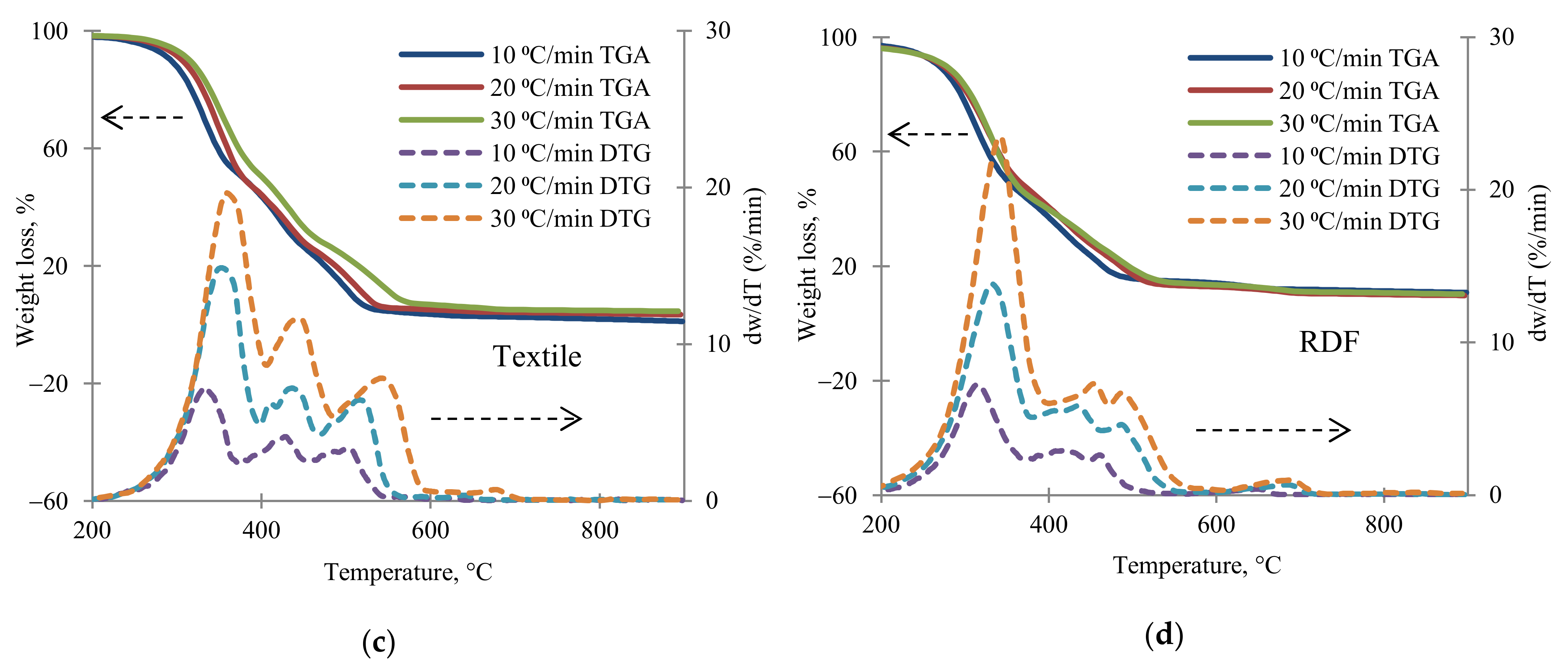
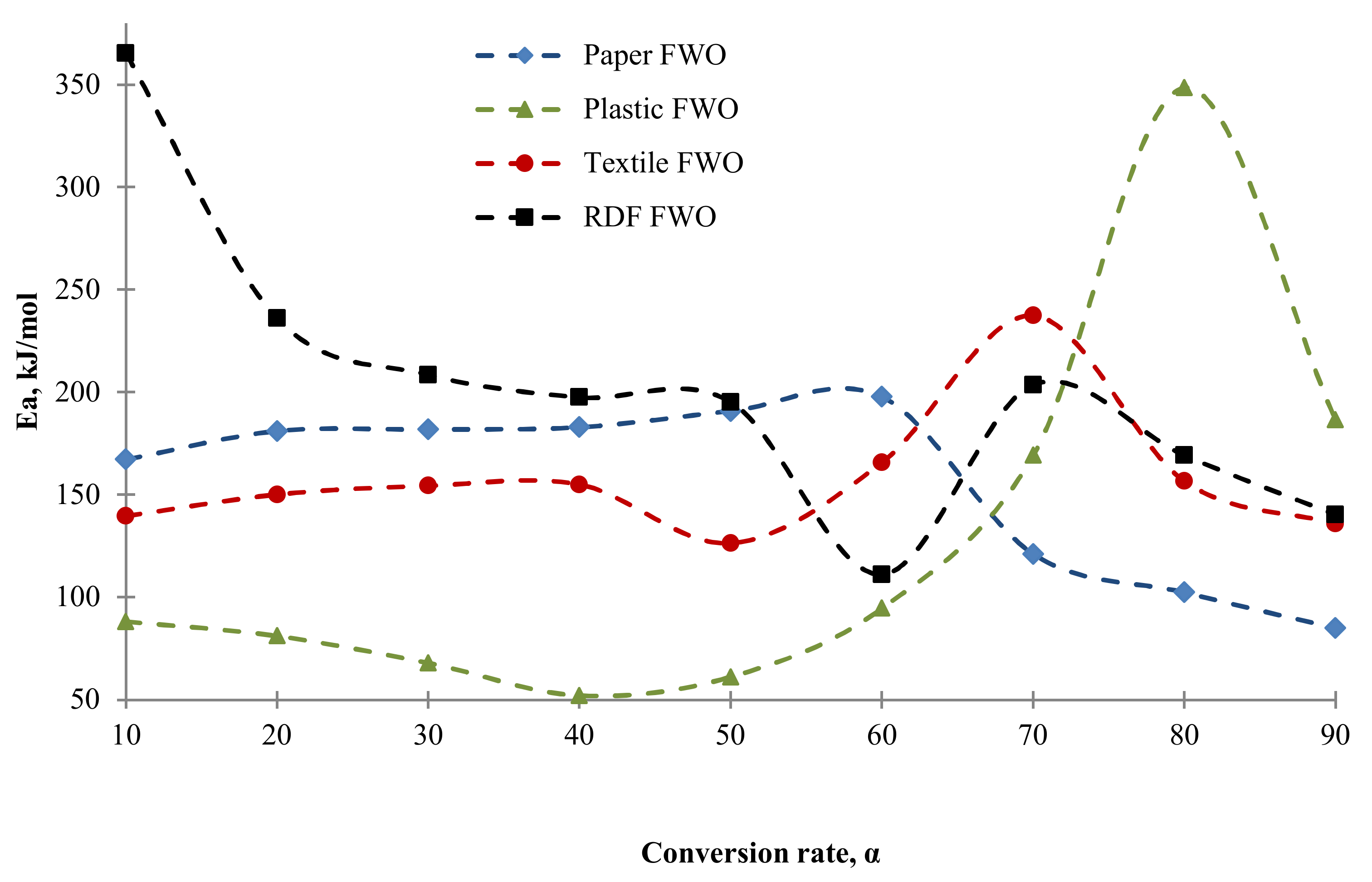
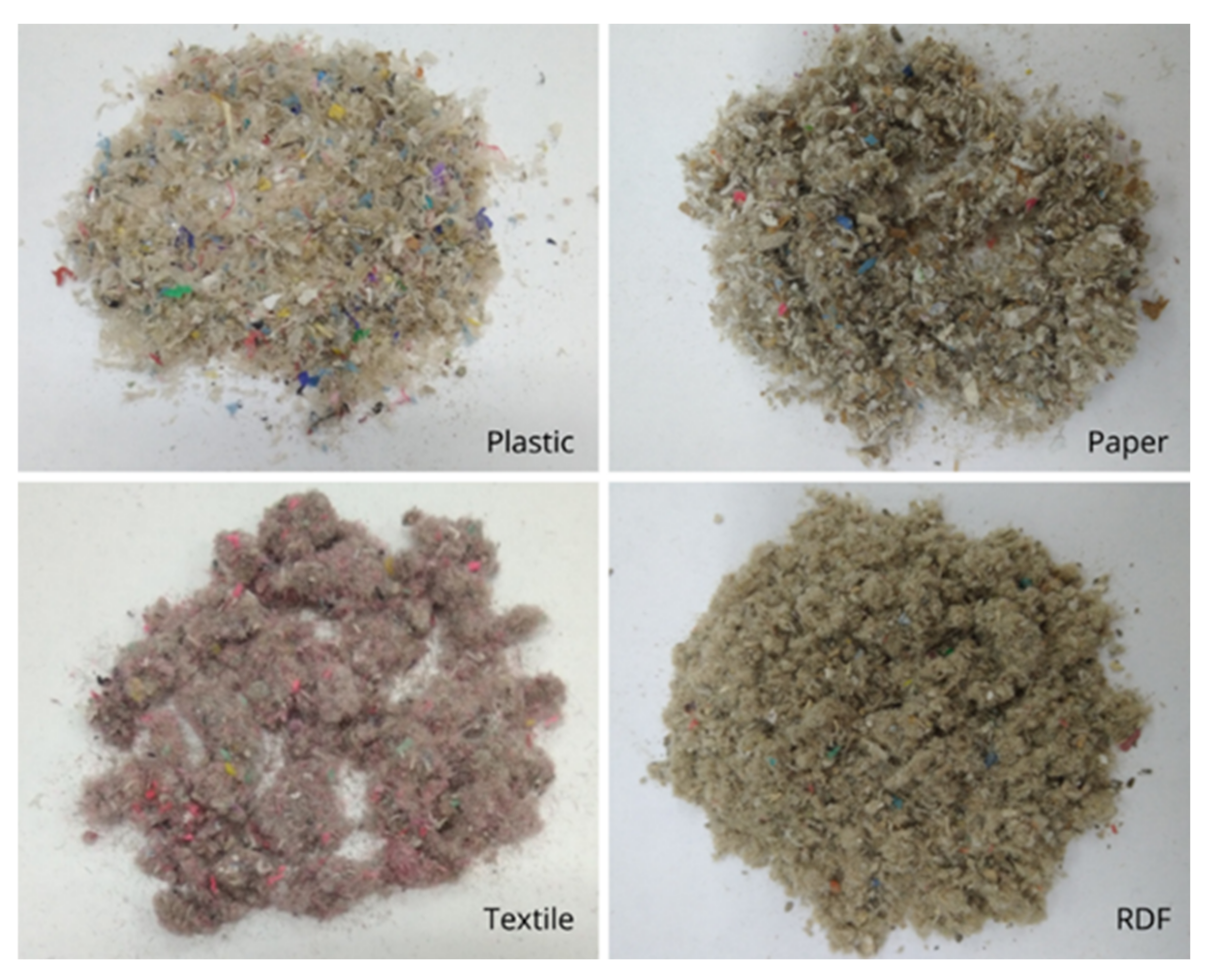
Efficient waste management, including proper utilization of municipal solid waste (MSW), is imperative for a sustainable future. Among several management options, pyrolysis and combustion of MSW has regained interest because of improved combustion techniques. This work aims to investigate the thermal conversion and combustion characteristics of refuse derived solid fuel (RDF) samples and its individual compounds collected from Nur-Sultan’s MSW landfills. The waste-derived solid RDF samples originally consist of textile, mixed paper, and mixed plastic. In particular, the samples, including RDF and its three constituent components, were analyzed in the temperature range of 25 to 900 °C, at three different heating rates, by thermogravimetric method. The gross calorific value for RDF derived from Nur-Sultan’s MSW was determined to be 23.4 MJ/kg. The weight loss rates of the samples, differential thermogravimetry (DTG), and kinetic analysis were compared between individual RDF components and for the mixed RDF. Combustion kinetics models were calculated using Flynn–Wall–Ozawa (FWO), Kissinger–Akahira–Sunose (KAS), and Friedman methods. The results revealed that first decomposition of RDF samples was observed at the range of 180–370 °C. Moreover, the activation energy for conversion of RDF was observed to be the highest among the constituent components and gradually decreased from 370 to 140 kJ/kmol.
Keywords: municipal solid waste; refuse derived fuel; thermogravimetric analysis; combustion kinetics municipal solid waste; refuse derived fuel; thermogravimetric analysis; combustion kinetics