1. Introduction
The role of the centrifugal pump in a car cooling circuit is to guarantee the liquid circulation, and, therefore, to control the engine temperature. The design of a centrifugal pump turns out to be a difficult task for the following reasons: (i) the working point varies over a wide range of flow rate and pressure head; () automotive companies require ever strict constraints for pump dimensions and geometry coupling, possibly different for each car model. Moreover, traditional design approaches based on empirical correlations or trial and error methods (based on previous developed models) are characterized by low accuracy (the former) and by an excessive time/cost to reach the optimal design (the latter).
Optimization algorithms coupled with Computational fluid dynamic (CFD) have demonstrated to be a robust and automatic alternative in the design of centrifugal pumps [
1], which can overcome the limits of the traditional approaches. However, the works available in literature are often characterized by a simple parametrization, a small number of design variables [
2,
3], and only some components are optimized, i.e., the impeller [
2,
4,
5,
6,
7,
8], or the diffuser [
9], or the volute [
10].
Centrifugal pumps for the cooling system are characterized by a compact layout to meet the downsizing policies of car makers. The location of the suction pipes is usually prescribed by the engine, and, in general, the vaned diffuser is not adopted because it could decrease the pump performance in off-design conditions. The vaneless diffuser is often used only as a connection between the impeller and the volute. A typical pump geometry is made of an impeller, a small vaneless diffuser, and a volute. The objective of this work is to propose an automatic methodology based on the shape optimization to design from scratch a centrifugal pump for the automotive field. A preliminary work has been presented in [
11], where some limitations are present: (
i) a baseline design is not available in an automatic manner and, as a consequence, the range of the design space is difficult to set and can be too wide to be spanned with a genetic algorithm; (
) the vaneless diffuser represents only the gap created by the parametrization of the impeller, and the volute, i.e., it cannot be controlled directly by the optimization process, and (
) the volute cross section is free to change and its boundaries are parametrized with Bézier curves. The latter choice allows the optimization process to find cross sections with “original” shapes, which are often difficult and/or expensive to manufacture. For these reasons, the approach proposed in [
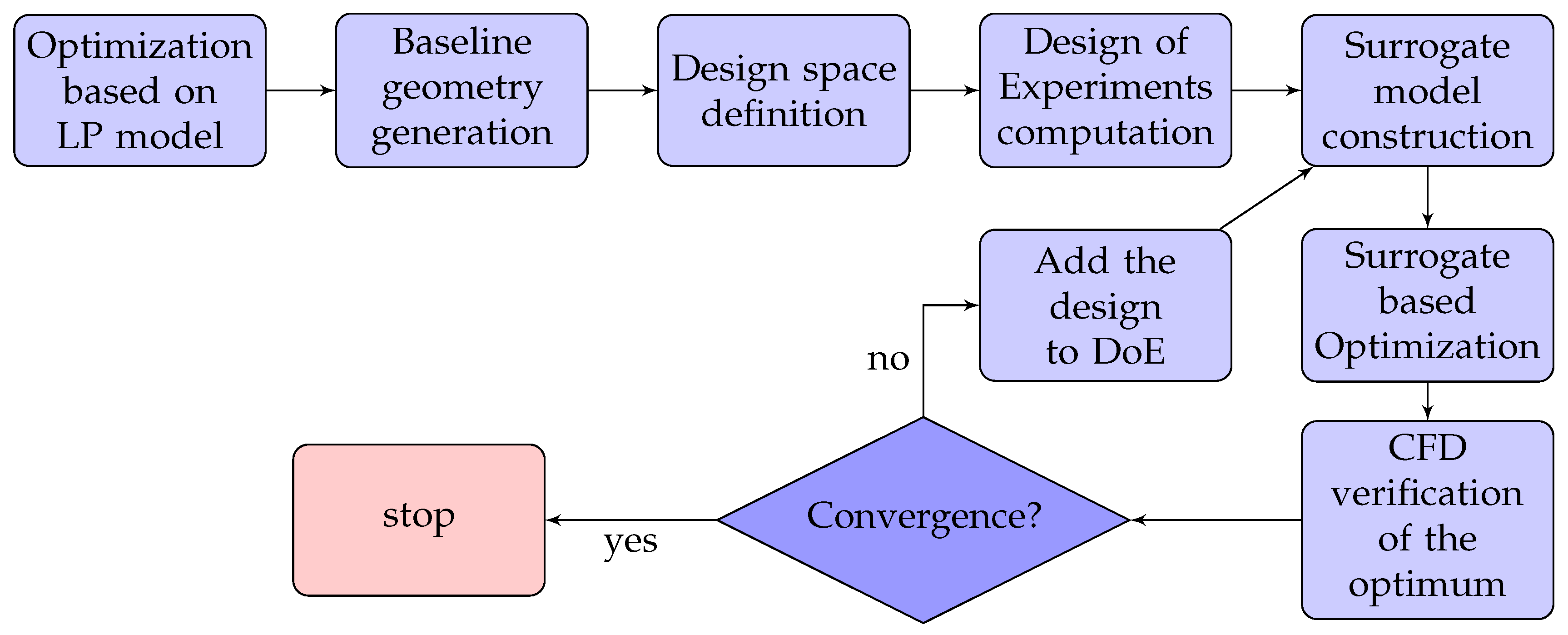
11] has been extended. A baseline geometry is generated by a lumped parameter code and optimized with respect to the efficiency with a genetic algorithm. The optimized baseline geometry is parametrized and the 3D model of the pump is created. Finally, a surrogate based optimization strategy is used to optimize the 3D geometry (impeller, vaneless diffuser, and volute).
2. Problem Formulation
The operating conditions (see
Table 1) of the pump to design are provided by the Italian company Industrie Saleri Italo S.p.A. (
http://www.saleri.com/, accessed on November 2021), as a representative working point for a high performance gasoline car.
The objective is to design a pump that satisfies the operating conditions and maximize the hydraulic efficiency. In particular, the design must guarantee a prescribed total pressure rise
to ensure the proper flow rate in the cooling circuit.
is equal to
, where
is the total pressure at the volute outlet and
the total pressure at the suction pipe. The hydraulic efficiency is defined as follows:
where
[m
/s] is the volumetric flow rate and
W the power at the impeller. The total pressure head value reported in
Table 1 is constrained in the range
during the optimization process.
The geometrical constraints, in general, are stringent and can be ascribed to packaging limitations and to feasibility requirements. The packaging constraints vary with the working point and the application, e.g., the maximum impeller diameter varies in a range from 30 to 90 mm.
Table 2 summarizes the constraints for this case. The feasibility requirements depend on the manufacturing technology. The molding, mostly used for the pump manufacture, requires a minimum blade thickness of 2 mm and a minimum outlet blade angle.
3. Geometry Parametrization
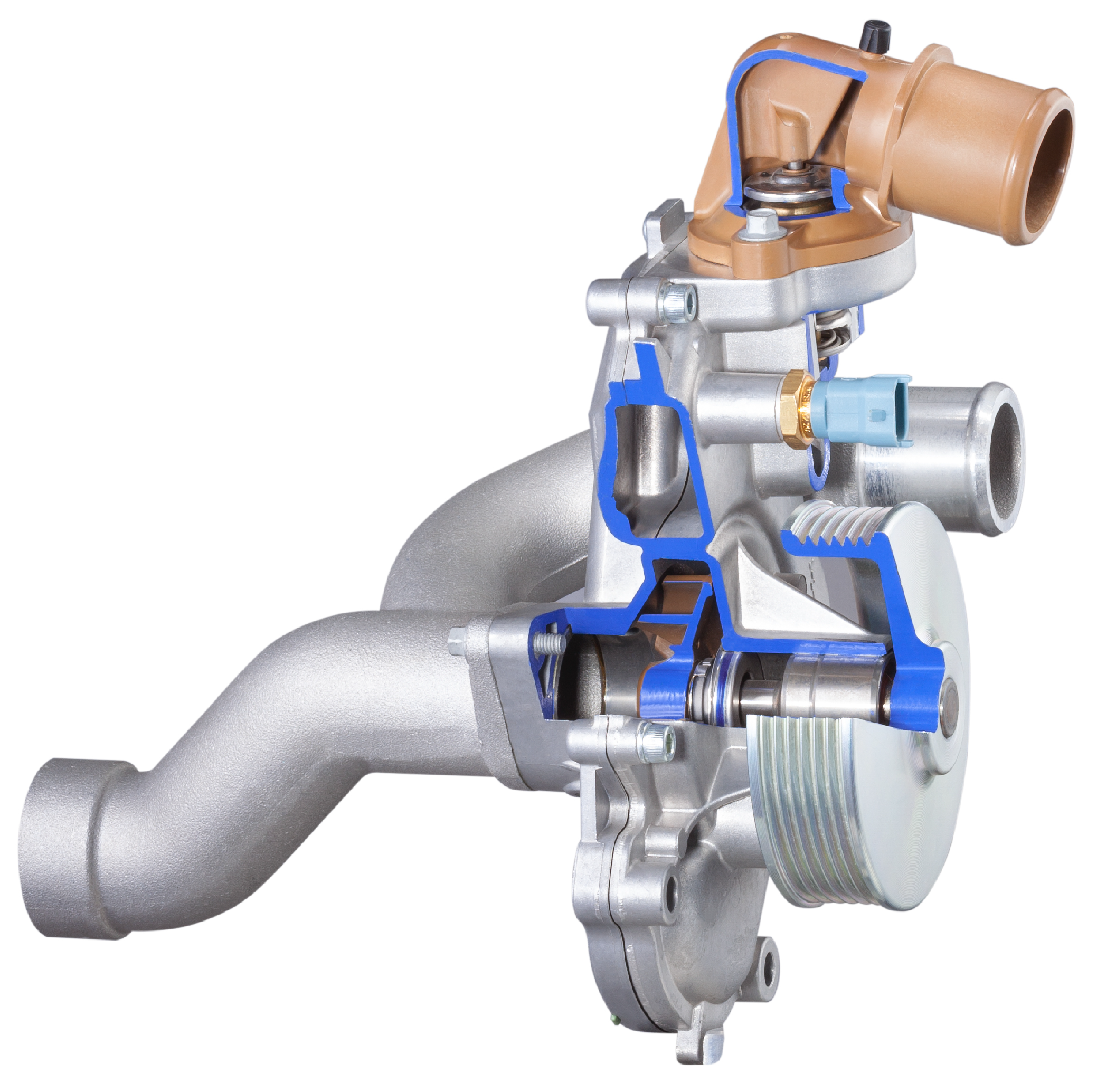
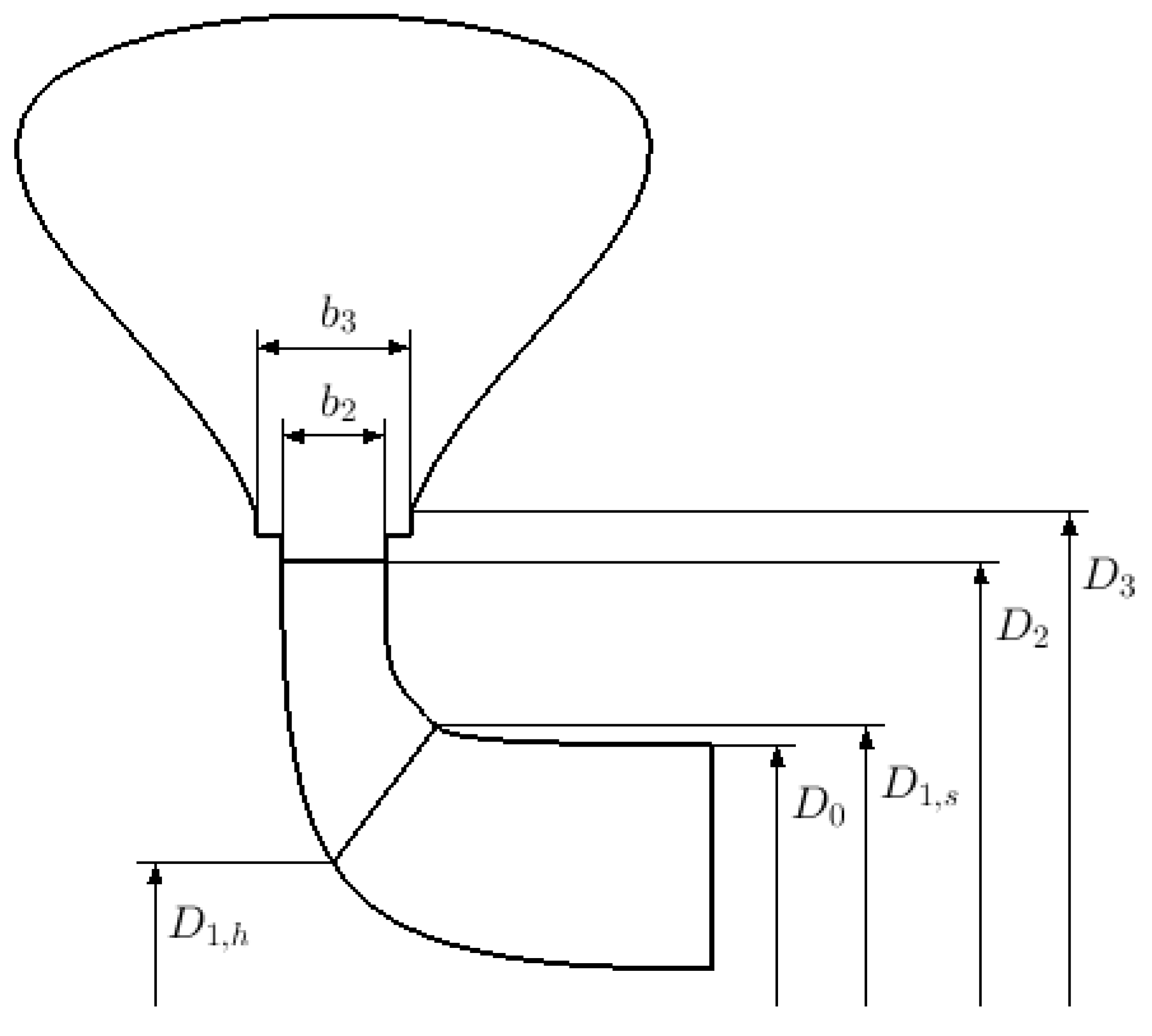
Automotive centrifugal pumps are made up of three main components, i.e., the impeller, the vaneless diffuser, and the volute, as shown in
Figure 1. The main symbols adopted in this work are reported in
Figure 2, where
is the inlet pipe diameter,
and
are the leading edge impeller diameter at the hub and shroud,
is the impeller outer diameter,
is the blade height at the impeller outlet,
and
are the outlet diameter and width of the vaneless diffuser,
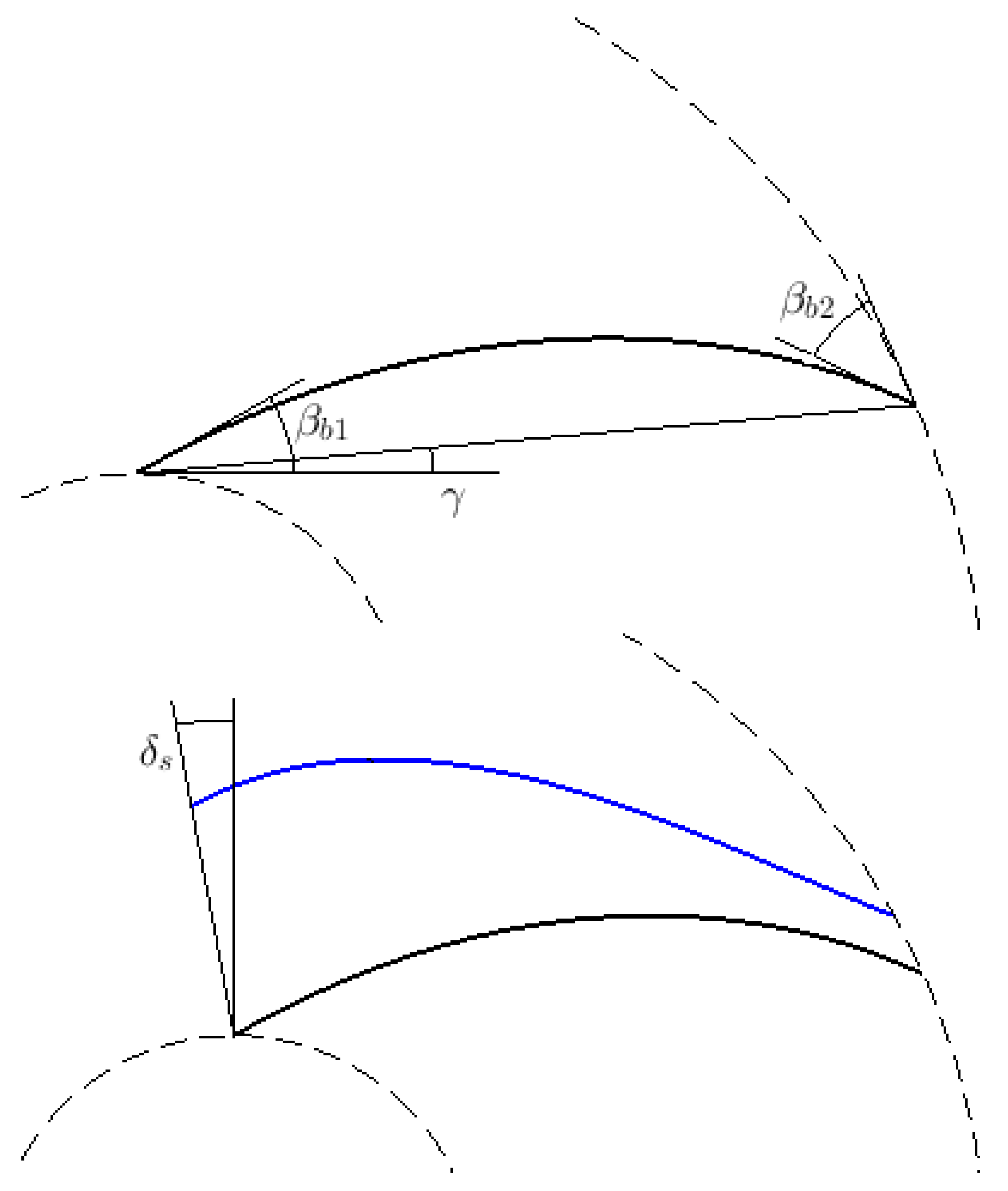
and
are the angles of the camber line at impeller inflow and outflow,
is the stagger angle, and
is the relative twisting angle of the leading edge at shroud with respect to the hub.
Impeller, vaneless diffuser and volute are parameterized through Bézier curves and surfaces with the open-source software Scilab [
12], and 21 design variables (DVs) are adopted: 17 for the impeller (
), 2 for the vaneless diffuser (
), and 2 for the volute (
).
Table 3 summarizes the DVs adopted in this optimization methodology, which are described in detail in
Section 3.1 and
Section 3.2. The DVs can include functions of the geometrical parameters chosen to drive the optimization process or explicitly their values.
3.1. Impeller
The impeller geometry considered in this parametrization has an axial inflow and a radial outflow. The parametrization is based on 17 DVs, which can be divided in four sub-sets: 3 DVs define the external dimensions of the impeller (); 9 DVs define the camber line at the hub and shroud (); 4 DVs define the meridional channel (); 1 DV defines the number of blades ().
includes the impeller outer diameter (
), the inlet pipe diameter (
), and the blade height at the impeller outlet, (
). The bearing diameter is fixed equal to 6 mm.
includes the impeller diameter at the leading edge for the hub,
, and the shroud,
, the blade angle at the inlet for the hub,
, and the shroud,
, the blade angle at the outlet for the hub,
, and the shroud,
, the stagger angle for the hub,
, and the shroud,
, and the relative twisting angle of the leading edge for the shroud with respect to the hub,
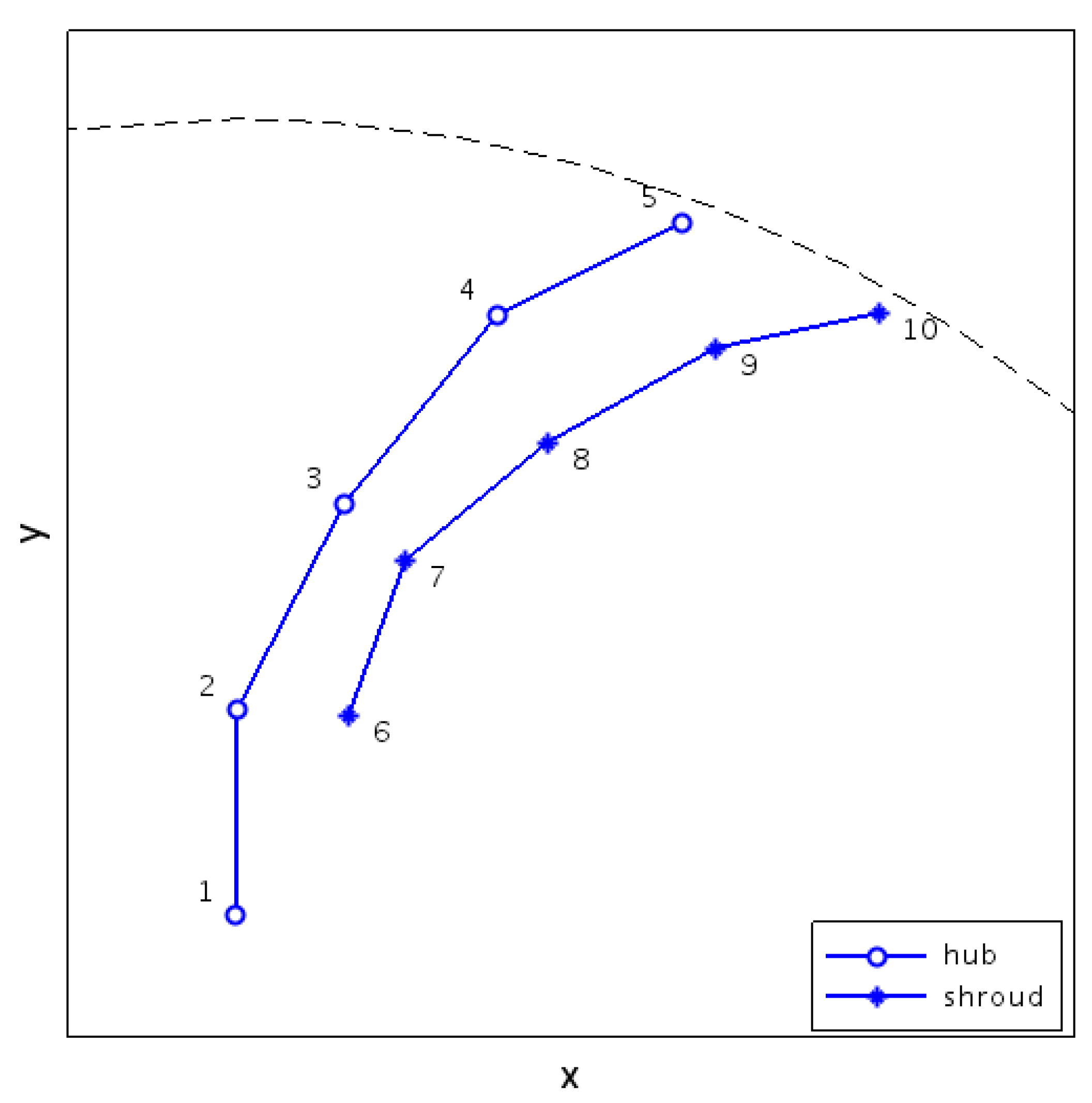
. The blade profiles at hub and shroud are built from the camber line and a thickness function. The camber lines (their projection is described on a plane perpendicular to the rotation axis) are Bézier curves of fourth order (see
Figure 3). The blade surface is defined as a linear interpolation between the profiles at hub and shroud.
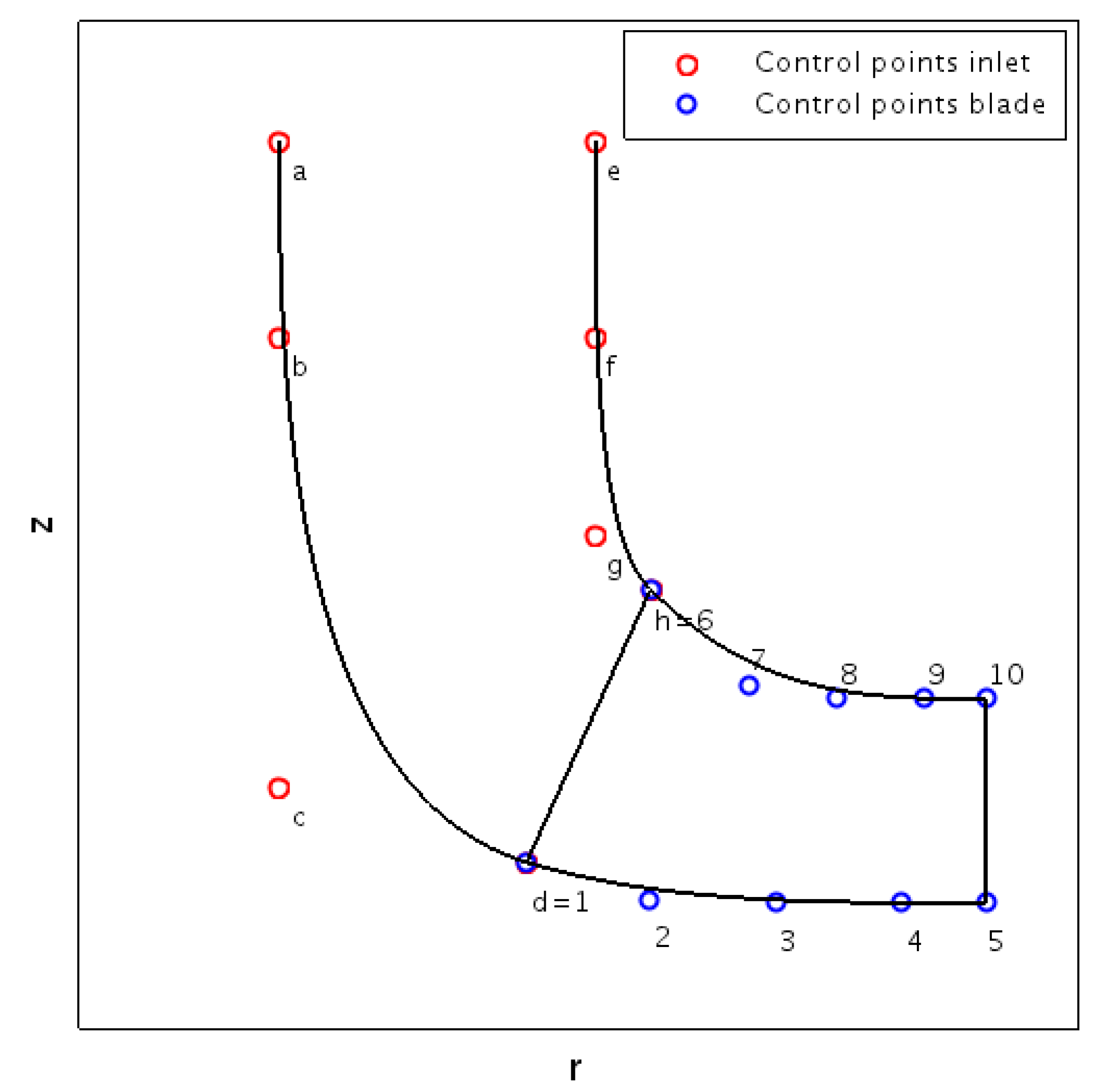
The axial position of the control points 1, 2, 6, 7, i.e.,
,
,
and
(see
Figure 4) can be derived from
and are used to define the two Bézier curves adopted to represent the hub and the shroud for the meridional channel. The points 3, 4, 5 are fixed at
and points 8, 9, 10 at
to obtain a radial outlet. The inlet channel before the blade is controlled by four control points: d and h correspond to the leading edge at the hub and shroud; points a, b, c and e, f, g are aligned in order to guarantee an axial inflow; furthermore, the axial position of points c and g is set to guarantee the continuity of the derivative of the meridional channel at the leading edge for both the hub and shroud.
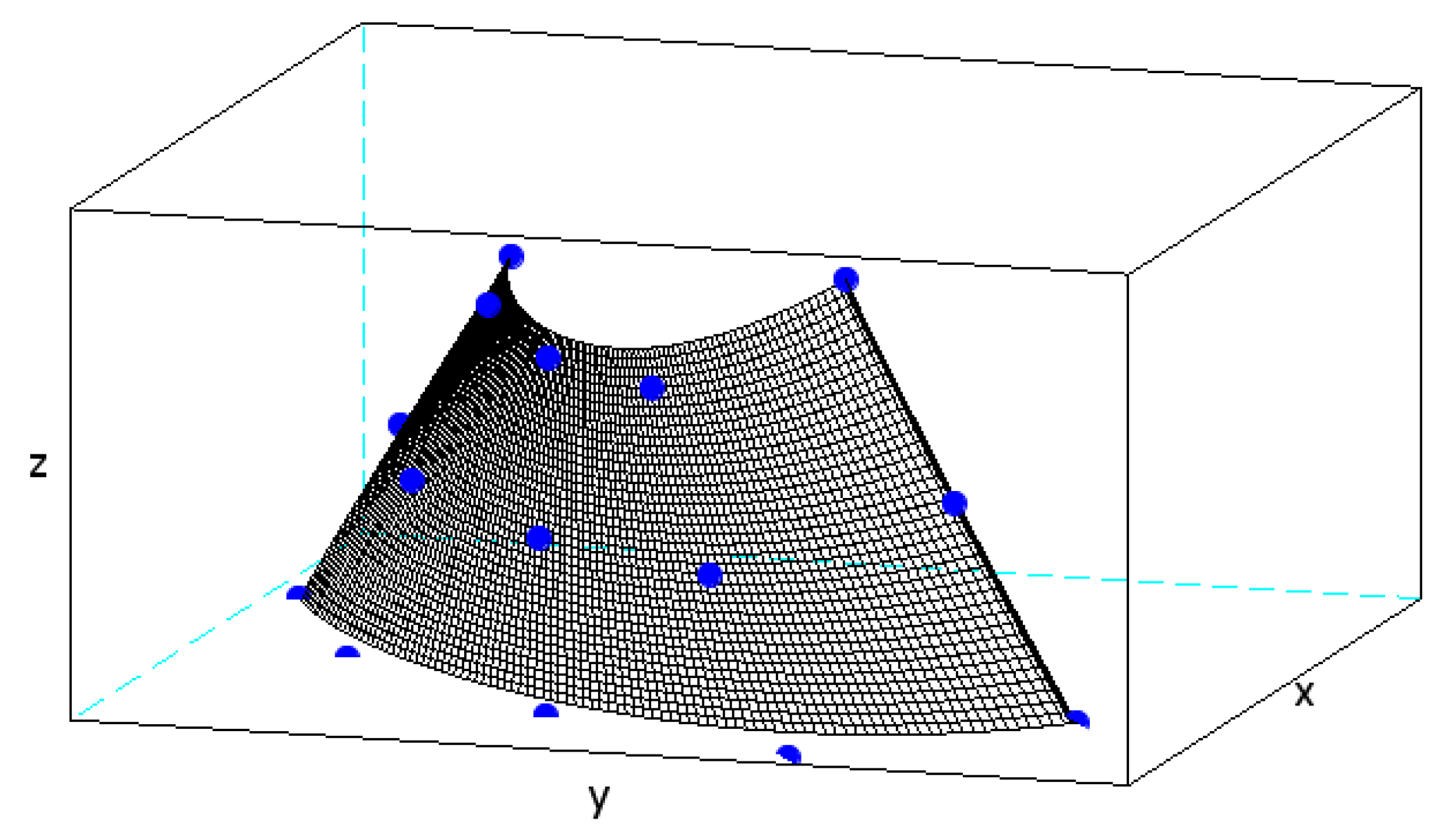
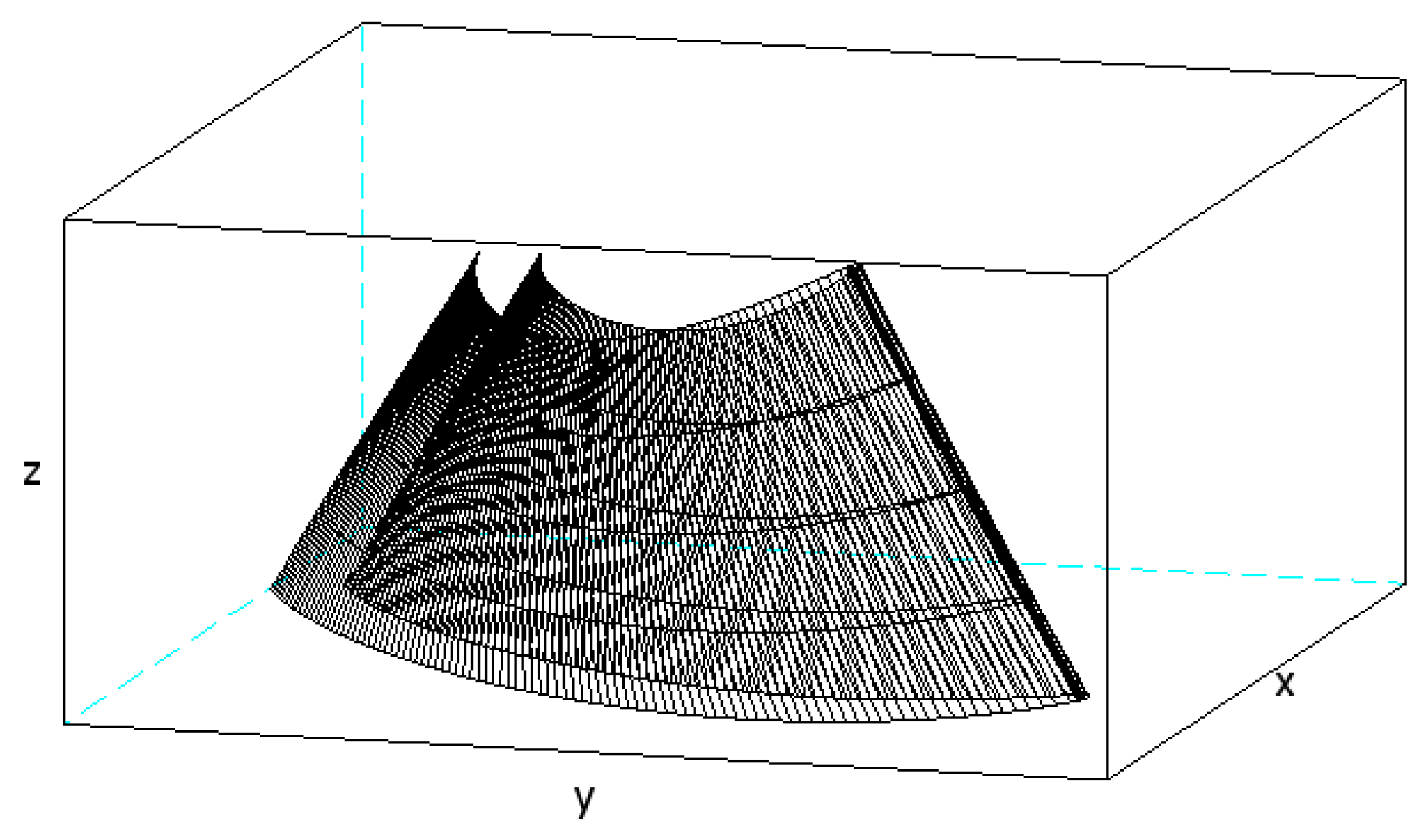
After defining the control points, the blade camber surface is generated (see
Figure 5) and a thickness function is added (see
Figure 6): the leading edge is defined with a symmetrical 4-digit NACA profile (NACA0012 has been adopted for this work) with a maximum thickness of 2 mm; when the maximum thickness is reached, this value is kept constant along the rest of the blade. The blade ends with a blunt trailing edge. The outlet of the impeller region is placed at 1 mm from the outer diameter
.
includes the number of impeller blades
.
3.2. Vaneless Diffuser and Volute
As reported in [
1], the vaneless diffuser dimensions, the baffle tongue angle, and the area of the cross section at the volute outflow strongly affect the volute performance. The parametrization is based on 4 DVs. In particular, from
, the outlet radius of the vaneless diffuser,
, and the diffuser width,
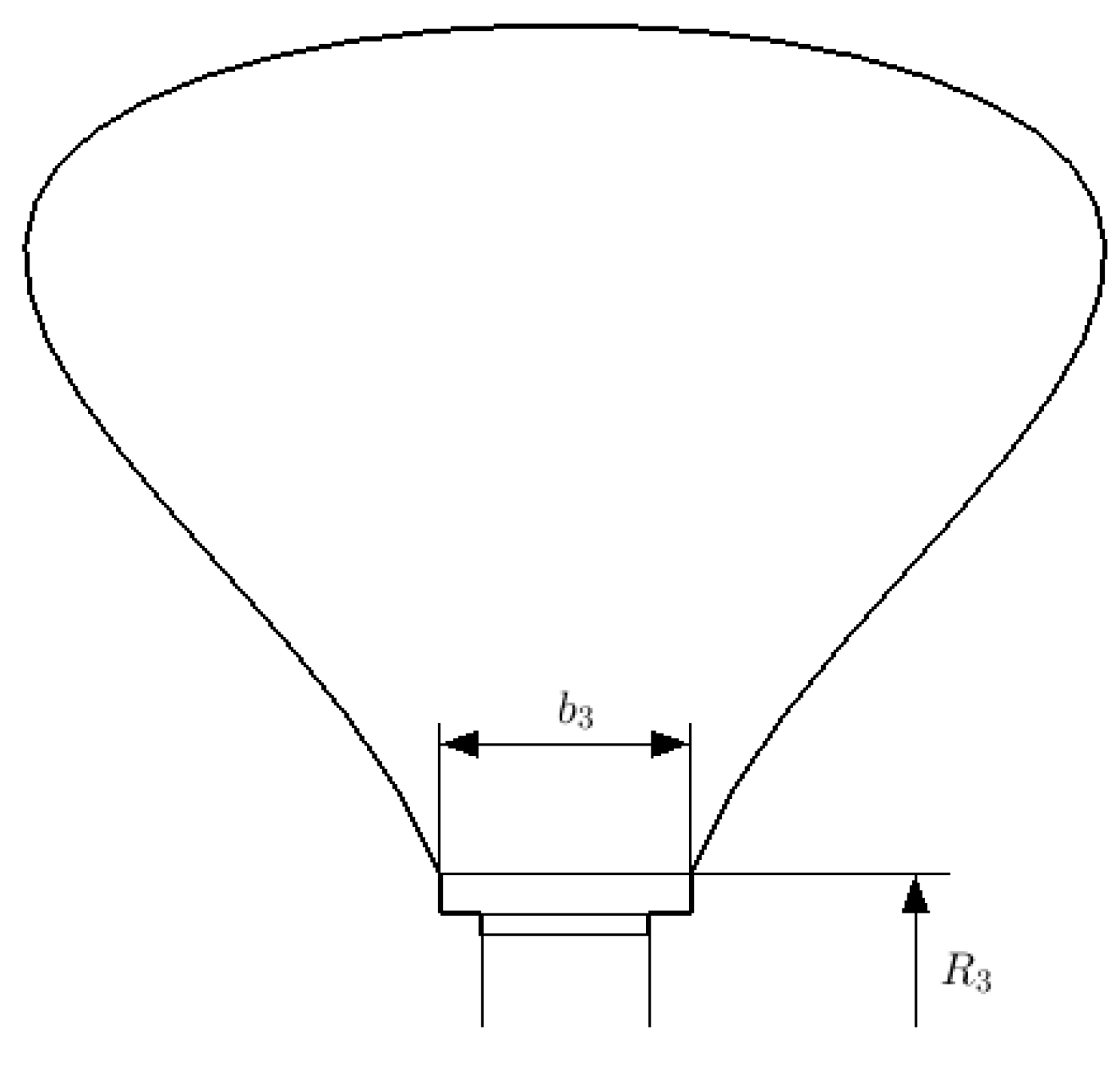
(see
Figure 7) can be obtained.
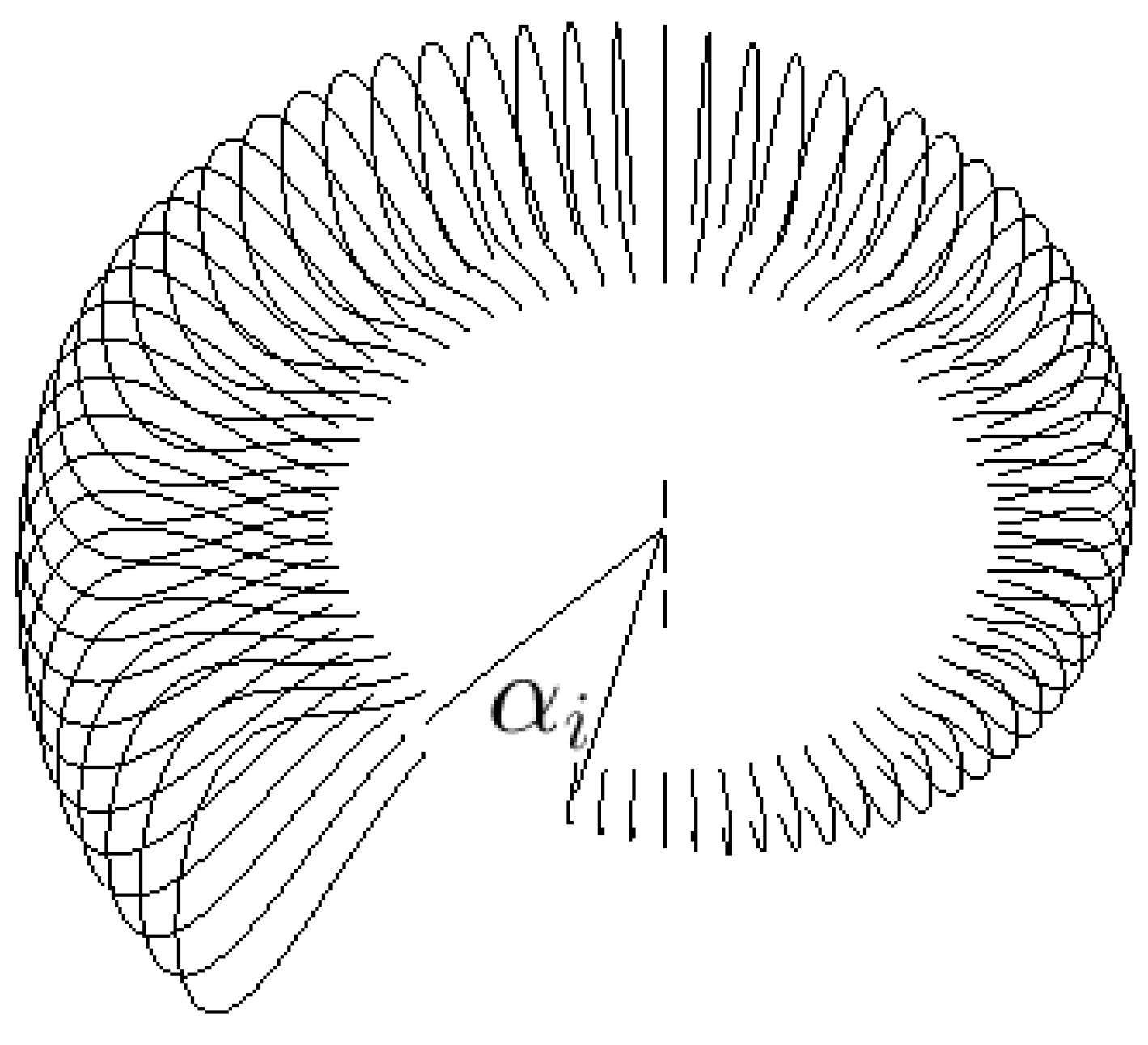
includes the baffle tongue angle,
, and the cross section area at the volute outflow,
(see
Figure 8).
The constraints on
and
always guarantee the presence of a vaneless diffuser, characterized by
mm and
. The volute geometry is built starting from the area of the cross section at the outflow. The shape of the cross section is the symmetrical horseshoe-shaped type, commonly adopted in commercial pumps [
13] for its good performance. Finally, a linear interpolation is used to define the cross-section area from the outlet until the baffle tongue angle.
4. CFD Setup
The mesh generation and the flow-field have been computed using the 2020 R2 release of ANSYS [
14]. The ANSYS CFX solver is used to solve the incompressible RANS (Reynolds Average Navier Stokes) equations coupled with the SST (Shear Stress Tensor) turbulence model [
15].
The impeller inlet section has been extruded along the axial direction to avoid possible disturbance at the inflow due to the blade leading edge. The length of the inlet pipe is , where is the impeller inlet diameter. Only one blade passage is considered with periodic conditions.
The mesh of the impeller is generated using the software ANSYS TurboGrid, while the mesh of the volute is generated using ANSYS FLUENT Meshing. The size of the elements adjacent to the solid walls is equal to an averaged non-dimensional distance and for the impeller and volute, respectively. CFX automatic wall treatment is applied to the blade wall, hub and shroud, i.e., CFX automatically switches from a wall function approach to a low Re approach, depending on the grid spacing near the wall.
At the domain inlet the volumetric flow rate
= 7.33 × 10
/m
/s, the turbulence intensity
, and the ratio
are prescribed. The corresponding turbulent kinetic energy,
, and the specific dissipation rate,
, are computed as
where
is the inlet velocity. At the outflow a static pressure
is set. The no-slip adiabatic condition is applied to the blade walls, hub and shroud.
Steady-state simulations are performed using the multiple reference frame (MRF) approach, which implies no relative mesh motion between the rotating and stationary parts. In the rotating reference frame, where the relative velocity is computed, the momentum equation is modified, adding Coriolis and centrifugal terms. The interface between moving and fixed domain is treated using the mixing plane approach. This approach, unlike the frozen rotor interface, avoids the convection through the pump of non-physical wakes created by the impeller blades and remove the impact of the relative position between impeller blade and volute. Moreover, Fracassi et al. [
16] demonstrated how this approach provides results in good agreement with unsteady simulations.
High resolution schemes are used for the velocity and the turbulent quantities.
Mesh Convergence Study
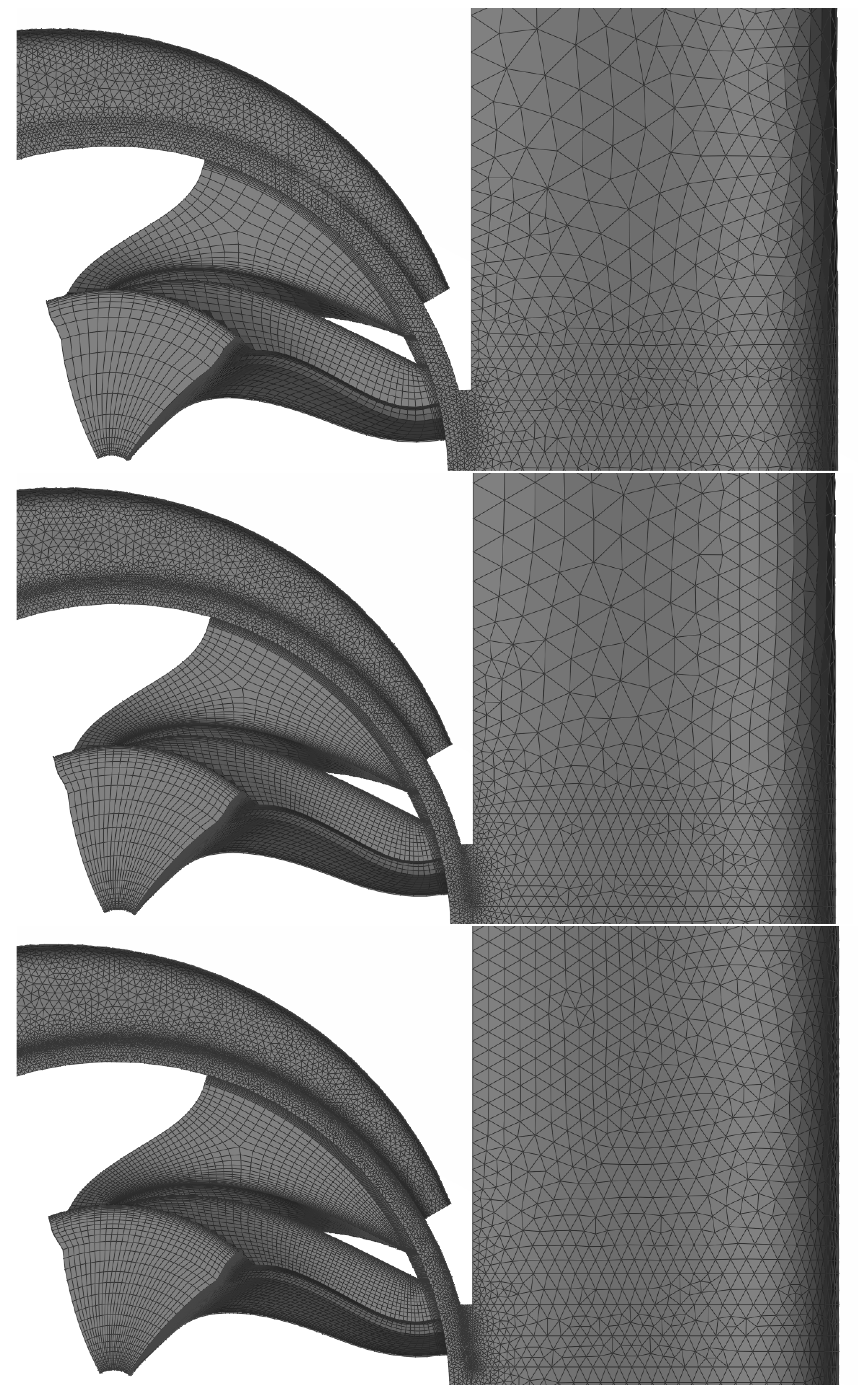
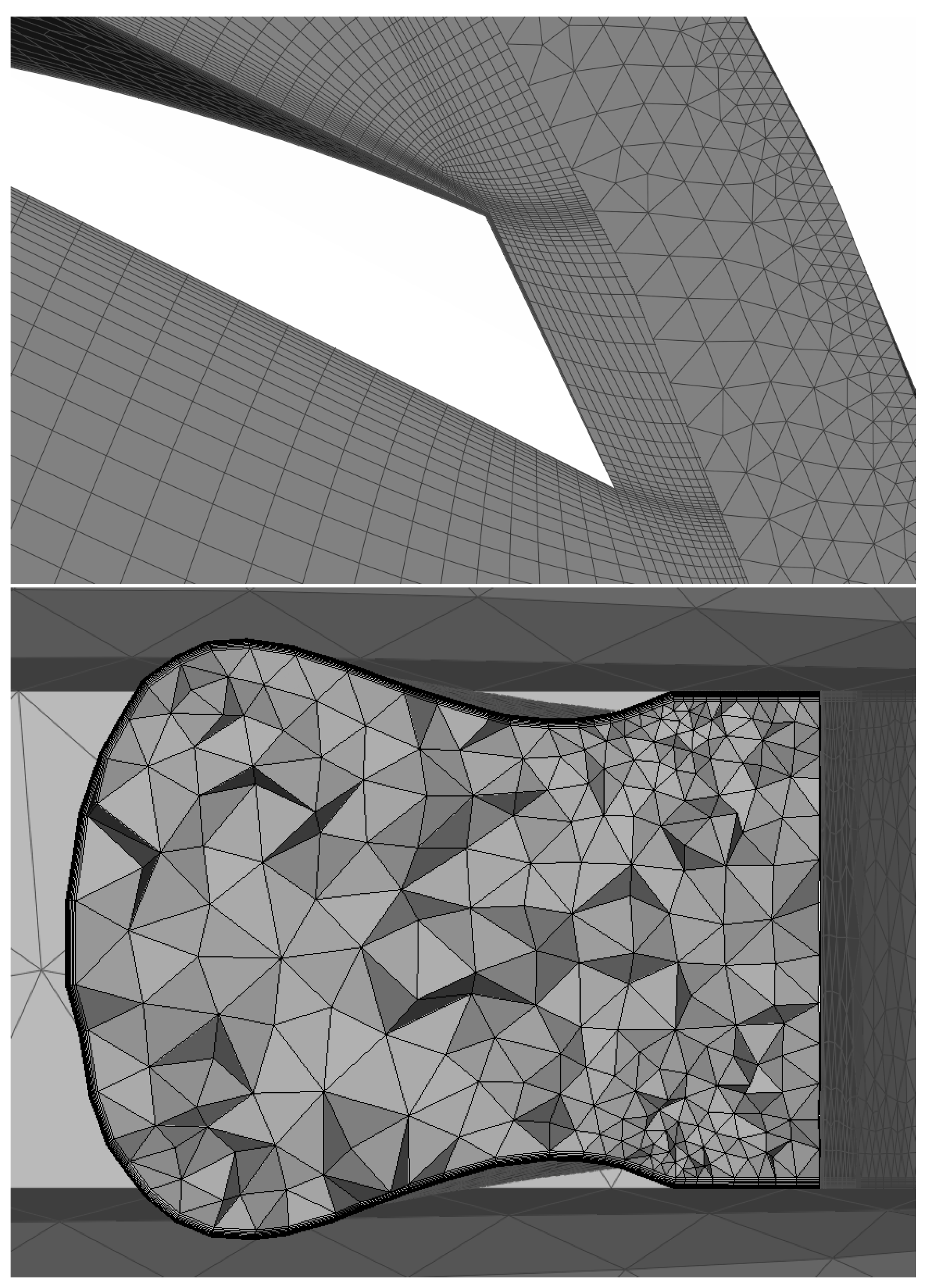
A mesh convergence study has been performed for the baseline geometry, using three grids with the number of elements ranging from 0.83 M to 3.09 M. In particular,
Figure 9 shows a detail of the coarse (top-left), medium (top-right) and fine (bottom) mesh, while
Figure 10 shows details of the impeller and volute medium mesh for the baseline geometry. The grid convergence study is summarized in
Table 4, where the predicted pressure rise and efficiency are reported. As suggested by the convergence study, the grid with 1.53 M elements (medium) ensures a good compromise between computing time and accuracy of the results, and, therefore, it is chosen for the optimization.
6. Results and Discussion
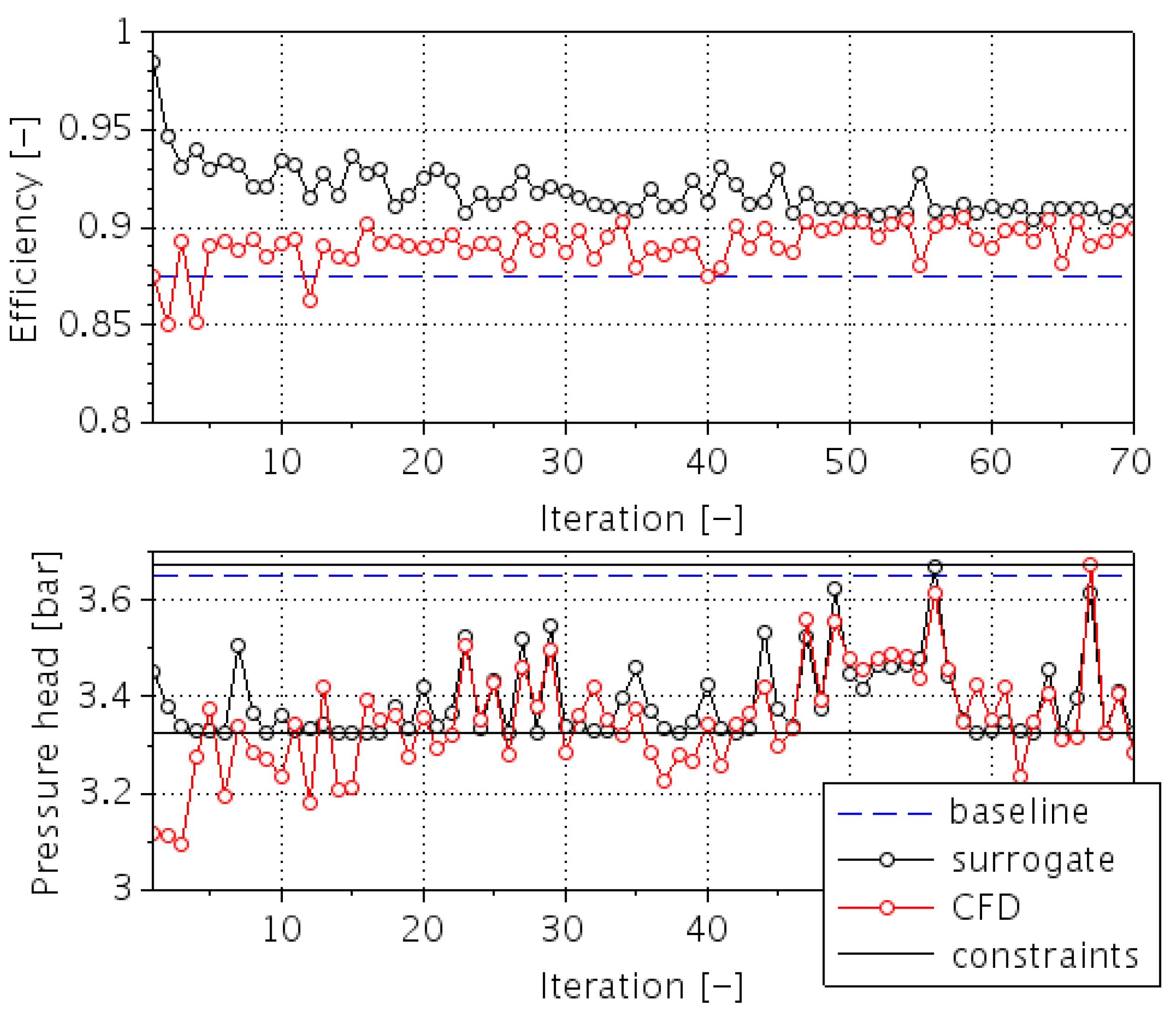
The DoE consists of 210 training points, but 38 designs have been rejected after their evaluation because of errors in the mesh generation or CFD calculation phase. The efficiency and the pressure head of these design are set to 0.8 and 3.2 bar, respectively, to force the search of the optimum far away. The analysis of the optimization convergence (see
Figure 12) shows the absence of further unfeasible design.
Figure 12 shows the optimization convergence in terms of efficiency and pressure head. The SBO reaches the convergence after 68 iterations. Both values predicted by CFD and estimated by the Kriging model are reported.
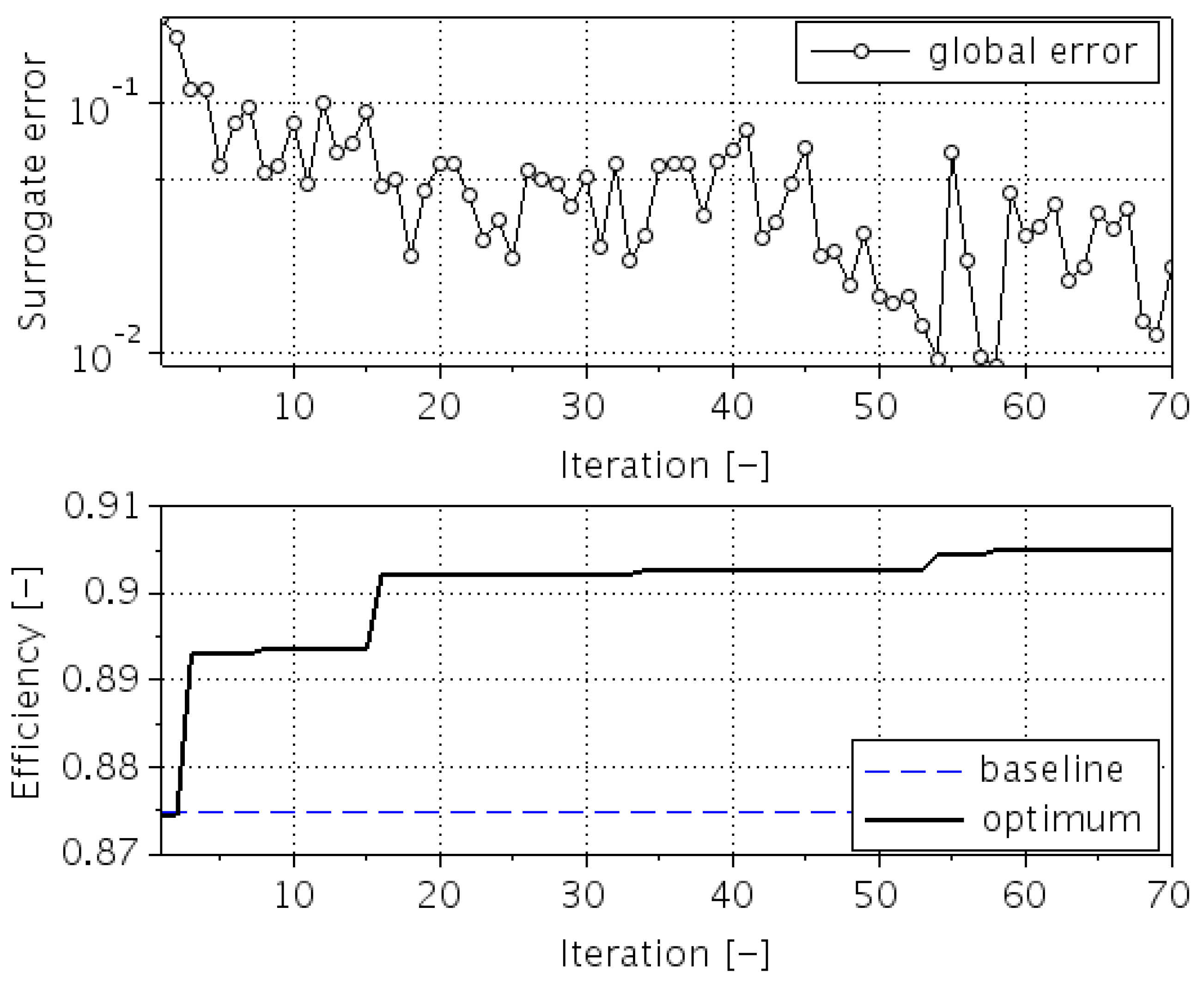
Figure 13 deeply investigates the optimization process in terms of the global error (see Equation (
2)) and the achieved maximum efficiency. The global error shows a decreasing behaviour, while the efficiency reaches a value above 0.9 starting from 16-th iteration. The optimum design is characterized by
, i.e., an improvement of 3% with respect to the baseline is achieved, and
bar.
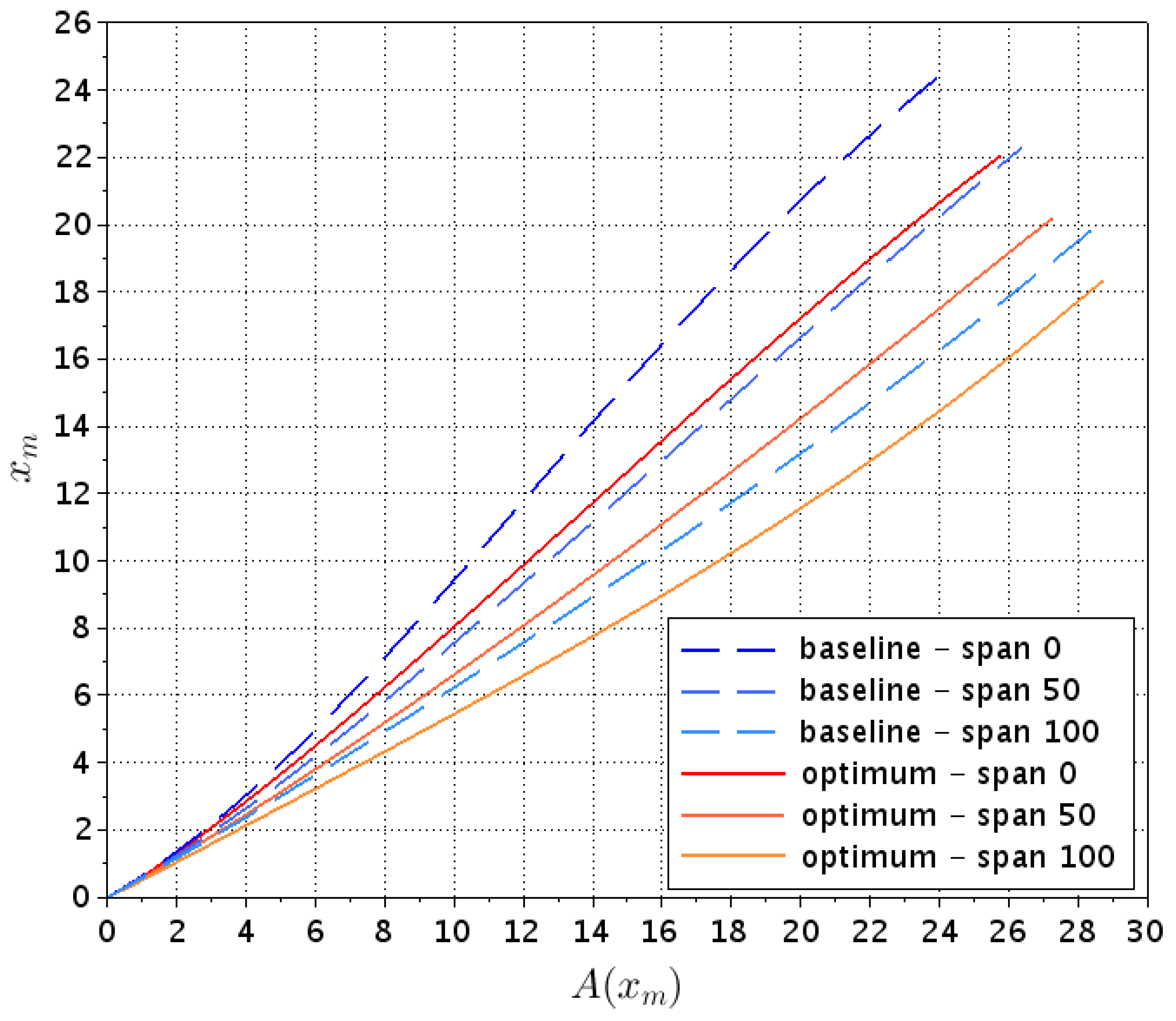
The profiles of the blade camberline in a conformal mapping plane are compared in
Figure 14 for the baseline and optimal geometries. The abscissa of the coordinate system is
where
is the distance in the meridional direction (the blade leading edge is taken as origin), and represents also the ordinate,
r is the distance from the rotation axis, and
is the wrap angle, defined as
where
is the blade angle, and
the meridional distance between leading and trailing edge. Profiles at
,
, and
of the span are depicted. The baseline profile shows a constant distribution of
and
along the span, while a variation is appreciable for the optimized geometry.
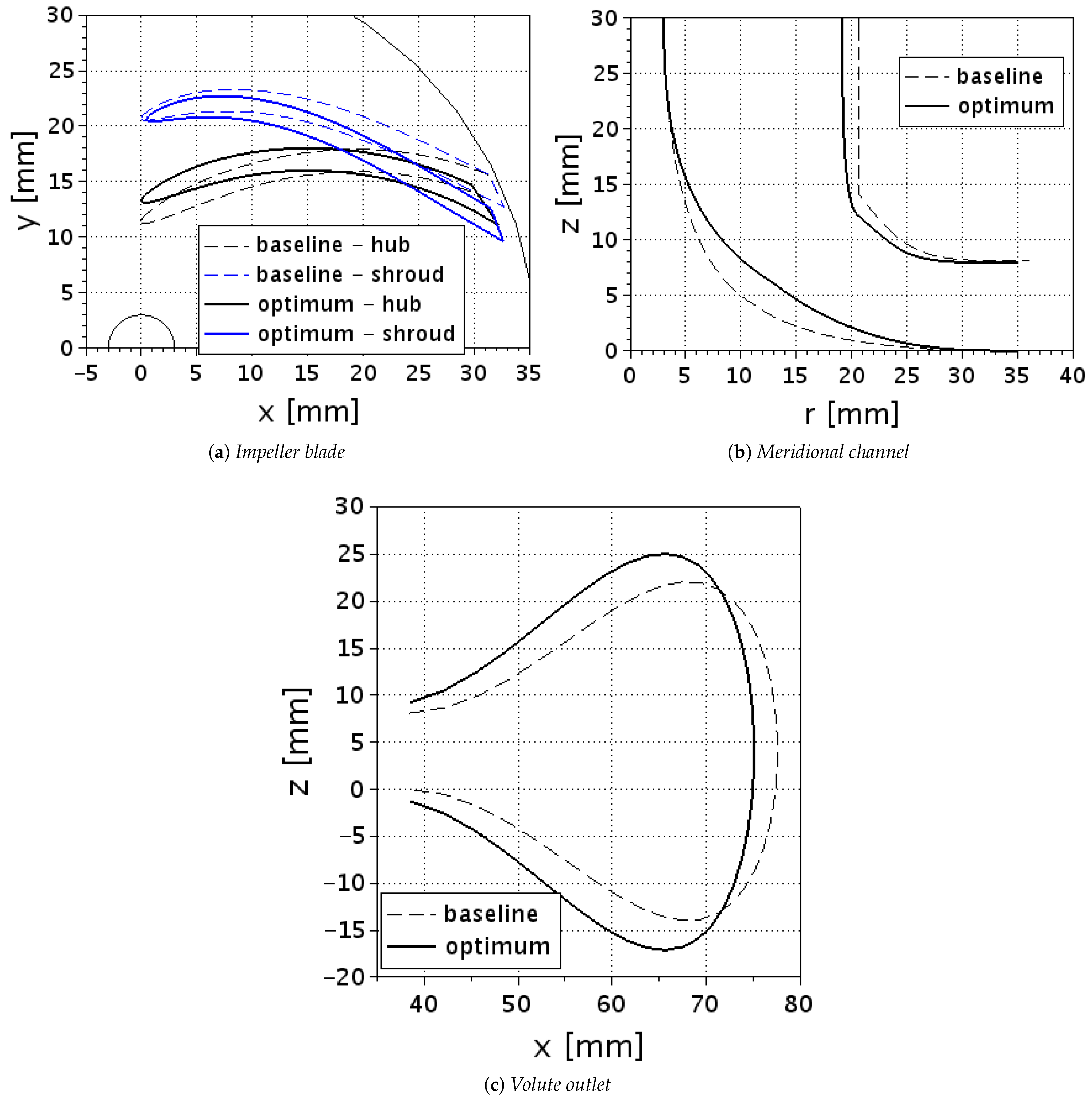
The optimal geometry is compared with the baseline in
Figure 15, where the blade profiles of the impeller at hub and shroud (right), the meridional channel (left), and the volute shape (bottom) at the outlet are shown.
Figure 16,
Figure 17,
Figure 18,
Figure 19,
Figure 20,
Figure 21 and
Figure 22 compare the flow field between the optimized and the baseline geometries to investigate the effect of the geometrical changes on the efficiency. Notice that maximize the efficiency corresponds to minimize the power at the impeller
W, as the
is set at less than a tolerance.
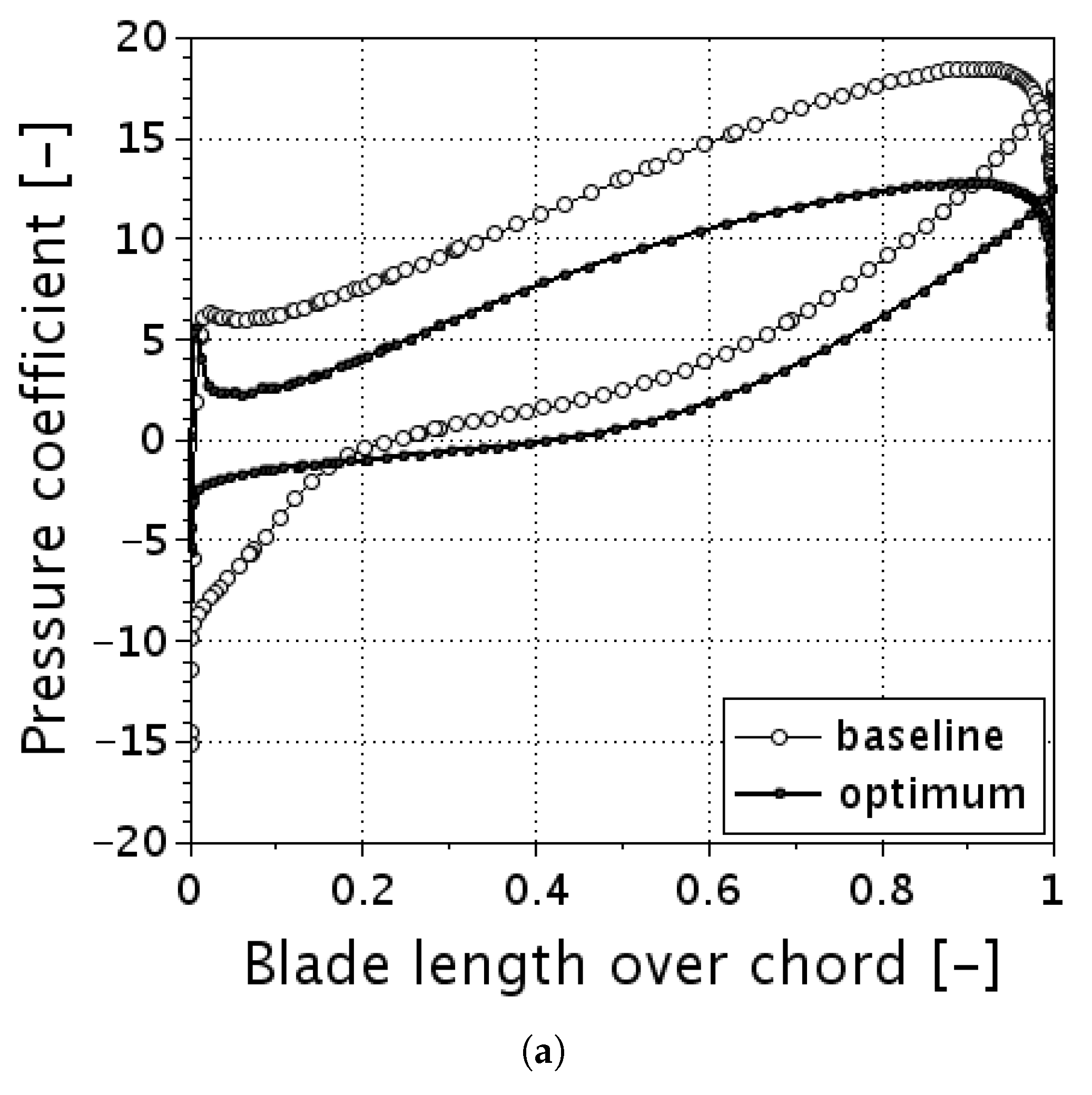
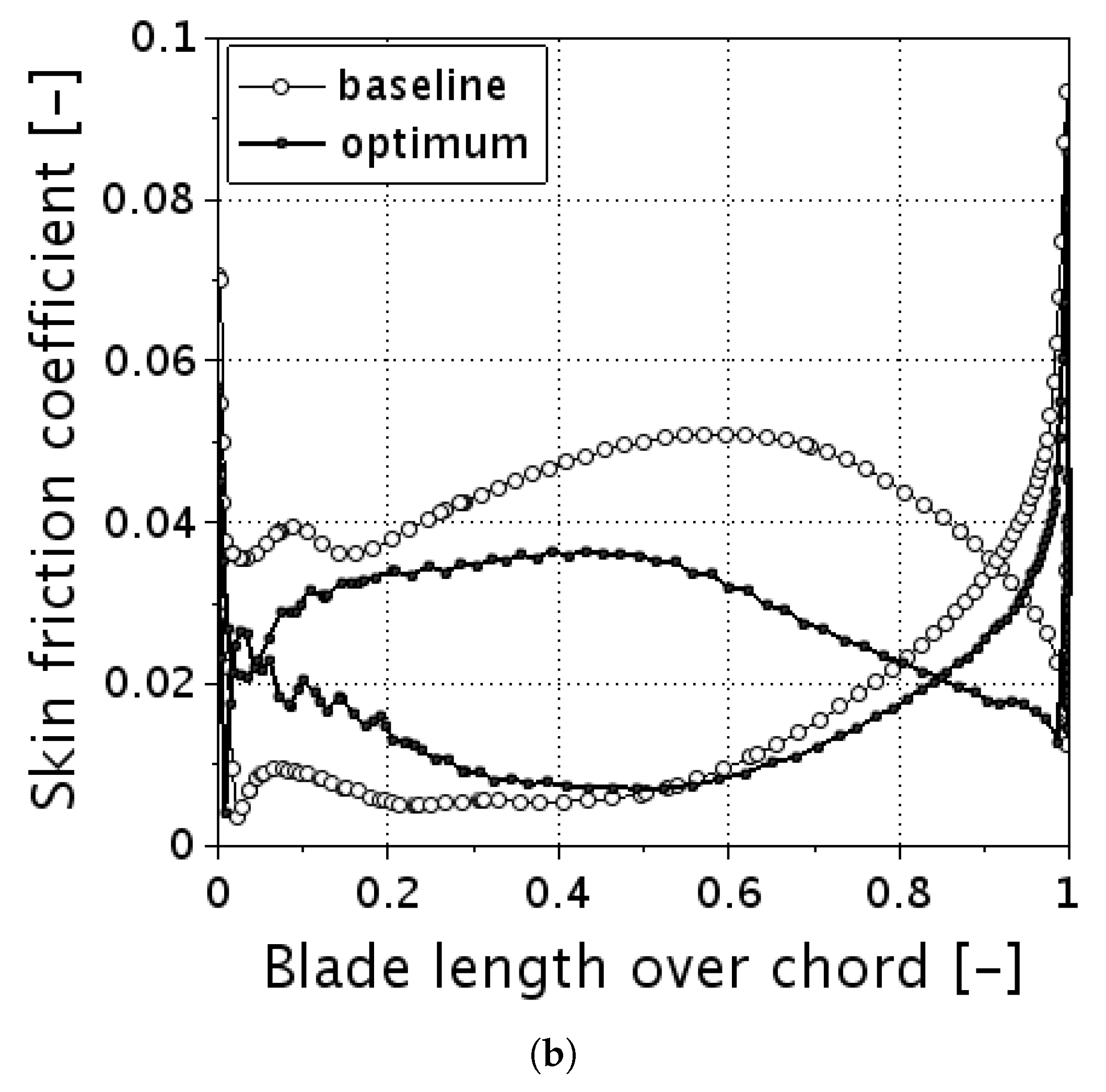
Initially, the effect of the impeller blade geometry is investigated, comparing the pressure coefficient,
, and the skin friction coefficient,
, along the blade (see
Figure 16) for the baseline and the optimal geometries. The coefficients are defined as follows:
where
and
are the static pressure and the velocity magnitude at the inlet pipe and
is the wall shear stress along the blade. The
distribution on the suction side shows a reduction of the pressure drop near the leading edge, while it assumes lower values on the pressure side. The area defined by the pressure and suction side curves is lower for the optimal geometry, which corresponds to a decrease of the blade loading, and, as a consequence, of
W. The difference in the friction coefficient
at the leading edge between the suction and pressure side is reduced in the optimal configuration; this discrepancy is motivated by an erroneous blade angle at the leading edge for the baseline. On the suction side a lower
distribution for the optimal geometry confirms a reduction of the losses.
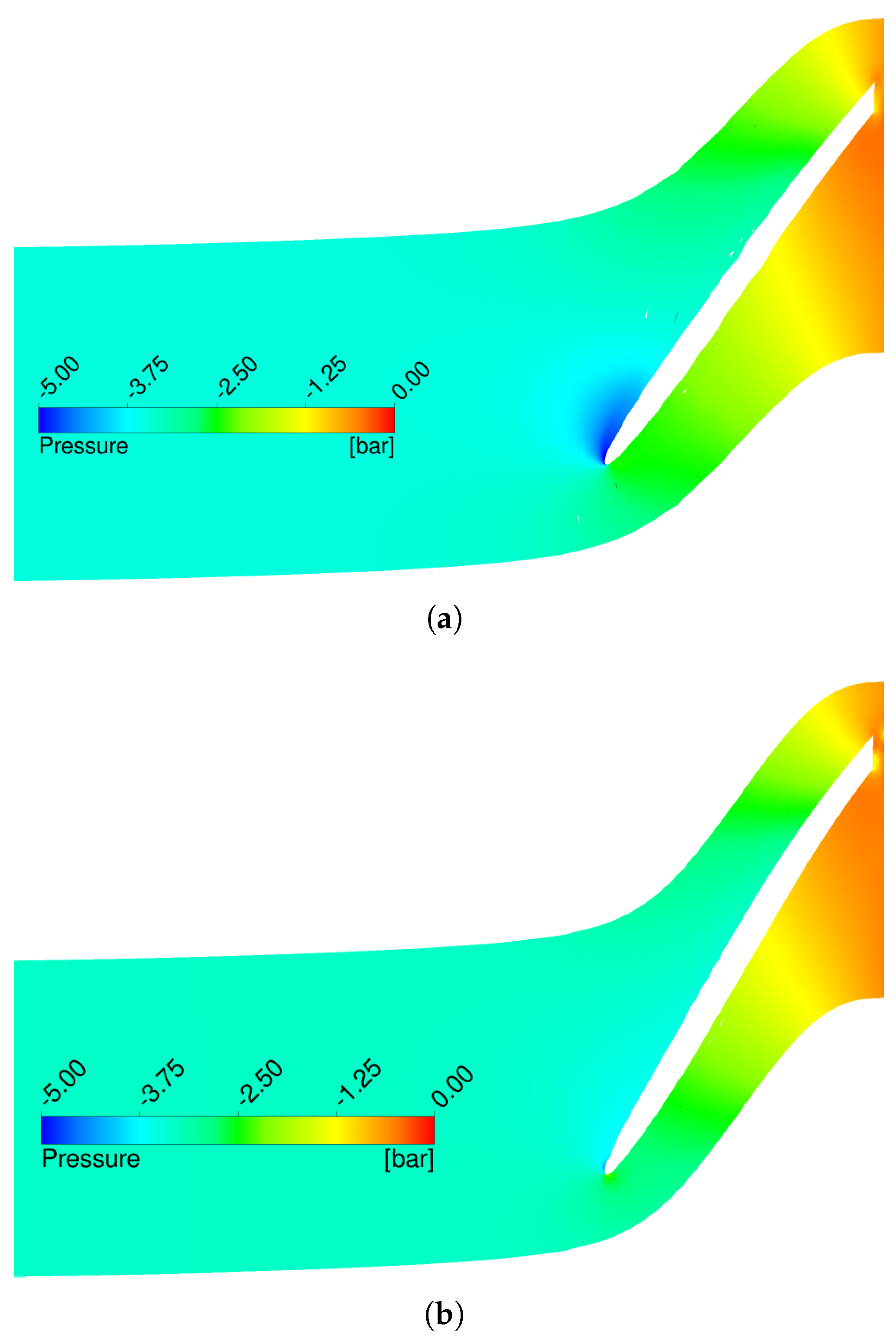
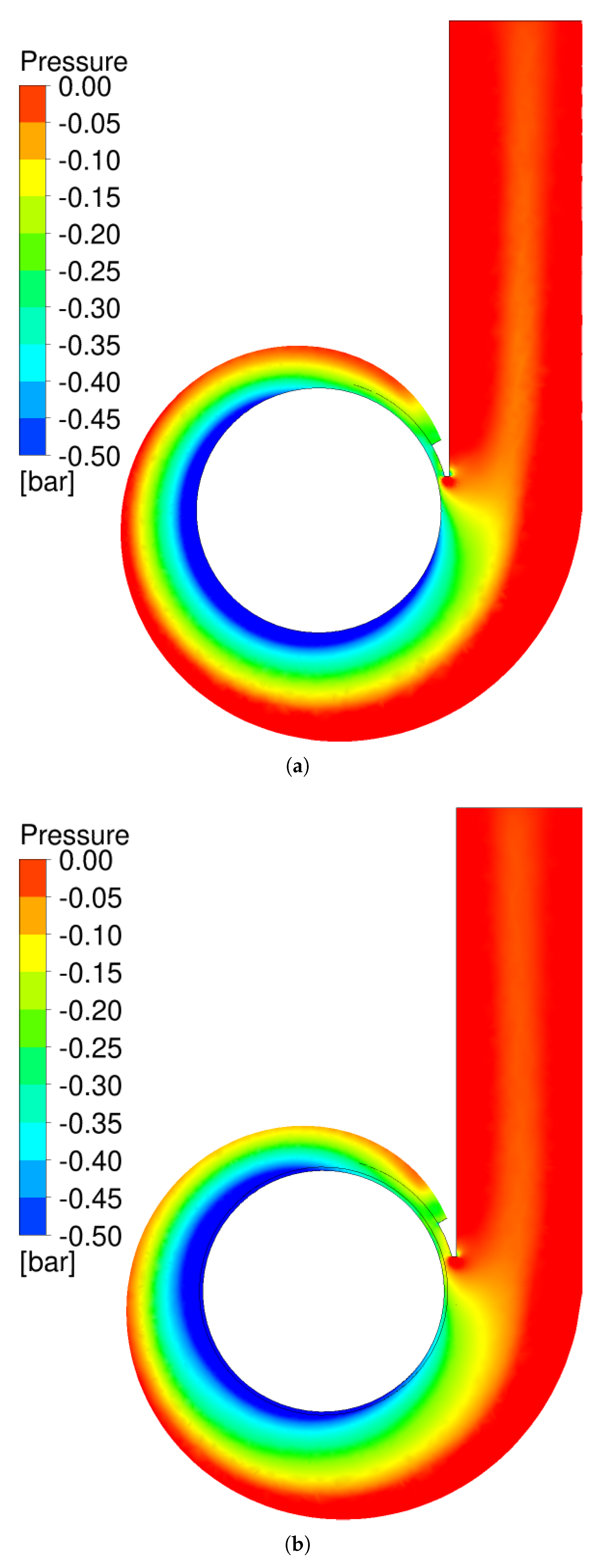
Figure 17 shows the static pressure at mid-span for the baseline (left) and optimized geometry (right). The pressure contours for the baseline are characterized by a low pressure area near the leading edge, which is completely removed in the optimal geometry, reducing also the cavitation problems.
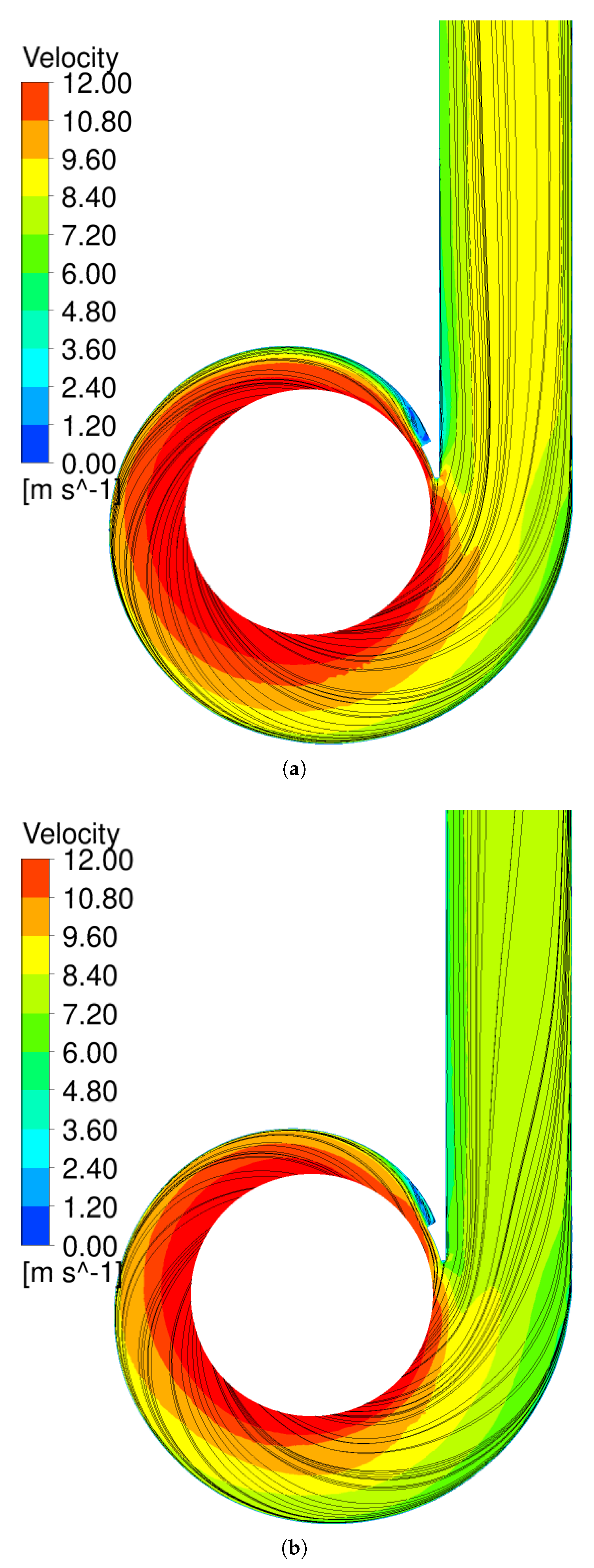
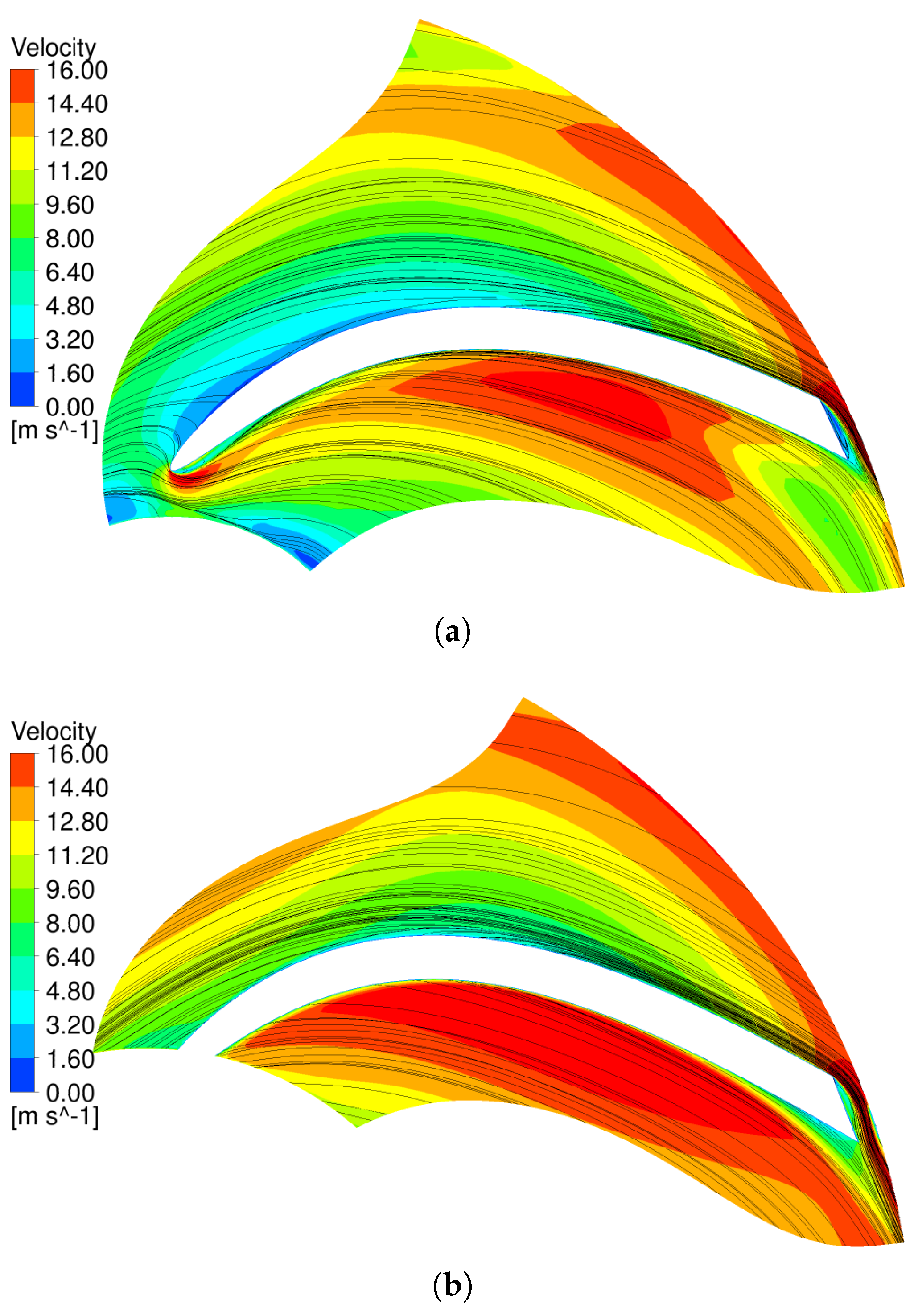
Figure 18 shows the velocity contours with streamlines at the plane
mm for the baseline (left) and optimized geometry (right). The small zone of acceleration near the leading edge of the suction side, probably motivated by a not correct blade inlet angle, is removed, and a smoother acceleration is visible in the blade channel. Finally, the wake near the trailing edge is reduced and the velocity distribution at the impeller outlet is more uniform.
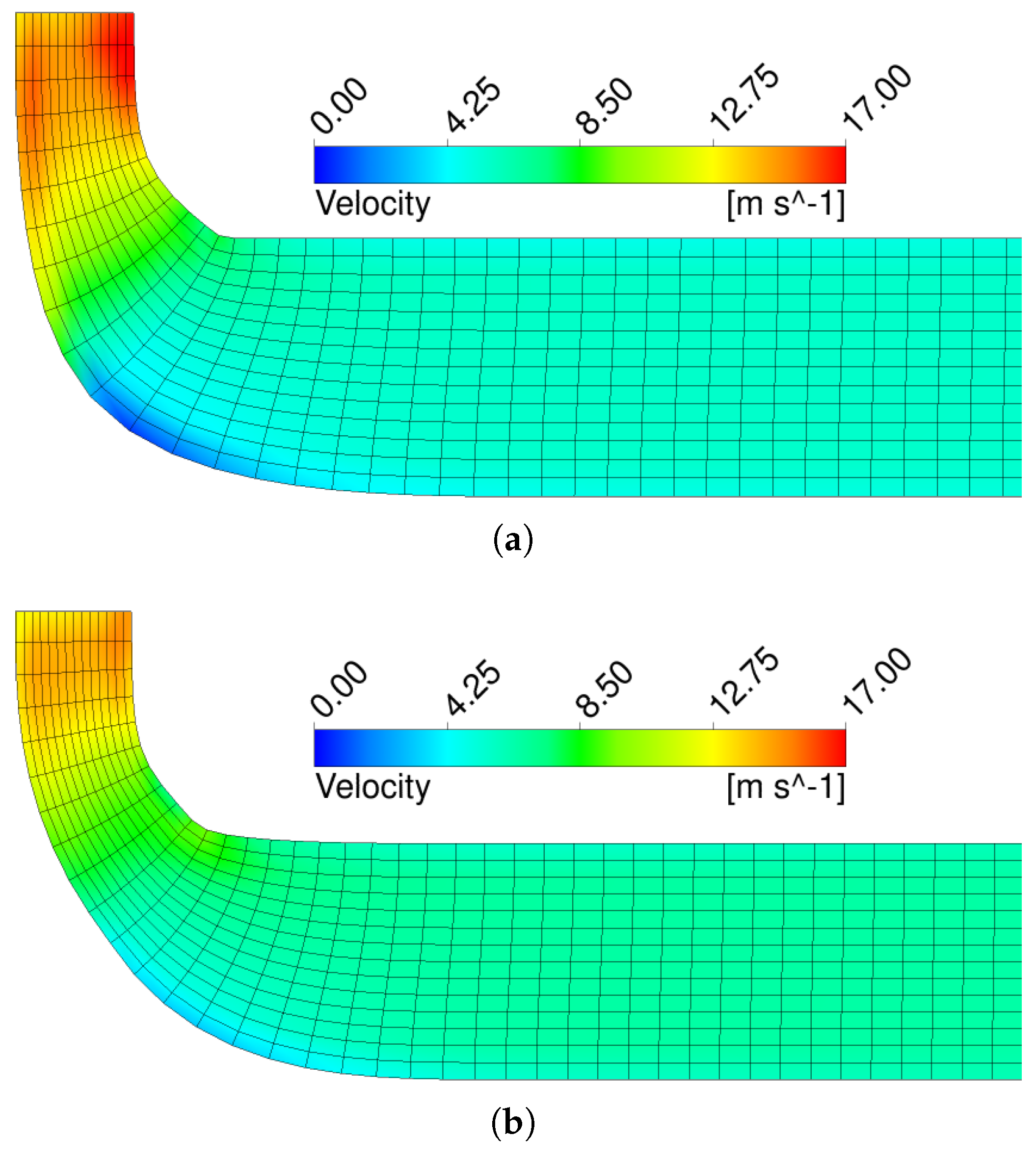
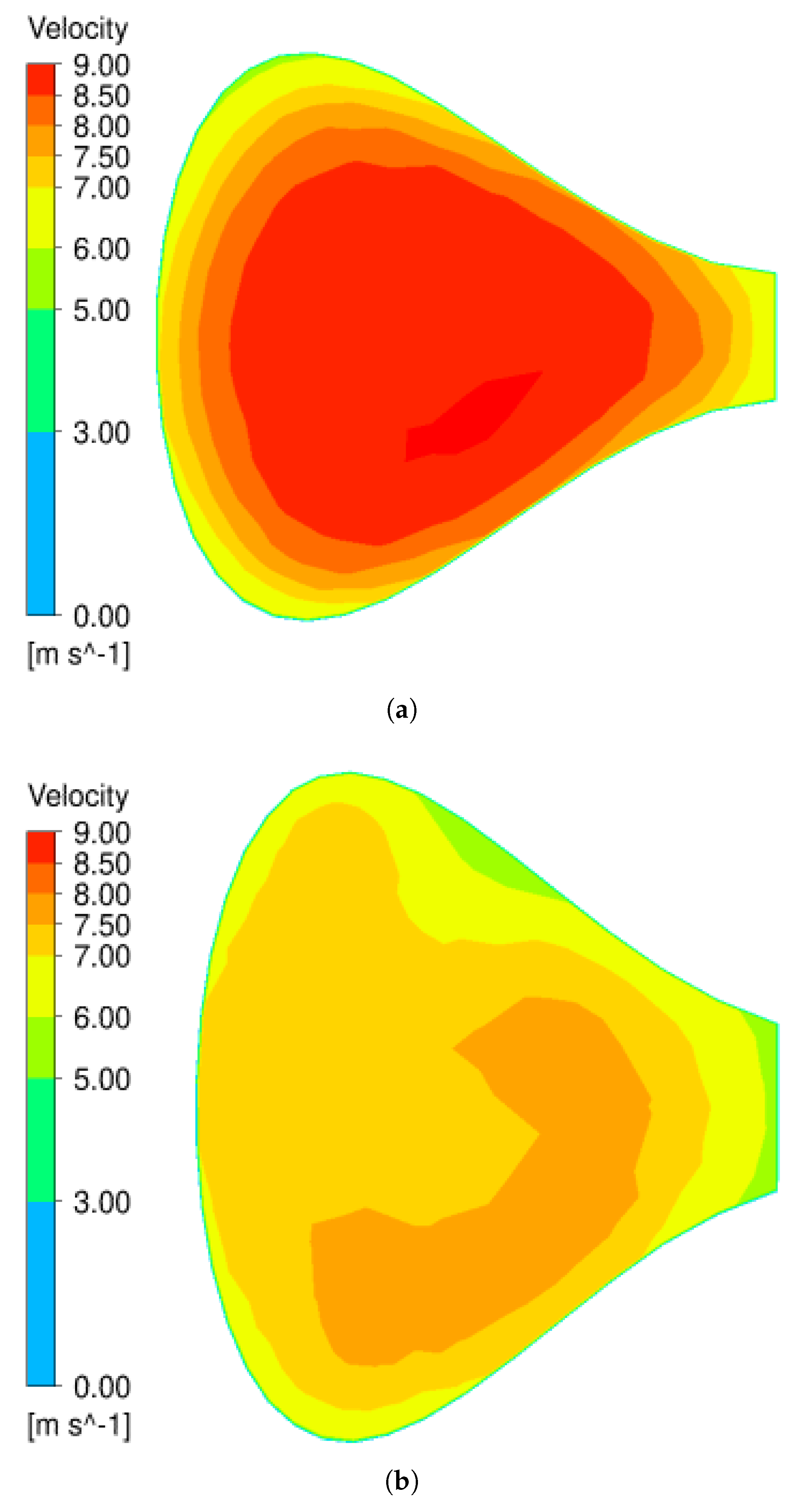
The flow in the meridional channel is analyzed in
Figure 19. The velocity contours show a more uniform distribution along the span in the inlet pipe and inside the impeller for the optimal geometry. This is obtained with a modification of the hub and shroud profile, as shown in
Figure 15. In particular, the reduction of the section at the end of the inlet pipe avoids the stall at the hub. Moreover, at the impeller outlet the velocity peak is reduced and the velocity distribution is more uniform along the blade height.
Finally, the flow field in the volute is analyzed. In particular,
Figure 20 and
Figure 21 show the pressure and velocity contours with streamlines in a plane at
mm. The pressure contours are quite similar for both baseline and optimized geometries. However, the latter shows a reduction of the low pressure zone at the volute tongue. The velocity contours show smaller values in the optimized geometry for the increased cross-section area (see
Figure 22). Moreover, the small recirculation zone after the volute tongue is removed in the optimal geometry.
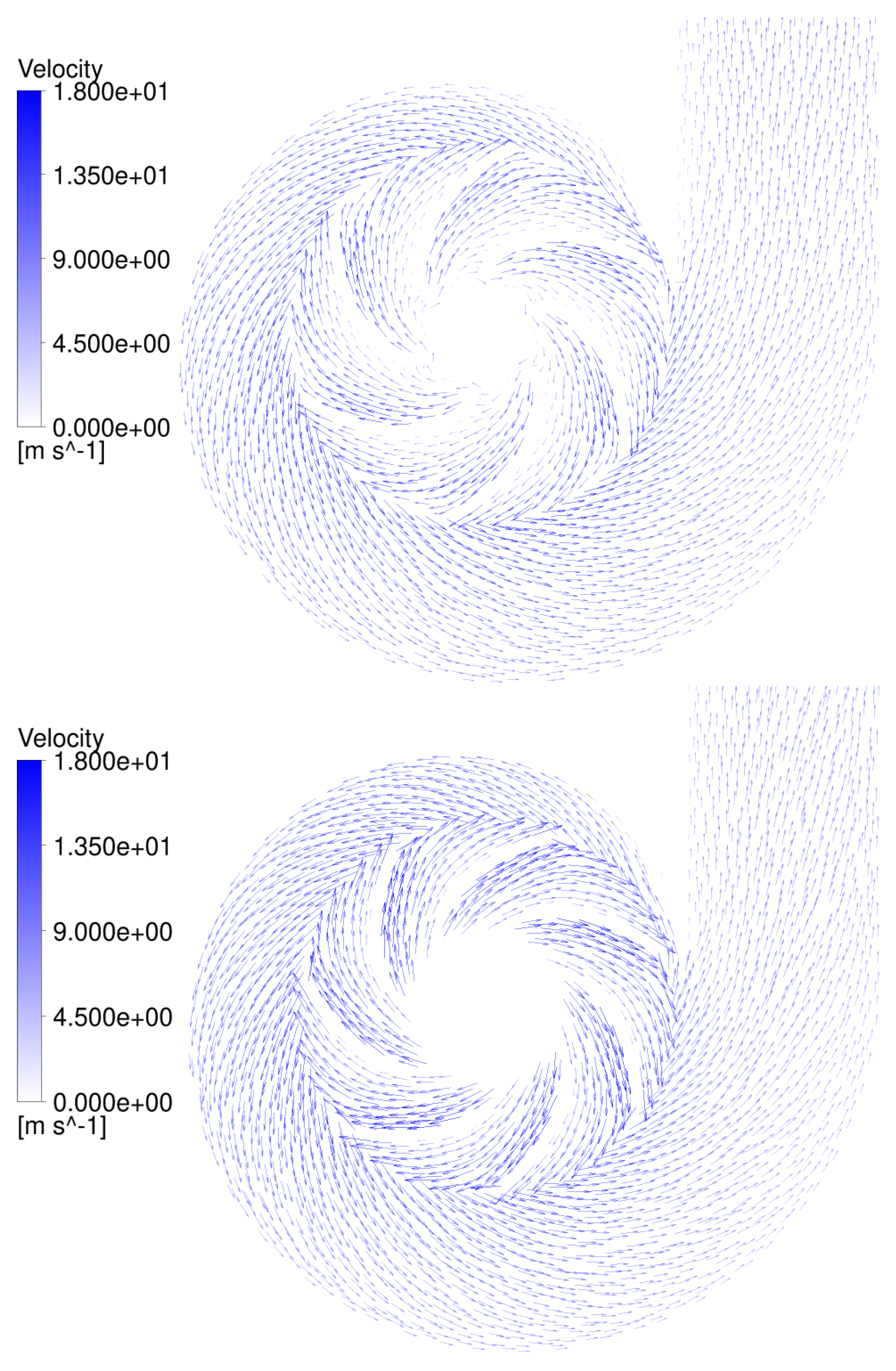
The distribution of the velocity vectors for the baseline and optimized geometry is displayed in
Figure 23 for a plane at
5 mm. A small recirculation zone is evident near the leading edge of the baseline geometry, while the optimized geometry is characterized by a smooth distribution of the vectors.
A comparison of the baseline and the optimal design in terms of the static pressure rise,
, total pressure rise,
and hydraulic efficiency is reported in
Table 6. Moreover, also single components, i.e., impeller, vaneless diffuser and volute, are compared. The global efficiency is increased by
; this improvement has been obtained decreasing the power absorbed by the impeller, and slightly the total pressure rise. The impeller torque
C (and the power at the impeller
W) is reduced by 11% in the optimal design, and its efficiency,
/W, is increased by
. The reduction of
C can be ascribed to the decrease of the blade loading, as shown in
Figure 16 by the
distribution, and of the losses. In particular, lower losses were achieved modifying the shape of the impeller blade and of the meridional channel, as shown in
Figure 17,
Figure 18 and
Figure 19. The vaneless diffuser of the optimal design provides an increase of the static pressure head about 5% together with an halving of the total pressure losses. The higher static pressure rise is achieved increasing the radial size of the vaneless diffuser due to the reduction of the impeller outlet diameter
, and the increase of the diffuser outlet height,
. There is also a reduction of the total pressure losses, which can be ascribed to the lower velocity of the flow entering the diffuser, as shown in
Figure 19. The optimization of the volute leads to a slightly decrease of the total pressure losses. In fact, a higher volute area leads to a lower velocity but a wider wet surface, which have an opposite effect of the friction losses. The recover of the static pressure is decreased due to a slower flow at the exit of the vaneless diffuser.
7. Conclusions
A procedure for the automated design of a centrifugal pump for the cooling of car engines is presented. It involves a shape optimization of the impeller, vaneless diffuser and volute, with the objective of maximize the efficiency of the pump, keeping constant the operating conditions. The baseline geometry is obtained with a lumped parameter code. The baseline geometry is enhanced with a 3D surrogate based optimization.
The proposed approach demonstrates its robustness, as it provides for the prescribed operating condition a 3D design from scratch, which was optimized to enhance the pump hydraulic efficiency ( is increased by 3% at the end of the optimization).
The optimal design presents a decrease of the blade loading, and a smoother acceleration along the pressure side. Moreover, the low pressure area at the leading edge is reduced, and, consequently, the related cavitation problems. The velocity field across the meridional channel is modified by changing the hub and shroud profile to obtain a more uniform distribution. In particular, the reduction of the section at the end of the inlet pipe avoids the stall at the hub. Moreover, at the impeller outlet the velocity peak is reduced and the velocity distribution is more uniform along the blade height. In the volute the pressure distribution is quite similar for both designs. However, the optimal design shows a reduction of the low pressure zone at the volute tongue, and smaller velocity values for the increased cross-section area. Moreover, the small recirculation zone after the volute tongue is removed in the optimal geometry.
The components that have the greater impact to improving efficiency are the impeller and the vaneless diffuser. Only a slight improvement is obtained in the volute, probably for the reduced number of DVs used for its geometrical parametrization.
Each simulation has been run in parallel on 32 cores, and 1 h is needed to complete the workflow (mesh generation and CFD simulation). DoE required 210 simulations, while 68 iterations were needed by the optimization procedure to converge to an optimum design. The computational cost of the whole optimization process was approximately 280 h (≈12 days) on 32 cores.
Ongoing work is devoted to enhance the parametrization of the volute, and to reduce the global number of DVs with an active subspace technique.



 ,
,