Article

Effect of Dry–Wet Cycle Periods on Properties of Concrete under Sulfate Attack


1
School of Water Conservancy Science and Engineering, Zhengzhou University, Zhengzhou 450001, China
2
China Construction Seventh Engineering Division Co., Ltd., Zhengzhou 450001, China
*
Author to whom correspondence should be addressed.
Appl. Sci. 2021, 11(2), 888; https://doi.org/10.3390/app11020888
Submission received: 11 December 2020 / Revised: 14 January 2021 / Accepted: 18 January 2021 / Published: 19 January 2021
(This article belongs to the Special Issue Advances in Building Materials and Concrete)

Abstract

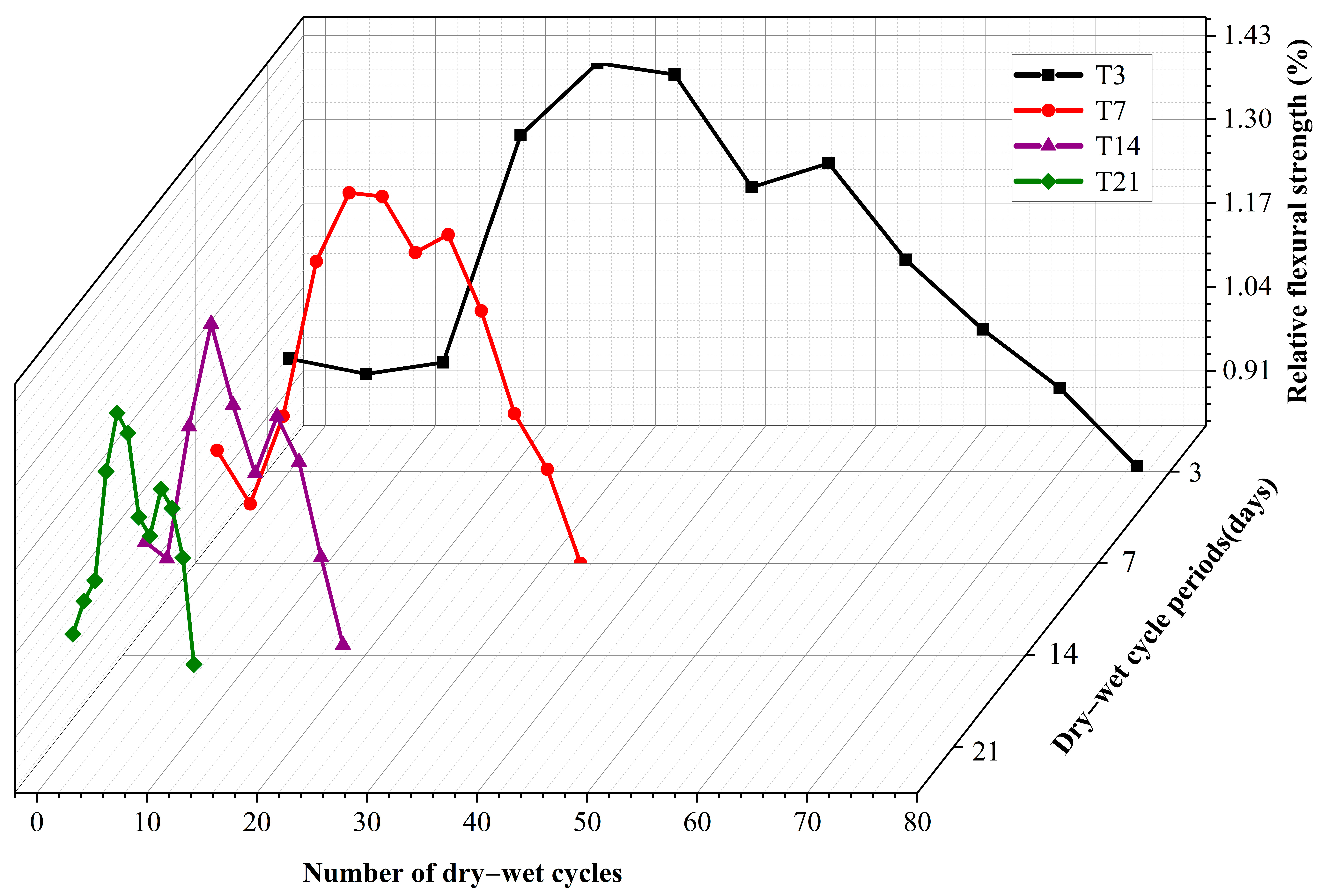
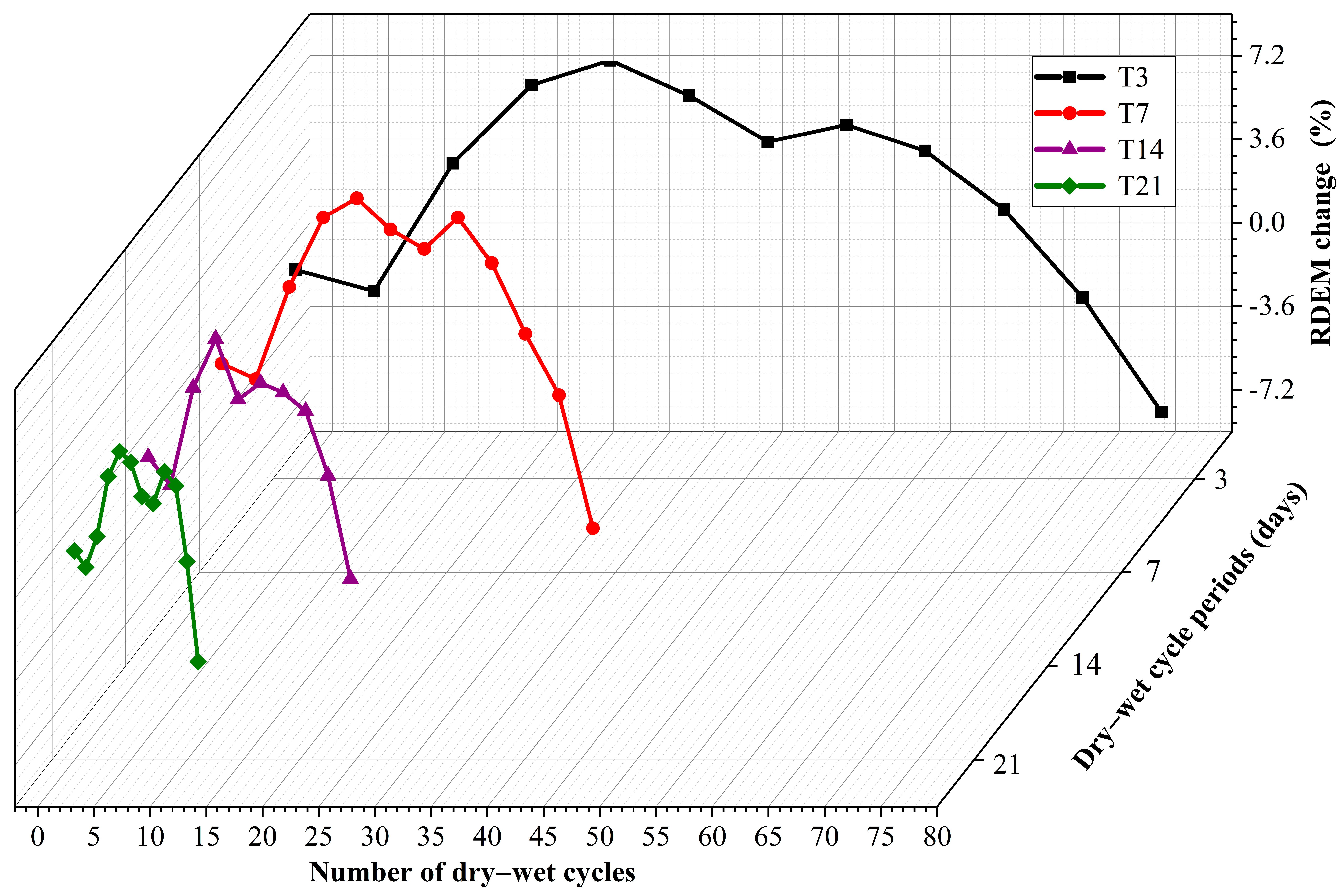
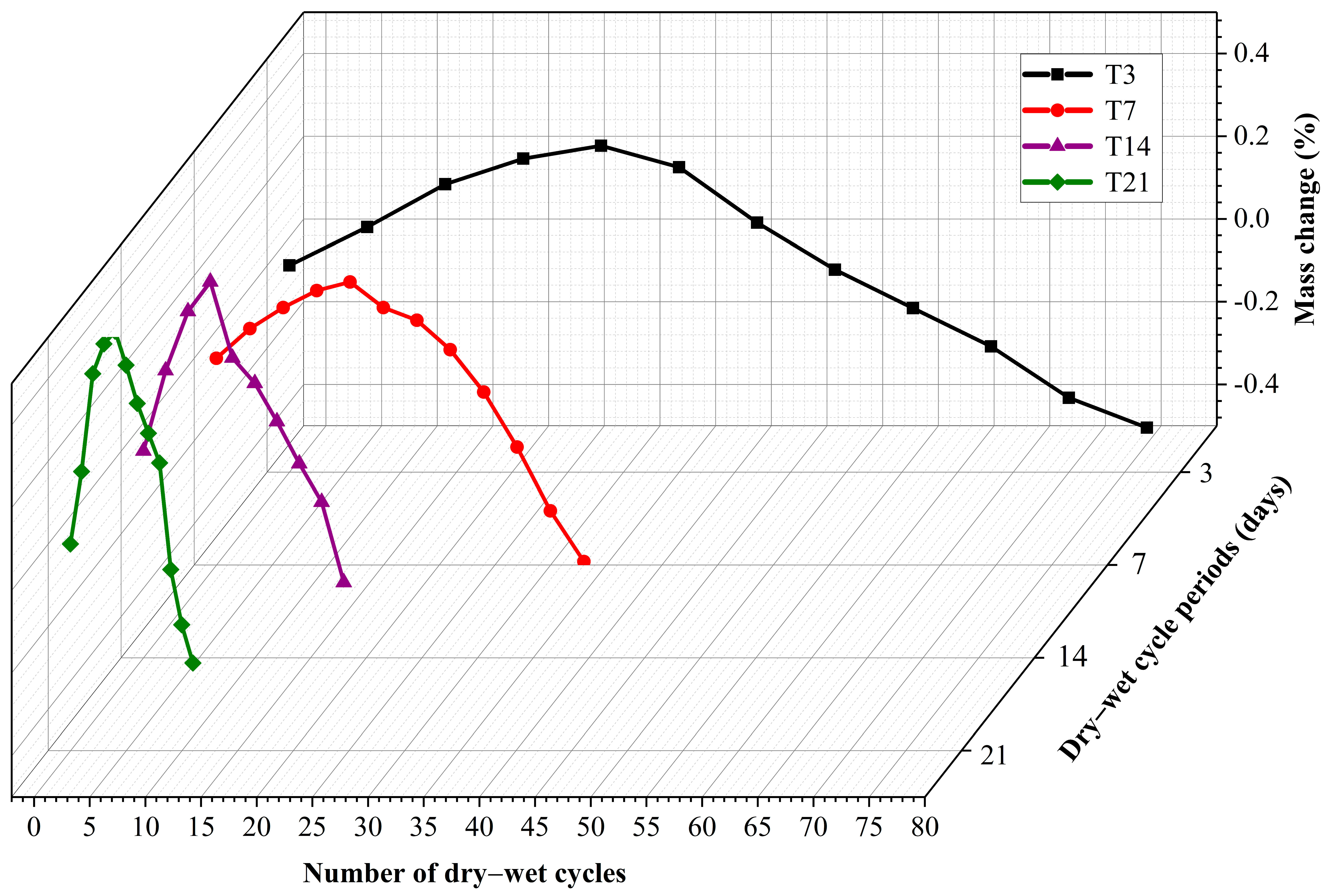
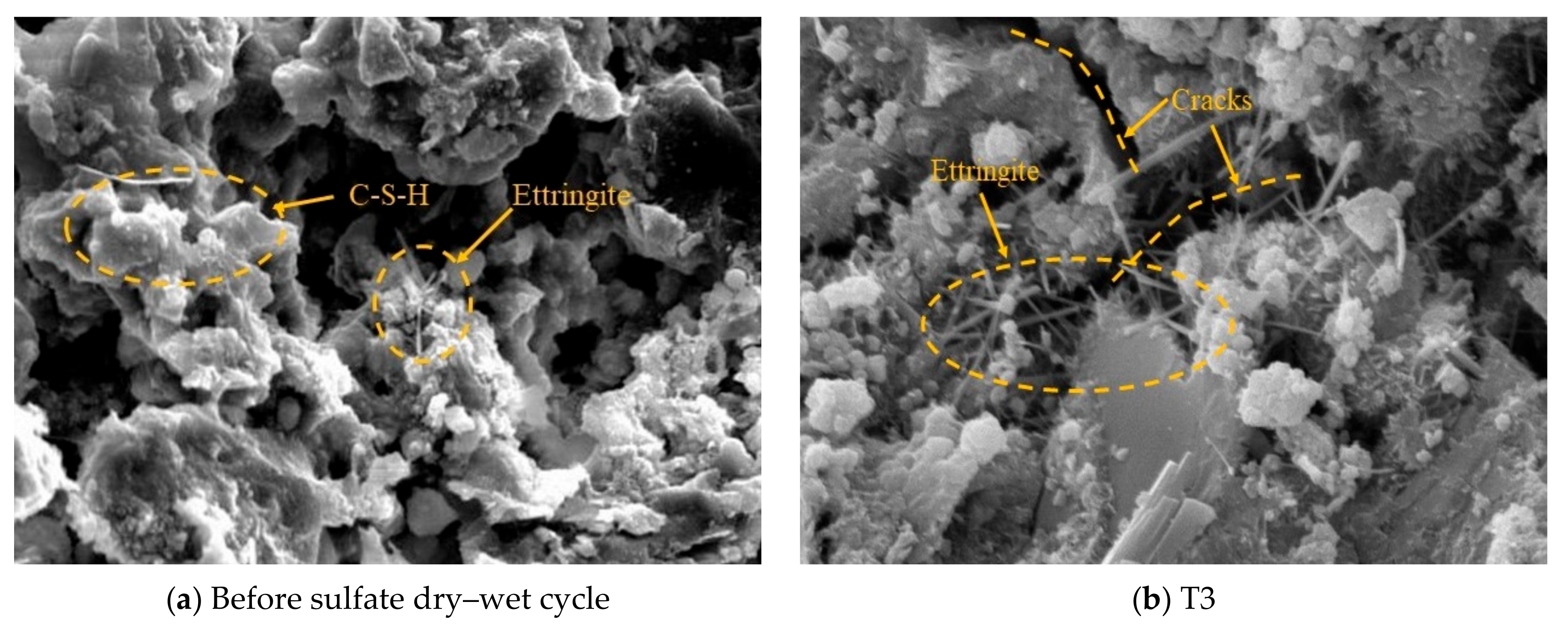
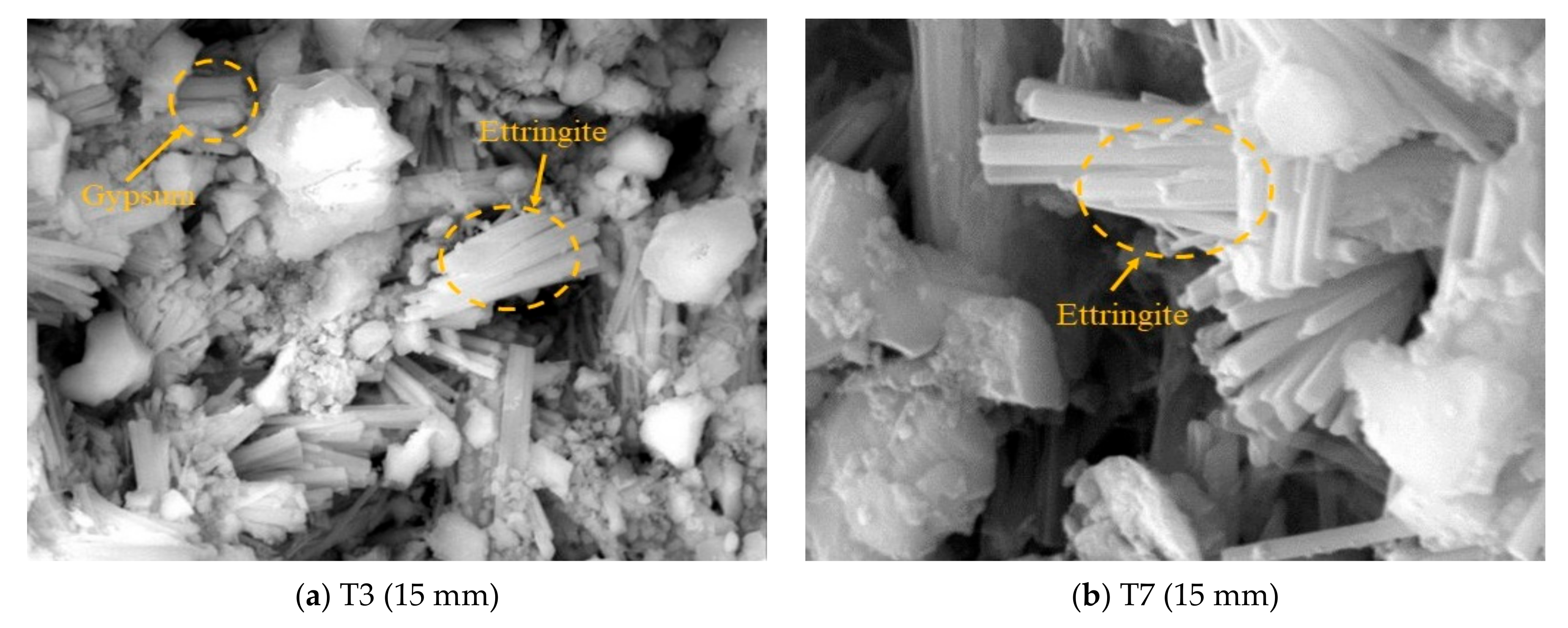
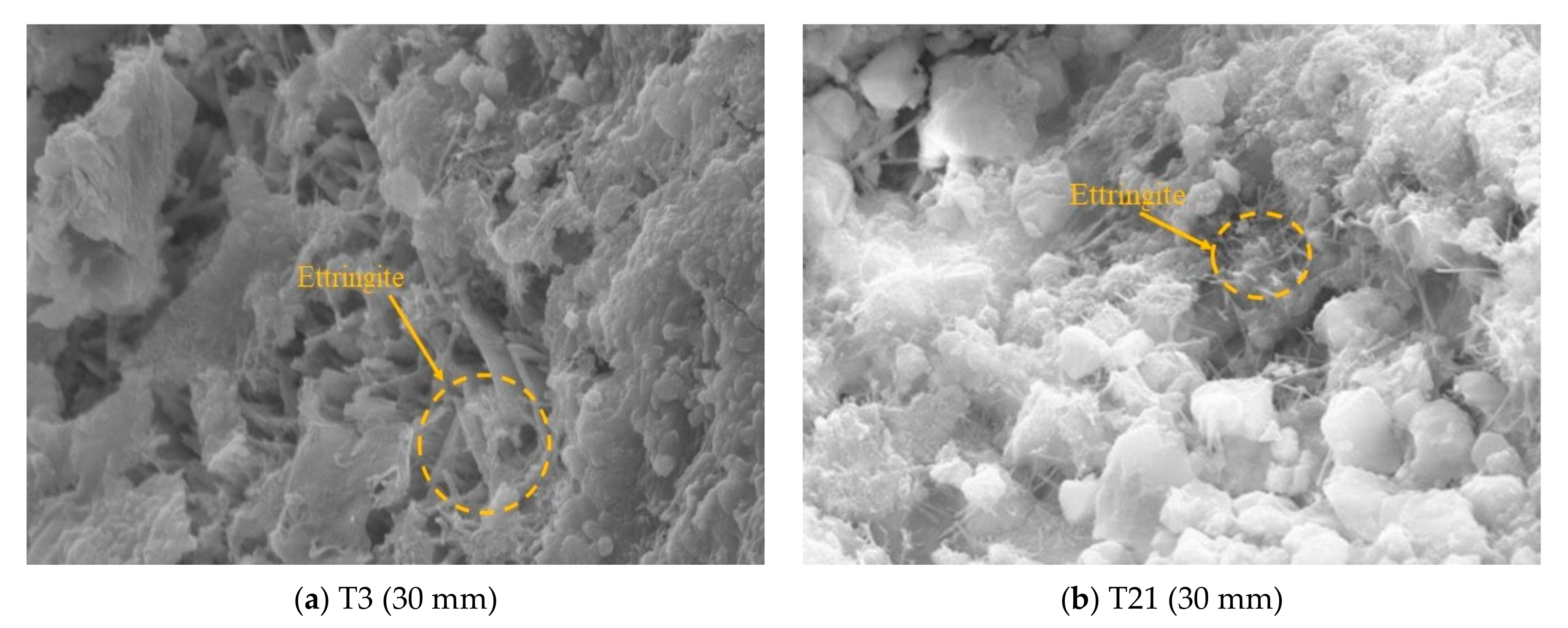
Dry–wet cycle conditions have significant effects on the corrosion of concrete under sulfate attack. However, previous studies have only applied them as a method for accelerating sulfate attack and not systematically studied them as an object. In order to explore the impact of sulfate attack with different dry–wet cycle periods on concrete, in this study, four dry–wet cycle periods (3, 7, 14, and 21 days) were selected. The flexure strength, relative dynamic modulus, and mass were tested, and the microstructures of the eroded specimens were also analyzed. The intensity and depth of sulfate erosion were influenced by the wet–dry cycle period. The results show that the deterioration of concrete first increased and then decreased with an extension of the dry–wet cycle period. Microstructural analysis indicated that, with an increase in the dry–wet cycle period, the corrosion depth of sulfate attack increased. Moreover, the erosion products such as ettringite and gypsum were greatly increased, in agreement with the macroscopic variations. However, excessively prolonging the dry–wet periods does not significantly further the deterioration of concrete’s performance. Therefore, considering the strength and depth of corrosion caused by sulfate attack, it would be appropriate to employ dry–wet cycle periods of 7–14 days under natural dry conditions in studies on concrete.
Keywords: sulfate attack; dry–wet cycle period; concrete; erosion intensity sulfate attack; dry–wet cycle period; concrete; erosion intensity