
Abstract
In February 2016, the Egyptian government introduced Egyptian Vision 2030. An important pillar of this vision is energy. Egyptian Vision 2030 presented renewable energy as the best solution to reduce the emission of greenhouse gases (GHGs) in the energy sector. Egypt’s electricity comes from various power plants; conventional thermal plants generate over 90% in which gas-fired generation accounts for 75% of the total output. Following the increase in natural gas (NG) projects in Egypt, NG is the dominant electricity source. Based on the pillars of the sustainable development strategy of Egypt, the county can increase dependence on renewable energies, and reduce CO2 emissions and bound electricity production from natural gas. We aim to determine future energy generation strategies from various power plant technologies depending on these three principles. To make the picture more clear and complete, we compared the environmental impacts and external costs of fossil, hydro, and nuclear power plants in Egypt. We used two computer codes: the model for energy supply strategy alternatives and their general environmental impacts (MESSAGE) and the simplified approach for estimating environmental impacts of electricity generation (SIMPACTS). The MESSAGE code modeled the energy-supply systems to determine the best energy-supply technology to meet future energy demands. SIMPACTS estimated the environmental impact and damage costs associated with electricity generation. The results indicated that nuclear power plants and gas power plants are long-term electricity supply sources. Nuclear power plants entail low total external-damage costs, in addition to low environmental impact during normal operation. We conclude that nuclear power plants are the best alternative long-term electricity-generation choice for Egypt to meet future electricity demands.
1. Introduction
Egypt is located in the northeastern part of Africa. It is bounded in the north by the Mediterranean Sea and in the east by the Red Sea, which puts Egypt at the crossroads of Europe, the Middle East, Asia, and Africa. It is the 30th largest country in the world with an area of over 1 million kilometers2. Egypt is the most populated country in North Africa and the Arab region with over 95 million inhabitants [1]. The population of Egypt is rapidly growing; thus, economic development is essential to support this massive population and to improve the existing infrastructure. Therefore, the country must prioritize energy and electricity, which are critical components in the development of any country. The Egyptian Electricity Holding Company stated in its annual report that the total installed capacity in Egypt in the fiscal year 2018–2019 was 58,353 MW, and the total power generation was 199,843 GWh [2]. Because of the increase in natural gas (NG) projects in the nation, NG is likely to stay as a dominant source of electricity [1,3]. According to the Energy information administration (EIA), Egypt’s renewable resources include hydro, solar, and wind energies. Hydropower is the largest source of renewable energy in Egypt, which makes it the third largest energy source following NG and oil. In 2016, Egypt installed a 2.8-GW capacity hydroelectric power plant that generated 13.8 TWh, which accounted for 7.2% of the total power generation in the country. The Aswan High Dam and Aswan Reservoir Dams across the Nile River are major sources of Egypt’s hydroelectricity even though the potential of the Nile River hydropower has been overly exploited. Egypt has only 30 MW of solar-generation capacity according to IHS Markit. The Egyptian renewable-energy sector has become quite important in international enterprises and organizations. Norwegian Scatec Solar has concluded a financial agreement with Egypt for the construction of six solar photovoltaic (PV) plants with a 400 MW combined capacity inside a 1.8 GW solar park that Egypt aims to establish at Benban. Saudi Company Acwa Power also concluded an agreement for three solar PV power facilities in the same site with a total capacity of 120 MW. Egypt has substantial wind-power resources, especially in the Gulf of Suez and the Nile Valley. The wind farms in Zafarana (547 MW), Gebel El-Zeit (200 MW), and Hurghada (5 MW) have a combined wind-energy capacity of 753 MW according to IHS Markit. The government decided to install 14 wind turbines to generate a 7.2-GW capacity electric power in 2020. Egypt intends to add nuclear power to its energy mix, and has signed a preliminary agreement with the Russian state nuclear corporation Rosatom to build a commercial plant in the El Dabaa site. The International Atomic Energy Agency (IAEA) noted that the proposed nuclear power plant at the El Dabaa site will be a four-unit plant where each site generates a gross electric-power capacity of 1200 MWe, producing a total of 4800 MWe of electricity. The reactor type to be constructed is VVER-1200/V-529 [4].
Nuclear energy is used to generate electricity, which results in nuclear waste. Nuclear waste is a major issue throughout the nuclear sector, particularly in nuclear industrial zones. A number of projects are being worked on for the final disposal of radioactive waste in the world; for example, deep disposal of spent nuclear fuel at the Olkiluoto site in Finland, and the planned spent fuel repository at Forsmark in Sweden (at a depth of 500 m in rock bed). Moreover, nuclear power plant technologies have been subsequently improved (generation to generation, e.g., I, II, III and IV) to ensure and maintain the maximum level of safety and considering waste reduction [5]. Nuclear energy has a low operating cost; although the construction cost is huge, once a nuclear power plant is built, the operating and maintenance costs are very low when compared with fossil power plants. Operating costs include operating and maintenance (O&M) and fuel. The fuel cost figure includes used fuel management and final waste disposal. These costs, while usually external for other technologies, are internal for nuclear power plants [6,7]. Currently in Egypt, the government-proposed form of funding such costs in the form of a levy on the electricity price of USD 0.001 per kWh for radioactive waste and spent fuel management, and an additional USD 0.001 per kWh for decommissioning [8].
In order to improve the quality of life of Egyptian citizens, the Egyptian government launched a new national agenda in February 2016 under the name Egyptian Vision 2030. This vision will be adopted by Egyptian organizations. Caring for environment is a pillar on which the vision is based. This vision aims to decrease greenhouse gases (GHGs) emission from the energy sector 5% by 2020 and 10% by 2030, and to reduce dependency on oil and gas as fuel for electricity production from 91% to 27% by 2030, and increase dependency on renewable energies such as solar, wind and nuclear from 1% for solar and wind to 16% solar, 14% wind and 9% nuclear [9].
Previous studies that employed the model for energy supply strategy alternatives and their general environmental impacts (MESSAGE) code to develop long-term energy plans for optimization have been conducted in different countries. Syria used the MESSAGE tool to devise the best long-term energy supply strategy. Syria’s future energy and electricity demand was projected based on a variety of scenarios that reflected its future socioeconomic and technological development trends over the next 30 years [10]. The results from that study revealed that primary energy will increase at an average annual rate of 4.8% to 68 Mtoe by 2030, and the total installed capacity will optimally increase from 6885 to 19,500 MW by 2030. The study further predicted that the future national energy system will mainly depend on oil and NG with limited renewable energy and nuclear power contributions at the end of the research period to guarantee supply availability. The adoption of nuclear power was determined to be the best long-term electric-power strategy for Saudi Arabia [11]. The study confirmed that Iran, the United Arab Emirates, Egypt, and Jordan were likely to adopt nuclear technology but categorized Saudi Arabia as a “nuclear-power state” and did not directly mention specific nuclear-power development plans. Using the MESSAGE code, the authors predicted that Saudi Arabia will be expected to experience power shortages by 2025, and these shortages will last up to 2035 when the existing power plants will be restored. The model projected that renewable and nuclear power technologies will be the most competitive future strategies for Saudi Arabia’s power supply by 2050. An analysis of the long-term energy plan for Korea using MESSAGE for energy optimization was conducted to compare three scenarios: the current existing scenario, strengthening the low-carbon power mix, and expanding renewable-energy sources to assess long-term energy plans. The results indicated that nuclear and coal power generations were reliable energy sources, and they were the primary energy sources in the three scenarios. However, coal power plants may not be ideal as potential energy sources because of the recent policy changes around the world that promote low-carbon and environment-friendly energy sources [12].
External cost refers to the economic concept of uncompensated social or environmental effects. For example, when individuals buy fuel for a car, they pay for the generation of the fuel (an internal cost) but not for the pollution because of this fuel. The simplified approach for estimating environmental impacts of electricity generation (SIMPACTS) evaluates the damage cost produced by electrical power plants. A study on the environmental effect of conventional power plants under normal and accidental conditions was conducted in Egypt. That work dealt with meteorological parameters, simulated the dispersion of pollutants from season to season, and calculated the concentration of pollutants emitted from two stacks from the Damanhur power plant in Egypt [13]. AIRPACKTS predicted the seasonal dispersion of pollutants from two stacks in the Damanhur power plant in Alexandria, Egypt. This factory mainly uses NG as fuel, and the most potent pollutants emitted from the power-plant stack were nitrogen oxides, carbon monoxide, sulfides, and particulate matter. Another study assessed the externalities from electric power plants in the Mexico City metropolitan area. An original method was developed to use the impact-pathway analysis of SIMPACTS to estimate the damage costs in this case. The estimate showed that the total annual cost was 71 million USD. A similar study on the damage costs of Syrian electricity generation was conducted using the impact-pathway analysis. The results indicated that the environmental effects can add considerable external costs to the typical generation cost in which the externalities varied between USD 2.5 and 0.07 per generated kilowatt-hour. A study was conducted in Korea to assess the effects on human health from nuclear power plants. The methodology used to assess the externalities of the selected fuel was the SIMPACTS computer code. The study focused on all nuclear power plants in Korea for the last 6 years (2001–2006). With respect to nuclear power, the impact analysis only focused on power generation. However, the front- and back-end nuclear fuel cycles, namely, uranium mining, conversion, enrichment, reprocessing, and conditioning, were not included because these facilities did not exist in Korea [14]. The analysis results showed that, in general, nuclear power entailed low external costs. The maximum damage costs from nuclear power plants across the four Korean sites were estimated to be USD 3.9 Millions/MWh, which were approximately 1/20th of the result from a similar case study conducted in the United Kingdom using the ExternE project. This disparity was mostly attributed to the inclusion of a significant number of radionuclides in that study and the amount of released radioactive emissions based on the current information in Korea. The sensitivities of the primary parameters of nuclear power plants were also investigated in that study. The analysis indicated an approximately ±3% damage-cost variation to a ±15% change in the reference population density and a ±1% damage-cost variation to a 1–30 m change in the effective release height. When the reference costs were compared, these sensitivity calculations revealed a small variation only. The objective of this study is to evaluate the best choice of technology that can be used to generate electricity in Egypt based on some scenarios: the basic scenario which represents the current energy policy of Egypt without considering any new vision, the second scenario which reduces the CO2 emission in regards to Egyptian Vision 2030, and the third scenario which bounds electricity production from natural gas. A sensitivity analysis was performed to see the effect of increasing the discount rate and decreasing the investment cost of renewable energy. MESSAGE was used to model the future energy mix from various types of power plants and to apply the constraints in scenarios. To complete the whole picture of Egypt’s future electricity plan, the SIMPACTS code was used to estimate the environmental impacts and external cost of hydro and fossil power plants and to compare this effect with that of a nuclear power plant.
2. Materials and Methods
The methods used in the current study were based on two criteria. The first criterion was to achieve an optimal energy mix to meet the future electricity demand. This criterion was carried out through the MESSAGE code. The second criterion was the environmental effect of the optimal energy mix. This criterion was achieved through the SIMPACTS computer code.
2.1. MESSAGE Modeling
MESSAGE is a system-engineering optimization model used for medium- to long-term energy-system planning and energy-policy analysis. Professors Wolf Häfele and Alan S. Manne created MESSAGE for a global energy project that they were working on at the International Institute for Applied Systems Analysis (IIASA) in the 1970s. Subsequently, IAEA purchased the MESSAGE program from IIASA and introduced some improvements, including the addition of a user interface. The mathematical model of MESSAGE is based on linear optimization, which optimizes a linear objective function under certain constraints or linear equality and inequality according to the decision variables. Objective function is defined as the objective used for making decisions. In MESSAGE, the objective function can be the cost (to be minimized) or the profit (to be maximized). The method also allows the use of several optimization criteria in which case one looks for an efficient solution. The objective function is obtained from the system cost. For each period denoted as t, the following are recorded:
- Variable operating and maintenance costs;
- Fixed operating and maintenance costs;
- Investment costs: penalty costs/taxes imposed by regulation.where is the sum of the costs incurred in period t and , where r is the discount rate.
The constraints are the restrictions or limitations on the decision variables. These constraints usually limit the value of the decision variables. In MESSAGE, the constraints reflect various limits on the expansion and use of technologies and resources, including emissions limits due to environmental regulations. An important constraint in the model of an energy-supply system is satisfaction of the demand. Depending on the model, the energy demand can be expressed at the level of the final energy forms (demands for gas and electricity) or at the useful energy level (demands for transportation by cars, residential heat, and industrial heat). The constraint is that the supply must be at least equal to the demand in each period t.
where represents the demand for energy form j at period t, represents the activity of technology i in period t, and is the rate in which technology i is generating energy form j.
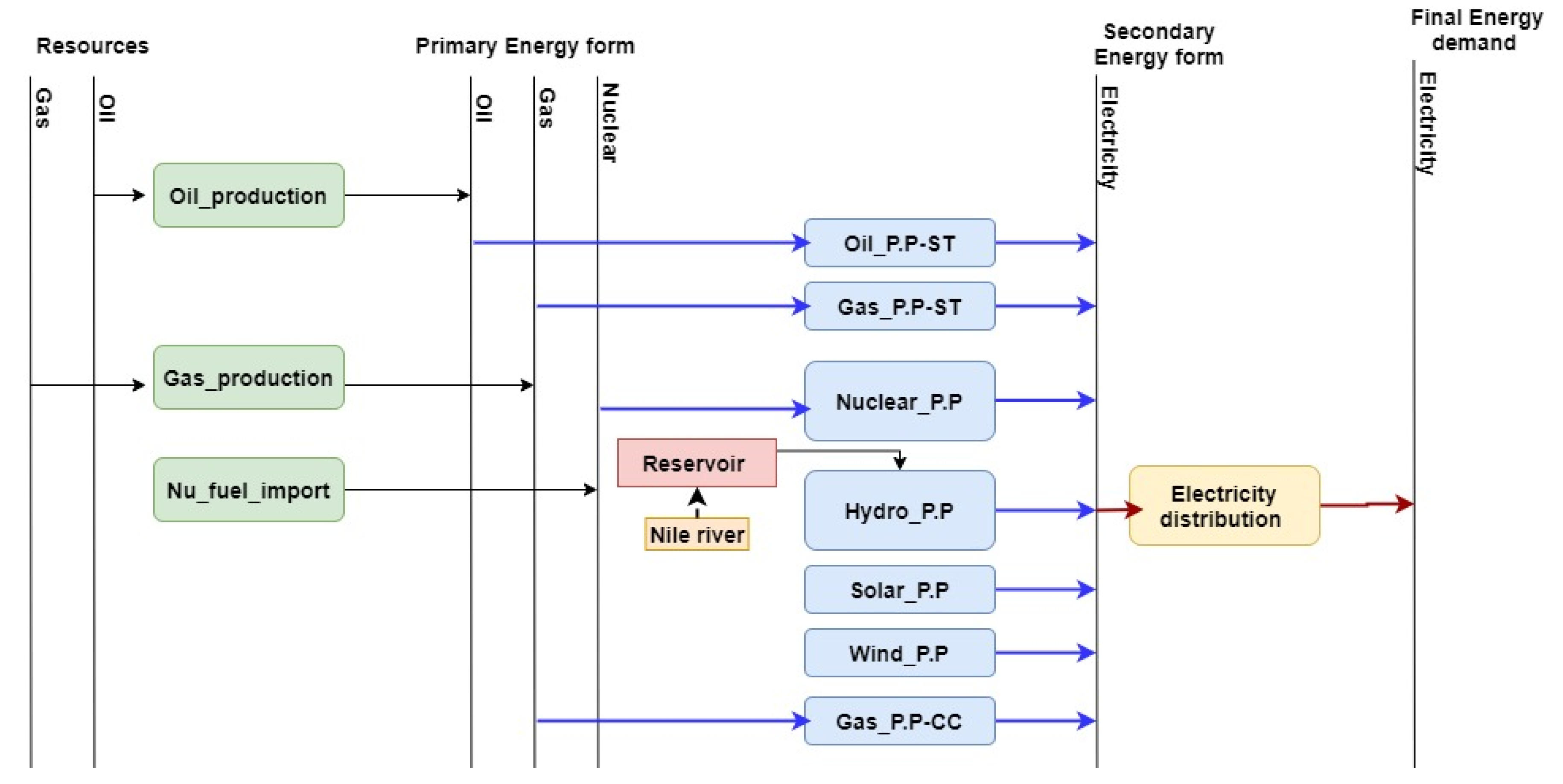
Figure 1 shows the energy chain in Egypt, which consists of four levels. The first level comprises the resources where Egypt extracts NG and crude oil. In addition to its extracted resources, Egypt will import nuclear fuel to satisfy its energy demand for a nuclear power plant. The second energy level consists of the primary form of energy, which involves the preparation and treatment of the extracted energy form for conversion to another form before using it in various technologies. The third level refers to the secondary form of energy, which represents the pre-final form of energy before sending it to the recipients for consumption. The fourth and final level is the final demand energy. The energy chain in Figure 1 shows that gas, oil and, electricity represent the final electricity-form demand in Egypt.
Figure 1.
Energy chain in Egypt.
The first information introduced into MESSAGE is the time frame of the model. The first and last model years determine the study period (or planning horizon). The study period is divided into time steps. Table 1 summarizes the time frame input data to MESSAGE.
Table 1.
Input parameters of the general tab in MESSAGE.
The second type of information entered into MESSAGE defines the energy levels and the information at each level of the energy forms that is considered by the system which is illustrated in Figure 1.
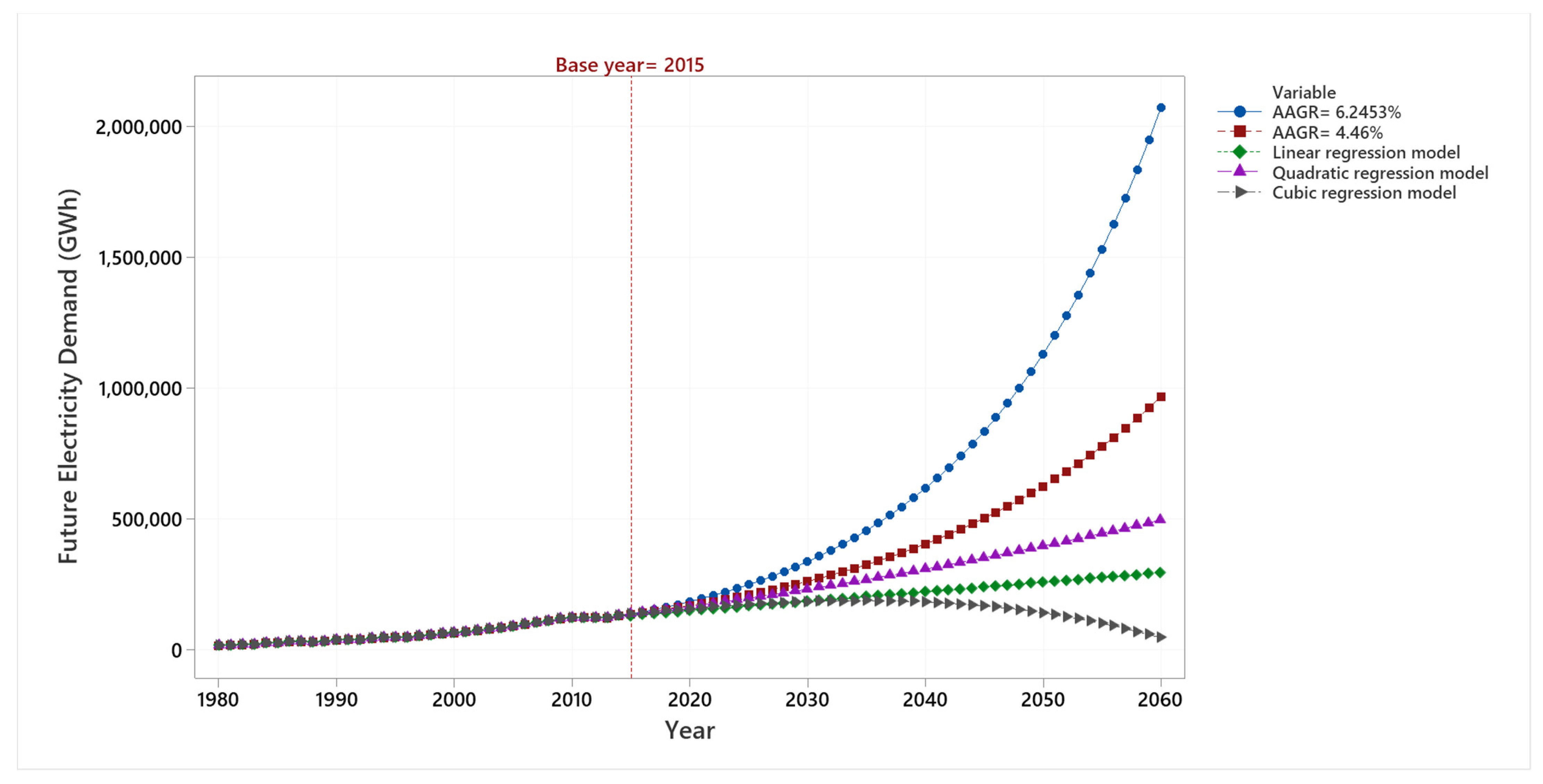
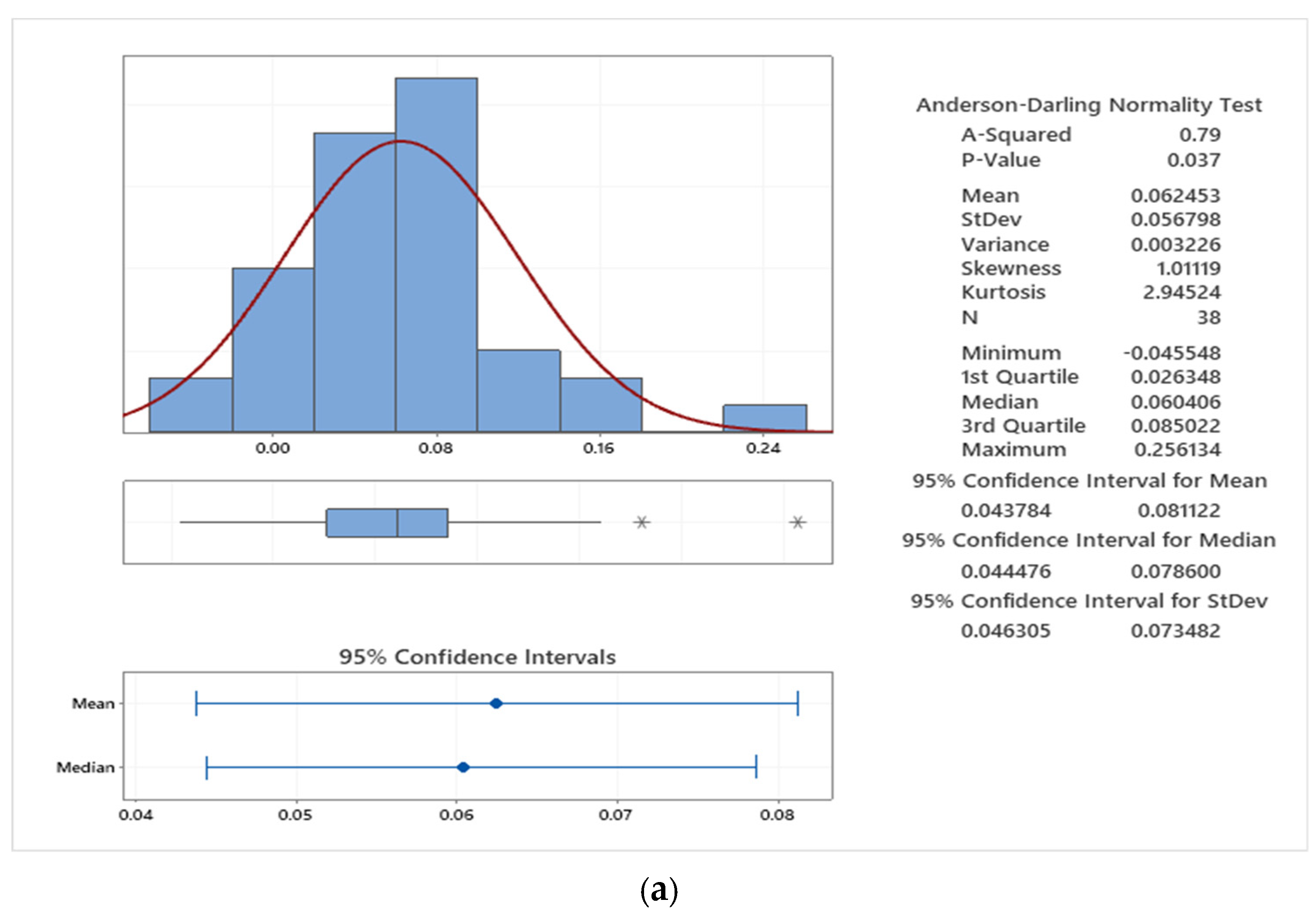
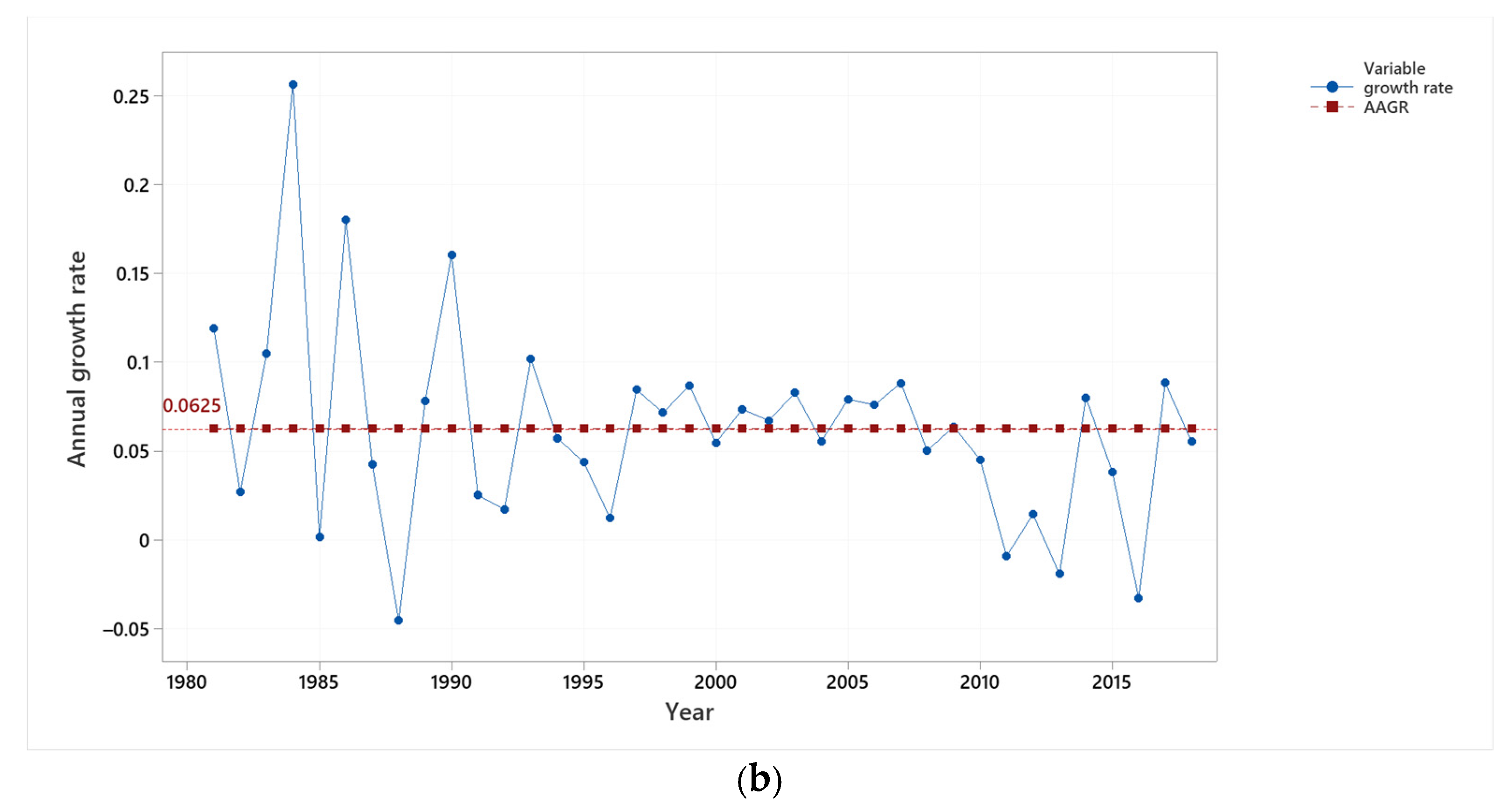
Energy-demand projections drive the energy system. It is the most important parameter in the optimization process. In this study, data on the electricity demand from 1980 to 2015 (base year) are collected and statically analyzed by two models to select the most conservative model as an input. The first model is the average annual growth rate (AAGR) of 6.2453% for the electricity demand. The value of AAGR was considered depending on the normal distribution of the annual growth rate from 1980 to 2015 [16]. Figure 2a summarizes the statistical analysis of the annual growth rate for electricity consumption. The average value is 0.062453, and median value is 0.060406. Figure 2b shows the fluctuation of the annual growth rate from 1980 to 2015, and the average value of annual growth rate. From a literary review, we obtained the value of the average annual growth rate of 4.46%. This value was calculated by applying the computable general equilibrium model. This model was developed by the international food policy research institute to use in the analysis of agriculture plans. However, the model can be used to determine electricity demand [17]. The second model used was the polynomial regression analysis. We used the previous data collected to generate three regression models. The first model was a linear regression model with R2 = 96.4%, the second model was a quadratic regression model with R2 = 98.7% and the final model was a cubic regression model with R2 = 99.0%.

Figure 2.
Analysis of annual growth rate for electricity consumption. (a) Shows the results of Anderson-Darling normality test and summarize the statistical parameter for annual growth rate from 1980–2018. (b) Shows the fluctuation of annual growth rate and red dot line presents the average value that used in the simulation.
Figure 3 shows the predication of the future electricity demand for the five models according to the data collected from 1980 to 2015. The average annual growth rate (AAGR) of 6.2453% is highest curve and more conservative than others. Therefore, the constant growth rate was used in MESSAGE to identify the future electricity demand.
Figure 3.
Comparison between five models used for Egyptian future electricity demand.
Based on Egyptian Vision 2030, we developed five energy mix scenarios. The first scenario is reference case. It represents the current situation without considering any new policies to protect the environment or secure energy, and answers the question “what is the future of energy in Egypt if we continue with the current situation?” The second scenario imposed a limit on CO2 emission from only gas power plants and no constraints on CO2 emission from oil power plants. The third scenario imposed a limit on CO2 emission from both oil and gas power plants. The upper limit of CO2 emission is 205 Mton. This value represents 10% less than the value of the base year (2015) [9]. The fourth scenario imposed a limit on CO2 emission and constraint on electricity production from natural gas. The upper limit of electricity generation by natural gas is 27% of the maximum electricity generated in the first scenario [9]. The fifth scenario is separated into two parts: wind energy and solar energy. In this scenario, we assumed a case where Egypt will not include nuclear technology in its future energy mix, but instead rely on renewable sources of energy in addition to fossil fuels.
In this study, we used different technologies to generate and transform energy from the resource level to the final demand level that can be used by the population, as shown in Figure 1. The input data to the technology are illustrated in Table 2. The parameters identified for each technology are efficiency, capacity factor, retired time, investment cost, fixed cost and historical capacity of this technology.
Table 2.
Input parameters of the technologies in MESSAGE.
After generating electricity (whatever the source of generation; hydro, solar, wind, Nuclear…), this electricity will be distributed by transmission lines. The efficiency of distribution and transmission was calculated from the collected data from 1980 to 2018. The average distribution loss is 12.55% from electricity generation. In Table 2, we mention the efficiency of electricity transmission and distribution (Elec-TD) is 0.874.
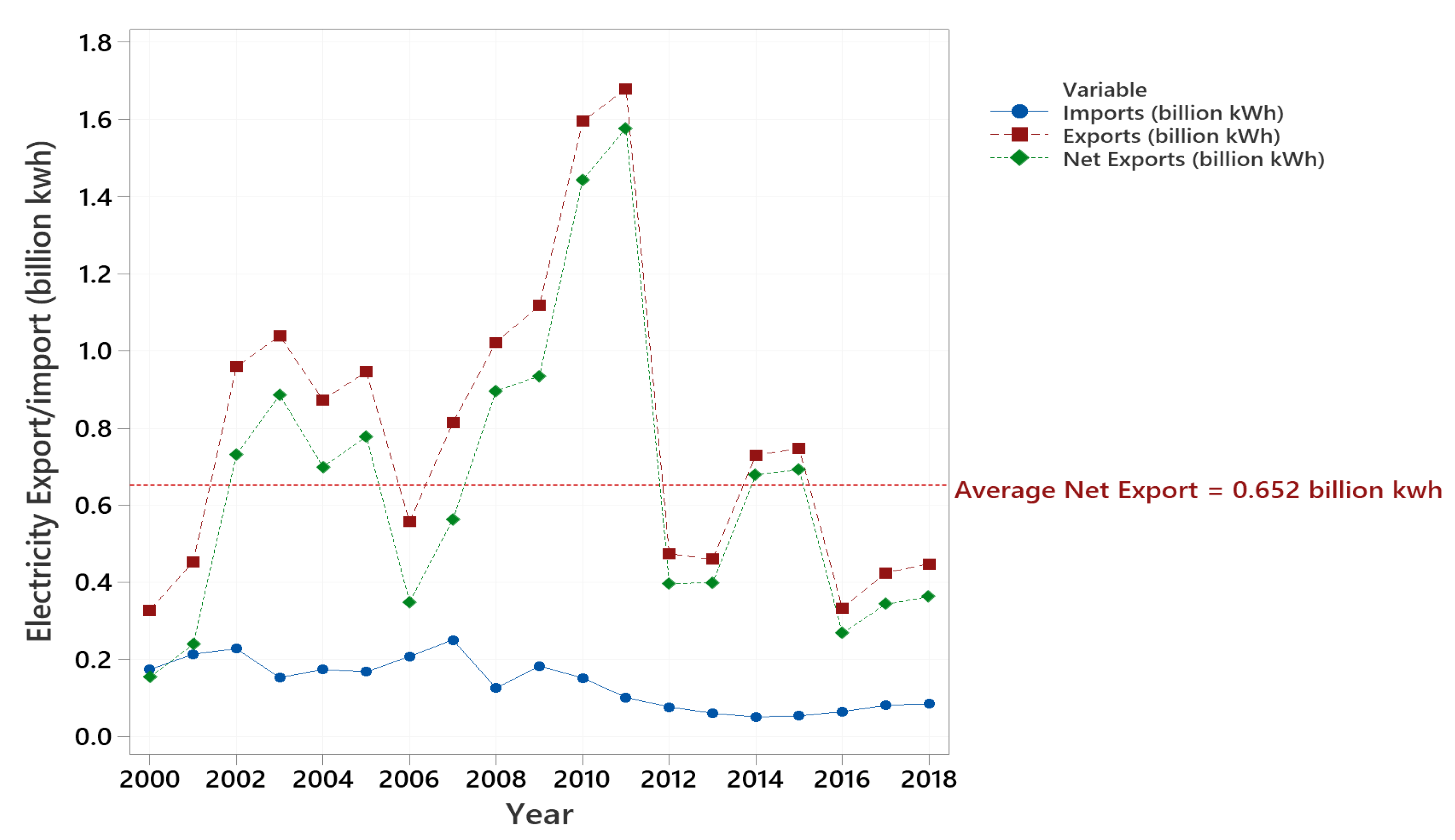
The export and import electricity are neglected in this study according to the historical data collected. Figure 4 illustrates the net exports of electricity. The net export is electricity export minus electricity import. As we can see, the average net electricity export is 0.652 billion kWh which represents 0.5% from electricity generated in Egypt and 0.6% from the country’s electricity consumption.
Figure 4.
Historical data for net export of electricity for Egypt.
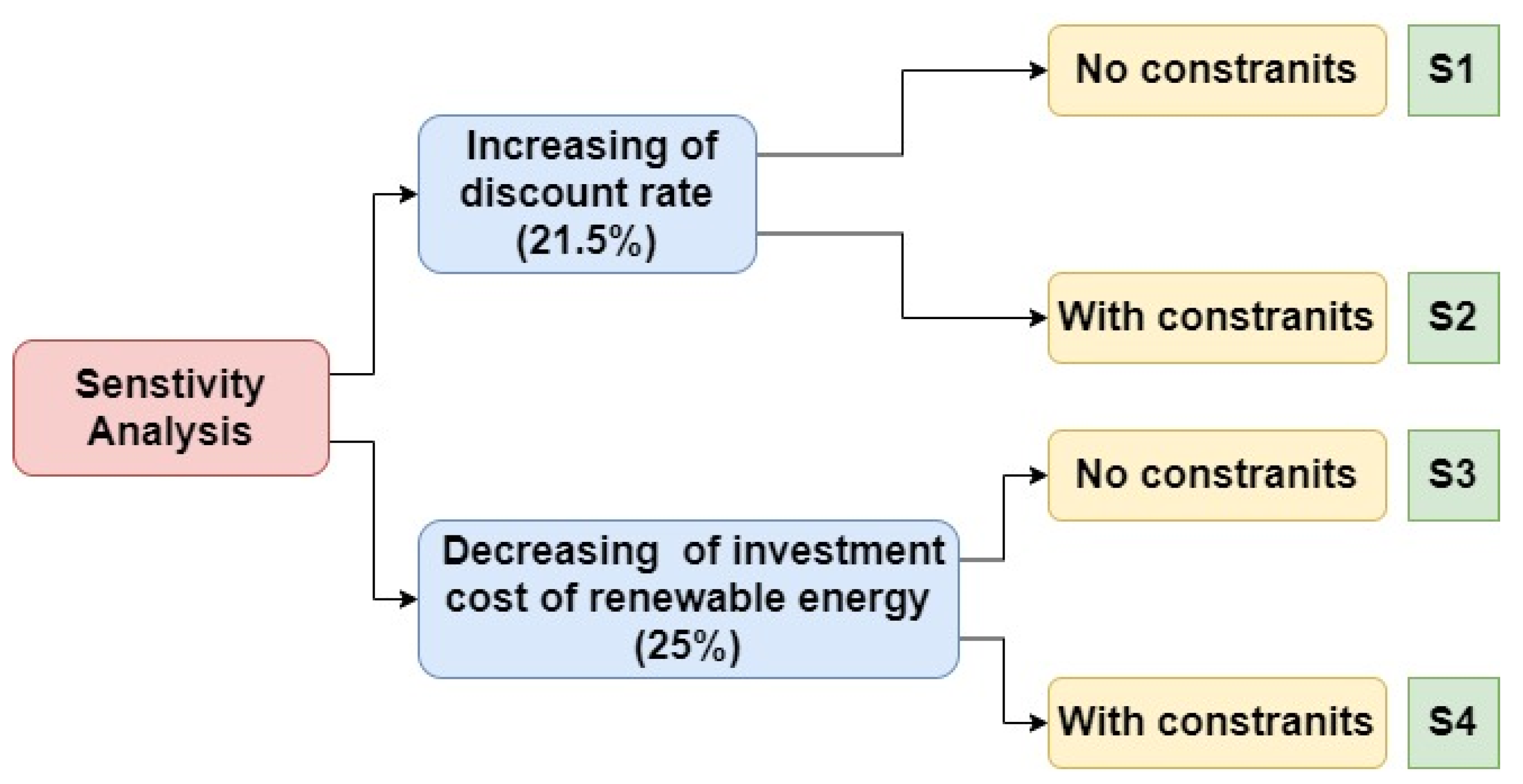
In this study, some parameters were used as constant values because the future values are unavailable. A sensitivity analysis was performed on two parameters to explain the uncertainty in the output of a mathematical model; the first one is increasing the discount rate from 8.75% to 21.5%. This value is the highest value of discount rate from 1991 to 2020 [15]. Figure 5 shows the cases used in the sensitivity analysis. The simulation was performed on two planning horizons without any constraint on the CO2 emission or electricity generated by natural gas and with constraint. The second parameter is decreasing the investment cost of renewable energy by 25% of the value used in the simulation. The second parameter was applied without any constraint and with constraint.
Figure 5.
Scenarios used in sensitivity analysis.
2.2. SIMPACTS Modeling
The SIMPACTS model was developed by IAEA as an application for developing countries. The model is based on the EcoSense methodology applied in the ExternE study of the European Union. SIMPACTS consists of separate modules to assess the consequences to human health, agricultural crops, and buildings from exposure to atmospheric emissions of routine or steady-state processes such as power plants. It covers fossil-fired, nuclear, and hydro power plants. It first estimates the physical effects and health damages and then provides a monetary valuation of these damages. Translation of the physical effects results in damage costs or social burdens. When the damages are not accounted for in the market price of a particular product, they are called external costs [19]. For airborne pollution, whether from fossil-fired or nuclear power plants, the model utilizes a simplified version of the impact pathway analysis (IPA), also known as the damage function approach. The first IPA step identifies the emission source and prepares an inventory of the airborne releases. The second step estimates the changes in ambient concentrations of various pollutants (emission rate), radioactive emissions, or deposits using atmospheric dispersion models. SIMPACTS uses separate atmospheric dispersion models to calculate the dispersion of pollutants in air. It uses the Gaussian plume model to estimate the pollutant concentrations.
A local model (5 km × 5 km) was used in which the dispersion of primary pollutants (species emitted at the source) was influenced by stack parameters and weather data. On the other hand, a regional model (50 km × 50 km) was used in which chemical transformation, dry deposition, and precipitation deplete the pollutant from the air. The regional concentrations can be predicted using the Eulerian or Lagrangian transport models such as the wind rose. The dispersion model can provide information on the transportation of pollution and methods of exposure and can calculate the risk.
The quantification of physical effects is called exposure response functions (ERFs). ERF is used to relate the change in pollutant concentration to a physical effect on the relevant receptors (e.g., number of asthma attacks). ERF can be estimated using two conditions, as expressed in Equation (3).
where is the background concentration of SO2 within exposure area Axy. The damage cost is calculated by multiplying the number of cases or the effects by the unit costs. Equation (4) expresses the external cost (ECY) due to the health effect, and Equation (5) represents the external cost due to the agricultural effect.
where is the health effect of type k and species i (cases per year) and is the unit cost of health effect k (dollar per case).
where is the annual crop-yield reduction (tons per year) of receptor type r within exposure area Axy and is the unit cost of receptor type r (dollar per ton).
In this study, three power-plant types were simulated to investigate the environmental effect of each plant. The first power plant is the Burullus gas-fired combined-cycle power plant (CCPP). It is located at the right side of the coastal international regional highway near the Mediterranean Sea. The overall generation capacity is 4800 MWe because it consists of four modules. Each module is composed of two gas-turbine units with 400-MWe capacity and a steam turbine unit with 400-MWe capacity [20]. Burullus City is an aquaculture area owing to the Burullus Lake. The Burullus Lake provides a wide variety of important services, including providing fish for local population through capture fisheries, employment of local fishermen, provision of medical plants, fodder for cattle, and reed for thatching houses [21]. Table 3 lists the emission and dispersion input data required to simulate the fossil power plant in SIMPACTS, in addition to the health and agriculture effects.
Table 3.
Input data of the fossil fuel of Burullus CCPP.
The Aswan High Dam in Egypt represents the hydropower plant type in this study. It is simulated using SIMPACTS to estimate the environmental effect. The Aswan High Dam is located in southern Egypt and dams the Nile into Nasser Lake, which is the second largest reservoir in the world with a length of more than 500 km. The power plant in the Aswan High Dam has a nominal capacity of 2100 MW and is thus the largest power plant in Egypt [25]. In 2019, the dam generated 6.6% of the Egyptian electricity supply [2]. Table 4 lists a summary of the input information used to simulate the Aswan High Dam hydropower plant.
Table 4.
Input data of the Aswan High Dam hydropower plant to SIMPACTS.
Egypt plans to construct a nuclear power plant in the El Dabaa site. El Dabaa lies 296 km from Cairo on the north coast and is served by the El Alamain International Airport. According to the agreement between Egypt and Rosatom, four units of VVER-1200 will be constructed. The nuclear waste, engineering, procurement and construction contract includes the provision of on-site facilities for processing and storing low- and intermediate-level waste (LILW). After an on-site storage period of 10 years, the LILW will be transferred to the Egyptian Atomic Energy Authority (EAEA). Spent nuclear fuel will first be kept in spent fuel pools at the reactor site for a maximum of 10 years. After wet storage, the spent fuel will be transferred to a dry storage facility. This facility will be within the NPP site [8]. In the present study, a similar unit is simulated using the SIMPACTS software. The SIMPACTS software can estimate the environmental effect of radioactive releases from nuclear power plants deposited on the ground and in vegetation during routine operation. These radioactive releases affect human health via external and internal exposure through inhalation and ingestion of radionuclides in the air and food, respectively. Table 5 lists a summary of the input data used to simulate the El Dabaa nuclear power plant by SIMPACTS to assess the environmental impact.
Table 5.
Summary of data required to evaluate the environmental effects and associated health-damage costs due to radionuclide emission from a nuclear power plant.
3. Results and Discussion
Because the approach used in this study is based on two criteria, the results are classified into two categories. The first category is concerned with optimizing the energy mix in order to meet future electricity demand. The second kind is concerned with the environmental impact of three distinct types of power plants.
3.1. Energy Optimization
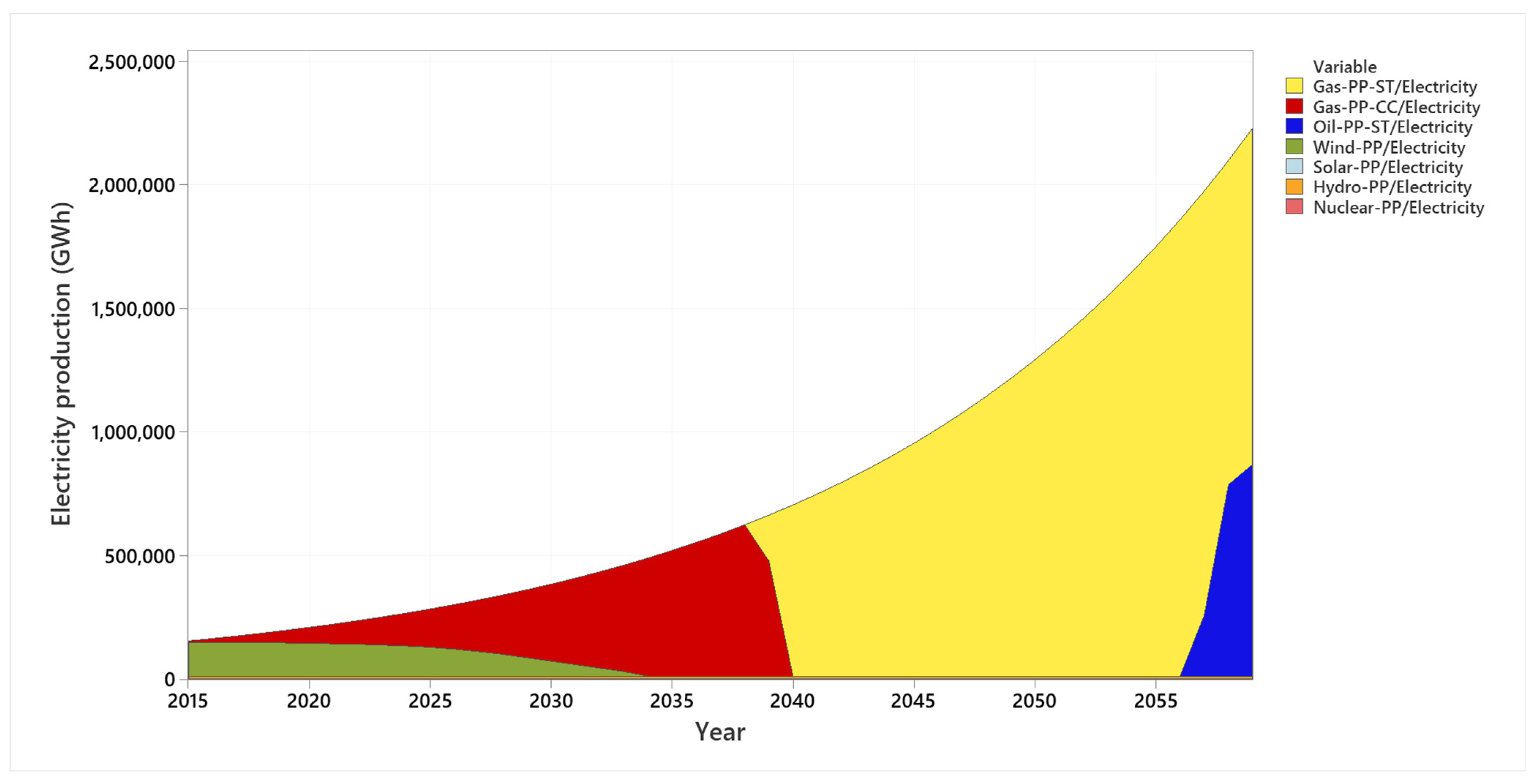
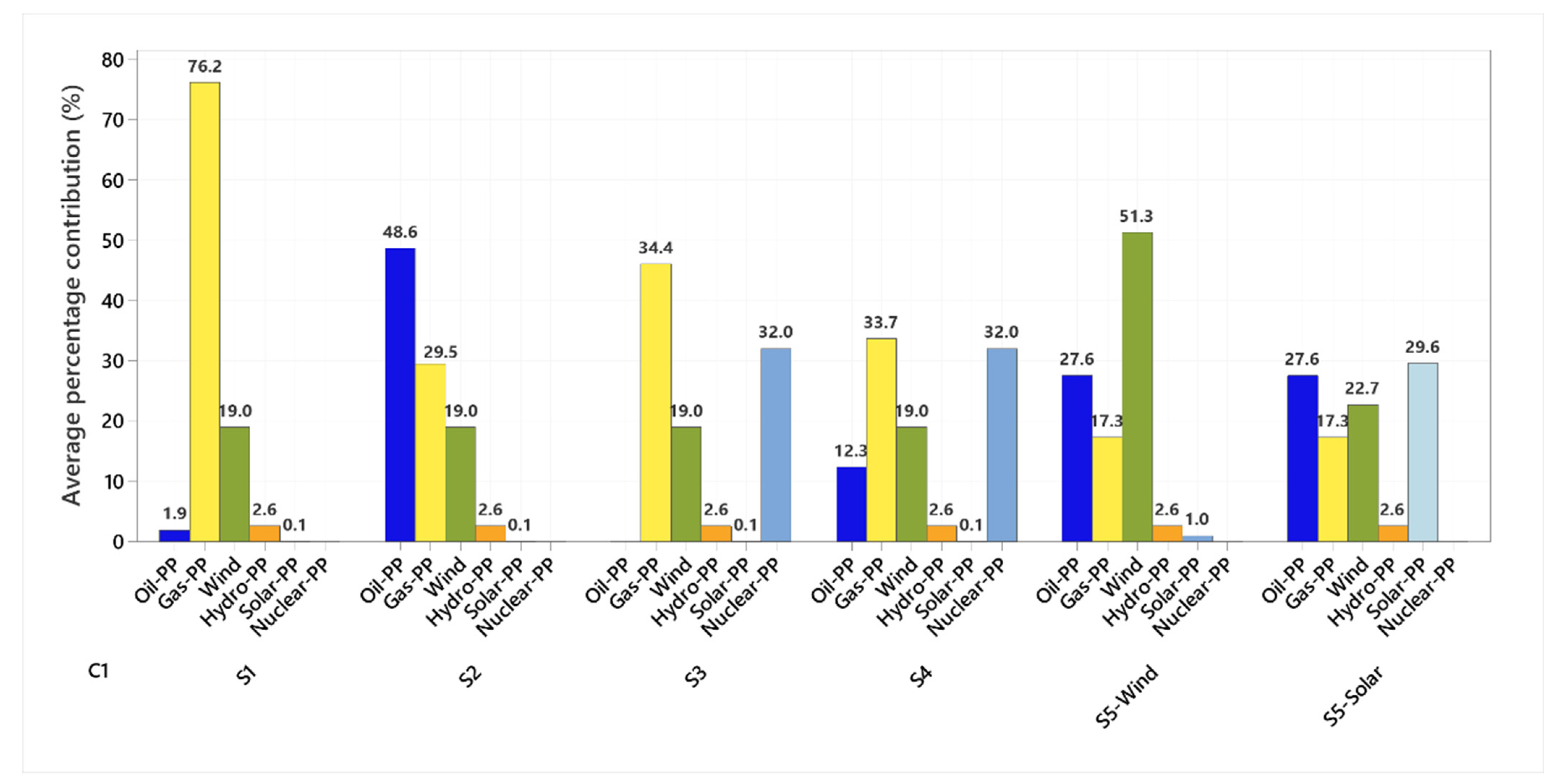
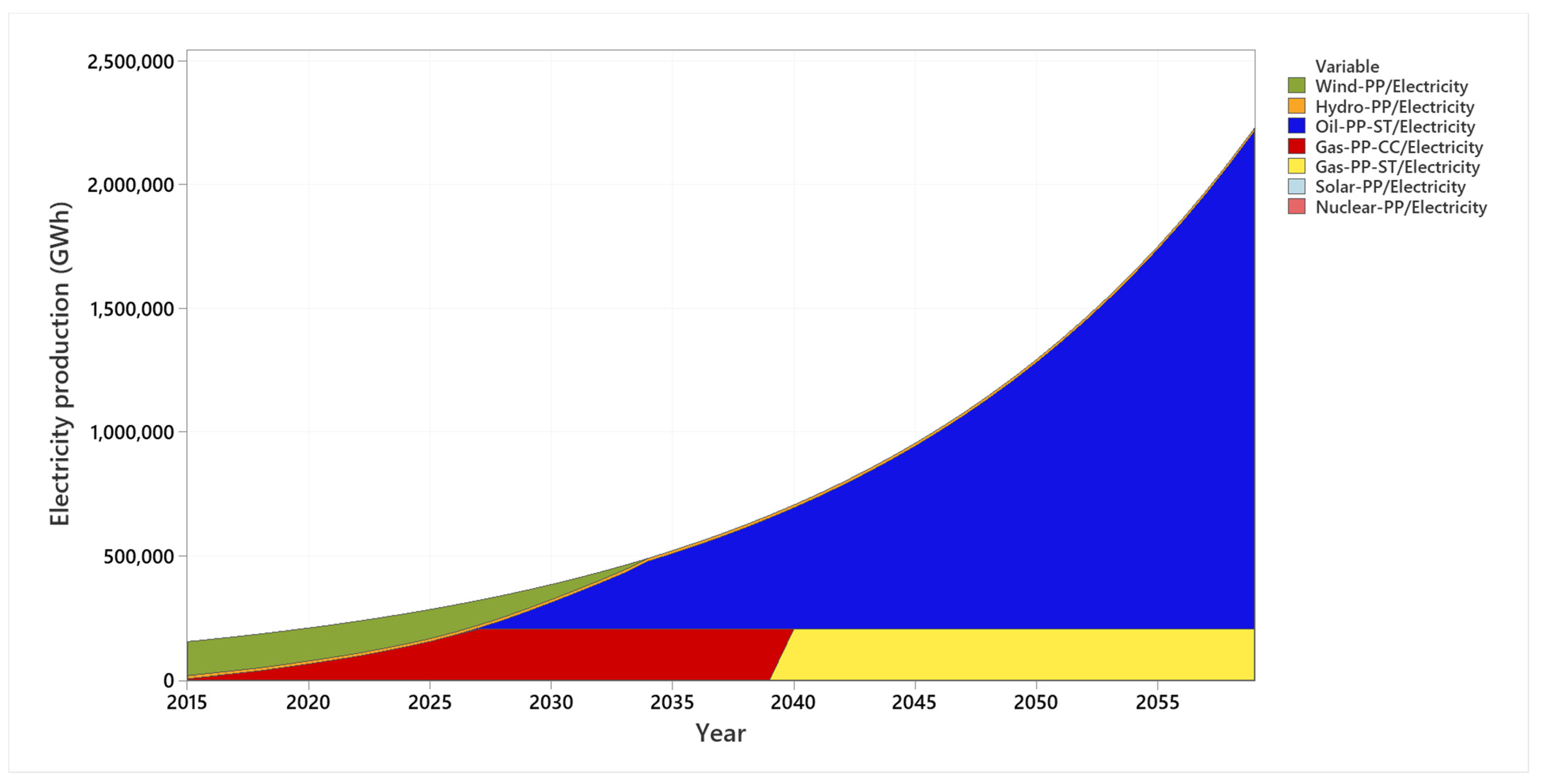
Figure 6 shows the electricity production of the first scenario. There is no limitation on CO2 emission and no constraint on electricity production from fossil fuel. It shows that gas power plants, gas power plants with steam turbine, and gas power plant combine cycle are predominantly used to generate electricity to meet the final electricity demand in the system. Over 45 years, the average contribution of gas power plants and wind energy is projected to be 76% and 19%, respectively. In 2060 the contribution of gas power plant is projected to decrease by 61% and the oil increase to 38.5%. Whereas there is projected to be no contribution of nuclear power plants and a slight annual contribution from hydropower plants of approximately a 2.6% average.
Figure 6.
Balance of electricity production of all power plants for first scenario.
Figure 7 shows the electricity production of the second scenario. In this scenario, we assumed constraint on the CO2 emission from gas power plant. The average contribution of gas power plants will reduce to 30%, while the average contribution of oil power plants will increase to 48.6% by 2060. The contribution of wind, solar, and hydropower plants towards electricity generation remains unchanged.
Figure 7.
Balance of electricity production of all power plants for second scenario.
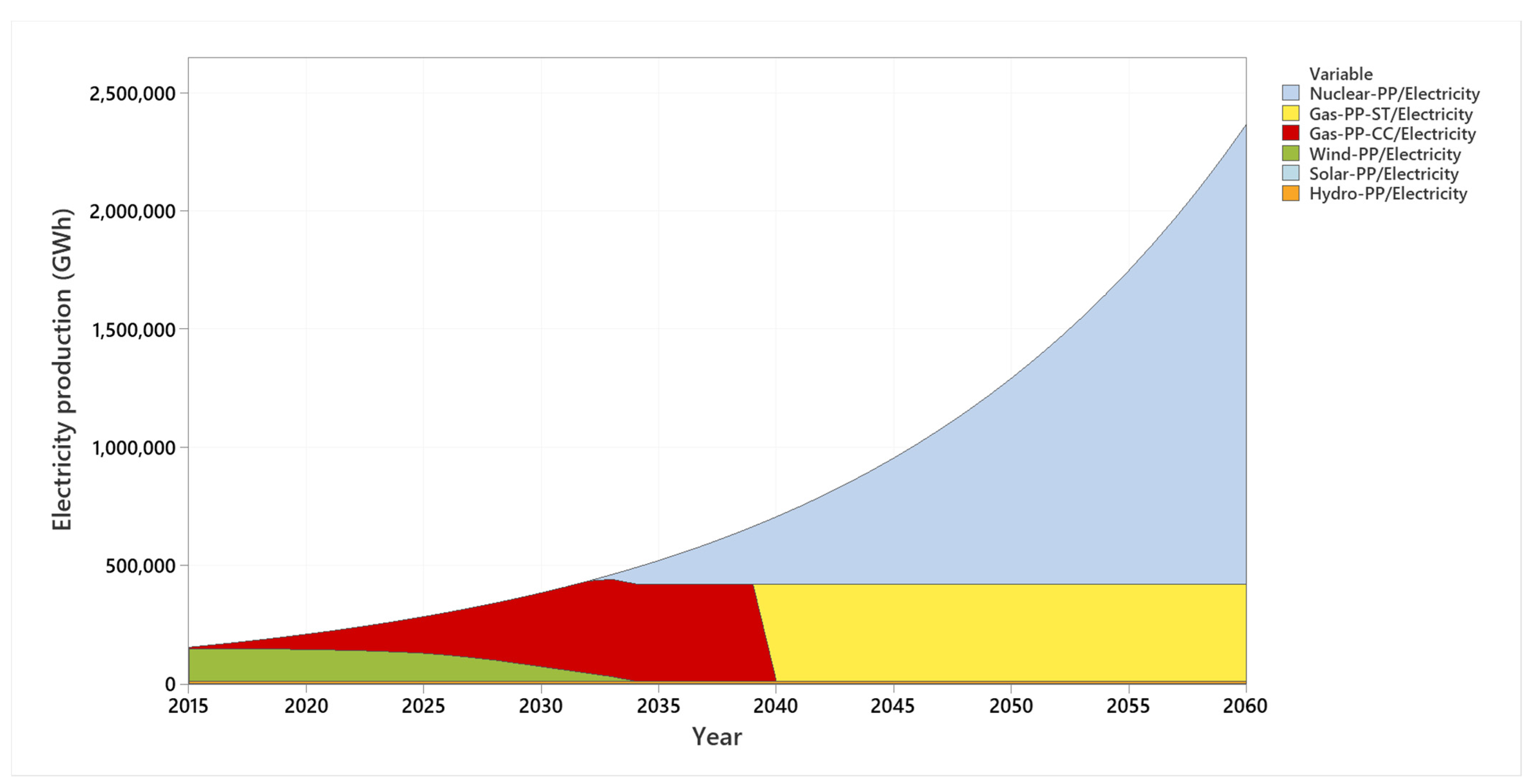
Figure 8 shows the electricity production of the third scenario. We imposed a limit of CO2 emission from oil and gas power plants. The average contribution of gas power plants is projected to be 46.1% while the average contribution of nuclear power plant is projected to be 35% over a period of years. The contribution of electricity from other technologies remains constant. Gas power plants reach 89% in 2033, then this contribution decreases and its replaced with a nuclear power plant in 2034. In 2060, the contribution of nuclear power plant is shown to reach 81%, whereas the contribution of gas power plant is 17%. It is clearly shown that by that time fossil fuel has been replaced by nuclear energy.
Figure 8.
Balance of electricity production of all power plants for Third scenario.
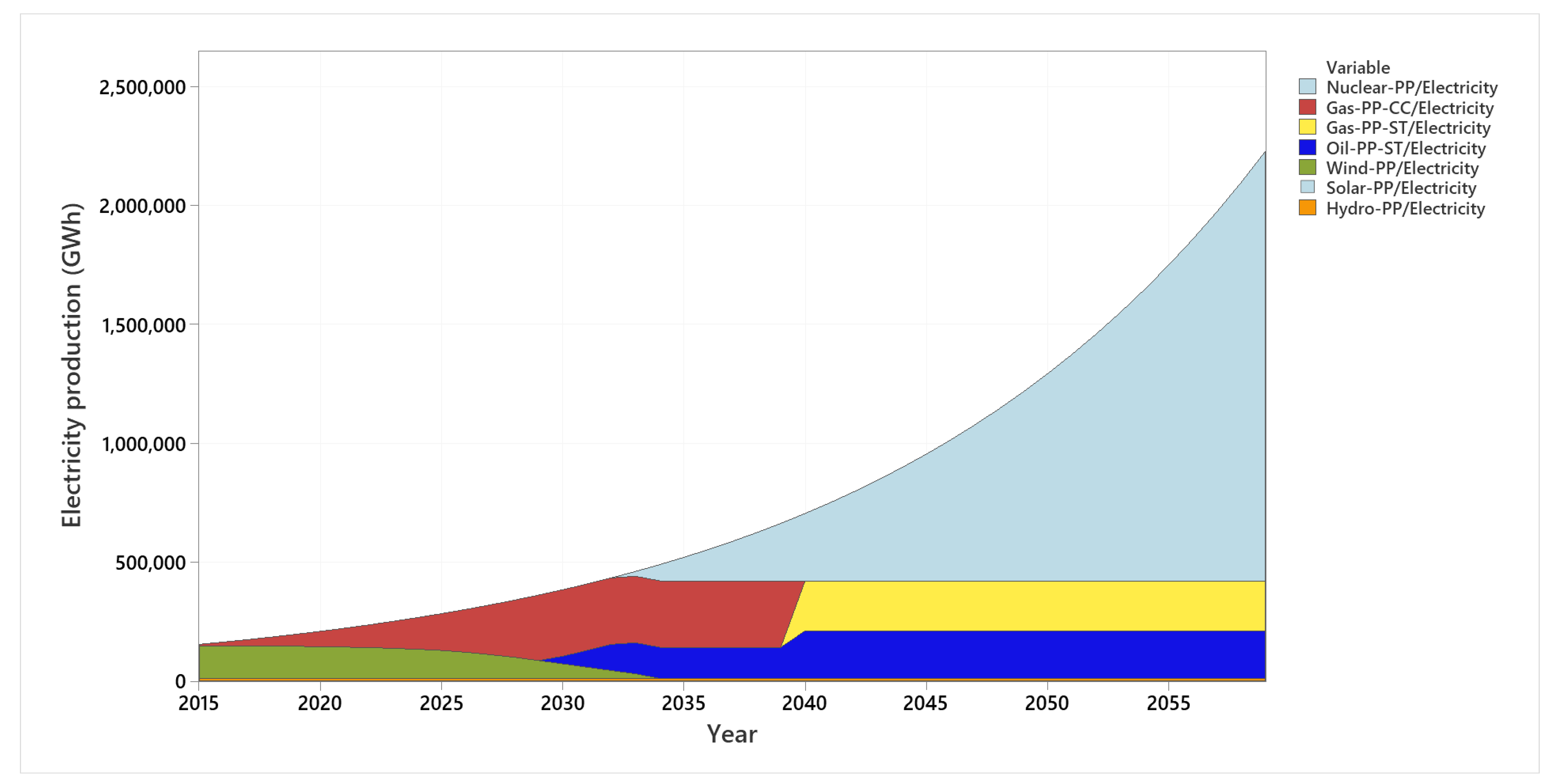
Figure 9 shows the electricity production of the fourth scenario. Not only was a limit on the CO2 emission considered but also electricity generated by natural gas was bounded. Oil and gas power plants are shown to contribute an average of 12.3% and 33.7%, respectively. Because of the limited electricity production from natural gas, the oil contribution is projected to increase to 12.3% on average, with nuclear power plants contributing 32%. In 2041, the electricity generated by oil is projected to be 28.5%, gas power plants are projected to produce 29.7%, and nuclear power plants to contribute 40.2%. Due to the fact that there is a limit on CO2 emission and electricity generated by natural gas, the nuclear energy will have a higher contribution to electricity production up to 81% in 2060, whereas oil power plant will contribute 9% and gas will contribute 9.4%.
Figure 9.
Balance of electricity production of all power plants for fourth scenario.
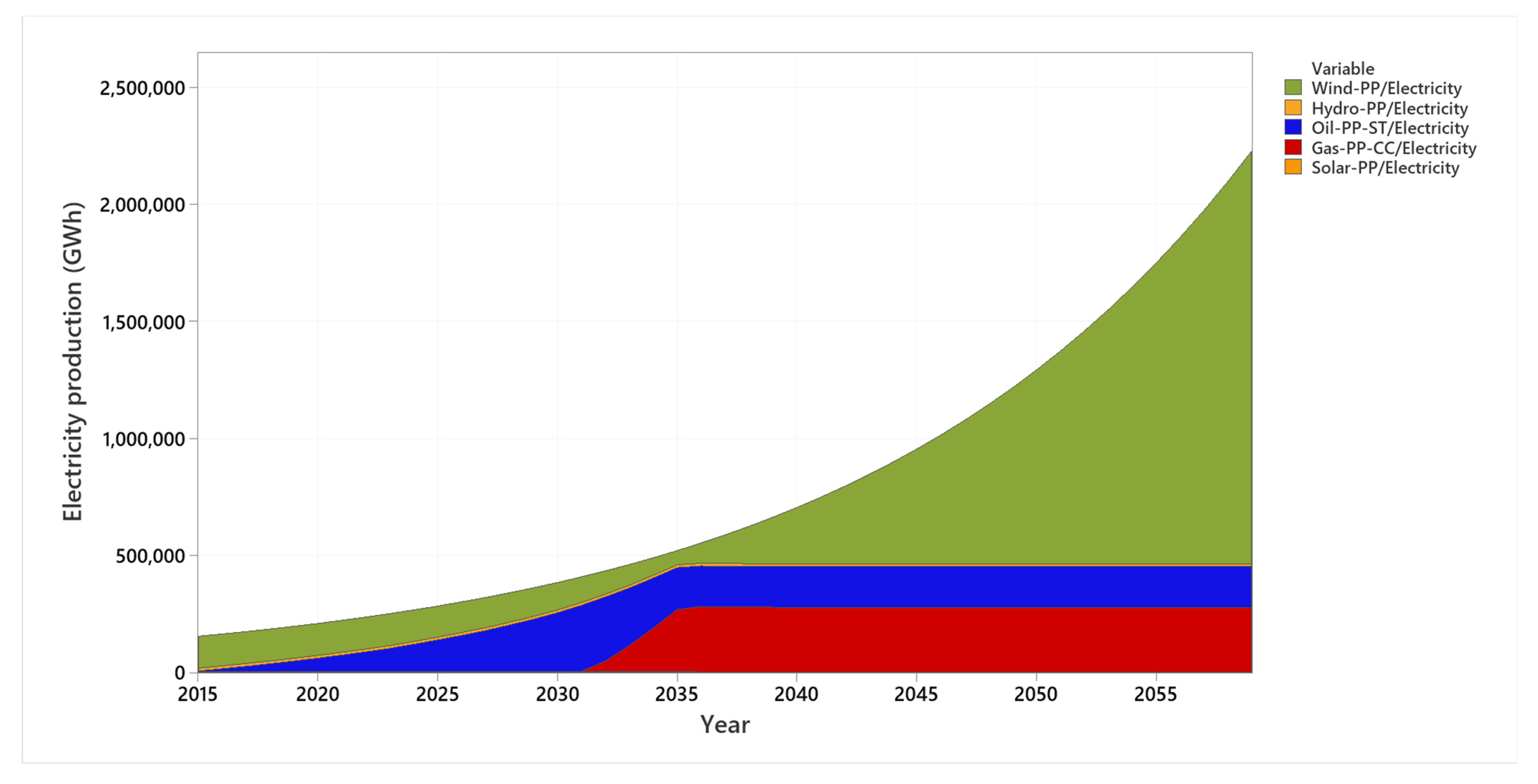
The energy mix for the fifth scenario is portrayed in Figure 10. In this scenario, we neglected nuclear energy and then assumed a case where the Egyptian government relies entirely on renewable energy sources. Wind energy is the first case in this scenario. Because the investment cost of wind energy is lower than that of solar energy, and due to the constraints of power production from oil and gas, wind technology prevails over other technologies. Wind technology is projected to contribute 51.38% on average for a period of 45 years whereas oil and gas power plants are projected to contribute an average of 27.6% and 17.3%, respectively.
Figure 10.
Balance of electricity production of all power plants for fifth scenario, wind case.
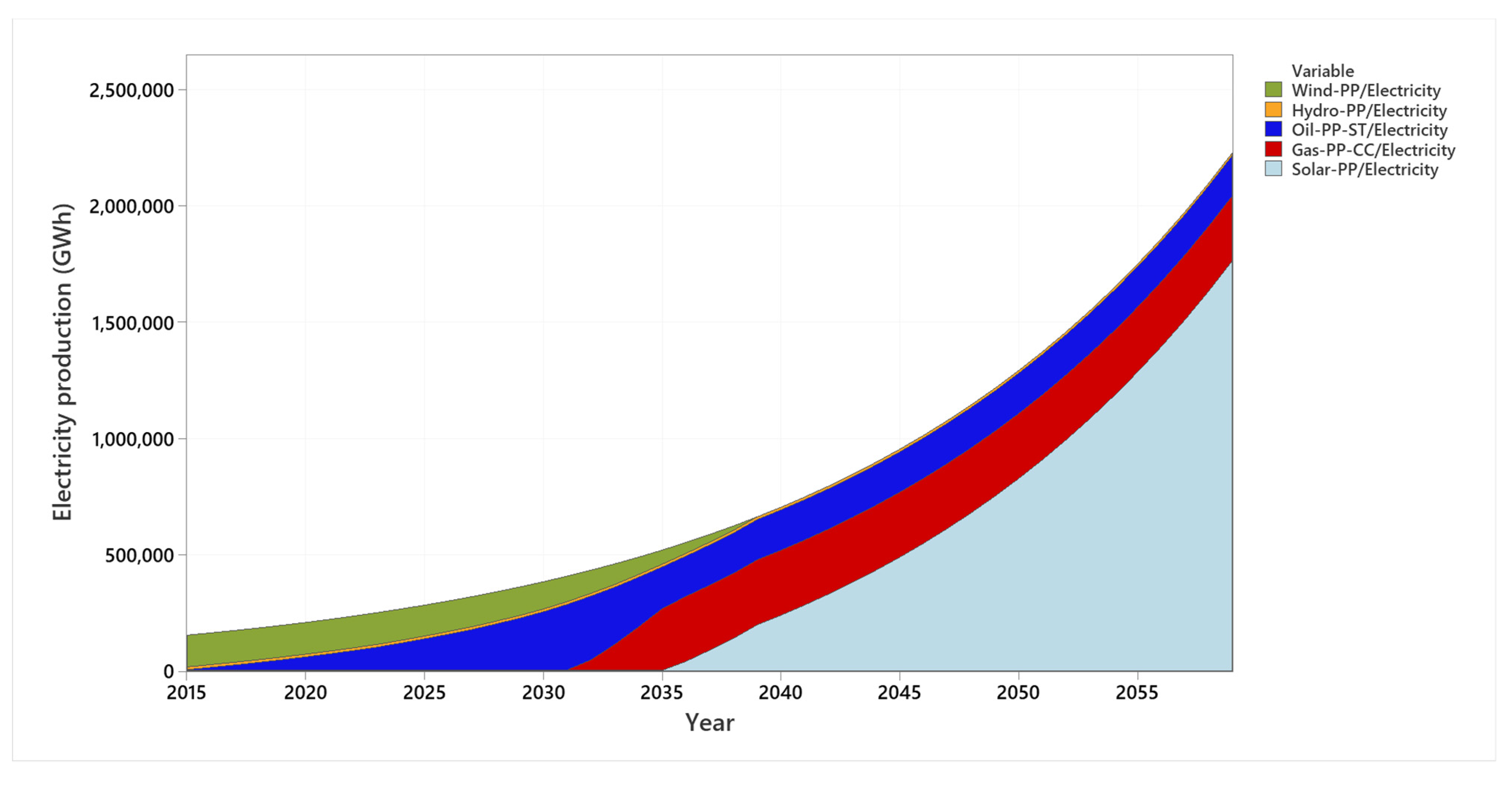
Figure 11 presents the second case of the fifth scenario, in which solar energy dominates. To accomplish this conclusion, we assumed that the investment cost of solar technology is cut in half from the initial cost as shown in Table 2. Over 45 years, the average contribution of solar technology is projected to increase to 29.6% while wind technology is projected to contribute 22.7%.
Figure 11.
Balance of electricity production of all power plants for fifth scenario, solar case.
According to Figure 10 and Figure 11, wind and solar technology are projected to contribute 79% by 2060, while oil and gas power plants will contribute 7.7% and 12.5%, respectively. It is apparent that at that time, wind and solar energy will have largely replaced fossil fuels. Hydropower technology’s contribution is constantly 2.6% in all scenarios. Egypt has only one high dam on the Nile River, the only river in the country. Figure 12 shows the average contribution of each technology in each scenario over a 45-year period.
Figure 12.
Summarizes the average contribution of each technology in every scenario.
3.2. Sensitivity Analysis
In the first scenario, where the discount rate is 21.5% and there are no constraints on CO2 emission, the contribution of oil power plants increased from 27.67% to 38.46% while the contribution of gas power plant decreased from 71.84% to 61.02% with a slight change in the hydropower plant and 0.0% of nuclear power plant. In the second scenario where the discount rate is 21.5% and there is a constraint on CO2 emission, the contribution of oil decreased to 18.4% and the contribution of nuclear power plants increased to 81.1%. In the third and fourth scenarios where the investment cost of renewable energy decreased by 25%, the contribution of renewable energy remained low except that of nuclear energy. This is due to the fact that, despite reducing the investment cost of renewable energies by 25%, it is still high compared with the investment cost of fossil fuel.
3.3. Environmental Effect during Normal Operation
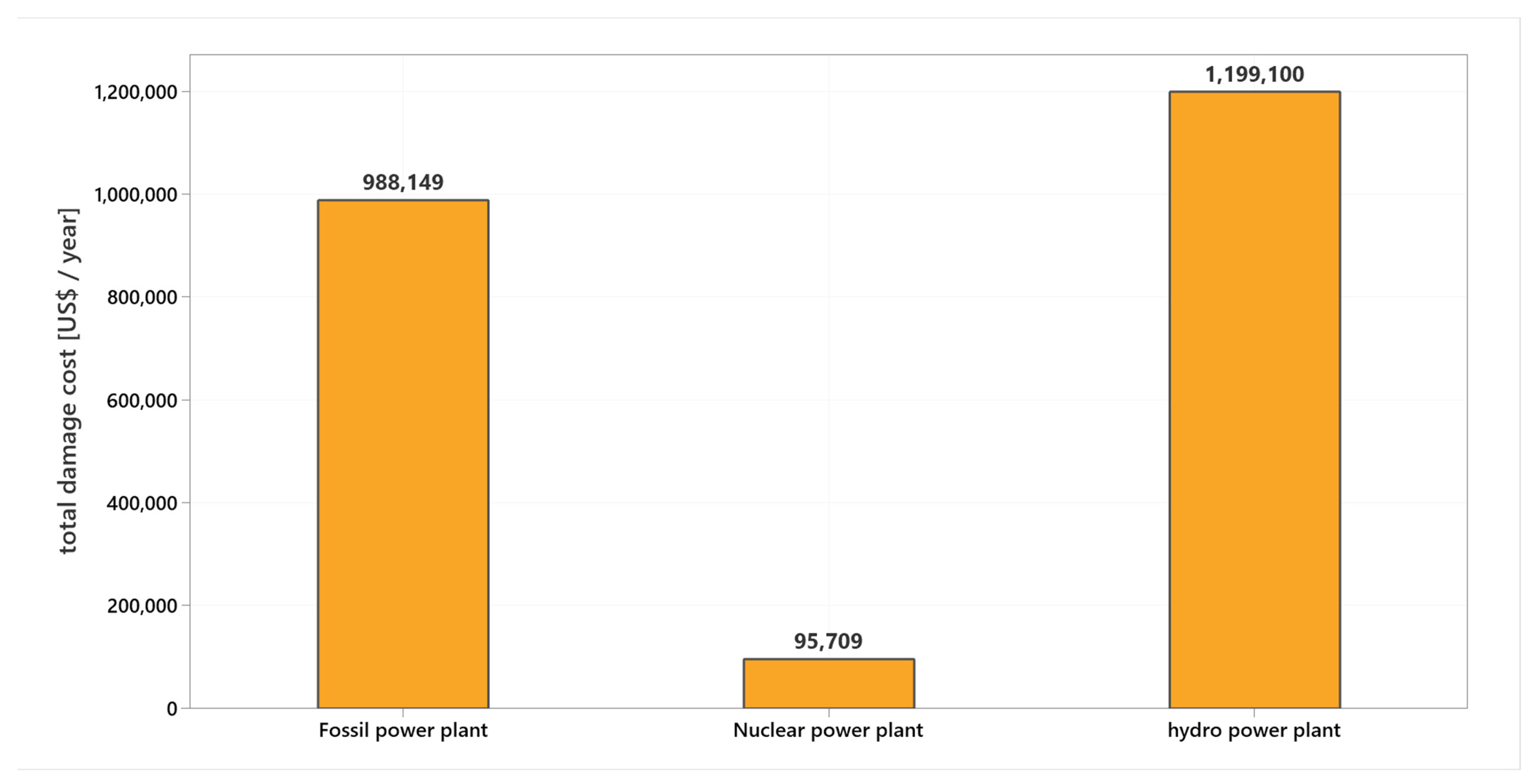
Figure 13 shows the total damage cost due to the electricity-generation technologies from the Burullus fossil fuel, Aswan High Dam hydro, and El Dabaa nuclear power plants during normal operation. Furthermore, the total damage cost of the fossil fuel is represented by the sum of the damage costs of health and agriculture effects. The total damage cost of the nuclear power plant is equal to the sum of fatal cancer, non-fatal cancer, and specific hereditary disease costs, whereas that of the hydropower plant is equal to the sum of the losses in farmland and agricultural/livestock production as well as the emission damage cost. Additionally, the damage cost is directly related to the environmental effect with respect to the exposure risk factor where higher or severe exposure results in higher risk or effects. Figure 13 illustrates that the hydropower plant yields the highest damage cost because of the large area inundated by water. The damage cost considers the losses in the agricultural and livestock production in this large area. The agriculture loss incurs the highest value, which explains the reason why hydropower plants have the highest total damage cost. The nuclear power plant exhibits the lowest damage cost during normal operation; however, the cost of a power-plant accident is not considered in our calculation. Therefore, the nuclear power plant can be considered to be the best alternative choice for electricity-generation technology from the perspective of environmental effect.
Figure 13.
Total damage cost of electric power-plant generation.
4. Conclusions
In conclusion, two computer codes, namely, MESSAGE and SIMPACTS, were employed in this study. The MESSAGE code was used to model the optimization of the energy-supply systems in Egypt to determine the best energy-supply technology to meet the future energy demand based on various energy technologies. The power plants investigated were fossil fuel, hydro, and nuclear power plants. The SIMPACTS computer code was used to estimate the environmental effects and damage costs associated with the normal operation of electricity-generation technologies. The electricity-generation technologies considered in SIMPACTS were fossil fuel, hydro, and nuclear power plants. Furthermore, constraints were considered, such as the limitation of carbon dioxide (CO2) emission into the atmosphere and the bound electricity generated by natural gas that can result in reduced electricity-generation capacity of fossil fuel. Therefore, every electricity-generation technology was associated to its investment costs, including operating and maintenance costs as well as fixed and variable costs. Therefore, a particular country must consider its choice with respect to its economic status to select what is the best technology for trade-off. However, the results from MESSAGE indicated that nuclear and gas power-plant technologies will be long-term sources of electricity supply in Egypt. Currently, wind and solar technologies provide the least contribution to the Egypt energy mix; whereas hydropower and oil slightly contribute to Egypt’s electricity capacity. Gas technology is the most predominant source of electricity in the country. In the long-term, gas and nuclear technologies will be the optimum electricity-generation technologies that contribute to Egypt’s energy mix with gas technology remaining dominant. The sensitivity analysis shows that constraint on CO2 emission should be imposed in fossil power plants and the electricity generated by natural gas should be bound in order to increase the contribution of renewable energy in the energy field. The SIMPACTS computer code results showed that nuclear power plants incurred the lowest total damage costs, and fossil fuel power plants yielded the highest total damage costs.
Results of scenario 3 and scenario 4 indicated that nuclear power plants are an environmentally beneficial electricity-generation technology when operating normally, but fossil fuel technologies have a large environmental impact. Based on these findings, nuclear power is determined to be the optimum choice of electricity-generation technology for meeting Egypt’s future electricity demand while reducing CO2 emissions. It provides dependable electricity at a cheap operating cost. It has a long lifetime and a consistent base load power. However, we must consider the disadvantages of nuclear energy, just as we discussed the benefits of nuclear energy. Nuclear disasters are the most serious threats to nuclear technology. Many radioactive elements are released into the environment during a nuclear accident. These radioactive elements have long-term consequences for individuals and the environment. Another downside of nuclear energy is the generation of radioactive waste. Nuclear waste is a significant concern for the nuclear industry because there is no technique for the final disposal of spent fuel. Scenario five, on the other hand, suggests that wind and solar can replace fossil fuels. They provide clean energy and are free from the drawbacks of nuclear technology. They are, however, unreliable sources of energy. Conclusively, it is difficult to find acceptable technologies that can meet future demand while reducing CO2 emissions. There may be some issues that must be balanced against the economic benefits. Such issues include concerns regarding affordability, energy security, supply reliability, or the environment. Therefore, selecting an optimal source of electricity generating technology depends on a particular country’s energy policy and available resources.
Author Contributions
Conceptualization, A.A.-H., J.K., J.-H.H., H.H.R., S.R.J. and M.N.; methodology, A.A.-H., J.-H.H., H.H.R., S.R.J. and M.N.; software, A.A.-H., J.-H.H., H.H.R., S.R.J. and M.N.; validation, A.A.-H. and J.K.; formal analysis, A.A.-H., J.-H.H., H.H.R., S.R.J. and M.N.; investigation, A.A.-H., J.-H.H., H.H.R., S.R.J. and M.N.; resources, A.A.-H., J.-H.H., H.H.R., S.R.J. and M.N.; data curation, A.A.-H., J.-H.H., H.H.R., S.R.J. and M.N.; writing—original draft preparation, A.A.-H.; writing—review and editing, J.K.; visualization, A.A.-H.; supervision, J.K.; project administration, J.K.; funding acquisition, J.K. All authors have read and agreed to the published version of the manuscript.
Funding
This research was supported by the Nuclear Safety Research Program through the Korea Foundation of Nuclear Safety (KoFONS) using the financial resources granted by the Nuclear Safety and Security Commission (NSSC) of the Republic of Korea (No. 1805018). This research was also supported by the 2021 Research Fund of the KEPCO International Nuclear Graduate School (KINGS), the Republic of Korea.
Institutional Review Board Statement
Not applicable.
Informed Consent Statement
Not applicable.
Data Availability Statement
The data that support the findings of this study are available on request from the corresponding author.
Conflicts of Interest
The authors declare that they have no conflict of interest.
References
- IRENA. Renewable Energy Outlook Egypt; IRENA: Abu Dhabi, United Arab Emirates, 2018; pp. 1–120. [Google Scholar]
- EEHC. Annual Report 2018/2019; Egyptian Electricity Holding Company: Cairo, Egypt, 2019; pp. 1–89. [Google Scholar]
- U.S. Energy Information Administration. Country Analysis Brief: Egypt. 2018. Available online: https://www.eia.gov/international/analysis/country/EGY (accessed on 4 June 2021).
- World Nuclear Association. Nuclear Power in Egypt. 2021. Available online: https://world-nuclear.org/information-library/country-profiles/countries-a-f/egypt.aspx (accessed on 4 June 2021).
- IAEA. Management of Spent Fuel from Nuclear Power Reactors; Proceedings Series; International Atomic Energy Agency: Vienna, Austria, 2020; p. 331. [Google Scholar]
- Cauich-López, D.A.; Payan, L.F.B.; Abdelhalim, A.M.N.; Izrantsev, V.V.; Knorring, V.G.; Kondrashkova, G.A.; Pankratov, Y.M.; Mukhametova, L.R.; Sinitsyn, A.A. Egypt and Nuclear Energy: Aspects, Reasons and Future. In IOP Conference Series: Earth and Environmental Science; IOP Publishing: Bristol, UK, 2019. [Google Scholar]
- Kim, H.S. Comparison of cost efficiencies of nuclear power and renewable energy generation in mitigating CO 2 emissions. Environ. Sci. Pollut. Res. 2021, 28, 789–795. [Google Scholar] [CrossRef] [PubMed]
- IAEA. The Integrated Nuclear Infrastructure Review (INIR)—Phase 2; IAEA: Vienna, Austria, 2019; pp. 1–107. [Google Scholar]
- Egypt Ministry of Planning. Sustainable Development Strategy: Egypt Vision 2030; Egypt Ministry of Planning: Cairo, Egypt, 2016; pp. 1–37.
- Hainoun, A.; Aldin, M.S.; Almoustafa, S. Formulating an optimal long-term energy supply strategy for Syria using MESSAGE model. Energy Policy 2010, 38, 1701–1714. [Google Scholar] [CrossRef]
- Esmail, S.M.M.; Cheong, J.H. Studies on Optimal Strategy to Adopt Nuclear Power Plants into Saudi Arabian Energy System Using MESSAGE Tool. Sci. Technol. Nucl. Install. 2021, 2021, 1–26. [Google Scholar] [CrossRef]
- Kim, H.W.; Roh, M.S. Long Term Energy Plan for Korea using MESSAGE for Energy Optimization. IJERT 2017, 1–7. [Google Scholar]
- Tawfik, F.; Nassar, N.; Abdel Aziz, M. Environmental Impact of Conventional Power Plant in Normal and Accidental Conditions. Arab J. Nucl. Sci. Appl. 2018, 51, 68–81. [Google Scholar]
- IAEA. Modelling Nuclear Energy Systems with MESSAGE: A User’s Guide; IAEA: Vienna, Austria, 2016. [Google Scholar]
- Central Bank of Egypt. Discount Rates. 2020. Available online: https://www.cbe.org.eg/en/EconomicResearch/Statistics/Pages/DiscountRates.aspx (accessed on 13 July 2021).
- U.S. Energy Information Administration. Egyptian Electricity Consumption. 2018. Available online: https://translate.google.com.ph/?sl=auto&tl=ar&text=consumption&op=translate (accessed on 13 July 2021).
- Mondal, M.A.H.; Ringler, C.; Al-Riffai, P.; Eldidi, H. Long-term optimization of Egypt’s power sector: Policy implications. Energy 2019, 166, 1063–1073. [Google Scholar] [CrossRef]
- S & P Global Market Intelligence. Average Age of US Power Plant Fleet Flat for 4th-Straight Year in 2018. 2019. Available online: https://www.spglobal.com/marketintelligence/en/news-insights/trending/gfjqeFt8GTPYNK4WX57z9g2 (accessed on 13 July 2021).
- Hainoun, A.; Almoustafa, A.; Aldin, M.S. Estimating the health damage costs of Syrian electricity generation system using impact pathway approach. Energy 2010, 35, 628–638. [Google Scholar] [CrossRef]
- Siemens. Boosting Egypt’s Energy System in Record Time; Siemenes: Cairo, Egypt, 2018; pp. 1–12. [Google Scholar]
- Zingstra, H. Lake Burullus: Local Food Security and Biodiversity Under Pressure, Final Report; Centre for Development Innovation: Wageningen, The Netherlands, 2013. [Google Scholar]
- World Bank. Environmental and Social Due Diligence for New Capital Power Plant; World Bank: Washington, DC, USA, 2016; pp. 1–78. [Google Scholar]
- Al-Rafea, K.; Elkamel, A.; Abdul-Wahab, S.A. Cost-analysis of health impacts associated with emissions from combined cycle power plant. J. Clean. Prod. 2016, 139, 1408–1424. [Google Scholar] [CrossRef]
- City Population. EGYPT: Administrative Division. 2021. Available online: https://www.citypopulation.de/en/egypt/admin/ (accessed on 4 June 2021).
- Satoh, M.; Aboulroos, S. Irrigated Agriculture in Egypt: Past, Present and Future; Springer: Berlin/Heidelberg, Germany, 2017. [Google Scholar]
- Abdel-Haleem, F.S.; Esam, H.Y.; El-Belasy, A.; Ibrahim, S.A.; Sobeih, M.F. Assessing the risk of the Aswan High Dam Breaching. ERJ 2011, 34, 167–179. [Google Scholar] [CrossRef]
- Chow, M.F.; bin Bakhrojin, M.A.; Haris, H.; Dinesh, A. Assessment of Greenhouse Gas. (GHG) Emission from Hydropower Reservoirs in Malaysia. Proceedings 2018, 2, 1380. [Google Scholar] [CrossRef] [Green Version]
- IAEA. Status Report 107—VVER-1200 (V-392M) (VVER-1200 (V-392M)); IAEA: Vienna, Austria, 2011; pp. 1–32. [Google Scholar]
- Fennovoima. Environmental Impact Assessment Report for a Nuclear Power Plant; Fennovoima: Helsinki, Finland, 2014; pp. 1–288. [Google Scholar]
- IAEA. Database on Discharges of Radionuclides to the Atmosphere and the Aquatic Environment. 2012. Available online: https://dirata.iaea.org/SearchDischarges.aspx (accessed on 4 June 2021).
Publisher’s Note: MDPI stays neutral with regard to jurisdictional claims in published maps and institutional affiliations. |
© 2021 by the authors. Licensee MDPI, Basel, Switzerland. This article is an open access article distributed under the terms and conditions of the Creative Commons Attribution (CC BY) license (https://creativecommons.org/licenses/by/4.0/).