Article

Wayfinding in Virtual Reality Serious Game: An Exploratory Study in the Context of User Perceived Experiences

Department of Electronic Systems, Faculty of Information Technology and Electrical Engineering, Norwegian University of Science and Technology, 7491 Trondheim, Norway
*
Author to whom correspondence should be addressed.
Appl. Sci. 2021, 11(17), 7822; https://doi.org/10.3390/app11177822
Submission received: 19 July 2021 / Revised: 14 August 2021 / Accepted: 20 August 2021 / Published: 25 August 2021
(This article belongs to the Special Issue Extended Reality: From Theory to Applications)

Abstract

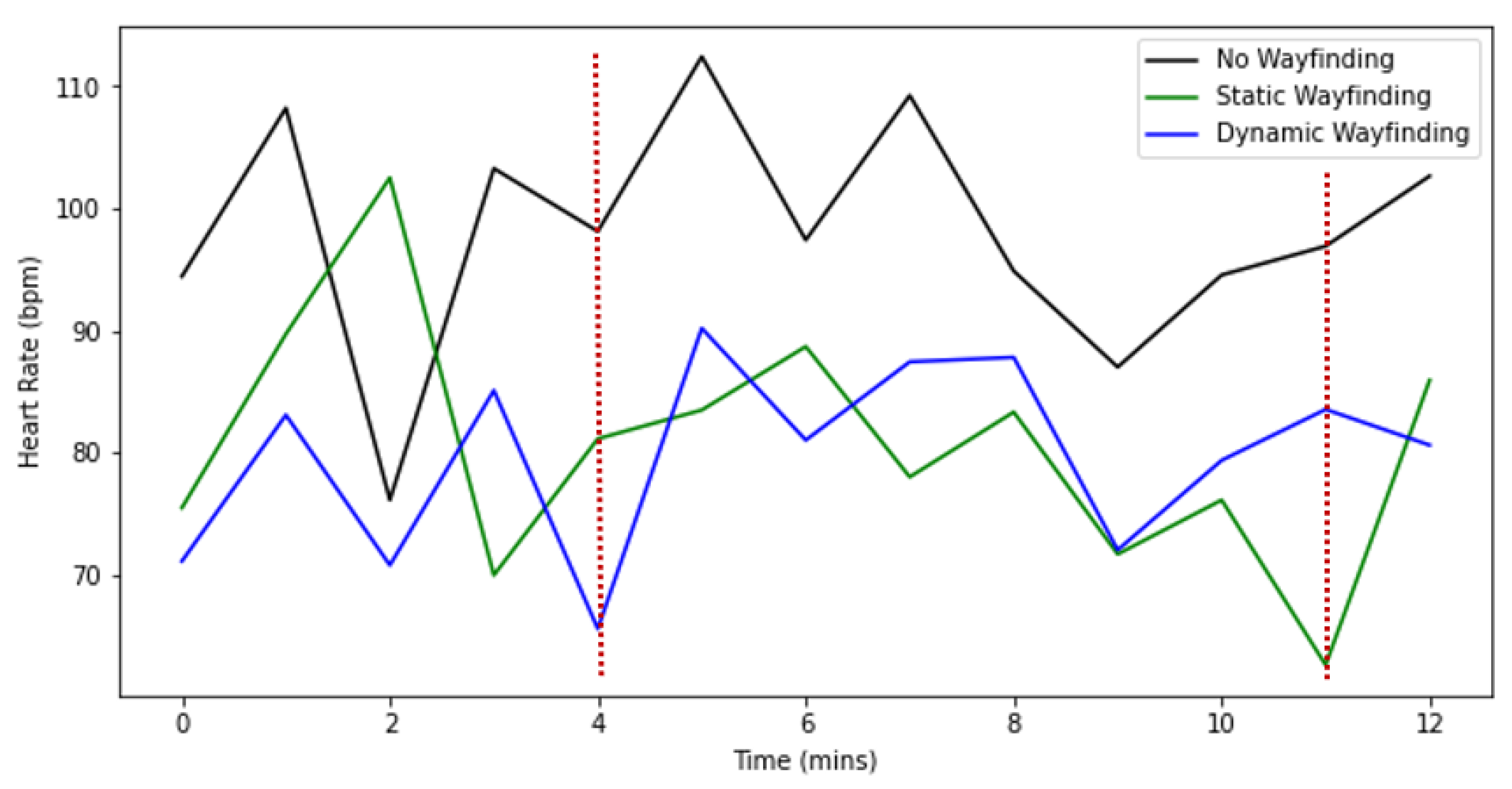
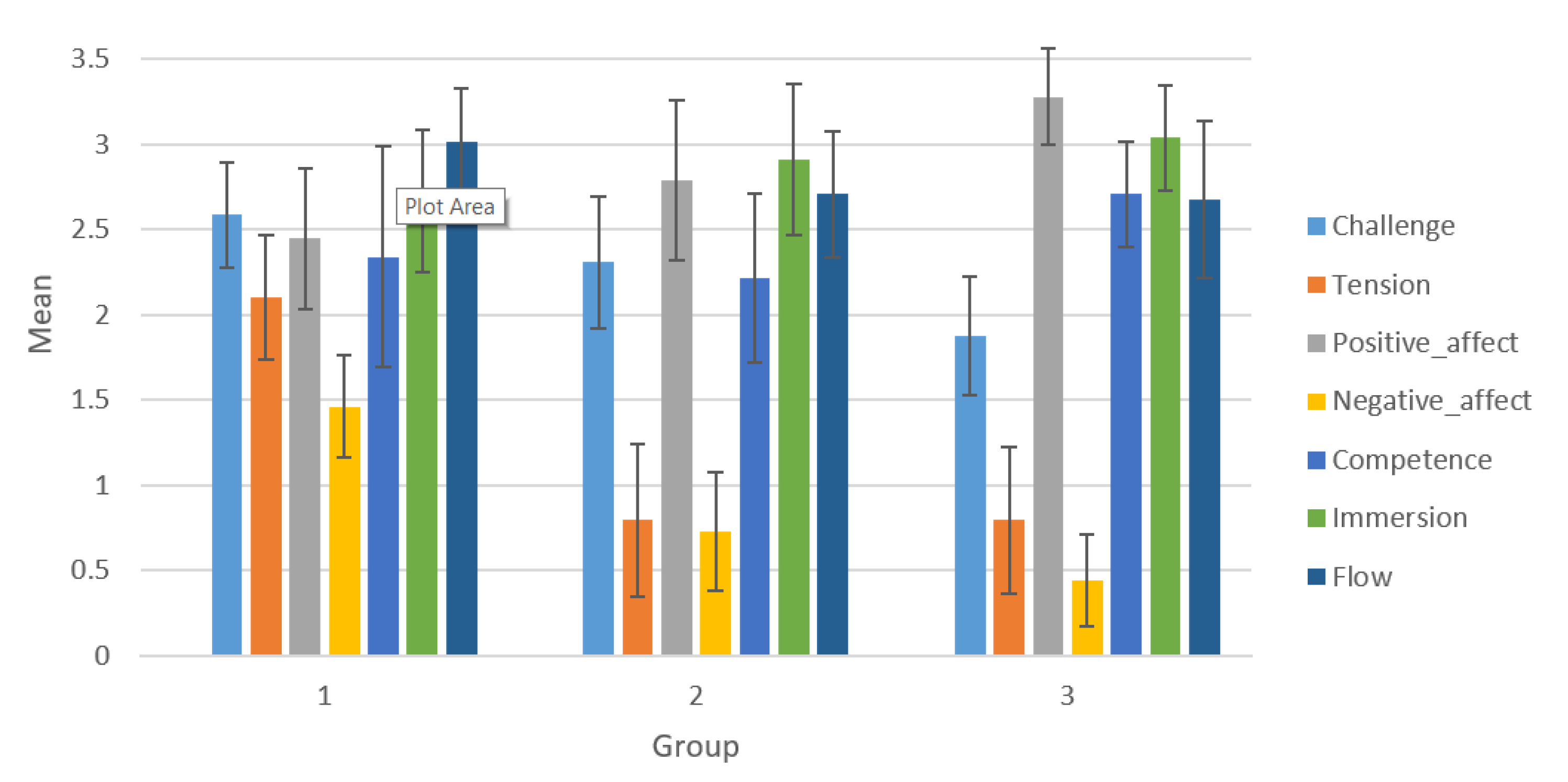
Extended reality (XR) technologies such as virtual reality (VR) provide a promising alternative for training users through serious games (SGs). VR SGs allow people to train in emergency scenarios and improve their likelihood of survival in high-risk situations. Studies have shown that incorporating design elements such as wayfinding cues enhances the spatial knowledge of users in VR. However, the impact of these wayfinding cues on users’ psychological and psychometric behaviors needs thorough investigation. An SG was designed to investigate wayfinding cues’ psychological and psychometric effects on user-perceived experiences in an immersive VR environment. Thirty-nine participants experienced three variants of the VR SG using Oculus Rift- S. Participants in the control condition were exposed to the VR with no wayfinding cues, and the experimental groups were exposed to VR with static and dynamic wayfinding cues. Results showed that VR SG with wayfinding cues induced less tension, challenge, and negative affects in users’ overall perceived experience. Similarly higher positive affects were observed for the experimental groups with wayfinding cues. It was interesting to observe that there were no significant effects of wayfinding on competence, flow, and immersion; however, heart rate was significantly high in the control group. These findings suggest that wayfinding cues can promote the users perceived quality of experience in the VR.
Keywords: virtual reality; serious games; exended reality; training simulations; user studies; spatial information; perception virtual reality; serious games; exended reality; training simulations; user studies; spatial information; perception