Article

Modeling Activity-Time to Build Realistic Plannings in Population Synthesis in a Suburban Area
COSYS-GRETTIA, Université Gustave Eiffel, F-77447 Marne-la-Vallée, France
*
Author to whom correspondence should be addressed.
Appl. Sci. 2021, 11(16), 7654; https://doi.org/10.3390/app11167654
Submission received: 8 July 2021 / Revised: 9 August 2021 / Accepted: 14 August 2021 / Published: 20 August 2021
(This article belongs to the Collection Software Engineering: Computer Science and System)

Abstract

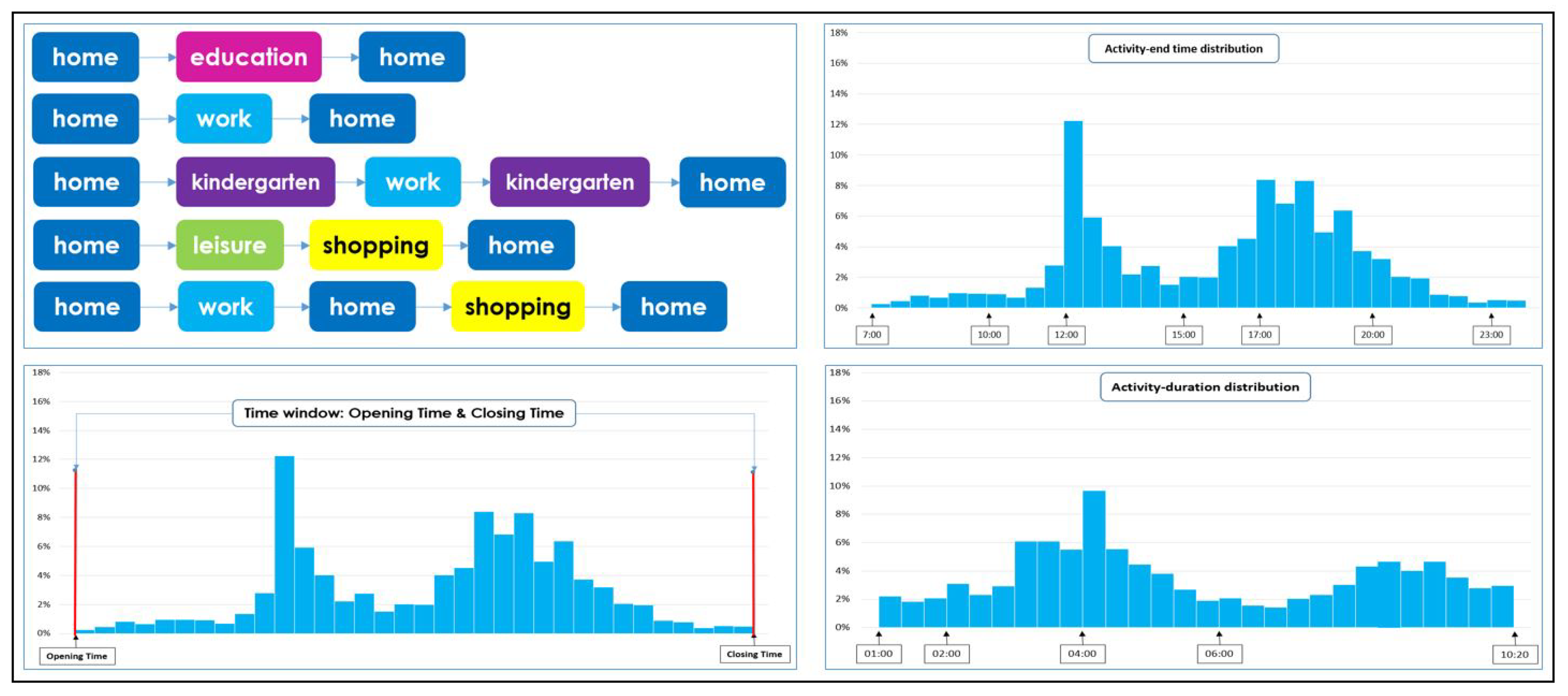
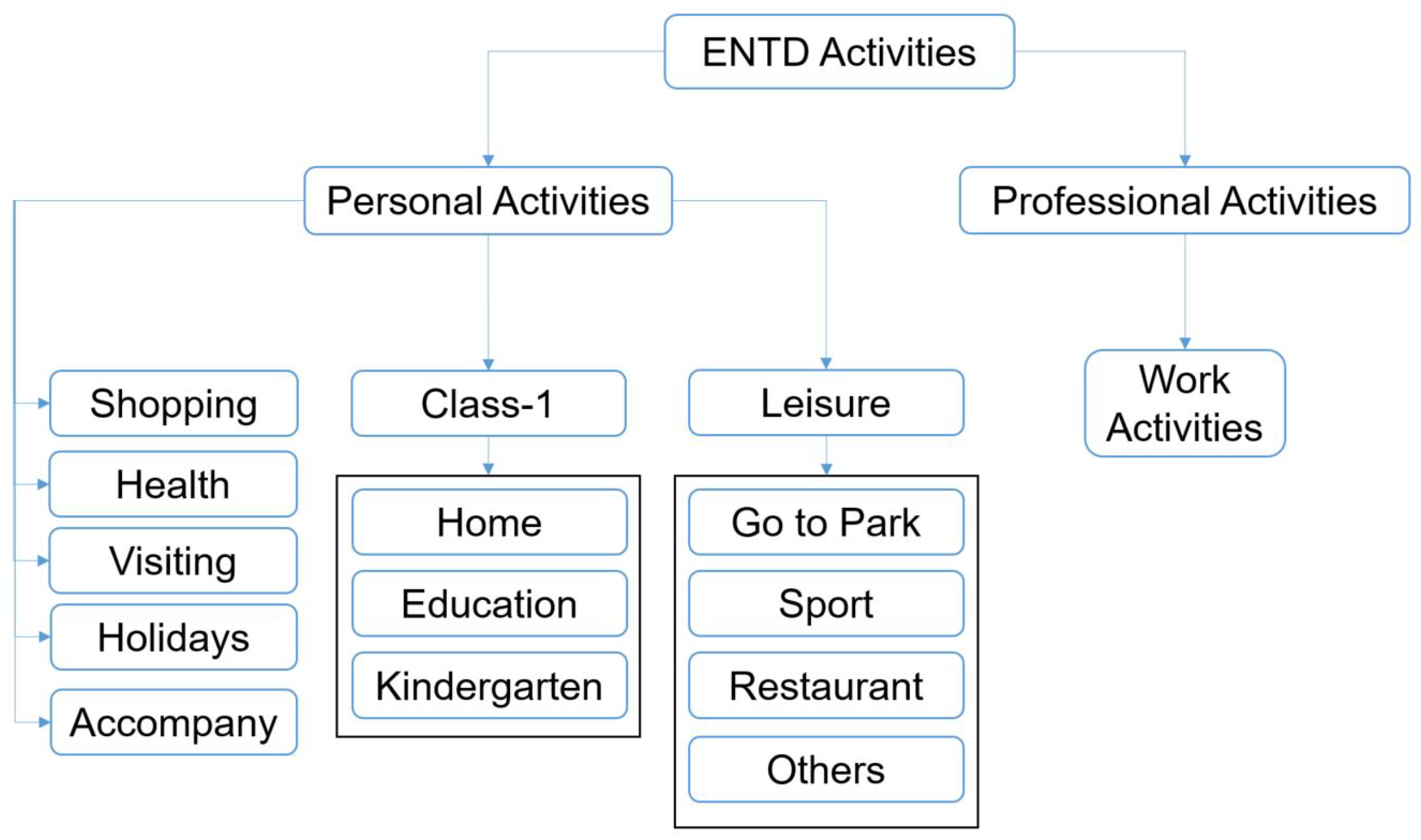
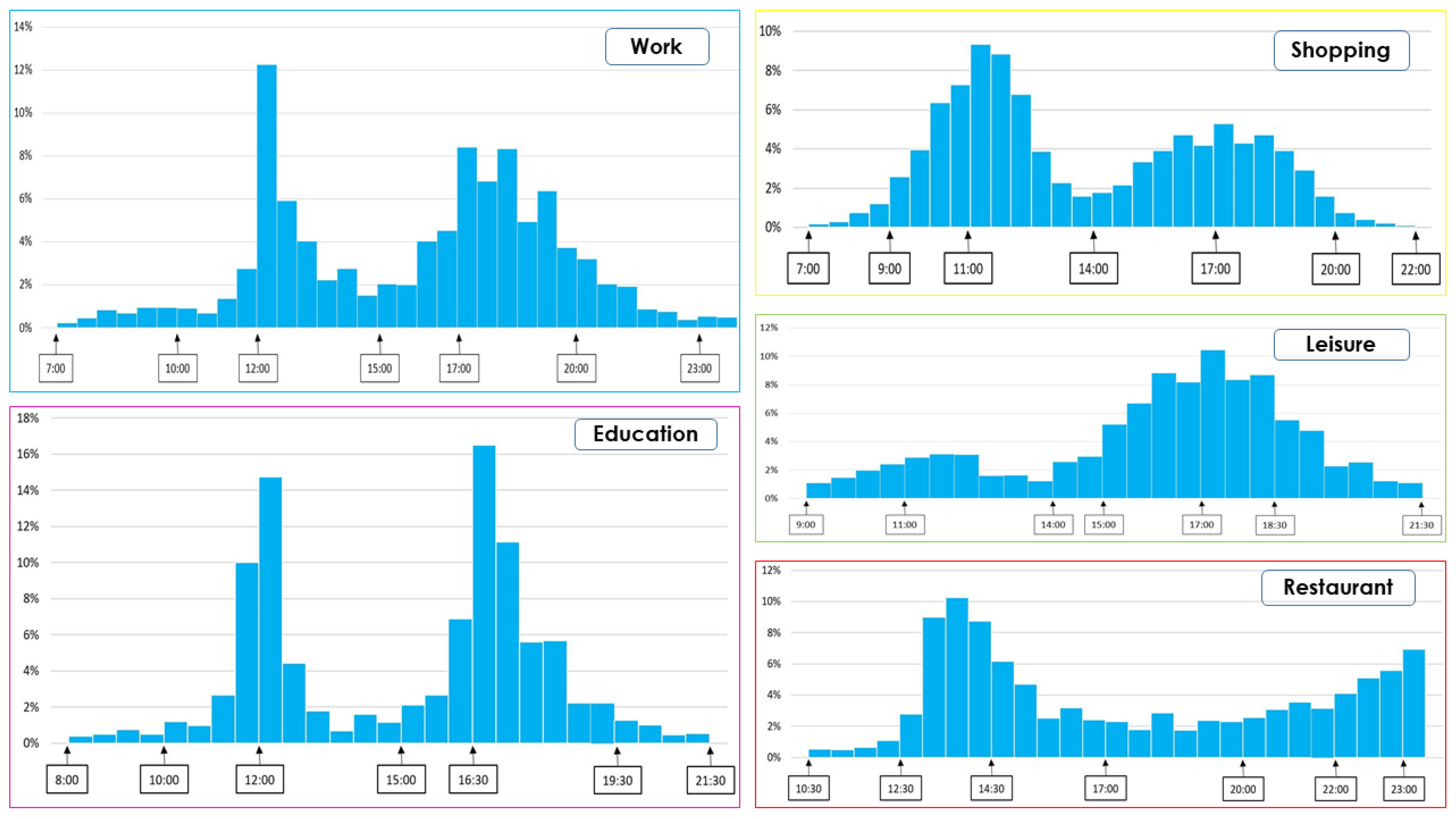
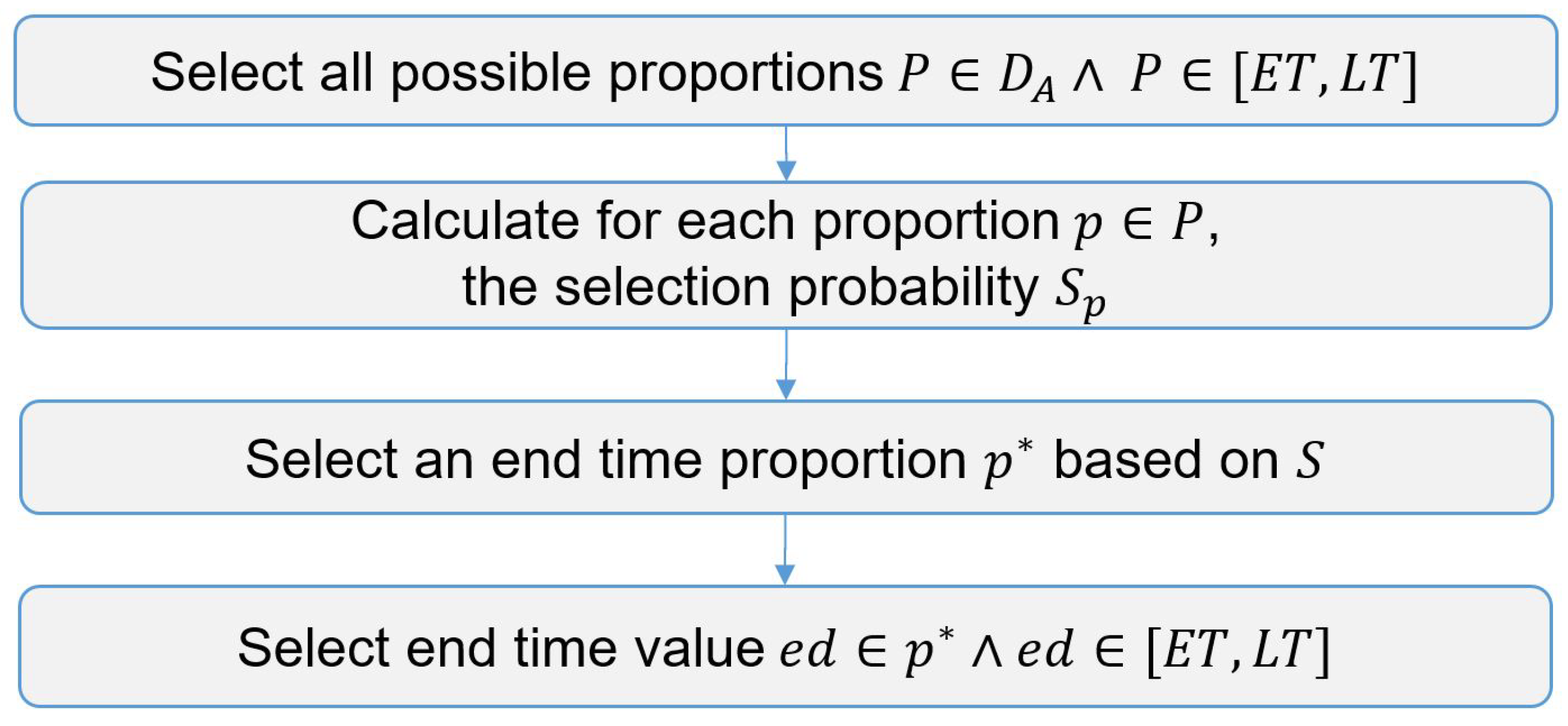
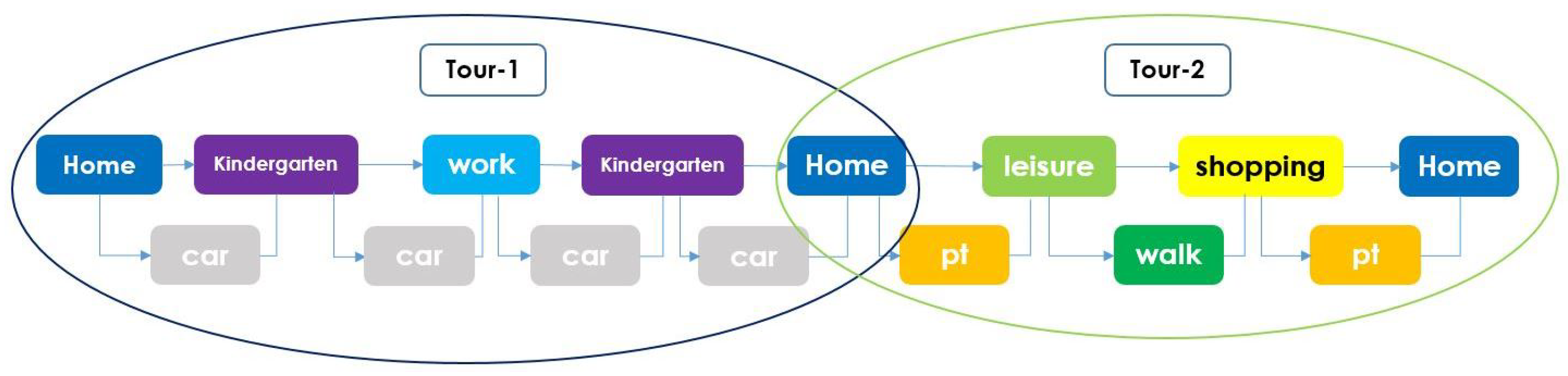
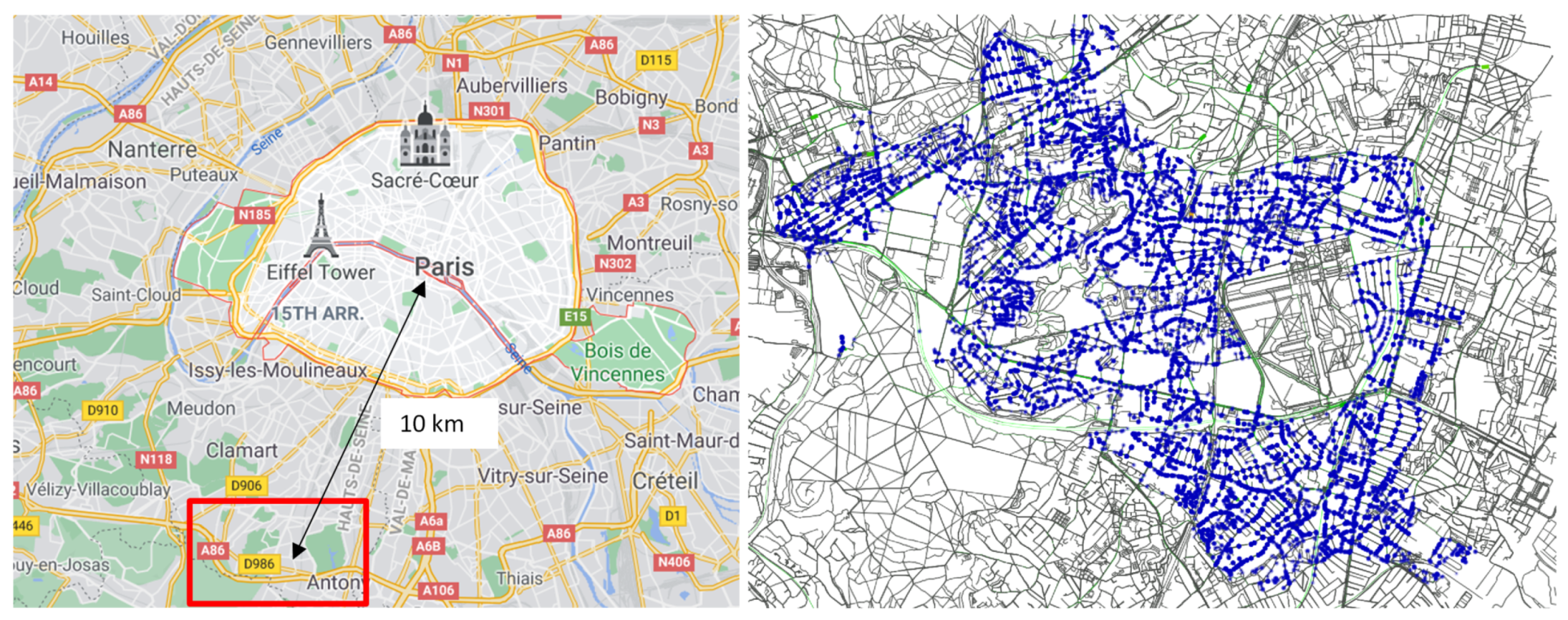
In their daily activity planning, travelers always considers time and space constraints such as working or education hours and distances to facilities that can restrict the location and time-of-day choices of other activities. In the field of population synthesis, current demand models lack dynamic consistency and often fail to capture the angle of activity choices at different times of the day. This article presents a method for synthetic population generation with a focus on activity-time choice. Activity-time choice consists mainly in the activity’s starting time and its duration, and we consider daily planning with some mandatory home-based activity: the chain of other subsequent activities a traveler can participate in depends on their possible end-time and duration as well as the travel distance from one another and opening hours of commodities. We are interested in a suburban area with sparse data available on population, where a discrete choice model based on utilities cannot be implemented due to the lack of microeconomic data. Our method applies activity-hours distributions extracted from the public census, with a limited corpus, to draw the time of a potential next activity based on the end-time of the previous one, predicted travel times, and the successor activities the agent wants to participate in during the day. We show that our method is able to construct plannings for 126k agents over five municipalities, with chains of activity made of work, education, shopping, leisure, restaurant and kindergarten, which fit adequately real-world time distributions.
Keywords: activity planning; time-choice; MATSim (Multi-Agent Transport Simulation); population synthesis activity planning; time-choice; MATSim (Multi-Agent Transport Simulation); population synthesis