Article

Reduction of Coupling Interface Degrees of Freedom in Mixed-Interface Component Mode Synthesis


1
School of Hydraulic Engineering, Dalian University of Technology, Dalian 116024, China
2
School of Civil Engineering, Dalian University of Technology, Dalian 116024, China
*
Author to whom correspondence should be addressed.
Appl. Sci. 2020, 10(8), 2759; https://doi.org/10.3390/app10082759
Submission received: 27 February 2020 / Revised: 4 April 2020 / Accepted: 14 April 2020 / Published: 16 April 2020

Abstract

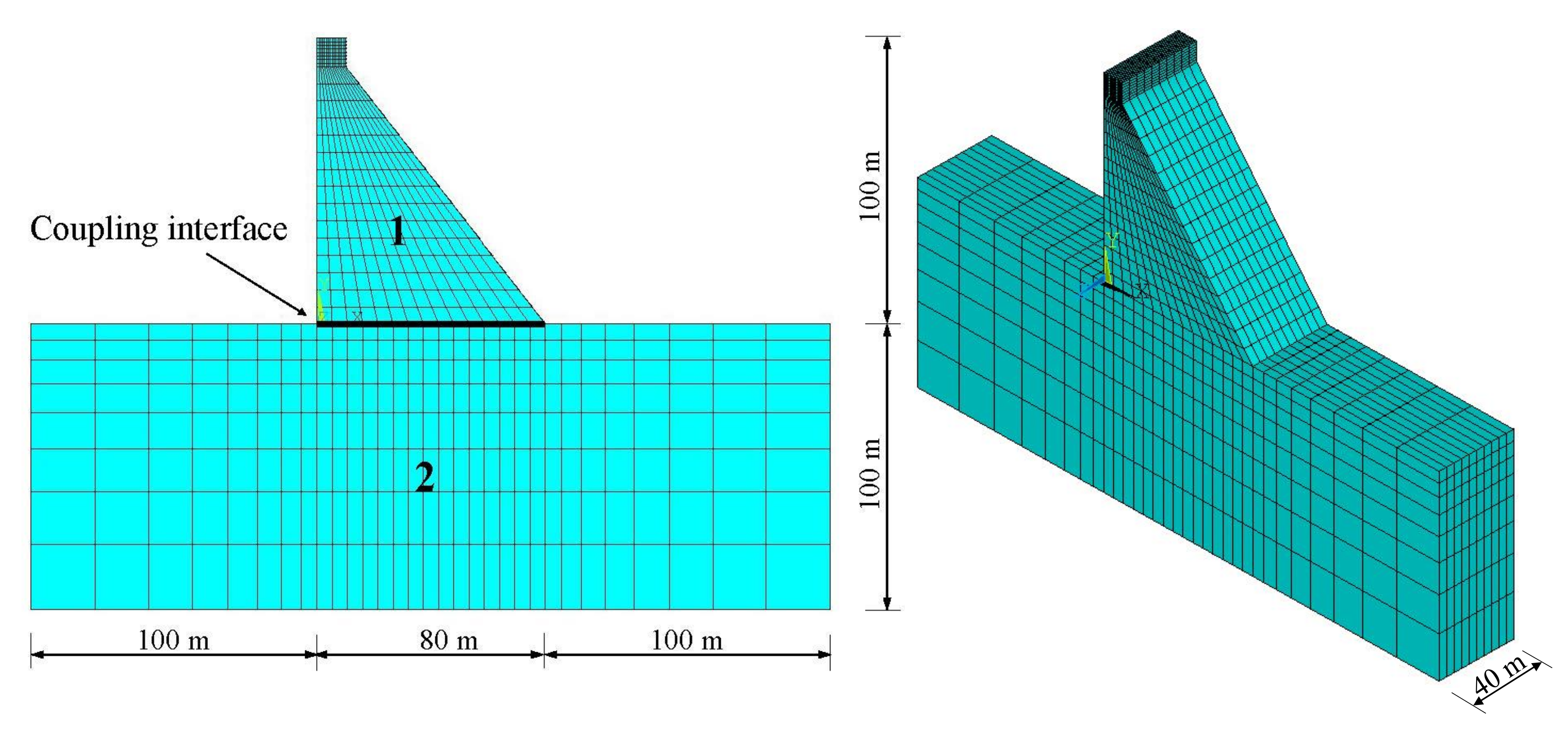
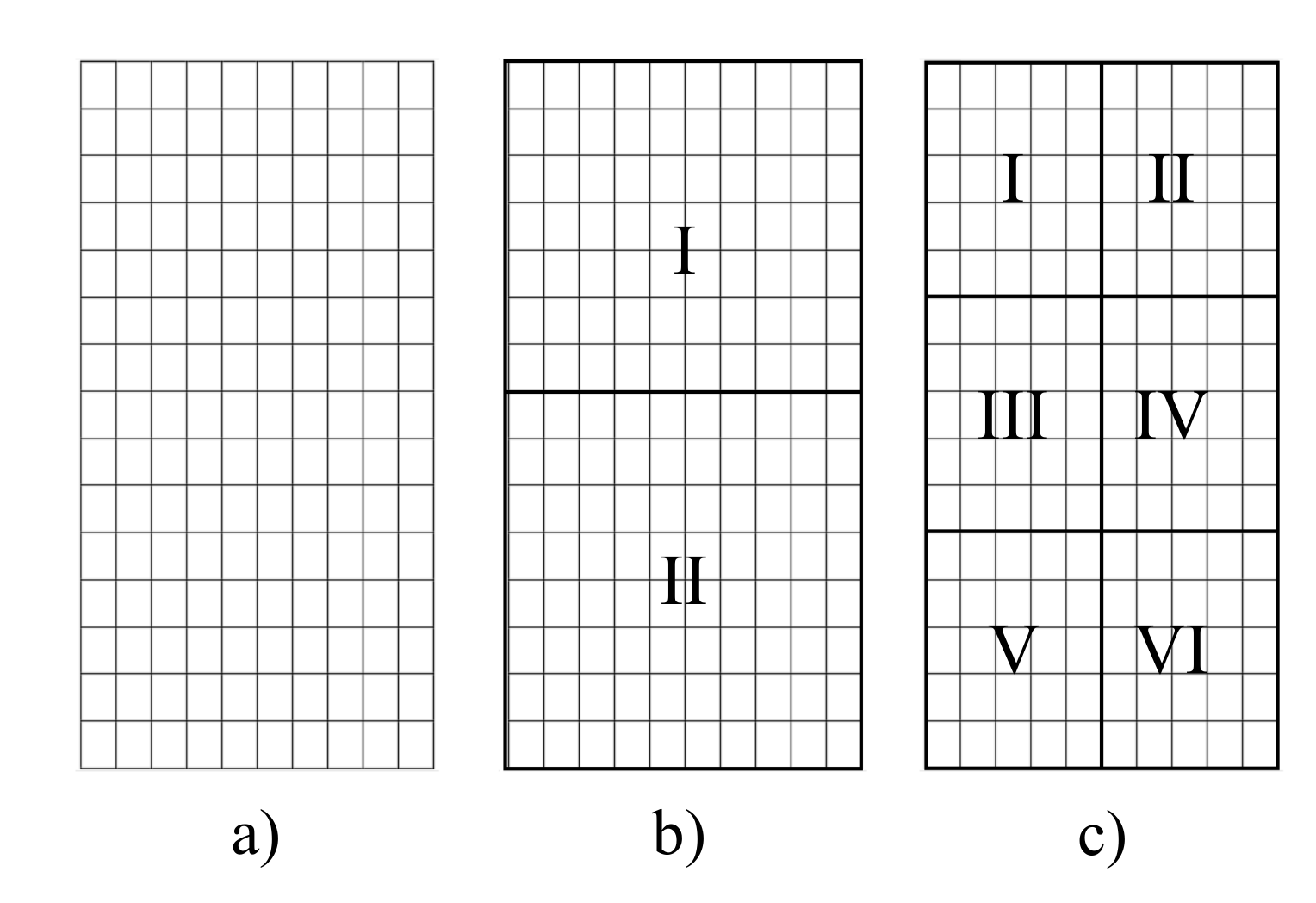
A new coupling interface degrees of freedom (DOFs) reduction technique for the mixed-interface component mode synthesis (MCMS) method is proposed, which referred to as the MCMS-rid method. This approach employs a set of shape functions via the linear interpolation (LI) in finite element method (FEM) to realize interface nodal coordinate transformations for each substructure, and then only a small number of interpolation basic nodes (IBNs) will be involved in mode synthesis and the following dynamic analysis. Unlike the majority of available CMS methods that retain a full dimension of the coupling interface DOFs, the MCMS-rid method allows to reduce the coupling interface DOFs significantly and enhance the computational efficiency. Three numerical models, including a rectangular beam with two ends fixed, a non-rectangular beam with the button fixed and a simplified dam-foundation system with different material properties, are presented to demonstrate the computational accuracy and efficiency of the proposed method. The results indicate that favourable accuracy with a least number of retained DOFs involved in mode synthesis can be obtained for solving eigenvalue problems when compared with other MCMS methods. The optimal number and distribution of the IBNs are discussed on structural dynamic analysis as well. It is shown that the more the IBNs are involved in mode synthesis, the better the precision that will be received. Furthermore, when the sub-regions are nearly square, the precision is best.
Keywords: mixed-interface component mode synthesis (MCMS); finite element method (FEM); coupling interface degrees of freedom; interface nodal coordinate transformation; interpolating scheme mixed-interface component mode synthesis (MCMS); finite element method (FEM); coupling interface degrees of freedom; interface nodal coordinate transformation; interpolating scheme