Article

Thickness Uniformity Dependence on Polymer Viscosity in Silver-Nanowire-Embedded Flexible and Transparent Electrodes

1
Department of Materials Science and Engineering, Kumoh National Institute of Technology, Gumi, Gyeongbuk 39177, Korea
2
School of Architectural, Civil, Environmental, and Energy Engineering, Kyungpook National University, Daegu 41566, Korea
3
Department of Polymer Science and Engineering, Kyungpook National University, Daegu 41566, Korea
4
Advanced Materials Research Center, Kumoh National Institute of Technology, Gumi, Gyeongbuk 39177, Korea
*
Authors to whom correspondence should be addressed.
Appl. Sci. 2020, 10(7), 2202; https://doi.org/10.3390/app10072202
Submission received: 14 February 2020 / Revised: 3 March 2020 / Accepted: 23 March 2020 / Published: 25 March 2020
(This article belongs to the Special Issue 3D Nanostructured Materials and Devices)

Abstract

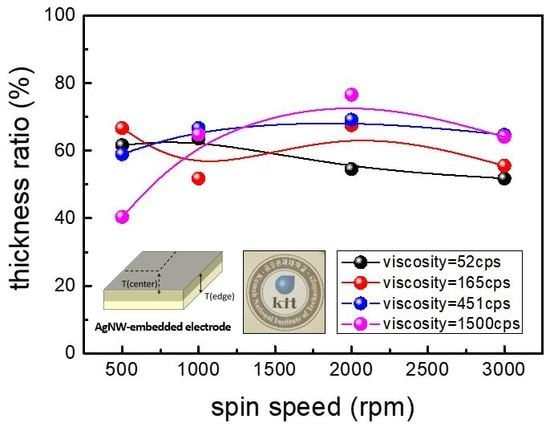
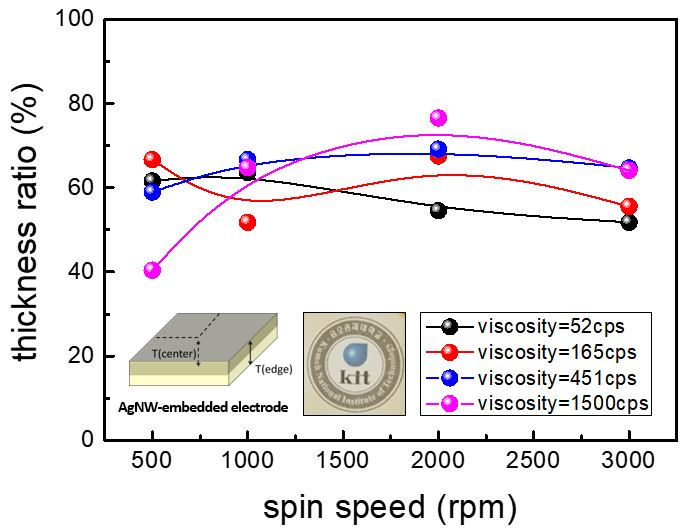
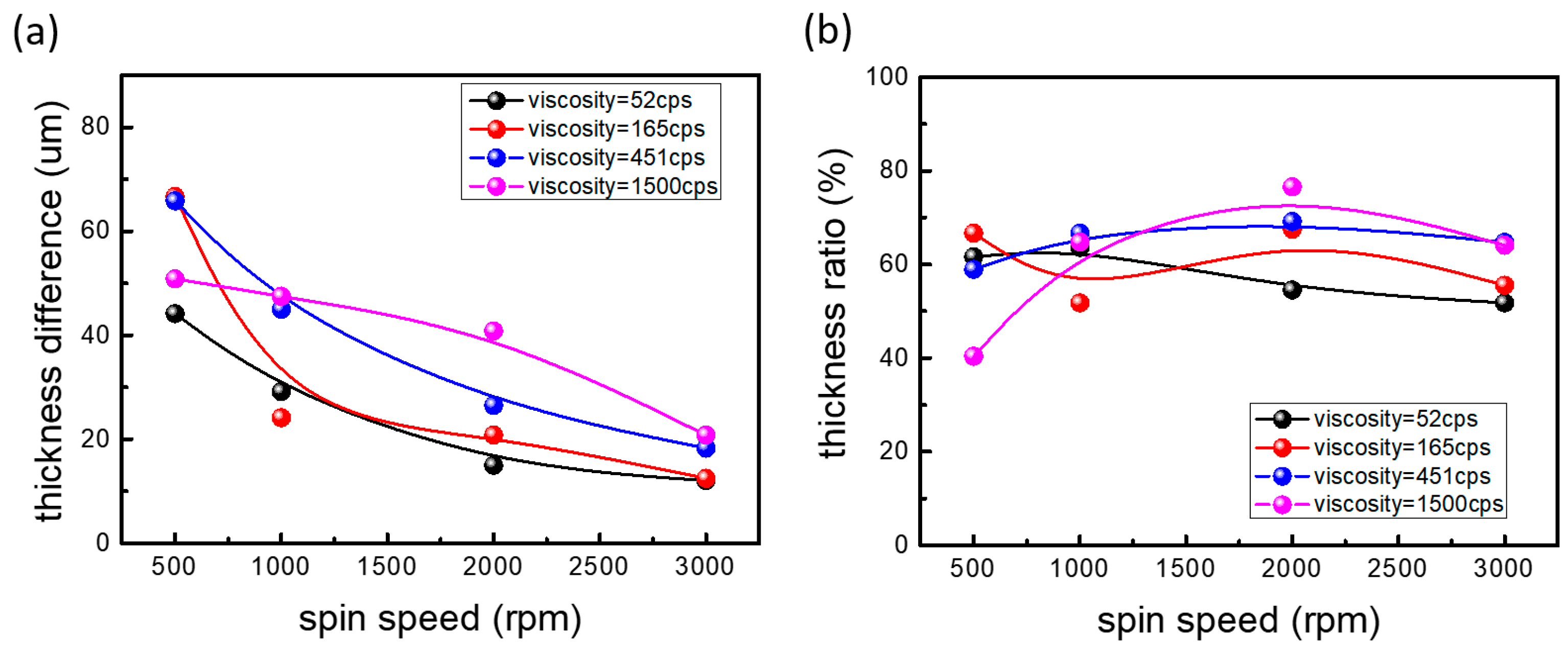
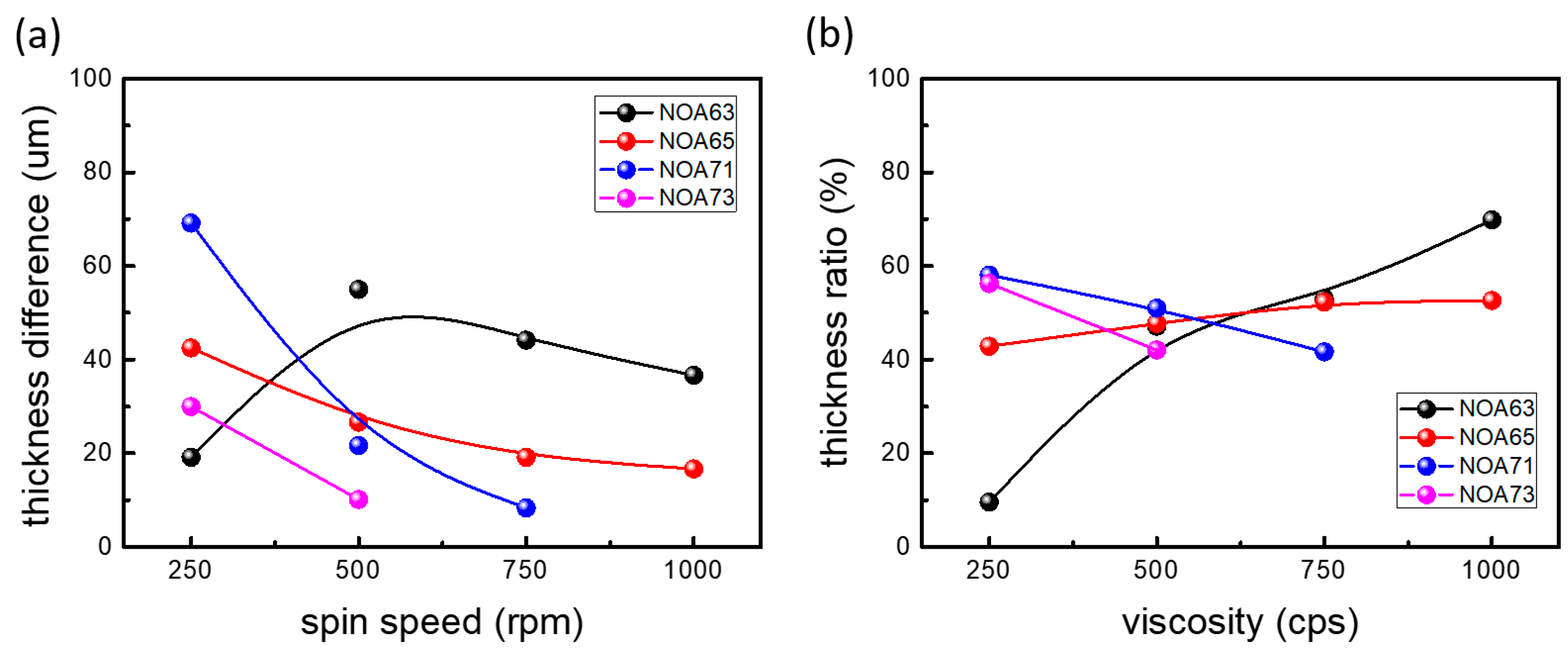
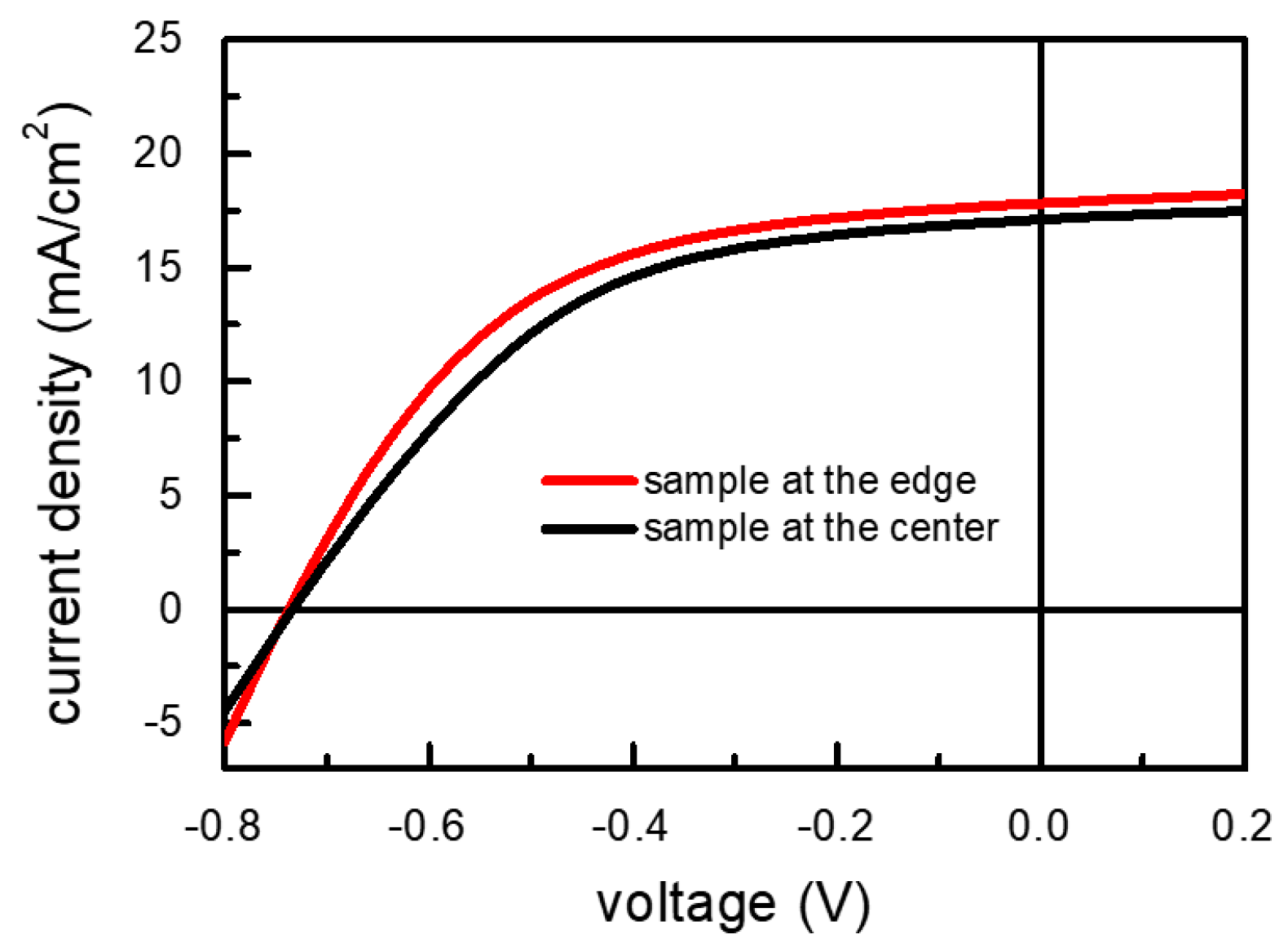
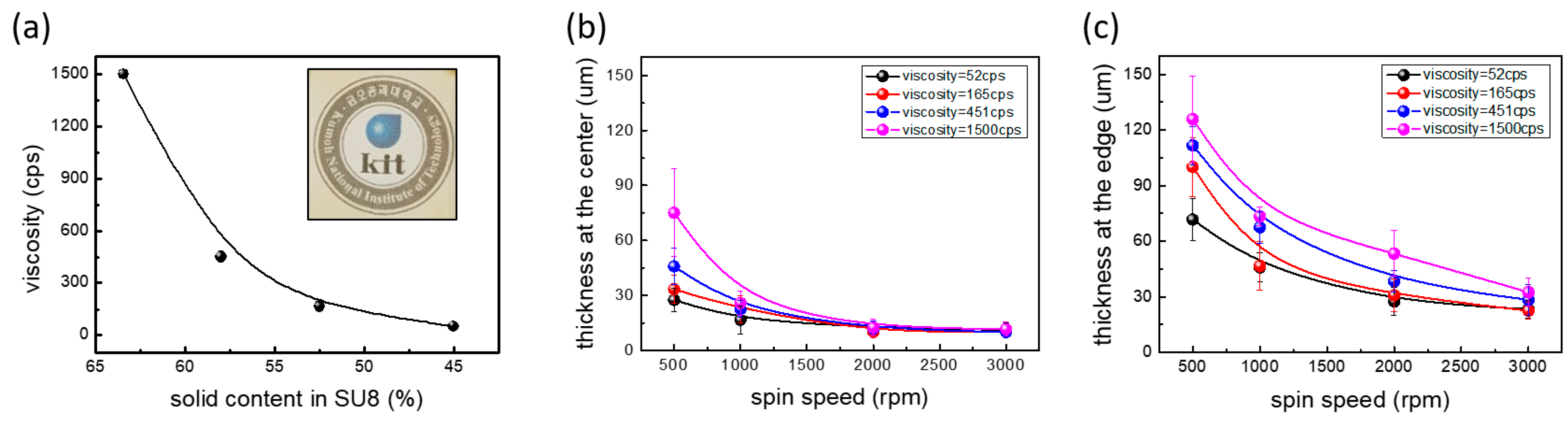
We herein report the effect of the viscosity of a prepolymer solution on the thickness uniformity of silver-nanowire-embedded flexible transparent electrodes. We adopted a model system with all the prepolymer solutions possessing identical physical properties except for the viscosity and then explored the most common prepolymer solutions for silver-nanowire-embedded flexible electrodes. In all experiments, single-step spin coating was conducted to coat the prepolymer solution on silver nanowires. We found that the electrodes were thinner for lower viscosity. However, the thickness ratio between the center and edge was comparable (50–60%) and independent of the prepolymer solution viscosity. This indicates that the viscosity does not determine the thickness uniformity, and that the coating method itself is vital to obtain films with uniform thickness. The flexible electrodes were introduced into organic solar cells. Their device performance was comparable regardless of the position of the electrodes and their thickness. This is because the thickness difference of the flexible electrodes did not affect their transmittance significantly. Thus, we conclude that although different coating approaches are needed to obtain flexible electrodes with high uniformity, the performance of optoelectronic devices on silver-nanowire-embedded flexible electrodes is independent of them.
Keywords: silver nanowire; polymer viscosity; embedding; flexible electrode; thickness uniformity silver nanowire; polymer viscosity; embedding; flexible electrode; thickness uniformity
Graphical Abstract