Article

Influence of Phase Change Phenomena on the Performance of a Desiccant Dehumidification System


1
Department of Energy and Environmental Engineering, Interdisciplinary Graduate School of Engineering Sciences, Kyushu University, 6-1 Kasuga-koen, Kasuga-shi, Fukuoka 816-8580, Japan
2
Thermal Science and Engineering Division, International Institute of Carbon-Neutral Energy Research (I2CNER), Kyushu University, 744 Motooka, Nishi-ku, Fukuoka 819-0395, Japan
3
Department of Mechanical Engineering, Faculty of Engineering, Sebelas Maret University, Jl. Ir. Sutami 36 A, Surakarta 57126, Indonesia
*
Author to whom correspondence should be addressed.
Appl. Sci. 2020, 10(3), 868; https://doi.org/10.3390/app10030868
Submission received: 30 December 2019 / Revised: 20 January 2020 / Accepted: 23 January 2020 / Published: 27 January 2020
(This article belongs to the Special Issue Sciences and Innovations in Heat Pump/Refrigeration)

Abstract

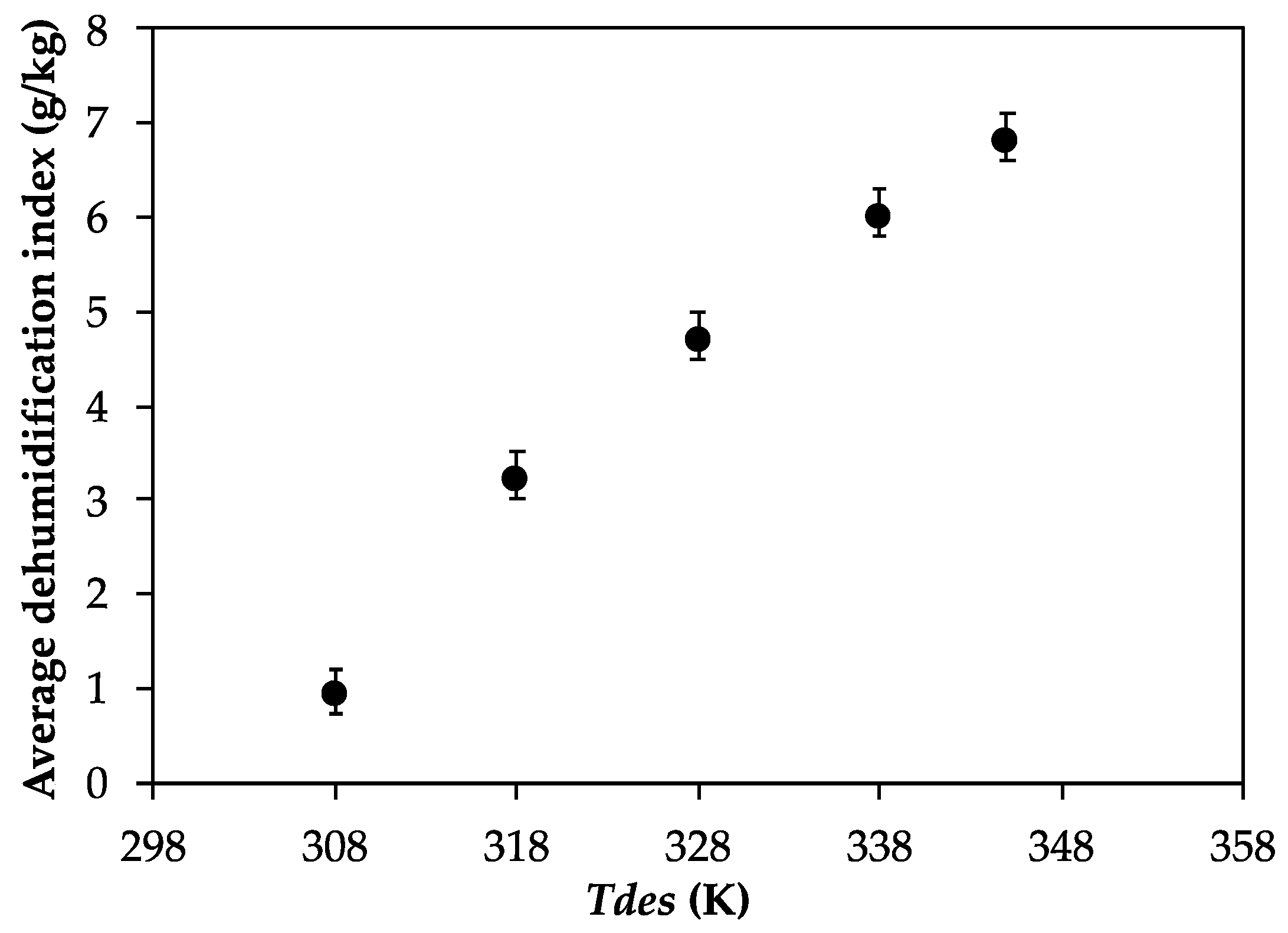
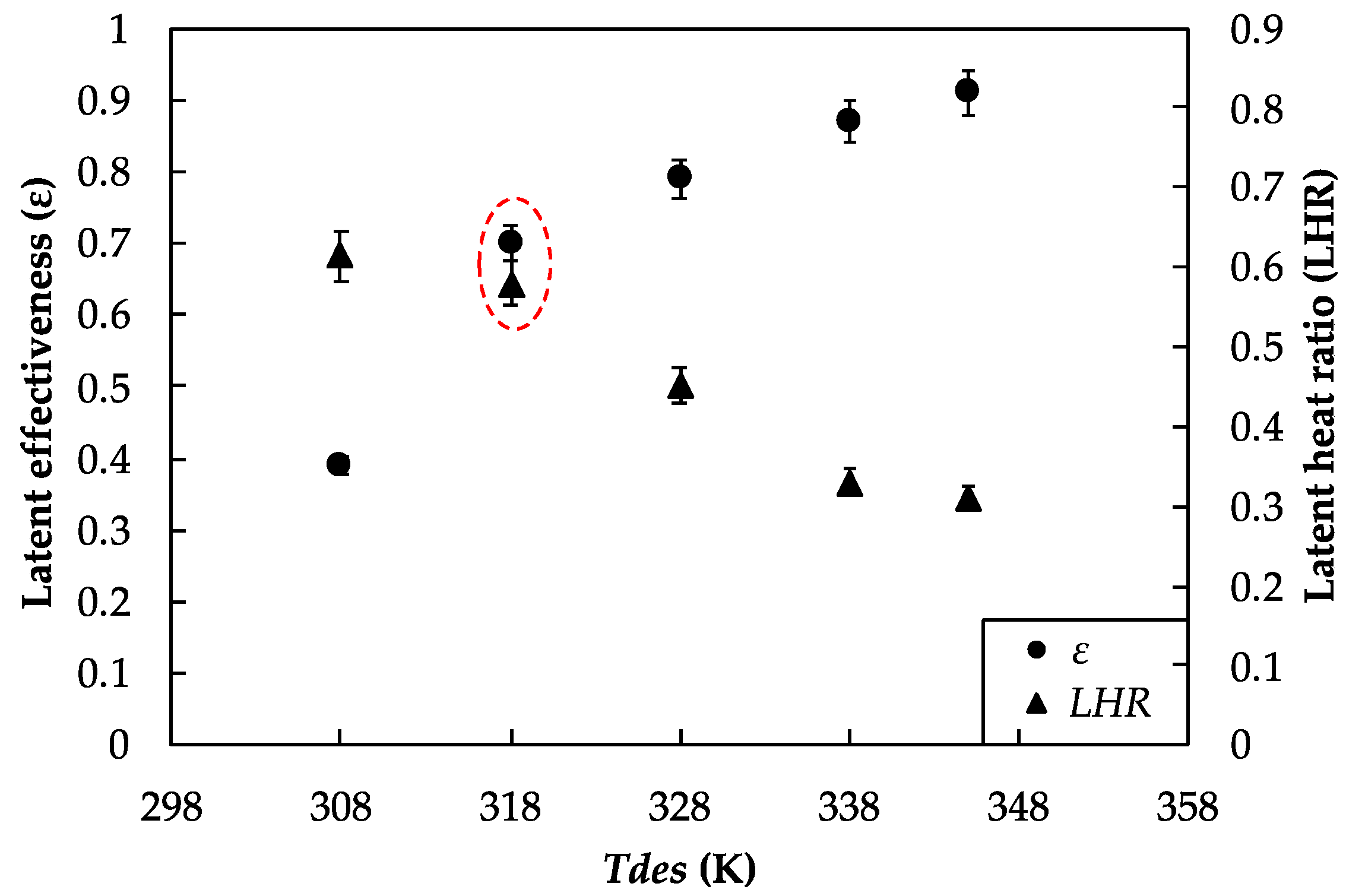
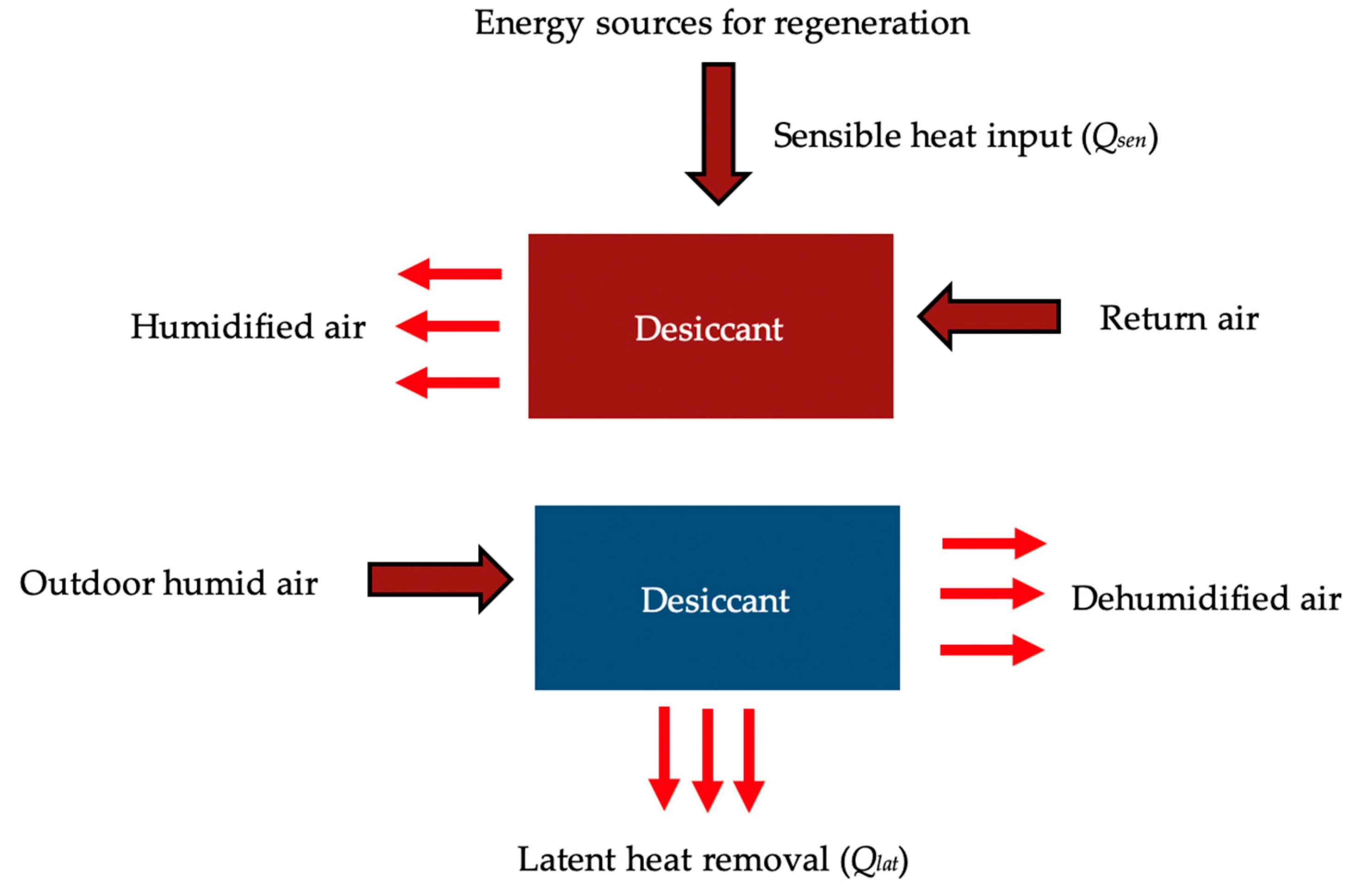
Demands of standalone dehumidification systems have been increasing in order to realize energy savings in air-conditioning processes. In a desiccant dehumidification system, the water vapor from the moist air undergoes a phase change phenomenon, this being from vapor to adsorbed phase, a process analogous to latent heat exchange. The energy exchange involved in such a process is often significant—up to 80% of the total energy exchange. In this study, the influence of the phase change phenomena involved in a desiccant dehumidification system was evaluated experimentally, along with the performance investigation under low desorption air temperatures of 308, 318, 328, 338, and 345 K. The system was driven by a constant adsorption temperature of 293 K. The dehumidification ability, latent heat ratio, and latent effectiveness were employed as key performance indexes. The results showed that with the increased desorption temperature, the latent heat ratio decreased, whereas the dehumidification ability and latent effectiveness increased. The highest latent heat ratio was found to be 0.61 at the desorption temperature of 308 K, whereas the highest latent effectiveness was obtained at the desorption temperature of 345 K. A suitable temperature for the effective and efficient dehumidification was observed to be 318 K for the current system.
Keywords: adsorption; dehumidification; effectiveness; latent heat; performance adsorption; dehumidification; effectiveness; latent heat; performance