Article

Is Your Cup Full? How Does Job Satisfaction Explain the Relationship Between Leadership and Work Performance?

1
Faculdade de Ciências Sociais e Tecnologia, Universidade Europeia, Quinta do Bom Nome, Estr. da Correia 53, 1500-210 Lisboa, Portugal
2
CETRAD-EUROPEIA, CETRAD-UTAD, 5000-801 Vila Real, Portugal
3
Institute for Systems and Computer Engineering, Technology and Science (INESC TEC), 4200-465 Porto, Portugal
4
Research Unit on Governance, Competitiveness and Public Policies (GOVCOPP), Department of Economics, Management, Industrial Engineering and Tourism (DEGEIT), University of Aveiro, 3810-193 Aveiro, Portugal
*
Author to whom correspondence should be addressed.
Adm. Sci. 2026, 16(9), 412; https://doi.org/10.3390/admsci16090412
Submission received: 12 July 2026 / Revised: 24 August 2026 / Accepted: 25 August 2026 / Published: 27 August 2026

Abstract

The purpose of this study was to examine the effect of leadership (transformational and transactional) on performance and to determine whether this relationship is mediated by job satisfaction and moderated by the sector. The sample for this study consists of 259 participants working in Portuguese organizations. This is a quantitative, cross-sectional, and correlational study. The mediating effect was tested using hierarchical multiple linear regressions. The moderating effect was tested using the PROCESS macro (Model 1). The results of this study indicate that performance levels are significantly influenced by transformational leadership, contingent rewards, and job satisfaction. Transformational leadership and contingent rewards significantly increase job satisfaction levels. Job satisfaction was found to be the mechanism that partially explains both the relationship between transformational leadership and performance and the relationship between contingent rewards and performance. The sector in which the participant works alters the relationship between leadership (transformational and transactional) and performance, with this relationship being stronger for participants working in the social sector. Additionally, it was found that participants with daily contact with their direct supervisor report a higher perception of transformational leadership. It is hoped that these results will contribute to both the advancement of the literature and organizational practice.

1. Introduction

We each have an invisible “bucket” that is constantly either empty or full, depending on what others say or do to us. When our bucket is full, we feel good. When it is empty, we feel very bad (Rath & Clifton, 2005).
This metaphor of the “invisible bucket” describes a psychological model in which everyone possesses an emotional “reservoir” that is in constant flux, depending on the social and communicative interactions they engage in. A “full bucket” is associated with satisfaction, well-being, motivation, and readiness to perform; conversely, an “empty bucket” is associated with negative emotions, such as dissatisfaction, disinterest, demotivation, lower engagement, and a loss of productivity (Bakker & Leiter, 2010).
The relationship between the “invisible bucket” and leadership becomes evident when one considers that leaders play a decisive role in employees’ emotional experience. Leadership behaviors that promote recognition, constructive feedback, support for development, and the demonstration of trust help fill team members’ emotional buckets. On the other hand, negative or indifferent leadership styles can contribute to emptying the bucket, negatively affecting motivation, engagement, and productivity (Baykal, 2019).
Thus, integrating the concept of the “invisible bucket” allows us to understand leadership not merely as the management of tasks or resources, but as a means of broadening a person’s vision to wider horizons and elevating their performance to a higher standard (Drucker, 2009). Throughout their careers, certain leaders have discovered that the bucket is a powerful and extraordinary leadership strategy; as a result, many employees look to them for motivation and guidance (Rath & Clifton, 2005).
Thus, we arrive at transformational leadership, characterized as a process in which leaders and followers mutually elevate one another to higher levels of morality and motivation (Burns, 1978). Other authors have expanded on the theory initiated by Burns, characterizing transformational leadership by the leader’s ability to inspire followers to exceed expectations, foster high levels of motivation, and promote positive and sustained change within organizations. They are cited as examples of ethical leadership, inspirational motivation, and intellectual stimulation, combined with the mentoring and development of each follower (B. Bass & Avolio, 1994). For these authors, transformational leaders are particularly effective in contexts of change and complexity, combining inspiration, guidance, and skill development, which results in higher levels of performance, commitment, and organizational satisfaction.
Transformational leadership has a significant impact on many organizational variables, particularly employee satisfaction and performance, fostering a positive and healthy organizational climate that leads to their development and growth.
Transactional leadership focuses on rewards (B. M. Bass, 2000). According to J. Jeong (2025), there is no consensus in previous studies on the effects of transformational and transactional leadership. Some authors argue that transformational and transactional leadership positively influence performance, with the effect of transformational leadership stronger than that of transactional leadership (Dias et al., 2024; Jensen et al., 2019; Purwanto et al., 2020).
This study is expected to clarify the relationships among leadership (transactional and non-transactional), job satisfaction, and performance. The following research question is thus formulated:
Is job satisfaction the mechanism that explains the relationship between leadership and performance?
To answer this research question, the following objectives were formulated:
(a)
To investigate the nature of the relationship between leadership and performance.
(b)
To investigate whether satisfaction is the mechanism that explains the association between leadership and performance.

2. Theoretical Framework

2.1. Leadership

Leadership is an essential activity and yet much remains uncertain in this endeavor involving people in the domain of social sciences. There is no formula to date to determine, with a degree of certainty, who will be successful and who will not—in varied situations and with varied communities and stakeholders. Leadership means leading people from A to B where at B they are better off. Leading is inspiring; it is motivating; it is illuminating the way [forward]. All leaders need [voluntary] followers, and in this regard, nothing will guarantee success. What qualities should a leader have? What competences and skills are necessary in specific situations and cultures? The debate continues.
There are certain traits which are intuitively seen as positive—for example, having positive values that are seen as universal such as good principles and character, a vision of the future, the ability to establish empathy with others, the humility to admit being wrong and to learn with experience, hence setting an example others may relate to and want to follow. Above all, a leader should be able to understand what others’ need and want, to help them feel happy and fulfilled, and have the desire to help them achieve their goals and objectives, fostering a sense of belonging and duty at the same time. Ogbeidi (2012) also provides a good discussion on being a leader. A leader in the truest sense must inspire, compel others forward into action, and establish a positive atmosphere—in all followers alike (Forbes, 2017). There is no doubt that leadership is a central aspect to the success of groups in society (Agazu et al., 2025). Northhouse (2007) defines leadership as an individual’s ability to motivate a group to work towards goals, while Liden et al. (2025) further expand this perspective, demonstrating that leadership can also manifest itself through informal behaviors.
Leadership styles can be considered an extension of behavioral approaches. To understand which combination of leadership behaviors is effective, researchers have explored the general concept of leadership behaviors, and since the 2000s, leadership styles have become the primary focus of research. According to Carton (2022), leadership styles are considered unique constructs because they reflect a common theme.
Among all leadership styles, transformational and transactional leadership rank among the most studied (Carton, 2022; Dinh et al., 2014; Gardner et al., 2020).

2.1.1. Transformational Leadership

In recent decades, the need to transform organizations, in times of turbulent and rapid change, has led to the name of an important leadership form—transformational leadership (Northhouse, 2007). Burns (1978) had already approached the issue of transformational leadership in so far as it occurs when a leader is able to elevate performance and participation in organizational goal achievement to a level considered very high, especially in terms of the motivation and well-being of the group. Four distinct transformational aspects in this leadership style are suggested by B. M. Bass (1985), namely the ability to bring about high ideals and respect as a role model with impeccable ethics; the ability to set forth a vision people can understand, relate to and want to contribute to as a team; encouraging people to solve problems creatively and drawing on their intellect; all while choosing other intermediate leaders to delegate to and trust. The terms coach and mentor are gaining more popularity and Nicholson and Kiel (2007) referred to these twenty years ago—seeing transformational leadership as indeed transforming corporate realities for the better. In line with Shahzad et al. (2022), transformational leaders will have a quiet belief in their abilities and not fear their followers, allowing them to be innovative and thus essential to corporate strategy.
Being a transformational leader means encouraging colleagues to be creative and to have a positive inner work life—fueled by intrinsic motivation and the desire to rise up to the innovation challenge, even if it means temporarily disrupting the status quo (Jansen et al., 2006). Transformational leaders provide a safe environment within which to innovate and excel. This may seem obvious and common sense—albeit work experience will show the opposite to oftentimes be true; however, one cannot overlook the existence of toxic leaders and organizations.

2.1.2. Transactional Leadership

One may state with some certainty that transactional leadership is a popular, if not the most popular, leadership style in the marketplace and in organizations (Young et al., 2021). With this leadership style, the leader and their followers engage in transactions—that is the binding and motivating principle. Standards are achieved and expectations met and exceeded in view of satisfactory rewards promised and subsequently delivered. The three pillars of this leadership style are contingent reward (which means providing rewards when objectives are accomplished—involving trust in the leader); active management by exception (translated into controlling subordinates to avoid pitfalls and problems—while avoiding excessive control of movement and thought), and passive management by exception (which means being able to solve issues as they arise—organizational and marketplace problems) (B. M. Bass, 1985; Burns, 1978). These three leadership dimensions may albeit benefit or damage productivity via distinct occurrences (Young et al., 2021). Moreover, certain authors suggest that transactional leadership should be used together with transformational leadership to be more effective. Individuals will thus perform better, as empirically demonstrated (Wang et al., 2011).

2.2. Performance

At the end of the day, organizations must perform according to, or exceeding, expectations of shareholders and other stakeholders. What does “performance” really mean? It is a complex term, given the diverse contexts and people involved, which may exist at any moment in time. Does performing mean achieving a profit, at the dire expense of the environment? Or is it about providing benefits to as many stakeholders as possible, without harming any third parties, including the planet? There are hence many facets to the term performance. Ejere and Abasilim (2012) state that organizational performance must be seen in context and related to efficiency and effectiveness (and not squandering resources mindlessly). In a similar vein, Yusuf-Habeeb and Ibrahim (2017) speak of outputs and of organizational results which need to be forecasted and planned for by leadership roles (setting realistic, fair but challenging goals and objectives may be an art in itself). Benchmarking involves analyzing the pace set by market leaders—at the individual or organizational level. Though it may be dangerous to compare oneself to the best in industry, this is now commonplace. To be the best, one will need dedicated and committed colleagues—hence the need for superior leadership which inspires one to excel (Cemaloğlu et al., 2012). According to Popper (2000), good leaders will be visible through their actions and impact on their subordinates—which needs to be substantial.

Leadership and Performance

What is it possible to achieve? Great leaders may surprise us with their performance possibilities and outcomes. Leaders must find the potential in people and transform that into something palpable. It goes beyond using people but rather giving them something to believe in and, hand in hand, accompanying them [patiently] to that end. It goes beyond mere utility and seeing people as instruments. Consistent ethics will be necessary at all times to achieve long-lasting excellence and positive change (Horner, 1997). Leaders are measured by their results—but the path in achieving those goals is also relevant—involving being kind and having empathy for the needs, competences and abilities of others in order to achieve the extraordinary (B. M. Bass, 1985). Teams require leaders to come forward and take on that responsibility. Despite decades studying the topic, what do we know about how that is accomplished over time? What constitutes effective leadership? Do leaders exist separately from their followers? Or are both influenced by each other? According to Zaccaro and Klimoski (2002), the leader–subordinate dynamic is complex and they should not be seen separately. Followers will spur on the leader to be more or less effective (Zaccaro & Klimoski, 2002). Leadership tasks involve creating a vision, coordinating people in individual and collective duties, and ensuring that smooth and effective communication channels exist and are kept open, while monitoring and seeking on of organizational activity to thus exceed expectations and perhaps achieve the unthinkable (Kahandawaarachchi et al., 2016; Azeem, 2010).
In a study conducted by Gündüz Çekmecelioğlu et al. (2025), the authors concluded that both transformational leadership and transactional leadership have a positive and significant effect on performance.
Previous studies suggest that transformational leadership and transactional leadership positively influence performance, with the effect of transformational leadership being stronger than that of transactional leadership (Dias et al., 2024; Jensen et al., 2019; Purwanto et al., 2020). This relationship can be interpreted based on social exchange theory (Blau, 1964) and the norm of reciprocity (Gouldner, 1960). According to these theories, behavior results from an exchange process. When a leader supports their employees, they reciprocate this attitude by performing better.
We may hence formulate the following hypotheses:
Hypothesis 1:
Leadership has a positive and significant effect on task performance in Portugal.
Hypothesis 1a:
Transformational leadership has a positive and significant effect on task performance in Portugal.
Hypothesis 1b:
Transactional leadership has a positive and significant effect on task performance in Portugal.

2.3. Job Satisfaction

“Happy employees are productive employees.” Locke (1976) states that job satisfaction is a “pleasant or positive emotional state resulting from the evaluation of one’s own work or work experiences.” Salary, opportunities for professional growth, job security, employment status, working conditions, benefits, training, and personal variables influenced job satisfaction (Gazi et al., 2024). Job satisfaction is a psychological response to a person’s duties and their physical and social environment (Saari & Judge, 2004). Job satisfaction can be considered the positive feeling felt when executing an activity which is explicitly or implicitly a part of their job description (Chukwu, 2021).
An organization’s performance and productivity will decline if its employees are unmotivated or have had a negative experience with their leaders (Azeem, 2010). As a result, the company may begin to decline or go bankrupt.
Porter’s (1961) discrepancy theory states that “an employee will be satisfied if there is no difference between what they desire and their perception of reality, measuring job satisfaction by calculating the difference between what should be and perceived reality.” Happiness at work, according to Locke (1976), “depends on the difference between what is achieved and what the employee expects.” “People will feel satisfied or dissatisfied, depending on whether they perceive fairness in a situation,” states Adams’ (1965) theory of justice, commonly known as equity theory. This theory has four essential components: input, outcome, reference person, and equity–inequity. Employee satisfaction levels are determined by comparing their performance with that of other employees.

2.3.1. Leadership and Job Satisfaction

What is the real task of a leader? It is to create a culture which is shared in the whole organization. A shared culture leaves room for the creation of synergies towards achieving what the organization set out to achieve—its vision and mission. Satisfied employees are essential for success (Purwanto et al., 2021; Quddus et al., 2020; Sunarsi et al., 2020), facilitating human resource management and fostering enthusiasm (Asbari et al., 2021; Gelard et al., 2014; Gessler & Ashmawy, 2016). Employee satisfaction can be viewed as the result of their dedication to the greater good—that of the collective—of the organization, a keen sense of motivation beyond the short- and medium-term, where individuals feel stimulated to perform for the benefit of the employee community (Hulpia et al., 2011; Suyitno et al., 2014; Tas, 2017). Compensation for doing hard work will be evident in itself and employees will feel engaged through their labor (Suharto et al., 2022).
In a similar vein, one cannot refrain from talking about leadership as a way to positively manage employees in groups within an organization. Transformational leaders prioritize serving their followers over their leadership status; it is from that that they achieve satisfaction—from creating better lives, both personal and professional, for those who serve them and the collective (Haudi et al., 2022; Indrawan et al., 2020; Kadiyono et al., 2020).
Greater trust and satisfaction from the task(s) completed will ensue, according to Notarnicola et al. (2024), as transformational leaders are good at creating the abovementioned shared culture. Leadership styles seen as positive have an impact on job satisfaction and create for a platform of shared best practices and personal mastery between leaders.
Regarding the relationship between transactional leadership and job satisfaction, previous studies have reported inconsistent results. For some authors, this relationship is negative (J. Jeong, 2025), but for others, it is positive (Lumbantoruan et al., 2020). Salameh-Ayanian et al. (2025), in a study conducted among Lebanese NGOs, also concluded that there is a positive association between transactional leadership and job satisfaction. However, this relationship is weaker than the relationship between transformational leadership and job satisfaction.
The relationship between leadership and job satisfaction can also be interpreted based on the Path–Goal Leadership Theory developed by House (1971). According to this theory, when a leader’s behavior successfully clarifies key paths for subordinates, various positive outcomes emerge, including job satisfaction.
Hypothesis 2:
Leadership has a positive and significant effect on job satisfaction in Portugal.
Hypothesis 2a:
Transformational leadership has a positive and significant effect on job satisfaction in Portugal.
Hypothesis 2b:
Transactional leadership has a positive and significant effect on job satisfaction in Portugal.

2.3.2. Job Satisfaction and Performance

Organizational psychologists have been studying the supposed link between happiness at work and performance for almost half a century. Schaffer (1996) presented the theory of need satisfaction, asserting that job satisfaction is a direct consequence of how one’s needs are satisfied. Hence, employee satisfaction depends on the fulfillment or not of their needs, and employees will feel satisfied when they receive what they need.
Organizations with satisfied employees are unquestionably more successful and productive than those with dissatisfied employees. Performance and satisfaction may be closely related at the organizational level whereby satisfied individuals willingly contribute to the group’s objectives.
The relationship between job satisfaction and performance is often ambiguous; job satisfaction can act as either a precursor to or a consequence of performance, i.e., satisfaction promotes performance, which in turn increases satisfaction (Spector, 2021).
This relationship can be explained by Hobfoll’s (1989) resource conservation theory. Job satisfaction can function as a positive emotional state, reflecting a surplus of work-related resources. When employees feel satisfied, they invest this surplus of energy and focus into their tasks, leading to an increase in their performance.
According to Gazi et al. (2024), employees who are happier in their job also perceive that they perform better. (Pinheiro & Palma-Moreira, 2025) also concluded that being happy at work is directly linked to the perception of performance.
Therefore, the following hypothesis is proposed:
Hypothesis 3:
Job satisfaction has a positive and significant effect on task performance in Portugal.

2.3.3. Leadership, Job Satisfaction and Performance

Leadership factors and organizational citizenship behaviors (including being a good colleague) are seen to be strictly linked to the performance of employees; specifically, being happy and feeling satisfied at work also has a bearing on job performance (Nugroho et al., 2020). The studies by Purwanto et al. (2021) and Ridlwan et al. (2021) show that one’s leader and how one is led will affect how one performs depending on whether they are happy at work. In other words, if one’s leaders are seen to be adequate, people will be happier at work, resulting in better performance. Poo leadership will have the opposite effect. The study by Jimoh and Lawal (2026) revealed that being happy while working serves as a full mediator when one relates leadership to job results. Hence, one may conclude that being happy at work accounts for the leadership–performance connection. The relationship between leadership, job satisfaction, and performance can be interpreted through the expectancy theory developed by Vroom (1964), which holds that task performance depends on the alignment of effort, rewards, and individual expectations. Transparent reward systems and trust in management reinforce this link, motivating employees to exert greater effort, which will result in a higher level of performance (Shdaifat et al., 2023). This relationship can also be interpreted through the theory of resource conservation, developed by Hobfoll (1989). According to this theory, leadership can function as an important resource, promoting employee satisfaction and preventing the loss of resources, thereby contributing to better performance.
Therefore, the following hypothesis may be formulated:
Hypothesis 4:
Job satisfaction has a mediating effect on the relationship between leadership and task performance in Portugal.

2.4. Sector of Activity

2.4.1. Public Sector

According to the study by Orazi et al. (2013), public sector leaders should primarily act as transformational leaders, making moderate use of transactional relationships (ones involving direct exchange, which perhaps has limited possibility in public sector settings) with their subordinates; the authors strongly emphasize how important it is to come across as having integrity while being ethical on the job. Indeed, public administration, according to Pimenta (2023), involves public leadership, which is very different to leadership in the private sector not only due to different resources being available but also due to promotion possibilities in view of the public rather than private good. Public sector managers face different challenges because they must serve the needs of the public at large, they must respect the Constitution and law of the land, and demonstrate good personal values and integrity, promoting ethical work environments and seeking to be seen as excellent professionals.
Public employees should work to be of use to others more readily than for themselves (being more altruistic than selfish); they should reflect on their work to serve different people, rather than themselves; and they should view their work as a way to assist others, thereby experiencing greater meaning within their jobs (Ciobanu et al., 2019).

2.4.2. Private Sector

The study by Quigley et al. (2022) demonstrates that the effect of leadership in private settings and organizations may perhaps differ in a big way from what is observed in public sector firms, though clear reasons and directions may be difficult to elucidate. The discretion—or freedom of action—of leaders in private organizations may be higher, in the presence of an owner who may decide to allocate resources with less [public] constraints and scrutiny. Public sector firms work for the greater good and there is no owner to speak of except for the State. Public sector employees may assume to work for the State or for their country. In private firms, one works for different stakeholders, but most surely for the owner of the enterprise. The salary of employees may be higher in private firms, but the risk is higher due to more competition and the need to compete and survive. Leadership decisions may hence have a larger impact in private firms. Leadership and managerial discretion may be larger in private firms.

2.4.3. Public/Private Sector

Public–private partnerships (PPPs) have received a lot of attention in the media. Leadership and managerial tasks are crucial in this type of firm. This means that how individual and group behavior are sanctioned or promoted will have a significant effect on outcomes and employee job satisfaction. What rules govern the PPP entity? Managing a PPP is a distinct challenge and the media has also focused on corruption in such environments whereby private managers and leaders are seen to benefit from less ethical public sector managers and leaders who wrongly and unlawfully allocate public resources in search of subsequent personal gain. Do private entities succeed in corrupting public managers? Based on some of the literature, not surprisingly, how one cooperates, builds trust, and communicates through diverse channels, the firm’s competences, the perspective of risk, rivalry, and being opaque or transparent are all of great importance (Rodrigues, 2023).

2.4.4. Social Sector

Sahasranamam et al. (2024) note that economic development and growth are also achieved via social organizations. While commercial entrepreneurs primarily seek economic value and profit, social entrepreneurs seek to create social value and community well-being. In view of these different missions, different skill sets, experience and organizational forms are required for each mission. Different types of opportunities are sought, and different and unique human capital are needed for the very different contexts which may present themselves.
M. Jeong (2024) states that transformational leadership may be very applicable in social enterprises. Transformational leadership involves transforming enterprises via motivated individuals based on their intrinsic motivation and their striving for enterprise objectives. The transformational and charismatic leader will have a role involving intellectual stimulation, encouragement, and the granting of autonomy to followers. Naderi et al. (2019) defend that this sort of leadership will support performance in social endeavors.
Mohamad and Majid (2014) state further that leaders in social enterprises must create the conditions necessary for members to really excel in their roles and professional duties.
In a study conducted by Dias et al. (2024), the authors concluded that the industry moderates the relationship between leadership (transformational and transactional) and performance. The differences between sectors of activity—and the seeking of economic versus social profit—lead us to formulate the following hypothesis:
Hypothesis 5:
The sector of activity moderates the relationship between leadership and task performance in Portugal.
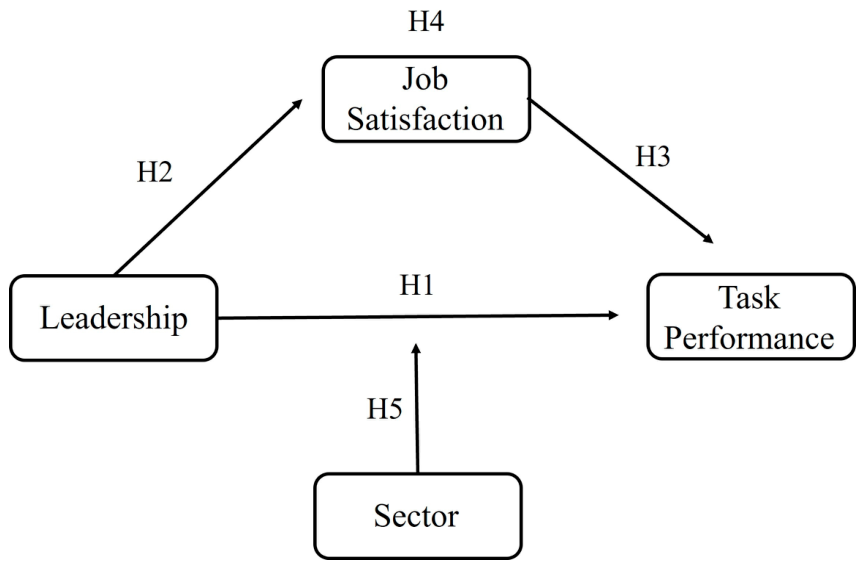
Figure 1 shows a summary of the formulated hypotheses, in a model created to show the existing relationships.

3. Materials and Methods

3.1. Data Collection Procedure

A total of 259 individuals working in Portuguese organizations voluntarily participated in this study.
This was a correlational study aimed at examining the associations among leadership, job satisfaction, and performance. The data collection process was non-probabilistic, purposive, and snowball-based (Vilelas, 2025), as these approaches were used to access participants through the researchers’ contacts. It was a cross-sectional study since the data were collected at a single point in time.
The questionnaire was posted online on the Google Forms platform and distributed via email and LinkedIn to the researchers’ contacts, supporting the purposive and snowball-based data collection process. Before beginning the questionnaire, participants were presented with an informed consent form, which explained the study’s objective and guaranteed data confidentiality. Participants were then asked whether they wished to participate in the study. If they answered no, they were directed to the end of the questionnaire. If they answered yes, they proceeded to the next section.
The questionnaire included sociodemographic questions and three scales: leadership, job satisfaction, and performance. The data were collected between 1 February 2026 and 20 March 2026.

3.2. Participants

The sample for this study consists of 259 participants who volunteered to take part and are between the ages of 17 and 67, with a mean age of 44.02 and a standard deviation of 13.745. Regarding gender, 173 (66.8%) of the participants are female, and 86 (33.2%) are male. Regarding educational qualifications, 77 (29.7%) of the participants completed 12th grade or lower, 131 (50.6%) hold a bachelor’s degree, and 51 (19.7%) hold a master’s degree or higher. Regarding length of service, 35 (13.5%) have less than 1 year, 54 (20.8%) have between 1 and 3 years, 38 (14.7%) have between 4 and 6 years, 18 (6.9%) have between 7 and 10 years, 16 (6.2%) have between 11 and 15 years, and 98 (37.8%) have more than 15 years of experience. Regarding contract type, 123 (47.5%) have a permanent contract, 40 (15.4%) have an indefinite-term contract, 56 (21.6%) have a fixed-term contract, 23 (8.9%) are self-employed, and 17 (6.6%) indicated another type of contract. Regarding the sector of activity, 152 (58.7%) work in the private sector, 71 (27.4%) in the public sector, 19 (7.3%) in public/private companies, and 17 (6.6%) in the social sector. Regarding work regime, 159 (61.4%) work in a face-to-face regime, 92 (35.5%) in a hybrid arrangement, and 8 (3.1%) remotely. When asked about their contact with their direct supervisor, 111 (62%) responded that it was daily, 31 (17.3%) that it was weekly, 4 (2.2%) that it was monthly, and 33 (18.4%) that it was variable.

3.3. Data Analysis Procedure

After the data were collected via Google Forms, they were imported into SPSS Statistics 29. The first analysis was conducted to assess the metric properties of the instruments used in this study. Validity was assessed using confirmatory factor analyses in AMOS Graphics 29. The procedure followed a “model-building” approach (Jöreskog & Sörbom, 1993), interactively considering the following fit criteria: χ2 ≤ 5; TLI > 0.90; GFI > 0.90; CFI > 0.90; RMSEA ≤ 0.08 (MacCallum et al., 1996); and RMSR, where a lower value corresponds to a better fit (Hu & Bentler, 1999). Using the data obtained from the confirmatory factor analysis, composite reliability and convergent validity were calculated. Composite reliability values must be greater than 0.70. Regarding convergent validity, AVE values must be equal to or greater than 0.50 (Fornell & Larcker, 1981).
Internal consistency was assessed using Cronbach’s alpha to evaluate instrument reliability, typically set at 0.70 in organizational studies (Bryman & Cramer, 2003).
To test the sensitivity of the items, measures of central tendency and shape were calculated. Regarding measures of central tendency, the items have responses at all points and do not have a median close to either extreme. Regarding measures of shape, their absolute values of skewness and kurtosis are below 3 and 7, respectively (Finney & DiStefano, 2013).
Before testing the hypotheses formulated in this study, a one-factor test by Harman (1967) was conducted to assess common method variance. One-sample t-tests were conducted to test the descriptive statistics of the variables under study. The effect of sociodemographic variables on the variables under study was tested using the following tests: t-test for independent samples, one-way ANOVA, and Pearson correlations. The association between the variables under study was tested using Pearson correlations. To test Hypotheses 1, 2, 3, and 4, linear regressions were performed. To test Hypothesis 4, as it involves a mediating effect, the procedures outlined by Baron and Kenny (1986) were followed. To test Hypothesis 5, which involves a moderating effect, the PROCESS 4.2 macro (Model 1), developed by Hayes (2022), was used. The significance level is 0.05.

3.4. Instruments

Leadership was measured using the Portuguese version of the Multifactorial Leadership Questionnaire developed by B. M. Bass (1985), as adapted for the Portuguese population by Salanova et al. (2011). This is a shortened version of the instrument consisting of 28 items, distributed across two subscales: transformational leadership and transactional leadership. The transformational leadership subscale consists of 20 items across 5 dimensions, and the transactional leadership subscale consists of 8 items across 2 dimensions. The items are organized on a five-point Likert scale (from 1 “Never” to 5 “Frequently if not always”). The validity of the transformational leadership subscale was initially assessed using a five-factor confirmatory factor analysis. All fit indices showed adequate values (χ2/df = 1.93; GFI = 0.90; CFI = 0.96; TLI = 0.95; RMSEA = 0.060; RMSR = 0.039). Since the factors were highly correlated, a new one-factor confirmatory factor analysis was conducted. The fit indices were also found to be adequate (χ2/df = 1.83; GFI = 0.91; CFI = 0.97; TLI = 0.96; RMSEA = 0.057; RMSR = 0.038). These results indicate that we should consider this subscale as unidimensional. A composite reliability of 0.95 was obtained, a value considered very good. This subscale has very good internal consistency, with a Cronbach’s alpha of 0.95. It also has good convergent validity, as it attained an AVE of 0.51 (Fornell & Larcker, 1981).
To test the validity of the transactional leadership subscale, a two-factor confirmatory factor analysis was conducted. The fit indices were adequate or close to adequate values (χ2/df = 3.35; GFI = 0.95; CFI = 0.96; TLI = 0.93; RMSEA = 0.095; RMSR = 0.085). A composite reliability of 0.88 was obtained for contingent rewards and 0.80 for active management, both of which can be considered good. The two dimensions of this scale show good internal consistency, with a Cronbach’s alpha of 0.86 for contingent rewards and 0.80 for active management. Good convergent validity indices were also obtained for both dimensions, with AVEs of 0.65 for contingent rewards and 0.52 for active management (Fornell & Larcker, 1981).
Performance was measured using the task performance dimension (comprising 7 items) of the instrument developed by Williams and Anderson (1991). The validity of this instrument was tested using a one-factor confirmatory factor analysis, which provided good fit indices (χ2/df = 1.26; GFI = 0.98; CFI = 0.99; TLI = 0.99; RMSEA = 0.032; RMSR = 0.027). This instrument has good composite reliability (0.87) and good internal consistency (α = 0.85). Convergent validity appears good, as an AVE of 0.50 was obtained (Fornell & Larcker, 1981).
To measure job satisfaction, the Portuguese version of the instrument developed by Brayfield and Rothe (1951) was used; this version was translated and adapted for the Portuguese population by Sinval and Marôco (2020). It consists of 5 items rated on a 5-point Likert scale (from 1, “Strongly Disagree,” to 5, “Strongly Agree”). To test the validity of this instrument, a one-factor confirmatory factor analysis was conducted, resulting in good fit indices. (χ2/df = 2.12; GFI = 0.99; CFI = 0.99; TLI = 0.98; RMSEA = 0.066; RMSR = 0.019). This instrument exhibits good composite reliability (0.85) and good internal consistency (α = 0.85). It also demonstrates good convergent validity, with an AVE value of 0.54 (Fornell & Larcker, 1981).
All items comprising these instruments were found to discriminate among subjects, as they do not grossly violate the assumption of normality (Finney & DiStefano, 2013).

4. Results

4.1. Common Method Variance

Since the data for all scales were collected from a single source, this study may contain potential common-method variance. To test for common-method variance, Harman’s (1967) one-factor test was used. An exploratory factor analysis forced to a single factor was conducted. The one-factor solution accounted for only 38% of the instruments’ variability, indicating that common-method variance does not pose a potential risk to the present study (Podsakoff et al., 2012).

4.2. Descriptive Statistics of the Variables Studied

The responses provided by the participants in this study fall above the midpoint for all constructs (3), indicating a high perception of leadership and task performance, as well as high levels of job satisfaction (Table 1). It is important to note that task performance is the variable with the highest perceived importance, while active management has the lowest (Table 1).

4.3. Association Between Sociodemographic Variables and Variables Studied

Next, we tested the association between sociodemographic variables and the variables studied. However, only the results that were statistically significant will be described.
Whether or not the participant holds a managerial position has a significant effect on job satisfaction (t (257) = −3.06; p = 0.002; d = 0.41) (Table 2). Participants who hold a managerial position have significantly higher satisfaction than those who do not (Table 2).
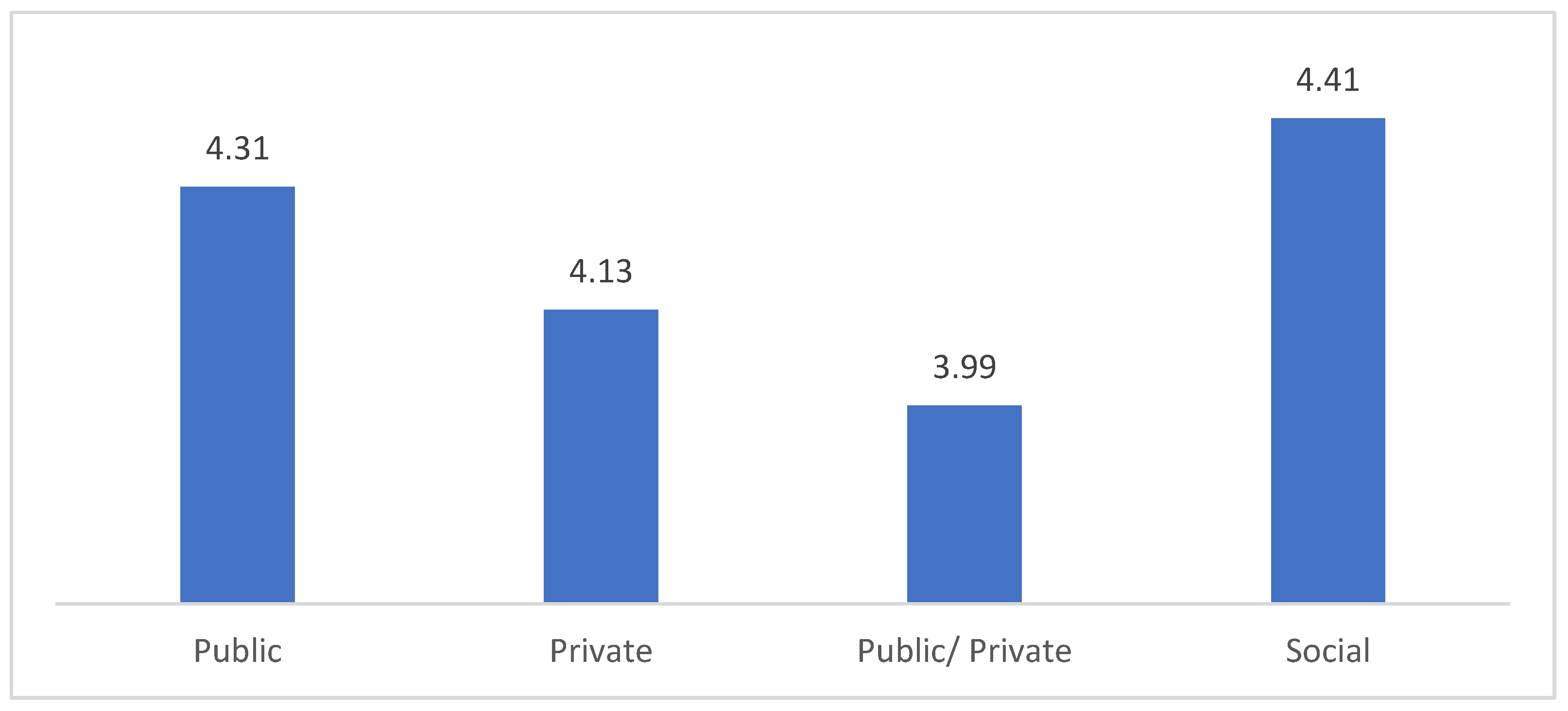
The sector of activity is significantly associated with task performance (F (3, 255) = 2.90; p = 0.036) (Figure 2). Participants working in the social sector have the highest perception of performance (Figure 2). In contrast, participants working in the public/private sector have the lowest perception of task performance (Figure 2).
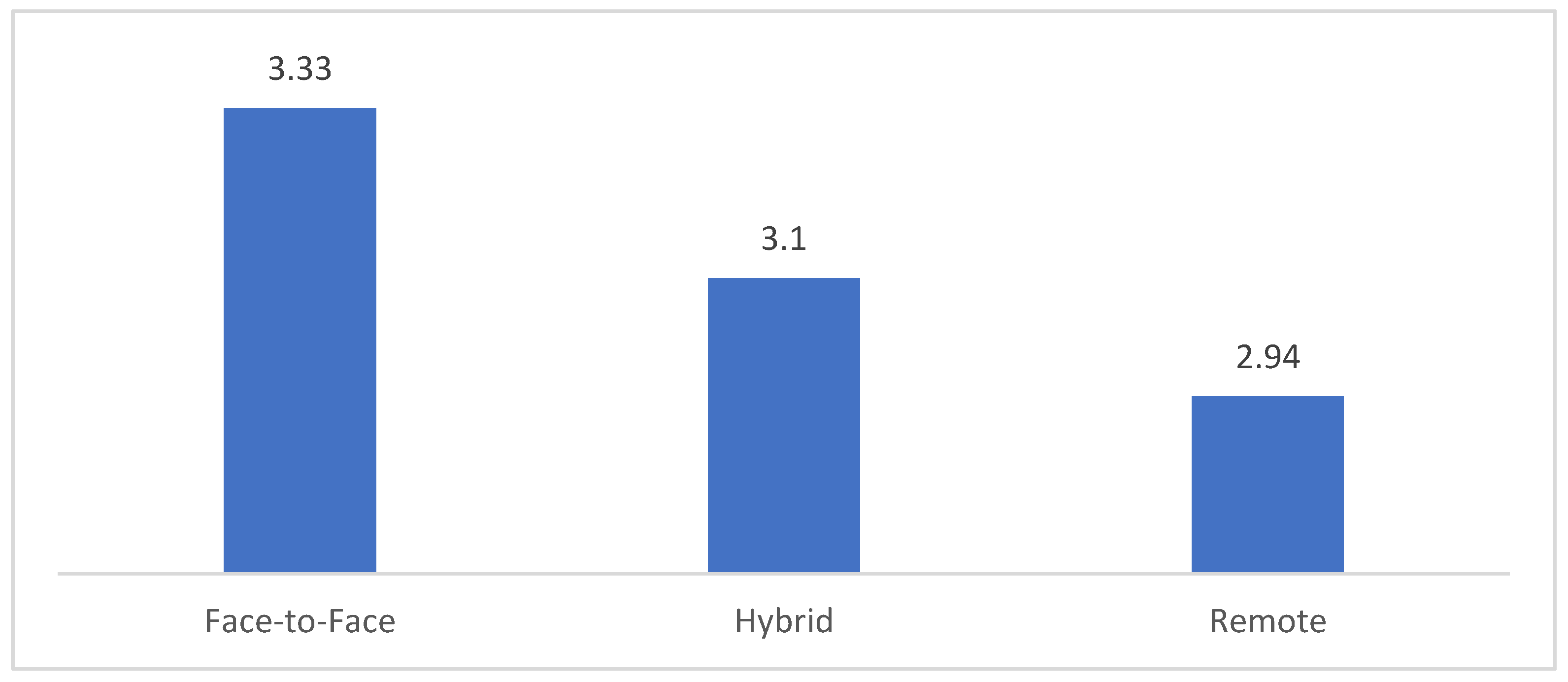
The type of working regime is significantly associated with active management (F (2, 256) = 3.17; p = 0.044) (Figure 3). Participants who work in a face-to-face regime have a higher perception of active management (Figure 3). In contrast, participants working remotely perceive less active management (Figure 3).
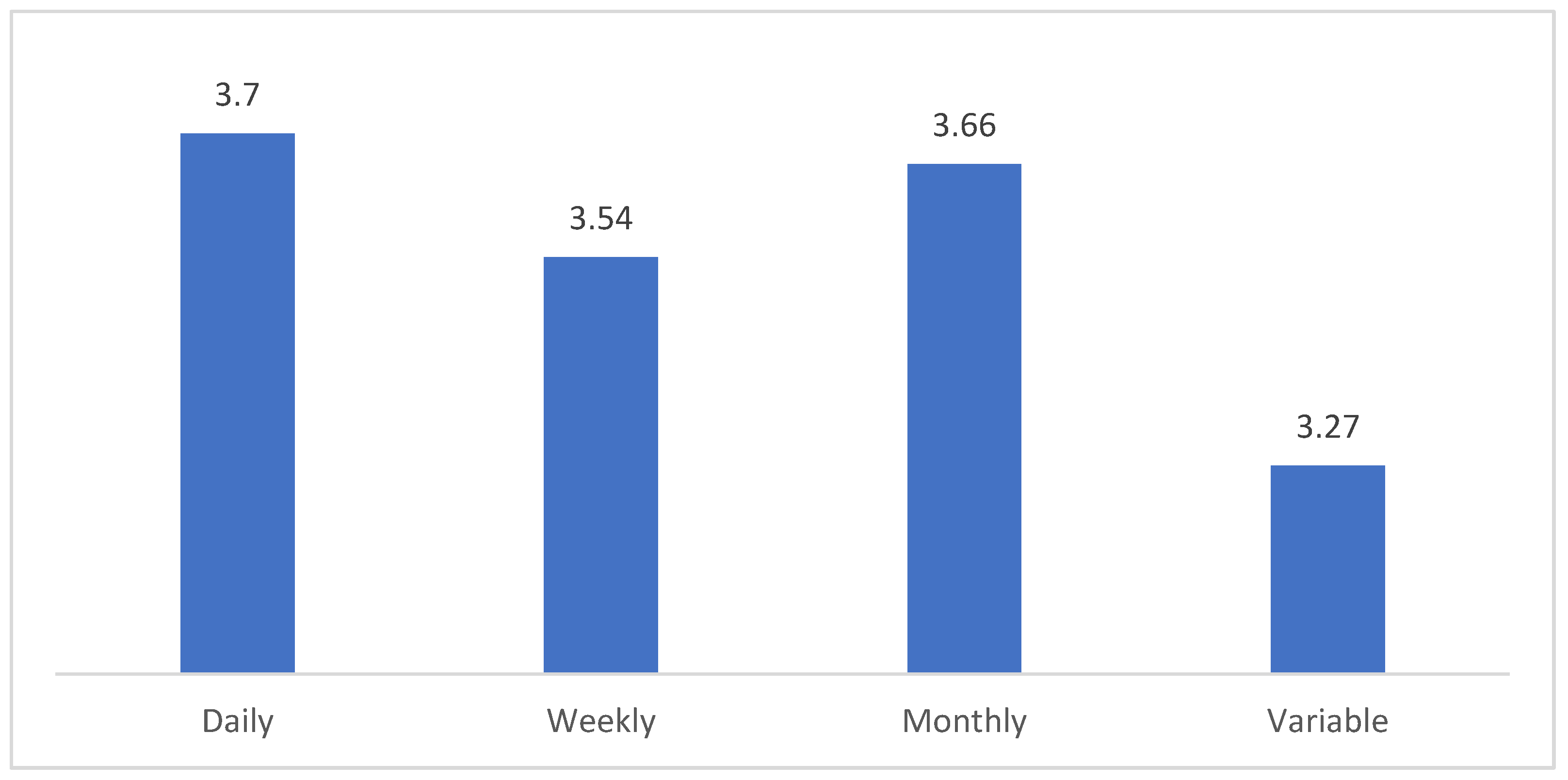
The frequency of contact with management is significantly associated with transformational leadership (F (3, 255) = 3.07; p = 0.029) (Figure 4). Participants with daily contact with management report a higher perception of transformational leadership (Figure 4). In contrast, participants who work on a variable schedule have a lower perception of active transformational leadership (Figure 4).

4.4. Correlations

Pearson correlations were computed to assess the relationships among the variables under study. Transformational leadership is positively and significantly correlated with task performance and job satisfaction, indicating that higher perceptions of transformational leadership are associated with higher perceptions of task performance and job satisfaction (Table 3).
Contingent rewards are positively and significantly correlated with task performance and job satisfaction, showing that the higher the perceived level of contingent rewards, the higher the perceived levels of task performance and job satisfaction (Table 3).
Active management is positively and significantly correlated with task performance, indicating that the higher the perceived level of active management, the higher the perceived level of task performance (Table 3).
The relationship between transformational leadership and job satisfaction exhibits the strongest association among the variables under study (Table 3).

4.5. Hypotheses

To test this hypothesis, simple and multiple linear regressions were performed. Transformational leadership (β = 0.37; p < 0.001) is positively and significantly associated with task performance, explaining 14% of the variance in task performance (Table 4). The model is statistically significant (F (1, 257) = 41.70; p < 0.001) (Table 4).
Contingent rewards (β = 0.34; p < 0.001) are positively and significantly associated with task performance, with the model explaining 12% of the variance in task performance. The model is statistically significant (F (2, 256) = 41.70; p < 0.001), confirming the results obtained (Table 4).
This hypothesis was partially confirmed.
Hypothesis 2 was tested using simple linear regression and multiple linear regression. Transformational leadership (β = 0.46; p < 0.001) is positively and significantly associated with job satisfaction, explaining 21% of the variance in job satisfaction (Table 5). The model is statistically significant (F (1, 257) = 68.40; p < 0.001) (Table 5).
Contingent rewards (β = 0.42; p < 0.001) are positively and significantly associated with job satisfaction, explaining 16% of the variance (Table 5). The model is statistically significant (F (2, 256) = 25.88; p < 0.001), confirming our findings (Table 5).
This hypothesis was partially confirmed.
To test Hypothesis 3, a simple linear regression was performed. Job satisfaction (β = 0.32; p < 0.001) is positively and significantly associated with task performance, with the model explaining 10% of the variance in task performance (Table 6). The model is statistically significant (F (1, 257) = 29.71; p < 0.001), which confirms the results obtained (Table 6).
This hypothesis was confirmed.
To test the hypothesis, a hierarchical linear regression was conducted. When job satisfaction was introduced in the second step, it was found that both transformational leadership (β = 0.29; p < 0.001) and job satisfaction (β = 0.19; p < 0.01) have positive and significant effects on task performance, indicating a partial mediating effect (Table 7). The model explains 17% of the variance in task performance, with a significant 3% increase in explained variance (ΔR2 = 0.03; p < 0.01) (Table 8). The model is statistically significant (F (2, 256) = 25.91; p < 0.001) (Table 7).
When job satisfaction was included in the second step, both contingent rewards (β = 0.26; p < 0.001) and job satisfaction (β = 0.21; p < 0.001) had positive and significant effects on task performance, indicating a partial mediating effect (Table 8). The model now explains 16% of the variance in task performance, a significant increase of 4% (ΔR2 = 0.04; p < 0.001) (Table 8). The model is statistically significant (F (2, 256) = 24.55; p < 0.001) (Table 8).
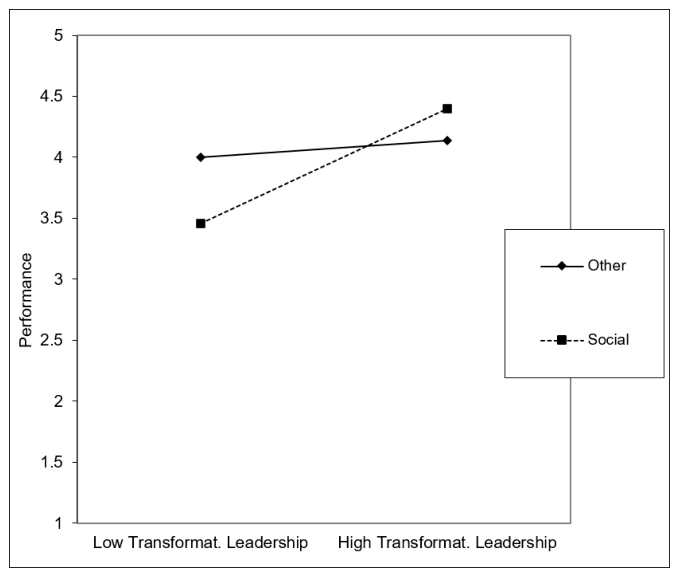
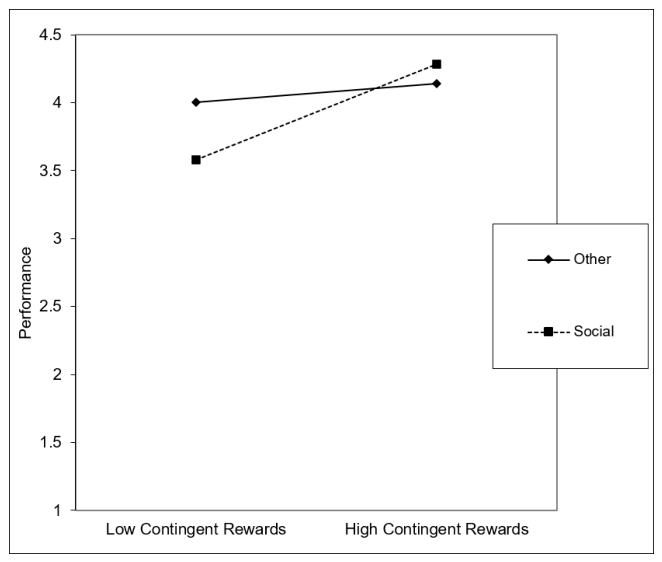
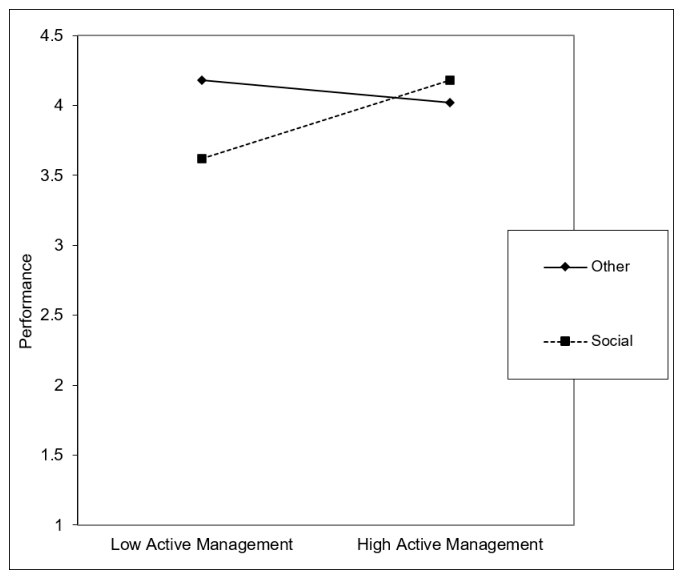
To test Hypothesis 5, we used Process 4.2 macro (Model 1), developed by Hayes (2022). The sector moderates the following relationships: transformational leadership and task performance (B = 0.20; p = 0.001) (Table 9); contingent rewards and task performance (B = 0.14; p = 0.004) (Table 9); and active management and task performance (B = 0.18; p = 0.007) (Table 9).
This hypothesis was confirmed.
For participants in the social sector, transformational leadership is more relevant for enhancing their task performance than for participants from other sectors (Figure 5).
For participants in the social sector, contingent rewards are more relevant for enhancing their task performance than for participants from other sectors (Figure 6).
For participants in the social sector, active management is more relevant for enhancing their task performance than for participants in other sectors (Figure 7).

5. Discussion

The objective of this study was to examine the effect of leadership (transformational and transactional) on performance and to determine whether this relationship is mediated by job satisfaction and moderated by the industry sector.
First, as expected, Hypothesis 1 was confirmed. Transformational leadership and contingent rewards have a positive and significant effect on the perception of task performance. When a leader uses a transformational leadership style and rewards their employees, employees perceive their task performance as higher. These results are consistent with the literature.
Specifically, transformational leadership had the greatest effect on performance, suggesting that leaders who inspire, motivate, and intellectually stimulate employees tend to promote higher levels of organizational performance. Contingent rewards also demonstrated a positive and significant influence on performance, indicating that setting clear goals and assigning rewards associated with their achievement can be effective tools for fostering performance. On the other hand, active management did not show a significant relationship with performance.
These results are consistent with the literature, as noted by Shahzad et al. (2022): transformational leadership has a positive and significant effect on company performance, is considered the most influential predictor of innovative behavior at work, and constitutes a critical factor for company performance. Similarly, Agazu et al. (2025) emphasize that transformational leadership and contingent rewards have a positive and significant effect on performance.
This relationship can also be explained through social exchange theory, developed by Blau (1964), which posits that employees engage in mutual, contingent exchanges with the organization, and that these exchanges determine the beginning, maintenance, and end of a relationship. On the other hand, the norm of reciprocity, previously developed by Gouldner (1960), holds that the employee responds to positive action by the organization with another positive action, thereby fostering a win–win dynamic for both parties and a perception of fairness in the relationship.
According to Hypothesis 2, leadership has a positive and significant effect on satisfaction; the results partially support this. Transformational leadership had the greatest effect on job satisfaction, suggesting that it promotes a positive work environment and employee trust, thereby contributing to increased job satisfaction. Contingent rewards also demonstrated a positive and significant influence on performance, reinforcing the previously mentioned point that setting clear goals and awarding rewards for their achievement can be effective tools for fostering job satisfaction. On the other hand, active management did not show a significant relationship with performance, confirming that these results align with the literature.
According to Notarnicola et al. (2024), transformational leaders and contingent rewards are essential for fostering trust and increasing job satisfaction. Positive leadership styles contribute to higher levels of job satisfaction and personal mastery among leaders. According to Gelard et al. (2014), Asbari et al. (2021), and Gessler and Ashmawy (2016), employee satisfaction facilitates human resource management and fosters enthusiasm; conversely, low satisfaction levels cause problems. These findings are consistent with the Path–Goal Theory of Leadership, developed by House (1971), which states that a good leader can foster various positive outcomes among their employees, including job satisfaction.
Hypothesis 3 is confirmed by the results: satisfaction has a positive and significant effect on task performance, suggesting that employees who are more satisfied with their work are more likely to exhibit higher task performance. Job satisfaction contributes to greater task engagement, increased motivation, and higher organizational commitment.
These results are consistent with the literature. “Happy employees are productive employees”; Locke (1976) states that job satisfaction is a “pleasant or positive emotional state resulting from the evaluation of one’s own work or experiences.” Salary, opportunities for professional growth, job security, employment status, working conditions, benefits, training, and personal variables influenced the independent variable, job satisfaction (Gazi et al., 2024). These results are consistent with the theory of resource conservation (Hobfoll), since employees who feel satisfied (and are in a positive emotional state) invest their surplus energy and concentration in performing their tasks.
Data analysis reveals, in accordance with Hypothesis 4, that satisfaction has a mediating effect on the relationship between leadership and task performance. This is confirmed—albeit partially—since transformational leadership has a significant effect on task performance, but this effect diminishes with job satisfaction, while still presenting a significant effect on performance. However, the effect of leadership remains significant in the final model, confirming that these results are consistent with the literature.
It is important for an effective leader to possess the ability to foster a shared spirit among everyone in the organization and build synergies to achieve the organization’s vision and mission, as according to Quddus et al. (2020), Sunarsi et al. (2020), and Purwanto et al. (2021), the level of employee satisfaction is key to determining an organization’s success. These results are consistent with the resource conservation theory (Hobfoll, 1989), as effective leadership can function as a resource that promotes employee satisfaction and contributes to better performance. These results can also be explained by expectancy theory (Vroom, 1964). When reward systems are transparent and employees trust their leader, they feel more motivated and satisfied, which leads to better performance.
Regarding Hypothesis 5, the industry sector moderates the relationship between leadership and task performance; the results confirm this, showing that the relationships among transformational leadership, contingent rewards, and active management and task performance vary by industry sector. Transformational leadership has a positive and statistically significant effect on task performance; contingent rewards also have a positive and significant effect; and active management, as the results show, has a positive and significant effect. Thus, we can state that, for participants in the social sector, compared with participants from other sectors, transformational leadership is relevant to enhancing their perception of high task performance, confirming that these results align with the literature.
These findings are also consistent with the results obtained by Dias et al. (2024), which indicate that the industry moderates the relationship between leadership and performance. M. Jeong (2024) argues that transformational leadership is suitable for social enterprises. Transformational leadership emphasizes transforming individuals into self-motivated beings who recognize the importance of goals, strive to achieve them voluntarily, and are motivated by the leader’s intellectual stimulation, encouragement, and charisma, enabling members to achieve goals on their own. Naderi et al. (2019) argue that transformational leadership contributes to improved performance in social organizations.

5.1. Limitations and Future Research

Although this study has provided theoretical and practical insights, it is important to acknowledge certain limitations that should be considered when interpreting the data and in future research.
First, the use of non-probability sampling may limit the representativeness of the sample, reducing the possibility of generalizing the results to the general population, as the collected data reflect only the perceptions of the participants in this study and may not reflect the realities of other organizational contexts.
Second, it is important to note that the cross-sectional nature of the research precludes the analysis of causal relationships between the variables under study, allowing only for the identification of associations existing at a specific point in time; it is not possible to track the evolution of participants’ perceptions over time, nor to understand how organizational or contextual changes might affect the results. The study could have been enriched by using a longitudinal instrument to track the evolution of participants’ perceptions over time, thereby gaining a deeper understanding of the effects of leadership on satisfaction and performance.
The choice of closed-ended questions in the questionnaire may limit the depth and detail of the responses, thereby constraining the identification of more nuanced perspectives associated with participants’ individual experiences.
Finally, it is important to consider the possibility of biases associated with self-reporting, particularly social desirability bias, as participants may have responded in a socially more acceptable manner or in a way they believe is expected within the organizational context.
Notwithstanding these limitations, this study is considered to contribute to the deepening of knowledge about the relationship between leadership, job satisfaction, and performance, serving as an interesting starting point for future research in this area.

5.2. Theoretical Implications

The results of this study contribute to the existing literature on leadership styles, with a particular focus on transformational leadership, job satisfaction, and performance (the above three elements being closely related—leaders can greatly impact subordinate satisfaction and hence company output and performance). They underscore that when a leader adopts a transformational leadership style (albeit often difficult to achieve) and rewards employees, those employees have a more positive perception of their work and how they perform their duties, supporting the definition of a leader who motivates followers through actions to commit to the organization’s vision, fostering a strong team spirit as a means of guiding members toward achieving desired goals (Avolio & Bass, 2004), while not disregarding their own individual needs and objectives.
Regarding job satisfaction, the study’s data support the findings of Suyitno et al. (2014) and Tas (2017) that employee satisfaction is a manifestation of personal commitment expressed as a desire to achieve organizational goals, providing a stimulus for employee performance that is sustainable in the long term. This personal commitment also shapes organizational behavior that drives the organization’s overall performance. Employee loyalty to the firm is paramount in an age where people may switch jobs easily; the continuity of tacit knowledge in the firm is linked to long-term firm success.
In addition to the contributions, the results of this study are particularly relevant for advancing knowledge regarding the moderating role that the industry sector plays in the relationship between leadership and performance, demonstrating that the relationship between transformational leadership, contingent rewards, active management, and performance varies according to the industry sector. Thus, the assertion by Mohamad and Majid (2014) that leaders in social enterprises create conditions for members to excel in their roles is supported (all organizations are inherently social as they involve people—who may be difficult to satisfy—which is the duty of a superior leadership team, to meet the social, communal and economic objectives of the firm).

5.3. Practical Implications

The results of this study offer relevant insights for improving human resource management and highlight the importance of implementing leadership practices that promote higher levels of job satisfaction and performance. Organizations should invest in their leaders so they can inspire, motivate, and support their employees, thereby promoting not only results but also employees’ well-being and organizational effectiveness. Knowledge sharing will also benefit from superior and more favorable leadership practices, the alternative being very detrimental to corporate culture, organizational well-being, and innovation output.
Regarding job satisfaction, participants perceived it as a significant factor in performance, recognizing the importance of implementing policies and practices that foster more positive, motivating, and employee-valuing work environments. Of note is the implementation of merit-based reward systems, perceived as fair, transparent, and directly linked to individual performance (in the short and longer term, thus promoting company loyalty).
The study data also demonstrate that attention must be paid to the differences found among sociodemographic groups. Hierarchical status had a significant impact on satisfaction perceptions, indicating that employees in managerial positions tend to rate their satisfaction more positively than those without managerial roles (above and beyond salary differences, with managerial jobs paying better, but also due to added autonomy in achieving objectives attributed to higher levels in the organization).
Work arrangements were another sociodemographic variable found to be significant for perceptions of active management, with remote workers reporting lower perceptions than those working on site (the physical workplace remains an essential meeting point for a good and positive corporate culture to be able to form). Another relevant finding is the perception of transformational leadership regarding the frequency of contact with management, which is perceived as lower when contact is irregular. Hence, organizational management systems and standards need to be put in place for regular contact to occur between subordinates at all levels of the enterprise.
In conclusion, it is necessary to ensure that the positive effects of leadership are experienced by all hierarchical levels through more inclusive and accessible leadership practices throughout the organization and over time. In remote work arrangements and in situations where contact with management occurs at varying intervals, it is important to ensure management and leadership practices that promote closeness, regular communication, continuous feedback, and individualized support. In a society that is ever more anxious for the fulfillment of individual needs in order to achieve the desired match with organizational objectives, much progress must be made. Social networks have also added a degree of transparency to work life, and so the different hierarchies must be more dedicated to the promotion of equality and inclusivity—beyond mere “lip service”—and generating genuine positive WOM (word-of-mouth).

6. Conclusions

The objective of this study was to examine the effect of leadership on performance, whether this relationship is mediated by job satisfaction, and the moderating effect of the industry sector. In organizational contexts marked by significant and ongoing change, intense competition, and a focus on human capital, it is important to understand how leadership styles influence individual and organizational goals.
This study’s results confirmed the importance of leadership in influencing employee task performance, showing that positive and participatory leadership styles are associated with higher performance. These findings align with the existing literature, which confirms leadership as one of the main drivers of employee motivation, engagement, and efficiency in the organizational context.
It was also found that job satisfaction mediates the relationship between leadership and task performance, indicating that the effect of leadership on performance occurs not only directly but also through its impact on employee satisfaction. It is important for an effective leader to possess the ability to foster a shared spirit among everyone in the organization and build synergies to achieve the organization’s vision and mission, as, according to Quddus et al. (2020), Sunarsi et al. (2020) and Purwanto et al. (2021), the level of employee satisfaction is key to determining an organization’s success.
This study’s results also showed that the industry sector exerts a moderating effect on the relationship, indicating that the intensity and manner in which leadership influences task performance may vary across different sectors, suggesting that organizations possess their own characteristics and dynamics that may or may not influence the outcome of leadership practices, reiterating the importance of leaders adapting to the demands and particularities of each one.
In summary, this study contributes significantly to understanding the impact of leadership on task performance, highlighting the importance of job satisfaction as an explanatory mechanism for this relationship, with particular emphasis on the role of the industry sector as a contextual variable. It reinforces the need to ensure effective management and leadership practices tailored to each organization’s characteristics that can simultaneously enhance both performance and employee satisfaction.
And, in conclusion, it is very important that the “bucket be full”!


Author Contributions

Conceptualization, A.I. and A.P.-M.; methodology, A.I., A.P.-M. and M.A.-Y.-O.; software, A.I. and A.P.-M.; validation, A.I., A.P.-M., A.A., I.D. and M.A.-Y.-O.; formal analysis, A.I. and A.P.-M.; investigation, A.I., A.P.-M., A.A., I.D. and M.A.-Y.-O.; resources, A.I., A.P.-M., A.A., I.D. and M.A.-Y.-O.; data curation, A.I. and A.P.-M.; writing—original draft preparation, A.I., A.P.-M., A.A., I.D. and M.A.-Y.-O.; writing—review and editing, A.I., A.P.-M., A.A., I.D. and M.A.-Y.-O.; visualization, A.I., A.P.-M., A.A., I.D. and M.A.-Y.-O.; supervision, A.I., A.P.-M., A.A., I.D. and M.A.-Y.-O.; project administration, A.I. and A.P.-M.; funding acquisition, A.I. and A.P.-M. All authors have read and agreed to the published version of the manuscript.

Funding

This research received no external funding.

Institutional Review Board Statement

Ethical review and approval were waived since the collected data are used exclusively for scientific purposes, while guaranteeing the confidentiality and protection of participants, which has been reviewed by the Research Ethics Committee of the European University.

Informed Consent Statement

Informed consent was obtained from all subjects involved in the study.

Data Availability Statement

The data presented in this study is available upon request from the corresponding author. The data are not publicly available because the participants’ responses are confidential.

Acknowledgments

During the preparation of this manuscript, Grammarly was employed to enhance grammatical accuracy and readability. Following the use of this tool, the authors conducted a thorough review and made necessary edits, thereby assuming full responsibility for the content of the manuscript.

Conflicts of Interest

The authors declare no conflicts of interest.

References

  1. Adams, J. S. (1965). Inequity in social exchange. Advances in Experimental Social Psychology, 2, 267–299. [Google Scholar] [CrossRef] [Scilit]
  2. Agazu, B. G., Kero, C. A., & Debela, K. L. (2025). Transformational leadership and firm performance: A systematic literature review. Journal of Innovation and Entrepreneurship, 14, 29. [Google Scholar] [CrossRef] [Scilit]
  3. Asbari, M., Hidayat, D., & Purwanto, A. (2021). Managing employee performance: From leadership to readiness for change. International Journal of Social and Management Studies, 2, 74–85. [Google Scholar]
  4. Avolio, B., & Bass, B. (2004). Multifactor leadership questionnaire. In Manual and sampler set (3rd ed.). Mindgarden. [Google Scholar]
  5. Azeem, S. (2010). Job satisfaction and organizational commitment among employees in the sultanate of Oman. Psychology, 4(1), 295–299. [Google Scholar] [CrossRef]
  6. Bakker, A., & Leiter, M. (2010). Work engagement: A handbook of essential theory and research. Taylor & Francis. [Google Scholar]
  7. Baron, R. M., & Kenny, D. A. (1986). The moderator–mediator variable distinction in social psychological research: Conceptual, strategic, and statistical considerations. Journal of Personality and Social Psychology, 51(6), 1173–1182. [Google Scholar] [CrossRef] [PubMed]
  8. Bass, B., & Avolio, B. (1994). Improving organizational effectiveness through transformational leadership. SAGE Publications. [Google Scholar]
  9. Bass, B. M. (1985). Leadership and performance beyond expectations. The Free Press; Colliers Macmillan. [Google Scholar]
  10. Bass, B. M. (2000). The future of leadership in learning organizations. Journal of Leadership & Organizational Studies, 7, 18–40. [Google Scholar] [CrossRef] [Scilit]
  11. Baykal, E. (2019). Positive organizational behavior for improved workplace performance. Istanbul Medipol University. [Google Scholar]
  12. Blau, P. M. (1964). Justice in social exchange. Sociological Inquiry, 34, 193–206. [Google Scholar] [CrossRef] [Scilit]
  13. Brayfield, A. H., & Rothe, H. F. (1951). An index of job satisfaction. Journal of Applied Psychology, 35, 307–311. [Google Scholar] [CrossRef] [Scilit]
  14. Bryman, A., & Cramer, D. (2003). Quantitative data analysis with SPSS for Windows: A guide for social scientists. Celta. [Google Scholar]
  15. Burns, J. (1978). Leadership. Harper & Row. [Google Scholar]
  16. Carton, A. (2022). The science of leadership: A theoretical model and research agenda. Annual Review of Organizational Psychology and Organizational Behavior, 9, 61–93. [Google Scholar] [CrossRef] [Scilit]
  17. Cemaloğlu, N., Sezgin, F., & Kilinç, C. (2012). Examining the relationships between school principals’ transformational and transactional leadership styles and teachers’ organizational commitment. The Online Journal of New Horizons in Education, 2, 53–63. [Google Scholar]
  18. Chukwu, B. (2021). Retaining sales associates in the small business industry. Open Journal of Business and Management, 4(9), 1858–1889. [Google Scholar] [CrossRef]
  19. Ciobanu, A., Androniceanu, A., & Lazaroiu, G. (2019). An integrated psycho-sociological perspective on public employees’ motivation and performance. Frontiers in Psychology, 10, 36. [Google Scholar] [CrossRef] [Scilit] [PubMed] [PubMed Central]
  20. Dias, M. R., Sousa, M. J., & Moreira, A. (2024). A Comparative investigation of the leadership syles that prevail in public companies vs. private companies. In M. J. Sousa, M. Asensio, L. A. Rosa, & M. C. Rodrigues (Eds.), New research on leadership styles and performance (pp. 165–185). Nova Science Publishers. [Google Scholar] [CrossRef] [Scilit]
  21. Dinh, J. E., Lord, R. G., Gardner, W. L., Meuser, J. D., Liden, R. C., & Hu, J. (2014). Leadership theory and research in the new millennium: Current theoretical trends and changing perspectives. The Leadership Quarterly, 25, 36–62. [Google Scholar] [CrossRef] [Scilit]
  22. Drucker, P. (2009). The essential Drucker. The best of sixty years of Peter Drucker’s essential writings on management. HarperCollins. [Google Scholar]
  23. Ejere, E. I., & Abasilim, U. D. (2012). Impact of transactional and transformational leadership styles on organisational performance: Empirical evidence from Nigeria. Journal of Commerce, 5, 30–41. [Google Scholar]
  24. Finney, S. J., & DiStefano, C. (2013). Non-normal and categorical data in structural equation models. In G. R. Hancock, & R. O. Mueller (Eds.), Structural equation modeling: A second course (pp. 439–492). Information Age Publishing. [Google Scholar] [CrossRef] [Scilit]
  25. Forbes. (2017). What makes a good leader? Key differences between management and leadership. Forbes. Available online: https://www.forbes.com/sites/forbescoachescouncil/2017/11/20/what-makes-a-good-leader-key-differences-between-management-and-leadership/#5e6946cdaf5a (accessed on 15 February 2026).
  26. Fornell, C., & Larcker, D. F. (1981). Structural equation models with unobservable variables and measurement error: Algebra and statistics. Journal of Marketing Research, 18, 382–388. [Google Scholar] [CrossRef] [Scilit]
  27. Gardner, W. L., Lowe, K. B., Meuser, J. D., Noghani, F., Gullifor, D. P., & Cogliser, C. C. (2020). The leadership trilogy: A review of the third decade of the leadership quarterly. The Leadership Quarterly, 31(1), 101379. [Google Scholar] [CrossRef] [Scilit]
  28. Gazi, A. I., Yusof, M. F., Islam, M. A., Amin, M.-B., & Senathirajah, A. R. S. (2024). Analyzing the impact of employee job satisfaction on their job behavior in the industrial setting: An analysis from the perspective of job performance. Journal of Open Innovation: Technology, Market, and Complexity, 10, 100427. [Google Scholar] [CrossRef] [Scilit]
  29. Gelard, P., Boroumand, Z., & Mohammadi, A. (2014). Relationship between transformational leadership and knowledge management. International Journal of Information Science and Management, 12, 67–82. [Google Scholar] [CrossRef] [Scilit]
  30. Gessler, M., & Ashmawy, I. (2016). The effect of political decentralization on school leadership in German vocational schools. Educational Management Administration & Leadership, 44, 184–204. [Google Scholar] [CrossRef] [Scilit]
  31. Gouldner, A. W. (1960). The norm of reciprocity: A preliminary statement. American Sociological Review, 25, 161–178. [Google Scholar] [CrossRef] [Scilit]
  32. Gündüz Çekmecelioğlu, H., Özcan, M., Balkaş, J., & Candan Çam, F. B. (2025). Transformational or transactional? A comparison of the effects of leadership styles on firm performance and innovation in the Turkish work environment. Sage Open, 15(3), 21582440251. [Google Scholar] [CrossRef] [Scilit]
  33. Harman, D. (1967). A single factor test of common method variance. The Journal of Psychology, 35, 359–378. [Google Scholar]
  34. Haudi, H., Rahadjengb, E. R., Santamoko, R., Putrac, R. S., Purwoko, D., Nurjannahe, D., Koho, I. R., Wijoyo, H., Siagian, A. O., Cahyono, Y., & Purwanto, A. (2022). The role of e-marketing and e-CRM on e-loyalty of Indonesian companies during COVID pandemic and digital era. Uncertain Supply Chain Management, 10, 217–224. [Google Scholar] [CrossRef] [Scilit]
  35. Hayes, A. F. (2022). Introduction to mediation, moderation, and conditional process analysis: A regression-based approach (3rd ed.). The Guilford Press. [Google Scholar]
  36. Hobfoll, S. E. (1989). Conservation of resources: A new attempt at conceptualizing stress. American Psychologist, 44(3), 513–524. [Google Scholar] [CrossRef] [PubMed]
  37. Horner, M. (1997). Leadership theory: Past, present and future. Team Performance Management. [Google Scholar]
  38. House, R. J. (1971). A path goal theory of leader effectiveness. Administrative Science Quarterly, 16, 321–339. [Google Scholar] [CrossRef] [Scilit]
  39. Hu, L. T., & Bentler, P. M. (1999). Cutoff criteria for fit indexes in covariance structure analysis: Conventional criteria versus new alternatives. Structural Equation Modeling, 6, 1–55. [Google Scholar] [CrossRef] [Scilit]
  40. Hulpia, H., Devos, G., & Van Keer, H. (2011). The relation between school leadership from a distributed perspective and teachers’ organizational commitment: Examining the source of the leadership function. Educational Administration Quarterly, 47, 728–771. [Google Scholar] [CrossRef] [Scilit]
  41. Indrawan, I., Ali, R., Hanif, M., Harun, I., Hanum, L., Purwanto, A., Mufid, A., Nurkayati, S., Fahlevi, M., & Sumartiningsih, S. (2020). Develop model of transactional, transformational, democratic and authocratic leadership style for indonesian school performance in education 4.0 era. Systematic Reviews in Pharmacy, 11(9), 409–419. [Google Scholar]
  42. Jansen, J. J. P., Van Den Bosch, F. A. J., & Volberda, H. W. (2006). Exploratory innovation, exploitative innovation, and performance: Effects of organizational antecedents and environmental moderators. Management Science, 52(11), 1661–1674. [Google Scholar] [CrossRef] [Scilit]
  43. Jensen, U. T., Andersen, L. B., Bro, L. L., Bøllingtoft, A., Eriksen, T. L. M., Holten, A. L., Jacobsen, C. B., Ladenburg, J., Nielsen, P. A., Salomonsen, H. H., Westergård-Nielsen, N., & Würtz, A. (2019). Conceptualizing and measuring transformational and transactional leadership. Administration and Society, 51(1), 3–33. [Google Scholar] [CrossRef] [Scilit]
  44. Jeong, J. (2025). Influence of transactional leadership, transformational leadership, and leader feedback on reward fairness, organization citizenship behavior, and job satisfaction. Review of Public Personnel Administration. [Google Scholar] [CrossRef] [Scilit]
  45. Jeong, M. (2024). The relationship between leadership and performance in enhancing the sustainability of social enterprises. Sustainability, 16(8), 3218. [Google Scholar] [CrossRef] [Scilit]
  46. Jimoh, A. L., & Lawal, I. O. (2026). Leadership style and organizational performance: The role of job satisfaction. Evidence-based HRM: A Global Forum for Empirical Scholarship. ahead of print. [Google Scholar] [CrossRef] [Scilit]
  47. Jöreskog, K. G., & Sörbom, D. (1993). LISREL 8: Structural equation modeling with the SIMPLIS command language. Scientific Software International. [Google Scholar]
  48. Kadiyono, A. L., Sulistiobudi, R., Haris, I., Wahab, M. K. A., Ramdani, I. H., Purwanto, A., Mufid, A., Muqtada, M. R., Gufron, M., Nuryansah, M., Ficayuma, L. A., Fahlevi, M., & Sumartiningsih, S. (2020). Develop leadership style model for indonesian teachers performance in Education 4.0 era. Systematic Reviews in Pharmacy, 11(9), 363–373. [Google Scholar]
  49. Kahandawaarachchi, L. K. K., Dissanayake, R., & Maitra, R. (2016). Role of relative-agency of consumers in brand building: Conceptual review for marketing implications and future studies. Sri Lanka Journal of Marketing, 2(2), 31–53. [Google Scholar]
  50. Liden, R. C., Wang, X., & Wang, Y. (2025). The evolution of leaderchip: Past insights, present trends, and future diretions. Journal of Business Research, 186, 115036. [Google Scholar] [CrossRef] [Scilit]
  51. Locke, E. (1976). The nature and causes of job satisfaction. In M. D. Dunnette (Ed.), Handbook of industrial and organizational psychology. Rand McNally. [Google Scholar]
  52. Lumbantoruan, S., Kurniawan, L., Christi, C., & Sihombing, J. B. (2020). Impact of transactional leadership style on employee job satisfaction. Tazkiya Journal of Psychology, 8(1), 56–63. [Google Scholar] [CrossRef] [Scilit]
  53. MacCallum, R. C., Browne, M. W., & Sugawara, H. M. (1996). Power analysis and determination of sample size for covariance structure modeling. Psychological Methods, 1, 130–149. [Google Scholar] [CrossRef]
  54. Mohamad, M., & Majid, I. (2014). Servant leadership in social enterprise (cooperative): They fit! A review of literature. International Journal of Business, Economics and Law, 4, 38–44. [Google Scholar]
  55. Naderi, A., Nasrolahi Vosta, L., Ebrahimi, A., & Jalilvand, M. R. (2019). The contributions of social entrepreneurship and transformational leadership to performance: Insights from rural tourism in Iran. International Journal of Sociology and Social Policy, 39(9–10), 719–737. [Google Scholar] [CrossRef] [Scilit]
  56. Nicholson, G., & Kiel, G. (2007). Can directors impact performance? A case-based test of three theories of corporate governance. Corporate Governance: An International Review, 15, 585–608. [Google Scholar] [CrossRef] [Scilit]
  57. Northhouse, P. (2007). Leadership theory and practice (3rd ed.). Thousand Oaks. [Google Scholar]
  58. Notarnicola, I., Duka, B., Lommi, M., Grosha, E., De Maria, M., Iacorossi, L., Mastroianni, C., Ivziku, D., Rocco, G., & Stievano, A. (2024). Transformational leadership and its impact on job satisfaction and personal mastery for nursing Leaders in healthcare organizations. Nursing Reports, 14(4), 3561–3574. [Google Scholar] [CrossRef] [Scilit] [PubMed]
  59. Nugroho, B. S., Suheri Hakim, L., Irawan, B., Sholehuddin, M. S., & Ibrahim, T. (2020). Effect of knowledge sharing dan leader member exchange (LMX) and organizational citizenship behavior (OCB) to indonesian lectures’ performance. Systematic Reviews in Pharmacy, 11, 148–163. [Google Scholar]
  60. Ogbeidi, M. M. (2012). Political leadership and corruption in nigeria since 1960: A socio-economic analysis. Journal of Nigeria Studies, 1, 1–25. [Google Scholar]
  61. Orazi, D. C., Turrini, A., & Valotti, G. (2013). Public sector leadership: New perspectives for research and practice. International Review of Administrative Sciences, 79, 486–504. [Google Scholar] [CrossRef] [Scilit]
  62. Pimenta, C. (2023). Liderança e motivação para o serviço público: Revisão sistemática. Revista Portuguesa de Gestão Contemporânea, 4, 77–124. [Google Scholar] [CrossRef]
  63. Pinheiro, A., & Palma-Moreira, A. (2025). Job satisfaction, perceived performance and work regime: What is the relationship between these variables? Administrative Sciences, 15(5), 175. [Google Scholar] [CrossRef] [Scilit]
  64. Podsakoff, P. M., Mackenzie, S. B., & Podsakoff, N. P. (2012). Sources of method bias in social science research and recommendations on how to control it. Annual Review of Psychology, 63, 539–569. [Google Scholar] [CrossRef] [Scilit] [PubMed]
  65. Popper, M. (2000). The development of charismatic leaders. Political Psychology, 21(4), 729–744. [Google Scholar] [CrossRef] [Scilit]
  66. Porter, L. (1961). A study of perceived need satisfaction in bottom and middle management jobs. Journal of Applied Psychology, 1(45), 1–10. [Google Scholar] [CrossRef] [Scilit]
  67. Purwanto, A., Bernarto, I., Asbari, M., Wijayanti, L. M., & Hyun, C. C. (2020). Effect of transformational and transactional leadership style on public health centre performance. Journal of Research in Business, Economics, and Education, 2(1), 304–314. [Google Scholar]
  68. Purwanto, A., Purba, J. T., Bernarto, I., & Sijabat, R. (2021). Effect of transformational leadership, job satisfaction, and organizational commitments on organizational citizenship behavior. Inovbiz: Jurnal Inovasi Bisnis, 9, 61–69. [Google Scholar] [CrossRef] [Scilit]
  69. Quddus, A., Nugroho, B. S., Lukman, L., Ritaudin, M. S., Nurhasanah, E., Suarsa, A., Karyanto, U. B., Tanjung, R., Pratama, V. Y., Awali, H., Mufid, A., Purwanto, A., Fahlevi, M., & Sudargini, Y. (2020). Effect of ecological, servant dan digital leadership style influence university performance? Evidence from indonesian universities. Systematic Reviews in Pharmacy, 11, 408–417. [Google Scholar]
  70. Quigley, T. J., Chirico, F., & Baù, M. (2022). Does the CEO effect on performance differ in private versus public firms? Strategic Organization, 20(3), 652–673. [Google Scholar] [CrossRef] [Scilit]
  71. Rath, T., & Clifton, D. (2005). O seu balde está cheio? Gallup Express. [Google Scholar]
  72. Ridlwan, M., Purwandari, D. A., & Syah, T. Y. R. (2021). The effect of situational leadership and organizational culture on employee performance through job satisfaction. International Journal of Multicultural and Multireligious Understanding, 8, 73–87. [Google Scholar] [CrossRef] [Scilit]
  73. Rodrigues, N. (2023). Public–private partnerships model applied to hospitals—A critical review. Healthcare, 11, 1723. [Google Scholar] [CrossRef] [Scilit] [PubMed]
  74. Saari, L., & Judge, T. (2004). Employee attitudes and job satisfaction. Human Resource Management, 4(43), 395–407. [Google Scholar] [CrossRef] [Scilit]
  75. Sahasranamam, S., Lall, S., Nicolopoulou, K., & Shaw, E. (2024). Founding team entrepreneurial experience, external financing and social enterprise performance. British Journal of Management, 35, 519–536. [Google Scholar] [CrossRef] [Scilit]
  76. Salameh-Ayanian, M., Lakkis, P., Jabbour Al Maalouf, N., & Makki, M. (2025). Leading through uncertainty: How transformational and transactional leadership shape employee satisfaction and performance in Lebanese NGOs. Administrative Sciences, 15(5), 172. [Google Scholar] [CrossRef] [Scilit]
  77. Salanova, M., Lorente, L., Chambel, M., & Martínez, I. (2011). Linking transformational leadership to nurses extra-role performance: The mediating role of self-efficacy and work engagement. Journal of Advanced Nursing, 67, 2256–2266. [Google Scholar] [CrossRef] [Scilit] [PubMed]
  78. Schaffer, H. R. (1996). Social development (Set book). Blackwell. [Google Scholar]
  79. Shahzad, M. A., Iqbal, T., Jan, N., & Zahid, M. (2022). The role of transformational leadership on firm performance: Mediating effect of corporate sustainability and moderating effect of knowledge-sharing. Frontiers in Psychology, 13, 883224. [Google Scholar] [CrossRef] [Scilit] [PubMed]
  80. Shdaifat, E. A., Shudayfat, T., & Al-Shdayfat, N. (2023). Understanding the mediating effects of commitment and performance on the relationship between job satisfaction and engagement among nurses. The Open Nursing Journal, 17, 1–7. [Google Scholar] [CrossRef] [Scilit]
  81. Sinval, J., & Marôco, J. (2020). Short Index of Job Satisfaction: Validity evidence from Portugal and Brazil. PLoS ONE, 15(4), e0231474. [Google Scholar] [CrossRef] [Scilit] [PubMed]
  82. Spector, P. E. (2021). Industrial and organizational psychology: Research and practice (8th ed.). Wiley. [Google Scholar]
  83. Suharto, S., Junaedi, I. W. R., Hm, M., Firmansyah, A., & Sarana, S. (2022). Consumer loyalty of Indonesia e-commerce SMEs: The role of social media marketing and customer satisfaction. International Journal of Data and Network Science, 6, 383–390. [Google Scholar] [CrossRef] [Scilit]
  84. Sunarsi, D., Rohaeni, N., Wulansari, R., Andriani, J., Muslimat, A., Rialmi, Z., Kustini, E., Kristianti, L. S., Rostikawati, D. A., Effendy, A. A., Purwanto, A., & Fahlevi, M. (2020). Effect of e-leadership style, organizational commitment and service quality towards Indonesian school performance. Systematic Reviews in Pharmacy, 11, 472–481. [Google Scholar]
  85. Suyitno, S., Sonhadji, A., Arifin, I., & Ulfatin, N. (2014). Entrepreneurial leadership of vocational schools principals in Indonesia. International Journal of Learning and Development, 4(1), 59–64. [Google Scholar] [CrossRef] [Scilit]
  86. Tas, S. (2017). The effect of vocational high school administrators’ leadership behaviors on teacher job satisfaction. Universal Journal of Educational Research, 5, 2092–2100. [Google Scholar] [CrossRef] [Scilit][Green Version]
  87. Vilelas, J. (2025). Investigação: O processo de construção do conhecimento (4th ed.). Edições Sílabo. [Google Scholar]
  88. Vroom, V. (1964). Work and motivation. Wiley and Sons. [Google Scholar]
  89. Wang, G., Oh, I.-S., Courtright, S. H., & Colbert, A. E. (2011). Transformational leadership and performance across criteria and levels: A meta-analytic review of 25 years of research. Group & Organization Management, 36(2), 223–270. [Google Scholar] [CrossRef] [Scilit]
  90. Williams, L. J., & Anderson, S. E. (1991). Job satisfaction and organizational commitment as predictors of organizational citizenship and in-role behaviors. Journal of Management, 91, 601–617. [Google Scholar] [CrossRef] [Scilit]
  91. Young, H. R., Glerum, D., Joseph, D., & McCord, M. A. (2021). A meta-analysis of transactional leadership and follower performance: Double-edged effects of lmx and empowerment. Journal of Management, 47(5), 1255–1280. [Google Scholar] [CrossRef] [Scilit]
  92. Yusuf-Habeeb, M., & Ibrahim, Y. (2017). Effects of leadership style on employee performance in Nigerian universities. Global Journal of Management and Business Research: A Administration and Management, 17(7), 27–33. [Google Scholar]
  93. Zaccaro, S. J., & Klimoski, R. (2002). The interface of leadership and team processes. Group & Organization Management, 27(1), 4–13. [Google Scholar] [CrossRef] [Scilit]
Figure 1. Research model.
Admsci 16 00412 g001
Figure 2. Effect of sector of activity on performance.
Admsci 16 00412 g002
Figure 3. Effect of work regime on active management.
Admsci 16 00412 g003
Figure 4. Effect of frequency of contact with management on transformational leadership.
Admsci 16 00412 g004
Figure 5. Interaction of “transformational leadership × sector”.
Admsci 16 00412 g005
Figure 6. Interaction of “contingent rewards × sector”.
Admsci 16 00412 g006
Figure 7. Interaction of “active management × sector”.
Admsci 16 00412 g007
Table 1. Descriptive statistics of the variables studied.
VariabletdfpdMeanSD
Transformational Leadership13.86 ***258<0.0010.863.640.74
Contingent Rewards6.73 ***258<0.0010.423.380.91
Active Management4.83 ***258<0.0010.303.230.77
Task Performance33.44 ***258<0.0012.084.180.57
Job Satisfaction15.08 ***258<0.0010.943.750.80
Note. *** p < 0.001.
Table 2. The effect of manager vs. non-manager roles on job satisfaction.
VariabletdfpdNon-ManagerManager
MeanSDMeanSD
Job Satisfaction−3.06 **2570.0020.413.650.843.980.67
Note. ** p < 0.01.
Table 3. Correlations.
Variables1.11.21.323
1.1. Transformational Leadership--
1.2. Contingent Rewards0.86 ***--
1.3. Active Management0.29 ***0.30 ***--
2. Task Performance0.37 ***0.35 ***0.12 *--
3. Job Satisfaction0.46 ***0.41 ***0.110.32 ***--
Note. * p < 0.05; *** p < 0.001.
Table 4. Leadership and performance.
Independent VariableDependent VariableFpR2βp95% CI
Transformational LeadershipTask Performance41.70 ***<0.0010.140.37 ***<0.001[0.20; 0.37]
Contingent Rewards17.95 ***<0.0010.120.34 ***<0.001[0.14; 0.29]
Active Management0.020.747[−0.07; 0.10]
Note. *** p < 0.001.
Table 5. Leadership and job satisfaction.
Independent VariableDependent VariableFpR2βp95% IC
Transformational LeadershipJob Satisfaction68.40 ***<0.0010.210.46 ***<0.001[0.38; 0.62]
Contingent Rewards25.88 ***<0.0010.160.42 ***<0.001[0.26; 0.47]
Active Management−0.020.760[−0.14; 0.10]
Note. *** p < 0.001.
Table 6. Job satisfaction and performance.
Independent VariableDependent VariableFpR2βp95% IC
Job SatisfactionTask Performance29.71 ***<0.0010.100.32 ***<0.001[0.15; 0.31]
Note. *** p < 0.001.
Table 7. The mediating effect of job satisfaction on the relationship between transformational leadership and performance.
VariablesTask Performance
β Step 195% ICβ Step 295% IC
Transformational Leadership0.37 ***[0.20; 0.37]0.29 ***[0.12; 0.32]
Job Satisfaction 0.19 **[0.05; 0.22]
F41.70 *** 25.91 ***
R20.14 0.17
Δ 0.03 **
Note: ** p < 0.01; *** p < 0.001.
Table 8. The mediating effect of job satisfaction on the relationship between contingent rewards and performance.
VariablesTask Performance
β Step 195% ICβ Step 295% IC
Contingent Rewards0.35 ***[0.15; 0.29]0.26 ***[0.09; 0.24]
Job Satisfaction 0.21 ***[0.06; 0.24]
F35.93 *** 24.55 ***
R2a0.12 0.16
Δ 0.04 ***
Note. *** p < 0.001. R2a is Adjusted R2.
Table 9. Results of moderate effect.
VariableBSEtp95% IC
Transformational Leadership → Task Performance (R2 = 0.11; p < 0.001)
Constant4.18 ***0.03130.30 ***<0.001[4.12; 4.25]
Transformational leadership0.27 ***0.046.19 ***<0.001[0.18; 0.36]
Sector−0.070.05−1.540.126[−0.17; 0.02]
TL × Sector0.20 **0.063.25 **0.001[0.08; 0.33]
VariableBSEtp95% IC
Contingent Rewards → Task Performance (R2 = 0.12; p < 0.001)
Constant4.18 ***0.03128.67 ***<0.001[4.12; 4.24]
Contingent Rewards0.21 ***0.045.84 ***<0.001[0.14; 0.27]
Sector–0.070.05−1.510.132[−0.17; 0.02]
CR × Sector0.14 **0.052.90 **0.004[0.05; 0.24]
VariableBSEtp95% IC
Active Management → Task Performance (R2 = 0.06; p < 0.001)
Constant4.17 ***0.03120.97 ***<0.001[4.10; 4.24]
Active Management0.10 *0.042.19 *0.030[0.01; 0.18]
Sector−0.100.05−1.850.065[−0.20; 0.01]
AM × Sector0.18 **0.072.720.007[0.05; 0.31]
Note. * p < 0.05; ** p < 0.01; *** p < 0.001.
Disclaimer/Publisher’s Note: The statements, opinions and data contained in all publications are solely those of the individual author(s) and contributor(s) and not of MDPI and/or the editor(s). MDPI and/or the editor(s) disclaim responsibility for any injury to people or property resulting from any ideas, methods, instructions or products referred to in the content.