1. Introduction
In contemporary markets characterized by heightened transparency and stakeholder scrutiny, corporate social responsibility (CSR) has evolved from a peripheral managerial concern into a central dimension of corporate strategy and consumer evaluation (
Brown & Dacin, 1997;
Sen & Bhattacharya, 2001). Consumers increasingly assess firms not only based on traditional criteria such as price and quality, but also by their perceived commitment to social, ethical, and environmental causes. As a result, CSR has become a salient signal shaping corporate legitimacy, brand meaning, and consumer–firm relationships.
This shift is particularly pronounced among young consumers, a segment widely recognized for its heightened sensitivity to ethical, social, and environmental issues. Encompassing Generation Z and younger Millennials, these consumers are often portrayed as value-driven and socially conscious, yet also behaviorally ambivalent. Prior research consistently documents an
attitude–behavior gap within this segment: while young consumers frequently express strong ethical concerns and positive evaluations of socially responsible firms, these attitudes do not always translate into consistent purchasing behavior, long-term loyalty, or economic commitment (
Carrigan & Attalla, 2001;
Auger & Devinney, 2007). This tension raises important questions regarding the actual mechanisms through which CSR perceptions influence meaningful consumer outcomes.
Extant research has firmly established that CSR can positively affect a range of consumer responses, including brand attitudes, purchase intentions, and word-of-mouth advocacy (
Mohr & Webb, 2005;
Du et al., 2010). However, much of this literature has focused on demonstrating
whether CSR matters, rather than explicating
how CSR perceptions are transformed into sustained relational outcomes and tangible economic value, such as consumer loyalty and willingness to pay (WTP). Therefore, the psychological and relational pathways linking CSR to downstream behavioral and economic outcomes remain insufficiently understood, particularly within the youth segment.
Scholarly work has emphasized the importance of examining CSR not only at the macro or institutional level, but also through its micro-level psychological effects on individual stakeholders, underscoring the need for process-oriented approaches that capture how its perceptions translate into relational and behavioral outcomes (
Aguinis & Glavas, 2012).
Emerging theoretical perspectives suggest that CSR rarely exerts direct effects on consumer behavior. Instead, it functions as a relational and symbolic signal, whose influence unfolds through intermediate psychological mechanisms (
Du et al., 2010;
Islam et al., 2021). From this perspective, CSR initiatives first shape consumers’ perceptions of corporate integrity and benevolence, fostering trust, which subsequently influences the attitudinal evaluations of the firm. These favorable evaluations then strengthen consumer loyalty, which ultimately translates into economic outcomes such as a greater willingness to pay (
Chaudhuri & Holbrook, 2001). While this sequential logic is theoretically compelling, empirical studies that integrate these constructs into a unified, process-oriented mediation framework remain scarce. Most prior research has relied on isolated direct effects or simple mediation models, overlooking the cumulative and sequential nature of CSR-driven consumer responses.
This gap is especially consequential in the context of young consumers. Prior studies indicate that this segment exhibits heightened skepticism toward corporate motives and is particularly sensitive to perceived authenticity and consistency in CSR initiatives (
Diddi & Niehm, 2017;
Long et al., 2023). Consequently, CSR signals are unlikely to translate directly into loyalty or price premiums unless they are first validated through trust and internalized through positive attitudinal alignment. Understanding these sequential mechanisms is therefore essential for explaining why CSR sometimes fails to generate the behavioral and economic returns anticipated by firms targeting younger markets.
To address this gap, the present study adopts a process-oriented perspective and develops a sequential mediation model examining how perceived CSR influences consumer loyalty and willingness to pay through the serial roles of trust and consumer attitudes. Specifically, CSR is conceptualized as an upstream signal whose effects unfold through a relational pathway (trust), followed by an evaluative pathway (attitudes), culminating in loyalty and economic commitment. By focusing explicitly on this chained mechanism, the study moves beyond simplistic direct-effect paradigms and offers a more nuanced explanation of CSR-driven value creation among young consumers.
Importantly, the present study does not focus on evaluations of a single standardized brand or company. Instead, respondents were asked to evaluate companies they personally perceived as socially responsible or associated with social and environmental responsibility. Accordingly, the study captures generalized relational and attitudinal dispositions toward socially responsible firms rather than firm-specific consumer–brand relationships. This distinction is particularly relevant when interpreting constructs such as trust, loyalty, and willingness to pay.
The proposed mediation framework is empirically tested using survey data collected from 307 Portuguese young consumers aged 18 to 35, encompassing Generation Z and younger Millennials. Data are analyzed using reliability analysis, exploratory factor analysis, and regression-based mediation analysis with bootstrapping procedures. Empirically, the results demonstrate that CSR does not exert direct effects on either loyalty or willingness to pay. Instead, its influence is fully mediated by trust, attitudes, and loyalty, underscoring the central role of relational and evaluative mechanisms in explaining CSR-driven consumer behavior.
This study makes three main contributions to the literature. First, it advances CSR research by empirically validating a sequential mediation framework that clarifies the psychological mechanisms linking CSR perceptions to loyalty and willingness to pay. Unlike much prior research focused on isolated direct effects or simple mediation models, the present study adopts a process-oriented perspective that captures how CSR perceptions are transformed into relational and economic outcomes through trust, attitudes, and loyalty.
Second, the study contributes to the literature on young consumers by demonstrating that CSR-driven behavioral and economic responses depend critically on trust and attitudinal alignment, rather than only on ethical concern alone. Third, the findings provide actionable managerial implications that CSR initiatives do not directly generate loyalty or willingness to pay. Instead, firms must cultivate trust and positive consumer attitudes through authentic and credible CSR engagement to strengthen long-term consumer relationships and support consumers’ willingness to accept price premiums.
We also acknowledge that the study was conducted in a single Western European country (Portugal). Young consumers in other cultural contexts may respond differently to CSR signals. Therefore, the findings should be interpreted within the cultural context studied, and future research should examine the proposed framework across different national and cultural settings.
The remainder of the paper is structured as follows.
Section 2 reviews the relevant literature and develops the hypotheses.
Section 3 outlines the methodology.
Section 4 presents empirical results.
Section 5 discusses the theoretical and managerial implications. Finally,
Section 6 concludes by acknowledging the study’s limitations and outlining directions for future research.
2. Literature Review and Hypotheses Development
2.1. Corporate Social Responsibility as a Signal of Trust
Corporate social responsibility (CSR) is widely conceptualized as a set of voluntary corporate actions that signal a firm’s commitment to ethical, social, and environmental goals beyond profit maximization (
Sen & Bhattacharya, 2001;
Du et al., 2010). From a signaling theory perspective, CSR initiatives reduce information asymmetry and the perceived risk by conveying a firm’s integrity, benevolence, and long-term orientation (
Brown & Dacin, 1997). Such credible signals are foundational in shaping consumer trust, a relational belief in a firm’s reliability, honesty, and goodwill (
Morgan & Hunt, 1994).
This relationship is particularly critical for young consumers, a segment notably sensitive to corporate authenticity and transparency. For them, CSR, when perceived as genuine and value-driven, is a potent catalyst for trust (
Diddi & Niehm, 2017). This is exemplified by Generation Z, whose sustainable consumption behaviors are significantly driven by
green consumer trust fostered through credible CSR initiatives and communication (
Borah et al., 2024;
Nguyen-Viet & Thanh Tran, 2024). Grounded in this reasoning, we hypothesize:
H1. Perceived corporate social responsibility positively influences consumer trust.
2.2. CSR as a Driver of Favorable Consumer Attitudes
Consumer attitudes represent an overall evaluative judgment toward a firm or brand, integrating both cognitive and affective components (
Chaudhuri & Holbrook, 2001). CSR can enhance such attitudes by improving perceptions of corporate credibility, moral legitimacy, and value congruence (
Brown & Dacin, 1997;
Becker-Olsen et al., 2006). Crucially, when consumers attribute CSR efforts to sincere, other-serving motives rather than mere opportunism, they are more inclined to form positive attitudes (
Du et al., 2010).
The attitudinal impact of CSR is amplified when initiatives are perceived as effective and aligned with tangible societal benefits (
Dai & Guo, 2024). This is especially relevant for young consumers, for whom consumption choices are often vehicles for self-expression and social identity. CSR that aligns with their personal values is particularly powerful in shaping favorable brand evaluations (
Long et al., 2023;
Rathore et al., 2023).
Qualitative insights further reveal that sustainability considerations are deeply interwoven with identity and self-expression in apparel purchase decisions among contemporary consumers (
Arora & Chaudhary, 2026), highlighting the personal relevance of CSR in fashion and related industries. Research on sustainable apparel consumption confirms that personal norms and CSR expectations significantly shape shopping values and attitudes (
Lin et al., 2023), underscoring the link between personal ethics and brand evaluations.
For this discerning demographic, the authenticity of CSR, its perceived sincerity, consistency, and integration into core business practices, is a paramount concern. Young consumers are vigilant against “greenwashing,” and their trust, as well as their subsequent attitudes, are heavily contingent on perceiving corporate actions as genuine (
Borah et al., 2024).
Therefore, we posit:
H2. Perceived corporate social responsibility positively influences consumer attitudes.
2.3. The Trust–Attitude Sequential Link
Trust and attitudes, while conceptually distinct, are deeply interrelated in consumer–firm relationships. Trust constitutes specific beliefs about a partner’s reliability, integrity, and benevolence, whereas attitudes represent broader, summary evaluative judgments (
Morgan & Hunt, 1994). In relational contexts, trust is positively associated with the development of positive attitudes, as it reduces skepticism and increases openness to favorable interpretations of a firm’s actions (
Chaudhuri & Holbrook, 2001).
This sequential link, where trust shapes attitudes, is well-established in relationship marketing (
Dananjoyo & Udin, 2025). Within the CSR domain, the trust cultivated through perceived socially responsible behavior enhances the credibility of the CSR signal itself, thereby strengthening positive attitudes toward the company (
Min & Leong, 2024). This mechanism is especially pertinent for young consumers, who often exhibit initial skepticism toward corporate motives and, therefore, rely more heavily on established trust as a cue to form their overall brand attitudes (
Nguyen-Viet & Thanh Tran, 2024;
Borah et al., 2024). Consequently, we hypothesize:
H3. Consumer trust positively influences consumer attitudes.
2.4. Trust, Attitudes, and the Formation of Loyalty
Consumer loyalty represents a deep commitment to consistently repurchase from and maintain a relationship with a preferred brand, encompassing both attitudinal attachment and behavioral patronage (
Chaudhuri & Holbrook, 2001). Both trust and positive attitudes are established as fundamental antecedents to loyalty across diverse consumption contexts (
Morgan & Hunt, 1994;
Prentice & Loureiro, 2021).
Trust fosters loyalty by enhancing relational stability, reducing perceived risk, and diminishing the appeal of alternatives (
Morgan & Hunt, 1994). Concurrently, favorable attitudes strengthen repurchase intentions and promote positive word-of-mouth advocacy (
Chaudhuri & Holbrook, 2001). Within the CSR domain, the trust and positive attitudes cultivated by responsible corporate actions are key drivers of consumer loyalty (
Islam et al., 2021).
This linkage is particularly potent among young consumers. For this segment, brand relationships are often integral to identity construction and self-expression. Consequently, CSR-driven trust and value-aligned attitudes are especially powerful in forging strong, lasting loyalties (
Servera-Francés & Piqueras-Tomás, 2019;
Raza et al., 2020). Empirical work focusing on Generation Z confirms that
green consumer trust, a direct outcome of authentic CSR engagement, is a critical precursor to sustainable purchase behavior and brand loyalty (
Borah et al., 2024).
Based on this reasoning, we propose the following direct relationships:
H4. Consumer trust positively influences consumer loyalty.
H5. Consumer attitudes positively influence consumer loyalty.
2.5. Loyalty as an Antecedent of Willingness to Pay
Willingness to pay (WTP) represents consumers’ readiness to accept a price premium for products or brands perceived as superior or value-aligned (
Netemeyer et al., 2004). In CSR contexts, WTP is a critical economic outcome that reflects the tangible value of responsible practices (
Mohr & Webb, 2005;
Ahmad et al., 2025).
Loyalty is a well-established driver of WTP, as loyal consumers exhibit lower price sensitivity and a greater willingness to reward firms with which they maintain strong relational bonds (
Chaudhuri & Holbrook, 2001;
Fatma & Khan, 2024;
Damaschi et al., 2025;
Sharma & Kumar, 2025). CSR-driven loyalty may thus enhance consumers’ acceptance of price premiums, particularly when loyalty is rooted in trust and value alignment (
Wieseke et al., 2014). For young consumers, WTP for CSR-related attributes is likely contingent upon the strength of loyalty formed through relational and evaluative pathways. Cross-cultural research further suggests that the loyalty-WTP link may vary in strength across cultural contexts, highlighting the importance of contextual factors in shaping economic outcomes (
Ahmad et al., 2025).
Therefore, we propose:
H6. Consumer loyalty positively influences willingness to pay.
2.6. The Sequential Mediation Pathways
Synthesizing the hypothesized direct relationships (H1–H6), we propose that CSR perceptions influence the key outcomes of loyalty and WTP not through direct effects, but through sequential mediation chains involving trust, attitudes, and loyalty themselves. This process-oriented perspective responds to calls for more nuanced, mechanism-based models in CSR research (
Du et al., 2010;
Islam et al., 2021) and is supported by evidence that CSR’s impact on economic outcomes is predominantly indirect, operating through relational and psychological pathways (
Ahmad et al., 2025;
Vale et al., 2025).
The proposed order of mediators—trust preceding attitudes—is theoretically grounded. According to the relationship marketing theory (
Morgan & Hunt, 1994), trust represents a specific, cognitive-based belief about a partner’s reliability and integrity. Attitudes, in contrast, are broader, summary evaluative judgments. In the context of CSR, consumers first assess whether a firm is trustworthy (a cognitive appraisal); only then do they form a general favorable or unfavorable attitude towards the firm. This sequential logic is also supported by the signaling theory: CSR signals are credible only after trust is established, and trust then enables positive attitudes to develop. Reversing the order (attitudes → trust) would imply that consumers form global evaluations before assessing credibility, which is less plausible in high-skepticism contexts such as young consumers evaluating CSR claims. Thus, the sequence CSR → Trust → Attitudes → Loyalty → WTP is theoretically derived, not arbitrary.
The mediating role of environmental benefit perception between CSR and purchase intentions (
Dai et al., 2025) further illustrates how CSR shapes attitudes through cognitive evaluations of tangible societal benefits. Similarly, mediated models show that CSR and its attribution influence loyalty through customer identification (
Chen et al., 2026), reinforcing the idea that CSR-driven loyalty is an identity-based process rooted in positive evaluations.
First, we posit a sequential mediation pathway from CSR to loyalty via trust and attitudes (H7). We argue that the effect of perceived CSR on consumer loyalty is not immediate. Instead, CSR initiatives must first be interpreted as credible signals that build consumer trust (H1). This foundational trust then facilitates the formation of positive general attitudes toward the company (H3). It is this trust-based, positive attitudinal disposition that ultimately cultivates loyalty (H4, H5). This chain captures the essence of a relational process: CSR-driven loyalty is an endpoint that emerges from prior evaluations of corporate credibility (trust) and overall favorability (attitude), rather than from ethical perceptions alone.
Second, we propose a simple mediation pathway from CSR to WTP via loyalty (H8). While CSR can enhance a brand’s ethical stature, we contend that this enhancement translates into a concrete economic advantage (higher WTP) primarily by first strengthening consumer loyalty (H6). Loyalty acts as the critical psychological bridge that converts ethical goodwill into financial commitment. Consumers must develop a committed, loyal relationship with a socially responsible brand before the willingness to pay a premium for its products. This mediation underscores loyalty as the proximate antecedent to WTP in the CSR value chain.
These mediation hypotheses integrate and extend prior findings on the indirect effects of CSR on behavior through relational variables like trust, satisfaction, and identification (
Servera-Francés & Piqueras-Tomás, 2019;
Raza et al., 2020). This aligns with recent frameworks positing that CSR influences green consumer behavior through an interplay of corporate image, service quality, trust, and satisfaction (
Liu et al., 2025), echoing our focus on trust and attitudes as critical sequential mediators. They formalize a specific, testable process model for how CSR creates value among young consumers.
Thus, we hypothesize:
H7. Consumer trust and consumer attitudes sequentially mediate the relationship between perceived CSR and consumer loyalty.
H8. Consumer loyalty mediates the relationship between perceived CSR and willingness to pay.
2.7. Conceptual Model
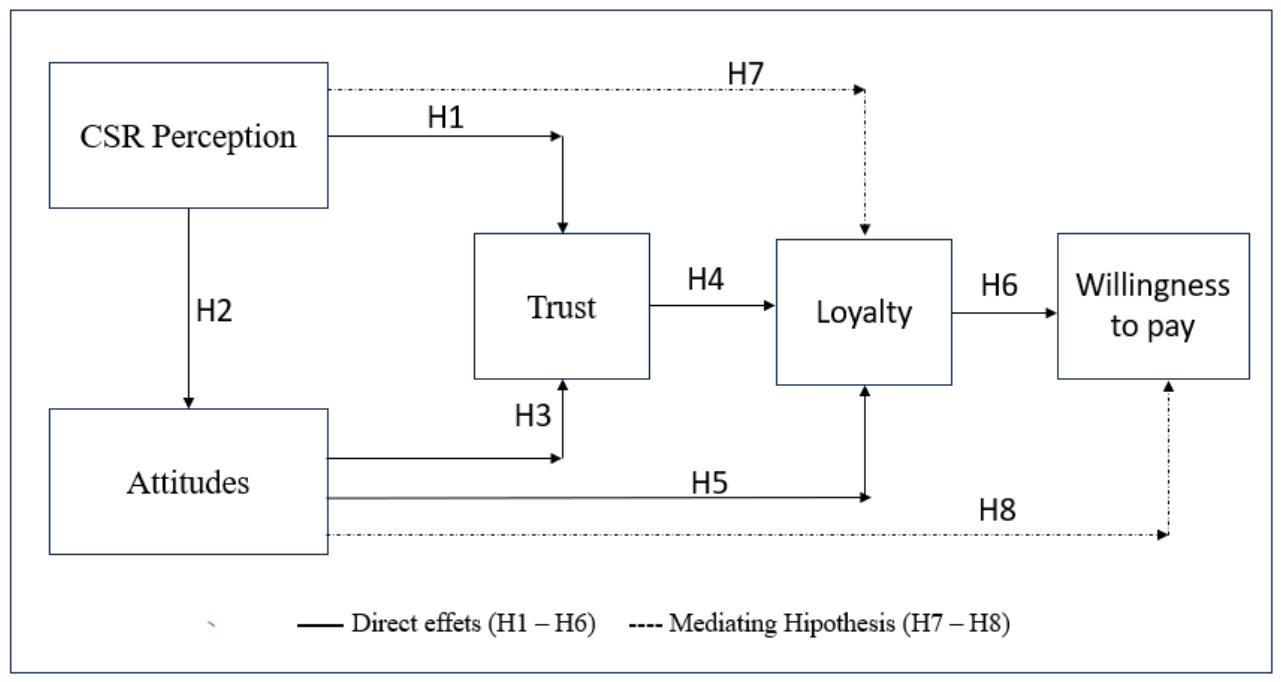
Figure 1 presents the conceptual model integrating the hypothesized relationships. The model is grounded in a process-oriented perspective and proposes that the influence of perceived corporate social responsibility (CSR) on consumer outcomes unfolds through a sequence of relational and evaluative mechanisms.
Specifically, perceived CSR is conceptualized as an upstream antecedent that directly influences consumer trust (H1) and consumer attitudes (H2). Trust is also further expected to shape consumer attitudes (H3), reflecting the idea that favorable evaluations are partially grounded in perceptions of corporate reliability and integrity. Both trust (H4) and attitudes (H5) are posited as direct antecedents of consumer loyalty, highlighting their central role in the formation of long-term consumer–firm relationships. Finally, loyalty is hypothesized to exert a positive influence on willingness to pay (WTP) (H6), representing a key downstream economic outcome.
In addition to these direct relationships, the model explicitly incorporates two mediating hypotheses. First, trust and attitudes are proposed to sequentially mediate the relationship between CSR and loyalty (H7), indicating that CSR-driven loyalty emerges primarily through relational and attitudinal mechanisms rather than direct effects. Second, loyalty is posited as a mediator between CSR and willingness to pay (H8), suggesting that consumers’ acceptance of price premiums is contingent upon the development of sustained relational commitment.
Importantly, this study advances a process-oriented understanding of CSR-driven consumer behavior by empirically testing a sequential mediation model. Rather than proposing an entirely new theory, we provide a rigorous empirical test of a theoretically postulated chain of mechanisms, clarifying how CSR perceptions translate into loyalty and willingness to pay among young consumers.
The conceptual model captures both the direct and indirect pathways through which CSR perceptions translate into loyalty and willingness to pay among young consumers, providing an integrated framework for testing the proposed hypotheses.
3. Methodology
3.1. Research Design
This study employs a quantitative, cross-sectional survey design to test the sequential mediation model, linking perceived CSR to loyalty and willingness to pay (WTP) through the mediators of trust and attitudes among young consumers.
A survey-based methodology is particularly suited for measuring latent psychological constructs (e.g., perceptions, trust, attitudes) and for examining the complex interrelationships and indirect effects specified in our theoretical model (
Hair et al., 2019). While cross-sectional data does not establish temporal causality, it is a well-established and efficient design for theory testing and model validation, allowing for the statistical examination of hypothesized mediation pathways (
Preacher & Hayes, 2008). Consequently, the design is explanatory in nature, focused on testing a priori hypotheses concerning both direct and indirect effects within the proposed framework.
3.2. Sample and Data Collection
Data were collected via an online self-administered questionnaire between September and December 2024. Before the main study, a pre-test was conducted with 15 respondents matching the target profile to assess the instrument’s clarity, wording, flow, and completion time. Feedback from the pre-test led to minor refinements in question phrasing.
The survey was distributed through social media platforms (Instagram, LinkedIn, and Facebook) and university mailing lists, employing a non-probabilistic convenience sampling method. This approach is considered appropriate and common in consumer behavior research when targeting specific, well-defined populations, such as young consumers (
Etikan et al., 2016). Participation was voluntary and anonymous, and no personally identifiable details were collected.
The survey was conducted in Portugal, using a Portuguese version of the questionnaire. Items were translated using a back-translation procedure to ensure semantic equivalence between the original and translated versions. Respondents were not instructed to evaluate a single focal company or brand. Instead, they were invited to think about companies they personally perceived as socially responsible or associated with social and environmental responsibility. Consequently, the measures capture generalized evaluations and relational orientations toward socially responsible firms rather than attitudes toward a single standardized company.
The target population consisted of young consumers aged 18 to 35 years, encompassing Generation Z and younger Millennials, groups frequently identified as particularly sensitive to CSR-related issues (
Nguyen-Viet & Thanh Tran, 2024;
Borah et al., 2024). To qualify for participation, respondents had to confirm that they were within the target age range and familiar with the concept of corporate social responsibility or able to identify companies associated with social or environmental responsibility. The exact wording of the screening questions is provided in
Appendix A.
After data screening, incomplete responses, completed in less than one-third of the median completion time, or displayed clear straight-lining response patterns across scale items were removed. The final usable sample consisted of 307 participants. This sample size exceeds common recommendations for mediation analysis using bootstrapping techniques (
Preacher & Hayes, 2008) and provides sufficient statistical power to detect medium effect sizes.
However, the sample is limited to young consumers (aged 18–35) in Portugal, a Western European country. Therefore, the findings should not be generalized to older populations or other cultural contexts without further replication studies.
3.3. Measurement Instruments
All constructs in the model were measured using reflective, multi-item scales with a five-point Likert-type response format (1 =
Strongly Disagree to 5 =
Strongly Agree). Items were adapted from well-validated scales in the CSR and consumer behavior literature. To ensure generalizability, items were phrased to refer to “a company” or “this company” perceived as socially responsible, rather than naming a specific brand. Although items were phrased generically (e.g., “this company”), respondents were instructed to think about companies they personally perceived as socially responsible. Therefore, the measures should be interpreted as capturing generalized relational evaluations toward socially responsible firms rather than attitudes toward a single standardized brand. The specific scales, sample items, and their sources are summarized in
Table 1.
Perceived CSR was measured using a multi-item scale capturing respondents’ perceptions of companies’ social, ethical, and environmental responsibility. Items reflect the extent to which respondents perceive firms as acting responsibly toward society, the environment, and stakeholders. This operationalization is consistent with prior research on consumer perceptions of CSR (
Brown & Dacin, 1997;
Sen & Bhattacharya, 2001). We measure perceived CSR—i.e., consumers’ subjective beliefs about a company’s social responsibility—rather than objective CSR performance. This approach is consistent with a large body of consumer behavior research, which argues that perceptions, not objective facts, drive consumer responses (
Brown & Dacin, 1997;
Sen & Bhattacharya, 2001). However, we acknowledge that perceptions may diverge from actual corporate practices, and we address this limitation in
Section 5.4.
Consumer trust was measured as respondents’ beliefs regarding a company’s reliability, honesty, and integrity. The scale captures perceptions of corporate credibility and benevolence and reflects trust as a relational construct developed through consistent and responsible corporate behavior (
Morgan & Hunt, 1994;
Chaudhuri & Holbrook, 2001).
Consumer attitudes were operationalized as overall evaluative judgments toward companies perceived as socially responsible. Items capture both cognitive and affective evaluations and reflect respondents’ general favorability toward such firms. This conceptualization aligns with established definitions of consumer attitudes in marketing research.
Consumer loyalty was measured using a multi-item scale capturing respondents’ intentions to maintain a long-term relationship with socially responsible companies. Items reflect repurchase intentions, preference stability, and resistance to switching, consistent with prior loyalty research (
Chaudhuri & Holbrook, 2001).
Willingness to pay (WTP) was measured as the respondents’ readiness to pay a price premium for products or brands associated with socially responsible companies. Items capture consumers’ acceptance of higher prices because of perceived ethical and social value, consistent with prior CSR research (
Mohr & Webb, 2005).
3.4. Data Analysis Procedure
Data analysis was conducted using IBM SPSS Statistics 28 and the PROCESS macro v4.2 (
Hayes, 2022) for mediation analysis. The analytical procedure followed a structured, multi-step approach.
First, descriptive statistics, including means, standard deviations, skewness, and kurtosis, as well as bivariate correlations, were computed to provide an initial overview of the data. Missing values were negligible (<0.5%) and were handled using listwise deletion. Preliminary diagnostics indicated no severe violations of normality assumptions or the presence of influential multivariate outliers.
Second, the reliability and validity of the measurement scales were assessed. Internal consistency was evaluated using Cronbach’s alpha and composite reliability (CR). Convergent validity was examined through the average variance extracted (AVE), while discriminant validity was assessed using the Fornell–Larcker criterion and the heterotrait–monotrait (HTMT) ratio. Because the measurement scales were adapted to the present research context, an exploratory factor analysis (EFA) was conducted using principal axis factoring with Promax rotation to confirm the expected five-factor structure and identify potential cross-loadings.
Third, the direct effect hypotheses (H1–H6) were tested using standard multiple regression analyses.
Four, the mediation hypotheses (H7 and H8) were examined using a bootstrapping approach with 10,000 resamples to estimate bias-corrected 95% confidence intervals (CIs). This approach is recommended for assessing indirect effects because it does not rely on the assumption of normality in the sampling distribution (
Preacher & Hayes, 2008;
Hayes, 2022). Specifically, PROCESS Model 6 was used to test the sequential mediation (CSR → Trust → Attitudes → Loyalty), whereas PROCESS Model 4 was employed to test the simple mediation from CSR to willingness to pay through loyalty (CSR → Loyalty → Willingness to Pay). An indirect effect was considered statistically significant when its 95% CI did not include zero.
Several robustness checks were subsequently conducted to assess the stability of the findings. These included re-estimating the models while controlling for key demographic variables (age, gender, and education), performing a random split-half analysis to examine the consistency of the estimated coefficients across subsamples, and re-running the mediation analyses using percentile bootstrap confidence intervals. The results remained substantively unchanged across these additional analyses.
Participation in the study was voluntary and anonymous. Respondents were informed of the academic purpose of the research and assured that their responses would be used exclusively for scientific purposes. No personally identifiable information was collected, and all data were analyzed in aggregate form in accordance with established ethical standards for social science research.
Because all variables were measured using a self-reported survey, potential common method bias was considered. Several procedural remedies were implemented, including the use of well-established measurement scales, respondent anonymity, and the separation of predictor and criterion constructs within the questionnaire. In addition, Harman’s single-factor test indicated that no single factor accounted for much of the variance, suggesting that common method bias is unlikely to pose a serious threat to the validity of the findings.
Although PROCESS-based mediation analysis does not constitute a full structural equation modeling approach, it is appropriate for testing indirect effects and sequential mediation hypotheses using observed composite variables.
4. Results
The results are presented in four parts. First, descriptive statistics and correlations are reported. Second, measurement scales’ reliability and validity are assessed. Third, direct effects are tested. Fourth, mediation hypotheses are examined using bootstrapping procedures.
4.1. Sample Profile
The final sample consisted of 307 young consumers. As shown in
Table 2, the sample was predominantly female (59.9%), with most respondents falling in the 26–35 age bracket (64.2%) and holding a higher education degree (54.4%). This profile is consistent with the target population of educated, young adult consumers, and the sample demonstrates adequate variability across key demographic variables to proceed with multivariate analyses.
4.2. Descriptive Statistics and Correlations
Table 3 presents the means, standard deviations, and intercorrelations for the five main constructs. All bivariate Pearson correlations were positive and statistically significant at
p < 0.001, providing preliminary support for the hypothesized linkages. Specifically, perceived CSR correlated strongly with trust (r = 0.54) and attitudes (r = 0.49). Trust and attitudes, in turn, were strongly correlated with loyalty (r = 0.57 and r = 0.63, respectively). Finally, loyalty showed a strong positive correlation with willingness to pay (WTP) (r = 0.59). These patterns align with the proposed mediation framework and relational pathways.
4.3. Reliability and Validity of the Measures
The psychometric properties of the measurement scales were evaluated for reliability and validity. As shown in
Table 4, all constructs demonstrated strong internal consistency, with Cronbach’s alpha coefficients ranging from 0.78 to 0.85 and composite reliability (CR) values between 0.81 and 0.87, all exceeding the recommended threshold of 0.70. All Cronbach’s alpha coefficients exceeded the recommended threshold of 0.70, indicating satisfactory internal consistency in line with established psychometric guidelines (
Nunnally & Bernstein, 1994). Convergent validity was also supported, as the average variance extracted (AVE) for all constructs exceeded the recommended of 0.50.
Discriminant validity was initially assessed using the Fornell-Larcker criterion. As presented in
Table 5, the square root of the AVE for each construct (diagonal values) exceeded its correlations with the remaining constructs, supporting discriminant validity.
To further assess the factor structure of the measurement scales, an exploratory factor analysis (EFA) was conducted using principal axis factoring with Promax rotation. The Kaiser-Meyer-Olkin (KMO) measure was 0.87, and Bartlett’s test of sphericity was significant (χ
2(190) = 2845.6,
p < 0.001), confirming the adequacy of the data for factor analysis. A five-factor solution emerged, explaining 66.8% of the total variance. As shown in
Table 6, all factors load strongly on their intended factors, with factor loadings above 0.70. No substantial cross-loadings were observed, and communalities ranged from 0.49 to 0.71. These findings support the expected five-factor structure (CSR, trust, attitudes, loyalty, and willingness to pay) and provide additional evidence of construct distinctiveness.
Discriminant validity was additionally assessed using the heterotrait–monotrait (HTMT) ratio of correlations (
Henseler et al., 2015). The HTMT criterion is considered a more stringent approach for assessing discriminant validity. A conservative threshold of HTMT < 0.85 was adopted. As presented in
Table 7, all HTMT values were below the recommended threshold, ranging from 0.48 to 0.84, providing further evidence that the constructs are empirically distinct.
Taken together, the measures demonstrate adequate reliability, convergent validity, and discriminant validity, confirming their suitability for testing the hypothesized relationships among the study variables.
4.4. Direct Effects Testing (H1–H6)
The direct effect hypotheses (H1–H6) were tested using standard multiple regression. The results, summarized in
Table 8, provide support for all hypothesized relationships.
Perceived CSR was a significant positive predictor of both trust (β = 0.54, p < 0.001) and attitudes (β = 0.49, p < 0.001), supporting H1 and H2. Trust also showed a significant positive association with attitudes (β = 0.46, p < 0.001), providing support for H3.
Regarding loyalty formation, both trust (β = 0.34, p < 0.001) and attitudes (β = 0.41, p < 0.001) were positively associated with loyalty, supporting H4 and H5. Finally, loyalty exhibited a strong positive association with willingness to pay (β = 0.59, p < 0.001), supporting H6.
Overall, the results are consistent with the proposed conceptual framework and suggest that CSR perceptions are associated with downstream relational and economic outcomes through trust, attitude, and loyalty related mechanisms.
4.5. Mediation Analysis (H7–H8)
The proposed mediation hypotheses (H7 and H8) were tested using bootstrapping procedures (10,000 resamples) to estimate indirect effects and bias-corrected 95% confidence intervals (CIs). The results, presented in
Table 9, support both mediation hypotheses.
Consistent with H7, the sequential indirect effect of perceived CSR on loyalty through trust and attitudes was statistically significant (β = 0.18, 95% CI [0.12, 0.25]). Importantly, when trust and attitudes were included as sequential mediators, the direct association between CSR and loyalty became non-significant (β = 0.07, p = 0.18). These findings are consistent with an indirect-only sequential mediation pattern, suggesting that CSR perceptions are associated with loyalty primarily through trust and attitudinal mechanisms.
H8 was also supported. The indirect effect of CSR on willingness to pay (WTP) through loyalty was statistically significant (β = 0.14, 95% CI [0.09, 0.20]). Similarly, the direct effect of CSR on WTP was not statistically significant when loyalty was included in the conceptual framework (β = 0.05, p = 0.29), evidencing an indirect-only simple mediation.
These findings support the proposed process-oriented perspective and indicate that CSR perceptions are indirectly associated with loyalty and willingness to pay through relational and evaluative mechanisms rather than through direct effects alone.
4.6. Regression-Based Path Summary and Robustness Checks
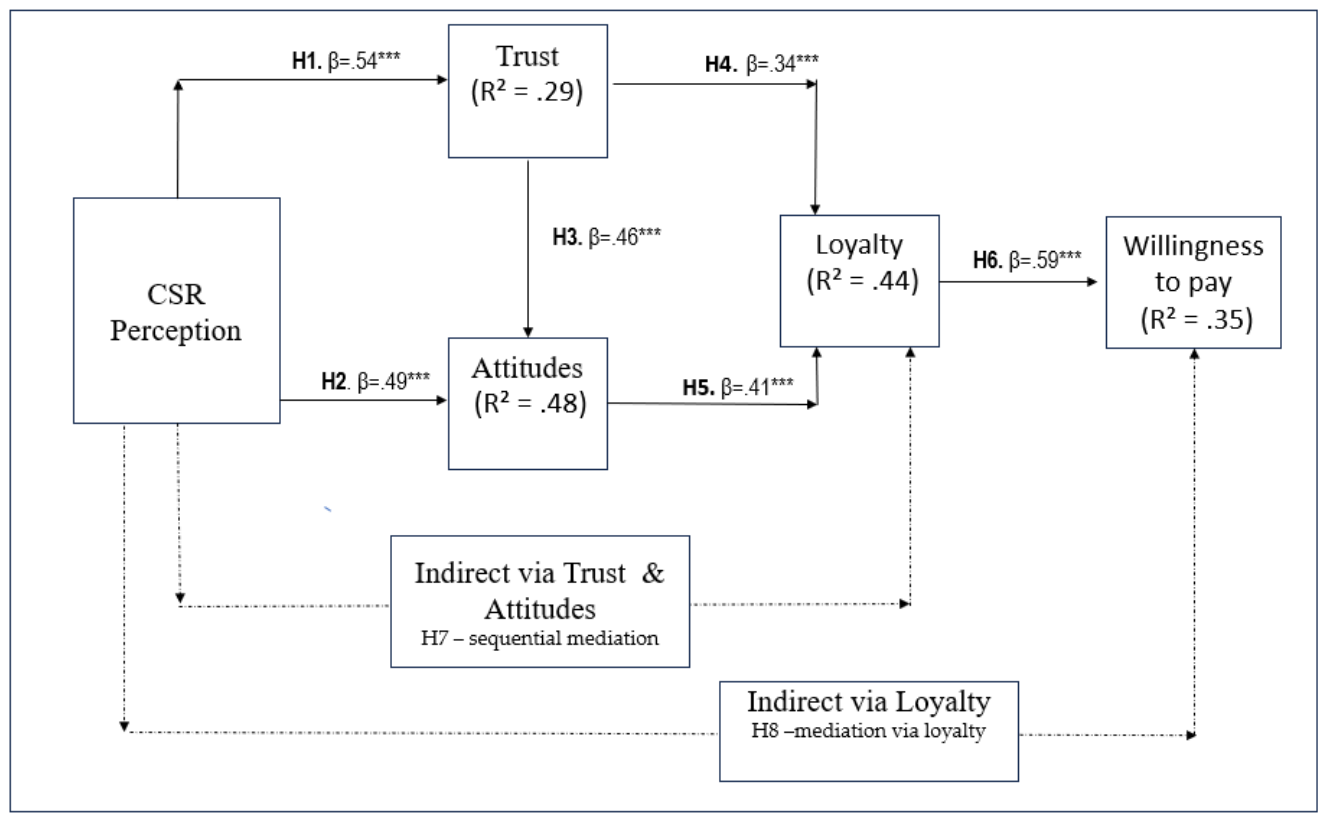
Figure 2 provides a visual summary of the regression-based relationships among the study variables, including standardized coefficients (β) and explained variance (R
2) for each outcome variable. All hypothesized direct relationships were statistically significant (
p < 0.001), providing graphical support for H1–H6. The regression analyses accounted for a substantial portion of the variance in the key outcomes: 44% in loyalty (R
2 = 0.44) and 35% in willingness to pay (R
2 = 0.35).
To assess the stability and consistency of the findings, several robustness checks were conducted. First, including demographic covariates (age, gender, and education) in the regression analyses did not alter the significance or direction of the hypothesized relationships, with only minimal variations in the standardized coefficients (±0.03). Second, a random split-half analysis confirmed the stability of the estimated coefficients across subsamples. Finally, re-running the mediation analyses using percentile bootstrap confidence intervals yielded results consistent with those previously reported.
Collectively, these checks support the robustness and internal consistency of the reported findings and are consistent with the proposed mediation framework. The graphical representation is aligned with the mediation analyses reported in
Table 9 and summarizes the proposed relational and evaluative pathways linking CSR perceptions to loyalty and willingness to pay among young consumers.
5. Discussion
The purpose of this study was to examine the mechanisms through which perceived corporate social responsibility (CSR) influences loyalty and willingness to pay (WTP) among young consumers. Grounded in signaling theory and relationship marketing frameworks, we proposed and tested a sequential mediation model in which CSR perceptions foster trust and positive attitudes, which in turn drive loyalty and, ultimately, enhance WTP. The results provide strong empirical support for the hypothesized model, revealing that CSR does not exert direct effects on loyalty or WTP. Instead, its influence is fully transmitted through relational and evaluative pathways. This section discusses the key findings, theoretical contributions, managerial implications, limitations, and directions for future research.
5.1. Key Findings
The findings confirm that CSR serves as a credible signal that strengthens consumer trust and shapes favorable attitudes, consistent with prior literature (
Brown & Dacin, 1997;
Sen & Bhattacharya, 2001). The strong positive effects of CSR on trust (H1) and attitudes (H2) align with recent empirical evidence highlighting CSR’s role in reducing perceived risk and enhancing corporate credibility (
Pérez & Rodríguez del Bosque, 2012;
Dai & Guo, 2024). Among young consumers, a segment particularly attuned to authenticity and ethical consistency, CSR initiatives perceived as genuine appear to play a pivotal role in establishing foundational relational judgments (
Borah et al., 2024;
Nguyen-Viet & Thanh Tran, 2024).
A particularly salient finding of this study is the absence of significant direct effects between perceived CSR and both loyalty and willingness to pay, once trust, attitudes, and loyalty are accounted for. Rather than indicating a weak role of CSR, this pattern suggests an indirect and processual nature. For young consumers, CSR appears to function primarily as an upstream relational signal, whose influence unfolds through a sequence of psychological evaluations. Ethical and social cues associated with CSR must first be validated through trust and translated into favorable attitudes before they can crystallize into loyalty and, subsequently, economic commitment. We caution that the indirect-only mediation results should not be overinterpreted. The absence of direct effects from CSR to loyalty and WTP may be due to the high correlation between trust and attitudes (r = 0.61), which can inflate indirect effects and suppress direct effects in regression-based mediation. Alternative model specifications (e.g., trust alone as mediator, or attitudes alone) also showed significant indirect effects, suggesting that the proposed sequential chain is one plausible mechanism among several. Future research should test competing models and include additional control variables to verify the robustness of indirect-only mediation.
This interpretation is theoretically consistent with the signaling theory and relationship marketing frameworks, which suggest that corporate signals rarely translate directly into behavior, particularly in contexts characterized by skepticism and heightened sensitivity to authenticity. Instead, CSR-driven consumer responses emerge through relational mechanisms that legitimize and internalize corporate intentions, a process that is especially pronounced among younger cohorts.
Support for H3 confirms the positive sequential relationship between trust and attitudes, consistent with the notion that trust is associated with more favorable evaluative judgments (
Morgan & Hunt, 1994;
Dananjoyo & Udin, 2025). In the context of CSR, trust developed through responsible corporate behavior likely mitigates skepticism and enables consumers to interpret CSR initiatives as sincere, thereby fostering more favorable overall attitudes. This mechanism is particularly critical for younger consumers, who rely heavily on trust cues when forming brand attitudes (
Nguyen-Viet & Thanh Tran, 2024).
The confirmation of H4 and H5 demonstrates that both trust and attitudes are central antecedents of loyalty, consistent with relationship marketing theory, which emphasizes the role of relational and affective bonds in sustaining commitment (
Chaudhuri & Holbrook, 2001;
Prentice & Loureiro, 2021). For young consumers, whose brand relationships often serve identity-expressive functions, CSR-driven trust and attitudes appear especially potent in cultivating loyalty. Research focusing on younger cohorts, including Generation Z, similarly shows that trust built through authentic CSR engagement is a key determinant of sustainable behavior and loyalty intentions (
Borah et al., 2024;
Long et al., 2023).
The strong positive association between loyalty on willingness to pay (H6) highlights the economic value of sustained consumer relationships. Loyal consumers are not only more likely to repurchase but are also more willing to pay a premium, a finding that resonates with recent meta-analytic evidence (
Fatma & Khan, 2024;
Damaschi et al., 2025;
Sharma & Kumar, 2025;
Wieseke et al., 2014). This indicates that CSR, when effectively translated into loyalty, can generate tangible financial returns.
Most importantly, the indirect-only sequential mediation observed in H7 and the indirect-only simple mediation in H8 provide compelling evidence that CSR’s impact on loyalty and willingness to pay is both indirect and chained. The findings are consistent with the interpretation that CSR perceptions are associated with loyalty primarily through trust and positive attitudes. These findings align with growing calls for process-oriented models in CSR research (
Du et al., 2010;
Islam et al., 2021;
Servera-Francés & Piqueras-Tomás, 2019;
Raza et al., 2020) and help explain why prior studies have often reported weak or inconsistent direct effects of CSR on behavioral outcomes.
Overall, the results suggest that CSR functions primarily as an upstream relational signal rather than a direct behavioral driver, particularly among young consumers, for whom ethical cues require validation through trust and attitudinal alignment before translating into loyalty or willingness to pay.
5.2. Theoretical Contributions
This study makes several important contributions to the CSR and the consumer behavior literature by advancing a process-oriented understanding of how CSR perceptions translate into relational and economic outcomes.
At a theoretical level, the study develops a sequential mediation perspective that clarifies the psychological and relational mechanisms linking CSR perceptions to loyalty and willingness to pay. By conceptualizing CSR as a foundational relational signal whose effects unfold through trust and attitudes, the findings move beyond simplistic direct-effect paradigms and offer a more nuanced explanation of how CSR creates consumer value.
The study further contributes to the literature on young consumers by demonstrating that their responses to CSR are not driven solely by ethical concern but are critically mediated by trust and attitudinal alignment. In doing so, the findings help reconcile the widely discussed
attitude–behavior gap in this segment (
Carrigan & Attalla, 2001;
Auger & Devinney, 2007), showing that for young consumers, particularly Generation Z and Millennials, behavioral loyalty and economic commitment emerge primarily through relational pathways grounded in trust and value-aligned attitudes, rather than through direct ethical appeal alone (
Borah et al., 2024;
Long et al., 2023). This provides a more granular understanding of the conditional nature of ethical consumption among youth.
Moreover, by integrating the signaling theory with relationship marketing frameworks, the study bridges macro- and micro-level perspectives on CSR. It illustrates how corporate-level CSR signals are interpreted at the individual level through trust and attitudes, and how these evaluations ultimately materialize in both relational outcomes (loyalty) and economic outcomes (willingness to pay). This integrative view is particularly relevant for understanding young consumers, who often process corporate signals through a lens of skepticism and heightened sensitivity to authenticity (
Nguyen-Viet & Thanh Tran, 2024).
Finally, the study contributes methodologically by employing robust analytical techniques, including bootstrapping procedures for testing sequential mediation and comprehensive assessments of reliability and validity. These methodological choices strengthen the empirical grounding of the proposed mediation framework and provide a solid template for future mediation-based research in the CSR domain, particularly studies focusing on specific demographic segments. Importantly, our contribution is empirical and process-oriented, not the proposal of a new theory. We test a theoretically derived sequence that has rarely been examined together in a single model.
5.3. Managerial Implications
From an empirical standpoint, this study offers several actionable insights for managers seeking to leverage CSR as a strategic tool to engage young consumers.
Rather than viewing CSR as a short-term promotional tactic, firms should approach it as a long-term investment in relationship building. The absence of direct effects between CSR and behavioral outcomes underscores that CSR initiatives do not instantly generate loyalty or price premiums; instead, they must first cultivate trust and positive consumer attitudes.
The results also highlight the importance of authenticity and consistency in CSR communication. Young consumers, particularly Generation Z, are highly sensitive to greenwashing and symbolic actions, valuing transparency and genuine commitment above all (
Borah et al., 2024;
Nguyen-Viet & Thanh Tran, 2024). Consequently, CSR initiatives should be deeply embedded in core business practices and communicated transparently to reinforce perceptions of credibility and sincerity.
In addition, the findings suggest that firms should move beyond traditional performance indicators and actively monitor intermediate relational metrics, such as trust and brand attitudes. These variables can serve as early signals of CSR effectiveness and provide valuable feedback on whether CSR efforts are strengthening the psychological foundations of loyalty.
Given that loyalty fully mediates the relationship between CSR and willingness to pay, managerial strategies aimed at enhancing loyalty, such as personalized engagement, community-building initiatives, and value-aligned brand experiences, are particularly critical for converting ethical perceptions into economic returns.
Managers should also be aware that factors such as consumer skepticism, perceived authenticity of CSR claims, environmental awareness, and price sensitivity can significantly influence the effectiveness of CSR strategies. Firms are advised to monitor these variables through market research and to tailor their CSR communication accordingly. For instance, by providing third-party certifications to enhance authenticity or by addressing price-sensitive segments with value-based messaging that highlights both ethical and functional benefits.
Finally, the results indicate that CSR strategies should be segmented and tailored to the values of young consumers. Initiatives addressing salient issues such as climate action, social justice, or local community support are more likely to resonate with this segment and foster enduring trust and loyalty.
5.4. Limitations and Future Research Directions
Despite its contributions, this study is subject to several limitations that open important avenues for future research:
- (i)
Non-standardized focal company. Respondents were not asked to evaluate a single company or brand, which captures real-world variation in CSR perceptions but reduces precision in attributing effects to specific corporate actions. Future research should replicate the model using a common set of brands or experimental designs;
- (ii)
Cross-sectional design and causal inference. The cross-sectional, self-reported nature of the data precludes strong causal inferences. Reverse causality is possible: consumers who are already loyal to a brand may perceive its CSR activities more positively as a form of post hoc justification. Therefore, the findings should be interpreted as consistent with the proposed sequential logic rather than as definitive proof of causality. Longitudinal or experimental studies are needed to establish temporal precedence;
- (iii)
Omitted variables. Our model does not include potentially influential variables such as perceived authenticity of CSR initiatives, consumer skepticism, environmental awareness, and price sensitivity. These constructs may moderate or even supersede the effects of CSR perceptions (
Borah et al., 2024;
Nguyen-Viet & Thanh Tran, 2024). Our claim of indirect-only mediation should also be interpreted with caution, as other unmeasured variables (e.g., corporate reputation, brand identification, customer satisfaction) may mediate the CSR-loyalty relationship. Future research should integrate these variables as competing mediators or moderators;
- (iv)
Perceptual measurement of CSR. CSR was measured perceptually. While consumer decisions are based on subjective beliefs, perceptual measures may not correspond to objective corporate performance. Future research should complement perceptual measures with objective CSR ratings (e.g., KLD scores, third-party certifications) or experimental manipulations (e.g., vignettes describing actual CSR initiatives) to establish causality and test perception-reality alignment (see
Dai & Guo, 2024);
- (v)
Generalizability. The convenience sample of 307 young consumers in Portugal limits generalizability. Findings cannot be generalized to older adults, other cultural contexts, or emerging markets without further replication. Cross-cultural and multi-country studies are needed to establish boundary conditions;
- (vi)
Cultural dimensions. Our study did not measure or control cultural dimensions such as individualism-collectivism, uncertainty avoidance, or long-term orientation (
Hofstede, 2001). These values may moderate CSR effects (
Ahmad et al., 2025). Future research should replicate our model across diverse cultural settings and explicitly measure cultural orientation at the individual level;
- (vii)
Common method bias. All measures were self-reported and collected at a single point in time, raising the possibility of common method variance. Although procedural remedies were implemented and Harman’s single-factor test did not indicate a serious threat, same-source bias may still inflate some associations. Consequently, reported relationships should be viewed as correlational and consistent with the proposed sequence, not as proof of causation;
- (viii)
Other limitations and future directions. The proposed mediation framework does not incorporate potential moderators such as perceived CSR authenticity, brand identification, or product involvement. Future research should also examine within-segment heterogeneity (e.g., Generation Z vs. Millennials), actual purchase behavior (rather than intentions), customer lifetime value, and the role of digital and social media environments in shaping CSR effects.
6. Conclusions
This study sets out to unravel the psychological and relational pathways through which corporate social responsibility (CSR) influences loyalty and willingness to pay (WTP) among young consumers. By proposing and testing a sequential mediation model, we shift the focus from whether CSR matters to how it creates value, specifically through relational and evaluative mechanisms involving trust, attitudes, and loyalty.
We acknowledge that our model is not exhaustive; other variables such as perceived authenticity, skepticism, environmental awareness, and price sensitivity may also play important roles and should be integrated in future research.
The empirical findings are consistent with the proposed mediation framework. Perceived CSR does not directly affect loyalty or WTP; instead, it operates as an upstream signal that first builds consumer trust and fosters positive attitudes. These relational and evaluative responses, in turn, strengthen loyalty, which ultimately enhances consumers’ willingness to pay a premium. This chained mediation pattern suggests that CSR’s economic value is not immediate but emerges indirectly through strengthened consumer relationships. This interpretation is supported by mediation analyses, although causal claims require experimental or longitudinal replication.
Theoretically, the present study contributes to literature in three main ways. First, it advances a process-oriented understanding of CSR-driven consumer behavior by modeling trust and attitudes as sequential mediators. This responds to repeated calls in the literature for more mechanism-focused research (
Du et al., 2010;
Islam et al., 2021). Second, it enriches the discourse on young consumers by demonstrating that their ethical consumption is mediated by relational trust and attitudinal alignment, not merely by ethical concern alone. This helps explain the often-observed attitude–behavior gap in Generation Z and Millennials, showing that ethical intentions must first pass through the filter of trust and value congruence to translate into loyalty (
Borah et al., 2024). Third, by integrating signaling theory with relationship marketing frameworks, the study bridges macro-level CSR signaling and micro-level consumer responses, offering a more holistic view of how CSR creates brand value.
For managers, the findings underscore the fact that CSR should be viewed as a long-term relational investment rather than a short-term communicative tool. To effectively engage young consumers, companies must prioritize: (i) Authenticity and transparency in CSR initiatives to build trust, a particularly critical factor for authenticity-sensitive younger demographics (
Nguyen-Viet & Thanh Tran, 2024); (ii) Consistent and value-driven communication to foster positive attitudes; (iii) Loyalty-building engagement to convert ethical perceptions into economic outcomes.
Firms that succeed in embedding CSR into the core of their brand identity, and communicating it credibly, are more likely to cultivate loyal, premium-paying young consumers.
This study is not without limitations. Its cross-sectional design, convenience sample, and focus on behavioral intentions rather than actual behavior suggest caution in generalizing the findings. Future research should employ longitudinal designs, diverse and representative samples, and behavioral measures to validate and extend the model. Additionally, exploring moderators such as CSR authenticity, consumer skepticism, and cultural context will further refine our understanding of when and for whom these mechanisms are most potent.
Given the cross-sectional and self-reported nature of the data, the findings are best interpreted as evidence consistent with the proposed sequential mediation model, rather than as definitive proof of causal chains. Experimental and longitudinal research is needed to confirm the directional and temporal assumptions inherent in the model.
Cross-cultural replication is particularly needed. Our findings are based on a Portuguese sample, and the proposed sequential mechanisms may vary across cultural contexts. Researchers are encouraged to test our model in collectivist cultures, emerging markets, and societies with different levels of uncertainty avoidance.
In an era where consumers, especially the young, increasingly expect brands to stand for more than profit, CSR has become a critical component of competitive strategy. This study clarifies that its value lies not in direct persuasion, but in its capacity to build trust, shape attitudes, and inspire loyalty. By mapping these relational pathways, we offer a roadmap for both scholars and practitioners seeking to understand and harness the power of corporate social responsibility in contemporary markets.



 ,
,