Establishing the Theoretical Foundations of Metaverse-Sustainable Tourism Nexus. Mapping the Research Front


Abstract
1. Introduction
2. Literature Review
2.1. Tourism, Sustainability and Technologies
2.2. Advanced Technology: Metaverse
2.3. Metaverse in Sustainable Tourism
3. Method
3.1. Bibliometric Methods
3.2. Dataset Configuration
3.2.1. Application of Filtering Criteria
3.2.2. Data Cleaning
4. Results and Discussion
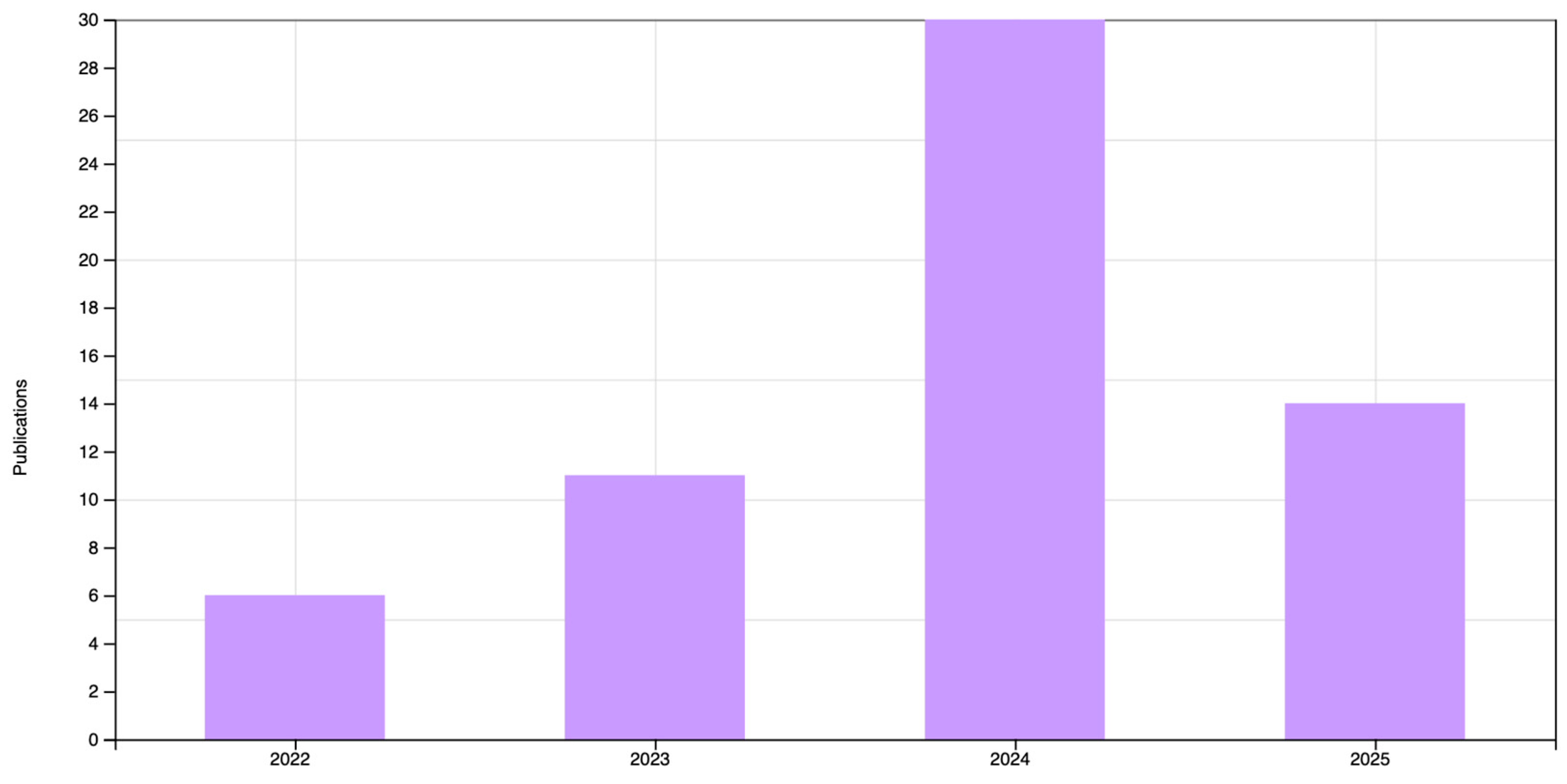
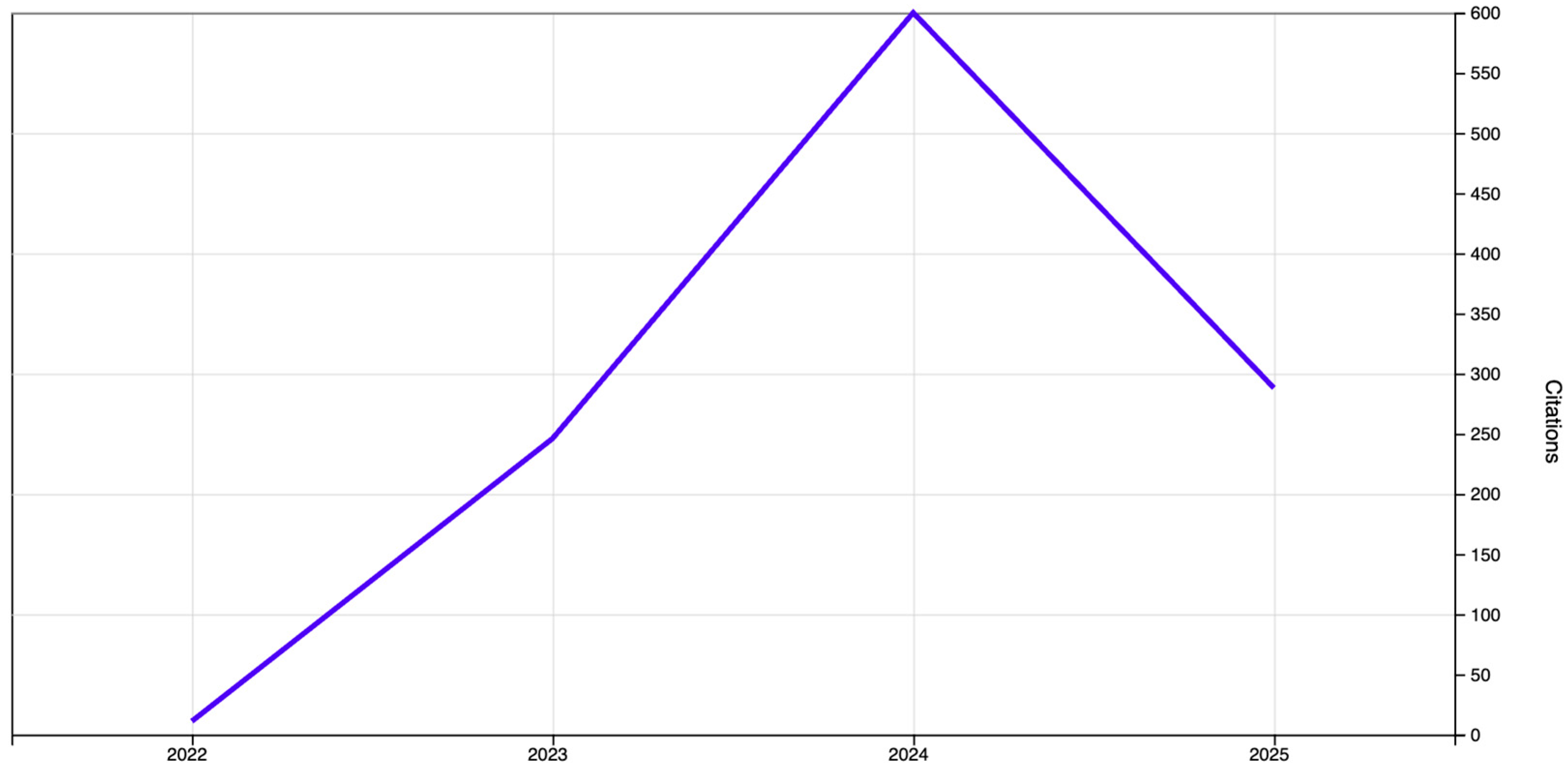
4.1. Performance Analysis
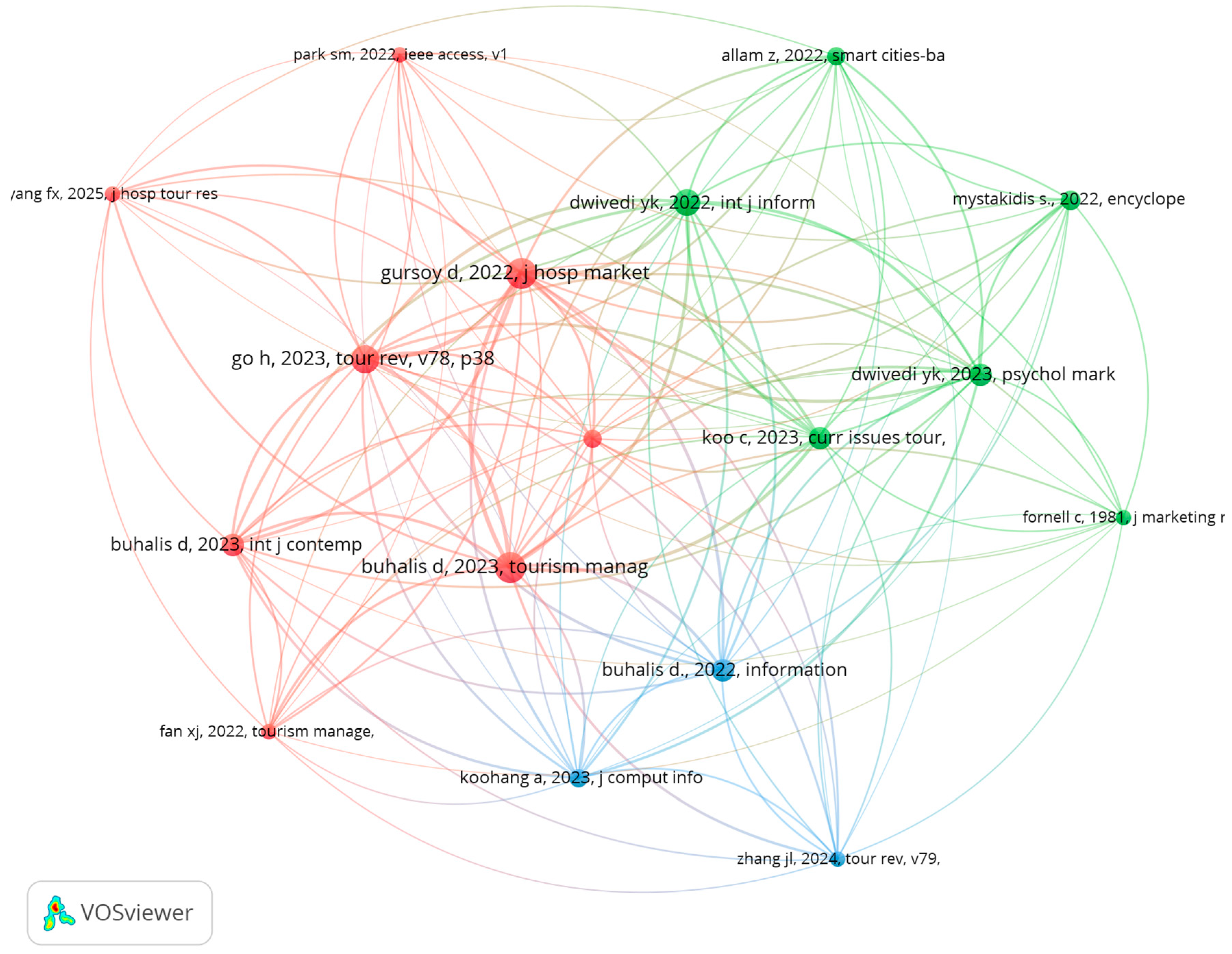
4.2. Co-Citation Analysis of References and Authors
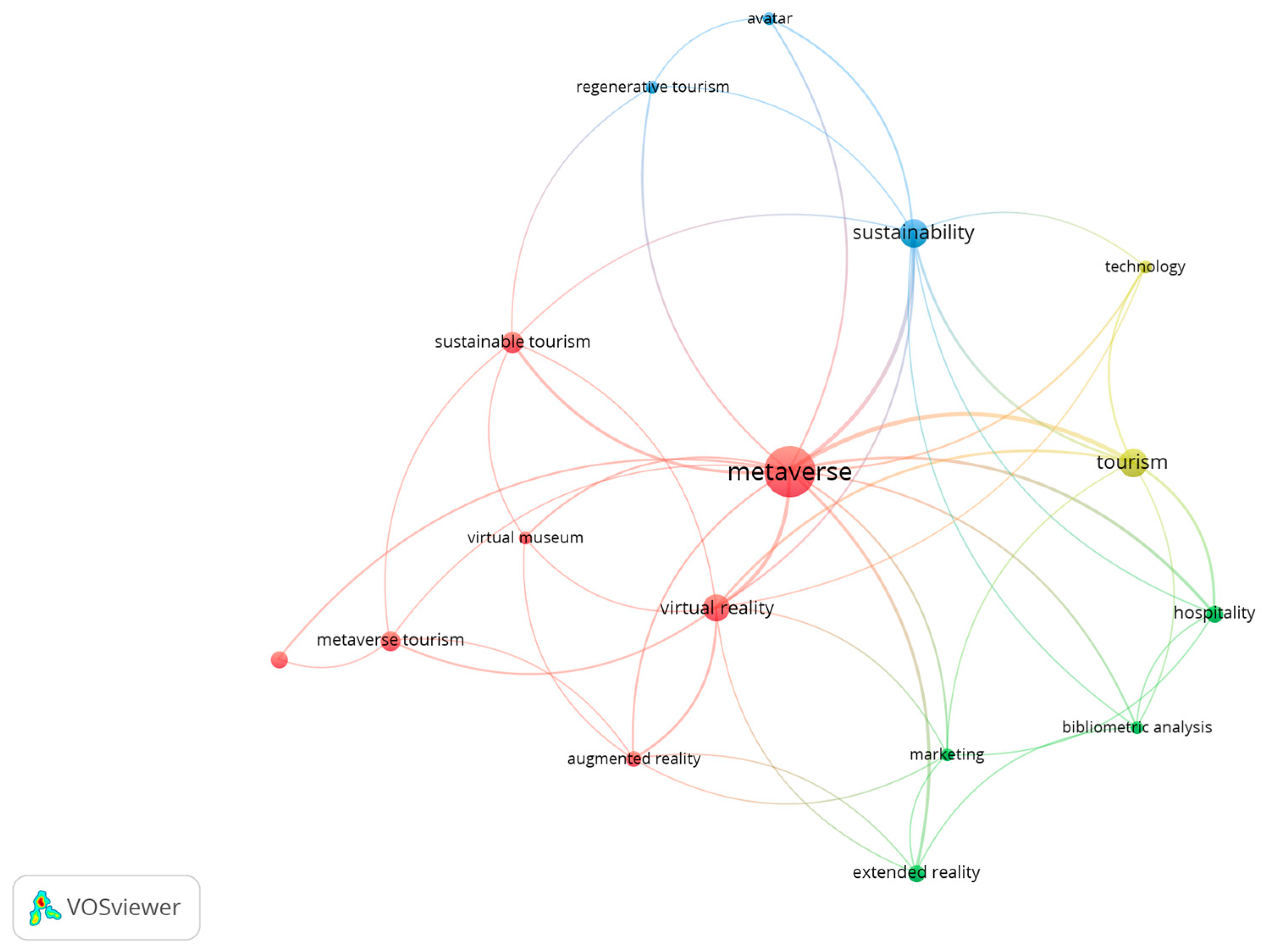
4.3. Author Keyword Co-Occurrence
5. Conclusions, Implications and Research Opportunities
Author Contributions
Funding
Institutional Review Board Statement
Informed Consent Statement
Data Availability Statement
Conflicts of Interest
Abbreviations
| AI | Artificial intelligence |
| VR | Virtual reality |
| AR | Augmented reality |
| XR | Mixed reality |
| MR | Extended reality |
| IoT | Internet of Things |
| WoS | Web of Science |
| ICT | Information and Communication Technologies |
| EMIS | Environmental Management Information System |
| DMS | Destination Management System |
| TAM | Technology acceptance Model |
| ECT | Experiential Consumption Theory |
References
- Adnan, N., Rashed, M. F., & Ali, W. (2024). Embracing the metaverse: Cultivating sustainable tourism growth on a global scale. Current Issues in Tourism, 28(20), 3264–3283. [Google Scholar] [CrossRef] [Scilit]
- Agarwal, R., Mehrotra, A., Mishra, A., Rana, N. P., Nunkoo, R., & Cho, M. (2024). Four decades of sustainable tourism research: Trends and future research directions. International Journal of Tourism Research, 26(2), e2643. [Google Scholar] [CrossRef] [Scilit]
- Aksnes, D. W., & Sivertsen, G. (2019). A criteria-based assessment of the coverage of Scopus and Web of Science. Journal of Data and Information Science, 4(1), 1–21. [Google Scholar] [CrossRef] [Scilit]
- Ali, A., & Frew, A. (2013). Information and communication technologies for sustainable tourism. Routledge. [Google Scholar]
- Allam, Z., Sharifi, A., Bibri, S. E., Jones, D. S., & Krogstie, J. (2022). The metaverse as a virtual form of smart cities: Opportunities and challenges for environmental, economic, and social sustainability in urban futures. Smart Cities, 5(3), 771–801. [Google Scholar] [CrossRef] [Scilit]
- Araújo, T., & Casais, B. (2020). Customer acceptance of shopping-assistant chatbots. In Á. Rocha, J. Reis, M. Peter, & Z. Bogdanović (Eds.), Marketing and smart technologies (pp. 278–287). Springer. [Google Scholar] [CrossRef] [Scilit]
- Aria, M., & Cuccurullo, C. (2017). Bibliometrix: An R-tool for comprehensive science mapping analysis. Journal of Informetrics, 11(4), 959–975. [Google Scholar] [CrossRef] [Scilit]
- Asif, M., Ersoy, A., Lodhi, R. N., & Cobanoglu, C. (2025). Mapping the metaverse-sustainability nexus in hospitality and tourism: A bibliometric approach. Online Information Review, 49(3), 600–622. [Google Scholar] [CrossRef] [Scilit]
- Baghini, M. S., Mohammadi, M., & Norouzkhani, N. (2024). Usability testing: A bibliometric analysis based on WoS data. Journal of Scientometric Research, 13(1), 9–24. [Google Scholar] [CrossRef] [Scilit]
- Bec, A., Moyle, B., Timms, K., Schaffer, V., Skavronskaya, L., & Little, C. (2019). Management of immersive heritage tourism experiences: A conceptual model. Tourism Management, 72, 117–120. [Google Scholar] [CrossRef] [Scilit]
- Birkle, C., Pendlebury, D. A., Schnell, J., & Adams, J. (2020). Web of Science as a data source for research on scientific and scholarly activity. Quantitative Science Studies, 1(1), 363–376. [Google Scholar] [CrossRef] [Scilit]
- Boyack, K. W., & Klavans, R. (2010). Co-citation analysis, bibliographic coupling, and direct citation: Which citation approach represents the research front most accurately? Journal of the American Society for Information Science and Technology, 61(12), 2389–2404. [Google Scholar] [CrossRef] [Scilit]
- Bretos, M. A., Ibáñez-Sánchez, S., & Orús, C. (2024). Applying virtual reality and augmented reality to the tourism experience: A comparative literature review. Spanish Journal of Marketing-ESIC, 28(3), 287–309. [Google Scholar] [CrossRef] [Scilit]
- Buhalis, D., & Karatay, N. (2022). Mixed reality (MR) for generation Z in cultural heritage tourism towards metaverse. In Information and communication technologies in tourism 2022 (pp. 16–27). Springer International Publishing. [Google Scholar] [CrossRef] [Scilit]
- Buhalis, D., Leung, D., & Lin, M. (2023a). Metaverse as a disruptive technology revolutionising tourism management and marketing. Tourism Management, 97, 104724. [Google Scholar] [CrossRef] [Scilit]
- Buhalis, D., Leung, X. Y., Fan, D., Darcy, S., Chen, G., Xu, F., Wei-Han Tan, G., Nunkoo, R., & Farmaki, A. (2023b). Editorial: Tourism 2030 and the contribution to the sustainable development goals: The tourism review viewpoint. Tourism Review, 78(2), 293–313. [Google Scholar] [CrossRef] [Scilit]
- Buhalis, D., Lin, M. S., & Leung, D. (2023c). Metaverse as a driver for customer experience and value co-creation: Implications for hospitality and tourism management and marketing. International Journal of Contemporary Hospitality Management, 35(2), 701–716. [Google Scholar] [CrossRef] [Scilit]
- Buhalis, D., O’Connor, P., & Leung, R. (2023d). Smart hospitality: From smart cities and smart tourism towards agile business ecosystems in networked destinations. International Journal of Contemporary Hospitality Management, 35(1), 369–393. [Google Scholar] [CrossRef] [Scilit]
- Bulchand-Gidumal, J., William Secin, E., O’Connor, P., & Buhalis, D. (2024). Artificial intelligence’s impact on hospitality and tourism marketing: Exploring key themes and addressing challenges. Current Issues in Tourism, 27(14), 2345–2362. [Google Scholar] [CrossRef] [Scilit]
- Callon, M., Courtial, J. P., Turner, W. A., & Bauin, S. (1983). From translations to problematic networks: An introduction to co-word analysis. Social Science Information, 22(2), 191–235. [Google Scholar] [CrossRef] [Scilit]
- Chakraborty, D., Mehta, P., & Khorana, S. (2025). Metaverse technologies in hospitality: Using the theory of consumption values to reveal consumer attitudes and trust factors. International Journal of Contemporary Hospitality Management, 37(4), 1276–1308. [Google Scholar] [CrossRef] [Scilit]
- Chen, Z. (2025). Beyond boundaries: Exploring the metaverse in tourism. International Journal of Contemporary Hospitality Management, 37(4), 1257–1275. [Google Scholar] [CrossRef] [Scilit]
- Chon, K. K. S., & Hao, F. (2025). Technological evolution in tourism: A Horizon 2050 perspective. Tourism Review, 80(1), 313–325. [Google Scholar] [CrossRef] [Scilit]
- Chorus, C. (2016). A large-scale analysis of impact factor biased journal self-citations. PLoS ONE, 11(8), e0161021. [Google Scholar] [CrossRef] [Scilit]
- Correia, P. Á. P. (2025). Metaverse in tourism: A pathway to sustainability and regeneration. International Journal of Technology Management & Sustainable Development, 24(2), 125–149. [Google Scholar] [CrossRef] [Scilit]
- Cranmer, E. E., Tom Dieck, M. C., & Jung, T. (2023). The role of augmented reality for sustainable development: Evidence from cultural heritage tourism. Tourism Management Perspectives, 49, 101196. [Google Scholar] [CrossRef] [Scilit]
- CWTS. (2023). VOSviewer (Version 1.6.20) [computer software]. Centre for Science and Technology Studies (CWTS), Leiden University, The Netherlands. Available online: https://www.vosviewer.com/ (accessed on 1 October 2025).
- Çalışkan, G., Yayla, İ., & Pamukçu, H. (2025). The use of augmented reality technologies in tourism businesses from the perspective of UTAUT2. European Journal of Innovation Management, 28(4), 1498–1526. [Google Scholar] [CrossRef] [Scilit]
- Davis, F. D. (1989). Perceived usefulness, perceived ease of use, and user acceptance of information technology. MIS Quarterly, 13(3), 319–340. [Google Scholar] [CrossRef] [Scilit]
- Donthu, N., Kumar, S., Mukherjee, D., Pandey, N., & Lim, W. M. (2021). How to conduct a bibliometric analysis: An overview and guidelines. Journal of Business Research, 133, 285–296. [Google Scholar] [CrossRef] [Scilit]
- Duszak, A., & Lewkowicz, J. (2008). Publishing academic texts in English: A Polish perspective. Journal of English for Academic Purposes, 7(2), 108–120. [Google Scholar] [CrossRef] [Scilit]
- Dwivedi, Y. K., Hughes, L., Baabdullah, A. M., Ribeiro-Navarrete, S., Mihalis, G., Mutaz, A. M., Denis, D., Metri, B., Buhalis, D., Cheung, C. M. K., Conboy, K., Doyle, R., Dubey, R., Dutot, V., Reto, F., Goyal, D. P., Gustafsson, A., Hinsch, C., Jebabli, I., … Wamba, S. F. (2022). Metaverse beyond the hype: Multidisciplinary perspectives on emerging challenges, opportunities, and agenda for research, practice and policy. International Journal of Information Management, 66, 102542. [Google Scholar] [CrossRef] [Scilit]
- Dwivedi, Y. K., Hughes, L., Wang, Y., Alalwan, A. A., Ahn, S. J., Balakrishnan, J., Barta, S., Belk, R., Buhalis, D., Dutot, V., Felix, R., Filieri, R., Flavián, C., Gustafsson, A., Hinsch, C., Hollensen, S., Jain, V., Kim, J., Krishen, A. S., … Wirtz, J. (2023). Metaverse marketing: How the metaverse will shape the future of consumer research and practice. Psychology & Marketing, 40(4), 750–776. [Google Scholar] [CrossRef] [Scilit]
- Fan, X., Jiang, X., & Deng, N. (2022). Immersive technology: A meta-analysis of augmented/virtual reality applications and their impact on tourism experience. Tourism Management, 91, 104534. [Google Scholar] [CrossRef] [Scilit]
- Fong, E. A., Patnayakuni, R., & Wilhite, A. W. (2023). Accommodating coercion: Authors, editors, and citations. Research Policy, 52(5), 104754. [Google Scholar] [CrossRef] [Scilit]
- Gaur, A., & Kumar, M. (2018). A systematic approach to conducting review studies: An assessment of content analysis in 25 years of IB research. Journal of World Business, 53(2), 280–289. [Google Scholar] [CrossRef] [Scilit]
- Gefen, D., Karahanna, E., & Straub, D. W. (2003). Trust and TAM in online shopping: An integrated model. MIS Quarterly, 27(1), 51–90. [Google Scholar] [CrossRef] [Scilit]
- Gil-Cordero, E., Maldonado-López, B., & Ledesma-Chaves, P. (2025). Metaverse and overtourism: Positive and negative impacts of tourism development on local residents. Journal of Management Development. ahead-of-print. [Google Scholar] [CrossRef] [Scilit]
- Go, H., & Kang, M. (2023). Metaverse tourism for sustainable tourism development: Tourism agenda 2030. Tourism Review, 78(2), 381–394. [Google Scholar] [CrossRef] [Scilit]
- Goyal, J. (2024). Enhancing tourism through information communication technology. In A. Sharma (Ed.), International handbook of skill, education, learning, and research development in tourism and hospitality (pp. 755–762). Springer. [Google Scholar] [CrossRef] [Scilit]
- Gössling, S., & Mei, X. Y. (2025). AI and sustainable tourism: An assessment of risks and opportunities for the SDGs. Current Issues in Tourism, 1–14. [Google Scholar] [CrossRef] [Scilit]
- Gursoy, D., Malodia, S., & Dhir, A. (2022). The metaverse in the hospitality and tourism industry: An overview of current trends and future research directions. Journal of Hospitality Marketing & Management, 31(5), 527–534. [Google Scholar] [CrossRef] [Scilit]
- Gusenbauer, M., & Haddaway, N. R. (2020). Which academic search systems are suitable for systematic reviews or meta-analyses? Evaluating retrieval qualities of Google Scholar, PubMed, and 26 other resources. Research Synthesis Methods, 11(2), 181–217. [Google Scholar] [CrossRef] [Scilit]
- Guttentag, D. A. (2010). Virtual reality: Applications and implications for tourism. Tourism Management, 31(5), 637–651. [Google Scholar] [CrossRef] [Scilit]
- Hao, F., Liu, S., Zhang, C., & Chon, K. K. S. (2025). Metaverse in tourism: From virtual worlds to sustainable worlds. Tourism Review, 80(8), 1495–1514. [Google Scholar] [CrossRef] [Scilit]
- Harzing, A.-W., & Alakangas, S. (2016). Google Scholar, Scopus and the Web of Science: A longitudinal and cross-disciplinary comparison. Scientometrics, 106(2), 787–804. [Google Scholar] [CrossRef] [Scilit]
- Hicks, D., Wouters, P., Waltman, L., de Rijcke, S., & Rafols, I. (2015). Bibliometrics: The Leiden manifesto for research metrics. Nature, 520, 429–431. [Google Scholar] [CrossRef] [Scilit]
- Hirsch, J. E. (2005). An index to quantify an individual’s scientific research output. Proceedings of the National Academy of Sciences, 102(46), 16569–16572. [Google Scholar] [CrossRef] [Scilit]
- Holbrook, M. B., & Hirschman, E. C. (1982). The experiential aspects of consumption: Consumer fantasies, feelings, and fun. Journal of Consumer Research, 9(2), 132–140. [Google Scholar] [CrossRef] [Scilit]
- Huang, C. K., Neylon, C., Brookes-Kenworthy, C., Hosking, R., Montgomery, L., Wilson, K., & Ozaygen, A. (2020). Comparison of bibliographic data sources: Implications for the robustness of university rankings. Quantitative Science Studies, 1(2), 445–478. [Google Scholar] [CrossRef] [Scilit]
- Hui, X., Raza, S. H., Khan, S. W., Zaman, U., & Ogadimma, E. C. (2023). Exploring regenerative tourism using media richness theory: Emerging role of immersive journalism, metaverse-based promotion, eco-literacy, and pro-environmental behavior. Sustainability, 15(6), 5046. [Google Scholar] [CrossRef] [Scilit]
- Jiang, C., Moghavvemi, S., & Phoong, S. W. (2025a). Virtual reality’s promise for eco-friendly adventures: A study on its role in fostering sustainable tourism and reducing environmental footprint. Information Technology & Tourism, 27(3), 547–577. [Google Scholar] [CrossRef] [Scilit]
- Jiang, C., Phoong, S. W., & Moghavvemi, S. (2025b). Cultural odyssey in the metaverse: Investigating the impact of virtual technologies on tourist reuse behavior and social sustainability. Humanities and Social Sciences Communications, 12(1), 866. [Google Scholar] [CrossRef] [Scilit]
- Kessler, M. M. (1963). Bibliographic coupling between scientific papers. American Documentation, 14(1), 10–25. [Google Scholar] [CrossRef] [Scilit]
- Khan, A., Goodell, J. W., Hassan, M. K., & Paltrinieri, A. (2022). A bibliometric review of finance bibliometric papers. Finance Research Letters, 47, 102520. [Google Scholar] [CrossRef] [Scilit]
- Kim, J., & Owen-Smith, J. (2021). ORCID-linked labeled data for evaluating author name disambiguation at scale. Scientometrics, 126, 2057–2083. [Google Scholar] [CrossRef] [Scilit]
- Kılıçarslan, Ö., Yozukmaz, N., Albayrak, T., & Buhalis, D. (2025). The impacts of metaverse on tourist behaviour and marketing implications. Current Issues in Tourism, 28(4), 622–642. [Google Scholar] [CrossRef] [Scilit]
- Knani, M., Echchakoui, S., & Ladhari, R. (2022). Artificial intelligence in tourism and hospitality: Bibliometric analysis and research agenda. International Journal of Hospitality Management, 107, 103317. [Google Scholar] [CrossRef] [Scilit]
- Koo, C., Kwon, J., Chung, N., & Kim, J. (2023). Metaverse tourism: Conceptual framework and research propositions. Current Issues in Tourism, 26(20), 3268–3274. [Google Scholar] [CrossRef] [Scilit]
- Koohang, A., Nord, J. H., Ooi, K.-B., Tan, G. W.-H., Al-Emran, M., Aw, E. C.-X., Baabdullah, A. M., Buhalis, D., Cham, T.-H., Dennis, C., Dutot, V., Dwivedi, Y. K., Hughes, L., Mogaji, E., Pandey, N., Phau, I., Raman, R., Sharma, A., Sigala, M., … Wong, L.-W. (2023). Shaping the metaverse into reality: A holistic multidisciplinary understanding of opportunities, challenges, and avenues for future investigation. Journal of Computer Information Systems, 63(3), 735–765. [Google Scholar] [CrossRef] [Scilit]
- Kumar, A., Shankar, A., Mehrotra, A., Yaqub, M. Z., & A. Alzeiby, E. A. (2025). Unveiling the dark and scary side of metaverse: An in-depth qualitative investigation. Journal of Enterprise Information Management, 38(2), 587–607. [Google Scholar] [CrossRef] [Scilit]
- Kumar, S., Kumar, V., Devi, N., & Bhatt, I. K. (2024). Impact of the metaverse on tourism and hospitality industry. In Metaverse and tourism (pp. 216–230). Routledge. [Google Scholar]
- Lee, U.-K. (2022). Tourism using virtual reality: Media richness and information system successes. Sustainability, 14(7), 3975. [Google Scholar] [CrossRef] [Scilit]
- Lievrouw, L. A. (1989). The invisible college reconsidered: Bibliometrics and the development of scientific comunication theory. Communication Research, 16(5), 615–628. [Google Scholar] [CrossRef] [Scilit]
- Liu, S., & Hao, F. (2024). Metaverse and regenerative tourism: The role of avatars in promoting sustainable practices. Asia Pacific Journal of Tourism Research, 29(7), 869–884. [Google Scholar] [CrossRef] [Scilit]
- López-Cabarcos, M. Á., Pérez-Pico, A. M., Vázquez-Rodríguez, P., & López-Pérez, M. L. (2020). Investor sentiment in the theoretical field of behavioural finance. Economic Research-Ekonomska Istraživanja, 33(1), 2101–2119. [Google Scholar] [CrossRef] [Scilit]
- López-Navarro, I., Moreno, A. I., Quintanilla, M. Á., & Rey-Rocha, J. (2015). Why do I publish research articles in English instead of my own language? Differences in Spanish researchers’ motivations across scientific domains. Scientometrics, 103(3), 939–976. [Google Scholar] [CrossRef] [Scilit]
- Meena, M. K., Kumar, S., & Valeri, M. (2024). Role of metaverse in future of tourism, hospitality, and events: Insights from bibliometric review. In Metaverse and tourism (pp. 3–24). Routledge. [Google Scholar]
- Mihalic, T. (2025). Metaversal sustainability: Conceptualisation within the sustainable tourism paradigm. Tourism Review, 80(8), 1473–1480. [Google Scholar] [CrossRef] [Scilit]
- Mladenović, D., Ismagilova, E., Filieri, R., & Dwivedi, Y. K. (2024). MetaWOM–toward a sensory word-of-mouth (WOM) in the metaverse. International Journal of Contemporary Hospitality Management, 36(6), 2144–2163. [Google Scholar] [CrossRef] [Scilit]
- Monaco, S., & Sacchi, G. (2023). Travelling the metaverse: Potential benefits and main challenges for tourism sectors and research applications. Sustainability, 15(4), 3348. [Google Scholar] [CrossRef] [Scilit]
- Mongeon, P., & Paul-Hus, A. (2016). The journal coverage of Web of Science and Scopus: A comparative analysis. Scientometrics, 106(1), 213–228. [Google Scholar] [CrossRef] [Scilit]
- Mukherjee, D., Lim, W. M., Kumar, S., & Donthu, N. (2022). Guidelines for advancing theory and practice through bibliometric research. Journal of Business Research, 148, 101–115. [Google Scholar] [CrossRef] [Scilit]
- Mystakidis, S. (2022). Metaverse. Encyclopedia, 2(1), 486–497. [Google Scholar] [CrossRef] [Scilit]
- Nowakowska, M. (2025). A comprehensive approach to preprocessing data for bibliometric analysis. Scientometrics, 130, 5191–5225. [Google Scholar] [CrossRef] [Scilit]
- Özdemir Uçgun, G., & Şahin, S. Z. (2024). How does metaverse affect the tourism industry? Current practices and future forecasts. Current Issues in Tourism, 27(17), 2742–2756. [Google Scholar] [CrossRef] [Scilit]
- Pan, S. Y., Gao, M., Kim, H., Shah, K. J., Pei, S. L., & Chiang, P. C. (2018). Advances and challenges in sustainable tourism toward a green economy. Science of The Total Environment, 635, 452–469. [Google Scholar] [CrossRef] [Scilit] [PubMed]
- Petrova, M., Sushchenko, O., Dekhtyar, N., & Shalbayeva, S. (2025). The prospects of sustainable development of destroyed tourism areas using virtual technologies. Sustainability, 17(7), 3016. [Google Scholar] [CrossRef] [Scilit]
- Piñeiro-Chousa, J., López-Cabarcos, M. Á., VittoriRomero, V., & Pérez-Pérez, A. (2025). Evolution and trends of the metaverse in business and management: A bibliometric analysis. Review of Managerial Science, 19(1), 197–222. [Google Scholar] [CrossRef] [Scilit]
- Pranckutė, R. (2021). Web of Science (WoS) and Scopus: The titans of bibliographic information in today’s academic world. Publications, 9(1), 12. [Google Scholar] [CrossRef] [Scilit]
- Pritchard, A. (1969). Statistical bibliography or bibliometrics? Journal of Documentation, 25, 348–349. [Google Scholar]
- Romero-Castro, N., López-Cabarcos, M. Á., Vittori-Romero, V., & Piñeiro-Chousa, J. (2025). Decentralized finance in business and economics research: A bibliometric analysis. International Journal of Financial Studies, 13(4), 211. [Google Scholar] [CrossRef] [Scilit]
- Santos, V., Sousa, M. J., Costa, C., & Au-Yong-Oliveira, M. (2021). Tourism towards sustainability and innovation: A systematic literature review. Sustainability, 13(20), 11440. [Google Scholar] [CrossRef] [Scilit]
- Small, H. (1973). Co-citation in the scientific literature: A new measure of the relationship between two documents. Journal of the American Society for Information Science, 24(4), 265–269. [Google Scholar] [CrossRef] [Scilit]
- Socratous, M., Thrasyvoulou, G., & Stylianou, C. (2025). Technology-driven sustainable tourism destinations: Perspectives from key policymakers. Worldwide Hospitality and Tourism Themes, 17(1), 77–90. [Google Scholar] [CrossRef] [Scilit]
- Stegehuis, C., Litvak, N., & Waltman, L. (2015). Predicting the long-term citation impact of recent publications. Journal of Informetrics, 9(3), 642–657. [Google Scholar] [CrossRef] [Scilit]
- Streimikiene, D., Svagzdiene, B., Jasinskas, E., & Simanavicius, A. (2021). Sustainable tourism development and competitiveness: The systematic literature review. Sustainable Development, 29(1), 259–271. [Google Scholar] [CrossRef] [Scilit]
- Su, H. N., & Lee, P. C. (2010). Mapping knowledge structure by keyword co-occurrence: A first look at journal papers in technology foresight. Scientometrics, 85(1), 65–79. [Google Scholar] [CrossRef] [Scilit]
- Suanpang, P., Niamsorn, C., Pothipassa, P., Chunhapataragul, T., Netwong, T., & Jermsittiparsert, K. (2022). Extensible metaverse implication for a smart tourism city. Sustainability, 14(21), 14027. [Google Scholar] [CrossRef] [Scilit]
- Talawar, A., Sheena, S., & Alathur, S. (2024). Recent technological developments in the tourism industry: A bibliometric analysis (pp. 283–298). Springer. [Google Scholar] [CrossRef] [Scilit]
- Taşkın, Z., Doğan, G., Kulczycki, E., & Zuccala, A. A. (2021). Self-citation patterns of journals indexed in the journal citation reports. Journal of Informetrics, 15(4), 101221. [Google Scholar] [CrossRef] [Scilit]
- Tiwari, S., & Srivastava, R. (2025). Performance analysis of sustainable metaverse: A bibliometric analysis. Benchmarking: An International Journal, 32(6), 2276–2300. [Google Scholar] [CrossRef] [Scilit]
- UN Tourism. (2025). World tourism barometer. ONU Tourism, 23(1), 1–40. [Google Scholar]
- Valderrama-Zurián, J.-C., Aguilar-Moya, R., Melero-Fuentes, D., & Aleixandre-Benavent, R. (2015). A systematic analysis of duplicate records in Scopus. Journal of Informetrics, 9(3), 570–576. [Google Scholar] [CrossRef] [Scilit]
- van Eck, N. J., & Waltman, L. (2010). Software survey: VOSviewer, a computer program for bibliometric mapping. Scientometrics, 84(2), 523–538. [Google Scholar] [CrossRef] [Scilit]
- van Eck, N. J., & Waltman, L. (2017). Citation-based clustering of publications using CitNetExplorer and VOSviewer. Scientometrics, 111(2), 1053–1070. [Google Scholar] [CrossRef] [Scilit]
- Vera-Baceta, M. A., Thelwall, M., & Kousha, K. (2019). Web of Science and Scopus language coverage. Scientometrics, 121(3), 1803–1813. [Google Scholar] [CrossRef] [Scilit]
- Verma, S., Warrier, L., Bolia, B., & Mehta, S. (2022). Past, present, and future of virtual tourism-a literature review. International Journal of Information Management Data Insights, 2(2), 100085. [Google Scholar] [CrossRef] [Scilit]
- Waltman, L., & van Eck, N. J. (2019). VOSviewer manual. Available online: https://www.vosviewer.com/download/f-13s2.pdf (accessed on 1 October 2025).
- Wang, C., Lim, M. K., & Lyons, A. (2019). Twenty years of the international journal of logistics research and applications: A bibliometric overview. International Journal of Logistics Research and Applications, 22(3), 304–323. [Google Scholar] [CrossRef] [Scilit]
- Wang, Q., & Waltman, L. (2016). Large-scale analysis of the accuracy of the journal classification systems of Web of Science and Scopus. Journal of Informetrics, 10(2), 347–364. [Google Scholar] [CrossRef] [Scilit]
- Wong, L.-W., Tan, G. W.-H., Ooi, K.-B., & Dwivedi, Y. K. (2024). Metaverse in hospitality and tourism: A critical reflection. International Journal of Contemporary Hospitality Management, 36(7), 2273–2289. [Google Scholar] [CrossRef] [Scilit]
- WTO. (2005). Making tourism more sustainable—A guide for policy makers (English version). World Tourism Organization. [Google Scholar]
- Wu, Q., Li, M. Q., & Wang, J. H. (2024). Behavioral intentions in metaverse tourism: An extended technology acceptance model with flow theory. Information, 15(10), 632. [Google Scholar] [CrossRef] [Scilit]
- Yang, F. X., & Wang, Y. (2025). Rethinking metaverse tourism: A taxonomy and an agenda for future research. Journal of Hospitality & Tourism Research, 49(1), 3–12. [Google Scholar] [CrossRef] [Scilit]
- Zainal Abidin, N. H., Fauzi, M. A., Wider, W., Mat Daud, W. M. N. S., & Musa, R. (2025). Metaverse in tourism and hospitality industry: Science mapping of the current and future trends. Journal of Tourism Futures, 11(2), 171–186. [Google Scholar] [CrossRef] [Scilit]
- Zaman, U., Koo, I., Abbasi, S., Raza, S. H., & Qureshi, M. G. (2022). Meet your digital twin in space? Profiling international expat’s readiness for metaverse space travel, tech-savviness, COVID-19 travel anxiety, and travel fear of missing out. Sustainability, 14(11), 6441. [Google Scholar] [CrossRef] [Scilit]
- Zhang, J., Quoquab, F., & Mohammad, J. (2024). Metaverse tourism and gen-Z and gen-Y’s motivation: “Will you, or won’t you travel virtually?”. Tourism Review, 79(2), 304–320. [Google Scholar] [CrossRef] [Scilit]
- Zhang, J., Yu, Q., Zheng, F., Long, C., Lu, Z., & Duan, Z. (2016). Comparing keywords plus of WOS and author keywords: A case study of patient adherence research. Journal of the Association for Information Science and Technology, 67(4), 967–972. [Google Scholar] [CrossRef] [Scilit]
- Zupic, I., & Čater, T. (2015). Bibliometric methods in management and organization. Organizational Research Methods, 18(3), 429–472. [Google Scholar] [CrossRef] [Scilit]



| Wos Research Areas | Number of Records | % of 71 |
|---|---|---|
| Social Sciences Other Topics | 36 | 50.70% |
| Business Economics | 20 | 28.17% |
| Computer Science | 14 | 19.72% |
| Science Technology Other Topics | 13 | 18.31% |
| Environmental Sciences Ecology | 11 | 15.49% |
| Communication | 6 | 8.45% |
| Psychology | 4 | 5.63% |
| Engineering | 2 | 2.82% |
| Information Science Library Science | 2 | 2.82% |
| Operations Research Management Science | 2 | 2.82% |
| R | Reference | AC | TC |
|---|---|---|---|
| 1 | Dwivedi et al. (2023) | 90.5 | 362 |
| 2 | Go and Kang (2023) | 36 | 144 |
| 3 | Buhalis et al. (2023d) | 27.5 | 110 |
| 4 | Monaco and Sacchi (2023) | 22.67 | 68 |
| 5 | Lee (2022) | 13 | 52 |
| 6 | Suanpang et al. (2022) | 11 | 44 |
| 7 | Zaman et al. (2022) | 9.75 | 39 |
| 8 | Mladenović et al. (2024) | 11.67 | 35 |
| 9 | Wong et al. (2024) | 7.67 | 23 |
| 10 | Özdemir Uçgun and Şahin (2024) | 7.67 | 23 |
| ISO Abbreviation | H-Index | Document | Citation |
|---|---|---|---|
| Appl. Soft Computing | 208 | 2 | 12 |
| Sustainability | 207 | 9 | 223 |
| Int. J. Contemp. Hosp. | 139 | 6 | 60 |
| Curr. Issues Tourism | 123 | 4 | 37 |
| Tourism Review | 71 | 7 | 172 |
| Journal of Metaverse | 17 | 2 | 4 |
| Authors | Citation | Link Strength | Reference | Authors | Citation | Link Strength |
|---|---|---|---|---|---|---|
| Buhalis, D. | 73 | 541 | The metaverse in the hospitality and tourism industry: An overview of current trends and future research directions | Gursoy et al. (2022) | 26 | 139 |
| Dwivedi, Y. K. | 48 | 426 | Metaverse as a disruptive technology revolutionizing tourism management and marketing | Buhalis et al. (2023a) | 26 | 132 |
| Gursoy, D. | 34 | 292 | Metaverse tourism for sustainable tourism development: Tourism Agenda 2030 | Go and Kang (2023) | 21 | 115 |
| Go, H. | 23 | 178 | Metaverse beyond the hype: Multidisciplinary perspectives on emerging challenges, opportunities, and agenda for research, practice and policy | Dwivedi et al. (2022) | 19 | 102 |
| Koo, C. | 14 | 123 | Metaverse marketing: How the metaverse will shape the future of consumer research and practice | Dwivedi et al. (2023) | 14 | 79 |
| Hair, J.F. | 13 | 122 | Metaverse as a driver for customer experience and value co-creation: implications for hospitality and tourism management and marketing | Buhalis et al. (2023c) | 13 | 76 |
| Monaco, S. | 12 | 124 | Mixed Reality (MR) for Generation Z in Cultural Heritage Tourism Towards Metaverse | Buhalis and Karatay (2022) | 13 | 71 |
| Tiwari, S. | 12 | 48 | Metaverse tourism: conceptual framework and research propositions | Koo et al. (2023) | 13 | 79 |
| Ajzen, I. | 11 | 74 | Metaverse | Mystakidis (2022) | 10 | 40 |
| Allam, z | 10 | 83 | The Metaverse as a Virtual Form of Smart Cities: Opportunities and Challenges for Environmental, Economic, and Social Sustainability in Urban Futures | Allam et al. (2022) | 9 | 46 |
Disclaimer/Publisher’s Note: The statements, opinions and data contained in all publications are solely those of the individual author(s) and contributor(s) and not of MDPI and/or the editor(s). MDPI and/or the editor(s) disclaim responsibility for any injury to people or property resulting from any ideas, methods, instructions or products referred to in the content. |
© 2026 by the authors. Licensee MDPI, Basel, Switzerland. This article is an open access article distributed under the terms and conditions of the Creative Commons Attribution (CC BY) license.
Share and Cite
López-Cabarcos, M.Á.; López-Carballeira, A.; Miramontes-Viña, V. Establishing the Theoretical Foundations of Metaverse-Sustainable Tourism Nexus. Mapping the Research Front. Adm. Sci. 2026, 16, 134. https://doi.org/10.3390/admsci16030134
López-Cabarcos MÁ, López-Carballeira A, Miramontes-Viña V. Establishing the Theoretical Foundations of Metaverse-Sustainable Tourism Nexus. Mapping the Research Front. Administrative Sciences. 2026; 16(3):134. https://doi.org/10.3390/admsci16030134
Chicago/Turabian StyleLópez-Cabarcos, M. Ángeles, Analía López-Carballeira, and Vanessa Miramontes-Viña. 2026. "Establishing the Theoretical Foundations of Metaverse-Sustainable Tourism Nexus. Mapping the Research Front" Administrative Sciences 16, no. 3: 134. https://doi.org/10.3390/admsci16030134
APA StyleLópez-Cabarcos, M. Á., López-Carballeira, A., & Miramontes-Viña, V. (2026). Establishing the Theoretical Foundations of Metaverse-Sustainable Tourism Nexus. Mapping the Research Front. Administrative Sciences, 16(3), 134. https://doi.org/10.3390/admsci16030134