1. Introduction
In recent years, technological innovation and sustainability have emerged as two interconnected imperatives that are profoundly reshaping the functioning of the public sector (
Ansell & Torfing, 2021). Governments worldwide are increasingly required to deliver efficient, transparent, and inclusive public services while simultaneously addressing global challenges such as climate change, social inequalities, and resource scarcity.
In this context, Public Administration (PA) no longer acts merely as a regulator or service provider but as a central actor in innovation processes and in the transition towards sustainability (
Mergel, 2019;
Arundel et al., 2015).
The convergence between digital transformation and sustainable development has significantly altered the way public institutions generate and distribute public value.
Emerging technologies (including Artificial Intelligence (AI), big data and data analytics, the Internet of Things (IoT), blockchain, and digital platforms) are increasingly embedded in the design, delivery, and evaluation of public services (
Gil-Garcia et al., 2018;
Ølnes et al., 2017;
Pini et al., 2025).
However, their implementation raises complex issues related to ethics, equity, and long-term sustainability.
From an organizational perspective, the digitalization of PA represents a genuine paradigm shift. Early phases of e-government were primarily focused on automation and administrative simplification (
Bekkers & Homburg, 2007;
Layne & Lee, 2001). In recent years, however, attention has shifted toward models of digital governance grounded in open data, networked collaboration, and co-creation with citizens and external partners (
Janssen & Van Der Voort, 2016;
Mergel, 2016).
At the same time, the sustainability agenda, reinforced by the United Nations’ Sustainable Development Goals (SDGs), has oriented public institutions toward integrated strategies capable of connecting social, environmental, economic, and governance objectives.
Despite this growing convergence, the relationship between technological innovation and sustainability in PA remains fragmented and still under-theorized.
On one hand, a substantial body of literature has examined digital transformation in the public sector (
Papenfuß & Wagner-Krechlok, 2025); on the other, a well-established stream of studies has focused on sustainable governance and SDG implementation.
Only a limited number of contributions, however, investigate how digital innovation acts as an enabler of sustainability objectives (
Mergel et al., 2019).
Bibliometric evidence shows that over the past two decades the number of publications addressing these topics has grown exponentially, especially after 2015, parallel to the diffusion of the SDGs and national digitalization strategies (
Prieto-Jiménez et al., 2021).
However, the field remains heterogeneous, encompassing studies that range from AI applications in public decision-making (
Papenfuß & Wagner-Krechlok, 2025) to IoT-based smart city solutions (
Buyannemekh et al., 2023), digital platforms for sustainability, and co-creation models for digital welfare services. This diversity reflects the interdisciplinary nature of the domain but also its conceptual and methodological fragmentation.
A recurring theme in the literature is the idea that technological innovation plays a strategic role in sustainable governance. Advanced information systems, predictive algorithms, and digital infrastructures are increasingly used to reinforce accountability, transparency, and responsiveness in decision-making (
Mikhaylov et al., 2018;
Kitchin, 2014).
From this perspective, digitalization is not an end in itself but part of a broader institutional transformation oriented toward sustainability.
Many authors emphasize, however, that the transition to a digital and sustainable PA is far from automatic. Persistent barriers include policy fragmentation, limited digital competencies, poor data interoperability, and cultural resistance (
Gil-Garcia et al., 2018;
Savoldelli et al., 2014). Furthermore, issues such as algorithmic bias, digital surveillance, and access inequalities risk compromising principles of equity and inclusion (
Veale & Brass, 2019).
Achieving sustainability through technology therefore requires not only digital innovation but also institutional learning, cross-sector collaboration, and active citizen engagement.
In this direction, the literature increasingly frames public innovation within an ecosystemic and collaborative perspective. Concepts such as Open Innovation (
Chesbrough, 2003), Collaborative Governance (
Ansell & Gash, 2008;
Emerson et al., 2012), and Public–Private Partnerships are reinterpreted as mechanisms for co-creating value among public, private, academic, and civil society actors. The quadruple helix model (
Carayannis & Campbell, 2009) captures this multi-actor dynamic, in which PA increasingly assumes the role of innovation orchestrator rather than simple implementer.
Overall, the academic debate shows a progressive integration of technological innovation and sustainability in PA, although this integration remains uneven and context-dependent. European and North American countries dominate scientific production, while contributions from emerging economies remain marginal. Moreover, most empirical studies rely on project-based or case-specific perspectives, lacking a systemic and longitudinal understanding.
In consideration of this, the present study adopts a mixed and integrated approach, combining bibliometric analysis and qualitative content analysis of 199 articles indexed in Scopus, with three main objectives:
to map the intellectual and conceptual structure of research connecting technological innovation and sustainability in PA;
to identify the main thematic clusters, theoretical approaches, and methodological trends;
to propose future directions for developing models of sustainable public innovation.
Through integrating quantitative and qualitative evidence, the study aims to clarify the evolving role of technological innovation as a catalyst for sustainable governance, providing a basis for constructing a conceptual framework capable of connecting digital transformation and public value creation.
2. Theoretical Background
In recent decades, innovation in PA has moved from being a marginal topic to becoming a central dimension of academic and policy debate. Unlike the private sector, where innovation is often geared towards competitiveness and profit, in the public sector it aims to create public value, understood as improving collective well-being, institutional trust and democratic legitimacy (
Moore, 1997;
Bryson et al., 2014).
The literature identifies an evolution unfolding in three main phases: a first phase rooted in the new public management paradigm (
McLaughlin et al., 2002), focused on efficiency and performance; a second phase characterized by the development of e-government and the digitalization of administrative processes (
Bekkers & Homburg, 2007); and a third phase grounded in the concepts of digital-era governance and open innovation, which conceptualizes innovation as a collaborative, networked, and inter-institutional process (
Mergel, 2019;
Chesbrough & Di Minin, 2014).
This evolution has transformed PA from a bureaucratic and hierarchical structure into a platform for co-creation (
Meijer, 2015), where digital technologies enable new forms of interaction, participation, and organizational learning. At the same time, scholars highlight that public-sector innovation is often constrained by regulatory rigidities, risk aversion, and pressures related to accountability and transparency (
De Vries et al., 2016), making it necessary to interpret innovation not as a purely technical process but as an institutional and cultural transformation grounded in leadership, learning, and adaptive governance capacity (
Hartley, 2014).
Within this framework, technological innovation represents a fundamental lever for transforming PA (
Pini et al., 2025). The concept of digital transformation extends far beyond the adoption of IT tools and entails a strategic reorganization of processes, skills, and organizational culture driven by digital technologies (
Vial, 2021).
In the public sector, digitalization encompasses both front-office innovations (such as online services, digital identities, and open data portals) and back-office innovations, including data analytics, automated decision-making, and interoperability across agencies (
Gil-Garcia et al., 2018).
The emerging technologies most frequently discussed in the literature include Artificial Intelligence and Machine Learning, used for prediction and automated resource allocation (
Mikhaylov et al., 2018); big data and analytics tools supporting evidence-based policymaking (
Kitchin, 2014); the Internet of Things and smart-city platforms for environmental monitoring and urban service management (
Nam & Pardo, 2011); blockchain for enhancing transparency and traceability while reducing corruption risks (
Ølnes et al., 2017) and cloud computing for improved scalability and data sharing.
While these technologies offer substantial improvements in efficiency, decision-making, and accountability, new challenges raise related to algorithmic bias, privacy protection, and the digital divide (
Zuiderwijk et al., 2021). Consequently, technological innovation in PA must be interpreted as a socio-technical process that goes beyond infrastructure upgrades and encompasses the redefinition of relationships between actors, institutions, and citizens, as well as the reorganization of governance structures toward more collaborative and adaptive forms.
Parallel to digital transformation, sustainability has become a constitutive element of public-sector value creation, shifting the focus from solely economic performance to an integrated approach encompassing environmental, social, and institutional dimensions.
In line with the Triple Bottom Line model (
Elkington, 1998), sustainability in PA refers to the ability of institutions to generate long-lasting benefits for society by balancing efficiency, inclusion, and environmental stewardship (
Bocken et al., 2014;
Rasche et al., 2017). This approach connects directly with public value theory (
Moore, 1997), according to which legitimacy, operational capacity, and social consent form the basis of sustainable governance.
The United Nations’ SDGs provide the global reference framework for integrating these dimensions, promoting multi-level cooperation and accountability.
However, sustainability in PA is not limited to strategic alignment with the SDGs: it also encompasses ethical decision-making, stakeholder participation, and responsibility in the management of public resources. The concept of sustainable public value (
Bryson et al., 2015) incorporates ESG dimensions into policy planning and evaluation, reinforcing the need for transparent, inclusive, and learning-oriented public institutions.
The intersection between technological innovation and sustainability currently represents one of the most promising yet underexplored frontiers in PA research. Digital technologies increasingly act as catalysts for sustainability by enhancing data integration, performance monitoring, and citizen engagement (
Savoldelli et al., 2014;
Mergel, 2021).
AI, IoT, and big data strengthen governments’ ability to design and evaluate sustainable policies through evidence-based decisions, predictive models, and optimized resource allocation. At the same time, digital innovation supports open and participatory governance and fosters public–private partnerships capable of addressing complex challenges through co-created solutions (
Ansell & Torfing, 2021).
Yet many authors warn that without adequate regulation and ethical safeguards, digitalization may exacerbate inequalities, reduce transparency, or create new technological dependencies (
Cordella & Paletti, 2019). This has led to the emergence of concepts such as digital sustainability and sustainable digital transformation, which aim to align technological change with principles of equity, responsibility, and inclusion by integrating organizational performance with social well-being (
George et al., 2021).
A unifying thread across these debates is the ecosystem perspective, which views innovation and sustainability as emergent outcomes of interconnected networks rather than isolated governmental initiatives. Innovation ecosystems (
Adner, 2017;
Granstrand & Holgersson, 2020) represent contexts in which public actors, businesses, universities, and civil society co-create value through knowledge exchange and collective learning (
Crosby et al., 2017).
In these configurations, the public sector acts as an enabler and orchestrator, establishing rules, incentives, and infrastructures that make collaborative innovation possible (
Lopes & Farias, 2022).
Recent studies show that this configuration is particularly effective in domains such as smart cities (
Komninos, 2019;
Schulz et al., 2020), healthcare (
Aristovnik et al., 2021;
Mergel et al., 2016), and environmental management (
Costa & Matias, 2020;
Hoosain et al., 2020), where technological infrastructures intersect with social and ecological systems. In these contexts, sustainability objectives are pursued through co-production processes supported by digital platforms and participatory decision-making, with technology serving as a connector between administrative efficiency, social equity, and environmental protection.
Based on these theoretical approaches, this study adopts three interconnected conceptual perspectives that guide the analysis of technological innovation and sustainability in PA.
First, technology is conceptualized as an enabling factor, understood not as a deterministic driver but as a socio-technical infrastructure that enhances the capacity of public institutions to increase efficiency, transparency, and sustainable impact, while remaining subordinate to organizational, institutional, and cultural conditions.
Second, governance is framed as a mediating dimension, shaping how digital transformation translates into sustainable public value through regulatory frameworks, leadership, accountability mechanisms, and adaptive institutional capacity.
Third, collaborative ecosystems are considered integrative mechanisms, within which innovation and sustainability emerge through interaction, co-creation, and collective learning between public institutions, companies, universities, and citizens. Combined, these perspectives provide a coherent interpretative framework linking digital technologies, governance architectures, and sustainability goals.
In summary, a convergence of three interpretative dimensions that form the conceptual foundation of this study emerges: (i) technology as an enabling factor, allowing PA to enhance efficiency, transparency, and sustainable impact; (ii) governance as a mediator, since institutional quality and adaptive capacity determine the sustainability of technological innovation; and (iii) collaborative ecosystems as integrators, linking innovation and sustainability objectives through processes of learning, trust-building, and shared responsibility.
3. Research Methodology
The study adopts a mixed-method approach, integrating bibliometric analysis (
Donthu et al., 2021) with a systematic qualitative content analysis (
Tranfield et al., 2003), with the aim of offering a comprehensive exploration of the relationship between technological innovation and sustainability within the Public Administration (PA) context. The combination of quantitative and qualitative methods makes it possible to capture both the structural configuration of the research field and the conceptual depth of existing contributions (
George et al., 2021). This methodological triangulation is particularly suitable for investigating emerging and interdisciplinary domains, such as that of sustainable digital governance.
3.1. Data Collection
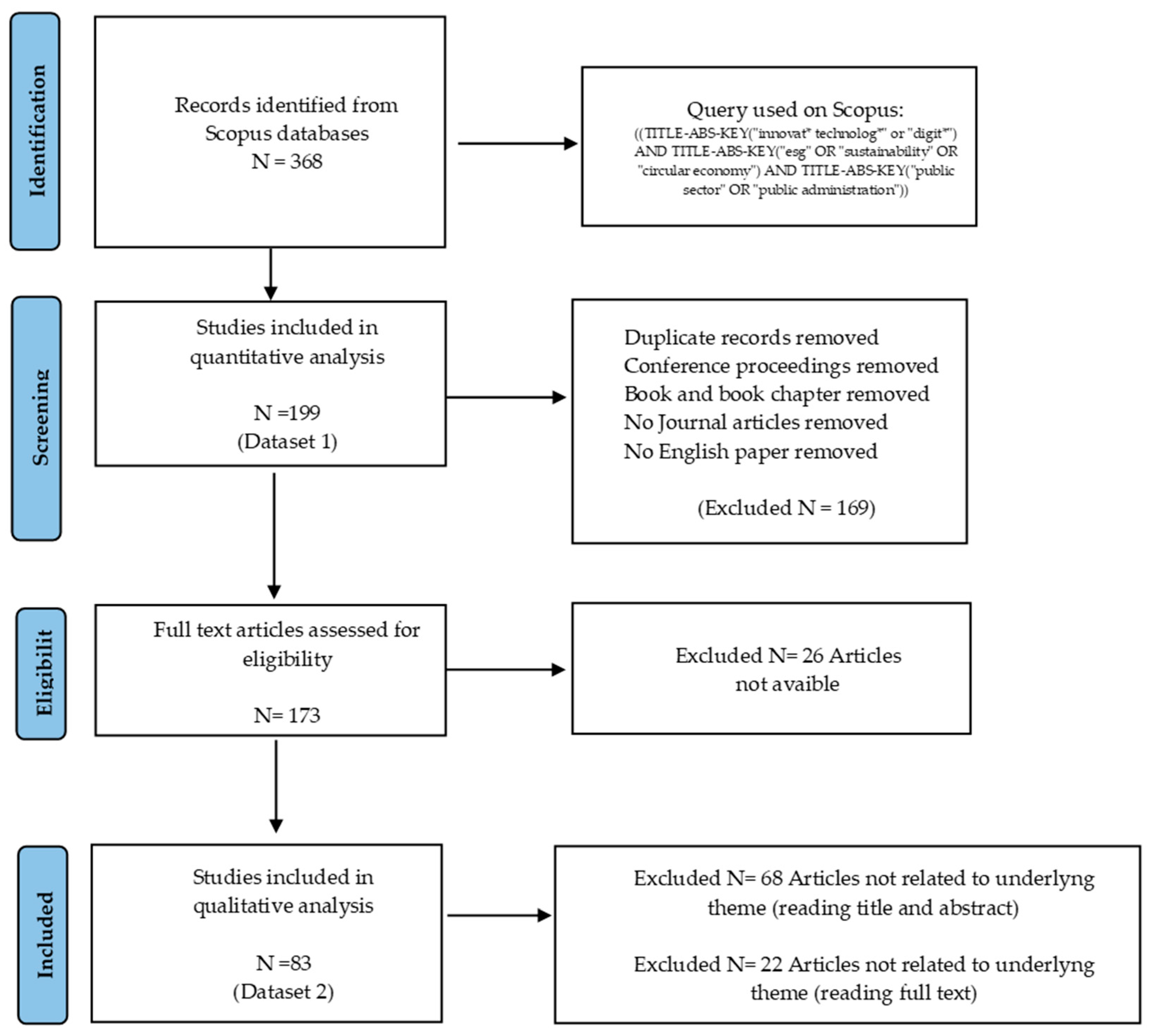
The literature review presented in this study is the result of a rigorous and structured analysis process. Specifically, the review followed the PRISMA framework (
Figure 1) to ensure transparency and replicability in the identification, screening, and selection of studies (
Page et al., 2021). The review was conducted in September 2025 and covers scientific publications published between 2000 and 2025, reflecting the emergence and consolidation of debates on digital transformation and sustainability in public administration (PA).
The bibliographic dataset was constructed using the Scopus database, selected for its broad coverage of international peer-reviewed journals in the fields of public management, information systems, innovation, and sustainability. The search strategy was designed to capture the intersection between technological innovation, sustainability, and the public sector. The query was applied to the TITLE-ABS-KEY fields and combined three conceptual domains using Boolean operators.
Specifically, the search string included: (i) technological innovation and digitalization (e.g., innovat technolog*, digit*), (ii) sustainability-related concepts (e.g., ESG, sustainability, circular economy) and (iii) the public sector (e.g., public sector, public administration).
The initial query returned 368 documents. The first screening phase was conducted to refine the dataset: duplicate records were removed, and only journal articles and review papers were retained, while conference proceedings and book chapters were excluded. Only English-language publications were included to ensure linguistic consistency and comparability of results. At the end of this first filtering phase, 199 scientific articles were selected.
This first dataset (dataset 1, n = 199) was used exclusively for the quantitative phases of the analysis, namely the descriptive analysis and the bibliometric network analysis.
To complete the review, an additional screening phase was performed. Specifically, 26 articles were excluded due to lack of full-text, 68 articles were removed after title and abstract screening because they did not align with the thematic scope of the study, and 22 articles were excluded after full-paper assessment for misalignment with the research objectives.
Following this multi-stage selection process, the final dataset used for the last phase of qualitative analysis consisted of 83 scientific articles (dataset 2, n = 83), which constitute the empirical basis for the systematic content analysis and the integrative interpretation presented in this study.
Table 1 provides an overview of the datasets and analytical purposes.
3.2. Design
The analysis was structured into three main phases, each aimed at addressing a different level of depth and interpretation of the phenomenon: (i) descriptive analysis, (ii) network analysis and (iii) systematic content analysis.
3.2.1. Descriptive Analysis
The first phase consisted of a descriptive analysis of dataset 1 (199 articles), aimed at identifying temporal trends, citations trends and the predominant methodological approach (qualitative, quantitative, mixed, or conceptual).
This phase made it possible to outline the evolutionary dynamics of the research field, highlighting how the debate on digital innovation in PA has progressively intertwined with themes of sustainability and public value.
3.2.2. Network Analysis
The second phase involved a bibliometric network analysis involving the sample of 199 papers (dataset 1), conducted using VOSviewer software (version 1.6.20). Through the co-occurrence analysis of keywords, it was possible to identify the main thematic clusters structuring the research domain. The analysis was complemented by an overlay visualization, which allowed the temporal evolution of keywords to be observed.
This phase enabled the identification of evolutionary trajectories and interdisciplinary connections within the field.
3.2.3. Systematic Content Analysis
The third phase focused on dataset 2 (83 articles) aimed to explore in depth the conceptual and practical nature of the relationships between technological innovation, sustainability, and public governance. The analysis followed the guidelines proposed by
Tranfield et al. (
2003). Each articles were examined individually and coded within an interpretive Excel matrix, designed to organize qualitative insights in a coherent and comparable manner.
The coding process was developed along four main analytical dimensions, selected on the basis of the results of the bibliometric phase and the theoretical framework:
- (i)
public sector domain, including major policy and service areas (governance and policy-making, healthcare, education, smart cities, environment, culture);
- (ii)
actors involved, comprising public administrations, universities and research centers, firms, citizens, digital platforms, media, and the environment;
- (iii)
technological innovation, classified in terms of type and function (enabling, infrastructural, socio-technical, or systemic), to identify the different configurations of digital transformation within PA;
- (iv)
sustainability, examined across its five core dimensions (environmental, economic, social, institutional, and digital) to assess the degree of integration between technologies and sustainable development goals.
The analysis made it possible to identify recurring patterns, sectoral differences, and synergies among actors, highlighting how digital innovation and sustainability are co-constructed through processes of co-creation and collaborative governance.
This multilevel and integrated approach enables a systemic understanding of how digitalization and sustainability co-evolve within PA, providing both an empirical and theoretical foundation for the development of the emerging paradigm of sustainable digital governance.
In this sense, the methodology does not merely describe the field but offers an interpretive lens capable of explaining the ongoing institutional transformation and guiding future interdisciplinary research agendas.
4. Results
4.1. Results of the Descriptive Analysis
4.1.1. Publication Trend
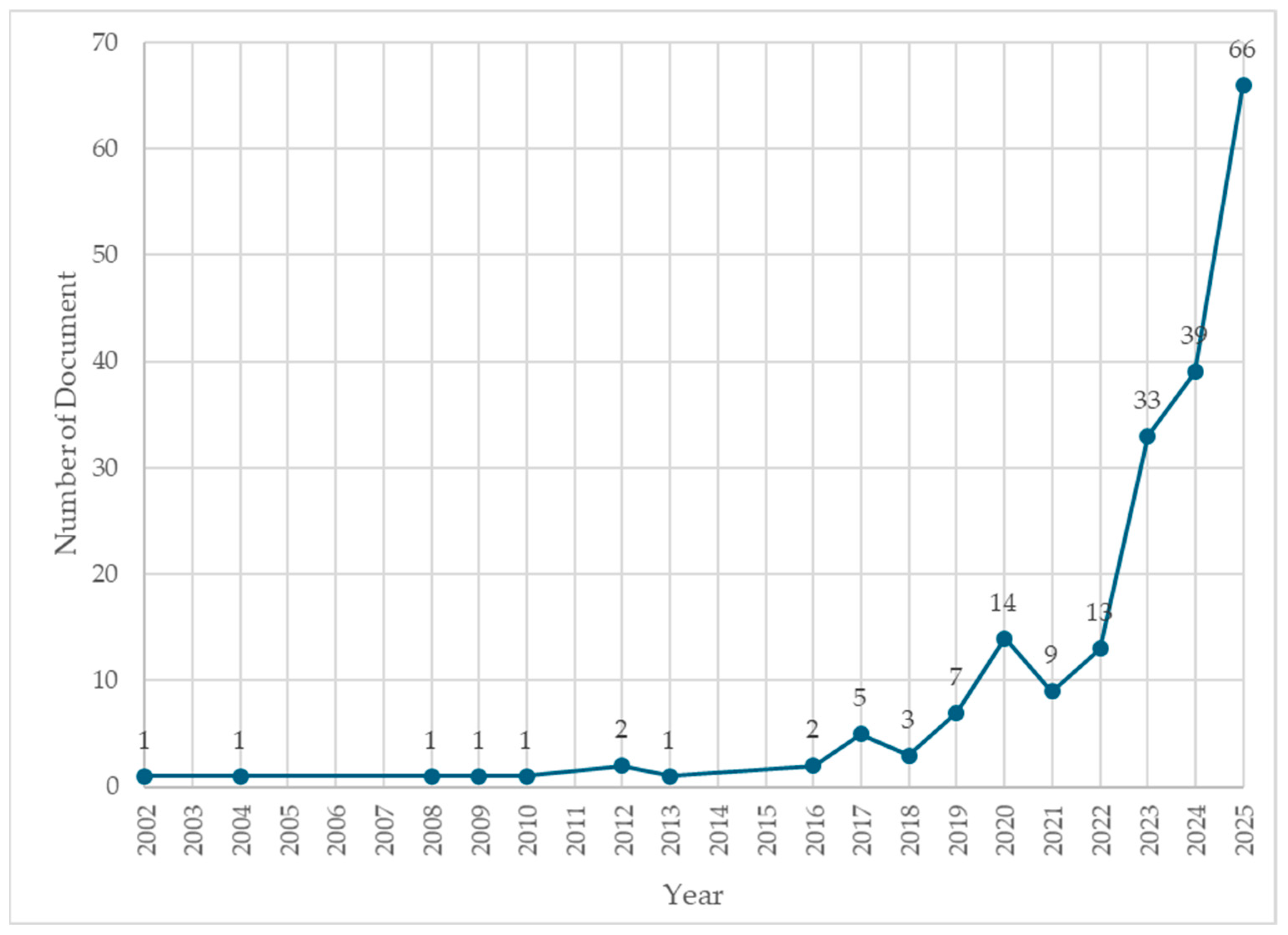
The temporal analysis of publications highlights a significant growth in scientific interest at the intersection of technological innovation, sustainability, and public administration. As shown in
Figure 2, the number of publications remains limited until 2015, then gradually increases up to 2020, and subsequently experiences a marked acceleration, exceeding sixty publications in 2025.
This trend reflects a structural transformation in the academic debate, in parallel with evolving practices of public governance and international agendas, such as government digitalization and the implementation of the SDGs.
In the initial period, contributions focus on pioneering topics such as e-government and the automation of administrative processes, aimed at improving the efficiency and transparency of PA. Although limited in number, these studies represent the foundational phase of the field, grounded in a technical–instrumental view of digitalization.
Starting from 2016, in parallel with the adoption of the SDGs and the expansion of digital platforms for urban and territorial governance, a new strand of research emerges that integrates social and environmental dimensions.
After 2020, the number of publications increases rapidly, marking the transition to a phase of scientific maturity. The COVID-19 pandemic acts as a catalyst for the digitalization of the public sector and for the rethinking of sustainability policies.
In the most recent period (2023–2025), the literature displays a clear maturation and interdisciplinary diversification: in addition to classical themes such as open data and smart cities, new streams emerge related to artificial intelligence, blockchain, digital twins, and digital leadership. Contributions such as those by
Gariba et al. (
2024) and
Sahamies and Welinder (
2025) confirm that digitalization is not neutral but creates value only when embedded in sustainability-oriented strategies.
This trajectory reflects a paradigm shift: technology is no longer conceived as a purely technical means but as a socio-technical dimension of governance that reshapes relationships, responsibilities, and decision-making processes within PA. This shift marks the emergence of the paradigm of sustainable digital governance, in which technology becomes a lever for the creation of public value.
4.1.2. Most Significant Publication and Key Scientific Contributions
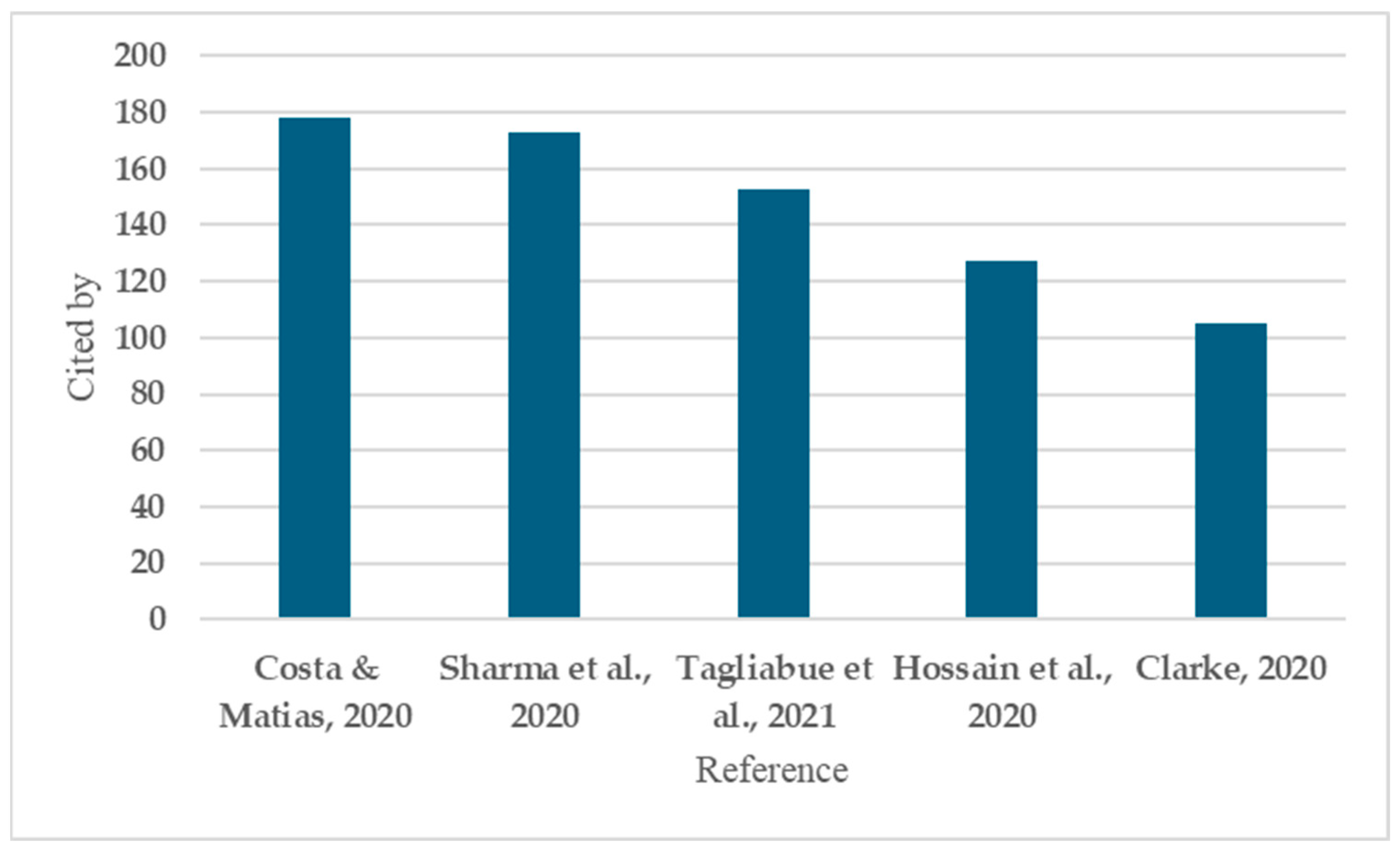
The analysis of articles with more than 100 citations provides a qualitative and interpretative overview of the intellectual structure of the research field (
Figure 3). These contributions, published mainly between 2012 and 2024, represent the most influential conceptual nodes in the debate on PA, technological innovation, and sustainability. They delineate the key theoretical paradigms, enabling technologies, and impact dimensions that have shaped recent literature.
The most influential contribution,
Costa and Matias (
2020) (178 citations), integrates the principles of the Quintuple Helix to describe the co-evolution among public institutions, firms, universities, civil society, and the environment. This work introduces the concept of green governance, later taken up by
Emerson et al. (
2012) and
Adner (
2017), laying the foundations for the paradigm of ecosystemic governance.
Sharma et al. (
2020), with 173 citations, offers a systematic review of the application of AI in public governance. The main finding concerns the fragmentation of the field: AI is widely studied in security, healthcare, and education, yet rarely connected to impact assessments or sustainability-oriented ethical principles. The paper proposes an organizational framework to explore how AI can support more efficient and transparent governance, while emphasizing the need for regulation, accountability, and digital skills within PA. This contribution has significantly influenced the debate on AI governance and data ethics, now central to sustainable digital transformation agendas.
Other key contributions, such as those by
Tagliabue et al. (
2021) and
Hoosain et al. (
2020), extend the focus toward enabling technologies for sustainability, illustrating an evolution from a purely technical–engineering perspective to a broader systemic and sustainability-oriented approach.
In
Clarke (
2020), the organizational dimension of digital governance emerges clearly, with PA portrayed as an adaptive and learning platform.
The analysis of the most cited articles reveals three converging trends: (i) integration of paradigms: the most influential works link technological innovation and sustainability, moving beyond an instrumental view of digitalization; (ii) centrality of governance: whether dealing with AI, blockchain, or digital twins, the key factor remains the capacity of PA to design rules, platforms, and competencies that enable sustainable innovation; and (iii) systemic and ecosystemic approaches: studies by
Costa and Matias (
2020),
Clarke (
2020), and
Tagliabue et al. (
2021) show how PA increasingly act as hubs within digital ecosystems, integrating public and private actors.
Through this analysis, it becomes clear that the literature on the relationship between technological innovation and sustainability in PA has evolved toward an integrated model of sustainable digital governance, in which technological, environmental, and social dimensions mutually reinforce one another.
4.1.3. Methodological Approaches Adopted in the Literature
The analysis of the research methods used in the corpus of studies identifies six main categories, which represent the predominant logics and approaches in the literature on digital transformation, sustainability, and PA. The results reveal a highly hybrid and interdisciplinary field in which qualitative, quantitative, and mixed approaches coexist and increasingly intersect, often integrating digital tools and advanced decision-making models.
Qualitative and Case Study Approaches. This is the most represented methodological category. It includes studies employing case studies, comparative analyses, focus groups, interviews, and document analysis to explore in depth the processes of digital governance and sustainability. Works in this group (e.g.,
Kelley et al., 2020) adopt an interpretive paradigm aimed at understanding organizational dynamics, institutional behavior, and policy processes. Most qualitative studies rely on multiple case studies (
Yin, 2003;
Eisenhardt, 1989), combining primary and secondary data, often referring to European public programs (e.g.,
Prifti & Sinoimeri, 2025).
Quantitative and Econometric Studies. Quantitative studies focus on the statistical analysis of the relationships between digitalization, sustainability, and public performance. Common methods include panel regression models, structural equation modeling (SEM/PLS-SEM), logistic regression, and data envelopment analysis (DEA). Typical examples include
Thanh et al. (
2023) and
Gariba et al. (
2024). This category reflects a growing empirical maturity in the field, seeking to quantify the effects of innovation and digital transformation policies on economic, social, and environmental indicators. More recent articles (post-2020) also integrate data analytics and predictive models, consistent with the shift toward a data-driven PA.
Mixed-Methods and Comparative Frameworks. A significant portion of the literature adopts mixed approaches, combining qualitative and quantitative investigations to provide more systemic analyses. Common methodologies include survey and case study, content analysis and regression, or policy analysis and stakeholder mapping (
Schulz et al., 2020;
Pontones-Rosa et al., 2023). The logic of mixed methods addresses the need to integrate cognitive and behavioral dimensions into public innovation processes, offering insights into how technology shapes institutional and social capacity-building. These works draw on frameworks of collaborative governance, innovation ecosystems, and policy learning, highlighting the co-evolutionary nature of sustainability and digitalization.
Recent systematic reviews adopt bibliometric tools such as VOSviewer, Bibliometrix, and CitNetExplorer, alongside analysis methods such as PRISMA to identify trends, key authors, and theoretical gaps. These studies are crucial for consolidating the theoretical foundations of the domain and for defining new research agendas, especially concerning AI governance, digital ethics, and sustainability accountability.
Modeling, Simulation and Decision Support. An increasing number of studies in the dataset adopt quantitative, algorithmic, and decision-support techniques to address complex public governance challenges. Among these, Fuzzy DEMATEL (Decision Making Trial and Evaluation Laboratory) emerges as one of the most widely used methods, applied to analyze causal relationships among interdependent factors in sustainability-oriented and AI-driven public service transformation (
Yadav et al., 2023;
Muhammad et al., 2025). Another relevant technique is A’WOT (Analytic Hierarchy Process integrated with SWOT analysis), which combines structured multi-criteria prioritization with strategic diagnostics and is used to evaluate sustainable development projects in marginal areas (
Canesi & D’Alpaos, 2024). The dataset also highlights the adoption of advanced fuzzy MCDA (Multi-Criteria Decision Analysis) approaches to support technology evaluation and decision-making in circular public sector supply chains (
Evangelista et al., 2023).
Conceptual and Theoretical Paper. Finally, a smaller but theoretically significant share of the literature proposes conceptual frameworks or interpretive models aimed at redefining categories of digital governance and sustainability. Examples include
Abbas et al. (
2024),
von Lucke and Frank (
2025) and
Sharma et al. (
2020).
These contributions offer analytical schemes, taxonomies, and emerging theories focused on concepts such as digital sovereignty, twin transformation, data ethics, and sustainable public value. They represent an important epistemological pillar, as they guide future empirical research and support convergence across disciplines (public management, data science, sustainability studies). The methodological distribution suggests an evolution from an exploratory phase (2006–2015), dominated by qualitative and conceptual studies, toward an empirical–analytical phase (2016–2025), characterized by quantitative, data-driven, and integrated approaches. In particular, the use of bibliometric analyses and international comparative studies is increasing, indicating greater academic maturity; computational and hybrid methods are emerging, consistent with the digitalization of research itself; and a clear tendency toward methodological triangulation is taking shape, in line with the complex, multi-actor nature of sustainable public innovation.
4.2. Results of the Network Analysis
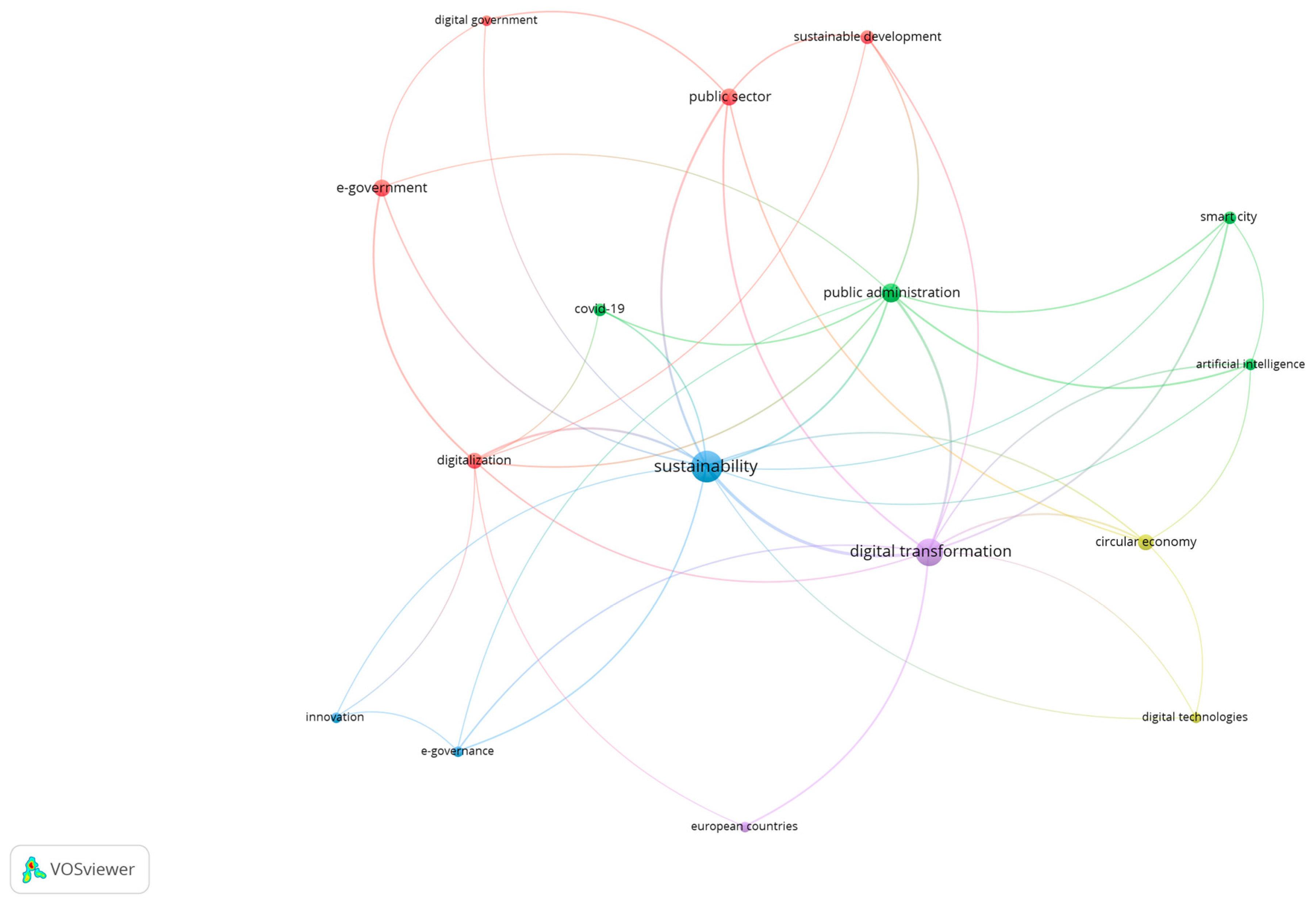
The keyword co-occurrence analysis, conducted using VOSviewer, identified five macro-clusters that represent the main research trajectories in the field of sustainable technological innovation in PA (
Table 2).
The resulting network (
Figure 4) displays a highly interconnected configuration, reflecting the interdisciplinary and systemic nature of the debate on technological innovation, sustainability, and public governance.
At the center of the map, two high-density nodes “sustainability” and “digital transformation” emerge as conceptual hubs that connect the various clusters, outlining a network structure in which digital transformation and sustainability act as the converging poles of contemporary scientific discourse.
The identified clusters thus highlight the dynamic interplay among the technological, organizational, social, and institutional dimensions of public-sector transformation, confirming the progressive convergence toward a paradigm of sustainable digital governance.
The red cluster,
Digital Government and Governance Innovation, constitutes the institutional axis of the network and represents the foundational dimension of the research domain. The main keywords (e-government, digital government, public sector, public administration, and sustainable development) outline the evolutionary trajectory of administrative modernization, from process digitalization to the construction of digital governance ecosystems. The studies within this area analyze the transformation of PA from a strategic and adaptive perspective (
Mergel, 2019;
Clarke, 2020), highlighting how digital technologies have become levers for efficiency, transparency, and institutional sustainability. This cluster is particularly relevant for public governance, as it positions PA as a privileged arena for experimenting with new decision-making architectures and models of digital accountability (
Janssen & Van Der Voort, 2016).
The green cluster, centered on smart city, artificial intelligence, and COVID-19, represents the technological and applicative dimension of public-sector transformation, associated with urban resilience and the management of smart services. In this cluster, PA emerges as a promoter and coordinator of data-driven policies, capable of integrating frontier technologies (such as IoT, AI, and big data) to address environmental, health, and social challenges (
Tagliabue et al., 2021). The frequent occurrence of the term COVID-19 highlights the impact of global crises as accelerators of public digitalization, showing how PA rapidly adapted its processes through technological innovations to ensure operational continuity and service sustainability. This cluster therefore illustrates the public sector’s capacity to act as a policy enabler in the governance of smart cities and systemic emergencies.
The purple cluster,
Digital Transformation and Circular Economy, links the digital and environmental dimensions, representing the core of the so-called twin transition. The keywords digital transformation, digital technologies, and circular economy reflect the convergence between ecological and digital transitions, positioning Public Administration as a driver of sustainable transformation (
Costa & Matias, 2020;
Hoosain et al., 2020). Research within this group focuses on the role of digital technologies in supporting circular economy models, green public procurement, and environmental impact reduction policies, in line with the European Green Deal. In this context, PA is not merely a technology user but a regulator and experimenter of new digital sustainability models, through the use of tools such as blockchain, digital twins, and interoperable platforms.
The blue cluster, centered on the terms sustainability, innovation, e-governance, and European countries, represents the comparative and politico-institutional dimension of the network. This cluster reflects the centrality of the European context as a reference laboratory for building integrated governance models in which public policies combine innovation, sustainability, and digitalization. The studies included here examine the diffusion of national and supranational strategies for implementing the twin transition and aligning with the Sustainable Development Goals. Across this group, European Public Administrations emerge as multilevel coordinating actors, promoters of coherence among sectoral policies, and experimenters of replicable models of sustainable innovation (
Zioło et al., 2022;
Rezende et al., 2024).
Finally, the yellow cluster, positioned as a bridge between the green and purple clusters, revolves around the governance dimension of sustainability and represents the thematic area connecting technological infrastructures with environmental policy implementation. Rather than focusing directly on circular economy models, this cluster emphasizes digital sustainability governance and environmental performance, highlighting the role of digital tools in monitoring, evaluating, and orienting public policies toward sustainable development. It highlights the importance of digital infrastructure, open data systems, and performance measurement frameworks to enable evidence-based decision-making and accountability in the transition to sustainability.
In this context, the public administration plays a strategic role as the orchestrator of cross-sector ecosystems in which companies, universities, and citizens collaborate on the design, implementation, and evaluation of technological solutions with a positive environmental impact.
Overall, the difference between the purple and yellow clusters shows the difference between real sustainability models (like the circular economy made possible by digital transformation) and the governance and measurement mechanisms that help put them into action in PA.
The network of the five clusters reveals a progressive hybridization between the agendas of digitalization and public-sector sustainability. PA emerges as the central and integrative node of these processes, capable of combining technological innovation, collaborative governance, and a public value orientation.
The interconnection between sustainability and digital transformation is therefore not merely a terminological coincidence, but the sign of a structural transformation within the public sector, in which technology becomes a cognitive and social infrastructure for building sustainable and resilient development models.
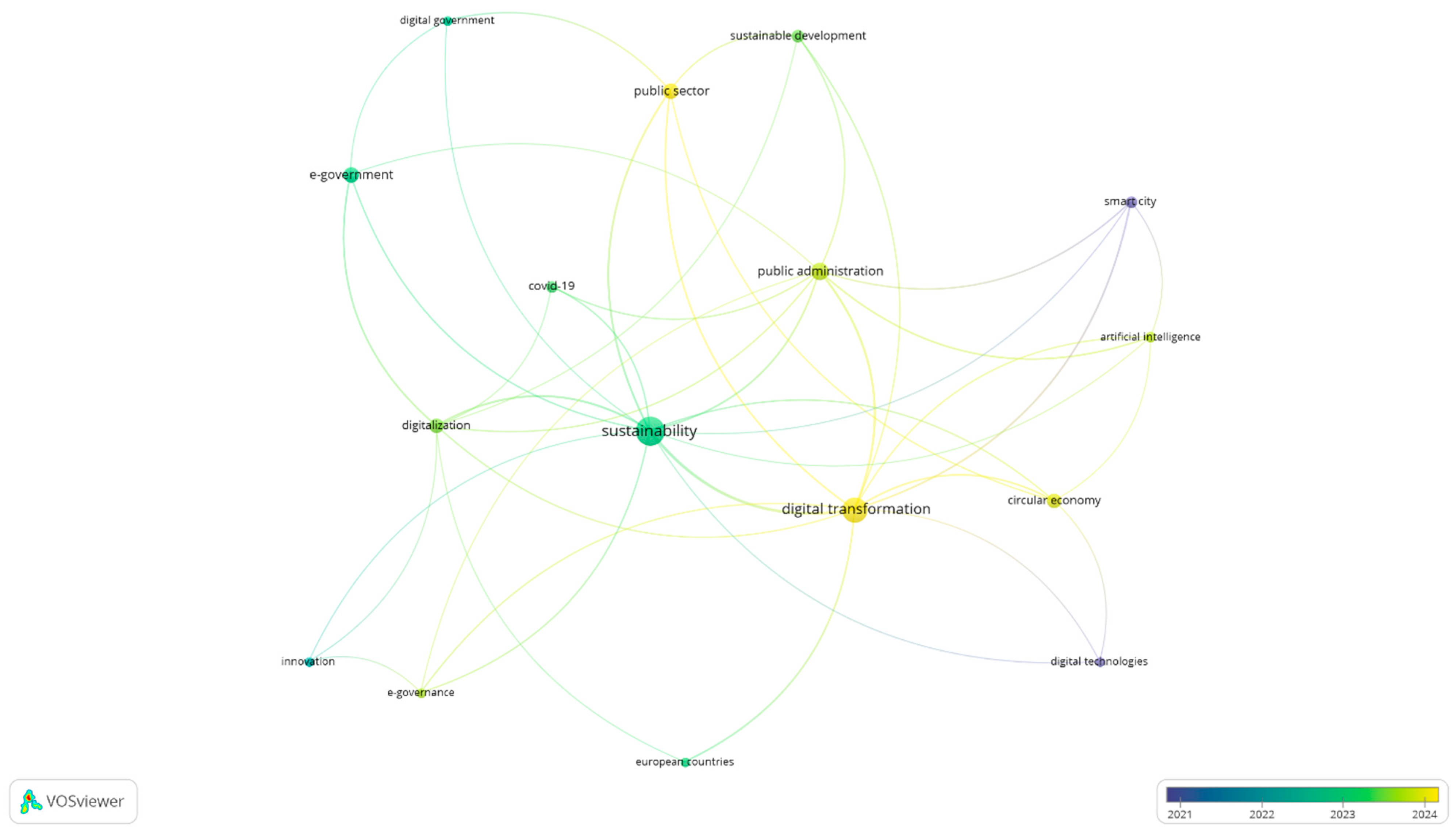
The overlay analysis of keywords (
Figure 5) makes it possible to capture the temporal dynamics of the field’s conceptual evolution, showing how scientific priorities have progressively shifted over time. As highlighted in the VOSviewer-generated map, the color gradient, from blue (earlier years) to yellow (more recent years), represents the average publication year of each keyword, offering a visual indication of the developmental trajectory of the literature.
In the earlier phases, the most recurrent terms such as “e-government,” “digital government,” “innovation,” and “governance” depict a body of literature still focused on the classical themes of administrative digitalization and managerial efficiency. During this period, scholars predominantly concentrate on process automation and the modernization of public services, in line with the tradition of New Public Management and early e-government policies. These studies are mainly descriptive and normative, aiming to assess the impact of digital technologies on administrative efficiency and service delivery.
As the field approaches 2020, the map shows a gradual shift toward keywords associated with sustainability (such as sustainable development, public sector and public administration) which become central nodes in the network. This transition reflects the alignment of academic research with international sustainability agendas, particularly the United Nations Sustainable Development Goals (SDGs) and the European Green Deal. In this phase, digitalization is increasingly reinterpreted as an enabling factor for institutional and territorial sustainability, giving rise to a new conceptual lexicon grounded in the integration of digital transformation and sustainable governance.
Finally, in the most recent part of the network, keywords associated with frontier technologies and the twin transition emerge, such as “artificial intelligence,” “circular economy,” “digital transformation,” “digital technologies,” and “smart city.” These terms represent the most advanced stage of the debate, in which digitalization is no longer examined merely as a technical or organizational phenomenon but as a systemic socio-technical process capable of connecting environmental sustainability, institutional innovation, and social inclusion.
In particular, the growing frequency of keywords such as “AI” and “circular economy” demonstrates the convergence between data-driven technologies and sustainability objectives, marking the consolidation of the paradigm of digital sustainable governance.
The map shows that terms such as “sustainability” and “digital transformation” occupy central positions within the network, acting as true conceptual bridges between different thematic clusters. This intermediate position indicates that sustainability now represents the key bridging concept linking digital transformation with the applicative domains of PA, from urban planning to energy policies, from healthcare to smart cities.
The overlay visualization highlights a clear evolutionary trajectory within the observed period, moving from a focus on digitalization and governance efficiency toward an integrated understanding of the twin transition, characterized by the growing relevance of AI governance, circular economy, smart city solutions, and digital sustainability.
4.3. Results of the Systematic Content Analysis
4.3.1. Public Sector
The analysis of the literature shows that the digital and sustainable transformation of the public sector spans a wide variety of domains, reflecting the systemic and multidimensional nature of innovation in public governance.
The distribution of contributions indicates that innovation is no longer concentrated within specific technical or administrative areas but permeates the entire ecosystem of public services, involving policy functions, local governments, educational institutions, healthcare systems, and the energy and cultural sectors. In this perspective, digitalization and sustainability act as transversal levers for the creation of public value, positioning PA as an integrated system of innovation. From the review of publications, eight main areas of application emerge.
The domain of public governance and policymaking represents the most theoretically consolidated area of debate. Here, digital transformation is interpreted as a tool for strengthening decision-making capacity, improving administrative efficiency, and promoting transparency.
This approach increasingly extends to local administrations, which are seen as authentic laboratories for public innovation. In these contexts, digitalization goes beyond service delivery and fosters co-design and collaboration among public bodies, firms, and citizens, as demonstrated by the experiences of digital hubs and territorial innovation platforms (
Ansell & Torfing, 2021).
However, structural barriers persist (such as institutional fragmentation and a lack of digital skills) highlighting the need for a strategic rethinking of local governance based on integration and participation.
The
smart city domain emerges as one of the most dynamic and interdisciplinary areas, marking the intersection of technological innovation, sustainability, and urban management. Studies on smart mobility, data-driven urban planning, and digital twins show how smart cities are becoming experimental platforms for more sustainable, inclusive, and collaborative governance models (
Tagliabue et al., 2021;
Schulz et al., 2020). In this perspective, the technological and social dimensions are intertwined: the quality of urban governance depends not only on infrastructural assets but also on the ability of institutions to engage citizens and stakeholders in policy co-creation. The main challenge remains translating digital innovation into tangible public value through the measurement of environmental and social impacts of urban policies.
Environmental sustainability represents another priority domain. Studies on green public procurement, circular economy, and energy efficiency (
Costa & Matias, 2020;
Mir & Bhat, 2022) show how digitalization supports the ecological transition by enabling systems for traceability, monitoring, and environmental reporting based on big data and artificial intelligence. Public policies are increasingly oriented toward data-driven green governance, where technology becomes an instrument of institutional accountability and transparency. This logic is also evident in the energy sector, where digital platforms and predictive analytics systems are used to optimize consumption and reduce emissions, strengthening the ability of public administrations to act as promoters of the green transition.
The
healthcare sector represents an area in which digital transformation acquires a distinctly socio-technical character. Experiences with e-health, telemedicine, and digital health innovation document the impact of technologies on service quality, accessibility, and sustainability, as well as the challenges of integrating digital tools in contexts with high ethical and organizational sensitivity (
Buccoliero et al., 2008). The COVID-19 pandemic accelerated these processes, transforming public healthcare into a collaborative innovation ecosystem that brings together administrations, technology companies, and citizens within public–private partnerships and open innovation logics (
Ubaid et al., 2020;
Agasisti et al., 2020;
Shao et al., 2023).
The
education and
higher education system also occupies a strategic position within the landscape of public innovation. Universities, in particular, emerge as key actors of digital accountability through the adoption of reporting, monitoring, and sustainability assessment systems (
Gallego-Arrufat et al., 2023;
Bortoló et al., 2023). They act as knowledge catalysts and intermediaries between research, education, and policy, contributing to the diffusion of responsible and sustainable innovation practices.
Other sectors, such as
agriculture, food systems, and
culture, illustrate how digitalization can generate direct impacts on social cohesion and territorial development. In agriculture, digital governance enables smart farming models, supply chain traceability, and sustainable resource management (
Huy & Phuc, 2023). In the cultural sector, digitalization promotes accessibility, inclusion, and participation through digital engagement tools and remote cultural experiences.
The distribution of analyzed sectors confirms that the digital and sustainable transformation of PA does not follow a linear or homogeneous trajectory but manifests as a mosaic of interconnected experiments that reflect the diversity of institutional and territorial contexts.
The convergence between digitalization and sustainability is transversal to all domains, but its effectiveness depends on the ability to create synergies across governmental levels and among heterogeneous actors, overcoming fragmentation and decision-making asymmetries.
4.3.2. Actors
The literature analysis shows that technological and sustainable innovation in PA on develops within a complex ecosystem of actors, where the creation of public value stems from the dynamic interaction among institutions, firms, citizens, universities, and other stakeholders operating across multiple territorial and decision-making levels.
The emerging approach is that of collaborative governance, in which public value is generated through the dynamic interplay between administrations, businesses, universities, citizens, and digital media (
Emerson et al., 2012;
Bryson et al., 2015). PA act as orchestrators of transformation, assuming a dual role: on the one hand, they regulate and steer innovation policies; on the other, they become operational protagonists themselves, developing digital capabilities and institutional learning models (
Clarke, 2020).
Universities and research centers play a cognitive and enabling role, providing scientific knowledge, methodological validation, and support in designing sustainable digital solutions.
Firms, particularly technology companies, emerge as co-innovators, collaborating with PA in the creation of digital platforms, sustainable business models, and enabling infrastructures (
Costa & Matias, 2020).
Alongside institutional actors, civil society and citizens emerge as co-producers of innovation and public value, through processes of co-creation, citizen engagement, and digital participation that enhance trust, transparency, and democratic legitimacy (
Bryson et al., 2015;
Mergel, 2016). The inclusion of these actors transforms governance from a vertical structure to a networked one, shifting the center of gravity of public decision-making toward collaborative and adaptive models.
In parallel, the environment and digital media are increasingly recognized as non-traditional actors, capable of indirectly influencing decision-making dynamics through data, algorithms, and public narratives (
Latour, 2005;
Mergel et al., 2019).
Overall, the literature portrays a hybrid and adaptive governance ecosystem, in which public value emerges from the interaction among heterogeneous actors united by shared goals of sustainability, innovation, and inclusion. Public administrations no longer act as exclusive centers of decision-making power, but rather as open platforms for coordination, learning, and co-creation.
However, this configuration still presents significant challenges, such as power asymmetries between public and private actors, unequal access to data, and the lack of shared metrics for assessing collaborative impact. Overcoming these limitations requires the development of institutional capacities, integrated evaluation tools, and digital policies oriented toward social sustainability.
The direction toward which research is converging is that of an ecosystemic and adaptive public governance, in which technology and sustainability act as co-evolving forces in the construction of shared public value.
4.3.3. Technological Innovation and Sustainable Innovation
The analysis of the literature reveals that technological and sustainable innovation in PA has progressively assumed a broad and multidimensional connotation, evolving from a technical–instrumental vision to a systemic and socio-institutional perspective.
Innovation is no longer conceived as the mere adoption of digital tools, but as a process of organizational, cognitive, and relational transformation, in which technology acts as a lever for the creation of public value and for the construction of more sustainable, transparent, and inclusive governance (
Mergel et al., 2019;
Bryson et al., 2015).
Starting from 2015, with the affirmation of the digital transformation paradigm, the literature began to explore the impact of emerging technologies (AI, IoT, blockchain, big data, and digital twins) on decision-making models and public management practices. This shift gave rise to an increasingly interdisciplinary debate integrating public administration studies, management engineering, and sustainability research (
Sharma et al., 2020;
Tagliabue et al., 2021).
The analysis of the contributions included in the sample highlights a remarkable variety of technological innovation types adopted and studied in the public sector, which can be grouped into four macro-categories: (1) Enabling digital technologies (
Yoo et al., 2010;
Wirtz et al., 2019), (2) Infrastructural and process innovations (
Cordella & Tempini, 2015), (3) Socio-technical innovations oriented toward public value (
Mergel, 2016;
Bryson et al., 2014;
Osborne et al., 2016), and (4) Systemic and cross-sectoral innovations (
Adner, 2017). This classification reflects the progressive evolution of digitalization in PA.
Enabling digital innovations constitute the technological foundation of public-sector transformation, supporting predictive capabilities, process automation, and data-driven decision-making. Technologies such as artificial intelligence, blockchain, the Internet of Things, and digital twins are frequently associated with the development of data-driven governance systems and increased administrative efficiency (
Sharma et al., 2020;
Clarke, 2020).
Studies such as that by
Sharma et al. (
2020) show that AI is becoming a crucial component of public decision-making processes, enhancing transparency and responsiveness while raising issues related to ethics, algorithmic bias, and accountability.
In parallel, blockchain is examined as a tool for trust and traceability in public procurement and sustainable contracting (
Schulz et al., 2020), whereas digital twins represent the frontier of integration between data, infrastructures, and simulation, enabling real-time management of buildings, networks, and cities from a sustainability perspective (
Tagliabue et al., 2021).
Infrastructural and process innovations concern the organizational dimension of digitalization, i.e., how technology restructures processes, roles and skills within the administrative system. Studies such as those by
Clarke (
2020) and
Zioło et al. (
2022) analyze the creation of digital units and platforms as tools for inter-institutional coordination and service standardization.
The COVID-19 pandemic accelerated this transformation, prompting many administrations to develop integrated infrastructures for the remote delivery of public services, as shown in
Aristovnik et al. (
2021).
Although less visible than technological innovation, infrastructural innovation has a profound impact on the ability of PA to learn, cooperate, and innovate over time, representing one of the enabling conditions for effective digital and sustainability policies (
Ansell & Torfing, 2021).
A third category concerns socio-technical innovations, which shift the focus from technology as an end to innovation as a relational process. In this line of research, digitalization is interpreted as a tool for fostering participation, trust, and co-creation between citizens and institutions.
Studies such as that by
Edelmann and Virkar (
2023) posit that citizens are no longer passive recipients but co-producers of public value (
Bryson et al., 2015;
Mergel, 2016). This perspective aligns with the theory of collaborative governance (
Emerson et al., 2012), according to which technology acts as a mediator between institutional and social dimensions, generating innovation through collective learning processes.
Finally,
systemic and cross-sectoral innovations represent the most advanced and strategic level of technological evolution in PA. This category includes transformations that link digitalization to broader objectives of economic, environmental, and social sustainability, characterizing the so-called twin transition (
Marzi & Balzano, 2025).
Studies such as those by
Costa and Matias (
2020) and
Hoosain et al. (
2020) show how the integration of Industry 4.0 technologies with ESG principles fosters the emergence of sustainability-oriented public innovation ecosystems. In this perspective, technological innovation becomes a political and systemic phenomenon involving public, private, and civic actors in the co-construction of shared public value.
The analyzed literature suggests that technological innovation in PA can no longer be reduced to a technical or managerial issue, but constitutes a co-evolutionary process that transforms the very structure of public governance. Digital administrations are not merely users of technologies but producers of new cognitive, cultural, and institutional models capable of integrating sustainability, ethics, and resilience into their processes.
True innovation, therefore, does not lie solely in the adoption of digital tools, but in the ability to build a public ecosystem in which technology becomes a common good—a collective resource for efficiency, transparency, and long-term sustainability.
4.3.4. Sustainability
The analysis of the literature shows that the concept of sustainability in PA has assumed an increasingly strategic role in recent years, evolving from a predominantly environmental perspective to a systemic vision that integrates the economic, social, and digital dimensions of public value.
Since the launch of the United Nations’ 2030 Agenda and the European Green Deal, sustainability is no longer interpreted as a regulatory constraint but as a guiding principle for the design and implementation of public policies.
In this context, digitalization acts as a catalyst for sustainable transition, enabling the so-called
twin transition, namely the convergence between digital transformation and environmental sustainability (
Marzi & Balzano, 2025).
PAs traditionally oriented toward stability and control are now required to rethink their mission in terms of sustainability, redefining priorities, processes, and service delivery models. The literature highlights how the integration of digital technologies and sustainable practices enables the generation of multidimensional forms of public value capable of combining efficiency, inclusion, and resilience (
Bryson et al., 2015;
Mergel et al., 2019). Digital sustainability, in particular, represents a new operational paradigm aimed at reducing the environmental impact of ICT infrastructures while promoting transparency, traceability, and accountability in decision-making (
Papenfuß & Wagner-Krechlok, 2025)
Within the analyzed corpus, sustainability is frequently examined through the lens of the circular economy and green policies, as shown in studies on Green Public Procurement and Sustainable Digital Change (
Ortega Carrasco et al., 2025). These contributions emphasize the active role of public administrations in promoting sustainable consumption and production models not only through regulation but also via responsible public procurement, efficient resource management, and the digitalization of monitoring processes.
Digitalization, in this sense, not only supports the collection and analysis of environmental data but also facilitates the adoption of predictive and assessment tools based on life cycle assessment and ESG indicators, strengthening institutional capacity to measure and communicate the impact of public policies (
Costa & Matias, 2020;
Hoosain et al., 2020).
Another central aspect concerns the social dimension of sustainability. Recent studies underscore the importance of ensuring equity, inclusion, and universal access to digital services, addressing challenges such as the digital divide, digital poverty, and territorial inequalities (
Clarke, 2020). From this perspective, technology becomes a tool for civic empowerment and participation, supporting the co-creation of public value and strengthening trust between citizens and institutions.
Examples such as citizen-centric governance (
Pislaru et al., 2024) and the impact of sustainability on co-creation of digital public services (
Edelmann & Virkar, 2023) illustrate that sustainability cannot be separated from active citizen involvement and transparent decision-making processes.
Furthermore, the recent literature highlights growing interest in the sustainability of public information systems and digital infrastructures, understood not only in environmental terms but also in ethical and long-term perspectives. Studies such as by
Papenfuß & Wagner-Krechlok (
2025) and
Tagliabue et al. (
2021) propose models of sustainable digital governance in which technological infrastructure becomes a strategic asset for urban planning, energy management, and emission reduction. In this respect, the adoption of data intelligence and AI governance tools contributes to optimizing the use of public resources and improving the predictive capacity of policies, thereby reinforcing the operational and decision-making sustainability of public administrations (
Sharma et al., 2020).
Overall, sustainability in PA emerges as a hybrid and dynamic concept that spans the entire spectrum of public innovation: from environmental policies to digital service design, from multi-level governance to civic engagement strategies. It is no longer a separate objective but a generative principle of value capable of steering institutional and technological transformation toward equitable, resilient, and inclusive development models.
The future challenge will be to consolidate integrated metrics of public value sustainability that jointly measure the economic, social, and environmental impacts of digital policies, thus providing an empirical foundation for building a renewed pact of trust between the state and its citizens.
5. Discussion
The overall analysis of the scientific literature reveals a profound evolution in the debate on technological innovation, sustainability, and public governance, outlining a maturation process that mirrors the structural transformation of contemporary Public Administration (PA). The trajectory moves from digitalization as a tool for operational efficiency to a more complex and integrated vision in which technology becomes an enabling factor for sustainability and public value creation.
The results emerging from the different analytical dimensions make it possible to reconstruct a coherent picture of the public twin transition, namely the convergence between digital transformation and systemic sustainability, which today constitutes one of the most relevant paradigms in administrative reform and policy design (
Marzi & Balzano, 2025).
From a temporal perspective, the literature shows a clear shift from a pioneering phase, where digitalization was conceived as a technical–administrative instrument (2006–2015) to a consolidation phase (2016–2020) marked by the integration of Sustainable Development Goals and growing attention to urban and territorial governance, up to a maturity phase (post-2020), in which digital innovation is framed as an essential component of institutional, economic, and social sustainability. The COVID-19 pandemic acted as an accelerator of this process, highlighting the need for resilient public systems capable of combining operational continuity, accountability, and adaptive capacity (
Mergel et al., 2019;
Clarke, 2020). The exponential growth of scientific production confirms the emergence of a new paradigm of sustainable digital governance, grounded in the strategic use of technology to create shared public value.
The most relevant contributions reinforce this evolutionary trajectory, identifying three fundamental directions: conceptual integration between technology and sustainability, the centrality of governance as an enabling factor, and the adoption of a systemic perspective. Papers by
Costa and Matias (
2020),
Clarke (
2020), and
Tagliabue et al. (
2021) represent turning points in defining the PA as an orchestrator of hybrid ecosystems in which public, private, academic, and civic actors co-evolve through open and collaborative innovation (
Emerson et al., 2012;
Bryson et al., 2015).
Within this perspective, digitalization is no longer a technical end in itself but a relational and cognitive process that reshapes the ways institutions produce and distribute value, while simultaneously ensuring transparency, inclusion, and sustainability. Technology thus assumes a dual function: an operational infrastructure and a social device capable of supporting data-driven decision-making and fostering trust, participation, and accountability (
Sharma et al., 2020).
The keyword co-occurrence analysis identified five conceptual clusters structuring the research field: (i) Digital Transformation and Governance Innovation (red cluster), (ii) Smart Cities and Technological Ecosystems (green cluster), (iii) Digital Transformation and Circular Economy (purple cluster), (iv) Sustainability, Innovation and Comparative E-Governance (blue cluster), and (v) Digital Sustainability Governance and Environmental Performance (yellow cluster).
Although analytically distinct, these clusters are highly interconnected, delineating a convergent and interdisciplinary domain. The red cluster represents the institutional and organizational dimension of digital transformation, encompassing administrative modernization, digital accountability, and adaptive governance. The green cluster reflects the technological and applicative dimension, showing how IoT, AI, big data, and crisis-driven innovations (e.g., during COVID-19) support urban resilience and smart service delivery (
Tagliabue et al., 2021). The purple cluster embodies the core of the twin transition, linking digital technologies with circular economy strategies, green procurement, and environmental performance monitoring (
Costa & Matias, 2020;
Hoosain et al., 2020). The blue cluster introduces a politico-institutional and comparative perspective, positioning Europe as a reference laboratory for integrated digital-sustainable governance aligned with SDGs and the European Green Deal. Finally, the yellow cluster connects digital infrastructures, open data, and cross-sectoral ecosystems to the design of sustainability-oriented solutions, emphasizing co-production and evidence-based policymaking.
Together, these clusters confirm the progressive hybridization between digital innovation and sustainability, where technology emerges as an integrative medium connecting administrative efficiency, social inclusion, and ecological transition
From a methodological perspective, the corpus reveals a parallel evolution on the scientific level. The prevalence of qualitative studies and case-based approaches during the early stages gradually shifts toward quantitative, econometric, and mixed-methods approaches that combine empirical rigor and systemic complexity. The growing number of bibliometric, simulation-based, and data-driven studies reflects the digitalization of research itself, while the increasing use of triangulated approaches shows a desire to capture the multi-actor and interdisciplinary nature of the phenomena under investigation (
Donthu et al., 2021). This suggests that scientific production is undergoing its own epistemological twin transition, in which theory, data, and digital tools converge toward integrated and dynamic analytical models.
At the application level, the literature covers a wide range of public administration sectors, from governance and policy-making to health, education, smart cities, culture and agriculture, demonstrating that digitalization and sustainability are no longer isolated fields, but cross-cutting levers of institutional transformation. Smart cities, in particular, represent the most advanced laboratory for this convergence, integrating technological infrastructure, civic participation and environmental objectives (
Komninos, 2019;
Schulz et al., 2020).
Similarly, the health and education sectors serve as arenas for co-creation and digital accountability, while the environmental and rural sectors highlight the potential of emerging technologies to support green policies and circular economy strategies. This sectoral diversification reveals that public sustainability is a systemic phenomenon that requires coordinated governance models and cross-sectoral assessment tools. Technological innovation emerges as a transversal and foundational element.
Enabling technologies such as AI, IoT, blockchain, and digital twins provide the infrastructural basis of public-sector transformation, while infrastructural and process innovations (e-government, integrated platforms, cloud services) redefine the organization and operational logic of the PA.
Socio-technical innovations introduce a relational dimension, where co-creation and digital inclusion become instruments of legitimacy and public value. Finally, systemic and cross-sectoral innovations embody the most mature synthesis of this evolution, placing the twin transition at the center of long-term strategic governance.
In this framework, technology acts as a unifying force connecting efficiency, transparency, and sustainability, reshaping the boundaries of public governance toward increasingly adaptive, collaborative, and value-oriented models.
The concept of sustainability unfolds across five main dimensions which intersect in the construction of a holistic model of public value. The environmental dimension translates into the promotion of green governance practices and the measurement of the ecological impact of policies (
Costa & Matias, 2020;
Mir & Bhat, 2022). The economic dimension concerns the efficient and transparent management of resources, enabled by data analytics and digital reporting. The social dimension emphasizes inclusion and civic participation, while the institutional dimension encompasses organizational resilience and PA learning capacity.
Finally, digital sustainability represents the integrated horizon in which all other dimensions converge sustainable digitalization, or the twin transition, is increasingly recognized as the necessary condition for generating long-term public value grounded in ethics, efficiency, and transparency (
Marzi & Balzano, 2025).
The actor analysis reinforces this systemic vision: the creation of sustainable public value depends on collaborative governance ecosystems where institutions, universities, firms, citizens, and even non-human actors (the environment and digital media) interact within complex networks (
Emerson et al., 2012;
Bryson et al., 2015).
PAs assume the role of orchestrators, coordinating resources and competencies; universities and research centers act as generators of knowledge and scientific legitimization; firms serve as technological partners and co-innovators; citizens participate as co-producers of value and drivers of trust; the environment and media contribute as sources of pressure and collective awareness.
However, critical issues persist, including power asymmetries, the digital divide, and the absence of shared metrics for assessing collaborative impact. These gaps represent the foundation for future research and policy efforts aimed at building more equitable, participatory, and sustainable governance.
Overall, the literature converges on a clear message: the digital and sustainable transformation of PA is not a technical process, but an institutional and cultural one that redefines the way public value is produced.
Digitalization, sustainability and collaboration are not parallel dimensions, but elements that co-evolve in a single system in which technology becomes a tool for collective learning, accountability and responsible innovation.
The twin transition is therefore not a contingent objective, but a structuring principle of contemporary governance, capable of guiding public administration towards more transparent, inclusive and resilient models.
6. Conclusions
The analysis conducted offers a detailed and multidimensional picture of the evolution of the relationship between technological innovation, sustainability, and public governance, providing a coherent representation of how the scientific literature has interpreted and accompanied the transformation of Public Administration (PA) over the past two decades.
The findings highlight the emergence of the paradigm of sustainable digital governance, understood as a socio-technical and collaborative process in which technology simultaneously acts as a lever for economic, environmental, and social sustainability, and as an instrument of accountability, transparency, and inclusion.
The trajectory reconstructed through bibliometric and qualitative analysis reveals a clear evolutionary path: from digitalization conceived as a means of administrative efficiency, the literature has progressively shifted toward the twin transition, where the digital and green dimensions converge into a unified public innovation strategy oriented toward shared value creation.
The five clusters identified (Digital Government and Governance Innovation, Smart Cities, AI-Driven Public Service, Digital Transformation and Circular Economy, Sustainability, Innovation and Comparative E-Governance and Digital Sustainability Governance and Environmental Performance) represent the core dimensions of this transformation, highlighting a growing interdependence between emerging technologies, systemic sustainability, and civic participation.
At the same time, the actor analysis shows that public value is generated by multi-actor collaborative networks involving administrations, universities, firms, citizens, and digital media, confirming the shift from a hierarchical logic to an ecosystem logic of governance.
From a theoretical standpoint, this study contributes to consolidating the concept of sustainable digital governance as an integrated paradigm of public innovation. In this perspective, technology is no longer interpreted as a mere operational infrastructure but as a cognitive and relational device enabling new models of institutional learning, multi-actor coordination, and value co-creation (
Emerson et al., 2012;
Bryson et al., 2015).
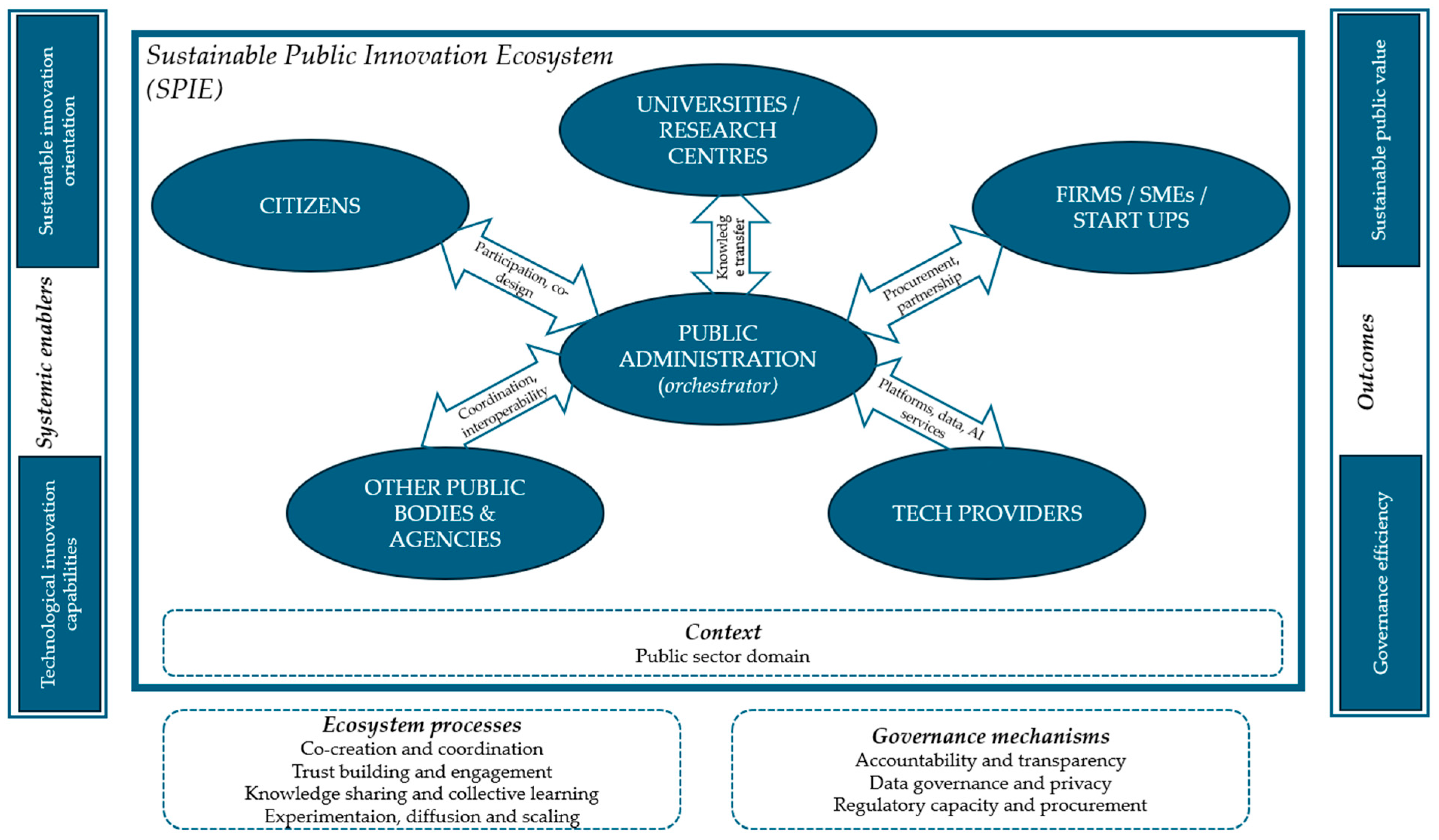
Building on the integrative reading of the bibliometric and content-analysis findings, we advance a conceptual framework that positions Public Administration as a Sustainable Public Innovation Ecosystem (SPIE). In SPIE, sustainability-oriented digital transformation is not explained by technology adoption per se, but by the interplay between (i) systemic enablers, (ii) governance mechanisms, and (iii) ecosystem configuration and processes. In line with the three interpretative lenses adopted in this study (i.e., technology as an enabling infrastructure, governance as a mediating dimension, and collaborative ecosystems as integrative mechanisms), SPIE explains how public value emerges through multi-actor co-creation under sustainability goals. Specifically, technological innovation, sustainable innovation, and sustainability orientation act as key systemic enablers that influence the ecosystem’s performance, particularly governance efficiency, through mediating mechanisms such as accountability, data governance, regulatory capacity, and institutional learning. This framework provides a structured basis for future empirical validation via comparative case studies and/or survey-based testing across public-sector domains.
The framework (
Figure 6) links two main systemic enablers (i.e., technological innovation and sustainable innovation) to governance efficiency and broader sustainable public value outcomes. The relationship is mediated by governance mechanisms (e.g., accountability, data governance, regulatory capacity, institutional learning) and activated through ecosystem processes (co-creation, coordination, trust-building, collective learning) within a multi-actor configuration (public institutions, firms, universities/research centers, citizens and other societal stakeholders). Contextual conditions (such as sectoral domain) shape the strength of these relationships.
In addition to tracing the evolution of this field of research, this analysis deepens the theory with respect to previous syntheses, explaining the mechanisms through which sustainability-oriented digital transformation is implemented in the public administration.
In particular, the results suggest that sustainability outcomes are not explained by the adoption of technology itself, but by (i) governance mechanisms (e.g., accountability, data governance, regulatory capacity, and institutional learning) that mediate the translation of digitization into public value, and (ii) ecosystem configurations in which the PA orchestrates multi-actor collaboration between public, private, academic, and civic actors. In this sense, the proposed lenses (technology-governance-ecosystems) offer a transferable analytical framework that can be tested in different contexts and settings to explain variations in sustainable digital governance pathways. The contribution thus aligns with theories of collaborative governance and open innovation (
Chesbrough, 2003;
Costa & Matias, 2020), proposing a synthesis between systemic approaches, sustainability, and digital transformation.
From an applied perspective, the results offer meaningful insights for policymakers and public managers: sustainable digital transformation requires not only infrastructural investments, but also the development of institutional capacity, digital leadership and a culture of innovation, which are necessary elements for integrating the economic, social and environmental dimensions of public value.
Despite the methodological rigor and richness of the findings, the study presents several limitations.
First, the selection of the corpus was restricted to publications indexed in Scopus, excluding contributions from other databases or from gray literature (policy papers, institutional reports, technical documents), which may broaden the empirical scope, particularly in extra-European contexts.
Second, the classification of clusters and analytical categories, although based on rigorous criteria, entails a degree of subjective interpretation, inherent in qualitative and bibliometric studies.
Finally, the research privileged macro- and meso-level analysis, only partially addressing micro-organizational processes and behavioral dynamics within administrations, which deserve specific empirical investigation.
These limitations open up promising avenues for future research.
A first development concerns the need to empirically analyze how the principles of sustainable digital governance are implemented in different institutional contexts, considering variables such as digital maturity, competences, leadership, and organizational culture. Longitudinal and multi-level studies may clarify learning mechanisms and the diffusion of sustainable innovation practices within PA.
A second direction concerns the role of hybrid actors (firms, universities, citizens, and digital platforms) in the creation of public innovation ecosystems, with particular attention to collaborative governance models and impact assessment systems.
A further line of inquiry could address the ethical and regulatory dimensions of digital sustainability, examining how technologies such as artificial intelligence, blockchain, and digital twins can ensure transparency, fairness, and accountability while avoiding new forms of exclusion or algorithmic control.
An emerging research challenge concerns the measurement of sustainable public value, still underdeveloped in terms of shared metrics and operational frameworks. The construction of integrated indicators that combine digital performance, environmental impacts, and social inclusion represents a priority for both public policy evaluation and the design of responsible innovation strategies (
Marzi & Balzano, 2025).
Finally, quantitative research aimed at validating the SPIE framework proposed in this study could make a significant contribution. The adoption of advanced network analysis techniques would make it possible to empirically measure the effects of the three identified enablers (technological innovation, sustainable innovation and sustainability) on the performance of public innovation ecosystems, particularly on governance efficiency. Such analyses would make it possible to assess their transferability to different institutional contexts and develop a predictive framework for the sustainability of public innovation.
In conclusion, the literature suggests that the future of PA will depend on its ability to integrate technology, sustainability, and governance into a model of open, adaptive, and public value-oriented innovation. Institutions capable of combining these dimensions will not only improve their efficiency but also become engines of sustainable public value, guiding society toward equitable, resilient, and digitally enabled development.
The challenge is to move from a reactive and sectoral approach to a systemic and proactive vision in which the twin transition becomes not only a European strategy but a structural principle for regenerating public governance and rebuilding collective trust.