Article

Moving Against Turnover Intentions Through Transactional Leadership, Organizational Climate, and Psychological Contract Fulfillment: Evidence from the Middle Eastern Hotel Industry


School of Business, Lebanese International University, Beirut 146404, Lebanon
*
Authors to whom correspondence should be addressed.
Adm. Sci. 2026, 16(2), 62; https://doi.org/10.3390/admsci16020062
Submission received: 1 December 2025 / Revised: 15 January 2026 / Accepted: 19 January 2026 / Published: 27 January 2026
(This article belongs to the Special Issue The Role of Leadership in Fostering Positive Employee Relationships)

Abstract

Turnover is a major concern for the hotel and hospitality industry on a global scale. This research focuses on several Middle Eastern five-star hotels in terms of transactional leadership and its relationship with employees’ turnover intentions. In addition, the mediating effect of organizational climate, along with the moderating influence of psychological contract fulfillment are examined. This research combines the premises of social exchange, organizational support, and psychological contract theories to support the development of hypotheses. A total of 350 employee data from five-star hotels in Saudi Arabia, Lebanon, Egypt, Jordan, and Bahrain was gathered using surveys using a convenience sampling method. The research used Partial Least Squares—Structural Equation Modeling (PLS-SEM) to analyze the hypotheses, which were supported by the results obtained. The importance of organizational climate and fulfilling psychological contracts is highlighted, which, under transactional leadership, can reduce turnover intentions. This is critical for the labor-intensive hotel sector with high turnover rates and random and unpredictable tasks. Transactional leadership is found to be a good fit for the Middle Eastern hotel sector through routinization and a structural approach. The current findings can be beneficial for scholars and practitioners.

1. Introduction

The hotel industry suffers from a consistent and costly challenge on a global scale that is, namely, employee turnover. Guest satisfaction and service quality/consistency are heavily reliant on the performance of frontline and other staff, as the hotel climate calls upon interactions with guests. High turnover rate is not beneficial for hotels as it increases recruitment and training needs while disrupting service continuity (A. N. Khan et al., 2021) and negatively influencing customer experience, which is detrimental to brand reputation (Chung et al., 2021; Xu et al., 2022). The literature shows that turnover intentions in the hospitality sector are driven by work and labor conditions, leadership approach, and perceptions of organizational structure and support, especially among developing regions (i.e., the Middle East) (Hassanein & Özgit, 2022; Hassanein et al., 2024). This global challenge is vivid in this sector due to intensity of competition, demanding workplace, and limitations for career development (Amankwaa et al., 2022; Gom et al., 2021). In this context, the role of leaders cannot be neglected as the style with which they approach can shape employees’ attitudes and decisions regarding the firm (i.e., retention) (Michael & Fotiadis, 2022; Sobaih et al., 2022). While other leadership styles (e.g., transformational and servant) have received extensive attention in the hospitality domain, transactional leadership remains underexplored. Despite the relevance of this style to service operations, clear and concise standards, rewards, and feedback are critical for day-to-day management.
Transactional leadership (TL) shows varying results in the literature, with both beneficial and detrimental effects in different contexts. Fairness, clear rewards, and predictable role descriptions and expectations are among the factors that lead to a higher engagement level from employees, which lowers their turnover intentions (Ahmad et al., 2023; Yan et al., 2021). This is while perception of overcontrolling, lack of support, and punitive approaches can yield negative results and increase the risk of turnover (Chen & Wu, 2017). Most studies examine Western and/or Asian contexts, which limits the functionality of TL, especially in the Middle Eastern five-star hotel context, where cultural norms, labor conditions, and human resource practices form the employees’ perception of the organization (Sobaih et al., 2022; Uzundemir et al., 2023). In the same vein, organizational climate plays a critical role in explaining leadership—turnover dynamics. Employees share a perception of policies, practices, and organizational functions, leading to outcomes such as job satisfaction, affective commitment, and reduced turnover intentions (Datta, 2020). When the organizational climate is service-oriented, it can aid the leadership in improving the workplace by alleviating job demands and thus translating their efforts into meaningful internalizations for employees. This dynamic remains underexplored in the luxury hotel context of the Middle East, where hierarchical and rigid structures, along with high guest expectations, can increase the risk of turnover intentions (Khairy et al., 2023; Pattali et al., 2024). In this context, psychological contract fulfillment (PCF) is another important yet underexamined mechanism. Employees develop beliefs of reciprocal obligations between themselves and the company (Mehta et al., 2024). When employees perceive a fulfillment of obligations (e.g., economic, developmental, and equal treatment), they are more likely to feel valued, supported, and develop a stronger bond with the firm that leads to an inclination to stay (Baquero et al., 2025). In contrast, when obligations are breached, the psychological contract perception is linked to dissatisfaction, doubt, and a higher level of turnover intentions (Moustafa et al., 2024). PCF can improve the link between leaders and employees by reducing stressors and negative emotions (Baquero, 2023). However, this impact is limited when it comes to transactional leadership, and the Middle Eastern five-star hotels (C. Zhang et al., 2024).
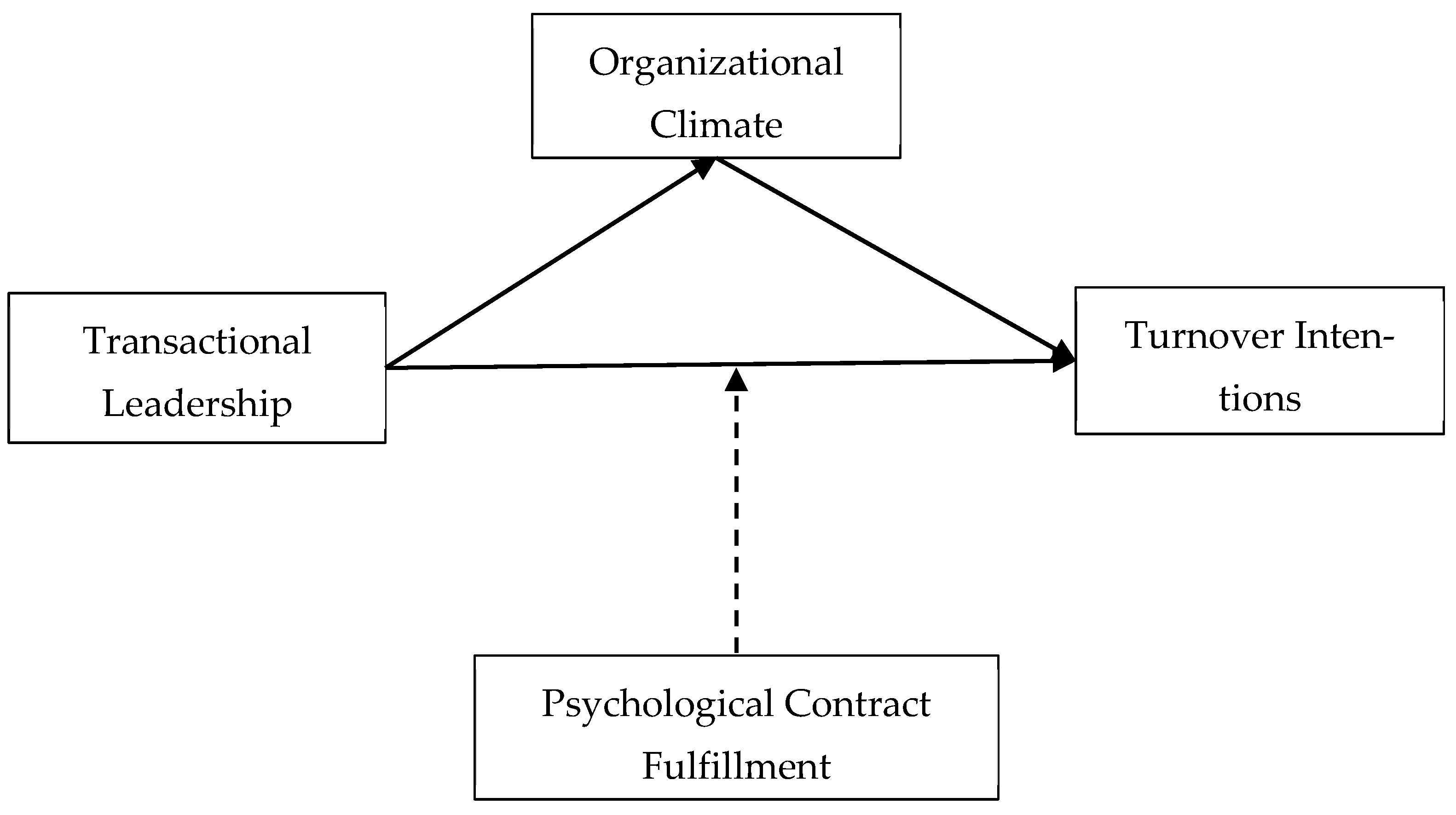
This study is grounded in social exchange theory (SET) (Blau, 1964), organizational support theory (OST) (Rhoades & Eisenberger, 2002), and psychological contract theory (PCT) (Rousseau & Tijoriwala, 1998). SET suggests that leaders can expect reciprocity from employees when they provide valuable resources, rewards, and support, which can positively influence employee attitude (e.g., reduced intention to quit) (Uzundemir et al., 2023). OST falls in line with this premise as it posits that leadership behavior is interpreted by employees as signals of support, which is a robust mechanism for reducing turnover intentions (Donkor et al., 2022; Pattali et al., 2024). PCT emphasizes that by fulfilling both explicit and implicit promises, employees develop a positive feeling towards the firm, which in turn influences their intentions to stay or leave the firm (Pu et al., 2024; Saleem et al., 2021). Integration and combination of these theoretical frameworks enable the current study to propose a model (see Figure 1) where TL is negatively linked to turnover intentions by operating in a positive climate and fulfilling organizational obligations. The relationship between TL and turnover in the hotel industry remains a gap in the existing literature, which becomes scarcer in the Middle East, with cultural and institutional factors that can influence how transactional behaviors are interpreted (Samuel & Engelbrecht, 2021). Additionally, organizational climate, although considered an important contextual factor, remains understudied in this regional and sectoral context (Gulakdeniz & Karadas, 2025; Wang, 2022). Furthermore, the moderating interaction of PCF has received little attention despite the strong theoretical justification from SET, OST, and PCT.
The current research addresses these gaps by focusing on five-star hotels across five Middle Eastern countries (i.e., Saudi Arabia, Lebanon, Egypt, Bahrain, and Jordan). Due to similarity in tourism structure, leadership approaches, and sectoral frameworks among these countries (Mehta et al., 2024), it is deemed appropriate to empirically examine this context. The shared structural and institutional characteristics in these countries and their upscale hotel sector provide a comprehensive and regional variation within the Middle East. These countries host luxury hotels operating in a similar standard, human resource policies, and performance systems imposed by global brands (Baum & Hai, 2020). The sector is labor-intensive and relies on a mix of local and expatriate staff with high customer interactions and exposure to global tourism flows, which increase the pressure on service quality and intensity, thereby leading to high turnover rates (Abdullah et al., 2024). The Middle East and North Africa (MENA) regulations apply to the institutional level, which define labor conditions (e.g., weak employment representation, management authority, and informalized human resources policies). The literature shows a high and persistent turnover rate due to high expectations or other labor factors (Baum & Hai, 2020; Gom et al., 2021). This standardized regional hotel operation and institutional proximity allow the current research to treat this five-country sample as a coherent regional context. This provides a more nuanced understanding of how TL in the hospitality and leadership literature as (1) examining a multi-country, and scalable employee data from five-star hotels across the Middle East, addressing both single-country and Western-centric empirical research; (2) a coherent regional setting examined with robust methods to highlight the challenges for improving employee wellbeing in this context; and (3) provide theoretically and practically sound guidance for retaining employees in this sector through optimizing internal practices. This can answer how leadership dynamics influence turnover intentions, what is the operational role of organizational climate, and how does the condition of PCF interact as a mechanism. This has societal relevance as luxury hotels in this context have many employees, including locals and expatriates, who require stable employment conditions. This research opens a pathway for a more predictable and meaningful workplace setting in a region where hospitality plays a central economic and social role.

2. Hypotheses and Theories

2.1. Theoretical Setting

Social exchange theory (SET) (Blau, 1964) is embedded in this study to explain the social behaviors exhibited by employees, where exchanges are assessed by reciprocity, which occurs in a positive manner as transactional leaders enable staff to perceive benefits in leaders’ behaviors such as support, recognition, fair treatment, and role clarification. As a response, staff can perceive a higher quality of exchange that encompasses transparency and a genuine leadership effort to improve the workplace. In contrast, when unfair or arbitrary treatment is perceived, transactions will have a lower quality, which can increase negative outcomes such as turnover intentions (Donkor et al., 2022; Jabutay & Rungruang, 2021). This research argues that in the hotel sector of the Middle East, these signals are essential to obtain positive psychological and behavioral outcomes. Recent studies have demonstrated that reward systems, perceived justice, and support can lead to higher commitment and reduction in turnover intentions (Breevaart & Zacher, 2019; Caesens et al., 2017). Recognition of service quality, guest satisfaction, and coordination with others are among the key aspects of a rewarding system that transactional leaders can implement to enhance feedback and standards (Ahmad et al., 2023; Young et al., 2021). SET integrates both leadership and organizational climate as fair and supportive mechanisms designed to improve the quality of exchanges among staff and their leaders, promote trust, and reduce turnover intentions.
This study also embeds organizational support theory (OST), which explains how organizational climate can act as a support signal that resonates with the staff and thus lowers their turnover intentions (Rhoades & Eisenberger, 2002). Hotel staff shape their beliefs regarding how they are valued in the firm in terms of contributions at work and overall wellbeing (Khairy et al., 2023; Pattali et al., 2024). In response to this support mechanism, affective commitment is exhibited by staff, which manifests as reduced turnover intentions, particularly in a sector that suffers from high withdrawal rates globally (A. N. Khan et al., 2021). In the hotel industry, employees can have varying roles while facing customers, which intensifies emotional and physical labor (Hassanein & Özgit, 2022). OST posits that supportive mechanisms (organizational climate function) can carry a bridging role, enabling leadership efforts to translate into positive outcomes (e.g., reduced turnover intentions). Organizations in which the climate is procedural, fair, well-structured, and transparent with clear standards, managerial and leadership initiatives can foster positive emotional empowerment, which increases the willingness to remain with the firm (Rabiul, 2024). Such climates enable positive perceptions that become bolder under high-intense contexts (e.g., A. N. Khan et al., 2021; Pu et al., 2024). Demand volatility and resource/infrastructural issues in the Middle Eastern hotel sector arguably call for climates that can mitigate uncertainties while increasing task and function efficiency.
The psychological contract theory (PCT) (Rousseau & Tijoriwala, 1998) provides a premise in which the leadership, climate, and employee retention mechanism can be explained. Under PCT, staff perceive relationships within the workplace as a form of mutual obligation that can be breached or fulfilled. When proximal mechanisms are fulfilled, employees are more likely to exhibit trust, commitment, and higher performance (Daouk et al., 2021; Sobaih et al., 2022). However, if obligations are violated, cynicism, doubt, and turnover intentions can arise (C. Zhang et al., 2024). Within the hotel setting, psychological contracts can include economic incentives, guest satisfaction measures, and scheduling and recovery after peak (Samuel & Engelbrecht, 2021; Dempsey, 2021). This enables transactional leaders to define clear standards to increase the ability to fulfill organizational obligations and lower perceptions of breach through organizational climate dynamics. Studies have shown that safety, workload, recognition, and similar aspects can be regarded as psychological obligations influencing individuals’ turnover intentions in the hospitality industry (e.g., Kaya & Karatepe, 2020; Samuel & Engelbrecht, 2021; C. Zhang et al., 2024). For five-star hotels, performance appraisals and strong service quality are common, which increases the importance of fair and transparent procedures to fulfill psychological contracts and thus aid the leadership in suppressing negative emotions (i.e., turnover).

2.2. Transactional Leadership and Turnover Intentions

Transactional leadership (TL) is based on rewards and corrections of tasks in exchanges among leaders and their followers that clearly define performance measures (Bass & Avolio, 1996; Rabiul, 2024). Explicit organizational system and supervision, along with task-oriented approaches that mostly focus on improving functions and actions within the company, are among the key characteristics of TL, which tap into the premises of SET through vivid economic exchanges (Blau, 1964; Farmanesh & Zargar, 2021). Through clear and set exchanges, such leaders encourage effort and compliance, which is translated into rewards and recognition and opportunities for development for employees. As the staff feel valued, their perception of the company is enhanced, which creates barriers for leaving the company and therefore reduces turnover intentions (Ahmad et al., 2023; Yan et al., 2021). Studies have shown that TL can improve work engagement, which in turn leads to a negative association with withdrawal in the service industry (Breevaart & Zacher, 2019; Gom et al., 2021). For the case of hospitality, researchers reported that performance and feedback measures of TL reduced employees’ turnover intentions through reinforcement of transparent organizational systems that focus on improving processes in industries with higher pressures and direct customer interactions (i.e., hotels) (Gom et al., 2021; Holston-Okae, 2017; Lee et al., 2020; Sobaih et al., 2022).
When leadership is adequate (i.e., transactional leadership), practices dictating the flow of processes and tasks become performance-centric, which reduces emotional burdens of customer interactions along with the physical exhaustion due to long working hours requiring an array of tasks (Gulakdeniz & Karadas, 2025). For the hotel sector it is imperative that leadership practices are supervisory, offering structured feedback, tangible rewards, providing support, and clarifying responsibilities to reduce employee turnover intentions (Gom et al., 2021; Wang, 2022). This notion is supported by the OST framework (Rhoades & Eisenberger, 2002), which explains how transactional leaders can reliably provide support systems that foster positive perceptions of the organization, leading to a decrease in withdrawal intentions (Pattali et al., 2024; Sobaih et al., 2022). For the Middle Eastern hotel industry with structural, economic, and contextual limitations, TL can signal to employees that their contributions are recognized and rewarded while their tasks are supported by supervisors to reduce stress, uncertainty, and depletion (Wu et al., 2023). By synthesizing PCT and SET, this research argues that when leaders clearly communicate expectations with consistent reward and feedback, fairness, reliability, and fulfilment are perceived by employees, which reduces their intention to leave. While the effect can be weaker in contexts with high innovation or autonomy, we expect a negative influence in the structured setting of hotels under TL. Accordingly, the following hypothesis is developed:
Hypothesis 1: 
Transactional leadership is negatively associated with turnover intentions among hotel staff.

2.3. Mediating Role of Organizational Climate

Organizational climate entails the perception of policies, approaches, and practices of a firm, which in this research is operationalized through clarity, support, and transparency in terms of leadership embedded in the workplace (Schneider et al., 2013). TL shapes the climate in service and specifically the hotel sector through adequate resource allocation, enforcement of policies, communication, and fair treatment (Rabiul, 2024). This supportive organizational climate enables leaders to actively monitor and optimize processes while providing task-specific guidance to foster positive perceptions among employees. As employees are equipped to handle difficult situations and workload with hotels, transactional leaders can draw positive outcomes (i.e., lowered turnover intentions) through an enhanced climate within the workplace (Khairy et al., 2023; Pattali et al., 2024). This positive service climate can aid the leaders in employee retention, as individuals are less likely to withdraw from the firm. Transactional leaders can positively impact job satisfaction, engagement, and affective commitment through direct feedback (Daouk et al., 2021; Sobaih et al., 2022), which aligns with reducing turnover intentions (Abdou et al., 2022; Hassanein et al., 2024; Li et al., 2022). The support and fairness of transactional leaders can play a major role in alleviating stress and uncertainties—often from customer incivility—in the Middle Eastern hotel context (Pu et al., 2024).
Arguably, TL allows the leader to enhance the service climate through support (OST) (Rabiul, 2024), which in turn strengthens obligations towards the firm (SET) (e.g., decreased turnover intentions) (Donkor et al., 2022; Jabutay & Rungruang, 2021; Y. Zhang et al., 2021). For the hospitality and hotel sector, leadership plays a major role in determining the service climate (Kaya & Karatepe, 2020). As the climate is a shared perception among the staff, interactions with leaders, workplace climate, and functions (e.g., working hours, rotation systems, reward and recognition) become critical for reducing turnover (Hannah et al., 2020; Hayat & Afshari, 2021). Such mechanisms can improve the wellbeing of employees by improving work–life balance and reducing stress and uncertainty. Perception of these elements among hotel staff decreases the likelihood of turnover intentions through tangible welfare and performance measures (Jia et al., 2022; M. Zhang et al., 2023). Adequate organizational climate enhances emotional, psychological, and physical aspects of the workplace, leading to higher engagement (Jia et al., 2022) and a deeper sense of attachment when genuine wellbeing practices are perceived (Jiang & Probst, 2021; Y. Zhang et al., 2021). This theoretical setting supports the notion that transactional leaders in the hotel sector can provide safety, belonging, recognition, and rewards, which pertain to an array of emotional and psychological aspects (R. N. A. Khan et al., 2021; Schneider et al., 2013). Based on the premises of OST, TL can foster a supportive climate in which employees are more likely to remain. This is because if the climate is perceived as highly rigid and merely compliance-based, it may have different outcomes in this context. Therefore, the following hypothesis is developed:
Hypothesis 2: 
Organizational Climate mediates the relationship between transactional leadership and turnover intentions among hotel employees.

2.4. Moderating Role of Psychological Contract Fulfillment

Psychological contract theory (PCT) suggests that employees share a sense of obligation towards their organization (Rousseau & Tijoriwala, 1998). When the organization fulfills or goes beyond its promises, employees develop positive senses such as career development opportunities, job security, and financial safety. Psychological contract fulfillment (PCF) thus has a major influence on how employees experience the leaders’ practices, which can draw commitment, trust, and engagement (Nadiri & Tanova, 2016), while reducing stress, workload, and turnover intentions (Mehta et al., 2024). SET provides a perspective on how PCF can increase the quality of exchanges as the organization meets employee expectations, which encourages reciprocity (e.g., continued employment) (Baquero et al., 2025). This is supported by OST as fulfillment of obligations provides a safe environment for staff, further reducing negative emotions such as turnover intentions (C. Zhang et al., 2024). This logic suggests that PCF can act as an indirect factor to build upon the efforts of transactional leaders in the intense service climate of hotels to retain their staff. In other words, TL can benefit from high levels of PCF as it amplifies the positive work experience (Baquero, 2022). A breach of psychological contracts can yield negative responses towards the firm and have adverse effects (Turnley & Feldman, 1999). Breaching psychological contracts can lead to diminished job satisfaction and engagement, along with increased negative aspects (e.g., turnover intentions) (Baquero et al., 2025).
Within the hospitality sector, it has been reported that PCF is associated with turnover of employees as it lowers commitment and overall job satisfaction (Saleem et al., 2021). The current study argues that TL opens a pathway for fairness in exchanges with the staff, which, when combined with high PCF, can establish a comprehensive and genuine support mechanism that honors obligations and thus suppresses turnover intentions. High PCF enables employees to interpret leadership practices in a more positive light, which can increase their intention to remain with the firm (Al-Romeedy et al., 2023). Actual deliverance of promises, rewards and incentives, and supportive leadership approach under this conceptualization uses signals of SET, OST, and PCT to highlight the importance of PCF in highly intense service environments where retention outcomes are low (Baquero et al., 2025). Under this premise, employees who perceive fulfilled promises (both implicit and explicit) are more likely to interpret leadership effort in a positive manner and less prone to leave the organization. In contrast, the absence of this perception may lead to viewing leaders’ behavior as overly controlling, with opposite results. Therefore, the following hypothesis is shaped:
Hypothesis 3: 
Psychological contract fulfillment moderates the relationship between transactional leadership and hotel staff’s turnover intention.

3. Research Design

3.1. Methodology and Approach

The research employs a quantitative and deductive approach (Casula et al., 2021) to assess theoretically driven hypotheses. A convenience sampling method is used to collect data from five-star hotel employees across 5 different Middle Eastern countries (i.e., Saudi Arabia, Lebanon, Egypt, Jordan, and Bahrain). Hotel staff have rotating schedules that can be combined with role changes during peak hours, rendering probability-based sampling impractical. The convenience sampling, therefore, enabled the data to be collected based on availability and willingness to participate.
These countries were selected for two reasons: (A) a similarity in terms of overall tourism and hotel infrastructure (Abdullah et al., 2024; Baum & Hai, 2020) and (B) having established contacts with the researchers, which simplified the process of data collection. Due to the rotation in working schedules, role changes, and peak hours, the convenience sampling method enabled the data to be collected based on availability and willingness to participate. Relative permissions to obtain the data were granted by hotel managers prior to data collection through established contacts of the researchers.
The survey included all constructs to test the structural model in a cross-sectional manner. From each country, one hotel was selected where the manager would share the online survey with their staff and ensure that no identifiers were included. Staff had 3 days to complete the survey, after which the managers would share the raw data with the researchers for analysis. This setting was established to provide both staff and managers with confidentiality, anonymity, and control over employee data. To ensure no bias is included, the managers were asked to simply collect and return the questionnaire upon removing any identifiers.
Using G*power software v.3 (statistical power 90%; effect size 0.15; α = 0.05), a sample size of 220 was calculated (Hair et al., 2017). However, to ensure the robust representation of all hotels across the selected countries, a total of 350 staff were surveyed to enhance the boundaries of lower sample sizes regarding generalizability of the estimates. Each participant was asked to fill in a written consent form where information regarding the study was provided, and a withdrawal option was granted at any time. To assess the validity and reliability of the survey, an initial pilot test was conducted with 15 samples (excluded from the final data), which proved readable and understandable without the need to remove or change items. For examining Common Method Bias (CMB), Unmeasured Latent Method Construct (ULMC) was deployed on all items with a loading average of 0.61 and average method loading of 0.07 (Kock, 2015; Sarstedt et al., 2017).

3.2. Measurements

To measure transactional leadership, questions were derived from the highly reliable and commonly used multifactor leadership questionnaire (Bass & Avolio, 1996, 2004). Five items were adapted to fit the hotel context (e.g., “My leader provides recognition or rewards in exchange for achieving agreed targets”). For assessing organizational climate, a combination of resources was used to derive the necessary questions (Parker et al., 2003; Patterson et al., 2005; Schneider et al., 1998). A total of five items were adapted from the noted sources with context similarity and confirmed reliability (e.g., “Employees are treated fairly in decisions about workload, scheduling, and recognition”). This was followed by measuring psychological contract fulfillment with five adapted items drawn from reliable sources (Robinson & Wolfe Morrison, 2000; Turnley & Feldman, 1999; Turnley et al., 2003) (e.g., “The organization fulfills its commitments regarding fair compensation and benefits”). Lastly, turnover intentions were measured by five items derived and adapted from commonly used scales (i.e., Mobley et al., 1979; Cammann, 1983; Hom & Griffeth, 1991) (e.g., “I intend to leave this hotel as soon as I can find a better opportunity”). Questions were designed in a 5-point Likert scale ranging from 1 = strongly disagree to 5 = strongly agree. The validity and reliability of the measures are assessed following established guidelines for structural equation modeling (e.g., Hair et al., 2019; Henseler et al., 2015). As shown in Table 2, the measurement model assessment implies satisfactory values for reliability and validity. Furthermore, the structural model assessment presented in Table 4 shows acceptable values for fit indices (Hair et al., 2021; Henseler et al., 2014).

3.3. Sample Characteristics

Age, gender, and work experience are included in the survey as demographic characteristics—also regarded as control variables. Gender can impact the manner in which leadership, organizational climate, and PCF are perceived. Similarly, older employees may report a stronger attachment, lower turnover, and stable PCF. This also applies to the tenure of the staff, as with longer employment, individuals are more aligned with the firm and may perceive a higher sense of obligation (Allen et al., 2003; Griffeth et al., 2000). Table 1 shows the profile of the participants:

3.4. Research Model

Figure 1 presents the research model. While transactional leadership is the independent variable, turnover intentions are considered the dependent variable. Organizational climate acts as the mediating variable, while psychological contract fulfillment will be assessed as the moderator.

4. Data Analysis

To test the hypotheses of the research, Partial Least Squares—Structural Equation Modeling (PLS-SEM) is used through Smart PLS software v4. This approach is deemed adequate as latent variables are present with two endogenous variables, normality of distribution is not a concern, and the sample size is not large (Hair et al., 2017). This analytical technique is appropriate for predictive models with multiple paths. After the initial measurement model assessment (Table 2), the model is tested by effect size, coefficients, predictive power and relevance, and model fit indices.
The results in Table 2 present the measurement model assessment, which shows that the items and parameters are statistically sound for further analysis. As Table 2 shows, outer loadings, Rho A, alpha, and composite reliability values are within the 0.7–0.9 range (Diamantopoulos et al., 2012; Dijkstra & Henseler, 2015; Jöreskog, 1971; Hair et al., 2019). Average variance extracted (AVE) values are above 0.5, which implies an acceptable convergent validity (Hair et al., 2017).
In Table 3, the values of Heterotrait–Monotrait ratio (HTMT) are presented, which are below the threshold of 0.85 (Henseler et al., 2015), implying a satisfactory convergent validity of the parameters.
The results of hypothesis testing in the structural model assessment are presented in Table 4. Normal Fit Index (NFI) (0.924), Standardized Root Mean Square Residual (SRMR) (0.033), and Comparative Fit Index (CF) (0.980) values show a satisfactory model fit (Hair et al., 2021; Henseler et al., 2014). The results also show a high explanatory power (R2) and predictive relevance (Q2), especially for TI (R2 = 0.665; Q2 = 0.541) (Hair et al., 2019; Shmueli et al., 2016). Root Mean Squared Error (RMSE) and Mean Absolute Error (MAE) as error metrics also show satisfactory values for the constructs (near zero) (Purwanto & Sudargini, 2021).
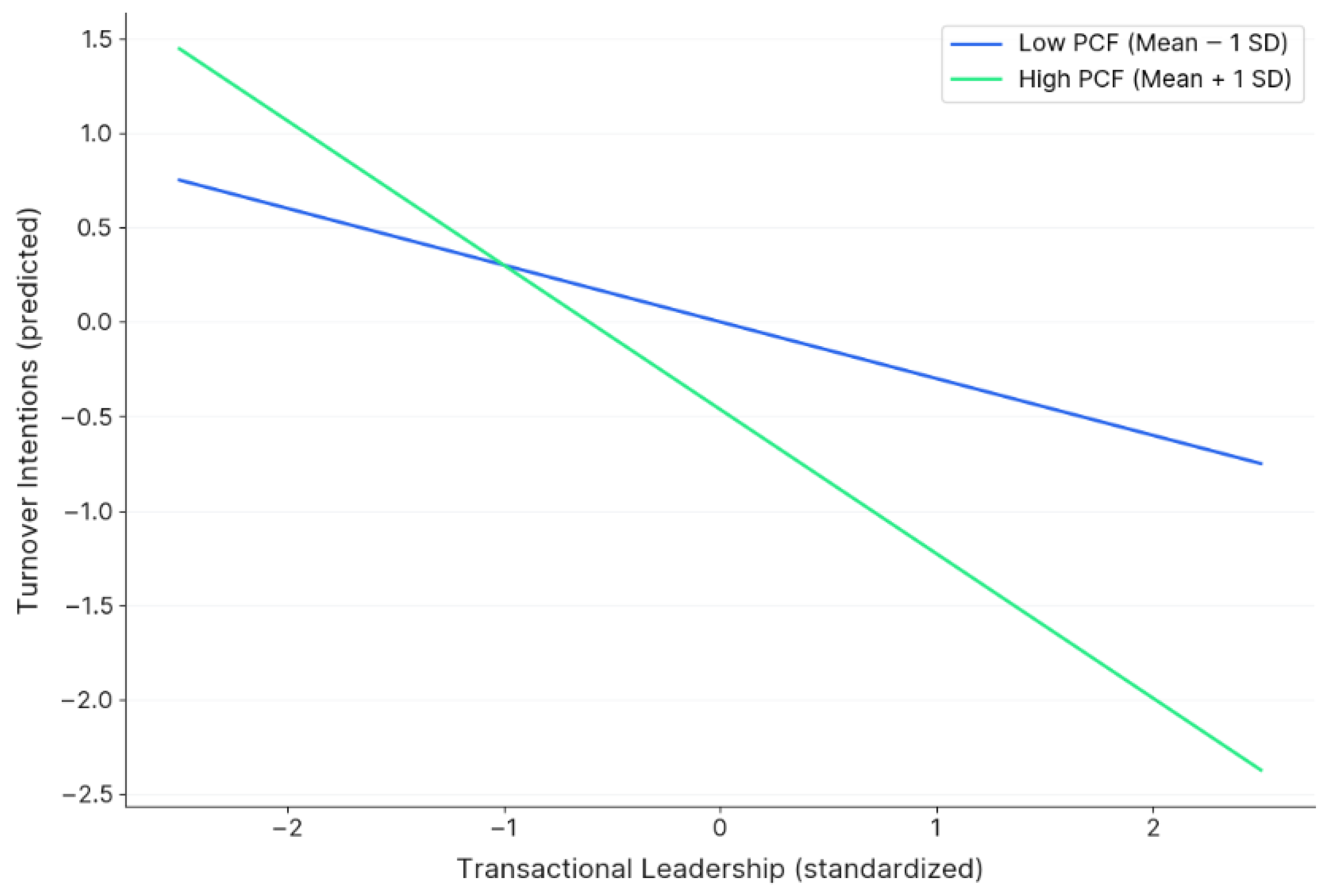
The moderating influence of psychological contract fulfillment is also shown in Figure 2 below, where its higher levels interact with significantly lower turnover intentions, especially with higher levels of transactional leadership. The moderation was measured with a standard deviation of 1.334 and mean of 0.982 in Figure 2, which illustrates the interaction of PCF with TL and TI linkage. This implies that higher levels of PCF can enable TL to draw significant work outcomes among employees. This can act as a protector for the hotel when TL is at lower levels, suggesting a diminishing impact on turnover intentions.

Discussions and Findings

Table 4 shows support for the first hypothesis (β = −0.323, t = −3.403), confirming the assumption that transactional leadership has a significantly positive link with hotel employees’ turnover intentions as a major challenge that persists in the industry globally (Lee et al., 2020; Sobaih et al., 2022). The current results support the notion that TL has a negative association with turnover intentions among luxury hotel staff in the Middle Eastern context. Transactional leaders set clear roles and responsibilities with transparent reward systems (e.g., monetary) and consistent feedback, which reduces the inclination to leave the hotel (Ahmad et al., 2023; Yan et al., 2021). In the high-pressure service environment of hotels, transactional leaders can stabilize roles through fair treatment, which is particularly crucial in this sector (Pattali et al., 2024). From the SET perspective (Blau, 1964), transactional leaders can establish high quality exchanges with staff (e.g., tangible rewards), highlighting their effort and compliance and encouraging reciprocity. As the exchanges with the leaders improve, employees perceive a higher level of upholding standards from the organization. This also aligns with the premises of OST (Rhoades & Eisenberger, 2002) as it pertains to how leaders’ actions are perceived by staff can be improved, when transparency and fairness are combined with clear instructions and expectations (Khairy et al., 2023). Such practices are evidently linked to lower turnover intentions, especially on how Middle Eastern luxury hotels can balance high intensity, rigid hierarchical structure, and comprehensive labor policies through adequate leadership practices. The current results not only show consensus with the literature but further expand its limited regional boundaries (Abdullah et al., 2024; Baum & Hai, 2020; Gom et al., 2021). The results contrast with the studies that depict TL as a neutral or even detrimental approach for long-term commitment (e.g., Sobaih et al., 2022). While that can be applied to a more autonomous and creative context, the highly structured hotel environment and the current findings suggest that retention can be enhanced through such a solid and rigid leadership style that is transparent. This is why the regulatory conditions, labor, and cultural settings of the specific country should be further analyzed to ensure that the employees’ mobility and shape are evaluated through transactional practices on a deeper level.
The second hypothesis is similarly supported in Table 4 (β = −0.332, t = −2.884), which shows that organizational climate mediates the relationship between TL and turnover intentions of hotel staff in the Middle Eastern context. Transactional style is considered less inspirational than servant or transformational leadership (Farmanesh & Zargar, 2021). The evidence demonstrates that the link between leadership and turnover is nuanced, as an incentive-operational hotel setting shows that transactional leaders can signal support, predictability, and positive organizational climate. This aligns with the premises of SET, PCT, and OST, as employees’ experiences with leaders are generalized through a positive climate and improved social exchanges that enable individuals to perceive fulfillment of obligations. The partial yet significant mediation effect implies that the environment of the workplace, fostering safety, respect, trust, and support, can act as a tool for leaders to draw tangible employee outcomes (i.e., reduce turnover intentions) (Montano & Peter, 2022). Psychological, social, and emotional needs of staff can be met by leaders and the climate of the workplace. This triggers reciprocity, steering the employees towards a better relationship with the hotel as a company, which increases their wellbeing (Abdou et al., 2022; Pu et al., 2024). An adequate organizational climate provides a shared sense of identity, meaning, and security (e.g., García-Cabrera et al., 2021; Y. Zhang et al., 2021). Transactional leaders can utilize the service climate to aid their effort to improve morale and performance, as they can operate at the dyadic level and shape the perception of staff towards the workplace. Through this organizational climate, TL is linked to the reduction in turnover intentions as communications, service orientation, and job satisfaction are enhanced (Jiang & Probst, 2021). TL in the five-star Middle Eastern hotel setting contributes to a collective climate that, in turn, reduces the attractiveness of leaving the company. It is important to note that the literature suggests that overly controlling climates can lead to strain and reduced innovative behavior, which increases turnover intentions (e.g., Montano & Peter, 2022). The findings in this study can vary due to specific high-pressure, service-intensive settings. Additionally, our research relies on self-reported data, which limits the pattern for other hotel categories or cultural settings.
The findings in Table 4 and Figure 2 support the third hypothesis (β = −0.353, t = −2.932), stating that PCF is a key factor in determining how transactional leaders can improve outcomes (i.e., turnover intentions) in the hotel sector. PCF shows a significant moderating (diminishing) influence on the linkage between TL and turnover intentions, where higher levels of PCG can strengthen the link between leaders and reduce withdrawal among hotel staff. Particularly, in a labor-intensive sector, this improves the attitudes of staff towards the firm (Baquero et al., 2025; Mehta et al., 2024). The interaction plot in Figure 2 shows that when TL is low, higher PCF can act as a shield for the firm, covering its shortcomings in the leadership aspect. Higher PCF levels signal a firm-level investment in improving and honoring exchanges with the staff, which improves the sense of obligation towards the firm as a manifestation of reciprocity, leading to loyalty and continued employment (Al-Romeedy et al., 2023). This is because with lower levels of PCF, employees may perceive TL as merely instrumental, weakening its effectiveness in reducing turnover intentions. Similar reports in the extant literature support this notion (e.g., Kang et al., 2018) even when other aspects of the job can appear desirable (Nadiri & Tanova, 2016). This shows that TL alone is not as effective as when its capacities are boosted through meeting broader obligations. Integrations of PCF under the current theoretical framework show the protective role of PCF for TL, translating into tangible employee outcomes in the hotel sector. However, this may be different in locations where the rigidity of cultural and societal exchanges can be different. Therefore, when psychological contracts are fulfilled, it can be expected that with even more rigid leadership, this can be accepted. While the current sample of five-star Middle Eastern hotels shows a strong contract-fulfillment interaction with transactional leadership, it should be considered that cultural expectations can differ, and employee representation, voice, and institutional structures can change the way these are interpreted by employees.

5. Conclusions

The current findings show that transactional leaders are negatively associated with turnover intentions in a five-star hotel setting across five Middle Eastern countries. However, the degree of effectiveness of this leadership style is dependent on the presence of organizational factors that can aid the leader in their efforts. A positive organizational climate, along with a firm-level dedication to fulfilling psychological contracts are key in determining employees’ turnover intentions. In high-demand workplaces, clear roles and consistent feedback/reward are valued in transactional exchanges among leaders and employees, which can reduce their withdrawal under a fair and supportive climate. These results contribute to the leadership and hospitality literature by highlighting the functionality of TL as a retention-enhancing approach in the Middle Eastern luxury hotel sector. The theoretical setting clarifies the mechanisms with which transactional leaders can use these organizational strategies to derive positive outcomes. Notably, merely relying on TL in isolation is not suggested. An alignment between rewards, feedback, organizational climate, and honoring commitments is a key driver of reduced turnover intentions. This contextual setting can be used as a retention strategy that focuses on quality exchanges with the staff, fostering a foundation for a systemic improvement of employee outcomes.

5.1. Theoretical Implications

The current findings provide several theoretical implications that contribute to the understanding of transactional leadership effectiveness in the hotel industry. Leaders can promote reciprocity among their staff, which can be manifested in various ways (e.g., continued employment) (Ahmad et al., 2023; Blau, 1964). A solid employment climate provides financial and other rewards to improve psychological and social wellbeing (Meira & Hancer, 2021; Nazarian et al., 2024). Role clarity, leadership transparency, rewards, and recognition systems can enable transactional leaders to improve the work experience of staff and reduce negative emotions such as turnover intentions (Chen & Wu, 2017; Sobaih et al., 2022; Sung et al., 2019). In the operationally intense five-star Middle Eastern hotels, TL can be a tool for improving retention rather than its traditional control-oriented style. SET is aligned with this statement as it indicates that an adequate leadership approach can generate a positive sense of reciprocity that can manifest as reduced turnover intentions. This broadens leadership theory beyond the common emphasis on transformational style within the hospitality sector. Moreover, OST (Samuel & Engelbrecht, 2021; C. Zhang et al., 2024) and PCT (Khairy et al., 2023; Pattali et al., 2024; Rabiul, 2024) support this notion as the model clarifies the manner in which transactional leaders can be highly effective in the hotel context. While organizational climate acts as a bridge that channels leaders’ individual behaviors into shared perceptions of support and adequacy among staff, PCF functions as a boundary condition that increases the efficiency of leadership efforts to improve employee emotions and interpretations towards the company. This granular and multilevel framework provides a better understanding of leadership, climate, and perceived obligations, which can jointly reduce turnover intentions in the hotel industry of the Middle East.

5.2. Practical Implications

From a practical perspective, the current findings suggest that luxury hotels in the Middle East and their human resources departments should focus on professionalizing transactional leaders in their structures. For luxury and upscale hotels, it is essential to implement clear performance metrics that entail bonuses and rewards while standardizing feedback loops and training practices. This can be combined with training programs for managers to become transactional leaders and increase their consistency while regularly measuring the workplace climate at the department and individual levels as leadership indicators. This aids the leaders in making better decisions regarding staffing and unit-level actions and processes. Specific human resources initiatives can adjust the level of PCF in the hotel. This introduces structural onboarding, which has clear expectations, formalized communication, scheduling, and training, which simplifies the mechanisms for employees and aids the leadership in reducing turnover intentions. In a more technical manner, online dashboards can help measure organizational climate indices as well as leadership behaviors while providing feedback to employees. PCF surveys and actual turnover data can flag risk aspects and targeted interventions by leaders. Performance-driven and hierarchical structures of the hotel industry in the Middle East match the transactional style, as it emphasizes strict standards and detailed operational procedures with tight monitoring and active management. TL can help hotels in routinizing tasks, which is a critical element for improving service quality and consistency.

5.3. Limitations and Recommendations

Despite the noted contributions, various limitations have hindered the conduct of this study. Quantitative, self-reported data with convenience sampling methods have a limited sample size, which limits generalizability and representativeness while introducing self-report bias. This can be overcome in future studies by expanding the sample size. Similarly, cross-sectional data collection limits the understanding of time (e.g., pre and post implementation of TL), which can be addressed in longitudinal studies. The underexplored context of the Middle Eastern hospitality industry limits the applicability and comparativeness of the current results. Future studies can examine leadership, wellbeing, and other structural aspects to provide a better understanding of this highly dynamic sector and comparative results. Other theories, such as social identity theory and job demand-resource models, can be integrated into similar models to provide a more comprehensive framework for reducing hotel staff turnover intentions. Lastly, for analytical parsimony, the five countries in the data were treated as a coherent regional context. While this approach highlights the sectoral and structural features, it is limited in other aspects. Cultural norms, social and economic aspects, hierarchical structure, and labor conditions were not included in this study, and the demographic characteristics were controlled. This limits the representativeness of the results, which can be addressed in future studies to build a stronger contextuality. A comparative or mixed-method approach in future research can examine within- and between-country nuances more thoroughly.

Author Contributions

Conceptualization, F.H. and A.D.; Methodology, F.H.; Software, A.D.; Validation, A.D.; Formal analysis, F.H.; Investigation, F.H.; Resources, F.H. and A.D.; Data curation, A.D.; Writing—original draft, F.H. and A.D.; Writing—review & editing, A.D.; Visualization, A.D.; Supervision, F.H.; Project administration, F.H. All authors contributed equally to this research work. All authors have read and agreed to the published version of the manuscript.

Funding

This research received no external funding.

Institutional Review Board Statement

The study was conducted in accordance with the Declaration of Helsinki, and approved by the Institutional Review Board of the Lebanese International University (LIU) (protocol code: LIUIRB-250805-FH-426 and date of approval: 12 August 2025).

Informed Consent Statement

Informed consent was obtained from all subjects involved in the study.

Data Availability Statement

The sources of data used are provided in the main text.

Conflicts of Interest

The authors declare no conflicts of interest.

References

  1. Abdou, A. H., Khalil, A. A. F., Mahmoud, H. M. E., Elsaied, M. A., & Elsaed, A. A. (2022). The impact of hospitality work environment on employees’ turnover intentions during COVID-19 pandemic: The mediating role of work-family conflict. Frontiers in Psychology, 13, 890418. [Google Scholar] [CrossRef]
  2. Abdullah, T., Carr, N., & Lee, C. (2024). Tourism enterprises and barriers to business growth. In Handbook of tourism entrepreneurship (pp. 176–187). Edward Elgar Publishing. [Google Scholar]
  3. Ahmad, R., Nawaz, M. R., Ishaq, M. I., Khan, M. M., & Ashraf, H. A. (2023). Social exchange theory: Systematic review and future directions. Frontiers in Psychology, 13, 1015921. [Google Scholar] [CrossRef] [PubMed]
  4. Allen, D. G., Shore, L. M., & Griffeth, R. W. (2003). The role of perceived organizational support and supportive human resource practices in the turnover process. Journal of Management, 29(1), 99–118. [Google Scholar] [CrossRef]
  5. Al-Romeedy, B. S., Abou-Hamad, M. M., & Ali, I. E. H. (2023). The impact of psychological contract breach on job silence in tourism companies: Workplace bullying as a mediator. Journal of the Faculty of Tourism and Hotels-University of Sadat City, 7(1/1), 21–39. [Google Scholar]
  6. Amankwaa, A., Seet, P. S., & Susomrith, P. (2022). Tackling hotel employees’ turnover: A moderated-mediation analysis of transformational leadership, organisational embeddedness, and community embeddedness. Journal of Hospitality and Tourism Management, 51, 67–78. [Google Scholar] [CrossRef]
  7. Baquero, A. (2022). Job insecurity and intention to quit: The role of psychological distress and resistance to change in the UAE hotel industry. International Journal of Environmental Research and Public Health, 19(20), 13629. [Google Scholar] [CrossRef]
  8. Baquero, A. (2023). Hotel employees’ burnout and intention to quit: The role of psychological distress and financial well-being in a moderation mediation model. Behavioral Sciences, 13(2), 84. [Google Scholar] [CrossRef]
  9. Baquero, A., Khairy, H. A., & Al-Romeedy, B. S. (2025). Workplace stressors and the intention to quit: The role of psychological distress and psychological flexibility among hospitality employees. Tourism and Hospitality, 6(2), 72. [Google Scholar] [CrossRef]
  10. Bass, B. M., & Avolio, B. J. (1995). Multifactor leadership questionnaire leader form (5X-short). Mind Garden. [Google Scholar] [CrossRef]
  11. Bass, B. M., & Avolio, B. J. (2004). Multifactor leadership questionnaire: MLQ; manual and sampler set. Mind Garden. [Google Scholar]
  12. Baum, T., & Hai, N. T. T. (2020). Hospitality, tourism, human rights and the impact of COVID-19. International Journal of Contemporary Hospitality Management, 32(7), 2397–2407. [Google Scholar] [CrossRef]
  13. Blau, P. M. (1964). Exchange and power in social life. John Wiley & Sons. [Google Scholar]
  14. Breevaart, K., & Zacher, H. (2019). Main and interactive effects of weekly transformational and laissez-faire leadership on followers’ trust in the leader and leader effectiveness. Journal of Occupational and Organizational Psychology, 92(2), 384–409. [Google Scholar] [CrossRef]
  15. Caesens, G., Stinglhamber, F., Demoulin, S., & De Wilde, M. (2017). Perceived organizational support and employees’ well-being: The mediating role of organizational dehumanization. European Journal of Work and Organizational Psychology, 26(4), 527–540. [Google Scholar] [CrossRef]
  16. Cammann, C. (1983). Assessing the attitudes and perceptions of organizational members. In Assessing organizational change: A guide to methods, measures, and practices (pp. 71–138). Wiley. [Google Scholar]
  17. Casula, M., Rangarajan, N., & Shields, P. (2021). The potential of working hypotheses for deductive exploratory research. Quality & Quantity, 55(5), 1703–1725. [Google Scholar]
  18. Chen, T. J., & Wu, C. M. (2017). Improving the turnover intention of tourist hotel employees: Transformational leadership, leader-member exchange, and psychological contract breach. International Journal of Contemporary Hospitality Management, 29(7), 1914–1936. [Google Scholar] [CrossRef]
  19. Chung, H., Quan, W., Koo, B., Ariza-Montes, A., Vega-Muñoz, A., Giorgi, G., & Han, H. (2021). A threat of customer incivility and job stress to hotel employee retention: Do supervisor and co-worker supports reduce turnover rates? International Journal of Environmental Research and Public Health, 18(12), 6616. [Google Scholar] [CrossRef] [PubMed]
  20. Daouk, A., Farmanesh, P., & Zargar, P. (2021). The relationship between transactional leadership and OCB: A conditional analysis of organizational justice perception and psychological contract fulfillment. Sage Open, 11(4), 21582440211061563. [Google Scholar] [CrossRef]
  21. Datta, A. (2020). Measuring the influence of hospitality organizational climate on employee turnover tendency. The TQM Journal, 32(6), 1307–1326. [Google Scholar] [CrossRef]
  22. Dempsey, A. M. (2021). Examining the impact of leadership style and employee engagement on turnover intent moderated by emotional Intelligence in front line employees of hotels [Doctoral dissertation, Saint Leo University]. [Google Scholar]
  23. Diamantopoulos, A., Sarstedt, M., Fuchs, C., Wilczynski, P., & Kaiser, S. (2012). Guidelines for choosing between multi-item and single-item scales for construct measurement: A predictive validity perspective. Journal of the Academy of Marketing Science, 40(3), 434–449. [Google Scholar] [CrossRef]
  24. Dijkstra, T. K., & Henseler, J. (2015). Consistent partial least squares path modeling. MIS Quarterly, 39(2), 297–316. [Google Scholar] [CrossRef]
  25. Donkor, F., Sekyere, I., & Oduro, F. A. (2022). Transformational and transactional leadership styles and employee performance in public sector organizations in Africa: A comprehensive analysis in Ghana. Journal of African Business, 23(4), 945–963. [Google Scholar] [CrossRef]
  26. Farmanesh, P., & Zargar, P. (2021). Trust in leader as a psychological factor on employee and organizational outcome. In The psychology of trust. IntechOpen. [Google Scholar]
  27. García-Cabrera, A. M., García-Soto, M. G., & Nieves, J. (2021). Knowledge, innovation and NTBF short-and long-term performance. International Entrepreneurship and Management Journal, 17(3), 1067–1089. [Google Scholar] [CrossRef]
  28. Gom, D., Lew, T. Y., Jiony, M. M., Tanakinjal, G. H., & Sondoh, S., Jr. (2021). The role of transformational leadership and psychological capital in the hotel industry: A sustainable approach to reducing turnover intention. Sustainability, 13(19), 10799. [Google Scholar] [CrossRef]
  29. Griffeth, R. W., Hom, P. W., & Gaertner, S. (2000). A meta-analysis of antecedents and correlates of employee turnover: Update, moderator tests, and research implications for the next millennium. Journal of Management, 26(3), 463–488. [Google Scholar] [CrossRef]
  30. Gulakdeniz, E., & Karadas, G. (2025). Assessing the impact of employees’ perceptions of green intellectual capital on career and life satisfaction: A mediating moderation model in Turkish hotels. Sustainability, 17(14), 6448. [Google Scholar] [CrossRef]
  31. Hair, J. F., Jr., Hult, G. T. M., Ringle, C. M., Sarstedt, M., Danks, N. P., & Ray, S. (2021). Evaluation of reflective measurement models. In Partial least squares structural equation modeling (PLS-SEM) using R: A workbook (pp. 75–90). Springer International Publishing. [Google Scholar]
  32. Hair, J. F., Jr., Sarstedt, M., Ringle, C. M., & Gudergan, S. P. (2017). Advanced issues in partial least squares structural equation modeling. Sage Publications. [Google Scholar]
  33. Hair, J. F., Risher, J. J., Sarstedt, M., & Ringle, C. M. (2019). When to use and how to report the results of PLS-SEM. European Business Review, 31(1), 2–24. [Google Scholar] [CrossRef]
  34. Hannah, S. T., Perez, A. L., Lester, P. B., & Quick, J. C. (2020). Bolstering workplace psychological well-being through transactional and transformational leadership. Journal of Leadership & Organizational Studies, 27(3), 222–240. [Google Scholar] [CrossRef]
  35. Hassanein, F., Daouk, A., Yassine, D., Bou Zakhem, N., Elsayed, R., & Saleh, A. (2024). Green human resource management and employee retention in the hotel industry of UAE: The mediating effect of green innovation. Sustainability, 16(11), 4668. [Google Scholar] [CrossRef]
  36. Hassanein, F., & Özgit, H. (2022). Sustaining human resources through talent management strategies and employee engagement in the Middle East hotel industry. Sustainability, 14(22), 15365. [Google Scholar] [CrossRef]
  37. Hayat, A., & Afshari, L. (2021). Supportive organizational climate: A moderated mediation model of workplace bullying and employee well-being. Personnel Review, 50(7/8), 1685–1704. [Google Scholar] [CrossRef]
  38. Henseler, J., Dijkstra, T. K., Sarstedt, M., Ringle, C. M., Diamantopoulos, A., Straub, D. W., Ketchen, D. J., Jr., Hair, J. F., Hult, G. T. M., & Calantone, R. J. (2014). Common beliefs and reality about PLS: Comments on Rönkkö and Evermann (2013). Organizational Research Methods, 17(2), 182–209. [Google Scholar]
  39. Henseler, J., Ringle, C. M., & Sarstedt, M. (2015). A new criterion for assessing discriminant validity in variance-based structural equation modeling. Journal of the Academy of Marketing Science, 43(1), 115–135. [Google Scholar] [CrossRef]
  40. Holston-Okae, B. (2017). Employee turnover intentions in the hospitality industry. Walden University. [Google Scholar]
  41. Hom, P. W., & Griffeth, R. W. (1991). Structural equations modeling test of a turnover theory: Cross-sectional and longitudinal analyses. Journal of Applied Psychology, 76(3), 350. [Google Scholar] [CrossRef]
  42. Jabutay, F. A., & Rungruang, P. (2021). Turnover intent of new workers: Social exchange perspectives. Asia-Pacific Journal of Business Administration, 13(1), 60–79. [Google Scholar] [CrossRef]
  43. Jia, K., Zhu, T., Zhang, W., Rasool, S. F., Asghar, A., & Chin, T. (2022). The linkage between ethical leadership, well-being, work engagement, and innovative work behavior: The empirical evidence from the higher education sector of China. International Journal of Environmental Research and Public Health, 19(9), 5414. [Google Scholar] [CrossRef]
  44. Jiang, Z., & Probst, T. M. (2021). The mediating effect of organizational climate on the relationship between leadership and employee outcomes: A cross-cultural study. International Journal of Stress Management, 28(1), 1–14. [Google Scholar]
  45. Jöreskog, K. G. (1971). Simultaneous factor analysis in several populations. Psychometrika, 36(4), 409–426. [Google Scholar] [CrossRef]
  46. Kang, H. J., Busser, J., & Choi, H. M. (2018). Service climate: How does it affect turnover intention? International Journal of Contemporary Hospitality Management, 30(1), 76–94. [Google Scholar] [CrossRef]
  47. Kaya, B., & Karatepe, O. M. (2020). Attitudinal and behavioral outcomes of work-life balance among hotel employees: The mediating role of psychological contract breach. Journal of Hospitality and Tourism Management, 42, 199–209. [Google Scholar] [CrossRef]
  48. Khairy, H. A., Baquero, A., & Al-Romeedy, B. S. (2023). The effect of transactional leadership on organizational agility in tourism and hospitality businesses: The mediating roles of organizational trust and ambidexterity. Sustainability, 15(19), 14337. [Google Scholar] [CrossRef]
  49. Khan, A. N., Khan, N. A., & Bodla, A. A. (2021). The after-shock effects of high-performers turnover in hotel industry: A multi-level study. International Journal of Contemporary Hospitality Management, 33(10), 3277–3295. [Google Scholar] [CrossRef]
  50. Khan, R. N. A., Masih, S., & Ali, W. (2021). Influence of transactional leadership and trust in leader on employee well-being and mediating role of organizational climate. International Journal of Business and Economic Affairs, 6(1), 13–23. [Google Scholar] [CrossRef]
  51. Kock, N. (2015). Common method bias in PLS-SEM: A full collinearity assessment approach. International Journal of e-Collaboration, 11(4), 1–10. [Google Scholar] [CrossRef]
  52. Lee, L., Guchait, P., & Madera, J. M. (2020). Negative affect, deep acting, and customer compensation as responses to customer mistreatment: The effect of customer-based perspective-taking. International Journal of Hospitality Management, 89, 102532. [Google Scholar] [CrossRef]
  53. Li, Q., Mohamed, R., Mahomed, A., & Khan, H. (2022). The effect of perceived organizational support and employee care on turnover intention and work engagement: A mediated moderation model using age in the post pandemic period. Sustainability, 14(15), 9125. [Google Scholar] [CrossRef]
  54. Mehta, A., Mall, S., Kothari, T., & Deshpande, R. (2024). Hotel employees’ intention to stay through psychological contract fulfillment and positive emotions in post-lockdown era. Tourism Review, 79(1), 104–118. [Google Scholar] [CrossRef]
  55. Meira, J. V. D. S., & Hancer, M. (2021). Using the social exchange theory to explore the employee-organization relationship in the hospitality industry. International Journal of Contemporary Hospitality Management, 33(2), 670–692. [Google Scholar] [CrossRef]
  56. Michael, N., & Fotiadis, A. (2022). Employee turnover: The hotel industry perspective. Journal of Tourism, Heritage & Services Marketing, 8(1), 38–47. [Google Scholar]
  57. Mobley, W. H., Griffeth, R. W., Hand, H. H., & Meglino, B. M. (1979). Review and conceptual analysis of the employee turnover process. Psychological Bulletin, 86(3), 493. [Google Scholar] [CrossRef]
  58. Montano, D., & Peter, R. (2022). Informal care-giving and the intention to give up employment: The role of perceived supervisor behaviour in a cohort of German employees. European Journal of Ageing, 19(3), 575–585. [Google Scholar] [CrossRef]
  59. Moustafa, M. A., Elrayah, M., Aljoghaiman, A., Hasanein, A. M., & Ali, M. A. (2024). How does sustainable organizational support affect job burnout in the hospitality sector? The mediating role of psychological capital. Sustainability, 16(2), 840. [Google Scholar] [CrossRef]
  60. Nadiri, H., & Tanova, C. (2016). What factors influence employee service recovery performance and what are the consequences in health care? Quality Management in Healthcare, 25(3), 162–175. [Google Scholar] [CrossRef]
  61. Nazarian, A., Ranjbaran, A., Afifi, M., Atkinson, P., & Sadeghilar, N. (2024). Cross-cultural examination of effects of ethical leadership of independent hotels based on Social Exchange Theory. International Journal of Cross Cultural Management, 24(3), 463–484. [Google Scholar] [CrossRef]
  62. Parker, C. P., Baltes, B. B., Young, S. A., Huff, J. W., Altmann, R. A., Lacost, H. A., & Roberts, J. E. (2003). Relationships between psychological climate perceptions and work outcomes: A meta-analytic review. Journal of Organizational Behavior: The International Journal of Industrial, Occupational and Organizational Psychology and Behavior, 24(4), 389–416. [Google Scholar] [CrossRef]
  63. Pattali, S., Sankar, J. P., Al Qahtani, H., Menon, N., & Faizal, S. (2024). Effect of leadership styles on turnover intention among staff nurses in private hospitals: The moderating effect of perceived organizational support. BMC Health Services Research, 24(1), 199. [Google Scholar] [CrossRef] [PubMed]
  64. Patterson, M. G., West, M. A., Shackleton, V. J., Dawson, J. F., Lawthom, R., Maitlis, S., Robinson, D. L., & Wallace, A. M. (2005). Validating the organizational climate measure: Links to managerial practices, productivity and innovation. Journal of Organizational Behavior, 26(4), 379–408. [Google Scholar] [CrossRef]
  65. Pu, B., Sang, W., Ji, S., Hu, J., & Phau, I. (2024). The effect of customer incivility on employees’ turnover intention in hospitality industry: A chain mediating effect of emotional exhaustion and job satisfaction. International Journal of Hospitality Management, 118, 103665. [Google Scholar]
  66. Purwanto, A., & Sudargini, Y. (2021). Partial least squares structural equation modeling (PLS-SEM) analysis for social and management research: A literature review. Journal of Industrial Engineering & Management Research, 2(4), 114–123. [Google Scholar]
  67. Rabiul, M. K. (2024). Does transactional leadership generate work engagement in the hotel industry? The role of motivating language and job prestige. Journal of Quality Assurance in Hospitality & Tourism, 25(3), 442–466. [Google Scholar]
  68. Rhoades, L., & Eisenberger, R. (2002). Perceived organizational support: A review of the literature. Journal of Applied Psychology, 87(4), 698. [Google Scholar] [CrossRef]
  69. Robinson, S. L., & Wolfe Morrison, E. (2000). The development of psychological contract breach and violation: A longitudinal study. Journal of Organizational Behavior, 21(5), 525–546. [Google Scholar] [CrossRef]
  70. Rousseau, D. M., & Tijoriwala, S. A. (1998). Assessing psychological contracts: Issues, alternatives and measures. Journal of Organizational Behavior: The International Journal of Industrial, Occupational and Organizational Psychology and Behavior, 19(S1), 679–695. [Google Scholar] [CrossRef]
  71. Saleem, S., Rasheed, M. I., Malik, M., & Okumus, F. (2021). Employee-fit and turnover intentions: The role of job engagement and psychological contract violation in the hospitality industry. Journal of Hospitality and Tourism Management, 49, 385–395. [Google Scholar] [CrossRef]
  72. Samuel, O. M., & Engelbrecht, A. S. (2021). How transformational leadership, psychological contract violation, empowerment and affective commitment influence employee’s intention to quit an organisation. South African Journal of Business Management, 52(1), 12. [Google Scholar] [CrossRef]
  73. Sarstedt, M., Ringle, C. M., & Hair, J. F. (2017). Treating unobserved heterogeneity in PLS-SEM: A multi-method approach. In Partial least squares path modeling: Basic concepts, methodological issues and applications (pp. 197–217). Springer International Publishing. [Google Scholar]
  74. Schneider, B., Ehrhart, M. G., & Macey, W. H. (2013). Organizational climate and culture. Annual Review of Psychology, 64, 361–388. [Google Scholar] [CrossRef] [PubMed]
  75. Schneider, B., White, S. S., & Paul, M. C. (1998). Linking service climate and customer perceptions of service quality: Tests of a causal model. Journal of Applied Psychology, 83(2), 150. [Google Scholar] [CrossRef]
  76. Shmueli, G., Ray, S., Velasquez Estrada, J. M., & Chatla, S. B. (2016). The elephant in the room: Predictive performance of PLS models. Journal of business Research, 69, 4552–4564. [Google Scholar]
  77. Sobaih, A. E. E., Hasanein, A. M., Aliedan, M. M., & Abdallah, H. S. (2022). The impact of transactional and transformational leadership on employee intention to stay in deluxe hotels: Mediating role of organisational commitment. Tourism and Hospitality Research, 22(3), 257–270. [Google Scholar] [CrossRef]
  78. Sung, T. P., Joo, L. W., Rahim, I. H. A., & Sondoh, S. (2019). Transformational and transactional leadership styles towards organizational commitment in the hotel industry. Journal of Tourism, 4(17), 34–45. [Google Scholar]
  79. Turnley, W. H., Bolino, M. C., Lester, S. W., & Bloodgood, J. M. (2003). The impact of psychological contract fulfillment on the performance of in-role and organizational citizenship behaviors. Journal of Management, 29(2), 187–206. [Google Scholar] [CrossRef]
  80. Turnley, W. H., & Feldman, D. C. (1999). The impact of psychological contract violations on exit, voice, loyalty, and neglect. Human Relations, 52(7), 895–922. [Google Scholar]
  81. Uzundemir, A., Albattat, A., & Ahamed, F. O. R. B. I. S. (2023). The impact of work environment and transactional leadership style on employees’ performance. International Journal of Multidisciplinary Research and Studies, 6, 1–38. [Google Scholar]
  82. Wang, C. J. (2022). Exploring the mechanisms linking transformational leadership, perceived organizational support, creativity, and performance in hospitality: The mediating role of affective organizational commitment. Behavioral Sciences, 12(10), 406. [Google Scholar] [CrossRef] [PubMed]
  83. Wu, T. J., Yuan, K. S., & Yen, D. C. (2023). Leader-member exchange, turnover intention and presenteeism–the moderated mediating effect of perceived organizational support. Current Psychology, 42(6), 4873–4884. [Google Scholar] [CrossRef]
  84. Xu, Y., Jie, D., Wu, H., Shi, X., Badulescu, D., Akbar, S., & Badulescu, A. (2022). Reducing employee turnover intentions in tourism and hospitality sector: The mediating effect of quality of work life and intrinsic motivation. International Journal of Environmental Research and Public Health, 19(18), 11222. [Google Scholar] [CrossRef] [PubMed]
  85. Yan, Z., Mansor, Z. D., Choo, W. C., & Abdullah, A. R. (2021). How to reduce employees’ turnover intention from the psychological perspective: A mediated moderation model. Psychology Research and Behavior Management, 14, 185–197. [Google Scholar] [CrossRef]
  86. Young, H. R., Glerum, D. R., Joseph, D. L., & McCord, M. A. (2021). A meta-analysis of transactional leadership and follower performance: Double-edged effects of LMX and empowerment. Journal of Management, 47(5), 1255–1280. [Google Scholar] [CrossRef]
  87. Zhang, C., Deeprasert, J., & Jiang, S. (2024). Psychological contract and turnover intention in luxury hotels. Problems and Perspectives in Management, 22(3), 80. [Google Scholar] [CrossRef]
  88. Zhang, M., Chen, H., Wang, N., Li, Y., Li, X., & Liu, Y. (2023). The mediating role of job satisfaction between psychological capital and work engagement among Chinese nurses during COVID-19 outbreak: A comparative study between nurse specialists and general nurses. Frontiers in Psychiatry, 13, 990216. [Google Scholar] [CrossRef]
  89. Zhang, Y., Liu, D., & Wang, J. (2021). How organizational climate mediates the relationship between leadership and employee well-being: A meta-analytic path analysis. Human Resource Management Journal, 31(1), 1–22. [Google Scholar]
Figure 1. Research model.
Admsci 16 00062 g001
Figure 2. Interaction Plot.
Admsci 16 00062 g002
Table 1. Demographic characteristics.
AgeFrequencyPercentage
20–3011334.3
31–4017245.7
41–506520.0
Gender
Male18352.29%
Female16747.71%
Work Experience
1–3 years10229.15%
3–5 years17148.85%
+5 years7722.00%
N = 350.
Table 2. Measurement model.
FactorsIndicatorsOuter LoadingsAlphaRho ACRAVE
Transactional LeadershipTL10.7660.7810.8070.8480.684
TL20.774
TL30.767
TL40.784
TL50.779
Organizational ClimateOC10.7510.7930.8010.8180.670
OC20.744
OC30.737
OC40.764
OC50.728
Psychological Contract FulfillmentPCF10.7460.7860.8010.8210.671
PCF20.771
PCF30.729
PCF40.718
PCF50.721
Turnover IntentionsTI10.7610.8010.8040.8370.681
TI20.778
TI30.774
TI40.749
TI50.763
Table 3. Heterotrait–Monotrait ratio (HTMT).
TLOCPCF
TL-
OC0.601-
PCF0.4940.572-
TI0.6380.5940.647
Table 4. Structural model assessment.
EffectsRelationsβt-Statisticsp-ValueHypothesis
Direct
H1TL → TI−0.323−3.403 **0.001Supported
Mediation
H2TL → OC → TI−0.332−2.884 *0.009Supported
Moderation
H3TL → PCF → TI−0.353−2.932 *0.009Supported
Control Variables
Gender → TI0.1202.101 *
Age → TI−0.114−2.107 *
* 0.05, ** 0.01Experience → TI−0.122−2.112 *
R2OC = 0.629/Q2OC = 0.533/RMSE = 0.661/MAE = 0.513
R2TI = 0.665/Q2TI = 0.541/RMSE = 0.662/MAE = 0.562
SRMR: 0.033; NFI: 0.924; CFI: 0.980
* 0.05, ** 0.01.
Disclaimer/Publisher’s Note: The statements, opinions and data contained in all publications are solely those of the individual author(s) and contributor(s) and not of MDPI and/or the editor(s). MDPI and/or the editor(s) disclaim responsibility for any injury to people or property resulting from any ideas, methods, instructions or products referred to in the content.