Article

Integrating HRM Strategies to Achieve Sustainable Development Goals: The Mediating Roles of Employee Well-Being and Corporate Governance

1
Business Administration Department, Applied Science Private University, Amman 11931, Jordan
2
Business Administration Department, Faculty of Business, Amman Arab University, Amman 11937, Jordan
3
Faculty of Business, Applied Science Private University, Amman 11931, Jordan
4
Marketing Department, School of Business, Mutah University, Al-Karak 61621, Jordan
5
Business Department, Isra University, Amman 11622, Jordan
6
Faculty of Administrative and Financial Sciences, Irbid National University, Irbid 21110, Jordan
*
Author to whom correspondence should be addressed.
Adm. Sci. 2025, 15(12), 474; https://doi.org/10.3390/admsci15120474 (registering DOI)
Submission received: 5 August 2025 / Revised: 20 August 2025 / Accepted: 28 August 2025 / Published: 2 December 2025

Abstract

This study examines the relationships between human resource management (HRM) strategies, corporate governance, employee well-being, and the achievement of sustainable development goals (SDGs) in the private healthcare sector of Amman, Jordan. Using a quantitative research design and structural equation modeling, data were collected from 457 employees across 25 private hospitals. The findings reveal a counterintuitive and novel result: HRM strategies directly and negatively influence the attainment of SDGs, challenging the widely accepted assumption in prior literature that HRM practices inherently foster sustainability. At the same time, the study establishes that HRM strategies exert a positive influence on employee well-being and corporate governance and that both variables mediate the HRM–SDG relationship. The novelty of this research emerges on several fronts. First, it addresses a significant gap by contextualizing HRM–sustainability dynamics within the private healthcare sector of a lower-income country, a setting often overlooked in global sustainability debates. Second, it highlights the paradox of HRM’s dual impact, showing that, while poorly aligned short-term HR initiatives may undermine SDGs, strategically integrated HR practices, when combined with effective governance and a strong focus on employee well-being, can transform into powerful enablers of sustainable development. Third, it introduces employee well-being and corporate governance as dual mediating pathways that reframe how organizations can reconcile workforce management with sustainability objectives. By capturing these underexplored complexities, this study provides a unique theoretical contribution and offers actionable insights for policymakers, hospital administrators, and HR professionals seeking to embed sustainability within organizational strategies and governance systems.

1. Introduction

The forces of globalization, coupled with the growing urgency to address environmental and social challenges, have driven organizations worldwide to adopt development models that prioritize sustainability. This transformation has shifted business practices toward the integration of sustainable strategies into core organizational functions, with human resource management (HRM) emerging as a key enabler of this transition. HRM is no longer limited to traditional personnel functions but has become instrumental in shaping organizational cultures that align with the United Nations Sustainable Development Goals (SDGs). By designing and implementing sustainable HRM practices, organizations can enhance employee well-being, foster long-term organizational performance, and strengthen their contribution to society (Apostu & Gigauri, 2023; Alzghoul et al., 2024). In particular, sustainable HRM has been shown to improve work ability, psychological well-being, and employee engagement, creating a supportive environment that enables both organizational growth and societal progress (Sypniewska et al., 2023).
Equally important is the role of corporate governance in embedding sustainability into organizational culture. Effective governance practices promote transparency, accountability, and ethical conduct, ensuring that sustainability is not treated as a peripheral initiative but as an integral part of business strategy (Minbaeva & Navrbjerg, 2023). When HRM strategies are synergized with sound governance mechanisms, organizations can align employee well-being with sustainability imperatives, thereby enhancing organizational reputation and fostering stakeholder trust (Jeronimo et al., 2020; Awamleh et al., 2025a). Despite these acknowledged links, current empirical evidence remains limited in explaining how HRM strategies directly interact with employee well-being and governance structures to influence the achievement of the SDGs, especially in developing-country contexts.
The Jordanian private healthcare sector presents an especially relevant setting for such an investigation. Healthcare organizations are at the forefront of addressing social welfare and human development, yet they face growing pressures to balance efficiency with sustainability. Jordan’s healthcare industry, particularly its private hospitals, employs a significant workforce and provides essential services, making it a critical sector for exploring how HRM and governance practices can be strategically aligned with global sustainability goals. However, little is known about how HRM practices in Jordanian private healthcare facilities affect employee well-being and corporate governance and how these, in turn, contribute to the pursuit of the SDGs.
The main objective of this study is to provide a comprehensive understanding of the relationships between HRM strategies, corporate governance, employee well-being, and the achievement of SDGs in Jordan’s private healthcare sector. Specifically, this research aims to (1) examine the direct and indirect effects of HRM strategies on the SDGs, (2) assess the role of employee well-being and corporate governance as mediating mechanisms in these relationships, and (3) generate practical insights that can guide healthcare organizations in aligning HRM strategies with sustainability agendas. The novelty of this study lies in its contextual and theoretical contributions: it not only focuses on a sector and geographical setting that has been underexplored in sustainability research but also challenges prevailing assumptions by uncovering the possibility of counterintuitive effects of HRM on SDGs. Accordingly, the study addresses the following research questions:
  • What is the direct impact of HRM strategies on the achievement of SDGs in the Jordanian private healthcare sector?
  • How do HRM strategies influence employee well-being and corporate governance?
  • Do employee well-being and corporate governance mediate the relationship between HRM strategies and the SDGs?
  • What implications do these relationships hold for organizations seeking to integrate sustainability into their HRM and governance practices?
By addressing these questions, this study fills a critical research gap, offering empirical evidence on how HRM strategies can be strategically aligned with corporate governance and employee well-being to advance sustainability in healthcare organizations. The findings provide both theoretical insights for scholars and practical recommendations for managers and policymakers striving to embed sustainability in organizational systems.

2. Literature Review and Hypothesis Development

HRM strategies are goals that help organizations further the aims of the SDGs by aligning their economic, social, and environmental dimensions with their human resource policies and practices. According to Z. Lu et al. (2019), sustainable HRM refers to the utilization of HR tools and system processes to integrate sustainability strategies into organizations, thereby enhancing their superior sustainable performance through their employees. By aligning its HR practices with environmental sustainability objectives, GHRM, an effective HRM, can support environmental management in firms (Napathorn, 2021). Likewise, training in HR and HRM is also critical for the thriving entrepreneurial agendas that underline sustainability and development toward achieving the SDGs. Reframing HR strategies and practices enables organizations to contribute to the SDGs by understanding the real-life impacts of HR practices on global challenges (Aust, 2024). Organizations plan to achieve financial, social, and ecological goals while ensuring their long-term sustainability (Yao et al., 2021). GHRM practices within organizations can create synergies in achieving goals related to environmental sustainability within an organization (Sathasivam et al., 2020). The concept of sustainable HRM fits with the objectives of sustainable development; it integrates economic, social, and ecological goals (Kinowska, 2021).
GHRM also integrates HRM with the incorporation of sustainability issues and emphasizes sustainable HRM practices focusing on company goals, people, processes, and strategic orientation (Aslanertik & Çolak, 2021). The GHRM practices focus on transforming employees into environmentally conscious individuals who significantly contribute to environmental sustainability. Socially responsible HRM practices can legitimize the company’s activities with stakeholders and contribute to company social responsibility efforts (Berber et al., 2019; Sapna & Gupta, 2021). Strategic HRM thus enlightens organizations on how to formulate dynamic strategies for achieving competitive advantages through necessary employee-based resources (Tawfig & Kamarudi, 2022). The SDGs emphasize conservation and sustainable utilization of marine resources, job creation, hunger elimination, and gender equality in line with the importance of fisheries reform and sustainable resource management (Kaczan & Patil, 2020; Awamleh et al., 2025b). Organizations are increasingly focusing on sustainable operations that align with the triple bottom line concept of sustainability, which encompasses social, environmental, and economic sustainability (Bastas & Liyanage, 2021). Sustainable development, embracing the social, environmental, and economic pillars, is crucial for attaining the SDGs and the growing regional economy (Haeril & Purnomo, 2019).
Although a growing stream shows that green HRM can lift environmental and broader sustainability outcomes, often via pro-environmental behaviors and green supply-chain practices (e.g., Carballo-Penela et al., 2023), other scholars argue that this link remains indirect, fragmented, and not guaranteed. Conceptual critiques caution that mainstream HRM logics (efficiency, short-term performance) may be misaligned with the SDGs’ societal remit and thus produce implementation gaps (Brewster & Brookes, 2024). Recent systematic reviews also report heterogeneous effects and context dependence across sectors and countries, signaling publication bias and construct/measurement variability (Miah et al., 2024; Campos-García et al., 2024).
HRM plays a crucial role in comprehensive regional sustainable development by linking its human capital plans with strategies to respond to the urgent needs of regional development extensively. Alakbarov et al. (2020) expect HRM to play a leading role in enhancing economic sustainability through improvements in organizational structure, human resource evaluation, and goal structuring for sustainable development. HRM strategies influence SDGs by aligning HR practices with the economic, social, and environmental dimensions (Makedon et al., 2019). The implication is that business organizations can only engage in sustainability practices and contribute to the attainment of the SDGs at all levels if they progress to the scope of GHRM and strategic HRM. This implies that incorporating sustainability into HRM practices benefits both the firm and the broader social and environmental concerns outlined in the SDGs. Simply by applying and aligning HR practices with sustainability elements, firms can significantly contribute to sustainable development and address global issues. Therefore, the hypotheses are as follows:
H1. 
HRM Strategies have a positive impact on Sustainable Development Goals.
Furthermore, numerous other research studies have confirmed the importance of HRM strategies in enhancing employees’ health. A recent study by Y. Lu et al. (2023) found that the sustainability of HRM practices has a positive effect on employee resilience and consequently their work engagement. This highlights the significance of HRM practices in enhancing employees’ coping strategies within the workplace. In a similar vein, Luu (2019) has highlighted that employees experience higher levels of happiness when they exceed legal requirements and actively contribute to their work and career development. It suggests that discretionary HR may benefit employee well-being. In addition, Panya (2023) showed how appropriate HRM strategies could improve employee well-being in terms of satisfaction, productivity, motivation, health, and safety. HRM practices can help create a conducive working environment that will benefit the employees’ welfare by emphasizing competitive, sustained organizational benefits and the long-term survival of organizations. Lombardi et al. (2020) extracted the link between corporate social responsibility and HRM, which shows that incorporating CSR’s ethical principles into HRM practices will mean a more defined focus on the welfare of workers. This integration of responsible and sustainable practices can significantly enhance the overall well-being of employees.
Mutual gain studies report that high-performance work systems (HPWSs) can enhance well-being (e.g., job satisfaction, vigor) when they increase resources and fairness (Dorta-Afonso et al., 2023; Shi et al., 2024). Yet a robust counter-literature finds work intensification and strain risks, linking HPWS to burnout and lower health, especially under high demands or weak health-oriented leadership (Mauno et al., 2023; Ogbonnaya & Messersmith, 2019). Moreover, longitudinal and JD-R–based studies sometimes fail to find the predicted demand-driven harm or even show null/positive effects when resources dominate, underscoring design sensitivity (Kloutsiniotis & Mihail, 2020). In short, HRM’s effect on well-being is conditional on job demands/resources, leadership “staff care,” and implementation strength.
In a related note, He et al. (2019) identified the interaction effects of HRM and responsible leadership on the well-being of employees in the hospitality sector. Their findings proved the efficiency of HRM practices and leadership styles for eliciting better employee well-being along all its dimensions. Lastly, Hameed et al. (2023) further detailed HRM’s mutual gain model that considers HRM practices’ capacity to raise employee well-being and performance simultaneously. Therefore, the view heavily emphasizes the inseparable relationship between employee well-being and organizational performance, achieving this through the implementation of integrated HRM strategies. In addition, studies like Hussein et al. (2023) further support the views of proponents by showing that there is a positive influence of human resource management practices on service quality, employee service behavior, and satisfaction. Implementing effective HRM strategies can improve customer satisfaction and employee well-being. Furthermore, (Xiao & Cooke, 2022), have proven that HRM attributions along with system consistency jointly influence healthiness levels among employees. They emphasized that a positive and consistent HRM system would foster the happiness of employees and decrease cases of health problems. The reviewed literature provides ample evidence of the relationship between HRM strategies and employee well-being. In this context, sustainable HRM practices serve as a comprehensive strategy for investing in the growth and well-being of employees, integrating CSR principles into the HRM function of an organization, and ultimately fostering a supportive work environment for employees through appropriate leadership. Consequently, we propose the following hypotheses:
H2. 
HRM Strategies have a positive impact on Employee Well-being.
HRM strategies directly affect the nature of corporate governance and are beneficial, at the same time, to organizational performance. Numerous research studies have recognized the significance of HRM practices in corporate governance and overall business success. Zhou et al. (2019) reiterate that high-performance work systems, direct voice mechanisms, and corporate governance participation ignite more excellent and innovative performance among organizations. This means that, with their strategic fit, HRM practices, employee participation, and corporate governance can lead to superior organizational performance. Moreover, Battour et al. (2021) highlight that HRM strategies play a prime role in bridging the gap between the organization and the employee, whereby the effective practice of HRM is essential to sustainable competitive advantage. This, however, underscores the significance of HRM in human resources and strategic agility and success in this day and age. Sarwar et al. (2022) further reinforce this by observing that HRM positively impacts corporate social responsibility (CSR) and enhances performance in large hotels across both lower-income and higher-income economies. The HRM strategy embeds CSR initiatives that sustainably enhance employee performance, organizational citizenship behavior, and employee engagement. All of these things eventually add up to the success of the organization.
Evidence that HRM strengthens governance, via ethics-oriented HRM systems, whistleblowing capability, and ethics training, exists, but it is fragmented and far from conclusive. A systematic review of HRM–CG integration finds limited direct empirical tests and substantial conceptual dispersion (Lima & Galleli, 2021). Empirical work on organizational determinants of whistleblowing suggests HR/ethical climate design matters, but effects hinge on institutional context and system design (Previtali & Cerchiello, 2022). At the same time, policy–practice decoupling in governance (e.g., sustainability targets in pay not translating into action; “greenhushing”) shows formal HRM/CG policies can be symbolic, diluting observed effects on actual governance quality.
On the other hand, sustainable HRM, a critical area in HRM, emphasizes the importance of aligning HRM strategies with environmental, social, and governance (ESG) considerations. According to Makhecha and Mariappanadar’s (2023) findings, organizations aim to achieve their ESG sustainability goals through sustainable HRM practices, with HRM playing a pivotal role in ensuring sustainable outcomes. This suggests that incorporating sustainable HRM policies can lead to better management and improved ESG performance. Together, these three studies show that HRM strategies are the locus of governance in a company. Businesses can increase performance, innovate, and achieve better success levels by incorporating HRM practices in line with the organization’s goals, integrating CSR initiatives, and encouraging sustainability practices. The fact that HRM is strategic concerning corporate governance and that it helps ensure sustainable results further emphasizes the need for effective HRM strategies in the contemporary, dynamic business environment. We thus propose the following hypotheses based on the aforementioned facts:
H3. 
HRM Strategies have a positive impact on Corporate Governance.
Corporate governance refers to the set of rules, practices, and processes that guide and control a company. Recently, there has been a growing focus on the system as a crucial factor in achieving the SDGs. Strong internal corporate governance aligns corporate strategies with SDGs toward the best interests of stakeholders and is favorably linked to SDG fulfillment (Martínez-Ferrero & García-Meca, 2020). Such alignment will confirm whether businesses are able to build a sustainable advantage and make a significant contribution to society and environmental well-being. In this way, effective corporate governance is of immense importance not only to a single business entity but also to realizing national and global goals, including the SDGs (Ahmed & Anifowose, 2023). Diversity Corporate decision-making bodies have established diversity to shape a company’s perspective on the necessary approach to the SDGs and CSR (Vacca et al., 2020). Furthermore, promoting diversity in corporate leadership will ensure inclusive decision-making processes with all of the perspectives and priorities that stakeholders and the general public hold, as supported by marketing studies (Afaishat et al., 2025). It is therefore essential for governments and policymakers to take an active interest in and support the kinds of initiatives that will imbue higher corporate structures with greater gender diversity.
In addition to diversity, the social responsibility and innovation aspects of corporate governance significantly contribute to the achievement of the SDGs. Social responsibility and innovation are highly qualified factors that assist organizations in adopting the unattainable but useful SDGs (Helfaya & Aboud, 2023). This is also a holistic approach to corporate governance, showing the interconnectivity of economic, social, and environmental factors in attaining the objectives for sustainable development. At the heart of the relationship between corporate governance and green innovation is the urge for assurance over environmental efficiency and sustainability. Corporate governance frameworks provide structure and incentives for firms to embed green innovation into their day-to-day operations and ultimately adopt environmentally friendly practices (Makpotche, 2024). Companies can facilitate their competitiveness and, at the same time, contribute to the goal of sustainability in general.
Furthermore, incorporating the principles of sustainable development into corporate governance practices contributes significantly to a company’s long-term economic growth and stability. Companies that integrate the SDGs into their governance framework are better equipped to handle change, manage risks, and seize opportunities in sustainability challenges (Lashitew, 2021). Such an alignment of corporate governance with sustainability objectives leads to more responsive and responsible corporate practices. Furthermore, sustainable corporate governance emphasizes the digital economy, addressing issues like employee welfare, environmental consciousness, and sustenance practices in promoting technological innovation and economic sustainability (Cai et al., 2022). Sustainable corporate governance principles guide companies to apply digital technologies for positive impact, innovation, and long-term growth. Such elements refer to the integration of digital economy components with sustainable governance practices, thereby increasing the impetus to make changes in emerging technological landscapes while protecting the environment and social causes. Corporate governance is a critical process for achieving the SDGs by aligning corporate strategies with sustainable objectives, fostering diversity, social responsibility, innovation, green innovation, and incorporating elements of the digital economy. On the other hand, companies that support sound corporate governance practices are better positioned to create added value for sustainable development, address environmental and social challenges, and ensure long-term economic growth, all while adhering to the principles of accountability and responsibility. Therefore, the following hypothesis is proposed:
H4. 
Corporate Governance has a positive impact on Sustainable Development Goals.
Indeed, employee well-being is crucial to SDG achievement. Hernández et al. predict that, in 2021, issues related to internal practices for employee well-being and engagement will coexist with sustainable management. All entities should integrate these elements into their vision of employee welfare, taking into account the broader context of sustainability initiatives. Furthermore, it is important to reinforce this perspective by highlighting the positive connections between certain SDGs and employee well-being. This suggests that certain goals have the potential to improve well-being, thereby offsetting any potential trade-offs with other SDGs (Neve & Sachs, 2020). Moreover, Rajashekar and Jain (2023) argue that employers play a crucial role in ensuring the SDGs by providing adequate health and well-being initiatives for their employees. This supports the idea that employee well-being matters both individually and globally for sustainability. This also explains in more detail how employees’ well-being is multidimensional, encompassing a wide range of aspects, such as quality of life, work environment, and psychological well-being, all of which can change in response to HRM practices (He et al., 2019). This underscores that organizational strategies and leadership play an essential role in keeping the workforce’s well-being in place, which positively influences performance and the overall benefits of sustainability initiatives.
Besides, Kim et al. (2021) further demonstrate behavioral influences over crowdfunding SDG initiatives by emphasizing those personality traits, such as agreeableness, openness to experience, and conscientiousness, that drive support for SDGs. This implies that personal characteristics have an impact on the collaboration of sustainability goals, including those related to employee well-being. Indeed, Dwyer (2022) states that there is a strong association between self-reported measures of well-being and progress in achieving most of the SDGs. In addition, the critical areas noted for well-being include employment, health, education, and social relationships. Further, according to Raman (2023), management research has recently focused on employee well-being initiatives, with organizational practices aligned to the SDGs gaining importance. Similarly, Daher-Nashif and Bawadi (2020), have critically evaluated well-being in the context of the SDGs, highlighting its role in demonstrating strategies that support the achievement of certain health targets, emphasizing gender, health, and sustainable development. Monteiro and Joseph (2022) have demonstrated the enhancement of productivity and performance, the advantages of real activities, and the implementation of policies promoting well-being. Mustika’s (2023) study findings show that employee well-being acts as a mediator between job performance and factors related to it, actually pointing to the pivotal role of well-being in driving employee outcomes.
According to Klement and Terlau (2022), the SDGs focus on education for sustainable development (ESD) and human well-being, and there is an emphasis on the strong linkage between education, well-being, and sustainable development. Furthermore, Wieneke et al. (2019) discuss the impact that champions of well-being have on engagement and satisfaction, providing evidence that well-being campaigns can alter team dynamics and the overall atmosphere at work. Previous studies underline the role that employee well-being plays in advancing the SDGs. Organizations committed to well-being initiatives advance individual outcomes about health and productivity, which eventually contribute to broader sustainability objectives. Organizations must clearly consider the linkage between well-being, organizational practices, and global sustainability efforts as the cornerstone of sustainable development. This prompts us to formulate the following hypotheses:
H5. 
Employee Well-being has a positive impact on Sustainable Development Goals.
Several studies have examined the complex links between sustainable HRM practices, the well-being of employees, and organizational outcomes. Scholars (Davidescu et al., 2020; Y. Lu et al., 2023) advocate for the sustainable transformation of HRM to foster employee development, ensure flexible work arrangements, and enhance job satisfaction and organizational performance. Studies further elaborate that sustainable HRM practices enhance employee well-being and performance (Y. Lu et al., 2023; Tawalbeh et al., 2025) and also identify the role of green behavior as a mediator between green HRM practices and well-being (Gyensare et al., 2024). Together, the studies underscore the critical role of employee well-being as a mediator in the paradigm of sustainable HRM practices and organizational success. Furthermore, the literature emphasizes the impact of a variety of HRM strategies on employee well-being and organizational outcomes. Chaudhary (2019) emphasizes the importance of green HRM practices in achieving environmental goals and fostering behavior that enhances organizational ecological performance. Panya (2023) emphasizes that proper HRM strategies should have positive impacts on employees in terms of well-being, satisfaction, productivity, and motivation for organizational sustainability. Furthermore, it proposes HRM dimensions such as work–life balance initiatives, flexible working hours, broad training programs, and inclusive leadership to create a flourishing workforce during the post-pandemic period (Al Shibly et al., 2024). The aforementioned research has concentrated on the impact of HRM practices on employee well-being and their role in fostering sustainable organizational development.
Furthermore, the interaction between HRM practices, employee well-being, and organizational performance is highly dynamic and complex. Hamadamin and Atan (2019) said that strategic HRM had a vital impact on sustainable competitive advantage by mediating the relationship between human capital development and employee commitment. The study concentrates on how organizational innovation acts as a mediator in the connection between HRM practices and sustainable development (Abugabel, 2023; Hamadamin & Atan, 2019). Moreover, Villajos et al. (2019) re-emphasized that idiosyncratic deals are mediators of enhancement to creative performance through HRM practices concerned with the promotion of eudaimonic well-being. These studies underscore the fact that, quite often, HRM interventions put several faces on both employee well-being and organizational sustainability.
Leadership and organizational trust are critical determinants in shaping sustainable HRM practices and fostering employee well-being, according to the literature. Shaikh (2023) and He et al. (2019) contend that leadership plays a crucial role in achieving organizational sustainability. They emphasize the importance of green HRM practices in achieving environmental goals, emphasizing the role of employee well-being in mediating the interaction effects of HRM and responsible leadership on hospitality performance. They continue to explain the role of sustainable HRM systems in enhancing affective commitment through organizational trust (Ferreira-Oliveira et al., 2020). Typically, these studies provide evidence on leadership, faith, and organizational culture at the heart of improving sustainable HRM practices and employee well-being. The synthesis of the different articles articulates the link between HRM strategies, employee well-being, and the SDGs. There is a need for sustainable HRM practices in organizations that enhance employees’ well-being and create a mediating effect between HRM strategies and organizational outcomes through effective leadership, trust, and organizational culture. Effective HRM interventions in this regard will help organizations create environments that foster employees’ well-being and, at the same time, work in line with the SDGs. We then propose the following hypothesis:
H6. 
Employee Well-being has a mediation role between HRM Strategies and Sustainable Development Goals.
HRM practices should also be consistent with the environmental management systems for an organization to meet sustainability goals (Chaudhary, 2019). Studies demonstrate that CSR-oriented boards can positively impact TBL performance and aid in the internal corporate governance process, thereby promoting the SDGs through the enhancement of indicators (Zubeltzu-Jaka, 2023). Besides, studies on sustainable business development indicate the critical role of corporate governance, social responsibility, and innovation in achieving the set goals for business development in the long term (Helfaya & Aboud, 2023). A focus on corporate climate change disclosure reveals corporate governance’s mediational mechanisms in the process of influencing HRM strategies for sustainable development. Besides, establishing CSR departments and sustainability committees to respond to the environmental governance practices of corporations mediates the strategic response to climate change disclosure (Khaddam et al., 2023). Subsequently, it influences SDG performance and sustainable practices (Mehedi et al., 2023). It also emphasizes the moderating role of corporate governance in climate change disclosure and SDGs, which arises from the influence of board members and governance structures on corporate strategy planning (Toukabri & Youssef, 2022).
Furthermore, it established the interplay between corporate environmental ethics, HRM, and sustainable development, indicating how sustainable HRM moderates the effects of corporate ecological ethics on green creativity by promoting environmental commitment (Song et al., 2023). Several pieces of evidence also indicate that board gender diversity could enhance firm performance through the mediating role of sustainability disclosure; hence, sound corporate governance practices could lead to increased sustainability transparency (Alodat et al., 2023). Another framework on ESG, identified by Dong (2023), is a crucial tool that facilitates the integration of governance factors at the corporation’s level of sustainable development. Organizations can link leadership to organizational commitment to sustainability, emphasizing green HRM practices and green knowledge sharing. Green HRM practices mediate organizational commitment to sustainability, whereas green knowledge sharing moderates the relationship. Exploring their role can influence organizational commitment to sustainability (Shaikh, 2023). This defines the central role of HRM in driving sustainable practices within an organization.
Introducing human resource management to the organization governance structure will lead to improved achievement of corporate goals on sustainable development objectives. In Azegele’s (2021) opinion, without HRM practices, the linkage between corporate governance and organizational performance cannot be achieved, meaning HRM strategies should fit into the governance structures in place. The intermediary role of CSR in the green HRM practices of small and medium-sized enterprises, especially in the lower-income country context, also boosts the role of CSR in sustainable HRM practices. Wen et al. (2021) highlight the favorable resource conditions of HRM in formulating effective strategies amidst the current volatile, uncertain, complex, and ambiguous global scenario. Since HRM is a workforce activity that enables the ideation of organizational blueprints that aim for innovation and strategic responsiveness, it can enhance the competitive edge of the organization (Hamid, 2019). Thus, the large task of eliminating variability—through standardizing production processes, redesigning systems, and automating processes—becomes HRM’s critical task. The conceptual model under consideration emphasizes the importance of incorporating corporate governance into organizational advancement toward the SDGs. This, in turn, is believed to enhance the overall performance of the organization.
H7. 
Corporate Governance has a mediation role between HRM Strategies and Sustainable Development Goals.

3. Methodology

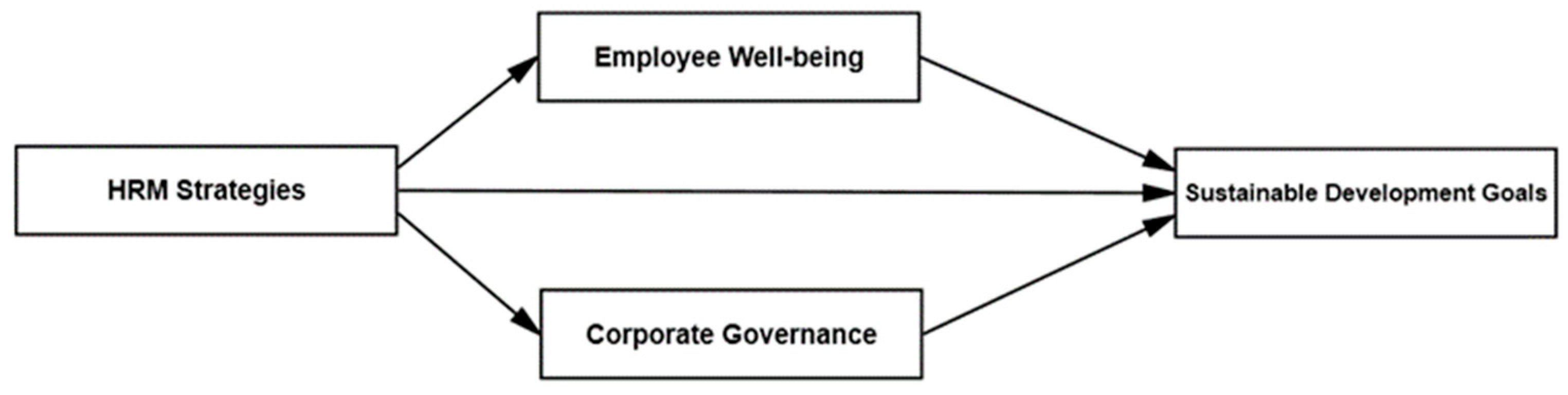
A figure illustrates the main concepts explored in this study, providing a schematic description of the research model. Figure 1 describes the research model in which one may find the hypotheses at the core of the present inquiry.

4. Research Method

This study aims to provide a comprehensive understanding of the relationships between HRM strategies, SDGs, employee well-being, and corporate governance in the private healthcare sector of Amman, Jordan. This study employs an explanatory and descriptive methodology to examine and describe the relationships among the research variables. The study adopts a quantitative methodological approach, collecting empirical data through a structured survey. The target population for this study is the workers in the private health sector in Amman, Jordan. According to the latest available statistics, there are 25 private hospitals in Amman, thus providing us with a critical area of focus for this research. We distributed 650 questionnaires among the employees of these hospitals to gather an adequate sample. We gathered 461 completed questionnaires, of which we used 457 for analysis. In this study, the final sample size of n = 457 respondents provides a strong basis for representativeness, given that the participants were drawn from a diverse group of employees across the 25 private hospitals. This number not only exceeds the recommended minimum thresholds for statistical analysis but also ensures that the findings capture a reliable cross-section of the workforce within the private healthcare sector. The sampling process was carefully designed to maximize inclusivity and reduce bias: structured questionnaires were distributed electronically through Google Forms and, where feasible, in coordination with hospital administration to ensure broad coverage across different departments and job levels. By using online survey, we were able to enhance accessibility, encourage higher participation, and reduce non-response bias. The achieved response rate of 70.3% is substantially higher than Fincham’s (2008) benchmark of 30% for online surveys, which further strengthens the credibility and generalizability of the data collected from the targeted population.
We have developed a structured survey to gather data on the fundamental components of the proposed framework. The questionnaire sought in-depth information regarding the variables under study: HRM strategies, employee well-being, and corporate governance. These items have previously shown their validity in past study assessments. We implemented the survey to ensure the precision of the collected data and to minimize the risk of incorrect measurements. Later, we made several adjustments to ensure they aligned with the specific objective of the research, and we also translated the items into Arabic. Refer to Table 1 for details on the provenance of the measurement instruments. The five-point Likert scale made it easier to quantify the responses and gave room for rigorous statistical analysis. The concerned institutional review board obtained ethical approval before the study began. Participation in the study was entirely voluntary, and participants were free to withdraw at any point. To help minimize common method bias and social desirability bias, their identities remained anonymous, and all responses were kept confidential (Podsakoff et al., 2012).

5. Results

This study has employed the structural equation modeling approach to measure the relationship among HRM strategies, employee well-being, corporate governance, and the SDGs. The model fit indices, in addition to the CFA measurements, offer a solid model for constructing these relationships. The construct assessments’ model fit results demonstrate a robust fit of the SEM using AMOS. Each of the indices has met or exceeded the recommended thresholds, demonstrating the robustness and reliability of the model (refer to Table 2). The calculated CMIN/DF is 2.632, considerably less than the strict threshold of 3 and comfortably inside the more liberal threshold of 5 (Marsh & Hocevar, 1985). This suggests that the model shows an acceptable degree of parsimony and is not a case of overfitting to the data. However, the GFI reports a value of 0.895. Although it is just under the more conservative threshold of 0.90, it comes in over the acceptable threshold of 0.85 (Jöreskog & Sörbom, 1984). That is to say, the model fits the sample data to an acceptable degree. The NFI is 0.876, a satisfactory fit above the threshold of 0.85 (Bentler & Bonett, 1980). This indicates a model in which the variance–covariance matrix explains the data well compared to the null model.
Furthermore, the CFI value of 0.948 exceeds the recommended cutoff of 0.90 (Hu & Bentler, 1999), indicating a tight fit of the model and significantly contributing to the explanation of the data. The AGFI value of 0.854 meets the lowest acceptable 0.85 threshold (Bollen, 1989). This adjusted index punishes complexity, yet it still concludes that the model is parsimonious and well-specified. The TLI value of 0.923 exceeds the threshold of 0.90, further explaining the model’s excellent fit (Tucker & Lewis, 1973). This suggests that the model performs fairly when compared to the more restrictive baseline model. The RMSEA is equal to 0.064, which lies well below the threshold of 0.08 (Browne & Cudeck, 1993). This indicates a close fit of the model to the data, with a minor residual misfit. Taken together, the model fit indices indicate that the SEM-AMOS model suits the data well and is both parsimonious and informative. Each index is greater than or equal to the recommended cut-off values, ensuring the reliability and validity of the model. Results show consistency with prior studies that encourage using multiple fit indices in assessing model adequacy comprehensively (Kline, 2015).
Table 3’s confirmatory factor analysis measures provide a detailed view of the constructs used in the current study, with a focus on convergent validity and construct reliability. The constructs applied herein are HRM strategies, employee well-being, corporate governance, and SDGs. The analysis contains loaded values (AVE, Cronbach’s alpha, and CR) for each construct to measure the adequacy and robustness of the measuring model. When we can demonstrate that items expected to measure shared variance actually measure shared variance, we establish convergent validity. We empirically check this through the average variance explained, which measures the average variance a construct’s indicators explain in relation to the variance from a measurement error. The AVE for HRM strategies is 0.560, indicating that the construct explains over 50% of the variance, surpassing the acceptable threshold of 0.50 (S. F. AlFraihat et al., 2025). This means that the measures for HRM strategies are closely related. The AVE of 0.504 also meets the minimally accepted threshold for convergent validity in the context of employee well-being. The AVE for corporate governance is 0.545, which is above the threshold, indicating excellent convergent validity. The SDG construct has the highest AVE of the lot, at 0.622, just as it evidences strong convergent validity.
We design reliability analysis using Cronbach’s alpha and composite reliability (CR). The general acceptance level for Cronbach’s alpha is more than 0.70, which indicates that the items measure internal consistency well (Nunnally & Bernstein, 1994; S. F. A. AlFraihat et al., 2025). Constructive measures with a composite reliability above 0.70 suggest that the constructed items are reliable (Hair et al., 2010). For HRM strategies, Cronbach’s alpha was at 0.865, while the CR was at 0.883, both above the 0.70 threshold, making them reliable. Organizational Actualizations: Cronbach’s Alpha 0.827; CR 0.835. The values are more significant than the recommended ones and suggest that the measurements are reliable. The construct Corporate Governance records a Cronbach’s alpha of 0.871 and a CR of 0.877, both of which are at adequate levels of reliability. The construct SDGs yields excellent results in this regard: Cronbach’s alpha is 0.898, and CR is 0.907.
Table 4 evaluates and presents discriminant validity by examining a construct in relation to the other constructs investigated in the research. It is crucial to interpret discriminant validity so that each study’s construct highlights the uniqueness of the data, rather than sharing significant similarities with other constructs. We usually check this by comparing the square root of AVE for each construct with the inner construct correlations. We generally check this by comparing the square root of AVE for each construct with the inter-construct correlations. The diagonal displays the square root of the AVE in bold form, while the off-diagonal elements reveal the correlations between the constructs. Fornell and Larcker’s (1981) discriminant validity necessitates that the AVE square root be greater than the correlation of any other construct.
For corporate governance, the square root of the AVE is 0.738, which is higher than its correlation with HRM strategies (0.733), employee well-being (0.601), and SDGs (0.717). As a result, corporate governance exhibits discriminatory validity, as its indicators are more relevant than those of other constructs. Furthermore, the square root of AVE for the HRM strategies is 0.748, a value that surpasses its correlation with corporate governance at 0.733, employee well-being at 0.557, and the SDGs at 0.595. As such, even the HRM strategies have discriminant validity. For employee well-being, the square root of AVE equates to 0.710, greater than that of the corporate governance variable, equating to 0.601, the HRM strategies variable, equating to 0.557, and the SDGs variable, equating to 0.589. It implies that employee well-being has discriminatory validity. Lastly, the SDGs’ square root value is 0.789, which is higher than the values of the SDGs’ correlations with corporate governance (0.717), HRM strategies (0.595), and employee well-being (0.589). This indicates the validity of the SDGs as a means of differentiation.
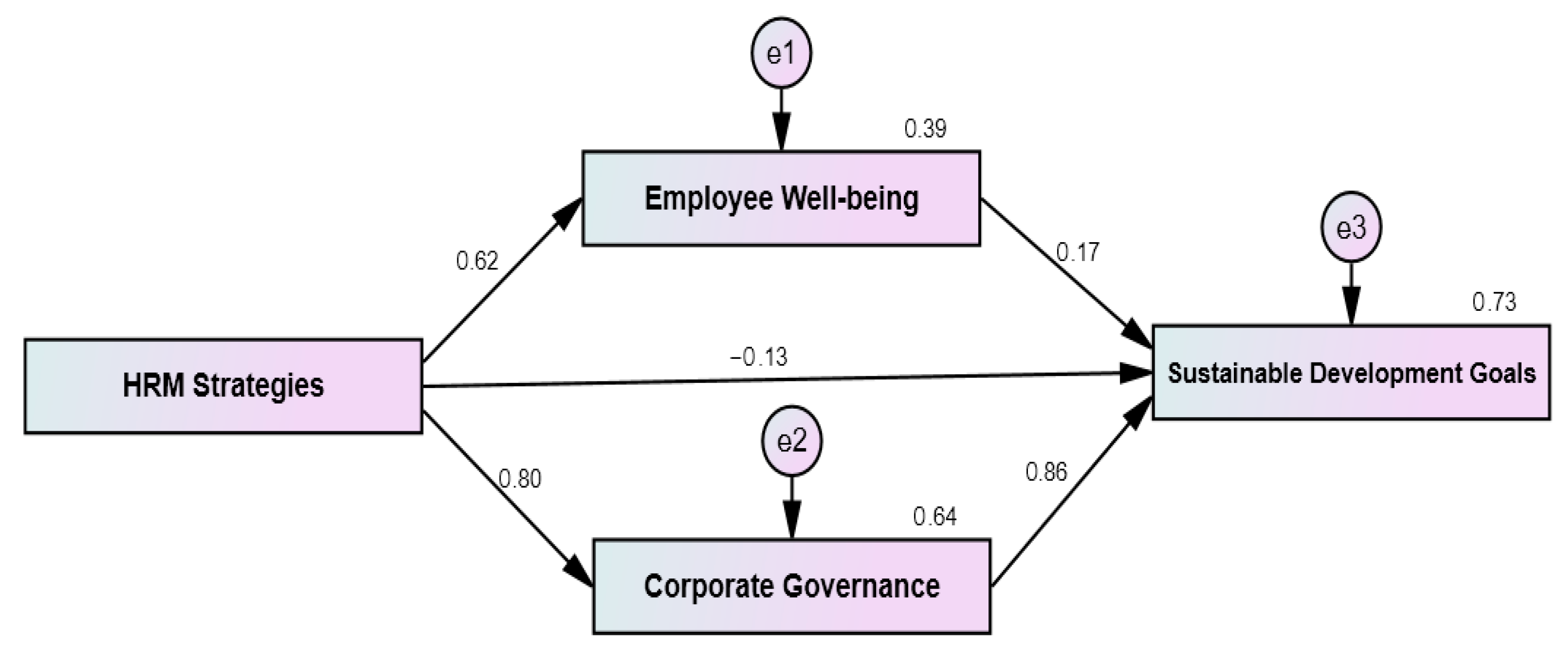
The squared multiple correlations (R2) for the dependent variables in the default model are shown in Figure 2 and Table 5. This shows how much of the variance in the corresponding construct can be explained by the predictors. The model explains 64% of the variance in corporate governance, with a coefficient of R = 0.640. Therefore, this high percentage suggests that the independent variables on corporate governance should have strong explanatory power. The model could account for about 39.1% of the variance in employee well-being, with an R-squared value of 0.391. This is adequate; however, it still shows a very substantial effect of the predictors on employee well-being. The highest R2 value is 0.728, which means that the model explains 72.8% of the variance of the SDGs construct and shows powerful predictive capability. Overall, these R2 values reflect the model’s capacity to explain the variability in the dependent constructs, and they are very high for corporate governance and SDGs. Similarly, the R-value for employee well-being is moderately high.
Table 6 below represents the direct hypotheses and results of the study about the significance of the relationship between HRM strategies, corporate governance, employee well-being, and the SDGs. The results all point to a few significant findings. First, HRM strategies negatively relate to SDGs (β = −0.133, S.E. = 0.049, T-Value = −2.699, p = 0.007): a significant result, but an inverse relationship at the 0.01 level. It thus appears that, while HRM strategies strengthen, they tend to influence SDG negatively. On the other hand, HRM strategies have a significantly strong positive impact on employee well-being (β = 0.618, S.E. = 0.038, T-Value = 16.427, p < 0.001) and corporate governance (β = 0.858, S.E. = 0.031, T-Value = 27.359, p < 0.001), both of which are highly important relationships. Therefore, HRM strategies that work are crucial to improving employee well-being and enhancing corporate governance.
Furthermore, corporate governance significantly positively influences SDGs (β = 0.841, S.E. = 0.041, T-Value = 20.34, p < 0.001), meaning that excellent governance significantly propels the achievement of SDGs. Lastly, employee well-being positively influences the SDGs (β = 0.176, S.E. = 0.034, T-Value = 5.121, p < 0.001); therefore, high employee well-being propels the attainment of the SDGs. Overall, the findings are proof that HRM strategies, corporate governance, and employee well-being sustain a close positive relationship with the attainment of the SDGs. While HRM strategies positively affect employee well-being and corporate governance, corporate governance and employee well-being both contribute positively to the SDGs, emphasizing well-being and governance to achieve sustainability objectives.
Table 7 presents the mediation role estimation results, evaluated using bootstrapping with 500 samples and a 95% confidence interval. The analysis confirms the mediation roles of employee well-being and corporate governance in the relationships between HRM strategies and the SDGs. The hypothesis is that employee well-being acts as a go-between for HRM strategies and the SDGs. The direct effect (β = 0.131) and the indirect effect (0.002) are both within the confidence interval bounds (0.058 to 0.289), which means that there is a significant mediation effect. This suggests that HRM strategies positively influence employee well-being, which in turn enhances the SDGs. In the same way, the direct effect (β = 0.126) and the indirect effect (0.004) for the idea that corporate governance acts as a go-between for HRM strategies and SDGs are both within the confidence interval bounds (0.084 to 0.247), showing that there is a strong mediation effect. This demonstrates that HRM strategies positively influence corporate governance, which subsequently contributes to the SDGs. The acceptance of both hypotheses underscores the crucial role of employee well-being and corporate governance as mediators in the relationship between HRM strategies and SDGs. The results suggest that organizations should encourage and enshrine practices that promote employee well-being and governance to ensure effective HRM strategies lead to improved sustainable development outcomes.


6. Discussion

The research established that the impact of HRM strategies was inversely proportional to the SDGs, contrary to the postulated hypothesis, which forecasted that HRM strategies would positively impact the specified goal. The unexpected finding that HRM strategies exerted a negative direct effect on the achievement of SDGs warrants deeper reflection in the discussion. One plausible explanation is that many HRM initiatives within the private healthcare sector remain focused on immediate organizational needs, such as cost reduction, workforce efficiency, and compliance with internal policies, rather than being explicitly aligned with long-term sustainability objectives. This misalignment may create a tension where short-term HR goals inadvertently undermine broader sustainable development priorities. For example, initiatives aimed at strict performance monitoring or resource optimization could enhance efficiency in the short run but may also generate employee stress or reduce opportunities for innovation, which are essential for advancing the SDGs. As highlighted by Almarzooqi et al. (2019) and Apostu and Gigauri (2023), HRM can serve as a powerful driver of sustainability when strategically integrated; however, without such integration, HR practices risk becoming isolated operational tools that hinder rather than support sustainable development. This suggests that organizations must move beyond fragmented HR interventions and instead adopt more holistic, strategically embedded HRM practices that explicitly incorporate sustainability values into recruitment, training, performance evaluation, and reward systems.
Of particular interest, the study affirmed the hypothesis that HRM strategies have positive effects on the health of employees. Similarly, Y. Lu et al. (2023) noted that the implementation of more sustainable HRM practices positively impacted employee resilience and engagement, leading to a more positive work environment. Luu (2019) and Panya (2023) advocated for enhancing employee engagement and welfare, arguing that investing more in employees yields higher returns and improved performance. This research confirms the view that orature and effective HRM strategies are central to the quality of employee health and work climates/environments that enhance productivity. The study reveals that MNE HRM strategies have a positive impact on corporate governance. This is in line with Zhou et al. (2019) and Battour et al. (2021), who opined that the high-performance work system and HRM practices improve corporate governance and organizational performance. Thus, the study reveals a positive correlation between the key strategies of effective SHRM practice and the support of governance structures in organizations, as well as the exercise of checks and balances to maintain high standards of ethical behaviors and corporate governance. This study demonstrated that HRM plays a crucial role in safeguarding corporate governance mechanisms, ensuring the long-term sustainability of business operations.
Corporate governance was also evidently positive and highly significant in shaping the destinies of the SDGs. Thus, this study supports what Martínez-Ferrero and García-Meca (2020) and Ahmed and Anifowose (2023) identified regarding how good governance practices assist in achieving strategy sustainability and development objectives. The study of Vacca et al. (2020) also supports that focusing on diversity and inclusive decision making significantly increases the quality of corporate governance and advances the SDGs. In this context, effective corporate governance practices play a crucial role in promoting sustainable development, thereby affirming that the success of organizational operations hinges on achieving the long-term sustainability goals. Therefore, the enhancement of employee well-being necessitates a more comprehensive growth strategy. This result is similar to Hernández et al. (2021) and Neve and Sachs (2020), who have noted that the fundamental practices of employee well-being are the driving force behind other practices in the index. Dwyer (2022) and Monteiro and Joseph (2022) further demonstrated that the positive correlation of this outcome for employee well-being could also extend to other sustainability imperatives, such as health, productivity, and organizational performance. Therefore, the findings of this study corroborate the opinion that the enhancement of employee well-being can most vividly exemplify the key contribution to sustainability activities.
The mediating results also confirm that HRM strategies influence the SDGs through the well-being of employees. This suggests that HRM strategies have a positive impact on the well-being of employees, which in turn positively influences the attainment of SDGs. Davidescu et al. (2020) and Gyensare et al. (2024) established employee well-being as a mediator between sustainable HRM and organizational success, a methodology that this conclusion builds upon. The mediating influence demonstrated that HRM policies need to address not only the organization’s immediate needs but also its capacity to transition into a sustainable existence through health enhancement, necessitating a comprehensive approach. Similarly, corporate governance acted as a moderating variable between HRM strategies and the SDGs. This supports the postulation that mechanisms of corporate governance reveal some of the effective ways in which HRM strategies make known the expectations of sustainable development. Furthermore, Zubeltzu-Jaka (2023) and Mehedi et al. (2023) demonstrate that corporate governance mediates the implementation of the SDGs by influencing performance and managerial responses to environmental management. This mediating impact lends credibility to the idea of introducing sustainable HRM practices with favorable governance, which would result in long-lasting sustainability effects.

7. Theoretical Implications

This study’s findings have theoretical implications that extend the broader literature on HRM, corporate governance, employee well-being, and the SDGs. By building on the interlinkages among these variables in the private healthcare sector of Amman, Jordan, the current study provides new insights and extends existing theories in multiple ways. First, the study challenges the traditional view that HRM strategies positively influence sustainability outcomes since it sheds light on the negative direct effect of HRM strategies on SDGs. This finding would suggest that, even if HRM strategies are critical to organizational performance, their direct alignment with sustainability goals might need much more nuanced, integrated approaches. This adds to the theoretical knowledge of sustainable HRM practices, highlighting the balance required between short-term organizational needs and the long-term organizational objective of sustainability. The second positive impact of HRM strategies on corporate governance underscores the theoretical perspective that effective HRM practices are essential not only in human capital management but also in enhancing governance structures. This relationship is strengthened by the close connection between HRM and corporate governance, which promotes openness, responsibility, and moral behavior. This interaction also leads to new ideas about the strategic role of HRM in creating strong and long-lasting governance systems for long-lasting business.
This tends to further lend empirical support to HRM’s mutual gains model, which holds that employee well-being mediates the relationship between HRM strategies and SDGs. The mediation effect thus demonstrated a link between employee well-being and general sustainability outcomes. We suggested that HRM strategies should prioritize supporting employees’ overall development as a long-term factor for long-term growth. This provides theoretical insight into the means through which employee well-being may be an essential lever for meeting sustainability objectives. Third, the study focusing on the Jordanian private healthcare sector is context-specific and, therefore, offers additional legitimacy to the theoretical discourse on sustainable HRM in other industries and regions. Research shows that the implementation and results of sustainable HRM practices depend on the sector and region. This supports multidimensional models of sustainability that show how economic, social, and environmental goals are connected.

8. Practical Implications

In addition to its theoretical contributions, the study offers practical implications that managers, policymakers, and organizations striving to achieve SDGs can understand through effective HRM strategies, corporate governance, and employee well-being. Organizations must integrate sustainability into their HRM practices to ensure that HR initiatives and organizational goal priorities align rather than become entangled in short-term performance metrics. Therefore, this calls for a strategic approach to HRM that takes into account the broader impact on sustainable development and integrates principles of sustainability into HR policies and practices. To achieve the SDGs, it is essential to invest in employee well-being. To boost productivity and engagement, organizations should offer comprehensive physical, mental, and emotional health programs. Improving organizational performance is heavily dependent on sustainable development, which fosters support and positive work conditions.
The corporate governance structures should be strong enough to embed sustainability in the organizational practices. It also carries transparency and accountability in organizational activities at all levels, ensuring that an organization’s governance system supports sustainable business operations. This includes promoting diversity in leadership, establishing inclusive decision making, and incorporating environmental and social concerns into governance. A holistic approach to HRM, recognizing the mediating role of employee well-being and corporate governance in between, permits HR strategies to be effective in delivering sustainability goals. Organizations must design HRM practices to drive organizational performance, not just for the short term, but to support long-term sustainability through enhanced employee well-being and robust governance practices. In general, the conclusions of this study provide some practical input that organizations may use to effectively utilize HRM for sustainable development objectives. Organizations, through HRM practices, can make their workforce more resilient, engaged, and sustainable in line with sustainability goals. Therefore, organizations can make significant positive contributions to global efforts aligned with the sustainability agenda.

9. Conclusions

The primary focus of the study is on the complex interlinkages between HRM strategies, corporate governance, employee well-being, and the attainment of SDGs within the private healthcare sector in Amman, Jordan. The present research used SEM to further understand how these elements work together and influence the sustainable development outcome. Notably, one of the most significant findings was the peculiar negative direct effect of HRM strategies on SDGs. Thus, while HRM strategies form the foundation of organizational effectiveness, we must integrate their innovations with greater consideration for sustainability goals. This outcome indicates that HRM practices need to focus on long-term sustainability objectives rather than only ensuring performance in the short run. This study, therefore, confirmed the active role that organizational HRM strategies play in employee well-being and corporate governance. A proper HRM strategy builds employee resilience, engagement, and general well-being, improving organizational performance and commitment to sustainability. Currently, proper HRM strategies have a positive link between an organization and corporate governance. However, for this to become a reality, HRM must firmly establish itself within governance frameworks, which are responsible for establishing standards and policies that promote transparency, accountability, and ethical behavior within organizations.
Furthermore, we observed that both employee well-being and corporate governance played equally critical mediating roles in the relationship between HRM and SDG strategies. This established a strong interconnection among these variables, suggesting that a supportive work environment and suitable governance structures primarily lead to sustainable development through HRM policies. The paper presents significant practical implications for managers and policymakers. Organizations pursuing a strategic approach that aims to integrate the principles of sustainability into their HRM practices, invest thoroughly in their employees’ well-being, and enhance the corporate governance framework will be able to support long-term sustainability goals. Organizations can leverage HRM strategies to drive efforts toward sustainable development by adopting a holistic approach that considers the mediating roles of employee well-being and corporate governance.

10. Limitations and Recommendations for Future Research

This research has yielded much valuable insight, but it still has limitations. For this reason, it would be beneficial to conduct additional research in different sectors and geographical locations to enhance the validity of the findings. Due to its exclusive focus on the private healthcare sector in Amman, Jordan, this research lacks the representativeness necessary to provide a comprehensive understanding of the phenomenon. Furthermore, the cross-sectional design only captures a single point in time, which may provide limited insight due to the dynamic nature of HRM practices and their long-term influence on sustainability. A longitudinal approach would further enhance our understanding of the relationships among HRM strategies, corporate governance, employee well-being, and SDGs over time. Despite the study relying on the employees’ self-reports, we could incorporate multiple data sources and objective measures to fully understand the latent variables under investigation. In summary, this study theoretically and practically contributes to the implementation of a framework for sustainable HRM practices, emphasizing the alignment of HRM strategies with sustainability objectives, fostering employee well-being, and enhancing corporate governance to realize the SDGs. The insights gained provide a valuable foundation for future field studies or practical applications in sustainable HRM, which will guide organizations toward more resilient and sustainable business practices. The research was conducted within the private healthcare sector in Amman, Jordan. While this context provides an important and underexplored setting, the findings may not be fully generalizable to other sectors, regions, or countries with different institutional frameworks, cultural dynamics, and governance structures. Comparative studies across sectors or within public healthcare institutions would enrich our understanding of the broader applicability of sustainable HRM practices.
Based on these limitations, we recommend that future research explore the use of alternative and mixed measurement tools, such as multi-dimensional well-being indices, behavioral data, or qualitative interviews, to complement survey responses and provide richer insights. Expanding the scope of research to include different sectors and geographical contexts would also enhance generalizability and allow for meaningful cross-cultural comparisons. Moreover, longitudinal and mixed-method approaches could provide deeper evidence on the causal pathways and dynamic interactions among HRM, governance, employee well-being, and sustainability objectives. By addressing these areas, future studies can build on the present work to offer a more comprehensive and context-sensitive understanding of sustainable HRM practices and their role in advancing the SDGs.

Author Contributions

Conceptualization, A.A.-J., M.A., S.F.A. and R.E.; Methodology, A.A. and M.A.; Software, T.B.; Validation, A.A.-J. and R.E.; Formal analysis, A.A. and M.A.; Investigation, A.A. and S.F.A.; Resources, T.B.; Data curation, T.B.; Writing—original draft, A.A. and S.F.A.; Writing—review & editing, A.A.-J., M.A. and R.E.; Visualization, M.A.; Supervision, M.A. and S.F.A.; Project administration, M.A. and S.F.A. All authors have read and agreed to the published version of the manuscript.

Funding

This research received no external funding.

Institutional Review Board Statement

According to the research practices and legal framework in Jordan, studies involving anonymous online questionnaires without the collection of personally identifiable information, medical data, or biological interventions do not require approval from an Institutional Review Board (IRB) or Ethics Committee. Our study followed this practice, ensuring full adherence to ethical academic standards.

Informed Consent Statement

Informed consent was obtained from all subjects involved in the study.

Data Availability Statement

Data are contained within the article.

Conflicts of Interest

The authors declare no conflicts of interest.

References

  1. Abugabel, A. (2023). The impact of digital transformation on sustainable development: The mediating role of development of human resources management practices. An empirical study on private hospitals. Alexandria University Journal of Administrative Sciences, 60(2), 173–233. [Google Scholar] [CrossRef]
  2. Afaishat, T. M., Alghizzawi, M., & AlFraihat, S. F. (2025). The impact of the e-marketing mix on brand equity in the Jordanian banking sector. Administrative Sciences, 15(6), 232. [Google Scholar] [CrossRef]
  3. Ahmed, A., & Anifowose, M. (2023). Corruption, corporate governance, and sustainable development goals in Africa. Corporate Governance, 24(1), 119–138. [Google Scholar] [CrossRef]
  4. Alakbarov, U., Habibova, Z., & Rahimli, R. (2020). The role of human resources in comprehensive regional sustainable development: The case of Azerbaijan. International Journal of Economics and Financial Issues, 10(3), 79–82. [Google Scholar] [CrossRef]
  5. AlFraihat, S. F., Aboalganam, K. M., Alghizzawi, M., Habes, M., & Almuhaisen, O. (2025). Influencer captions and credibility on Instagram: Investigating their impact on brand trust, brand awareness and purchase intention. Forum for Linguistic Studies, 7(6), 314–330. [Google Scholar] [CrossRef]
  6. AlFraihat, S. F. A., Ali, A. M., Hodaifa, G., & Alghizzawi, M. (2025). The impact of digital content marketing on brand defence: The mediating role of behavioural engagement and brand attachment. Administrative Sciences, 15(4), 124. [Google Scholar] [CrossRef]
  7. Almarzooqi, A. H., Khan, M., & Khalid, K. (2019). The role of sustainable HRM in sustaining positive organizational outcomes: An interactional framework. International Journal of Productivity and Performance Management, 68(7), 1272–1292. [Google Scholar] [CrossRef]
  8. Alodat, A., Salleh, Z., Nobanee, H., & Hashim, H. (2023). Board gender diversity and firm performance: The mediating role of sustainability disclosure. Corporate Social Responsibility and Environmental Management, 30(4), 2053–2065. [Google Scholar] [CrossRef]
  9. Al Shibly, M. S., Alabdallat, T. T., Bakir, S. M. D. A., Alotoum, F. J., & Alghizzawi, M. (2024). Adoption of artificial intelligence in human resources management: Career-planning perspective. Pakistan Journal of Life & Social Sciences, 22(2), 18455–18467. [Google Scholar]
  10. Alzghoul, A., Khaddam, A. A., & Al-Kasasbeh, O. (2024). The interplay among HR sustainability initiatives, intention to use of energy resources, environmental consciousness, and environmental performance. International Journal of Energy Economics and Policy, 14(4), 624–630. [Google Scholar] [CrossRef]
  11. Apostu, S. A., & Gigauri, I. (2023). Mapping the link between human resource management and sustainability: The pathway to sustainable competitiveness. In Reshaping performance management for sustainable development (pp. 31–59). Emerald Publishing Limited. [Google Scholar]
  12. Aslanertik, B., & Çolak, M. (2021). The link between sustainability reporting and the core characteristics of sustainable human resource management. International Journal of Contemporary Management, 57(4), 15–24. [Google Scholar] [CrossRef]
  13. Aust, I. (2024). Achieving sustainable development goals through common-good HRM: Context, approach and practice. German Journal of Human Resource Management Zeitschrift für Personalforschung, 38(2), 93–110. [Google Scholar] [CrossRef]
  14. Awamleh, F. T., Albloush, A., Al Jarrah, M., & AlAwamleh, H. K. (2025a). The role of data analytics and business intelligence in enhancing the relationship between E-HRM practices and job satisfaction. Problems and Perspectives in Management, 23(2), 208–219. [Google Scholar] [CrossRef]
  15. Awamleh, F. T., Shwawreh, S., Al-Kharabsheh, S. A. I., & Alzghoul, A. (2025b). The integration of renewable energy adoption in sustainability practices for sustainable competitive advantage in Jordanian SMEs. Challenge Sustainability, 13(1), 135–145. [Google Scholar] [CrossRef]
  16. Azegele, M. (2021). The mediating effect of human resource management practice on the relationship between corporate governance and organizational performance of insurance companies in Kenya. Journal of Human Resource & Leadership, 5(2), 89–103. [Google Scholar]
  17. Azmi, F. T. (2010). Strategic human resource management: Scale development and validation. Philippine Management Review, 17, 80–102. [Google Scholar]
  18. Bastas, A., & Liyanage, K. (2021). Assessing the enablers and barriers to quality and supply chain management based approach to sustainable operations in the manufacturing context. In Advances in manufacturing technology XXXIV (pp. 329–337). IOS Press. [Google Scholar]
  19. Battour, M., Barahma, M., & Al-Awlaqi, M. (2021). The relationship between HRM strategies and sustainable competitive advantage: Testing the mediating role of strategic agility. Sustainability, 13(9), 5315. [Google Scholar] [CrossRef]
  20. Bentler, P. M., & Bonett, D. G. (1980). Significance tests and goodness of fit in the analysis of covariance structures. Psychological Bulletin, 88(3), 588–606. [Google Scholar] [CrossRef]
  21. Berber, N., Slavić, A., & Leković, B. (2019). A research on the socially responsible human resource management in Serbia. Skola Biznisa, 1, 69–85. [Google Scholar] [CrossRef]
  22. Black, B., De Carvalho, A. G., Khanna, V., Kim, W., & Yurtoglu, B. (2017). Corporate governance indices and construct validity. Corporate Governance: An International Review, 25(6), 397–410. [Google Scholar]
  23. Bollen, K. A. (1989). Structural equations with latent variables. Wiley. [Google Scholar]
  24. Brewster, C., & Brookes, M. (2024). Sustainable development goals and new approaches to HRM: Why HRM specialists will not reach the sustainable development goals and why it matters. German Journal of Human Resource Management, 38(2), 183–201. [Google Scholar] [CrossRef]
  25. Browne, M. W., & Cudeck, R. (1993). Alternative ways of assessing model fit. In K. A. Bollen, & J. S. Long (Eds.), Testing structural equation models (pp. 136–162). Sage. [Google Scholar]
  26. Cai, C., Qiu, R., & Tu, Y. (2022). Role of digital economy in rebuilding and sustaining the space governance mechanisms. Frontiers in Psychology, 12, 828406. [Google Scholar] [CrossRef]
  27. Campos-García, I., Alonso-Muñoz, S., González-Sánchez, R., & Medina-Salgado, M. S. (2024). Human resource management and sustainability: Bridging the 2030 agenda. Corporate Social Responsibility and Environmental Management, 31(3), 2033–2053. [Google Scholar] [CrossRef]
  28. Carballo-Penela, A., Ruzo-Sanmartín, E., Álvarez-González, P., & Paillé, P. (2023). How do GHRM practices influence firms’ economic performance? A meta-analytic investigation of the role of GSCM and environmental performance. Journal of Business Research, 165(10), 113984. [Google Scholar] [CrossRef]
  29. Chaudhary, R. (2019). Green human resource management and employee green behavior: An empirical analysis. Corporate Social Responsibility and Environmental Management, 27(2), 630–641. [Google Scholar] [CrossRef]
  30. Daher-Nashif, S., & Bawadi, H. (2020). Women’s health and well-being in the united nations sustainable development goals: A narrative review of achievements and gaps in the gulf states. International Journal of Environmental Research and Public Health, 17(3), 1059. [Google Scholar] [CrossRef]
  31. Davidescu, A., Apostu, S., Paul, A., & Cășuneanu, I. (2020). Work flexibility, job satisfaction, and job performance among Romanian employees—Implications for sustainable human resource management. Sustainability, 12(15), 6086. [Google Scholar] [CrossRef]
  32. Dong, R. (2023). A sustainable development evaluation framework for Chinese electricity enterprises based on SDG and ESG coupling. Sustainability, 15(11), 8960. [Google Scholar] [CrossRef]
  33. Dorta-Afonso, D., Romero-Domínguez, L., & Benítez-Núñez, C. (2023). It’s worth it! High performance work systems for employee job satisfaction: The mediational role of burnout. International Journal of Hospitality Management, 108, 103364. [Google Scholar] [CrossRef]
  34. Dwyer, L. (2022). Tourism contribution to the SDGs: Applying a well-being lens. European Journal of Tourism Research, 32, 3212. [Google Scholar] [CrossRef]
  35. Ferreira-Oliveira, A., Keating, J., & Silva, I. (2020). Sustainable HRM as a pathway to sustainability—HRMS relevance on affective commitment through organizational trust. Sustainability, 12(22), 9443. [Google Scholar] [CrossRef]
  36. Fincham, J. E. (2008). Response rates and responsiveness for surveys, standards, and the Journal. American Journal of Pharmaceutical Education, 72(2), 43. [Google Scholar] [CrossRef]
  37. Fornell, C., & Larcker, D. F. (1981). Evaluating structural equation models with unobservable variables and measurement error. Journal of Marketing Research, 18(1), 39–50. [Google Scholar] [CrossRef]
  38. Gyensare, M. A., Adomako, S., & Amankwah-Amoah, J. (2024). Green HRM practices, employee well-being, and sustainable work behavior: Examining the moderating role of resource commitment. Business Strategy and the Environment, 33(4), 3129–3141. [Google Scholar] [CrossRef]
  39. Haeril, H., & Purnomo, E. (2019). Management of small-sustainable coastal and island areas based on collaborative management (case study in Bima regency, west Nusa Tenggara). Journal of Local Government Issues, 2(1), 18. [Google Scholar] [CrossRef]
  40. Hair, J. F., Black, W. C., Babin, B. J., & Anderson, R. E. (2010). Multivariate data analysis (7th ed.). Pearson. [Google Scholar]
  41. Hamadamin, H., & Atan, T. (2019). The impact of strategic human resource management practices on competitive advantage sustainability: The mediation of human capital development and employee commitment. Sustainability, 11(20), 5782. [Google Scholar] [CrossRef]
  42. Hameed, A., Khwaja, M., & Zaman, U. (2023). Configuring optimal contextual performance and task performance in offshore business processing organizations. Business Process Management Journal, 29(1), 285–307. [Google Scholar] [CrossRef]
  43. Hamid, S. (2019). The strategic position of human resource management for creating sustainable competitive advantage in the VUCA world. Journal of Human Resources Management and Labor Studies, 7(2), 1–4. [Google Scholar] [CrossRef]
  44. He, J., Morrison, A., & Zhang, H. (2019). Improving millennial employee well-being and task performance in the hospitality industry: The interactive effects of HRM and responsible leadership. Sustainability, 11(16), 4410. [Google Scholar] [CrossRef]
  45. Helfaya, A., & Aboud, A. (2023). Editorial for the special issue “corporate governance, social responsibility, innovation, and sustainable business development goals”. Sustainability, 15(12), 9471. [Google Scholar] [CrossRef]
  46. Hernández, M., Burguete, J., García-Miguélez, M., & Lanero-Carrizo, A. (2021). Internal corporate social responsibility for sustainability. Sustainability, 13(14), 7920. [Google Scholar] [CrossRef]
  47. Hu, L. T., & Bentler, P. M. (1999). Cutoff criteria for fit indexes in covariance structure analysis: Conventional criteria versus new alternatives. Structural Equation Modeling: A Multidisciplinary Journal, 6(1), 1–55. [Google Scholar] [CrossRef]
  48. Hussein, A., Mohammad, A., Alheet, A., Joma, M., & lehyeh, S. (2023). Relationships between human resource management practices, employee satisfaction, service quality, and employee service behavior in the hotel industry. Problems and Perspectives in Management, 21(1), 242–252. [Google Scholar] [CrossRef]
  49. Jeronimo, H. M., de Lacerda, T. C., & Henriques, P. L. (2020). From sustainable HRM to employee performance: A complex and intertwined road. European Management Review, 17(4), 871–884. [Google Scholar] [CrossRef]
  50. Jöreskog, K. G., & Sörbom, D. (1984). LISREL VI: Analysis of linear structural relationships by maximum likelihood and least squares methods. Scientific Software. [Google Scholar]
  51. Kaczan, D., & Patil, P. (2020). Potential development contribution of fisheries reform: Evidence from Pakistan. The Journal of Environment & Development, 29(3), 275–305. [Google Scholar] [CrossRef]
  52. Khaddam, A. A., Alzghoul, A., Khawaldeh, K., & Alnajdawi, A. M. (2023). How spiritual leadership influences creative behaviors: The mediating role of workplace climate. International Journal of Professional Business Review, 8(2), 7. [Google Scholar] [CrossRef]
  53. Kim, M., Hall, C., & Han, H. (2021). Behavioral influences on crowdfunding SDG initiatives: The importance of personality and subjective well-being. Sustainability, 13(7), 3796. [Google Scholar] [CrossRef]
  54. Kinowska, H. (2021). Core features for the design of remuneration systems for sustainable human resource management during the COVID-19 pandemic: Polish companies’ experiences. Journal of Entrepreneurship and Sustainability Issues, 8(4), 389–402. [Google Scholar] [CrossRef]
  55. Klement, J., & Terlau, W. (2022). Education for sustainable development and meaningfulness: Evidence from the questionnaire of eudaimonic well-being from German students. International Journal of Environmental Research and Public Health, 19(11), 6755. [Google Scholar] [CrossRef]
  56. Kline, R. B. (2015). Principles and practice of structural equation modeling (4th ed.). Guilford Press. [Google Scholar]
  57. Kloutsiniotis, P. V., & Mihail, D. M. (2020). Is it worth it? Linking perceived high-performance work systems and emotional exhaustion: The mediating role of job demands and job resources. European Management Journal, 38(4), 565–579. [Google Scholar] [CrossRef]
  58. Lashitew, A. (2021). Corporate uptake of the sustainable development goals: Mere greenwashing or an advent of institutional change? Journal of International Business Policy, 4(1), 184–200. [Google Scholar] [CrossRef]
  59. Lima, L., & Galleli, B. (2021). Human resources management and corporate governance: Integration perspectives and future directions. European Management Journal, 39(6), 731–744. [Google Scholar] [CrossRef]
  60. Lombardi, R., Manfredi, S., Cuozzo, B., & Palmaccio, M. (2020). The profitable relationship among corporate social responsibility and human resource management: A new sustainable key factor. Corporate Social Responsibility and Environmental Management, 27(6), 2657–2667. [Google Scholar] [CrossRef]
  61. Lu, Y., Zhang, M. M., Yang, M. M., & Wang, Y. (2023). Sustainable human resource management practices, employee resilience, and employee outcomes: Toward common good values. Human Resource Management, 62(3), 331–353. [Google Scholar] [CrossRef]
  62. Lu, Z., Guo, X., Lei, Z., & Lim, M. (2019). Social network analysis of sustainable human resource management from the employee training’s perspective. Sustainability, 11(2), 380. [Google Scholar] [CrossRef]
  63. Luu, T. (2019). Discretionary HR practices and employee well-being. Personnel Review, 49(1), 43–66. [Google Scholar] [CrossRef]
  64. Makedon, V., Hetman, O., Yemchuk, L., Paranytsia, N., & Petrovska, S. (2019). Human resource management for secure and sustainable development. Journal of Security and Sustainability Issues, 8(3), 345–354. [Google Scholar] [CrossRef]
  65. Makhecha, U., & Mariappanadar, S. (2023). High-performance sustainable work practices for corporate ESG outcomes: Sustainable HRM perspective. NHRD Network Journal, 16(2), 159–163. [Google Scholar] [CrossRef]
  66. Makpotche, M. (2024). Corporate governance and green innovation: International evidence. Review of Accounting and Finance, 23(2), 280–309. [Google Scholar] [CrossRef]
  67. Marsh, H. W., & Hocevar, D. (1985). Application of confirmatory factor analysis to the study of self-concept: First- and higher order factor models and their invariance across groups. Psychological Bulletin, 97(3), 562–582. [Google Scholar] [CrossRef]
  68. Martínez-Ferrero, J., & García-Meca, E. (2020). Internal corporate governance strength as a mechanism for achieving sustainable development goals. Sustainable Development, 28(5), 1189–1198. [Google Scholar] [CrossRef]
  69. Mauno, S., Herttalampi, M., Minkkinen, J., Feldt, T., & Kubicek, B. (2023). Is work intensification bad for employees? A review of outcomes for employees over the last two decades. Work & Stress, 37(1), 100–125. [Google Scholar]
  70. Mehedi, S., Nahar, S., & Jalaludin, D. (2023). Determinants of corporate climate change disclosure: Is the mediating role of corporate strategic response to environmental governance and policy matter? Evidence from emerging market. Sustainable Development, 32(1), 195–210. [Google Scholar] [CrossRef]
  71. Miah, M., Szabó-Szentgróti, G., & Walter, V. (2024). A systematic literature review on green human resource management (GHRM): An organizational sustainability perspective. Cogent Business & Management, 11(1), 2371983. [Google Scholar] [CrossRef]
  72. Minbaeva, D. B., & Navrbjerg, S. E. (2023). Strategic human resource management in the context of environmental crises: A COVID-19 test. Human Resource Management, 62(6), 811–832. [Google Scholar] [CrossRef]
  73. Monteiro, E., & Joseph, J. (2022). Establishing healthy workplaces: A case study on the employee well-being initiatives in the IT sector. International Journal of Case Studies in Business It and Education, 6, 378–392. [Google Scholar] [CrossRef]
  74. Mustika, M. (2023). Factors influencing employee’s well-being and job performance: The perspective of state-owned enterprise employee. IJHCM (International Journal of Human Capital Management), 7(1), 86–103. [Google Scholar] [CrossRef]
  75. Napathorn, C. (2021). The implementation of green human resource management bundles across firms in pursuit of environmental sustainability goals. Sustainable Development, 30(5), 787–803. [Google Scholar] [CrossRef]
  76. Neve, J., & Sachs, J. (2020). The SDGs and human well-being: A global analysis of synergies, trade-offs, and regional differences. Scientific Reports, 10(1), 15113. [Google Scholar] [CrossRef]
  77. Nunnally, J. C., & Bernstein, I. H. (1994). Psychometric theory (3rd ed.). McGraw-Hill. [Google Scholar]
  78. Ogbonnaya, C., & Messersmith, J. (2019). Employee performance, well-being, and differential effects of human resource management subdimensions: Mutual gains or conflicting outcomes? Human Resource Management Journal, 29(3), 509–526. [Google Scholar] [CrossRef]
  79. Panya, F. (2023). Paternalism as a positive way of HRM in MSMEs during the COVID-19 pandemic. Employee Relations, 46(1), 147–169. [Google Scholar] [CrossRef]
  80. Podsakoff, P. M., MacKenzie, S. B., & Podsakoff, N. P. (2012). Sources of method bias in social science research and recommendations on how to control it. Annual Review of Psychology, 63(1), 539–569. [Google Scholar] [CrossRef]
  81. Pradhan, R. K., & Hati, L. (2022). The measurement of employee well-being: Development and validation of a scale. Global Business Review, 23(2), 385–407. [Google Scholar] [CrossRef]
  82. Previtali, P., & Cerchiello, P. (2022). Organizational determinants of whistleblowing. A study of Italian municipalities. Public Organization Review, 22(4), 903–918. [Google Scholar] [CrossRef]
  83. Rajashekar, S., & Jain, A. (2023). A thematic analysis on “employee engagement in it companies from the perspective of holistic well-being initiatives”. Employee Responsibilities and Rights Journal, 36(2), 165–187. [Google Scholar] [CrossRef] [PubMed]
  84. Raman, R. (2023). Contribution of business research to sustainable development goals: Bibliometrics and science mapping analysis. Sustainability, 15(17), 12982. [Google Scholar] [CrossRef]
  85. Sapna, N., & Gupta, A. (2021). Implementation of green human resource management practices: Barriers and solutions. Journal of Scientific Research, 65(09), 71–77. [Google Scholar] [CrossRef]
  86. Sarwar, H., Ishaq, M., & Franzoni, S. (2022). Influence of HRM on CSR and performance of upscale hotels in developed and developing countries. Environment Development and Sustainability, 26(1), 335–357. [Google Scholar] [CrossRef]
  87. Sathasivam, K., Bakar, R., & Hashim, R. (2020). Embracing organisational environmental sustainability: Experiences in green human resource management. Business Strategy & Development, 4(2), 123–135. [Google Scholar]
  88. Shaikh, F. (2023). Organizational commitment to sustainability: Considering the role of leadership, green HRM and green knowledge sharing. Journal of Organizational Change Management, 37(2), 356–373. [Google Scholar] [CrossRef]
  89. Shepherd, D. A., Kuskova, V., & Patzelt, H. (2009). Measuring the values that underlie sustainable development: The development of a valid scale. Journal of Economic Psychology, 30(2), 246–256. [Google Scholar] [CrossRef]
  90. Shi, L., Van Veldhoven, M., Kooij, D., Van De Voorde, K., & Karanika-Murray, M. (2024). High-performance work systems and individual performance: A longitudinal study of the differential roles of happiness and health well-being. Frontiers in Psychology, 14, 1261564. [Google Scholar] [CrossRef]
  91. Song, W., Ma, Y., Fan, X., & Peng, X. (2023). Corporate environmental ethics and employee’s green creativity? The perspective of environmental commitment. Corporate Social Responsibility and Environmental Management, 30(4), 1856–1868. [Google Scholar] [CrossRef]
  92. Sypniewska, B., Baran, M., & Kłos, M. (2023). Work engagement and employee satisfaction in the practice of sustainable human resource management–based on the study of Polish employees. International Entrepreneurship and Management Journal, 19(3), 1069–1100. [Google Scholar] [CrossRef]
  93. Tawalbeh, M., Alzghoul, A., & Alsheikh, G. A. A. (2025, January). Business intelligence as a catalyst for HR transformation: A study of BI implementation in HR practices. In AIP conference proceedings (Vol. 3255, No. 1). AIP Publishing. [Google Scholar]
  94. Tawfig, N., & Kamarudi, S. (2022). Influence of organizational culture, sustainable competitive advantages, and employees’ commitment on strategic human resources management in the banking sector of Saudi Arabia. Business Management and Strategy, 13(1), 13. [Google Scholar] [CrossRef]
  95. Toukabri, M., & Youssef, M. (2022). Climate change disclosure and sustainable development goals (SDGs) of the 2030 agenda: The moderating role of corporate governance. Journal of Information Communication and Ethics in Society, 21(1), 30–62. [Google Scholar] [CrossRef]
  96. Tucker, L. R., & Lewis, C. (1973). A reliability coefficient for maximum likelihood factor analysis. Psychometrika, 38(1), 1–10. [Google Scholar] [CrossRef]
  97. Vacca, A., Iazzi, A., Vrontis, D., & Fait, M. (2020). The role of gender diversity on tax aggressiveness and corporate social responsibility: Evidence from Italian listed companies. Sustainability, 12(5), 2007. [Google Scholar] [CrossRef]
  98. Villajos, E., Tordera, N., & Peiró, J. (2019). Human resource practices, eudaimonic well-being, and creative performance: The mediating role of idiosyncratic deals for sustainable human resource management. Sustainability, 11(24), 6933. [Google Scholar] [CrossRef]
  99. Wen, J., Hussain, H., Waheed, J., Ali, W., & Jamil, I. (2021). Pathway toward environmental sustainability: Mediating role of corporate social responsibility in green human resource management practices in small and medium enterprises. International Journal of Manpower, 43(3), 701–718. [Google Scholar] [CrossRef]
  100. Wieneke, K., Egginton, J., Jenkins, S., Kruse, G., López-Jiménez, F., Mungo, M., Riley, B. A., & Limburg, P. (2019). Well-being champion impact on employee engagement, staff satisfaction, and employee well-being. Mayo Clinic Proceedings Innovations Quality & Outcomes, 3(2), 106–115. [Google Scholar]
  101. Xiao, Q., & Cooke, F. (2022). The joint impact of HRM attributions and HRM system consistency on employee well-being: A two-wave study. Employee Relations, 44(4), 926–947. [Google Scholar] [CrossRef]
  102. Yao, X., Li, H., Liu, M., He, B., Wen, J., & Jing, W. (2021). Measuring sustainable human resource management under the new economic era. E3s Web of Conferences, 275, 03068. [Google Scholar]
  103. Zhou, Y., Fan, X., & Son, J. (2019). How and when matter: Exploring the interaction effects of high-performance work systems, employee participation, and human capital on organizational innovation. Human Resource Management, 58(3), 253–268. [Google Scholar] [CrossRef]
  104. Zubeltzu-Jaka, E. (2023). Corporate social responsibility oriented boards and triple bottom line performance: A meta-analytic study. Business Strategy & Development, 7(1), e320. [Google Scholar]
Figure 1. Research Model.
Admsci 15 00474 g001
Figure 2. SEM results.
Admsci 15 00474 g002
Table 1. Measurement instruments.
ConstructItemsAdapted from
1HRM Strategies6Azmi (2010)
2Sustainable Development Goals8Shepherd et al. (2009)
3Corporate Governance6Black et al. (2017)
4Employee Well-being5Pradhan and Hati (2022)
Table 2. Model fit construct assessments.
IndicesCMIN/DFGFINFICFIAGFITLIRMSEA
Results2.6320.8950.8760.9480.8540.9230.064
Cut-off value<5 or <3≥0.85 or ≥0.9≥0.85 or ≥0.9≥0.85 or ≥0.9≥0.85 or ≥0.9≥0.85 or ≥0.9<0.08
DecisionAcceptedAcceptedAcceptedAcceptedAcceptedAcceptedAccepted
Table 3. CFA measurements.
Convergent ValidityConstruct Reliability
ConstructsItemsLoaded ValuesAVECronbach AlphaComposite Reliability
HRM StrategiesHRS.10.6840.5600.8650.883
HRS.20.834
HRS.30.802
HRS.40.616
HRS.50.792
HRS.60.738
Employee Well-beingEWL.10.7080.5040.8270.835
EWL.20.762
EWL.30.738
EWL.40.738
EWL.50.591
Corporate GovernanceCG.10.7890.5450.8710.877
CG.20.803
CG.30.722
CG.40.682
CG.50.745
CG.60.680
Sustainable Development GoalsSDG.10.7090.6220.8980.907
SDG.20.799
SDG.30.802
SDG.40.889
SDG.50.833
SDG.60.681
SDG.70.862
SDG.80.837
Table 4. Discriminant validity.
1234
Corporate Governance0.738
HRM Strategies0.7330.748
Employee Well-being0.6010.5570.710
Sustainable Development Goals0.7170.5950.5890.789
Table 5. Squared Multiple Correlations: (Group number 1—Default model).
Dependent VariablesR2
Corporate Governance0.640
Employee Well-being0.391
Sustainable Development Goals0.728
Table 6. Direct hypothesis results of the present study.
Hypotheses DirectionsβS.E.T-Valuep
HRM Strategies → Sustainable Development Goals−0.1330.049−2.6990.007
HRM Strategies → Employee Well-being0.6180.03816.427***
HRM Strategies → Corporate Governance0.8580.03127.359***
Corporate Governance → Sustainable Development Goals0.8410.04120.34***
Employee Well-being → Sustainable Development Goals0.1760.0345.121***
p-Value: *** < 0.001.
Table 7. The mediation role estimation.
Hypothesis of Mediation RoleDirect Effect βIndirect EffectLower BoundsUpper BoundsResult
HRM Strategies → Employee Well-being → Sustainable Development Goals0.1310.0020.0580.289mediated
HRM Strategies → Corporate Governance → Sustainable Development Goals0.1260.0040.0840.247mediated
Disclaimer/Publisher’s Note: The statements, opinions and data contained in all publications are solely those of the individual author(s) and contributor(s) and not of MDPI and/or the editor(s). MDPI and/or the editor(s) disclaim responsibility for any injury to people or property resulting from any ideas, methods, instructions or products referred to in the content.