
Article

Mechanisms That Control Phosphorus Availability and Accumulation in Intensive Agricultural Soils: Implications for Environmental Sustainability


by
América Verónica Hernández-Jiménez
1,
Luz Adriana Ontiveros-García
2,
José Belisario Leyva-Morales
3,
María Anel Fuentes-Valencia
2,
Jesús Mateo Amillano-Cisneros
2,
César Camacho-López
3,
Fernando Salas-Martínez
3,
Aldo Márquez-Grajales
4,
Pedro de Jesús Bastidas-Bastidas
5,
Otilio Arturo Acevedo-Sandoval
3,
Lucía Leyva-Camacho
6,
Zamaria Yoselin De la Torre-Espinosa
6 and
Henri Márquez-Pacheco
1,*
1
Maestría en Biotecnología Agropecuaria, Universidad Politécnica del Mar y la Sierra, Carretera a Potrerillos del Norote km. 3, La Cruz, Elota 82700, Sinaloa, Mexico
2
Ingeniería en Agrobiotecnología, Universidad Politécnica del Mar y la Sierra, Carretera a Potrerillos del Norote km. 3, La Cruz, Elota 82700, Sinaloa, Mexico
3
Área Académica de Química, Instituto de Ciencias Básicas e Ingeniería, Universidad Autónoma del Estado de Hidalgo, Carretera Pachuca-Tulancingo km. 4.5, Mineral de la Reforma 42184, Hidalgo, Mexico
4
Área Académica de Computación y Electrónica, Instituto de Ciencias Básicas e Ingeniería, Universidad Autónoma del Estado de Hidalgo, Carretera Pachuca-Tulancingo km. 4.5, Mineral de la Reforma 42184, Hidalgo, Mexico
5
Centro de Investigación en Alimentación y Desarrollo, A.C., Carretera a Eldorado km. 5.5 Campo El Diez, Culiacán 80111, Sinaloa, Mexico
6
Departamento de Salud-Licenciatura en Ciencias Biomédicas, Universidad Autónoma de Occidente, Unidad Regional Guasave, Av. Universidad S/N, Guasave 81048, Sinaloa, Mexico
*
Author to whom correspondence should be addressed.
Environments 2026, 13(6), 353; https://doi.org/10.3390/environments13060353 (registering DOI)
Submission received: 15 May 2026 / Revised: 11 June 2026 / Accepted: 11 June 2026 / Published: 19 June 2026

Abstract

Phosphorus (P) accumulation in intensively agricultural soils represents a growing environmental concern due to its potential mobilization and contribution to eutrophication. This study investigated the mechanisms controlling P availability and redistribution in agricultural soils from the Elota–Piaxtla Irrigation District (northwestern Mexico) during cropping and non-cropping periods. Soil P fractions were determined using the Hedley sequential extraction method and related to soil physicochemical properties through a correlation analysis. During the cropping period, P in Fe/Al hydroxides dominated (45–67% of total P), indicating strong adsorption and fixation in fine-textured soils. In contrast, the non-cropping period showed a significant increase in organic P in humic substances (up to 55%), suggesting enhanced biological transformation and residue recycling. Labile P fractions decreased from 60% to 44% of total P between sampling periods, while moderately labile fractions increased, indicating seasonal redistribution of P pools. Statistical analysis revealed that P dynamics were primarily governed by mineralogical characteristics and organic matter transformations rather than by individual soil properties. The accumulation of moderately labile and organic P fractions during fallow periods highlights a latent environmental risk, particularly in irrigated systems prone to runoff and erosion. These findings emphasize the need for fraction-based nutrient management strategies that integrate both agronomic efficiency and environmental protection in intensive agricultural soil.

1. Introduction

Phosphorus (P) is a fundamental nutrient in ecosystem development, as it is an essential component of nucleic acids, phospholipids, and adenosine triphosphate (ATP), and is crucial for cellular energy transfer [1,2]. However, despite its importance, phosphorus poses a challenge in agricultural systems, where it is frequently a limiting nutrient for crop productivity and a significant environmental pollutant when present in excess [3,4]. This problem has become a key challenge for achieving food security and environmental sustainability [5].
In recent decades, intensive agriculture has led to a substantial increase in phosphorus input, often exceeding crop needs. However, phosphorus use efficiency in agricultural systems remains low; only 10–30% of applied phosphorus is absorbed by crops during the growing season [6], because a large proportion becomes immobilized through adsorption onto soil minerals (particularly iron, aluminum, and calcium compounds), precipitation into sparingly soluble forms, or incorporation into organic and microbial pools, thereby reducing its immediate availability for plant uptake.
One of the most significant environmental effects of excessive phosphorus use in agriculture is eutrophication, a process driven primarily by phosphorus enrichment in freshwater systems [7,8]. Agricultural runoff is widely recognized as a major source of phosphorus to water bodies, leading to harmful algal blooms, hypoxia, and biodiversity loss [9]. Phosphorus accumulated in soil, often referred to as residual phosphorus, exacerbates this problem by acting as a long-term source of nutrient release, even after fertilizer application is reduced [10].
Long-term experiments have shown that continuous fertilization leads to high phosphorus concentrations in the soil and an increased risk of loss through runoff and erosion [7,11]. This accumulation is particularly visible in high-input systems, such as greenhouse horticulture and intensive agricultural production, where nutrient surpluses are common [12,13].
Unlike other nutrients such as nitrogen and/or carbon, phosphorus is not found in gaseous form, which means that its biogeochemical cycle is limited to mobility within the soil through physicochemical and biological processes, such as mineral dilution, precipitation, adsorption, and retention by oxides or clays, and mineralization of organic matter [14,15,16]. Soils with high clay mineral and Fe/Al oxide content, common in tropical and subtropical regions, are particularly prone to P fixation, which reduces its immediate availability to crops [17,18]. In acidic soils, phosphorus tends to be strongly adsorbed by or precipitated with Fe/Al oxides, whereas in alkaline soils it commonly forms poorly soluble calcium phosphates. Soil biological activity, including microbial biomass, enzyme production, and symbiotic associations such as mycorrhizal fungi, plays a crucial role in regulating the phosphorus cycle [19,20,21]. Therefore, soil properties such as pH, texture, and organic matter content significantly influence phosphorus dynamics by affecting both chemical reactions and biological processes.
Despite extensive research, significant gaps in knowledge remain regarding the mechanisms that control phosphorus availability and accumulation in intensively farmed agricultural soils [22,23,24,25]. Much of the existing literature has focused on phosphorus availability to plants, often neglecting the interactions between soil physicochemical properties, management practices, and biological processes over time. In particular, the formation, stability, and bioavailability of residual phosphorus stocks remain poorly understood, especially under long-term intensive fertilization conditions [26,27,28]. Similarly, conventional soil analysis methods used in fertilizer management often fail to capture the complexity of phosphorus dynamics. These methods typically estimate plant-available phosphorus based on extractable fractions but do not adequately account for residual phosphorus stocks [28]. Furthermore, current research shows insufficient integration of biological processes into conceptual and quantitative models of the phosphorus cycle. While adsorption–desorption mechanisms are relatively well characterized, the roles of microbial communities, enzymatic transformations, and plant–soil interactions are less frequently incorporated into predictive frameworks [29]. This lack of integration hinders the development of effective strategies to improve phosphorus use efficiency and reduce environmental impacts.
Therefore, there is a need to advance our understanding of the mechanisms of phosphorus dynamics in intensive agricultural systems. This knowledge is essential for developing sustainable nutrient management strategies that optimize phosphorus use and minimize environmental risks. Therefore, the objective of this study was to evaluate the mechanisms controlling phosphorus availability and accumulation in intensive agricultural soils by analyzing chemical fractions and their relationships with physicochemical properties, to determine their implications for environmental sustainability.

2. Materials and Methods

2.1. Study Area

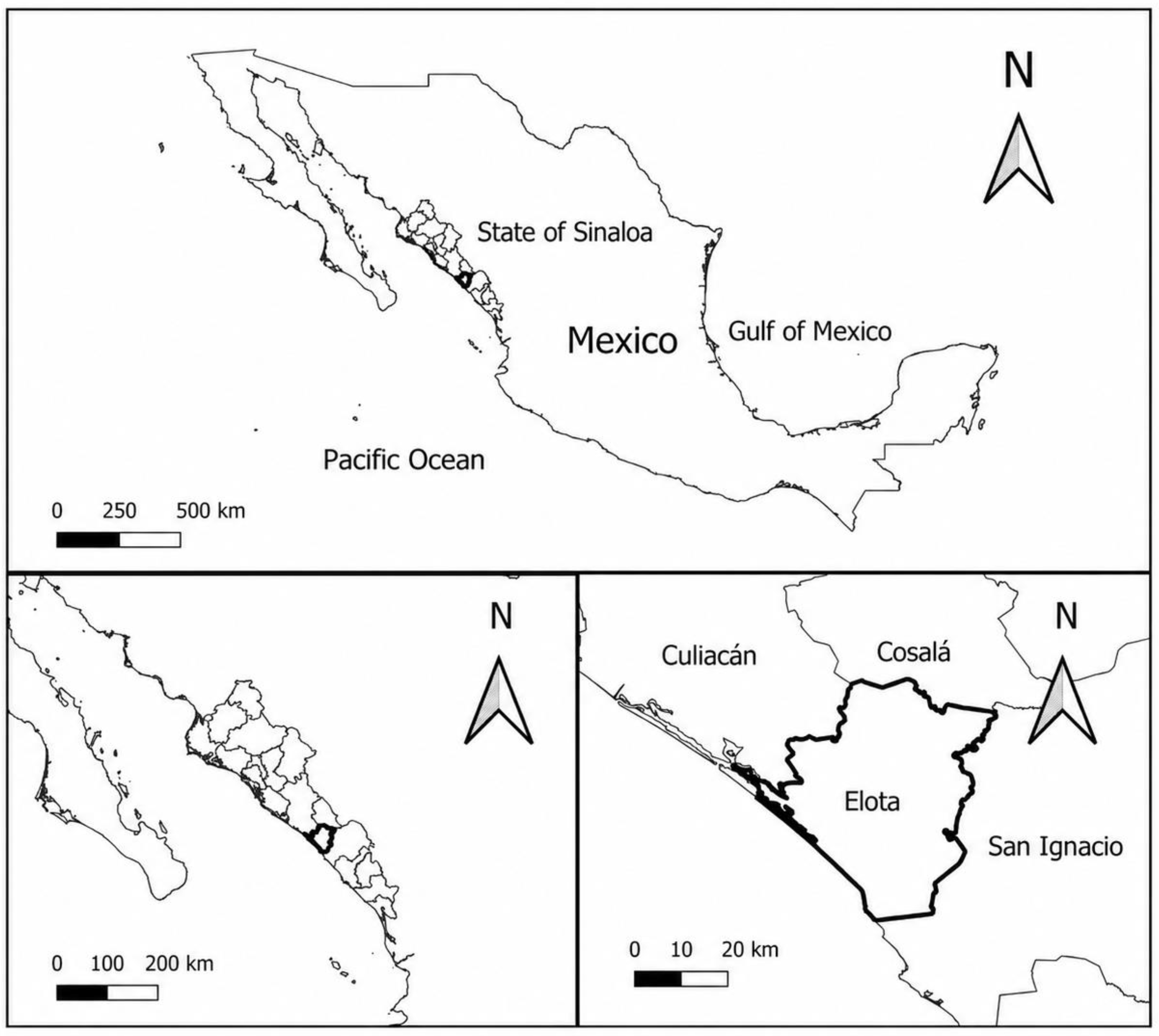
The Elota-Piaxtla Irrigation District (ID) 108 is located in the south-central part of the state of Sinaloa, Mexico, in the municipality of Elota, which is geographically bordered to the north by the municipalities of Culiacán and Cosalá, to the west by the Gulf of California, and to the south by the municipality of San Ignacio (Figure 1). The ID is an intensive agricultural system with a total area of 32,048 ha, of which approximately 21,976 ha is irrigated, with a distributed water volume of 249.8 hm3 [30]. This ID has received recurrent applications of mineral fertilizers for decades. The crops grown in the region are primarily corn, sesame, beans, and vegetables such as tomatoes, green chilies, and peas. Corn is the main crop, with a planted area of 18,517 ha and a production of 164,797 tons, valued at approximately 56.5 million dollars for the 2022–2023 agricultural year [31]. According to local management recommendations, during the 2023–2024 growing season, corn fields received approximately 300 kg ha−1 of phosphate fertilizer. Likewise, this district is one of the main producers of chili and tomato [32], agricultural export foods, which reached a production value of approximately 53.6 million dollars in 2021 [33]. According to the statistical, cartographic, and documentary database that collects, organizes, and disseminates information about the country’s environment and natural resources [34], in the ID, the Phaeozem and Luvisol soil types predominate, which are characterized as alluvial and clay soils according to the WRB classification system [35].

2.2. Soil Sampling

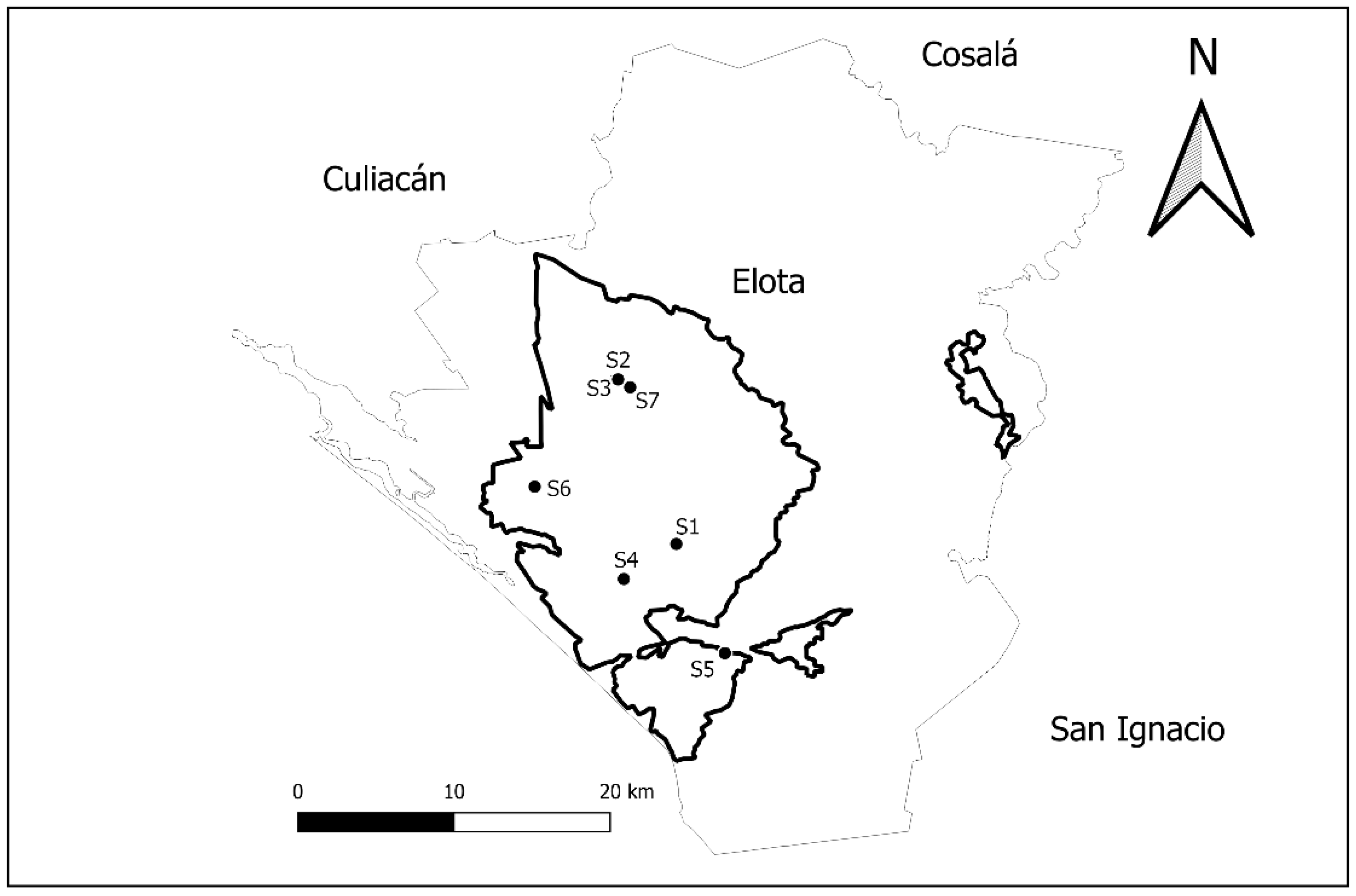
To analyze the P fractions in soil, soil samples were collected in ID 108 Elota-Piaxtla (Figure 2). The sampling design was stratified and random, focusing on the dominant crop (corn), which covered most of the irrigation district area. Although the number of sites is limited, they represent the principal soil types (Phaeozem and Luvisol) and the dominant management systems in the ID, as well as a tomato crop sample representative of vegetables. Seven sampling sites were established, of which five correspond to soil used for corn crops: Zapata 1 (S2), Zapata 2 (S3), UPMYS (S4), Salado (S5), and Abocho (S6); one soil for tomato crops: Rene (S1), and one soil without agricultural cultivation: Arroyo (S7). Two stages of soil sampling were carried out: the first in February 2024, coinciding with the planting of corn and vegetables, and the second in June of the same year, when the soils were not under cultivation. In accordance with NOM-021-SEMARNAT-2000 [36], at each site, samples of approximately one kilogram of soil were collected at an approximate depth of 0 to 20 cm, which were placed in airtight polypropylene bags and transferred to the Water and Soil Laboratory of the Universidad Politécnica del Mar y la Sierra (UPMYS) for characterization and analysis. All chemical analyses were performed in duplicate to ensure analytical reliability.

2.3. Characterization of Soil Samples

The physicochemical characterization of the soil samples was carried out by analyzing pH, electrical conductivity (EC), organic matter (OM), and organic carbon (OC) using the methodologies proposed in NOM-021-SEMARNAT-2000 [35]. For pH and EC analysis, a soil-to-water ratio of 1:2 was used, and measurements were taken with a multiparameter instrument (PCTestr 35). While the OM and OC content was determined by oxidation of soil OC with potassium dichromate and the heat of reaction generated upon mixing with concentrated sulfuric acid. Additionally, granulometry of the soils to determine particle-size distribution and soil texture was performed using the D422-63 method [37]. Particles larger than 0.074 mm (retained on a No. 200 sieve with a 0.073 mm opening) were quantified by sieving, while the distribution of smaller particles was determined by sedimentation using a hydrometer (ASTM 151H, Gilson Company, Inc., Lewis Center, OH, USA).

2.4. Fractionation of Phosphorus in Soil

The Hedley et al. [38] sequential extraction method was applied to determine the P fractions in the soil samples. For this purpose, one gram of dry soil (dried at room temperature) was used with a series of extraction solvents under different conditions as indicated in Table 1. Following extraction, at each step, the sample was centrifuged (Kitlab, Model No. CK-12) at a speed of 3000× g for 10 min for supernatant separation. In each extract obtained, soluble reactive phosphorus (SRP) was determined as phosphate, and total phosphorus (TP) was determined by the ISO 6878:2004 colorimetric method [39] using a HACH spectrophotometer (Model DR 3900, Hach Company, Loveland, CO, USA). Non-reactive phosphorus (NRP) was defined as the difference between TP and SRP.

2.5. Statistical Analysis

Statistical analyses were performed using IBM SPSS Statistics v25.0 (IBM Corp., Armonk, NY, USA). First, the normality of the data was assessed using the Shapiro–Wilk test because the sample sizes were small. Subsequently, using the absolute values, the significant differences between the data obtained from the soil samples were analyzed using Student’s t-test for related samples at a significance level of α = 0.05. In addition, Pearson correlation coefficients (r) were calculated between the soil’s physicochemical properties and the contents of the different P fractions.

3. Results

3.1. Physicochemical Properties of the Soil

The results of the soil sample characterization are reported in Table 2. The statistical analysis of related samples indicated no significant differences in pH, OM, OC, and EC values across sampling periods (p = 0.191, p = 0.88, p = 0.87, and p = 0.140, respectively). It is observed that the soil textures range from silty to clay, with silty particles predominating at 43–65%, except for sample S5, which has a sandy loam texture. The OM content ranged from 1.10 to 2.07%, typical for mineral soils, with low values for samples S1, S2, S3, and S7 and medium values for samples S4, S5, and S6. The pH ranged from 5.8 to 7.4, classifying the soils as moderately acidic and neutral, respectively, according to NOM-021-SEMARNAT [36]. In addition, the EC was found to be below 1000 µS/cm, indicating negligible salinity effects in the analyzed soils [36]. These soil properties correspond to the soil types that predominate in the region. For example, in Phaeozems, the average OM content in the surface layer is around 5%, and pH values are between 5 and 7 [35]. On the other hand, Luvisol soils are often slightly acidic and have higher clay content [35].

3.2. Phosphorus Fractions in Soil

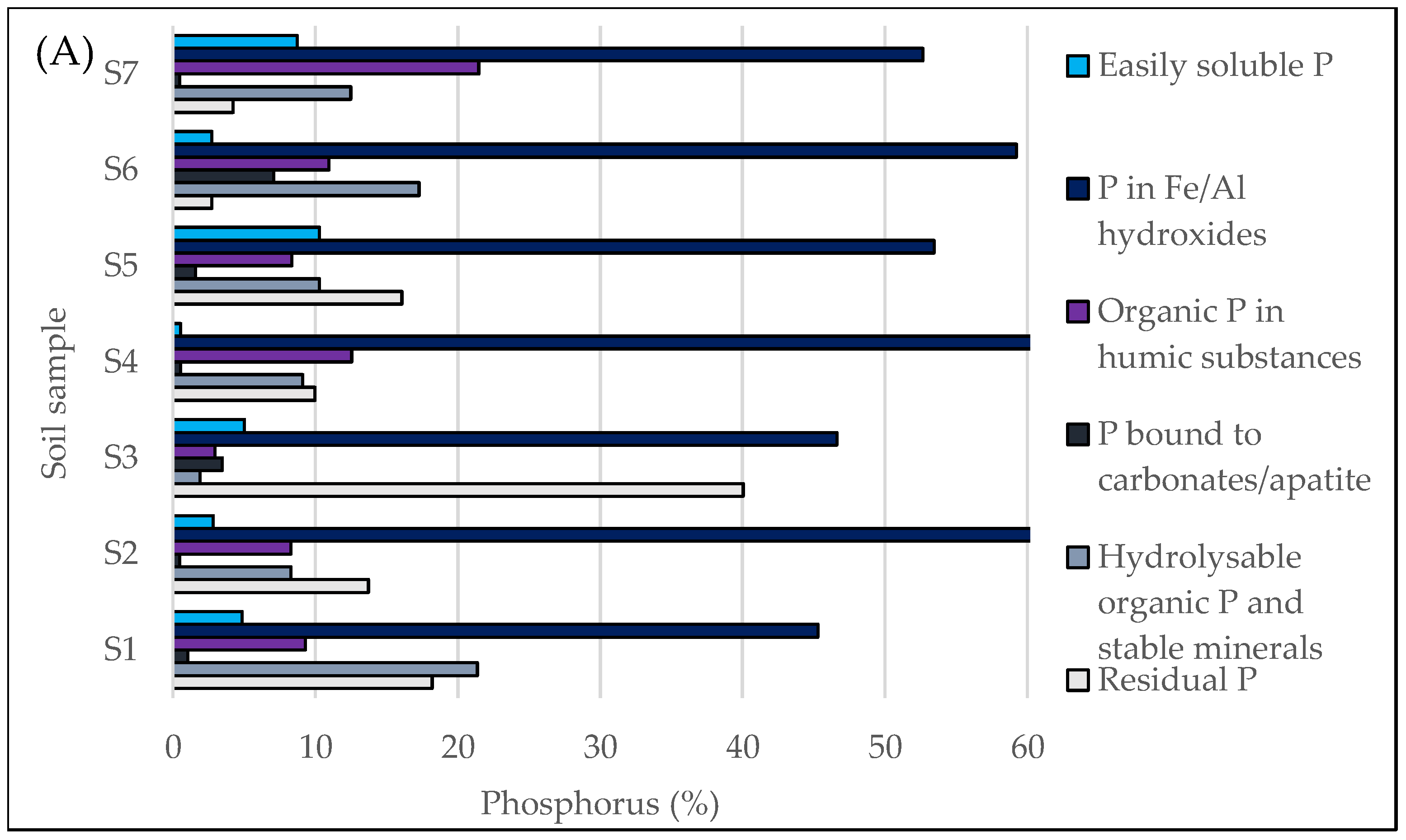
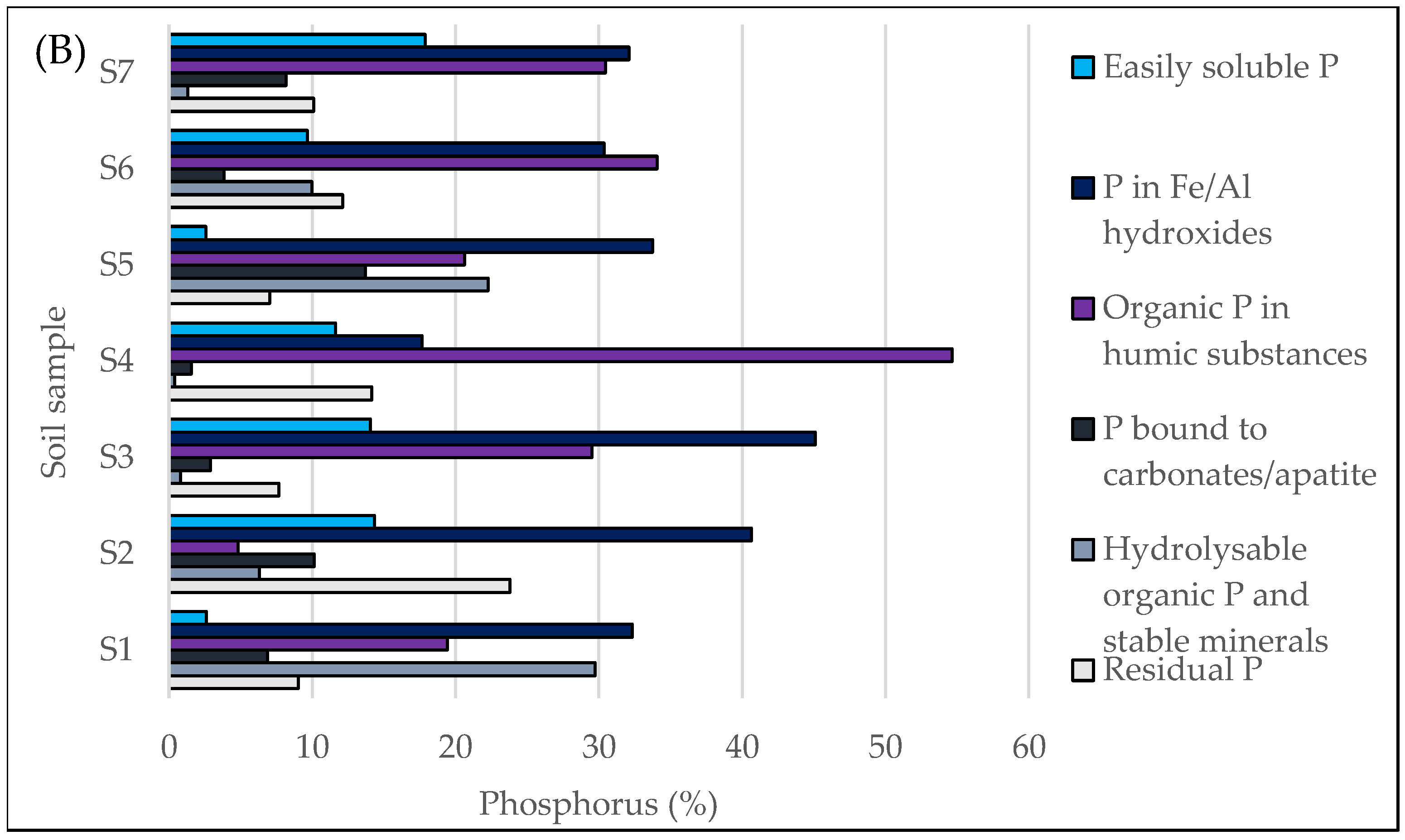
According to the sequential extraction method, in the soil samples from the first sampling, P in Fe/Al hydroxides was found to be between 45% and 67% of the total P, followed by residual P (between 3% and 40%). The fraction of organic P in humic substances and hydrolyzable organic P and stable minerals was found to be between 2 and 21% in both fractions, and only between 1% and 10% of total P was found as easily soluble P, as well as 0 to 7% of P bound to carbonates/apatite (Figure 3A). For the second sampling, the P in Fe/Al hydroxides decreased significantly (p = 0.015), ranging from 18 to 45% of the total P. Similarly, the residual P decreased, although not significantly, ranging from 7 to 24% (p = 0.369). The fraction of organic P in humic substances increased significantly (p = 0.017) from 5% to 55%. The fractions of hydrolyzable organic P and stable minerals, P bound to carbonates/apatite, and easily soluble P also increased, although not significantly (p = 0.698, p = 0.224, and p = 0.148), ranging from 0 to 30%, 2 to 14%, and 3 to 18%, respectively (Figure 3B). Table 3 indicates the distribution of phosphorus fractions between the first and second sampling. According to the statistical analysis of related samples, only the P fractions in Fe/Al hydroxides and organic P in humic substances differ significantly from one sampling to another; the other fractions did not differ significantly.
According to the dynamics of P in soils, the P fractions in soil are divided into labile P deposits, moderately labile P deposits, and non-labile deposits [24,40]. In both samplings, the deposits of labile P (easily soluble P and P in Fe/Al hydroxides) varied by decreasing from of 284.1 ± 63.9 mg P kg−1 for the first sampling to 172.7 ± 70.8 mg P kg−1 for the second sampling, followed by an increase in the deposits of moderately la-bile P (organic P in humic substances and P bound to carbonates/apatite) by varying from 60.2 ± 33.1 mg P kg−1 in the first sampling to 128.5 ± 56.6 mg P kg−1 in the second sampling. Non-labile P deposits (hydrolyzable organic P, stable minerals, and residual P) showed no significant difference between samplings, maintaining a concentration of 141.0 ± 79.1–89.7 ± 61.3 mg P kg−1 in both samplings (Table 3).

3.3. Correlation Between Physicochemical Properties and Phosphorus Fractions in Soil

The results of the correlation analysis with physicochemical properties showed that only EC exhibited a significant positive correlation (r = 0.766*) with hydrolyzable organic P and stable minerals (Table 4). Among the fractions analyzed, easily soluble P showed a positive correlation with organic P in humic substances (r = 0.463*) and a negative correlation with hydrolyzable organic P and stable minerals (r = −0.475*). On the other hand, the content P in Fe/Al hydroxides was strongly correlated with the total P content (r = 0.779*) (Table 4). Also, the content of P bound to carbonates/apatite was positively correlated with the content of hydrolyzable organic P and stable minerals (r = 0.505*) and total P (r = 0.568*). Finally, the residual P content was negatively correlated with the organic P in humic substances (r = −0.462*) (Table 4).

4. Discussion

4.1. Dynamics of Phosphorus Fractions in Soil and Environmental Implications

The distribution of phosphorus fractions changed between samplings, characterized by a decrease in labile P and a corresponding increase in moderately labile P. The shift from labile to moderately labile fractions suggest a temporary buffering mechanism; however, these fractions function as dynamic reservoirs rather than permanent sinks. Moderately labile and organic forms of phosphorus can progressively mineralize or desorb, representing a delayed but persistent source of nutrient contamination [41]. The P available in the analyzed soils was readily soluble. Although its concentration was low, it showed a slight increase in most samples after the second sampling, except for S1 and S5. The S1 exhibited the highest EC and lowest pH of the analyzed samples. Furthermore, the principal crop at this site is vegetables, cultivated with consistent fertilization. The S5 also presented a higher EC and a sandy loam texture.
The fraction P in Fe/Al hydroxides was the highest among all samples (Figure 3). The higher content of the fraction P in Fe/Al hydroxides in the first sampling may be due to the application of phosphate fertilizers (around 300 kg ha−1), since the sampling was carried out during the crop period. Similar patterns have been reported in subtropical agricultural systems, where reactive Fe and Al minerals act as strong sorption sites that rapidly immobilize fertilizer-derived phosphate. Haokip et al. [42] and Tian et al. [43] reported that P application increases the P content in these fractions. According to Bednarek et al. [44], P applied to agricultural soils in the form of triple superphosphate is mainly converted into Fe and Al phosphate fractions, while its contribution to the readily soluble P fraction is the smallest.
For the second sampling, the decrease in P associated with Fe/Al hydroxides may be related to processes reported in the literature for agricultural soils, including, microbial phosphate solubilization, and rhizosphere-mediated transformations, as reported by Wu et al. [2] and Haokip et al. [42]. According to Zhou et al. [45], P application significantly increases labile P in soil, and crop interactions increase the effective P concentration by secreting organic acids or phosphatases to mobilize insoluble P. In addition, phosphate dissociation in soil frequently occurs at moderately acidic and neutral pH values, with the pH of the analyzed soils playing an important role [46,47]. Similar transformations have been documented in irrigated and intensively fertilized systems in China and Brazil, where fallow periods favor the conversion of inorganic P into organic and moderately labile forms through microbial activity [48,49]. Based on the organic P fractions in humic substances, this study did not show a pattern among the samples analyzed. However, as previously mentioned, the second sampling showed a significant increase.
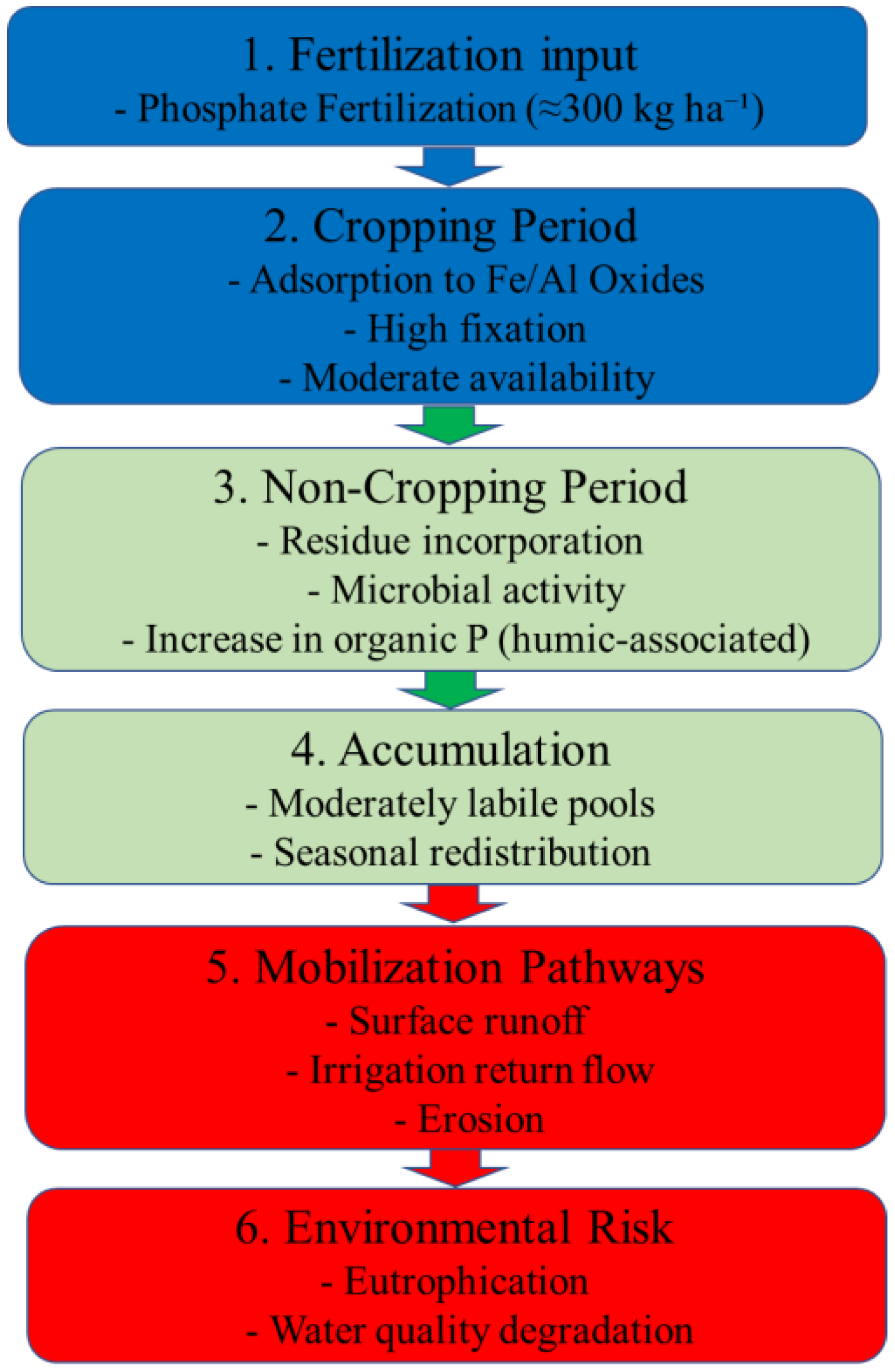
From an environmental perspective, this transformation represents a critical stage in the soil P cycle. Organic and moderately labile fractions act as transitional reservoirs that release soluble phosphate through mineralization or desorption. Studies of intensive vegetable production systems have shown that the accumulation of these fractions increases the probability of P mobilization during hydrological processes such as rainfall-driven runoff and leaching through the soil profile [7]. Therefore, the increase in organic P observed in this study should be interpreted not only as nutrient stabilization but also as the formation of a latent environmental source. Previous studies have demonstrated that enzymatic mineralization and rhizosphere-driven processes can increase phosphate release; therefore, these mechanisms may contribute to the transformations observed in the present study, especially under conditions of high biological activity and favorable soil moisture [50,51]. In addition, microbial and enzymatic activity can be altered by the saturation of adsorption sites in Fe/Al oxides, thereby modifying the biogeochemical cycles of carbon, nitrogen, and P and compromising the structural stability of the soil [52]. Likewise, prolonged P accumulation accelerates acidification processes, aggregate loss, erosion, and physicochemical degradation of the soil, reducing its resilience and long-term productive sustainability [53,54]. This supports the notion that the organic and moderately labile fractions observed in this study constitute not only transient reservoirs but also potential sources of environmental risk.
The low content of the P fraction bound to carbonates/apatite in these analyzed soils may be due to the pH values; as indicated by Abolfazli et al. [55], the Ca-P fraction is more abundant in calcareous soils. In this case, in the first sampling, in almost all samples, the fractions P bound to carbonates/apatite show the lowest total P content, except for S3 and S6. While for the second sampling, its content increases except for S6 (Table 3).
The total P content in the analyzed samples decreased in the second sampling period (Table 3). In this case, it was higher in all samples from the first sampling, except for S7, where the total P content was approximately the same and represents an uncultivated soil. However, the decrease in total P was accompanied by an increase in the more available and organic fractions, indicating an internal reorganization of phosphorus forms rather than a loss. This may suggest that the high total P content in the first sampling is due to crop fertilization, where plants take advantage of labile P. Once the crop is harvested, it tends to decrease due to product extraction and to increase organic P in humic substances through the recycling of crop residues [56]. The simultaneous reduction in residual P and increase in organic fractions suggest active interconversion among pools, supporting the concept of P as a continuously cycling element rather than a static soil reserve. Comparable seasonal redistribution has been reported in long-term fertilization experiments across Europe and Asia, where repeated nutrient inputs progressively shift P from mineral-bound to moderately labile pools [57,58].
Importantly, agricultural intensive systems, such as the Elota–Piaxtla irrigated district, may amplify environmental risks because irrigation return flows enhance transport connectivity between soils and surface waters (Figure 4). Under such conditions, accumulated P can be mobilized via runoff, erosion, or colloidal transport, contributing to eutrophication processes widely documented in intensively managed landscapes worldwide [2,8]. Overall, the results indicate that environmental risk is controlled not by total P content alone, but by the relative distribution between labile and moderately labile fractions and by their seasonal transformations.

4.2. Phosphorus Availability in Relation to Soil Properties

The correlation analysis between the physicochemical parameters of the soil and the P fractions does not indicate that the analyzed soil properties significantly influence the content of easily soluble P or P in Fe/Al hydroxides. However, some studies suggest that soil type and texture significantly influence the extent of variation in soil P fractions following the application of organic amendments [59]. For example, studies have been reported on soils with intensive agriculture in northwestern Mexico, indicating an abundance of clay minerals, which increase the specific surface area and cation exchange capacity of the soil, favoring the adsorption and retention of nutrients such as phosphates and ammonium, as well as persistent organic pollutants and heavy metals, which prolong their permanence and environmental mobility [60,61]. According to Horta [62], the content of OM could inhibit the adsorption of P in the soil, which explains the greater availability of P in the soil after the addition of organic compounds. In addition, according to Melo et al. [63], studies on Brazilian soils have shown that the main factors influencing P adsorption are clay fractions, pH, exchangeable aluminum, and OM. However, in this work, the positive correlations between clays and residual P and total P are not significant, as is the case for OM content. The positive correlation between easily soluble P and organic P in humic substances indicates that the content of biodegradable organic P primarily influences the P available. Although organic matter levels were relatively low, their influence on P cycling was substantial. The increase in organic P in humic substances during the non-cropping period indicates that microbial turnover and residue incorporation regulate nutrient redistribution. Organic ligands may compete with phosphate for sorption sites or promote complexation reactions that alter P mobility, mechanisms widely recognized in biologically active soils [12,43]. Similar results have been reported by Gupta et al. [64], where they found a positive correlation with organic P. On the other hand, the content of P in Fe/Al hydroxides, although not showing a significant correlation, shows a negative correlation with easily soluble P and organic P in humic substances, indicating that these P fractions are in dynamic equilibrium in the soil. The transformation between these fractions would be key to understanding the potential release of P and its availability [64,65].
From a global perspective, these findings align with the concept of legacy P, increasingly recognized as a major environmental challenge in intensive agriculture. Studies conducted in North America, Europe, and East Asia have shown that soils with high adsorption capacity can accumulate large reserves of P while maintaining moderate agronomic availability, posing a risk of delayed contamination once mobilization thresholds are exceeded [2,7]. Therefore, P availability and environmental risk should be considered as coupled processes: soils capable of efficiently retaining P can simultaneously function as long-term sources of diffuse contamination under changing hydrological or management conditions.
A limitation of this study is the absence of direct hydrological measurements of P losses through runoff or leaching. Therefore, the environmental risk discussed herein is inferred from the redistribution and accumulation patterns of labile and moderately labile P fractions rather than from quantified P export fluxes. Additionally, although the sampling design was stratified to represent dominant crops and soil types within the irrigation district, the number of sampling sites was limited. Future research should integrate seasonal monitoring of dissolved and particulate P in drainage waters, longer-term fertilization histories, and expanded spatial sampling to quantify P mobilization pathways better and validate fraction-based environmental risk assessments in irrigated agricultural systems.

5. Conclusions

The significant change observed between cropping and non-cropping periods, characterized by a decrease in P in Fe/Al hydroxides and an increase in the organic P fraction in humic substances, highlights the role of biological processes and residue recycling in regulating P deposition. From an environmental perspective, these findings are particularly relevant, as the accumulation of P in organic and moderately labile fractions during non-cropping periods can increase the risk of P mobilization through runoff or erosion, especially in irrigated agricultural soil. These results indicate that P availability in mineral soils is primarily determined by adsorption processes on Fe/Al oxides/hydroxides and by the transformation of organic P, consistent with reports in the literature for highly weathered tropical and subtropical soils.
From a practical perspective, fertilizer applications should be adjusted to crop demand and supported by regular soil testing to avoid excessive P accumulation. The incorporation of crop residues and organic amendments can enhance P cycling and improve long-term soil fertility, while maintaining vegetative cover during non-cropping periods may reduce P losses through runoff and erosion. In irrigated agricultural systems, improving irrigation efficiency and avoiding over-irrigation can further minimize P mobilization and off-site transport.

Author Contributions

Conceptualization, H.M.-P. and A.V.H.-J.; methodology, A.V.H.-J. and L.A.O.-G.; software, F.S.-M. and A.M.-G.; validation, P.d.J.B.-B. and M.A.F.-V.; formal analysis, J.M.A.-C.; investigation, C.C.-L.; resources, H.M.-P.; data curation, C.C.-L. and O.A.A.-S.; writing—original draft preparation, A.V.H.-J. and H.M.-P.; writing—review and editing, J.B.L.-M. and L.L.-C.; visualization, Z.Y.D.l.T.-E.; supervision, H.M.-P. and C.C.-L.; All authors have read and agreed to the published version of the manuscript.

Funding

This research received no external funding.

Data Availability Statement

The original contributions presented in this study are included in the article. Further inquiries can be directed to the corresponding author.

Acknowledgments

During the preparation of this manuscript, the authors used the ChatGPT-5.2 generative AI tool for editing Figure 4. All editing suggestions were reviewed and verified by the authors, who assume full responsibility for the final content presented in this manuscript.

Conflicts of Interest

The authors declare no conflicts of interest.

References

  1. Elser, J.J. Phosphorus: A limiting nutrient for humanity? Curr. Opin. Biotechnol. 2012, 23, 833–838. [Google Scholar] [CrossRef] [PubMed]
  2. Wu, X.; Peng, J.; Liu, P.; Bei, Q.; Rensing, C.; Li, Y.; Yuan, H.; Liesack, W.; Zhang, F.; Cui, Z. Metagenomic insights into nitrogen and phosphorus cycling at the soil aggregate scale driven by organic material amendments. Sci. Total Environ. 2021, 785, 147329. [Google Scholar] [CrossRef] [PubMed]
  3. Asfaw, A.G.; Gelagil, D.B.; Abebe, G.Y.; Woldie, W.G. Yield-limiting nutrients for maize (Zea mays L.) production in Luvisols, Northwest Ethiopia. Heliyon 2026, 12, e44367. [Google Scholar] [CrossRef]
  4. Fernández-Marcos, M.L. Contaminación por fósforo procedente de la fertilización orgánica de suelos agrícolas. In Gestión de Residuos Orgánicos de Uso Agrícola; Servizo de Publicacións e Intercambio Científico: Santiago de Compostela, Spain, 2011; pp. 25–31. [Google Scholar]
  5. Chowdhury, R.B.; Moore, G.A.; Weatherley, A.J.; Arora, M. Key sustainability challenges for the global phosphorus resource, their implications for global food security, and options for mitigation. J. Clean. Prod. 2017, 140, 945–963. [Google Scholar] [CrossRef]
  6. Gao, J.; Chen, G.; Chen, H.; Wang, S.; Wang, Q.; Wang, Y. Balanced fertilization modulates colloidal phosphorus dynamics in paddy fields. J. Clean. Prod. 2025, 504, 145403. [Google Scholar] [CrossRef]
  7. Zhang, W.; Zhang, Y.; An, Y.; Chen, X. Phosphorus fractionation related to environmental risks resulting from intensive vegetable cropping and fertilization in a subtropical region. Environ. Pollut. 2021, 269, 116098. [Google Scholar] [CrossRef] [PubMed]
  8. Khan, A.; Lu, G.; Ayaz, M.; Zhang, H.; Wang, R.; Lv, F.; Yang, X.; Sun, B.; Zhang, S. Phosphorus efficiency, soil phosphorus dynamics and critical phosphorus level under long-term fertilization for single and double cropping systems. Agric. Ecosyst. Environ. 2018, 256, 1–11. [Google Scholar] [CrossRef]
  9. Devlin, M.; Brodie, J. Nutrients and Eutrophication. In Marine Pollution—Monitoring, Management and Mitigation; Reichelt-Brushett, A., Ed.; Springer Textbooks in Earth Sciences, Geography and Environment; Springer: Cham, Switzerland, 2023; pp. 75–100. [Google Scholar] [CrossRef]
  10. Shober, A.L.; Simpson, Z.P.; Jarvie, H.P.; Macrae, M.L.; Kleinman, P.J.; Haygarth, P.M.; Kulesza, S.; Gatiboni, L.; Davies, J.; Davies, J. Toward a transdisciplinary and unifying definition of legacy phosphorus. J. Environ. Qual. 2025, 54, 882–892. [Google Scholar] [CrossRef] [PubMed]
  11. Li, S.; Chen, S.; Bai, S.; Tan, J.; Jiang, X. Intensive agricultural management-induced subsurface accumulation of water-extractable colloidal P in a Vertisol. Soil 2024, 10, 49–59. [Google Scholar] [CrossRef]
  12. Xu, S.; Arai, Y. Competitive sorption and accumulation of organic phosphorus in phosphate-rich soils and sediments. Adv. Agron. 2022, 173, 337–374. [Google Scholar] [CrossRef]
  13. Liang, H.; Wang, C.; Lu, X.; Sai, C.; Liang, Y. Dynamic changes in soil phosphorus accumulation and bioavailability in phosphorus-contaminated protected fields. Int. J. Environ. Res. Public Health 2022, 19, 12262. [Google Scholar] [CrossRef] [PubMed]
  14. Fan, Y.; Zhong, X.; Lin, F.; Liu, C.; Yang, L.; Wang, M.; Chen, G.; Chen, Y.; Yang, Y. Responses of soil phosphorus fractions after nitrogen addition in a subtropical forest ecosystem: Insights from decreased Fe and Al oxides and increased plant roots. Geoderma 2019, 337, 246–255. [Google Scholar] [CrossRef]
  15. Umaña, D.M.M.; Sánchez, D.I.Á.; Flores, J.C.M. Fracciones de fósforo en suelos del Valle del Cauca con diferentes sistemas de cultivo de café. Acta Agron. 2011, 60, 269–278. [Google Scholar]
  16. Pereira, S.I.A.; Abreu, D.; Moreira, H.; Vega, A.; Castro, P.M.L. Plant growth-promoting rhizobacteria (PGPR) improve the growth and nutrient use efficiency in maize (Zea mays L.) under water deficit conditions. Heliyon 2020, 6, e05106. [Google Scholar] [CrossRef] [PubMed]
  17. Luna, I.R.G.; Corrêa, M.M.; Primo, D.C.; Rolim-Neto, F.C.; Silva, J.P.S.D.; Menezes, R.S.C.; Santos, J.P.D.O. Phosphorus concentrations and stocks in different soil classes, uses and coverages in Agreste Pernambucano, Brazil. Investig. Geog. 2022, 107, e60477. [Google Scholar] [CrossRef]
  18. Maranguit, D.; Guillaume, T.; Kuzyakov, Y. Land-use change affects phosphorus fractions in highly weathered tropical soils. Catena 2017, 149, 385–393. [Google Scholar] [CrossRef]
  19. Restrepo-Franco, G.M.; Marulanda-Moreno, S.; de la Fe-Pérez, Y.; Díaz-de la Osa, A.; Lucia-Baldani, V.; Hernández-Rodríguez, A. Bacterias solubilizadoras de fosfato y sus potencialidades de uso en la promoción del crecimiento de cultivos de importancia económica. Rev. CENIC Cienc. Biol. 2015, 46, 63–76. [Google Scholar]
  20. Rawat, P.; Das, S.; Shankhdhar, D.; Shankhdhar, S.C. Phosphate-solubilizing microorganisms: Mechanism and their role in phosphate solubilization and uptake. J. Soil Sci. Plant Nutr. 2021, 21, 49–68. [Google Scholar] [CrossRef]
  21. Shi, J.; Wang, X.; Wang, E. Mycorrhizal symbiosis in plant growth and stress adaptation: From genes to ecosystems. Annu. Rev. Plant Biol. 2023, 74, 569–607. [Google Scholar] [CrossRef] [PubMed]
  22. Gérard, F. Clay minerals, iron/aluminum oxides, and their contribution to phosphate sorption in soils—A myth revisited. Geoderma 2026, 262, 213–226. [Google Scholar] [CrossRef]
  23. Xiong, J.; Liu, Z.; Yan, Y.; Xu, J.; Liu, D.; Tan, W.; Feng, X. Role of clay minerals in controlling phosphorus availability in a subtropical Alfisol. Geoderma 2022, 409, 115592. [Google Scholar] [CrossRef]
  24. Wang, S.; Song, M.; Wang, C.; Dou, X.; Wang, X.; Li, X. Mechanisms underlying soil microbial regulation of available phosphorus in a temperate forest exposed to long-term nitrogen addition. Sci. Total Environ. 2023, 904, 166403. [Google Scholar] [CrossRef] [PubMed]
  25. Wierzbowska, J.; Sienkiewicz, S.; Zalewska, M.; Żarczyński, P.; Krzebietke, S. Phosphorus fractions in soil fertilised with organic waste. Environ. Monit. Assess. 2020, 192, 315. [Google Scholar] [CrossRef] [PubMed]
  26. Gotz, L.F.; Alves, E.E.N.; Hurtarte, L.C.C.; Condron, L.M.; Vergütz, L.; Hill, S.; de Sousa, D.M.G.; de Almeida, A.N.F.; de Souza Nunes, R.; Pavinato, P.S. Assessment of legacy phosphorus speciation under long-term tillage and phosphate fertilizer management in a tropical soil. Soil Tillage Res. 2026, 256, 106877. [Google Scholar] [CrossRef]
  27. Pavinato, P.S.; Gotz, L.F.; Teles, A.P.B.; Arruda, B.; Herrera, W.B.; Chadwick, D.R.; Jones, D.L.; Withers, P.J. Legacy soil phosphorus bioavailability in tropical and temperate soils: Implications for sustainable crop production. Soil Tillage Res. 2024, 244, 106228. [Google Scholar] [CrossRef]
  28. Biassoni, M.M.; Vivas, H.; Gutiérrez-Boem, F.H.; Salvagiotti, F. Changes in soil phosphorus (P) fractions and P bioavailability after 10 years of continuous P fertilization. Soil Tillage Res. 2023, 232, 105777. [Google Scholar] [CrossRef]
  29. Ramos-Cabrera, E.V.; Delgado-Espinosa, Z.Y.; Solis-Pino, A.F. Use of phosphorus-solubilizing microorganisms as a biotechnological alternative: A review. Microorganisms 2024, 12, 1591. [Google Scholar] [CrossRef] [PubMed]
  30. CONAGUA. Estadísticas Agrícolas de los Distritos de Riego. Comisión Nacional del Agua. México. 2018. Available online: https://www.gob.mx/conagua/documentos/estadisticas-agricolas-de-los-distritos-de-riego (accessed on 24 August 2025).
  31. CONAGUA. Atlas del Agua en México; Secretaría de Medio Ambiente y Recursos Naturales: Mexico City, Mexico; Comisión Nacional del Agua: Mexico City, Mexico, 2024; 146p. Available online: https://agua.org.mx/wp-content/uploads/2019/04/AAM_2018.pdf (accessed on 2 October 2025).
  32. CODESIN. Reporte Sobre la agricultura en Sinaloa al Año 2017; Boletín No. 31/2018; Consejo para el Desarrollo Económico de Sinaloa: Culiacán, Mexico, 2018; Available online: https://sinaloaennumeros.codesin.mx/wp-content/uploads/2018/06/Reporte-31-del-2018-de-agricultura-2017.pdf (accessed on 25 March 2025).
  33. SIACON. Sistema de Información Agroalimentaria de Consulta. Mexico City, Mexico, 2023. Available online: https://www.gob.mx/siap/prensa/sistemade-informacion-agroalimentaria-de-consulta-siacon (accessed on 12 May 2025).
  34. SEMARNAT. Espacio Digital Geográfico (ESDIG). Mapas en Línea. Secretaria de Medio Ambiente y Recursos Naturales. Mexico City, Mexico. 2025. Available online: https://gisviewer.semarnat.gob.mx/geointegrador2Beta/index.html (accessed on 24 February 2025).
  35. IUSS Working Group WRB. World Reference Base for Soil Resources: International Soil Classification System for Naming Soils and Creating Legends for Soil Maps, 4th ed.; International Union of Soil Sciences (IUSS): Rome, Italy, 2022; Available online: https://wrb.isric.org/files/WRB_fourth_edition_2022-12-18.pdf (accessed on 2 June 2026).
  36. NOM-021-SEMARNAT-2000; Que Establece las Especificaciones de Fertilidad, Salinidad y Clasificación de Suelos, Estudio, Muestreo y Análisis. Diario Oficial de la Federación: Mexico City, Mexico, 2002. Available online: https://www.normasoficiales.mx/nom/nom-021-semarnat-2000 (accessed on 24 August 2025).
  37. ASTM D422-63(2007); Standard Test Method for Particle-Size Analysis of Soils. American Society for Testing and Materials (ASTM): West Conshohocken, PA, USA, 2007. Available online: https://www.astm.org/d0422-63r07.html (accessed on 26 June 2025).
  38. Hedley, M.J.; Stewart, J.W.B.; Chauhan, B.S. Changes in inorganic and organic soil phosphorus fractions induced by cultivation practices and by laboratory incubations. Soil Sci. Soc. Am. Proc. 1982, 46, 970–976. [Google Scholar] [CrossRef]
  39. ISO 6878:2004; Water Quality—Determination of Phosphorus—Ammonium Molybdate Spectrometric Method. International Organization for Standardization: Geneva, Switzerland, 2004. Available online: https://www.iso.org/standard/36917.html#:~:text=ISO%206878%3A2004%20specifies%20methods%20for%20the%20determination%20of,all%20kinds%20of%20water%20including%20seawater%20and%20effluents (accessed on 24 February 2025).
  40. Milić, S.; Ninkov, J.; Vasin, J.; Zeremski, T.; Jakšić, S.; Živanov, M.; Šeremešić, S.; Milić, D. Organic Phosphorus Fractions in Relation to Soil Aggregate Fractions of Black Soil. Agronomy 2024, 14, 1022. [Google Scholar] [CrossRef]
  41. Sharpley, A.; Jarvie, H.P.; Buda, A.; May, L.; Spears, B.; Kleinman, P. Phosphorus legacy: Overcoming the effects of past management practices to mitigate future water quality impairment. J. Environ. Qual. 2013, 42, 1308–1326. [Google Scholar] [CrossRef] [PubMed]
  42. Haokip, I.C.; Dwivedi, B.S.; Meena, M.C.; Datta, S.P. Soil Phosphorus Distribution and Enzyme Activities as Influenced by Phosphorus Application and Microbial Inoculation under Maize-Wheat Cropping System in a Typic Haplustept. J. Indian Soc. Soil Sci. 2025, 73, 122–127. [Google Scholar] [CrossRef]
  43. Tian, J.; Ge, F.; Zhang, D.; Deng, S.; Liu, X. Roles of Phosphate Solubilizing Microorganisms from Managing Soil Phosphorus Deficiency to Mediating Biogeochemical P Cycle. Biology 2021, 10, 158. [Google Scholar] [CrossRef] [PubMed]
  44. Bednarek, W.; Tkaczyk, P.; Dresler, S. The effect of NPK fertilization on mineral phosphorus fraction content in soil. Acta Agrophys. 2017, 24, 191–203. [Google Scholar]
  45. Zhou, L.; Su, L.; Zhao, H.; Wang, S.; Zheng, Y.; Tang, L. Maize//soybean intercropping promotes activation of soil phosphorus fractions by secreting more phosphatase in red soil under different phosphorus application rates. Plant Soil 2025, 506, 421–440. [Google Scholar] [CrossRef]
  46. Berrocal-Rosso, E.P.; Durango-Petro, J.M.; Barrera-Violeth, J.L.; Diaz-Pongutá, B. Evaluación de formas de fósforo en suelos cultivados con plátano. Acta Agron. 2009, 58, 152–159. [Google Scholar]
  47. Bouray, M.; Moir, J.L.; Lehto, N.J.; Condron, L.M.; Touhami, D.; Hummel, C. Soil pH effects on phosphorus mobilization in the rhizosphere of Lupinus angustifolius. Plant Soil. 2021, 469, 387–407. [Google Scholar] [CrossRef]
  48. Hussain, A.; Chen, L.; Jamil, M.A.; Abid, K.; Khan, K.; Duan, W.; Li, C.; Khan, A. Changes in Soil-Phosphorus Fractions by Nitrogen and Phosphorus Fertilization in Korean Pine Plantation and Its Natural Forest. Forests 2022, 13, 527. [Google Scholar] [CrossRef]
  49. Chen, S.; Gao, J.; Chen, H.; Zhang, Z.; Huang, J.; Lv, L.; Tan, J.; Jiang, X. The role of long-term mineral and manure fertilization on P species accumulation and phosphate-solubilizing microorganisms in paddy red soils. Soil 2023, 9, 101–116. [Google Scholar] [CrossRef]
  50. Richardson, A.E.; Simpson, R.J. Soil microorganisms mediating phosphorus availability update on microbial phosphorus. Plant Physiol. 2011, 156, 989–996. [Google Scholar] [CrossRef] [PubMed]
  51. Zhu, J.; Li, M.; Whelan, M. Phosphorus activators contribute to legacy phosphorus availability in agricultural soils: A review. Sci. Total Environ. 2018, 612, 522–537. [Google Scholar] [CrossRef] [PubMed]
  52. Lizcano-Toledo, R.; Reyes-Martín, M.P.; Celi, L.; Fernández-Ondoño, E. Phosphorus dynamics in the soil–plant–environment relationship in cropping systems: A review. Appl. Sci. 2021, 11, 11133. [Google Scholar] [CrossRef]
  53. Doydora, S.; Gatiboni, L.; Grieger, K.; Hesterberg, D.; Jones, J.L.; McLamore, E.S.; Peters, R.; Sozzani, R.; Van den Broeck, L.; Duckworth, O.W. Accessing legacy phosphorus in soils. Soil Syst. 2020, 4, 74. [Google Scholar] [CrossRef]
  54. Penn, C.J.; Camberato, J.J. A Critical Review on Soil Chemical Processes that Control How Soil pH Affects Phosphorus Availability to Plants. Agriculture 2019, 9, 120. [Google Scholar] [CrossRef]
  55. Abolfazli, F.; Forghani, A.; Norouzi, M. Effects of phosphorus and organic fertilizers on phosphorus fractions in submerged soil. J. Soil Sci. Plant Nutr. 2012, 12, 349–362. [Google Scholar] [CrossRef]
  56. Sidakova, M.S.; Egorova, E.M.; Tiev, R.A.; Kishev, A.Y. Dynamics of phosphorus reserves in the soil due to intensive use of arable land. News Kabar. Sci. Cent. RAS 2025, 27, 130–138. [Google Scholar] [CrossRef]
  57. Appelhans, S.C.; Barbagelata, P.A.; Melchiori, R.J.M.; Gutierrez-Boem, F.; Aitkenhead, M. Assessing soil P fractions changes with long-term phosphorus fertilization related to crop yield of soybean and maize. Soil Use Manag. 2020, 36, 524–535. [Google Scholar] [CrossRef]
  58. Mahmood, M.; Tian, Y.; Ma, Q.; Ahmed, W.; Mehmood, S.; Hui, X.; Wang, Z. Changes in phosphorus fractions and its availability status in relation to long term P fertilization in loess plateau of China. Agronomy 2020, 10, 1818. [Google Scholar] [CrossRef]
  59. Wang, Y.; Zhang, W.; Müller, T.; Lakshmanan, P.; Liu, Y.; Liang, T.; Wang, L.; Yang, H.; Chen, X. Soil phosphorus availability and fractionation in response to different phosphorus sources in alkaline and acid soils: A short-term incubation study. Sci. Rep. 2023, 13, 5677. [Google Scholar] [CrossRef] [PubMed]
  60. González-Márquez, L.C.; Hansen, A.M. Adsorción y mineralización de atrazina y relación con parámetros de suelos del DR 063 Guasave, Sinaloa. Rev. Mex. Cienc. Geol. 2009, 26, 587–599. [Google Scholar]
  61. Margarita De la O-Villanueva, M.; Gómez-Álvarez, A.; Mendivil-Quijada, H.; Valencia, M.; Meza-Figueroa, D. Metals in residential soils and cumulative risk assessment in Yaqui and Mayo agricultural valleys, northern Mexico. Sci. Total Environ. 2012, 433, 472–481. [Google Scholar] [CrossRef] [PubMed]
  62. Horta, C. Fertilisation with Compost: Effects on Soil Phosphorus Sorption and on Phosphorus Availability in Acid Soils. Open J. Soil Sci. 2019, 9, 255–268. [Google Scholar] [CrossRef] [PubMed]
  63. Melo, V.F.; Uchôa, S.C.P.; Senwo, Z.N.; Amorim, R.J.P. Phosphorus Adsorption of Some Brazilian Soils in Relations to Selected Soil Properties. Open J. Soil Sci. 2015, 5, 101–109. [Google Scholar] [CrossRef]
  64. Gupta, A.K.; Patra, P.K.; Tripathi, L.K. Distribution and classification of phosphorus fractions and their relationship with soil properties in Ultisols of Meghalaya. J. Indian Soc. Soil Sci. 2020, 68, 400–407. [Google Scholar] [CrossRef]
  65. Silva, L.I.d.; Pereira, M.C.; Carvalho, A.M.X.; Buttrós, V.H.; Pasqual, M.; Dória, J. Phosphorus-Solubilizing Microorganisms: A Key to Sustainable Agriculture. Agriculture 2023, 13, 462. [Google Scholar] [CrossRef]
Figure 1. Location of the municipality where ID 108 Elota-Piaxtla.
Environments 13 00353 g001
Figure 2. Soil sampling sites in ID 108 Elota-Piaxtla.
Environments 13 00353 g002
Figure 3. Distribution of P fractions in soils of ID 108 Elota-Piaxtla. (A) P fraction in soil from the first sampling; (B) P fraction in soil from the second sampling.
Environments 13 00353 g003aEnvironments 13 00353 g003b
Figure 4. Conceptual framework of P dynamics in intensive agricultural soils.
Environments 13 00353 g004
Table 1. Phosphorus extraction [38] and its corresponding fractions.
ExtractionExtraction SolventExtraction ConditionsP Fraction
E150 mL of distilled waterStirring for 10 min, 25 °CH2O-TP (Easily soluble P)
E250 mL de 0.11 M Na2S2O4/NaHCO330 min, water bath at 40 °CBD-TP (P in Fe/Al hydroxides)
E350 mL de 1 M NaOHStirring for 16 h, 25 °CNaOH-SRP (Organic P in humic substances)
E450 mL de 0.5 M HClStirring for 16 h, 25 °CHCl-SRP (P bound to carbonates/apatite)
HCl-NRP (Hydrolyzable organic P and stable minerals)
E550 mL of distilled water and 0.5 g of K2S2O830 min in autoclave between 98 and 137 kPaK2S2O8-TP (Residual P)
Table 2. Physicochemical properties in soil samples from ID 108 Elota-Piaxtla. (Values are expressed as mean ± SD, n = 2).
SampleOrganic Carbon (%)Organic Matter (%)pHEC (µS cm−1)Sand (%)Silt (%)Clay (%)Soil Texture
S10.71 ± 0.601.22 ± 1.035.8 ± 0.4480 ± 1127.6950.1722.14Silty loam
S20.64 ± 0.101.10 ± 0.176.0 ± 0.1267 ± 1016.6348.3934.98Silty clay loam
S30.78 ± 0.101.34 ± 0.186.6 ± 0.4140 ± 2216.6343.2040.16Silty clay
S41.06 ± 0.501.83 ± 0.876.5 ± 0.1125 ± 116.6365.4317.93Silty loam
S51.20 ± 0.502.07 ± 0.877.3 ± 0.1264 ± 1772.9225.351.73Sandy loam
S61.06 ± 0.301.83 ± 0.527.1 ± 0.2430 ± 178.1060.4931.41Silty clay loam
S70.64 ± 0.701.10 ± 1.217.4 ± 0.2231 ± 1926.4951.3322.18Silty loam
Table 3. Content of P fractions in soil samples from ID 108 Elota-Piaxtla. (* Values are expressed as mean ± SD, n = 7).
Sampling SiteStages SamplingEasily Soluble P (mg kg−1)P in Fe/Al Hydroxides (mg kg−1)Organic P in Humic Substances (mg kg−1)P bound to Carbonates/Apatite (mg kg−1)Hydrolysable Organic P and Stable Minerals (mg kg−1)Residual P (mg kg−1)Total P (mg kg−1)
S1A24.4228.046.85.2107.691.6503.6
B11.6144.887.030.8133.240.4447.8
S2A11.6272.834.02.034.056.4410.8
B43.6123.614.630.819.272.4304.2
S3A30.8285.618.021.211.6245.2612.4
B56.4181.2118.611.63.230.8401.8
S4A2.0251.446.82.034.037.2373.4
B14.822.569.62.00.518.0127.4
S5A34.0176.827.65.234.053.2330.8
B14.8194.0118.678.8128.040.4574.6
S6A18.0391.272.446.8114.018.0660.4
B37.2117.2131.414.838.446.8385.8
S7A37.2224.891.62.053.218.0426.8
B88.4158.8150.640.46.450.0494.6
* Average valuesA22.6 ± 12.8261.5 ± 67.448.2 ± 25.912.1 ± 16.855.5 ± 39.774.2 ± 79.6474.0 ± 123.6
B38.1 ± 27.9134.6 ± 56.898.6 ± 45.829.9 ± 25.347.0 ± 58.542.7 ± 16.9390.9 ± 144.2
A: First sampling; B: Second sampling.
Table 4. Pearson correlation of the physicochemical properties and the P fractions in soil.
Easily SolubleP in Fe/Al HydroxidesOrganic P in Humic SubstancesP Bound to Carbonates/ApatiteHydrolyzable Organic P and Stable MineralsResidual PTotal P
Organic carbon−0.1010.157−0.0180.1980.028−0.0820.088
Organic matter−0.1000.158−0.0180.1970.029−0.0790.091
pH0.3330.2410.3970.347−0.064−0.0630.350
Electric conductivity−0.1920.1970.0870.2310.766 *−0.1250.383
Sand−0.042−0.1150.0230.3510.310−0.0760.061
Silt−0.147−0.0410.069−0.367−0.173−0.224−0.246
Clay0.2210.236−0.109−0.222−0.3490.3560.146
Easily soluble P1−0.2240.463 *0.101−0.475 *0.0520.039
P in Fe/Al hydroxides−0.2241−0.2550.1400.3360.2420.779 *
Organic P in humic substances0.463 *−0.25510.3820.104−0.462 *0.139
P bound to carbonates/apatite0.1010.1400.38210.505 *−0.0230.568 *
Hydrolyzable organic P and stable minerals−0.475 *0.3360.1040.505 *1−0.1950.531
Residual P0.0520.242−0.462 *−0.023−0.19510.367
Total P0.0390.779 *0.1390.568 *0.5310.3671
* The correlation is significant at the 0.05 level (two-tailed).
Disclaimer/Publisher’s Note: The statements, opinions and data contained in all publications are solely those of the individual author(s) and contributor(s) and not of MDPI and/or the editor(s). MDPI and/or the editor(s) disclaim responsibility for any injury to people or property resulting from any ideas, methods, instructions or products referred to in the content.