



From TPH to Multi-Endpoint Monitoring: Rethinking Remediation of Petroleum-Contaminated Soils in Arctic and Sub-Arctic Regions



Abstract
1. Introduction
- What remediation technologies are most commonly applied or recommended for petroleum hydrocarbon-contaminated soils in Arctic and sub-Arctic regions?
- Which environmental, technological, logistical, and regulatory factors control their applicability?
- What lessons can be drawn from Canada, Alaska, Greenland, Nordic countries, the European Union policy context, and Russia?
- How can Russian Arctic remediation practice be strengthened through risk-based, ecotoxicological, and soil-function-oriented approaches?
- What decision framework can support technology selection for cold-region petroleum-contaminated soils?
- How can multi-endpoint monitoring approaches improve the assessment, design, and evaluation of remediation strategies in cold-region soils?
2. Materials and Methods
2.1. Research Design
2.2. Literature Search Strategy
2.3. Eligibility Guidelines and Study Selection
- -
- addressed petroleum hydrocarbon contamination in soils, tundra, boreal, permafrost, or cold-region environments;
- -
- evaluated remediation technologies applicable to petroleum hydrocarbon-contaminated soils;
- -
- described laboratory-, pilot-, or field-scale remediation under Arctic, sub-Arctic, or cold-climate conditions;
- -
- provided guidance on contaminated-site management, monitoring, landfarming, risk-based cleanup, or recultivation;
- -
- addressed monitoring endpoints, including bioavailability, toxicity, microbial activity, or soil-function recovery.
2.4. Data Extraction and Organization
- -
- geographical and climatic context;
- -
- soil type and key properties;
- -
- contaminant type and hydrocarbon fraction;
- -
- contamination age and concentration (where available);
- -
- remediation technology;
- -
- treatment scale (laboratory, pilot, field, or guidance);
- -
- reported treatment outcomes and limitations;
- -
- monitoring endpoints (chemical, biological, ecotoxicological);
- -
- ecological and logistical constraints;
- -
- relevance to Arctic, sub-Arctic, or Russian Arctic conditions.
2.5. Approach to Evidence Synthesis
- -
- target contaminant fraction;
- -
- field applicability in cold regions;
- -
- compatibility with permafrost and active-layer conditions;
- -
- infrastructure and energy requirements;
- -
- treatment duration;
- -
- secondary waste generation;
- -
- soil-function preservation;
- -
- monitoring requirements;
- -
- sustainability and long-term ecological implications.
2.6. Methodological Limitations
2.7. Study Area: Arctic, Sub-Arctic, and Russian Arctic Context
3. Results
3.1. Environmental and Cryogenic Constraints Controlling Remediation
3.2. Petroleum Hydrocarbon Composition, Weathering, Toxicity, and Bioavailability
3.3. Biological Remediation Strategies
- -
- Biostimulation and nutrient-assisted bioremediation
- -
- Bioaugmentation and indigenous cold-adapted microbial consortia
- -
- Landfarming
- -
- Biopiles and engineered biocells
- -
- Composting and organic amendment-assisted bioremediation
- -
- Phytoremediation and rhizoremediation
3.4. Physicochemical Remediation Strategies
- -
- Sorbents, biochar, peat, mineral carriers, and other amendments
- -
- Chemical oxidation
3.5. Thermal Treatment and Source-Removal Strategies
- -
- Excavation, off-site disposal, and source removal
3.6. Cross-Technology Analytical Synthesis
3.7. Monitoring Endpoints: From Chemical Cleanup to Soil-Function Recovery
- -
- chemical endpoints: TPH fractions, BTEX (where relevant), PAHs, residual composition;
- -
- -
- biological endpoints: microbial respiration, enzymatic activity, hydrocarbon-degrading genes or taxa;
- -
- -
- ecological endpoints: plant germination, vegetation development, and soil-function recovery.
3.8. Comparative Applicability of Remediation Technologies
- -
- excavation and thermal treatment are effective for rapid source removal;
- -
- biopiles, landfarming, and biostimulation support intermediate-stage degradation;
- -
- phytoremediation and amendment-assisted approaches contribute to long-term stabilization and ecosystem recovery.
- -
- technology selection,
- -
- process optimization,
- -
- transition between treatment stages,
- -
- and final assessment of remediation success.
4. Discussion
4.1. Main Findings of the Review
4.2. Strength of Evidence and Its Practical Meaning
4.3. International Experience: Canada, Alaska, Greenland, Nordic Countries, and EU Policy Context
4.4. Russian Arctic and Western Siberia in the International Context
4.5. Applied Implications for Russian Arctic Remediation
4.6. National Statistics and the Need for Arctic-Specific Reporting
- -
- contamination source and history;
- -
- petroleum fraction composition;
- -
- soil type and environmental conditions;
- -
- applied remediation technologies;
- -
- treatment duration and operational parameters;
- -
- chemical, biological, and ecotoxicological monitoring endpoints;
- -
- post-recultivation land condition and ecosystem recovery.
4.7. Treatment-Train Approach
4.8. Limitations and Research Gaps
4.9. Future Research Directions
- Field-scale comparative studies of landfarming, biopiles, composting, and biostimulation under comparable Arctic and sub-Arctic conditions;
- Multi-season monitoring of residual and weathered petroleum hydrocarbons, including slow-degrading fractions;
- Optimization of nutrient regimes, including type, dose, timing, and delivery methods for cold-region soils;
- Mandatory pilot testing of surfactants and amendments prior to full-scale implementation;
- Development of bioavailability-oriented analytical methods for petroleum-contaminated soils;
- Integration of multi-endpoint monitoring systems, combining FTIR/DMSO-type methods, bioassays, microbial indicators, and conventional chemical analysis;
- Evaluation of native plant species for rhizoremediation and post-remediation stabilization;
- Life-cycle and sustainability assessment of remediation technologies under Arctic logistical constraints;
- Climate-informed remediation design, accounting for permafrost dynamics and long-term environmental change;
- Development of regional databases for contaminated sites and remediation outcomes in the Russian Arctic.
5. Conclusions
Author Contributions
Funding
Data Availability Statement
Conflicts of Interest
Abbreviations
| BAT | best available techniques |
| BTEX | benzene, toluene, ethylbenzene, and xylenes |
| CEC | cation exchange capacity |
| CMC | critical micelle concentration |
| CSM | conceptual site model |
| DMSO | dimethyl sulfoxide |
| EU | European Union |
| FTIR | Fourier transform infrared spectroscopy |
| GC-FID | gas chromatography with flame ionization detection |
| GC-MS | gas chromatography–mass spectrometry |
| ISO | International Organization for Standardization |
| MNA | monitored natural attenuation |
| PAHs | polycyclic aromatic hydrocarbons |
| PHCs | petroleum hydrocarbons |
| SOM | soil organic matter |
| SuRF-UK | Sustainable Remediation Forum, United Kingdom |
| TPH | total petroleum hydrocarbons |
References
- Aislabie, J.; Saul, D.J.; Foght, J.M. Bioremediation of Hydrocarbon-Contaminated Polar Soils. Extremophiles 2006, 10, 171–179. [Google Scholar] [CrossRef]
- Naseri, M.; Barabadi, A.; Barabady, J. Bioremediation Treatment of Hydrocarbon-Contaminated Arctic Soils: Influencing Parameters. Environ. Sci. Pollut. Res. 2014, 21, 11250–11265. [Google Scholar] [CrossRef] [PubMed]
- Filler, D.M.; Snape, I.; Barnes, D.L. (Eds.) Bioremediation of Petroleum Hydrocarbons in Cold Regions; Cambridge University Press: Cambridge, UK, 2008; ISBN 9780521869706. [Google Scholar]
- Margesin, R.; Schinner, F. Biodegradation and Bioremediation of Hydrocarbons in Extreme Environments. Appl. Microbiol. Biotechnol. 2001, 56, 650–663. [Google Scholar] [CrossRef]
- Whyte, L.G.; Bourbonniére, L.; Greer, C.W. Biodegradation of Petroleum Hydrocarbons by Psychrotrophic Pseudomonas Strains Possessing Both Alkane (Alk) and Naphthalene (Nah) Catabolic Pathways. Appl. Environ. Microbiol. 1997, 63, 3719–3723. [Google Scholar] [CrossRef]
- Yergeau, E.; Sanschagrin, S.; Beaumier, D.; Greer, C.W. Metagenomic Analysis of the Bioremediation of Diesel-Contaminated Canadian High Arctic Soils. PLoS ONE 2012, 7, e30058. [Google Scholar] [CrossRef]
- Bell, T.H.; Yergeau, E.; Maynard, C.; Juck, D.; Whyte, L.G.; Greer, C.W. Predictable Bacterial Composition and Hydrocarbon Degradation in Arctic Soils Following Diesel and Nutrient Disturbance. ISME J. 2013, 7, 1200–1210. [Google Scholar] [CrossRef]
- Kundu, A.; Harrisson, O.; Ghoshal, S. Impacts of Arctic Diesel Contamination on Microbial Community Composition and Degradative Gene Abundance during Hydrocarbon Biodegradation with and without Nutrients: A Case Study of Seven Sub-Arctic Soils. Sci. Total Environ. 2023, 871, 161777. [Google Scholar] [CrossRef] [PubMed]
- Johnsen, A.R.; Boe, U.S.; Henriksen, P.; Malmquist, L.M.V.; Christensen, J.H. Full-Scale Bioremediation of Diesel-Polluted Soil in an Arctic Landfarm. Environ. Pollut. 2021, 280, 116946. [Google Scholar] [CrossRef]
- McCarthy, K.; Walker, L.; Vigoren, L.; Bartel, J. Remediation of Spilled Petroleum Hydrocarbons by in Situ Landfarming at an Arctic Site. Cold Reg. Sci. Technol. 2004, 40, 31–39. [Google Scholar] [CrossRef]
- Sanscartier, D.; Zeeb, B.; Koch, I.; Reimer, K. Bioremediation of Diesel-Contaminated Soil by Heated and Humidified Biopile System in Cold Climates. Cold Reg. Sci. Technol. 2009, 55, 167–173. [Google Scholar] [CrossRef]
- Atlas, R.M. Microbial Degradation of Petroleum Hydrocarbons: An Environmental Perspective. Microbiol. Rev. 1981, 45, 180–209. [Google Scholar] [CrossRef]
- Head, I.M.; Jones, D.M.; Röling, W.F.M. Marine Microorganisms Make a Meal of Oil. Nat. Rev. Microbiol. 2006, 4, 173–182. [Google Scholar] [CrossRef] [PubMed]
- Varjani, S.J. Microbial Degradation of Petroleum Hydrocarbons. Bioresour. Technol. 2017, 223, 277–286. [Google Scholar] [CrossRef]
- Das, N.; Chandran, P. Microbial Degradation of Petroleum Hydrocarbon Contaminants: An Overview. Biotechnol. Res. Int. 2011, 2011, 941810. [Google Scholar] [CrossRef]
- Haritash, A.K.; Kaushik, C.P. Biodegradation Aspects of Polycyclic Aromatic Hydrocarbons (PAHs): A Review. J. Hazard. Mater. 2009, 169, 1–15. [Google Scholar] [CrossRef]
- Khan, M.A.I.; Biswas, B.; Smith, E.; Naidu, R.; Megharaj, M. Toxicity Assessment of Fresh and Weathered Petroleum Hydrocarbons in Contaminated Soil—A Review. Chemosphere 2018, 212, 755–767. [Google Scholar] [CrossRef]
- Ramadass, K.; Megharaj, M.; Venkateswarlu, K.; Naidu, R. Bioavailability of Weathered Hydrocarbons in Engine Oil-Contaminated Soil: Impact of Bioaugmentation Mediated by Pseudomonas Spp. on Bioremediation. Sci. Total Environ. 2018, 636, 968–974. [Google Scholar] [CrossRef]
- Prince, R.C. Bioremediation of Marine Oil Spills. Trends Biotechnol. 1997, 15, 158–160. [Google Scholar] [CrossRef]
- Tyagi, M.; da Fonseca, M.M.R.; de Carvalho, C.C.C.R. Bioaugmentation and Biostimulation Strategies to Improve the Effectiveness of Bioremediation Processes. Biodegradation 2011, 22, 231–241. [Google Scholar] [CrossRef] [PubMed]
- Bento, F.M.; Camargo, F.A.O.; Okeke, B.C.; Frankenberger, W.T. Comparative Bioremediation of Soils Contaminated with Diesel Oil by Natural Attenuation, Biostimulation and Bioaugmentation. Bioresour. Technol. 2005, 96, 1049–1055. [Google Scholar] [CrossRef]
- Maila, M.P.; Cloete, T.E. Bioremediation of Petroleum Hydrocarbons through Landfarming: Are Simplicity and Cost-Effectiveness the Only Advantages? Rev. Environ. Sci. Biotechnol. 2004, 3, 349–360. [Google Scholar] [CrossRef]
- Mohn, W.W.; Stewart, G.R. Limiting Factors for Hydrocarbon Biodegradation at Low Temperature in Arctic Soils. Soil. Biol. Biochem. 2000, 32, 1161–1172. [Google Scholar] [CrossRef]
- Semple, K.T.; Doick, K.J.; Jones, K.C.; Burauel, P.; Craven, A.; Harms, H. Peer Reviewed: Defining Bioavailability and Bioaccessibility of Contaminated Soil and Sediment Is Complicated. Environ. Sci. Technol. 2004, 38, 228A–231A. [Google Scholar] [CrossRef]
- Ortega-Calvo, J.-J.; Harmsen, J.; Parsons, J.R.; Semple, K.T.; Aitken, M.D.; Ajao, C.; Eadsforth, C.; Galay-Burgos, M.; Naidu, R.; Oliver, R.; et al. From Bioavailability Science to Regulation of Organic Chemicals. Environ. Sci. Technol. 2015, 49, 10255–10264. [Google Scholar] [CrossRef] [PubMed]
- ISO 18504:2017; Soil Quality—Sustainable Remediation. ISO: Geneva, Switzerland, 2017. Available online: https://www.iso.org/obp/ui/en/#iso:std:iso:18504:ed-1:v1:en (accessed on 1 May 2026). (In English)
- SuRF-UK. A Framework for Assessing the Sustainability of Soil and Groundwater Remediation. Available online: https://staging.claire.co.uk/surf-international-notes/category/16-surf-uk-bulletins (accessed on 1 May 2026).
- Koshlaf, E.; Ball, A.S.; Koshlaf, E.; Ball, A.S. Soil Bioremediation Approaches for Petroleum Hydrocarbon Polluted Environments. AIMS Microbiol. 2017, 3, 25–49. [Google Scholar] [CrossRef]
- Omokhagbor Adams, G.; Tawari Fufeyin, P.; Eruke Okoro, S.; Ehinomen, I. Bioremediation, Biostimulation and Bioaugmention: A Review. Int. J. Environ. Bioremediation Biodegrad. 2020, 3, 28–39. [Google Scholar] [CrossRef]
- Gerhardt, K.E.; Huang, X.-D.; Glick, B.R.; Greenberg, B.M. Phytoremediation and Rhizoremediation of Organic Soil Contaminants: Potential and Challenges. Plant Sci. 2009, 176, 20–30. [Google Scholar] [CrossRef]
- Liste, H.-H.; Alexander, M. Plant-Promoted Pyrene Degradation in Soil. Chemosphere 2000, 40, 7–10. [Google Scholar] [CrossRef] [PubMed]
- Siciliano, S.D.; Germida, J.J. Enhanced Phytoremediation of Chlorobenzoates in Rhizosphere Soil. Soil. Biol. Biochem. 1999, 31, 299–305. [Google Scholar] [CrossRef]
- Paria, S. Surfactant-Enhanced Remediation of Organic Contaminated Soil and Water. Adv. Colloid. Interface Sci. 2008, 138, 24–58. [Google Scholar] [CrossRef]
- Mao, X.; Jiang, R.; Xiao, W.; Yu, J. Use of Surfactants for the Remediation of Contaminated Soils: A Review. J. Hazard. Mater. 2015, 285, 419–435. [Google Scholar] [CrossRef]
- Ron, E.Z.; Rosenberg, E. Biosurfactants and Oil Bioremediation. Curr. Opin. Biotechnol. 2002, 13, 249–252. [Google Scholar] [CrossRef]
- Mulligan, C.N. Environmental Applications for Biosurfactants. Environ. Pollut. 2005, 133, 183–198. [Google Scholar] [CrossRef] [PubMed]
- Beesley, L.; Moreno-Jiménez, E.; Gomez-Eyles, J.L. Effects of Biochar and Greenwaste Compost Amendments on Mobility, Bioavailability and Toxicity of Inorganic and Organic Contaminants in a Multi-Element Polluted Soil. Environ. Pollut. 2010, 158, 2282–2287. [Google Scholar] [CrossRef]
- Kuppusamy, S.; Thavamani, P.; Venkateswarlu, K.; Lee, Y.B.; Naidu, R.; Megharaj, M. Remediation Approaches for Polycyclic Aromatic Hydrocarbons (PAHs) Contaminated Soils: Technological Constraints, Emerging Trends and Future Directions. Chemosphere 2017, 168, 944–968. [Google Scholar] [CrossRef] [PubMed]
- Riser-Roberts, E. Remediation of Petroleum Contaminated Soils: Biological, Physical, and Chemical Processes, 1st ed.; CRC Press: Boca Raton, FL, USA, 2020; ISBN 9780367802547. [Google Scholar]
- Khan, F.I.; Husain, T.; Hejazi, R. An Overview and Analysis of Site Remediation Technologies. J. Environ. Manag. 2004, 71, 95–122. [Google Scholar] [CrossRef] [PubMed]
- Suthersan, S.S.; Payne, F.C. In Situ Remediation Engineering; CRC Press: Boca Raton, FL, USA, 2004; ISBN 9781135461959. [Google Scholar]
- US EPA. Treatment Technologies for Site Cleanup: Annual Status Report, 12th ed.; US EPA: Washington, DC, USA, 2007. Available online: https://www.epa.gov/sites/default/files/2015-09/documents/asr12_full_document.pdf (accessed on 1 May 2026).
- Environmental Technology Centre, Environment Canada. Federal Guidelines for Landfarming Petroleum Hydrocarbon Contaminated Soils: Final Report/Presented to: Contaminated Sites Division and Emergencies Engineering Technologies Office (EETO). Available online: https://publications.gc.ca/site/eng/9.899068/publication.html (accessed on 1 May 2026).
- PN 1398; Canada-Wide Standard for Petroleum Hydrocarbons (phc) in Soil. User Guidance. Canadian Council of Ministers of the Environment: Winnipeg, MB, Canada, 2008. Available online: https://ccme.ca/en/res/cws_phc_user_guide_1.1_e.pdf (accessed on 1 May 2026).
- Alaska Department of Environmental Conservation. Landfarming at Sites in Alaska: Technical Memorandum; Division of Spill Prevention and Response, Contaminated Sites Program: Juneau, AK, USA, 2020. Available online: https://dec.alaska.gov/media/2058/landfarm_tech_memo.pdf (accessed on 18 May 2026).
- Petroleum Vapor Intrusion. Fundamentals of Screening, Investigation, and Management. Available online: https://projects.itrcweb.org/PetroleumVI-Guidance/Content/Resources/PVIPDF.pdf (accessed on 1 May 2026).
- Remediation Management of Complex Sites—ITRC. Available online: https://rmcs-1.itrcweb.org/RMCS-Full-PDF.pdf (accessed on 1 May 2026).
- Treatment of Petroleum-Contaminated Soil in Cold, Wet, Remote Regions. Available online: https://permanent.fdlp.gov/gpo246008/pdf02712801_300dpi.pdf (accessed on 1 May 2026).
- Russian Federation. Federal Law No. 7-FZ on Environmental Protection. Available online: https://www.fao.org/faolex/results/details/en/c/LEX-FAOC052751 (accessed on 1 May 2026).
- Resolution of the Government of the Russian Federation of 23.12.2014 N 1458 (As Amended on 17.11.2022) “On the Procedure for Determining a Technology as the Best Available Technology, as Well as the Development, Updating and Publication of Information and Technical Reference Books on the Best Available Technologies” (Together with the “Rules for Determining a Technology as the Best Available Technology, as Well as the Development, Updating and Publication of Information and Technical Reference Books on the Best Available Technologies”). Available online: https://www.consultant.ru/document/cons_doc_LAW_172796/ (accessed on 1 May 2026). (In Russian)
- GOST R 57447-2017; Best Available Techniques. Reclamation of Lands Contaminated with Oil and Oil Products. Basis Principles. Federal Agency for Technical Regulation and Metrology: Moscow, Russia, 2017. Available online: https://www.russiangost.com/p-288410-gost-r-57447-2017.aspx (accessed on 1 May 2026).
- GOST R 57446-2017; Best Available Techniques. Disturbed Lands Reclamation. Restoration of Biological Diversity. Federal Agency for Technical Regulation and Metrology; Moscow, Russia, 2017. Available online: https://www.russiangost.com/p-288409-gost-r-57446-2017.aspx (accessed on 1 May 2026).
- Correia, A.; Rasteiro, M. A Review of Persistent Soil Contaminants: Assessment and Remediation Strategies. Environments 2025, 12, 229. [Google Scholar] [CrossRef]
- Sutormin, O.S.; Goncharov, A.S.; Kratasyuk, V.A.; Petrova, Y.Y.; Bajbulatov, R.Y.; Yartsov, A.E.; Shpedt, A.A. Effects of Oil Contamination on Range of Soil Types in Middle Taiga of Western Siberia. Sustainability 2024, 16, 11204. [Google Scholar] [CrossRef]
- Petrova, A.M.; Farrahova, G.R.; Duryagin, A.V.; Bajbulatov, R.Y.; Sutormin, O.S. Application of Tween 80 in the Remediation of Diesel-Contaminated Podzolic Soils Under Boreal Conditions. Processes 2025, 13, 2651. [Google Scholar] [CrossRef]
- Farrahova, G.R.; Tanykova, N.G.; Kolosova, E.M.; Petrova, Y.Y.; Bajbulatov, R.Y.; Sutormin, O.S. Reducing the Gap Between Chemical and Biological Assessment of Petroleum-Contaminated Soils: An FTIR-Based Method Using Aqueous Dimethyl Sulfoxide Extraction. Environments 2026, 13, 140. [Google Scholar] [CrossRef]
- Duryagin, A.V.; Bajbulatov, R.Y.; Sutormin, O.S. Nitrogen Biostimulation of Petroleum-Contaminated Sandy Podzolic Soil Under Boreal Conditions: Effects of Temperature, Nitrogen Form, and Contamination Level. Appl. Sci. 2026, 16, 4190. [Google Scholar] [CrossRef]
- Kolosova, E.M.; Sutormin, O.S.; Esimbekova, E.N.; Lonshakova-Mukina, V.I.; Kratasyuk, V.A. Set of Enzymatic Bioassays for Assessment of Soil Contamination. Dokl. Biol. Sci. 2019, 489, 165–168. [Google Scholar] [CrossRef]
- Kolosova, E.M.; Sutormin, O.S.; Shpedt, A.A.; Stepanova, L.V.; Kratasyuk, V.A. Bioluminescent-Inhibition-Based Biosensor for Full-Profile Soil Contamination Assessment. Biosensors 2022, 12, 353. [Google Scholar] [CrossRef] [PubMed]
- EU Soil Strategy for 2030. Reaping the Benefits of Healthy Soils for People, Food, Nature and Climate. Available online: https://eur-lex.europa.eu/legal-content/EN/TXT/?uri=CELEX%3A52021DC0699 (accessed on 2 May 2026).
- Directive (EU) 2025/2360 of the European Parliament and of the Council of 12 November 2025 on Soil Monitoring and Resilience (Soil Monitoring Law). Available online: https://eur-lex.europa.eu/eli/dir/2025/2360/oj/eng (accessed on 2 May 2026).
- Li, Y.; Yang, J.; Song, Y.; Wei, M. Progress in Biostimulation-Based Remediation of TPH-Contaminated Soils: A Comprehensive Review. PeerJ 2025, 13, e19991. [Google Scholar] [CrossRef] [PubMed]
- O’Connor, D.; Peng, T.; Zhang, J.; Tsang, D.C.W.; Alessi, D.S.; Shen, Z.; Bolan, N.S.; Hou, D. Biochar Application for the Remediation of Heavy Metal Polluted Land: A Review of in Situ Field Trials. Sci. Total Environ. 2018, 619–620, 815–826. [Google Scholar] [CrossRef] [PubMed]
- Hale, S.E.; Elmquist, M.; Brändli, R.; Hartnik, T.; Jakob, L.; Henriksen, T.; Werner, D.; Cornelissen, G. Activated Carbon Amendment to Sequester PAHs in Contaminated Soil: A Lysimeter Field Trial. Chemosphere 2012, 87, 177–184. [Google Scholar] [CrossRef]
- Losacco, D.; Campanale, C.; Triozzi, M.; Massarelli, C.; Uricchio, V.F. Application of Wood and Vegetable Waste-Based Biochars in Sustainable Agriculture: Evaluation on Nitrate Leaching, Pesticide Fate, Soil Properties, and Brassica Oleracea Growth. Environments 2024, 11, 13. [Google Scholar] [CrossRef]
- Ambaye, T.G.; Chebbi, A.; Formicola, F.; Prasad, S.; Gomez, F.H.; Franzetti, A.; Vaccari, M. Remediation of Soil Polluted with Petroleum Hydrocarbons and Its Reuse for Agriculture: Recent Progress, Challenges, and Perspectives. Chemosphere 2022, 293, 133572. [Google Scholar] [CrossRef]
- Sozina, I.D.; Danilov, A.S. Microbiological remediation of oil-contaminated soils. J. Min. Inst. 2023, 260, 297–312. [Google Scholar] [CrossRef]
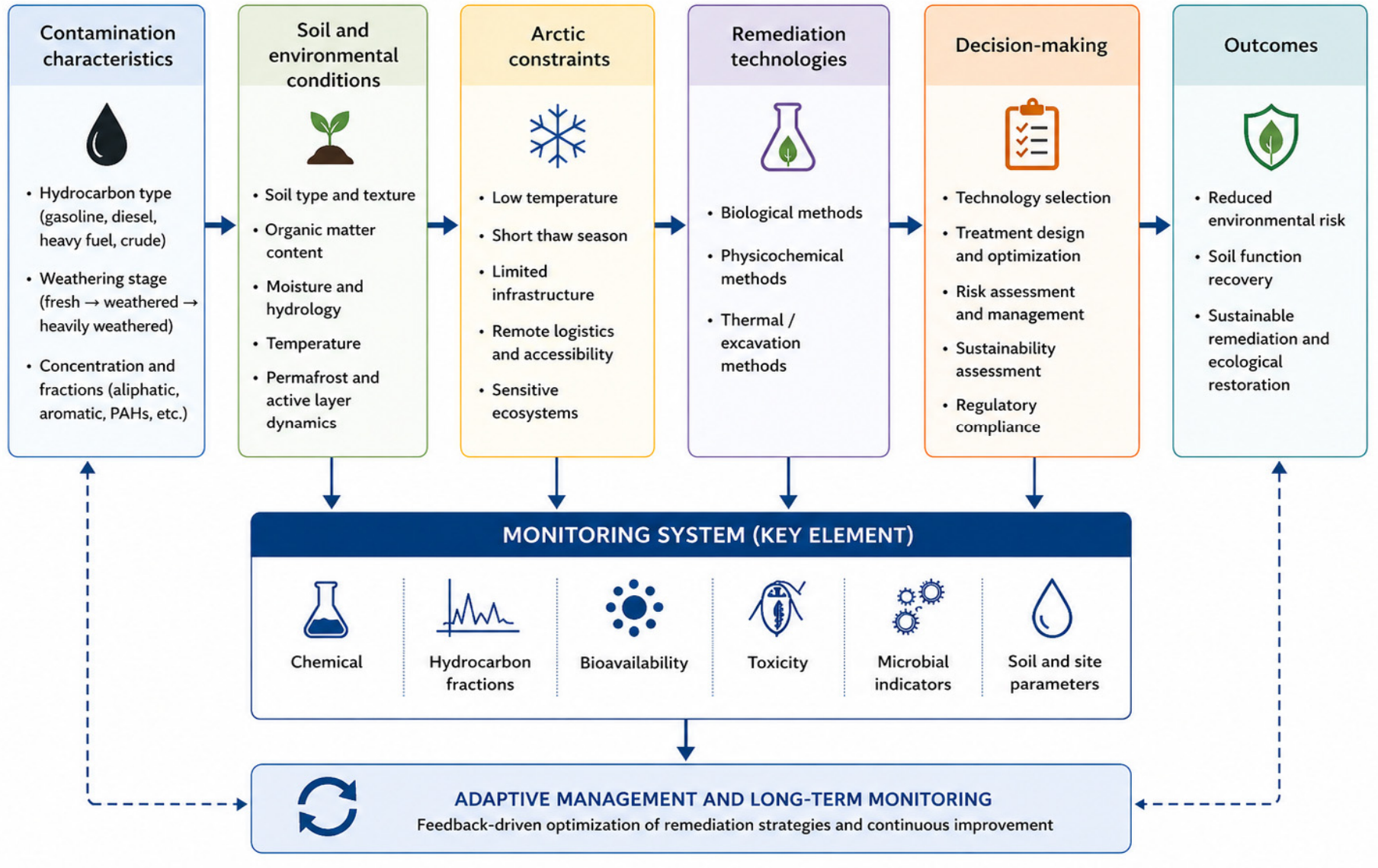
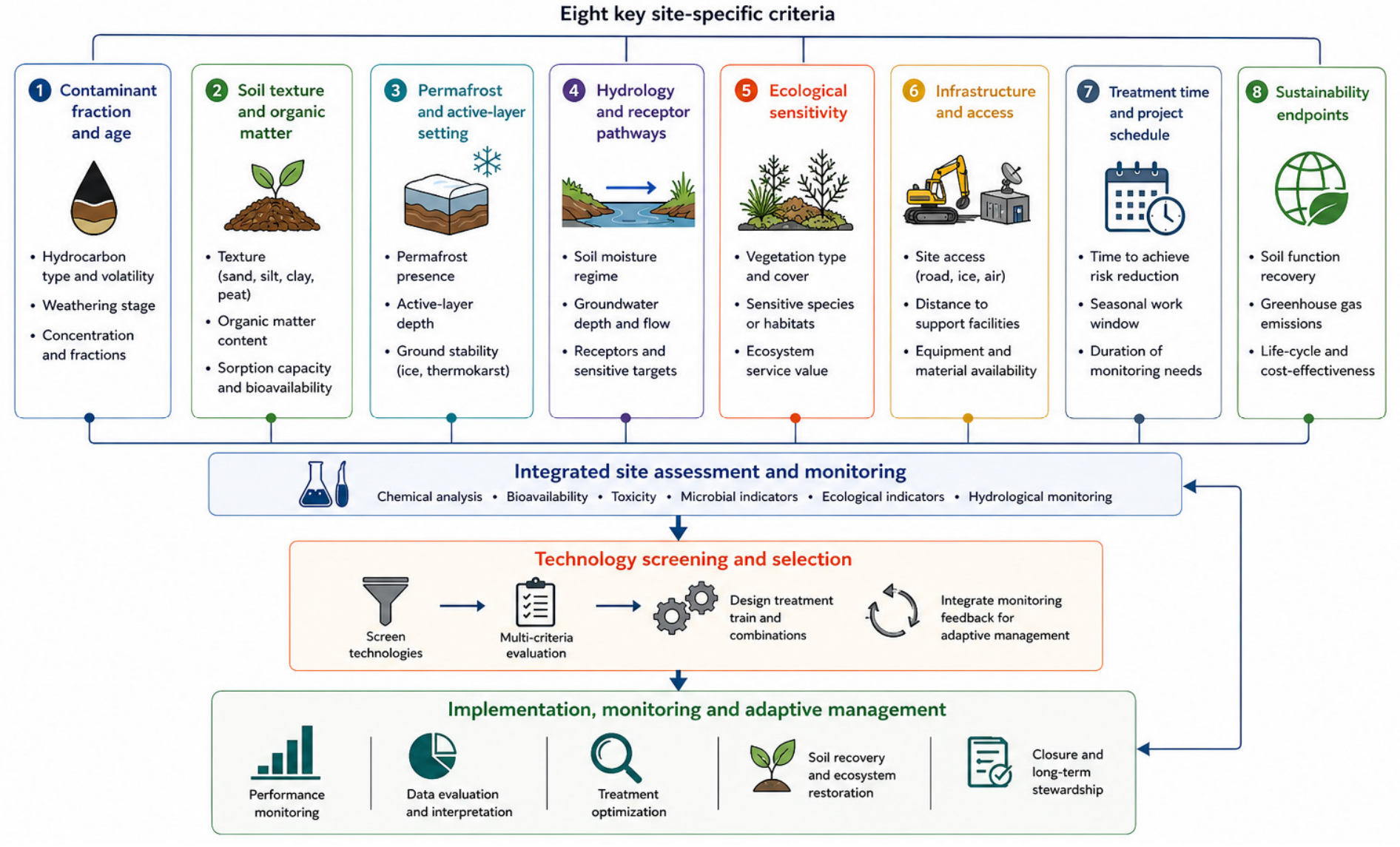
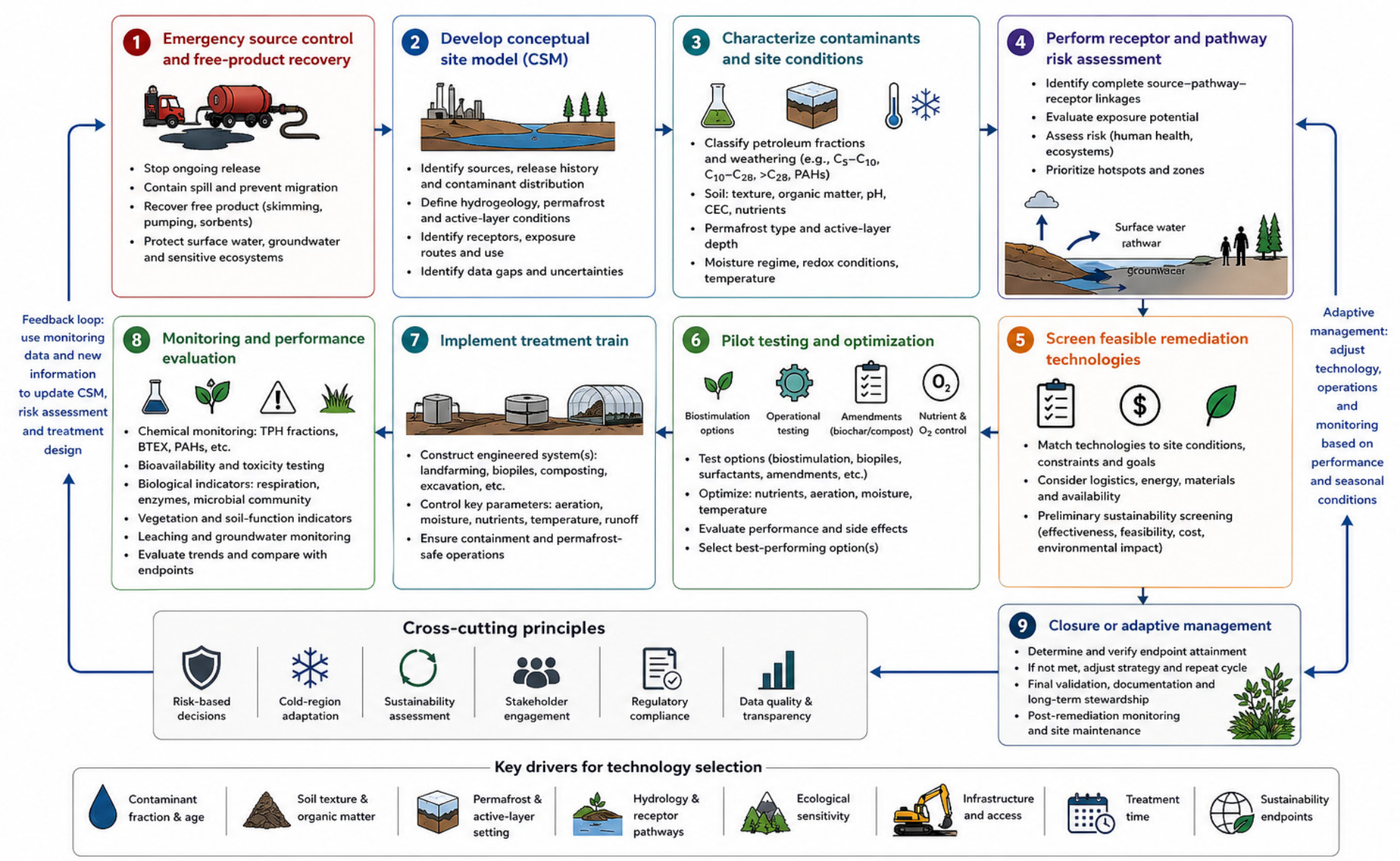

| Evidence Domain | Main Search Concepts | Main Sources Used | Analytical Role |
|---|---|---|---|
| Cold-region constraints | Arctic soils, permafrost, active layer, freeze–thaw, cold regions | Polar soil reviews, field studies, technical reports | Defines environmental limitations on remediation |
| Hydrocarbon behavior | TPH, diesel, crude oil, PAHs, weathering, bioavailability | Reviews and mechanistic studies | Explains why contaminant fraction and age affect treatment |
| Biological remediation | Biostimulation, bioaugmentation, landfarming, biopiles, composting | Cold-region field studies, microbial studies, guidance | Evaluates low-energy on-site treatment options |
| Physicochemical remediation | Soil washing, surfactants, sorbents, biochar, chemical oxidation | Reviews, laboratory studies, selected cold-region studies | Evaluates technologies for mass transfer, toxicity reduction, and hotspots |
| Thermal and excavation methods | Thermal desorption, incineration, excavation, disposal | Engineering reviews and contaminated-site guidance | Evaluates rapid source removal and its trade-offs |
| Monitoring and endpoints | Bioavailability, toxicity, bioassays, microbial activity, vegetation, soil functions | Ecotoxicological studies, sustainable remediation frameworks | Expands endpoints beyond TPH concentration |
| International governance | Canada, Alaska, EU, ISO, SuRF-UK | Official guidance and standards | Provides comparative policy and practice context |
| Russian Arctic synthesis | Russian standards, recultivation rules, BAT, Western Siberia studies | Russian legal/regulatory sources and regional research | Links international evidence to Russian practice |
| Constraint | Mechanism | Remediation Implication |
|---|---|---|
| Low temperature | Slows microbial metabolism and hydrocarbon mass transfer | Biological treatment requires longer duration, cold-adapted microbes, nutrient/oxygen optimization |
| Short thaw season | Limits annual treatment window | Multi-season treatment and monitoring should be expected |
| Permafrost | Restricts excavation, well installation, and vertical drainage | Avoid unnecessary heat/water inputs; protect ground stability |
| Active-layer dynamics | Seasonal lateral and vertical contaminant migration | Sampling and monitoring must be seasonally designed |
| Waterlogging | Reduces oxygen diffusion | Aeration, drainage control, or ex situ treatment may be needed |
| Organic-rich soils | Strong hydrocarbon sorption and reduced bioavailability | Bioavailability and toxicity endpoints should complement TPH |
| Sandy/coarse soils | High permeability and nutrient leaching | Migration control and nutrient management are essential |
| Fragile vegetation | Slow recovery after disturbance | Prefer low-disturbance and restoration-oriented treatment where risk allows |
| Remote logistics | Limited access, high cost, short field season | Favor on-site treatment and low-energy systems when feasible |
| Climate change | Alters hydrology, permafrost, erosion, and access | Remediation plans should include adaptive monitoring |
| Endpoint Category | Recommended Indicators | Purpose |
|---|---|---|
| Chemical | TPH fractions, BTEX, PAHs, residual oil composition | Quantifies contaminant mass and hazardous fractions |
| Bioavailability | Mild extraction methods, DMSO/FTIR-based approaches, passive sampling | Estimates biologically accessible contamination |
| Toxicity | Microbial luminescence assays, plant germination tests, aquatic bioassays | Detects residual biological hazard |
| Microbiological | Respiration, enzymatic activity, hydrocarbon-degrading taxa/genes | Evaluates biodegradation potential and biological recovery |
| Soil properties | pH, CEC, organic matter, moisture, bulk density, hydrophobicity | Tracks soil-function restoration |
| Vegetation | Germination, cover, biomass, root development, native species survival | Assesses ecological restoration |
| Hydrological | Leachate, runoff, groundwater and surface-water monitoring | Controls off-site contaminant migration |
| Permafrost/active layer | Active-layer depth, ground temperature, thaw settlement | Prevents remediation-induced ground instability |
| Sustainability | Energy use, transport, secondary waste, emissions, cost, social acceptability | Supports sustainable remediation decisions |
| Technology | Main Target | Arctic Applicability | Main Strengths | Main Limitations | Best Use Case |
|---|---|---|---|---|---|
| Monitored natural attenuation | Low-risk residual contamination | Moderate | Minimal disturbance, low energy | Slow, requires strong monitoring | Stable sites with controlled sources |
| Biostimulation | Diesel-range and biodegradable fractions | High | Uses indigenous microbes, scalable | Nutrient runoff, oxygen limitation, seasonality | Aerated soils with nutrient limitation |
| Bioaugmentation | Selected biodegradable fractions | Moderate | Adds specialized degraders | Survival uncertain, not stand-alone | Combined with nutrients and carriers |
| Landfarming | Diesel and light-to-medium petroleum fractions | High | Simple, low energy, suitable for remote sites | Land demand, runoff, volatilization, multi-year treatment | Excavated soil at remote sites |
| Biopiles/biocells | Diesel and weathered hydrocarbons | High | Better control and containment | Higher design and energy demand | Sites needing containment and aeration |
| Composting | Weathered petroleum hydrocarbons | Moderate-High | Improves soil structure and microbial activity | Amendment quality, leachate, and dilution artifacts | Restoration-oriented ex situ treatment |
| Phytoremediation/rhizoremediation | Residual contamination | Moderate | Supports stabilization and revegetation | Slow, short growing season | Polishing and ecological restoration |
| Soil washing | Particle-bound hydrocarbons | Moderate | Can remove contaminant mass from excavated soils | Wastewater, freezing, infrastructure | Centralized or semi-centralized treatment |
| Surfactant-assisted treatment | Sorbed hydrophobic fractions | Moderate | Improves mobilization/bioavailability | Toxicity, mobilization, variable response | Pilot-tested combined treatment |
| Sorbents/biochar/amendments | Mobile or toxic fractions | Moderate-High | Reduces toxicity and leaching | Immobilization may reduce biodegradation | Emergency stabilization or restoration support |
| Chemical oxidation | Localized hotspots | Low–Moderate | Rapid mass reduction | Delivery difficulty, soil disturbance | Small high-risk source zones |
| Thermal treatment | Heavy and persistent hydrocarbons | Low-Moderate | High removal efficiency | Energy demand, emissions, soil-function loss | Small volumes of highly contaminated soil |
| Excavation/disposal | Hotspots and free product | Moderate | Immediate source removal | Transport, disturbance, liability transfer | Emergency response and accessible hotspots |
| Combined treatment trains | Mixed contamination | High | Matches technologies to remediation stages | Requires planning and monitoring | Most complex Arctic sites |
| Evidence Group | Representative Sources | Evidence Type | Key Finding | Main Limitation | Implication for Framework |
|---|---|---|---|---|---|
| Cold-region constraints | [1,2,3,4,5,6,8,9,10,11,23] | Reviews; field and experimental studies | Temperature, thaw season, moisture, oxygen availability, and permafrost strongly control treatment performance | Findings are site-specific and often difficult to transfer directly across Arctic regions | Site characterization must precede technology selection and define monitoring frequency |
| Hydrocarbon weathering and bioavailability | [17,18,24,25,56] | Conceptual reviews; methodological studies | Bulk TPH values do not reliably represent bioavailable or toxic fractions | Bioavailability methods are not yet standardized across remediation projects | TPH should be complemented by fractionation, bioavailability proxies, and toxicity testing |
| Biological remediation | [6,7,8,9,10,11,20,21,22,23,28,29,57,62] | Field, pilot, and laboratory studies | Biostimulation, landfarming, biopiles, and composting can be effective when oxygen, nutrients, and moisture are controlled | Performance declines under waterlogging, nutrient imbalance, low temperature, and limited bioavailability | Monitoring should track nutrients, oxygen, microbial activity, toxicity, and residual fractions over multiple seasons |
| Phytoremediation and restoration | [30,31,32] | Reviews and experimental studies | Plants and rhizosphere processes support polishing, stabilization, and soil-function recovery | Short growing seasons and low biomass limit use as a primary treatment in Arctic sites | Vegetation indicators are best used in late-stage monitoring and restoration assessment |
| Physicochemical and amendment-based treatment | [33,34,35,36,37,38,39,54,55,63,64,65] | Reviews; regional experimental studies | Surfactants, sorbents, biochar, and amendments can alter contaminant mobility, toxicity, and bioavailability | Effects are soil- and dose-specific; mobilization or immobilization may be mistaken for degradation | Pilot testing and combined chemical–toxicity monitoring are required before field application |
| Thermal, excavation, and source removal | [40,41,42] | Engineering reviews and guidance | These methods provide rapid risk reduction for hotspots and free product | They may increase disturbance, energy demand, emissions, and soil-function loss | Use should be limited to source zones and evaluated through risk-reduction and sustainability criteria |
| Governance and decision support | [26,27,43,44,45,46,47,48,49,50,51,52,53,60,61,66,67] | Standards; guidance; policy documents; regional studies | Risk-based frameworks, recultivation standards, and sustainable remediation principles provide decision structure | Russian Arctic data remain unevenly reported and often lack multi-endpoint monitoring | The proposed framework links regulatory requirements with monitoring-driven adaptive management |
Disclaimer/Publisher’s Note: The statements, opinions and data contained in all publications are solely those of the individual author(s) and contributor(s) and not of MDPI and/or the editor(s). MDPI and/or the editor(s) disclaim responsibility for any injury to people or property resulting from any ideas, methods, instructions or products referred to in the content. |
© 2026 by the authors. Licensee MDPI, Basel, Switzerland. This article is an open access article distributed under the terms and conditions of the Creative Commons Attribution (CC BY) license.
Share and Cite
Bajbulatov, R.Y.; Sutormin, O.S. From TPH to Multi-Endpoint Monitoring: Rethinking Remediation of Petroleum-Contaminated Soils in Arctic and Sub-Arctic Regions. Environments 2026, 13, 304. https://doi.org/10.3390/environments13060304
Bajbulatov RY, Sutormin OS. From TPH to Multi-Endpoint Monitoring: Rethinking Remediation of Petroleum-Contaminated Soils in Arctic and Sub-Arctic Regions. Environments. 2026; 13(6):304. https://doi.org/10.3390/environments13060304
Chicago/Turabian StyleBajbulatov, Ruslan Ya., and Oleg S. Sutormin. 2026. "From TPH to Multi-Endpoint Monitoring: Rethinking Remediation of Petroleum-Contaminated Soils in Arctic and Sub-Arctic Regions" Environments 13, no. 6: 304. https://doi.org/10.3390/environments13060304
APA StyleBajbulatov, R. Y., & Sutormin, O. S. (2026). From TPH to Multi-Endpoint Monitoring: Rethinking Remediation of Petroleum-Contaminated Soils in Arctic and Sub-Arctic Regions. Environments, 13(6), 304. https://doi.org/10.3390/environments13060304

