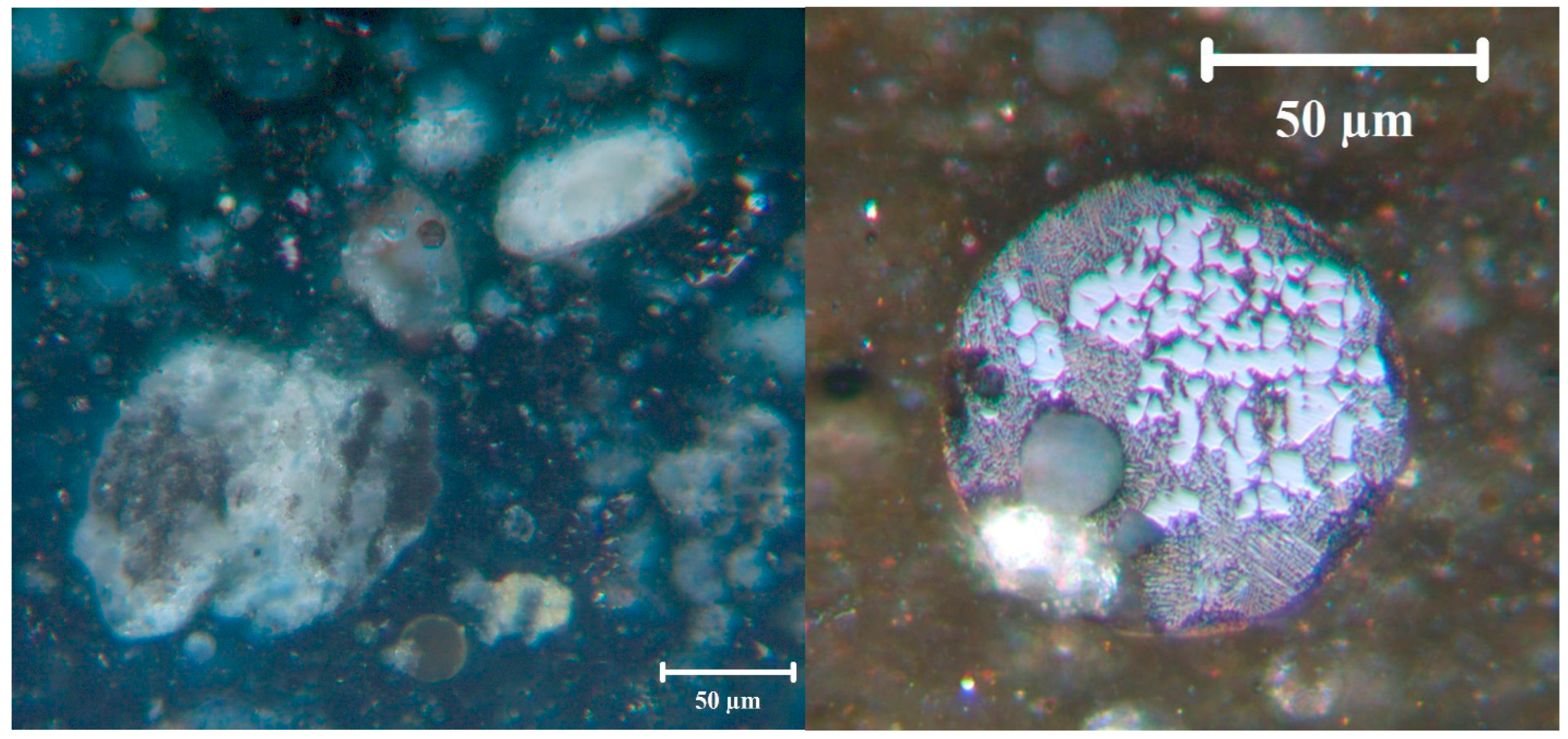

Phytoextraction of Heavy Metals from Fly-Ash-Contaminated Soils: A Review

 , , ,
, , ,  ,
,
Abstract
1. Introduction
2. Materials and Methods
- (a)
- Focused on the characterization of FA and its impact on the environment, humans, and soils;
- (b)
- Investigated the impacts of HMs on soil physical, chemical, and biological properties;
- (c)
- Evaluated soil–FA interactions affecting the bioavailability and mobility of HMs in soils;
- (d)
- Analyzed the efficiency of the phytoextraction approach in soil reclamation in FA-contaminated soils;
- (e)
- Examined mechanisms of hyperaccumulation in plants including metal uptake, translocation, or tolerance;
- (f)
- Explored the hyperaccumulator species or candidate plants suitable for phytoextraction of HMs.
3. Fly Ash: Properties and Classification
3.1. Fly Ash Production and Use in the United States
3.2. Impacts of Fly Ash on the Environment, Human, and Soil Health
4. Impacts of Heavy Metals on Soil
5. Fly Ash Specificity
6. Remediation Strategies for the Fly-Ash/Heavy-Metal-Contaminated Soils
7. Phytoextraction
7.1. Hyperaccumulators
7.2. Mechanisms of Hyperaccumulation
7.2.1. HM Uptake
7.2.2. HM Transport from Root to Shoot
7.2.3. Storage/Detoxification
8. Phytoextraction in FA-Contaminated Soils
9. Limitations
10. Future Research Directions
11. Conclusions
Author Contributions
Funding
Data Availability Statement
Conflicts of Interest
References
- Karthika, V.; Sekaran, U.; Jainullabudeen, G.B.; Nagarathinam, A. Chapter 9—Advances in bioremediation of industrial wastewater containing metal pollutants. In Biological Approaches to Controlling Pollutants; Kumar, S., Hashmi, M.Z., Eds.; Advances in Pollution Research; Woodhead Publishing: Cambridge, UK, 2022; pp. 163–177. [Google Scholar] [CrossRef] [Scilit]
- Emeka, C.I.; Nsima, A.A.; Kelvin, C.I.; Awajiiroijana, U.O.; Peter, I.E.; Justina, N.O.; Samuel, E.A. Environmental and Toxicological Risk Assessment of Heavy Metals in Eleme Agricultural Soils. Asian J. Agric. Hortic. Res. 2026, 13, 67–81. [Google Scholar] [CrossRef] [Scilit]
- Heidrich, C.; Feuerborn, H.; Weir, A. Coal Combustion Products: A Global Perspective. In Proceedings of the 2013 World of Coal Ash (WOCA) Conference, Lexington, KY, USA, 22–25 April 2013; Available online: https://www.mcilvainecompany.com/Decision_Tree/subscriber/Tree/DescriptionTextLinks/International%20flyash%20perspective.pdf (accessed on 20 April 2026).
- ACAA; USGS. Coal Combustion Products. 2001. Available online: https://pubs.usgs.gov/fs/fs076-01/fs076-01.pdf (accessed on 20 April 2026).
- Ram, A.K.; Mohanty, S. State of the art review on physiochemical and engineering characteristics of fly ash and its applications. Int. J. Coal Sci. Technol. 2022, 9, 9. [Google Scholar] [CrossRef] [Scilit]
- Wang, D.; Islam, M.A.; Mischo, H. The Utilization of Fly Ash in the Mining Sector. In Integrative Approaches in Urban Sustainability—Architectural Design, Technological Innovations and Social Dynamics in Global Contexts; Almusaed, A., Almssad, A., Yitmen, I., Wallhagen, M., Yang, Y.-F., Eds.; IntechOpen: London, UK, 2024; Chapter 11. [Google Scholar] [CrossRef] [Scilit]
- Dhadse, S.; Kumari, P.; Bhagia, L.J. Fly ash characterization, utilization and government initiatives in India—A review. J. Sci. Ind. Res. 2008, 67, 11–18. [Google Scholar]
- ACAA. Coal Combustion Products (CCP) Production and Use Charts. American Coal Ash Association. Available online: https://acaa-usa.org/wp-content/uploads/2023/12/2022-Production-and-Use-Charts.pdf (accessed on 23 June 2025).
- Izquierdo, M.; Querol, X. Leaching behaviour of elements from coal combustion fly ash: An overview. Int. J. Coal Geol. 2012, 94, 54–66. [Google Scholar] [CrossRef] [Scilit]
- Sheoran, H.S.; Duhan, B.S.; Kumar, A. Effect of Fly Ash Application on Soil Properties: A Review. J. Agroecol. Nat. Resour. Manag. 2014, 1, 98–103. [Google Scholar]
- Collin, S.; Baskar, A.; Geevarghese, D.M.; Ali, M.N.V.S.; Bahubali, P.; Choudhary, R.; Lvov, V.; Tovar, G.I.; Senatov, F.; Koppala, S.; et al. Bioaccumulation of lead (Pb) and its effects in plants: A review. J. Hazard. Mater. Lett. 2022, 3, 100064. [Google Scholar] [CrossRef] [Scilit]
- Office of Solid Waste and Emergency Response and Office of Resource Conservation and Recovery. Human and Ecological Risk Assessment of Coal Combustion Wastes. 2014. Available online: https://downloads.regulations.gov/EPA-HQ-OLEM-2019-0173-0008/content.pdf (accessed on 20 April 2026).
- Sazykin, I.; Khmelevtsova, L.; Azhogina, T.; Sazykina, M. Heavy Metals Influence on the Bacterial Community of Soils: A Review. Agriculture 2023, 13, 653. [Google Scholar] [CrossRef] [Scilit]
- Banda, M.F.; Matabane, D.L.; Munyengabe, A. A phytoremediation approach for the restoration of coal fly ash polluted sites: A review. Heliyon 2024, 10, e40741. [Google Scholar] [CrossRef] [Scilit] [PubMed]
- Ali, H.; Khan, E. What are heavy metals? Long-standing controversy over the scientific use of the term ‘heavy metals’–proposal of a comprehensive definition. Toxicol. Environ. Chem. 2018, 100, 6–19. [Google Scholar] [CrossRef] [Scilit]
- Duffus, J.H. ‘Heavy metals’—A meaningless term? (IUPAC technical report). Pure Appl. Chem. 2002, 74, 793–807. [Google Scholar] [CrossRef] [Scilit]
- Adriano, D.C.; Page, A.L.; Elseewi, A.L.; Chang, A.C.; Straughan, I. Utilization and disposal of fly ash and other coal residues in terrestrial ecosystems: A review. J. Environ. Qual. 1980, 9, 333–344. [Google Scholar] [CrossRef] [Scilit]
- McGrath, S.P.; Zhao, F.J.; Lombi, E. Plant and rhizosphere processes involved in phytoremediation of metal-contaminated soils. In Interactions in the Root Environment: An Integrated Approach; Springer: Dordrecht, The Netherlands, 2002; pp. 207–214. [Google Scholar] [CrossRef] [Scilit]
- Wei, S.; da Silva, J.A.T.; Zhou, Q. Agro-improving method of phytoextracting heavy metal contaminated soil. J. Hazard. Mater. 2008, 150, 662–668. [Google Scholar] [CrossRef] [Scilit]
- DalCorso, G.; Fasani, E.; Manara, A.; Visioli, G.; Furini, A. Heavy metal pollutions: State of the art and innovation in phytoremediation. Int. J. Mol. Sci. 2019, 20, 3412. [Google Scholar] [CrossRef] [Scilit]
- Ali, H.; Khan, E.; Sajad, M.A. Phytoremediation of heavy metals-Concepts and applications. Chemosphere 2013, 91, 869–881. [Google Scholar] [CrossRef] [Scilit] [PubMed]
- Alloway, B.J. Heavy Metals in Soil: Trace Metals and Metalloids in Soils and their Bioavailability. In Environmental Pollution, 3rd ed.; Springer: Dordrecht, The Netherlands, 2013. [Google Scholar]
- Qi, M.; Ye, C.; Li, R.; Cao, J.; Li, X.; Qing, J.; Zhang, Z.; Xu, R.; Wang, X.; Zheng, B. Fly ash and FeSO4 synergistically modified ecological concrete for sustainable remediation of vanadium-titanium magnetite tailings. J. Build. Eng. 2026, 119, 115306. [Google Scholar] [CrossRef] [Scilit]
- Nepal, A.; Antonious, G.F.; Bebe, F.N.; Webster, T.C.; Gyawali, B.R.; Neupane, B. Heavy Metal Accumulation in Three Varieties of Mustard Grown under Five Soil Management Practices. Environments 2024, 11, 77. [Google Scholar] [CrossRef] [Scilit]
- Chaney, R.L.; Li, Y.-M.; Brown, S.L.; Homer, F.A.; Malik, M.; Angle, J.S.; Baker, A.J.M.; Reeves, R.D.; Chin, M. Improving Metal Hyperaccumulator Wild Plants to Develop Commercial Phytoextraction Systems: Approaches and Progress; CRC Press: Boca Raton, FL, USA, 2020. [Google Scholar] [CrossRef] [Scilit]
- Jeevanantham, S.; Saravanan, A.; Hemavathy, R.V.; Kumar, P.S.; Yaashikaa, P.R.; Yuvaraj, D. Removal of toxic pollutants from water environment by phytoremediation: A survey on application and future prospects. Environ. Technol. Innov. 2019, 13, 264–276. [Google Scholar] [CrossRef] [Scilit]
- van der Ent, A.; Rylott, E.L. Inventing hyperaccumulator plants: Improving practice in phytoextraction research and terminology. Int. J. Phytoremediat. 2024, 26, 1379–1382. [Google Scholar] [CrossRef] [Scilit]
- Theile, C.M.; Beall, A.L. Narrative Reviews of the Literature: An overview. J. Dent. Hyg. 2024, 98, 78–82. [Google Scholar]
- Steier, W.; Li, C.; Sabatini, P.; Lodato, M.; Bardol, M.; Gross, B.; Seymour, J. Coal Combustion Residuals Pond Closure: Guidance for Dewatering and Capping. 2014. Available online: https://restservice.epri.com/publicdownload/000000003002001143/0/Product (accessed on 20 April 2026).
- National Research Council of the National Academics (NRC). Managing Coal Combustion Residues in Mines; National Academies Press: Cambridge, MA, USA, 2006. [Google Scholar] [CrossRef] [Scilit]
- Energy Education. Boiler Slag. Energy Education. Available online: https://energyeducation.ca/encyclopedia/Boiler_slag? (accessed on 31 January 2025).
- Matsimbe, J.; Dinka, M.; Olukanni, D.; Musonda, I. Characterization and valorization of fly ash and phosphogypsum into a binary composite for construction. Clean. Waste Syst. 2025, 12, 100355. [Google Scholar] [CrossRef] [Scilit]
- Ram, L.C.; Masto, R.E. Fly ash for soil amelioration: A review on the influence of ash blending with inorganic and organic amendments. Earth-Sci. Rev. 2014, 128, 52–74. [Google Scholar] [CrossRef] [Scilit]
- Ahmaruzzaman, M. A review on the utilization of fly ash. Prog. Energy Combust. Sci. 2010, 36, 327–363. [Google Scholar] [CrossRef] [Scilit]
- Electric Power Research Institute (EPRI). Coal Ash: Characteristics, Management and Environmental Issues. 2009. Available online: http://www.epri.com/abstracts/Pages/ProductAbstract.aspx?ProductId=000000000001019022 (accessed on 20 April 2026).
- ASTM C618-15; Standard Specification for Coal Fly Ash and Raw or Calcined Natural Pozzolan for Use in Concrete. American Society for Testing and Materials (ASTM): West Conshohocken, PA, USA, 2017. Available online: https://www.astm.org/c0618-15.html (accessed on 20 April 2026).
- Hower, J.; Henke, K.; Dai, S.; Ward, C.; French, D.; Liu, S.; Graham, U. Generation and Nature of Coal Fly Ash and Bottom Ash; Woodhead Publishing: Cambridge, UK, 2017. [Google Scholar] [CrossRef] [Scilit]
- Bentz, D.P.; Durán-Herrera, A.; Galvez-Moreno, D. Comparison of ASTM C311 strength activity index testing versus testing based on constant volumetric proportions. J. ASTM Int. 2011, 9, 1–7. [Google Scholar] [CrossRef] [Scilit]
- Thomas, M.D.A.; Shehata, M.H.; Shashiprakash, S.G. The Use of Fly Ash in Concrete: Classification by Composition. Cem. Concr. Aggreg. 1999, 21, 105–110. [Google Scholar] [CrossRef] [Scilit]
- ASTM C1157/C1157M-23; Standard Performance Specification for Hydraulic Cement. American Society for Testing and Materials (ASTM): West Conshohocken, PA, USA, 2023. Available online: https://standards.iteh.ai/catalog/standards/astm/a4e8efe6-5904-4bd8-a3c3-8e32c3fbae69/astm-c1157-c1157m-23?srsltid=AfmBOooFGGyxiJbQ0cE3FZPHGFSm0c650_WBg57RE3YuUrAadptRYElr (accessed on 26 January 2025).
- Vassilev, S.V.; Vassileva, C.G. A new approach for the classification of coal fly ashes based on their origin, composition, properties, and behaviour. Fuel 2007, 86, 1490–1512. [Google Scholar] [CrossRef] [Scilit]
- Wojtaszek, M.; Wasielewski, R.; Kalaitzidis, S. Organic petrographical features of fly ashes originating from coal and coal-srf co-combustion. Minerals 2021, 11, 128. [Google Scholar] [CrossRef] [Scilit]
- Alterary, S.S.; Marei, N.H. Fly ash properties, characterization, and applications: A review. J. King Saud Univ. Sci. 2021, 33, 101536. [Google Scholar] [CrossRef] [Scilit]
- Kruse, K.; Jasso, A.; Folliard, K.; Ferron, R.; Juenger, M.; Drimalas, T. Characterizing Fly Ash. Center for Transportation Research; The University of Texas at Austin: Austin, TX, USA, 2013; Volume 7, pp. 1–172. Available online: https://library.ctr.utexas.edu/ctr-publications/0-6648-1.pdf (accessed on 20 April 2026).
- Matsunaga, T.; Kim, J.K.; Hardcastle, S.; Rohatgi, P.K. Crystallinity and selected properties of fly ash particles. Mater. Sci. Eng. A 2002, 325, 333–343. [Google Scholar] [CrossRef] [Scilit]
- EPA. Electric Power Sector Basics. United States Environmental Production Agency. Available online: https://www.epa.gov/power-sector/electric-power-sector-basics (accessed on 26 January 2025).
- Hower, J.C.; Thomas, G.; Hopps, S. Trends in Coal Utilization and Coal Combustion Product Production in Kentucky: Results of the 2012 Survey of Power Plants. Coal Combust. Gasif. Prod. 2014, 6, 35–41. [Google Scholar] [CrossRef] [Scilit]
- Vu, H.; Frýdl, T.; Bastl, T.; Dvořák, P.; Kristianová, E.; Tomáško, T. Recent Development in Metal Extraction from Coal Fly Ash. In Clean Coal Technologies: Beneficiation, Utilization, Transport Phenomena and Prospective; Jyothi, R.K., Parhi, P.K., Eds.; Springer International Publishing: Cham, Switzerland, 2021; pp. 575–603. [Google Scholar] [CrossRef] [Scilit]
- Kamara, S.; Foday, E.H., Jr.; Wang, W. A Review on the Utilization and Environmental Concerns of Coal Fly Ash. Am. J. Chem. Pharm. 2023, 2, 53–65. [Google Scholar] [CrossRef] [Scilit]
- Hower, J.C. Book Review. Int. J. Coal Geol. 2017, 181, 75–77. [Google Scholar] [CrossRef] [Scilit]
- Dewan, S. Tennessee ash flood larger than initial estimate. New York Times, 26 December 2008.
- Dewan, S. At Plant in Coal Ash Spill, Toxic Deposits by the Ton. New York Times, 29 December 2008. Available online: https://www.nytimes.com/2008/12/30/us/30sludge.html (accessed on 27 January 2025).
- Dewan, S. Coal Ash Spill Revives Issue of Its Hazards. New York Times, 24 December 2008. Available online: https://www.nytimes.com/2008/12/25/us/25sludge.html (accessed on 27 January 2025).
- Hower, J.C. Valley So Low: One Lawyer’s Fight for Justice in the Wake of America’s Great Coal Catastrophe, by Jared Sullivan, 2024. Book Review. Int. J. Coal Geol. 2014, 127, 104672. [Google Scholar] [CrossRef] [Scilit]
- Earth Justice. Waste Deep Filling Mines with Coal Ash Is Profit for Industry, But Poison for People. 2009. Available online: https://earthjustice.org/wp-content/uploads/earthjustice_waste_deep.pdf (accessed on 20 April 2026).
- Bosch, E. Georgia Power Proposes Risky Coal Ash Pond Closure at Plant Bowen. Sierra Club. Available online: https://www.sierraclub.org/press-releases/2021/10/georgia-power-proposes-risky-coal-ash-pond-closure-plant-bowen? (accessed on 26 January 2025).
- Sturgis, S. Coal’s Dirty Secret. Facing South; A Voice for a Changing South. Available online: https://www.facingsouth.org/2010/05/coals-dirty-secret.html (accessed on 26 January 2025).
- EPA. Drinking Water Arsenic Rule History. United States Environmental Protection Agency. Available online: https://www.epa.gov/dwreginfo/drinking-water-arsenic-rule-history? (accessed on 26 January 2025).
- Indianapolis Power and Light Company (IPLC). Assessment of Dam Safety of Coal Combustion Surface Impoundments. Martinsville, Indiana, 2010. Available online: https://archive.epa.gov/epawaste/nonhaz/industrial/special/fossil/web/pdf/ipl-lighteagle-final.pdf (accessed on 20 April 2026).
- Gottlieb, B.; Gilbert, S.G.; Evans, L.G. Coal Ash: The Toxic Threat to Our Health and Environment. 2010. Available online: http://www.psr.org/resources/coal-ash-the-toxic-threat-to-our-health-and-environment.html (accessed on 20 April 2026).
- Cowan, E.A.; Wang, Z.; Brachfeld, S.A.; Hageman, S.J.; Seramur, K.C.; Pearson, W.F.; Wilson, J.; Karcher, R.; Hill, R.; Vengosh, A. Role of coal ash morphology and composition in delivery and transport of trace metals in the aquatic environment. Environ. Pollut. 2024, 363, 124982. [Google Scholar] [CrossRef] [Scilit] [PubMed]
- Wang, Z.; Dai, S.; Cowan, E.A.; Dietrich, M.; Schlesinger, W.H.; Wu, Q.; Zhou, M.; Seramur, K.C.; Das, D.; Vengosh, A. Isotopic Signatures and Outputs of Lead from Coal Fly Ash Disposal in China, India, and the United States. Environ. Sci. Technol. 2023, 57, 12259–12269. [Google Scholar] [CrossRef] [Scilit] [PubMed]
- Wang, Z.; Coyte, R.M.; Cowan, E.A.; Stapleton, H.M.; Dwyer, G.S.; Vengosh, A. Evaluation and Integration of Geochemical Indicators for Detecting Trace Levels of Coal Fly Ash in Soils. Environ. Sci. Technol. 2021, 55, 10387–10397. [Google Scholar] [CrossRef] [Scilit] [PubMed]
- Borm, P.J.A. Toxicity and occupational health hazards of coal fly ash (CFA). A review of data and comparison to coal mine dust. Ann. Occup. Hyg. 1997, 41, 659–676. [Google Scholar] [CrossRef] [Scilit] [PubMed]
- McBride, M.B. Soil Chemistry. In Environmental Chemsitry of Soils; Oxford University Press: Oxford, UK, 1994; p. 406. Available online: https://books.google.com/books/about/Environmental_Chemistry_of_Soils.html?id=jgZhQgAACAAJ (accessed on 20 April 2026).
- Carlson, C.L.; Adriano, D.C. Environmental Impacts of Coal Combustion Residues. J. Environ. Qual. 1993, 22, 227–247. [Google Scholar] [CrossRef] [Scilit]
- Gagnon, B.; Lalande, R.; Fahmy, S. Organic matter and aggregation in a degraded potato soil as affected by raw and composted pulp residue. Biol. Fertil. Soils 2001, 34, 441–447. [Google Scholar] [CrossRef] [Scilit]
- Biswal, T.; Panda, R.B. Impact of fly ash on soil properties and Productivity. Int. J. Agric. Environ. Biotechnol. 2018, 11, 275–283. Available online: https://www.researchgate.net/publication/347355971_Impact_of_Fly_Ash_on_Soil_Properties_and_Productivity (accessed on 20 April 2026). [CrossRef]
- Wong, M.H.; Wong, J.W.C. Effects of fly ash on soil microbial activity. Environ. Pollut. Ser. A Ecol. Biol. 1986, 40, 127–144. [Google Scholar] [CrossRef] [Scilit]
- Chu, D. Effects of heavy metals on soil microbial community. IOP Conf. Ser. Earth Environ. Sci. 2018, 113, 012009. [Google Scholar] [CrossRef] [Scilit]
- Ogunsola, S.S.; Oladele, O.L.; Abdulraheem, T.; Cooke, C.G. Synergizing phytoremediation and geopolymerization: A sustainable waste-to-wealth approach for heavy metal-contaminated soils. Chemosphere 2025, 385, 144539. [Google Scholar] [CrossRef] [Scilit]
- Bortoloti, G.A.; Baron, D. Phytoremediation of toxic heavy metals by Brassica plants: A biochemical and physiological approach. Environ. Adv. 2022, 8, 100204. [Google Scholar] [CrossRef] [Scilit]
- Mustapha, L.S.; Obayomi, O.V.; Obayomi, K.S. A comprehensive review on potential heavy metals in the environment: Persistence, bioaccumulation, ecotoxicology, and agricultural impacts. Ecol. Front. 2026, 46, 434–449. [Google Scholar] [CrossRef] [Scilit]
- Porter, J.R.; Sheridan, R.P. Inhibition of nitrogen fixation in alfalfa by arsenate, heavy metals, fluoride, and simulated Acid rain. Plant Physiol. 1981, 68, 143–148. [Google Scholar] [CrossRef] [Scilit]
- Ukalska-Jaruga, A.; Siebielec, G.; Siebielec, S.; Pecio, M. The Effect of Soil Amendments on Trace Elements’ Bioavailability and Toxicity to Earthworms in Contaminated Soils. Appl. Sci. 2022, 12, 6280. [Google Scholar] [CrossRef] [Scilit]
- Mohammad, S.J.; Ling, Y.E.; Halim, K.A.; Sani, B.S.; Abdullahi, N.I. Heavy metal pollution and transformation in soil: A comprehensive review of natural bioremediation strategies. J. Umm Al-Qura Univ. Appl. Sci. 2025, 11, 528–544. [Google Scholar] [CrossRef] [Scilit]
- Gong, C.; Shao, Y.; Luo, M.; Xu, D.; Ma, L. Distribution Characteristics of Heavy Metals in Different Particle Size Fractions of Chinese Paddy Soil Aggregates. Processes 2023, 11, 1873. [Google Scholar] [CrossRef] [Scilit]
- Xie, Z.; Jiang, Y.; Zhang, H.; Wang, D.; Qi, S.; Du, Z.; Zhang, H. Assessing heavy metal contamination and ecological risk in Poyang Lake area, China. Environ. Earth Sci. 2016, 75, 549. [Google Scholar] [CrossRef] [Scilit]
- Imfeld, G.; Meite, F.; Wiegert, C.; Guyot, B.; Masbou, J.; Payraudeau, S. Do rainfall characteristics affect the export of copper, zinc and synthetic pesticides in surface runoff from headwater catchments? Sci. Total Environ. 2020, 741, 140437. [Google Scholar] [CrossRef] [Scilit] [PubMed]
- Adriano, D.C. Biogeochemistry of Trace Metals. In BiogeochemistryOT; Available online; CRC Press: Boca Raton, FL, USA, 1992. [Google Scholar] [CrossRef] [Scilit]
- Pan, J.; Yu, L. Effects of Cd or/and Pb on Soil Enzyme Activities and Microbial Community Structure. Ecol. Eng. 2011, 37, 1889–1894. [Google Scholar] [CrossRef] [Scilit]
- Liu, H.; Probst, A.; Liao, B. Metal contamination of soils and crops affected by the Chenzhou lead/zinc mine spill (Hunan, China). Sci. Total Environ. 2005, 3, 153–166. [Google Scholar] [CrossRef] [Scilit]
- Li, J.; Hitch, M. Ultra-fine grinding and mechanical activation of mine waste rock using a planetary mill for mineral carbonation. Int. J. Miner. Process. 2017, 158, 18–26. [Google Scholar] [CrossRef] [Scilit]
- Heikkinen, P.M.; Räisänen, M.L. Mineralogical and geochemical alteration of Hitura sulphide mine tailings with emphasis on nickel mobility and retention. J. Geochem. Explor. 2008, 97, 1–20. [Google Scholar] [CrossRef] [Scilit]
- Weisener, C.G.; Weber, P.A. Preferential oxidation of pyrite as a function of morphology and relict texture. N. Z. J. Geol. Geophys. 2010, 53, 167–176. [Google Scholar] [CrossRef] [Scilit]
- Catalfamo, P.; Di Pasquale, S.; Corigliano, F.; Mavilia, L. Influence of the calcium content on the coal fly ash features in some innovative applications. Stud. Environ. Sci. 1997, 71, 599–602. [Google Scholar] [CrossRef] [Scilit]
- Nicola, K.; Sayouba, S.; Ousmane, B.; Prosper, Z.; Roza, C. Acid mine drainage and heavy metals contamination of surface water and soil in southwest burkina faso—West africa. Int. J. Multidiscip. Acad. Res. 2014, 2, 9–19. [Google Scholar]
- Komonweeraket, K.; Cetin, B.; Aydilek, A.H.; Benson, C.H.; Edil, T.B. Effects of pH on the leaching mechanisms of elements from fly ash mixed soils. Fuel 2015, 140, 788–802. [Google Scholar] [CrossRef] [Scilit]
- Martínez, C.E.; Motto, H.L. Solubility of lead, zinc and copper added to mineral soils. Environ. Pollut. 2000, 107, 153–158. [Google Scholar] [CrossRef] [Scilit] [PubMed]
- Xu, L.; Zhao, F.; Xing, X.; Peng, J.; Wang, J.; Ji, M.; Li, B.L. A Review on Remediation Technology and the Remediation Evaluation of Heavy Metal-Contaminated Soils. Toxics 2024, 12, 897. [Google Scholar] [CrossRef] [Scilit] [PubMed]
- Liu, H.-M.; Yan, Y.; Shao, D.-J.; Li, D.-L.; Zhang, Y.-L. Remediation of the Contaminated Soils by Washing with an Aqueous Cysteamine Lixiviant. J. Mater. Sci. Chem. Eng. 2015, 3, 1–4. [Google Scholar] [CrossRef]
- Liu, L.; Hu, S.-P.; Chen, Y.-X.; Li, H. Feasibility of washing as a remediation technology for the heavy metals-polluted soils left by chemical plant. Ying Yong Sheng Tai Xue Bao 2010, 21, 1537–1541. [Google Scholar] [PubMed]
- EPA. A Citizen’s Guide to Solidification and Stabilization. 2012. Available online: https://www.epa.gov/sites/default/files/2020-06/documents/iss_cg_fs_eng.pdf (accessed on 20 April 2026).
- Trifunović, V. Vitrification as a method of soil remediation. Mater. Prot. 2021, 62, 166–179. [Google Scholar] [CrossRef] [Scilit]
- Shen, Z.; Jin, F.; O’Connor, D.; Hou, D. Solidification/Stabilization for Soil Remediation: An Old Technology with New Vitality. Environ. Sci. Technol. 2019, 53, 11615–11617. [Google Scholar] [CrossRef] [Scilit] [PubMed]
- Blenis, N.; Hue, N.; Maaz, T.M.C.; Kantar, M. Biochar Production, Modification, and Its Uses in Soil Remediation: A Review. Sustainability 2023, 15, 3442. [Google Scholar] [CrossRef] [Scilit]
- Sharma, S.; Dadhwal, R.; Banerjee, R. Nanoparticle assisted phytoremediation: An eco-friendly approach for removal of heavy metals from the environment. J. Environ. Sci. 2026, 159, 705–720. [Google Scholar] [CrossRef] [Scilit]
- Wuana, R.A.; Okieimen, F.E. Heavy Metals in Contaminated Soils: A Review of Sources, Chemistry, Risks and Best Available Strategies for Remediation. ISRN Ecol. 2011, 2011, 402647. [Google Scholar] [CrossRef] [Scilit]
- Mukherjee, S.; Leri, A.C.; Bandaranayaka, C.; Vázquez-Núñez, E.; Barros, R.; Khan, A.H.A.; Zhou, P.; Zhang, T.; Bernal, M.P.; Clemente, R.; et al. Sustainable management of post-phytoremediation biomass. Energy Ecol. Environ. 2025, 10, 675–709. [Google Scholar] [CrossRef] [Scilit]
- Yan, A.; Wang, Y.; Tan, S.N.; Yusof, M.L.M.; Ghosh, S.; Chen, Z. Phytoremediation: A Promising Approach for Revegetation of Heavy Metal-Polluted Land. Front. Plant Sci. 2020, 11, 359. [Google Scholar] [CrossRef] [Scilit] [PubMed]
- Islam, M.M.; Saxena, N.; Sharma, D. Phytoremediation as a green and sustainable prospective method for heavy metal contamination: A review. RSC Sustain. 2024, 2, 1269–1288. [Google Scholar] [CrossRef] [Scilit]
- Tak, H.I.; Ahmad, F.; Babalola, O.O. Advances in the application of plant growth-promoting rhizobacteria in phytoremediation of heavy metals. Rev. Environ. Contam. Toxicol. 2013, 223, 33–52. [Google Scholar] [CrossRef] [Scilit]
- Nepal, A.; Antonious, G.F.; Gyawali, B.R.; Webster, T.C.; Bebe, F. Assessing the Bioaccumulation of Heavy Metals in Cabbage Grown under Five Soil Amendments. Pollutants 2024, 4, 58–71. [Google Scholar] [CrossRef] [Scilit]
- Balint, R.; Boajă, I.P. Assisted phytoextraction as a nature-based solution for the sustainable remediation of metal(loid)-contaminated soils. Integr. Environ. Assess. Manag. 2024, 20, 2003–2022. [Google Scholar] [CrossRef] [Scilit] [PubMed]
- Rajbanshi, S.; Gebremedhin, M.; Hower, J.C.; Antonious, G.; Upadhaya, S.; Brown, J.; Familusi, I. Effects of biochar amendment on the phytoextraction of twenty potentially toxic elements in fl y ash contaminated soils. Front. Plant Sci. 2026, 17, 1783879. [Google Scholar] [CrossRef] [Scilit]
- Anggraini, Z.; Nurliati, G.; Pratama, H.A.; Sriwahyuni, H.; Sumarbagiono, R.; Shadrina, N.; Mirawaty, M.; Pamungkas, N.S.; Putra, Z.P.; Yusuf, M. A critical review about phytoremediation of heavy metals and radionuclides: From mechanisms to post-remediation strategies. Chemosphere 2025, 381, 144475. [Google Scholar] [CrossRef] [Scilit]
- Zacchini, M.; Pietrini, F.; Mugnozza, G.S.; Iori, V.; Pietrosanti, L.; Massacci, A. Metal tolerance, accumulation and translocation in poplar and willow clones treated with cadmium in hydroponics. Water. Air. Soil Pollut. 2009, 197, 23–34. [Google Scholar] [CrossRef] [Scilit]
- Mejáre, M.; Bülow, L. Metal-binding proteins and peptides in bioremediation and phytoremediation of heavy metals. Trends Biotechnol. 2001, 19, 67–73. [Google Scholar] [CrossRef] [Scilit]
- Tong, Y.; Kneer, R. Vacuolar Compartmentalization: A Second-Generation Approach to Engineering Plants for Phytoremediation. Trends Plant Sci. 2004, 9, 7–9. [Google Scholar] [CrossRef] [Scilit] [PubMed]
- Shabani, N.; Sayadi, M.H. Evaluation of heavy metals accumulation by two emergent macrophytes from the polluted soil: An experimental study. Environmentalist 2012, 32, 91–98. [Google Scholar] [CrossRef] [Scilit]
- Adesodun, J.K.; Atayese, M.O.; Agbaje, T.A.; Osadiaye, B.A.; Mafe, O.F.; Soretire, A.A. Phytoremediation Potentials of Sunflowers (Tithonia diversifolia and Helianthus annuus) for Metals in Soils Contaminated with Zinc and Lead Nitrates. Water Air Soil Pollut. 2010, 207, 195–201. [Google Scholar] [CrossRef] [Scilit]
- Sakakibara, M.; Ohmori, Y.; Ha, N.H.; Sano, S.; Sera, K. Phytoremediation of Heavy Metal-Contaminated Water and Sediment by Eleocharis acicularis. Clean Soil Air Water 2011, 39, 735–741. [Google Scholar] [CrossRef] [Scilit]
- Li, J.T.; Liao, B.; Lan, C.Y.; Ye, Z.H.; Baker, A.J.M.; Shu, W.S. Cadmium Tolerance and Accumulation in Cultivars of a High-Biomass Tropical Tree (Averrhoa carambola) and Its Potential for Phytoextraction. J. Environ. Qual. 2010, 39, 1262–1268. [Google Scholar] [CrossRef] [Scilit]
- Okpoghono, J.; Anani, A.O. Phytoremediation for heavy metal recovery. Bioresour. Technol. Rep. 2026, 33, 102578. [Google Scholar] [CrossRef] [Scilit]
- Robinson, B.H.; Leblanc, M.; Petit, D.; Brooks, R.R.; Kirkman, J.H.; Gregg, P.E.H. The Potential of Thlaspi caerulescens for Phytoremediation of Contaminated Soils. Entomol. Exp. Appl. 1998, 203, 47–56. [Google Scholar] [CrossRef] [Scilit]
- Tlustoš, P.; Száková, J.; Hrubý, J.; Hartman, I.; Najmanová, J.; Nedělník, J.; Pavlíková, D.; Batysta, M. Removal of As, Cd, Pb, and Zn from contaminated soil by high biomass producing plants. Plant Soil Environ. 2006, 52, 413–423. [Google Scholar] [CrossRef] [Scilit]
- Bhat, B.A.; Rather, M.A.; Bilal, T.; Nazir, R.; Qadir, R.U.; Mir, R.A. Plant hyperaccumulators: A state-of-the-art review on mechanism of heavy metal transport and sequestration. Front. Plant Sci. 2025, 16, 1631378. [Google Scholar] [CrossRef] [Scilit]
- Yogalakshmi, K.N.; Kohli, R.K.; Garg, V.K.; Dhawan, A.; Khosla, B. Environmental Microbiology & Biotechnology: Role of Microbes and Plants in Remediation-Phytoremediation. Available online: https://epgp.inflibnet.ac.in/epgpdata/uploads/epgp_content/S000014ER/P000284/M026110/ET/1515056403paper15_module_13_etext.pdf (accessed on 20 April 2026).
- Antonious, G.; Kochhar, T.; Coolong, T. Yield, quality, and concentration of seven heavy metals in cabbage and broccoli grown in sewage sludge and chicken manure amended soil. J. Environ. Sci. Health Part A Toxic Hazard. Subst. Environ. Eng. 2012, 47, 1955–1965. [Google Scholar] [CrossRef] [Scilit]
- Elkhatib, E.A.; Thabet, A.G.; Mahdy, A.M. Phytoremediation of cadmium contaminated soils: Role of organic complexing agents in cadmium phytoextraction. Land Contam. Reclam. 2001, 9, 359–366. [Google Scholar]
- Lai, H.; Chen, Z.-S. Effects of EDTA on solubility of cadmium, zinc, and lead and their uptake by rainbow pink and vetiver grass. Chemosphere 2004, 55, 421–430. [Google Scholar] [CrossRef] [Scilit]
- Lone, M.I.; He, Z.L.; Stoffella, P.J.; Yang, X.E. Phytoremediation of heavy metal polluted soils and water: Progresses and perspectives. J. Zhejiang Univ. Sci. B 2008, 9, 210–220. [Google Scholar] [CrossRef] [Scilit] [PubMed]
- Sun, Y.; Sun, G.; Zhou, Q.; Xu, Y.; Wang, L.; Liang, X.; Sun, Y.; Qing, X. Induced-phytoextraction of heavy metals from contaminated soil irrigated by industrial wastewater with Marvel of Peru (Mirabilis jalapa L.). Plant Soil Environ. 2011, 57, 364–371. [Google Scholar] [CrossRef] [Scilit]
- Sillanpää, M.; Kurniawan, T.; Lo, W. Degradation of chelating agents in aqueous solution using advanced oxidation process (AOP). Chemosphere 2011, 83, 1443–1460. [Google Scholar] [CrossRef] [Scilit]
- López-Rayo, S.; Nadal, P.; Lucena, J.J. Reactivity and effectiveness of traditional and novel ligands for multi-micronutrient fertilization in a calcareous soil. Front. Plant Sci. 2015, 6, 752. [Google Scholar] [CrossRef] [Scilit]
- Pinto, I.S.S.; Neto, I.F.F.; Soares, H.M.V.M. Biodegradable chelating agents for industrial, domestic, and agricultural applications—A review. Environ. Sci. Pollut. Res. 2014, 21, 11893–11906. [Google Scholar] [CrossRef] [Scilit]
- Allard, A.S.; Renberg, L.; Neilson, A.H. Absence of 14C02 evolution from 14C-labelled EDTA and DTPA and the sediment/water partition ratio. Chemosphere 1996, 33, 577–583. [Google Scholar] [CrossRef] [Scilit]
- Kari, F.G.; Giger, W. Modeling the photochemical degradation of ethylenediaminetetraacetate in the River Glatt. Environ. Sci. Technol. 1995, 29, 2814–2827. [Google Scholar] [CrossRef] [Scilit]
- Oviedo, C.; Rodríguez, J. EDTA: The chelating agent under environmental scrutiny. Quim. Nova 2003, 26, 901–905. [Google Scholar] [CrossRef] [Scilit]
- Lanigan, R.S.; Yamarik, T.A. Final Report on the Safety Assessment of EDTA, Calcium Disodium EDTA, Diammonium EDTA, Dipotassium EDTA, Disodium EDTA, TEA-EDTA, Tetrasodium EDTA, Tripotassium EDTA, Trisodium EDTA, HEDTA, and Trisodium HEDTA. Int. J. Toxicol. 2002, 21, 142–195. [Google Scholar] [CrossRef] [Scilit] [PubMed]
- World Health Organization. Edetic Acid (EDTA) in Drinking-Water. In Guidelines for Drinking-Water Quality; WHO: Geneva, Switzerland, 2003; Volume 2, pp. 1–10. Available online: https://www.who.int/teams/environment-climate-change-and-health/water-sanitation-and-health/chemical-hazards-in-drinking-water/edetic-acid-edta (accessed on 20 April 2026).
- Beltyukova, M.; Kuryntseva, P.; Galitskaya, P.; Selivanovskaya, S.; Brusko, V.; Dimiev, A. Biodegradation Rate of EDTA and IDS and Their Metal Complexes. Horticulturae 2023, 9, 623. [Google Scholar] [CrossRef] [Scilit]
- Yin, F.; Li, J.; Wang, Y.; Yang, Z. Biodegradable chelating agents for enhancing phytoremediation: Mechanisms, market feasibility, and future studies. Ecotoxicol. Environ. Saf. 2024, 272, 116113. [Google Scholar] [CrossRef] [Scilit] [PubMed]
- Srivastava, M.; Srivastava, A.; Yadav, A.; Rawat, V. Source and Control of Hydrocarbon Pollution. In Hydrocarbon Pollution and Its Effect on the Environment; Ince, M., Ince, O.K., Eds.; IntechOpen: Rijeka, Croatia, 2019; Chapter 2. [Google Scholar] [CrossRef] [Scilit]
- Shao, H.; Zhang, Y. Non-target effects on soil microbial parameters of the synthetic pesticide carbendazim with the biopesticides cantharidin and norcantharidin. Sci. Rep. 2017, 7, 5521. [Google Scholar] [CrossRef] [Scilit]
- López-Rayo, S.; Valverde, S.; Lucena, J.J. [S,S]-EDDS Ligand as a Soil Solubilizer of Fe, Mn, Zn, and Cu to Improve Plant Nutrition in Deficient Soils. J. Agric. Food Chem. 2023, 71, 9728–9737. [Google Scholar] [CrossRef] [Scilit]
- van der Ent, A.; Baker, A.J.M.; Reeves, R.D.; Pollard, A.J.; Schat, H. Hyperaccumulators of metal and metalloid trace elements: Facts and Fiction. Plant Soil 2013, 362, 319–334. [Google Scholar] [CrossRef] [Scilit]
- Baker, J.M.; Brooks, R.R. Terrestrial higher plants which hyperaccumulate metallic elements—A review of their distribution, ecology and phytochemistry. Biorecovery 1989, 1, 81–126. [Google Scholar]
- Adriano, D.C. Trace Elements in the Terrestrial Environment. J. Environ. Qual. 1987, 16, 94. [Google Scholar] [CrossRef] [Scilit]
- Lam, E.J.; Keith, B.F.; Bech, J.; Alvarez, F.A.; Zetola, V.; Pereira, L.H.; Montofré, Í.L. Characteristic curve modeling of plant species behavior in soils with heavy metals. Environ. Geochem. Health 2022, 45, 8867–8880. [Google Scholar] [CrossRef] [Scilit]
- Baker, A.J.M. Accumulators and Excluders—Strategies in the Response of Plants to Heavy Metals. J. Plant Nutr. 1981, 3, 643–654. [Google Scholar] [CrossRef] [Scilit]
- Reeves, R.D.; Baker, A.J.M.; Jaffré, T.; Erskine, P.D.; Echevarria, G.; van der Ent, A. A global database for plants that hyperaccumulate metal and metalloid trace elements. New Phytol. 2017, 218, 407–411. [Google Scholar] [CrossRef] [Scilit] [PubMed]
- Purwadi, I.; Erskine, P.D.; Casey, L.W.; van der Ent, A. Recognition of trace element hyperaccumulation based on empirical datasets derived from XRF scanning of herbarium specimens. Plant Soil 2023, 492, 429–438. [Google Scholar] [CrossRef] [Scilit]
- Bayuo, J.; Rwiza, M.J.; Choi, J.W.; Njau, K.N.; Mtei, K.M. Recent and sustainable advances in phytoremediation of heavy metals from wastewater using aquatic plant species: Green approach. J. Environ. Manag. 2024, 370, 122523. [Google Scholar] [CrossRef] [Scilit]
- Zhang, X.; Zhang, X.; Huang, K. Phytostabilization of Acidic Soils with Heavy Metal Contamination Using Three Forage Grasses in Combination with Organic and Inorganic Amendments. Soil Sediment Contam. 2016, 25, 459–475. [Google Scholar] [CrossRef] [Scilit]
- Shrestha, P.; Bellitürk, K.; Görres, J.H. Phytoremediation of heavy metal-contaminated soil by switchgrass: A comparative study utilizing different composts and coir fiber on pollution remediation, plant productivity, and nutrient leaching. Int. J. Environ. Res. Public Health 2019, 16, 1261. [Google Scholar] [CrossRef] [Scilit] [PubMed]
- van der Ent, A.; Baker, A.J.M.; Reeves, R.D.; Pollard, A.J.; Schat, H. Commentary: Toward a more physiologically and evolutionarily relevant definition of metal hyperaccumulation in plants. Front. Plant Sci. 2015, 6, 554. [Google Scholar] [CrossRef] [Scilit]
- Jaffré, T.; Brooks, R.R.; Lee, J.; Reeves, R.D. Sebertia acuminata: A Hyperaccumulator of Nickel from New Caledonia. Science 1976, 193, 579–580. [Google Scholar] [CrossRef] [Scilit]
- Swenson, U.; Munzinger, J. Revision of Pycnandra subgenus Sebertia (Sapotaceae) and a generic key to the family in New Caledonia. Adansonia 2010, 32, 239–249. [Google Scholar] [CrossRef] [Scilit]
- Boyd, R.S.; Martens, S.N. The significance of metal hyperaccumulation for biotic interactions. Chemoecology 1998, 8, 1–7. [Google Scholar] [CrossRef] [Scilit]
- Pollard, A.J.; Powell, K.D.; Harper, F.A.; Smith, J.A.C. The genetic basis of metal hyperaccumulation in plants. CRC Crit. Rev. Plant Sci. 2002, 21, 539–566. [Google Scholar] [CrossRef] [Scilit]
- Stein, R.J.; Höreth, S.; de Melo, J.R.F.; Syllwasschy, L.; Lee, G.; Garbin, M.L.; Clemens, S.; Krämer, U. Relationships between soil and leaf mineral composition are element-specific, environment-dependent and geographically structured in the emerging model Arabidopsis halleri. New Phytol. 2017, 213, 1274–1286. [Google Scholar] [CrossRef] [Scilit]
- Galeas, M.; Zhang, L.; Freeman, J.; Wegner, M.; Pilon-Smits, E. Seasonal fluctuations of selenium and sulfur accumulation in selenium hyperaccumulators and related nonaccumulators. New Phytol. 2007, 173, 517–525. [Google Scholar] [CrossRef] [Scilit]
- LaCoste, C.; Robinson, B.; Brooks, R.; Anderson, C.; Chiarucci, A.; Leblanc, M. The phytoremediation potential of thallium-contaminated soils using Iberis and Biscutella species. Int. J. Phytoremediat. 1999, 1, 327–338. [Google Scholar] [CrossRef] [Scilit]
- Malaisse, F.; Gregoire, J.; Brooks, R.R.; Morrison, R.S.; Reeves, R.D. Aeolanthus biformifolius De Wild.: A hyperaccumulator of copper from Zaïre. Science 1978, 199, 887–888. [Google Scholar] [CrossRef] [Scilit]
- Brooks, R.R. Copper and cobalt uptake byHaumaniastrum species. Plant Soil 1977, 48, 541–544. [Google Scholar] [CrossRef] [Scilit]
- Ma, L.Q.; Komar, K.M.; Tu, C.; Zhang, W.; Cai, Y.; Kennelley, E.D. A fern that hyperaccumulates arsenic. Nature 2001, 409, 579. [Google Scholar] [CrossRef] [Scilit] [PubMed]
- Mesjasz-Przybyłowicz, J.; Nakonieczny, M.; Migula, P.; Augustyniak, M.; Tarnawska, M.; Reimold, W.U.; Koeberl, C.; Przybyłowicz, W.; Głowacka, E. Uptake of cadmium, lead, nickel and zinc from soil and water solutions by the nickel hyperaccumulator Berkheya coddii. Acta Biol. Cracoviensia Ser. Bot. 2004, 46, 75–85. [Google Scholar]
- Reeves, R.D.; Brooks, R.R. Hyperaccumulation of lead and zinc by two metallophytes from mining areas of Central Europe. Environ. Pollut. Ser. A Ecol. Biol. 1983, 31, 277–285. [Google Scholar] [CrossRef] [Scilit]
- Shan, X.; Wang, H.; Zhang, S.; Zhou, H.; Zheng, Y.; Yu, H.; Wen, B. Accumulation and uptake of light rare earth elements in a hyperaccumulator Dicropteris dichotoma. Plant Sci. 2003, 165, 1343–1353. [Google Scholar] [CrossRef] [Scilit]
- Reeves, R.D.; Schwartz, C.; Morel, J.L.; Edmondson, J. Distribution and metal-accumulating behavior of Thlaspi caerulescens and associated metallophytes in France. Int. J. Phytoremediat. 2001, 3, 145–172. [Google Scholar] [CrossRef] [Scilit]
- Sytar, O.; Ghosh, S.; Malinska, H.; Zivcak, M.; Brestic, M. Physiological and molecular mechanisms of metal accumulation in hyperaccumulator plants. Physiol. Plant. 2020, 173, 148–166. [Google Scholar] [CrossRef] [Scilit]
- Rascio, N.; Navari-Izzo, F. Heavy metal hyperaccumulating plants: How and why do they do it? And what makes them so interesting? Plant Sci. 2011, 180, 169–181. [Google Scholar] [CrossRef] [Scilit]
- Bai, Y.; Wan, X.; Lei, M.; Wang, L.; Chen, T. Research advances in mechanisms of arsenic hyperaccumulation of Pteris vittata: Perspectives from plant physiology, molecular biology, and phylogeny. J. Hazard. Mater. 2023, 460, 132463. [Google Scholar] [CrossRef] [Scilit] [PubMed]
- González, D.A.; de la Torre, V.S.G.; Fernández, R.R.; Barreau, L.; Merlot, S. Divergent roles of IREG/Ferroportin transporters from the nickel hyperaccumulator Leucocroton havanensis. Physiol. Plant. 2024, 176, e14261. [Google Scholar] [CrossRef] [Scilit]
- Gallopin, M.; Drevet, C.; de la Torre, V.S.; Jelassi, S.; Michel, M.; Ducos, C.; Saule, C.; Majorel, C.; Burtet-Sarramegna, V.; Pillon, Y.; et al. Detection of orthologous genes with expression shifts linked to nickel hyperaccumulation across Eudicots. bioRxiv 2022. [Google Scholar] [CrossRef] [Scilit]
- Assunção, A.G.L.; Martins, P.D.C.; De Folter, S.; Vooijs, R.; Schat, H.; Aarts, M.G.M. Elevated expression of metal transporter genes in three accessions of the metal hyperaccumulator Thlaspi caerulescens. Plant Cell Environ. 2001, 24, 217–226. [Google Scholar] [CrossRef]
- Lasat, M.M.; Pence, N.S.; Garvin, D.F.; Ebbs, S.D.; Kochian, L.V. Molecular physiology of zinc transport in the Zn hyperaccumulator Thlaspi caerulescens. J. Exp. Bot. 2000, 51, 71–79. [Google Scholar] [CrossRef] [Scilit] [PubMed]
- Yang, X.; Li, T.; Yang, J.; He, Z.; Lu, L.; Meng, F. Zinc compartmentation in root, transport into xylem, and absorption into leaf cells in the hyperaccumulating species of Sedum alfredii Hance. Planta 2006, 224, 185–195. [Google Scholar] [CrossRef] [Scilit]
- Poynton, C.Y.; Huang, J.W.; Blaylock, M.J.; Kochian, L.V.; Elless, M.P. Mechanisms of arsenic hyperaccumulation in Pteris species: Root As influx and translocation. Planta 2004, 219, 1080–1088. [Google Scholar] [CrossRef] [Scilit] [PubMed]
- Deng, T.-H.; van der Ent, A.; Tang, Y.-T.; Sterckeman, T.; Echevarria, G.; Morel, J.-L.; Qiu, R.-L. Nickel hyperaccumulation mechanisms: A review on the current state of knowledge. Plant Soil 2018, 423, 1–11. [Google Scholar] [CrossRef] [Scilit]
- Fonia, A.; Singh, P.; Singh, V.; Kumar, D.; Tripathi, B.N. Molecular mechanisms of heavy metal hyperaccumulation in plants. In Phytoremediation of Environmental Pollutants; CRC Press: Boca Raton, FL, USA, 2017; pp. 99–116. [Google Scholar] [CrossRef] [Scilit]
- Richau, K.H.; Kozhevnikova, A.D.; Seregin, I.V.; Vooijs, R.; Koevoets, P.L.M.; Smith, J.A.C.; Ivanov, V.B.; Schat, H. Chelation by histidine inhibits the vacuolar sequestration of nickel in roots of the hyperaccumulator Thlaspi caerulescens. New Phytol. 2009, 183, 106–116. [Google Scholar] [CrossRef] [Scilit]
- Callahan, D.L.; Baker, A.J.M.; Kolev, S.D.; Wedd, A.G. Metal ion ligands in hyperaccumulating plants. J. Biol. Inorg. Chem. 2006, 11, 2–12. [Google Scholar] [CrossRef] [Scilit] [PubMed]
- Kerkeb, L.; Krämer, U. The role of free histidine in xylem loading of nickel in Alyssum lesbiacum and Brassica juncea. Plant Physiol. 2003, 131, 716–724. [Google Scholar] [CrossRef] [Scilit]
- Panda, A.; Fatnani, D.; Parida, A.K. Uptake, impact, adaptive mechanisms, and phytoremediation of heavy metals by plants: Role of transporters in heavy metal sequestration. Plant Physiol. Biochem. 2025, 221, 109578. [Google Scholar] [CrossRef] [Scilit]
- Haydon, M.J.; Cobbett, C.S. Transporters of ligands for essential metal ions in plants: Research review. New Phytol. 2007, 174, 499–506. [Google Scholar] [CrossRef] [Scilit]
- Sahito, J.H.; Ma, C.; Zhang, J.; Li, J.; Zhao, J.; Mu, L.; Zhang, Y.; Gishkori, Z.G.N.; Ding, D.; Zhang, X.; et al. Selenium and its mechanisms mitigate cadmium toxicity in plants: Promising role and future potentials. Ecotoxicol. Environ. Saf. 2025, 300, 118422. [Google Scholar] [CrossRef] [Scilit]
- Sun, R.L.; Zhou, Q.X.; Jin, C.X. Cadmium accumulation in relation to organic acids in leaves of Solanum nigrum L. as a newly found cadmium hyperaccumulator. Plant Soil 2006, 285, 125–134. [Google Scholar] [CrossRef] [Scilit]
- Schat, H.; Llugany, M.; Vooijs, R.; Hartley-Whitaker, J.; Bleeker, P.M. The role of phytochelatins in constitutive and adaptive heavy metal tolerances in hyperaccumulator and non-hyperaccumulator metallophytes. J. Exp. Bot. 2002, 53, 2381–2392. [Google Scholar] [CrossRef] [Scilit]
- Zhao, F.J.; Dunham, S.J.; McGrath, S.P. Arsenic hyperaccumulation by different fern species. New Phytol. 2002, 156, 27–31. [Google Scholar] [CrossRef] [Scilit]
- Chiang, H.-C.; Lo, J.-C.; Yeh, K.-C. Genes associated with heavy metal tolerance and accumulation in Zn/Cd hyperaccumulator Arabidopsis halleri: A genomic survey with cDNA microarray. Environ. Sci. Technol. 2006, 40, 6792–6798. [Google Scholar] [CrossRef] [Scilit] [PubMed]
- Van De Mortel, J.E.; Schat, H.; Moerland, P.D.; Van Themaat, E.V.L.; Van der Ent, S.; Blankestijn, H.; Ghandilyan, A.; Tsiatsiani, S.; Aarts, M.G. Expression differences for genes involved in lignin, glutathione and sulphate metabolism in response to cadmium in Arabidopsis thaliana and the related Zn/Cd-hyperaccumulator Thlaspi caerulescens. Plant Cell Environ. 2008, 31, 301–324. [Google Scholar] [CrossRef] [Scilit] [PubMed]
- Banerjee, R.; Jana, A.; De, A.; Mukherjee, A. Phytoextraction of heavy metals from coal fly ash for restoration of fly ash dumpsites. Bioremediat. J. 2020, 24, 41–49. [Google Scholar] [CrossRef] [Scilit]
- Mashau, A.S.; Gitari, M.W.; Akinyemi, S.A. Evaluation of the bioavailability and translocation of selected heavy metals by brassica juncea and spinacea oleracea l for a south african power utility coal fly ash. Int. J. Environ. Res. Public Health 2018, 15, 2841. [Google Scholar] [CrossRef] [Scilit]
- Krgović, R.; Trifković, J.; Milojković-Opsenica, D.; Manojlović, D.; Marković, M.; Mutić, J. Phytoextraction of metals by Erigeron canadensis L. from fly ash landfill of power plant ‘Kolubara’. Environ. Sci. Pollut. Res. 2015, 22, 10506–10515. [Google Scholar] [CrossRef] [Scilit]
- Pandey, V.C. Phytoremediation efficiency of Eichhornia crassipes in fly ash pond. Int. J. Phytoremediat. 2016, 18, 450–452. [Google Scholar] [CrossRef] [Scilit] [PubMed]
- Munyengabe, A.; Kamogelo, L.S.; Ngmenzuma, T.Y.; Banda, M.F. The Potential of Helichsryum splendidum (Thunb.) Less. for the Restoration of Sites Polluted with Coal Fly Ash. Plants 2024, 13, 2551. [Google Scholar] [CrossRef] [Scilit]
- Kostić, O.; Gajić, G.; Jarić, S.; Vukov, T.; Matić, M.; Mitrović, M.; Pavlović, P. An assessment of the phytoremediation potential of planted and spontaneously colonized woody plant species on chronosequence fly ash disposal sites in serbia—Case study. Plants 2022, 11, 110. [Google Scholar] [CrossRef] [Scilit]
- Bhattacharya, T.; Chakraborty, S.; Singh, G. Phytoextraction of few metals from fly ash amended soil by Scirpus littoralis. Recent Res. Sci. Technol. 2011, 3, 9–15. [Google Scholar]
- Cooke, J.; Leishman, M.R. Consistent alleviation of abiotic stress with silicon addition: A meta-analysis. Funct. Ecol. 2016, 30, 1340–1357. [Google Scholar] [CrossRef] [Scilit]
- Clemens, S. Toxic metal accumulation, responses to exposure and mechanisms of tolerance in plants. Biochimie 2006, 88, 1707–1719. [Google Scholar] [CrossRef] [Scilit]
- Ma, J.F.; Yamaji, N. Silicon uptake and accumulation in higher plants. Trends Plant Sci. 2006, 11, 392–397. [Google Scholar] [CrossRef] [Scilit] [PubMed]
- White, P.J.; Broadley, M.R. Calcium in plants. Ann. Bot. 2003, 92, 487–511. [Google Scholar] [CrossRef] [Scilit] [PubMed]
- Jones, D.R. The Leaching of Major and Trace Elements from Coal Ash. In Environmental Aspects of Trace Elements in Coal; Swaine, D.J., Goodarzi, F., Eds.; Springer: Dordrecht, The Netherlands, 1995; pp. 221–262. [Google Scholar] [CrossRef] [Scilit]
- Martín-Barranco, A.; Spielmann, J.; Dubeaux, G.; Vert, G.; Zelazny, E. Dynamic control of the high-affinity iron uptake complex in root epidermal cells. Plant Physiol. 2020, 184, 1236–1250. [Google Scholar] [CrossRef] [Scilit]
- Meychik, N.R.; Yermakov, I.P. Ion exchange properties of plant root cell walls. Plant Soil 2001, 234, 181–193. [Google Scholar] [CrossRef] [Scilit]
- Shaheen, S.M.; Hooda, P.S.; Tsadilas, C.D. Opportunities and challenges in the use of coal fly ash for soil improvements—A review. J. Environ. Manag. 2014, 145, 249–267. [Google Scholar] [CrossRef] [Scilit]
- Zhang, H.; Lv, X.; Yang, Z.; Li, Q.; Wang, P.; Zhang, S.; Xu, Y.; Wang, X.; Ali, E.F.; Hooda, P.S.; et al. A field trial for remediation of multi-metal contaminated soils using the combination of fly ash stabilization and Zanthoxylum bungeanum- Lolium perenne intercropping system. J. Environ. Manag. 2024, 361, 121231. [Google Scholar] [CrossRef] [Scilit]
- Houben, D.; Pircar, J.; Sonnet, P. Heavy metal immobilization by cost-effective amendments in a contaminated soil: Effects on metal leaching and phytoavailability. J. Geochem. Explor. 2012, 123, 87–94. [Google Scholar] [CrossRef] [Scilit]
- Bashir, Z.; Raj, D.; Selvasembian, R. Sustainable phytoremediation technologies for the efficient removal of toxic metals from coal mining contaminated soils with the potential approaches of circular bioeconomy. Pedosphere 2026, 36, 254–277. [Google Scholar] [CrossRef] [Scilit]
- Tsadilas, C.; Samaras, V.; Evangelou, E. Influence of fly ash and sewage sludge application on wheat biomass production, nutrients availability, and soil properties. Int. J. Coal Sci. Technol. 2014, 1, 221–226. [Google Scholar] [CrossRef] [Scilit]
- Wan, X.; Zeng, W.; Cai, W.; Lei, M.; Liao, X.; Chen, T. Progress and future prospects in co-planting with hyperaccumulators: Application to the sustainable use of agricultural soil contaminated by arsenic, cadmium, and nickel. Crit. Rev. Environ. Sci. Technol. 2023, 53, 2112–2131. [Google Scholar] [CrossRef] [Scilit]
- Kabata-Pendias, A. Trace Elements in Soils and Plants, 4th ed.; CRC Press: Boca Raton, FL, USA, 2010. [Google Scholar] [CrossRef] [Scilit]
- Xu, Z.; Lu, H.; Li, S.; Ma, Y.; Wang, Y.; Li, R.; Yang, X.; Huang, B.; Zhang, H.; Pan, X. Integrating biochar, microbe, and hyperaccumulator for sustainable remediation of soils contaminated with heavy metals. Environ. Rev. 2025, 33, 1–19. [Google Scholar] [CrossRef] [Scilit]


| Property | Range |
|---|---|
| Specific gravity | 1.47–2.78 |
| Bulk density (compacted), kg/m3 | 1041.2–1762.03 |
| Hydraulic conductivity, cm/s | 10−4–10−6 |
| Porosity | 0.40–0.50 |
| Angle of internal friction, degrees | 25–40 |
| Metal/Metalloid | Range in mg/kg | Metal/Metalloid2 | Range in mg/kg2 |
|---|---|---|---|
| Aluminum | 31,281.63–169,376.00 | Lead | 17.00–536.00 |
| Iron | 34,620.30–386,278.62 | Manganese | 47.00–439.00 |
| Silicon | 102,968.22–270,110.46 | Mercury | BDL–3.68 |
| Magnesium | 2291.40–28,702.80 | Molybdenum | BDL–268.00 |
| Potassium | 5478.66–28,555.44 | Nickel | BDL–286.00 |
| Sodium | 964.47–18,844.26 | Selenium | BDL–163.52 |
| Sulfur | 80.10–83,544.30 | Strontium | BDL–4573.00 |
| Titanium | 2158.20–10,371.35 | Vanadium | BDL–787.00 |
| Antimony | BDL–20.00 | Zinc | 9.00–890.00 |
| Arsenic | 22.00–1266.00 | Calcium | 7004.06–306,391.89 |
| Barium | 100.00–7886.00 | Cobalt | 1.00–142.00 |
| Cadmium | 1.00–2.00 | Phosphorus | 349.12–3578.48 |
| Chromium | 24.00–252.00 | Rubidium | BDL–241.00 |
| Copper | BDL–687.00 | Zirconium | BDL–245.00 |
| CCP Categories | Production in 2024 (Short Tons) |
|---|---|
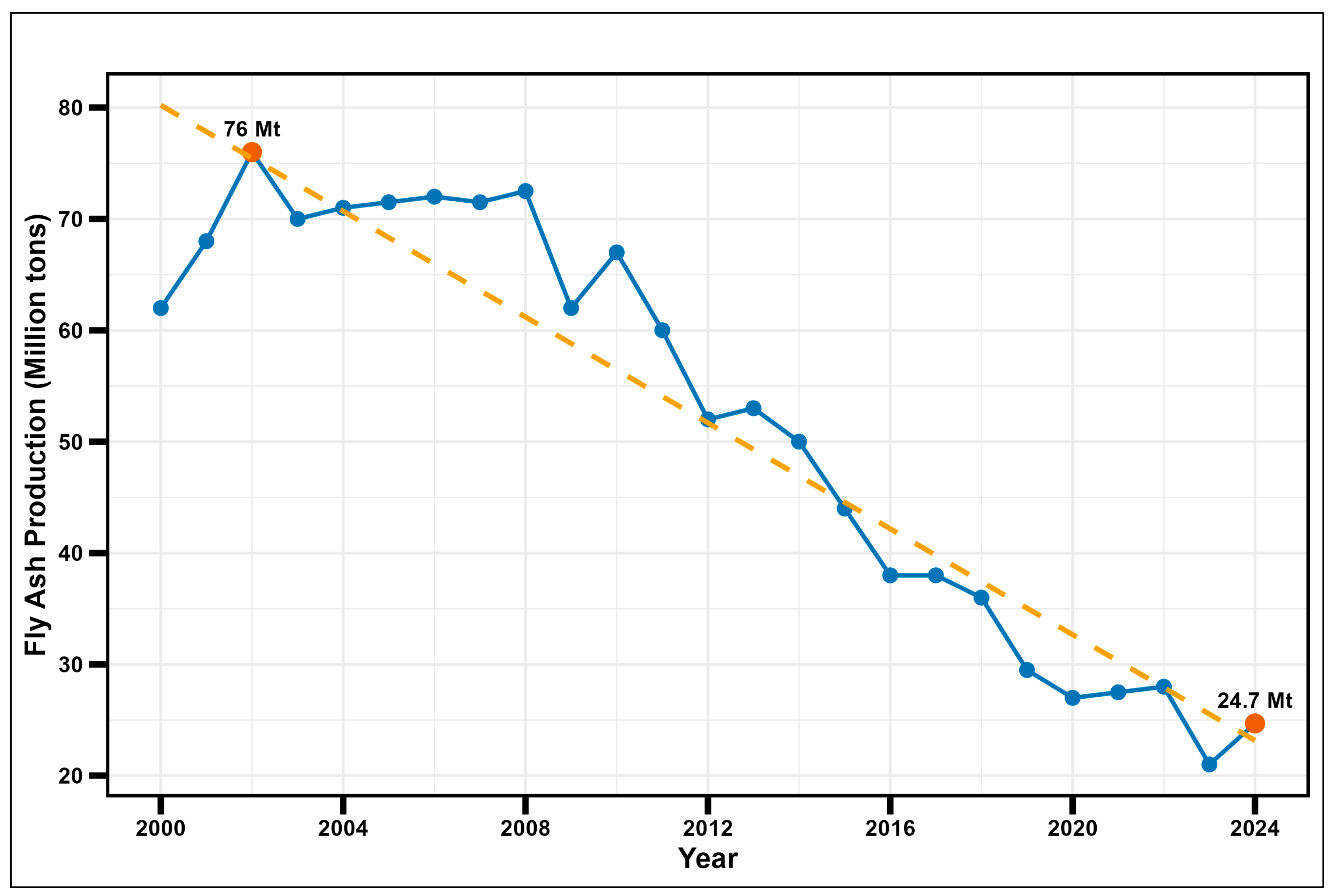
| Fly Ash | 24,718,600 |
| Bottom Ash | 7,666,800 |
| Boiler Slag | 1,580,936 |
| FGD Materials Wet Scrubbers/Gypsum | 21,982,415 |
| FGD Materials Dry Scrubbers | 1,687,795 |
| Element | Threshold (µg g−1) | Families (Main) | Genera (Main) | Species | Highest Records |
|---|---|---|---|---|---|
| Cadmium (Cd) | >100 | 6 (Crassulaceae, Brassicaceae) | 7 (Sedum, Noccaea) | 7 | Arabidopsis haller (0.36%) [152] |
| Selenium (Se) | >100 | 7 (Fabaceae) | 15 (Stanleya, Astragalus) | 41 | Astragalus bisulcatus (1.5%) [153] |
| Thallium (Tl) | >100 | 1 (Brassicaceae) | 2 (Biscutella, Iberies) | 2 | Biscutella laevigata (1.9%) [154] |
| Copper (Cu) | >300 | 20 (Lamiaceae, Fabaceae, Linderniaceae, Commelinaceae, Asteraceae, Polygonaceae, Orobanchaceae) | 43 (Crepidorhopalon, Anisopappus, Haumaniastrum, Commelina) | 53 | Aeolanthus biformifolius (1.4%) [155] |
| Cobalt (Co) | >300 | 18 (Orobanchaceae, Lamiaceae, Linderniaceae, Asteraceae, Phyllanthaceae) | 34 (Phyllanthus, Glochidion, Persicaria, Anisopappus, Crepidorhopalon) | 42 | Haumaniastrum roberti (1%) [156] |
| Arsenic (As) | >1000 | 1 (Pteridaceae) | 2 (Pityrogramma, Pteris) | 5 | Pteris vittata (2.3%) [157] |
| Nickel (Ni) | >1000 | 52 (Brassicaceae, Buxaceae, Asteraceae, Phyllanthaceae, Cunoniaceae, Salicaceae, Violaceae) | 130 (Geissois, Homalium, Hybanthus, Alyssum, Buxus, Berkheya, Glochidion, Xylosma, Leucocroton, Senecio, Phyllanthus) | 532 | Berkheya coddii (7.6%) [158] |
| Lead (Pb) | >1000 | 6 (Brassicaceae) | 8 (Noccaea) | 8 | Noccaea rotondifolia subsp. Cepaeifolia (0.8%) [159] |
| Rare Earth Elements (REEs) | >1000 | 2 (Gleicheniaceae) | 2 (Dicranopteris) | 2 | Dicranopteris linearis (0.7%) [160] |
| Zinc (Zn) | >3000 | 9 (Brassicaceae, Crassulaceae) | 12 (Arabidopsis, Noccaea, Sedum) | 20 | Noccaea caerulescens (5.4%) [161] |
| Manganese (Mn) | >10,000 | 16 (Celastraceae, Proteaceae, Myrtaceae) | 24 (Virotia, Gossia, Denhamia) | 42 | Virotia neurophylla (5.5%) [142] |
| Plant Species | Metals Extracted | Type of Experiment | BAF | Region/Country | Citation |
|---|---|---|---|---|---|
| Saccharum spontaneum and Saccharum munja | Zn, Pb, Cu, Ni, Cd, and As | Pot-based | Zn—8.01, Pb—1.40, Cu—3.02, Ni—0.92, Cd—1.66 and As—1.47 for S. spontaneum Zn—8.54, Pb—1.66, Cu—3.24, Ni—0.76, Cd—1.63 and As—1.41 for S. munja | India | Banerjee et al. (2020) [184] |
| Eichhornia crassipes | Cr, Cu, and Cd | Field-based (on FA ponds) | Cr—3.75, Cu—3.62, and Cd—1.05 | India | Pandey (2016) [187] |
| Helichrysum splendidum | As, Cr, and Zn | Pot-based | As—1.22, Cu—1.19, Zn—1.03 | South Africa | Munyengabe et al. (2024) [188] |
| Erigeron canadensis | Cd and Zn | Field-based (on FA landfill) | Cd—1.21, Zn—1.34 | Serbia | Krgović et al. (2015) [186] |
| Tamarix tetrandra | Cu, Mn, and Se | Field-based (on an FA disposal site) | Cu—>5, Mn—>5, Se—>60 | Serbia | Kostić et al. (2022) [186] |
| Populus alba | B, Ni, and Zn | Field-based (on an FA disposal site) | B—>13, Ni—>2, Zn—>30 | Serbia | Kostić et al. (2022) [186] |
| Robinia pseudoacacia | As and B | Field-based (on an FA disposal site) | As—>9, B—>5 | Serbia | Kostić et al. (2022) [186] |
| Brassica juncea | Fe, Mn, Zn, Cu, and Ni | Pot-based | Fe—68.31, Mn—24, Zn—16.43, Cu—6.53, Ni—1.20 | South Africa | Mashau et al. (2018) [185] |
Disclaimer/Publisher’s Note: The statements, opinions and data contained in all publications are solely those of the individual author(s) and contributor(s) and not of MDPI and/or the editor(s). MDPI and/or the editor(s) disclaim responsibility for any injury to people or property resulting from any ideas, methods, instructions or products referred to in the content. |
© 2026 by the authors. Licensee MDPI, Basel, Switzerland. This article is an open access article distributed under the terms and conditions of the Creative Commons Attribution (CC BY) license.
Share and Cite
Rajbanshi, S.; Gebremedhin, M.; Hower, J.C.; Antonious, G.F.; Brown, J.; Familusi, I. Phytoextraction of Heavy Metals from Fly-Ash-Contaminated Soils: A Review. Environments 2026, 13, 257. https://doi.org/10.3390/environments13050257
Rajbanshi S, Gebremedhin M, Hower JC, Antonious GF, Brown J, Familusi I. Phytoextraction of Heavy Metals from Fly-Ash-Contaminated Soils: A Review. Environments. 2026; 13(5):257. https://doi.org/10.3390/environments13050257
Chicago/Turabian StyleRajbanshi, Santosh, Maheteme Gebremedhin, James C. Hower, George Fouad Antonious, Jacob Brown, and Ife Familusi. 2026. "Phytoextraction of Heavy Metals from Fly-Ash-Contaminated Soils: A Review" Environments 13, no. 5: 257. https://doi.org/10.3390/environments13050257
APA StyleRajbanshi, S., Gebremedhin, M., Hower, J. C., Antonious, G. F., Brown, J., & Familusi, I. (2026). Phytoextraction of Heavy Metals from Fly-Ash-Contaminated Soils: A Review. Environments, 13(5), 257. https://doi.org/10.3390/environments13050257