Article

Microbiological Quality of Purified Water from Vending Machines: Occurrence, Antimicrobial Resistance, and Biofilm Formation of Pseudomonas aeruginosa


by
Ricardo Jiovanni Soria-Herrera
1,2,
Luis F. Muñoz-Mateo
2,
Margarita Hernández-Mixteco
2,
Moisés León-Juárez
3,
Addy Cecilia Helguera-Repetto
3,
Laura Gabriela Flores-Aviña
4,
Virginia A. Robinson-Fuentes
4,
Erika Beatriz Angeles-Morales
2,
Graciela Castro-Escarpulli
2,
Carlos Cortes-Penagos
1 and
Jorge Francisco Cerna-Cortés
2,*
1
Facultad de Químico Farmacobiología, Universidad Michoacana de San Nicolás de Hidalgo, Morelia 58240, Mexico
2
Departamento de Microbiología, Escuela Nacional de Ciencias Biológicas, Instituto Politécnico Nacional, Ciudad de México 11340, Mexico
3
Departamento de Inmunobioquímica, Instituto Nacional de Perinatología Isidro Espinosa de los Reyes, Ciudad de México 11000, Mexico
4
Facultad de Ciencias Médicas y Biológicas “Dr. Ignacio Chavez”, Universidad Michoacana de San Nicolás de Hidalgo, Morelia 58020, Mexico
*
Author to whom correspondence should be addressed.
Environments 2026, 13(4), 207; https://doi.org/10.3390/environments13040207
Submission received: 11 March 2026 / Revised: 30 March 2026 / Accepted: 6 April 2026 / Published: 8 April 2026
(This article belongs to the Special Issue Environmental Risk Assessment of Aquatic Environments, 2nd Edition)

Abstract

Purified water from vending machines offers consumers an alternative source of clean, safe water. However, data regarding its microbiological quality are limited, particularly concerning the prevalence of Pseudomonas aeruginosa harboring virulence traits. This study aimed to evaluate the microbiological quality of 125 purified water samples collected from vending machines across six cities of Michoacan, Mexico. Additionally, it sought to assess the occurrence of Pseudomonas aeruginosa and characterize its antimicrobial resistance profiles and biofilm-forming capacity. Aerobic mesophilic bacteria (AMB) were detected in all analyzed samples. A total of 71 (56.8%), 40 (32.0%), and 31 (24.8%) samples were positive for total coliforms (TC), fecal coliforms (FC), and Escherichia coli, respectively. Among the samples, 43 (34.4%) were positive for P. aeruginosa. There were significant correlations between the presence of P. aeruginosa and AMB (rho = 0.4445; p < 0.0001), TC (rho = 0.4094; p < 0.0001), FC (rho = 0.3389; p = 0.0001), and E. coli (rho = 0.3242; p = 0.0002). Moreover, the presence of TC in purified water samples increased the risk of P. aeruginosa nearly seven-fold (odds ratio = 6.91; p < 0.001). The resistance rate among P. aeruginosa strains to the most tested antibiotics ranged from 2.3 to 16.3%, and two (4.6%) of the isolates were multidrug-resistant. All P. aeruginosa strains were strong biofilm producers. Consequently, we recommend periodic maintenance of vending machines, the establishment of P. aeruginosa control protocols, and enhanced regulatory monitoring of the water vending industry.

1. Introduction

Pseudomonas aeruginosa is a motile, nonfermenting, Gram-negative bacillus. It typically grows at approximately 37 °C but can survive between 4 and 42 °C, and its optimal pH range for growth is 6.6–7.0 [1]. The World Health Organization (WHO) has designated P. aeruginosa as a critical-priority pathogen owing to its carbapenem resistance and capacity to cause diverse infections in immunocompromised patients [2]. Furthermore, its inclusion among the ESKAPE pathogens highlights its prominent role in healthcare-associated infections globally [3]. P. aeruginosa causes acute or chronic infections in susceptible individuals, particularly those with chronic obstructive pulmonary disease, cystic fibrosis, cancer, traumatic injuries, burns, sepsis, or ventilator-associated pneumonia, including cases associated with COVID-19 [4]. This bacterium also frequently causes urinary tract, wound, and bone and joint infections [5]. P. aeruginosa can evade the effects of antimicrobials [6] due to its various intrinsic mechanisms of resistance, including barriers to drug permeability, a wide array of multidrug efflux pumps, and a chromosomally encoded AmpC enzyme [3]. The prevalence of multidrug-resistant (MDR) P. aeruginosa has increased alarmingly worldwide, posing significant challenges for clinical treatment and public health [7].
The genome of P. aeruginosa is relatively large (5.5–7 Mb) compared with many other bacteria, a feature that contributes to its metabolic versatility and ability to colonize diverse environments [8]. It is commonly found in drinking water distribution systems as it forms biofilms within plumbing infrastructure [1]. Biofilms are structured communities encased in self-produced extracellular polymeric substances (EPSs), which form a protective matrix that adheres microbial cells to surfaces. This matrix shields bacteria from environmental stresses and thereby facilitates colonization and long-term persistence [9]. Growth in biofilms is well recognized to enhance resistance to antimicrobial agents, and the presence of biofilms during infection represents a major obstacle to therapeutic success [10].
There has been a substantial increase in the availability of purified water vending machines (WVMs) in urban areas, driven by modern work environments, expanding public infrastructure, lifestyle changes, and evolving drinking-water habits [11]. The purified water industry in Mexico is regulated by the Mexican guideline NOM-201-SSA1-2015 [12], which establishes the chemical and microbiological requirements that water must meet, whether packaged or sold in bulk. This Mexican guideline regulates water vending machines (WVMs). The number of WVMs has increased by 20% to 30%, according to newspapers in several Mexican cities [13]. WVMs are designed to reduce organic, inorganic, and microbial contaminants, aiming to enhance drinking water quality [14]. However, studies conducted in various countries indicate that the treated water discharged by these devices is not always pathogen-free and may contain harmful bacteria and coliforms [11,15,16,17]. In Mexico, Soria-Herrera et al. [13] detected Escherichia coli and nontuberculous mycobacteria in purified water samples collected from WVMs. Similarly, Soon et al. [18] reported the occurrence of MDR Pseudomonas spp. in drinking water obtained from WVMs in Kuala Lumpur, Malaysia.
In Mexico, the microbiological quality of purified water dispensed by vending machines has not been adequately investigated. Moreover, to the best of our knowledge, no study conducted in Mexico has specifically assessed the presence of P. aeruginosa in this type of water. Therefore, we conducted the present study with the following objectives: (i) to assess the microbiological quality of purified water obtained from different vending machines, and (ii) to determine the occurrence of P. aeruginosa, to characterize its antimicrobial resistance profiles and biofilm-forming capacity, and thereby to evaluate whether consumption of purified water poses a potential health risk to consumers.

2. Materials and Methods

2.1. Study Area and Water Collection

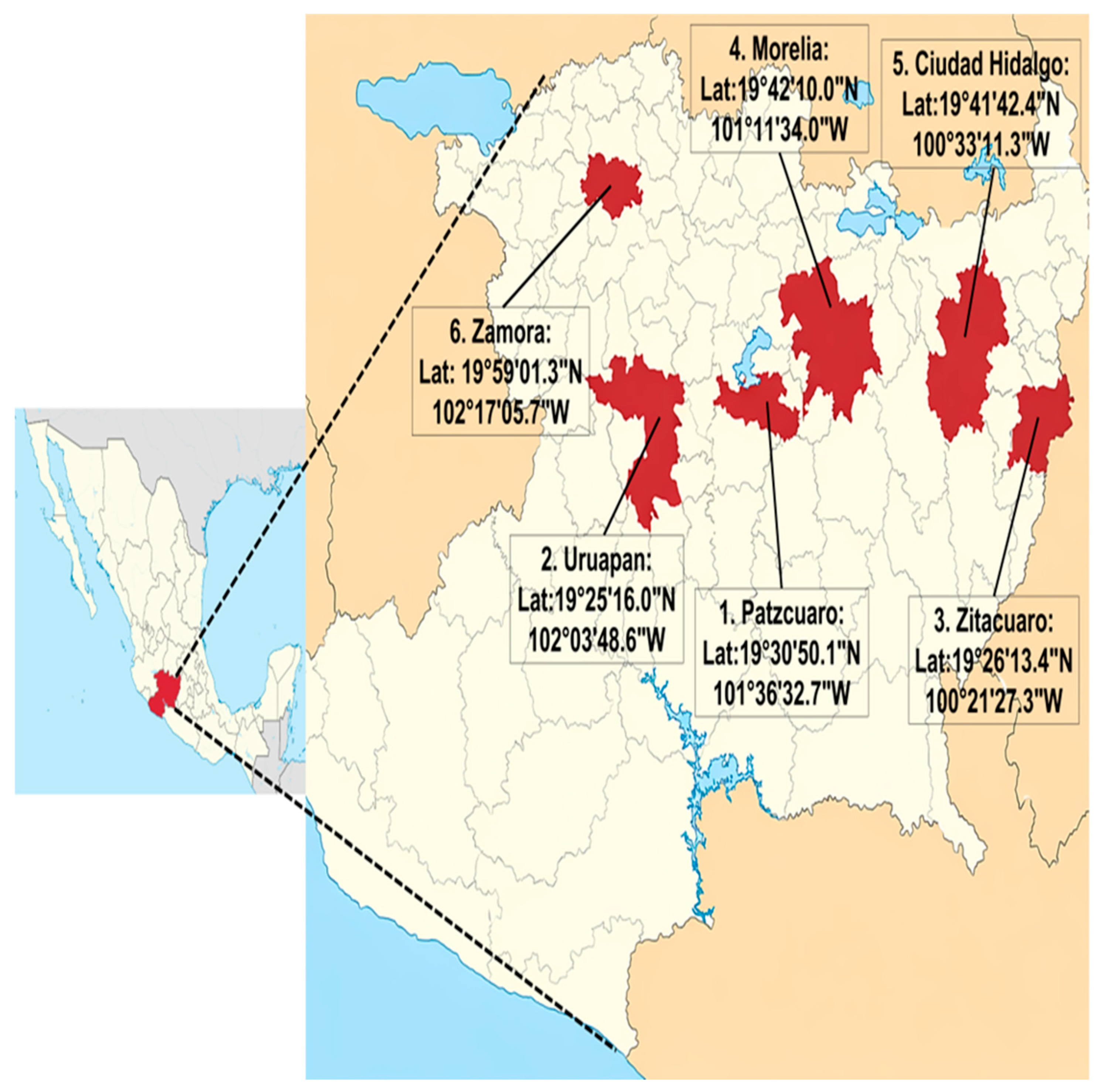
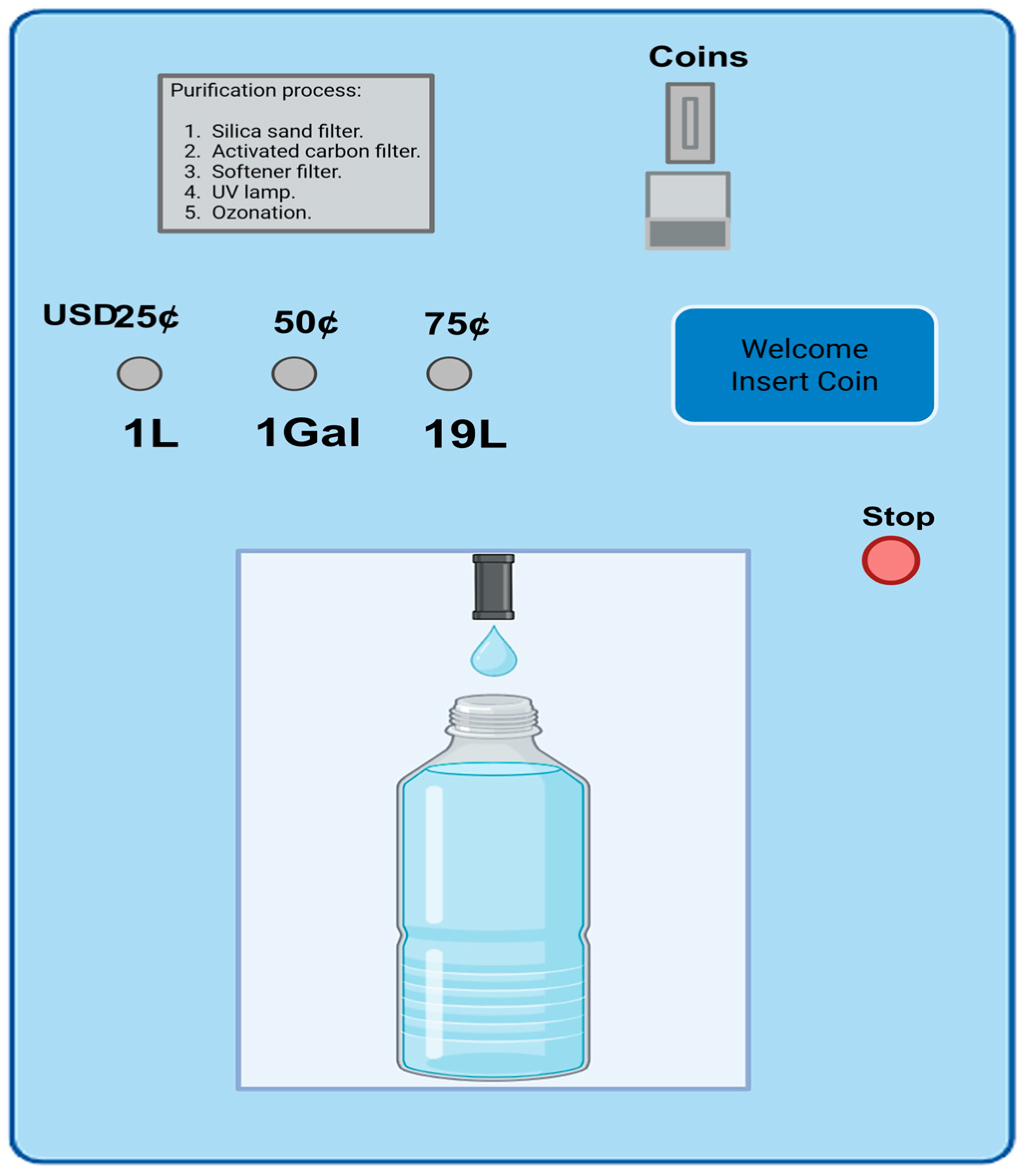
This study was carried out across six main cities in the state of Michoacan, Mexico: city 1, Patzcuaro; city 2, Uruapan; city 3, Zitacuaro; city 4, Morelia; city 5, Ciudad Hidalgo; and city 6, Zamora (Figure 1). Collectively, these municipalities span an area of 4556 km2 and are home to approximately 2 million residents [19]. Sample size determination was based on the population of each participating city, incorporating data from the local health authority that indicate an average of one WVM (Figure 2) per 4400 inhabitants. Samples were collected through random sampling across the cities. Between November 2024 and December 2025, we collected 125 samples in the six cities: Patzcuaro (n = 8), Uruapan (n = 27), Zitacuaro (n = 8), Morelia (n = 64), Ciudad Hidalgo (n = 5), and Zamora (n = 13). The samples were transported to the laboratory in a cooler with gel packs at a temperature of less than 5 °C, and they were examined within 5 h of collection. WVMs use potable water obtained from the public supply for the purification process. Purified water refers to water that has undergone physical and/or chemical treatment processes to remove toxic substances and pathogenic microorganisms, ensuring that it is safe for human consumption [12].

2.2. Chemical and Microbiological Analysis

One-gallon glass jugs were sterilized before sample collection. The pH and residual chlorine concentrations of the purified water samples were determined using a pH meter (model pH 209, HANNA Instruments, Sarmeola di Rubano, PD, Italy) and the N,N-diethyl-p-phenylene-diamine method, respectively [12]. Using procedures described in the U.S. Food and Drug Administration’s Bacteriological Analytical Manual [21], each sample was examined for the presence of aerobic mesophilic bacteria (AMB), total coliforms (TC), fecal coliforms (FC), and E. coli. The culture media and the methods for detection, identification, and confirmation of these bacterial indicators are provided in the Supplementary Materials (Table S1). The data analysis followed the Mexican Official Guideline NOM-201-SSA1-2015 [12], which stipulates that purified water must contain less than 0.1 ppm free residual chlorine, maintain a pH between 6.6 and 8.5, and show no detectable TC (<1.1 most probable number [MPN]/100 mL).

2.3. Isolation and Identification of P. aeruginosa

The Mexican guideline NOM-201-SSA1-2015 [12] specifies the use of the MPN method for the enumeration of P. aeruginosa. Briefly, for the presumptive test, 10, 1, and 0.1 mL aliquots of the water sample were each inoculated into five replicate tubes, each containing 10 mL of asparagine broth (Laboratorios Conda S.A., Madrid, Spain). The tubes were incubated at 35 ± 2 °C, and fluorescence under ultraviolet (UV) light was examined at 24 and 48 h. The presence of fluorescence, characteristic of P. aeruginosa due to pyoverdine production, was recorded as a positive presumptive result. To confirm the presence of P. aeruginosa, cultures from presumptively positive tubes were subcultured onto cetrimide agar (Becton Dickinson and Company, Sparks, MD, USA) and incubated at 42 ± 2 °C. Plates were inspected at 24 and 48 h for fluorescence under UV light. Confirmation of the presence of P. aeruginosa was further supported by standard biochemical identification tests. The culture media and the methods used for detection, identification, and confirmation of P. aeruginosa are provided in the Supplementary Materials (Table S1).

2.4. Antimicrobial Susceptibility Testing

Antimicrobial susceptibility testing was performed according to Clinical and Laboratory Standards Institute (CLSI) guidelines for P. aeruginosa [22]. Briefly, these tests were performed on Mueller–Hinton agar (Becton Dickinson and Company) using the disk diffusion technique. The antibiotics tested were amikacin (AN, 30 µg), ceftazidime (CAZ, 30 µg), cefepime (FEP, 30 µg), imipenem (IMP, 10 µg), meropenem (MEM, 10 µg), piperacillin–tazobactam (TAZ, 100/10 µg), and ciprofloxacin (CIP, 5 µg) (Becton Dickinson & Co., Sparks, MD, USA). Zones of inhibition around the disk were measured and interpreted according to the CLSI breakpoint criteria [22]. This allowed the isolates to be classified as susceptible, intermediate, or resistant to each of the analyzed antibiotics. Moreover, colistin (CL) susceptibility was assessed by broth macrodilution in Mueller–Hinton broth (Becton Dickinson & Co., Sparks, MD, USA), prepared at concentrations of 1, 2, and 4 µg/mL according to the CLSI guidelines [22]. The minimum inhibitory concentration (MIC) was determined as the lowest drug concentration showing no visible bacterial growth. The results were interpreted according to CLSI breakpoints, classifying isolates as susceptible, intermediate, or resistant to CL. For both assays, the reference strain of P. aeruginosa ATCC 27853 was used as quality control. Strains were classified as having the multidrug-resistant (MDR) phenotype if they were resistant to at least three of the tested antibiotics, in accordance with the Latin American consensus on bacterial resistance taxonomy [23].

2.5. Biofilm Assay

Biofilm formation by P. aeruginosa was evaluated in triplicate using the crystal violet microtiter plate assay described by Abbas et al. [24]. Uninoculated TSB broth (Becton Dickinson & Co., Sparks, MD, USA) with glucose was used as a negative control, and P. aeruginosa ATCC 27853 was used as a positive control. Optical density (OD) at 600 nm was measured using a spectrophotometer (Biophotometer, Eppendorf, Hamburg, Germany). This wavelength is optimal for quantifying dye uptake within the bacterial biofilm and provides an indirect assessment of total biofilm biomass. Biofilm production was classified according to the OD value obtained, categorizing it as a non-producer (OD ≤ optical density cut-off value [ODc]), a weak producer (OD > ODc but ≤2 × ODc), a moderate producer (OD > 2 × ODc but ≤4 × ODc), or a strong producer (OD > 4 × ODc).

2.6. Statistical Analyses

Chi-square (χ2) tests were used both to compare the frequency of positive samples across the six cities and to assess the influence of seasonality on the bacterial groups studied. The Spearman correlation coefficient (rho) was calculated to quantify the relationship between the nominal variable (presence of P. aeruginosa) and the quantitative variables (concentrations of AMB, TC, FC, and E. coli). Logistic regression was used to assess the risk of P. aeruginosa due to the presence of TC. A p-value of <0.05 was considered significant. All statistical analyses were performed with the statistical program Stata 17.0 (StatCorp LLC, College Station, TX, USA).

3. Results

3.1. Chemical and Microbiological Quality of Purified Water

The pH of the water samples ranged from 6.8 to 7.9, and their chlorine content was less than 0.1 parts per million. All 125 samples analyzed contained AMB (Table 1). The AMB densities ranged from 0.95 to 3.71 log CFU/mL. TC, FC, and E. coli were detected in 71 (56.8%), 40 (32.0%), and 31 (24.8%) water samples, respectively. The concentrations of these indicators ranged from <1.1 to >23 MPN/100 mL for TC, from <1.1 to 16.1 MPN/100 mL for FC, and from <1.1 to 12 MPN/100 mL for E. coli (Table 1). Seventy-one (56.8%) of the water samples that contained TC did not meet Mexico’s official guidelines. Seasonality analysis revealed a significantly lower presence of TC in winter (χ2 = 8.72; p = 0.033).
Of the 125 water samples analyzed, 43 (34.4%) contained P. aeruginosa, with concentrations ranging from <1.8 to >1600 MPN/100 mL (Table 1). A single strain of P. aeruginosa was isolated from each positive sample. Twenty-two strains were isolated from Morelia, 13 from Uruapan, four from Zamora, two from Zitacuaro, and one each from Patzcuaro and Ciudad Hidalgo; however, the frequency of P. aeruginosa isolation across the cities did not differ significantly (X2 = 3.8231; p = 0.575). There were significant correlations between the presence of P. aeruginosa and AMB (rho = 0.4445; p < 0.0001), TC (rho = 0.4094; p < 0.0001), FC (rho = 0.3389; p = 0.0001), and E. coli (rho = 0.3242; p = 0.0002). Furthermore, logistic regression indicated that the presence of TC in purified water samples increased the risk of P. aeruginosa presence nearly seven-fold (odds ratio = 6.91; p < 0.001).

3.2. Antimicrobial Susceptibility Profile and Biofilm Production

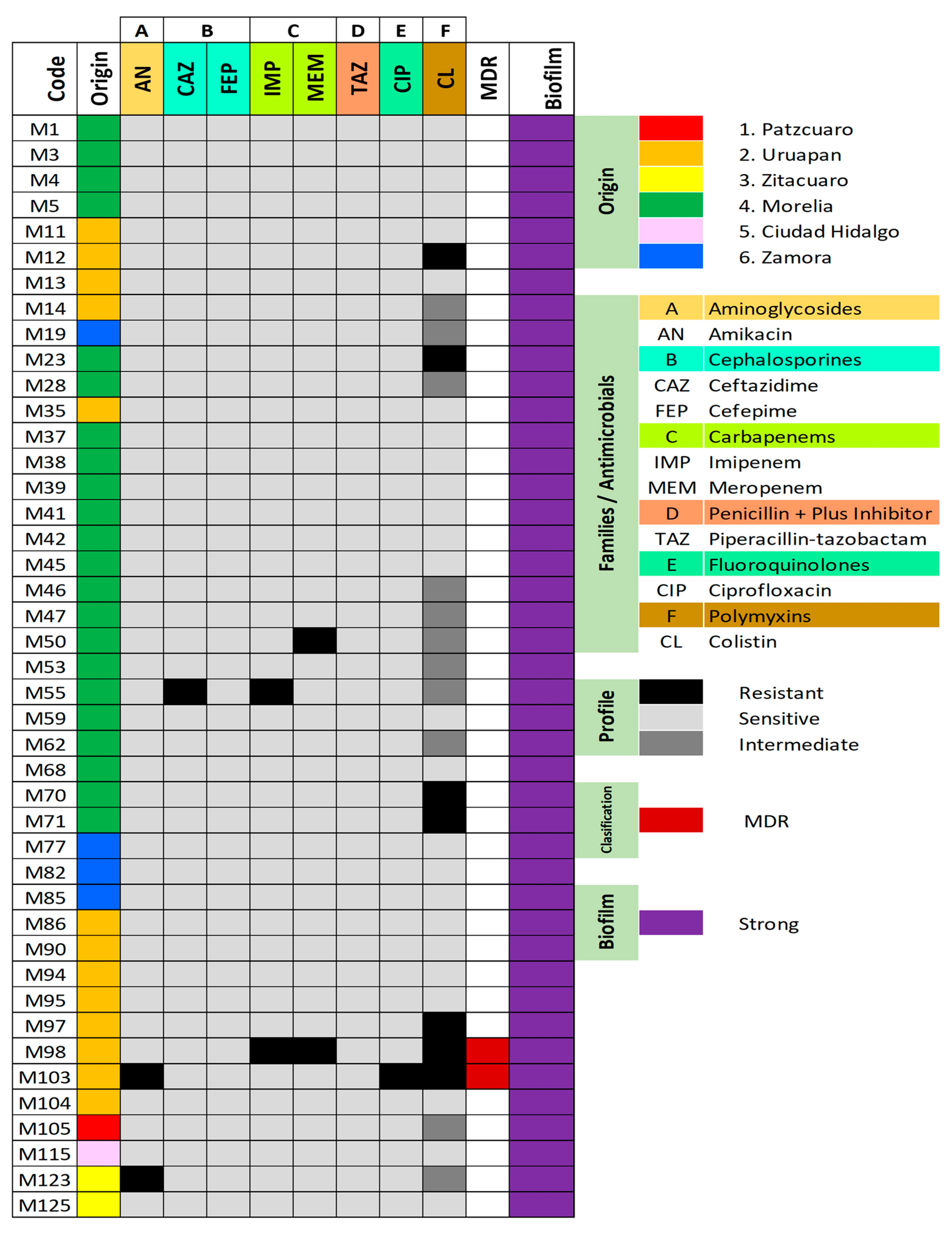
According to CLSI interpretive criteria, the antibiotic resistance rates among P. aeruginosa strains were as follows: 4.6% for AN (n = 2); 2.3% for CAZ (n = 1); 4.6% for IMP (n = 2); 4.6% for MEM (n = 2); and 2.3% for CIP (n = 1). Surprisingly, 16.3% (n = 7) of the strains were resistant to CL. All strains were sensitive to both FEP and TAZ (Figure 3). Based on the Latin American Consensus on Bacterial Resistance Taxonomy, 4.6% (n = 2) of the isolates were classified as MDR. Regarding biofilm production, all 43 strains of P. aeruginosa were strong producers (Figure 3).

4. Discussion

All purified water samples analyzed in this study met the pH and chlorine concentration limits recommended by Mexico’s official guidelines for purified water [12].
The count of AMB is used to indicate the level of microbial contamination in a wide range of products, particularly in those from the food, water, and cosmetic industries [21]. In this study, all samples evaluated were positive for AMB. These results are consistent with those published by Chaidez et al. [15] in Arizona, United States. However, they contrast with the findings of Hile et al. [25] in California, United States, who reported AMB concentrations ranging from 3.83 to 6.5 log CFU/mL in only 25% of water samples. The presence of these organisms in large numbers, even when they are non-pathogenic, is significant for immunocompromised individuals because these microorganisms could cause opportunistic infections [26].
Coliforms are often used as indicator organisms for the presence of human and animal feces and serve as a significant warning of potential pathogen risks from a contaminated water source [15]. Among coliform bacteria, E. coli is unique because it is found exclusively in the intestinal tracts of warm-blooded animals, including humans. Therefore, the detection of E. coli in water indicates recent fecal contamination and suggests the potential presence of harmful pathogens, such as viruses, parasites, and other bacteria [27]. In this study, 71, 40, and 31 water samples were positive for TC, FC, and E. coli, respectively. Overall, the 71 TC-positive samples exceeded Mexico’s official guideline. There have also been reports of the occurrence of TC in purified water from vending machines in other nations, including the United Arab Emirates (94.1%) [28], Malaysia (38.8%) [16], and the United States (20.0%) [15]. Yougyod et al. [29] reported E. coli in 11.1% of water samples collected from vending machines in Thailand, whereas Al Moosa et al. [28] detected no FC or E. coli in samples from the United Arab Emirates. Elevated coliform levels in purified water suggest that the water treatment systems within these machines are not being sanitized or maintained regularly [16]. Furthermore, human contact with the dispensing nozzle has been identified as the primary source of coliforms or E. coli in water samples from vending machines. Consequently, an immediate step should involve thorough cleaning or replacement of the dispensing point [16].
TC levels were significantly lower in purified water samples during the winter. This finding aligns with Reitter et al. [30], who reported higher counts of coliform bacteria in drinking water reservoirs in summer compared with winter. This reduction in coliforms is likely attributed to lower temperatures during the winter season. Al Moosa et al. [28] reported that water dispensers located in display areas exposed to direct sunlight exhibited high total coliform counts due to elevated ambient temperatures.
P. aeruginosa was isolated in one-third of the water samples analyzed. Comparable prevalence rates of P. aeruginosa have been reported in water from vending machines in the United States [15], the United Arab Emirates [28], and Malaysia [31]. Similarly, P. aeruginosa has been detected in bottled water [32,33]. P. aeruginosa, a bacterium that proliferates in moist environments, represents a significant drinking water contaminant. Its detection in the tested samples may be attributed to inadequate disinfection or cross-contamination within the vending machines’ infrastructure (e.g., pipelines, storage tanks, filters, and reverse osmosis units). Furthermore, they reported that the ingestion of water contaminated with P. aeruginosa may lead to gastrointestinal symptoms such as vomiting and diarrhea [34]. P. aeruginosa is primarily associated with skin and ear infections contracted from contaminated water sources, such as hot tubs and swimming pools [33]. Of note, Eckmanns et al. [35] reported an outbreak of hospital-acquired P. aeruginosa infection caused by contaminated bottled water in intensive care units. According to 2007 data from the US National Healthcare Safety Network, P. aeruginosa is a leading cause of hospital-acquired infections (ranking sixth overall). It is particularly prevalent in ventilator-associated pneumonia (second) and catheter-related bloodstream infections (seventh). This pathogen presents a significant mortality risk for immunocompromised patients, including those with cystic fibrosis or HIV/AIDS [36]. With over 300,000 deaths attributed to P. aeruginosa annually, this bacterium ranks at the top of the WHO’s priority list of pathogens requiring urgent research and clinical interventions [37].
In this study, statistical analyses revealed a significant correlation between P. aeruginosa and bacterial indicators (AMB, TC, FC, and E. coli). Additionally, logistic regression demonstrated that the presence of TC in purified water samples was associated with a nearly seven-fold increase in the risk of P. aeruginosa detection. These findings are consistent with those of Vukić Lušić et al. [38], who reported a positive correlation between P. aeruginosa and AMB and TC levels in drinking water. Furthermore, they propose that both fecal and non-fecal shedding from humans are potential major sources of P. aeruginosa contamination in water and the environment.
The ability of P. aeruginosa to resist a wide range of antibiotic classes—including aminoglycosides, fluoroquinolones, carbapenems, and tetracyclines—poses a significant challenge due to the development of the MDR phenotype [39]. In this study, the resistance rate for the tested antibiotics ranged from 2.3% to 16.3%. Our findings contrast with those of Tazari et al. [40], who documented 0% resistance to AN, CAZ, FEP, IMP, MEM, TAZ, CIP, and CL in P. aeruginosa strains isolated from drinking water in Jordan. In this study, 4.6% of the isolates were classified as MDR. The waterborne acquisition of multidrug-resistant (MDR) P. aeruginosa strains may have significant clinical implications for patients. Aloush et al. [41] reported that infection with MDR P. aeruginosa was associated with significantly worse clinical outcomes, higher mortality rates, prolonged hospitalization, and a greater need for invasive procedures compared with control groups. The resistance observed in the P. aeruginosa strains in this study may be attributed to environmental biofilms acting as hotspots for the dissemination of antibiotic resistance genes. The localization of these genes within mobile elements such as plasmids and integrative conjugative elements enables rapid horizontal gene transfer of antibiotic resistance [42].
Finding high CL resistance (16.3%) in P. aeruginosa strains isolated in this work is significant and concerning because purified water should not be subject to direct antibiotic selection pressure, such as that found in hospitals. This phenomenon can be attributed to the fact that purified water is usually treated with non-antibiotic antimicrobial agents, such as chlorine and ozone. Significantly, research suggests that exposure to some disinfectant compounds may contribute to resistance against critically important antibiotics, notably carbapenems and colistin [43].
In this study, 4.6% of the P. aeruginosa strains analyzed were MDR. An estimated 32,600 hospitalized patient infections and 2700 deaths in the US were attributed to MDR P. aeruginosa in 2017, with some strains exhibiting resistance to nearly all available antibiotics [44]. Therefore, it is vital that research and development efforts for new antimicrobial medicines be strengthened and that the use of current antibiotics be rationalized.
It is not surprising that all P. aeruginosa strains isolated in this study were strong biofilm producers as this species is known to be highly proficient at biofilm formation. The formation of P. aeruginosa biofilms in vending machines can adversely affect color, taste, odor, and turbidity when present in high numbers [31]. It is well established that biofilms can detach from pipe walls within drinking water distribution systems, potentially compromising water quality and safety if hydraulic fluctuations exceed biofilm adhesive forces [45]. Loveday et al. [46] provided evidence of P. aeruginosa transmission from water systems to patients, leading to colonization and infection. Therefore, these biofilms must be eradicated from vending machines to prevent potential waterborne outbreaks. Studies report that 1 mg/L of chloramine requires 4–9.5 min to inactivate 99.9% of P. aeruginosa in water. Alternatively, 2.5–5 ppm of chlorine resulted in no recoverable P. aeruginosa after 5–10 min (pH 7, 22 °C). Finally, a UV dosage of 5500 µW·s/cm2 achieved 90% inactivation [33].

5. Conclusions

Our results indicate that most of the purified water samples from vending machines did not meet official Mexican regulatory standards. Furthermore, one-third of the samples harbored P. aeruginosa. All strains were strong biofilm producers, and some exhibited antimicrobial resistance. Consequently, periodic maintenance of vending machines is critical to mitigating the risk of gastrointestinal diseases. Protocols for the eradication of P. aeruginosa should be prioritized, alongside regular inspections by health authorities. Consumers should be educated about good personal hygiene practices to prevent cross-contamination. These steps are vital to guaranteeing safe drinking water for consumers.

Supplementary Materials

The following supporting information can be downloaded at: https://www.mdpi.com/article/10.3390/environments13040207/s1, Table S1. List of methods used for detection, identification, and confirmation of microorganisms in purified water from vending machines.

Author Contributions

Conceptualization: J.F.C.-C., R.J.S.-H. and C.C.-P.; funding acquisition: C.C.-P. and J.F.C.-C.; methodology: R.J.S.-H., L.F.M.-M., M.H.-M., M.L.-J., A.C.H.-R., L.G.F.-A., V.A.R.-F., E.B.A.-M., G.C.-E., C.C.-P. and J.F.C.-C.; supervision: J.F.C.-C. and C.C.-P.; formal analysis: R.J.S.-H. and J.F.C.-C.; writing—review and editing: J.F.C.-C. and R.J.S.-H. All authors have read and agreed to the published version of the manuscript.

Funding

This research was funded by the Instituto Politécnico Nacional, Secretaria de Investigación y Posgrado (grant number 20260415 (J.F.C.-C.)).

Data Availability Statement

All data produced in this study are provided in the article.

Acknowledgments

J.F.C.-C., and G.C.-E. received support from the Sistema Nacional de Investigadoras e Investigadores from Secretaría de Ciencia, Humanidades, Tecnología e Innovación (SECIHTI)-Mexico. A scholarship from SECIHTI was awarded to R.J.S.-H. (895065) and L.F.M.-M. (1274444). J.F.C.-C. and G.C.-E. are fellows of the Comisión de Operación y Fomento de Actividades Académicas (COFAA), Instituto Politécnico Nacional (IPN), and the Estimulo al Desempeño de los Investigadores (EDI), IPN.

Conflicts of Interest

The authors declare no conflicts of interest.

Abbreviations

The following abbreviations were used in this manuscript:
AMBAerobic mesophilic bacteria
ANAmikacin
CAZCeftazidime
CIPCiprofloxacin
CLColistin
CLSIClinical and Laboratory Standards Institute
FCFecal coliforms
FEPCefepime
IMPImipenem
MDRMultidrug resistant
MEMMeropenem
MPNMost probable number
ODOptical density
TAZPiperacillin–tazobactam
TCTotal coliforms
WVMsWater vending machines

References

  1. Lombardi, A.; Cornacchia, A.; Borriello, T.; Maccauro, M.L.; Nardo, A.; Bosica, S.; Ferrara, M.; Toscano, E.; Torre, I.; Pomilio, F.; et al. Pseudomonas aeruginosa investigation in water samples of Campania region, Southern Italy. Am. J. Infect. Control 2025, 54, 163–169. [Google Scholar] [CrossRef]
  2. World Health Organization (WHO). WHO Bacterial Priority Pathogens List, 2024. Available online: https://iris.who.int/server/api/core/bitstreams/1a41ef7e-dd24-4ce6-a9a6-1573562e7f37/content (accessed on 15 February 2026).
  3. Miller, W.R.; Arias, C.A. ESKAPE pathogens: Antimicrobial resistance, epidemiology, clinical impact and therapeutics. Nat. Rev. Microbiol. 2024, 22, 598–616. [Google Scholar] [CrossRef] [PubMed]
  4. Qin, S.; Xiao, W.; Zhou, C.; Pu, Q.; Deng, X.; Lan, L.; Liang, H.; Song, X.; Wu, M. Pseudomonas aeruginosa: Pathogenesis, virulence factors, antibiotic resistance, interaction with host, technology advances and emerging therapeutics. Signal Transduct. Target Ther. 2022, 7, 199. [Google Scholar] [CrossRef] [PubMed]
  5. Sathe, N.; Beech, P.; Croft, L.; Suphioglu, C.; Kapat, A.; Athan, E. Pseudomonas aeruginosa: Infections and novel approaches to treatment “Knowing the enemy” the threat of Pseudomonas aeruginosa and exploring novel approaches to treatment. Infect. Med. 2023, 2, 178–194. [Google Scholar] [CrossRef] [PubMed]
  6. Nicolas-Sayago, L.; Loyola-Cruz, M.A.; Vasquez-Martinez, Y.; Cortez-San Martin, M.; Marquez-Valdelamar, L.M.; Cruz-Cruz, C.; Duran-Manuel, E.M.; Ruiz-Valdes, M.; Calzada-Mendoza, C.C.; Rojas-Bernabe, A.; et al. Genetic Determinants Linked to MDR/XDR in Pseudomonas aeruginosa Strains from a Mexican Tertiary Hospital. Pathogens 2026, 15, 100. [Google Scholar] [CrossRef]
  7. Giovagnorio, F.; De Vito, A.; Madeddu, G.; Parisi, S.G.; Geremia, N. Resistance in Pseudomonas aeruginosa: A Narrative Review of Antibiogram Interpretation and Emerging Treatments. Antibiotics 2023, 12, 1621. [Google Scholar] [CrossRef]
  8. Letizia, M.; Diggle, S.P.; Whiteley, M. Pseudomonas aeruginosa: Ecology, evolution, pathogenesis and antimicrobial susceptibility. Nat. Rev. Microbiol. 2025, 23, 701–717. [Google Scholar] [CrossRef]
  9. Thi, M.T.T.; Wibowo, D.; Rehm, B.H.A. Pseudomonas aeruginosa Biofilms. Int. J Mol. Sci. 2020, 21, 8671. [Google Scholar] [CrossRef]
  10. Perez, L.R.; Barth, A.L. Biofilm production using distinct media and antimicrobial susceptibility profile of Pseudomonas aeruginosa. Braz. J. Infect. Dis. 2011, 15, 301–304. [Google Scholar]
  11. Praveena, S.M.; Kamal Huyok, N.F.; Burbure, C.D. Public health risk assessment from drinking water from vending machines in Seri Kembangan (Malaysia). Food Control 2018, 91, 40–46. [Google Scholar] [CrossRef]
  12. NOM-201-SSA1-2015. Productos y Servicios. Agua y Hielo Para Consumo Humano, Envasado y a Granel. Especificaciones Sanitarias. Available online: https://dof.gob.mx/nota_detalle.php?codigo=5420977&fecha=22/12/2015 (accessed on 15 February 2026).
  13. Soria-Herrera, R.J.; Hernandez-Ramon, J.K.; Alvarez-Perez, M.E.; Perez-Sandoval, M.A.; Hernandez-Mixteco, M.; Valenzuela, O.L.; Garcia-Montalvo, E.A.; Castillo-Juarez, P.; Rivera-Gutierrez, S.; Cornejo-Estudillo, G.; et al. Microbiological Quality and Presence of Clinically Relevant Nontuberculous Mycobacteria in Purified Water from Vending Machines in Michoacan, Mexico. Pathogens 2025, 14, 886. [Google Scholar] [CrossRef] [PubMed]
  14. Dėdelė, A.; Nikiforov, N.I.; Madieva, A.N.; Miškinytė, A. Potential of water vending machine to remove trihalomethanes and heavy metals during high and low water seasons in Petropavlovsk. Pol. J. Environ. Stud. 2022, 31, 2049–2058. [Google Scholar] [CrossRef]
  15. Chaidez, C.; Rusin, P.; Naranjo, J.; Gerba, C.P. Microbiological quality of water vending machines. Int. J. Environ. Health Res. 1999, 9, 197–206. [Google Scholar] [CrossRef]
  16. Tan, E.Y.; Arifullah, M.; Soon, J.M. Identification of Escherichia coli Strains from Water Vending Machines of Kelantan, Malaysia Using 16S rRNA Gene Sequence Analysis. Expo. Health 2016, 8, 211–216. [Google Scholar] [CrossRef]
  17. Muhammad, S.M.; Abdul-Wahab, M.F.; Razis, S.M.A.; Hariz, A.M.; Nizam, M.N.A.N. Microbiological analysis of drinking water from water vending machines. Mal. J. Fund. Appl. Sci. 2020, 16, 186–189. [Google Scholar] [CrossRef]
  18. Soon, K.L.; Rashid, S.A.; Nazakat, R.; Al Quwatli, L.; Shee, C.Y.; Azman, A.S.; Aziz, M.A. Hidden risks of biofilm-forming and multidrug-resistant Gram-negative bacteria in water vending machines. Antonie Van Leeuwenhoek 2025, 118, 128. [Google Scholar] [CrossRef]
  19. Secretaria del Bienestar. Informe Anual Sobre la Situación de Pobreza y Rezago Social 2025. Available online: https://www.gob.mx/cms/uploads/attachment/file/976486/16MichoacanFM25.pdf (accessed on 15 February 2026).
  20. TUBS. Michoacan in Mexico. Available online: https://commons.wikimedia.org/wiki/File:Michoacan_in_Mexico_(location_map_scheme).svg (accessed on 12 February 2026).
  21. US Food and Drug Administration (FDA). Bacteriological Analytical Manual. 2024. Available online: https://www.fda.gov/food/laboratory-methods-food/bacteriological-analytical-manual-bam (accessed on 15 February 2026).
  22. Clinical and Laboratory Standards Institute (CLSI). Performance Standards for Antimicrobial Susceptibility Testing, 35th ed.; CLSI Suppl. M100; Clinical and Laboratory Standards Institute: Wayne, PA, USA, 2025. [Google Scholar]
  23. Jiménez Pearson, M.A.; Galas, M.; Corso, A.; Hormazábal, J.C.; Duarte Valderrama, C.; Salgado Marcano, N.; Ramón-Pardo, P.; Melano, R.G. Consenso latinoamericano para definir, categorizar y notificar patógenos multirresistentes, con resistencia extendida o panresistentes. Rev. Panam. Salud Publica 2019, 43, e65. [Google Scholar] [CrossRef]
  24. Abbas, H.A.; Serry, F.M.; EL-Masry, E.M. Comparative assessment of biofilm formation of Pseudomonas aeruginosa isolates by crystal violet assay and viable count assay. Res. J. Sci. Technol. 2012, 4, 181–184. [Google Scholar]
  25. Hile, T.D.; Dunbar, S.G.; Sinclair, R.G. Microbial contamination of drinking water from vending machines of eastern Coachella Valley. Water Supply 2021, 21, 1618–1628. [Google Scholar] [CrossRef]
  26. Igbeneghu, O.A.; Lamikanra, A. The bacteriological quality of different brands of bottled water available to consumers in Ile-Ife, south-western Nigeria. BMC Res. Notes 2014, 7, 859. [Google Scholar] [CrossRef]
  27. Pal, P. Detection of coliforms in drinking water and its effect on human health—A Review. Int. Lett. Nat. Sci. 2014, 17, 122–131. [Google Scholar] [CrossRef]
  28. Al Moosa, M.E.; Khan, M.A.; Alalami, U.; Hussain, A. Microbiological quality of drinking water from water dispenser machines. Int. J. Environ. Sci. Dev. 2015, 6, 710–713. [Google Scholar] [CrossRef]
  29. Yongyod, R.; Phusomya, P.; Chopjitt, P. Microbiological Quality and Sanitation of Food Stalls and Drinking Water Vending Machines: 10.32526/ennrj/21/20230014. Environ. Nat. Resour. J. 2023, 21, 312–321. [Google Scholar] [CrossRef]
  30. Reitter, C.; Petzoldt, H.; Korth, A.; Schwab, F.; Stange, C.; Hambsch, B.; Tiehm, A.; Lagkouvardos, I.; Gescher, J.; Hügler, M. Seasonal dynamics in the number and composition of coliform bacteria in drinking water reservoirs. Sci. Total Environ. 2021, 787, 147539. [Google Scholar] [CrossRef]
  31. Elexson, N.; Sabrina, H.; Dalene, L.; Eddy, B.; Nurul, F.R.; Nasra, P.; Grace, B.; Nick, L.; Amirah, Z.J.; Nur, D.Z.; et al. Assessment of Pseudomonas aeruginosa biofilm-forming capacities from drinking water in water vending machine. Food Res. 2022, 6, 76–83. [Google Scholar] [CrossRef] [PubMed]
  32. Edberg, S.C.; Gallo, P.; Kontnick, C. Analysis of the Virulence Characteristics of Bacteria Isolated from Bottled, Water Cooler, and Tap Water. Microb. Ecol. Health Dis. 1996, 9, 67–77. [Google Scholar] [CrossRef][Green Version]
  33. Mena, K.D.; Gerba, C.P. Risk assessment of Pseudomonas aeruginosa in water. Rev. Environ. Contam. Toxicol. 2009, 201, 71–115. [Google Scholar]
  34. Li, X.; Gu, N.; Huang, T.Y.; Zhong, F.; Peng, G. Pseudomonas aeruginosa: A typical biofilm forming pathogen and an emerging but underestimated pathogen in food processing. Front. Microbiol. 2023, 13, 1114199. [Google Scholar] [CrossRef]
  35. Eckmanns, T.; Oppert, M.; Martin, M.; Amorosa, R.; Zuschneid, I.; Frei, U.; Rüden, H.; Weist, K. An outbreak of hospital-acquired Pseudomonas aeruginosa infection caused by contaminated bottled water in intensive care units. Clin. Microbiol. Infect. 2008, 14, 454–458. [Google Scholar] [CrossRef]
  36. Vetrivel, A.; Ramasamy, M.; Vetrivel, P.; Natchimuthu, S.; Arunachalam, S.; Kim, G.-S.; Murugesan, R. Pseudomonas aeruginosa Biofilm Formation and Its Control. Biologics 2021, 1, 312–336. [Google Scholar] [CrossRef]
  37. Abebe, T.A.; Awandare, G.A.; Edwards, A.M.; Isawumi, A. Molecular mechanisms and genetic epidemiology of colistin resistance in Pseudomonas aeruginosa: A systematic review and meta-analysis. Discov. Bact. 2026, 3, 5. [Google Scholar] [CrossRef]
  38. Vukić Lušić, D.; Maestro, N.; Cenov, A.; Lušić, D.; Smolčić, K.; Tolić, S.; Maestro, D.; Kapetanović, D.; Marinac-Pupavac, S.; Tomić Linšak, D.; et al. Occurrence of P. aeruginosa in Water Intended for Human Consumption and in Swimming Pool Water. Environments 2021, 8, 132. [Google Scholar] [CrossRef]
  39. Avakh, A.; Grant, G.D.; Cheesman, M.J.; Kalkundri, T.; Hall, S. The Art of War with Pseudomonas aeruginosa: Targeting Mex Efflux Pumps Directly to Strategically Enhance Antipseudomonal Drug Efficacy. Antibiotics 2023, 12, 1304. [Google Scholar] [CrossRef] [PubMed]
  40. Tarazi, Y.H.; Abu-Basha, E.; Ismail, Z.B.; Al-Jawasreh, S.I. Antimicrobial susceptibility of multidrug-resistant Pseudomonas aeruginosa isolated from drinking water and hospitalized patients in Jordan. Acta Trop. 2021, 217, 105859. [Google Scholar] [CrossRef] [PubMed]
  41. Aloush, V.; Navon-Venezia, S.; Seigman-Igra, Y.; Cabili, S.; Carmeli, Y. Multidrug-resistant Pseudomonas aeruginosa: Risk factors and clinical impact. Antimicrob. Agents Chemother. 2006, 50, 43–48. [Google Scholar] [CrossRef]
  42. Michaelis, C.; Grohmann, E. Horizontal Gene Transfer of Antibiotic Resistance Genes in Biofilms. Antibiotics 2023, 12, 328. [Google Scholar] [CrossRef]
  43. Walczak, L.J.; Kwiatkowska, M.; Twarowski, B.; Kubacka, M.; Paluch, J.; Herbet, M. Disinfectant-induced bacterial resistance and antibiotic cross-resistance-mechanisms and clinical relevance. Clin. Exp. Med. 2025, 26, 26. [Google Scholar] [CrossRef]
  44. Centers for Disease Control and Prevention (CDC). About Pseudomonas aeruginosa. 2025. Available online: https://www.cdc.gov/pseudomonas-aeruginosa/about/index.html#:~:text=Antimicrobial%20resistance (accessed on 15 February 2026).
  45. Douterelo, I.; Husband, S.; Loza, V.; Boxall, J. Dynamics of Biofilm Regrowth in Drinking Water Distribution Systems. Appl. Environ. Microbiol. 2016, 82, 4155–4168. [Google Scholar] [CrossRef]
  46. Loveday, H.P.; Wilson, J.A.; Kerr, K.; Pitchers, R.; Walker, J.T.; Browne, J. Association between healthcare water systems and Pseudomonas aeruginosa infections: A rapid systematic review. J. Hosp. Infect. 2014, 86, 7–15. [Google Scholar] [CrossRef]
Figure 1. Cities in the state of Michoacan, Mexico, where purified water samples were collected. The map of Michoacan in Mexico was obtained and modified from TUBS [20].
Environments 13 00207 g001
Figure 2. Scheme of a typical water vending machine showing the water purification process.
Environments 13 00207 g002
Figure 3. Antimicrobial resistance phenotypes in P. aeruginosa isolates. Each row represents a single isolate; each column corresponds to an antibiotic or associated variable. The data include code (isolate identifier), geographic origin, resistance distribution across individual antibiotics and antimicrobial families, multidrug-resistant (MDR) profiles, and biofilm production capacity. Color legend: Patzcuaro—red, Uruapan—orange, Zitacuaro—yellow, Morelia—green, Ciudad Hidalgo—pink, and Zamora—blue. Phenotypic interpretation: sensitive—light gray, intermediate—dark gray, and resistant—black. Resistance classification: MDR—maroon. Biofilm production: strong—purple.
Environments 13 00207 g003
Table 1. Quantities and frequencies of aerobic mesophilic bacteria (AMB), total coliforms (TC), fecal coliforms (FC), Escherichia coli, and Pseudomonas aeruginosa in purified water samples from vending machines a.
Microorganism
Group
MinimumMedianMaximumFrequency (%)Number of Samples
Outside of the 201
Guideline * (%)
AMB0.951.643.71125 (100)NA
TC<1.11.1>2371 (56.8)71 (56.8)
FC<1.1<1.116.140 (32.0)NA
E. coli<1.1<1.11231 (24.8)NA
P. aeruginosa<1.8<1.8>160043 (34.4)NA
a n = 125. The minimum, median, and maximum values are in log colony-forming units (CFU) per mL for AMB and P. aeruginosa, and in most probable number (MPN) per 100 mL for TC, FC, and E. coli. NA = not applicable (there is no official guideline for this). * The guideline establishes that the presence of TC must not be detectable in any 100 mL (<1.1 MPN/100 mL) of a sample.
Disclaimer/Publisher’s Note: The statements, opinions and data contained in all publications are solely those of the individual author(s) and contributor(s) and not of MDPI and/or the editor(s). MDPI and/or the editor(s) disclaim responsibility for any injury to people or property resulting from any ideas, methods, instructions or products referred to in the content.