Article

Integrated Trichoderma harzianumVicia faba Approach for Soil Bioremediation and Health Risk Assessment Under Wastewater Irrigation

1
Laboratory of Vegetal, Animal Productions and Agro-Industry, Faculty of Sciences, Ibn Tofail University, Kenitra 14000, Morocco
2
Dipartimento di Scienze, Università della Basilicata, via dell’Ateneo Lucano 10, 85100 Potenza, Italy
3
Hassan II Institute of Agronomy and Veterinary Medicine, Water Resources Management: Water, Irrigation and Infrastructure, Rabat 10000, Morocco
4
Higher School of Technology, Materials, Energy and Acoustics Team, Mohammed V University in Rabat, Salé 11000, Morocco
5
Civil Engineering and Environment Laboratory (LGCE), Mohammadia School of Engineers (EMI), Mohammed V University in Rabat, Av. Ibn Sina, Rabat 10090, Morocco
6
Laboratory of Stress, Defenses and Reproduction of Plants, Research Unit for Vines and Champagne Wines, UFR Sciences, University of Reims Champagne-Ardenne, 51100 Reims, France
7
Dipartimento di Scienze Agrarie, Forestali, Alimentari e Ambientali, Università degli Studi della della Basilicata, via dell’Ateneo Lucano 10, 85100 Potenza, Italy
*
Author to whom correspondence should be addressed.
Environments 2026, 13(2), 107; https://doi.org/10.3390/environments13020107

Submission received: 29 November 2025 / Revised: 26 January 2026 / Accepted: 11 February 2026 / Published: 14 February 2026

Abstract

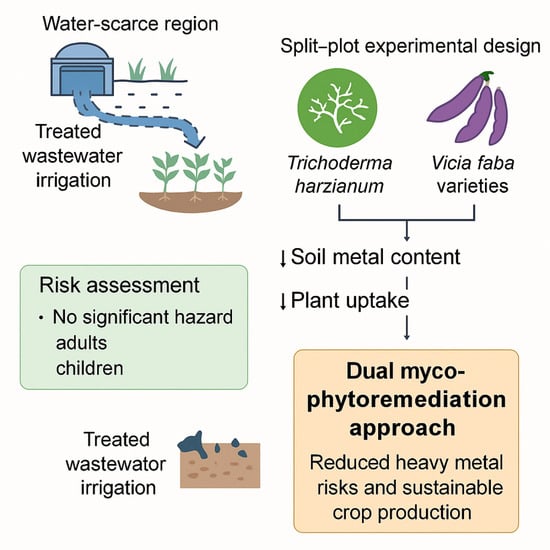
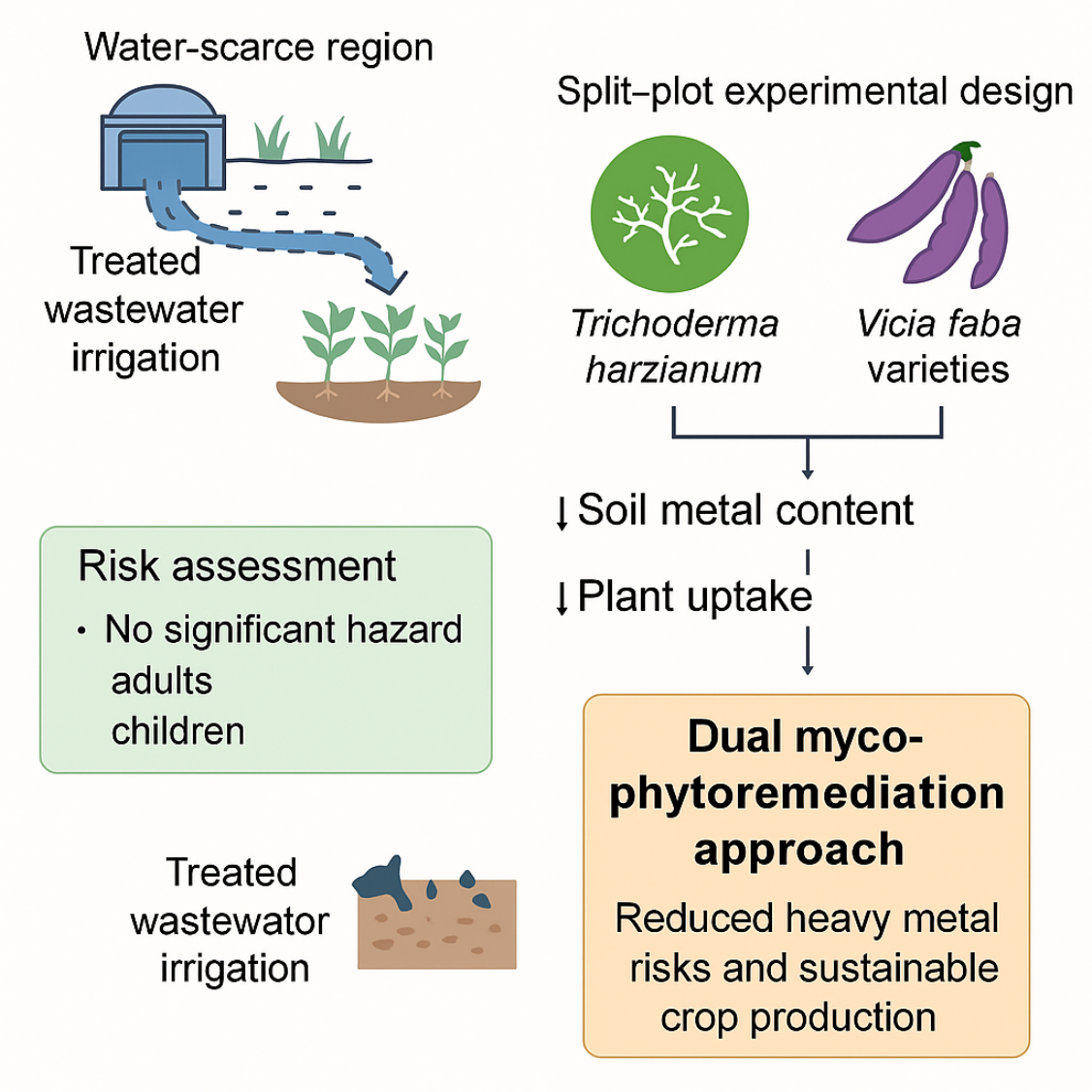
The increasing of treated wastewater for irrigation in water-scarce regions increases the risk of heavy metals soil contamination, threatening food safety and human health. This study investigated the synergistic potential of the fungi Trichoderma harzianum and three icia faba L. varieties (Agadulce, Hiba, and Reina mora) for soil bioremediation under wastewater irrigation. A split-plot design under controlled greenhouse conditions assessed the impacts of irrigation type and Trichoderma harzianum inoculation on soil heavy metal content and plant uptake. Although metal concentrations remained within WHO permissible limits, T. harzianum significantly reduced soil metal loads. Specifically, the ‘Reina mora’ cultivar exhibited the superior performance in this dual myco-phytoremediation approach, achieving the highest reduction in soil metal concentrations. Conversely, the ‘Hiba’ variety demonstrated a distinct advantage for food safety by exhibiting the lowest heavy metal accumulation in plant tissues. Risk assessments based on deterministic models indicated negligible non-carcinogenic and carcinogenic risks for both adults and children. This study presents a dual myco-phytoremediation approach as a promising and practical strategy for mitigating heavy metal risks and supporting sustainable crop production in wastewater-irrigated regions.

Graphical Abstract

1. Introduction

Agriculture stands as a cornerstone of global carbon sequestration and food security, playing an indispensable role in sustaining human populations [1]. As the global population continues to grow, preserving the interconnected ecosystems of soil, water, and vegetation has become increasingly imperative. Through the adoption of soil conservation practices, farmers can achieve enhanced crop yields [2], protect water resources, and supports biodiversity in water-scarce regions. However, wastewater irrigation has become a common but problematic alternative [3]. This practice has amplified environmental challenges, particularly due to the high concentrations of heavy metals present in wastewater, which pose significant risks to soil health and agricultural sustainability [4]. Therefore, the contamination of agricultural soils by heavy metals has emerged as a critical environmental concern, further compounded by the growing reliance on treated wastewater for irrigation, especially in arid and semi-arid regions [5]. The accumulation of these persistent contaminants in soils not only decrease crop productivity but also threatens food safety and ecosystem stability [6]. Consequently, there is an urgent need for the development and implementation of effective remediation strategies to mitigate the adverse effects of heavy metal contamination. Addressing this issue is crucial to ensure long-term food security and environmental health in the face of an increasing global population [7].
Vicia faba L. (faba bean) is a globally significant leguminous crop, with Asia and the European Union accounting for approximately 90% of global production [8]. In Morocco, it represents the primary cultivated food legume [9]. Agronomically, faba beans contributes to sustainable farming systems through biological nitrogen fixation, enhancement of soil fertility, and improved productivity of subsequent crops [10]. Nutritionally, it is valued for its high protein content (27–34%), substantial levels of carbohydrates (50–60%), dietary fiber, and an array of bioactive compounds with recognized health benefits [11].
Despite its agronomic potential, Faba bean cultivation in Morocco is increasingly constrained by water scarcity. Recurrent droughts have considerably reduced freshwater availability, leading farmers, particularly in peri-urban areas, to rely on wastewater irrigation. While wastewater can provides essential nutrients, its use poses significant environmental concerns due to the potential accumulation of heavy metals, such as cadmium (Cd), nickel (Ni), and lead (Pb), which are known for their persistence, toxicity, and propensity to enter the food chain [12,13]. Elevated concentrations of these metals in soil can result in bioaccumulation within plants tissues, with leafy vegetables typically showing higher uptake than cereals, fruits or legumes [14,15].
Bioremediation has emerged as a viable strategy to mitigate such contamination, particularly through the use of fungi from the Trichoderma genus. These organisms possess well-documented abilities to immobilize and retain heavy metals via biosorption, bioaccumulation, and transformation pathways, thereby reducing their mobility and bioavailability in the soil–plant continuum [16,17,18]. Among them, T. harzianum (TH) is particularly promising due to its ability to enhance soil structure, promote plant growth, and alleviate heavy metal toxicity [19]. Studies have shown that inoculating TH in tomato plants reduces concentrations of chromium (Cr), nickel (Ni) and cadmium (Cd) [17,20]. However, limited research has explored the interaction between TH and leguminous crops such as faba bean in the context of soil remediation.
Combining fungal remediation with phytoremediation represents, particularly by exploiting varietal differences in metal uptake, offers a synergistic approach to enhance soil remediation efficiency [21]. Given that Vicia faba cultivars exhibit varying capacities for heavy metal accumulation and exclusion [22], the identification of suitable genotype-fungus combinations could be instrumental in optimizing remediation protocols. However, a critical research gap remains in understanding the specific interaction between T. harzianum and Mediterranean faba bean cultivars under real-world wastewater irrigation scenarios. Most existing studies focus on single-agent remediation or laboratory-scale trials, leaving the practical efficiency and the associated human health risk mitigation of this dual approach largely unexplored.
This study aims to assess the combined effect of T. harzianum and three Vicia faba varieties (Agadulce, Hiba, and Reina mora) on the remediation of soils irrigated with metal-contaminated wastewater. The specific objectives are to: (1) determine the impact of TH on heavy metal concentration in the presence of faba beans; (2) identify the variety most effective at enhancing soil decontamination; and (3) determine the variety that minimizes heavy metals accumulation in edible plant parts. This integrated approach aims to improve soil health and reduce risks to food safety, ensuring a sustainable solution for agriculture in wastewater-dependent regions.

2. Materials and Methods

2.1. Sample Collection and Experimental Design

Soil (0–30 cm depth) was collected from the Maamoura forest in Kenitra province, Morocco. The experiment was conducted in a controlled greenhouse environment at the Faculty of Sciences, Ibn Tofail University, Kenitra. After air-drying, sieving, and homogenizing the soil, 1.5 kg aliquots were distributed into individual pots. Three Vicia faba L. varieties commonly cultivated in Morocco were selected: Agadulce (V1), Hiba (V2), and Reina mora (V3). Prior to sowing, seeds were surface-sterilized using a 1% sodium hypochlorite solution (prepared by diluting 10 mL of 5% commercial bleach in 90 mL of sterile distilled water) for 5–10 min, followed by 4 rinses with sterile distilled water to eliminate residual chlorine and subsequently dried on sterile absorbent paper.
A full factorial design was implemented, incorporating two experimental factors: irrigation water type and Trichoderma harzianum (TH) application. The irrigation regimes included: 100% well water, a 1:1 mixture of well water and treated wastewater, and 100% treated wastewater. Each treatment was applied either in the presence or absence of TH, resulting in six distinct treatment combinations. Each treatment was replicated three times for each variety, resulting in 54 experimental units. Five seeds were sown in each pot. The details of the experimental treatments are presented in Table 1.
Treated wastewater was sourced from the Kenitra wastewater treatment plant, and well water was collected from the Faculty of Sciences of Kenitra site. The TH inoculum was provided by the Regional Center for Agronomic Research of Kenitra (Kenitra, Morocco) under the National Institute of Agronomic Research of Morocco (INRA). Irrigation was performed by spraying after planting, maintaining 70% of the soil water retention capacity. Plants were grown under controlled conditions: 14-h photoperiod at 1.5 × 10⁴ lux, with a 25/20 °C day/night temperature and 60–70% relative humidity. Soil and plant tissues were collected after 120 days.

2.2. Inoculation Process

To facilitate the large-scale deployment of Trichoderma harzianum in soil and plant-based application, various inoculation formulations were developed with the objective of achieving high spore viability and density. Fermentation conditions and substrate composition were optimized using orthogonal design approaches, as previously implemented in cadmium phytoremediation studies [23].
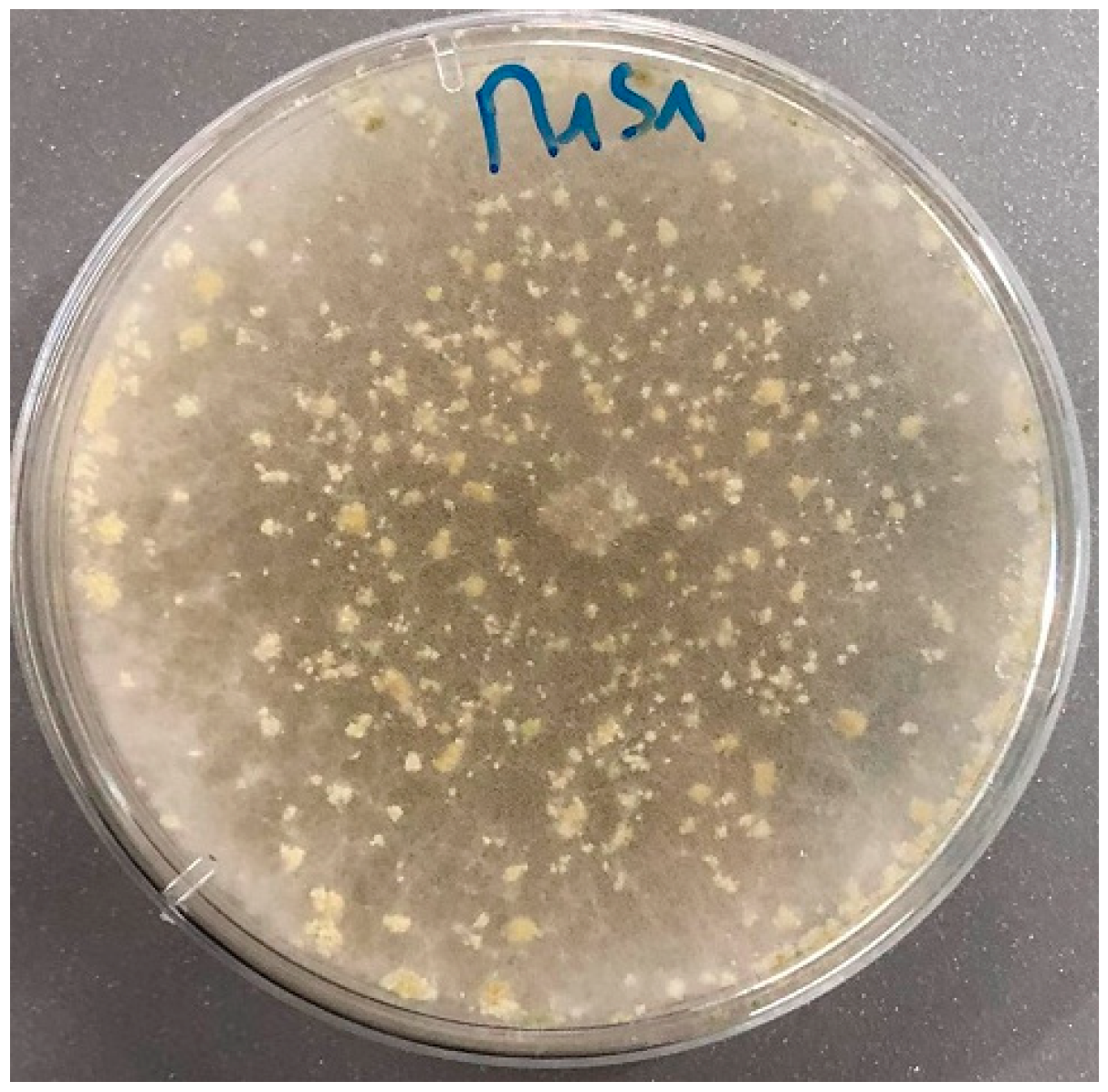
TH cultures were initially activated on Potato Dextrose Agar (PDA) medium (Figure 1). Following an incubation step, a spore suspension was prepared and adjusted to a concentration of approximately 1 × 10⁶ CFU/mL. This suspension was applied at a 1:20 (v/w) ratio to a sterile solid substrate composed of orange peel powder and wheat bran (1:1 w/w), with moisture content adjusted to 50% using deionized water. The substrate was incubated at 28 °C for 10 days to yield a solid fermentation product, herein referred to as the “TH solid fermentation powder”. This formulation was tested in both sterilized and non-sterilized forms to evaluate its bio efficacy under experimental conditions.
In addition, a wettable conidial powder formulation was developed, consisting of 10% conidial powder, 5% sodium dodecyl benzene sulfonate (SDBS), 0.4% ascorbic acid, 10% kaolinite, and 74.6% sodium lignosulfonate. For comparative purposes, a second formulation with identical composition but without the conidial component was also prepared. Both wettable formulations were diluted at a 1:500 ratio prior to application in experimental trials. For the greenhouse experiment described in Table 1, the TH solid fermentation powder 3 was selected as the inoculum. It was manually incorporated into the top 5 cm of the soil in each pot at the time of sowing 4 at a rate of 10 g per pot to achieve the target concentration of 1 × 10⁶ CFU/g of soil.

2.3. Heavy Metal Analysis

Initial characterization of soil and irrigation water samples (Table S1 and Table 2) was conducted using inductively coupled plasma-mass spectrometry (ICP-MS) and inductively coupled plasma-atomic emission spectrometry (ICP-AES). All analyses were performed in triplicate to ensure reproducibility and analytical accuracy.
Post-harvest, soil samples were oven-dried at 40 °C for at least 16 h, homogenized, ground, and sieved through a 2 mm mesh. For digestion, a precise mass of 0.150 g of each sample was transferred into a digestion tube under a fume hood. A mixture of 1 mL of nitric acid (65%) and 3 mL of hydrochloric acid (37%) was added, and the tube loosely capped and placed on a hot plate at 105 °C for two hours. After cooling, the digest was diluted to a final volume of 50 mL with ultrapure water and allowed to settle for two hours. The supernatant was filtered using a 45 µm polytetrafluoroethylene (PTFE) membrane syringe filter, and the filtrate was collected in polyethylene (PE) tube for ICP analysis. The entire procedure followed ISO 15587-1 standards for acid digestion of solid environmental samples [24]. The baseline physico-chemical and textural properties of the initial forest soil used in this experiment are detailed in Table S1.
The soil in the analyzed area is characterized by a sandy texture, composed of 95.3% sand, 2.5% silt, 2.2% clay. This texture is suboptimal for agricultural production due to its rapid drainage, low water retention, and poor nutrient holding capacity. The soil exhibits alkaline pH: 8.2 in water and 7.8 in KCl, which might limit the availability of certain micronutrients. Electrical conductivity is moderate at 171.4 μS/cm, while sodium content is relatively high (Na2O: 136.03 mg/kg), posing a risk for salt-sensitive crops. Organic matter and organic carbon contents are low, at 1.18% and 0.69%, respectively, potentially limiting soil fertility and microbial activity. Nevertheless, nutrient dynamics are favorable, with moderate levels of available phosphorus (52.95 mg/kg P2O5) and potassium (32.3 mg/kg K2O), supporting baseline conditions for plant growth and microbial interactions.
The analysis of treated wastewater (A), well water (B), and their 1:1 blend (A + B) underscores the feasibility of wastewater reuse for agricultural irrigation, with most parameters aligning closely with established agronomic standards. The pH values for all water types (A: 7.4, B: 6.5, A + B: 7.0) fall within the optimal agronomic range (6.5–8.4), supporting nutrient availability and crop compatibility. Electrical conductivity (EC) values for wastewater (0.6 dS/m) and the blend (1.1 dS/m) are well below the salinity threshold of 12 dS/m, minimizing the risk of salt accumulation in soil. Sodium (2.1–6.6 meq/L) and chloride (4.2–9.6 meq/L) concentrations also remain within safe agronomic limits (9 meq/L and 15 meq/L, respectively), reducing the potential for soil sodicity or chloride toxicity. Concentrations of magnesium (Mg2+) and calcium (Ca2+) were negligible and posed no agronomic concern. While cadmium (Cd) levels in raw wastewater slightly exceeded regulatory thresholds (0.014 mg/L vs. the limit of 0.01 mg/L), blending with well water reduced concentrations to acceptable levels (0.006 mg/L). Other heavy metals including chromium (Cr), zinc (Zn), nickel (Ni), cobalt (Co), iron (Fe), copper (Cu), and lead (Pb) remained below critical limits across all samples. Notably, Pb concentration in wastewater was 0.8 mg/L, notably below the allowable threshold of 5 mg/L. The 50% blend of wastewater and well water effectively diluted heavy metal concentration, particularly Cd, while benefiting from the relatively lower EC of wastewater. This strategy represents a practical and sustainable approach to managing water scarcity while maintaining soil quality and supporting crop productivity. However, periodic monitoring of cadmium levels in untreated wastewater is advised to ensure long-term safety and regulatory compliance.

2.4. Human Health Risk Assessment

The health risk assessment was conducted to evaluate the potential non-carcinogenic and carcinogenic risks arising from direct exposure to the soil (ingestion, dermal contact, and inhalation) for both children and adults. The calculations used the heavy metal concentrations measured in the soil samples from each treatment. Human health risk assessment was conducted using the deterministic methodology recommended by the United States Environmental Protection Agency (USEPA). To ensure a transparent and comprehensive health risk assessment, the study followed a multi-step deterministic approach: (i) hazard identification based on soil metal concentrations, (ii) exposure assessment via three distinct pathways (ingestion, inhalation, and dermal contact), and (iii) risk characterization using the Hazard Index (HI) and Total Cancer Risk (TCR). All parameters and constants were selected according to the most recent USEPA guidelines to provide a health-protective estimate for both sensitive (children) and general (adult) populations. This approach relies on single-point input values to estimate exposure and associated risks, providing a clear, health-protective estimate particularly suitable for screening-level and preliminary evaluations [25] The following equations were employed to quantify both non-carcinogenic and carcinogenic risks based on identified exposure pathways.
A D D i n g s o i l = ( C s o i l × I n g R s o i l × E F × E D × C F B W × A T )
A D D i n h = ( C s o i l × I n h R × E F × E D B W × A T × P E F )
A D D d e r = ( C s o i l × A F s o i l × S A × A B S × E F × E D × C F B W × A T )
where C: the concentration of toxic elements in soils (mg/kg dw); IngR, InhR: the ingestion and inhalation rate; EF: Exposure frequency (d/year); ED: exposure duration for risk assessment (year); RfD: reference dose (mg/kg. Day). BW: Average body weight (kg). AT: Averaging time (day) = (ED × 365). The parameters used for the calculations of HQ, HI and THI for children and adults are described by [26,27]
H Q = C D I R f D
H I = H Q i n g + H Q i n h + H Q d e r m = C D I i n g R f d i n g + C D I i n h R f d i n h + C D I d e r m R f d d e r m
T H I = j = 1 n H I j
According to [27], a total hazard index > 1, reflect the possibility of non-carcinogenic effect on population from Trace Metals (TMs) exposure; however, when the calculated THI < 1, there is no adverse Non-Carcinogenic Risk (NCR) effects [28].
The risk of occurrence of cancer due to exposure to TMs was calculated based on Cancer Risk (CR). The CR for different exposure pathways were calculated using the following formulas:
C F C a n c e r   R i s k = C D I × C S F
T C R T o t a l   c a n c e r   r i s k = C R ( i n g e s t i o n + i n h a l a t i o n + d e r m a l )
A TCR less than 10−6, within the range of 10−6–10−4, and more than 10−4 was considered as a negligible risk, an acceptable or tolerable risk and a significant cancer risk for children and adults, respectively. The RfD is the reference dose (mg/kg. Day) and carcinogenic slope factor (CSF) values for each element and considering different exposure pathways were obtained from the USEPA Integrated Risk Information System [28,29,30].

2.5. Statistical Analysis

Statistical analysis was conducted using XLSTAT (https://www.xlstat.com/) and originlab 2025 software, a non-parametric Spearman correlation was introduced to evaluate the possible interrelationship between different chosen metals. To assess the significance of differences among groups we used GraphPad Prism software (version 9.5), with results expressed as Mean ± Standard Deviation (SD). The data were subjected to a one-way ANOVA test, supplemented by post hoc analysis, A p-value of less than 0.05 was considered statistically significant. A comparison of means was made between each soil and the reference soil I0 (Soil without irrigation and without Trichoderma). Results are presented in graphs with: aaa: p < 0.0001 vs. I0; aa: p < 0.0068 vs. I0; a: p < 0.0313 vs. I0; ns: non-significant difference (p > 0.05) vs. I0.

2.6. Soil Pollution Assessment Methods

2.6.1. Individual Pollution Index

The contamination level of Heavy Metals (HMs) in topsoil was estimated based on the geo-accumulation index (Igeo) and the enrichment factor (EF) [31], which could be calculated using the following equations:
Igeo = log2 Ci 1.5 Bi
where Ci represents the HMs concentration in the topsoil (mg/kg); Bi indicates the HMs soil background level of the study area (mg/kg), and it was taken the average local background values reported in previous regional studies in this study. Besides, the classifications of Igeo and EF are listed in Table 3.

2.6.2. Complex Pollution Index

Overview of global pollution aspects were assessed in this study using the potential ecological risk index (PERI) could be applied to evaluate the ecological risk posed by HMs in topsoil, and it is calculated as follows:
Ei = Ti × Ci Bi
PERI = ∑Ei
where Ei is the potential ecological hazard factor of each HMs, Ci and Bi are the concentration and background level of HMs in topsoil (mg/kg); and Ti is the toxicity coefficient 138 (As = 10, Cd = 30, Cr = 2, Pb = 5, Cu = 5, Ni = 5, and Zn = 1) of each HMs. The Pollution Load Index (PLI) and PERI can be classified into four levels from low to high (Table 3).

3. Results and Discussion

3.1. Heavy Metal Concentrations and Statistical Analysis

The quantification of heavy metal in soils subjected to various irrigation regimes and Trichoderma harzianum treatments revealed notable trends. Concentrations of Cd (0.210–0.350 mg/kg), Cr (13.989–20.325 mg/kg), Zn (62.080–84.110 mg/kg), Pb (18.812–23.769 mg/kg), Ni (53.680–62.100 mg/kg), Co (7.910–9.800 mg/kg), and Cu (67.083–72.412 mg/kg) were detected (Table 4), with all values remaining within moderate contamination ranges. These results are consistent with those reported by Teng et al. (2015), who observed similar reductions in Cd and Pb levels following with Trichoderma reesei application [23], as illustrated by the comparative results in Figure 2 and Figure 3.
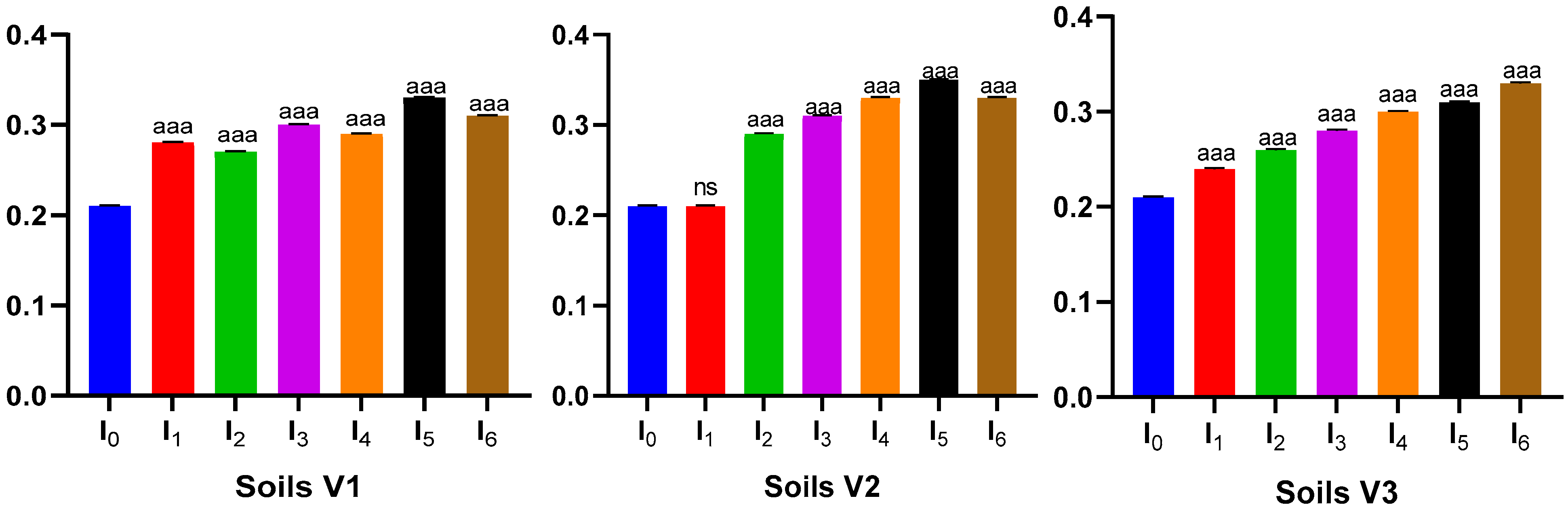
The concentration of cadmium (Cd) shows a significant increase in the treated soils for variety 1 (V1) compared to the control I0 (0.21 ± 0.001 mg/kg); the concentration of Cd in the soils varies between 0.27 ± 0.001 mg/kg (Soil I2) and 0.33 ± 0.001 mg/kg (Soil I5). The ANOVA indicates a highly significant difference (p < 0.0001). The V2 soils accumulated more Cd with a highly significant difference (p < 0.0001) between the Control I0 (0.21 ± 0.001 mg/kg) and the other soils, such as I4 (0.33 ± 0.001 mg/kg) and I5 (0.35 ± 0.001 mg/kg); on the other hand, no significant difference between I0 and I1 (0.21 ± 0.001 mg/kg in each soil) was observed. For the soil of variety 3, there is a noticeable rise in Cd concentration from Soils I1 (0.24 ± 0.001 mg/kg) to I6 (0.33 ± 0.001 mg/kg) when compared to the control. This increase reflects a significant accumulation of Cd in the substrate after treatment. Some samples, however, exhibit lower levels, indicating variability in the phenomenon (Figure 3).
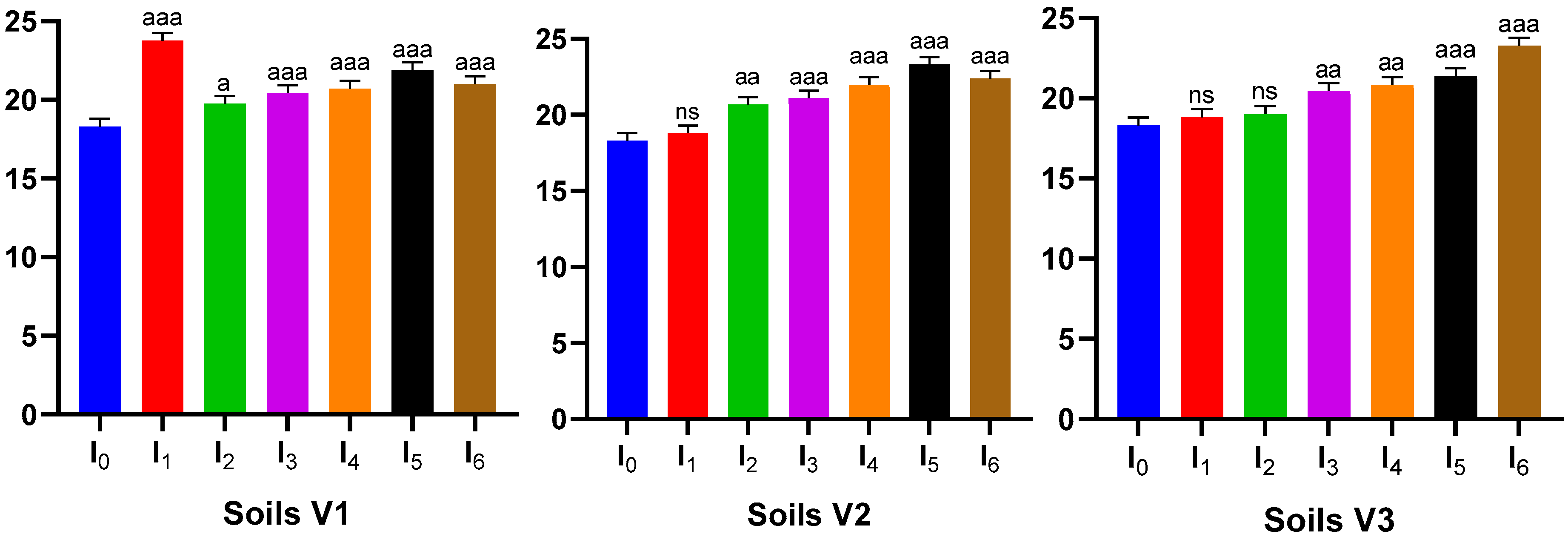
The lead (Pb) values are significantly higher in the treatments compared to the control (18.31 ± 0.53 mg/kg). In the soil grown with V1, the Pb levels in soils I1, I3, I4, I5, and I6 are much higher than in the control soil, with a p value of less than 0.0001, while soil I2 (19.769 ± 0.5 mg/kg) is not very different from the control, with a p value of 0.0183. For soil V2, there is no significant difference between the control I0 and I1, with a p value greater than 0.999; however, there is a significant difference between the control and I2 (20.668 ± 0.5 mg/kg), with a p value of 0.003. For the other soils, the differences are very significant, with the highest Pb level found in soil I5 (23.308 ± 0.5 mg/kg). For soil V2, no significant difference was observed between the control I0 and I1 with a p > 0.999; however, the difference is significant between the control and I2 (20.668 ± 0.5 mg/kg) with p = 0.003. For the other soils, the difference was highly significant, with a maximum Pb accumulation value in soil I5 (23.308 ± 0.5 mg/kg). The values of Pb accumulated in the soils cultivated by V3 differ according to the mode of adapted irrigation; for I1 and I2, no difference was observed compared to the control with a p > 0.999 and p = 0.6480, respectively. I3 (20.455 ± 0.48 mg/kg) and I4 (20.820 ± 0.2 mg/kg) showed a non-significant difference between themselves and the control with p = 0.0007 and 0.0002, respectively, and the last two treatments, I5 and I6, are significantly very different from the control. Therefore, the increase in the observed averages confirms the accumulation of Pb. This result points to the potential contamination of soils by this heavy metal. Nevertheless, a few samples maintain more moderate levels (Figure 3).
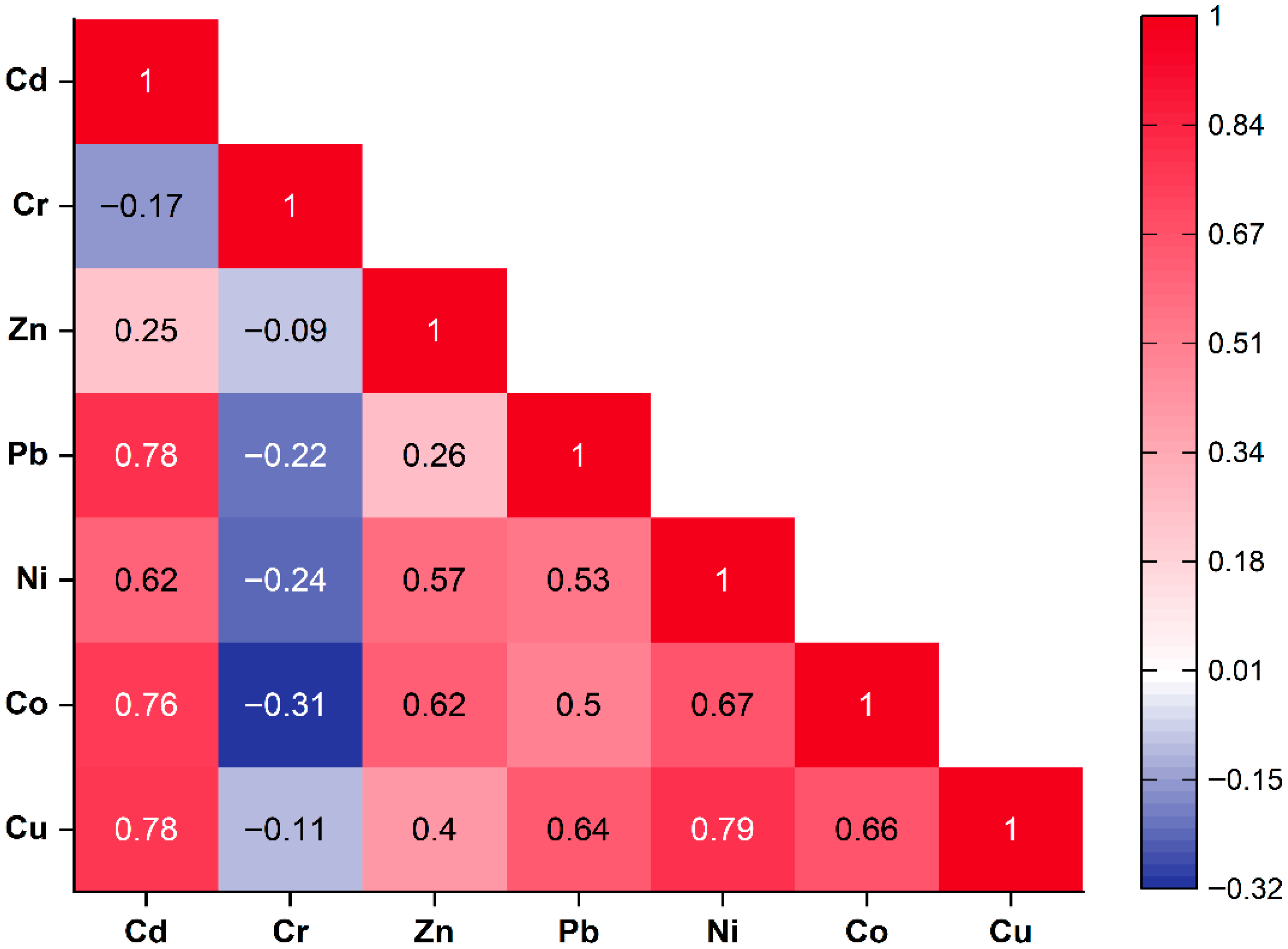
The Pearson correlation heatmap indicates strong positive correlations between Cd and Pb (0.78), Cd and Cu (0.78), Co and Cu (0.79), and Ni and Cu (0.66), suggesting common anthropogenic sources. Moderate correlations, such between Ni and Zn (0.57), Pb and Zn (0.26), and Co and Pb (0.53), indicate mixed pollution sources. In contrast, Cr showed weak or negative correlations with most metals, particularly with Co (−0.31), Pb (−0.22), Ni (−0.24), and Cu (−0.11), indicating different geochemical behavior or origins (Figure 4). The negative correlation between Cr and Cd (−0.17) and the weak correlation between Zn and Cr (−0.09) further support the possibility of distinct sources or different mobility in the soil. These correlation patterns suggest that while most metals share a common origin from the wastewater, their distribution in the soil is influenced by distinct chemical mobility and geochemical interactions within the pot experiment [32].
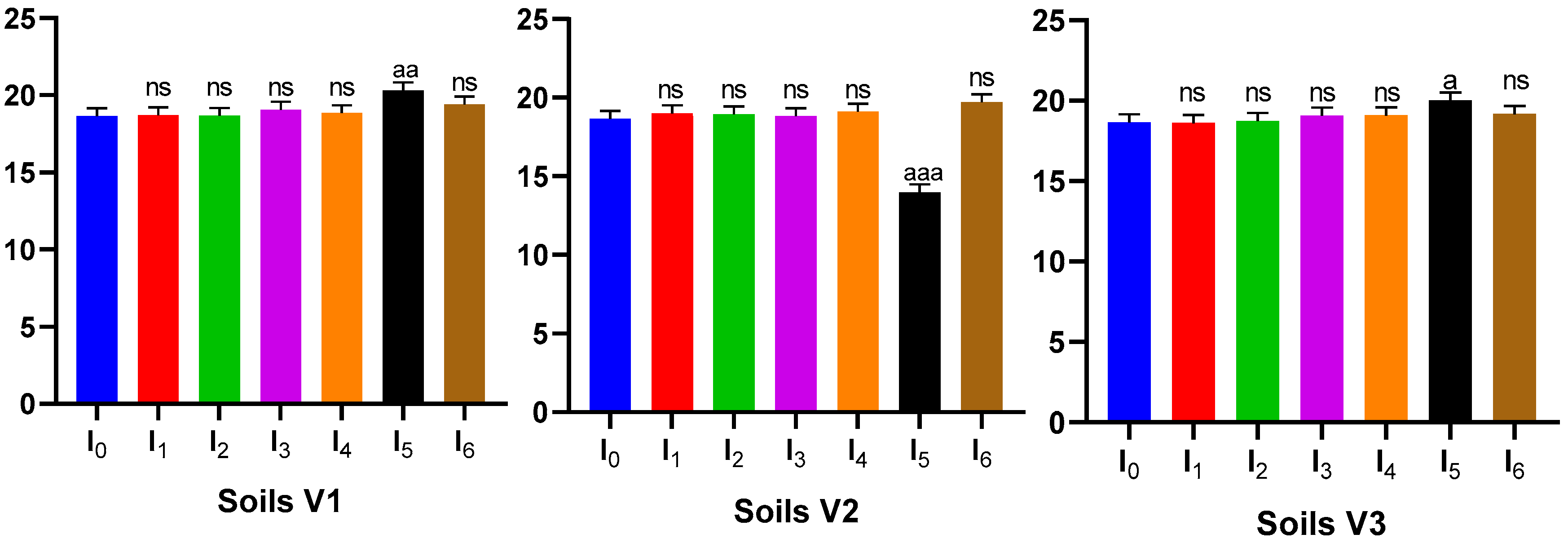
The chromium (Cr) concentrations appear stable for all varieties (V1, V2, and V3) and do not differ significantly from those of the control (18.55 ± 0.48 mg/kg) with a p > 0.05, except for treatment I5, which represents the soil irrigated with 100% wastewater without Trichoderma; this soil contains Cr with a concentration of 20.325 ± 0.51 mg/kg and 20.009 ± 0.5 mg/kg for V1 and V3, respectively. On the other hand, the soil I5 cultivated with V2 contains a very low concentration of Cr (13.989 ± 0.53 mg/kg) with a very significant difference (p < 0.0001). This absence of a notable effect suggests that the treatment did not promote chromium enrichment. The stability of the values probably reflects the low mobility of this metal under experimental conditions (Figure 5).
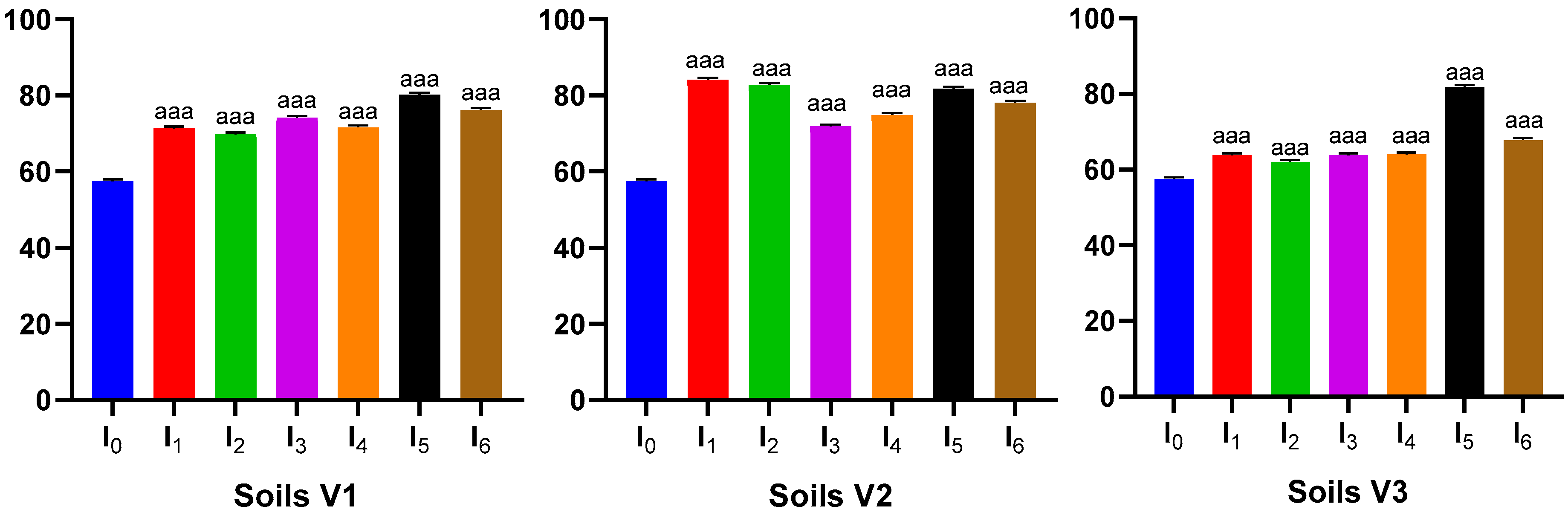
The results show a moderate increase in zinc (Zn) concentrations, with a very significant difference (p < 0.0001) compared to the control. For the soils cultivated by V1 and V3, it is noted that treatments I5 and I6 allow for a very high accumulation of Zn with a concentration of 80.23 ± 0.48 mg/kg and 76.18 ± 0.51 mg/kg, respectively, for V1, and 81.86 ± 0.53 mg/kg and 67.78 ± 0.5 mg/kg, respectively, for V3. Regarding V2, it is observed that the soils irrigated by I1, I2, and I5 contain the most Zn, with concentrations of 84.11 ± 0.51 mg/kg, 82.78 ± 0.51 mg/kg, and 81.78 ± 0.51 mg/kg, respectively. The effect of the treatments on the bioavailability of Zn is therefore noticeable but less pronounced than for other elements. This trend may indicate that the soil has a lower retention capacity for this element (Figure 6).
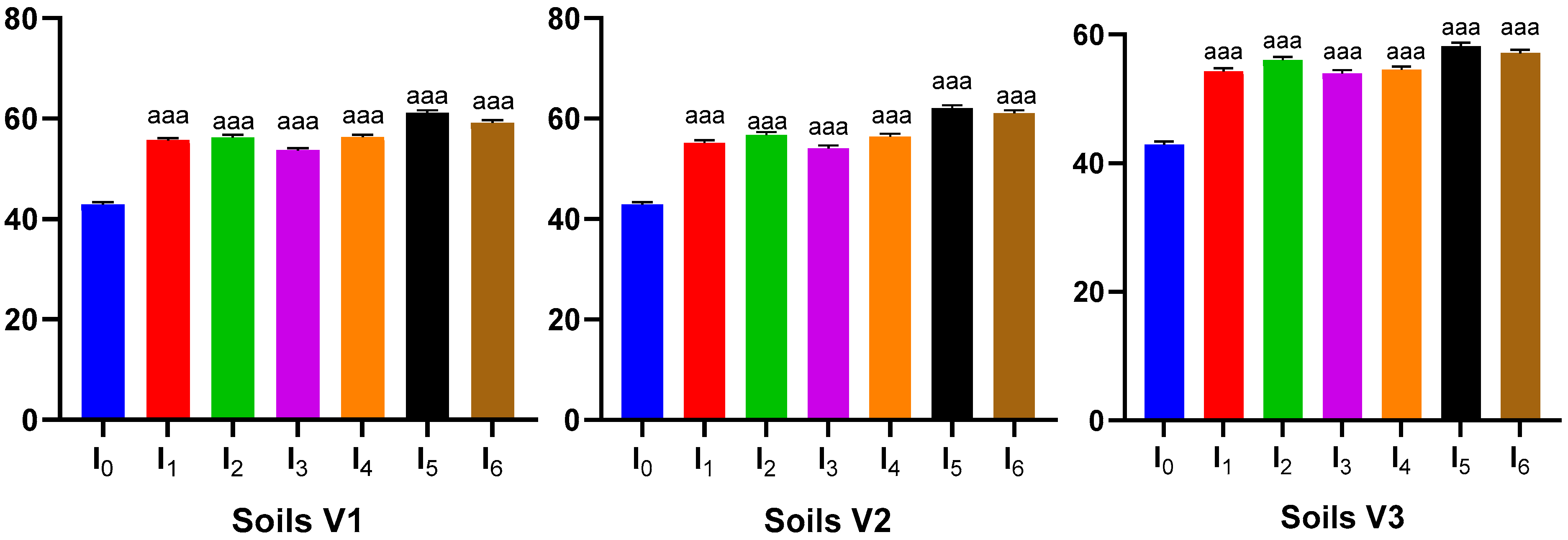
Nickel (Ni) content showed a significant increase in some treated soils compared with the control (42.89 ± 0.54 mg/kg), with a statistical threshold (p < 0.0001). Soils I5 and I6 contained maximum Ni values such as 61.16 ± 0.5 mg/kg, 59.18 ± 0.48 mg/kg for V1, 62.10 ± 0.53 mg/kg and 61.11 ± 0.51 mg/kg for V2, and 58.21 ± 0.49 mg/kg and 57.13 ± 0.47 mg/kg for V3, respectively. These results testify to a moderate accumulation, less significant than that observed for cadmium or lead. The variability of values between treatments may be linked to the differential capacity of the soil to retain Ni under the specific conditions of each treatment (Figure 7).
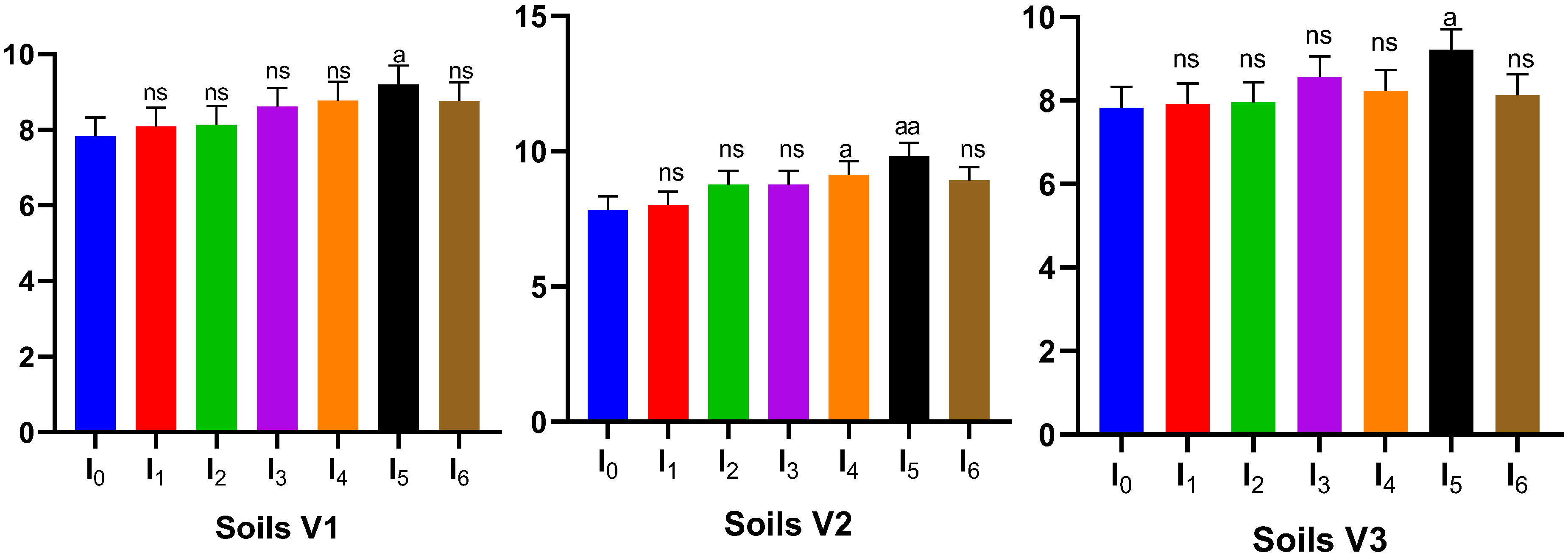
Concerning Co, we find that the soils do not accumulate this element with a high content in comparison with the I0 control (7.83 ± 0.5 mg/kg); statistical analyses show that the difference between Co values in the different soils irrigated with different treatments or grown with the three varieties is not significant, with a p that varies between p = 0.1098 (I0 vs. I6 in V2) and p > 0.999 in several comparisons such as (I0 vs. I2 in V1 and V3). However, the Co levels in I4–V2 and I5–V3 (9.13 ± 0.5 mg/kg and 9.21 ± 0.52 mg/kg) are not significantly different, with p values of 0.0397 and 0.0264, respectively, while the Co level in I5–V2, which is the highest at 9.8 ± 0.48 mg/kg, is significantly different from the control with a p value of 0.0016 (Figure 8).
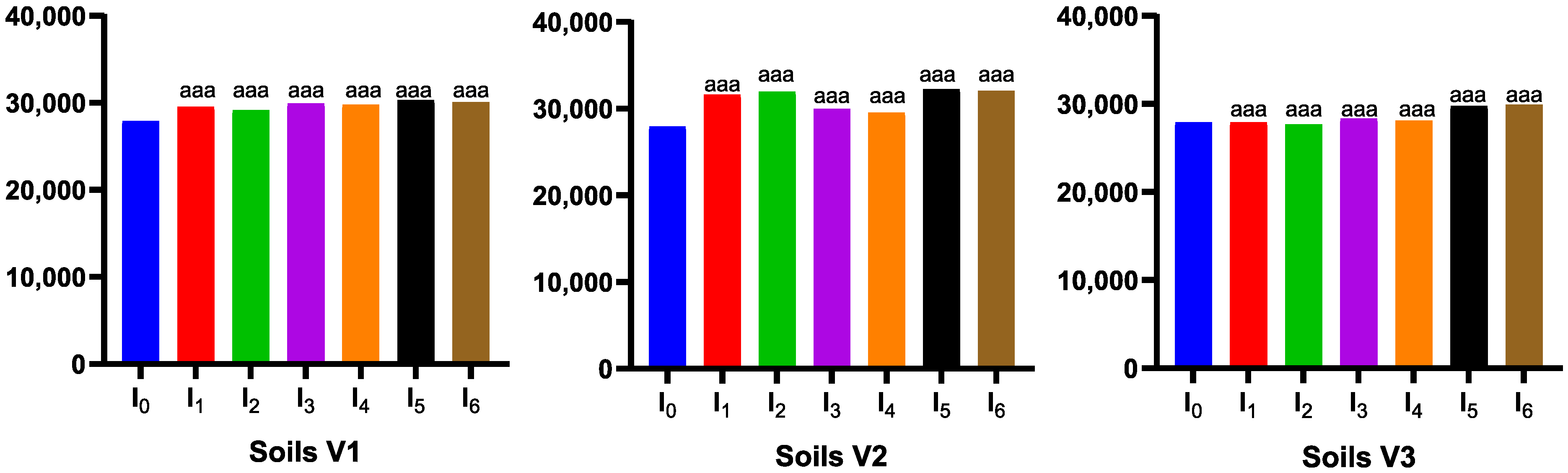
The iron (Fe) levels found in the various soils with different treatments and crops (V1, V2, and V3) are much higher than in the control soil (27,914.00 ± 0.51 mg/kg). The difference between means is highly significant, with p < 0.0001 in all statistical comparisons. These results show that the soils accumulate iron in very high concentrations (Figure 9).
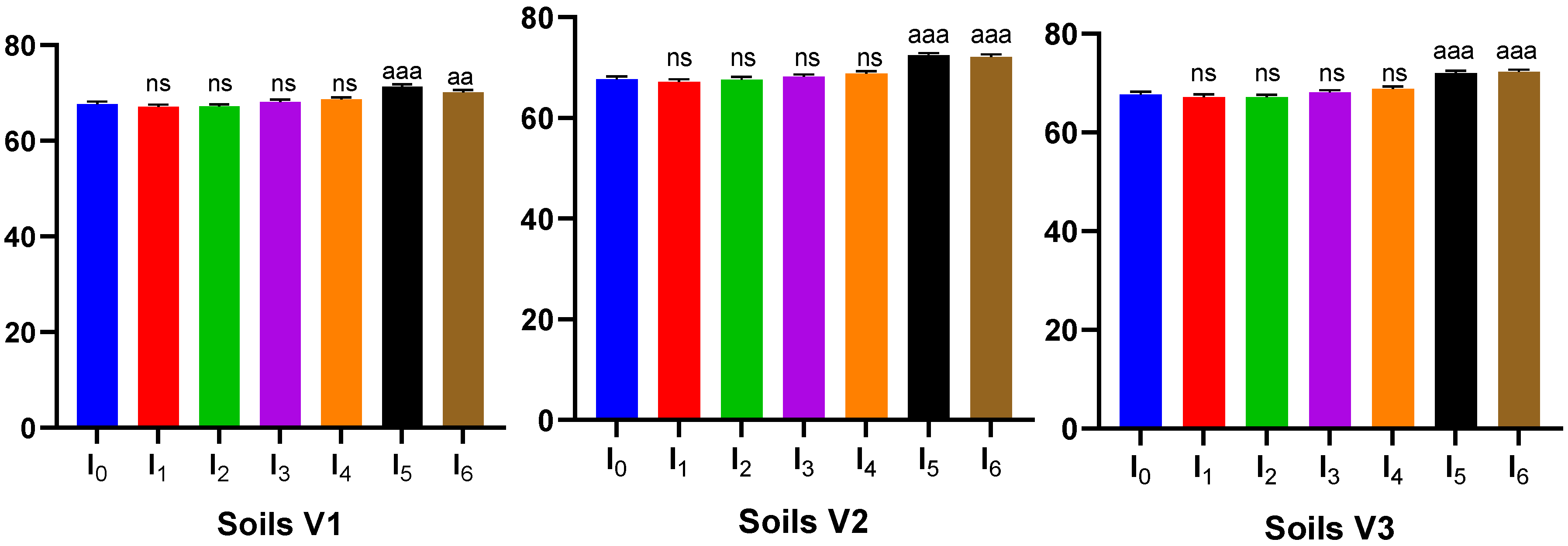
The copper (Cu) concentration in soils I1, I2, I3, and I4 does not show a significant difference compared to the control (67.71 ± 0.48 mg/kg) for V1, V2, and V3. The only difference exists between I5, I6, and the control in the three trials, V1, V2, and V3. The value of p varies between p < 0.0001 (I0 vs. I5, I0 vs. I6 in V2 and V3, and I0 vs. I5 in V1) and p = 0.0002 (I0 vs. I6 in V1). This suggests that the applied treatment did not induce a notable accumulation of this metal. The values remain comparable to those measured under control conditions, indicating a relative stability of Cu levels (Figure 10).

3.2. Effect of Irrigation Water Type on Heavy Metal Concentrations

Irrigation with 100% treated wastewater resulted in higher concentrations of several heavy metals, particularly Cd, Ni, and Cu, when compared to well water treatments. This increase can be attributed to the direct input of trace metals present in the wastewater, a trend similarly reported by Jalil et al. (2022), who observed increased levels of heavy metals in soils irrigated with wastewater [14]. These results are consistent with those by [33,34], who demonstrated that while wastewater irrigation can enrich soils with essential nutrients, it concurrently poses a risk of introducing harmful contaminants, including heavy metals, thereby compromising long-term soil health and food safety.

3.3. Impact of Inoculation with Trichoderma Harzianum

The results demonstrate that inoculation with T. harzianum has a measurable effect on reducing soil concentrations of certain heavy metals. Comparative analysis of treatments with and without TH revealed a notable reduction in metal concentrations, particularly under wastewater irrigation. For example, in the 100% wastewater treatment (I5 vs. I6), TH application reduced Cd concentration from 0.330 to 0.310 mg/kg, representing an approximate 6% decrease. The bioremediation efficiency of T. harzianum potentially involves both direct and indirect mechanisms. Directly, the fungal biomass may act through biosorption, utilizing cell wall functional groups to bind heavy metal cations. Indirectly, as a plant growth-promoting fungus (PGPF), T. harzianum is known to secrete organic acids and siderophores in the rhizosphere. While rhizosphere pH was not directly measured in this study, the observed reduction in Cd, Ni, and Pb concentrations (Figure 3, Figure 6 and Figure 7) aligns with documented microbial-induced acidification processes that modulate metal bioavailability [18,23]. Such localized chemical changes, often reported for Trichoderma species, can facilitate the chelation and subsequent immobilization or plant uptake of metals like Zn and Cd [19]. These interactions appear to be cultivar-specific, suggesting a synergistic relationship between fungal activity and the physiological traits of the Vicia faba cultivars used.
This remediation potential aligns with findings by Babu et al. (2014), who demonstrated that Trichoderma virens PDR-28 significantly enhanced the phytoremediation of heavy metal-contaminated soils [35]. The underlying mechanisms are likely multifactorial, involving biosorption, bioaccumulation, and enzymatic transformation, as reviewed by [18]. Furthermore, statistical analysis revealed a significant interaction (p < 0.05) between T. harzianum inoculation and cultivar types for several heavy metals, notably Zn and Cd. This interaction indicates that the reduction in soil metal load is not merely an additive effect of the fungus and the plant separately, but rather a synergistic process where the fungal presence significantly modulates the phytoextraction or phytostabilization efficiency depending on the specific cultivar’s physiological traits. Landero-Valenzuela et al. (2024) reported that different Trichoderma species effectively reduced heavy metal levels uptake in plants grown on wastewater-irrigated soils, thereby corroborating our observations [17].

3.4. Variability Between Varieties of Vicia faba

The results reveal significant varietal differences among the three Vicia faba varieties with respect to their phytoremediation capacity. The Reina mora variety (V3) generally exhibited the lowest residual zinc concentrations in soil, except under 100% wastewater treatment, suggesting a greater capacity to mobilize and accumulate Zn. On the other hand, the Hiba variety (V2) was associated with higher residual Zn concentrations, potentially reflecting reduced uptake efficiency. These findings align with those of Sendra et al. (2020), who documented significant variations in heavy metals accumulation among Vicia faba cultivars grown in contaminated soils [36]. Similarly, Serafin et al. (2023) reported genotypic variability in mineral uptake and translocation, attributing these differences to cultivar-specific physiological and genetic traits [37]. The variations in residual heavy metal concentrations across the three cultivars suggest distinct strategies for metal interaction. In the ‘Hiba’ (V2) variety, the higher levels of metals remaining in the soil compared to ‘Reina mora’ (V3) (Figure 5 and Figure 7) might indicate a ‘metal-excluder’ strategy, characterized by limited uptake or restricted translocation [36]. While plant tissue analysis was not performed in this study to confirm compartmentalization, such genotypic variability is well-documented in Vicia faba, where certain cultivars maintain lower metal accumulation through root cell wall adsorption or restricted xylem loading [22,37]. Conversely, the lower residual soil concentrations associated with ‘Reina mora’ suggest a more efficient phytoextraction or mobilization potential. These preliminary observations highlight the importance of cultivar selection, although further research quantifying root-to-shoot translocation factors is essential to definitively classify these physiological strategies.

3.5. Pollution Assessment

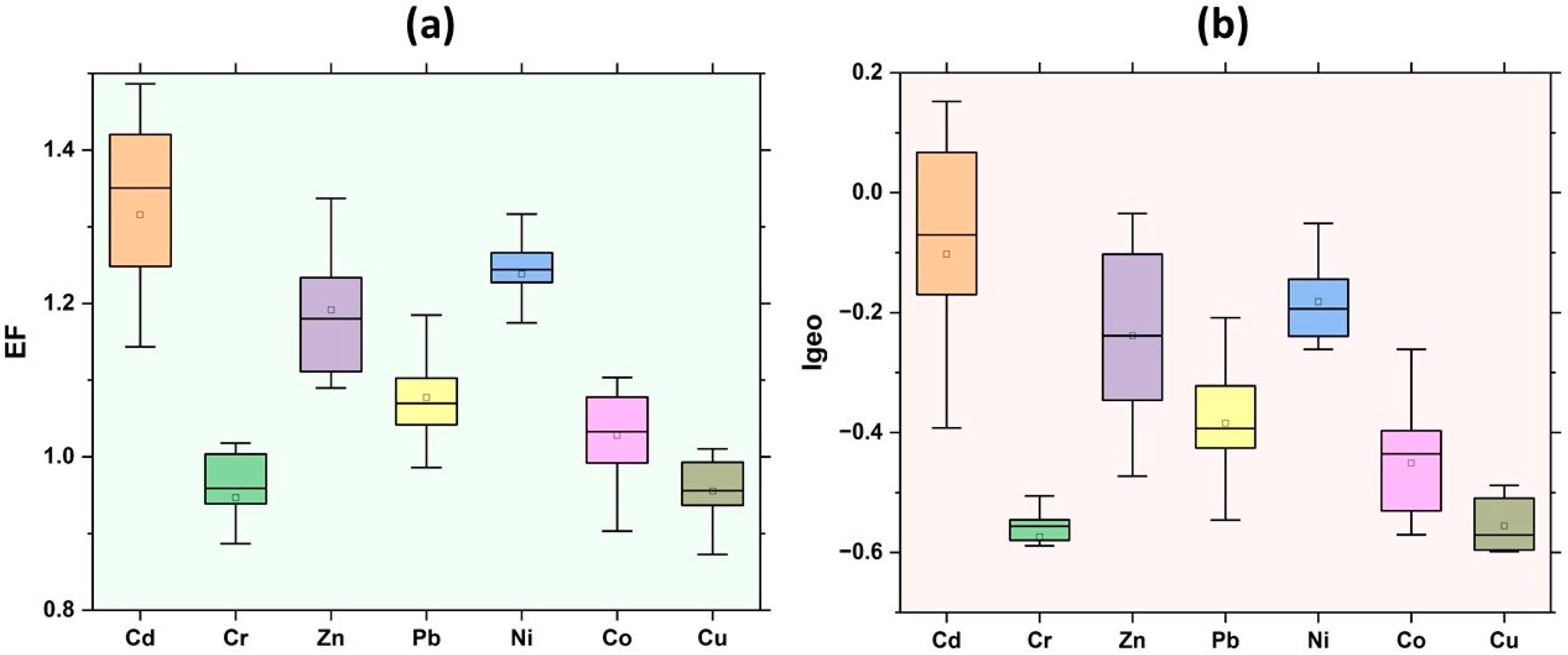
The enrichment factors (EF) calculated for the investigated heavy metals reveal generally low to moderate enrichment, with values ranging from 0.75 to 1.67. Cadmium exhibited the highest enrichment (up to 1.67 for I11), followed by Ni and Zn (Figure 11a). According to the classification system proposed by Siddig et al., (2025), these EF values correspond to minor to moderate anthropogenic enrichment [38].
The geoaccumulation index (Igeo) values were mostly negative, indicating that metals concentrations close to or below reference levels. Slightly positive Igeo values were observed only for Cd (up to 0.15 in I11), suggesting the early stages of contamination (Figure 11b). These findings are consistent with those reported by Ogunlana et al. (2020), who used Igeo to assess heavy metal contamination in agricultural soils [39].
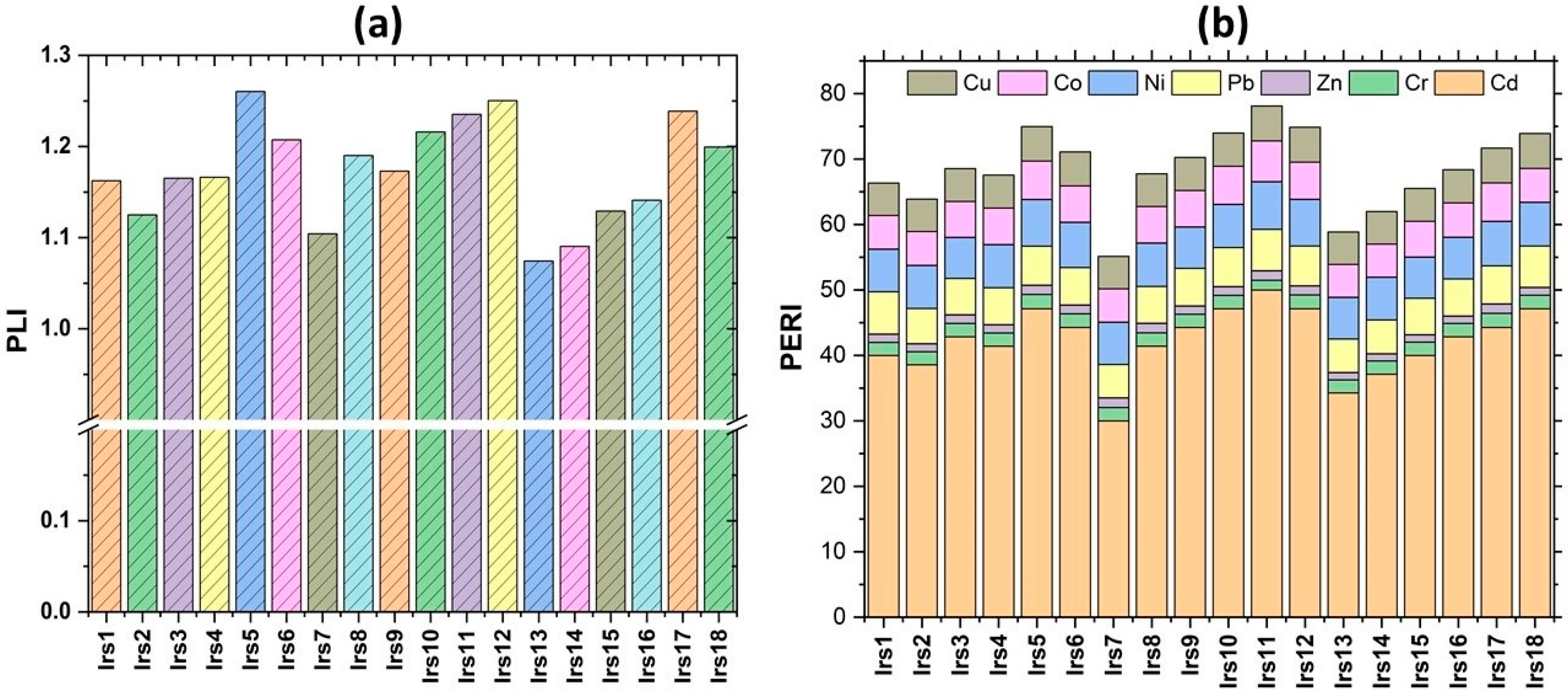
The Pollution Load Index (PLI) values range from 1.0 to 1.3 across sampling soil (I1 to I18), indicating low and uniformly distributed pollution levels. While the overall environmental impact is concerning, it is not yet critical (Figure 12). However, the significant anthropogenic contribution to metal enrichment, particularly for Cd, underscores the need for continuous monitoring and mitigation measures to reduce human-induced inputs and prevent further environmental degradation [40]. Regarding the human health risk assessment, it is important to clarify that the calculated risks (HQ, HI, and CR) presented in this study are based on direct exposure to the soil through ingestion, dermal contact, and inhalation pathways. While this study focuses on these soil-to-human routes to evaluate the immediate impact of bioremediation, we acknowledge that the food pathway (consumption of Vicia faba seeds) remains a major route for heavy metal intake. Future research will integrate the Transfer Factor (TF) from soil to edible parts to provide a comprehensive view of the total health risk, including dietary ingestion.

3.6. Human Health Risk Assessment

The assessment of human health risks associated with soil contamination by heavy metals, including Pb, Cu, Cr, Zn, Ni, Cd, and Co, was conducted using the U.S. EPA deterministic approach. This evaluation considered multiple exposure pathways: oral ingestion, dermal contact, and inhalation. Non-carcinogenic risks were quantified using hazard quotients (HQs), while carcinogenic risks were estimated via Lifetime Cancer Risk (LCR) values (Tables S2 and S3).
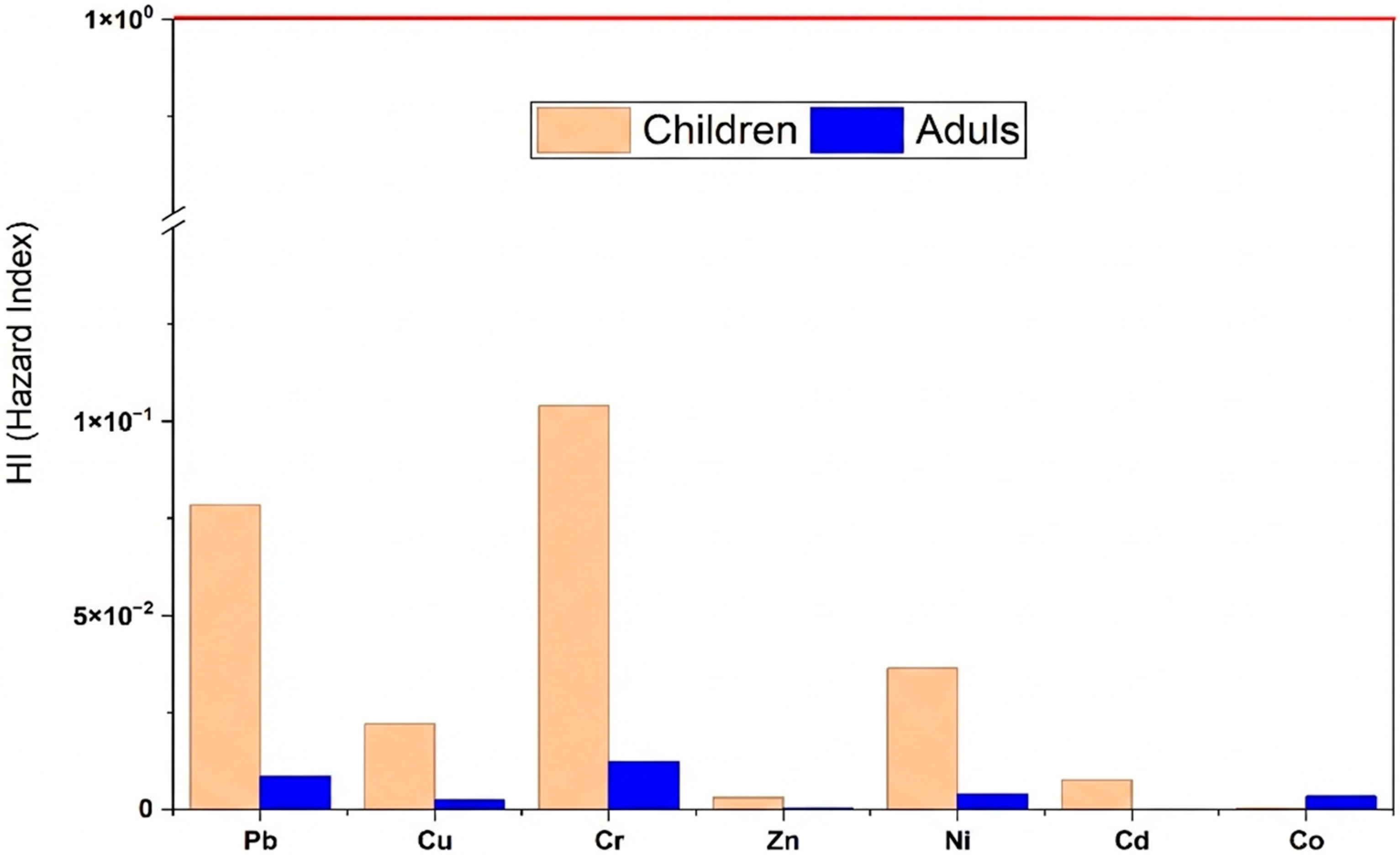
The HI values obtained for all the metals studied (Pb, Cu, Cr, Zn, Ni, Cd, and Co) remain below the critical threshold of 1, indicating no immediate non-carcinogenic risk. Nevertheless, marked differences were observed between age groups, with children consistently showing higher HI values than adults, reflecting their greater physiological and behavioral vulnerability Figure 13.
In children, chromium (Cr) appears to be the main contributor to HI, followed by lead (Pb) and nickel (Ni), while zinc (Zn), cadmium (Cd), and cobalt (Co) show relatively low contributions. For adults, HI values are significantly lower for all elements, with Cr and Pb making the largest contributions, but at levels considered not to be of concern. This hierarchy of metals suggests that Cr and Pb are the most critical elements in wastewater-irrigated soils, even when regulatory thresholds are not exceeded.
The comparative analysis indicates that the descending order of metals’ contribution to HI is generally: Cr > Pb > Ni > Cu > Zn > Cd ≈ Co, particularly for children. Although the cumulative HI values remain below unity, long-term chronic exposure, combined with indirect consumption via the food chain or direct contact with soil, could lead to potential health effects, particularly in sensitive populations. These results highlight the need for regular monitoring of the quality of soils irrigated with wastewater and rigorous management of irrigation practices in order to limit the gradual accumulation of toxic metals [41]. LCR values for Pb were within tolerable limits but slightly higher in adults, indicating an elevated, though still acceptable, carcinogenic potential. Copper (Cu) reflected a comparatively lower risk for both adults and children, with oral ingestion being the primary exposure route. Cancer risk from Cu was negligible, with LCR values well below concern thresholds. Chromium was associated with elevated HQs values in children, especially through oral ingestion, while adult values were lower but still non-trivial. LCR values for Cr exceeded those of Cu and Pb, indicating a higher relative carcinogenic potential, albeit within the environmentally acceptable range. Zinc shows the least risk, with extremely low HQs values, indicating a negligible threat to human health. Nickel exhibited relatively higher HQs values, particularly in children, with oral ingestion and dermal contact identified as the principal exposure routes. While the lifetime cancer risk associated with Ni was more pronounced than that of Cu and Zn, it remained within the acceptable threshold defined by regulatory standards. Cadmium, despite showing the lowest HQ values across all assessed metals, indicating minimal non-carcinogenic health risks, was associated with a comparatively elevated LCR, especially under scenarios involving chronic exposure. This highlights its greater potential for long-term carcinogenic effects. Cobalt presented the least risk overall, with both HQ and LCR values well below health-based safety limits for both adults and children, confirming its limited contribution to total health risk [42]
Cumulative cancer risk analysis indicates the heightened vulnerability of children, with lead and cadmium emerging as the primary contributors. Under conditions of maximum exposure, cumulative cancer risk increased, particularly due to chromium and nickel, although values remained within acceptable regulatory levels. Overall, while the majority of the assessed heavy metals pose low health risks, particular attention should be directed toward lead, chromium, and nickel, due to their comparatively higher potential for both non-carcinogenic and carcinogenic effects. The results highlight the greater vulnerability of children to metal exposure, particularly from ingestion and dermal contact, warranting the implementation of targeted risk mitigation strategies. Importantly, the use of wastewater-irrigated soils under the conditions evaluated in this study does not present a significant health hazard. The concentrations of heavy metals remained within internationally accepted safety thresholds, supporting the continued use of such irrigation practices as a viable and safe option in water-scarce agricultural practices.

3.7. Implications for the Management of Contaminated Soils

The results of this study suggest that the integrated application of T. harzianum and selected Vicia faba cultivars offers a promising strategy for the remediation of wastewater-irrigated soils. The effectiveness of this process is likely rooted in the establishment of the fungus within the rhizosphere. Although direct quantification of root colonization and biomass development was not performed, the observed synergistic effects, specifically the reduction in soil metal loads are consistent with the functional role of T. harzianum reported in previous studies.
The use of an optimized solid fermentation substrate (orange peel and wheat bran) was intended to ensure high spore viability, a factor known to support root colonization. This biological presence may establish a barrier regulating metal transfer, as hypothesized by Govarthanan et al. (2018) [21]. Furthermore, the enhanced resilience observed in cultivars like ‘Reina mora’ (V3) under wastewater stress aligns with the known ability of Trichoderma to produce organic acids that alter metal bioavailability. Thus, while the biological mechanisms are inferred from the soil metal dynamics, they are strongly supported by the cooperative mechanisms described in similar myco-phytoremediation systems [17].
Similarly, Yaashikaa et al., (2022) highlighted the effectiveness of combined microbe-plant systems in enhancing heavy metal detoxification [43] The observed differences in metal uptake and accumulation Vicia faba varieties highlights the importance of varietal selection in the success of phytoremediation programs. This consistent with the fundings of Krishnamurti & Naidu (2002), who emphasized that metal speciation and plant genotype significantly influence heavy metal bioavailability and accumulation in soils [22].

4. Conclusions

This study demonstrates that the integrated use of Trichoderma harzianum and Vicia faba cultivars offers a promising strategy for the bioremediation of soils contaminated by long-term wastewater irrigation. Regarding our initial objectives, the results suggest that: (1) T. harzianum contributes to reducing the soil concentration of specific hazardous heavy metals, particularly Cd and Zn, through likely mechanisms of biosorption and rhizosphere chemical modulation; (2) among the studied varieties, ‘Reina mora’ (V3) showed potential for enhancing soil decontamination by mobilizing certain metals, while ‘Hiba’ (V2) exhibited characteristics consistent with a metal-excluder strategy; and (3) ‘Hiba’ appears as a suitable variety for potentially minimizing metal accumulation in the plant system.
While the current environmental risk (PLI and PERI) and human health indices (HQ, HI) remain within acceptable limits, the continuous enrichment of Cadmium underscores the necessity for proactive mitigation. This synergistic approach not only improves soil health but also contributes to the sustainability of agricultural practices in water-scarce regions. To address the limitations of this study, such as the absence of direct pH and colonization measurements, future research should focus on the direct quantification of metal translocation into the edible seeds to provide a definitive assessment of food safety and validate long-term toxicological models.

Supplementary Materials

The following supporting information can be downloaded at: https://www.mdpi.com/article/10.3390/environments13020107/s1, Table S1. Physico-chemical and textural properties of the soil used in the experiment; Table S2. Non-carcinogenic risks posed to adults and children by each element and exposure pathway; Table S3. Carcinogenic risks posed to adults and children by each element and exposure pathway.

Author Contributions

S.E.A.: Writing—original draft, Visualization and Methodology. M.B. and M.I.: Validation, Supervision, Methodology. A.H. and E.E.Y.: Investigation, Data curation, Conceptualization. O.C. and S.O.: Writing—review & editing, Methodology. N.B. and E.A.B.: Writing—review & editing, Visualization. V.T.: Validation, review & editing. All authors have read and agreed to the published version of the manuscript.

Funding

This work was funded by the Italian Ministry of University and Research (MUR) through the PRIMA Programme (Partnership for Research and Innovation in the Mediterranean Area), under the project SAFE (Sustainable Water Reuse Practices Improving Safety in Agriculture, Food, and Environment), Project ID: 1826.

Data Availability Statement

The original contributions presented in the study are included in the article; further inquiries can be directed to the corresponding author.

Conflicts of Interest

The authors declare no conflicts of interest.

References

  1. Hamad, A.A. Addressing Global Food Security Through Cellular Agriculture. In Cellular Agriculture for Revolutionized Food Production; IGI Global Scientific Publishing: Hershey, PA, USA, 2024; pp. 231–254. ISBN 979-8-3693-4115-5. [Google Scholar]
  2. Kehinde, A.D.; Akinola, A.; Kehinde, A.D.; Ogundeji, A.A. Agricultural Organizations and Adoption of Soil Conservation Practices Among Smallholder Farmers in Oyo State, Nigeria. Trop. Subtrop. Agroecosyst. 2022, 25. [Google Scholar] [CrossRef]
  3. Rathore, L.; Kumar, M.; Hanasaki, N.; Mekonnen, M.; Raghav, P. Water Scarcity Challenges across Urban Regions with Expanding Irrigation. Environ. Res. Lett. 2024, 19, 014065. [Google Scholar] [CrossRef]
  4. Benlemlih, N.; Khiyati, M.E.; Aammouri, S.E.; Ibriz, M. A Review on Wastewater and Its Use in Agriculture in Morocco: Situation, Case Study and Recommendations. Res. J. Pharm. Technol. 2024, 17, 5132–5140. [Google Scholar] [CrossRef]
  5. Sanad, H.; Moussadek, R.; Mouhir, L.; Lhaj, M.O.; Zahidi, K.; Dakak, H.; Manhou, K.; Zouahri, A. Ecological and Human Health Hazards Evaluation of Toxic Metal Contamination in Agricultural Lands Using Multi-Index and Geostatistical Techniques across the Mnasra Area of Morocco’s Gharb Plain Region. J. Hazard. Mater. Adv. 2025, 18, 100724. [Google Scholar] [CrossRef]
  6. Tao, F.; Huang, Y.; Hungate, B.; Manzoni, S.; Frey, S.; Schmidt, M.; Reichstein, M.; Carvalhais, N.; Ciais, P.; Jiang, L.; et al. Microbial Carbon Use Efficiency Promotes Global Soil Carbon Storage. Nature 2023, 618, 981–985. [Google Scholar] [CrossRef]
  7. Zhang, P.; Yang, M.; Lan, J.; Huang, Y.; Zhang, J.; Huang, S.; Yang, Y.; Ru, J. Water Quality Degradation Due to Heavy Metal Contamination: Health Impacts and Eco-Friendly Approaches for Heavy Metal Remediation. Toxics 2023, 11, 828. [Google Scholar] [CrossRef]
  8. Chetto, O.; Belqadi, L.; Fatemi, Z.E.A.; Charafi, J.; Kouighat, M.; Najmi, A.; El Fechtali, M.; Houmanat, K.; Nabloussi, A. Assessment of Elite Faba Bean Lines for Enhanced Productivity and Resilience in Contrasting Challenging Environments Using Phenotypic and Molecular Markers. J. Agric. Food Res. 2024, 18, 101488. [Google Scholar] [CrossRef]
  9. Hirich, A.; Choukr-Allah, R. Faba Bean (Vicia Faba L.) Production under Deficit Irrigation with Treated Wastewater Applied during Vegetative Stage. Desalination Water Treat. 2014, 52, 2214–2219. [Google Scholar] [CrossRef]
  10. Samaei, S.P.; Ghorbani, M.; Tagliazucchi, D.; Martini, S.; Gotti, R.; Themelis, T.; Tesini, F.; Gianotti, A.; Gallina Toschi, T.; Babini, E. Functional, Nutritional, Antioxidant, Sensory Properties and Comparative Peptidomic Profile of Faba Bean (Vicia Faba, L.) Seed Protein Hydrolysates and Fortified Apple Juice. Food Chem. 2020, 330, 127120. [Google Scholar] [CrossRef]
  11. Liu, C.; Pei, R.; Heinonen, M. Faba Bean Protein: A Promising Plant-Based Emulsifier for Improving Physical and Oxidative Stabilities of Oil-in-Water Emulsions. Food Chem. 2022, 369, 130879. [Google Scholar] [CrossRef]
  12. Aammouri, S.E.; Benlemlih, N.; Ibriz, M. Wastewater Treatment by Infiltration Percolation Process Using Fine Sand and Activated Carbon. Res. J. Pharm. Technol. 2023, 16, 5722–5727. [Google Scholar] [CrossRef]
  13. Rizwan, M.; Ali, S.; Adrees, M.; Ibrahim, M.; Tsang, D.C.W.; Zia-ur-Rehman, M.; Zahir, Z.A.; Rinklebe, J.; Tack, F.M.G.; Ok, Y.S. A Critical Review on Effects, Tolerance Mechanisms and Management of Cadmium in Vegetables. Chemosphere 2017, 182, 90–105. [Google Scholar] [CrossRef] [PubMed]
  14. Jalil, H.M.; Rezapour, S.; Nouri, A.; Joshi, N. Assessing the Ecological and Health Implications of Soil Heavy Metals in Vegetable Irrigated with Wastewater in Calcareous Environments. Agric. Water Manag. 2022, 272, 107848. [Google Scholar] [CrossRef]
  15. Othman, Y.A.; Al-Assaf, A.; Tadros, M.J.; Albalawneh, A. Heavy Metals and Microbes Accumulation in Soil and Food Crops Irrigated with Wastewater and the Potential Human Health Risk: A Metadata Analysis. Water 2021, 13, 3405. [Google Scholar] [CrossRef]
  16. Devi, R.; Behera, B.; Raza, M.B.; Mangal, V.; Altaf, M.A.; Kumar, R.; Kumar, A.; Tiwari, R.K.; Lal, M.K.; Singh, B. An Insight into Microbes Mediated Heavy Metal Detoxification in Plants: A Review. J. Soil Sci. Plant Nutr. 2022, 22, 914–936. [Google Scholar] [CrossRef]
  17. Landero-Valenzuela, N.; Hernández-Nataren, E.; Chávez-Cerón, L.; Granados-Echegoyen, C.A.; Alonso-Hernández, N.; Mayek-Pérez, N.; Lara-Viveros, F.M.; Ponce-Lira, B.; Calderón-Cortés, N. Influence of Trichoderma Species on the Reduction of Heavy Metal Levels in Bean Plants Irrigated with Wastewater: A Case Study from the Mezquital Valley, Hidalgo, Mexico. Renew. Agric. Food Syst. 2024, 39, e28. [Google Scholar] [CrossRef]
  18. Priyadarshini, E.; Priyadarshini, S.S.; Cousins, B.G.; Pradhan, N. Metal-Fungus Interaction: Review on Cellular Processes Underlying Heavy Metal Detoxification and Synthesis of Metal Nanoparticles. Chemosphere 2021, 274, 129976. [Google Scholar] [CrossRef]
  19. Tripathi, P.; Singh, P.C.; Mishra, A.; Chauhan, P.S.; Dwivedi, S.; Bais, R.T.; Tripathi, R.D. Trichoderma: A Potential Bioremediator for Environmental Clean Up. Clean Technol. Environ. Policy 2013, 15, 541–550. [Google Scholar] [CrossRef]
  20. Iqbal, S.; Ashfaq, M.; Rao, M.J.; Khan, K.S.; Malik, A.H.; Mehmood, M.A.; Fawaz, M.S.; Abbas, A.; Shakeel, M.T.; Naqvi, S.A.H.; et al. Trichoderma Viride: An Eco-Friendly Biocontrol Solution Against Soil-Borne Pathogens in Vegetables Under Different Soil Conditions. Horticulturae 2024, 10, 1277. [Google Scholar] [CrossRef]
  21. Govarthanan, M.; Mythili, R.; Selvankumar, T.; Kamala-Kannan, S.; Kim, H. Myco-Phytoremediation of Arsenic- and Lead-Contaminated Soils by Helianthus annuus and Wood Rot Fungi, Trichoderma sp. Isolated from Decayed Wood. Ecotoxicol. Environ. Saf. 2018, 151, 279–284. [Google Scholar] [CrossRef]
  22. Krishnamurti, G.S.R.; Naidu, R. Solid−Solution Speciation and Phytoavailability of Copper and Zinc in Soils. Environ. Sci. Technol. 2002, 36, 2645–2651. [Google Scholar] [CrossRef] [PubMed]
  23. Teng, Y.; Luo, Y.; Ma, W.; Zhu, L.; Ren, W.; Luo, Y.; Christie, P.; Li, Z. Trichoderma Reesei FS10-C Enhances Phytoremediation of Cd-Contaminated Soil by Sedum Plumbizincicola and Associated Soil Microbial Activities. Front. Plant Sci. 2015, 6, 220. [Google Scholar] [CrossRef] [PubMed]
  24. ISO 15587-1:2002(En); Water Quality—Digestion for the Determination of Selected Elements in Water. ISO: Geneva, Switzerland, 2022.
  25. Munshed, M.; Van Griensven Thé, J.; Fraser, R. Methodology for Mobile Toxics Deterministic Human Health Risk Assessment and Case Study. Atmosphere 2023, 14, 506. [Google Scholar] [CrossRef]
  26. EPA. Exposure Factors Handbook, 2011 ed.; Final Report; EPA/600/R-09/052F; Environmental Protection Agency: Washington, DC, USA, 2011. [Google Scholar]
  27. U.S. Environmental Protection Agency. Guidelines for Carcinogen Risk Assessment. In Proceedings of the Risk Assessment Forum US Environmental Protection Agency, Washington, DC, USA, 1 March 2005; Volume 1. [Google Scholar]
  28. Mohammadi, A.; Mansour, S.N.; Najafi, M.L.; Toolabi, A.; Abdolahnejad, A.; Faraji, M.; Miri, M. Probabilistic Risk Assessment of Soil Contamination Related to Agricultural and Industrial Activities. Environ. Res. 2022, 203, 111837. [Google Scholar] [CrossRef]
  29. Karimian, S.; Shekoohiyan, S.; Moussavi, G. Health and Ecological Risk Assessment and Simulation of Heavy Metal-Contaminated Soil of Tehran Landfill. RSC Adv. 2021, 11, 8080–8095. [Google Scholar] [CrossRef]
  30. Fadili, H.E.; Ali, M.B.; Touach, N.; El Mahi, M.; Lotfi, E.M. Ecotoxicological and Pre-Remedial Risk Assessment of Heavy Metals in Municipal Solid Wastes Dumpsite Impacted Soil in Morocco. Environ. Nanotechnol. Monit. Manag. 2022, 17, 100640. [Google Scholar] [CrossRef]
  31. Zhu, M.; Yao, Z.; Xu, X.; Wei, Y.; Yan, X.; Xiao, M. Accumulation, Source Apportionment, and Ecological-Health Risks Assessment of Topsoil Heavy Metals in Agricultural and Pastoral Areas in the Eastern Qaidam Basin, China. Water 2024, 16, 3719. [Google Scholar] [CrossRef]
  32. Wang, W.; Tao, J.; Liu, H.; Li, P.; Chen, S.; Wang, P.; Zhang, C. Contrasting Bacterial and Archaeal Distributions Reflecting Different Geochemical Processes in a Sediment Core from the Pearl River Estuary. AMB Express 2020, 10, 16. [Google Scholar] [CrossRef]
  33. Arora, M.; Kiran, B.; Rani, S.; Rani, A.; Kaur, B.; Mittal, N. Heavy Metal Accumulation in Vegetables Irrigated with Water from Different Sources. Food Chem. 2008, 111, 811–815. [Google Scholar] [CrossRef]
  34. Sibanda, J.; Cosmas, P.; Cluver, M. Effects of Wastewater Irrigation on Soil Physico-Chemical Properties and Vegetables Quality: A Review. Int. J. Hortic. Sci. 2025, 231, 7–16. [Google Scholar] [CrossRef]
  35. Babu, A.G.; Shim, J.; Bang, K.-S.; Shea, P.J.; Oh, B.-T. Trichoderma virens PDR-28: A Heavy Metal-Tolerant and Plant Growth-Promoting Fungus for Remediation and Bioenergy Crop Production on Mine Tailing Soil. J. Environ. Manag. 2014, 132, 129–134. [Google Scholar] [CrossRef] [PubMed]
  36. Sendra, M.; Saco, A.; Yeste, M.P.; Romero, A.; Novoa, B.; Figueras, A. Nanoplastics: From Tissue Accumulation to Cell Translocation into Mytilus galloprovincialis Hemocytes. Resilience of Immune Cells Exposed to Nanoplastics and Nanoplastics plus Vibrio splendidus Combination. J. Hazard. Mater. 2020, 388, 121788. [Google Scholar] [CrossRef] [PubMed]
  37. Serafin-Andrzejewska, M.; Jama-Rodzeńska, A.; Helios, W.; Kotecki, A.; Kozak, M.; Białkowska, M.; Bárta, J.; Bártová, V. Accumulation of Minerals in Faba Bean Seeds and Straw in Relation to Sowing Density. Agriculture 2023, 13, 147. [Google Scholar] [CrossRef]
  38. Siddig, M.M.S.; Asabere, S.B.; Al-Farraj, A.S.; Brevik, E.C.; Sauer, D. Pollution and Ecological Risk Assessment of Heavy Metals in Anthropogenically-Affected Soils of Sudan: A Systematic Review and Meta-Analysis. J. Hazard. Mater. Adv. 2025, 17, 100601. [Google Scholar] [CrossRef]
  39. Ogunlana, R.; Korode, A.I.; Ajibade, Z.F. Assessing the Level of Heavy Metals Concentration in Soil around Transformer at Akoko Community of OndoState, Nigeria. J. Appl. Sci. Environ. Manag. 2020, 24, 2183–2189. [Google Scholar] [CrossRef]
  40. Khire, M.; Agarwadkar, Y. Qualitative Analysis of Extent and Severity of Desertification for Semi-Arid Regions Using Remote Sensing Techniques. Int. J. Environ. Sci. Dev. 2014, 5, 238–243. [Google Scholar] [CrossRef]
  41. Sah, D.; Verma, P.K.; Kumari, K.M.; Lakhani, A. Chemical Partitioning of Fine Particle-Bound As, Cd, Cr, Ni, Co, Pb and Assessment of Associated Cancer Risk Due to Inhalation, Ingestion and Dermal Exposure. Inhal. Toxicol. 2017, 29, 483–493. [Google Scholar] [CrossRef]
  42. Kwon, J.-Y.; Hong, Y.-S. Chronic Exposure to Arsenic and the Effects on Human Health. J. Environ. Health Sci. 2023, 49, 237–246. [Google Scholar] [CrossRef]
  43. Yaashikaa, P.R.; Kumar, P.S.; Jeevanantham, S.; Saravanan, R. A Review on Bioremediation Approach for Heavy Metal Detoxification and Accumulation in Plants. Environ. Pollut. 2022, 301, 119035. [Google Scholar] [CrossRef]
Figure 1. Trichoderma harzianum (TH) on PDA Medium.
Environments 13 00107 g001
Figure 2. Concentration of Cd in different soils; (V1): Soils—Aguadulce; (V2): Soils—Hiba; (V3): Soils—Reina mora (V3); (aaa: p < 0.0001 vs. I0; aa: p < 0.0068 vs. I0; a: p < 0.0313 vs. I0; ns: non-significant difference (p > 0.05) vs. I0).
Environments 13 00107 g002
Figure 3. Concentration of Pb in different soils; (V1): Soils—Aguadulce; (V2): Soils—Hiba; (V3): Soils—Reina mora (V3); (aaa: p < 0.0001 vs. I0; aa: p < 0.0068 vs. I0; a: p < 0.0313 vs. I0; ns: non-significant difference (p > 0.05) vs. I0).
Environments 13 00107 g003
Figure 4. Spearman correlation between studied Metal(oid)s.
Environments 13 00107 g004
Figure 5. Concentration of Cr in different soils; (V1): Soils—Aguadulce; (V2): Soils—Hiba; (V3): Soils—Reina mora (V3); (aaa: p < 0.0001 vs. I0; aa: p < 0.0068 vs. I0; a: p < 0.0313 vs. I0; ns: non-significant difference (p > 0.05) vs. I0).
Environments 13 00107 g005
Figure 6. Concentration of Zn in different soils; (V1): Soils—Aguadulce; (V2): Soils—Hiba; (V3): Soils—Reina mora (V3); (aaa: p < 0.0001 vs. I0; aa: p < 0.0068 vs. I0; a: p < 0.0313 vs. I0; ns: non-significant difference (p > 0.05) vs. I0).
Environments 13 00107 g006
Figure 7. Concentration of Ni in different soils; (V1): Soils—Aguadulce; (V2): Soils—Hiba; (V3): Soils—Reina mora (V3); (aaa: p < 0.0001 vs. I0; aa: p < 0.0068 vs. I0; a: p < 0.0313 vs. I0; ns: non-significant difference (p > 0.05) vs. I0).
Environments 13 00107 g007
Figure 8. Concentration of Co in different soils; (V1): Soils—Aguadulce; (V2): Soils—Hiba; (V3): Soils—Reina mora (V3); (aaa: p < 0.0001 vs. I0; aa: p < 0.0068 vs. I0; a: p < 0.0313 vs. I0; ns: non-significant difference (p > 0.05) vs. I0).
Environments 13 00107 g008
Figure 9. Concentration of Fe in different soils; (V1): Soils—Aguadulce; (V2): Soils—Hiba; (V3): Soils—Reina mora (V3); (aaa: p < 0.0001 vs. I0; aa: p < 0.0068 vs. I0; a: p < 0.0313 vs. I0; ns: non-significant difference (p > 0.05) vs. I0).
Environments 13 00107 g009
Figure 10. Concentration of Cu in different soils; (V1): Soils—Aguadulce; (V2): Soils—Hiba; (V3): Soils—Reina mora (V3); (aaa: p < 0.0001 vs. I0; aa: p < 0.0068 vs. I0; a: p < 0.0313 vs. I0; ns: non-significant difference (p > 0.05) vs. I0).
Environments 13 00107 g010
Figure 11. Analysis of heavy metals in soil samples; (a) Enrichment Factor (EF); (b) Geoaccumulation Index (Igeo).
Environments 13 00107 g011
Figure 12. Analysis of soil samples; (a) Pollution Load Index (PLI); (b) Potential Ecological Risk Index (PERI) of heavy metals.
Environments 13 00107 g012
Figure 13. Non-carcinogenic risks posed to adults and children by each element and exposure pathway.
Environments 13 00107 g013
Table 1. Description of the experimental treatments combining irrigation water type and Trichoderma harzianum application across three faba bean (Vicia faba L.) varieties.
Water MixtureTrichoderma Presence
% Well Water% Treated WastewaterNoYes
Vicia faba 1 (V1)IrS1 (I1)1000x
IrS2 (I2)1000 x
IrS3 (I3)5050x
IrS4 (I4)5050 x
IrS5 (I5)0100x
IrS6 (I6)0100 x
Vicia faba 2 (V2)IrS7 (I1)1000x
IrS8 (I2)1000 x
IrS9 (I3)5050x
IrS10 (I4)5050 x
IrS11 (I5)0100x
IrS12 (I6)0100 x
Vicia faba 3 (V3)IrS13 (I1)1000x
IrS14 (I2)1000 x
IrS15 (I3)5050x
IrS16 (I4)5050 x
IrS17 (I5)0100x
IrS18 (I6)0100 x
Soil ControlI000
Table 2. Physico-chemical properties of different water types used during the experiment; (A): Wastewater; (B) Welle Water.
Wastewater (A)Well Water (B)50% (A) + 50% (B)Standard Limits
PH7.46.576.5–8.4
EC dS/m0.61.51.112
Mg2+ Meq/L- --0.2
Na+ Meq/L2.16.65.29
K+ Meq/L00.70.4-
Cl Meq/L4.29.67.215
Ca2+ Meq/L2- --
HCO 3 Meq/L1.51.11.88.5
CO 3 2 Meq/L0.30.50.5
Cr (mg/L)0.040.00710.0071
Zn (mg/L)0.003200.0132
Cd (mg/L)0.01400.0060.01
Ni (mg/L)0.20.010.0122
Co (mg/L)0.210.010.0180.5
Fe (mg/L)0.17510.0340.1045
Cu (mg/L)0.020.0150.0162
Pb (mg/L)0.80.010.55
Table 3. Classification Criteria for Soil Contamination and Ecological Risk Indices.
Index ClassificationDescription Index Classification Description
Geo-accumulation index (Igeo) Igeo < 0No contamination EF 0 < EF < 0.5 No contamination
0 ≤ Igeo < 1Slight contamination 0.5 ≤ EF < 1 Slight contamination
1 ≤ Igeo < 2Moderate contamination 1 ≤ EF < 2 Slight to moderate contamination
2 ≤ Igeo < 3Moderate to high contamination 2 ≤ EF < 3 Moderate contamination
3 ≤ Igeo < 4High contamination 3 ≤ EF < 4 Moderate to high contamination
4 ≤ Igeo < 5High to extreme contamination 4 ≤ EF < 5 High contamination
5 ≤ IgeoExtreme serious contamination 5 ≤ EFExtremely high contamination
PLIEi < 40Low risk Potential ecological risk index (PERI) PERI < 150 Low risk
40 ≤ Ei < 80Moderate risk 150 ≤ PERI < 300 Moderate risk
80 ≤ Ei < 160Considerable risk 300 ≤ PERI < 600 Considerable risk
160 ≤ Ei < 320High risk PERI ≤ 600 < 1200 High risk
320 < EiVery high risk 1200 < PERI Very high risk
Table 4. Descriptive Statistical Summary of Heavy Metal Concentrations (mg/kg) in Soil.
StatisticCdCrZnPbNiCoCu
Minimum0.21013.98962.08018.81253.6807.91067.083
Maximum0.35020.32584.11023.76962.1009.80072.412
1st Quartile0.28018.75168.28020.44954.6708.13067.308
Median0.30019.03673.02520.91656.2558.68568.375
3rd Quartile0.32519.16379.70321.95357.9408.88371.039
Mean0.29618.85173.35321.09056.7808.60869.122
Variance (n − 1)0.0011.68951.6492.2106.7850.2804.050
Standard Deviation (n − 1)0.0351.2997.1871.4872.6050.5292.012
Disclaimer/Publisher’s Note: The statements, opinions and data contained in all publications are solely those of the individual author(s) and contributor(s) and not of MDPI and/or the editor(s). MDPI and/or the editor(s) disclaim responsibility for any injury to people or property resulting from any ideas, methods, instructions or products referred to in the content.