Article

Integrating Water and Soil Quality Indices for Assessing and Mapping the Sustainability Status of Agricultural Lands


by
Eleonora Grilli
1,*,
Gianluigi Busico
1,
Maria Pia De Cristofaro
1,
Micòl Mastrocicco
1,
Simona Castaldi
1 and
Antonio Panico
2
1
Department of Environmental, Biological and Pharmaceutical Sciences and Technologies, University of Campania “Luigi Vanvitelli”, Via Vivaldi n° 43, 81100 Caserta, Italy
2
Department of Engineering, University of Campania “Luigi Vanvitelli”, Via Roma 29, 81031 Aversa, Italy
*
Author to whom correspondence should be addressed.
Environments 2026, 13(2), 108; https://doi.org/10.3390/environments13020108

Submission received: 15 January 2026 / Revised: 9 February 2026 / Accepted: 10 February 2026 / Published: 15 February 2026

Abstract

Soil quality assessment represents the essential step to achieve sustainable agriculture. This study introduces SUITED, a GIS-based approach that overcomes limitations of traditional soil quality indices by using open data, a remote sensing-derived salinity index, and a customized Water Quality Index (WQI) to evaluate soil quality, irrigation water quality, and treated wastewater use. The index was constructed by combining the selected factors across different soil depths and subsequently merging them using a weighted linear combination to produce the result map. Each parameter has been classified using geometrical criteria allowing a site-specific assessment. SUITED was applied to small sub-watersheds of the Volturno and Po rivers plains (southern and northern Italy, respectively). The index maps (0–30 cm depth) show that over 90% of both areas fall into medium to very low sustainability classes. In the Volturno river plain, soil quality is primarily driven by soil type distribution and their inherent heterogeneity, while in the Po river plain, soil texture and shallow saline groundwater mainly control sustainability. Furthermore, the integration of WQI and SUITED maps provided a reliable evaluation of irrigation water impacts, supporting informed decision making for water use and drainage management.

1. Introduction

The world population increase is estimated to reach more than 9 billion by 2050 [1]. Thus, agriculture is expected to face enormous challenges in the coming years to satisfy growing food needs while ensuring the sustainable use of available resources and mitigating land degradation [2], as spotlighted by the United Nations’ Sustainable Development Goals (SDGs) [3]. To realize the SDGs, the agriculture system needs to be reshaped and rethought to be more productive, sustainable and resilient. Sustainability of the agriculture system is deeply linked to the maintenance of soil quality, as these two concepts proceed side by side [4]. Initially, soil quality primarily focused on agricultural productivity, but Doran and Parkin [5] moved away from the traditional agronomic field to an approach that acknowledges trade-offs and highlights the importance of soil management and stakeholder involvement such as farmers, conservation groups, and decision makers [6]. Nowadays, indeed, soil quality is considered as the capacity of a soil to function within natural or managed ecosystem boundaries and provide ecosystem and social services under changing conditions [7]. Overall, soil quality is understood as an integrated concept that views soil as a component of a dynamic and heterogeneous production system, encompassing its biological, chemical, and physical properties. In this view, soil quality provides a framework for educating stakeholders to understand the essential functions of soils and a tool for evaluating and comparing different management approaches [8]. Thus, on the whole, assessing soil quality is highly important for sustainable soil management and productivity [9], having the potential to recognize and reveal the importance of soil as an essential resource. For such reasons, soil quality is increasingly proposed as indicator of sustainable land management [4]. As the concept of soil quality changed, the indicators used to qualify and quantify soil quality likewise evolved. To avoid that soil quality measurements represent an independent assessment tool and to make more effective them, it was clear that the use of an integrated soil quality index based on a combination of soil properties provides a better indication of soil quality and its change with time than individual parameters [10]. Another influencing factor responsible for soil health degradation, especially in arid and semi-arid regions, is the improper use of irrigation water. Globally, irrigation constitutes the largest consumptive use of freshwater resources [11]. With continued population growth and increasing pressure on agricultural systems, the risk that vulnerable populations will face insufficient food supplies is rising. The overexploitation of water resources for irrigation practices has led to a worrying and progressive degradation of both water and soil quality. In this scenario, soil salinization, resulting from the use of poor-quality irrigation water, emerges as the most investigated issue nowadays [12]. However, the use of unsuitable irrigation water quality extends far beyond salinization, influencing nutrient dynamics, soil structure, and long-term agricultural sustainability [13]. Assessing water source suitability for irrigation becomes mandatory to achieve integrated sustainable management of agricultural systems. Among the several tools proposed through the years, water quality indices (WQIs) have gained considerable attention thanks to their easy implementation and understandable results [14]. They can refer to different irrigation water sources (i.e., superficial, groundwater and fertigation waters), and they can be implemented using chemical, physical and biological water properties and can be adapted to specific uses [15].
Several methodologies, i.e., Additive, Weighted Additive, Muencheberg, Nemoro, Biological, and Single Indicator, were used to assess soil quality, and all of them consider soil as a dynamic resource that evolves under the influence of environmental conditions and implemented land-use strategies [16]. Many indices have been developed throughout the years, with the Soil Management Assessment Framework (SMAF) and Cornell’s Comprehensive Assessment of Soil Health (CASH) representing the most adopted and widely used frameworks for soil quality/health assessment thanks to their flexibility [17,18]. Nevertheless, they suffer several drawbacks such as data requirements and field scale assessment. On the other hand, rating and weighting indices are widely exploited to assess suitability, vulnerability, and risk in many fields of geoscience [19]. They are easy to implement in GIS environments and scalable in large domains. This aspect is fundamental, taking into account that an efficient tool involves generating a soil quality evaluation map across the territory, enabling the preservation of high-quality soils and the reduction in land degradation [20]. Additionally, the abundance of open data available makes them increasingly valuable for such analyses [21]. A huge quantity of “open access” geo-layers, along with the integrated use of remote sensing products, greatly enhance suitability assessment in any field of geosciences. The main chemical and physical soil characteristics have been made available for the whole word thanks to the ISRIC data hub [22], and several remote sensing indicators have been tested to assess soil salinity using freely available Landsat 5 products [23]. In this context, the aim of the present study was the formulation of a straightforward soil quality index, named SUITED, using open data for an optimal set of soil and environmental indicators to qualitatively characterize topsoil (0–30 cm). The index was integrated in the GIS environment to produce a final SUITED map that was subsequently combined with a tailored WQI to evaluate water irrigation suitability. This approach will also enable the preliminary evaluation of treated wastewater as a non-conventional water source for sustainable crop irrigation for that area suffering water scarcity. The methodology was tested in a section of the coastal floodplain of the Campania region (Southern Italy) and into a small plain of the Po river (Northern Italy), with both areas characterized by intensive agriculture and persistent water salinity issues.

2. Materials and Methods

2.1. Study Area

Two study areas were selected to test the proposed SUITED framework, as both are located within extensive alluvial agricultural plains and are well characterized in terms of water resources, allowing for the straightforward implementation of a tailored WQI.

2.1.1. Volturno River Plain

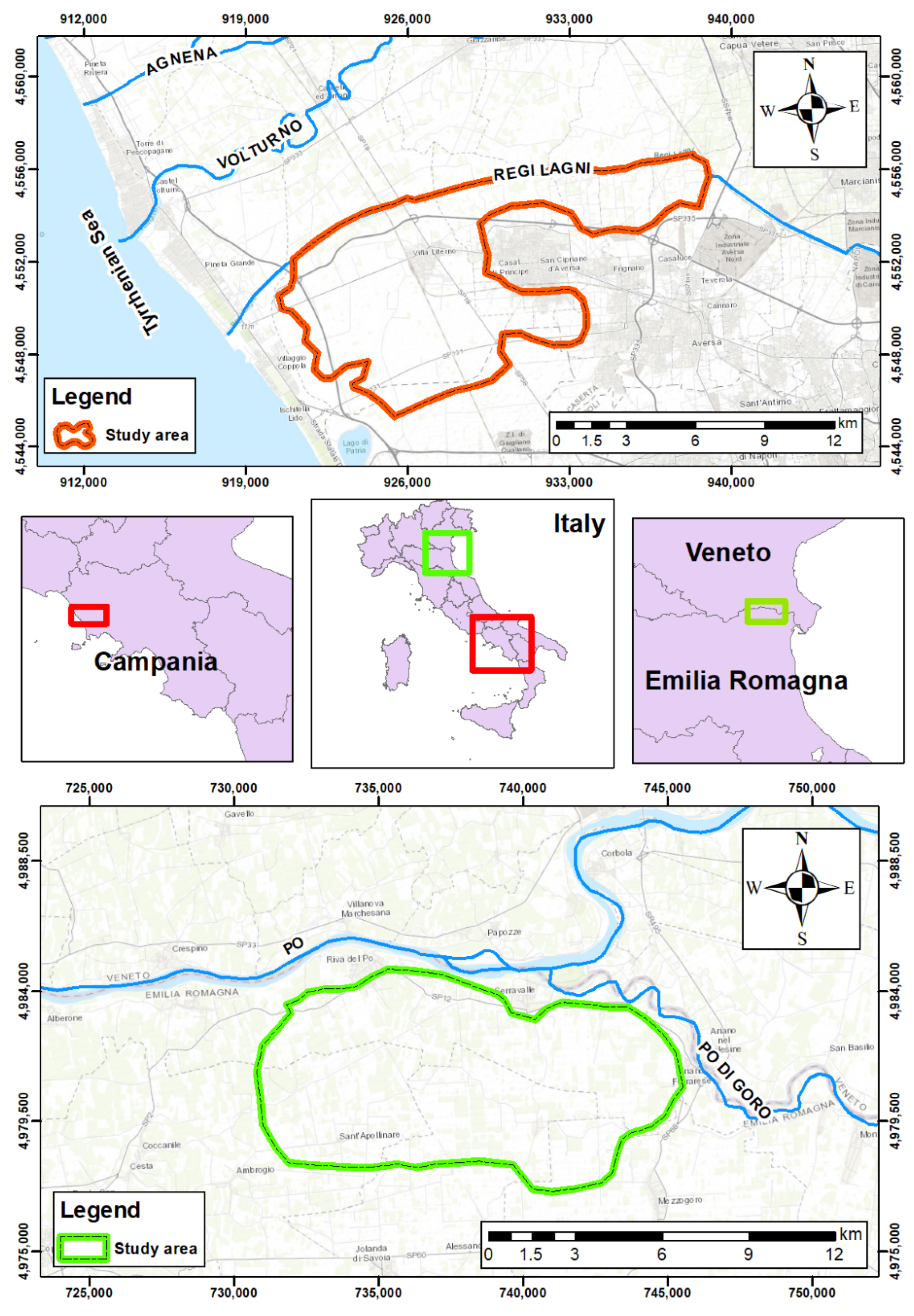
The study area covers approximately 150 km2 within the densely populated Agro-Aversano district, located south of Caserta city in the Campania Plain, Southern Italy (Figure 1). The investigation area is bounded to the north and east by the Regi Lagni Canal, to the south by the Campi Flegrei volcanic field, and extends westward toward the dune system along the Tyrrhenian Sea. The outcropping lithologies are predominantly of alluvial and volcanic origin [24]. The alluvial deposits consist mainly of silts and mixed clay sand facies derived from the Volturno river. In this area, the shallow aquifer is primarily hosted within alluvial and sandy deposits, as well as within superficial volcanic ash layers. Regional groundwater flow is generally directed westward, and recharge of the shallow aquifer occurs mainly through meteoric infiltration. The climate is typically Mediterranean, with hot, dry summers and mild, wet winters along the coast, becoming more temperate and humid inland. Average annual precipitation is around 800 mm, with notable temperature differences between the mountainous areas and the alluvial plain [25].
Three main land systems were identified in the area, extending from the coast inland: coastal plain, foothill plain and alluvial plain [26]. The coastal plain system is a low-lying (−0.2 to 4 m a.s.l.) coastal dune area represented by two land units: (a) a unit of slightly higher surfaces (−0.2 to 0.2 m a.s.l.) in the inner land strip consisting of peat and silty sediments, with Hemic Folic Histosols (Eutric); (b) a unit of transitional area (0–4 m a.s.l.) with stratified pyroclastic deposits and groundwater at 1.5–1.8 m depth, where soils show strong andic properties and are classified as Relictigleyic Hypereutric Vitric Andosols. The foothill plain system encompasses the volcanic plain on the northern side of the Campi Flegrei (0.1–2% slopes, up to 60 m a.s.l.) with soils developed on pyroclastic deposits from Campi Flegrei and Vesuvius; the unit present includes distal lands of the foothill plain and contains the most developed soils in the system, classified as Chernic Vitric Andosols. The alluvial plain system of the ancient Clanis River (modern Regi Lagni Canal), comprising (a) the lower course unit (1–8 m a.s.l.) which features silty clay soils with vertic properties, classified as Haplic Vertisols and Hypereutric Relictigleyic Cambisols, and (b) the middle course unit (8–14 m a.s.l.) with silty loam/clay loam top soils over clayey subsoils, classified as Relictigleyic Chernic Phaeozems and Relictigleyic Luvisols.
According to Corine Land Cover [27], approximately 79% of the area is occupied by agricultural land (including orchards, vegetable cultivation, and wheat), while the remaining 21% consists of urbanized zones. Intensive agriculture and urban expansion have progressively deteriorated groundwater quality across the region [15,28]. Additionally, elevated concentrations of various contaminants have been documented in soils [29] and agricultural products [30,31].

2.1.2. Po River Plain

The study area is located within the coastal floodplain of the Po river in Northern Italy and includes the municipality of Berra (Figure 1). This lowland sector is dominated by intensive agriculture, supported by flat morphology and abundant freshwater resources. The Po river plain consists of fine-grained interbasin deposits, much of which lie below sea level, and is intersected by a dense system of paleochannels. The investigation site, situated approximately from 24 to 12 km from the Adriatic Sea, lies in a depressed zone between −2 and −4 m a.s.l. and is drained by an extensive network of reclamation canals and pumping stations. Tile drainage systems are installed in many agricultural fields to prevent waterlogging and facilitate the removal of saline water. The area experiences a temperate humid subtropical climate, with long-term precipitation (1981–2010) ranging from 47.9 mm in February to 81.6 mm in September, and an annual mean of 818 mm.
Soils of Berra area belong to the land system of the delta plain. Three main units are present [32,33]:
(i)
Along the Po’s riverbed, soils are flat and very deep (0.05–0.1% slope, 1–8 m a.s.l.), with a medium texture; calcareous; moderately alkaline; and good to moderate oxygen availability, classified as Fluvic Stagnic Cambisols (Calcaric, Siltic).
(ii)
The west area is characterized by flat and very deep soils (0.01–0.03% slope), with a fine to medium texture; calcareous; moderate alkaline; and moderate oxygen availability. Vertisols and Cambisols affected by hydromorphy (gleyic) occur in depressed areas, while Fluvic Stagnic Cambisols (Calcaric, Siltic) are typically found in secondary channel ridges and in transition zones with the current Po river ridge.
(iii)
The south–southeast area features flat (0.01–0.03% slope) and very deep soils with a fine texture at the surface and medium at depth, imperfect oxygen availability, extremely acidic, and saline, sometimes with an intermediate peaty horizon classified as Molli Thionic Fluvisols Thapthohistic; Hypocalcic Endogleyic Calcisols feature the small ridges between morphological depressions.
Salinization of soils and groundwater throughout the Po Plain is primarily associated with the persistence of seawater and brackish water from the last marine transgression [34,35]. This issue may compromise medium-term agricultural productivity for maize and soybean cultivated fields. The hydrochemical setting is further influenced by paleo-seawater trapped within low-permeability sediment lenses and by saline halophyte remnants preserved within the peaty horizons [36].

2.2. Conceptual Framework

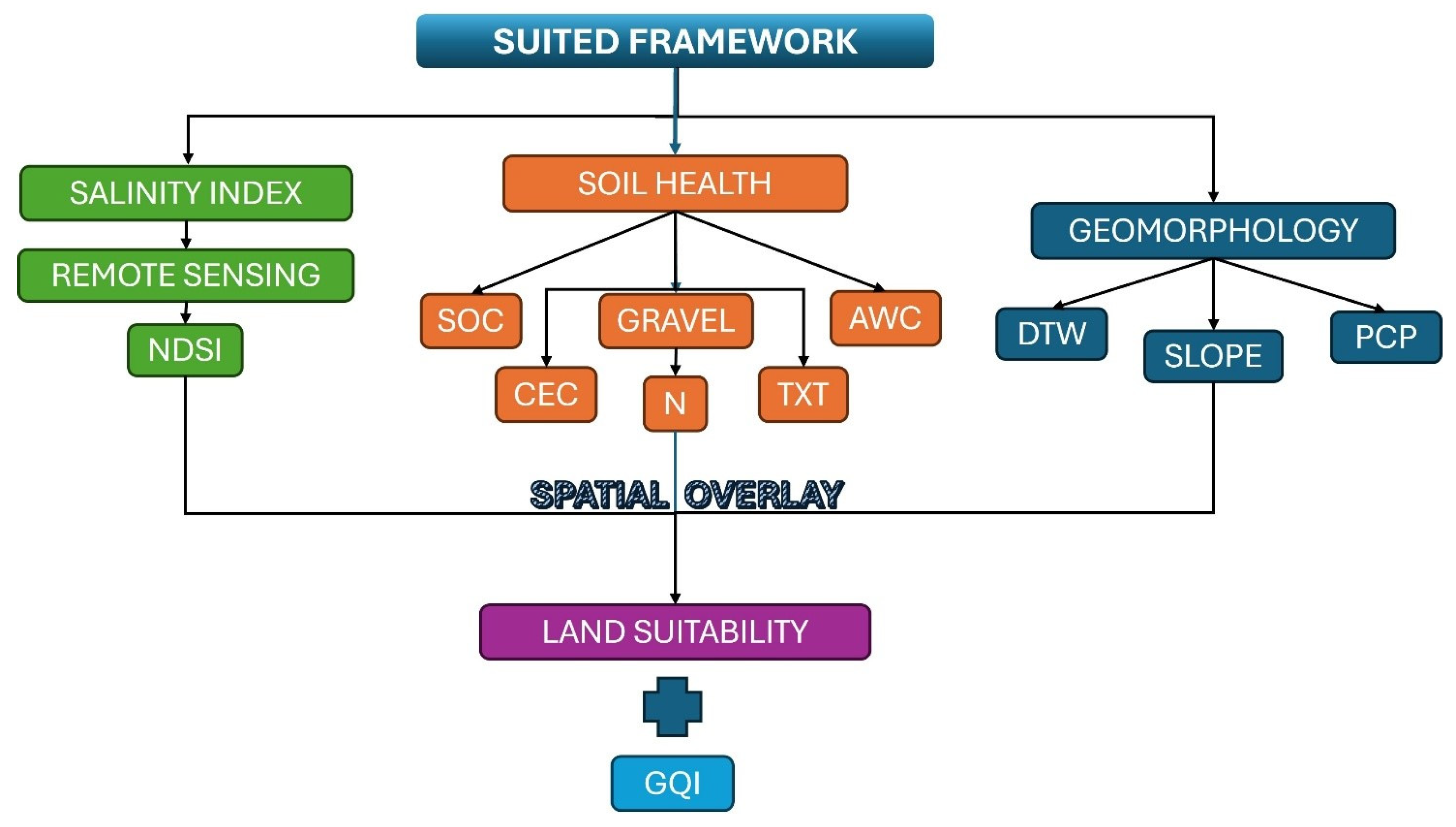
Soil chemical and physical properties were combined with climatic, hydrogeological, remotely sensed, and water quality data to ensure a holistic assessment that considers both soil characteristics and irrigation water salinity contributions (Figure 2). Specifically, 10 parameters were used (Table 1): soil organic carbon (SOC), gravel content (GRAVEL), available water content (AWC), cation exchange capacity (CEC), nitrogen content (N), texture (TXT), precipitation (PCP), depth to water table (DTW), terrain slope (SLOPE), normalized difference salinity index (NDSI).
This latter is a widely adopted spectral index for detecting and mapping saline soils in arid and semi-arid environments [23,37]. The NDSI exploits the differential reflectance behavior of saline soils in the short-wave infrared (SWIR) and near-infrared (NIR) regions of the electromagnetic spectrum and is expressed as:
NDSI   =   SWIR     NIR SWIR   +   NIR
SWIR reflectance is particularly sensitive to soil moisture content and salt accumulation, while NIR reflectance typically decreases in saline soils due to alterations in soil structure, surface crusting, and reduced water retention capacity. The combined response of these spectral bands enhances the discrimination of saline and non-saline soils. NDSI values theoretically range from −1 to 1, with higher positive values indicating increasing soil salinity, whereas lower or negative values correspond to non-saline or weakly saline conditions. Soil salinity information was retrieved from Landsat 5 Thematic Mapper (TM) imagery, geometrically corrected and projected to the Universal Transverse Mercator (UTM) coordinate system using the World Geodetic System 1984 (WGS84), UTM Zone 33 N. Radiometric and geometric preprocessing ensured consistency across the dataset prior to index computation.
An overview of all considered data is provided in [38]. The choice of these parameters was primarily done considering their open availability and worldwide extension and secondly because they all have been often considered within the minimum dataset useful to evaluate soil health and suitability in plenty of research [39,40,41,42]. The compiled geodatabase was processed using a rating methodology to determine soil health for generic agricultural use. The index was calculated separately for three soil depths (0–5; 5–15; 15–30 cm) following the formula (2) and then merged in a final index using a linear combination (formula (3)). All data used were retrieved with their native spatial resolution and then downscaled to a fine resolution fixed at 100 × 100 m to homogenize the various databases.
S U I T E D 1,2 , 3 = S O C 1,2 , 3 ,   + G R A V E L 1,2 , 3 + A W C 1,2 , 3 + C E C 1,2 , 3 + N 1,2 , 3   + T X T + P C P + D T W + S L O P E + N D S I
S U I T E D F i n a l = 2 S U I T E D ( 1 ) + 1.5 S U I T E D ( 2 ) + 0.5 S U I T E D ( 3 )
The subscripts 1, 2, and 3 indicate the three depths considered—0–5, 5–15, and 15–30 cm, respectively. A soil parameter was retrieved for each depth, excepting for the TXT, while climatic and morphological factors (PCP, SLOPE, NSDI and DTW) were used as a single layer for all depths.
This framework provides a scalable and adaptable screening tool for soil quality assessment worldwide, without the necessity of field analysis. The parameters classification does not follow a specific range or fixed table, but each parameter was classified by accounting the whole available range in the site, classified from 1 (low vulnerable) to 5 (highly vulnerable) using geometrical classification procedure. This choice was made since geometric intervals give more detailed breaks in lower value ranges and fewer in higher ranges, mimicking the data’s actual curve. This approach produces more visually balanced and informative maps by avoiding the overemphasis of extreme values, unlike the equal interval or quantile methods [43]. Different criteria classification has been adopted for the parameters: among the parameters considered, those that positively influence system performance (i.e., SOC, AWC, CEC, N, NDSI) tend to exhibit higher absolute values with increasing class (5). Conversely, parameters that negatively affect performance tend to show lower absolute values in class 5, such as GRAVEL. Soil texture exerts a primary control on salinity-related processes, showing positive correlations between clay and silt fractions and negative correlations with sand content: finer-textured soils generally exhibit reduced leaching efficiency, which favors salt accumulation in the upper soil layers [44]. Accordingly, lower SUITED classes were assigned to finer soil textures. The two parameters PCP and DTW were involved in the evaluation to reflect the two main available sources of water for crops. Low values of DTW, despite indicating more available water resources, were considered as less suitable, since shallow aquifers are more prone to pollution than deeper ones, while high values of PCP reflect more water availability for plants along with a higher dilution potential for reducing salt concentrations in soil, which were classified in class 5. NDSI was used as a proxy for evaluating soil salinity conditions due to the absence of data related to Electrical Conductivity or Sodium Absorption Ratio (SAR). Morphology and specifically SLOPE can deeply influence water infiltration, erosion rate and mechanization [45]. No weights were assigned to the single parameters to allow easy index modification, making easier the involvement of new parameters or the substitution of those proposed. On the other hand reference weights were associated with the three depths, since various studies [46,47] have shown that some soil attributes and hence soil quality drivers were depth-dependent; among them, soil organic carbon (SOC) stands out, as both its concentration and dynamics are strongly controlled by soil depth [48].
Table 1. List of parameter sources and formats used to develop the SUITED index.
ParametersUnitFile TypeFinal ResolutionReference
SLOPE%raster100 × 100[49]
Depth To Water (DTW)mraster100 × 100[50]
Precipitation (PCP) mmshape100 × 100[51]
Landsat Images (NDSI) raster100 × 100[52]
Available Water Content (AWC)(10−2 cm3 cm−3) × 10raster100 × 100[53]
Soil Organic Carbon (SOC)dg/kgraster100 × 100
Cation Exchange Capacity (CEC)mmolc/kgraster100 × 100
Texture (TXT) raster100 × 100
Nitrogen (N)cg/kgraster100 × 100
Gravelcm3/dm3raster100 × 100

2.3. Water Quality Index

The Water Quality Index (WQI) for irrigation purposes was tailored and used to assess the suitability of different sources of waters to be used as irrigation supply. The index was constructed following the procedure outlined below: (i) The process begins with the calculation of the contamination index (C) for each water sample. This index compares the concentration (X) of a given solute with the corresponding reference standard (Y) appropriate to the assessment objective. The contamination index is computed using Equation (4). (ii) The value of C is then converted into a corresponding rank value (R) using a polynomial equation (formula (5)). The rank ranges from 1 to 10, where 1 represents the lowest impact of the selected parameter on the overall result, and 10 represents the highest impact. (iii) The final step consists of calculating the Groundwater Quality Index (GQI) using Equation (6). In this equation, W represents the relative weight of each parameter, R is the average rank value across all sampling points, and N is the number of parameters included in the assessment. For parameters potentially affecting plant health, such as NO3 and Cl, “R + 2” may be used to highlight their importance within the GQI calculation. Further methodological details can be found in Babiker et al. [54]:
C   =   ( X Y ) / ( X   +   Y )
R = 0.5 C 2 + 4.5 C + 5
GQI = 100 ( R 1 W 1   + R 2 W 2   +   R n W n   ) / N
The concentrations of Na, NO3, K, SO4, Cl, and Mg were used as reference parameters for the quality index calculation, following FAO guidelines for irrigation waters, which define the corresponding threshold limits [55]. Five water types were considered: four fertigation waters originating from different sources (domestic wastewater, industrial effluents, leachate, and treated wastewater) and the median concentrations of the selected parameters derived from a database of approximately 500 wells representative of the shallow aquifer in the study area [15]. Field data in several wells were collected for the Berra shallow aquitard–aquifer system, and concentrations for the fertigation waters were obtained through a systematic review of the scientific literature published over the last 10 years [56]. For each study, the concentrations of the main nutrients associated with each source type were recorded, and the main statistical descriptors were subsequently calculated.

3. Results and Discussion

3.1. SUITED Maps

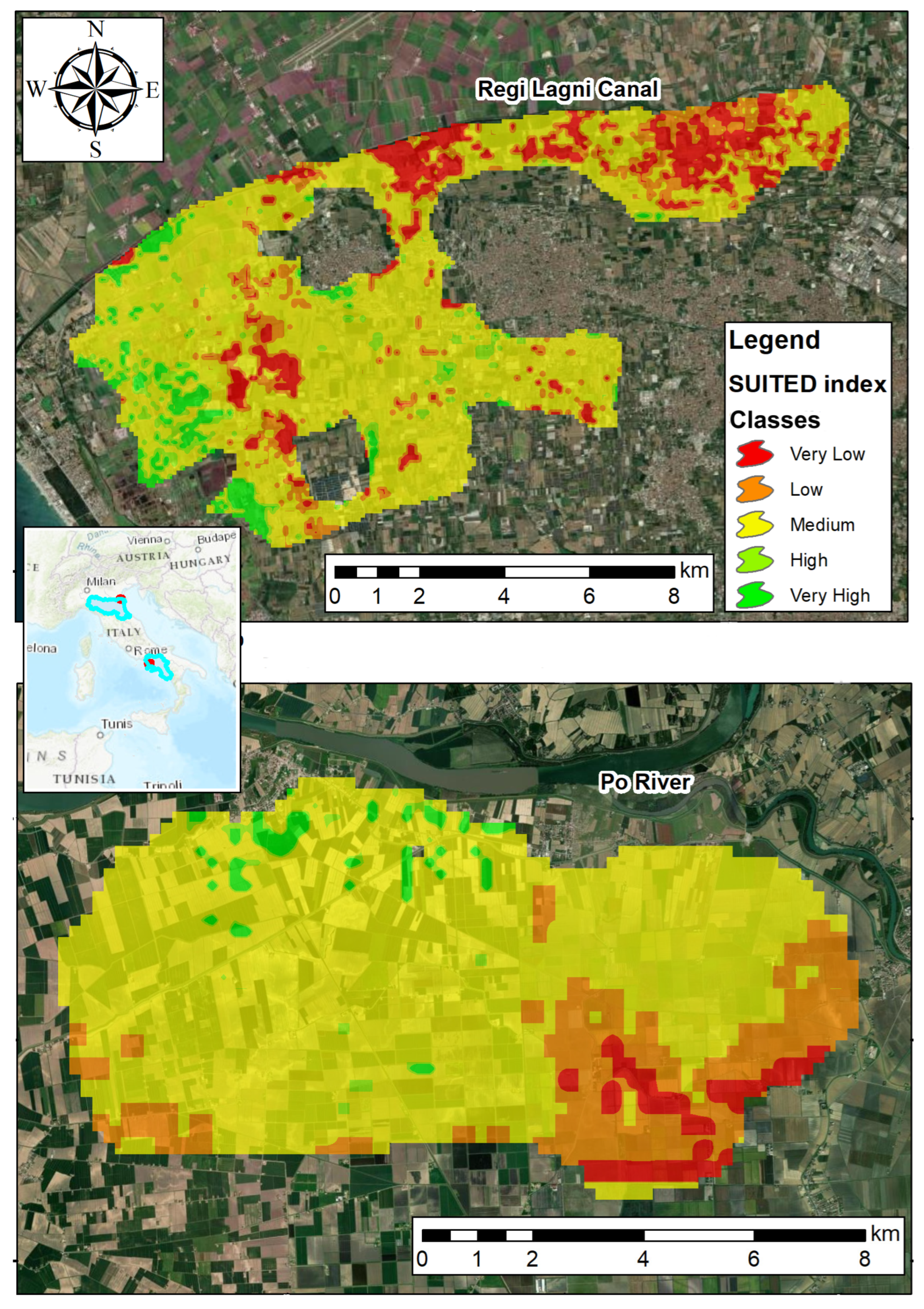
Table 2 and Table 3 report the ranges of variation in soil attributes and the associated soil sustainability index class thresholds for each of the two study areas, respectively. All 10 parameters were downloaded with their native resolution and then downscaled to a common resolution of 100 × 100 m. The NDVI was computed using Landsat 5 images of 20 November 2024 for the Volturno river plain and of 16 April 2025 for the Po river plain (Berra area). The two dates correspond to the two water sampling campaigns conducted on the two field sites. The SUITED index maps obtained for the three investigated depths were subsequently combined by assigning a weighting factor to each depth. Table 4 shows the classification ranges used to identify the very low to very high classes in all three depth profiles. As stressed in the methodology section, the geometrical interval was used to compute the classes, making the assessment site specific. Consequently, the final maps classify the areas into five classes, ranging from very low (red) to very high (green), using the same classification scheme. Specifically, the SUITED index ranges from a minimum of 4 to a maximum of 40, where the very low class ranges from 4 to 7, the low class ranges from 7 to 11, the medium class ranges from 11 to 16, the high class ranges from 16 to 26, and finally the very high class ranges from 27 to 40. Similarly to the parameters classes, the final classification was also obtained using a geometrical interval.

3.1.1. Volturno River Plain Map

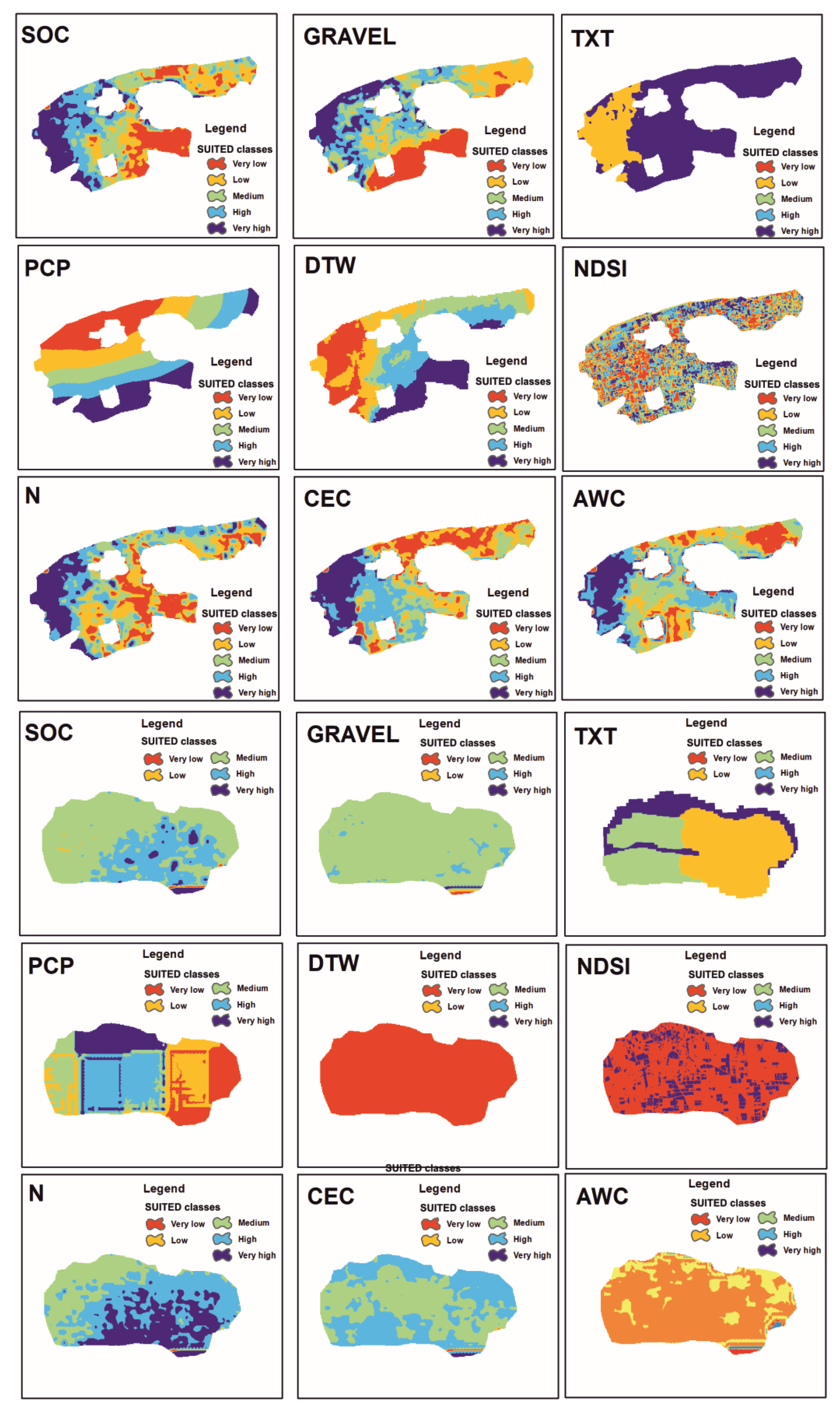
All soil attributes exhibited strong spatial dependency on soil forming factors (Figure 3), and as highlighted by Junior et al. [57], this heterogeneity itself is an inherent quality of soil that defines its spatial pattern. In our study, the investigated soil attributes generally show a decreasing trend from the coastal and foothill plain soils toward the riverbed soils. Unlike sand and silt, the clay content is higher in the alluvial area.
The soil sustainability index classes show restricted intervals in the Volturno river area, as it is characterized by lower variability compared to the Po river plain site (Table 3). The spatial distribution of the soil sustainability grade in the study area has a strong regularity (Figure 4).
The VI and V levels, characterized by the superior comprehensive indicator performance (Table 3), i.e., loam texture, highest SOC nitrogen CEC and AWC content, were mainly distributed in the southwest part of the area characterized by Hemic Folic Histosols (Eutric) developed on peat and silty sediments and soils with strong andic properties [26]. On the other hand, the worse areas in terms of sustainability grade were primarily detected in the east part with some hotspots in the central one. In these areas, the fine soil texture of Vertisols Phaeozems and Luvisols (see Section 2.1.1) turned out to be the determining factor for classification into the lowest sustainability classes, despite being characterized by favorable SOC, nitrogen, and CEC levels. Grade III was the predominant class, covering approximately 69% of the investigated site (Table 4) and primarily distributed in the central and southeast parts (Figure 4) dominated by Andosols.
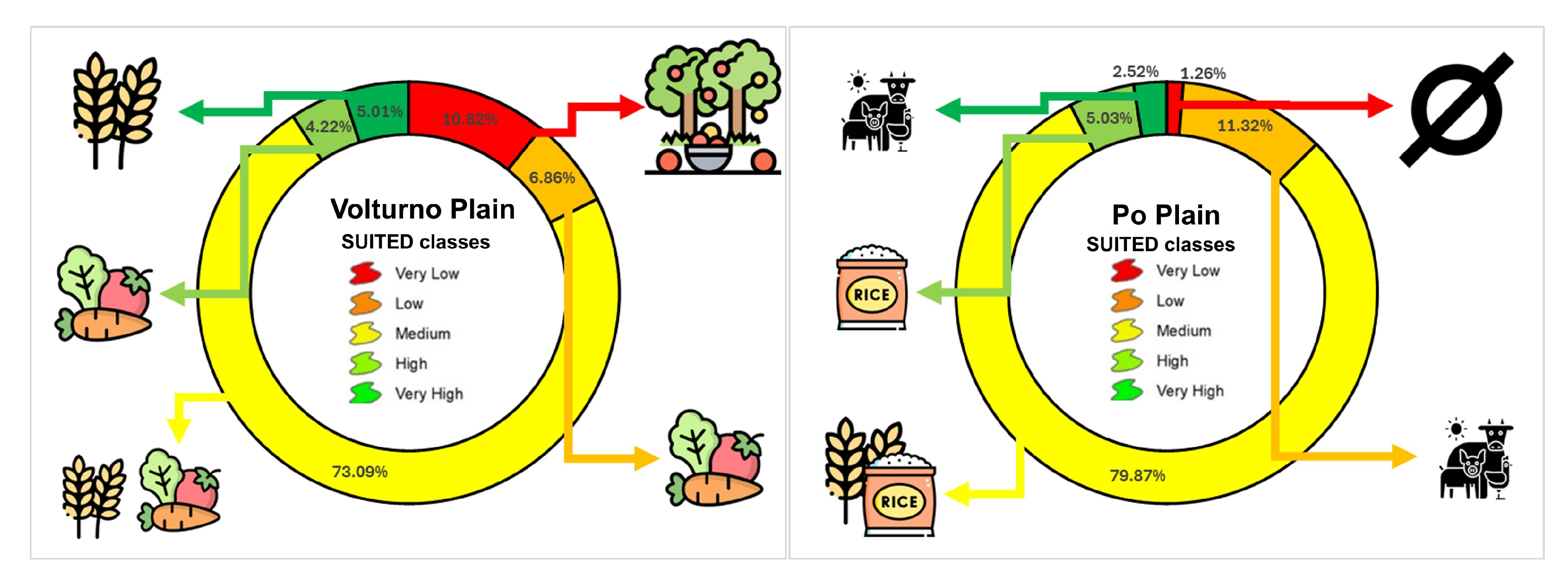
A further analysis of the SUITED results was conducted by examining the land-cover distribution within the study areas, aiming at validating the overall results. The graphs in Figure 5 illustrate the percentage distribution of land covers across the SUITED classes, together with the predominant crops associated with each class. In the Volturno river plain, the dominant land uses (vegetables and cereals) are mostly located within the medium to very high SUITED classes, whereas areas classified as very low classes are mainly occupied by orchards.
The data shown in Figure 5 indicate that areas classified as Grade I are still cultivated, albeit marginally, particularly for fruit orchards. Specifically, these areas, which intrinsically exhibit a low level of soil quality as highlighted by the proposed tool in terms of potential—but not necessarily actual—criticalities (e.g., fine texture and moderate SOC content), correspond to the cultivation area of a Protected Geographical Indication (PGI) product, the Annurca apple. This finding highlights that, under appropriate management conditions, these potential criticalities can still support high-quality agricultural production.
In conclusion, in the Volturno river plain case study it is clearly that the distribution of soil types and its intrinsic heterogeneity represented the controlling of soil quality [58].

3.1.2. Po River Plain Map

In general, soil texture gradually changes from loamy to finer (clay, clay loam and silty clay loam) away from the river from the northeast to southwest. The SOC widely varied (Table 3) and was higher than 3.5% in the majority of areas mainly due to the prevalence of fine particles capable of promoting chemical stabilization through the physicochemical adsorption of SOC onto their surface, suppressing organic carbon mineralization [59]. In addition, as mentioned above, it is common to find surface horizons made up of organic materials and/or peat. Consequently, most of the soils exhibited high CEC values, ranging from 250 to 330 mmol/kg. Furthermore, because of the capacity of soil to store water increases with increasing soil organic matter content [60], remarkable AWC values were found too. The spatial distribution of soil nitrogen strongly reflects that of SOC, and most of the soils exhibited an N content higher than 0.4%. As highlighted by the NDSI value distribution (Figure 3), most of the area exhibited salinity issues.
More than 90% of the area investigated is characterized by medium to very low sustainability status, while less than <9% belongs to high or very high classes (Table 4, Figure 4). As is known, soil texture is closely associated with soil salinity, particularly influencing the accumulation and spatial distribution of salts in the surface layer [61]. The combination of fine texture tending toward clay loam and silty clay loam and the shallow saline groundwater table [36] mainly drove the clustering of soils in I and II in the south-eastern portion. Our findings are consistent with those reported by Habakaramo Macumu et al., who investigated the drivers of soil salinity in a tile-drained agricultural field that experienced a marked decline in crop yields in recent years within the same Po river lowland. Their study highlighted a capillary rise of brackish groundwater as the main source of salinity, a process that is particularly pronounced in these fine-textured soils.
Overall, although a limitation related to the combined effects of soil texture and salinity is present, agricultural use is not precluded. At present, the dominant crops within areas classified as having medium grade are rice and cereals (Figure 5). Rice is generally not highly demanding with respect to the physico-mechanical properties of soil and does not appear to benefit from high levels of organic matter. Silty and silty clay soils can be considered optimal, as they minimize water losses through percolation. Similar considerations apply to wheat, for which clay and clay loam soils are the most appropriate [62].
On the other hand, very high and low areas are mainly associated with zootechnical activities. No crops are present within the very low SUITED class.

3.2. Integration of WQI and SUITED Indices

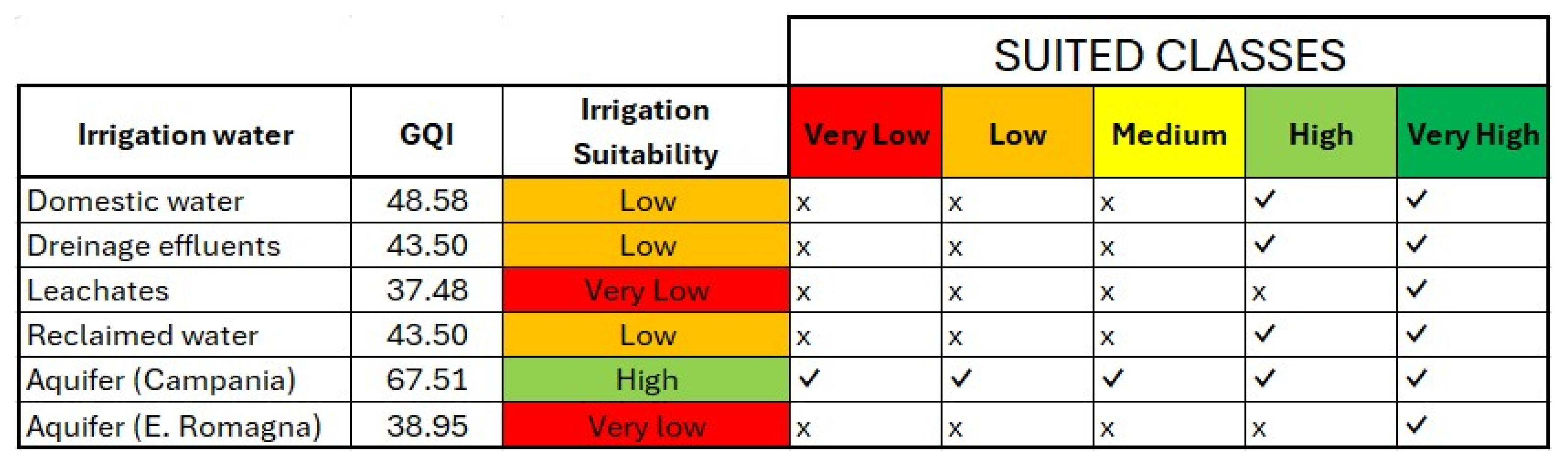
The chemical composition of the tested irrigation waters shows strong variability in terms of nutrient and salt content (Table 5). Groundwater from the Volturno river plain aquifer is characterized by low NO3 concentrations, reflecting the reducing conditions of the shallow aquifer system [29], and by an HCO3–Na–K facies, consistent with groundwater circulation within reworked volcanic deposits [25]. Elevated concentrations of Cl and Na+, particularly in coastal sectors, are attributable to paleo-saline water upcoming [28]. Extremely high salinity characterizes the shallow groundwater in the Po river plain, where Cl and Na+ concentrations approach those of seawater, reaching values of up to 25 g/L. In this area, upward seepage of saline groundwater contributes to the salinization of surface water canals, a process frequently intensified in agricultural fields equipped with tile drainage systems for sub-irrigation. These systems create preferential hydraulic connections between surface water and shallow groundwater, enhancing salt transfer [63,64]. Fertigation waters are characterized by elevated concentrations of nutrients, particularly NO3 and K+, and by generally tolerable Cl levels. The proposed WQI was classified into five categories based on the score obtained for each water sample: 0–25, very poor quality; 25–50, poor quality; 50–75, good quality; and 75–100, excellent quality (Figure 6). Among the analyzed irrigation waters, groundwater from the Campania region aquifers exhibits high suitability for irrigation, owing to very low nitrate and salinity levels that comply with FAO-recommended thresholds. In contrast, all fertigation waters, despite their value as nutrient sources, were classified as having low to very low suitability due to their overall high salinity. Within this group, leachates display highly variable compositions, reflecting the accumulation of nutrients, salts, and potentially toxic elements (PTEs) derived from agricultural runoff, industrial discharges, and other anthropogenic activities [56]. Groundwater from the Po river plain in the Berra area shows the lowest GQI scores, indicating poor suitability for irrigation because of extremely high Cl and Na+ concentrations, which pose a serious risk of soil salinization.
The results of the Water Quality Index (WQI), in combination with the SUITED index maps, provide valuable and actionable insights for the management of irrigation and drainage practices aimed at preventing soil salinization at the field scale (Figure 6). Together, these indicators allow for a spatially explicit evaluation of both water quality and soil health, thereby supporting informed decision making for sustainable agricultural management. Under the analyzed scenario, the use of groundwater is generally preferable to fertigation waters, particularly in the case of the Volturno lowland aquifer. This resource does not pose a significant risk of degrading soil health within the study area, making it a reliable option for irrigation. Furthermore, the application of fresh water with the same characteristic of Volturno groundwater in soils characterized by the medium class, largely constrained by salinization concerns, should be actively encouraged as both a preventive and mitigation measure. In such contexts, the use of high-quality irrigation water contributes to maintaining adequate soil moisture conditions while limiting the upward capillary rise of saline groundwater driven by evaporative processes [65] and by the reclamation canals [64]. This mechanism plays a key role in reducing salt accumulation in the root zone and preserving long-term soil productivity. In contrast, groundwater from the Po shallow aquitard–aquifer system is classified as low-quality irrigation water due to its elevated salinity levels, which may exacerbate soil degradation if improperly managed. Consequently, its use for conventional irrigation purposes should be carefully restricted. With respect to fertigation, treated domestic wastewater may represent a potential alternative water source; however, its application should be confined to areas exhibiting exceptionally high sustainability grades. Such limitations are necessary to minimize environmental risks and ensure that nutrient inputs and residual salinity do not negatively affect soil and crop systems [56].

4. Conclusions

The spatial variability of selected topsoil properties was assessed and combined with other environmental parameters to develop a sustainability index for two vulnerable agricultural areas in Italy, aiming to promote the rational and efficient use of cultivated land while ensuring sustainable development.
Specifically, in the Volturno river plain, the greater spatial variation of soil type seemed to be the dominant driving factor. On the other hand, in the Po river plain, the high level of soil organic carbon preserved in fine-textured soils appeared to be the main factor positively affecting soil quality; however, the same fine texture, combined with a relatively shallow saline groundwater table, led some areas to be classified as having low sustainability.
In both study areas, soils experiencing the highest levels of exploitation were classified as moderately suitable, highlighting the need for targeted management strategies, particularly with respect to irrigation practices aimed at minimizing soil salinization.
With regard to this aspect, the integration of WQI results with SUITED maps provided practical support. Groundwater is generally preferable to fertigation water, especially in the Volturno lowland, where it poses little risk to soil quality. In contrast, the saline Po aquitard–aquifer groundwater should be used cautiously, and treated wastewater may be an alternative irrigation water source, but only in areas with very high sustainability to avoid soil and environmental degradation. These findings underscore the importance of incorporating soil quality assessments into agricultural water management policies to support sustainable irrigation planning and long-term soil conservation.
Based on the results obtained in this study, the SUITED framework proved to be an effective screening tool for identifying agricultural soils that require tailored management in terms of irrigation sources and the implementation of conservative practices. Its reliance entirely on open-access data and its independence from fixed rating tables allow for easy replicability in any region of the world, particularly in data-scarce areas, while enabling site-specific assessments. Future developments should focus on expanding the index by incorporating additional parameters and on integrating open-access datasets with field-derived data.

Author Contributions

Conceptualization, E.G. and G.B.; methodology, G.B. and E.G.; formal analysis, data curation, G.B. and M.P.D.C.; writing—original draft preparation, E.G. and G.B.; writing—review and editing, E.G., G.B., M.M., A.P., and S.C.; project administration, E.G.; funding acquisition, E.G. All authors have read and agreed to the published version of the manuscript.

Funding

The present study was founded by University of Campania “L. Vanvitelli” within the program “Fundamental and Applied research projects dedicated to professors and researchers” (CUP: B63C24000990005) for the research project “SUITED”.

Data Availability Statement

The data presented in this study are available upon request from the corresponding author.

Conflicts of Interest

The authors declare no conflicts of interest. The funders had no role in the design of the study; in the collection, analyses, or interpretation of data; in the writing of the manuscript; or in the decision to publish the results.

References

  1. United Nations Department for Economic and Social Affairs. WORLD POPULATION PROSPECTS 2024: Summary of Results; United Nations: New York, NY, USA, 2025; ISBN 978-92-1-003169-1. [Google Scholar]
  2. Foley, J.A.; Ramankutty, N.; Brauman, K.A.; Cassidy, E.S.; Gerber, J.S.; Johnston, M.; Mueller, N.D.; O’Connell, C.; Ray, D.K.; West, P.C.; et al. Solutions for a Cultivated Planet. Nature 2011, 478, 337–342. [Google Scholar] [CrossRef]
  3. United Nations. General Assembly A/RES/70/1 Transforming Our World: The 2030 Agenda for Sustainable Development; United Nations: New York, NY, USA, 2015. [Google Scholar]
  4. Herrick, J.E. Soil Quality: An Indicator of Sustainable Land Management? Appl. Soil Ecol. 2000, 15, 75–83. [Google Scholar] [CrossRef]
  5. Doran, J.W.; Parkin, T.B. Quantitative Indicators of Soil Quality: A Minimum Data Set. In SSSA Special Publications; Doran, J.W., Jones, A.J., Eds.; Wiley: Hoboken, NJ, USA, 1997; Volume 49, pp. 25–37. ISBN 978-0-89118-826-1. [Google Scholar]
  6. Bünemann, E.K.; Bongiorno, G.; Bai, Z.; Creamer, R.E.; De Deyn, G.; De Goede, R.; Fleskens, L.; Geissen, V.; Kuyper, T.W.; Mäder, P.; et al. Soil Quality—A Critical Review. Soil Biol. Biochem. 2018, 120, 105–125. [Google Scholar] [CrossRef]
  7. Karlen, D.L.; Mausbach, M.J.; Doran, J.W.; Cline, R.G.; Harris, R.F.; Schuman, G.E. Soil Quality: A Concept, Definition, and Framework for Evaluation (A Guest Editorial). Soil Sci. Soc. Am. J. 1997, 61, 4–10. [Google Scholar] [CrossRef]
  8. El Behairy, R.A.; El Arwash, H.M.; El Baroudy, A.A.; Ibrahim, M.M.; Mohamed, E.S.; Kucher, D.E.; Shokr, M.S. How Can Soil Quality Be Accurately and Quickly Studied? A Review. Agronomy 2024, 14, 1682. [Google Scholar] [CrossRef]
  9. Fan, Y.; Zhang, C.; Hu, W.; Khan, K.S.; Zhao, Y.; Huang, B. Development of Soil Quality Assessment Framework: A Comprehensive Review of Indicators, Functions, and Approaches. Ecol. Indic. 2025, 172, 113272. [Google Scholar] [CrossRef]
  10. Gelaw, A.; Singh, B.; Lal, R. Soil Quality Indices for Evaluating Smallholder Agricultural Land Uses in Northern Ethiopia. Sustainability 2015, 7, 2322–2337. [Google Scholar] [CrossRef]
  11. Malakar, A.; Snow, D.D.; Ray, C. Irrigation Water Quality—A Contemporary Perspective. Water 2019, 11, 1482. [Google Scholar] [CrossRef]
  12. Singh, A. Soil Salinization Management for Sustainable Development: A Review. J. Environ. Manag. 2021, 277, 111383. [Google Scholar] [CrossRef]
  13. Tedeschi, A.; Dell’Aquila, R. Effects of Irrigation with Saline Waters, at Different Concentrations, on Soil Physical and Chemical Characteristics. Agric. Water Manag. 2005, 77, 308–322. [Google Scholar] [CrossRef]
  14. Machiwal, D.; Cloutier, V.; Güler, C.; Kazakis, N. A Review of GIS-Integrated Statistical Techniques for Groundwater Quality Evaluation and Protection. Environ. Earth Sci. 2018, 77, 681. [Google Scholar] [CrossRef]
  15. Bordbar, M.; Busico, G.; Sirna, M.; Tedesco, D.; Mastrocicco, M. A Multi-Step Approach to Evaluate the Sustainable Use of Groundwater Resources for Human Consumption and Agriculture. J. Environ. Manag. 2023, 347, 119041. [Google Scholar] [CrossRef]
  16. Celis, R.A.O.; Gamboa, C.H.; Pascual, J.A.; Ros, M. Conceptual and Practical Challenges of Assessing Soil Quality. Soil Use Manag. 2024, 40, e13137. [Google Scholar] [CrossRef]
  17. Chang, T.; Feng, G.; Paul, V.; Adeli, A.; Brooks, J.P. Soil Health Assessment Methods: Progress, Applications and Comparison. In Advances in Agronomy; Elsevier: Amsterdam, The Netherlands, 2022; Volume 172, pp. 129–210. ISBN 978-0-323-98953-4. [Google Scholar]
  18. Turan, İ.D.; Dengiz, O.; Özkan, B. Spatial Assessment and Mapping of Soil Quality Index for Desertification in the Semi-Arid Terrestrial Ecosystem Using MCDM in Interval Type-2 Fuzzy Environment. Comput. Electron. Agric. 2019, 164, 104933. [Google Scholar] [CrossRef]
  19. Ostovari, Y.; Honarbakhsh, A.; Sangoony, H.; Zolfaghari, F.; Maleki, K.; Ingram, B. GIS and Multi-Criteria Decision-Making Analysis Assessment of Land Suitability for Rapeseed Farming in Calcareous Soils of Semi-Arid Regions. Ecol. Indic. 2019, 103, 479–487. [Google Scholar] [CrossRef]
  20. Richiedei, A.; Giuliani, M.; Pezzagno, M. Unveiling the Soil beyond Definitions: A Holistic Framework for Sub-Regional Soil Quality Assessment and Spatial Planning. Sustainability 2024, 16, 6075. [Google Scholar] [CrossRef]
  21. Mangan, P.; Pandi, D.; Haq, M.A.; Sinha, A.; Nagarajan, R.; Dasani, T.; Keshta, I.; Alshehri, M. Analytic Hierarchy Process Based Land Suitability for Organic Farming in the Arid Region. Sustainability 2022, 14, 4542. [Google Scholar] [CrossRef]
  22. Data and Resources. Available online: https://isric.org//explore/ (accessed on 18 December 2025).
  23. Liu, Y.; Zhu, Y.; Qian, Y.; Xu, W.; Wei, G.; Huang, J. High-Resolution Soil Salinity Mapping and Driving Factor Analysis at Regional Scale Using Multi-Source Remote Sensing Data. J. Hydrol. 2026, 664, 134604. [Google Scholar] [CrossRef]
  24. Giaccio, B.; Hajdas, I.; Isaia, R.; Deino, A.; Nomade, S. High-Precision 14C and 40Ar/39Ar Dating of the Campanian Ignimbrite (Y-5) Reconciles the Time-Scales of Climatic-Cultural Processes at 40 Ka. Sci. Rep. 2017, 7, 45940. [Google Scholar] [CrossRef]
  25. Rufino, F.; Busico, G.; Cuoco, E.; Darrah, T.H.; Tedesco, D. Evaluating the Suitability of Urban Groundwater Resources for Drinking Water and Irrigation Purposes: An Integrated Approach in the Agro-Aversano Area of Southern Italy. Environ. Monit. Assess. 2019, 191, 768. [Google Scholar] [CrossRef]
  26. Vingiani, S.; Buonanno, M.; Coraggio, S.; D’Antonio, A.; De Mascellis, R.; Di Gennaro, A.; Iamarino, M.; Langella, G.; Manna, P.; Moretti, P.; et al. Soils of the Aversa Plain (Southern Italy). J. Maps 2018, 14, 312–320. [Google Scholar] [CrossRef]
  27. CORINE Land Cover 2018 (Vector/Raster 100 m), Europe, 6-Yearly. Available online: https://land.copernicus.eu/en/products/corine-land-cover/clc2018 (accessed on 12 January 2026).
  28. Schiavo, M.; Colombani, N.; Mastrocicco, M. Modeling Stochastic Saline Groundwater Occurrence in Coastal Aquifers. Water Res. 2023, 235, 119885. [Google Scholar] [CrossRef]
  29. Corniello, A.; Ducci, D. Possible Sources of Nitrate in Groundwater of Acerra Area (Piana Campana). EngHydroEnv Geol. 2009, 12, 155–164. [Google Scholar]
  30. Rezza, C.; Albanese, S.; Ayuso, R.; Lima, A.; Sorvari, J.; De Vivo, B. Geochemical and Pb Isotopic Characterization of Soil, Groundwater, Human Hair, and Corn Samples from the Domizio Flegreo and Agro Aversano Area (Campania Region, Italy). J. Geochem. Explor. 2018, 184, 318–332. [Google Scholar] [CrossRef]
  31. Bove, M.A.; Ayuso, R.A.; De Vivo, B.; Lima, A.; Albanese, S. Geochemical and Isotopic Study of Soils and Waters from an Italian Contaminated Site: Agro Aversano (Campania). J. Geochem. Explor. 2011, 109, 38–50. [Google Scholar] [CrossRef]
  32. Regione Emilia-Romagna, U.M. 29 Emilia Romagna 1:250000. Available online: https://geoportale.regione.emilia-romagna.it/mappe (accessed on 28 December 2025).
  33. Regione Emilia-Romagna, U.M. 29 Emilia Romagna 1:50000. Available online: https://geoportale.regione.emilia-romagna.it/mappe (accessed on 28 December 2025).
  34. Amorosi, A.; Fontana, A.; Antonioli, F.; Primon, S.; Bondesan, A. Post-LGM Sedimentation and Holocene Shoreline Evolution in the NW Adriatic Coastal Area. GeoActa 2008, 7, 41–67. [Google Scholar]
  35. Bruno, L.; Campo, B.; Hajdas, I.; Hong, W.; Amorosi, A. Timing and Mechanisms of Sediment Accumulation and Pedogenesis: Insights from the Po Plain (Northern Italy). Palaeogeogr. Palaeoclimatol. Palaeoecol. 2022, 591, 110881. [Google Scholar] [CrossRef]
  36. Habakaramo Macumu, P.; Gaiolini, M.; Ofori, A.; Mastrocicco, M.; Colombani, N. Additional Sources of Salinity and Heavy Metals from Plant Residues of Peaty Horizons in the Po River Lowland (Italy). Sci. Total Environ. 2024, 957, 177671. [Google Scholar] [CrossRef]
  37. Gerardo, R.; De Lima, I.P. Sentinel-2 Satellite Imagery-Based Assessment of Soil Salinity in Irrigated Rice Fields in Portugal. Agriculture 2022, 12, 1490. [Google Scholar] [CrossRef]
  38. Huggins, X.; Gleeson, T.; Famiglietti, J.S.; Reinecke, R.; Zamrsky, D.; Wagener, T.; Taylor, R.G.; Konar, M.; Ruz Vargas, C.; Porkka, M.; et al. A Review of Open Data for Studying Global Groundwater in Social–Ecological Systems. Environ. Res. Lett. 2025, 20, 093002. [Google Scholar] [CrossRef]
  39. Damiba, W.A.F.; Gathenya, J.M.; Raude, J.M.; Home, P.G. Soil Quality Index (SQI) for Evaluating the Sustainability Status of Kakia-Esamburmbur Catchment under Three Different Land Use Types in Narok County, Kenya. Heliyon 2024, 10, e25611. [Google Scholar] [CrossRef]
  40. Nath, D.; Laik, R.; Das, A.; Pramanick, B.; Peramaiyan, P.; Singh, S.K.; Kumari, V.; Jatav, S.S.; Sattar, A. Index for Refining Soil Health Assessment through Multivariate Approach under Diverse Agro-Climatic Zones in the Indo-Gangetic Basin of Bihar. Sci. Total Environ. 2024, 943, 173774. [Google Scholar] [CrossRef]
  41. Cao, Y.; Li, X.; Qian, X.; Gu, H.; Li, J.; Chen, X.; Shen, G. Soil Health Assessment in the Yangtze River Delta of China: Method Development and Application in Orchards. Agric. Ecosyst. Environ. 2023, 341, 108190. [Google Scholar] [CrossRef]
  42. Negiş, H.; Şeker, C.; Gümüş, İ.; Erci, V. Establishment of a Minimum Dataset and Soil Quality Assessment for Multiple Reclaimed Areas on a Wind-Eroded Region. Catena 2023, 229, 107208. [Google Scholar] [CrossRef]
  43. Li, S.; Shan, J. Adaptive Geometric Interval Classifier. ISPRS Int. J. Geo-Inf. 2022, 11, 430. [Google Scholar] [CrossRef]
  44. Wen, D.; Wang, J.; Ding, J.; Zhang, Z. Distribution Characteristics and Relationship Between Soil Salinity and Soil Particle Size in Ebinur Lake Wetland, Xinjiang. Land 2025, 14, 297. [Google Scholar] [CrossRef]
  45. Messing, I.; Hoang Fagerström, M.-H.; Chen, L.; Fu, B. Criteria for Land Suitability Evaluation in a Small Catchment on the Loess Plateau in China. Catena 2003, 54, 215–234. [Google Scholar] [CrossRef]
  46. Li, Y.; Zhang, T.; Wang, S. Response of Depth-Stratified Soil Quality to Land-Use Conversion and Its Limiting Factors in Tropical Ecosystems. Land 2025, 14, 2010. [Google Scholar] [CrossRef]
  47. Kamal, A.; Mian, I.A.; Akbar, W.A.; Rahim, H.U.; Irfan, M.; Ali, S.; Alrefael, A.F.; Zaman, W. Effects of Soil Depth and Altitude on Soil Texture and Soil Quality Index. Appl. Ecol. Environ. Res. 2023, 21, 4135–4154. [Google Scholar] [CrossRef]
  48. Chirol, C.; Séré, G.; Redon, P.-O.; Chenu, C.; Derrien, D. Depth Dependence of Soil Organic Carbon Additional Storage Capacity in Different Soil Types by the 2050 Target for Carbon Neutrality. Soil 2025, 11, 149–174. [Google Scholar] [CrossRef]
  49. Tarquini, S.; Isola, I.; Favalli, M.; Battistini, A.; Dotta, G. TINITALY, A Digital Elevation Model of Italy with a 10 Meters Cell Size (Version 1.1); Istituto Nazionale di Geofisica e Vulcanologia (INGV): Naples, Italy, 2023. [Google Scholar] [CrossRef]
  50. Livello Delle Falde Acquifere|Piattaforma Nazionale Adattamento Cambiamenti Climatici. Available online: https://climadat.isprambiente.it/dati-e-indicatori/indicatori-di-impatto-dei-cambiamenti-climatici/livello-delle-falde-acquifere/ (accessed on 18 December 2025).
  51. Centro Funzionale Multirischi Di Protezione Civile Regione Campania. Available online: https://centrofunzionale.regione.campania.it/home (accessed on 18 December 2025).
  52. Landsat-5—Documentation. Available online: https://documentation.dataspace.copernicus.eu/Data/ComplementaryData/Landsat5.html (accessed on 18 December 2025).
  53. Poggio, L.; De Sousa, L.M.; Batjes, N.H.; Heuvelink, G.B.M.; Kempen, B.; Ribeiro, E.; Rossiter, D. SoilGrids 2.0: Producing Soil Information for the Globe with Quantified Spatial Uncertainty. Soil 2021, 7, 217–240. [Google Scholar] [CrossRef]
  54. Babiker, I.S.; Mohamed, M.A.A.; Hiyama, T. Assessing Groundwater Quality Using GIS. Water Resour. Manag. 2007, 21, 699–715. [Google Scholar] [CrossRef]
  55. Misstear, B.; Banks, D.; Clark, L. Water Wells and Boreholes, 1st ed.; Wiley: Hoboken, NJ, USA, 2017; ISBN 978-1-118-95170-5. [Google Scholar]
  56. Osorio, A.; Panico, A.; Busico, G.; Mastrocicco, M. Systematic Review on the Effects of Wastewater Chemical Composition on Crop Yield under Fertigation Practices. Sci. Total Environ. 2025, 975, 179257. [Google Scholar] [CrossRef]
  57. Júnior, V.V.; Carvalho, M.P.; Dafonte, J.; Freddi, O.S.; Vidal Vázquez, E.; Ingaramo, O.E. Spatial Variability of Soil Water Content and Mechanical Resistance of Brazilian Ferralsol. Soil Tillage Res. 2006, 85, 166–177. [Google Scholar] [CrossRef]
  58. Geng, S.; Shi, P.; Zong, N.; Zhu, W. Using Soil Survey Database to Assess Soil Quality in the Heterogeneous Taihang Mountains, North China. Sustainability 2018, 10, 3443. [Google Scholar] [CrossRef]
  59. Feller, C.; Beare, M.H. Physical Control of Soil Organic Matter Dynamics in the Tropics. Geoderma 1997, 79, 69–116. [Google Scholar] [CrossRef]
  60. Williams, A.; Hunter, M.C.; Kammerer, M.; Kane, D.A.; Jordan, N.R.; Mortensen, D.A.; Smith, R.G.; Snapp, S.; Davis, A.S. Soil Water Holding Capacity Mitigates Downside Risk and Volatility in US Rainfed Maize: Time to Invest in Soil Organic Matter? PLoS ONE 2016, 11, e0160974. [Google Scholar] [CrossRef]
  61. Hu, H.; Tian, F.; Hu, H. Soil Particle Size Distribution and Its Relationship with Soil Water and Salt under Mulched Drip Irrigation in Xinjiang of China. Sci. China Technol. Sci. 2011, 54, 1568–1574. [Google Scholar] [CrossRef]
  62. Costantini, E.A.C. Manual of Methods for Soil and Land Evaluation; CRC Press: Boca Raton, FL, USA, 2009; ISBN 978-1-57808-571-2. [Google Scholar]
  63. Gaiolini, M.; Sbarbati, C.; Ofori, A.; Macumu, P.H.; Gervasio, M.P.; Tamisari, E.; Vincenzi, F.; Soana, E.; Castaldelli, G.; Piscopo, V.; et al. Salt Migration and Export via Subsurface Irrigation in a Saline Reclaimed Landscape of the Po River Lowland (Italy). J. Hydrol. 2026, 664, 134563. [Google Scholar] [CrossRef]
  64. Gaiolini, M.; Colombani, N.; Chierici, V.; Montanari, L.; Mastrocicco, M. Numerical Modelling of Groundwater Level and Salinity Evolution in a Low-Lying Coastal Area Under Intensive Agricultural Activity. Water Resour. Manag. 2025, 39, 1747–1761. [Google Scholar] [CrossRef]
  65. Vittori Antisari, L.; Speranza, M.; Ferronato, C.; De Feudis, M.; Vianello, G.; Falsone, G. Assessment of Water Quality and Soil Salinity in the Agricultural Coastal Plain (Ravenna, North Italy). Minerals 2020, 10, 369. [Google Scholar] [CrossRef]
Figure 1. Study areas location: Volturno plain at the top and Po plain at the bottom.
Environments 13 00108 g001
Figure 2. Flowchart of proposed SUITED framework.
Environments 13 00108 g002
Figure 3. Parameter classes distribution (average value 0–5 cm depth) for the area of Po river plain at the top and Volturno river plain at the bottom.
Environments 13 00108 g003
Figure 4. SUITED index final maps of topsoil (0–30 cm depth) of Volturno at the top and Po plain at the bottom.
Environments 13 00108 g004
Figure 5. Land use distribution within the SUITED classes.
Environments 13 00108 g005
Figure 6. Combining GQI and SUITED classes.
Environments 13 00108 g006
Table 2. Ranges of values (minimum–maximum) of considered soil attributes.
Study AreaParameterRangeStudy AreaParameterRange
Volturno river plainSlope
(%)
<2%Volturno river plainSOC
(dg/kg)
400–600
Po river plain <2%Po river plain 200–700
Volturno river plainDepth to water
(m)
2–20Volturno river plainCEC
(mmolc/kg)
200–350
Po river plain 1Po river plain 250–330
Volturno river plainPrecipitation
(mm)
750Volturno river plainTextureCl–l
Po river plain 620Po river plain SiC–Cl–l
Volturno river plainNDSI0.01–0.05Volturno river plainNitrogen
(cg/kg)
250–400
Po river plain −1–0Po river plain 200–700
Volturno river plainAWC
(10−2 cm3 cm−3) × 10
380–500Volturno river plainGravel
(cm3/dm3)
50–100
Po river plain 100–400Po river plain 70–90
SiC: Silty clay. l: Loam. Cl: Clay loam.
Table 3. Parameters classification using geometrical intervals.
Study AreaParameterVery Low
(1)
Low
(2)
Medium
(3)
High
(4)
Very High
(5)
Volturno river plainSlope
(%)
////0–2
Po river plain 0–2
Volturno river plainDTW
(m)
<1.781.78–5.685.68–7.957.95–11.84>11.84
Po river plain 0.12–0.01////
Volturno river plainPCP
(mm)
<727.24727.24–733.797333.79–739.54739.54–744.97>744.97
Po river plain <612.20612.20–625.49625.49–627.66627.66–628.23>628.23
Volturno river plainNDSI<0.0150.015–0.0240.024–0.0370.037–0.053>0.053
Po river plain <0///>0
Volturno river plainAWC
(10−2 cm3 cm−3) × 10
<411.43411.43–415.02415.02–420.40420.40–436.55>436.55
Po river plain <132.10132.10–174.88174.88–229.55229.55–302.03>302.03
Volturno river plainSOC
(dg/kg)
<443.94443.94–473.50473.50–506.02506.02–553.32>553.32
Po river plain <225.38225.38–357.31357.31–489.24489.24–621.17>621.17
Volturno river plainCEC
(mmolc/kg)
<259.11259.11–265.75265.75–273.71273.71–294.95>294.95
Po river plain <250.32250.32–279.4279.48–295.55295.55–312.03>312.03
Volturno river plainTexture/SiC//l/Cl
Po river plain /SiCSiCl/l/Cl
Volturno river plainNitrogen
(cg/kg)
<272.58272.58–285.20285.20–306.83306.83–341.07>341.07
Po river plain <243.58243.58–375.45375.45–507.32507.32–639.19>639.19
Volturno river plainGravel
(cm3/dm3)
>91.6591.65–80.4480.44–74.8474.84–69.80<69.80
Po river plain >85.7485.74–81.4981.49–77.4677.46–73.64<73.64
SiC: Silty clay. l: Loam. Cl: Clay loam.
Table 4. Stacked % of SUITED classes for each study area.
Sustainability ClassVolturno River PlainPo River Plain
Very High5.035.38
High3.713.82
Medium68.9877.85
Low8.1610.86
Very Low14.132.1
Table 5. Median value of ion concentration expressed in mg/L.
Ionic SpeciesDomestic WaterDreinage EffluentLeachateReclaimed WaterVolturno AquiferBerra Aquifer
NO316.59235.98328.63235.988.288.10
Cl−257.50358.75443.16358.7582.473450.00
SO42−165.10348.60307.20348.633.461814.00
K+29.80113.15136.84113.14525.8153.71
Na+135.75138.36345.00138.35576.552320.00
Disclaimer/Publisher’s Note: The statements, opinions and data contained in all publications are solely those of the individual author(s) and contributor(s) and not of MDPI and/or the editor(s). MDPI and/or the editor(s) disclaim responsibility for any injury to people or property resulting from any ideas, methods, instructions or products referred to in the content.