1. Introduction
Municipal solid waste management (MSWM) remains a persistent challenge across developing regions, where rapid population growth and urbanisation continue to outpace service capacity [
1,
2,
3]. The World Bank’s What a Waste 2.0 report estimates that global waste generation will reach 3.4 billion tons by 2050, with more than 90% of waste in low-income economies still openly dumped or burned [
2]. Such practices impose significant public health, ecological, and climate burdens, including soil and water contamination, greenhouse gas emissions, and increased exposure to environmental hazards [
4]. A pronounced rural–urban disparity complicates waste governance in the Global South. While collection coverage in high-income settings approaches universality, evidence indicates that in low-income countries, collection coverage drops to 26% outside urban areas, and only 4% of the waste is recycled. Sub-Saharan Africa also records a substantially lower overall collection coverage of approximately 44% compared with that of high-income regions [
2,
5]. This inequity directly undermines progress towards Sustainable Development Goals (SDGs) 11 (Sustainable Cities and Communities) and 12 (Responsible Consumption and Production), which emphasise environmentally sound waste services and reduced ecological impacts [
6].
South Africa typifies the paradox of a comprehensive legislative framework coexisting with weak local implementation of the law. The National Environmental Management: Waste Act 59 of 2008 mandates municipal waste services and Integrated Waste Management Plans (IWMPs) aligned with national sustainability objectives [
7], whereas the Municipal Systems Act 32 of 2000 reinforces these obligations through requirements for integrated planning and public participation [
8]. Despite these policy instruments, service delivery remains inconsistent, particularly in rural areas. According to Statistics South Africa’s [
9] General Household Survey, only 62.6% of households nationally receive refuse removal at least once per week, while in Limpopo Province, this figure declines to 24.4%, and in predominantly rural sub-regions, it declines to only 7.8%. In the largely rural Vhembe District, most households lack access to formal waste removal and rely on open dumping or burning. These service deficits illustrate a persistent implementation gap between legislative ambition and municipal capacity, with direct implications for environmental and public health.
Geographic Information Systems (GIS) have increasingly been recognised as strategic decision-support tools capable of enhancing environmental management and governance in the waste sector. GIS enables the spatial mapping of waste generation patterns, optimisation of collection routes, identification of illegal dumping hotspots, and integration of spatial and non-spatial datasets for environmental planning and regulatory oversight [
10,
11]. International evidence indicates that GIS-based route optimisation can reduce operational costs and fuel consumption by 10–15%, delivering both economic efficiencies and environmental benefits through reduced emissions [
12,
13]. In South Africa, GIS adoption aligns with the national digital transformation and “smart municipality” agendas aimed at improving service delivery and environmental monitoring [
14]. However, rural municipalities have been slow to adopt such systems owing to resource limitations, fragmented data environments, and institutional inertia [
15,
16,
17].
Institutional Theory offers a valuable lens for analysing these challenges, positing that organisational behaviour is shaped by three interrelated pillars: regulative, normative, and cultural–cognitive [
18]. In South Africa, coercive pressures in the form of legislation and mandates are relatively strong; however, normative and mimetic drivers, such as professional norms, peer learning, and shared operational standards, remain underdeveloped, particularly within rural municipal administrations. This imbalance constrains innovation diffusion and weakens the legitimacy of institutions. At the organisational level, the Technology Acceptance Model (TAM) explains technology adoption through perceived usefulness (PU) and perceived ease of use (PEOU) [
19]. While these constructs influence user attitudes and behavioural intentions, public sector adoption is heavily mediated by institutional support, managerial commitment, and access to training [
20,
21]. Consequently, even when municipal officials recognise the potential value of GIS, adoption may stall in the absence of organisational resources, leadership endorsement, or supportive governance structures.
Integrating Institutional Theory and TAM enables a multilevel interpretation of both systemic governance pressures and individual acceptance dynamics, an analytical synthesis that remains underutilised in African waste governance research. Unlike existing GIS and waste management studies that predominantly focus on large metropolitan areas or evaluate technical optimisation outcomes in isolation, this study advances the literature by empirically demonstrating how institutional fragility mediates technology acceptance in rural and peri-urban municipalities in the Global South. By foregrounding institutional readiness as a precondition for digital adoption, the analysis shifts attention from technological capability alone to the environmental governance contexts that shape effective use.
Although GIS is increasingly recognised as a catalyst for sustainable waste governance, its practical adoption in rural African municipalities remains limited and under-researched in the literature. Previous South African studies have largely focused on urban contexts, such as Gauteng or eThekwini, leaving rural districts underexplored [
22,
23]. In the Vhembe District, only 8% of households report access to formal waste bins, while over 50% rely on open or roadside dumping, reflecting deep infrastructural and behavioural constraints [
24]. This study addresses this gap by examining the institutional, organisational, and policy barriers to GIS-based waste management in the Vhembe District, Limpopo Province, encompassing the municipalities of Collins Chabane, Makhado, Musina, and Thulamela.
This study contributes to environmental management scholarship by clarifying how institutional frameworks, organisational capacities, and user perceptions intersect to shape digital readiness in resource-constrained municipalities. By situating GIS as an environmental decision-support tool embedded within broader governance systems, this study offers evidence-based insights to strengthen institutional capacity, improve policy coherence, and support progress towards South Africa’s sustainability and SDG objectives. Accordingly, this study aims to analyse how institutional and policy environments shape the adoption of GIS-based waste management systems in rural South African municipalities. Specifically, it investigates (i) the institutional and organisational barriers constraining GIS integration, (ii) the interplay between institutional capacity and behavioural readiness, and (iii) strategies required to enhance digital preparedness for GIS-enabled waste governance. Guided by these aims, the study addresses the central research question: How do institutional and policy dynamics influence the readiness and capacity of rural municipalities to adopt GIS-based waste management systems?
2. Materials and Methods
2.1. Research Design
This study employed a qualitative single-embedded case study design to examine the institutional and policy barriers affecting the adoption of GIS-based waste management in rural South African municipalities. The design was appropriate for exploring complex socio-institutional processes and contextual dynamics that cannot be captured through quantitative methods [
25]. This approach facilitated a deep, multi-layered understanding of the interaction between governance structures, policy implementation, and technology readiness at the municipal level.
2.2. Study Area
This investigation was conducted in the Vhembe District Municipality, Limpopo Province, South Africa. The district comprises four local municipalities: Collins Chabane, Makhado, Musina, and Thulamela, representing diverse rural and peri-urban contexts. The Vhembe District has an estimated population of approximately 1.65 million residents living in approximately 437,000 households. The area is predominantly rural, characterised by dispersed settlements, low population density, and limited waste collection infrastructure.
According to Statistics South Africa [
14], only 24.4% of households in Limpopo Province receive weekly refuse removal services, and in its rural sub-regions, this figure declines to 7.8%. Within Vhembe, only 8% of households have formal waste bins, while over 50% rely on open dumping or burning [
24]. Despite operating under a common district and regulatory framework, the four municipalities differ in terms of service coverage, fleet availability, resource capacity, and enforcement practices, providing meaningful institutional variation for a comparative analysis of GIS readiness.
2.3. Sampling and Participants
Purposive sampling was used to identify municipal officials with direct operational and managerial responsibilities for waste services. The inclusion criterion required participants to hold positions of authority in waste management, environmental services, or technical support in their municipality. A total of 29 participants were interviewed across the four municipalities, including waste management managers, supervisors, and superintendents (
Table 1). This sampling ensured that perspectives were drawn from both the managerial and technical tiers of municipal administration, enabling comprehensive insights into governance, resource allocation, and technology-related decision-making processes.
2.4. Data Collection
Data were gathered through semi-structured interviews conducted between January 2024 and March 2025. The interviews took place in municipal offices and were conducted primarily in English, with occasional code-switching into local languages (Tshivenda or Xitsonga) when necessary. Each interview lasted approximately 45–60 min.
The interview guide included open-ended questions organised around four thematic areas:
Current waste management practices and operational challenges.
Awareness and utilisation of GIS or spatial data.
Institutional structures, coordination, and capacity.
Policy and regulatory support for innovation.
The illustrative questions included the following:
“What are the main challenges faced by this municipality regarding waste management? Please explain.”
“What policies govern the waste management system in this municipality?” and “Does the Department have a storage bin standardization policy?”
“Do you know what a Geographic Information System (GIS) is?” “Do you think that using GIS is applicable and necessary for the Vhembe District waste management?”, and “What challenges or factors could influence the use of GIS in Vhembe district municipalities?”
All interviews were audio-recorded with informed consent, transcribed verbatim, and anonymised by assigning alphanumeric identifiers, for example, Municipal supervisor and Municipal official. Field notes were taken to capture contextual information such as the availability of GIS hardware, staff workload, and visible conditions of waste facilities.
The study also utilised qualitative responses from an open-ended community survey item (Question 23, Q23) that was included but not analysed in a prior quantitative survey [
26]. In the previous study [
26] 399 qualitative responses to Q23 were collected from a district-wide household survey in four municipalities: Makhado, Musina, Collins Chabane, and Thulamela. The survey used a stratified random sampling design based on settlement type, ensuring proportional representation. Each municipality contributed approximately 99–100 respondents, with a demographic breakdown of 61.4% female and most (56.1%) aged 18–39 years, primarily from rural or farm areas (63%). The item invited residents to suggest improvements in local waste management. In the present study, 399 responses were qualitatively analysed to complement municipal officials’ perspectives and strengthen contextual validity.
2.5. Ethical Considerations
Ethical clearance for this research was obtained from the Durban University of Technology Institutional Research Ethics Committee (DUT IREC) under approval number IREC No. IREC 294/22. This study adhered to the Durban University of Technology Research Ethics Policy.
Participants were fully informed of the study’s purpose, procedures, and the voluntary nature of their participation. Written informed consent was obtained before the interviews. Confidentiality was maintained by anonymising the participants’ identities and storing digital data in password-protected devices accessible only to the research team.
2.6. Data Analysis
Qualitative data were analysed using thematic analysis following Braun and Clarke’s six-phase process [
27]. An inductive–deductive approach was adopted: inductive to capture emergent insights from participants and deductive to align findings with the study’s conceptual framework, particularly the Institutional Theory and the Technology Acceptance Model (TAM). This hybrid strategy enabled the systematic identification of institutional, behavioural, and technological barriers influencing GIS-based waste management.
All interview transcripts were imported into NVivo 12 (Lumivero, Denver, CO, USA) for coding purposes. Open coding was initially applied to identify key patterns that were subsequently grouped into broader categories. Through iterative refinement and triangulation with municipal documents and community surveys, five overarching themes were finalised, representing the structural, behavioural, and policy dimensions of waste governance.
Where applicable, monetary values originally reported in South African rand (ZAR; R) were converted to United States dollars (USD; $) using an average exchange rate of USD 0.06 for R1.
3. Results
Findings from 29 municipal officials comprising nine managers, eight supervisors, and five superintendents across the Musina, Makhado, Collins Chabane, and Thulamela municipalities, complemented by 399 community responses to Q23, revealed five major themes and 14 interrelated subthemes, as illustrated in
Table 2, which summarises the thematic structure of the analysis. Unless otherwise stated, the percentages reported in the results are based on municipal interviews (
n = 29) or community responses to Q23 (
n = 399), as applicable. Collectively, these themes describe the institutional, behavioural, and technological dimensions of waste management systems and the current conditions for GIS-based innovation within the Vhembe District.
To clarify the analytical structure underpinning these findings,
Figure 1 presents the thematic framework, illustrating the relationships between the five themes and their associated sub-themes, and how these relate to institutional conditions and technological readiness in the municipal waste management.
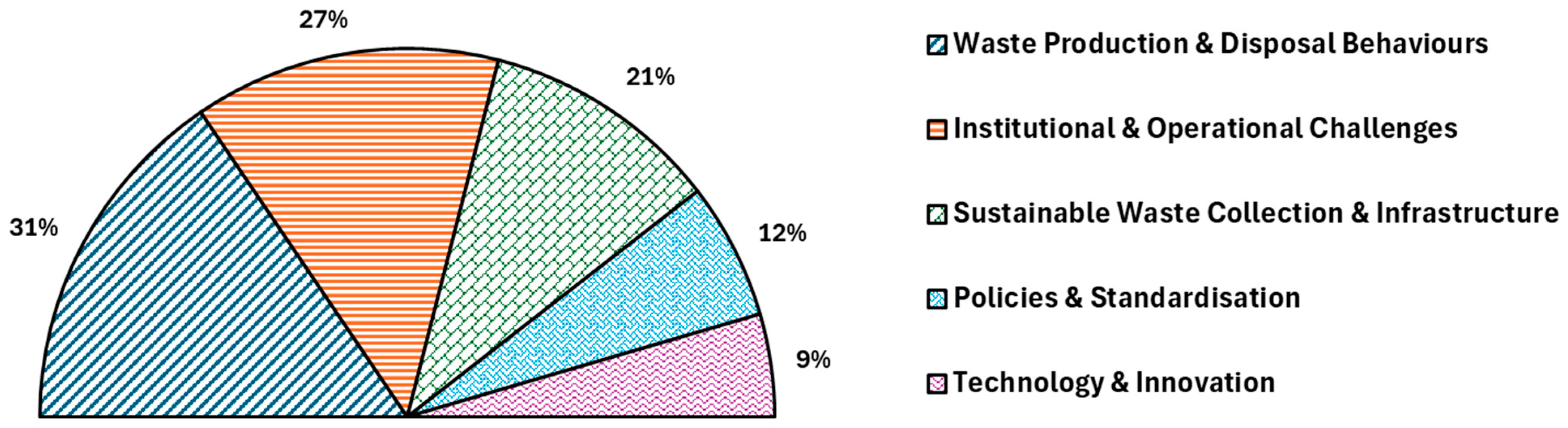
A frequency analysis of NVivo-coded transcripts indicates that Waste Production and Disposal Behaviours (Theme 1) exhibited the strongest salience (31% of total coded references), reflecting the deep intertwining of community waste practices and service access. This was followed by Theme 3: Institutional and Operational Challenges (27%), which highlighted governance and capacity barriers; Theme 2: Sustainable Waste Collection and Infrastructure (21%), which focused on service inequities; Theme 4: Policy and Standardisation (12%), which related to regulatory enforcement and uniformity; and Theme 5: Technology and Innovation (9%), which addressed digital readiness and GIS adoption.
Figure 2 visualises the relative prevalence of these major themes, providing a macro-level overview of the distribution of coded references and demonstrating the analytical weighting that informs subsequent thematic interpretation.
3.1. Theme 1: Waste Production and Disposal Behaviors
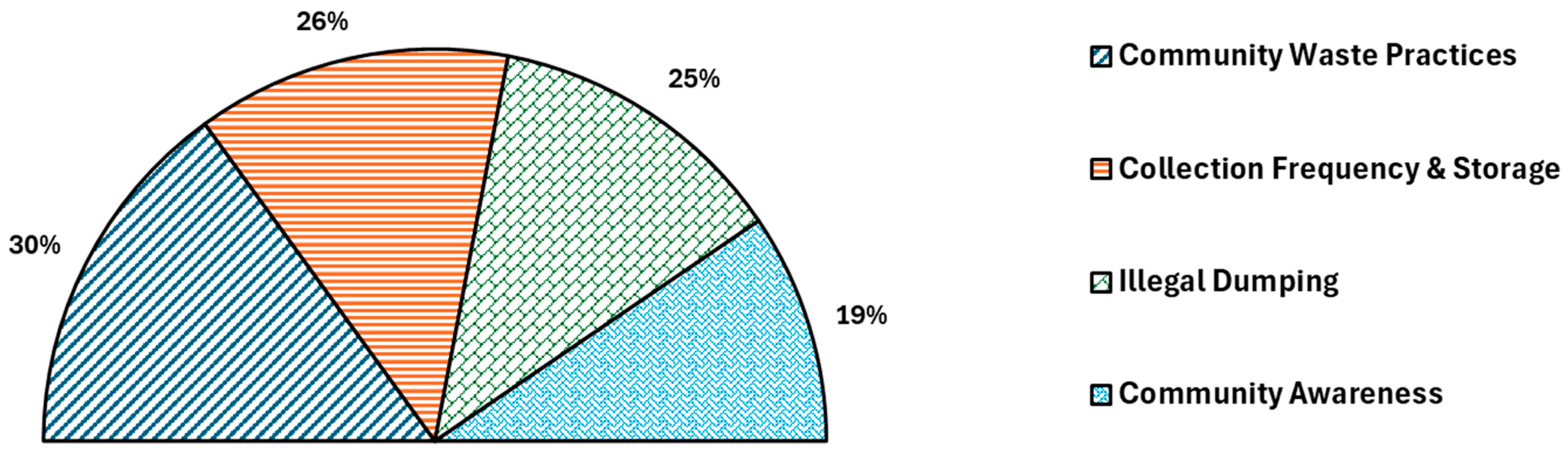
This theme was the most prominent in the dataset, accounting for 31% of all coded references and mentioned by 27 of the 29 municipal officials (93%), with 84% of community responses (Q23) reinforcing these observations. As shown in
Figure 3, it comprises four subthemes: community waste practices, illegal dumping, collection frequency and storage, and community awareness. These sub-themes describe the widespread reliance on informal disposal methods and reflect the influence of service reliability, access to infrastructure, and community-level waste management routines.
3.1.1. Community Waste Practices
Residents across all municipalities routinely burn, bury, or dump waste in open areas. Officials described these practices as responses to inconsistent or delayed waste collection services. One official explained that “People burn or bury waste because the truck doesn’t come regularly” (Municipal Supervisor), while another noted that “even when general waste is collected, villagers still burn and bury waste due to irregular service” (Municipal official).
Officials also reported additional forms of informal disposal, including the dumping of nappies (“pampers out of control”), dead animals placed in skips, and the burning of waste inside municipal skips. These behaviours were associated with the absence of household bins, limited skip availability, and lack of designated facilities for bulky or hazardous waste. Community and official accounts indicate that informal disposal persists in areas where collection services, storage options, and access to designated disposal sites are limited.
3.1.2. Illegal Dumping of Wastes
Illegal dumping, reported by 22 participants (76%), was identified as a widespread and persistent issue across municipalities. Dump sites were frequently observed along transport routes, riverbanks, open fields, and near informal markets in the study area. One official noted that “Dumping hotspots follow the main transport routes; people offload where skips are too far” (Municipal official), while another explained that “even where skips are provided, people still dump everywhere” (Municipal official).
Officials reported that illegally dumped waste often includes nappies, animal carcasses, construction rubble, and mixed organic waste, reflecting the absence of segregation systems and limited access to authorised disposal points. These materials accumulate rapidly and contribute to recurring contamination around known dumping sites. Community responses from Q23 support these observations: 69% of residents identified illegal dumping as their most pressing waste concern, attributing it to a shortage of skips, infrequent collection, and a lack of nearby designated disposal areas. Respondents expressed the need for more accessible skips, regular cleanup schedules, and improved monitoring to reduce dumping incidence.
3.1.3. Collection Frequency and Storage
Irregular and inequitable waste collection, reported by 82% of participants, emerged as a persistent challenge across all municipalities, with the greatest impact observed in rural wards. Service schedules were described as inconsistent and heavily dependent on an aging and unreliable fleet of vehicles. As one official noted, “A single broken truck means two wards go uncollected for weeks” (Municipal official), while another explained that some villages receive collection “only when skips are full, which can take up to two weeks” (Municipal official). Limited bin provision and the absence of household storage facilities were frequently cited as factors compounding these gaps.
Community survey data reinforce these observations: 74% of respondents requested more frequent collection, and 68% reported inadequate storage, often relying on sacks, makeshift containers, or open dumping sites. These conditions contribute to overflowing skips, mixed waste accumulation, burning inside skips, and increased fly tipping, particularly in settlements located far from municipal depots. The urban–rural disparity was consistently noted, with urban wards receiving weekly collections, while many rural areas experienced longer intervals between services.
3.1.4. Community Awareness and Education
Community awareness and education initiatives across the four municipalities were consistently described as sporadic, donor-dependent, and not embedded in routine municipal responsibilities. One official explained that “We only run education when we have external funding” (Municipal official), while another noted that “we go to schools, taxi ranks, and tribal communities for one-on-one workshops, but it happens irregularly” (Municipal official). Officials in Makhado added that programmes such as “Nakisani Vhupo Hasu” [Keep our Environment Clean] are implemented inconsistently and depend on available resources rather than structured planning. Low waste literacy has been widely reported. Participants highlighted their limited understanding of hazardous waste categories, weak knowledge of separation-at-source, and uncertainty about the environmental impacts of burning and illegal dumping. One respondent stated that “people don’t always know what waste is hazardous or where it should go” (a municipal official).
Officials also noted that the effectiveness of awareness campaigns is constrained by unreliable services. As one supervisor explained, “Communities will not change behaviour if bins are not available or if the truck does not come” (Municipal official). In several rural wards, weak collection coverage and limited storage options undermined the impact of educational efforts, with residents reverting to burning or dumping even after awareness activities.
3.2. Theme 2: Sustainable Waste Collection and Infrastructure
Participants highlighted the substantial challenges in waste collection, storage, and disposal across the Vhembe District. These issues were raised in 73% of the interviews and accounted for 21% of all coded references, reflecting the significance of structural constraints in daily operations. Officials described irregular collection schedules, inadequate bin provision, insufficient disposal facilities, and weak recycling systems as recurring barriers to effective waste management. These challenges are frequently associated with inconsistent coverage in rural wards, accumulation of uncollected waste, and increased dependence on informal disposal practices.
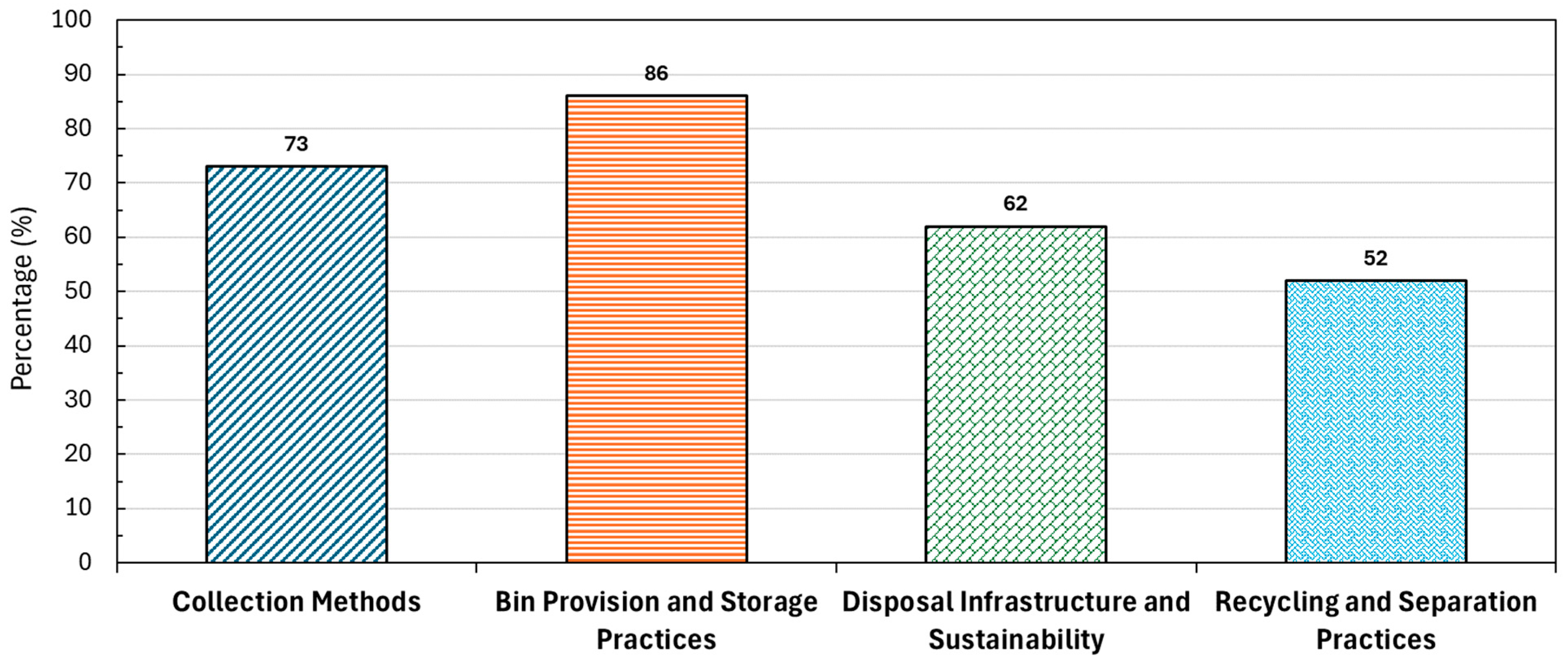
The combined frequency data in
Figure 4 demonstrate that bin provision (86%) and collection methods (73%) were the most prominent operational concerns among officials and community members, reflecting the chronic infrastructural deficit that characterises service delivery in rural areas.
3.2.1. Collection Methods
Collection methods varied considerably across the four municipalities, with officials frequently attributing service inconsistencies to limited and unreliable fleet capacities. Across all sites, urban areas received more regular collection, typically once a week, while most rural wards were serviced every two to three weeks, and some went more than a month without waste collection. One official explained that “Urban areas are collected weekly, but some rural wards wait two or three weeks. With one truck, you simply rotate” (Municipal official).
Fleet shortages and vehicle breakdowns were central to these differences. In Collins Chabane, 13 vehicles were reported, of which five were non-operational, while Thulamela recorded 17 compactors, 10 of which were out of service. These shortages limited the number of routes that could be covered and resulted in the use of manual wheelbarrow-based collection systems in several rural areas. As one supervisor noted, “Villages are collected manually with wheelbarrows; it takes the whole day to cover just part of a ward” (Municipal official). Officials described these operational constraints as contributing to irregular service schedules, reduced coverage in remote wards, and extended periods without formal collection.
3.2.2. Bin Provision and Storage Practices
Bin provision remained uneven across the municipalities. Central business districts and formal residential areas generally received municipal bins, whereas many rural communities relied on sacks, crates, or improvised storage. A total of 87% of interviewed officials reported chronic shortages, noting that the cost of storage materials was frequently shifted to households. One supervisor explained that “Communities must buy their own plastic bags; skips are only placed in the bigger villages” (Municipal official). Another official added that “CBDs have bins, but rural wards improvise with sacks” (Municipal official).
Survey data support these observations: 71% of residents expressed dissatisfaction with available storage options, often citing the cost of purchasing refuse bags and the limited number of skips. In several wards, a single skip was shared across multiple villages, resulting in overflow, informal burning, and mixed waste disposal when capacity was exceeded.
3.2.3. Disposal Infrastructure and Sustainability
Disposal infrastructure remained a significant operational constraint across all four municipalities. Facilities ranged from unlined, unfenced dumping areas, as reported in Collins Chabane, to licensed landfills located 20–45 km away, particularly affecting Makhado and Musina. These spatial arrangements imposed substantial logistical and financial burdens. One official explained that “Transporting waste to the licensed landfill is too expensive; fuel alone drains the budget” (Municipal official). Another noted that “we dump very far, and it is costly and unsustainable” (Municipal official).
Long-haul distances were reported to increase diesel consumption, accelerate vehicle wear, and reduce the number of daily collection trips. In Musina, the financial strain was reflected in gaps between planned and actual expenditure, with a budgeted R17.5 million (USD 1.05 million) rising to R19.3 million (USD 1.16 million) due to transport-related costs. Officials also indicated that reliance on informal or unengineered disposal areas persists where access to compliant landfills is limited, contributing to recurring disposal backlogs and inconsistent adherence to waste-handling requirements.
3.2.4. Recycling and Separation Practices
Recycling activities across the four municipalities were reported as largely informal and unregulated, with most recovery undertaken by waste pickers operating outside municipal systems. Interview and survey data indicated that households seldom separate waste at source. One supervisor noted that “Residents don’t separate waste; everything goes in the same bag or skip” (Municipal official). Another official explained that “separation is very limited because people mix all types of waste together” (Municipal official).
Participants described the absence of structured recycling programmes, limited infrastructure for separation, and minimal public awareness as contributing to the low levels of household participation. As a result, informal recovery was reported to be inconsistent and easily disrupted, particularly in areas with irregular collection or poor storage provision.
3.3. Theme 3: Waste Management Challenges, Institutional & Operational
Issues related to environmental governance and operational constraints were the most frequently reported in the dataset, cited by 89% of participants. Across all four municipalities, officials described fragmented coordination, community and political pressures, budget shortfalls, fleet unreliability, and limited staffing capacity as persistent challenges. These constraints were widely perceived to undermine service reliability, weaken planning and monitoring functions, and compromise day-to-day waste management operations, with direct implications for environmental protection and regulatory compliance.
The data (
Table 3) indicate that budget and resource shortages (90%), together with institutional fragmentation (86%), were the most frequently reported constraints.
Table 3 highlights institutional and operational constraints, with budget and resource shortages most frequently reported. Participants associated these issues with difficulties in implementing new initiatives, including technology-related improvements.
3.3.1. Institutional Coordination
Municipalities consistently reported siloed departmental structures and limited inter-unit communication, resulting in fragmented decision-making and duplication of effort. As one official noted, “Planning and waste never sit together; data sharing doesn’t happen” (Municipal official). Another explained that “GIS falls under IT [Information Technology], but they don’t talk to us” (Municipal official).
Officials indicated that this separation between departments affects coordination, slows information flow, and complicates efforts to plan routes, manage equipment, and share operational data. Several participants reported that responsibilities for waste management, planning, and information and communication technologies (ICT) are divided across units with minimal routine interaction, contributing to inconsistencies in reporting and service planning. Participants’ accounts suggest that fragmented coordination co-occurred with difficulties in embedding GIS within routine operations, despite awareness of its potential value.
3.3.2. Community Pressures and Political Interference
Officials across the municipalities reported that political influence and community expectations frequently affected operational decisions. One participant noted that “Routes sometimes change based on councillor requests, not actual need” (Municipal official). Another explained that “illegal dumping increases after political events; everyone expects immediate clean-ups” (Municipal official). Participants also described additional pressures related to waste behaviours, including mixed waste disposal, burning inside skips, and the placement of dead animals and nappies in communal areas. These issues were reported to create unplanned workloads, disrupt scheduled routes, and increase the demand for rapid response activities.
3.3.3. Budget and Resource Constraints
Budget shortages were identified as a major challenge, reported by 90% of officials across the four municipalities. Participants described insufficient operational funding, delayed disbursements, and discrepancies between planned and actual expenditures. One official noted that “Budgeted R17,498,000 [USD 1.05 million] while the actual budget is R19,262,506 [USD 1.16 million]” (Municipal official). Another observed that although “R90 million [USD 5.40 million], is budgeted, it is never enough for fleet maintenance” (Municipal official).
Approximately 83% of respondents stated that available funds were “barely enough for diesel,” highlighting difficulties in covering day-to-day operational costs. Officials explained that these constraints affected routine collection, vehicle repairs, and the ability to respond to unplanned service demands.
3.3.4. Equipment and Fleet Deficits
Officials across all municipalities reported significant equipment shortages and frequent vehicle breakdowns that affected routine waste-collection services. One participant noted that “half our trucks are parked; parts take months” (Municipal official), while another stated that “we have 13 vehicles in total, 5 are not working” (Municipal official). In Thulamela, 17 compactors were reported, with 10 out of service.
These limitations resulted in reduced route coverage and rotational collection schedules, particularly in rural wards. Participants indicated that service delays, postponed routes, and reduced collection frequency were common outcomes when multiple vehicles were inoperable.
3.3.5. Staffing and Capacity Gaps
Staffing shortages were reported across all four municipalities, particularly in technical and GIS-related roles. One official noted that “We have 30 staff in total; the shortage means vehicles are not fixed on time” (Municipal official), while another explained that “We have one IT officer, not a GIS specialist” (Municipal official).
Approximately 72% of the participants indicated that they lacked personnel with GIS skills, and several reported limited access to training opportunities. Officials explained that the absence of specialised staff affected routine operations, slowed data-related tasks, and restricted the introduction of new systems and technologies.
3.3.6. Cross-Municipality Comparison of Institutional and Operational Barriers
Institutional and operational barriers varied among the four municipalities. The comparative analysis highlighted differences in collection frequency, bin provision, fleet availability, enforcement practices, GIS readiness, and budget constraints. These variations illustrate how institutional weaknesses manifest differently across Musina, Makhado, Collins Chabane and Thulamela.
Table 4 provides a summary of these cross-municipality variation.
3.3.7. Institutional Readiness Indicators
Institutional readiness was assessed across four dimensions: governance and coordination, resource and infrastructure capacity, human capacity, and policy and compliance. The indicators in
Table 5 summarise the extent to which municipalities possess the organisational conditions required to support improved waste management.
3.4. Theme 4: Policies and Standardisation
Participants described a clear gap between existing waste management policies and their operational implementation across municipalities. A total of 62% of officials reported inconsistencies in how policies, by-laws, and standard operating procedures are enforced, noting that formal requirements are often not reflected in day-to-day practices. Although national and municipal frameworks provide detailed guidance on waste handling, service standards, and compliance expectations, implementation remains uneven, with limited monitoring and weak alignment between policy directives and operational realities of waste management.
Table 6 summarises the frequency of references to the two subthemes associated with policy enforcement and service standardisation.
These findings suggest persistent challenges in both policy enforcement (62%) and standardised implementation (55%). Participants’ accounts highlighted that, despite the presence of formal frameworks, day-to-day practice did not consistently reflect policy requirements.
3.4.1. Policy Enforcement
Participants consistently reported limited or ineffective enforcement of waste bylaws and municipal strategic plans. Although local frameworks such as Integrated Waste Management Plans and Refuse Removal By-Laws are in place, officials noted that these instruments are seldom applied in practice. One participant explained that “Enforcement is minimal; people dump and nothing happens,” while another observed that “We have the by-laws; no one follows them, and no fines are issued.” (Municipal official)
Officials attributed weak enforcement to staff shortages, limited compliance capacity, politicised decision-making, and the absence of monitoring systems in the region. These constraints result in the inconsistent application of regulatory requirements and limited follow-up on illegal dumping or service violations.
3.4.2. Service and Asset Standardisation
Participants consistently highlighted the lack of uniformity in bins, vehicles, and collection protocols, noting that this contributed to operational inefficiencies and inconsistent service delivery. One respondent remarked that “every ward uses different bins and procedures; it’s chaos” (Municipal official). Another explained that although a bin standardisation policy exists, “bins must be approved and meet durability requirements”, its implementation remains inconsistent (Municipal official).
Despite the presence of formal policies in some municipalities, standardisation practices were applied inconsistently. Participants reported variability in bin types, fleet standards, and colour-coding systems for waste segregation, which limited data comparability across wards and constrained internal reporting and planning processes.
3.4.3. Policy Alignment Matrix (Cross-Municipality Assessment)
A Policy Alignment Matrix was developed to assess the degree to which national and local policy instruments are reflected in municipal practice. The matrix compares the statutory requirements with the observed operational practices across the four municipalities.
Table 7 summarises the extent of alignment between policy provisions and ground-level implementation.
3.5. Theme 5: Technology and Innovation in Waste Management
Participants frequently highlighted the potential value of Geographic Information Systems (GIS) in enhancing service efficiency, route planning, monitoring illegal dumping, and improving operational decision-making. A total of 55% of officials referenced the usefulness of GIS, while 48% identified challenges related to their digital readiness. Despite this recognition, actual GIS use remained limited across municipalities, with respondents citing shortages of technical skills, inadequate infrastructure, and restricted access to software or licences.
Table 8 summarises the frequency of references to the two subthemes related to perceived usefulness and digital readiness.
3.5.1. Knowledge and Perceived Usefulness of GIS
Participants across the municipalities recognised GIS as a valuable tool for improving waste management operations, particularly for route optimisation, identifying missed collection points, and detecting illegal dumping hotspots. One official explained that “GIS can show where trucks miss or where dumping repeats” (Municipal official). Another added, “It would help us plan, but we just don’t have it” (Municipal official).
Despite this awareness, officials reported that GIS is not currently used in routine operations in the region. Participants attributed the lack of implementation to limited technical capacity, absence of licences, inadequate digital infrastructure, and reliance on manual recording systems, which restrict real-time monitoring and data-driven planning.
3.5.2. Digital Infrastructure Readiness
Participants reported limited digital infrastructure across all four municipalities, including inadequate ICT equipment, a lack of GIS software licences, and unreliable Internet connectivity. Several officials noted that the absence of basic digital systems restricts their ability to record, analyse or share operational data. One respondent explained that “we don’t have computers or GIS software; everything is still done manually” (Municipal official). Another added that “the internet is unreliable, so even reporting becomes difficult” (Municipal official).
Officials also highlighted the absence of personnel with the required technical expertise to support GIS and related digital tools. As one participant stated, “We have no one trained in GIS or mapping, only basic IT support” (Municipal official). These limitations contribute to a continued reliance on manual documentation and hinder efforts to introduce data-driven planning or digital monitoring processes.
3.5.3. GIS Readiness Index (Cross-Municipality Assessment)
A qualitative GIS Readiness Index was developed to assess the technological preparedness of the four municipalities across four dimensions: GIS-related skills, digital infrastructure, policy alignment, and organisational support for ICT use. The readiness ratings reflect rule-based qualitative judgments based on the consistency of the interview evidence across these dimensions. The respondents consistently described low readiness across all dimensions. One official noted that “we do not have anyone trained in GIS, not even basic mapping skills” (Municipal official), while another reported that “there is no GIS licence, no software, nothing we can use to map or track waste” (Municipal official). Participants also highlighted gaps in ICT budgeting, with one explaining that “there is no money set aside for ICT; everything is done manually” (Municipal official).
Community responses echoed these limitations. Several residents indicated that the absence of digital reporting systems limits timely communication, noting that
“we don’t know when the truck is coming” and
“there is no way to report dumping until it becomes a big pile.” These experiences reflect the broader operational challenges that would benefit from improved digital monitoring and route-planning tools.
Table 9 summarises the readiness status of each municipality across these dimensions.
Participants reported that GIS-related capacity was minimal across all four municipalities. Respondents noted the absence of GIS-skilled personnel, limited ICT budgets, lack of software licences, outdated or missing spatial data, and minimal integration of GIS into planning or reporting processes. These constraints result in a very low overall readiness for digital waste management systems.
3.6. Mapping of Empirical Themes to Institutional Theory and TAM
A thematic mapping table was developed to summarise how the empirically identified themes and sub-themes correspond to the institutional pillars and core constructs of the Technology Acceptance Model. The mapping draws directly on the patterns observed in the results and reflects where institutional conditions and technology-related perceptions are reported together across municipalities.
Table 10 presents this alignment, indicating areas where the perceived usefulness of GIS is high alongside low perceived ease of use due to institutional, capacity, and governance constraints.
4. Discussion
This study demonstrates that the barriers to GIS adoption in municipal waste management are rooted primarily in institutional and operational conditions rather than in the availability of technological tools. Evidence from four rural and peri-urban municipalities in South Africa’s Vhembe District indicates that fragmented governance, limited organisational capacity, weak policy enforcement, and unstable service delivery collectively undermine the effectiveness of GIS as an environmental management tool.
When interpreted through Institutional Theory and the TAM, the findings reveal a recurring pattern in which the perceived usefulness of GIS is high, but actual adoption and routinisation remain constrained by low institutional readiness and limited organisational support. Similar dynamics have been reported across Global South municipalities, where digital innovations in waste and environmental governance fail to translate into operational improvements in the absence of coherent institutional structures. The following sections examine these dynamics thematically and situate the findings within the context of comparative international evidence.
4.1. Waste Production and Disposal Behaviours as Structurally Induced Outcomes
The persistence of informal waste disposal behaviours, illegal dumping, open burning, mixed waste disposal, and limited separation at the source emerged as a dominant challenge across municipalities. These behaviours cannot be interpreted as individual non-compliance alone; rather, they reflect structurally induced adaptations to inconsistent service provision, inadequate storage infrastructure and weak enforcement.
This interpretation is consistent with empirical evidence from rural and peri-urban contexts, which shows that household waste practices are shaped primarily by service reliability, infrastructure access, and institutional trust, rather than awareness alone. Studies across sub-Saharan Africa and South Asia have demonstrated that behavioural change is unlikely in the absence of stable collection systems and enabling conditions [
28,
29,
30].
Comparable patterns have been widely reported across the Global South. In Accra, Ghana, irregular waste collection and limited bin provision have normalised illegal dumping in low-income communities [
31]. In Nairobi’s informal settlements, the distance to disposal points and inconsistent services drive roadside dumping and burning [
32]. Similar dynamics have been documented in peri-urban India and Bangladesh, where households adopt informal disposal practices when municipal systems fail to meet basic expectations [
33,
34].
From an institutional perspective, these behaviours reflect misalignment across weak regulative enforcement, low normative expectations of compliance, and the cognitive normalisation of informal disposal pillars. The implication is clear: GIS-based monitoring of dumping hotspots may improve visibility, but without concurrent improvements in service reliability and enforcement, digital tools risk documenting dysfunction rather than correcting it.
4.2. Infrastructure and Service Reliability as Preconditions for Digital Innovation
The findings underscore that waste collection and disposal infrastructure constitute the material foundation upon which any digital intervention must be based. Irregular collection schedules, aging fleets, limited bin provision, long distances to compliant disposal sites, and weak recycling systems collectively undermine operational stability across municipalities.
This pattern is consistent with evidence from Sub-Saharan Africa, which shows that municipal waste collection services are widely constrained by limited operational capacity and low coverage rates, with the average collection coverage remaining well below the universal level (approximately 44% to two-thirds). Consequently, informal settlements and rural or peripheral wards experience disproportionately low access to basic waste collection services compared with urban centres, reflecting structural constraints related to fleet availability, infrastructure gaps, and resource limitations rather than isolated individual behaviours [
35,
36].
Empirical work from rural South African municipalities further demonstrates that GIS contributes primarily to strategic planning functions, such as route optimisation and infrastructure siting, while operational benefits remain limited in the context of low infrastructural readiness [
26]. This reinforces the argument that digital tools cannot compensate for infrastructure fragility.
Within the TAM framework, this explains the observed disconnect between the high perceived usefulness and low practical adoption of GIS. When trucks are unreliable, routes change unpredictably, and data inputs are inconsistent, the immediate operational value of GIS diminishes, reducing its perceived ease of use by practitioners.
4.3. Institutional and Operational Capacity as the Central Bottleneck
Institutional and operational challenges emerged as the most pervasive barriers, encompassing fragmented coordination, staffing shortages, budget constraints, fleet unreliability, and political interference. These findings resonate strongly with the institutional analyses of municipal performance across the Global South. Fragmented governance structures and siloed departments are widely cited as impediments to waste management reform in Kenya, Indonesia, and Nigeria [
17,
37]. In the present study, the separation between waste management, planning, and ICT units undermined data sharing and strategic integration, limiting the organisational capacity to institutionalise GIS.
From an Institutional Theory perspective, this reflects weakened regulative capacity, limited enforcement and resourcing, fragmented normative structures, inconsistent professional practices, fragile cognitive alignment, and low internalisation of data-driven decision-making. Without strengthening these pillars, digital initiatives are vulnerable to symbolic or partial adoption.
4.4. Policies and Standardisation: The Implementation Gap
Although South Africa has a comprehensive waste governance framework, including the Waste Act and mandatory Integrated Waste Management Plans, the findings reveal a persistent gap between policy intent and operational practice. Weak enforcement, inconsistent standardisation, and limited monitoring capacity undermine policy effectiveness at the municipal level. This implementation gap is a recurring theme in waste governance in the Global South. In Ghana and Nigeria, decentralised waste policies are constrained by limited local enforcement capacity and a lack of standardised reporting systems [
31,
38]. In India, stricter enforcement under the Municipal Solid Waste Rules has improved compliance in some cities, but only where monitoring and fiscal incentives are present [
33,
34].
The absence of standardised asset management and data protocols further constrains the integration of GIS. Without uniform bin systems, fleet standards, and data collection procedures, spatial data cannot be harmonised across wards or municipalities. Institutional Theory emphasises that regulative frameworks must be supported by normative alignment and shared operational standards to achieve legitimacy and compliance. Accordingly, regulation in this context functions primarily as an enabling framework whose influence on GIS adoption depends on enforcement capacity and institutional embedding within routine municipal planning and reporting, rather than on the formal existence of policy instruments alone [
39].
4.5. Technology and Innovation: Recognised Value, Absent Readiness
The study reveals a consistent paradox: GIS is widely recognised as useful for planning, monitoring, and cost reduction, yet it remains largely unused in practice. This reflects a classic TAM dynamic: high perceived usefulness combined with low perceived ease of use, driven primarily by institutional and infrastructural constraints rather than resistance among users. Similar patterns have been documented across African and Asian municipalities, where digital waste initiatives often stall due to inadequate ICT infrastructure, limited technical skills, and a lack of sustained funding [
5]. In Indonesia and parts of India, GIS adoption accelerated only after municipalities embedded digital tools within routine workflows, allocated dedicated ICT budgets, and provided continuous training to their staff.
In Vhembe, the absence of GIS licences, trained personnel, and integrated planning processes results in very low readiness across all municipalities [
24]. Community responses further indicate that the lack of digital communication channels limits service transparency and responsiveness, reinforcing findings from other rural municipal contexts where GIS remains weakly embedded in operational decision-making [
40].
4.6. Contributions, Implications, Limitations and Future Research
This study contributes comparative qualitative evidence from multiple rural and peri-urban municipalities, advancing the understanding of GIS adoption barriers beyond large metropolitan case studies that dominate waste governance and smart city literature. By integrating Institutional Theory and the TAM, it demonstrates that digital readiness is co-produced by governance capacity, service reliability, and organisational culture, rather than determined by technological availability alone. In doing so, this study extends Global South scholarship by empirically showing how institutional fragility mediates technology acceptance in decentralised municipal systems.
Policy implications point to the need for stronger enforcement mechanisms, targeted fiscal and technical support, and clearer operational guidance on digital integration by local governments. Capacity development should prioritise human skills, interdepartmental coordination, and staff retention, particularly in technical and GIS-related functions. Technological reform should follow incremental and context-sensitive pathways, favouring low-cost, user-friendly systems that align with existing institutional and infrastructural capacities rather than premature high-end digital solutions. In practical terms, such incremental pathways imply a minimally viable implementation sequence for GIS adoption: establishing basic spatial data protocols (e.g., ward boundaries, collection routes, and dumping sites), deploying low-cost or open-source GIS tools, providing targeted task-specific training to existing staff, and embedding GIS outputs into routine waste-management reporting and IWMP processes. This sequencing prioritises institutionalisation over technological sophistication, reducing the risk of symbolic adoption in resource-constrained municipalities.
This study is limited to four rural and peri-urban municipalities within the Vhembe District; therefore, the findings should be interpreted as context-specific, with relevance to similar rural municipal settings.
Future research should examine the longitudinal impacts of institutional and capacity-building interventions, explore the role of informal waste actors within emerging digital data ecosystems, and assess how provincial or regional GIS platforms could support smaller municipalities through shared infrastructure, standardised data protocols, and pooled technical expertise. Such research would deepen our understanding of how multilevel institutional arrangements condition digital transformation outcomes in resource-constrained municipalities and inform scalable pathways for integrating GIS into environmental governance and sustainable waste management frameworks across the Global South.
5. Conclusions
This study demonstrates that the limited adoption of GIS in rural and peri-urban municipal waste management is not primarily a technological problem but an institutional one. Evidence from four municipalities in the Vhembe District shows that weak service reliability, fragmented governance, insufficient human capacity, and inconsistent policy enforcement collectively constrain digital readiness, despite the widespread recognition of GIS’s potential value.
By integrating Institutional Theory and the Technology Acceptance Model, this study provides a multilevel explanation of why GIS remains underutilised: coercive policy frameworks are not matched by normative professional practices or cognitive acceptance embedded in routine operations. Consequently, the perceived usefulness of GIS does not translate into sustained operational use where infrastructure, skills, and organisational coordination are inadequate.
The findings contribute to Global South scholarship by shifting attention away from technology-led solutions towards the foundational role of institutional capacity, particularly in rural municipal contexts that are underrepresented in the literature. They highlight that meaningful digital transformation in waste governance requires synchronised reforms in service delivery, policy implementation and organisational learning, rather than isolated technological interventions.
For decision-makers, the findings indicate that priority actions should focus on stabilising basic waste collection services, strengthening the enforcement of existing waste by-laws, standardising bins and data-reporting protocols, investing in targeted staff training, and embedding low-cost GIS tools into routine municipal planning and reporting processes.
Therefore, strengthening municipal institutions through targeted capacity building, standardisation, and enforceable policy support is a prerequisite for leveraging GIS as a tool for sustainable waste management. Without such foundations, digital systems risk remaining symbolic rather than transformative in nature.