

Restoring Functional Soil Depth in Plinthosols: Effects of Subsoiling and Termite Mound Amendments on Maize Yield

 ,
,  ,
,  , , and
Abstract
1. Introduction
2. Materials and Methods
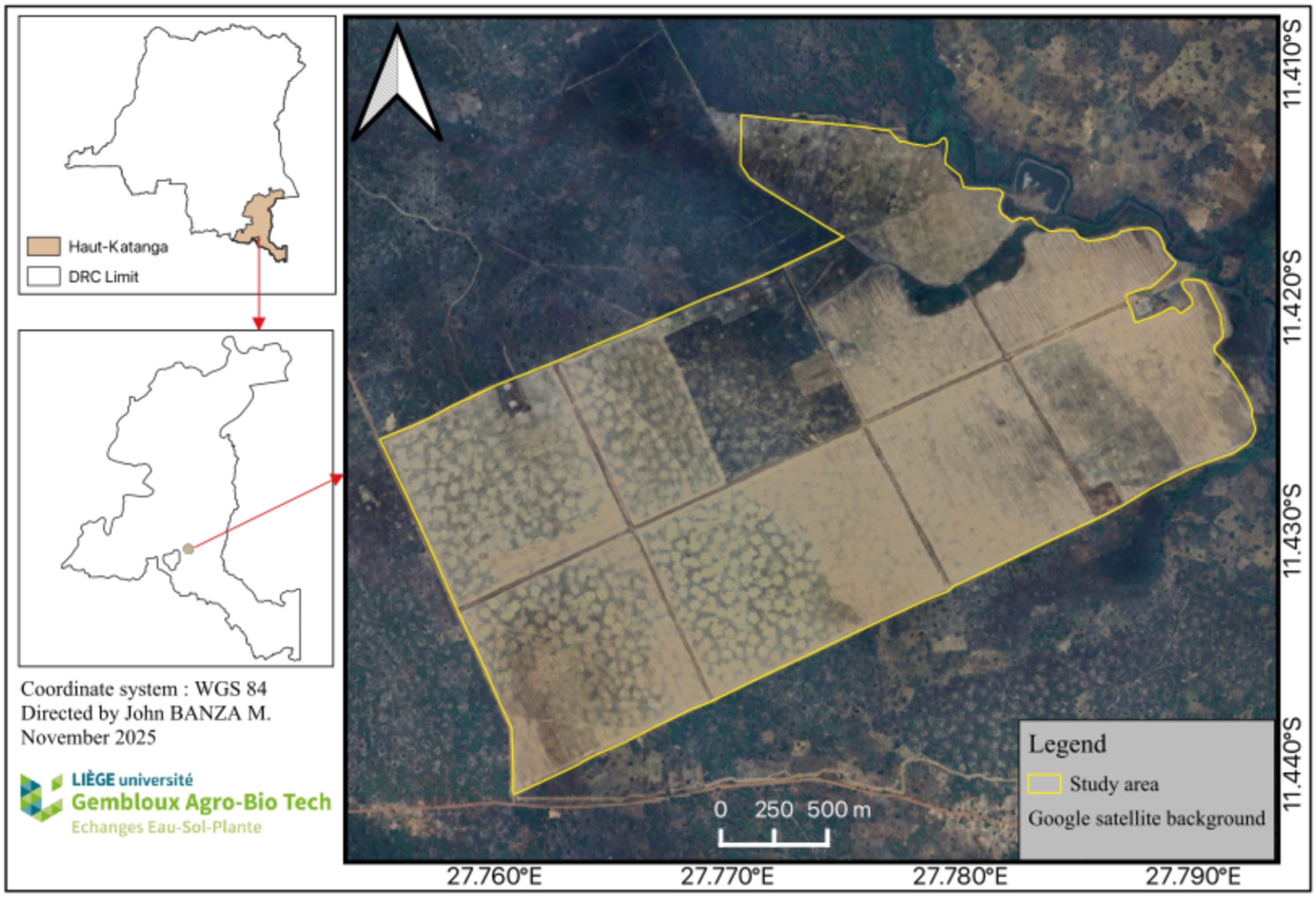
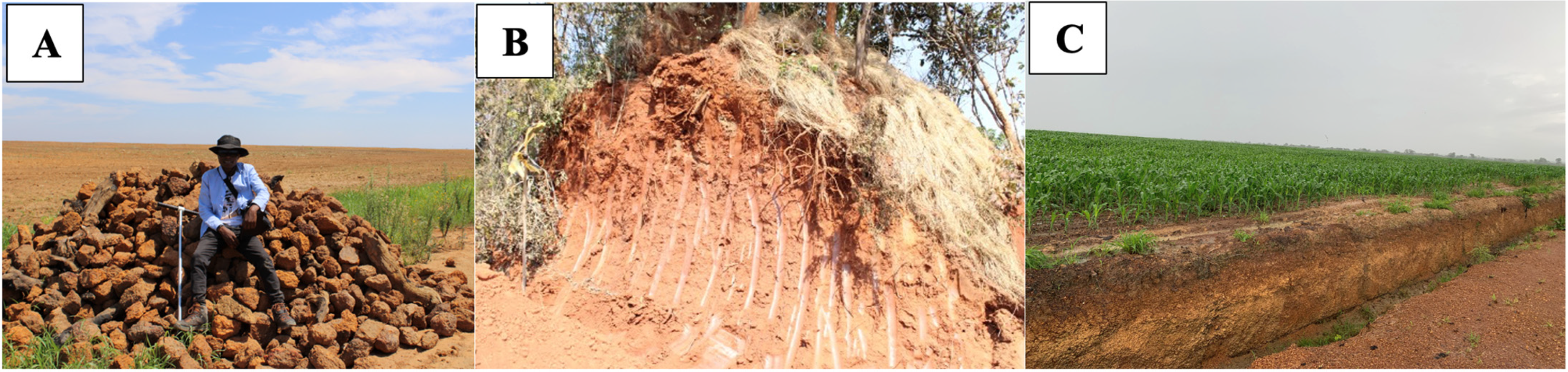
2.1. Study Sites
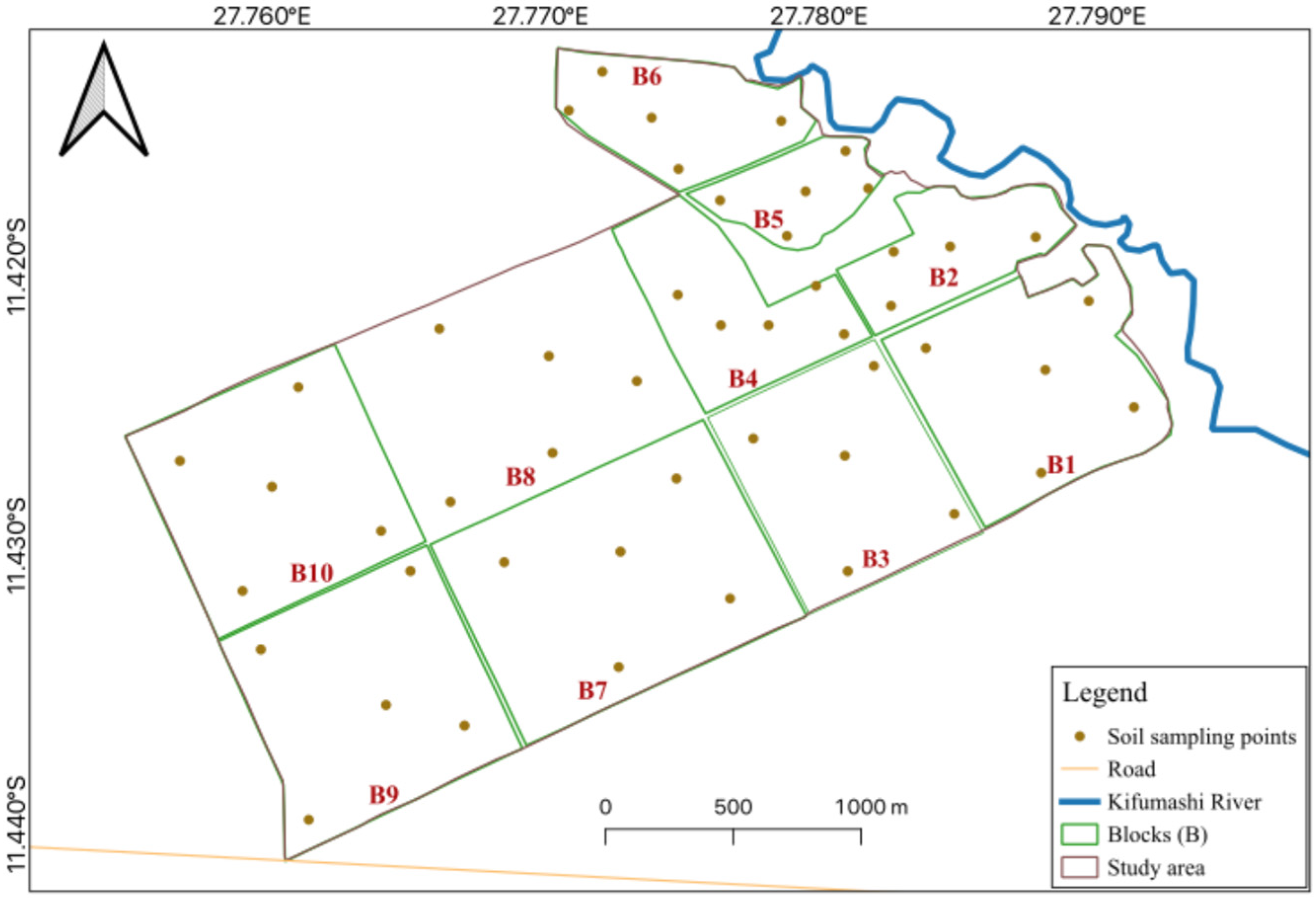
2.2. Sampling and Laboratory Analysis
2.3. Yield Determination
2.4. Spatial Analysis of Yield
2.5. Statistical Analyses
3. Results
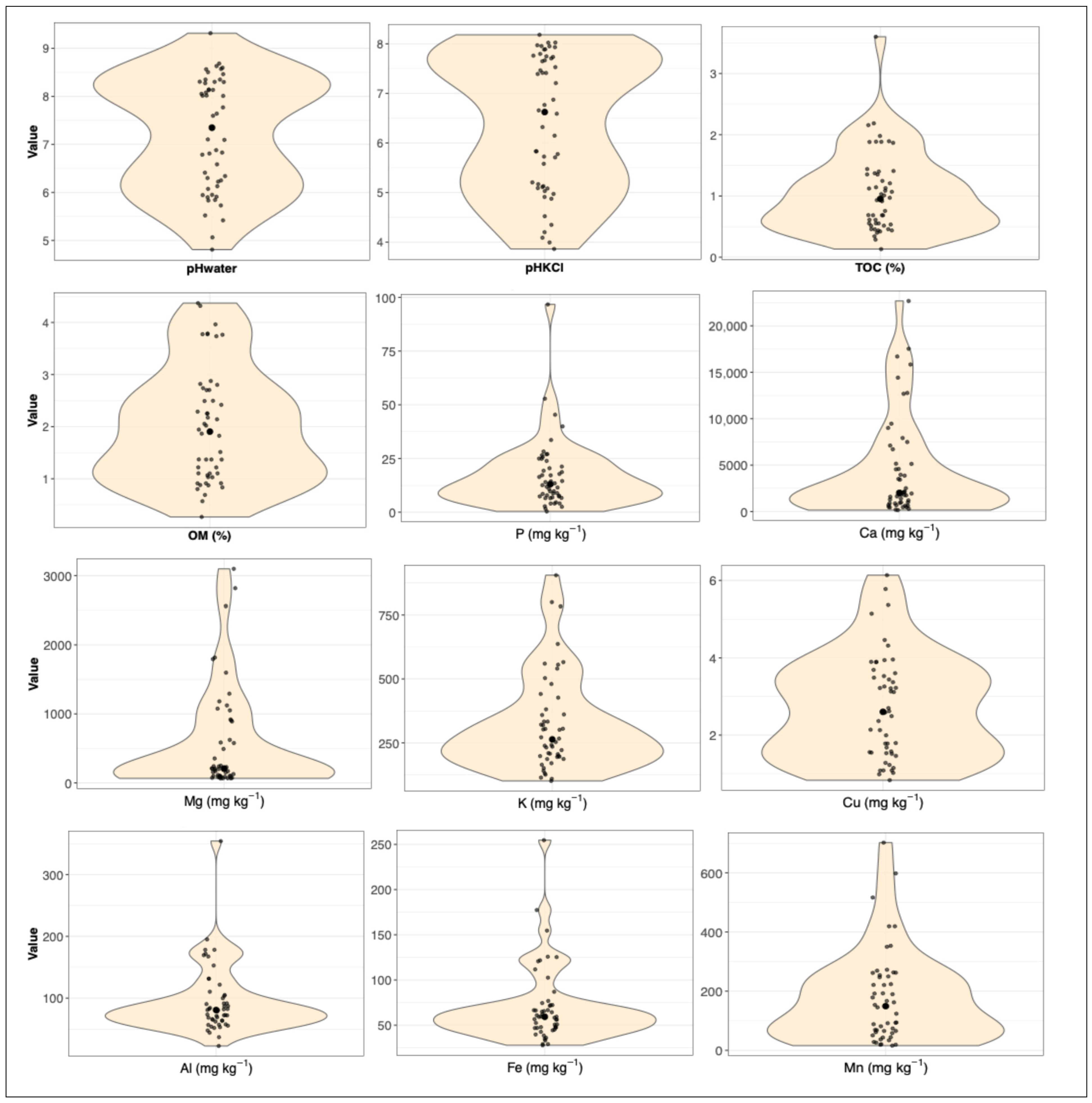
3.1. Distribution of Soil Physicochemical Properties at 0–40 cm
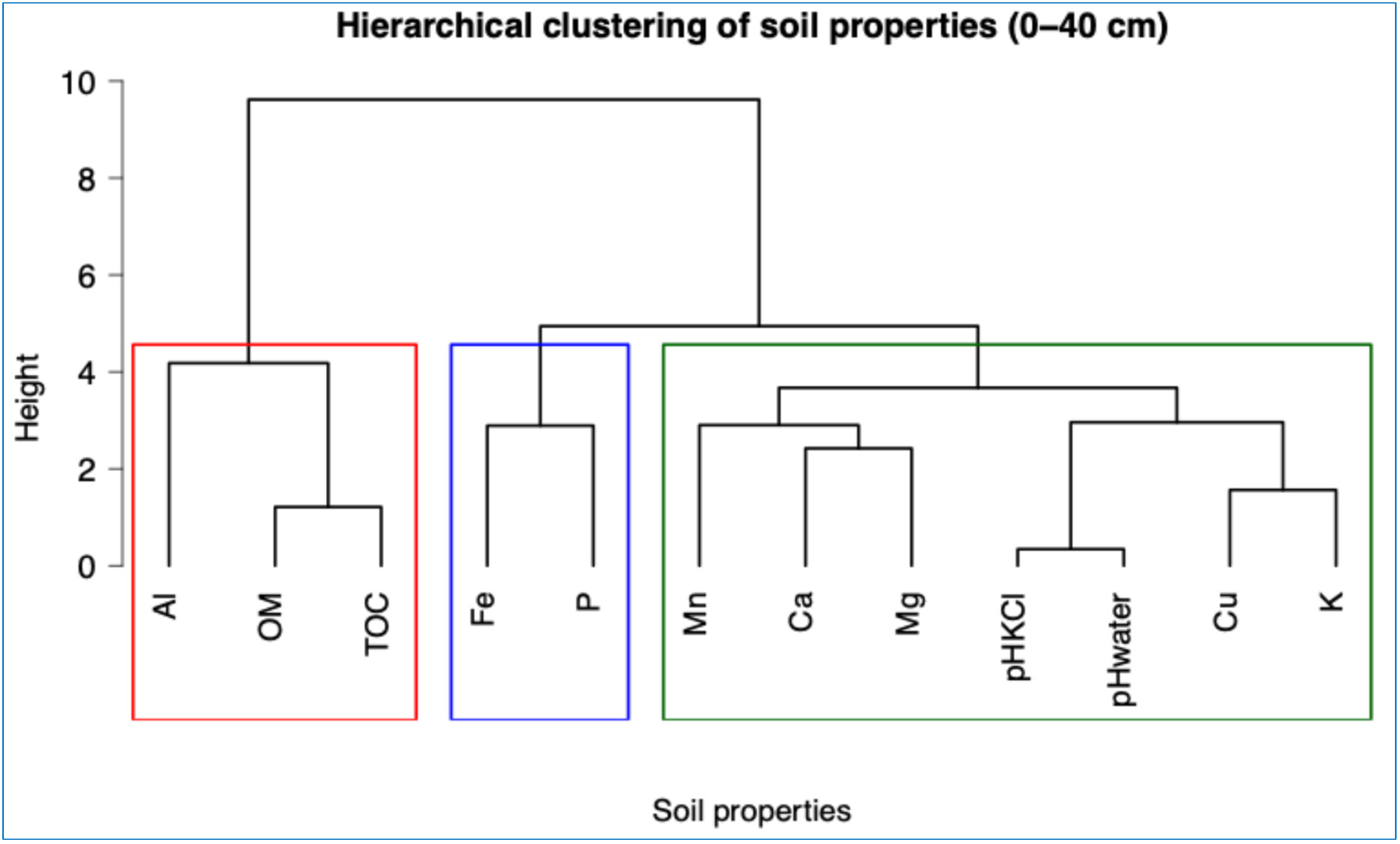
3.2. Relationships Between Soil Properties and Identification of Dominant Pedogenic Processes
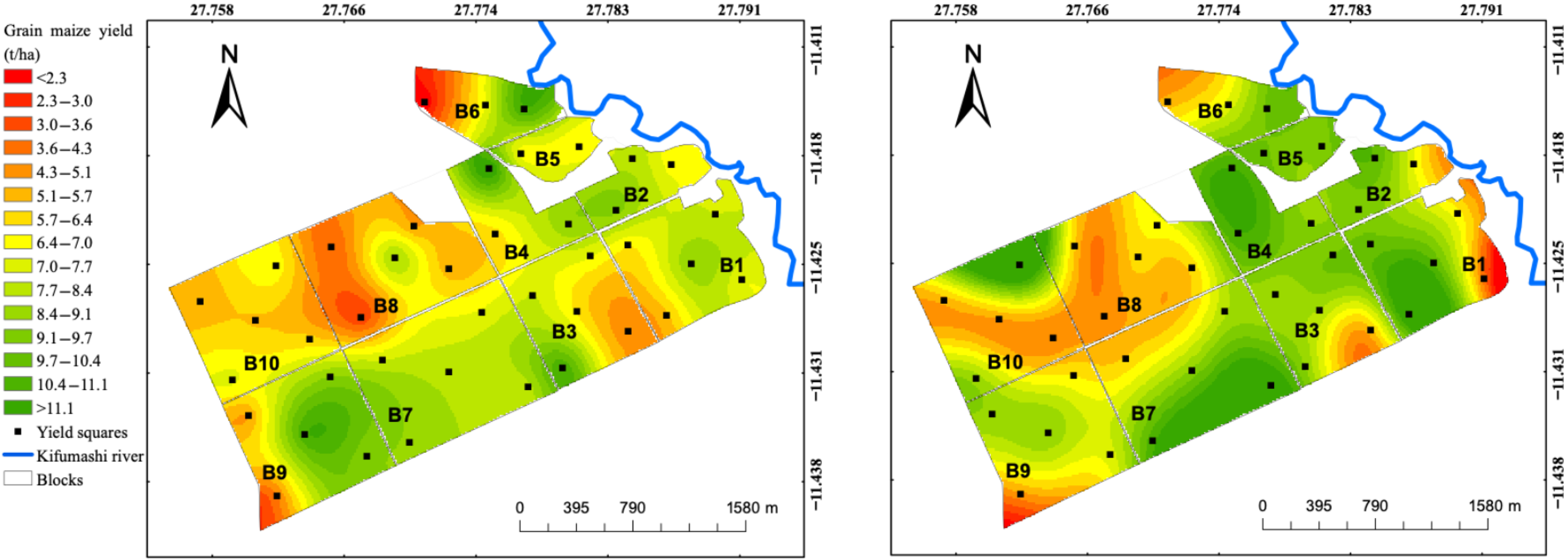
3.3. Spatial Variation in Grain Maize Yield After Subsoiling and Spreading Termite Mound Material
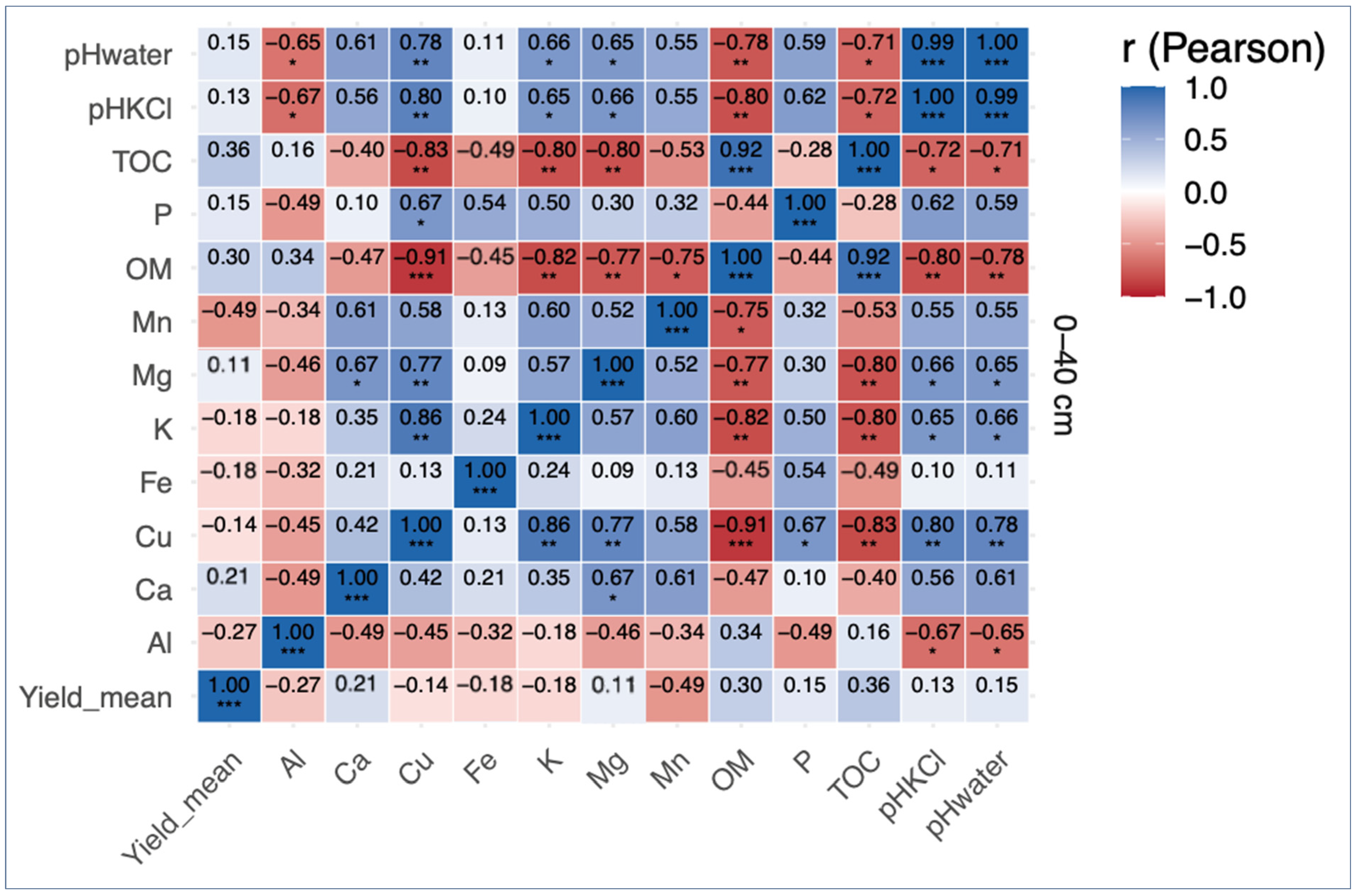
3.4. Correlations Between Soil Properties (0–40 cm) and Average Maize Yield
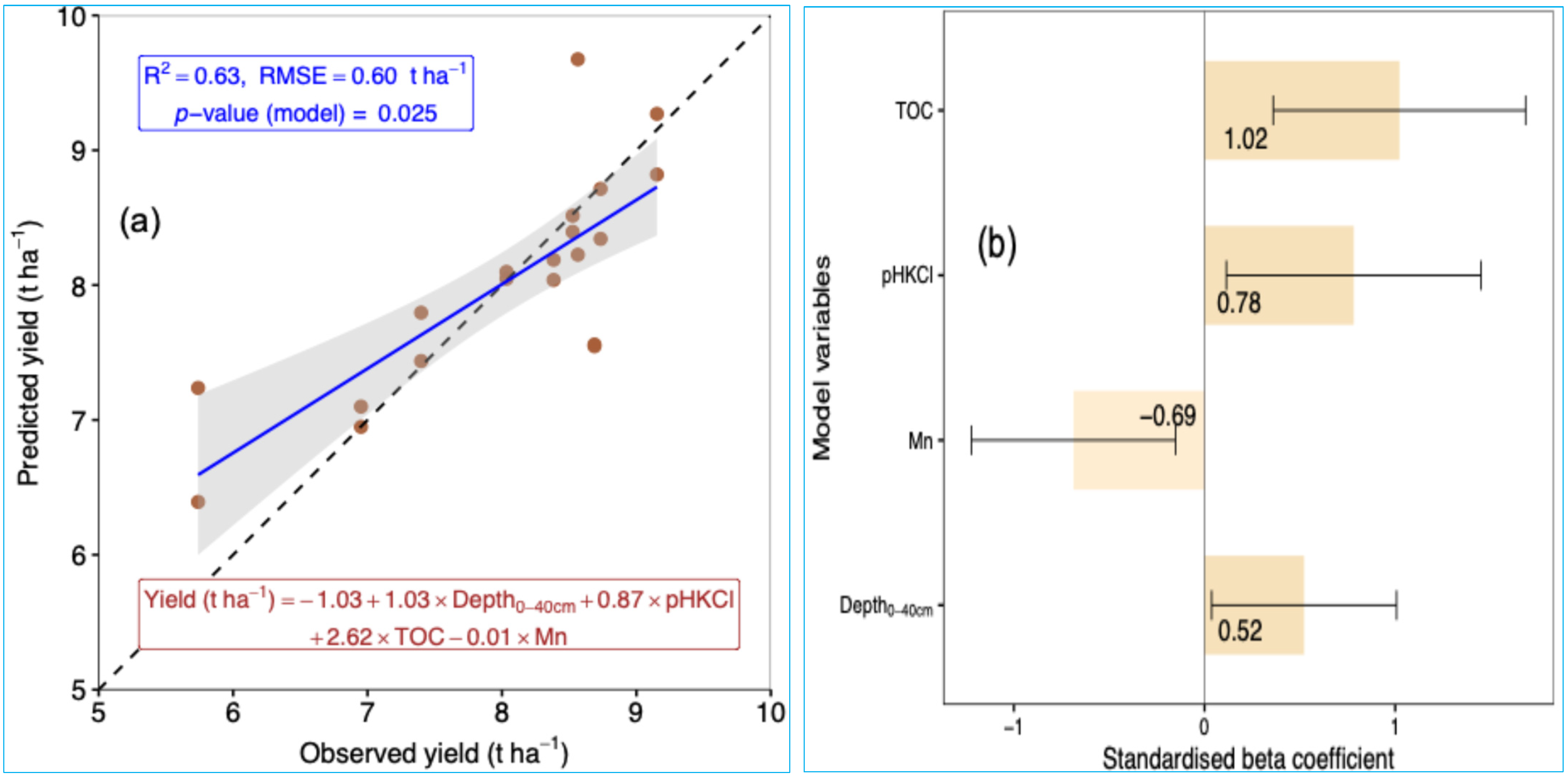
3.5. Maize Yield Modeling: Multiple Linear Regression with Stepwise Selection
4. Discussion
4.1. Distribution and Functional Significance of Physicochemical Properties at 0–40 cm
4.2. Organization of Soil Properties and Dominant Pedogenic Processes
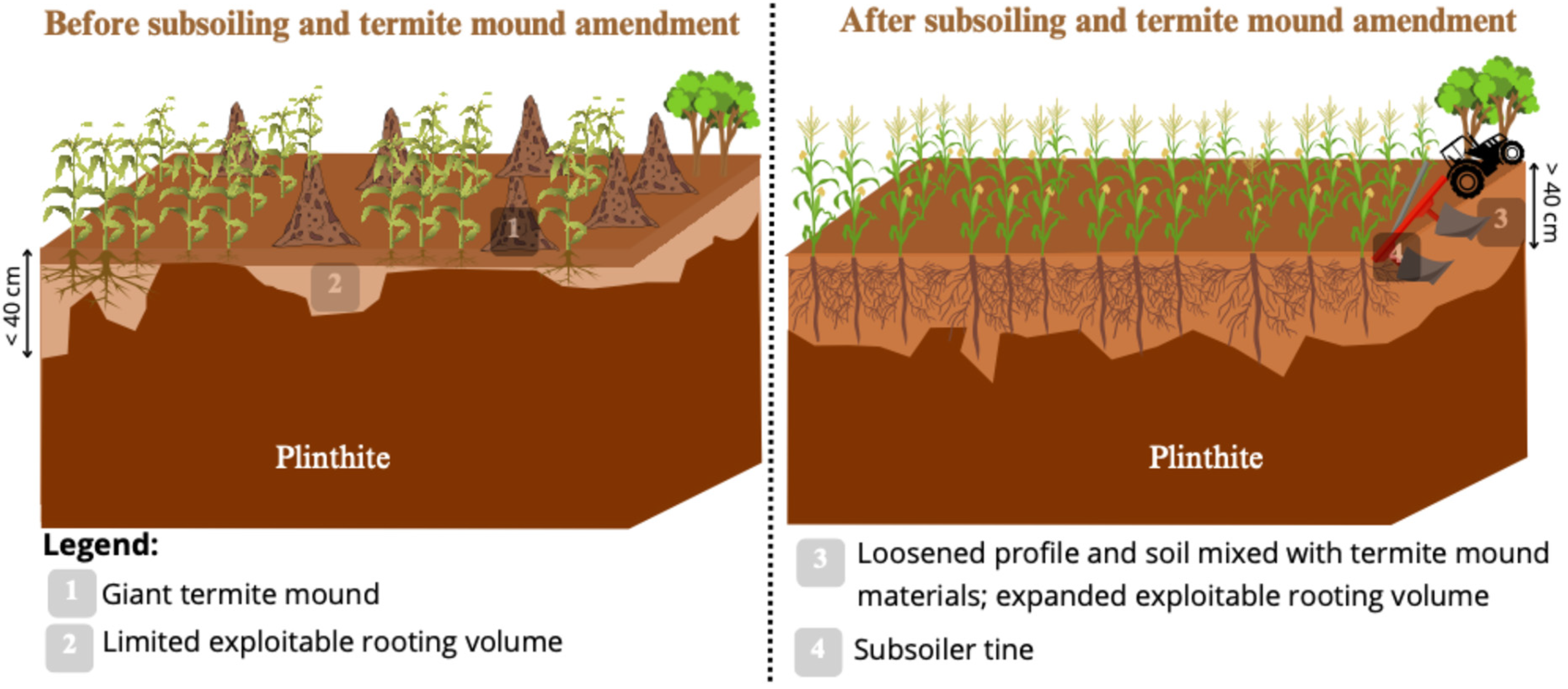
4.3. Spatial Variability in Yield After Subsoiling and Amendment
4.4. Influence of Soil Properties on Maize Yield Variability
4.5. Stepwise Regression: Depth as a Direct Determinant of Yield
5. Conclusions
Supplementary Materials
Author Contributions
Funding
Data Availability Statement
Acknowledgments
Conflicts of Interest
References
- Sanchez, P.A. Properties and Management of Soils in the Tropics; John Wiley & Sons: New York, NY, USA, 2018; ISBN 9788578110796. [Google Scholar]
- Elsheikh, R.; Mohamed Shariff, A.R.B.; Amiri, F.; Ahmad, N.B.; Balasundram, S.K.; Soom, M.A.M. Agriculture Land Suitability Evaluator (ALSE): A decision and planning support tool for tropical and subtropical crops. Comput. Electron. Agric. 2013, 93, 98–110. [Google Scholar] [CrossRef]
- Sanchez, P.A.; Palm, C.A.; Buol, S.W. Fertility capability soil classification: A tool to help assess soil quality in the Tropics. Geoderma 2003, 114, 157–185. [Google Scholar] [CrossRef]
- Muyumba, D.K.; Liénard, A.; Mahy, G.; Luhembwe, M.N.; Colinet, G. Characterization of soil-plant systems in the hills of the Copper Belt in Katanga. A review. Biotechnol. Agron. Soc. Environ. 2015, 19, 204–214. [Google Scholar]
- Ngongo, M.; Van Ranst, E.; Baert, G.; Kasongo, L.; Verdoodt, A.; Mujinya, B.B.; Mukalay, J. Guide des sols en République Démocratique du Congo, Tome I: Étude et Gestion; UGent, H.U., Ed.; Ecole Technique Salama-Don Bosco: Lubumbashi, Congo, 2009; ISBN 978-9-0767-6997-4. [Google Scholar]
- Kasongo, L.M.E. Evaluation des terres à multiples Échelles pour la détermination de l’ impact de la gestion agricole sur la sécurité alimentaire au Katanga, R.D. Congo. Ph.D. Thesis, Université de Gent, Gent, Belgium, 2008. Available online: https://biblio.ugent.be/publication/607168/file/1883108 (accessed on 20 November 2025).
- Alexandre, J. Les cuirasses lateritiques et autres formations ferriguneuses Tropicals exemple du Haut Katanga Méridional. Mus. Roy. Afr. Centr. Tervuren. Ann. Sc. Géol. 2002, 107, 129. [Google Scholar]
- Tabu, I.; Lubobo, K.; Mbuya, K.; Kimuni, N. Heterosis and line-by-tester combining ability analysis for grain yield and provitamin a in maize. SABRAO J. Breed. Genet. 2023, 55, 695–707. [Google Scholar] [CrossRef]
- Tabu, H.I.; Kankolongo, A.M.; Lubobo, A.K.; Kimuni, L.N. Maize yield and fall armyworm damage responses to genotype and sowing date-associated variations in weather conditions. Eur. J. Agron. 2024, 161, 127334. [Google Scholar] [CrossRef]
- Ilunga, T.H.; Muganguz, N.T.; Kidinda, K.L.; Banza, M.J.; Nsenga, N.S.; Mpoyo, M.G.; Tshipama, T.D.; Lukusa, M.L.; Nyembo, K.L. Evaluation of maize response (Zea mays L.) to various modes and moments of chicken manure spreading in Lubumbashi, DR Congo. Am. J. Plant Nutr. Fertil. Tech. 2015, 5, 96–105. [Google Scholar] [CrossRef][Green Version]
- Nyembo, K.L.; Ilunga, T.H.; Mwamba, M.D.; Kanyenga, L.A.; Baboy, L.L.; Kalonji, M.A. La Culture du Maïs Dans le Haut-Katanga; Etudes Africaines; Harmattan: Paris, France, 2018; ISBN 978-2-343-14635-5. [Google Scholar]
- Mujinya, B.B.; Adam, M.; Mees, F.; Bogaert, J.; Vranken, I.; Erens, H.; Baert, G.; Ngongo, M.; Van Ranst, E. Spatial patterns and morphology of termite (Macrotermes falciger) mounds in the Upper Katanga, D.R. Congo. Catena 2014, 114, 97–106. [Google Scholar] [CrossRef]
- Adhikary, N.; Erens, H.; Weemaels, L.; Deweer, E.; Mees, F.; Mujinya, B.B.; Baert, G.; Boeckx, P.; Van Ranst, E. Effects of spreading out termite mound material on ferralsol fertility, Katanga, D.R. Congo. Commun. Soil Sci. Plant Anal. 2016, 47, 1089–1100. [Google Scholar] [CrossRef]
- Nafi, E.; Webber, H.; Danso, I.; Naab, J.B.; Frei, M.; Gaiser, T. Interactive effects of conservation tillage, residue management, and nitrogen fertilizer application on soil properties under maize-cotton rotation system on highly weathered soils of West Africa. Soil Tillage Res. 2020, 196, 104473. [Google Scholar] [CrossRef]
- Chen, C.; Singh, A.K.; Yang, B.; Wang, H.; Liu, W. Effect of termite mounds on soil microbial communities and microbial processes: Implications for soil carbon and nitrogen cycling. Geoderma 2023, 431, 116368. [Google Scholar] [CrossRef]
- Santhoshkumar, S.; Gomathi, V.; Meenakshisundaram, P.; Kavitha Mary, J. Comparative insights of soil properties of termite hill in relation to the microbial community using culture-independent approach. Tot. Environ. Adv. 2024, 9, 200094. [Google Scholar] [CrossRef]
- Apori, S.O.; Murongo, M.; Hanyabui, E.; Atiah, K.; Byalebeka, J. Potential of termite mounds and its surrounding soils as soil amendments in smallholder farms in Central Uganda. BMC Res. Notes 2020, 13, 397. [Google Scholar] [CrossRef]
- Kpangba, T.P.M.K.; Mpika, J.; Makoundou, A.; Bita, M.A.; Attibayéba, A. Effect of the termite mounds on the vegetative production of three cultivars of black nightshade (Solanum nigrum L.: Solanaceae) grown in Brazzaville, Congo. Int. J. Biol. Chem. Sci. 2020, 14, 192–203. [Google Scholar] [CrossRef]
- Jiao, F.; Hong, S.; Zhang, Q.; Li, M.; Shi, R.; Ma, Y.; Li, Q. Subsoiling before winter wheat cultivation increases photosynthetic characteristics and leaf water-use efficiency of summer maize in a double-cropping system. Arch. Agron. Soil Sci. 2023, 69, 847–860. [Google Scholar] [CrossRef]
- Al-Irhayim, M.N.; Dahham, G.A.; Al-Mistawi, K.E.; Sedeeq, A.M. Determination of the force analysis of subsoiler plow tines using finite element method. Curr. Appl. Sci. Technol. 2025, 25, e0260201. [Google Scholar] [CrossRef]
- Liu, X.; Liu, J.; Huang, C.; Liu, H.; Meng, Y.; Chen, H.; Ma, S.; Liu, Z. The impacts of irrigation methods and regimes on the water and nitrogen utilization efficiency in subsoiling wheat fields. Agric. Water Manag. 2024, 295, 108765. [Google Scholar] [CrossRef]
- Jin, H.; Hongwen, L.; Xiaoyan, W.; McHugh, A.D.; Wenying, L.; Huanwen, G.; Kuhn, N.J. The adoption of annual subsoiling as conservation tillage in dryland maize and wheat cultivation in Northern China. Soil Tillage Res. 2007, 94, 493–502. [Google Scholar] [CrossRef]
- Ning, T.; Liu, Z.; Hu, H.; Li, G.; Kuzyakov, Y. Physical, chemical and biological subsoiling for sustainable agriculture. Soil Tillage Res. 2022, 223, 105490. [Google Scholar] [CrossRef]
- Ishaq, M.; Ibrahim, M.; Hassan, A.; Saeed, M.; Lal, R. Subsoil compaction effects on crops in Punjab, Pakistan: II. Root growth and nutrient uptake of wheat and sorghum. Soil Tillage Res. 2001, 60, 153–161. [Google Scholar] [CrossRef]
- Singh, K.; Choudhary, O.P.; Singh, H.P.; Singh, A.; Mishra, S.K. Sub-soiling improves productivity and economic returns of cotton-wheat cropping system. Soil Tillage Res. 2019, 189, 131–139. [Google Scholar] [CrossRef]
- Sun, Q.; Sun, W.; Zhao, Z.; Jiang, W.; Zhang, P.; Sun, X.; Xue, Q. Soil compaction and maize root distribution under subsoiling tillage in a wheat–maize double cropping system. Agronomy 2023, 13, 394. [Google Scholar] [CrossRef]
- Cote, D.; Dupuis, G. Effets du sous-solage et du labour profond sur les propriétés physiques du sol et le rendement de la luzerne et du maïs sur loam sableux Chaloupe. Can. J. Soil Sci. 1980, 60, 345–353. [Google Scholar] [CrossRef]
- Xie, G.; Liang, M.; Chen, P.; Zhang, C.; Fan, M.; Wang, C.; Zhao, L. The effects of tillage and the combined application of organic and inorganic fertilizers on the antioxidant enzyme activity and yield of maize leaves. Agronomy 2024, 14, 968. [Google Scholar] [CrossRef]
- Wang, L.; Yu, X.; Gao, J.; Ma, D.; He, T.; Hu, S. Effect of subsoiling on the nutritional quality of grains of maize hybrids of different eras. Plants 2024, 13, 1900. [Google Scholar] [CrossRef]
- Wei, X.; Guo, X.; Sparks, E.E.; Gao, W.; Ren, T.; Li, B.; Zhou, H. Conservation tillage increases maize (Zea mays L.) root lodging resistance through improving brace root development. Soil Tillage Res. 2025, 254, 106719. [Google Scholar] [CrossRef]
- Lu, J.; Shao, H.; Jan Stomph, T.; Mi, G.; Yuan, L.; Evers, J. Maize root system phenotypes for efficient uptake of nitrogen and high yields. Field Crops Res. 2025, 334, 110154. [Google Scholar] [CrossRef]
- Santos, T.E.D.; Gomes, F.H.; Mancini, M.; Nóbrega, G.N.; Avanzi, J.C.; Marques, J.J.; de Souza, V.S., Jr.; Inda, A.V.; Silva, M.L.N.; Curi, N. Detailed characterization of plinthic soils in Southern Mali, Sub-Saharan Africa, as a secure basis for specific soil management and food security. Catena 2023, 226, 107088. [Google Scholar] [CrossRef]
- Mujinya, B.B.; Van Ranst, E.; Verdoodt, A.; Baert, G.; Ngongo, L.M. Termite bioturbation effects on electro-chemical properties of ferralsols in the Upper Katanga (D.R. Congo). Geoderma 2010, 158, 233–241. [Google Scholar] [CrossRef]
- Ou, X.; Sebagenzi, G.D.; Mujinya, B.B.; Boeckx, P.; Döetterl, S.; Six, J.; Shi, P.; Van Oost, K. From smallholder to commercial farming: The impact of termite mound levelling and spatial heterogeneity in mound morphology on soil organic carbon in Miombo Woodlands, Central Africa. Landsc. Ecol. 2025, 40, 83. [Google Scholar] [CrossRef]
- Hamza, M.A.; Anderson, W.K. Soil compaction in cropping systems: A review of the nature, causes and possible solutions. Soil Tillage Res. 2005, 82, 121–145. [Google Scholar] [CrossRef]
- Cai, H.; Ma, W.; Zhang, X.; Ping, J.; Yan, X.; Liu, J.; Yuan, J.; Wang, L.; Ren, J. Effect of subsoil tillage depth on nutrient accumulation, root distribution, and grain yield in spring maize. Crop J. 2014, 2, 297–307. [Google Scholar] [CrossRef]
- Feng, X.; Hao, Y.; Latifmanesh, H.; Lal, R.; Cao, T.; Guo, J.; Deng, A.; Song, Z.; Zhang, W. Effects of subsoiling tillage on soil properties, maize root distribution, and grain yield on mollisols of Northeastern China. Agron. J. 2018, 110, 1607–1615. [Google Scholar] [CrossRef]
- Asenso, E.; Hu, L.; Li, J.; Kai, T. Subsoiling improves soil physical properties and increases productivity in a maize farmland in Southern China. Agric. Eng. Int. 2022, 2, 23–34. [Google Scholar]
- Jouquet, P.; Guilleux, N.; Ramesh, R. Influence of soil type on the properties of termite mound nests in Southern India. Appl. Soil Ecol. 2015, 96, 282–287. [Google Scholar] [CrossRef]
- Jouquet, P.; Guilleux, N.; Caner, L.; Chintakunta, S.; Ameline, M.; Shanbhag, R.R. Influence of soil pedological properties on termite mound stability. Geoderma 2016, 262, 45–51. [Google Scholar] [CrossRef]
- Jouquet, P.; Tessier, D.; Lepage, M. The soil structural stability of termite nests: Role of clays in Macrotermes bellicosus (Isoptera, Macrotermitinae) mound soils. Eur. J. Soil Biol. 2004, 40, 23–29. [Google Scholar] [CrossRef]
- Abe, S.S.; Watanabe, Y.; Onishi, T.; Kotegawa, T.; Wakatsuki, T. Nutrient storage in termite (Macrotermes bellicosus) mounds and the implications for nutrient dynamics in a Tropical Savanna Ultisol. Soil Sci. Plant Nutr. 2011, 57, 786–795. [Google Scholar] [CrossRef]
- Duponnois, R.; Paugy, M.; Thioulouse, J.; Masse, D.; Lepage, M. Functional diversity of soil microbial community, rock phosphate dissolution and growth of Acacia seyal as influenced by grass-, litter- and soil-feeding termite nest structure amendments. Geoderma 2005, 124, 349–361. [Google Scholar] [CrossRef]
- Wang, L.; Guo, H.; Wang, L.; Cheng, D. Suitable tillage depth promotes maize yields by changing soil physical and chemical properties in a 3-year experiment in the North China Plain. Sustainability 2022, 14, 15134. [Google Scholar] [CrossRef]
- Ji, B.; Zhao, Y.; Mu, X.; Liu, K.; Li, C. Effects of tillage on soil physical properties and root growth of maize in loam and clay in Central China. Plant Soil Environ. 2013, 59, 295–302. [Google Scholar] [CrossRef]
- Sciarresi, C.; Thies, A.; Topp, C.; Eudy, D.; Trifunovic, S.; Ruiz, A.; Dixon, P.M.; Miguez, F.; Burras, L.C.; Archontoulis, S.V. Do newer maize hybrids grow roots faster and deeper? Crop Sci. 2024, 64, 1559–1576. [Google Scholar] [CrossRef]
- King, A.E.; Ali, G.A.; Gillespie, A.W.; Wagner-Riddle, C. Soil organic matter as catalyst of crop resource capture. Front. Environ. Sci. 2020, 8, 50. [Google Scholar] [CrossRef]
- World Reference Base for Soil Resources (WRB). World Reference Base for Soil Resources. International Soil Classification System for Naming Soils and Creating Legends for Soil Maps, 4th ed.; International Union of Soil Sciences (IUSS): Vienna, Austria, 2022; ISBN 9798986245119. [Google Scholar]
- Assani, A.A. Analyse de la variabilité temporelle des précipitations (1916–1996) à Lubumbashi (Congo-Kinshasa) en relation avec certains indicateurs de la circulation atmosphériques (Oscillation Austral) et océaniques (El Niño/La Niña). Sécheresse 1999, 10, 245–252. [Google Scholar]
- Malaisse, F. How to live and survive in Zambezian open forest (Miombo Ecoregion). Les Pres. Agron. de Gembloux 2011, 23, 91–97. [Google Scholar] [CrossRef]
- Van Reeuwijk, L.P. Procedures for Soil Analysis, 6th ed.; International Soil Reference and Information Centre (ISRIC): Wageningen, The Netherlands, 2002. [Google Scholar]
- Walkley, A.; Black, I.A. An examination of the Degtjareff method for determining soil organic matter, and a proposed modification of the chromic acid titration method. Soil Sci. 1934, 37, 29–38. [Google Scholar] [CrossRef]
- Pribyl, D.W. A Critical review of the conventional SOC to SOM conversion factor. Geoderma 2010, 156, 75–83. [Google Scholar] [CrossRef]
- Houba, J.; van Der Lee, J.; Novozamsky, I.; Walinga, I. Soil and Plant Analysis: A Series of Syllabi: Part 5. Soil Analysis Procedures; Department of Soil Science and Plant Nutrition, Agricultural University Wageningen: Wageningen, The Netherlands, 1988. [Google Scholar]
- Tandzi, L.N.; Mutengwa, C.S. Estimation of maize (Zea mays L.) yield per harvest area: Appropriate methods. Agronomy 2020, 10, 29. [Google Scholar] [CrossRef]
- Sapkota, T.B.; Jat, M.L.; Jat, R.K.; Kapoor, P.; Stirling, C. Yield Estimation of Food and Non-Food Crops in Smallholder Production Systems; Springer: Cham, Switzerland, 2016; ISBN 9783319297941. [Google Scholar]
- Johnston, K.; Ver Hoef, J.M.; Krivoruchko, K.; Lucas, N. Using ArcGis Geostatical Analyst, 1st ed.; ESRI Press: Redlands, CA, USA, 2001. [Google Scholar]
- Smith, J.; Smith, P. Environmental Modeling: An Introduction; Oxford University Press: Oxford, UK, 2007; ISBN 9780199272068. [Google Scholar]
- Harwell, M. A strategy for using Bias and RMSE as outcomes in Monte Carlo Studies in Statistics. J. Mod. Appl. Stat. Methods 2018, 17, 5. [Google Scholar] [CrossRef]
- Hintze, J.L.; Nelson, R.D. Violin plots: A box plot-density trace synergism. Am. Stat. 1998, 52, 181–184. [Google Scholar] [CrossRef]
- Shapiro, S.S.; Wilk, M.B. An analysis of variance test for normality (complete samples). Biometrika 1965, 52, 591–611. [Google Scholar] [CrossRef]
- Tomczak, M.; Tomczak, E. The need to report effect size estimates revisited. an overview of some recommended measures of effect size. Trends Sport Sci. 2014, 1, 19–25. [Google Scholar]
- Reimann, C.; Filzmoser, P.; Garrett, R.G.; Dutter, R. Statistical data analysis explained: Applied environmental statistics with R. In Statistical Data Analysis Explained; Wiley and Sons: Hoboken, NJ, USA, 2008; ISBN 978-0-470-98581-6. [Google Scholar]
- Bedrick, E.J.; Tsai, C.-L. Model selection for multivariate regression in small samples. Biometrics 1994, 50, 226–231. [Google Scholar] [CrossRef]
- Venables, W.N.; Ripley, B.D. Modern Applied Statistics with S-Plus, 4th ed.; Springer: New York, NY, USA, 2002. [Google Scholar]
- Akinwande, M.O.; Dikko, H.G.; Samson, A. Variance inflation factor: As a condition for the inclusion of suppressor variable(s) in regression analysis. Open J. Stat. 2015, 5, 754–767. [Google Scholar] [CrossRef]
- O’Brien, R.M. A Caution regarding rules of thumb for variance inflation factors. Qual. Quant. 2007, 41, 673–690. [Google Scholar] [CrossRef]
- Burnham, K.P.; Anderson, D.R. Multimodel inference: Understanding AIC and BIC in model selection. Sociol. Methods Res. 2004, 33, 261–304. [Google Scholar] [CrossRef]
- Nieminen, P. Application of standardized regression coefficient in meta-analysis. BioMedInformatics 2022, 2, 434–458. [Google Scholar] [CrossRef]
- R Core Team. A language and environment for statistical computing. In R Foundation for Statistical Computing; R Core Team: Vienna, Austria, 2025. [Google Scholar]
- Fritsch, E.; Herbillon, A.J.; Do Nascimento, N.R.; Grimaldi, M.; Melfi, A.J. From plinthic acrisols to plinthosols and gleysols: Iron and groundwater dynamics in the tertiary sediments of the Upper Amazon Basin. Eur. J. Soil Sci. 2007, 58, 989–1006. [Google Scholar] [CrossRef]
- Rotta, L.R.; Paulino, H.B.; Anghinoni, I.; de Souza, E.D.; Lopes, G.; Carneiro, M.A.C. Phosphorus Fractions and Avaibility in a Haplic Plintthosol under No-Tillage System in the Brazilian Cerrado. Ciência E Agrotecnologia 2015, 39, 216–224. [Google Scholar] [CrossRef]
- Asiamah, R.D.; Dwomo, O. Ethno-management of plinthic and ironpan soils in the Savanna Regions of West Africa. Ghana J. Agric. Sci. 2010, 42, 25–29. [Google Scholar] [CrossRef][Green Version]
- Laurent, J.Y.; Brossard, M. Etude comparee de la determination du phosphore total de sols Tropicaux. Cah. ORSTOM Ser. Pedol. 1991, 26, 281–285. [Google Scholar]
- Gotz, L.F.; de Almeida, A.N.F.; de Souza Nunes, R.; Condron, L.M.; Pavinato, P.S. Assessment of phosphorus use and availability by contrasting crop plants in a Tropical Soil. Biol. Fertil. Soils 2024, 60, 603–612. [Google Scholar] [CrossRef]
- Tshibangu Kazadi, A.; wa Lwalaba, J.L.; Kirika, A.B.; Mavungu, M.J.; Manda, K.G.; Iband, K.M.; Baert, G.; Haesaert, G.; Mukobo, M.R.P. Effect of phosphorus and Arbuscular Mycorrhizal Fungi (AMF) Inoculation on growth and productivity of Maize (Zea mays L.) in a Tropical Ferralsol. Gesunde Pflanz 2022, 74, 159–165. [Google Scholar] [CrossRef]
- Mujinya, B.B.; Mees, F.; Erens, H.; Dumon, M.; Baert, G.; Boeckx, P.; Ngongo, M.; Van Ranst, E. Clay composition and properties in termite mounds of the Lubumbashi Area, D.R. Congo. Geoderma 2013, 192, 304–315. [Google Scholar] [CrossRef]
- de Lima, S.S.; Pereira, M.G.; Pereira, R.N.; De Pontes, R.M.; Rossi, C.Q. Termite mounds effects on soil properties in the Atlantic Forest Biome. Rev. Bras. Cienc. Solo 2018, 42, 1011–1069. [Google Scholar] [CrossRef]
- Padonou, E.A.; Djagoun, C.A.M.S.; Akakpo, A.B.; Ahlinvi, S.; Lykke, A.M.; Schmidt, M.; Assogbadjo, A.; Sinsin, B. Role of termites in the restoration of soils and plant richness on Bowé in West Africa. Afr. J. Ecol. 2020, 58, 828–835. [Google Scholar] [CrossRef]
- Wang, X.; Geng, L.; Zhou, H.; Huang, Y.; Ji, J. Effects of subsoiling with different wing mounting heights on soil water infiltration using HYDRUS-2D Simulations. Agronomy 2023, 13, 2742. [Google Scholar] [CrossRef]
- Huang, C.; Liu, X.; Gao, Y.; Chen, H.; Ma, S.; Qin, A.; Zhang, Y.; Gao, Z.; Song, Y.; Sun, J.; et al. Response of Triticum vulgare growth and nitrogen allocation to irrigation methods and regimes under subsoiling tillage. Agronomy 2024, 14, 858. [Google Scholar] [CrossRef]
- Šarauskis, E.; Sokas, S.; Rukaitė, J. Variable depth tillage: Importance, applicability, and impact—An overview. AgriEngineering 2024, 6, 1870–1885. [Google Scholar] [CrossRef]
- Alonso, M.; López, G.; Grajales, M. Mejoramiento de las propiedades hidráulicas del suelo en el cultivo de soya mediante el subsuelo. Rev. Mex. De Cienc. Agric. 2023, 14, 78–89. [Google Scholar]
- Erens, H.; Mujinya, B.B.; Mees, F.; Baert, G.; Boeckx, P.; Malaisse, F.; Van Ranst, E. The origin and implications of variations in soil-related properties within Macrotermes falciger mounds. Geoderma 2015, 249–250, 40–50. [Google Scholar] [CrossRef]
- Mehlich, A. Mehlich 3 soil test extractant: A modification of Mehlich 2 extractant. Commun Soil Sci. Plant Anal. 1984, 15, 1409–1416. [Google Scholar] [CrossRef]
- Olsen, S.R.; Cole, C.V.; Watanabe, F.S.; Dean, L.A. Estimation of Available Phosphorus in Soils by Extraction with Sodium Bicarbonate; US Government Printing Office: Washington, DC, USA, 1954. [Google Scholar]
- Garba, M.; Cornelis, W.M.; Steppe, K. Effect of termite mound material on the physical properties of sandy soil and on the growth characteristics of tomato (Solanum lycopersicum L.) in Semi-Arid Niger. Plant Soil 2011, 338, 451–466. [Google Scholar] [CrossRef]
- Tilahun, A.; Cornelis, W.; Sleutel, S.; Nigussie, A.; Dume, B.; Van Ranst, E. The potential of termite mound spreading for soil fertility management under low input subsistence agriculture. Agriculture 2021, 11, 1002. [Google Scholar] [CrossRef]
- Sajid, A.; Ahmad, K.; Khan, Z.I.; Khalofah, A.; Ahmad, I. Assessing the impact of industrial pollution stress on the physiological defense, proximate composition and morphological traits of riparian vegetation. BMC Plant Biol. 2025, 25, 992. [Google Scholar] [CrossRef] [PubMed]
- Luo, M.; Vandeputte, D.J.; Lievens, S.; Li, G.; Su, Y.; Huysmans, M.; Elskens, M.; Baeyens, W.; Gao, Y. Understanding the availability of metals in agricultural soils and the impact of manure application. J. Hazard. Mater. 2025, 493, 138386. [Google Scholar] [CrossRef] [PubMed]
- Wala, M.; Kołodziejek, J.; Sieczyńska, K.; Mazur, J.; Skwarek-Fadecka, M. Manganese and iron toxicity in invasive tree tobacco (Nicotiana glauca Graham, Solanaceae). South Afr. J. Bot. 2025, 186, 486–496. [Google Scholar] [CrossRef]
- Bell, L.E.; Moir, J.L.; Black, A.D. The effects of soil acidity and aluminium on the root systems and shoot growth of Lotus pedunculatus and Lupinus polyphyllus. Plants 2024, 13, 2268. [Google Scholar] [CrossRef] [PubMed]
- Li, K.; Lu, H.; Nkoh, J.N.; Hong, Z.; Xu, R. Aluminum mobilization as influenced by soil organic matter during soil and mineral acidification: A constant pH study. Geoderma 2022, 418, 115853. [Google Scholar] [CrossRef]
- Jansen, B.; Nierop, K.G.J.; Verstraten, J.M. Mechanisms controlling the mobility of dissolved organic matter, aluminium and iron in Podzol B horizons. Eur. J. Soil Sci. 2005, 56, 537–550. [Google Scholar] [CrossRef]
- Hernandez-Soriano, M.C.; Jimenez-Lopez, J.C. Effects of soil water content and organic matter addition on the speciation and bioavailability of heavy metals. Scie. Tot. Environ. 2012, 423, 55–61. [Google Scholar] [CrossRef]
- Chisanga, K.; Mbega, E.R.; Ndakidemi, P.A. Prospects of using termite mound soil organic amendment for enhancing soil nutrition in Southern Africa. Plants 2020, 9, 649. [Google Scholar] [CrossRef] [PubMed]
- Brauman, A. Effect of gut transit and mound deposit on soil organic matter transformations in the soil feeding termite: A review. Eur. J. Soil Biol. 2000, 36, 117–125. [Google Scholar] [CrossRef]
- Berggren, D.; Mulder, J. The role of organic matter in controlling aluminum soluhility in acidic mineral soil horizons. Geochim. Cosmochim. Acta 1995, 59, 4167–4180. [Google Scholar] [CrossRef]
- Tabu, H.I.; Tshiabukole, J.P.K.; Kankolongo, A.M.; Lubobo, A.K.; Kimuni, L.N. Yield stability and agronomic performances of provitamin A maize (Zea mays L.) genotypes in South-East of DR Congo. Open Agric. 2023, 8, 120220177. [Google Scholar] [CrossRef]
- Ilunga, T.H.; Banza, M.J.; Lukusa, M.L.; Mukunto, K.I.; Malonga, H.L.; Kanyenga, L.A.; Nyembo, K.L. Influence du moment d’application du NPK sur la croissance et le rendement du maïs (Zea mays L.) installé sur un ferralsol. J. Appl. Biosci. 2019, 127, 12794. [Google Scholar] [CrossRef]
- Kimuni Luciens, N.; Sikuzani Yannick, U.; Mubemba Michel, M.; Mugisho David, B.; Lenge Emery, K.; Longanza Louis, B. Effets des apports des doses variées de fertilisants inorganiques (NPKS et Urée) sur le rendement et la rentabilité économique de nouvelles variétés de Zea mays L. à Lubumbashi, Sud-Est de La RD Congo. J. Appl. Biosci. 2012, 59, 4286–4296. [Google Scholar]
- Banza, M.J.; Mwamba, K.F.; Esoma, E.B.; Meta, T.M.; Mayamba, M.G.; Kasongo, L.M.E. Evaluation de la réponse du maïs (Zea mays L.) installé entre les haies de tithonia diversifolia à Lubumbashi, R.D. Congo. J. Appl. Biosci. 2019, 134, 13643. [Google Scholar] [CrossRef]
- Zhou, P.; Wang, S.; Guo, L.; Shen, Y.; Han, H.; Ning, T.; Paper, O. Effects of subsoiling stage on summer maize water use efficiency and yield in North China Plains. Plant Soil Environ. 2019, 65, 556–562. [Google Scholar] [CrossRef]
- Chen, G.; Weil, R.R. Root Growth and Yield of Maize as Affected by Soil Compaction and Cover Crops. Soil Tillage Res. 2011, 117, 17–27. [Google Scholar] [CrossRef]
- Wang, Y.; Chen, Y.; Rahman, S.; Froese, J. Tillage effects on soil penetration resistance and early crop growth for red river clay. Can. Biosyst. Eng. 2009, 51, 11. [Google Scholar]
- Grevers, M.C.J.; De Jong, E. Soil structure and crop yield over a s-year period following subsoiling solonetzic and chernozemic soils in Saskatchewan. Can. J. Soil Sci. 1993, 91, 81–91. [Google Scholar] [CrossRef]
- Ramadhan, M.N.; Alfaris, M.A.A. Soil properties and maize growth as affected by subsoiling and traffic-induced compaction. IOP Conf. Ser. Earth Environ. Sci. 2023, 1225, 012077. [Google Scholar] [CrossRef]
- Li, X.; Wang, R.; Lou, F.; Ji, P.; Wang, J.; Dong, W.; Tao, P.; Zhang, Y. Subsoiling combine with layered nitrogen application optimizes root distribution and improve grain yield and n efficiency of summer maize. Agronomy 2024, 14, 1228. [Google Scholar] [CrossRef]
- Wu, J.; Wang, R.; Zhao, W.; Zhao, K.; Wu, S.; Zhang, J.; Wang, H.; Fu, G.; Huang, M.; Li, Y. Combined subsoiling and ridge-furrow rainfall harvesting during the summer fallow season improves wheat yield, water and nutrient use efficiency, and quality and reduces soil nitrate-n residue in the dryland summer fallow-winter wheat rotation. Front Plant Sci. 2024, 15, 1401287. [Google Scholar] [CrossRef] [PubMed]
- Sikuzani, Y.U.; Ilunga, G.M.; Mulembo, T.M.; Katombe, B.N.; Wa Lwalaba, J.L.; Lukangila, M.A.; Lubobo, A.K.; Longanza, L.B. Amélioration de la qualité des sols acides de Lubumbashi (Katanga, RD Congo) par l’application de différents niveaux de compost de fumiers de poules. J. Appl. Biosci. 2014, 77, 6523–6533. [Google Scholar] [CrossRef][Green Version]
- Boansi, D.; Owusu, V.; Donkor, E. Impact of integrated soil fertility management on maize yield, yield gap and income in Northern Ghana. Sustain. Futures 2024, 7, 100185. [Google Scholar] [CrossRef]
- Nikkel, M.; Lima, S.O. Maize (Zea mays) cultivated in concrectionary petric plinthosol. J. Agric. Sci. 2019, 11, 131. [Google Scholar] [CrossRef]
- Jouquet, P.; Mamou, L.; Lepage, M.; Velde, B. Effect of termites on clay minerals in Tropical soils: Fungus-Growing termites as weathering agents. Eur. J. Soil Sci. 2002, 53, 521–528. [Google Scholar] [CrossRef]
- Suleymanov, A.; Nizamutdinov, T.; Morgun, E.; Abakumov, E. Evaluation and spatial variability of cryogenic soil properties (Yamal-Nenets Autonomous District, Russia). Soil Syst. 2022, 6, 65. [Google Scholar] [CrossRef]
- Zingore, S.; Murwira, H.K.; Delve, R.J.; Giller, K.E. Influence of nutrient management strategies on variability of soil fertility, crop yields and nutrient balances on smallholder farms in Zimbabwe. Agric. Ecosyst. Environ. 2007, 119, 112–126. [Google Scholar] [CrossRef]
- Stoyanova, Z.; Poschenrieder, C.; Tzvetkova, N.; Doncheva, S. Characterization of the tolerance to excess manganese in four maize varieties. Soil Sci. Plant Nutr. 2009, 55, 747–753. [Google Scholar] [CrossRef]
- Karlsson, T.; Persson, P.; Skyllberg, U. Complexation of Copper (II) in organic soils and in dissolved organic matter-EXAFS Evidence for Chelate Ring Structures. Environ. Sci. Technol. 2006, 40, 2623–2628. [Google Scholar] [CrossRef] [PubMed]
- Yin, Y.; Impellitteri, C.A.; You, S.-J.; Allen, H.E. The Importance of Organic Matter Distribution and Extract Soil: Solution Ratio on the Desorption of Heavy Metals from Soils. Sci. Total Environ. 2002, 287, 107–119. [Google Scholar] [CrossRef] [PubMed]
- Sanders, J.R. The effect of ph upon the copper and cupric ion concentrations in soil solutions. Eur. J. Soil Sci. 2006, 4, 679–689. [Google Scholar] [CrossRef]
- Yruela, I. Copper in Plants: Acquisition, transport and interactions. Funct. Plant Biol. 2009, 36, 409–430. [Google Scholar] [CrossRef]
- Stoyanova, Z.; Zozikova, E.; Poschenrieder, C.; Barcelo, J.; Doncheva, S. The effect of silicon on the symptoms of manganese toxicity in maize plants. Acta Biol. Hung. 2008, 59, 479–487. [Google Scholar] [CrossRef]
- da Silva, A.P.V.; Silva, A.O.; de Lima, F.R.D.; Benedet, L.; Carriço, C.O.; Franco, A.d.J.; Guilherme, L.R.G.; Carneiro, M.A.C. Reduction of pH on the bioavailability of potentially toxic elements for plants grown in iron mining tailing. Water Air Soil Pollut. 2024, 235, 409. [Google Scholar] [CrossRef]
- Hou, S.; Zheng, N.; Tang, L.; Ji, X.; Li, Y. Effect of soil pH and organic matter content on heavy metals availability in maize (Zea mays L.) rhizospheric soil of non-ferrous metals smelting area. Environ. Monit. Assess 2019, 191, 634. [Google Scholar] [CrossRef]
- Li, J.; Xu, Y.; Zhang, Y.; Liu, Z.; Gong, H.; Fang, W.; Ouyang, Z.; Li, W.; Xu, L. Quantifying the mitigating effect of organic matter on heavy metal availability in soils with different manure applications: A geochemical modelling study. Ecotoxicol. Environ. Saf. 2024, 276, 116321. [Google Scholar] [CrossRef]
- Montiel-Rozas, M.M.; Madejón, E.; Madejón, P. Effect of heavy metals and organic matter on root exudates (Low Molecular Weight Organic Acids) of herbaceous species: An assessment in sand and soil conditions under different levels of contamination. Environ. Poll. 2016, 216, 273–281. [Google Scholar] [CrossRef]
- Ngon Ngon, G.F.; Yongue-Fouateu, R.; Bitom, D.L.; Bilong, P. A Geological study of clayey laterite and clayey hydromorphic material of the region of Yaoundé (Cameroon): A prerequisite for local material promotion. J. Afr. Earth Sci. 2009, 55, 69–78. [Google Scholar] [CrossRef]
- Soil Survey Staff. Keys to Soil Taxonomy, 12th ed.; USDA-NRCS: Washington, DC, USA, 2014; Volume 12, ISBN 0926487221. [Google Scholar]
- Foy, C.D.; Chaney, R.L.; White, M.C. The physiology of metal toxicity in plants. Ann. Rev. Plant Phys. 1978, 29, 511–566. [Google Scholar] [CrossRef]
- Ryder, M.; Gérard, F.; Evans, D.E.; Hodson, M.J. The use of root growth and modelling data to investigate amelioration of aluminium toxicity by silicon in picea abies seedlings. J. Inorg. Bioch. 2003, 97, 52–58. [Google Scholar] [CrossRef] [PubMed]
- Lidon, F.C.; Barreiro, M.G. Threshold aluminum toxicity in maize. J. Plant Nutr. 1998, 21, 413–419. [Google Scholar] [CrossRef]
- Doncheva, S.; Poschenrieder, C.; Stoyanova, Z.; Georgieva, K.; Velichkova, M.; Barceló, J. Silicon amelioration of manganese toxicity in mn-sensitive and mn-tolerant maize varieties. Environ. Exp. Bot. 2009, 65, 189–197. [Google Scholar] [CrossRef]
- Fageria, N.K. Adequate and toxic levels of copper and manganese in upland rice, common bean, corn, soybean, and wheat grown on an oxisol. Commun. Soil Sci. Plant Anal. 2001, 32, 1659–1676. [Google Scholar] [CrossRef]
- Khoshru, B.; Mitra, D.; Nosratabad, A.F.; Reyhanitabar, A.; Mandal, L.; Farda, B.; Djebaili, R.; Pellegrini, M.; Guerra-Sierra, B.E.; Senapati, A.; et al. Enhancing manganese availability for plants through microbial potential: A sustainable approach for improving soil health and food security. Bacteria 2023, 2, 129–141. [Google Scholar] [CrossRef]
- Mundus, S.; Lombi, E.; Holm, P.E.; Zhang, H.; Husted, S. Assessing the plant availability of manganese in soils using diffusive gradients in thin films (DGT). Geoderma 2012, 183–184, 92–99. [Google Scholar] [CrossRef]
- Moriasi, D.N.; Arnold, J.G.; Van Liew, M.W.; Bingner, R.L.; Harmel, R.D.; Veith, T.L. Model evaluation guidelines for systematic quantification of accuracy in watershed simulations. Trans. ASABE 2007, 50, 885–900. [Google Scholar] [CrossRef]
- Olaluwoye, O.T.; Lukman, A.F.; Alrasheedi, M.A.; Nzomo, W.N.; Farghali, R.A. Robust Estimation Methods for Addressing Multicollinearity and Outliers in Beta Regression Models. Sci. Rep. 2025, 15, 11649. [Google Scholar] [CrossRef]
- O’Brien, F.J.M.; Almaraz, M.; Foster, M.A.; Hill, A.F.; Huber, D.P.; King, E.K.; Langford, H.; Lowe, M.A.; Mickan, B.S.; Miller, V.S.; et al. Soil Salinity and pH Drive Soil Bacterial Community Composition and Diversity along a Lateritic Slope in the Avon River Critical Zone Observatory, Western Australia. Front. Microbiol. 2019, 10, 1486. [Google Scholar] [CrossRef]
- Huang, S.; Islam, M.U.; Jiang, F. The Effect of Deep-Tillage Depths on Crop Yield: A Global Meta-Analysis. Plant Soil Environ. 2023, 69, 105–117. [Google Scholar] [CrossRef]
- Yang, P.; Dong, W.; Heinen, M.; Qin, W.; Oenema, O. Soil Compaction Prevention, Amelioration and Alleviation Measures Are Effective in Mechanized and Smallholder Agriculture: A Meta-Analysis. Land 2022, 11, 645. [Google Scholar] [CrossRef]
- Jee, H.K.; Park, J.H. Mitigating manganese phytoavailability in Cr(III)-Contaminated soils using biochar and lime. Environ. Poll. Bioavail. 2025, 37, 2543318. [Google Scholar] [CrossRef]
- Shafique, F.; Ali, Q.; Yasin, G.; Ahmad, S.; Shafeeq, T.; Zaheer, A.; Malik, A. Heavy metal toxicity and it’s physio-biochemical effects on maize. Plant Cell Biotechnol. Mol. Biol. 2020, 21, 94–102. [Google Scholar]
- Michener, W.K. Quantitatively evaluating restoration experiments: Research design, statistical analysis, and data management considerations. Restor. Ecol. 1997, 5, 324–337. [Google Scholar] [CrossRef]
- Hayward, M.W.; Boitani, L.; Burrows, N.D.; Funston, P.J.; Karanth, K.U.; Mackenzie, D.I.; Pollock, K.H.; Yarnell, R.W. Ecologists need robust survey designs, sampling and analytical methods. J. Appl. Ecol. 2015, 52, 286–290. [Google Scholar] [CrossRef]




Disclaimer/Publisher’s Note: The statements, opinions and data contained in all publications are solely those of the individual author(s) and contributor(s) and not of MDPI and/or the editor(s). MDPI and/or the editor(s) disclaim responsibility for any injury to people or property resulting from any ideas, methods, instructions or products referred to in the content. |
© 2026 by the authors. Licensee MDPI, Basel, Switzerland. This article is an open access article distributed under the terms and conditions of the Creative Commons Attribution (CC BY) license.
Share and Cite
Mukalay, J.B.; Meersmans, J.; Wellens, J.; Useni Sikuzani, Y.; Mukonzo, E.K.L.; Colinet, G. Restoring Functional Soil Depth in Plinthosols: Effects of Subsoiling and Termite Mound Amendments on Maize Yield. Environments 2026, 13, 52. https://doi.org/10.3390/environments13010052
Mukalay JB, Meersmans J, Wellens J, Useni Sikuzani Y, Mukonzo EKL, Colinet G. Restoring Functional Soil Depth in Plinthosols: Effects of Subsoiling and Termite Mound Amendments on Maize Yield. Environments. 2026; 13(1):52. https://doi.org/10.3390/environments13010052
Chicago/Turabian StyleMukalay, John Banza, Jeroen Meersmans, Joost Wellens, Yannick Useni Sikuzani, Emery Kasongo Lenge Mukonzo, and Gilles Colinet. 2026. "Restoring Functional Soil Depth in Plinthosols: Effects of Subsoiling and Termite Mound Amendments on Maize Yield" Environments 13, no. 1: 52. https://doi.org/10.3390/environments13010052
APA StyleMukalay, J. B., Meersmans, J., Wellens, J., Useni Sikuzani, Y., Mukonzo, E. K. L., & Colinet, G. (2026). Restoring Functional Soil Depth in Plinthosols: Effects of Subsoiling and Termite Mound Amendments on Maize Yield. Environments, 13(1), 52. https://doi.org/10.3390/environments13010052