
A Comprehensive Review on Sewage Sludge Biochar: Characterization Methods and Practical Applications

 ,
,  , ,
, ,  and
and
Abstract
1. Introduction
2. Methodology
3. The Potential Role of Biochar in Closing the Loop

| Category | Advantages | Disadvantages |
|---|---|---|
| Environmental | ||
| Economic | ||
| Social |
|
4. Biochar Deriving from Sewage Sludge (BCxSS)
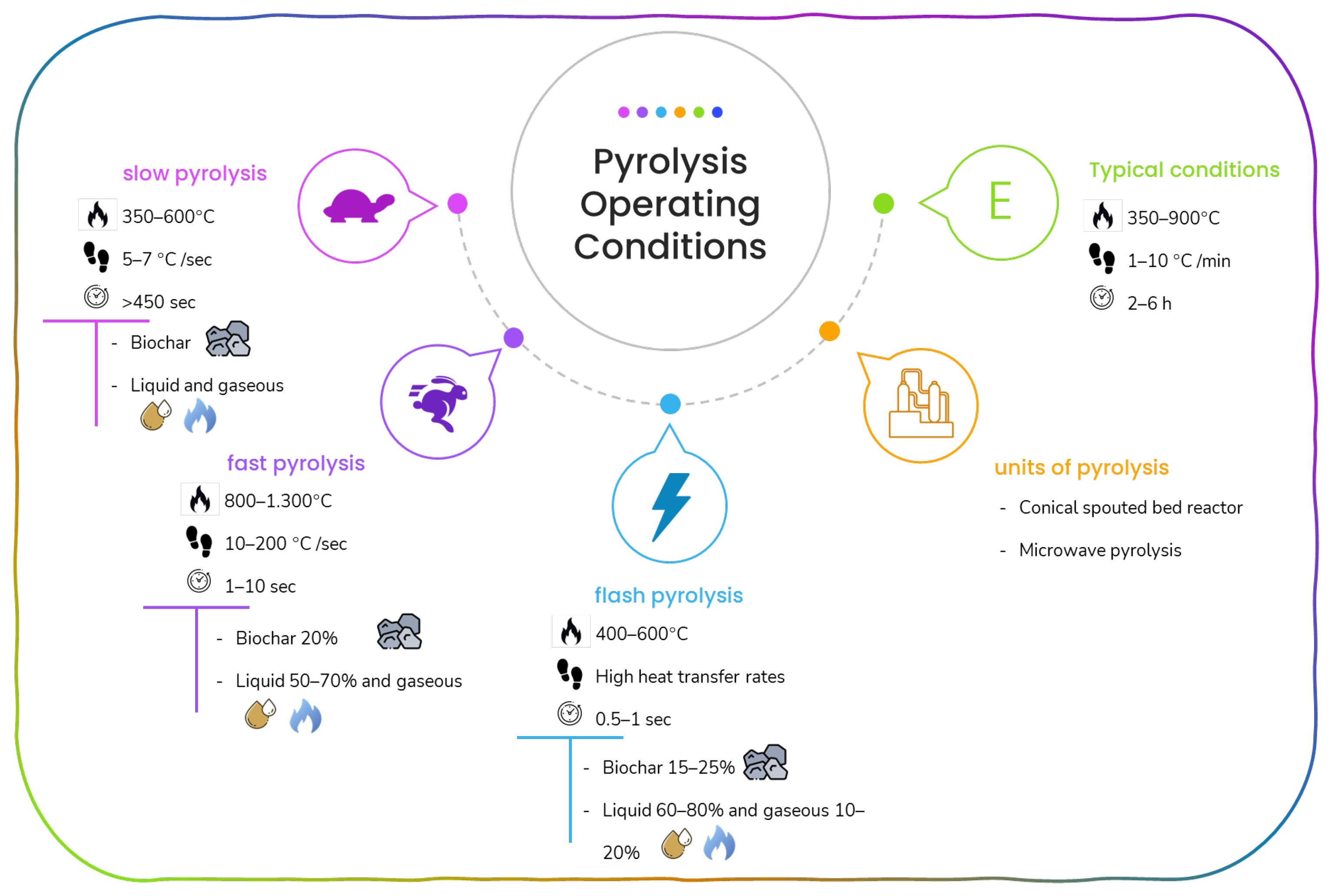
5. Pyrolysis Methods
5.1. Key Parameters in BC Characterization
- Yield
- ii.
- Ash Content
- iii.
- pH and Electric Conductivity (EC)
- iv.
- Surface and Porosity
- v.
- Functional groups via Fourier transform infrared spectroscopy (FTIR)
- vi.
- Total Carbon and Total Organic Carbon
- vii.
- Elemental Ratios (H:C, O:C, N:C)
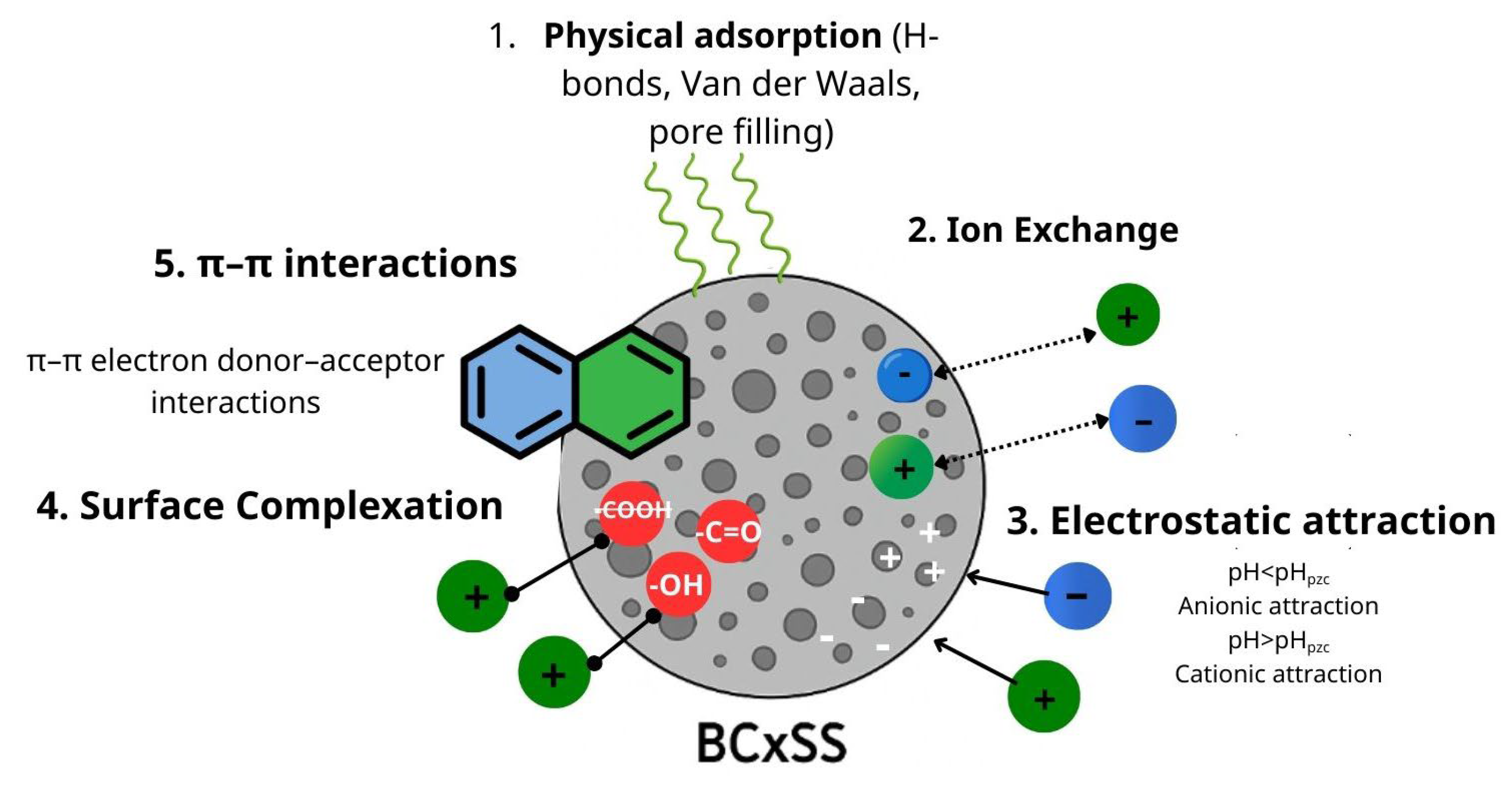
5.2. BCxSS as Adsorbent Material
- Organic micropollutants
- ii.
- Dyes
- iii.
- Heavy metals
- iv.
- Phenolic Compounds
- v.
- Microbes and antibiotic-resistant genes
5.3. Biochar as a Catalyst Precursor
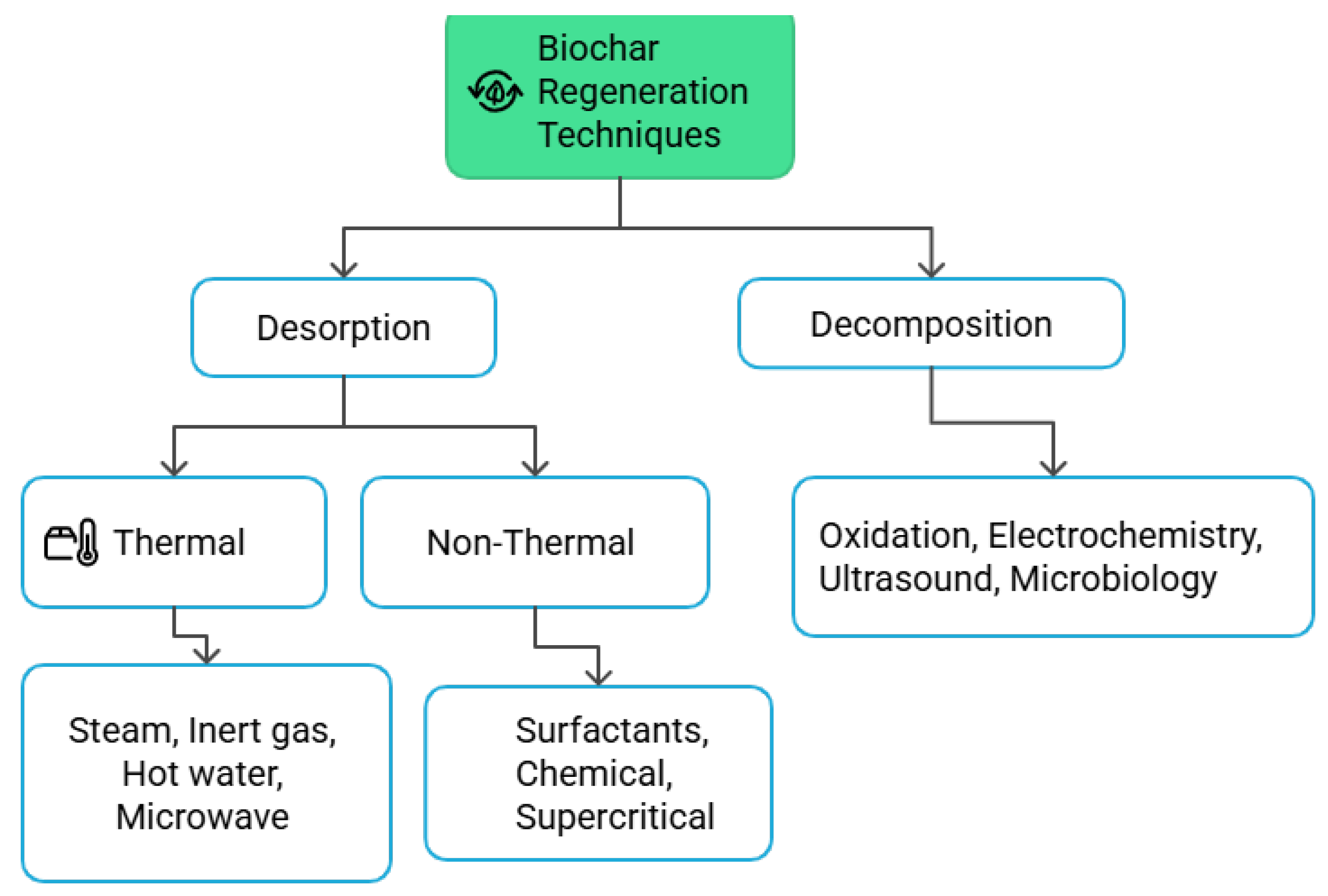
6. Regeneration of BCxSS
7. Cost Analysis of BCxSS
8. Conclusions
Supplementary Materials
Author Contributions
Funding
Data Availability Statement
Conflicts of Interest
Abbreviations
| SS | Sewage sludge |
| WW | Wastewater |
| BC | Biochar |
| BCxSS | Biochar produced by Sewage Sludge |
| PAHs | Polycyclic Aromatic Hydrocarbons |
| PFAs | Polyfluoroalkyl Substances |
| PPCPs | Pharmaceutical Personal Care Products |
| POPs | Persistent Organic Pollutants |
| CE | Circular Economy |
| HTC | Hydrothermal Carbonization |
| LA | Laser Ablation |
| EBR | Electron Beam Irradiation |
| EC | Electrical Conductivity |
| BET | Brunauer–Emmett–Teller |
| SSA | Specific Surface Area |
| FTIR | Fourier Transform Infrared Spectroscopy |
| TOC | Total Organic Carbon |
| TC | Tetracycline |
| AMC | Amoxicillin |
| SMX | Sulfamethoxazole |
| 2,4-DCP | 2,4-dichlorophenol |
| AB210 | Acidic Blue 210 |
| AB7 | Acidic Blue 7 |
| PC | Phenolic Compounds |
| ARG | Antibiotic Resistance Genes |
| ARB | Antibiotic-Resistant Bacteria |
| APIs | Active Pharmaceutical Ingredients |
References
- Schmitz, B.W.; Kitajima, M.; Campillo, M.E.; Gerba, C.P.; Pepper, I.L. Virus Reduction During Advanced Bardenpho and Conventional Wastewater Treatment Processes. Environ. Sci. Technol. 2016, 50, 9524–9532. [Google Scholar] [CrossRef] [Scilit] [PubMed]
- Angelakis, A.N.; Gikas, P. Water reuse: Overview of current practices and trends in the world with emphasis on EU states. Water Util. J. 2014, 8, 67–78. [Google Scholar]
- Gomes, J.; Frasson, D.; Quinta-Ferreira, R.M.; Matos, A.; Martins, R.C. Removal of Enteric Pathogens from Real Wastewater Using Single and Catalytic Ozonation. Water 2019, 11, 127. [Google Scholar] [CrossRef] [Scilit]
- Kanteraki, A.E.; Isari, E.A.; Svarnas, P.; Kalavrouziotis, I.K. Biosolids: The Trojan horse or the beautiful Helen for soil fertilization? Sci. Total Environ. 2022, 839, 156270. [Google Scholar] [CrossRef] [Scilit]
- Zaharioiu, A.M.; Bucura, F.; Ionete, R.E.; Marin, F.; Constantinescu, M.; Oancea, S. Opportunities regarding the use of technologies of energy recovery from sewage sludge. SN Appl. Sci. 2021, 3, 775. [Google Scholar] [CrossRef] [Scilit]
- Eurostat. Eurostat—European Statistics. 2022. Available online: https://ec.europa.eu/eurostat (accessed on 21 November 2025).
- Koumoulidis, D.; Varvaris, I.; Pittaki, Z.; Hadjimitsis, D. Sewage sludge in agricultural lands: The legislative framework in EU-28. Sustainability 2024, 16, 10946. [Google Scholar] [CrossRef] [Scilit]
- Kanteraki, A.E.; Isari, E.A.; Kokkinos, P.; Laumeyer, C.; Hilgenfeldt, V.; Steinmetz, H.; Kalavrouziotis, I.K. Current operational state of wastewater treatment plants in Greece: A nationwide survey. Int. J. Water Wastewater Treat. 2025, 10. [Google Scholar] [CrossRef] [Scilit]
- Krzeminski, P.; Tomei, M.C.; Karaolia, P.; Langenhoff, A.; Almeida, M.R.; Felis, E.; Gritten, F.; Andersen, H.R.; Fernandes, T.; Manaia, C.M.; et al. Performance of secondary wastewater treatment methods for the removal of contaminants of emerging concern implicated in crop uptake and antibiotic resistance spread: A review. Sci. Total Environ. 2019, 648, 1052–1081. [Google Scholar] [CrossRef] [Scilit]
- Podder, A.; Sadmani, A.A.; Reinhart, D.; Chang, N.B.; Goel, R. Per and poly-fluoroalkyl substances (PFAS) as a contaminant of emerging concern in surface water: A transboundary review of their occurrences and toxicity effects. J. Hazard. Mater. 2021, 419, 126361. [Google Scholar] [CrossRef] [Scilit]
- Fatta-Kassinos, D.; Meric, S.; Nikolaou, A. Pharmaceutical residues in environmental waters and wastewater: Current state of knowledge and future research. Anal. Bioanal. Chem. 2011, 399, 251–275. [Google Scholar] [CrossRef] [Scilit]
- Giannopoulos, G.; Tzanakakis, V.A.; Duelli, G.; Anastopoulos, I.; Aschonitis, V.G.; Arampatzis, G.; Barouchas, P.E. Municipal sewage sludge treatment and soil pH conclusively affect the nitrogen dynamics of amended soils. Environ. Adv. 2025, 19, 100618. [Google Scholar] [CrossRef] [Scilit]
- Steele, J.C.; Meng, X.-Z.; Venkatesan, A.K.; Halden, R.U. Comparative meta-analysis of organic contaminants in sewage sludge from the United States and China. Sci. Total Environ. 2022, 821, 153423. [Google Scholar] [CrossRef] [Scilit] [PubMed]
- Collivignarelli, M.C.; Abbà, A.; Benigna, I. The reuse of biosolids on agricultural land: Critical issues and perspective. Water Environ. Res. 2020, 92, 11–25. [Google Scholar] [CrossRef] [Scilit] [PubMed]
- Sahu, A.K.; Mitra, I.; Kleiven, H.; Holte, H.R.; Svensson, K. Cambi Thermal Hydrolysis Process (CambiTHP) for Sewage Sludge Treatment; Elsevier: Amsterdam, The Netherlands, 2021; pp. 405–422. [Google Scholar] [CrossRef] [Scilit]
- Gopinath, A.; Divyapriya, G.; Srivastava, V.; Laiju, A.R.; Nidheesh, P.V.; Kumar, M.S. Conversion of sewage sludge into biochar: A potential resource in water and wastewater treatment. Environ. Res. 2021, 194, 110656. [Google Scholar] [CrossRef] [Scilit]
- Varkolu, M.; Gundekari, S.; Omvesh; Palla, V.C.; Kumar, P.; Bhattacharjee, S.; Vinodkumar, T. Recent Advances in Biochar Production, Characterization, and Environmental Applications. Catalysts 2025, 15, 243. [Google Scholar] [CrossRef] [Scilit]
- Xiang, W.; Zhang, X.; Chen, J.; Zou, W.; He, F.; Hu, X.; Tsang, D.C.W.; Ok, Y.S.; Gao, B. Biochar technology in wastewater treatment: A critical review. Chemosphere 2020, 252, 126539. [Google Scholar] [CrossRef] [Scilit]
- Biliani, S.E.; Vakros, J.; Manariotis, I.D. Screening of raw and modified biochars from food wastes for the removal of phosphates, nitrates and ammonia from water. Sustainability 2022, 14, 16483. [Google Scholar] [CrossRef] [Scilit]
- Sklivaniotis, L.; Economy, P.; Karapanagioti, H.K.; Manariotis, I.D. Chlorine Removal from Water by Biochar Derived from Various Food Waste Natural Materials. Environ. Process. 2023, 10, 4. [Google Scholar] [CrossRef] [Scilit]
- Wang, J.; Wang, S. Preparation, modification and environmental application of biochar: A review. J. Clean. Prod. 2019, 227, 1002–1022. [Google Scholar] [CrossRef] [Scilit]
- Murtaza, G.; Ahmed, Z.; Usman, M. Feedstock type, pyrolysis temperature and acid modification effects on physiochemical attributes of biochar and soil quality. Arab. J. Geosci. 2022, 15, 305. [Google Scholar] [CrossRef] [Scilit]
- Shi, G.; Wu, Y.; Li, T.; Fu, Q.; Wei, Y. Mid- and long-term effects of biochar on soil improvement and soil erosion control of sloping farmland in a black soil region, China. J. Environ. Manag. 2022, 320, 115902. [Google Scholar] [CrossRef] [Scilit] [PubMed]
- Kawanna, M.; Elbebany, A.; Basyony, A. Impact of biochar soil amendment on tomato mosaic virus infection, growth and nutrients uptake of tomato plants. Alex. Sci. Exch. J. 2021, 42, 799–807. [Google Scholar] [CrossRef] [Scilit]
- Perez-Mercado, L.F.; Lalander, C.; Joel, A.; Ottoson, J.; Dalahmeh, S.; Vinnerås, B. Biochar filters as an on-farm treatment to reduce pathogens when irrigating with wastewater-polluted sources. J. Environ. Manag. 2019, 248, 109295. [Google Scholar] [CrossRef] [Scilit] [PubMed]
- Halden, R.U.; Venkatesan, A.K. Moving toward a waste-free circular economy by example of biosolids. Curr. Opin. Environ. Sci. Health 2020, 14, A1–A3. [Google Scholar] [CrossRef] [Scilit]
- Roychand, R.; Patel, S.; Halder, P.; Kundu, S.; Hampton, J.; Bergmann, D.; Surapaneni, A.; Shah, K.; Pramanik, B.K. Recycling biosolids as cement composites in raw, pyrolyzed and ashed forms: A waste utilisation approach to support circular economy. J. Build. Eng. 2021, 38, 102199. [Google Scholar] [CrossRef] [Scilit]
- Zhu, Y.; Zhao, Q.; Li, D.; Li, J.; Guo, W. Performance comparison of phosphorus recovery from different sludges in sewage treatment plants through pyrolysis. J. Clean. Prod. 2022, 372, 133728. [Google Scholar] [CrossRef] [Scilit]
- Kujawska, J.; Wojtaś, E.; Charmas, B. Biochar derived from sewage sludge: The impact of pyrolysis temperature on chemical properties and agronomic potential. Sustainability 2024, 16, 8225. [Google Scholar] [CrossRef] [Scilit]
- Agegnehu, G.; Srivastava, A.K.; Bird, M.I. The role of biochar and biochar-compost in improving soil quality and crop performance: A review. Appl. Soil Ecol. 2017, 119, 156–170. [Google Scholar] [CrossRef] [Scilit]
- Pelagalli, V.; Langone, M.; Matassa, S.; Race, M.; Tuffi, R.; Papirio, S.; Lens, P.N.L.; Lazzazzara, M.; Frugis, A.; Petta, L.; et al. Pyrolysis of municipal sewage sludge: Challenges, opportunities and new valorization routes for biochar, bio-oil, and pyrolysis gas. Environ. Sci. Water Res. Technol. 2024, 10, 2282–2312. [Google Scholar] [CrossRef] [Scilit]
- Fini, E.H.; Kazemi, M.; Poulikakos, L.; Lazorenko, G.; Akbarzade, V.; Lamanna, A.; Lammers, P. Perspectives on innovative non-fertilizer applications of sewage sludge for mitigating environmental and health hazards. Commun. Eng. 2024, 3, 178. [Google Scholar] [CrossRef] [Scilit]
- Zhao, L.; Sun, Z.F.; Pan, X.W.; Tan, J.Y.; Yang, S.S.; Wu, J.T.; Chen, C.; Yuan, Y.; Ren, N.Q. Sewage sludge derived biochar for environmental improvement: Advances, challenges, and solutions. Water Res. X 2023, 18, 100167. [Google Scholar] [CrossRef] [Scilit] [PubMed]
- Goldan, E.; Nedeff, V.; Barsan, N.; Culea, M.; Tomozei, C.; Panainte-Lehadus, M.; Mosnegutu, E. Evaluation of the use of sewage sludge biochar as a soil amendment—A review. Sustainability 2022, 14, 5309. [Google Scholar] [CrossRef] [Scilit]
- Kaya, D.; Croft, K.; Pamuru, S.T.; Yuan, C.; Davis, A.P.; Kjellerup, B.V. Considerations for evaluating innovative stormwater treatment media for removal of dissolved contaminants of concern with focus on biochar. Chemosphere 2022, 307, 135753. [Google Scholar] [CrossRef] [Scilit] [PubMed]
- Wang, L.; Liang, L.; Li, N.; Chen, G.; Guo, H.; Hou, L. A mini-review of sludge-derived biochar (SDB) for wastewater treatment: Recent advances in 2020–2025. Appl. Sci. 2025, 15, 6173. [Google Scholar] [CrossRef] [Scilit]
- Robazza, A.; Neumann, A. Energy recovery from syngas and pyrolysis wastewaters with anaerobic mixed cultures. Bioresour. Bioprocess. 2024, 11, 76. [Google Scholar] [CrossRef] [Scilit]
- Singh, E.; Mishra, R.; Kumar, A.; Shukla, S.K.; Lo, S.L.; Kumar, S. Circular economy-based environmental management using biochar: Driving towards sustainability. Process Saf. Environ. Prot. 2022, 163, 585–600. [Google Scholar] [CrossRef] [Scilit]
- Huang, C.; Mohamed, B.A.; Li, L.Y. Comparative life-cycle assessment of pyrolysis processes for producing bio-oil, biochar, and activated carbon from sewage sludge. Resour. Conserv. Recycl. 2022, 181, 106273. [Google Scholar] [CrossRef] [Scilit]
- Kłosok-Bazan, I.; Rak, A.; Boguniewicz-Zabłocka, J.; Kuczuk, A.; Capodaglio, A.G. Evaluating energy efficiency parameters of municipal wastewater treatment plants in terms of management strategies and carbon footprint reduction: Insights from three polish facilities. Energies 2024, 17, 5745. [Google Scholar] [CrossRef] [Scilit]
- Méndez, A.; Gómez, A.; Paz-Ferreiro, J.; Gascó, G. Effects of sewage sludge biochar on plant metal availability after application to a Mediterranean soil. Chemosphere 2012, 89, 1354–1359. [Google Scholar] [CrossRef] [Scilit]
- Singh, S.; Kumar, V.; Dhanjal, D.S.; Datta, S.; Bhatia, D.; Dhiman, J.; Samuel, J.; Prasad, R.; Singh, J. A Sustainable Paradigm of Sewage Sludge Biochar: Valorization, Opportunities, Challenges and Future Prospects. J. Clean. Prod. 2020, 269, 122259. [Google Scholar] [CrossRef] [Scilit]
- Biney, M.; Gusiatin, M.Z. Biochar from Co-Pyrolyzed Municipal Sewage Sludge (MSS): Part 1: Evaluating Types of Co-Substrates and Co-Pyrolysis Conditions. Materials 2024, 17, 3603. [Google Scholar] [CrossRef] [Scilit] [PubMed]
- Nicholas, H.L.; Halfacree, K.H.; Mabbett, I. Public Perceptions of Faecal Sludge Biochar and Biosolids Use in Agriculture. Sustainability 2022, 14, 15385. [Google Scholar] [CrossRef] [Scilit]
- Hossain, M.K.; Strezov Vladimir, V.; Chan, K.Y.; Ziolkowski, A.; Nelson, P.F. Influence of pyrolysis temperature on production and nutrient properties of wastewater sludge biochar. J. Environ. Manag. 2011, 92, 223–228. [Google Scholar] [CrossRef] [Scilit] [PubMed]
- Hale, S.E.; Lehmann, J.; Rutherford, D.; Zimmerman, A.R.; Bachmann, R.T.; Shitumbanuma, V.; O’Toole, A.; Sundqvist, K.L.; Peter, H.; Cornelissen, G. Quantifying the total and bioavailable polycyclic aromatic hydrocarbons and dioxins in biochars. Environ. Sci. Technol. 2012, 46, 2830–2838. [Google Scholar] [CrossRef] [Scilit]
- Chen, T.; Zhang, Y.; Wang, H.; Lu, W.; Zhou, Z.; Zhang, Y.; Ren, L. Influence of pyrolysis temperature on characteristics and heavy metal adsorptive performance of biochar derived from municipal sewage sludge. Bioresour. Technol. 2014, 164, 47–54. [Google Scholar] [CrossRef] [Scilit]
- Samaras, P.; Papadimitriou, C.A.; Vavoulidou, D.; Yiangou, M.; Sakellaropoulos, G.P. Effect of hexavalent chromium on the activated sludge process and on the sludge protozoan community. Bioresour. Technol. 2009, 100, 38–43. [Google Scholar] [CrossRef] [Scilit]
- Clarke, B.O.; Smith, S.R. Review of ‘emerging’ organic contaminants in biosolids and assessment of international research priorities for the agricultural use of biosolids. Environ. Int. 2011, 37, 226–247. [Google Scholar] [CrossRef] [Scilit]
- Eljarrat, E.; Barceló, D. Priority lists for persistent organic pollutants and emerging contaminants based on their relative toxic potency in environmental samples. TrAC-Trends Anal. Chem. 2003, 22, 655–665. [Google Scholar] [CrossRef] [Scilit]
- Lin, Y.-M.; Zhou, S.-Q.; Shih, S.-I.; Lin, S.-L.; Wang, L.-C.; Wu, Z.-S. Fate of Polychlorinated Dibenzo-p-dioxins and Dibenzofurans during the Thermal Treatment of Electric Arc Furnace Fly Ash. Aerosol Air Qual. Res. 2011, 11, 584–595. [Google Scholar] [CrossRef] [Scilit]
- aus der Beek, T.; Weber, F.-A.; Bergmann, A.; Hickmann, S.; Ebert, I.; Hein, A.; Küster, A. Pharmaceuticals in the environment—Global occurrences and perspectives. Environ. Toxicol. Chem. 2015, 35, 823–835. [Google Scholar] [CrossRef] [Scilit]
- Verlicchi, P.; Al Aukidy, M.; Galletti, A.; Petrovic, M.; Barceló, D. Hospital effluent: Investigation of the concentrations and distribution of pharmaceuticals and environmental risk assessment. Sci. Total Environ. 2012, 430, 109–118. [Google Scholar] [CrossRef] [Scilit]
- Silva, V.; Mol, H.G.J.; Zomer, P.; Tienstra, M.; Ritsema, C.J.; Geissen, V. Pesticide residues in European agricultural soils—A hidden reality unfolded. Sci. Total Environ. 2019, 653, 1532–1545. [Google Scholar] [CrossRef] [Scilit] [PubMed]
- Geng, H.; Xu, Y.; Zheng, L.; Gong, H.; Dai, L.; Dai, X. An Overview of Removing Heavy Metals from Sewage Sludge: Achievements and Perspectives. Environ. Pollut. 2020, 266, 115375. [Google Scholar] [CrossRef] [Scilit] [PubMed]
- Zhang, X.; Zhao, B.; Liu, H.; Zhao, Y.; Li, L. Effects of Pyrolysis Temperature on Biochar’s Characteristics and Speciation and Environmental Risks of Heavy Metals in Sewage Sludge Biochars. Environ. Technol. Innov. 2022, 26, 102288. [Google Scholar] [CrossRef] [Scilit]
- Zhou, D.; Liu, D.; Gao, F.; Li, M.; Luo, X. Effects of Biochar-Derived Sewage Sludge on Heavy Metal Adsorption and Immobilization in Soils. Int. J. Environ. Res. Public Health 2017, 14, 681. [Google Scholar] [CrossRef] [Scilit]
- Regkouzas, P.; Komioti, E.; Diamadopoulos, E. Determination of Phosphorus and Metal Leaching Potential in Sewage Sludge Biochar. Circ. Econ. Sustain. 2025, 1–12. [Google Scholar] [CrossRef] [Scilit]
- Brickler, C.A.; Wu, Y.; Li, S.; Anandhi, A.; Chen, G. Comparing Physicochemical Properties and Sorption Behaviors of Pyrolysis-Derived and Microwave-Mediated Biochar. Sustainability 2021, 13, 2359. [Google Scholar] [CrossRef] [Scilit]
- Moško, J.; Pohořelý, M.; Cajthaml, T.; Jeremiáš, M.; Robles-Aguilar, A.A.; Skoblia, S.; Beňo, Z.; Innemanová, P.; Linhartová, L.; Michalíková, K.; et al. Effect of Pyrolysis Temperature on Removal of Organic Pollutants Present in Anaerobically Stabilized Sewage Sludge. Chemosphere 2021, 265, 129082. [Google Scholar] [CrossRef] [Scilit]
- Rehana, M.R.; Gladis, R.; Rani, B.; Joseph, B.; Leno, N.; Priya Kumari, I. Effect of Sewage Sludge, Sewage Sludge Compost and Sewage Sludge Biochar on Heavy Metal and It Fractions. Int. J. Environ. Clim. Change 2024, 14, 196–206. [Google Scholar] [CrossRef] [Scilit]
- Yu, F.; Lv, H.; Fan, L.; Chen, L.; Hu, Y.; Wang, X.; Guo, Q.; Cui, X.; Zhou, N.; Jiao, L. Co-Pyrolysis of Sewage Sludge and Poplar Sawdust under Controlled Low-Oxygen Conditions: Biochar Properties and Heavy Metals Behavior. J. Anal. Appl. Pyrolysis 2023, 169, 105868. [Google Scholar] [CrossRef] [Scilit]
- Zhou, J.; Liu, S.; Zhou, N.; Fan, L.; Zhang, Y.; Peng, P.; Anderson, E.; Ding, K.; Wang, Y.; Liu, Y.; et al. Development and application of a continuous fast microwave pyrolysis system for sewage sludge utilization. Bioresour. Technol. 2018, 256, 295–301. [Google Scholar] [CrossRef] [Scilit]
- Kulkarni, S.S.; Mayilswamy, N.; Sidharth, S.; Subash, A.; Satapathy, A.; Kandasubramanian, B. Sustainable wastewater management via biochar derived from industrial sewage sludge. Circ. Econ. Sustain. 2024, 4, 163–200. [Google Scholar] [CrossRef] [Scilit]
- Mahmood, F.; Ali, M.; Khan, M.; Fabrice, C.; Isa, Y.M.; Kozlov, A.; Penzik, M.; Xie, X.; Yang, H.; Zhang, S.; et al. A review of biochar production and its employment in synthesizing carbon-based materials for supercapacitors. Ind. Crops Prod. 2025, 227, 120830. [Google Scholar] [CrossRef] [Scilit]
- Fahmy, T.Y.A.; Fahmy, Y.; Mobarak, F.; El-Sakhawy, M.; Abou-Zeid, R.E. Biomass pyrolysis: Past, present, and future. Environ. Dev. Sustain. 2020, 22, 17–32. [Google Scholar] [CrossRef] [Scilit]
- Elkhalifa, S.; Mackey, H.R.; Al-Ansari, T.; McKay, G. Pyrolysis of biosolids to produce biochars: A review. Sustainability 2022, 14, 9626. [Google Scholar] [CrossRef] [Scilit]
- Raj, A.; Yadav, A.; Arya, S.; Sirohi, R.; Kumar, S.; Rawat, A.P.; Thakur, R.S.; Patel, D.K.; Bahadur, L.; Pandey, A. Preparation, characterization and agri applications of biochar produced by pyrolysis of sewage sludge at different temperatures. Sci. Total Environ. 2021, 795, 148722. [Google Scholar] [CrossRef] [Scilit]
- Cao, J.; Jiang, Y.; Tan, X.; Li, L.; Cao, S.; Dou, J.; Chen, R.; Hu, X.; Qiu, Z.; Li, M.; et al. Sludge-based biochar preparation: Pyrolysis and co-pyrolysis methods, improvements, and environmental applications. Fuel 2024, 373, 132265. [Google Scholar] [CrossRef] [Scilit]
- Bauer, T.M.; Polyakov, V.A.; Minkina, T.M.; Kirichkov, M.V.; Gritsai, M.A.; Namsaraev, Z.B.; Rajput, V.D. Biochar derived from sewage sludge as a soil amendment: The impact of pyrolysis temperature on product characteristics along with heavy metal environmental risk. Nanobiotechnol. Rep. 2024, 19, 366–380. [Google Scholar] [CrossRef] [Scilit]
- Alvarez, J.; Amutio, M.; Lopez, G.; Barbarias, I.; Bilbao, J.; Olazar, M. Sewage sludge valorization by flash pyrolysis in a conical spouted bed reactor. Chem. Eng. J. 2015, 273, 173–183. [Google Scholar] [CrossRef] [Scilit]
- Protogene, M.; Murindangabo, Y.T.; Frouz, J.; Brom, J. Characterization, fractionation and untapped potential of phosphate-amended sewage sludge biochar in soil-plant systems. Chemosphere 2024, 367, 143565. [Google Scholar] [CrossRef] [Scilit]
- Altıkat, A.; Alma, M.H.; Altıkat, A.; Bilgili, M.E.; Altıkat, S. A comprehensive study of biochar yield and quality concerning pyrolysis conditions: A multifaceted approach. Sustainability 2024, 16, 937. [Google Scholar] [CrossRef] [Scilit]
- Khanmohammadi, Z.; Afyuni, M.; Mosaddeghi, M.R. Effect of pyrolysis temperature on chemical and physical properties of sewage sludge biochar. Waste Manag. Res. 2015, 33, 275–283. [Google Scholar] [CrossRef] [Scilit]
- Zhang, J.; Lü, F.; Zhang, H.; Shao, L.; Chen, D.; He, P. Multiscale visualization of the structural and characteristic changes of sewage sludge biochar oriented towards potential agronomic and environmental implication. Sci. Rep. 2015, 5, 9406. [Google Scholar] [CrossRef] [Scilit] [PubMed]
- Wang, Z.; Liu, S.; Liu, K.; Ji, S.; Wang, M.; Shu, X. Effect of temperature on pyrolysis of sewage sludge: Biochar properties and environmental risks from heavy metals. EDP Sci. 2021, 237, 01040. [Google Scholar] [CrossRef] [Scilit]
- de Souza Souza, C.; Bomfim, M.R.; Conceição de Almeida, M.D.; Alves, L.D.S.; de Santana, W.N.; da Silva Amorim, I.C.; Santos, J.A.G. Induced changes of pyrolysis temperature on the physicochemical traits of sewage sludge and on the potential ecological risks. Sci. Rep. 2021, 11, 974. [Google Scholar] [CrossRef] [Scilit] [PubMed]
- Hong, Z.; Zhong, F.; Niu, W.; Zhang, K.; Su, J.; Liu, J.; Li, L.; Wu, F. Effects of temperature and particle size on the compositions, energy conversions and structural characteristics of pyrolysis products from different crop residues. Energy 2020, 190, 116413. [Google Scholar] [CrossRef] [Scilit]
- Zoghlami, R.I.; Hechmi, S.; Weghlani, R.; Jedidi, N.; Moussa, M. Biochar derived from domestic sewage sludge: Influence of temperature pyrolysis on biochars’ chemical properties and phytotoxicity. J. Chem. 2021, 2021, 1818241. [Google Scholar] [CrossRef] [Scilit]
- Yuan, H.; Lu, T.; Huang, H.; Zhao, D.; Kobayashi, N.; Chen, Y. Influence of pyrolysis temperature on physical and chemical properties of biochar made from sewage sludge. J. Anal. Appl. Pyrolysis 2015, 112, 284–289. [Google Scholar] [CrossRef] [Scilit]
- Xu, Q.; Tang, S.; Wang, J.; Ko, J.H. Pyrolysis kinetics of sewage sludge and its biochar characteristics. Process Saf. Environ. Prot. 2018, 115, 49–56. [Google Scholar] [CrossRef] [Scilit]
- Figueiredo, C.; Lopes, H.; Coser, T.; Vale, A.; Busato, J.; Aguiar, N.; Novotny, E.; Canellas, L. Influence of pyrolysis temperature on chemical and physical properties of biochar from sewage sludge. Arch. Agron. Soil Sci. 2018, 64, 881–889. [Google Scholar] [CrossRef] [Scilit]
- Vali, N. Engineering Biochar from Municipal Sewage Sludge: An Experimental and Theoretical Study. Available online: http://urn.kb.se/resolve?urn=urn:nbn:se:hb:diva-30374 (accessed on 29 October 2025).
- Aktar, S.; Hossain, M.A.; Rathnayake, N.; Patel, S.; Gasco, G.; Mendez, A.; de Figueiredo, C.; Surapaneni, A.; Shah, K.; Paz-Ferreiro, J. Effects of temperature and carrier gas on physico-chemical properties of biochar derived from biosolids. J. Anal. Appl. Pyrolysis 2022, 164, 105542. [Google Scholar] [CrossRef] [Scilit]
- Ghorbani, M.; Amirahmadi, E.; Neugschwandtner, R.W.; Konvalina, P.; Kopecký, M.; Moudrý, J.; Perná, K.; Murindangabo, Y.T. The impact of pyrolysis temperature on biochar properties and its effects on soil hydrological properties. Sustainability 2022, 14, 14722. [Google Scholar] [CrossRef] [Scilit]
- Zhang, J.; Shao, J.; Jin, Q.; Li, Z.; Zhang, X.; Chen, Y.; Zhang, S.; Chen, H. Sludge-based biochar activation to enhance Pb(II) adsorption. Fuel 2019, 252, 101–108. [Google Scholar] [CrossRef] [Scilit]
- Kanteraki, A.E.; Isari, E.A.; Zafeiropoulos, I.; Cangemi, S.; Bountla, A.; Kalavrouziotis, I.K. Structural analysis and characterization of biosolids. A case study of biosolids from wastewater treatment plants in Western Greece. Sci. Total Environ. 2024, 908, 168425. [Google Scholar] [CrossRef] [Scilit]
- Racek, J.; Sevcik, J.; Chorazy, T.; Kucerik, J.; Hlavinek, P. Biochar—Recovery material from pyrolysis of sewage sludge: A review. Waste Biomass Valorization 2020, 11, 3677–3709. [Google Scholar] [CrossRef] [Scilit]
- Ševčík, J.; Raček, J.; Hluštík, P.; Hlavínek, P.; Dvořák, K. Microwave pyrolysis full-scale application on sewage sludge. Desalin. Water Treat. 2018, 112, 161–170. [Google Scholar] [CrossRef] [Scilit]
- IBI—International Biochar Initiative. 2015. Available online: https://biochar-international.org/ (accessed on 21 November 2025).
- EBC—European Biochar Certificate. European Biochar Certificate—Guidelines for a Sustainable Production of Biochar; Version 10.4; Carbon Standards International (CSI): Frick, Switzerland, 2024; Available online: http://european-biochar.org (accessed on 21 November 2025).
- Zielińska, A.; Oleszczuk, P.; Charmas, B.; Skubiszewska-Zięba, J.; Pasieczna-Patkowska, S. Effect of sewage sludge properties on the biochar characteristic. J. Anal. Appl. Pyrolysis 2015, 112, 201–213. [Google Scholar] [CrossRef] [Scilit]
- Callegari, A.; Capodaglio, A.G. Properties and beneficial uses of (bio)chars, with special attention to products from sewage sludge pyrolysis. Resources 2018, 7, 20. [Google Scholar] [CrossRef] [Scilit]
- Anastopoulos, I.; Pashalidis, I.; Orfanos, A.G.; Manariotis, I.D.; Tatarchuk, T.; Sellaoui, L.; Bonilla-Petriciolet, A.; Mittal, A.; Núñez-Delgado, A. Removal of caffeine, nicotine and amoxicillin from (waste)waters by various adsorbents. A review. J. Environ. Manag. 2020, 261, 110236. [Google Scholar] [CrossRef] [Scilit]
- García-Delgado, C.; Delgado-Moreno, L.; Toro, M.; Puñal, M.; Martín-Trueba, M.; Eymar, E.; Ruíz, A.I. The role of biochar and green compost amendments in the adsorption, leaching, and degradation of sulfamethoxazole in basic soil. Chemosphere 2023, 344, 140364. [Google Scholar] [CrossRef] [Scilit]
- Rangabhashiyam, S.; dos Santos Lins, P.V.; de Magalhães Oliveira, L.M.; Sepulveda, P.; Ighalo, J.O.; Rajapaksha, A.U.; Meili, L. Sewage sludge-derived biochar for the adsorptive removal of wastewater pollutants: A critical review. Environ. Pollut. 2022, 293, 118581. [Google Scholar] [CrossRef] [Scilit]
- Regkouzas, P.; Diamadopoulos, E. Adsorption of selected organic micro-pollutants on sewage sludge biochar. Chemosphere 2019, 224, 840–851. [Google Scholar] [CrossRef] [Scilit]
- Fan, S.; Tang, J.; Wang, Y.; Li, H.; Zhang, H.; Tang, J.; Wang, Z.; Li, X. Biochar prepared from co-pyrolysis of municipal sewage sludge and tea waste for the adsorption of methylene blue from aqueous solutions: Kinetics, isotherm, thermodynamic and mechanism. J. Mol. Liq. 2016, 220, 432–441. [Google Scholar] [CrossRef] [Scilit]
- Gao, J.; Zhou, Y.; Yang, X.; Yao, Y.; Qi, J.; Zhu, Z.; Yang, Y.; Fang, D.; Zhou, L.; Li, J. Dyeing sludge-derived biochar for efficient removal of antibiotic from water. Sci. Total Environ. 2024, 912, 169035. [Google Scholar] [CrossRef] [Scilit]
- Kalderis, D.; Kayan, B.; Akay, S.; Kulaksız, E.; Gözmen, B. Adsorption of 2,4-dichlorophenol on paper sludge/wheat husk biochar: Process optimization and comparison with biochars prepared from wood chips, sewage sludge and HOG fuel/demolition waste. J. Environ. Chem. Eng. 2017, 5, 2222–2231. [Google Scholar] [CrossRef] [Scilit]
- Ferreira, C.I.A.; Calisto, V.; Otero, M.; Nadais, H.; Esteves, V.I. Comparative adsorption evaluation of biochars from paper mill sludge with commercial activated carbon for the removal of fish anaesthetics from water in Recirculating Aquaculture Systems. Aquac. Eng. 2016, 74, 76–83. [Google Scholar] [CrossRef] [Scilit]
- Zhang, H.; Tu, Y.J.; Duan, Y.P.; Liu, J.; Zhi, W.; Tang, Y.; Xiao, L.S.; Meng, L. Production of biochar from waste sludge/leaf for fast and efficient removal of diclofenac. J. Mol. Liq. 2020, 299, 112193. [Google Scholar] [CrossRef] [Scilit]
- Li, J.; Yu, G.; Pan, L.; Li, C.; You, F.; Wang, Y. Ciprofloxacin adsorption by biochar derived from co-pyrolysis of sewage sludge and bamboo waste. Environ. Sci. Pollut. Res. 2020, 27, 22806–22817. [Google Scholar] [CrossRef] [Scilit]
- Dai, Q.; Liu, Q.; Zhang, X.; Cao, L.; Hu, B.; Shao, J.; Ding, F.; Guo, X.; Gao, B. Synergetic effect of co-pyrolysis of sewage sludge and lignin on biochar production and adsorption of methylene blue. Fuel 2022, 324, 124587. [Google Scholar] [CrossRef] [Scilit]
- Wu, Q.; Zhang, Y.; Cui, M.H.; Liu, H.; Liu, H.; Zheng, Z.; Zheng, W.; Zhang, C.; Wen, D. Pyrolyzing pharmaceutical sludge to biochar as an efficient adsorbent for deep removal of fluoroquinolone antibiotics from pharmaceutical wastewater: Performance and mechanism. J. Hazard. Mater. 2022, 426, 127798. [Google Scholar] [CrossRef] [Scilit]
- Liu, H.; Xu, G.; Li, G. The characteristics of pharmaceutical sludge-derived biochar and its application for the adsorption of tetracycline. Sci. Total Environ. 2020, 747, 141492. [Google Scholar] [CrossRef] [Scilit] [PubMed]
- Zhong, M.; Zhang, Z.; Zhang, J.; Luo, Z.; Chen, Y.; Liu, M.; Gong, B.; Cui, H.; Cui, L. Impact of sewage sludge biochar spheres as constructed wetland substrates on antibiotic removal and application. J. Environ. Manag. 2025, 380, 125186. [Google Scholar] [CrossRef] [Scilit] [PubMed]
- Ma, Y.; Li, P.; Yang, L.; Wu, L.; He, L.; Gao, F.; Qi, X.; Zhang, Z. Iron/zinc and phosphoric acid modified sludge biochar as an efficient adsorbent for fluoroquinolones antibiotics removal. Ecotoxicol. Environ. Saf. 2020, 196, 110550. [Google Scholar] [CrossRef] [Scilit] [PubMed]
- Tang, L.; Yu, J.; Pang, Y.; Zeng, G.; Deng, Y.; Wang, J.; Ren, X.; Ye, S.; Peng, B.; Feng, H. Sustainable efficient adsorbent: Alkali-acid modified magnetic biochar derived from sewage sludge for aqueous organic contaminant removal. Chem. Eng. J. 2018, 336, 160–169. [Google Scholar] [CrossRef] [Scilit]
- Sewu, D.D.; Lee, D.S.; Woo, S.H.; Kalderis, D. Decolorization of triarylmethane dyes, malachite green, and crystal violet, by sewage sludge biochar: Isotherm, kinetics, and adsorption mechanism comparison. Korean J. Chem. Eng. 2021, 38, 531–539. [Google Scholar] [CrossRef] [Scilit]
- Jellali, S.; Azzaz, A.A.; Al-Harrasi, M.; Charabi, Y.; Al-Sabahi, J.N.; Al-Raeesi, A.; Usman, M.; Al Nasiri, N.; Al-Abri, M.; Jeguirim, M. Conversion of industrial sludge into activated biochar for effective cationic dye removal: Characterization and adsorption properties assessment. Water 2022, 14, 2206. [Google Scholar] [CrossRef] [Scilit]
- Zhai, S.; Li, M.; Wang, D.; Ju, X.; Fu, S. Cyano and acylamino group modification for tannery sludge bio-char: Enhancement of adsorption universality for dye pollutants. J. Environ. Chem. Eng. 2021, 9, 104939. [Google Scholar] [CrossRef] [Scilit]
- Singh, V.; Srivastava, V.C. Transformation of Textile Dyeing Industrial Sludge into Economical Biochar for Sorption of Ofloxacin: Equilibrium, Kinetic, and Cost Analysis. Biomass Convers. Biorefin. 2022, 14, 1881–1893. [Google Scholar] [CrossRef] [Scilit]
- Ravindiran, G.; Sundaram, H.; Rajendran, E.M.; Ramasamy, S.; Nabil, A.Z.; Ahmed, B. Removal of azo dyes from synthetic wastewater using biochar derived from sewage sludge to prevent groundwater contamination. Urban Clim. 2023, 49, 101502. [Google Scholar] [CrossRef] [Scilit]
- Sun, Z.; Kou, W.; Leng, J.; Xu, Y.; Ke, S.; Ren, W. Thermally derived sludge biochar as an efficient activator of persulfate for dye wastewater treatment. Environ. Res. 2025, 287, 123146. [Google Scholar] [CrossRef] [Scilit]
- Qian, W.; Deng, Y.; Zhang, Y.; Li, Y.; Fang, Y.; Li, X.; Liang, J.; Liu, H. Dyeing sludge-derived biochar for efficient removal of malachite green from dyeing wastewater. Water Emerg. Contam. Nanoplast. 2024, 3, 18. [Google Scholar] [CrossRef] [Scilit]
- Liu, Q.; Wang, S.; Zhou, J.; Bao, L.; Zhou, W.; Zhang, N. Accumulation and Transport of Cd, Pb, As, and Cr in Different Maize Varieties in Southwest China. Agriculture 2025, 15, 203. [Google Scholar] [CrossRef] [Scilit]
- Trivedi, Y.; Sharma, M.; Mishra, R.K.; Sharma, A.; Joshi, J.; Gupta, A.B.; Achintya, B.; Shah, K.; Vuppaladadiyamd, A.K. Biochar potential for pollutant removal during wastewater treatment: A comprehensive review of separation mechanisms, technological integration, and process analysis. Desalination 2025, 600, 118509. [Google Scholar] [CrossRef] [Scilit]
- Soni, N.K.; Yadav, K.; Prabhansu; Bhale, P.V. Synthesis and characterization of sewage sludge biochar toward adsorptive removal of pollutants for sustainability: A review. J. Therm. Anal. Calorim. 2025, 150, 3967–3989. [Google Scholar] [CrossRef] [Scilit]
- Khalil, A.L.; Al-Ani, F.H.; Hameed, A. Modified biochar derived from sewage sludge for purification of lead-contaminated water. Open Eng. 2025, 15, 20240075. [Google Scholar] [CrossRef] [Scilit]
- Zhang, M.; Li, J.; Wang, Y.; Yang, C. Impacts of different biochar types on the anaerobic digestion of sewage sludge. RSC Adv. 2019, 9, 42375–42386. [Google Scholar] [CrossRef] [Scilit]
- Yin, G.; Tao, L.; Chen, X.; Bolan, N.S.; Sarkar, B.; Lin, Q.; Wang, H. Quantitative analysis on the mechanism of Cd2+ removal by MgCl2-modified biochar in aqueous solutions. J. Hazard. Mater. 2021, 420, 126487. [Google Scholar] [CrossRef] [Scilit]
- Zeng, Y.; Xu, Z.; Dong, B. Enhanced Cu2+ and Cd2+ removal by a novel co-pyrolysis biochar derived from sewage sludge and phosphorus tailings: Adsorption performance and mechanisms. Environ. Geochem. Health 2024, 46, 396. [Google Scholar] [CrossRef] [Scilit]
- Wu, M.; Liu, B.; Li, J.; Su, X.; Liu, W.; Li, X. Influence of pyrolysis temperature on sludge biochar: The ecological risk assessment of heavy metals and the adsorption of Cd(II). Environ. Sci. Pollut. Res. 2023, 30, 12608–12617. [Google Scholar] [CrossRef] [Scilit]
- Fan, J.; Li, Y.; Yu, H.; Li, Y.; Yuan, Q.; Xiao, H.; Li, F.; Pan, B. Using sewage sludge with high ash content for biochar production and Cu(II) sorption. Sci. Total Environ. 2020, 713, 136663. [Google Scholar] [CrossRef] [Scilit]
- Shen, T.; Tang, Y.; Lu, X.Y.; Meng, Z. Mechanisms of copper stabilization by mineral constituents in sewage sludge biochar. J. Clean. Prod. 2018, 193, 185–193. [Google Scholar] [CrossRef] [Scilit]
- Ho, S.H.; Chen, Y.D.; Yang, Z.K.; Nagarajan, D.; Chang, J.S.; Ren, N.Q. High-efficiency removal of lead from wastewater by biochar derived from anaerobic digestion sludge. Bioresour. Technol. 2017, 246, 142–149. [Google Scholar] [CrossRef] [Scilit]
- Ifthikar, J.; Wang, T.; Khan, A.; Jawad, A.; Sun, T.; Jiao, X.; Chen, Z.; Wang, J.; Wang, Q.; Wang, H.; et al. Highly efficient lead distribution by magnetic sewage sludge biochar: Sorption mechanisms and bench applications. Bioresour. Technol. 2017, 238, 399–406. [Google Scholar] [CrossRef] [Scilit] [PubMed]
- Mu’azu, N.D.; Jarrah, N.; Zubair, M.; Alagha, O. Removal of phenolic compounds from water using sewage sludge-based activated carbon adsorption: A review. Int. J. Environ. Res. Public Health 2017, 14, 1094. [Google Scholar] [CrossRef] [Scilit] [PubMed]
- Sierra, I.; Iriarte-Velasco, U.; Ayastuy, J.L.; Aguayo, A.T. Production of magnetic sewage sludge biochar: Investigation of the activation mechanism and effect of the activating agent and temperature. Biomass Convers. Biorefin. 2023, 13, 17101–17118. [Google Scholar] [CrossRef] [Scilit]
- Zhao, M.H.; Bai, X.; Fan, X.; Li, Y.; Liu, Y.; Huang, J.L.; Mo, W.L.; Wei, X.Y.; Saikia, B.K. Removal behaviors of phenol from aqueous solution using industrial coal sludge-derived porous carbon sorbent. J. Mol. Liq. 2023, 385, 122427. [Google Scholar] [CrossRef] [Scilit]
- Donowitz, J.R.; Drew, J.; Taniuchi, M.; Platts-Mills, J.A.; Alam, M.; Ferdous, T.; Shama, T.; Islam, M.O.; Kabir, M.; Nayak, U.; et al. Diarrheal pathogens associated with growth and neurodevelopment. Clin. Infect. Dis. 2021, 73, E683–E691. [Google Scholar] [CrossRef] [Scilit]
- Poveda, J.; Martínez-Gómez, Á.; Fenoll, C.; Escobar, C. The use of biochar for plant pathogen control. Phytopathology 2021, 111, 1490–1499. [Google Scholar] [CrossRef] [Scilit]
- de Medeiros, E.V.; Lima, N.T.; de Sousa Lima, J.R.; Pinto, K.M.S.; da Costa, D.P.; Franco Junior, C.L.; Souza, R.M.S.; Hammecker, C. Biochar as a strategy to manage plant diseases caused by pathogens inhabiting the soil: A critical review. Phytoparasitica 2021, 49, 713–726. [Google Scholar] [CrossRef] [Scilit]
- Hou, J.; Pugazhendhi, A.; Phuong, T.N.; Thanh, N.C.; Brindhadevi, K.; Velu, G.; Lan, T.; Yuan, D. Plant resistance to disease: Using biochar to inhibit harmful microbes and absorb nutrients. Environ. Res. 2022, 214, 113883. [Google Scholar] [CrossRef] [Scilit]
- de Araujo, A.S.; Blum, L.E.B.; Andrade, D.V.N.; da Silva Júnior, P.B.; Lustosa Filho, J.F.; Figueiredo, C.C.D. Sewage sludge biochar with Trichoderma afroharzianum for control of Agroathelia rolfsii in tomato seedlings. J. Plant Dis. Prot. 2025, 132, 173. [Google Scholar] [CrossRef] [Scilit]
- Xu, S.; Attinti, R.; Adams, E.; Wei, J.; Kniel, K.; Zhuang, J.; Jin, Y. Mutually facilitated co-transport of two different viruses through reactive porous media. Water Res. 2017, 123, 40–48. [Google Scholar] [CrossRef] [Scilit] [PubMed]
- Sasidharan, S.; Bradford, S.A.; Šimůnek, J.; Torkzaban, S.; Vanderzalm, J. Transport and fate of viruses in sediment and stormwater from a Managed Aquifer Recharge site. J. Hydrol. 2017, 555, 724–735. [Google Scholar] [CrossRef] [Scilit]
- Bellou, M.I.; Syngouna, V.I.; Tselepi, M.A.; Kokkinos, P.A.; Paparrodopoulos, S.C.; Vantarakis, A.; Chrysikopoulos, C.V. Interaction of human adenoviruses and coliphages with kaolinite and bentonite. Sci. Total Environ. 2015, 517, 86–95. [Google Scholar] [CrossRef] [Scilit]
- Hayes, E.K.; Stoddart, A.K.; Gagnon, G.A. Adsorption of SARS-CoV-2 onto granular activated carbon (GAC) in wastewater: Implications for improvements in passive sampling. Sci. Total Environ. 2022, 847, 157548. [Google Scholar] [CrossRef] [Scilit]
- Cheng, Y.; Lu, K.; Chen, Z.; Li, N.; Wang, M. Biochar reduced the risks of human bacterial pathogens in soil via disturbing quorum sensing mediated by persistent free radicals. Environ. Sci. Technol. 2024, 58, 22343–22354. [Google Scholar] [CrossRef] [Scilit]
- Chen, X.; Yang, L.; Guo, J.; Xu, S.; Di, J.; Zhuang, J. Interactive removal of bacterial and viral particles during transport through low-cost filtering materials. Front. Microbiol. 2022, 13, 970338. [Google Scholar] [CrossRef] [Scilit]
- Zhou, B.; Yang, Y.; Yu, L.; Song, G.; Ge, J.; Du, R. Characterization of nanosilver antibacterial bacterial cellulose composite membranes coated with montmorillonite and their potential application in food packaging. Int. J. Biol. Macromol. 2025, 289, 138685. [Google Scholar] [CrossRef] [Scilit]
- Abit, S.M.; Bolster, C.H.; Cai, P.; Walker, S.L. Influence of feedstock and pyrolysis temperature of biochar amendments on transport of Escherichia coli in saturated and unsaturated soil. Environ. Sci. Technol. 2012, 46, 8097–8105. [Google Scholar] [CrossRef] [Scilit]
- Graham, K.E.; Anderson, C.E.; Boehm, A.B. Viral pathogens in urban stormwater runoff: Occurrence and removal via vegetated biochar-amended biofilters. Water Res. 2021, 207, 117829. [Google Scholar] [CrossRef] [Scilit]
- Chen, X.; Wang, R.; Chen, F.; Styszko, K. Transport and removal of viruses in soil: Evaluating low-cost filtering materials for groundwater protection. J. Hazard. Mater. 2025, 496, 139538. [Google Scholar] [CrossRef] [Scilit] [PubMed]
- Maleki Shahraki, Z.; Mao, X. Biochar application in biofiltration systems to remove nutrients, pathogens and pharmaceutical and personal care products from wastewater. J. Environ. Qual. 2022, 51, 129–151. [Google Scholar] [CrossRef] [Scilit] [PubMed]
- Fady, P.-E.; Richardson, A.K.; Barron, L.P.; James, M.A.; Volpe, R.; Barr, M.R. Biochar filtration of drug-resistant bacteria and active pharmaceutical ingredients to combat antimicrobial resistance. Sci. Rep. 2025, 15, 1256. [Google Scholar] [CrossRef] [Scilit]
- Mian, M.M.; Ao, W.; Deng, S. Sludge-based biochar adsorbent: Pore tuning mechanisms, challenges, and role in carbon sequestration. Biochar 2023, 5, 83. [Google Scholar] [CrossRef] [Scilit]
- Liu, H.; Xu, G.; Li, G. Preparation of porous biochar based on pharmaceutical sludge activated by NaOH and its application in the adsorption of tetracycline. J. Colloid Interface Sci. 2021, 587, 271–278. [Google Scholar] [CrossRef] [Scilit]
- Wu, X.; Tang, Z.; Li, Y.; Du, Z.; Li, W.; Wang, S.; Huang, C. Biochar promotes removal of intracellular and extracellular antibiotic resistance genes in sludge compost: Reshaping microbial communities. J. Environ. Manag. 2025, 392, 126781. [Google Scholar] [CrossRef] [Scilit]
- Calderón-Franco, D.; Apoorva, S.; Medema, G.; van Loosdrecht, M.C.; Weissbrodt, D.G. Upgrading residues from wastewater and drinking water treatment plants as low-cost adsorbents to remove extracellular DNA and microorganisms carrying antibiotic resistance genes from treated effluents. Sci. Total Environ. 2021, 778, 146364. [Google Scholar] [CrossRef] [Scilit]
- Huang, D.; Huang, H.; Wang, G.; Li, R.; Xiao, R.; Du, L.; Zhou, W.; Xu, W. Simultaneous elimination of antibiotic-resistant bacteria and antibiotic resistance genes by different Fe-N co-doped biochars activating peroxymonosulfate: The key role of pyridine-N and Fe-N sites. J. Colloid Interface Sci. 2024, 668, 12–24. [Google Scholar] [CrossRef] [Scilit]
- Zhang, H.; Zhang, M.; Zhang, H.; Yu, T.; Qu, C. Recent development of sludge biochar-based catalysts in advanced oxidation processes for removing wastewater contaminants: A review. Fuel 2023, 348, 128444. [Google Scholar] [CrossRef] [Scilit]
- Weidner, E.; Karbassiyazdi, E.; Altaee, A.; Jesionowski, T.; Ciesielczyk, F. Hybrid metal Oxide/Biochar materials for wastewater treatment technology: A review. ACS Omega 2022, 7, 27062–27078. [Google Scholar] [CrossRef] [Scilit]
- Zhou, Y.; Gao, J.; Yang, X.; Ni, H.; Qi, J.; Zhu, Z.; Yang, Y.; Fang, D.; Zhou, L.; Li, J. Recent progress in sludge-derived biochar and its role in wastewater purification. Sustainability 2024, 16, 5012. [Google Scholar] [CrossRef] [Scilit]
- Ji, J.; Yuan, X.; Zhao, Y.; Jiang, L.; Wang, H. Mechanistic insights of removing pollutant in adsorption and advanced oxidation processes by sludge biochar. J. Hazard. Mater. 2022, 430, 128375. [Google Scholar] [CrossRef] [Scilit] [PubMed]
- Kong, F.; Liu, J.; Xiang, Z.; Fan, W.; Liu, J.; Wang, J.; Wang, Y.; Wang, L.; Xi, B. Degradation of water pollutants by biochar combined with advanced oxidation: A systematic review. Water 2024, 16, 875. [Google Scholar] [CrossRef] [Scilit]
- Chen, X.; Fu, L.; Yu, Y.; Wu, C.; Li, M.; Jin, X.; Yang, J.; Wang, P.; Chen, Y. Recent development in sludge biochar-based catalysts for advanced oxidation processes of wastewater. Catalysts 2021, 11, 1275. [Google Scholar] [CrossRef] [Scilit]
- Bao, D.; Li, Z.; Tang, R.; Wan, C.; Zhang, C.; Tan, X.; Liu, X. Metal-modified sludge-based biochar enhance catalytic capacity: Characteristics and mechanism. J. Environ. Manag. 2021, 284, 112113. [Google Scholar] [CrossRef] [Scilit]
- Shi, Q.; Yang, R.; Liu, M.; Feng, Y.; Li, Z.; Zhu, W. A highly-efficient peroxymonosulfate activator using a sewage sludge derived biochar supported cobalt oxide: Mechanism and characteristics. Process Saf. Environ. Prot. 2024, 192, 1319–1329. [Google Scholar] [CrossRef] [Scilit]
- Mian, M.; Liu, G. Sewage sludge-derived TiO2/Fe/Fe3C-biochar composite as an efficient heterogeneous catalyst for degradation of methylene blue. Chemosphere 2019, 215, 101–114. [Google Scholar] [CrossRef] [Scilit]
- Wang, J.; Wang, G.; Yu, T.; Ding, N.; Wang, M.; Chen, Y. Photocatalytic performance of biochar-modified TiO2 (C/TiO2) for ammonia–nitrogen removal. RSC Adv. 2023, 13, 24237–24249. [Google Scholar] [CrossRef] [Scilit]
- Zerga, A.Y.; Tahir, M.; Alias, H.; Mohamed, A.R. Sludge-derived biochar nanotexture to construct BC/TiO2 composite with metallic elements influential effect for efficient photocatalytic hydrogen evolution. Fuel 2024, 369, 131678. [Google Scholar] [CrossRef] [Scilit]
- Wu, Q.; Dong, C.; Chen, M.; Zhang, Y.; Cai, M.; Chen, Y.; Jin, M.; Wei, Z. Silica enhanced activation and stability of Fe/Mn decorated sludge biochar composite for tetracycline degradation. Chemosphere 2023, 328, 138614. [Google Scholar] [CrossRef] [Scilit]
- Alsawy, T.; Rashad, E.; El-Qelish, M.; Mohammed, R.H. A comprehensive review on the chemical regeneration of biochar adsorbent for sustainable wastewater treatment. npj Clean Water 2022, 5, 29. [Google Scholar] [CrossRef] [Scilit]
- Odega, C.A.; Ayodele, O.O.; Ogutuga, S.O.; Anguruwa, G.T.; Adekunle, A.E.; Fakorede, C.O. Potential application and regeneration of bamboo biochar for wastewater treatment: A review. Adv. Bamboo Sci. 2023, 2, 100012. [Google Scholar] [CrossRef] [Scilit]
- Shah, A.; Zakharova, J.; Batool, M.; Coley, M.P.; Arjunan, A.; Hawkins, A.J.; Bolarinwa, T.; Devi, S.; Thumma, A.; Williams, C. Removal of cadmium and zinc from water using sewage sludge-derived biochar. Sustain. Chem. Environ. 2024, 6, 100118. [Google Scholar] [CrossRef] [Scilit]
- Madhau, F.; Wu, Z.; Wan, D.; He, Z.; Qin, Q.; Li, Y.; Moteletsana, R.; Xin, C.; Lin, Z. Preparation of sludge-based biochar and its adsorption performance on tetracycline. Discov. Sustain. 2025, 6, 685. [Google Scholar] [CrossRef] [Scilit]
- Ambaye, T.G.; Vaccari, M.; van Hullebusch, E.D.; Amrane, A.; Rtimi, S. Mechanisms and adsorption capacities of biochar for the removal of organic and inorganic pollutants from industrial wastewater. Int. J. Environ. Sci. Technol. 2020, 18, 3273–3294. [Google Scholar] [CrossRef] [Scilit]
- Barry, D.; Barbiero, C.; Briens, C.; Berruti, F. Pyrolysis as an economical and ecological treatment option for municipal sewage sludge. Biomass Bioenergy 2019, 122, 472–480. [Google Scholar] [CrossRef] [Scilit]
- Tricco, A.C.; Lillie, E.; Zarin, W.; O’Brien, K.K.; Colquhoun, H.; Levac, D.; Moher, D.; Peters, M.D.; Horsley, T.; Weeks, L.; et al. PRISMA Extension for Scoping Reviews (PRISMAScR): Checklist and Explanation. Ann. Intern. Med. 2018, 169, 467–473. [Google Scholar] [CrossRef] [Scilit]


| Heavy Metals | Domestic wastewater (plumbing corrosion, detergents, cosmetics), Industrial discharges (electroplating, tanning, smelting, electronics), Hospitals (incineration residues), Urban runoff (vehicle brake/tire wear, paints, road dust). | Cd, Pb, Cr, Cu, Ni, Zn, Hg, As | [41,45] |
| PAHs | Vehicle exhaust & fuel combustion (urban runoff), Industrial (coking, asphalt, petrochemicals), Domestic oily discharges formed during low-temp pyrolysis. | Naphthalene, Anthracene, Benzo[a]pyrene | [46,47] |
| PCDDs and PCDFs | Industrial (chlorinated chemical/pulp production), Waste incineration (plastics, solvents), Pyrolysis of chlorine-rich sludge. | TCDD (dioxin), TCDF (furan) | [48] |
| PCBs | Industrial discharges (transformers, lubricants), Urban runoff (old paints, sealants), Improper disposal of PCB equipment. | PCB-28, PCB-118, PCB-180. | [49,50] |
| VOCs | Domestic wastewater (solvents, paints, fuels, cleaning products), Hospitals (disinfectants, lab solvents), Industrial discharges (chemical/textile/paint), Urban runoff (fuel spills, leaking tanks). | Benzene, Toluene, Trichloroethylene. | [51] |
| PhACs and Hormones | Domestic wastewater (excretion of antibiotics, analgesics, contraceptives), Hospitals (cytostatics, antibiotics, radiocontrast agents), Agriculture (veterinary drugs, hormones). | Diclofenac, Ibuprofen, Trimethoprim, Sulfamethoxazole. | [52,53] |
| Pesticides and Herbicides | Agricultural runoff (pesticides washed into sewers), Urban green areas (parks, golf courses, gardens), Industrial manufacturing. | Atrazine, Glyphosate, DDT. | [54] |
| Wavenumber/Band (cm−1) | Functional Group | Effect of Pyrolysis Temperature [8,68,87] |
|---|---|---|
| 3600–3100 | O–H, N–H (water, alcohols, carboxylic acids, amines) | peak often disappears ≥ 500 °C |
| 3000–2825 | Aliphatic C–H stretching | Τ ↑: gradual intensity decrease |
| 1650 (1634–1653) | Adsorbed water deformation or amide-related vibrations | Τ ↑: weaker intensity |
| 1644 | C=O (amide or carbonyl), bound water | Τ ↑: intensity decrease |
| 1622 | C=O stretching of carboxylic groups | Τ ↑: peak absent |
| 1545 | Nitro-aromatic compounds | Τ ↑: peak often disappears |
| 1440 | Carboxyl groups | Τ ↑: intensity decrease |
| 1396 | Methyl (CH3) groups | Τ ↑: gradual intensity decrease |
| 1030–1021 | C–O stretching (alcohols) | Τ ↑: weaker intensity |
| 1028 | Si–O–Si stretch | Τ ↑: relatively stable |
| <1000 | –CHO, C=O, C–N–C (various oxygen-/nitrogen-containing groups) | more pronounced at lower temperature |
| Type of Sludge Biochar | Pyrolysis Conditions | Chemical Modification | Target Pollutants | Modified Biochar | Key Mechanisms | Adsorption Capacity (mg/g) | Ref. |
|---|---|---|---|---|---|---|---|
| Sewage Sludge Biochar/Leaf | mass ratio 1:3, 200 °C, 1 h | HCl 9% | Diclofenac | Pore widening: 6.7 to 11.7 nm, SSA: 3.30 to 4.17 m2/g | chemical adsorption | 877 | [102] |
| Sewage Sludge Biochar/Bamboo waste | mass ratio 4:1, 700 °C, 30 min, 10 °C/min, | - | Ciprofloxacin | - | π–π interaction, H-bond, ion exchange, Fe-complexation | 62.48 | [103] |
| Sewage Sludge Biochar/Lignin | mass ratio 50:50, 800 °C | - | Methylene Blue | - | H-bond, electrostatic interactions | 38.10 | [104] |
| Pharmaceutical Sludge Biochar | 800 °C, 90 min | KOH, ZnCl2 and CO2 | Levofloxacin | SSA: 9.46 to 534.91 m2/g total pore volume: 0.014 to 0.335 cm3/g | π–π interaction, H-bond, surface complexation, pore filling, electrostatic interaction | 59.26 (ZnCl2 modification) | [105] |
| 600 °C | HCl 1 mol/L | Tetracycline | SSA: 214.97 to 319.80 m2/g mesopore volume increased | physical and chemical adsorption | 157.38 | [106] | |
| Sewage Sludge Biochar | 400–900 °C, 1 h, 5 °C/min | - | Sulfadiazine | - | chemical adsorption | 1.79 | [107] |
| 500 °C, 2 h, 10 °C/min | Fe/Zn + H3PO4 | Ciprofloxacin, Norfloxacin, Ofloxacin | SSA: 14.0 to 39.1 m2/g | pore filling, H-bond, π–π interaction, electrostatic interaction, functional groups complexation | 83.7, 39.3, 25.4 | [108] | |
| 800 °C, 2 h, 5 °C/min | NaOH, HNO3 | Tetracycline | SSA: 67.387 to 202.519 m2/g, increased oxygen-containing functional groups | π–π stacking interactions, pore-filling | 286.913 | [109] | |
| 600 °C, 20 min | - | Malachite green and Crystal violet | - | H-bond, π–π interaction, electrostatic interactions, ion exchanges | 69.5, 49 | [110] | |
| Industrial Sludge Biochar | 750 °C, 2 h, 5 °C/min | ΚOH | Cationic dye from aqueous solution | SSA: 2 to 157 m2/g, total pore volume: 0.019 to 0.119 to cm3/g | π–π interactions and complexation with hydroxyl functional groups | 65.9 | [111] |
| Tannery Sludge Biochar | 550 °C | Μelamine and KOH/Fe3O4 nanoparticles | Cationic blue, Reactive red, Direct yellow and Acid blue | SSA: 21.48 to 47.67 m2/g | Chemical adsorption | 5.13, 84.10, 154.80, 120.92 (Fe3O4 nanoparticles modification) | [112] |
| Dyeing Sludge | 400 °C | - | Ofloxacin | - | Electron donor–acceptor interactions, π–π interactions, and H-bond | 21.6 | [113] |
Disclaimer/Publisher’s Note: The statements, opinions and data contained in all publications are solely those of the individual author(s) and contributor(s) and not of MDPI and/or the editor(s). MDPI and/or the editor(s) disclaim responsibility for any injury to people or property resulting from any ideas, methods, instructions or products referred to in the content. |
© 2026 by the authors. Licensee MDPI, Basel, Switzerland. This article is an open access article distributed under the terms and conditions of the Creative Commons Attribution (CC BY) license.
Share and Cite
Gkogkou, E.-V.; Kanteraki, A.; Isari, E.A.; Grilla, E.; Manariotis, I.D.; Kalavrouziotis, I.; Kokkinos, P. A Comprehensive Review on Sewage Sludge Biochar: Characterization Methods and Practical Applications. Environments 2026, 13, 45. https://doi.org/10.3390/environments13010045
Gkogkou E-V, Kanteraki A, Isari EA, Grilla E, Manariotis ID, Kalavrouziotis I, Kokkinos P. A Comprehensive Review on Sewage Sludge Biochar: Characterization Methods and Practical Applications. Environments. 2026; 13(1):45. https://doi.org/10.3390/environments13010045
Chicago/Turabian StyleGkogkou, Erofili-Vagia, Alkistis Kanteraki, Ekavi Aikaterini Isari, Eleni Grilla, Ioannis D. Manariotis, Ioannis Kalavrouziotis, and Petros Kokkinos. 2026. "A Comprehensive Review on Sewage Sludge Biochar: Characterization Methods and Practical Applications" Environments 13, no. 1: 45. https://doi.org/10.3390/environments13010045
APA StyleGkogkou, E.-V., Kanteraki, A., Isari, E. A., Grilla, E., Manariotis, I. D., Kalavrouziotis, I., & Kokkinos, P. (2026). A Comprehensive Review on Sewage Sludge Biochar: Characterization Methods and Practical Applications. Environments, 13(1), 45. https://doi.org/10.3390/environments13010045