Article

Ecological and Microbial Processes in Green Waste Co-Composting for Pathogen Control and Evaluation of Compost Quality Index (CQI) Toward Agricultural Biosafety


1
Laboratory of Process Engineering and Environment, Faculty of Science and Technology Mohammedia, University Hassan II of Casablanca, Mohammedia 28806, Morocco
2
Research Unit on Environment and Conservation of Natural Resources, Regional Center of Rabat, National Institute of Agricultural Research, AV. Ennasr, Rabat 10101, Morocco
3
International Center for Agricultural Research in the Dry Areas (ICARDA), Rabat 10100, Morocco
4
Laboratory of Natural Resources and Sustainable Development, Department of Biology, Faculty of Sciences, Ibn Tofail University, Kenitra 14000, Morocco
5
Faculty of Legal, Economic and Social Sciences, Sidi Mohamed Ben Abdellah University, Fez 30000, Morocco
*
Author to whom correspondence should be addressed.
Environments 2026, 13(1), 43; https://doi.org/10.3390/environments13010043
Submission received: 31 July 2025 / Revised: 29 August 2025 / Accepted: 3 September 2025 / Published: 9 January 2026
(This article belongs to the Special Issue Circular Economy in Waste Management: Challenges and Opportunities)

Abstract

Composting represents a sustainable and effective strategy for converting organic waste into nutrient-rich soil amendments, providing a safer alternative to raw manure, which poses significant risks of soil, crop, and water contamination through pathogenic microorganisms. This study, conducted under semi-arid Moroccan conditions, investigated the efficiency of co-composting green garden waste with sheep manure in an open window system, with the objective of assessing pathogen inactivation and evaluating compost quality. The process, conducted over 120 days, maintained thermophilic temperatures exceeding 55 °C, effectively reducing key pathogens including Escherichia coli, total coliforms, Staphylococcus aureus, and sulfite-reducing Clostridia (SRC), while Salmonella was not detected throughout the composting period. Pathogen reductions exceeded 3.52-log despite moderate temperature fluctuations, indicating that additional sanitization mechanisms beyond heat contributed to inactivation. Compost quality, assessed using the CQI, classified Heap 2 (fallen leaves + sheep manure) as good quality (4.06) and Heap 1 (green waste + sheep manure) as moderate quality (2.47), corresponding to differences in microbial dynamics and compost stability. These findings demonstrate that open windrow co-composting is a practical, low-cost, and effective method for safe organic waste management. It supports sustainable agriculture by improving soil health, minimizing environmental and public health risks, and providing guidance for optimizing composting protocols to meet regulatory safety standards.

1. Introduction

The growing surge in biowaste production, particularly in agricultural and livestock sectors, has emerged as a critical global challenge [1,2]. Intensive farming practices have contributed to significant environmental degradation, leading to soil fertility loss, structural deterioration, and ecosystem imbalances [3]. Simultaneously, livestock production, a key human food supply chain component, exerts immense pressure on natural resources, further exacerbating environmental issues [4]. However, when managed appropriately, the organic waste from these sectors offers a valuable opportunity for sustainable resource recovery [5,6]. More than 50% of biowastes can be transformed into valuable soil amendments if processed under controlled conditions, offering a promising solution for sustainable resource recovery and waste reduction [7].
Reusing livestock waste as a valuable resource offers significant potential for sustainable agriculture, but it comes with the inherent risk of pathogen contamination [8]. Often recognized as a rich microbial reservoir, manure can harbor diverse harmful pathogens, including E.coli, Clostridium, and Salmonella strains [9]. These microorganisms thrive in the favorable environment provided by manure, maintaining their viability and resistance over time [3]. Numerous studies documented the persistence of these pathogens in raw manure, elevating the risk of their transmission through the food chain and posing a significant threat to human health and life [8,10,11]. The disposal of manure presents a significant environmental concern due to the large quantities produced and their potential negative impacts on ecosystems [12]. Improper storage and management of raw, untreated manure lead to various environmental hazards. Manure runoff can contaminate soil, air, and water, particularly through infiltration into groundwater systems [13]. This occurs as liquid waste from manure storage drains into surrounding ecosystems, carrying with it harmful elements and harmful pathogens that can degrade water quality, disturb natural ecosystems, and pose health risks to both humans and animals [7,14,15,16]. Additionally, the accumulation of manure contributes to increasing greenhouse gas emissions (CH4, NH3, H2S), exacerbating air pollution and climate change [7]. Poor manure management practices not only accelerate environmental degradation but also increase public health risks by enabling the transmission of harmful pathogens through contaminated soil and water systems. These factors underscore the urgent need for sustainable waste management practices. In this context, composting emerges as a particularly effective strategy, bridging environmental protection with pathogen control. Composting, in particular, not only reduces the environmental risks associated with manure disposal but also plays a critical role in pathogen elimination, especially when sustained thermophilic conditions are achieved. Numerous studies have shown that temperature dynamics during composting are pivotal in determining pathogen survival and, ultimately, the safety of the final product [17,18,19]. The mechanisms underlying this protective effect involve a combination of microbial competition, adequate oxygenation, enzymatic activity, organic acid production, and crucially, heat generation [5,20], which collectively ensure that pathogens are inactivated and enhance the conversion of carbon and nitrogen and humification of organic matter during composting [21]. By the end of the composting cycle, the risk of pathogen spread is either eliminated or reduced to levels considered safe for agricultural applications, resulting in a stabilized compost product [7,22].
Numerous studies and international guidelines emphasize that sustained thermophilic conditions are critical for effective pathogen inactivation in compost [5,22]. According to the U.S. Environmental Protection Agency (EPA), composting windrow systems must exceed 55 °C for a minimum of 15 consecutive days, with at least five mechanical turnings, to ensure proper sanitization, including the elimination of Salmonella spp., E. coli, and other pathogens [23,24,25]. In contrast, in-vessel or static-aerated pile systems require temperatures above 55 °C for just three days to achieve comparable microbial safety [26]. Early research by Noble et Roberts [27], demonstrated that as compost temperature drops from 65 °C to 40 °C, the time required for pathogen eradication increases exponentially from less than one hour to over four days, underscoring that both the magnitude and duration of heat exposure are critical for pathogen reduction. Furthermore, thermophilic composting has been shown to decrease the abundance of antibiotic resistance genes (ARGs) present in raw organic inputs [9]. As the composting process transitions into the cooling phase, the temperature decreases as microbial degradation activity subsides and the process stabilizes.
Using treated manure with a composting process offers many advantages, such as pathogen elimination, odor elimination and control, microbial stabilization, volume reductions, producing homogeneous organic fertilizer, and ease of storage, transportation, and use [2,7,28]. However, if the composting process is improperly monitored, it can become a vector of various pathogenic species [3]. This presents significant health risks, particularly in agricultural contexts where compost is applied to food crops. To address these concerns, the Food and Drug Administration’s (FDA) Food Safety Modernization Act (FSMA) produce safety rule has set specific microbial standards for composted manure to ensure it meets safety criteria, thus mitigating the risk of contamination and ensuring the compost used on crops does not carry harmful pathogens [11].
Urban and resource-limited settings are increasingly turning to decentralized and community composting to close nutrient loops and cut disposal costs, yet practice and policy still grapple with trade-offs around biosafety, emissions, and product quality. Recent reviews show that low-tech, small-footprint systems can reliably meet sanitation goals when thermophilic parameters and turning schedules are controlled, supporting safe use of compost in peri-urban agriculture [24,29]. At the same time, evidence from fecal-sludge co-composting in low-income contexts highlights that process heterogeneity can undermine pathogen inactivation, underscoring the need for standardized operating windows and simple field monitoring [30]. Community-scale models bring social co-benefits (participation, inclusion, local circularity) but require governance for siting, nuisance control, and consistent feedstock quality [31]. A rapidly evolving debate concerns contaminant management: microplastics are now routinely detected in market and field-side composts, with implications for soil biota and food systems, pushing cities toward stricter source separation and screening [32,33]. Air quality and climate impacts are also under active scrutiny; state-of-the-science syntheses show that optimized composting can deliver substantially lower methane emissions than landfilling, while still requiring mitigation of N2O, NH3, and volatile organic compounds through aeration control, carbon/nitrogen (C/N) balancing, and covers [34]. Finally, public-health assessments call for exposure-aware designs, especially where facilities interface with dense neighborhoods, given episodic bioaerosol peaks during agitation, even though community-level evidence of harm remains limited [35].
Although composting is widely acknowledged as an effective biotechnological approach for the inactivation of pathogenic microorganisms and weed seeds, the mechanistic relationship between pathogen elimination and specific composting parameters, particularly process duration and thermal dynamics, remains complicated. However, existing studies often lack a comprehensive and region-specific perspective, particularly under semi-arid and Mediterranean conditions, where variable waste composition and climate strongly influence pathogen reduction and process scalability. This gap is particularly relevant, as the extent to which temporal fluctuations in temperature profiles during windrow composting contribute to pathogen suppression under real-world conditions warrants systematic investigation. We hypothesize that controlled thermophilic windrow co-composting of green waste with manure can achieve significant pathogen suppression, particularly for key fecal indicator bacteria, while simultaneously producing a hygienized compost suitable for sustainable agricultural use. This study uniquely combines culture-based pathogen monitoring with the CQI under semi-arid conditions to provide a comprehensive assessment of microbial hygienization, compost quality, and agronomic safety. By doing so, it offers new insights for optimizing co-composting practices and promoting sustainable organic waste management. Specifically, this research investigates the influence of composting duration and spatiotemporal temperature variations on the survival and reduction of key fecal indicator bacteria, including E.coli, Salmonella spp., total coliforms, Staphylococcus aureus, and SRC during the co-composting of green waste and sheep manure. Additionally, it assesses the feasibility of transforming locally available organic residues into hygienized compost to promote resource circularity in urban agricultural systems. By integrating microbial monitoring with multivariate statistical analyses, this study provides deeper insights into the microbial ecology and hygienization kinetics of composting processes. The findings aim to support the optimization of composting protocols for enhanced pathogen control and to promote the production of high-quality compost as a safe, sustainable, and scalable solution for organic waste management and soil fertility improvement. Beyond evaluating pathogen inactivation and compost quality, this study provides actionable insights for optimizing composting protocols in semi-arid and urban agricultural systems. The findings are expected to inform large-scale composting strategies, guide the implementation of stricter biosafety standards, and stimulate further research into the mechanistic drivers of hygienization during co-composting.

2. Materials and Methods

2.1. Composting and Sampling Process

Composting, though not yet widely practiced in urban green spaces like those in Rabat, the capital city of Morocco (34°00′47″ N latitude and 6°49′57″ W longitude), represents a promising solution for managing organic waste sustainably. This pilot-scale study was conducted under a semi-arid climate to assess the co-composting potential of green waste collected from the botanical garden of the National Institute of Agricultural Research (INRA) in Rabat, mixed with sheep manure obtained from the INRA experimental sheep farm located in the El Koudia region. The objective was to explore the feasibility of converting these locally available organic residues into hygienized compost, thereby promoting resource circularity within urban agricultural systems. It is important to note that no live animals or experimental plant subjects were involved in this study. The manure was pre-collected from routine livestock operations, and the composting process was carried out entirely on waste biomass.
The composting process, including the characteristics of the raw materials and the final compost products, was comprehensively described by Oueld Lhaj et al. [5]. For the present investigation, two representative composts were selected based on their thermophilic performance, specifically, temperature exceeding 55 °C for 3 days in Heap 1 and for 6 days in Heap 2, as well as their superior physicochemical and microbiological characteristics. Heap 1 comprised a blend of green waste and sheep manure, whereas Heap 2 consisted of fallen leaves co-composted with sheep manure. The composting was carried out over a period of 120 days using an active aerated windrow system, in which air is actively forced through the pile via blower-assisted aeration. The piles were maintained under open field conditions and covered with polythene sheets to prevent heat loss. The windrows were 1 m high, 2 m wide, and 2.5 m long. The heaps were manually turned weekly to maintain aerobic conditions and support uniform microbial activity throughout the pile. During the composting process, key parameters such as temperature, aeration, and moisture content were regularly monitored to ensure optimal conditions for organic matter (OM) degradation. Temperature measurements were taken every three days from different depths of the compost pile (top: 750 mm, middle: 450 mm, and bottom: 200 mm), reflecting the dynamic thermal profile critical for effective microbial activity. These depths were selected based on practical considerations of windrow design to capture representative thermal gradients across compost layers without compromising heap structure. Moisture levels were carefully maintained between 55% and 65%, supporting aerobic decomposition and promoting nutrient stabilization. Physical–chemical parameters such as the C/N ratio, OM, germination index (GI) (using Lepidium sativum seeds), and respiration rates (RRs) (assessing CO2 evolution) were systematically evaluated at both the beginning and end of the composting cycle (Table 1).
The compost was thoroughly mixed before sampling to ensure homogeneity. Three composite samples of 500 g were taken monthly from each heap using the quartering method. These samples were placed in sterile bags and transported to the laboratory in a cold box for microbial analysis throughout the composting process. To preserve the microbial colonies, the samples were stored at temperatures below −20 °C. This study focused on detecting selected fecal indicator pathogens known for their significance in evaluating public health risks, particularly in contexts where fecal waste or animal manure is reused. These indicators were chosen based on their widespread importance in risk assessments of composting materials for potential health hazards [24].

2.2. Microbial Analyses

To assess the microbiological safety of the compost, hygiene indicators such as total coliforms were quantified using the Most Probable Number (MPN/g) technique. Additionally, specific pathogens like E.coli, Salmonella, SRC, and Staphylococcus were quantified through the plate count method, which expresses results in colony-forming units per gram (CFU/g). Using the colony counter, the number of CFU/g was counted on the plates. The general formula for the viable count on plates is given in Equation (1):
N = C V × d
where “N” is the number of CFUs per g of sample, “C” represents the sum of CFUs counted on all selected plates, “V” is the volume of inoculum plated (mL), and “d” is the dilution factor.
To ensure the accuracy and reliability of microbial analyses, several quality control measures were implemented. Blanks and sterile controls were included during sample processing to monitor potential contamination, and all samples were plated in duplicate to verify reproducibility of colony counts. Standard aseptic techniques were strictly followed throughout all procedures, and culture media were routinely checked for sterility. These measures collectively ensured that microbial counts and pathogen reduction data were robust, reproducible, and free from experimental contamination.

2.2.1. Escherichia coli

For the detection of E.coli, the procedure followed the ISO 16649-2:2001 standard [3,36]. A 100 g compost sample was homogenized in a peptone salt solution to create a 1:1 primary dilution. This suspension was then plated onto selective tryptone bile X-glucuronide agar (Merck KGaA, Darmstadt, Germany) in Petri dishes. After incubation for 18 to 24 h at 44 ± 1 °C, the typical blue–green colonies that appeared confirmed the presence of E. coli [3,36]. A 1:1 dilution was chosen to ensure an appropriate concentration for colony enumeration, reflecting the typically high microbial load in compost samples.

2.2.2. Salmonella

The detection of Salmonella was conducted following the ISO 6579-1:2017/A1:2020 standard [3,37,38]. A 25 g compost sample was homogenized in buffered peptone water to create a 1:9 dilution and incubated at 37 °C ± 1 °C for 18 ± 2 h. A 1:9 dilution was used to reduce matrix complexity and potential inhibitory effects from the compost while allowing sufficient recovery of this less abundant pathogen. The subsequent isolation and identification of Salmonella were carried out using various selective media, including semi-solid Rappaport-Vassiliadis medium (Oxoid, Hampshire, UK), for recovery of motile Salmonella; Mueller-Kauffmann Tetrathionate novobiocin Broth (Oxoid, Hampshire, UK), for enrichment of stressed or low-abundance cells; and Xylose Lysine Deoxycholate (XLD) agar (Oxoid, Hampshire, UK), for selective plating with characteristic colony morphology. On the XLD agar, the characteristic red colonies with black centers confirmed the presence of Salmonella [3,37,38].

2.2.3. Total Coliforms

The determination of total coliforms followed the methodology outlined by Soobhany [39], where a 20 g sample was mixed with buffered peptone water, creating a 1:10 dilution. After serial dilutions, aliquots were transferred into tubes containing Brilliant Green Bile Broth with an inverted Durham tube for gas detection. The tubes were incubated at 37 °C ± 2 °C for 24 h. The presence of gas in the Durham tubes served as confirmation of total coliform presence.

2.2.4. Staphylococcus aureus

The detection of Staphylococcus aureus followed the ISO 6888-2:1999 protocol, which involves culturing the sample on Baird Parker Agar supplemented with Rabbit Plasma Fibrinogen [3]. The plates were incubated at 37 ± 1 °C for 24 to 48 h. The appearance of black–gray colonies, indicative of tellurite reduction and typical of S. aureus, confirmed the presence of this pathogen [3].

2.2.5. Sulfite-Reducing Clostridia

The detection of SRC was performed following the ISO 15213:2003 protocol. After heating 1 mL of the appropriate dilution at 80 °C for 10 min to eliminate non-sporogenic bacteria, the sample underwent anaerobic incubation on Iron Sulfite Agar at 37 ± 1 °C for 24 h. This heat treatment ensured that only sporogenic bacteria, such as SRC, remained viable for detection. The selective medium, Iron Sulfite Agar, facilitated the growth of Clostridia, with black colonies indicating the reduction of sulfite and confirming the presence of these bacteria [40].

2.3. Compost Quality Index

To assess the overall quality and maturity of the compost, the CQI was employed, integrating physicochemical and microbiological indicators. Microbial populations, specifically total bacteria (TBC), fungi (TFP), and actinomycetes (ACT), were quantified and expressed with an average of three replicates and expressed with CFU/g. Each final compost sample was homogenized in Ringer’s solution at a dilution ratio of 1:9 (w/v). The solution was prepared with 8.2 g of sodium chloride, 4.18 g of potassium chloride, 3.32 g of calcium chloride, 1.9 g of monopotassium phosphate, and 3.46 g of magnesium sulfate dissolved in 1 L of distilled water. The mixtures were agitated at 200 rpm for 20 min [41].
For bacterial enumeration (TBC), a 1:10 serial dilution in sterile saline solution (0.9% w/v) was performed, and 0.1 mL aliquots were plated on BD Bioxon nutrient agar medium. Plates were incubated at 37 °C for 3 days to allow colony development [42,43]. Fungal populations (TFPs) were assessed using Potato Dextrose Agar with lactic acid as an antibiotic and incubated between 25 °C and 28 °C for 7 days [44,45]. Actinomycetes (ACTs) were cultured according to the method described by Cuesta et al. [46], using Starch Casein Agar supplemented with an antifungal agent, cyclohexamide, at a concentration of 50 mg/L, and incubated at 25 °C for 15 days to allow the colonies to form.
The CQI was calculated based on four critical parameters: nutrient value (NV), which includes total nitrogen, phosphorus, and potassium content (NPK); microbial population (MP), defined as the logarithmic sum of TBC, TFP, and ACT counts; germination index (GI), reflecting phytotoxicity and biological maturity; and the C/N ratio. The CQI was computed using the following Equation (2) [47,48]:
C Q I = N V N P K × M P × G I C / N
The classification of compost quality based on CQI includes five categories, as shown in Table 2.

2.4. Statistical Analysis

Laboratory results, expressed as the mean values of duplicate measurements, were subjected to a rigorous statistical workflow to ensure robustness and reproducibility. Pearson Correlation Analysis was performed to evaluate the strength and direction of associations between temperature variation and pathogen reduction, adopting a significance level of p < 0.05 to identify statistically meaningful correlations. In addition, principal component analysis (PCA) was applied to reduce dimensionality and explore multivariate patterns in the dataset. The suitability of the dataset for PCA was verified through the Kaiser–Meyer–Olkin (KMO) test and Bartlett’s test of sphericity. The extracted principal components explained the majority of the variance across the variables, thereby identifying the most influential factors driving pathogen sensitivity to temperature. All analyses were conducted using IBM SPSS Statistics version 25 (professional license, 2021), ensuring precision and reproducibility.
The flowchart of the procedures used to determine the CQI is shown in Figure 1.

2.5. Ethical Compliance

This study did not require animal handling, plant cultivation, or interventions subject to animal welfare or agricultural experimentation guidelines.

3. Results and Discussion

3.1. Temperature Monitoring and Pathogen Inactivation

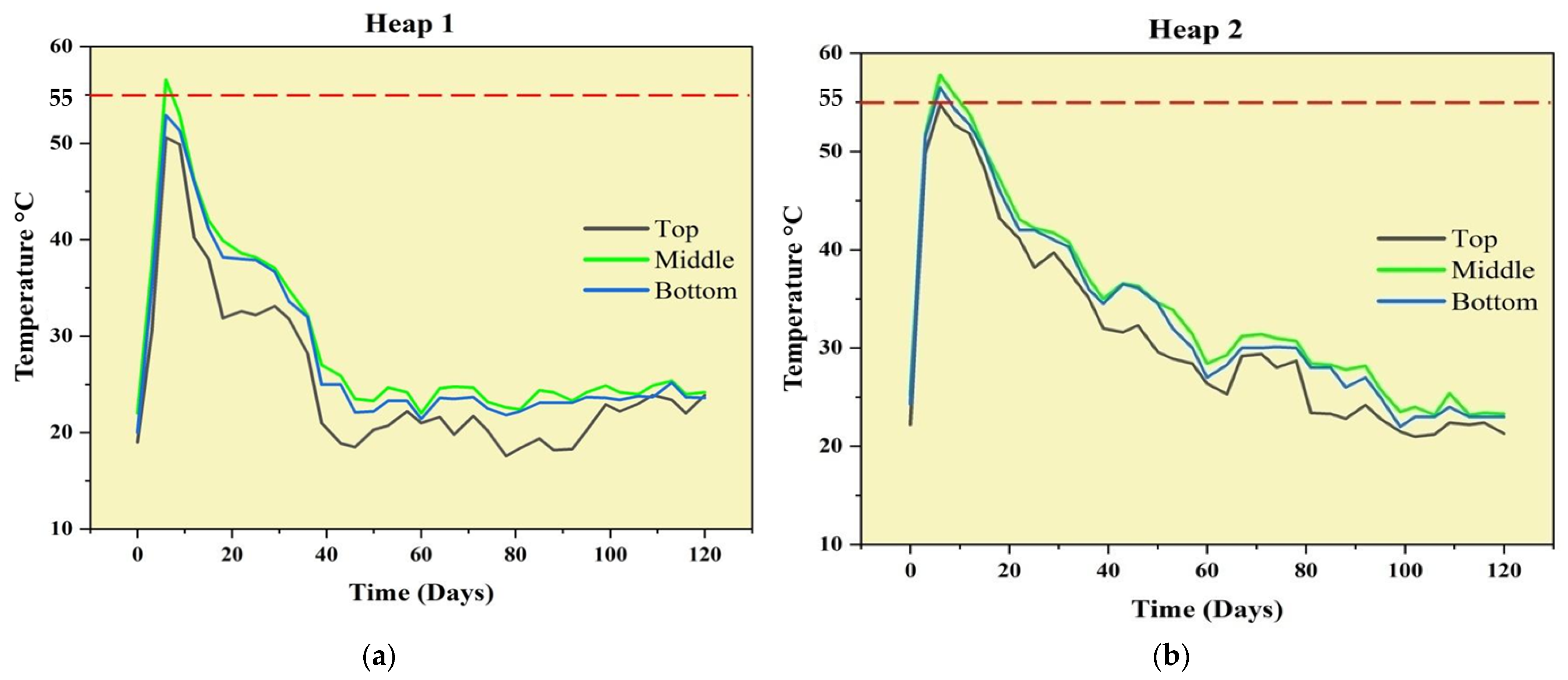
The temperature dynamics observed throughout the composting process serve as a reliable proxy for microbial activity and metabolic intensity, reflecting the succession and functional diversity of microbial communities. These thermal fluctuations are consistent with findings by Manu et al. [49], who emphasized the correlation between compost temperature profiles and microbial degradation rates during OM transformation. As illustrated in Figure 2, the temperature measurements recorded at varying vertical positions within Heap 1 and Heap 2 reveal distinct thermal gradients and temporal evolution patterns, which are indicative of variations in microbial activity across compost layers.
Initially, temperatures in both heaps increased due to microbial activity, consistent with findings in prior studies [5]. In both heaps, temperatures exceeded 50 °C across all layers within six days, marking the onset of the thermophilic phase. During this phase, which is essential for pathogen reduction, temperatures reached 56.6 to 57.8 °C for 3 and 6 days, respectively. As composting progressed into the maturation phase, temperatures gradually decreased to ambient levels, with end-stage temperatures between 21.3 and 24.2 °C across all layers. Time–temperature conditions play a crucial role in pathogen destruction within the composting process, with sustained thermophilic temperatures (55–65 °C) for at least 60 min recommended for optimal pathogen inactivation [50]. The literature suggests that even temperatures above 45 °C can contribute to heap sanitation and pathogen load reduction [51]. Based on these benchmarks, the temperature values achieved in our study align with effective hygiene and pathogen reduction standards.
Variability in temperature across heap layers, the presence of anaerobic microzones, and insufficient exposure can influence pathogen survival. Optimal composting performance requires adequate aeration, frequent turning, and prolonged thermophilic retention to ensure uniform heat distribution and effective pathogen reduction. These thermal conditions, combined with microbial competition and OM transformation, establish a robust foundation for hygienically safe, mature compost.

3.2. Escherichia coli

E.coli is a widely recognized fecal indicator organism, commonly used to assess contamination in composting processes involving fecal materials [3,10]. Known for its thermotolerance and a growth threshold of 45.5 °C, E. coli serves as a reliable hygiene indicator for assessing sanitation quality and the effectiveness of pathogen reduction in composting environments [11,36,37]. In this study, initial E. coli levels were 3 × 10⁴ CFU/g and 3.1 × 10⁴ CFU/g in Heaps 1 and 2, respectively (Table 3).
By the end of 120 days, levels of E.coli had reduced significantly, reaching below 10 CFU/g, with complete elimination in Heap 2. This outcome aligns with recommended safety thresholds (1 × 10³ CFU/g) and corresponds to a reduction exceeding 4-Log, supported by temperatures reaching 56.6 °C in Heap 1 and 57.8 °C in Heap 2 under aerobic conditions [3]. Temperatures of at least 45 °C sustained for 72 h, or 67 °C maintained for 7–14 days, have been shown to significantly reduce or eliminate E. coli populations. More recent studies suggest that a sustained 55 °C offers optimal conditions for inactivating thermotolerant organisms such as coliforms [3,52,53].
Several studies corroborate these findings, indicating that temperature and aerobic management are primary factors in pathogen reduction [54]. Recently, studies demonstrated that frequent turning combined with sustained temperatures of 50–55 °C facilitated complete E. coli destruction in co-composting of fecal sludge and sawdust [24,55,56]. Similarly, Nartey et al. [9] found that consistent aerobic conditions and temperatures between 50 and 68 °C led to total E. coli eradication after 12 weeks in the co-composting of fecal sludge and food waste. However, contrasting observations have been reported in other composting systems. In a study involving rural sewage sludge and straw, E. coli survival was detected even when internal pile temperatures exceeded 69 °C, underscoring the complex dynamics of temperature and pathogen resilience in different composting contexts [57]. This persistence may be attributed to several factors, including recontamination events during pile turning, heterogeneous temperature distribution within the heap, or the protective effect of microenvironments within compost particles [58]. Moreover, improper sampling techniques or insufficient exposure time at peak temperatures can also contribute to apparent pathogen resilience [7]. These findings highlight the complexity of pathogen inactivation dynamics and the need for precise operational control, including uniform temperature distribution, adequate retention time, and hygienic handling, to ensure effective compost sanitization.

3.3. Salmonella

Salmonella serves as a crucial indicator of pathogenic contamination due to its non-thermotolerant nature, rapid growth, and broad environmental presence, posing significant health risks to humans and animals if it enters the food chain [3]. As such, its presence reflects the hygienic quality of compost and the efficacy of pathogen reduction throughout the composting process [11,30]. Effective inactivation of Salmonella requires consistently high and uniform temperatures, which reduce its resistance, along with slightly acidic conditions that further inhibit its survival [24].
In this study, no Salmonella was detected throughout the composting period in either heap, meeting the European standards for pathogen control in compost designated for land application [10]. This absence could be attributed to high initial hygienic conditions in raw material storage and the microbiological quality of compost inputs. Research by Soobhany et al. [46] emphasizes that strict post-composting management is essential, as Salmonella can reappear through post-contamination if conditions are not carefully maintained [54]. Our findings align with numerous studies reporting the absence of Salmonella in compost heaps [59]. For example, Aboutayeb et al. [3] demonstrated successful pathogen eradication during a six-month windrow co-composting process using turkey manure and olive mill pomace.

3.4. Total Coliforms

Total coliforms, like other pathogens, can negatively impact compost quality and present significant health risks if they enter the food chain. At the onset of our experiment, initial coliform levels were recorded at 6.7 × 10⁷ and 6.8 × 10⁷ MPN/g in Heaps 1 and 2, respectively (Table 3). By the end of the process, these levels had significantly decreased to 50 and 40 MPN/g, corresponding to a 4-Log reduction in both heaps. The rapid decline during the first 30 days likely resulted from sustained high temperatures during the thermophilic phase (Figure 1), as the literature reports that temperatures of 55 °C maintained for three days can result in 1-Log pathogen reduction [8]. Another factor influencing coliform reduction may be the decomposition of organic matter, as coliforms thrive on easily degradable nutrients and struggle to survive with complex compounds like lignin and humic substances [25] (Table 1).
Our findings contrast with Arslan Topal et al. [50], who reported complete coliform elimination during in-vessel composting of vegetable and fruit waste [50]. In our case, complete elimination was not achieved, potentially due to non-uniform temperatures within the heap’s height (Figure 2). This temperature variation could have limited the effectiveness of pathogen destruction across the entire compost mass.

3.5. Staphylococcus aureus

Staphylococcus aureus, a zoonotic pathogen and facultative anaerobe, is well-documented for its capacity to cross-contaminate plant-derived food products, leading to foodborne illnesses [60]. Known for its environmental resilience, Staphylococcus spp. can withstand a broad pH range (4 to 9.3) and a wide temperature spectrum (7 to 46 °C), making it challenging to eradicate through standard methods [3]. In this study, the combination of elevated thermophilic-phase temperatures and adequate oxygenation created unfavorable conditions for Staphylococcus survival. These conditions promoted the dominance of aerobic microorganisms and competitive nutrient dynamics, which together accelerated pathogen suppression [24].
At the beginning of this experiment, staphylococci levels were high, measuring 4.4 × 10⁵ and 3.9 × 10⁵ CFU/g in H1 and H2, respectively. However, as the composting process progressed, these levels dropped to less than 10 CFU/g (Table 3), with a 4-Log reduction in Heap 1 and Heap 2, respectively, a significant reduction likely due to the elevated thermophilic-phase temperatures (Figure 2 and Figure 3). Our findings align with previous studies, where Staphylococcus levels were maintained below 10 CFU/g during the co-composting of turkey manure [3].
The incomplete elimination observed within the compost could be linked to the presence of potential resistance genes [61] or temperature variability across compost layers. Studies suggest that resistance genes may persist under certain conditions, necessitating sustained high temperatures to degrade these genes effectively. According to Yang et al. [62], extending the thermophilic phase and maintaining elevated temperatures throughout the composting process are essential for mitigating the risk associated with antibiotic-resistant genes [62]. This prolonged high-temperature period not only ensures the breakdown of resistant microorganisms but also contributes to a pathogen-free, safe end product suitable for agricultural applications.

3.6. Sulfite-Reducing Clostridia

The genus Clostridium includes primarily Gram-positive, anaerobic, rod-shaped bacteria commonly found in soil and the gastrointestinal components of humans and animals [63]. SRC possess the distinct capability to reduce sulfite to sulfide and are recognized for their resilience under high-temperature conditions, with spores capable of enduring temperatures up to 70 °C [64].
In our experiment, initial SRC concentrations were recorded at 3.9 × 10⁴ CFU/g in Heap 1 and 4.8 × 10⁴ CFU/g in Heap 2 (Table 3), with final reductions of 3.52-Log, achieving levels below 10 CFU/g in both heaps. These findings align with prior studies that suggest aerated composting may not fully eliminate Clostridium spores due to their heat resistance [65]. This resistance likely stems from the formation of heat-tolerant spores that can survive adverse conditions, possibly reinforced by brief anaerobic zones that can facilitate Clostridia survival and sporulation. To ensure effective SRC reduction, it is critical to manage multiple composting parameters, including aeration rates, turning frequency, bulking agent selection, and raw material quality. Spores introduced from anaerobically fermented or inadequately dehydrated materials may withstand the aerobic composting process, complicating total pathogen elimination as documented by Rainisalo et al. [63]. Thus, optimal environmental control is essential to improve SRC reduction outcomes in composting systems.

3.7. Compost Quality Index

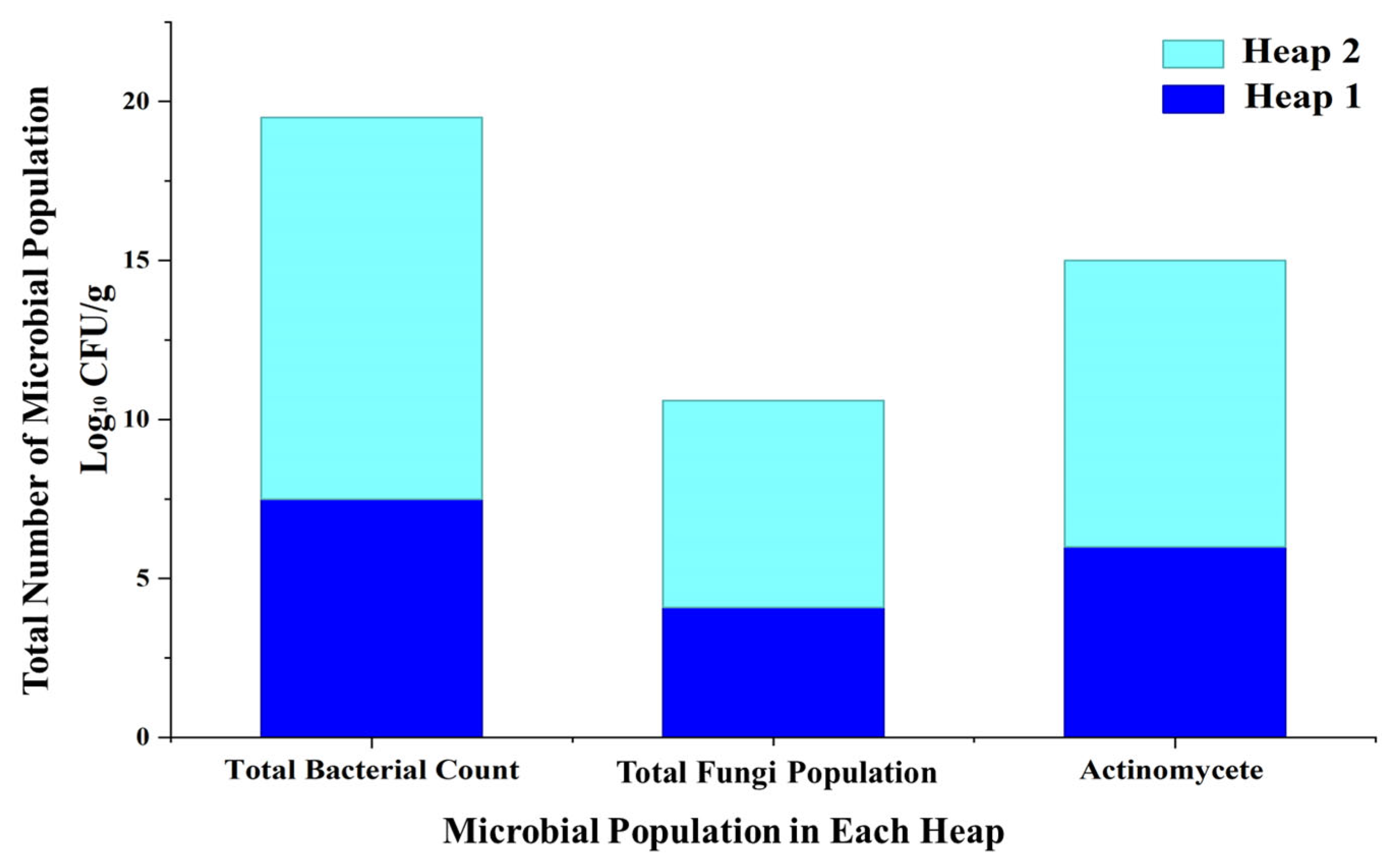
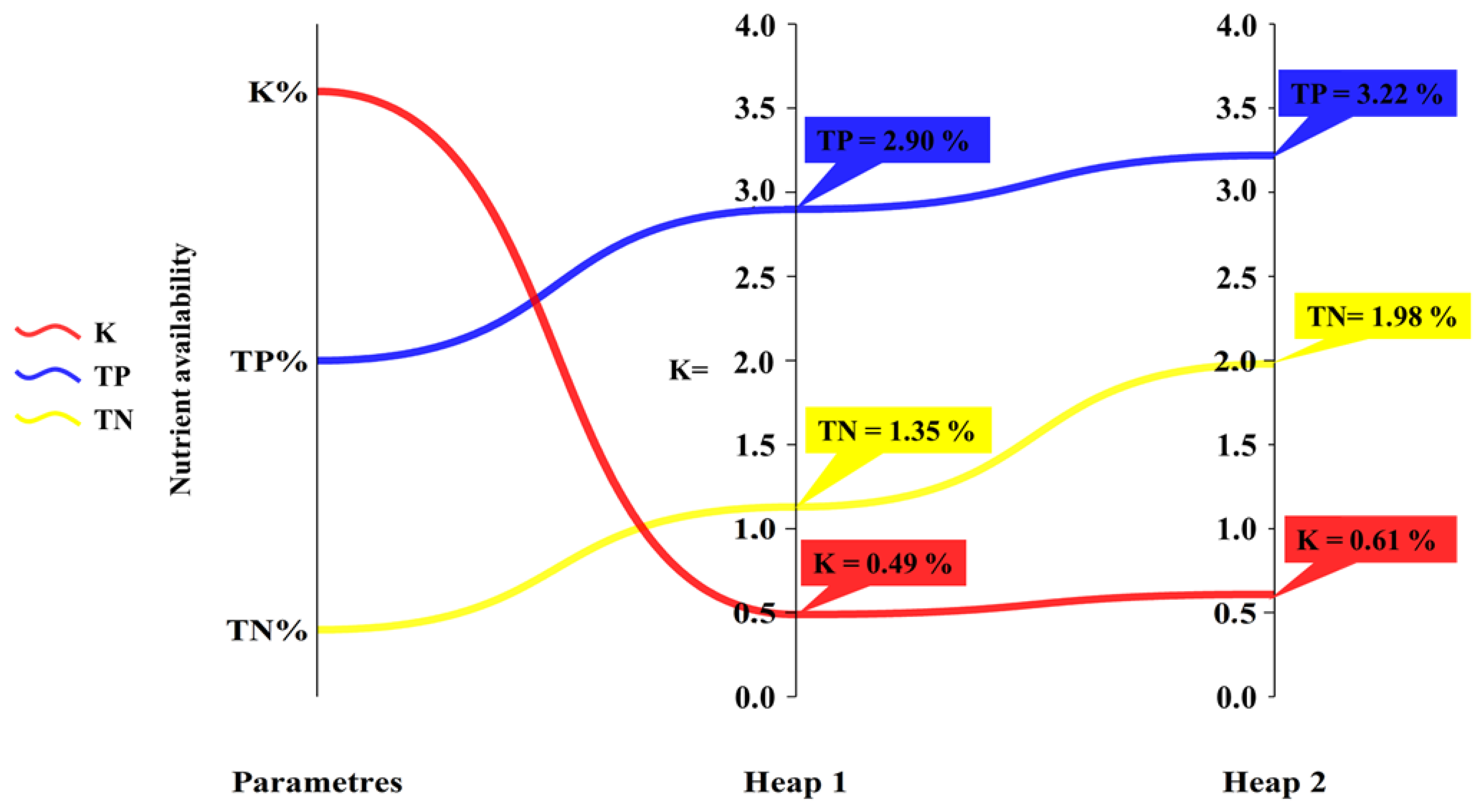
Microorganisms are central to the composting process, acting as reliable indicators of OM degradation and compost maturation [66]. In this study, Heap 2 demonstrated significantly higher microbial counts compared to Heap 1, as presented in Figure 2, suggesting that its environmental conditions, such as temperature, aeration, pH, and nutrient availability, were more favorable for microbial proliferation (Figure 4).
Across both heaps, the microbial hierarchy followed a consistent pattern: TBC > ACT > TFP (Figure 2). These results are consistent with previous findings emphasizing the role of microbial abundance and diversity in accelerating compost stabilization and ensuring end-product quality [67,68]. Notably, the elevated microbial activity observed, particularly after the thermophilic phase, reflects a more efficient transformation of organic substrates and a higher degree of compost maturity.
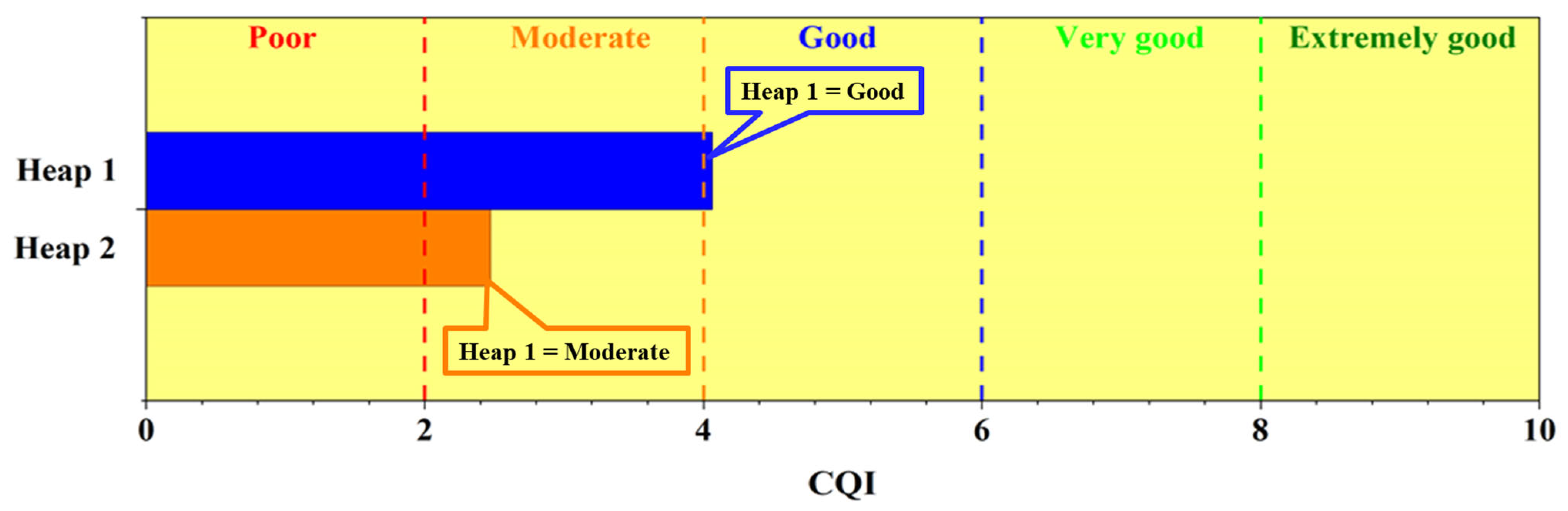
The CQI was applied as a comprehensive indicator to assess the overall quality of the compost derived from the two experimental heaps. The obtained CQI values were 2.47 for Heap 1 and 4.06 for Heap 2 (Figure 5).
Based on previously published thresholds, CQI values between 2 and 4 are generally classified as moderate, while values ranging from 4 to 6 are associated with good compost quality, reflecting adequate stabilization and suitability for agricultural use [47,48].

3.8. Statistical Analysis

The statistical analysis focused on the correlation between temperature, a critical factor in pathogen destruction, and the presence of pathogens during the composting process. The results revealed a significant negative correlation between temperature and all studied pathogens (Table 4), highlighting the efficacy of temperature as a determinant in pathogen reduction during composting.
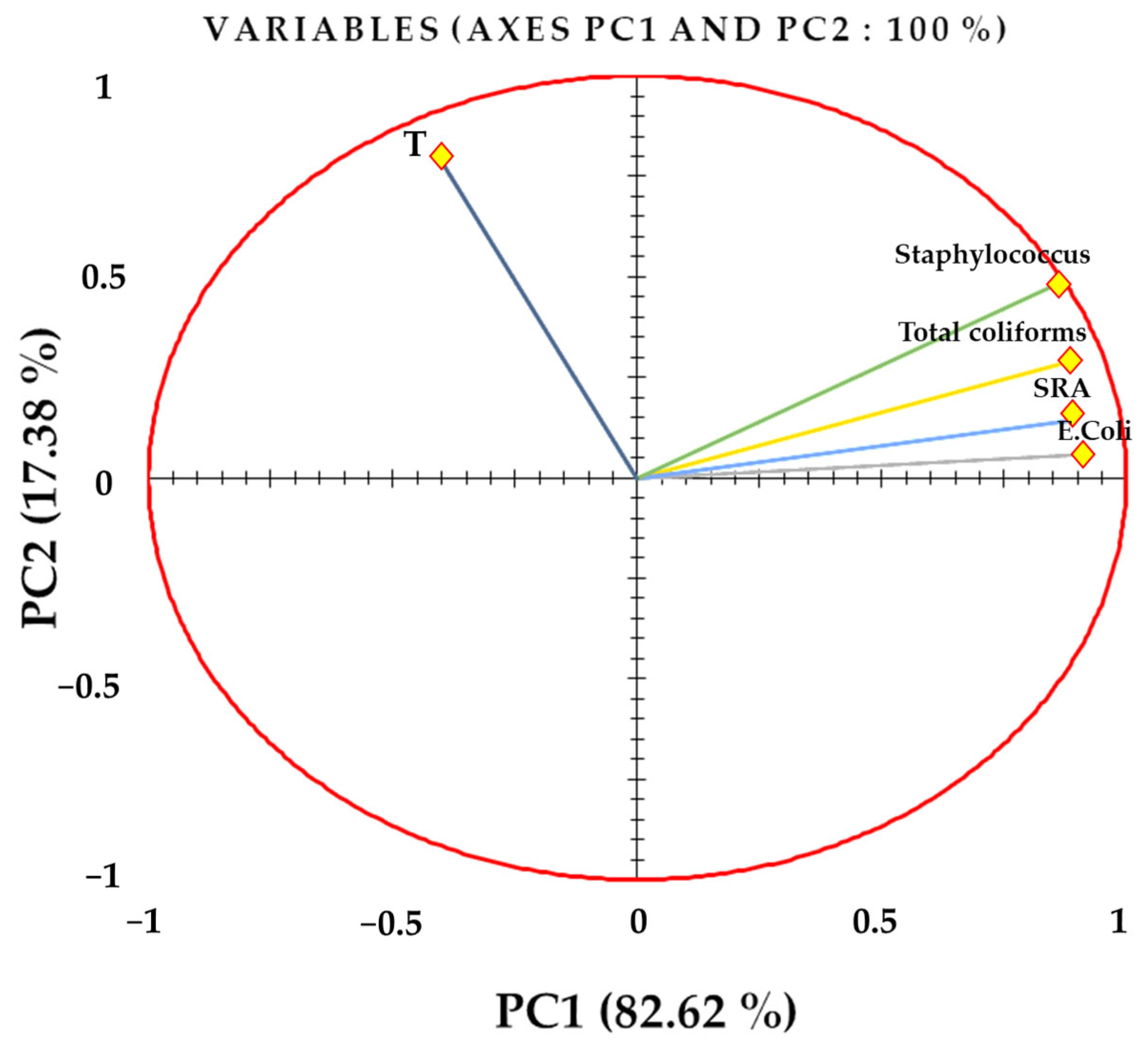
These findings align with existing studies, which consistently demonstrate that elevated temperatures are a primary factor in the inactivation of pathogens in compost, with the notable exception of vermicomposting, where temperature plays a less decisive role. Furthermore, principal component analysis (PCA) was employed to elucidate the overall sensitivity patterns of pathogens concerning temperature during the composting process (Figure 6).
The PCA conducted to explore the relationships among microbial indicators and temperature during composting revealed a strong negative correlation between composting temperature and pathogen abundance (Figure 6). PC1 and PC2 jointly explained 100% of the total variability, with PC1 alone accounting for 82.62%, indicating that most of the variation in the dataset is strongly driven by temperature-dependent microbial dynamics. All microbial variables, including E.coli, total coliforms, SRC, and Staphylococcus spp., clustered closely and positively along PC1, while temperature (T) projected in the opposite direction, confirming its inverse relationship with microbial persistence. This pattern corroborates the thermosensitive nature of most fecal and opportunistic pathogens, which are known to be significantly reduced under sustained thermophilic conditions, typically above 55 °C [7]. The spatial opposition of temperature from the pathogen vectors in the PCA plot suggests that increased thermal exposure plays a dominant role in disrupting microbial viability and accelerating inactivation kinetics. Notably, the high degree of co-linearity among microbial variables also implies a shared susceptibility to thermal stress, which is a desirable feature for designing efficient compost sanitization protocols. Furthermore, the distinct projection of temperature away from the microbial cluster implies that additional optimization of thermal uniformity across compost heaps could enhance the reliability of pathogen suppression. These findings align with previous studies highlighting the need for precise control of thermophilic phases, turning frequency, and pile structure to ensure complete microbial deactivation [25,69]. The PCA thus validates temperature as a critical control parameter in composting systems aimed at producing microbiologically safe organic amendments for use in agriculture.

4. Assessment of Hygienization, Microbial Composition Changes, and Compost Quality Index

The findings of this study, derived from comprehensive monitoring of temperature progression and microbial indicators, highlight the efficacy of the co-composting process in producing microbiologically safe and environmentally sustainable organic amendments. The composting system consistently achieved and maintained thermophilic conditions necessary for effective pathogen inactivation, resulting in significant reductions in key sanitary indicators, including E.coli, Salmonella spp., total coliforms, Staphylococcus aureus, and SRC. These results reinforce the role of composting as a critical component of circular bioeconomy strategies and a practical solution for promoting soil health and sustainable agriculture, especially in semi-arid regions facing organic waste management challenges and microbial safety concerns. The temperature profiles observed in both compost heaps consistently surpassed the threshold of 55 °C, maintaining thermophilic conditions crucial for microbial sanitization. This thermophilic phase, sustained across various heap heights, is critical not only for pathogen elimination but also for the breakdown of complex organic substrates, thus enhancing compost maturity and nutrient bioavailability [70]. The notable decline in E. coli and total coliform populations by over a 4-log reduction at the end of the process reinforces the assertion that aerobic thermophilic composting is highly effective in reducing microbial risks, in alignment with WHO and EU standards for compost safety [71]. The absence of Salmonella from the outset through the maturation phase may suggest the high microbiological quality of raw inputs and appropriate management practices. Nonetheless, ensuring the microbiological safety of compost extends beyond the active composting phase; post-process management practices, including proper curing, storage, and handling, are critical to prevent the reintroduction or regrowth of pathogenic organisms, particularly when compost is intended for use in food crop systems [8,37]. Notably, Staphylococcus aureus, a facultative anaerobe recognized for its environmental resilience, exhibited a marked decline in abundance, with residual counts falling below 10 CFU/g. This significant reduction is likely driven by elevated thermophilic temperatures and sustained aerobic conditions, which enhance microbial antagonism and suppress the proliferation of facultative pathogenic taxa. Nonetheless, the occasional persistence of Staphylococcus species and SRC in certain samples suggests the potential survival of thermotolerant strains and raises the possibility of underlying antimicrobial resistance determinants. These findings underscore the necessity for advanced genomic and metagenomic investigations to elucidate the presence and dissemination of resistance genes and to comprehensively assess the ecological and public health risks posed by residual pathogenic microorganisms in composted materials.
At the maturation stage of composting, a marked increase in total bacterial abundance is frequently observed, reflecting the transition toward compost maturity and enhanced microbial stabilization [67]. This proliferation is primarily attributed to the recolonization and metabolic resurgence of mesophilic bacterial communities that were partially suppressed during the thermophilic phase [72]. As the compost temperature declines and nutrient availability stabilizes, these bacterial populations become instrumental in the final mineralization of residual organic substrates and humification processes [73]. Recent studies, such as those by Wang et al. [67], have demonstrated that mature compost-amended piles showed a higher abundance of bacterial groups associated with maturity during the initial stages, and these same bacteria regrew more robustly during the cooling phase, thereby accelerating compost maturity. This bacterial resurgence not only serves as a bioindicator of compost quality but also underpins the ecological stability and agronomic value of the final product [68]. The later stages of composting are typically characterized by significantly higher actinomycete populations, which play a pivotal role in the degradation of structurally complex and recalcitrant OM [74]. As evidenced by Chen et al. [75], these microorganisms significantly enhance the transformation of fulvic acids into more stable humic substances, thereby accelerating the humification process and contributing to the maturation and quality of the final compost product. At the end of the composting process, fungal populations (Aspergillus, Penicillium, Trichoderma, and Fusarium) take on a crucial role in breaking down recalcitrant lignocellulosic materials (cellulose, hemicellulose, lignin), thereby enhancing the humification and overall maturity of the compost [76]. Temperature is one of the most important factors affecting fungal growth. Most fungi are mesophilic with an optimal temperature of 25–30 °C. Yeasts disappear during the thermophilic phase of composting, but when the temperature cools down, several genera of fungi will be found again [77].
The differences in CQI values between the two composting systems provide valuable insights into the quality and maturity of the final products. Heap 1, with a CQI of 2.47, falls within the moderate quality range, suggesting that the compost reached a basic level of stabilization but may still contain some immature organic compounds or residual phytotoxic substances. In contrast, Heap 2 achieved a CQI of 4.06, placing it within the category of good-quality compost, which is typically associated with improved biological stability and reduced environmental and phytotoxic risks. This improvement in Heap 2 can be attributed to more favorable composting conditions, particularly higher and more sustained thermophilic temperatures, which likely enhanced the degradation of complex OM and promoted the activity of thermotolerant microbial populations. A better nutrient balance, reflected in the C/N ratio and nutrient content, may have further supported microbial proliferation and accelerated OM transformation. In addition, the GI values observed for Heap 2 indicate a lower level of phytotoxicity, which is a key indicator of compost maturity and safety for plant growth. These observations are consistent with previous findings suggesting that composts with greater microbial diversity and lower C/N ratios are more mature and beneficial for agronomic use [78,79]. The improved CQI in Heap 2 reflects not only a better decomposition process but also enhanced functional quality of the final product, including its potential to improve soil health and support plant development.
From an agronomic perspective, the higher CQI of Heap 2 implies greater suitability as an organic amendment, particularly in systems aiming to reduce reliance on synthetic inputs. By enhancing nutrient availability and promoting beneficial microbial communities in the soil, such compost can contribute to long-term soil fertility and resilience. These results reinforce the importance of optimizing composting conditions, especially temperature control and substrate composition, to produce high-quality compost that meets both environmental and agricultural standards.

5. Ecological Risk Mitigation and Public Health Considerations

Composting represents a scientifically validated biological treatment strategy that effectively converts organic waste into a stabilized, nutrient-enriched amendment [2], while optimization of green waste composting practices has been shown to enhance feedstock quality and reduce environmental risks [80]. Furthermore, the application of manure compost as a soil amendment significantly minimizes the environmental and public health hazards associated with untreated organic residues, and adopting safe composting practices is particularly crucial in regions facing contamination challenges [7,53,81]. The microbial dynamics elucidated in this study affirm composting’s integral role in disrupting pathogen transmission pathways across interconnected environmental domains, including soil, crops, livestock, and human exposure routes [82,83]. This disruption is particularly relevant within circular agricultural systems, where untreated OM reused as soil inputs could inadvertently perpetuate cycles of microbial contamination [84,85].
The pronounced decline in pathogenic indicators demonstrates the critical function of sustained thermophilic conditions in microbial sanitization. Nonetheless, the persistence of thermotolerant and spore-forming taxa, particularly SRC, highlights a limitation of conventional composting processes [86]. These organisms exhibit inherent resistance to heat and may persist within anaerobic microsites or under suboptimal thermal gradients, posing residual sanitary risks [87]. To overcome these constraints, optimizing operational parameters such as increasing aeration frequency, ensuring homogeneous moisture distribution, enhancing mechanical turning schedules, and prolonging thermophilic retention times is essential to achieving comprehensive pathogen inactivation [88,89]. Furthermore, the risk of microbial resurgence during the curing and post-processing phases necessitates rigorous quality control protocols [90]. Factors such as rehydration, cross-contamination, or insufficient desiccation can facilitate opportunistic regrowth of pathogens [91,92]. Consequently, the integration of microbial risk assessment methodologies, particularly quantitative microbial risk assessment frameworks, is recommended to support science-based decision-making for compost use in agriculture [93,94]. This is particularly critical for high-risk cropping systems involving direct consumption of raw produce, such as leafy greens or root vegetables, where microbial safety is paramount [95,96].

6. Implications for Circular Economy and Agricultural Sustainability and Organic Waste Valorization

The sanitized compost produced in this study represents a safe and sustainable alternative to raw manure, which is often associated with substantial ecological and public health risks [10]. Through the controlled composting process, organic waste is converted into a stabilized, nutrient-rich amendment that not only enhances soil fertility and organic carbon content but also improves soil structure, water retention capacity, and microbial diversity [5]. These benefits are particularly vital in Mediterranean and arid regions, where soil degradation, salinity, and nutrient depletion pose major constraints to agricultural productivity [97]. From an agroecological perspective, composting seamlessly aligns with the principles of regenerative agriculture, including the restoration of soil health, enhancement of biodiversity, improvement of water retention, increased carbon sequestration, and the reduction in reliance on synthetic inputs, thereby facilitating waste recovery while reducing reliance on external chemical inputs [5,98]. The pathogen-free nature of the end product ensures biosafety across the food production continuum, thereby minimizing health risks to farmers, consumers, and ecosystems [58]. By enhancing agroecosystem resilience to climate-induced stressors, composting contributes to more robust and self-sustaining farming systems, particularly in regions vulnerable to drought and soil exhaustion [99].
This study exemplifies a closed-loop approach to waste valorization by transforming locally available green waste and sheep manure into microbiologically safe compost. Reintegration of this compost into local agricultural systems will encapsulate the core principles of the circular economy, particularly the “reduce–reuse–recycle” paradigm [100]. Such practices not only lower dependency on synthetic fertilizers but also reduce greenhouse gas emissions from unmanaged waste streams, mitigate nutrient runoff, and curtail pressure on finite mineral resources such as phosphate rock [68]. Beyond environmental benefits, localized compost production fosters socioeconomic advantages [31]. It promotes resource efficiency, shortens input supply chains, and supports rural economies, especially in low-resource settings where access to commercial fertilizers is financially or logistically constrained [101]. In this context, composting serves as a convergence point between environmental stewardship and rural development, making it a viable strategy for integrated sustainability [102]. The outcomes of this composting intervention directly support multiple United Nations Sustainable Development Goals (SDGs). Specifically, it advances SDG 2 (Zero Hunger) by enhancing soil fertility for sustainable food production, SDG 3 (Good Health and Well-Being) through the safe handling of organic waste and reduction in agricultural pathogen exposure, SDG 6 (Clean Water and Sanitation) via the containment of nutrients and pathogens leaching into aquatic ecosystems, SDG 12 (Responsible Consumption and Production) by promoting organic waste recovery and nutrient recycling, SDG 13 (Climate Action) through methane emission reductions and carbon sequestration in compost-amended soils, and SDG 15 (Life on Land) by rehabilitating degraded soils and fostering soil biodiversity [103]. Thus, composting emerges not merely as a waste treatment method but as a multifunctional sustainability tool with tangible ecological, agronomic, and socioeconomic benefits. Its integration into agricultural systems reinforces circular bioeconomy principles and offers a scalable solution for advancing climate resilience, food safety, and environmental health.

7. Limitations of This Study and Future Recommendations

Despite the promising findings regarding the hygienization efficiency of sheep manure-based compost and the comprehensive characterization of microbial dynamics throughout the composting process, several limitations of this study must be considered. Although composting is widely studied for pathogen reduction, significant knowledge gaps remain regarding the hygienization efficiency and microbial dynamics of sheep manure-based compost under semi-arid conditions, particularly when evaluated using an integrated framework such as the CQI. This study addresses this gap by providing one of the first comprehensive assessments that combines traditional culture-based pathogen monitoring with CQI evaluation, offering a robust baseline for understanding microbial succession, pathogen inactivation, and compost safety. By linking microbial dynamics directly to compost quality and potential agricultural biosafety, our work delivers novel insights for optimizing composting practices, informing risk assessment, and guiding sustainable waste management in semi-arid agricultural systems. This study effectively demonstrated the reduction and eventual inactivation of key pathogens, including E. coli, Salmonella spp., Staphylococcus aureus, SRC, and total coliforms, which are critical indicators of compost safety. However, the analysis was solely based on traditional culture-based methods, which, although widely used for routine monitoring and regulatory purposes, have inherent limitations [104]. These conventional techniques rely on the ability of microorganisms to grow and form colonies, which means they may overlook viable but non-culturable (VBNC) forms of pathogens [105]. VBNC organisms are in a dormant state and do not grow under standard laboratory conditions, but they can remain pathogenic under certain environmental conditions, presenting a potential risk to compost safety [106]. Additionally, culture-based methods are unable to capture the diversity of microbial communities, particularly those involving unculturable taxa that play significant roles in pathogen suppression and nutrient cycling [107]. As a result, these limitations may lead to an underestimation of the persistence of certain pathogens and fail to capture the full spectrum of microbial interactions occurring in the composting process. Therefore, while culture-based techniques provide valuable data for assessing pathogen levels, they do not offer a complete picture of microbial dynamics and may not fully account for the long-term safety and ecological impact of compost amendments [108].
Future research should integrate molecular tools and field-scale validation to optimize pathogen inactivation and compost quality under diverse agro-environmental conditions. In particular, research efforts should increasingly prioritize the integration of advanced molecular and genomic approaches such as quantitative PCR, metagenomics, and transcriptomics to unravel the complex ecological processes underpinning pathogen suppression during composting. These high-resolution techniques offer the potential to move beyond the limitations of culture-based methods, enabling a more nuanced understanding of microbial succession, functional gene expression, and the ecological interactions that govern the inactivation of pathogens. However, future studies must also address the practical barriers to applying advanced genomic tools in compost monitoring, including high costs, technical expertise, and complex data interpretation. Collaborative efforts among research institutions and industry stakeholders are essential to develop cost-effective, standardized approaches for broader adoption. In parallel, attention should be directed toward the identification, persistence, and behavior of emerging biological contaminants, including antibiotic-resistant bacteria, mobile genetic elements, and novel opportunistic pathogens. These entities pose increasing risks to public and environmental health and may be inadequately addressed by conventional composting parameters. The potential for horizontal gene transfer and the survival of thermotolerant, resistance-bearing strains highlight the urgent need for genomic surveillance and risk assessment tailored to composted materials. Long-term field validation under variable agronomic and environmental contexts remains essential to determine the robustness of composting as a pathogen mitigation strategy. Field trials should account for the diversity of soil types, climate regimes, compost compositions, and crop systems to assess the broader applicability and reliability of the composting process. Optimizing core operational parameters, including thermophilic retention time, aeration rates, and moisture dynamics in conjunction with fostering beneficial microbial competition, will be key to maximizing pathogen inactivation without compromising the process’s simplicity, cost-effectiveness, or scalability. Moreover, the development and application of predictive modeling frameworks that integrate microbial, thermal, and environmental data could significantly enhance compost management. To strengthen future research efforts, it is recommended to employ well-established modeling approaches capable of quantitatively describing pathogen reduction during composting. Common approaches include first-order decay kinetics, which model pathogen inactivation as a function of exposure time, and Arrhenius-based models, which relate decay rates to temperature using activation energy parameters [109,110]. More complex Monod-type kinetic models account for microbial substrate affinity and growth dynamics and have been successfully used to predict temperature profiles under varying aeration conditions [111]. Furthermore, semi-empirical and process-based mass and energy balance models can integrate multiple drivers to simulate decomposition and pathogen inactivation under differing operational scenarios [112]. By simulating pathogen decay kinetics and microbial succession under different composting scenarios, these models can inform decision-making, guide process adjustments in real-time, and contribute to the design of threshold-based risk control strategies. In doing so, they would not only improve compost quality and safety but also reinforce evidence-based regulatory standards, promoting the widespread adoption of composting as a sustainable and biosecure waste management practice. Ultimately, such forward-looking research will ensure that composting remains an integral component of resilient, circular agricultural systems worldwide.

8. Conclusions

Composting is a powerful strategy for promoting sustainable agriculture and environmental protection by converting organic waste into nutrient-rich soil amendments. While fresh manure poses risks of soil, crop, and water contamination and facilitates pathogen spread, composting effectively sanitizes manure, enhancing both agricultural and environmental safety.
Our study demonstrates that open windrow co-composting of green waste with sheep manure over 120 days, maintaining a thermophilic phase near 60 °C, 60% moisture, and weekly turning, achieves substantial pathogen reductions. Key indicators such as E. coli, total coliforms, Staphylococcus, and Clostridium were reduced by 3.5–5 Log, and Salmonella was undetected throughout. These results confirm that temperature, combined with consistent aeration, moisture management, and microbial competition, drives effective pathogen inactivation. Beyond microbial safety, the findings highlight broader benefits, including improved soil health, reduced environmental risks, and potential contributions to public health protection.
Future efforts should focus on implementing real-time monitoring of temperature and moisture, optimizing turning frequencies, and adapting cost-effective aeration techniques to enhance operational consistency. Additionally, scaling this approach across various waste streams, climatic conditions, and farm sizes, while integrating socioeconomic assessments, will foster its adoption as a resilient, safe, and climate-smart practice for sustainable agriculture. Overall, this study’s findings directly address the objectives outlined in the introduction by demonstrating effective pathogen reduction, evaluating compost quality, and providing practical insights for optimizing co-composting processes under semi-arid conditions. While these findings highlight the critical operational parameters for effective pathogen inactivation and compost quality, they should be interpreted in the context of this study’s specific conditions and methodological constraints, including the focus on culture-based microbial analyses and a semi-arid environment.

Author Contributions

Conceptualization: M.O.L. (Majda Oueld Lhaj); methodology: M.O.L. (Majda Oueld Lhaj), H.S., A.Z.; software: M.O.L. (Majda Oueld Lhaj), H.S.; resources: K.M., M.O.L. (M’hamed Oueld Lhaj); validation: M.O.L. (Majda Oueld Lhaj), A.Z., L.M., M.M.A.; formal analysis: M.O.L. (Majda Oueld Lhaj); writing—original draft preparation: M.O.L. (Majda Oueld Lhaj), H.S., A.Z., L.M., M.M.A.; writing—review and editing: M.O.L. (Majda Oueld Lhaj), R.M., H.S., A.Z., L.M., K.M., M.O.L. (M’hamed Oueld Lhaj), M.M.A.; visualization: M.O.L. (Majda Oueld Lhaj), H.S.; supervision: A.Z., L.M., M.M.A.; funding acquisition: R.M. All authors have read and agreed to the published version of the manuscript.

Funding

The authors would like to thank the “MCGP INRA-ICARDA” and “EiA” projects for their financial support.

Data Availability Statement

The data is available on request from the corresponding author.

Conflicts of Interest

The authors declare no conflicts of interest.

References

  1. Sortino, O.; Montoneri, E.; Patanè, C.; Rosato, R.; Tabasso, S.; Ginepro, M. Benefits for Agriculture and the Environment from Urban Waste. Sci. Total Environ. 2014, 487, 443–451. [Google Scholar] [CrossRef]
  2. Oueld Lhaj, M.; Moussadek, R.; Zouahri, A.; Sanad, H.; Saafadi, L.; Mdarhri Alaoui, M.; Mouhir, L. Sustainable Agriculture Through Agricultural Waste Management: A Comprehensive Review of Composting’s Impact on Soil Health in Moroccan Agricultural Ecosystems. Agriculture 2024, 14, 2356. [Google Scholar] [CrossRef]
  3. Aboutayeb, R.; El-MriNi, S.; Zouhri, A.; IdriSsi, O.; AziM, K. Hygienization Assessment during Heap Co-Composting of Turkey Manure and Olive Mill Pomace. Eurasian J. Soil Sci. 2021, 10, 332–342. [Google Scholar] [CrossRef]
  4. Loyon, L.; Burton, C.H.; Misselbrook, T.; Webb, J.; Philippe, F.X.; Aguilar, M.; Doreau, M.; Hassouna, M.; Veldkamp, T.; Dourmad, J.Y.; et al. Best Available Technology for European Livestock Farms: Availability, Effectiveness and Uptake. J. Environ. Manag. 2016, 166, 1–11. [Google Scholar] [CrossRef]
  5. Oueld Lhaj, M.; Moussadek, R.; Mouhir, L.; Mdarhri Alaoui, M.; Sanad, H.; Iben Halima, O.; Zouahri, A. Assessing the Evolution of Stability and Maturity in Co-Composting Sheep Manure with Green Waste Using Physico-Chemical and Biological Properties and Statistical Analyses: A Case Study of Botanique Garden in Rabat, Morocco. Agronomy 2024, 14, 1573. [Google Scholar] [CrossRef]
  6. Sanad, H.; Moussadek, R.; Mouhir, L.; Oueld Lhaj, M.; Dakak, H.; El Azhari, H.; Yachou, H.; Ghanimi, A.; Zouahri, A. Assessment of Soil Spatial Variability in Agricultural Ecosystems Using Multivariate Analysis, Soil Quality Index (SQI), and Geostatistical Approach: A Case Study of the Mnasra Region, Gharb Plain, Morocco. Agronomy 2024, 14, 1112. [Google Scholar] [CrossRef]
  7. Goldan, E.; Nedeff, V.; Barsan, N.; Culea, M.; Panainte-Lehadus, M.; Mosnegutu, E.; Tomozei, C.; Chitimus, D.; Irimia, O. Assessment of Manure Compost Used as Soil Amendment—A Review. Processes 2023, 11, 1167. [Google Scholar] [CrossRef]
  8. Li, R.; Cai, R.; Luo, X.; Liu, Y.; Zhang, L.; Yu, W.; Yang, Z. Reducing Moisture Content Can Promote the Removal of Pathogenic Bacteria and Viruses from Sheep Manure Compost on the Qinghai-Tibet Plateau. J. Environ. Chem. Eng. 2024, 12, 113978. [Google Scholar] [CrossRef]
  9. Nartey, E.G.; Sakrabani, R.; Tyrrel, S.; Cofie, O. Assessing Consistency in the Aerobic Co-Composting of Faecal Sludge and Food Waste in a Municipality in Ghana. Environ. Syst. Res. 2023, 12, 33. [Google Scholar] [CrossRef]
  10. Werner, K.A.; Castro-Herrera, D.; Yimer, F.; Tadesse, M.; Kim, D.-G.; Prost, K.; Brüggemann, N.; Grohmann, E. Microbial Risk Assessment of Mature Compost from Human Excreta, Cattle Manure, Organic Waste, and Biochar. Sustainability 2023, 15, 4624. [Google Scholar] [CrossRef]
  11. Jiang, X.; Wang, J. Biological Control of Escherichia coli O157:H7 in Dairy Manure-Based Compost Using Competitive Exclusion Microorganisms. Pathogens 2024, 13, 361. [Google Scholar] [CrossRef]
  12. Waqas, M.; Hashim, S.; Humphries, U.W.; Ahmad, S.; Noor, R.; Shoaib, M.; Naseem, A.; Hlaing, P.T.; Lin, H.A. Composting Processes for Agricultural Waste Management: A Comprehensive Review. Processes 2023, 11, 731. [Google Scholar] [CrossRef]
  13. Cao, H.; Xin, Y.; Wang, D.; Yuan, Q. Pyrolysis Characteristics of Cattle Manures Using a Discrete Distributed Activation Energy Model. Bioresour. Technol. 2014, 172, 219–225. [Google Scholar] [CrossRef]
  14. Gómez-Brandón, M.; Lazcano, C.; Domínguez, J. The Evaluation of Stability and Maturity during the Composting of Cattle Manure. Chemosphere 2008, 70, 436–444. [Google Scholar] [CrossRef]
  15. Sanad, H.; Moussadek, R.; Dakak, H.; Zouahri, A.; Oueld Lhaj, M.; Mouhir, L. Ecological and Health Risk Assessment of Heavy Metals in Groundwater within an Agricultural Ecosystem Using GIS and Multivariate Statistical Analysis (MSA): A Case Study of the Mnasra Region, Gharb Plain, Morocco. Water 2024, 16, 2417. [Google Scholar] [CrossRef]
  16. Sanad, H.; Mouhir, L.; Zouahri, A.; Moussadek, R.; El Azhari, H.; Yachou, H.; Ghanimi, A.; Oueld Lhaj, M.; Dakak, H. Assessment of Groundwater Quality Using the Pollution Index of Groundwater (PIG), Nitrate Pollution Index (NPI), Water Quality Index (WQI), Multivariate Statistical Analysis (MSA), and GIS Approaches: A Case Study of the Mnasra Region, Gharb Plain, Morocco. Water 2024, 16, 1263. [Google Scholar] [CrossRef]
  17. Manhou, K.; Moussadek, R.; Yachou, H.; Zouahri, A.; Douaik, A.; Hilal, I.; Ghanimi, A.; Hmouni, D.; Dakak, H. Assessing the Impact of Saline Irrigation Water on Durum Wheat (Cv. Faraj) Grown on Sandy and Clay Soils. Agronomy 2024, 14, 2865. [Google Scholar] [CrossRef]
  18. Manhou, K.; Mouna, T.; Moussadek, R.; Zouahri, A.; Ghanimi, A.; Sanad, H.; Lhaj, M.O.; Hmouni, D.; Dakak, H. Genetic Diversity and Performance of Durum Wheat (Triticum turgidum L. Ssp. Durum Desf.) Germplasm Based on Agro-Morphological and Quality Traits: Experimentation and Statistical Analysis. Preprints 2025. [Google Scholar] [CrossRef]
  19. Oueld Lhaj, M.; Moussadek, R.; Mouhir, L.; Sanad, H.; Manhou, K.; Iben Halima, O.; Yachou, H.; Zouahri, A.; Mdarhri Alaoui, M. Application of Compost as an Organic Amendment for Enhancing Soil Quality and Sweet Basil (Ocimum Basilicum L.) Growth: Agronomic and Ecotoxicological Evaluation. Agronomy 2025, 15, 1045. [Google Scholar] [CrossRef]
  20. Viaene, J.; Van Lancker, J.; Vandecasteele, B.; Willekens, K.; Bijttebier, J.; Ruysschaert, G.; De Neve, S.; Reubens, B. Opportunities and Barriers to On-Farm Composting and Compost Application: A Case Study from Northwestern Europe. Waste Manag. 2016, 48, 181–192. [Google Scholar] [CrossRef]
  21. Bittencourt, F.L.F.; Martins, M.F. Thermochemically-Driven Treatment Units for Fecal Matter Sanitation: A Review Addressed to the Underdeveloped World. J. Environ. Chem. Eng. 2022, 10, 108732. [Google Scholar] [CrossRef]
  22. Cabañas-Vargas, D.; De Los Ríos Ibarra, E.; Mena-Salas, J.; Escalante-Réndiz, D.; Rojas-Herrera, R. Composting Used as a Low Cost Method for Pathogen Elimination in Sewage Sludge in Mérida, Mexico. Sustainability 2013, 5, 3150–3158. [Google Scholar] [CrossRef]
  23. Mengistu, T.; Gebrekidan, H.; Kibret, K.; Woldetsadik, K.; Shimelis, B.; Yadav, H. Comparative Effectiveness of Different Composting Methods on the Stabilization, Maturation and Sanitization of Municipal Organic Solid Wastes and Dried Faecal Sludge Mixtures. Environ. Syst. Res. 2017, 6, 5. [Google Scholar] [CrossRef]
  24. Manga, M.; Muoghalu, C.; Camargo-Valero, M.A.; Evans, B.E. Effect of Turning Frequency on the Survival of Fecal Indicator Microorganisms during Aerobic Composting of Fecal Sludge with Sawdust. Int. J. Environ. Res. Public. Health 2023, 20, 2668. [Google Scholar] [CrossRef] [PubMed]
  25. Rizwan, H.M.; Naveed, M.; Sajid, M.S.; Nazish, N.; Younus, M.; Raza, M.; Maqbool, M.; Khalil, M.H.; Fouad, D.; Ataya, F.S. Enhancing Agricultural Sustainability through Optimization of the Slaughterhouse Sludge Compost for Elimination of Parasites and Coliforms. Sci. Rep. 2024, 14, 23953. [Google Scholar] [CrossRef]
  26. Singh, R.; Kim, J.; Shepherd, M.W.; Luo, F.; Jiang, X. Determining Thermal Inactivation of Escherichia Coli O157:H7 in Fresh Compost by Simulating Early Phases of the Composting Process. Appl. Environ. Microbiol. 2011, 77, 4126–4135. [Google Scholar] [CrossRef] [PubMed]
  27. Noble, R.; Roberts, S.J. Eradication of Plant Pathogens and Nematodes during Composting: A Review. Plant Pathol. 2004, 53, 548–568. [Google Scholar] [CrossRef]
  28. Sanad, H.; Oueld Lhaj, M.; Zouahri, A.; Saafadi, L.; Dakak, H.; Mouhir, L. Groundwater Pollution by Nitrate and Salinization in Morocco: A Comprehensive Review. J. Water Health 2024, 22, 1756–1773. [Google Scholar] [CrossRef]
  29. Rao, J.N.; Parsai, T. A Comprehensive Review on the Decentralized Composting Systems for Household Biodegradable Waste Management. J. Environ. Manag. 2023, 345, 118824. [Google Scholar] [CrossRef]
  30. Manga, M.; Camargo-Valero, M.A.; Anthonj, C.; Evans, B.E. Fate of Faecal Pathogen Indicators during Faecal Sludge Composting with Different Bulking Agents in Tropical Climate. Int. J. Hyg. Environ. Health 2021, 232, 113670. [Google Scholar] [CrossRef]
  31. De Boni, A.; Melucci, F.M.; Acciani, C.; Roma, R. Community Composting: A Multidisciplinary Evaluation of an Inclusive, Participative, and Eco-Friendly Approach to Biowaste Management. Clean. Environ. Syst. 2022, 6, 100092. [Google Scholar] [CrossRef]
  32. Berset, F.C.D.; Stoll, S. Microplastic Contamination in Field-Side Composting in Geneva, Switzerland (CH). Microplastics 2024, 3, 477–491. [Google Scholar] [CrossRef]
  33. Iswahyudi, I.; Widodo, W.; Warkoyo, W.; Sutanto, A.; Garfansa, M.P.; Septia, E.D. Determination and Quantification of Microplastics in Compost. Environ. Qual. Manag. 2024, 34, e22184. [Google Scholar] [CrossRef]
  34. Pérez, T.; Vergara, S.E.; Silver, W.L. Assessing the Climate Change Mitigation Potential from Food Waste Composting. Sci. Rep. 2023, 13, 7608. [Google Scholar] [CrossRef]
  35. Khan, M.S.; Douglas, P.; Hansell, A.L.; Simmonds, N.J.; Piel, F.B. Assessing the Health Risk of Living near Composting Facilities on Lung Health, Fungal and Bacterial Disease in Cystic Fibrosis: A UK CF Registry Study. Environ. Health 2022, 21, 130. [Google Scholar] [CrossRef] [PubMed]
  36. Rubini, S.; Galletti, G.; Bolognesi, E.; Bonilauri, P.; Tamba, M.; Savini, F.; Serraino, A.; Giacometti, F. Comparative Evaluation of Most Probable Number and Direct Plating Methods for Enumeration of Escherichia coli in Ruditapes Philippinarum, and Effect on Classification of Production and Relaying Areas for Live Bivalve Molluscs. Food Control 2023, 154, 110005. [Google Scholar] [CrossRef]
  37. Wang, J.; Zhu, X.; Wang, Z.; Chen, Y.; Robertson, I.D.; Guo, A.; Aleri, J.W. Prevalence and Antimicrobial Resistance of Salmonella and the Enumeration of ESBL E. Coli in Dairy Farms in Hubei Province, China. Prev. Vet. Med. 2023, 212, 105822. [Google Scholar] [CrossRef] [PubMed]
  38. Mooijman, K.A.; Pielaat, A.; Kuijpers, A.F.A. Validation of ENISO 6579-1-Microbiology of the Food Chain-Horizontal Method forthe Detection, Enumeration and Serotyping of Salmonella—Part 1 Detection of Salmonella spp. Int. J. Food Microbiol. 2019, 288, 3–12. [Google Scholar] [CrossRef]
  39. Soobhany, N. Preliminary Evaluation of Pathogenic Bacteria Loading on Organic Municipal Solid Waste Compost and Vermicompost. J. Environ. Manag. 2018, 206, 763–767. [Google Scholar] [CrossRef]
  40. Kureljušić, J.M.; Vesković Moračanin, S.M.; Đukić, D.A.; Mandić, L.; Đurović, V.; Kureljušić, B.I.; Stojanova, M.T. Comparative Study of Vermicomposting: Apple Pomace Alone and in Combination with Wheat Straw and Manure. Agronomy 2024, 14, 1189. [Google Scholar] [CrossRef]
  41. Tiquia, S.M.; Wan, H.C.; Tam, N.F.Y. Microbial Population Dynamics and Enzyme Activities During Composting. Compost Sci. Util. 2002, 10, 150–161. [Google Scholar] [CrossRef]
  42. Tiquia, S.M. Microbiological Parameters as Indicators of Compost Maturity. J. Appl. Microbiol. 2005, 99, 816–828. [Google Scholar] [CrossRef] [PubMed]
  43. Chandna, P.; Nain, L.; Singh, S.; Kuhad, R.C. Assessment of Bacterial Diversity during Composting of Agricultural Byproducts. BMC Microbiol. 2013, 13, 99. [Google Scholar] [CrossRef] [PubMed]
  44. Kutsanedzie, F.; Ofori, V.; Diaba, K.S. Maturity and Safety of Compost Processed in HV and TW Composting Systems. Int. J. Sci. Technol. Soc. 2015, 3, 232. [Google Scholar] [CrossRef]
  45. Kazemi, K.; Zhang, B.; Lye, L.M. Assessment of Microbial Communities and Their Relationship with Enzymatic Activity during Composting. World J. Eng. Technol. 2017, 5, 93–102. [Google Scholar] [CrossRef]
  46. Cuesta, G.; García-de-la-Fuente, R.; Abad, M.; Fornes, F. Isolation and Identification of Actinomycetes from a Compost-Amended Soil with Potential as Biocontrol Agents. J. Environ. Manag. 2012, 95, 280–284. [Google Scholar] [CrossRef]
  47. Bera, R.; Datta, A.; Bose, S.; Dolui, A.K.; Chatterjee, A.; Dey, G.C.; Barik, A.; Sarkar, R.; Mazumdar, D.; Seal, A. Comparative Evaluation of Compost Quality, Process Convenience and Cost under Different Composting Methods to Assess Their Large Scale Adoptability Potential as Also Complemented by Compost Quality Index. Int. J. Sci. Res. Publ. 2013, 3, 1–11. [Google Scholar]
  48. Bedolla-Rivera, H.I.; Conde-Barajas, E.; Galván-Díaz, S.L.; Gámez-Vázquez, F.P.; Álvarez-Bernal, D.; de la Luz Xochilt Negrete-Rodríguez, M. Compost Quality Indexes (CQIs) of Biosolids Using Physicochemical, Biological and Ecophysiological Indicators: C and N Mineralization Dynamics. Agronomy 2022, 12, 2290. [Google Scholar] [CrossRef]
  49. Manu, M.K.; Kumar, R.; Garg, A. Decentralized Composting of Household Wet Biodegradable Waste in Plastic Drums: Effect of Waste Turning, Microbial Inoculum and Bulking Agent on Product Quality. J. Clean. Prod. 2019, 226, 233–241. [Google Scholar] [CrossRef]
  50. Arslan Topal, E.I.; Ünlü, A.; Topal, M. Effect of Aeration Rate on Elimination of Coliforms during Composting of Vegetable–Fruit Wastes. Int. J. Recycl. Org. Waste Agric. 2016, 5, 243–249. [Google Scholar] [CrossRef]
  51. Aboutayeb, R.; Elgharous, M.; Abail, Z.; Elhari, M.; Koulali, Y. Stabilization and Sanitation of Chicken Litter by Heap Composting. Int. J. Eng. Res. 2013, 2, 124–139. [Google Scholar]
  52. Asses, N.; Farhat, W.; Hamdi, M.; Bouallagui, H. Large Scale Composting of Poultry Slaughterhouse Processing Waste: Microbial Removal and Agricultural Biofertilizer Application. Process Saf. Environ. Prot. 2019, 124, 128–136. [Google Scholar] [CrossRef]
  53. Sanad, H.; Moussadek, R.; Mouhir, L.; Lhaj, M.O.; Zahidi, K.; Dakak, H.; Manhou, K.; Zouahri, A. Ecological and Human Health Hazards Evaluation of Toxic Metal Contamination in Agricultural Lands Using Multi-Index and Geostatistical Techniques across the Mnasra Area of Morocco’s Gharb Plain Region. J. Hazard. Mater. Adv. 2025, 18, 100724. [Google Scholar] [CrossRef]
  54. Soobhany, N.; Mohee, R.; Garg, V.K. Inactivation of Bacterial Pathogenic Load in Compost against Vermicompost of Organic Solid Waste Aiming to Achieve Sanitation Goals: A Review. Waste Manag. 2017, 64, 51–62. [Google Scholar] [CrossRef] [PubMed]
  55. Odey, E.A.; Li, Z. Optimization of Integrated Compost-Dewatering and Pyrolysis for Sustainable Faecal Sludge Management: Enhancing Pathogen Inactivation and Biochar Production. Int. J. Environ. Sci. Technol. 2025, 22, 13171–13184. [Google Scholar] [CrossRef]
  56. Zhang, B.; Wang, F.; Shen, C. Survival Characteristics of Vancomycin-Resistant Enterococcus Isolated from Sludge Compost under Heat and Drying Stress: Implications for Pathogen Inactivation during Composting. Environ. Int. 2025, 198, 109464. [Google Scholar] [CrossRef]
  57. Pourcher, A.-M.; Morand, P.; Picard-Bonnaud, F.; Billaudel, S.; Monpoeho, S.; Federighi, M.; Ferré, V.; Moguedet, G. Decrease of Enteric Micro-Organisms from Rural Sewage Sludge during Their Composting in Straw Mixture. J. Appl. Microbiol. 2005, 99, 528–539. [Google Scholar] [CrossRef]
  58. Manga, M.; Muoghalu, C.C.; Acheng, P.O. Inactivation of Faecal Pathogens during Faecal Sludge Composting: A Systematic Review. Environ. Technol. Rev. 2023, 12, 150–174. [Google Scholar] [CrossRef]
  59. Aboutayeb, R. Valorisation Des Fumiers de Volailles de Chair: Compostage, Épandage et Étude Des Effets Des Fumiers de Volailles et Leurs Composts Sur Les Propriétés Physicochimiques Du Sol Sous Cultures de Maïs Fourrager et de Menthe Verte. Ph.D. Thesis, University Hassan I, Settat, Morocco, 2015. [Google Scholar]
  60. Phan, A.; Tabashsum, Z.; Alvarado-Martinez, Z.; Scriba, A.; Sellers, G.; Kapadia, S.; Canagarajah, C.; Biswas, D. Ecological Distribution of Staphylococcus in Integrated Farms within Washington DC–Maryland. J. Food Saf. 2024, 44, e13123. [Google Scholar] [CrossRef]
  61. Zhang, Y.; Wang, N.; Wan, J.; Jousset, A.; Jiang, G.; Wang, X.; Wei, Z.; Xu, Y.; Shen, Q. Exploring the Antibiotic Resistance Genes Removal Dynamics in Chicken Manure by Composting. Bioresour. Technol. 2024, 410, 131309. [Google Scholar] [CrossRef]
  62. Yang, X.; Sun, P.; Liu, B.; Ahmed, I.; Xie, Z.; Zhang, B. Effect of Extending High-Temperature Duration on ARG Rebound in a Co-Composting Process for Organic Wastes. Sustainability 2024, 16, 5284. [Google Scholar] [CrossRef]
  63. Rainisalo, A.; Romantschuk, M.; Kontro, M.H. Evolution of Clostridia and Streptomycetes in Full-Scale Composting Facilities and Pilot Drums Equipped with on-Line Temperature Monitoring and Aeration. Bioresour. Technol. 2011, 102, 7975–7983. [Google Scholar] [CrossRef]
  64. Erkmen, O. Isolation and Counting of Clostridium Perfringens. In Microbiological Analysis of Foods and Food Processing Environments; Elsevier: Amsterdam, The Netherlands, 2022; pp. 217–227. ISBN 978-0-323-91651-6. [Google Scholar]
  65. Bustamante, M.A.; Moral, R.; Paredes, C.; Vargas-García, M.C.; Suárez-Estrella, F.; Moreno, J. Evolution of the Pathogen Content during Co-Composting of Winery and Distillery Wastes. Bioresour. Technol. 2008, 99, 7299–7306. [Google Scholar] [CrossRef] [PubMed]
  66. Moreno, J.; López-González, J.A.; Arcos-Nievas, M.A.; Suárez-Estrella, F.; Jurado, M.M.; Estrella-González, M.J.; López, M.J. Revisiting the Succession of Microbial Populations throughout Composting: A Matter of Thermotolerance. Sci. Total Environ. 2021, 773, 145587. [Google Scholar] [CrossRef] [PubMed]
  67. Wang, Y.; Tang, Y.; Yuan, Z. Improving Food Waste Composting Efficiency with Mature Compost Addition. Bioresour. Technol. 2022, 349, 126830. [Google Scholar] [CrossRef] [PubMed]
  68. Wang, L.; Chang, R.; Ren, Z.; Meng, X.; Li, Y.; Gao, M. Mature Compost Promotes Biodegradable Plastic Degradation and Reduces Greenhouse Gas Emission during Food Waste Composting. Sci. Total Environ. 2024, 926, 172081. [Google Scholar] [CrossRef]
  69. Werner, K.A.; Poehlein, A.; Schneider, D.; El-Said, K.; Wöhrmann, M.; Linkert, I.; Hübner, T.; Brüggemann, N.; Prost, K.; Daniel, R.; et al. Thermophilic Composting of Human Feces: Development of Bacterial Community Composition and Antimicrobial Resistance Gene Pool. Front. Microbiol. 2022, 13, 824–834. [Google Scholar] [CrossRef]
  70. Chand, S.; Devi, S.; Devi, D.; Arya, P.; Manorma, K.; Kesta, K.; Sharma, M.; Bishist, R.; Tomar, M. Microbial and Physico-Chemical Dynamics Associated with Chicken Feather Compost Preparation Vis-à-Vis Its Impact on the Growth Performance of Tomato Crop. Biocatal. Agric. Biotechnol. 2023, 54, 102885. [Google Scholar] [CrossRef]
  71. Liu, L.; Wang, S.; Guo, X.; Zhao, T.; Zhang, B. Succession and Diversity of Microorganisms and Their Association with Physicochemical Properties during Green Waste Thermophilic Composting. Waste Manag. 2018, 73, 101–112. [Google Scholar] [CrossRef]
  72. Xu, D.; Yu, X.; Chen, J.; Li, X.; Chen, J.; Li, J. Effects of Compost as a Soil Amendment on Bacterial Community Diversity in Saline–Alkali Soil. Front. Microbiol. 2023, 14, 1253415. [Google Scholar] [CrossRef]
  73. Song, X.; Lu, C.; Luo, J.; Gong, X.; Guo, D.; Ma, Y. Matured Compost Amendment Improves Compost Nutrient Content by Changing the Bacterial Community during the Composting of Chinese Herb Residues. Front. Microbiol. 2023, 14, 1146546. [Google Scholar] [CrossRef] [PubMed]
  74. Oviedo-Ocaña, E.R.; Soto-Paz, J.; Parra-Orobio, B.A.; Zafra, G.; Maeda, T.; Galezo-Suárez, A.C.; Diaz-Larotta, J.T.; Sanchez-Torres, V. Effect of Biochar Addition in Two Different Phases of the Co-Composting of Green Waste and Food Waste: An Analysis of the Process, Product Quality and Microbial Community. Waste Biomass Valorization 2025, 1–16. [Google Scholar] [CrossRef]
  75. Chen, Y.; Zhao, R.; Jia, L.; Wang, L.; Pan, C.; Zhang, R.; Wei, Z. Microbial Inoculants Reshape Structural Distribution of Complex Components of Humic Acid Based on Spectroscopy during Straw Waste Composting. Bioresour. Technol. 2022, 359, 127472. [Google Scholar] [CrossRef]
  76. Zhu, L.; Wang, X.; Liu, L.; Le, B.; Tan, C.; Dong, C.; Yao, X.; Hu, B. Fungi Play a Crucial Role in Sustaining Microbial Networks and Accelerating Organic Matter Mineralization and Humification during Thermophilic Phase of Composting. Environ. Res. 2024, 254, 119155. [Google Scholar] [CrossRef]
  77. Aguilar-Paredes, A.; Valdés, G.; Araneda, N.; Valdebenito, E.; Hansen, F.; Nuti, M. Microbial Community in the Composting Process and Its Positive Impact on the Soil Biota in Sustainable Agriculture. Agronomy 2023, 13, 542. [Google Scholar] [CrossRef]
  78. Shu, X.; He, J.; Zhou, Z.; Xia, L.; Hu, Y.; Zhang, Y.; Zhang, Y.; Luo, Y.; Chu, H.; Liu, W.; et al. Organic Amendments Enhance Soil Microbial Diversity, Microbial Functionality and Crop Yields: A Meta-Analysis. Sci. Total Environ. 2022, 829, 154627. [Google Scholar] [CrossRef]
  79. Cui, J.; Yang, B.; Zhang, M.; Song, D.; Xu, X.; Ai, C.; Liang, G.; Zhou, W. Investigating the Effects of Organic Amendments on Soil Microbial Composition and Its Linkage to Soil Organic Carbon: A Global Meta-Analysis. Sci. Total Environ. 2023, 894, 164899. [Google Scholar] [CrossRef]
  80. Reyes-Torres, M.; Oviedo-Ocaña, E.R.; Dominguez, I.; Komilis, D.; Sánchez, A. A Systematic Review on the Composting of Green Waste: Feedstock Quality and Optimization Strategies. Waste Manag. 2018, 77, 486–499. [Google Scholar] [CrossRef]
  81. Sanad, H.; Moussadek, R.; Mouhir, L.; Lhaj, M.O.; Dakak, H.; Manhou, K.; Zouahri, A. Monte Carlo Simulation for Evaluating Spatial Dynamics of Toxic Metals and Potential Health Hazards in Sebou Basin Surface Water. Sci. Rep. 2025, 15, 29471. [Google Scholar] [CrossRef]
  82. Parikh, P.; Diep, L.; Hofmann, P.; Tomei, J.; Campos, L.C.; Teh, T.-H.; Mulugetta, Y.; Milligan, B.; Lakhanpaul, M. Synergies and trade-offs between sanitation and the sustainable development goals. UCL Open Environ. 2021, 3, e016. [Google Scholar] [CrossRef] [PubMed]
  83. Akanmu, A.O.; Babalola, O.O.; Venturi, V.; Ayilara, M.S.; Adeleke, B.S.; Amoo, A.E.; Sobowale, A.A.; Fadiji, A.E.; Glick, B.R. Plant Disease Management: Leveraging on the Plant-Microbe-Soil Interface in the Biorational Use of Organic Amendments. Front. Plant Sci. 2021, 12, 700507. [Google Scholar] [CrossRef] [PubMed]
  84. Crovella, T.; Paiano, A.; Falciglia, P.P.; Lagioia, G.; Ingrao, C. Wastewater Recovery for Sustainable Agricultural Systems in the Circular Economy—A Systematic Literature Review of Life Cycle Assessments. Sci. Total Environ. 2024, 912, 169310. [Google Scholar] [CrossRef]
  85. Sanad, H.; Moussadek, R.; Mouhir, L.; Lhaj, M.O.; Dakak, H.; Zouahri, A. Geospatial Analysis of Trace Metal Pollution and Ecological Risks in River Sediments from Agrochemical Sources in Morocco’s Sebou Basin. Sci. Rep. 2025, 15, 16701. [Google Scholar] [CrossRef]
  86. Pahalagedara, A.S.N.W.; Gkogka, E.; Hammershøj, M. A Review on Spore-Forming Bacteria and Moulds Implicated in the Quality and Safety of Thermally Processed Acid Foods: Focusing on Their Heat Resistance. Food Control 2024, 166, 110716. [Google Scholar] [CrossRef]
  87. Remize, F.; Santis, A.D. Chapter 7—Spore-Forming Bacteria. In The Microbiological Quality of Food, 2nd ed.; Bevilacqua, A., Corbo, M.R., Sinigaglia, M., Eds.; Woodhead Series in Food Science, Technology and Nutrition; Elsevier Science Ltd.: Oxford, UK, 2025; pp. 157–174. ISBN 978-0-323-91160-3. [Google Scholar]
  88. Xie, G.; Kong, X.; Kang, J.; Su, N.; Luo, G.; Fei, J. Community-Level Dormancy Potential Regulates Bacterial Beta-Diversity Succession during the Co-Composting of Manure and Crop Residues. Sci. Total Environ. 2021, 772, 145506. [Google Scholar] [CrossRef]
  89. Lepesteur, M. Human and Livestock Pathogens and Their Control during Composting. Crit. Rev. Environ. Sci. Technol. 2022, 52, 1639–1683. [Google Scholar] [CrossRef]
  90. Orser, C.S. Pre- and Post-Harvest Processing and Quality Standardization. In Revolutionizing the Potential of Hemp and Its Products in Changing the Global Economy; Belwal, T., Belwal, N.C., Eds.; Springer International Publishing: Cham, Switzerland, 2022; pp. 197–219. ISBN 978-3-031-05144-9. [Google Scholar]
  91. Hernández-Lara, A.; Ros, M.; Cuartero, J.; Bustamante, M.Á.; Moral, R.; Andreu-Rodríguez, F.J.; Fernández, J.A.; Egea-Gilabert, C.; Pascual, J.A. Bacterial and Fungal Community Dynamics during Different Stages of Agro-Industrial Waste Composting and Its Relationship with Compost Suppressiveness. Sci. Total Environ. 2022, 805, 150330. [Google Scholar] [CrossRef]
  92. Peng, N.; Zhang, J.; Hu, R.; Liu, S.; Liu, F.; Fan, Y.; Yang, H.; Huang, J.; Ding, J.; Chen, R.; et al. Hidden Pathogen Risk in Mature Compost: Low Optimal Growth Temperature Confers Pathogen Survival and Activity during Manure Composting. J. Hazard. Mater. 2024, 480, 136230. [Google Scholar] [CrossRef] [PubMed]
  93. Whelan, G.; Kim, K.; Pelton, M.A.; Soller, J.A.; Castleton, K.J.; Molina, M.; Pachepsky, Y.; Zepp, R. An Integrated Environmental Modeling Framework for Performing Quantitative Microbial Risk Assessments. Environ. Model. Softw. 2014, 55, 77–91. [Google Scholar] [CrossRef]
  94. Bhatt, A.; Dada, A.C.; Prajapati, S.K.; Arora, P. Integrating Life Cycle Assessment with Quantitative Microbial Risk Assessment for a Holistic Evaluation of Sewage Treatment Plant. Sci. Total Environ. 2023, 862, 160842. [Google Scholar] [CrossRef]
  95. Nag, R.; Russell, L.; Nolan, S.; Auer, A.; Markey, B.K.; Whyte, P.; O’Flaherty, V.; Bolton, D.; Fenton, O.; Richards, K.G.; et al. Quantitative Microbial Risk Assessment Associated with Ready-to-Eat Salads Following the Application of Farmyard Manure and Slurry or Anaerobic Digestate to Arable Lands. Sci. Total Environ. 2022, 806, 151227. [Google Scholar] [CrossRef]
  96. Manhou, K.; Taghouti, M.; Moussadek, R.; Elyacoubi, H.; Bennani, S.; Zouahri, A.; Ghanimi, A.; Sanad, H.; Oueld Lhaj, M.; Hmouni, D.; et al. Performance, Agro-Morphological, and Quality Traits of Durum Wheat (Triticum turgidum L. ssp. Durum Desf.) Germplasm: A Case Study in Jemâa Shaïm, Morocco. Plants 2025, 14, 1508. [Google Scholar] [CrossRef]
  97. Ortas, I.; Lal, R. Long-Term Fertilization Effect on Agronomic Yield and Soil Organic Carbon under Semi-Arid Mediterranean Region. J. Exp. Agric. Int. 2014, 4, 1086–1102. [Google Scholar] [CrossRef]
  98. Wong, T. Effects of Compost on Soil Health and Greenhouse Gas Emissions: A Case Study in a Mediterranean Vineyard. Master’s Thesis, California Polytechnic State University, San Luis Obispo, CA, USA, 2021. [Google Scholar]
  99. Bremaghani, A. Utilization of Organic Waste in Compost Fertilizer Production: Implications for Sustainable Agriculture and Nutrient Management. Law Econ. 2024, 18, 86–98. [Google Scholar]
  100. Rashid, M.I.; Shahzad, K. Food Waste Recycling for Compost Production and Its Economic and Environmental Assessment as Circular Economy Indicators of Solid Waste Management. J. Clean. Prod. 2021, 317, 128467. [Google Scholar] [CrossRef]
  101. Jalalipour, H.; Binaee Haghighi, A.; Ferronato, N.; Bottausci, S.; Bonoli, A.; Nelles, M. Social, Economic and Environmental Benefits of Organic Waste Home Composting in Iran. Waste Manag. Res. 2025, 43, 97–111. [Google Scholar] [CrossRef]
  102. Khoshnodifar, Z.; Ataei, P.; Karimi, H. Recycling Date Palm Waste for Compost Production: A Study of Sustainability Behavior of Date Palm Growers. Environ. Sustain. Indic. 2023, 20, 100300. [Google Scholar] [CrossRef]
  103. Senadheera, U.E.; Jayasanka, J.; Udayanga, D.; Hewawasam, C.; Amila, B.; Takimoto, Y.; Hatamoto, M.; Tadachika, N. Beyond Composting Basics: A Sustainable Development Goals—Oriented Strategic Guidance to IoT Integration for Composting in Modern Urban Ecosystems. Sustainability 2024, 16, 10332. [Google Scholar] [CrossRef]
  104. Mediyawa, H.N.S.D.; Munidasa, W.T.S. Diversity and Ecological Significance of Vermicomposting Bacteria. In Transformative Applied Research in Computing, Engineering, Science and Technology; CRC Press: Boca Raton, FL, USA, 2025; ISBN 978-1-003-61636-8. [Google Scholar]
  105. Zhang, B.; Fu, Y.; Wang, F.; Jin, P.; Xu, P.; Li, H.; Xu, X.; Shen, C. The Risk of Viable but Non-Culturable (VBNC) Enterococci and Antibiotic Resistance Transmission during Simulated Municipal Sludge Composting. Waste Manag. 2024, 183, 1–9. [Google Scholar] [CrossRef] [PubMed]
  106. Tran, D. Identifying Risks Associated with Organic Soil Amendments: Microbial Contamination in Compost and Manure Amendments. Biol. Forum–Int. J. 2021, 120, 275–379. [Google Scholar]
  107. Wang, M.; Noor, S.; Huan, R.; Liu, C.; Li, J.; Shi, Q.; Zhang, Y.-J.; Wu, C.; He, H. Comparison of the Diversity of Cultured and Total Bacterial Communities in Marine Sediment Using Culture-Dependent and Sequencing Methods. PeerJ 2020, 8, e10060. [Google Scholar] [CrossRef] [PubMed]
  108. Al-Sadi, A.M.; Al-Mazroui, S.S.; Phillips, A.J.L. Evaluation of Culture-based Techniques and 454 Pyrosequencing for the Analysis of Fungal Diversity in Potting Media and Organic Fertilizers. J. Appl. Microbiol. 2015, 119, 500–509. [Google Scholar] [CrossRef]
  109. Vidriales-Escobar, G.; Rentería-Tamayo, R.; Alatriste-Mondragón, F.; González-Ortega, O. Mathematical Modeling of a Composting Process in a Small-Scale Tubular Bioreactor. Chem. Eng. Res. Des. 2017, 120, 360–371. [Google Scholar] [CrossRef]
  110. Walling, E.; Trémier, A.; Vaneeckhaute, C. A Review of Mathematical Models for Composting. Waste Manag. 2020, 113, 379–394. [Google Scholar] [CrossRef]
  111. Lai, J.C.; Then, Y.L.; Hwang, S.S.; Tam, Y.C.; Chua, C.C.N. Modelling Temperature Profiles in Food Waste Composting: Monod Kinetics Under Varied Aeration Conditions. Process Integr. Optim. Sustain. 2025, 9, 839–853. [Google Scholar] [CrossRef]
  112. Yang, Z.; Muhayodin, F.; Larsen, O.C.; Miao, H.; Xue, B.; Rotter, V.S. A Review of Composting Process Models of Organic Solid Waste with a Focus on the Fates of C, N, P, and K. Processes 2021, 9, 473. [Google Scholar] [CrossRef]
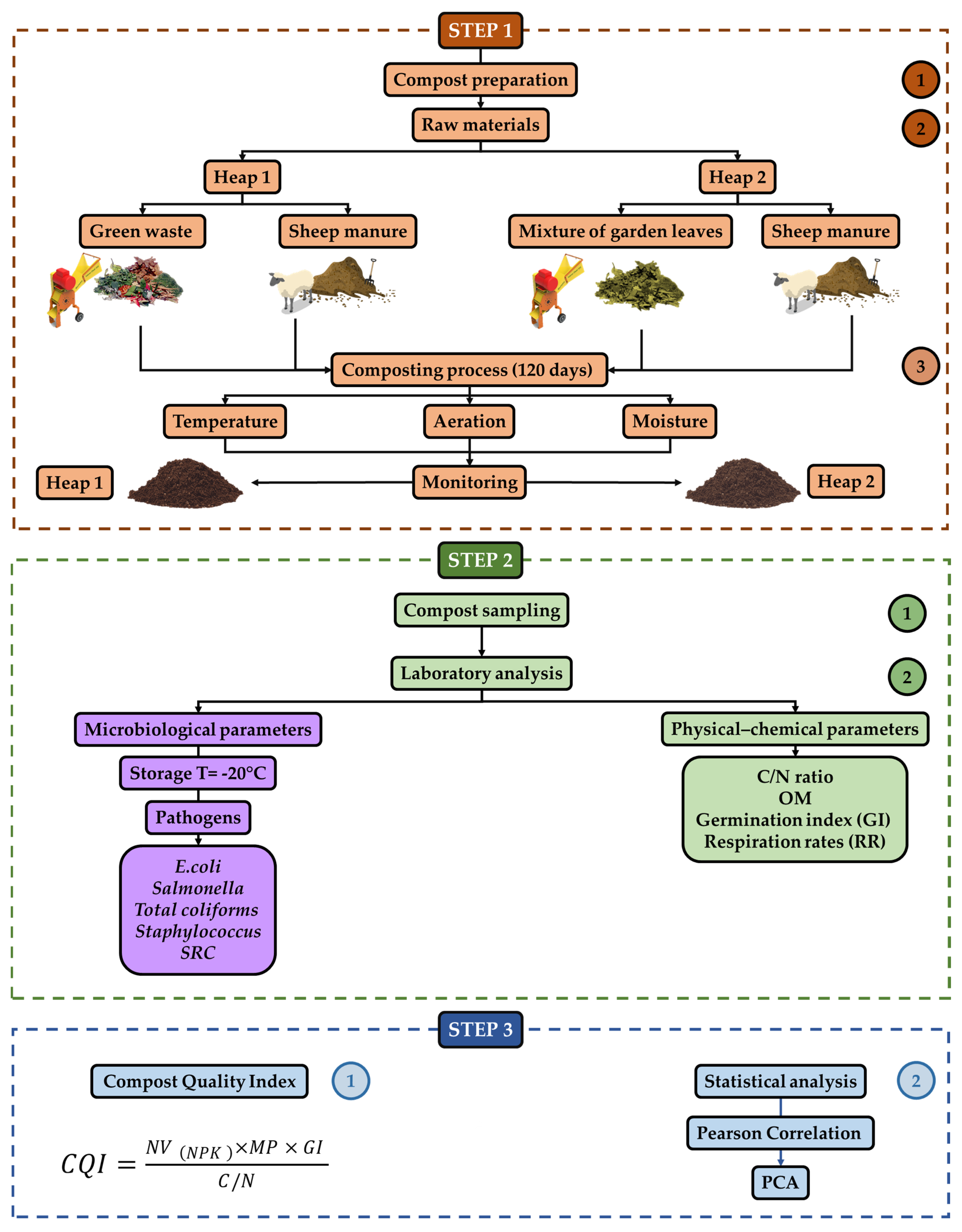
Figure 1. CQI assessment workflow depicting the three main steps.
Environments 13 00043 g001
Figure 2. Temperature fluctuation at three different levels in (a) Heap 1 and (b) Heap 2.
Environments 13 00043 g002
Figure 3. The microbial population in Heap 1 and Heap 2.
Environments 13 00043 g003
Figure 4. Nutrient availability (NPK) in Heap 1 and Heap 2.
Environments 13 00043 g004
Figure 5. CQI results in Heap 1 and Heap 2.
Environments 13 00043 g005
Figure 6. Principal component analysis (PCA) biplot of microbial indicators and temperature during composting.
Environments 13 00043 g006
Table 1. Evolution of physicochemical properties of composts from initial to final stage (average values).
HeapC/NOM %GI %RR (mg/g)
InitialFinalInitialFinalFinalInitialFinal
Heap 128.6812.4924.8529.0086.930.456.00
Heap 255.3916.1583.0055.0094.200.665.80
Table 2. CQI classification.
CQI ValuesCategories
CQI < 2Poor
2 < CQI < 4Moderate
4 < CQI < 6Good
6 < CQI < 8Very good
8 < CQI < 10Extremely good
Table 3. Reduction trends of fecal indicator bacteria and pathogens (E. coli, Total Coliforms, SRC, Staphylococcus spp., and Salmonella spp.) in two compost heaps monitored at 30-day intervals over a 120-day composting period.
TimeE. coli (CFU/g)Total Coliforms (MNP/g)SRC (CFU/g)Staphylococcus (CFU/g)Salmonella (CFU/g)
Heap 1Heap 2Heap 1Heap 2Heap 1Heap 2Heap 1Heap 2Heap 1Heap 2
T03.0 × 1043.1 × 1046.7 × 1076.8 × 1073.9 × 1044.8 × 1044.4 × 1053.9 × 105NDND
T 301.2 × 1022.0 × 1024.8 × 1045.2 × 1042.9 × 1033.5 × 1023.9 × 1032.9 × 102NDND
T 601.0 × 1021.0 × 1026.0 × 1024.9 × 1031.2 × 1021.0 × 1022.3 × 1021.1 × 102NDND
T 90<30<101.3 × 1021.0 × 102<102<10260<10NDND
T 120<10ND5040<10<10<10<10NDND
Table 4. Pearson correlation matrix between composting temperature and microbial indicator concentrations during the composting process.
VariablesE. ColiTotal ColiformsSRCStaphylococcusT
E. Coli1
Total coliforms1.0001
SRC0.9980.9971
Staphylococcus1.0001.0000.9981
T−0.340−0.343−0.277−0.3361
Disclaimer/Publisher’s Note: The statements, opinions and data contained in all publications are solely those of the individual author(s) and contributor(s) and not of MDPI and/or the editor(s). MDPI and/or the editor(s) disclaim responsibility for any injury to people or property resulting from any ideas, methods, instructions or products referred to in the content.