
Article

Prenatal Metal Exposure and Neurodevelopmental Changes in Children up to 18 Months of Age: PIPA Cohort Project, Rio de Janeiro

by
Mônica Seefelder de Assis Araujo
1,*,
Nataly Damasceno Figueiredo
2,
Luz Claudio
3,
Arnaldo Prata-Barbosa
4,
Marlos Melo Martins
2,
Volney Magalhães Camara
1 and
Carmen Ildes Rodrigues Froes Asmus
2
1
Public Health Institute, Federal University of Rio de Janeiro, Rio de Janeiro 21941-598, Brazil
2
Maternity School Hospital, Federal University of Rio de Janeiro, Rio de Janeiro 22240-003, Brazil
3
Department of Environmental Medicine and Public Health, Icahn School of Medicine at Mount Sinai, New York, NY 10029, USA
4
D’Or Institute for Research and Education (IDOR), Rio de Janeiro 22281-100, Brazil
*
Author to whom correspondence should be addressed.
Environments 2026, 13(1), 21; https://doi.org/10.3390/environments13010021 (registering DOI)
Submission received: 3 November 2025 / Revised: 18 December 2025 / Accepted: 25 December 2025 / Published: 1 January 2026
(This article belongs to the Special Issue Toxic and Potentially Toxic Metals and Their Health Risks)

Abstract

Early exposure to toxic metals is a growing concern due to its potential neurodevelopmental effects in children. This study investigates whether exposure to multiple metals during pregnancy influences early developmental outcomes in children aged 12–18 months living in a metropolitan setting. We conducted a prospective cohort study in Rio de Janeiro that included 393 children from PIPA project. Umbilical cord blood samples obtained at birth were processed using ICP-MS (Inductively Coupled Plasma Mass Spectrometry) to quantify metals (arsenic, lead and mercury). The children’s neurodevelopment was assessed with the Denver-II tool. We applied logistic regression analyses to explore the relationship between metal concentrations and developmental outcomes, controlling for possible confounding variables. Higher prenatal arsenic levels were linked to poorer gross motor performance, both in continuous models (OR = 1.65; 95% CI: 1.09–2.51) and in subjects with concentrations above the 95th percentile (OR = 8.84; 95% CI: 2.40–32.61), this was consistent across multi-metal models. A negative relationship between Pb concentrations and gross motor delays was observed, with an estimated Odds Ratio of 0.49 (95% CI: 0.24–0.98). Hg exposure demonstrated no association with neurodevelopment in any model. However, the lack of postnatal arsenic exposure data limits the distinction between prenatal and early childhood effects. These findings underscore the need for the continued monitoring and investigation of combined metal exposures during pregnancy. Future studies integrating prenatal and postnatal exposure assessments are warranted.

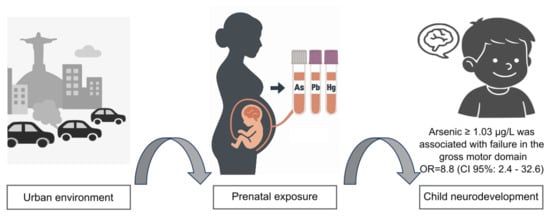
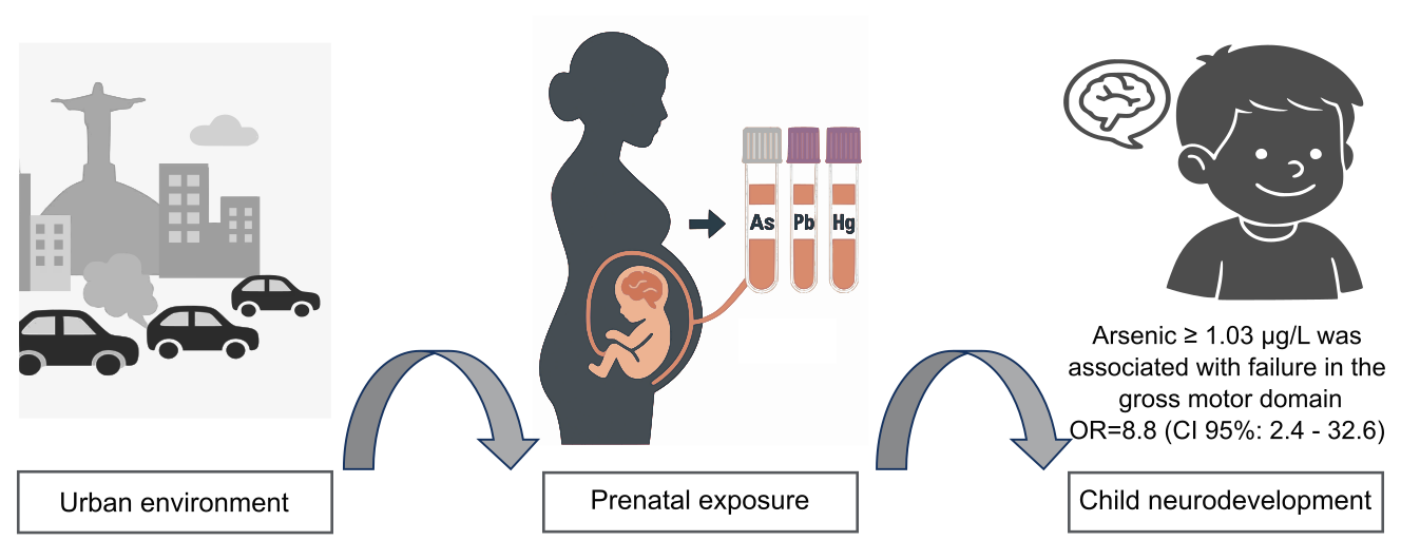
Graphical Abstract

1. Introduction

Metals are prominent environmental pollutants derived from natural geological sources and human practices [1,2]. International public health agencies such as the WHO and CDC classify arsenic, lead, and mercury as chemicals of greatest concern because they are highly toxic, widely distributed in the environment, and associated with significant potential for human exposure [3,4,5]. Exposure to environmental metals primarily occurs through inhalation (air pollution and household sources) and the intake of polluted water and food [6,7]. Both acute and chronic exposures may result in diverse health outcomes [8,9].
The placenta cannot entirely block the transfer of environmental pollutants, including metals, to the fetus [10,11,12,13]. In addition, the immaturity of the fetal neuroprotective barrier increases susceptibility to the neurotoxic effects of environmental chemicals [14,15]. Arsenic, lead, and mercury have been associated with harmful effects on neural development [16,17], particularly during the most sensitive early growth phases [18]. In various studies, exposure to metals during gestation has been correlated with neurodevelopment disorders, such as cognitive deficits, language impairment, behavioral changes, and impaired motor skills [19,20,21].
Internationally, evidence from large prospective birth cohorts has shown that prenatal exposure to metals is associated with impaired neurodevelopment in children [22,23]. In Brazil, few studies have analyzed the presence of metals in umbilical cord blood in urban populations [24,25,26,27]. These investigations focused on identifying the maternal-fetal exposure to metals and describing patterns of placental transfer.
The PIPA cohort project (PIPA-UFRJ) is the first prospective project of its kind in Brazil and was designed to investigate how prenatal exposure to multiple contaminants in urban environments affects child neurodevelopment and health outcomes. Since 2017, the project has been carried out at the Federal University of Rio de Janeiro Maternity School (ME-UFRJ). Previously published studies on this cohort have demonstrated extensive metal contamination (As, Pb, and Hg) in both maternal and umbilical cord blood samples during pregnancy [12,28,29,30]. In this sense, our work aimed to investigate the impacts of multi-metal prenatal exposure, as quantified in umbilical cord blood samples, on neuromotor and cognitive performance in toddlers aged 12–18 months. Considering that metals rarely occur alone in the environment and that toxic neurodevelopmental effects can be modulated by synergistic or antagonistic interactions between elements [31,32,33], potential neurodevelopmental effects are analyzed based on both isolated and combined exposure to these metals.

2. Materials and Methods

2.1. Study Area

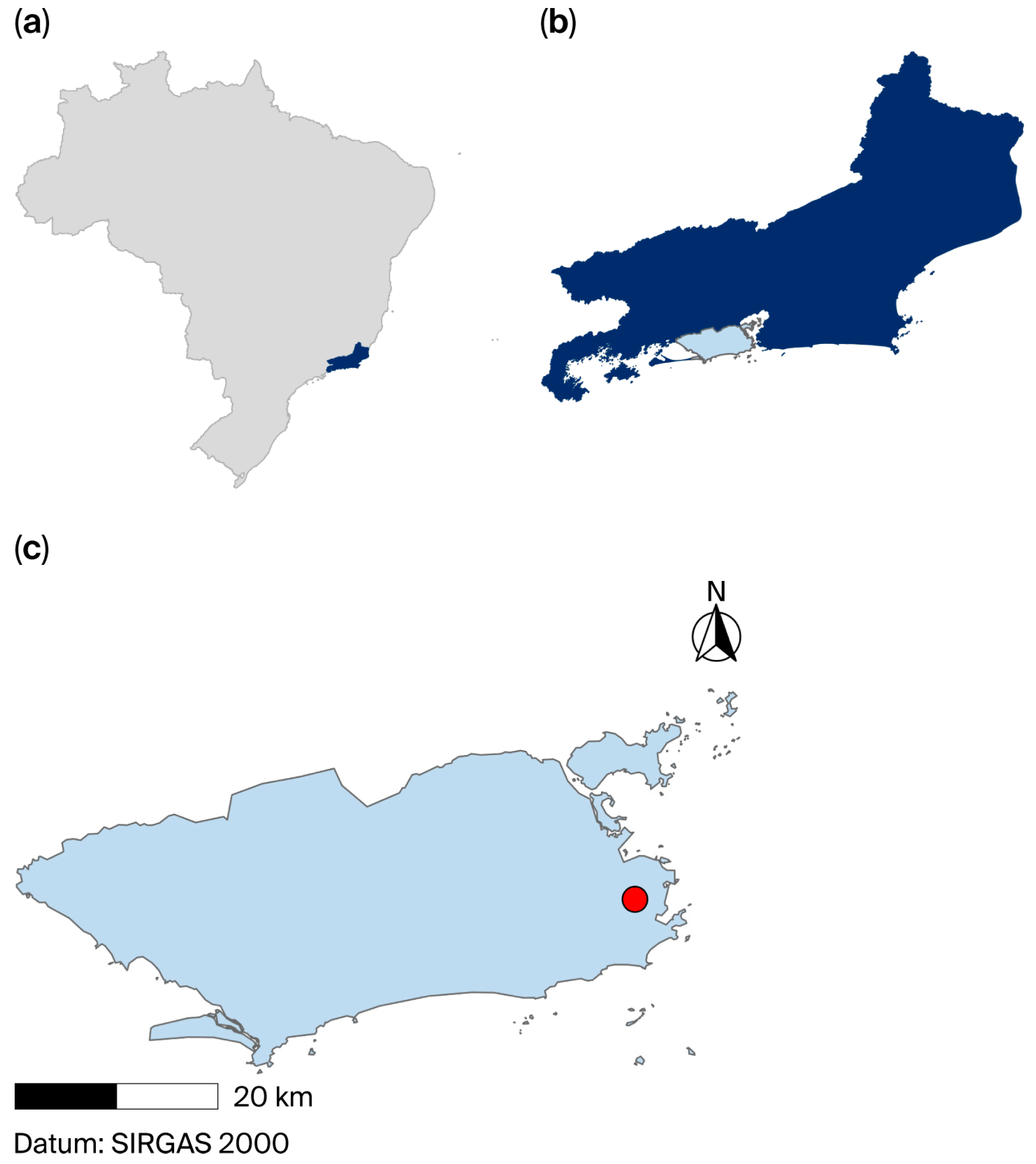
Situated in the southern region of Rio de Janeiro, the Federal University of Rio de Janeiro Maternity School is a public hospital (Figure 1). It provides services such as prenatal care and childbirth to city residents, including women with pregnancies classified as high risk.

2.2. Base and Study Population

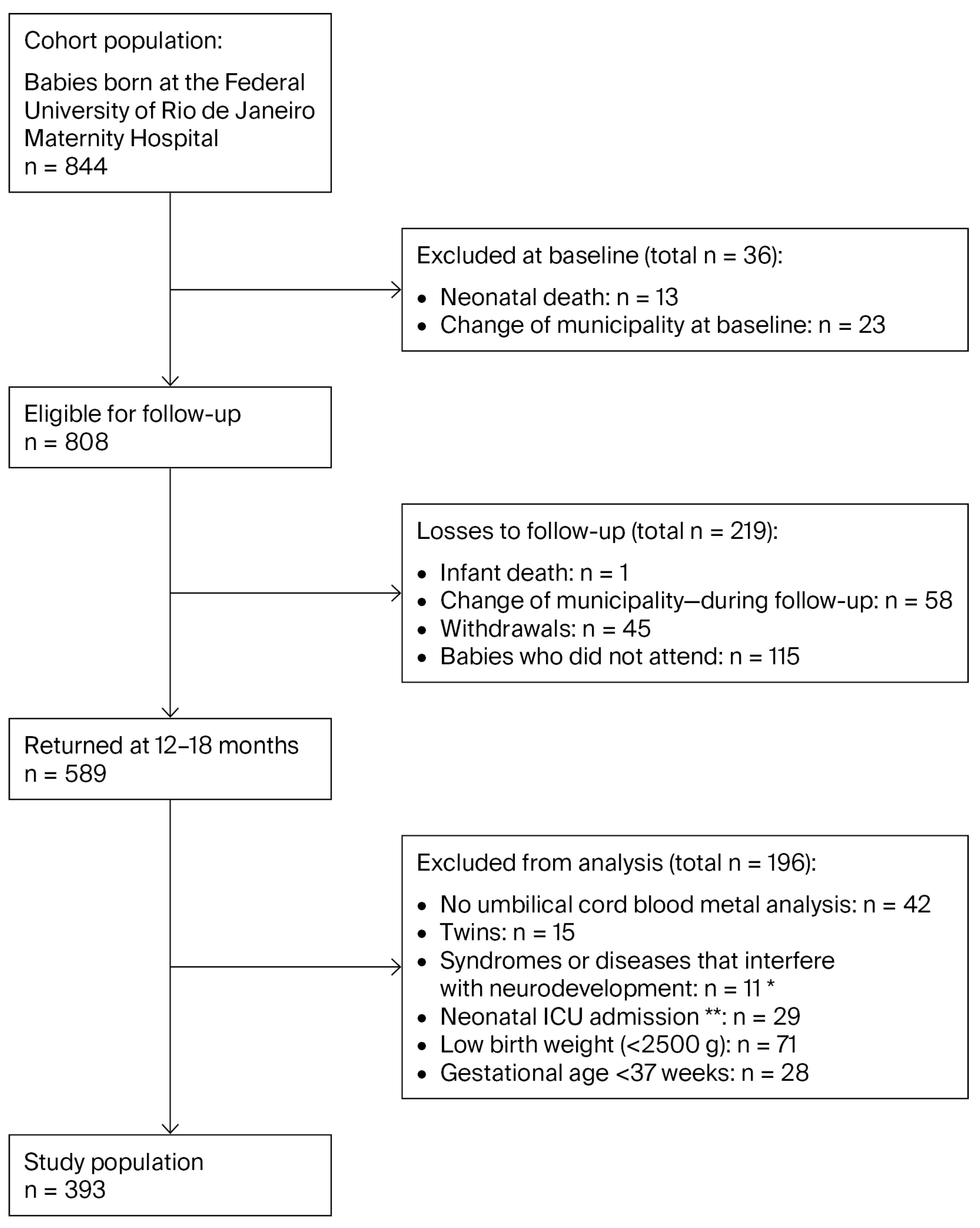
The PIPA cohort project (PIPA-UFRJ) consisted of 844 children born at the ME/UFRJ between July 2021 and July 2022 whose mothers met the eligibility criteria (age 16 or older and living in the Rio de Janeiro municipality) and agreed to participate in the study. Thirty-six losses were noted due to neonatal death (13 babies = 1.5%) and moving to another city (23 babies = 2.7%). Of the 808 babies eligible for follow-up, 589 (72.9%) returned for assessment between 12 and 18 months of age. From this total, 196 children were excluded according to the following criteria: (a) absence of umbilical cord blood sampling (n = 42), (b) twin pregnancies (n = 15), (c) genetic syndromes or neurological alterations (n = 11), (d) admission to the neonatal ICU (n = 29), (e) birth weight less than 2500 g (n = 71) and (f) gestational age less than 37 weeks (n = 28). Therefore, the final study population consisted of 393 children (Figure 2).

2.3. Arsenic, Lead, and Mercury Laboratory Analysis

A total of 20 mL of umbilical cord blood was obtained promptly following childbirth and the cutting of the umbilical cord. The samples were placed in K2-EDTA tubes (BD Vacutainer ®, Becton, Dickinson and Company, Franklin Lakes, NJ, USA) for Pb and Hg analysis, and EDTA-free tubes (BD Vacutainer ®, Becton, Dickinson and Company, Franklin Lakes, NJ, USA) for As analysis. The samples were then stored in a temperature-controlled refrigerator at 2 °C to 7 °C for up to 48 h. Subsequently, they were transferred to an insulated container with reusable frozen gel packs and sent to a facility that analyzed serum metal levels.
Arsenic was analyzed in serum. Lead and mercury were analyzed in whole blood samples by Inductively Coupled Plasma Mass Spectrometry (ICP-MS) at the Laboratório Diagnósticos do Brasil (DB) (a certified clinical laboratory accredited according to: ISO9001:2015/DICQ; PALC). Identical limits of quantification (LOQ) and detection (LOD) were determined for the metals: 0.1 μg/L for arsenic and mercury, and 0.1 μg/dL for lead. The analyses were performed at DB using an in-house developed and validated method, following national and international validation protocols.

2.4. Neurodevelopmental Classification

To assess the child’s neurodevelopment, the Developmental Screening Test II (Denver-II) was utilized [34]. This test assesses children’s neurodevelopment from 0 to 6 years of age. The assessment covers four specific development categories: personal-social, fine motor-adaptive, language, and gross motor. Each item is visualized using a bar graph that displays the age range in which 25%, 50%, 75%, and 90% of the evaluated participants execute the corresponding task [35]. Each task is categorized as pass, fail, refuse, or no opportunity. This instrument serves as a screening tool that assesses the ages at which children perform a wide variety of specific tasks, with the 75th percentile serving as the cutoff for classifying failures as “cautions” and the 90thpercentile serving as the cutoff for “delays” [34]. In Denver-II assessment, the 75th percentile represents the age at which 75% of children are expected to accomplish a given task; therefore, failure above this percentile indicates performance below the expected developmental level for that age.
Children in this study were classified into two groups based on Denver-II scores. As the 75th percentile was used as the cutoff, children without failures above this mark in any of the four domains were designated as belonging to the Non-Failure Group. In contrast, children who had at least one failure in any of the four domains above the 75th percentile were assigned to the Failure Group. The four domains were assessed separately and in combination, with the latter indicating global performance. Because a child may fail in more than one domain, the number of children classified as failures in global performance is not equal to the sum of domain-specific failures. Refusals were considered failures, and tasks classified as “no opportunity” were not included in either group and were excluded from the analysis [35].

2.5. Data Source

Sociodemographic and clinical maternal characteristics, including age, monthly per capita income, educational level, parity, alcohol consumption, exposure to tobacco smoke (active or passive), illicit drug use, hypertension, and diabetes, were obtained through questionnaires administered following 28 weeks of gestation. Perinatal outcomes (birth weight, sex, and weight-for-gestational-age adequacy) were established from ME-UFRJ birth registration forms.
At the follow-up visit, anthropometric (length, weight, head circumference, and arm circumference) and neurodevelopmental assessments were performed using the Denver-II tool. Information on the child’s breastfeeding duration was updated through a specific questionnaire.

2.6. Statistical Analysis

Concentrations of arsenic, lead, and mercury in umbilical cord blood were described using detection rates, central tendency measures, and percentiles. The Shapiro–Wilk test revealed an asymmetric distribution of the data.
Participant characteristics and neurodevelopmental assessment results were described through frequency distribution for categorical variables and central tendency measures (median and interquartile range, and arithmetic mean with standard deviation) for numerical variables.
We utilized a logistic regression analysis to investigate the association between metals concentrations in umbilical cord blood and neurodevelopment (Failure and Non-Failure Groups). When the metal concentrations in umbilical cord blood samples were not detectable (below the LOD), imputation was performed using the LOD/√2 substitution method, according to Lubin et al. [36]. The imputed concentrations were transformed by the natural logarithm. Models were then estimated using these log-transformed values and were adjusted separately for each metal, for pairs, and for all three metals. An interaction analysis between metals was performed using likelihood ratios, revealing no significant interaction (p > 0.10).
Metal exposure was also categorized as greater than/equal to the 95th percentile (more exposed) and less than the 95th percentile (less exposed), based on the high-exposure classification standard used in biomonitoring studies of populations with nonspecific environmental exposures.
To investigate potential confounding factors or conditions, the following associations with the Denver-II results were analyzed (1) sociodemographic and clinical maternal characteristics (age, educational level, monthly per capita income, place of residence, parity, passive or active tobacco exposure, alcohol consumption, illicit drug use, hypertension, and diabetes); (2) birth data (sex, weight, and adequacy of birth weight for gestational age); and (3) breastfeeding duration. Additionally, we analyzed the associations between these variables and umbilical cord blood metal concentrations. Any variable demonstrating association with both exposure (metal levels) and the outcome (Denver-II performance) at a p-value < 0.10 was identified as a possible confounding variable and added to the multivariate logistic regression analyses. Based on this criterion, parity and maternal hypertension during pregnancy were included in the model. All logistic regression analyses were controlled for child sex, maternal age, and education, as supported by previous studies that link these covariates to both exposure levels and neurodevelopment [32]. Effect modification by child sex was assessed by including interaction terms between sex and metals in the adjusted models, following approaches from other studies [33,37]. Still, these terms were excluded from the definitive logistic regression analyses due to lack of statistical significance (p-values > 0.10).
All statistical procedures were executed utilizing IBM SPSS Statistics (Version 21) for Windows, provided by IBM Corporation (Armonk, New York, NY, USA).

2.7. Ethical Approval

This research involved human participants. The Federal University of Rio de Janeiro (UFRJ) Maternity School Ethics Committee approved all procedures (reference number: 6.494.730, approval date: 31 May 2017). Before any procedure was performed, all participants signed an informed consent form.

3. Results

A total of 393 children were included in this study. The sample sizes varied between analyses as not all variables were accessible for each participant. Analytic sample sizes for metals (n = 382 for arsenic, n = 384 for lead, and n = 383 for mercury) included all available samples. In contrast, detection rates reflect only measurements above the limit of detection (LOD). Arsenic, lead, and mercury were detected in 62.0% (n = 237), 99.2% (n = 381), and 94.0% (n = 360), respectively, of umbilical cord blood samples. The median arsenic concentration was 0.13 µg/L, while the median concentrations of lead and mercury were 0.80 µg/dL and 0.80 µg/L, respectively. Among the detected samples, the geometric means were 0.29 µg/L for arsenic, 0.85 µg/dL for lead, and 0.94 µg/L for mercury (Table 1).
Some sociodemographic variables were missing, resulting in different denominators across characteristics, as shown in Table 2. The mean maternal age was 29.9 years (SD = 6.9), the median monthly per capita income was USD $150.00 (IQR: 100.00–240.00), 75.8% (n = 306) of mothers completed high school, and 37.2% (n = 146) of the participants were primiparous. During pregnancy, 37.9% (n = 149) of mothers reported consuming alcohol, 28.0% (n = 110) were exposed to tobacco (actively or passively), and 3.1% (n = 12) used illicit drugs. Individuals with a previous history of hypertension and/or diabetes or those diagnosed during pregnancy accounted for 22.4% (n = 88) and 29.5% (n = 116) of participants, respectively. The mean birth weight was 3.3 kg, with 90.5% classified as appropriate for gestational age; 50.6% of newborns were male, and 74.6% were breastfed for more than six months. Regarding associations with metal concentrations, the maternal age was positively correlated with mercury levels (p = 0.01). Higher lead concentrations were observed among primiparous women (p = 0.002) and among those exposed to tobacco (p = 0.01). Mothers with diabetes had higher arsenic levels (p = 0.02). There was also a trend in the differences in lead levels according to the weight adequacy for gestational age (p = 0.06) (Table 2).
Regarding the global performance as assessed by the Denver-II tool, 19.1% of the children (n = 75) were classified as “failures”. The personal-social, and language domains demonstrated the highest proportions of children in the Failure Group—7.4% (n = 29) and 6.9% (n = 27), respectively—followed by the gross motor (5.1%; n = 20) and the fine motor adaptive domain (3.8%; n = 15). No statistically significant differences were observed between boys and girls in the global Denver-II performance or in the personal-social, language, and gross motor domains. A trend of a higher proportion of failures among boys was noted in the fine motor adaptive domain (5.5% vs. 2.1%), although this difference did not reach statistical significance (p = 0.07) (Table 3).
Prenatal exposure to arsenic was associated with a higher chance of failure in the gross motor domain, both alone (OR = 1.65; 95% CI: 1.09–2.51; p < 0.02), and in combination with lead (OR = 1.75; 95% CI 1.13–2.70; p < 0.01), mercury (OR = 1.72; 95% CI: 1.12–2.65; p < 0.01) or both metals simultaneously (OR = 1.74; 95% CI: 1.11–2.72; p < 0.01). Prenatal lead exposure was associated with a lower chance of failure in the gross motor domain, both alone (OR = 0.49; 95% CI: 0.24–0.98; p < 0.05), and in combination with arsenic (OR = 0.48; 95% CI: 0.24–0.96; p < 0.05), mercury (OR = 0.45; 95% CI: 0.22–0.95; p < 0.03), or both metals (OR = 0.47; 95% CI: 0.23–0.97; p < 0.05) (Table 4).
Concerning exposure groups, an eight-fold greater chance of failures in the gross motor domain (OR = 8.84; 95% CI: 2.40–32.61; p < 0.001) was observed in children presenting prenatal arsenic concentrations equal to or above the 95th percentile (≥1.03 µg/L). No children with prenatal lead concentrations in the most exposed group (≥the 95th percentile: ≥2.48 µg/dL) failed the gross motor assessment. (Table 5).
The detailed information on the associations between umbilical cord blood metal levels, maternal and child sociodemographic characteristics, and Denver-II performance is presented in Supplementary Tables S1 and S2.

4. Discussion

The present study determined that prenatal exposure to arsenic was associated with poorer gross motor performance in infants aged 12 to 18 months. The investigated population comprises urban residents of a large metropolis with no specific source of exposure to arsenic. Our findings corroborate previous research that evaluated umbilical cord blood arsenic exposure, albeit at different ages. Specifically, the PIPA-UFRJ pilot study (October 2017–August 2018) demonstrated that infants with higher umbilical cord blood arsenic concentration had poorer neurodevelopmental performances, as assessed by the Denver-II test [38]. The Chinese Complex Lipids in Mothers and Babies (CLIMB) cohort, investigated by Fan and colleagues [33], found that prenatal arsenic exposure was significantly associated with psychomotor development delays in children aged 12 months (n = 189). With low-level environmental exposure, total arsenic serum measurements represent the metal’s organic and inorganic forms and may reflect recent exposure [39]. Previous studies suggest that arsenic may interfere with important biological mechanisms of motor development, such as synaptic plasticity and myelination, by triggering oxidative imbalance, inflammation, mitochondrial dysfunction, alterations in neurotransmission, and neuronal apoptosis [17,40]. Research using animal models indicates that arsenic exposure induces biochemical and morphological changes in brain regions involved in motor control, including the cerebral cortex, cerebellum, and basal ganglia [41].
Possible sources of metal exposure among pregnant women monitored in the PIPA_UFRJ cohort suggest distinct pathways: arsenic and mercury were more closely linked to maternal fish consumption and limited urban green space, whereas lead aligned with traffic-related pollution and tobacco exposure during pregnancy [30].
The continued association between higher umbilical cord blood arsenic concentrations and increased odds of motor domain failure in the continuous models with two and three metals suggests an independent lead and mercury co-exposure effect.
On the contrary, prenatal lead exposure was associated with an opposite effect. This inverse association warrants a cautious interpretation. Lead is a well-established developmental neurotoxicant, and no level of exposure is considered safe for children [42]. In this cohort, lead concentrations in umbilical cord blood were very low (median: 0.80 μg/dL), and importantly, no child in the highest exposure category (≥95th percentile; ≥2.48 μg/dL) exhibited failures in the personal-social or gross motor domains. This pattern likely contributed to unstable odds ratios and reflects sparse data rather than an actual biological effect. This inverse association was observed when the log-transformed lead concentration was included as a continuous variable in the model. Although non-linear dose–response patterns, including hormetic-like effects, have been described in toxicological models, such mechanisms remain theoretical and have not been demonstrated in human studies of prenatal lead exposure [43,44]. Therefore, while nonlinearity cannot be entirely ruled out, the inverse association observed here is more plausibly attributable to low exposure levels, limited statistical power, or residual confounding. For these reasons, this result should be considered inconclusive rather than suggestive of any protective effect.
In a prospective cohort in Poland, Jedrychowski et al. [45] observed no significant adverse effects in relation to lead concentrations in umbilical cord blood (median = 1.23 μg/dL) on mental and motor development scores at 12 months according to the Bayley Scale, but reported significant negative effects at 24 months (β = −7.65; 95% CI −14.68 to −0.62) and 36 months (β = −6.72; 95% CI −12.5 to −0.89). Because our neurodevelopmental assessment was conducted at a similar early age (12–18 months) and umbilical cord blood lead concentrations in this cohort were very low (median 0.80 μg/dL), it is plausible that potential neurotoxic effects may not yet be detectable at this developmental stage. This highlights the importance of repeated assessments as the children grow, since lead-related deficits may emerge later in infancy or early childhood. Accordingly, continued follow-up of the PIPA cohort will be essential to determine whether associations appear at later ages.
No associations between intrauterine mercury exposure and neurodevelopment changes were identified. in the Childhood and Environment Project (INMA), a study carried out in Spain with children between 11 and 23 months of age (n = 1683), Llop and colleagues [37] reported a negative correlation in females between total umbilical cord blood mercury concentrations (geometric mean: 8.4 μg/L; 95% CI: 8.1 μg/L to 8.7 μg/L) and psychomotor development assessed using the Bayley Scale (β = −1.09, 95% CI: −2.21 to 0.03). In this study, the geometric mean mercury concentration in umbilical cord blood was 0.7 μg/L (95% CI: 0.6–0.8 μg/L), roughly ten times lower than previously reported, with no sex-related effect modification observed. Given these substantially lower exposure levels, the absence of associations is biologically plausible. Moreover, the high-exposure group (≥3.70 μg/L) included few children and very few developmental failures, leading to broad confidence intervals and imprecise estimates. These factors limit statistical power and should be considered when interpreting the null findings for mercury.
Birth cohort studies measure exposures and collect data from the pregnancy and postnatal periods, potentially contributing to the discovery of associations between environmental exposures and assessed outcomes [46]. Golding [47] argues that cohort studies can provide exposure information before disease onset, thereby facilitating the implementation of preventive measures. In this context, we emphasize that umbilical cord blood was selected as the exposure biomarker because it reflects the critical prenatal window of neurodevelopment, which corresponds to the primary etiologic period of interest in this study.
The limitations of this study include its single neurological assessment, the dichotomous nature of the outcomes, and the difficulty associated with defining all potential covariates that may affect neurodevelopment. Another relevant aspect is that the Denver-II test is not a diagnostic tool for developmental delay but rather a screening instrument that allows for comparisons of a child’s performance against age-appropriate developmental milestones, providing only an alert estimate of potential delays.
Another important limitation of this study is the lack of information on metal exposure during early childhood. Although umbilical cord blood is a well-established biomarker of prenatal exposure, arsenic exposure may continue after birth through environmental sources, particularly drinking water and food. In urban settings, dietary intake and water consumption are recognized contributors to arsenic exposure during infancy and early childhood. Therefore, while the observed associations are interpreted as reflecting prenatal exposure, the contribution of unmeasured postnatal exposure cannot be ruled out. Future studies integrating prenatal and postnatal exposure assessments are needed to disentangle better the relative effects of exposure during pregnancy and early childhood.

5. Conclusions

This research contributes to the literature by investigating the prenatal exposure to arsenic, lead, and mercury in an urban environment as well its effects on neurodevelopment in children. The results suggest that arsenic exposure could be related to a greater likelihood of gross motor skill development failure.
No adverse associations were identified for prenatal mercury exposure, which is consistent with the low levels observed in this cohort and with the dose-dependent nature of mercury neurotoxicity. The inverse association observed for lead should be interpreted with caution, as exposure levels were very low and the small number of failures in the highest exposure category resulted in unstable estimates. These findings are therefore considered inconclusive rather than indicative of any protective effect.
As several socio-environmental factors can interfere with the neurodevelopment process, long-term assessments monitoring multiple intervening factors are suggested as the best approach. The effects of prenatal metal exposure may not be evident in early childhood, emerging only in later developmental stages.
Importantly, because information on postnatal metal exposure was not available, the observed associations should be interpreted primarily as reflecting prenatal exposure, while acknowledging that contributions from early childhood exposure—particularly to arsenic through drinking water and food—cannot be entirely excluded. Consequently, longitudinal studies incorporating both prenatal and postnatal exposure measures are essential to clarify the relative contributions of different exposure periods to neurodevelopmental outcomes. Preventing exposure as early as possible and monitoring its impact over time remain key priorities.

Supplementary Materials

The following supporting information can be downloaded at: https://www.mdpi.com/article/10.3390/environments13010021/s1, Table S1: Associations between maternal and child sociodemographic characteristics and Denver-II performance—PIPA-UFRJ-2023; Table S2: Associations between umbilical cord blood arsenic, lead, and mercury concentrations from continuous logarithmized metals and Denver-II performance 1. Table S3: Crude OR—PIPA-UFRJ-2023.

Author Contributions

M.S.d.A.A.: Writing—original draft, Methodology, Investigation, Formal analysis, Conceptualization. N.D.F.: Data curation, Writing—review & editing, Conceptualization. L.C.: Writing—review & editing, Conceptualization. A.P.-B.: Writing—review & editing, Conceptualization. M.M.M.: Writing—review & editing, Conceptualization. V.M.C.: Writing—review & editing, Conceptualization. C.I.R.F.A.: Coordinated the study, Supervision, Writing—review & editing, Conceptualization. All authors have read and agreed to the published version of the manuscript.

Funding

The Brazilian government provided funding for this work through the following programs: the National Council for Scientific and Technological Development (grant 409275/2018-2), the Science and Technology Department (grant 4041608/2019-1), and the Surveillance Health Secretary (grant 733663/19-002), Ministry of Health and the Rio de Janeiro State Foundation to Support Research (grant E-26/010.001894/2019). Dr. Luz Claudio’s work in this project was supported by grants awarded by the National Institutes of Health T37MD001452, D43TW011403, and R01MD020109. The funding sources were not involved in any step of the study development.

Institutional Review Board Statement

This study was conducted in accordance with the Declaration of Helsinki and approved by the Maternity School Ethics Committee of the Federal University of Rio de Janeiro (approval number: 6.494.730, approval date: 31 May 2017).

Informed Consent Statement

Informed consent was obtained from all subjects involved in the study.

Data Availability Statement

Data can be requested, at the end of the study, in December 2026, by filling out a request form (PIPA Database request form, PIPA Proposal submission form) from https://pipaufrj.me.ufrj.br/en/scientific-production-regiment/ (accessed on 24 December 2025). The study protocol, statistical analysis plan, questionnaires, and informed consent form are also available.

Acknowledgments

The authors would like to acknowledge the UFRJ Maternity School team for their broad support of the PIPA project.

Conflicts of Interest

The authors declare no conflicts of interest.

References

  1. Jaishankar, M.; Tseten, T.; Anbalagan, N.; Mathew, B.B.; Beeregowda, K.N. Toxicity, Mechanism and Health Effects of Some Heavy Metals. Interdiscip. Toxicol. 2014, 7, 60–72. [Google Scholar] [CrossRef]
  2. Saliba, Y.; Bărbulescu, A. Assessing pollution with heavy metals and its impact on population health. Toxics 2025, 13, 52. [Google Scholar] [CrossRef]
  3. Agency for Toxic Substances and Disease Registry (ATSDR). ATSDR’s Substance Priority List. Available online: https://www.atsdr.cdc.gov/programs/substance-priority-list.html (accessed on 24 December 2025).
  4. World Health Organization (WHO). Human Health Effects of Benzene, Arsenic, Cadmium, Nickel, Lead and Mercury: Report of an Expert Consultation; Regional Office for Europe Copenhagen: København, Denmark, 2024; Available online: https://iris.who.int/server/api/core/bitstreams/3353758d-5aee-452e-a294-62cee43cfd3c/content (accessed on 21 November 2025).
  5. Center for Disease Control and Prevention (CDC). Poison Center & Public Health Collaborations Community of Practice (PCPH CoP) Newsletter. Available online: https://www.cdc.gov/chemical-radiological-surveillance/media/pdfs/PCPHCoP-Newsletter-Toxic-Metals-Arsenic-508.pdf (accessed on 21 November 2025).
  6. Tchounwou, P.B.; Yedjou, C.G.; Patlolla, A.K.; Sutton, D.J. Heavy Metal Toxicity and the Environment. In Molecular, Clinical and Environmental Toxicology: Volume 3: Environmental Toxicology; Luch, A., Ed.; Springer: Basel, Switzerland, 2012; pp. 133–164. [Google Scholar] [CrossRef]
  7. Zhao, D.; Wang, P.; Zhao, F.J. Toxic metals and metalloids in food: Current status, health risks, and mitigation strategies. Curr. Environ. Health Rep. 2024, 11, 468–483. [Google Scholar] [CrossRef]
  8. Morais, S.; Costa, F.G.; Pereira, M.L. Heavy Metals and Human Health. In Environmental Health: Emerging Issues and Practice; Oosthuizen, J., Ed.; InTech: Rijeka, Croatia, 2012. [Google Scholar]
  9. Mitra, S.; Chakraborty, A.J.; Tareq, A.M.; Emran, T.B.; Nainu, F.; Khusro, A.; Idris, A.M.; Khandaker, M.U.; Osman, H.; Alhumaydhi, F.A.; et al. Impact of heavy metals on the environment and human health: Novel therapeutic insights to counter the toxicity. J. King Saud Univ.—Sci. 2022, 34, 101865. [Google Scholar] [CrossRef]
  10. Gundacker, C.; Hengstschläger, M. The Role of the Placenta in Fetal Exposure to Heavy Metals. Wien. Med. Wochenschr. 2012, 162, 201–206. [Google Scholar] [CrossRef] [PubMed]
  11. Caserta, D.; Graziano, A.; Lo Monte, G.; Bordi, G.; Moscarini, M. Heavy Metals and Placental Fetal–Maternal Barrier: A Mini-Review on the Major Concerns. Eur. Rev. Med. Pharmacol. Sci. 2013, 17, 2198–2206. [Google Scholar] [PubMed]
  12. De Figueiredo, N.D.; Araújo, M.S.; Luiz, R.R.; de Magalhães Câmara, V.; do Couto Jacob, S.; dos Santos, L.M.G.; Vicentini, S.A.; Asmus, C.I.R.F. Metal Mixtures in Pregnant Women and Umbilical Cord Blood at Urban Populations—Rio de Janeiro, Brazil. Environ. Sci. Pollut. Res. 2020, 27, 40210–40218. [Google Scholar] [CrossRef]
  13. Kotta-Loizou, I.; Pritsa, A.; Antasouras, G.; Vasilopoulos, S.N.; Voulgaridou, G.; Papadopoulou, S.K.; Coutts, R.H.A.; Lechouritis, E.; Giaginis, C. Fetus exposure to drugs and chemicals: A holistic overview on the assessment of their transport and metabolism across the human placental barrier. Diseases 2024, 12, 114. [Google Scholar] [CrossRef]
  14. Grandjean, P.; Landrigan, P.J. Developmental Neurotoxicity of Industrial Chemicals. Lancet 2006, 368, 2167–2178. [Google Scholar] [CrossRef]
  15. Ijomone, O.M.; Olung, N.F.; Akingbade, G.T.; Nwoha, P.U.; Aschner, M. Environmental influence on neurodevelopmental disorders: Potential risk of heavy metal exposure and autism. J. Trace Elem. Med. Biol. 2020, 62, 126638. [Google Scholar] [CrossRef]
  16. Schofield, K. The Metal Neurotoxins: An Important Role in Current Human Neural Epidemics? Int. J. Environ. Res. Public Health 2017, 14, 1511. [Google Scholar] [CrossRef]
  17. Carmona, A.; Roudeau, S.; Ortega, R. Molecular Mechanisms of Environmental Metal Neurotoxicity: A Focus on the Interactions of Metals with Synapse Structure and Function. Toxics 2021, 9, 198. [Google Scholar] [CrossRef]
  18. Selevan, S.G.; Kimmel, C.A.; Mendola, P. Identifying critical windows of exposure for children’s health. Environ. Health Perspect. 2000, 108, 451–455. [Google Scholar]
  19. Dórea, J.G. Exposure to Environmental Neurotoxic Substances and Neurodevelopment in Children from Latin America and the Caribbean. Environ. Res. 2021, 192, 110199. [Google Scholar] [CrossRef] [PubMed]
  20. Vrijheid, M.; Casas, M.; Gascon, M.; Valvi, D.; Nieuwenhuijsen, M. Environmental Pollutants and Child Health—A Review of Recent Concerns. Int. J. Hyg. Environ. Health 2016, 219, 331–342. [Google Scholar] [CrossRef]
  21. Farías, P.; Hernández-Bonilla, D.; Moreno-Macías, H.; Montes-López, S.; Schnaas, L.; Texcalac-Sangrador, J.L.; Ríos, C.; Riojas-Rodríguez, H. Prenatal co-exposure to manganese, mercury, and lead, and neurodevelopment in children during the first year of life. Int. J. Environ. Res. Public Health 2022, 19, 13020. [Google Scholar] [CrossRef] [PubMed]
  22. Su, R.; Jiang, Y.; Li, W.; Ding, W.; Feng, L. Effects of Prenatal Arsenic, Cadmium, and Manganese Exposure on Neurodevelopment in Children: A Systematic Review and Meta-Analysis. Medicina 2025, 61, 1143. [Google Scholar] [CrossRef] [PubMed]
  23. da Silva, A.S.; Santos, R.M.S.; De Marco, P.G.; Rezende, V.H.M.; Martins, T.C.; Silva, J.R.; Romano-Silva, M.A.; Miranda, D.M.D. Neurodevelopmental outcomes associated with early-life exposure to heavy metals: A systematic review. Int. J. Environ. Res. Public Health 2025, 22, 1308. [Google Scholar] [CrossRef]
  24. Rosálem, Á. Associação de Fatores Ambientais de Exposição ao Chumbo e Plumbemia com Abortamento Espontâneo (Dissertação/Relatório). Available online: https://docs.bvsalud.org/biblioref/ses-sp/2004/ses-16485/ses-16485-1586.pdf (accessed on 12 April 2025).
  25. Santos, E.O.; Jesus, I.M.D.; Câmara, V.D.M.; Brabo, E.D.S.; Jesus, M.I.D.; Fayal, K.F.; Asmus, C.I.R.F. Correlation between Blood Mercury Levels in Mothers and Newborns in Itaituba, Pará State, Brazil. Cad. Saúde Pública 2007, 23, S622–S629. [Google Scholar] [CrossRef]
  26. Amaral, J.H.; Rezende, V.B.; Quintana, S.M.; Gerlach, R.F.; Barbosa, F., Jr.; Tanus-Santos, J.E. The Relationship between Blood and Serum Lead Levels in Peripartum Women and Their Respective Umbilical Cords. Basic Clin. Pharmacol. Toxicol. 2010, 107, 971–975. [Google Scholar] [CrossRef]
  27. Rudge, C.V.; Calderon, I.M.; Rudge, M.V.; Volpato, G.; Silva, J.L.; Duarte, G.; Neto, C.M.; Sass, N.; Mattar, R.; Röllin, H.B.; et al. Toxic and Essential Elements in Blood from Delivering Women in Selected Areas of São Paulo State, Brazil. J. Environ. Monit. 2011, 13, 563–571. [Google Scholar] [CrossRef]
  28. de Assis Araujo, M.S.; Figueiredo, N.D.; Camara, V.M.; Asmus, C.I.F. Maternal–Child Exposure to Metals during Pregnancy in Rio de Janeiro City, Brazil: The Rio Birth Cohort Study of Environmental Exposure and Childhood Development (PIPA Project). Environ. Res. 2020, 183, 109155. [Google Scholar] [CrossRef]
  29. Asmus, C.I.R.F.; Barbosa, A.P.; Meyer, A.; Damasceno, N.; Rosa, A.C.S.; Medronho, R.; da Cunha, A.J.L.A.; Moreira, J.C.; Fernandes, T.V.R.d.B.; Martins, M.; et al. Rio Birth Cohort Study on Environmental Exposure and Childhood Development—PIPA Project. Ann. Glob. Health 2020, 86, 59. [Google Scholar] [CrossRef]
  30. Fróes-Asmus, C.I.; Damasceno, N.; Prata-Barbosa, A.; Luiz, R.R.; Damacena, G.N.; Meyer, A.; Rezende, J.; Amim, J.; Carvalho, D.; Medronho, R.; et al. Urban Green Spaces and Newborns Metal Concentrations in Rio de Janeiro, Brazil. Ann. Glob. Health 2024, 90, 56. [Google Scholar] [CrossRef]
  31. Shah-Kulkarni, S.; Lee, S.; Jeong, K.S.; Hong, Y.C.; Park, H.; Ha, M.; Kim, Y.; Ha, E.H. Prenatal Exposure to Mixtures of Heavy Metals and Neurodevelopment in Infants at 6 Months. Environ. Res. 2020, 182, 109122. [Google Scholar] [CrossRef]
  32. Merced-Nieves, F.M.; Arora, M.; Wright, R.O.; Curtin, P. Metal Mixtures and Neurodevelopment: Recent Findings and Emerging Principles. Curr. Opin. Toxicol. 2021, 26, 28–32. [Google Scholar] [CrossRef] [PubMed]
  33. Fan, X.Y.; Lin, X.S.; Yang, B.R.; Zhang, H.W.; Tang, F.; Tang, J.J.; Chi, H.-B.; Mansell, T.; Kartiosuo, N.; Xia, Y.-Y.; et al. Relationship between Prenatal Metals Exposure and Neurodevelopment in One-Year-Old Infants in the CLIMB Study. Ecotoxicol. Environ. Saf. 2025, 291, 117860. [Google Scholar] [CrossRef] [PubMed]
  34. Frankenburg, W.K.; Dodds, J.; Archer, P.; Shapiro, H.; Bresnick, B. The Denver II: A Major Revision and Restandardization of the Denver Developmental Screening Test. Pediatrics 1992, 89, 91–97. [Google Scholar] [CrossRef]
  35. Frankenburg, W.K. Denver II: Technical Manual; Denver Developmental Materials Inc.: Denver, CO, USA, 1996. [Google Scholar]
  36. Lubin, J.H.; Colt, J.S.; Camann, D.; Davis, S.; Cerhan, J.R.; Severson, R.K.; Bernstein, L.; Hartge, P. Epidemiologic Evaluation of Measurement Data in the Presence of Detection Limits. Environ. Health Perspect. 2004, 112, 1691–1696. [Google Scholar] [CrossRef] [PubMed]
  37. Llop, S.; Guxens, M.; Murcia, M.; Lertxundi, A.; Ramon, R.; Riaño, I.; Rebagliato, M.; Ibarluzea, J.; Tardon, A.; Sunyer, J.; et al. Prenatal Exposure to Mercury and Infant Neurodevelopment in a Multicenter Cohort in Spain: Study of Potential Modifiers. Am. J. Epidemiol. 2012, 175, 451–465. [Google Scholar] [CrossRef]
  38. de Assis Araujo, M.S.; Froes-Asmus, C.I.R.; de Figueiredo, N.D.; Camara, V.M.; Luiz, R.R.; Prata-Barbosa, A.; Martins, M.M.; Jacob, S.D.C.; dos Santos, L.M.G.; Neto, S.A.V.; et al. Prenatal Exposure to Metals and Neurodevelopment in Infants at Six Months: Rio Birth Cohort Study of Environmental Exposure and Childhood Development (PIPA Project). Int. J. Environ. Res. Public Health 2022, 19, 4295. [Google Scholar] [CrossRef]
  39. Takayama, Y.; Masuzaki, Y.; Mizutani, F.; Iwata, T.; Maeda, E.; Tsukada, M.; Nomura, K.; Ito, Y.; Chisaki, Y.; Murata, K. Associations between Blood Arsenic and Urinary Arsenic Species Concentrations as an Exposure Characterization Tool. Sci. Total Environ. 2021, 750, 141517. [Google Scholar] [CrossRef] [PubMed]
  40. Chen, H.; Zhang, H.; Wang, X.; Wu, Y.; Zhang, Y.; Chen, S.; Zhang, W.; Sun, X.; Zheng, T.; Xia, W.; et al. Prenatal Arsenic Exposure, Arsenic Metabolism and Neurocognitive Development of 2-Year-Old Children in Low-Arsenic Areas. Environ. Int. 2023, 174, 107918. [Google Scholar] [CrossRef] [PubMed]
  41. Parvez, F.; Wasserman, G.A.; Factor-Litvak, P.; Liu, X.; Slavkovich, V.; Siddique, A.B.; Sultana, R.; Sultana, R.; Islam, T.; Levy, D.; et al. Arsenic Exposure and Motor Function among Children in Bangladesh. Environ. Health Perspect. 2011, 119, 1665–1670. [Google Scholar] [CrossRef]
  42. Landrigan, P.J.; Fuller, R.; Acosta, N.J.R.; Adeyi, O.; Arnold, R.; Basu, N.; Baldé, A.B.; Bertollini, R.; Bose-O’Reilly, S.; Boufford, J.I.; et al. The Lancet Commission on pollution and health. Lancet 2018, 391, 462–512. [Google Scholar] [CrossRef] [PubMed]
  43. Calabrese, E.J. Hormesis: Why It Is Important to Toxicology and Toxicologists. Environ. Toxicol. Chem. 2008, 27, 1451–1474. [Google Scholar] [CrossRef]
  44. Rillig, M.C.; Lehmann, A.; Bi, M. Hormesis as a Hidden Hand in Global Environmental Change? Environ. Sci. Technol. 2025, 59, 2887–2890. [Google Scholar] [CrossRef]
  45. Jedrychowski, W.; Perera, F.P.; Jankowski, J.; Mrozek-Budzyn, D.; Mroz, E.; Flak, E.; Edwards, S.; Skarupa, A.; Lisowska-Miszczyk, I. Very Low Prenatal Exposure to Lead and Mental Development of Children in Infancy and Early Childhood: Krakow Prospective Cohort Study. Neuroepidemiology 2009, 32, 270–278. [Google Scholar] [CrossRef]
  46. Landrigan, P.J.; Fuller, R.; Fisher, S.; Suk, W.A.; Sly, P.; Chiles, T.C.; Bose-O’Reilly, S. Pollution and Children’s Health. Sci. Total Environ. 2019, 650, 2389–2394. [Google Scholar] [CrossRef]
  47. Golding, J. Who Should Be Studied and When in a Longitudinal Birth Cohort? Paediatr. Perinat. Epidemiol. 2009, 23, 15–22. [Google Scholar] [CrossRef]
Figure 1. Study area. (a) Brazil, with the state of Rio de Janeiro highlighted; (b) Rio de Janeiro State, with the municipality of Rio de Janeiro highlighted; and (c) Rio de Janeiro municipality, with a red dot indicating the ME-UFRJ Maternity School.
Environments 13 00021 g001
Figure 2. Study population. * Down syndrome (n = 4), Wolf-Hirschhorn syndrome (n = 1), myelomeningocele (n = 1), spinal cord amyotrophy (n = 1), congenital visual impairment (n = 1), deafness due to meningitis (n = 1) and cerebral palsy (n = 2). ** Newborns were admitted to the NICU (Neonatal Intensive Care Unit) due to cardiorespiratory abnormalities.
Environments 13 00021 g002
Table 1. Descriptive statistics of arsenic, lead, and mercury concentrations in cord blood samples—PIPA-UFRJ-2023.
MetalnDR n (%)GMP25P50P75P95P99SkewnessKurtosis
Arsenic (µg/L)382237 (62.0)0.29<LOD0.130.291.033.289.42105.23
Lead (µg/dL)384381 (99.2)0.850.600.801.202.485.166.6565.63
Mercury (µg/L)383360 (94.0)0.940.300.801.603.706.962.529.09
n: total number of analyzed samples. DR: detection rate; frequency of cases above the limit of detection (LOD) of 0.10 µg/L for arsenic and mercury and 0.10 µg/dL for lead. GM: geometric mean, calculated among detected samples.
Table 2. Pregnant women and child characteristics and umbilical cord blood arsenic, lead, and mercury concentrations—PIPA-UFRJ-2023.
Arsenic µg/LLead µg/dLMercury µg/L
Allr (p Valor) a
Pregnant Woman
Age, years (n = 393)
mean (SD)
29.9 (6.9)0.07 (0.20)0.04 (0.41)0.14 (0.01)
Monthly per capita income, US$ (n = 317)
median (P25; P75)
150 (100; 240)0.04 (0.49)0.06 (0.32)0.05 (0.38)
Newborn
Weight (n = 393)
mean (SD)
3.3 (0.4)−0.08 (0.15)0.06 (0.22)−0.01 (0.89)
n (%)Median (P25–P75) p Value b
Pregnant Woman
Years of study
  ≤High school298 (75.8)0.13 (<LOD–0.28)0.300.80 (0.60–1.10)0.090.70 (0.30–1.40)0.02
  >High school95 (24.2)0.14 (<LOD–0.31) 0.90 (0.60–1.20) 1.00 (0.30–2.30)
Parity
  Multiparous146 (37.2)0.12 (<LOD–0.31)0.260.80 (0.55–1.10)0.0020.70 (0.30–1.50)0.06
  Primiparous247 (62.8)0.14 (<LOD–0.28) 0.90 (0.70–1.40) 0.90 (0.40–1.90)
Alcohol Consumption
  Yes149 (37.9)0.13 (<LOD–0.29)0.950.80 (0.60–1.13)0.790.80 (0.37–1.63)0.72
  No244 (62.1)0.13 (<LOD–0.28) 0.80 (0.60–1.20) 0.80 (0.30–1.55)
Tobacco Exposure
  Yes110 (28.0)0.14 (<LOD–0.33)0.370.90 (0.67–1.30)0.010.90 (0.47–1.70)0.17
  No283 (72.0)0.13 (<LOD–0.27) 0.80 (0.60–1.13) 0.70 (0.30–1.60)
Illicit Drug Use
  Yes12 (3.1)0.07 (<LOD–0.39)0.821.00 (0.83 -1.35)0.170.75 (0.30–1.43)0.63
  No379 (96.9)0.13 (<LOD–0.29) 0.80 (0.60–1.20) 0.80 (0.30–1.65)
Hypertension
  Yes88 (22.4)0.15 (<LOD–0.48)0.060.80 (0.70–1.10)0.650.80 (0.37–1.70)0.47
  No305 (77.6)0.13 (<LOD–0.25) 0.80 (0.60–1.20) 0.80 (0.30–1.60)
Diabetes
  Yes116 (29.5)0.17 (<LOD–0.38)0.020.80 (0.50–1.20)0.540.80 (0.40–1.70)0.38
  No277 (70.5)0.12 (<LOD–0.23) 0.80 (0.60–1.20) 0.70 (0.30–1.60)
Child Characteristics
  Sex
  Male199 (50.6)0.13 (<LOD–0.30)0.920.80 (0.60–1.10)0.720.70 (0.30–1.40)0.09
  Female194 (49.4)0.14 (<LOD–0.28) 0.80 (0.60–1.20) 0.80 (0.40–1.70)
Weight Adequacy for Gestational Age
  SGA6 (1.5)0.17 (0.05–0.35) 0.75 (0.40 -0.90)0.060.80 (0.55–4.20)0.67
  AGA351 (90.5)0.13 (<LOD–0.29)0.930.80 (0.60–1.10) 0.80 (0.30–1.60)
  LGA31 (8.0)0.14 (<LOD–0.35) 1.10 (0.60–1.90) 0.80 (0.30–2.00)
Breastfeeding Duration
  <6 months96 (24.4)0.13 (<LOD–0.28)0.560.90 (0.70–1.20)0.250.70 (0.30–1.40)0.34
  ≥6 months282 (74.6)0.14 (<LOD–0.30) 0.80 (0.60–1.20) 0.80 (0.30–1.70)
a Spearman’s correlation test; b Mann–Whitney or Kruskal–Wallis test; hypertension and diabetes during pregnancy—self-reported in the third pregnancy trimester; Small for Gestational Age (SGA), Appropriate for Gestational Age (AGA), and Large for Gestational Age (LGA).
Table 3. Comparison of Denver-II performances between sexes—PIPA-UFRJ-2023.
AllMaleFemalep Value a
n (%)
Global Performance 0.20
  Failure75 (19.1)43 (21.6)32 (16.5)
  Non-failure318 (80.9)156 (78.4)162 (83.5)
Personal-social 0.20
  Failure29 (7.4)18 (9.0)11 (5.7)
  Non-failure364 (92.6)181 (91.0)183 (94.3)
Fine motor adaptive 0.07
  Failure15 (3.8)11 (5.5)4 (2.1)
  Non-failure378 (96.2)188 (94.5)190 (97.9)
Language 0.35
  Failure27 (6.9)16 (8.0)11 (5.7)
  Non-failure366 (93.1)183 (92.0)183 (94.3)
Gross-motor 0.95
  Failure20 (5.1)10 (5.0)10 (5.2)
  Non-failure373 (94.9)189 (95.0)184 (94.8)
a p value Chi-square test; Child may fail in more than one domain; therefore, domain-specific failure counts exceed the total number of children classified with failure in Global Performance.
Table 4. Isolated and simultaneous exposure to umbilical cord blood arsenic, lead, and mercury and performance in Denver-II 1. PIPA-UFRJ-2023.
Global PerformancePersonal-SocialFine Motor AdaptiveLanguageGross Motor
OR (95% CI) 2
One metalArsenic1.03 (0.79–1.33)0.81 (0.52–1.26)1.06 (0.62–1.81)1.00 (0.67–1.49)1.65 (1.09-2.51) **
Lead0.97 (0.64–1.45)0.98 (0.53–1.84)0.87 (0.37–2.08)1.67 (9.67–3.21)0.49 (0.24–0.98) ****
Mercury0.97 (0.76–1.24)1.11 (0.75–1.65)0.96 (0.57–1.63)0.91 (9.67–1.35)1.04 (0.68–1.60)
Arsenic and leadArsenic1.02 (0.78–1.33)0.78 (0.49–1.24)1.05 (0.59–1.86)0.98 (0.67–1.47)1.75 (1.13–2.70) *
Lead0.89 (0.58–1.36)0.75 (0.39–1.43)0.89 (0.36–2.20)1.78 (8.67–3.58)0.48 (0.24–0.96) ****
Arsenic and mercuryArsenic1.03 (0.79–1.35)0.76 (0.48–1.22)1.06 (0.59–1.90)1.01 (0.67–1.54)1.72 (1.12–2.65) *
Mercury0.97 (0.75–1.25)1.18 (0.78–1.79)0.96 (0.56–1.64)0.91 (9.67–1.37)0.95 (0.61–1.48)
Lead and mercuryLead0.97 (0.64–1.47)0.95 (0.50–1.81)0.87 (0.37–2.10)1.70 (9.67–3.23)0.45 (0.22–0.95) ***
Mercury0.97 (0.76–1.25)1.12 (0.76–1.66)0.97 (0.57–1.65)0.87 (9.67–1.31)1.17 (0.74–1.83)
Three metalsArsenic1.03 (0.79–1.36)0.75 (0.47–1.20)1.06 (0.59–1.91)1.01 (0.67–1.53)1.74 (1.11–2.72) **
Lead0.89 (0.58–1.37)0.69 (0.35–1.37)0.90 (0.37–2.21)1.80 (8.67–3.58)0.47 (0.23–0.97) ****
Mercury0.98 (0.76–1.27)1.24 (0.81–1.90)0.97 (0.56–1.67)0.87 (9.67–1.32)1.05 (0.66–1.68)
Denver-II: Denver Developmental Screening Test-II; CI, confidence interval; OR, adjusted odds ratio. ORs for continuous models are expressed per interquartile range (IQR) increase and per doubling of metal concentration (ln2 ≈ 0.693). 1 Using the Denver-II Non-Failure Group as a reference. * p-value < 0.01; ** p-value < 0.02; *** p-value < 0.03; and **** p-value < 0.04; 2 Adjustment variables: maternal age, maternal education, parity, maternal hypertension, and infant sex.
Table 5. Metal concentrations considering the 95th 1 percentile cutoff point for simultaneous exposure to umbilical cord blood arsenic, lead, and mercury and Denver-II performance 2—PIPA-UFRJ-2023.
Global PerformancePersonal-SocialFine Motor AdaptiveLanguageGross Motor
OR (95% CI) p Value
Arsenic(<1.03 µg/L)1.001.001.001.001.00
(≥1.03 µg/L)1.51 (0.51–4.47) 0.460.72 (0.09–5.82) 0.761.49 (0.17–13.14) 0.72*8.84 (2.40–32.61) 0.001
Lead(<2.48 µg/dL)1.001.001.001.001.00
(≥2.48 µg/dL)0.44 (0.09–2.07) 0.30*1.19 (0.12–11.34) 0.882.72 (0.52–14.12) 0.23*
Mercury(<3.70 µg/L)1.001.001.001.001.00
(≥3.70 µg/L)1.50 (0.44–5.05) 0.513.56 (0.69–18.5) 0.131.64 (0.17–15.72) 0.670.71 (0.08–6.65) 0.771.00 (0.11–8.81) 1.00
Arsenic(<1.03 µg/L)1.001.001.001.001.00
Denver-II: Denver-II Developmental Screening Test; CI, confidence interval; OR, adjusted odds ratio. 1 Considering smaller exposure as less than the 95th percentile and greater exposure as greater than or equal to the 95th percentile. 2 Using the Non-Failure Group in Denver-II as a reference. Regression model with all three metals simultaneously. Adjustment variables: Maternal age, maternal education, parity, maternal hypertension, and infant sex. * The odds ratio could not be calculated; no child was classified as a failure above the 95th percentile in this domain.
Disclaimer/Publisher’s Note: The statements, opinions and data contained in all publications are solely those of the individual author(s) and contributor(s) and not of MDPI and/or the editor(s). MDPI and/or the editor(s) disclaim responsibility for any injury to people or property resulting from any ideas, methods, instructions or products referred to in the content.