

Effects of Montmorillonite on Crude Oil Biodegradation and the Microbial Community in an Oil Production Well Pad Shut Down for 753 Days


Abstract
1. Introduction
2. Materials and Methods
2.1. Field Test Well Pad
2.2. Field Test Methods
2.3. Properties of Pristine Soil and Montmorillonite
2.4. Measurement of Soil Physicochemical Parameters
2.4.1. Water Content
2.4.2. Conductivity
2.4.3. Redox Potential
2.4.4. pH
2.4.5. Total Organic Carbon (TOC)
2.4.6. Elemental Analysis of C, H, O, and N
2.5. Analysis of Crude Oil in Soil
2.5.1. Extraction of Crude Oil from Soil
2.5.2. Fractions Analysis of Crude Oil
2.5.3. Gas Chromatography–Mass Spectrometry (GC-MS) Analysis of Saturated and Aromatic Hydrocarbons
2.6. Analysis of Microorganisms in Soil
2.6.1. Extraction of Soil DNA
2.6.2. Gene Sequence Analysis of Soil
2.7. Analysis of Microorganisms in Crude Oil
2.7.1. DNA Extraction of Crude Oil
2.7.2. Gene Sequence Analysis of Crude Oil
3. Results
3.1. Physicochemical Properties of Well Pad Soil
3.1.1. Soil Water Content
3.1.2. Soil Conductivity
3.1.3. Soil Redox Potential
3.1.4. Soil pH
3.1.5. Soil TOC
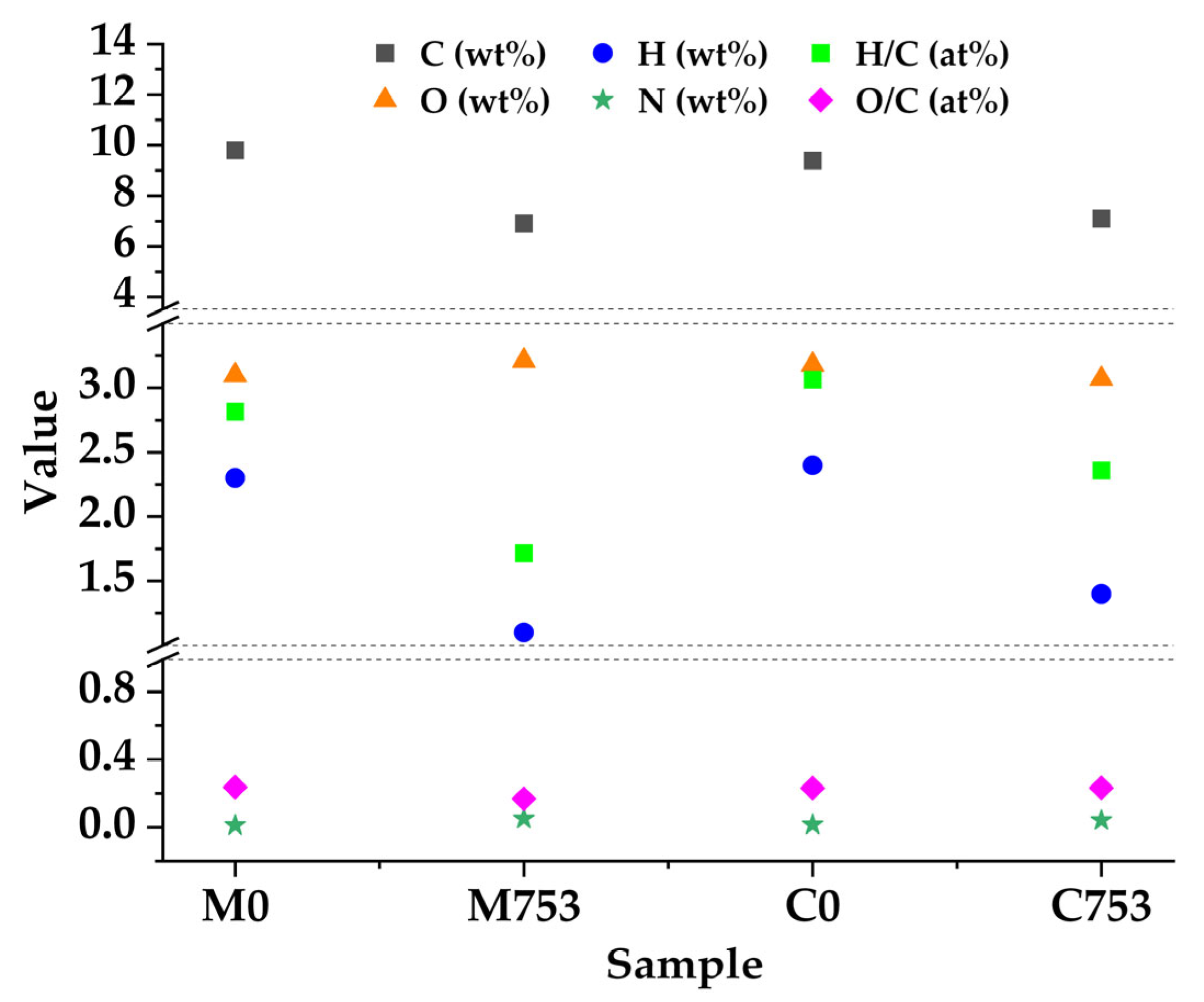
3.1.6. Soil C, H, O, and N
3.2. Crude Oil in Soil
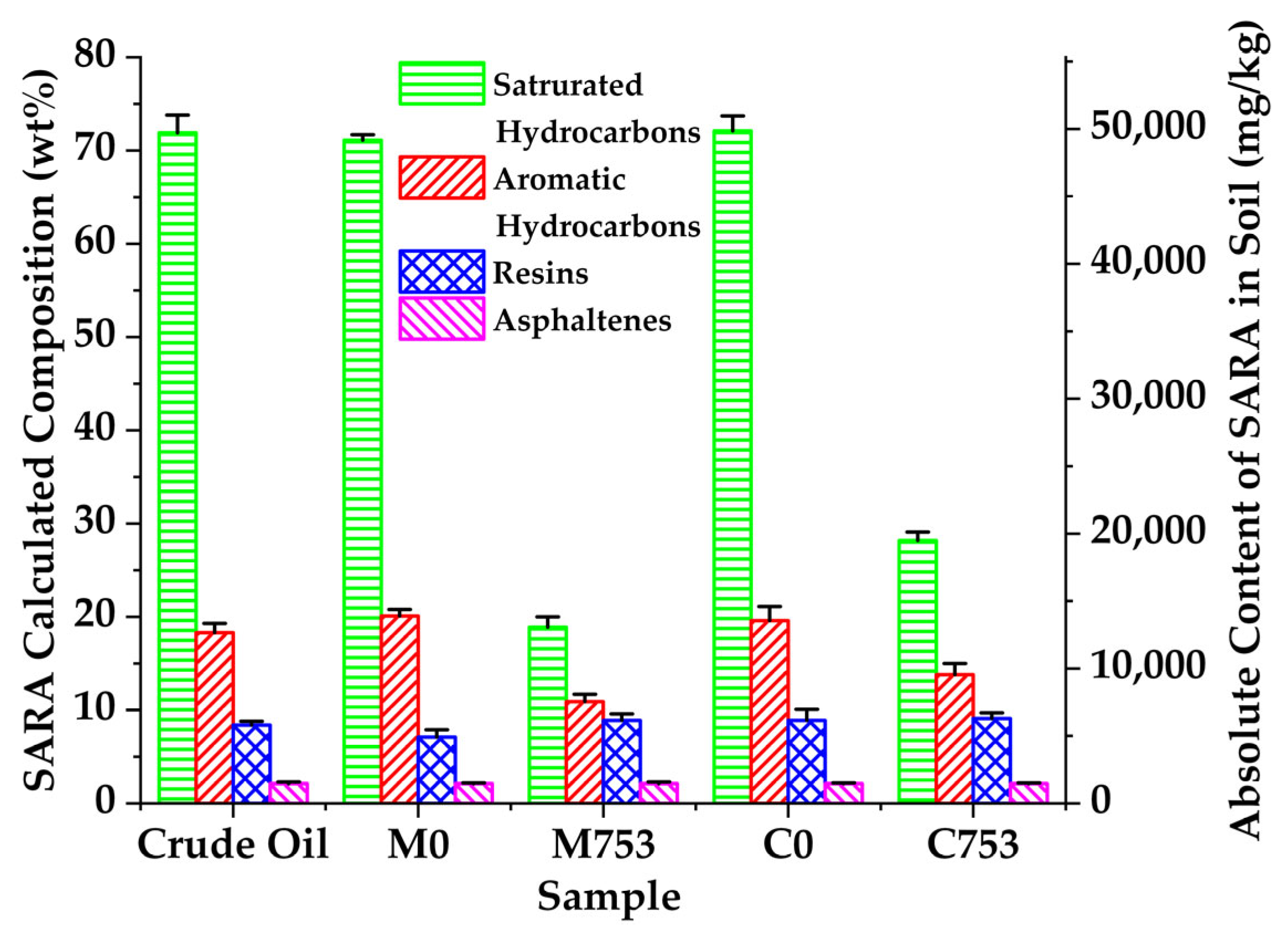
3.2.1. SARA Fractions
3.2.2. Saturated Hydrocarbons
- 1.
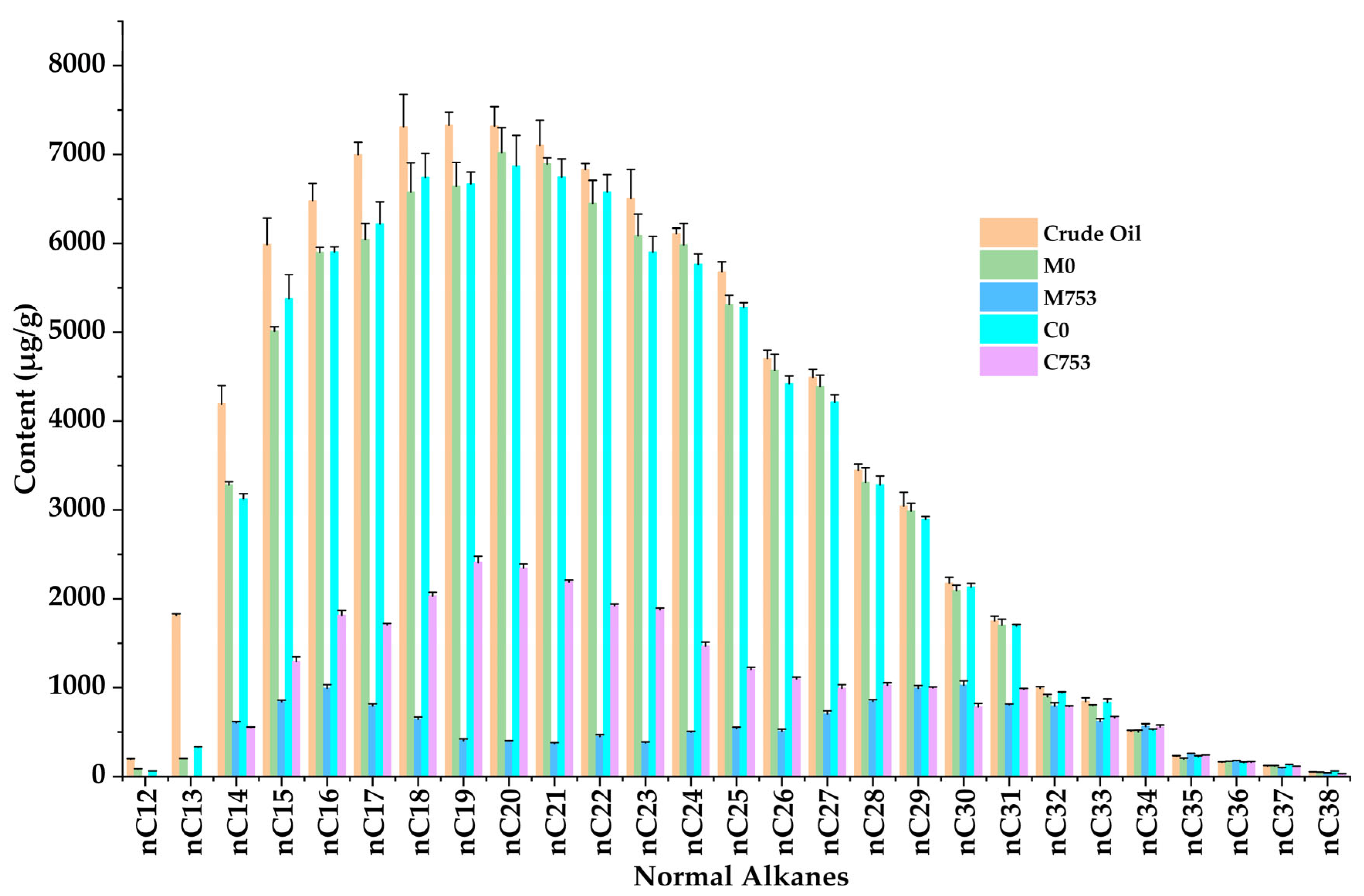
- n-Alkanes
- 2.
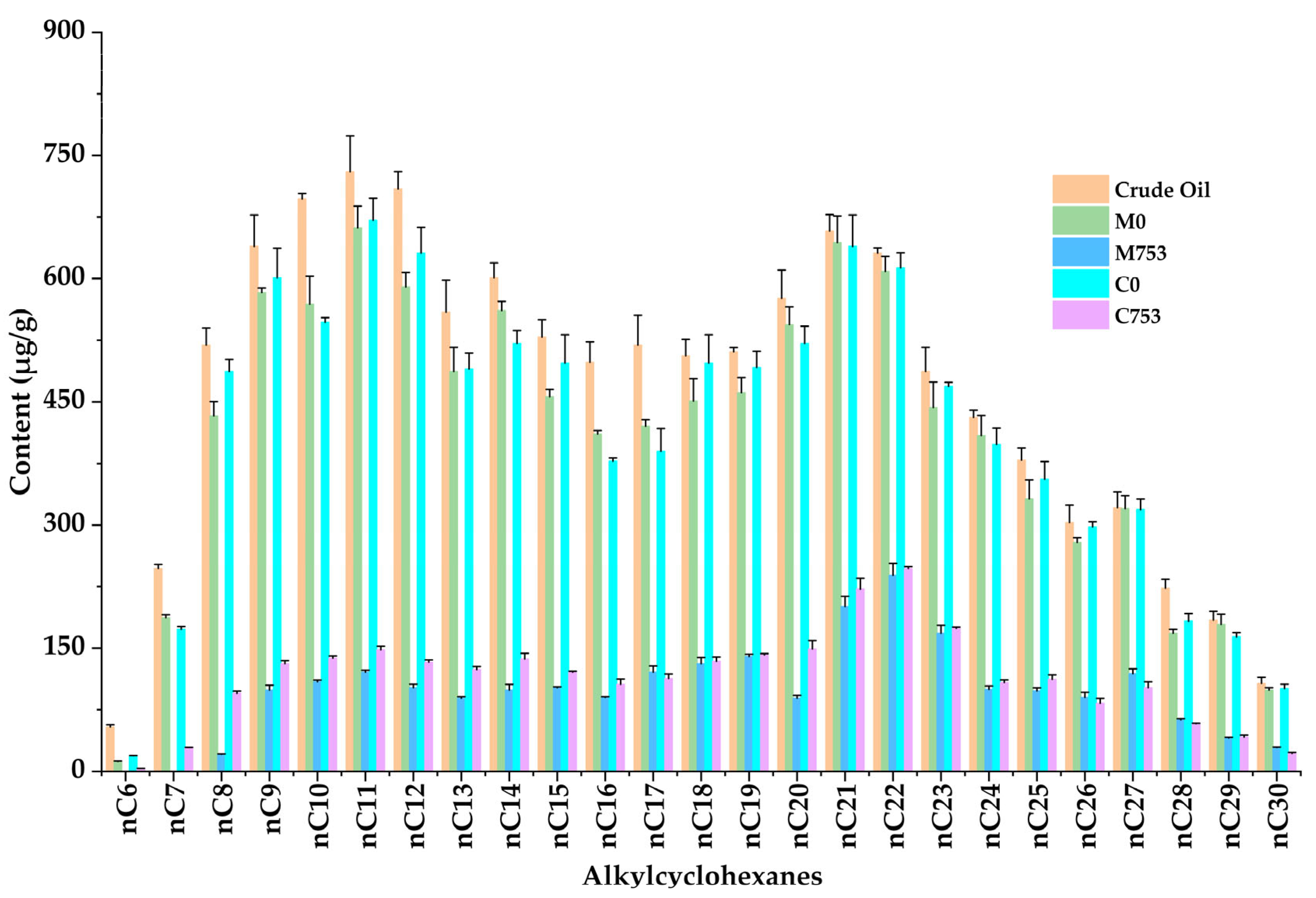
- Alkylcyclohexanes
- 3.
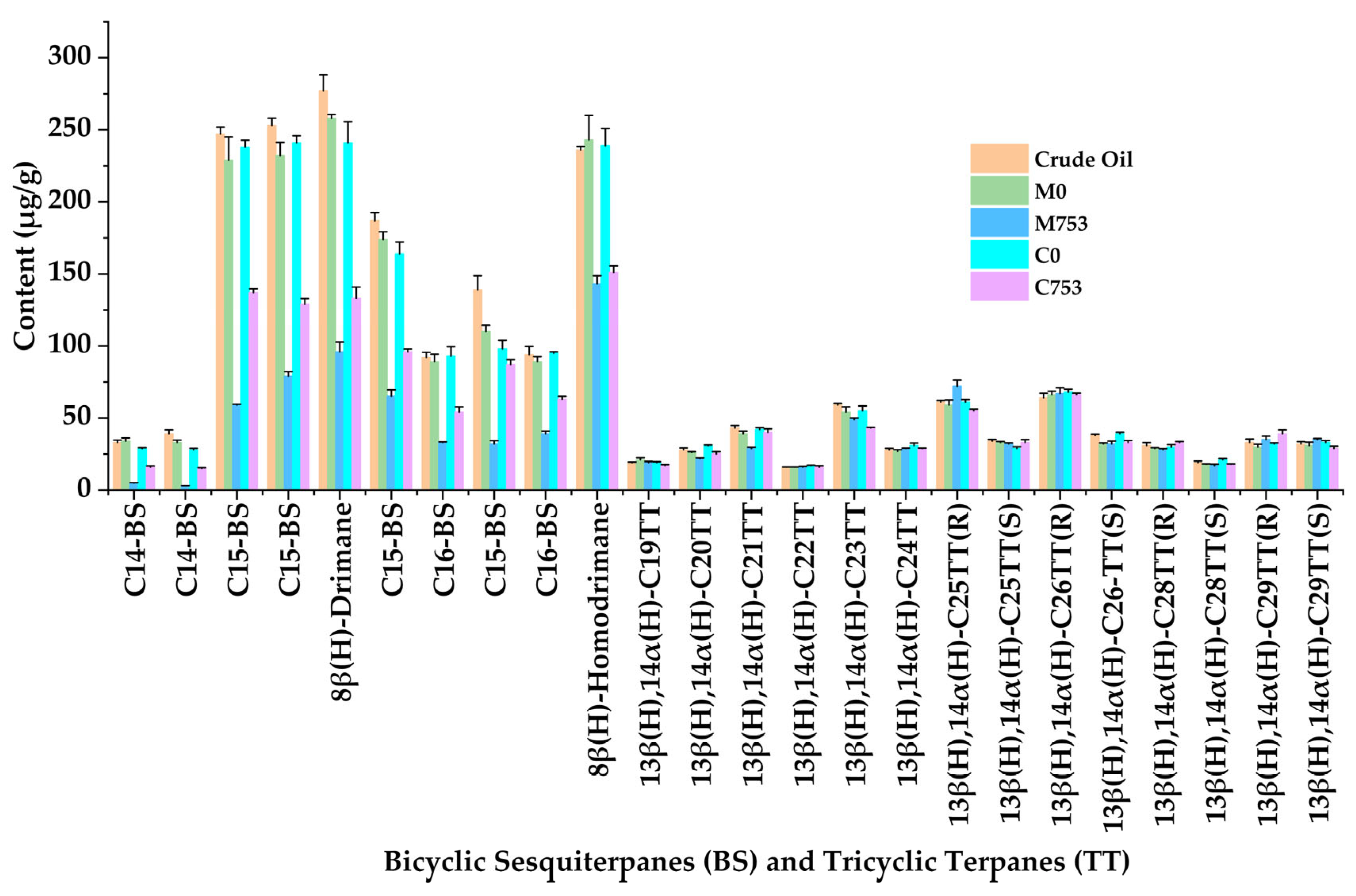
- Terpanes
- 4.
- Hopanes
- 5.
- Steranes
3.2.3. Aromatic Hydrocarbons
- 6.
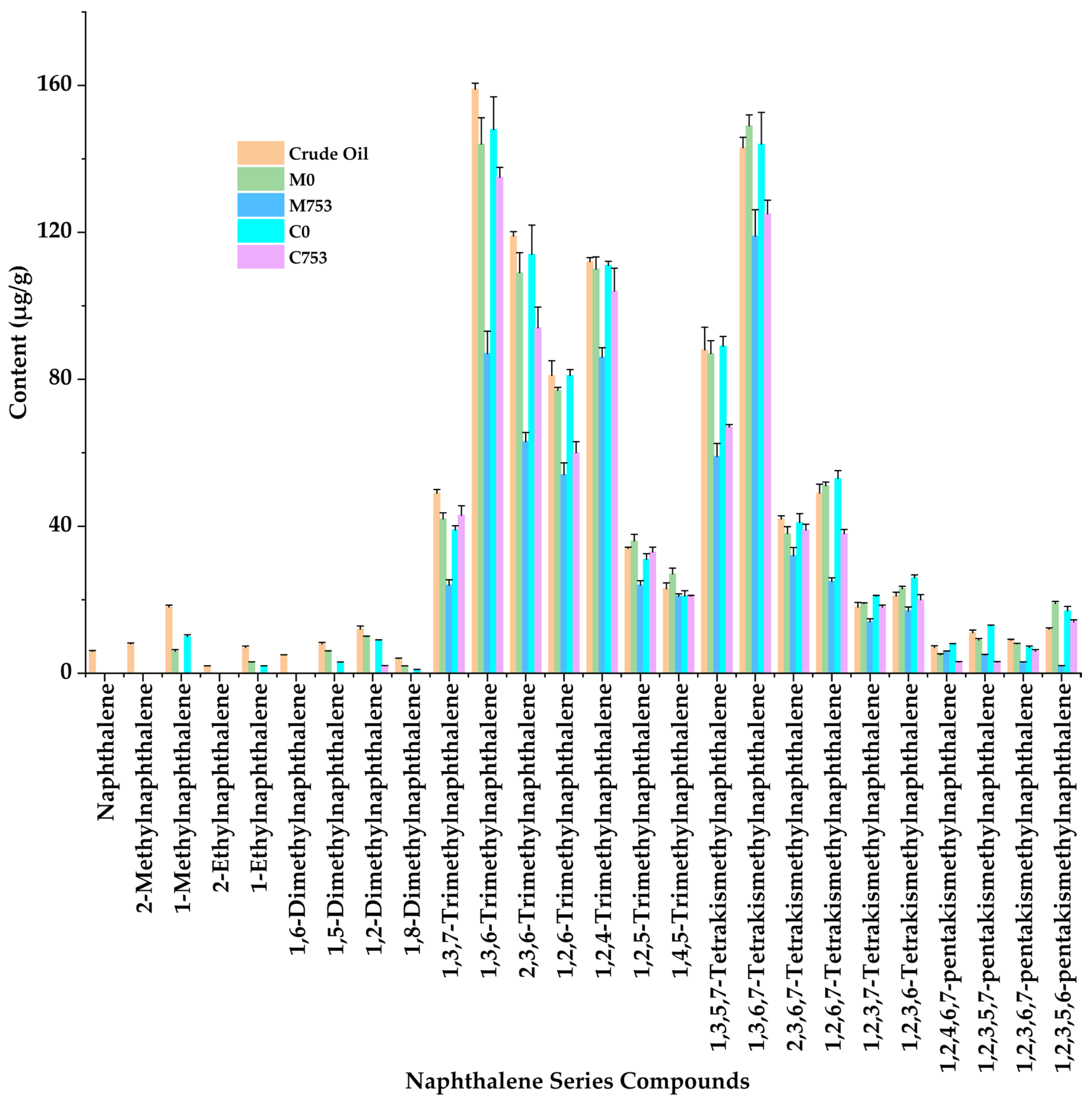
- Naphthalene series
- 7.
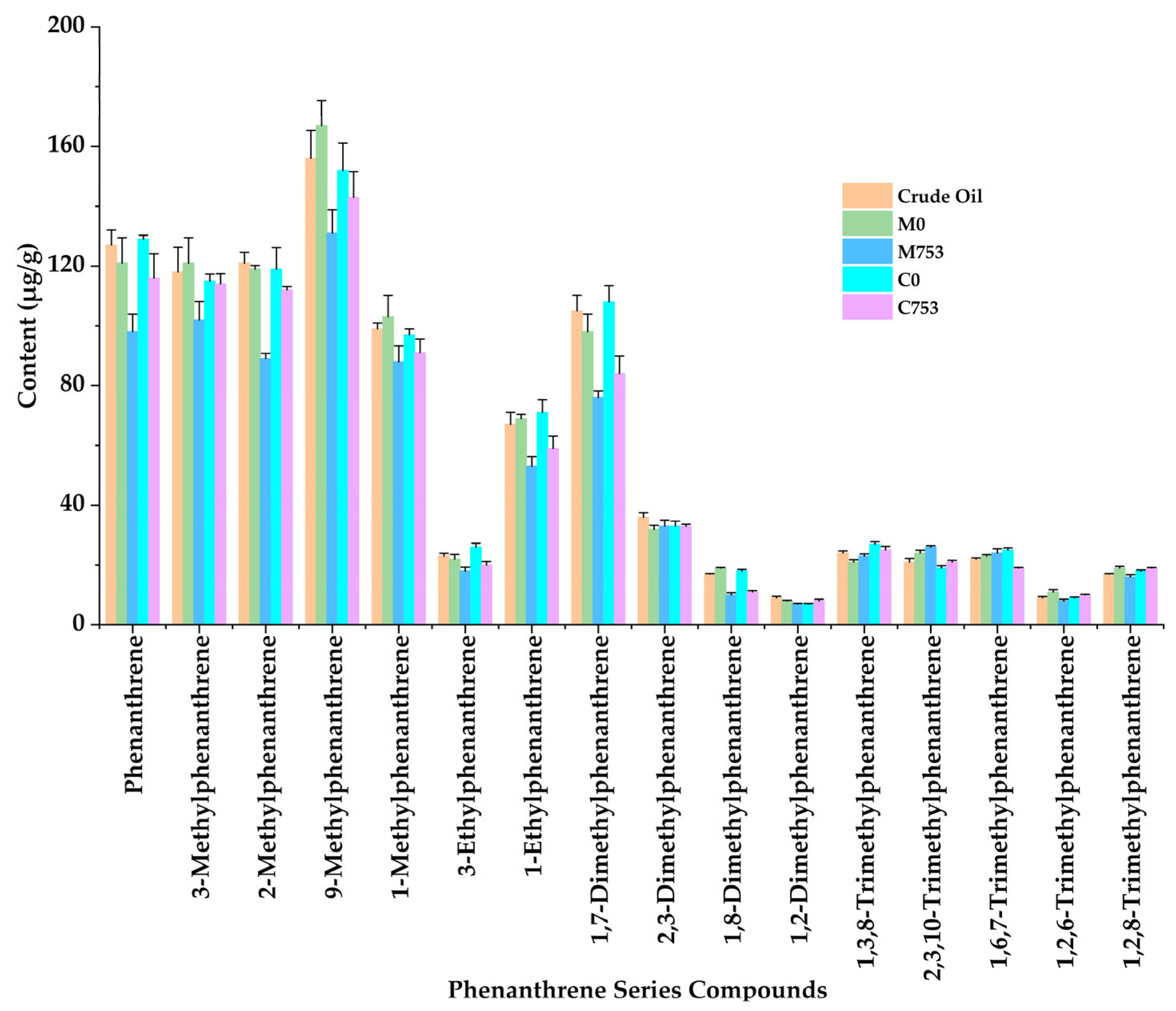
- Phenanthrene series
- 8.
- Fluorene series
- 9.
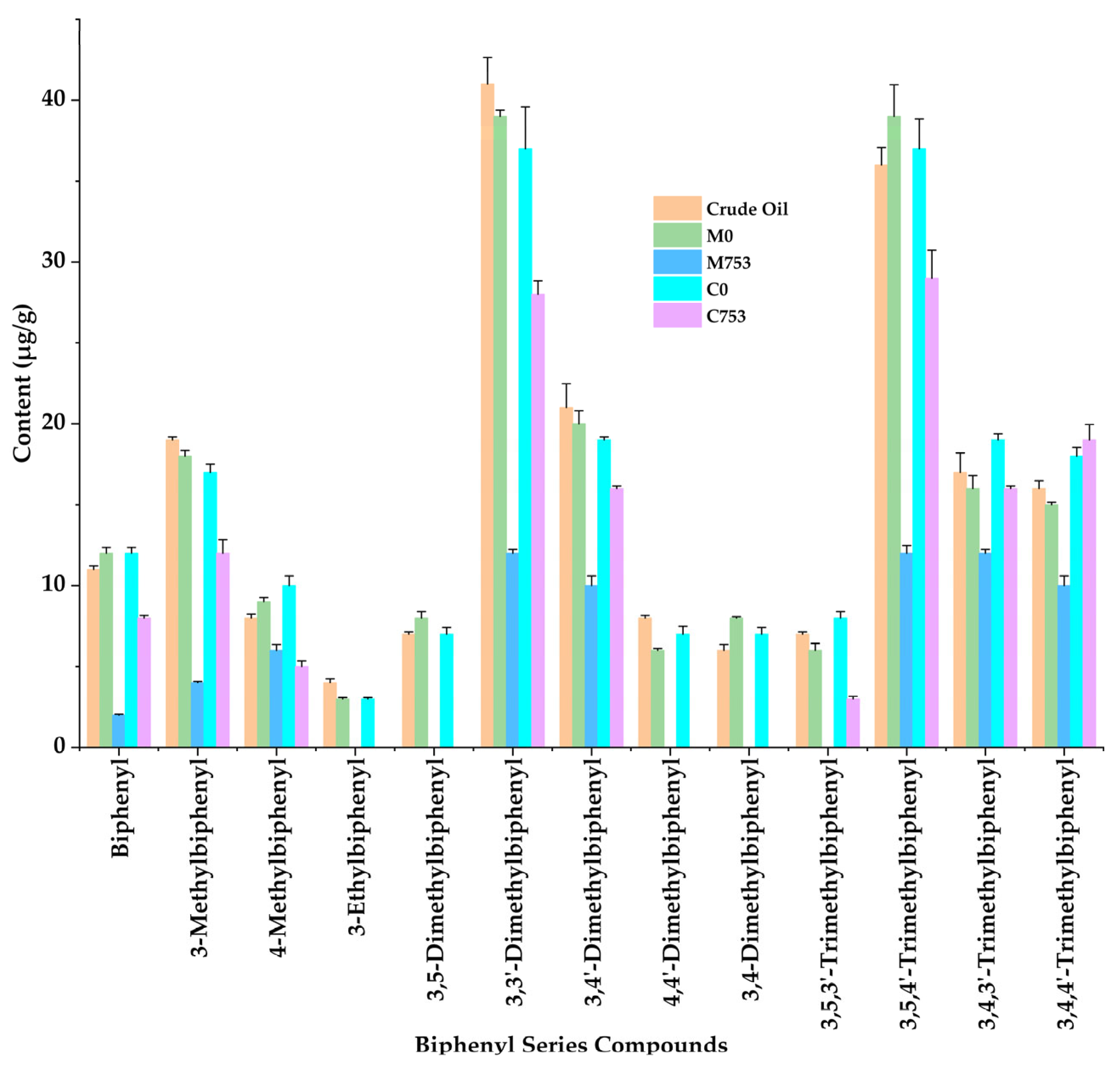
- Biphenyl series
- 10.
- High-ring number (≥4) aromatic hydrocarbons
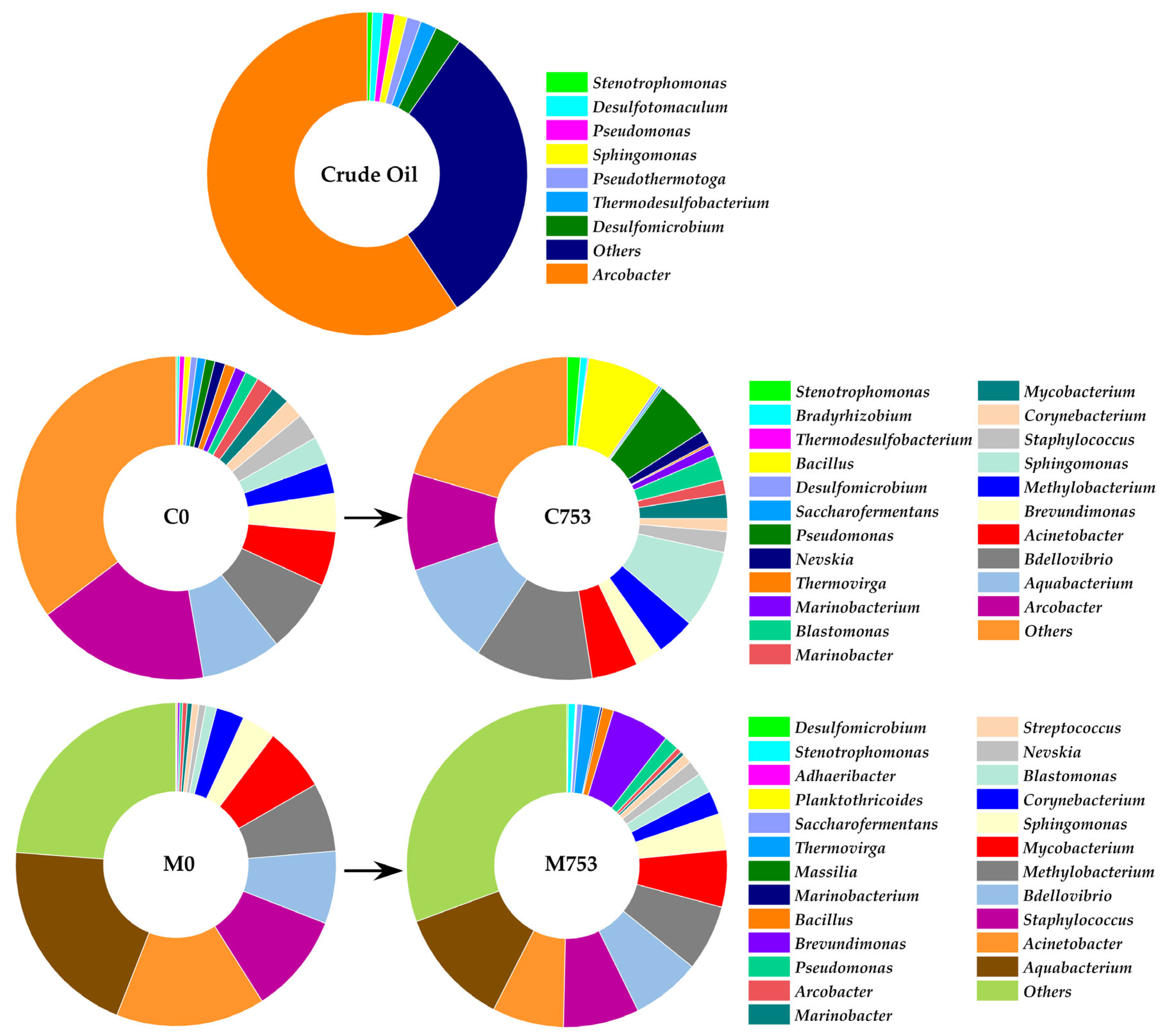
3.3. Microorganisms in Crude Oil
3.4. Microorganisms in Soil
3.4.1. Microbial Community in the Control Group
3.4.2. Microbial Community in Montmorillonite Treatment Zone
4. Discussion
4.1. Biodegradation and Microbial Community in the Control Group
4.2. Effects of Montmorillonite on Biodegradation and Microbial Community
4.3. Mechanism of Montmorillonite Effects
4.4. Cost-Effectiveness Analysis
5. Conclusions
Supplementary Materials
Author Contributions
Funding
Data Availability Statement
Acknowledgments
Conflicts of Interest
References
- Duran, R.; Cravo-Laureau, C. The hydrocarbon pollution crisis: Harnessing the earth hydrocarbon-degrading microbiome. Microb. Biotechnol. 2024, 17, e14526. [Google Scholar] [CrossRef] [PubMed]
- Ambaye, T.G.; Chebbi, A.; Formicola, F.; Prasad, S.; Gomez, F.H.; Franzetti, A.; Vaccari, M. Remediation of soil polluted with petroleum hydrocarbons and its reuse for agriculture: Recent progress, challenges, and perspectives. Chemosphere 2022, 293, 133572. [Google Scholar] [CrossRef] [PubMed]
- Truskewycz, A.; Gundry, T.D.; Khudur, L.S.; Kolobaric, A.; Taha, M.; Aburto-Medina, A.; Ball, A.S.; Shahsavari, E. Petroleum hydrocarbon contamination in terrestrial ecosystems-fate and microbial responses. Molecules 2019, 24, 3400. [Google Scholar] [CrossRef] [PubMed]
- Saqr, A.M.; Ibrahim, M.G.; Fujii, M.; Nasr, M. Sustainable development goals (SDGs) associated with groundwater over-exploitation vulnerability: Geographic information system-based multi-criteria decision analysis. Nat. Resour. Res. 2021, 30, 4255–4276. [Google Scholar] [CrossRef]
- Joseph Omeiza, A.; Hammed Adeniyi, L.; Mohammed Shettima, N. Investigation of groundwater vulnerability to open dumpsites and its potential risk using electrical resistivity and water analysis. Heliyon 2023, 9, e13265. [Google Scholar] [CrossRef]
- Macht, F.; Eusterhues, K.; Pronk, G.J.; Totsche, K.U. Specific surface area of clay minerals: Comparison between atomic force microscopy measurements and bulk-gas (N2) and -liquid (EGME) adsorption methods. Appl. Clay Sci. 2011, 53, 20–26. [Google Scholar] [CrossRef]
- Seabaugh, J.L.; Dong, H.L.; Kukkadapu, R.K.; Eberl, D.D.; Morton, J.P.; Kim, J. Microbial reduction of Fe(III) in the Fithian and Muloorina illites: Contrasting extents and rates of bioreduction. Clay Clay Min. 2006, 54, 67–79. [Google Scholar] [CrossRef]
- Chang, P.H.; Li, Z.H.; Jean, J.S.; Jiang, W.T.; Wang, C.J.; Lin, K.H. Adsorption of tetracycline on 2:1 layered non-swelling clay mineral illite. Appl. Clay Sci. 2012, 67–68, 158–163. [Google Scholar] [CrossRef]
- Li, S.Y.; He, H.P.; Tao, Q.; Zhu, J.X.; Tan, W.; Ji, S.C.; Yang, Y.P.; Zhang, C.Q. Kaolinization of 2:1 type clay minerals with different swelling properties. Am. Miner. 2020, 105, 687–696. [Google Scholar] [CrossRef]
- Sergeyev, Y.M.; Olszewska-Grabowska, B.; Osipov, V.I.; Sokolov, V.N.; Kolomenski, Y.N. The classification of microstructures of clay soils. J. Microsc. 1980, 120, 237–260. [Google Scholar] [CrossRef]
- Fomina, M.; Skorochod, I. Microbial interaction with clay minerals and its environmental and biotechnological implications. Minerals 2020, 10, 861. [Google Scholar] [CrossRef]
- Chaerun, S.K.; Tazaki, K.; Asada, R.; Kogure, K. Interaction between clay minerals and hydrocarbon-utilizing indigenous microorganisms in high concentrations of heavy oil: Implications for bioremediation. Clay Miner. 2005, 40, 105–114. [Google Scholar] [CrossRef]
- Warr, L.N.; Perdrial, J.N.; Lett, M.; Heinrich-Salmeron, A.; Khodja, M. Clay mineral-enhanced bioremediation of marine oil pollution. Appl. Clay Sci. 2009, 46, 337–345. [Google Scholar] [CrossRef]
- Ugochukwu, U.C.; Head, I.M.; Manning, D.A.C. Effect of modified montmorillonites on the biodegradation and adsorption of biomarkers such as hopanes, steranes and diasteranes. Environ. Sci. Pollut. Res. 2013, 20, 8881–8889. [Google Scholar] [CrossRef]
- Ugochukwu, U.C.; Jones, M.D.; Head, I.M.; Manning, D.A.C.; Fialips, C.I. Biodegradation of crude oil saturated fraction supported on clays. Biodegradation 2014, 25, 153–165. [Google Scholar] [CrossRef]
- Ugochukwu, U.C.; Jones, M.D.; Head, I.M.; Manning, D.A.C.; Fialips, C.I. Effect of acid activated clay minerals on biodegradation of crude oil hydrocarbons. Int. Biodeterior. Biodegrad. 2014, 88, 185–191. [Google Scholar] [CrossRef]
- Ugochukwu, U.C.; Jones, M.D.; Head, I.M.; Manning, D.; Fialips, C.I. Biodegradation and adsorption of crude oil hydrocarbons supported on “homoionic” montmorillonite clay minerals. Appl. Clay Sci. 2014, 87, 81–86. [Google Scholar] [CrossRef]
- Ugochukwu, U.C.; Head, I.M.; Manning, D.A.C. Biodegradation and adsorption of C1- and C2-phenanthrenes and C1- and C2-dibenzothiophenes in the presence of clay minerals: Effect on forensic diagnostic ratios. Biodegradation 2014, 25, 515–527. [Google Scholar] [CrossRef]
- Biswas, B.; Sarkar, B.; Rusmin, R.; Naidu, R. Mild acid and alkali treated clay minerals enhance bioremediation of polycyclic aromatic hydrocarbons in long-term contaminated soil: A 14C-tracer study. Environ. Pollut. 2017, 223, 255–265. [Google Scholar] [CrossRef]
- Ugochukwu, U.C.; Fialips, C.I. Removal of crude oil polycyclic aromatic hydrocarbons via organoclay-microbe-oil interactions. Chemosphere 2017, 174, 28–38. [Google Scholar] [CrossRef]
- Ugochukwu, U.C.; Fialips, C.I. Crude oil polycyclic aromatic hydrocarbons removal via clay-microbe-oil interactions: Effect of acid activated clay minerals. Chemosphere 2017, 178, 65–72. [Google Scholar] [CrossRef] [PubMed]
- Chaerun, S.K.; Tazaki, K. How kaolinite plays an essential role in remediating oil-polluted seawater. Clay Miner. 2005, 40, 481–491. [Google Scholar] [CrossRef]
- Warr, L.N.; Friese, A.; Schwarz, F.; Schauer, F.; Portier, R.J.; Basirico, L.M.; Olson, G.M. Experimental study of clay-hydrocarbon interactions relevant to the biodegradation of the Deepwater Horizon oil from the Gulf of Mexico. Chemosphere 2016, 162, 208–221. [Google Scholar] [CrossRef] [PubMed]
- Gong, B.; Wu, P.; Ruan, B.; Zhang, Y.; Lai, X.; Yu, L.; Li, Y.; Dang, Z. Differential regulation of phenanthrene biodegradation process by kaolinite and quartz and the underlying mechanism. J. Hazard. Mater. 2018, 349, 51–59. [Google Scholar] [CrossRef]
- Li, L.; Wan, Y.Y.; Mu, H.M.; Shi, S.B.; Chen, J.F. Interaction between illite and a Pseudomonas stutzeri-heavy oil biodegradation complex. Microorganisms 2023, 11, 330. [Google Scholar] [CrossRef]
- Warr, L.N.; Schlüter, M.; Schauer, F.; Olson, G.M.; Basirico, L.M.; Portier, R.J. Nontronite-enhanced biodegradation of Deepwater Horizon crude oil by Alcanivorax borkumensis. Appl. Clay Sci. 2018, 158, 11–20. [Google Scholar] [CrossRef]
- Froehner, S.; Luz, E.; Maceno, M. Enhanced biodegradation of naphthalene and anthracene by modified vermiculite mixed with soil. Water Air Soil Pollut. 2009, 202, 169–177. [Google Scholar] [CrossRef]
- Biswas, B.; Sarkar, B.; Naidu, R. Bacterial mineralization of phenanthrene on thermally activated palygorskite: A 14C radiotracer study. Sci. Total Environ. 2017, 579, 709–717. [Google Scholar] [CrossRef]
- Tolpeshta, I.I.; Erkenova, M.I. Effect of palygorskite clay, fertilizers, and lime on the degradation of oil products in oligotrophic peat soil under laboratory experimental conditions. Eurasian Soil Sci. 2018, 51, 229–240. [Google Scholar] [CrossRef]
- Ugochukwu, U.C.; Manning, D.A.C.; Fialips, C.I. Microbial degradation of crude oil hydrocarbons on organoclay minerals. J. Environ. Manage. 2014, 144, 197–202. [Google Scholar] [CrossRef]
- Li, L.; Zhang, C. Role of natural and modified clay minerals in microbial hydrocarbon biodegradation. Minerals 2025, 15, 1120. [Google Scholar] [CrossRef]
- HJ613-2011; Soil-Determination of Dry Matter and Water Content-Gravimetric Method. Ministry of Ecology and Environment of the People’s Republic of China. China Environmental Science Press: Beijing, China, 2011. (In Chinese)
- HJ802-2016; Soil Quality-Determination of Conductivity-Electrode Method. Ministry of Ecology and Environment of the People’s Republic of China. China Environmental Science Press: Beijing, China, 2016. (In Chinese)
- HJ746-2015; Soil-Determination of Redox Potential-Potential Method. Ministry of Ecology and Environment of the People’s Republic of China. China Environmental Science Press: Beijing, China, 2015. (In Chinese)
- HJ962-2018; Soil-Determination of pH-Potentiometry. Ministry of Ecology and Environment of the People’s Republic of China. China Environmental Science Press: Beijing, China, 2018. (In Chinese)
- HJ695-2014; Soil -Determination of Organic Carbon-Combustion Oxidation Nondispersive Infrared Absorption Method. Ministry of Ecology and Environment of the People’s Republic of China. China Environmental Science Press: Beijing, China, 2014. (In Chinese)
- GB/T19143-2017; Analytical Method of Element for Carbon, Hydrogen. Oxygen and Nitrogen in Rock Organics. State Administration for Market Regulation; National Standardization Administration. Standards Press of China: Beijing, China, 2017. (In Chinese)
- Li, X.; Du, Y.; Wu, G.; Li, Z.; Li, H.; Sui, H. Solvent extraction for heavy crude oil removal from contaminated soils. Chemosphere 2012, 88, 245–249. [Google Scholar] [CrossRef] [PubMed]
- SL391.2-2007; Sample Preparation Methods for Organic Analysis-Part 2: Soxhlet Extraction. Ministry of Water Resources of the People’s Republic of China. China Water & Power Press: Beijing, China, 2007. (In Chinese)
- Wan, Y.Y.; Dong, H.L. Environmental Geomicrobiology Experiments; Petroleum Industry Press: Beijing, China, 2014; pp. 100–105. [Google Scholar]
- SY/T5119-2016; Ananlysis Mothed for Family Compositionof Rock Extracts and Crude Oil. National Energy Administration. Petroleum Industry Press: Beijing, China, 2016. (In Chinese)
- Liu, Y.; Shi, S.B.; Zeng, Q.; Li, Y.; Chen, Y.; Guo, D.Y.; Hu, D.F.; Dong, H.L. Coupled reduction of structural Fe(III) in nontronite and oxidation of petroleum hydrocarbons. Geochim. Cosmochim. Acta 2023, 344, 103–121. [Google Scholar] [CrossRef]
- SY/T 5779-2024; Petrology and Diagenetic Organic Matter Hydrocarbon Gas Chromatographic Analysis Method. China National Energy Administration. Petroleum Industry Press: Beijing, China, 2024. (In Chinese)
- Li, L.; Zhang, C.; Su, P.; Mu, H. Lab-scale experimental study of microbial enhanced oil recovery on low-permeability cores using the silicate bacterium Paenibacillus mucilaginosus. Microorganisms 2025, 13, 738. [Google Scholar] [CrossRef]
- Tanase, A.; Mereuta, I.; Chiciudean, I.; Ionescu, R.; Milea, L.; Cornea, C.P.; Vassu, T.; Stoica, I. Comparison of total DNA extraction methods for microbial community form polluted soil. Agric. Agric. Sci. Procedia 2015, 6, 616–622. [Google Scholar] [CrossRef][Green Version]
- Schofield, G.G. PicoGmeter, a custom-made fluorometer for the quantification of dsDNA by PicoGreen® fluorescence. Biotechniques 2004, 37, 778. [Google Scholar] [CrossRef]
- Krakova, L.; Soltys, K.; Otlewska, A.; Pietrzak, K.; Purkrtova, S.; Savicka, D.; Puskarova, A.; Buckova, M.; Szemes, T.; Budis, J.; et al. Comparison of methods for identification of microbial communities in book collections: Culture-dependent (sequencing and MALDI-TOF MS) and culture-independent (Illumina MiSeq). Int. Biodeterior. Biodegrad. 2018, 131, 51–59. [Google Scholar] [CrossRef]
- Goecks, J.; Nekrutenko, A.; Taylor, J. Galaxy: A comprehensive approach for supporting accessible, reproducible, and transparent computational research in the life sciences. Genome Biol. 2010, 11, R86. [Google Scholar] [CrossRef]
- Yoshida, N.; Yagi, K.; Sato, D.; Watanabe, N.; Kuroishi, T.; Nishimoto, K.; Yanagida, A.; Katsuragi, T.; Kanagawa, T.; Kurane, R.; et al. Bacterial communities in petroleum oil in stockpiles. J. Biosci. Bioeng. 2005, 99, 143–149. [Google Scholar] [CrossRef]
- Li, M.; Gong, J.; Cottrill, M.; Yu, H.; de Lange, C.; Burton, J.; Topp, E. Evaluation of QIAamp® DNA Stool Mini Kit for ecological studies of gut microbiota. J. Microbiol. Methods 2003, 54, 13–20. [Google Scholar] [CrossRef]
- Li, L.; Zhang, C.; Su, P.; Mu, H. Ecological responses of microbially activated water flooding in ultra-low-permeability reservoirs: A case study of the B9 Reservoir in the Triassic Yanchang Formation. J. Mar. Sci. Eng. 2025, 13, 836. [Google Scholar] [CrossRef]
- Kubo, K.; Knittel, K.; Amann, R.; Fukui, M.; Matsuura, K. Sulfur-metabolizing bacterial populations in microbial mats of the Nakabusa hot spring, Japan. Syst. Appl. Microbiol. 2011, 34, 293–302. [Google Scholar] [CrossRef] [PubMed]
- Kushkevych, I.; Kovác, J.; Vitezová, M.; Vítez, T.; Bartos, M. The diversity of sulfate-reducing bacteria in the seven bioreactors. Arch. Microbiol. 2018, 200, 945–950. [Google Scholar] [CrossRef]
- Zhang, L.F.; Fu, G.K.; Zhang, Z. Electricity generation and microbial community in long-running microbial fuel cell for high-salinity mustard tuber wastewater treatment. Bioelectrochemistry 2019, 126, 20–28. [Google Scholar] [CrossRef] [PubMed]
- Castro, S.P.; Borton, M.A.; Regan, K.; de Angelis, I.H.; Wrighton, K.C.; Teske, A.P.; Strous, M.; Ruff, S.E. Degradation of biological macromolecules supports uncultured microbial populations in Guaymas Basin hydrothermal sediments. ISME J. 2021, 15, 3480–3497. [Google Scholar] [CrossRef]
- Jeanthon, C.; L’Haridon, S.; Cueff, V.; Banta, A.; Reysenbach, A.L.; Prieur, D. Thermodesulfobacterium hydrogeniphilum sp nov., a thermophilic, chemolithoautotrophic, sulfate-reducing bacterium isolated from a deep-sea hydrothermal vent at Guaymas Basin, and emendation of the genus Thermodesulfobacterium. Int. J. Syst. Evol. Microbiol. 2002, 52, 765–772. [Google Scholar] [CrossRef]
- Azabou, S.; Mechichi, T.; Patel, B.; Sayadi, S. Isolation and characterization of a mesophilic heavy-metals-tolerant sulfate-reducing bacterium Desulfomicrobium sp from an enrichment culture using phosphogypsum as a sulfate source. J. Hazard. Mater. 2007, 140, 264–270. [Google Scholar] [CrossRef]
- Xu, W.H.; Qiao, Y.L.; Wei, J.X.; Jiang, Q.; Xue, J.L. Bacterial communities and culturable petroleum hydrocarbon degrading bacteria in marine sediments in the northeastern South China Sea. Front. Environ. Sci. 2022, 10, 865636. [Google Scholar] [CrossRef]
- Patowary, K.; Saikia, R.R.; Kalita, M.C.; Deka, S. Degradation of polyaromatic hydrocarbons employing biosurfactant-producing Bacillus pumilus KS2. Ann. Microbiol. 2015, 65, 225–234. [Google Scholar] [CrossRef]
- M’Rassi, A.G.; Bensalah, F.; Gury, J.; Duran, R. Isolation and characterization of different bacterial strains for bioremediation of n-alkanes and polycyclic aromatic hydrocarbons. Environ. Sci. Pollut. Res. 2015, 22, 15332–15346. [Google Scholar] [CrossRef]
- Daugulis, A.J.; McCracken, C.M. Microbial degradation of high and low molecular weight polyaromatic hydrocarbons in a two-phase partitioning bioreactor by two strains of Sphingomonas sp. Biotechnol. Lett. 2003, 25, 1441–1444. [Google Scholar] [CrossRef]
- Cheng, Z.Y.; Meng, L.B.; Yin, T.J.; Li, Y.; Zhang, Y.H.; Li, S.M. Changes in soil Rhizobia diversity and their effects on the symbiotic efficiency of soybean intercropped with maize. Agronomy 2023, 13, 997. [Google Scholar] [CrossRef]
- Micle, V.; Sur, I.M.; Criste, A.; Senila, M.; Levei, E.; Marinescu, M.; Cristorean, C.; Rogozan, G.C. Lab-scale experimental investigation concerning ex-situ bioremediation of petroleum hydrocarbons-contaminated soils. Soil. Sediment. Contam. 2018, 27, 692–705. [Google Scholar] [CrossRef]
- Bennett, B.; Larter, S.R. Biodegradation scales: Applications and limitations. Org. Geochem. 2008, 39, 1222–1228. [Google Scholar] [CrossRef]
- Rickard, A.H.; Stead, A.T.; O’May, G.A.; Lindsay, S.; Banner, M.; Handley, P.S.; Gilbert, P. Adhaeribacter aquaticus gen. nov., sp nov., a Gram-negative isolate from a potable water biofilm. Int. J. Syst. Evol. Microbiol. 2005, 55, 821–829. [Google Scholar] [CrossRef]
- Huang, Y.H.; Yang, Y.J.; Li, J.Y.; Lü, H.X.; Zhao, H.M.; Xiang, L.; Li, H.; Mo, C.H.; Li, Y.W.; Cai, Q.Y.; et al. Root-associated bacteria strengthen their community stability against disturbance of antibiotics on structure and functions. J. Hazard. Mater. 2024, 465, 133317. [Google Scholar] [CrossRef]
- Ma, M.; Gao, W.; Li, Q.; Han, B.; Zhu, A.M.; Yang, H.H.; Zheng, L. Biodiversity and oil degradation capacity of oil-degrading bacteria isolated from deep-sea hydrothermal sediments of the South Mid-Atlantic Ridge. Mar. Pollut. Bull. 2021, 171, 112770. [Google Scholar] [CrossRef]




| Sample | Water Content (%) | Conductivity (μs/cm) | Redox Potential (mV) | pH | TOC (%) | Crude Oil Content (mg/kg) | DNA Concentration (μg/g) |
|---|---|---|---|---|---|---|---|
| M0 | 8.44 ± 0.14 | 301 ± 17 | 241.5 ± 1.2 | 7.99 ± 0.01 | 7.44 ± 0.14 | 69,146 ± 84 | 65 ± 4 |
| M753 | 12.11 ± 0.21 | 213 ± 9 | 213.0 ± 0.2 | 7.44 ± 0.01 | 4.93 ± 0.19 | 43,372 ± 92 | 119 ± 2 |
| C0 | 8.91 ± 0.16 | 290 ± 9 | 242.7 ± 0.6 | 7.96 ± 0.01 | 6.81 ± 0.10 | 66,981 ± 73 | 77 ± 3 |
| C753 | 12.97 ± 0.09 | 239 ± 12 | 226.9 ± 0.6 | 7.18 ± 0.01 | 4.85 ± 0.07 | 44,875 ± 106 | 104 ± 5 |
| Sample | Shannon-Wiener Index | Simpson Index | Pielou’s Evenness Index |
|---|---|---|---|
| Crude Oil | 1.642 | 0.253 | 0.606 |
| M0 | 2.485 | 0.073 | 0.916 |
| M753 | 2.476 | 0.074 | 0.913 |
| C0 | 2.318 | 0.089 | 0.855 |
| C753 | 2.501 | 0.071 | 0.922 |
| Method | Well Pad Size (m) | Project and Expenditure (RMB/Yuan) | Total (RMB/Yuan) | Effect |
|---|---|---|---|---|
| Montmorillonite-mediated Microbial Remediation | 48×48 | Montmorillonite: 22,870 Plowing equipment: 480 Labor: 600 | 23,950 | TOC decreased by 33.74% over 753 days, crude oil content decreased by 37.27%. Ongoing. |
| Microbial Remediation | 117×104 | Bacterial agent: 17,600 Labor: 2400 Maintenance: 18,700 | 38,700 | Crude oil content decreased by 38.9% over 2 years and by 44.6% over 5 years. |
| Plant-Microbial Synergistic Remediation | 100×108 | Bacterial agent: 8,900 Plants: 17,690 Labor: 1600 Maintenance: 11,000 | 39,190 | Crude oil content decreased by 21% in the first year. Ongoing. |
| Topsoil Replacement + Environmental Treatment | 132×97 | Machinery: 15,700 Labor: 6200 Environmental treatment: 104,600 | 126,500 | Crude oil content decreased by 99% after completion. |
Disclaimer/Publisher’s Note: The statements, opinions and data contained in all publications are solely those of the individual author(s) and contributor(s) and not of MDPI and/or the editor(s). MDPI and/or the editor(s) disclaim responsibility for any injury to people or property resulting from any ideas, methods, instructions or products referred to in the content. |
© 2025 by the authors. Licensee MDPI, Basel, Switzerland. This article is an open access article distributed under the terms and conditions of the Creative Commons Attribution (CC BY) license.
Share and Cite
Li, L.; Zhang, C.; Zhang, Y. Effects of Montmorillonite on Crude Oil Biodegradation and the Microbial Community in an Oil Production Well Pad Shut Down for 753 Days. Environments 2026, 13, 20. https://doi.org/10.3390/environments13010020
Li L, Zhang C, Zhang Y. Effects of Montmorillonite on Crude Oil Biodegradation and the Microbial Community in an Oil Production Well Pad Shut Down for 753 Days. Environments. 2026; 13(1):20. https://doi.org/10.3390/environments13010020
Chicago/Turabian StyleLi, Lei, Chunhui Zhang, and Yue Zhang. 2026. "Effects of Montmorillonite on Crude Oil Biodegradation and the Microbial Community in an Oil Production Well Pad Shut Down for 753 Days" Environments 13, no. 1: 20. https://doi.org/10.3390/environments13010020
APA StyleLi, L., Zhang, C., & Zhang, Y. (2026). Effects of Montmorillonite on Crude Oil Biodegradation and the Microbial Community in an Oil Production Well Pad Shut Down for 753 Days. Environments, 13(1), 20. https://doi.org/10.3390/environments13010020