Article

Amendment of Contaminated Soils with Biochar and Peat: Effects on Metal Solubility and Uptake in Grass and Earthworms in a Field Trial


by
Charlotta Tiberg
1,*,
Dan B. Kleja
1,2,
Carin Sjöstedt
2,
Mats Fröberg
1,3,
Ingrid Rijk
4,
A. Sigrun Dahlin
2,5,
Maria Larsson
4,
Alf Ekblad
4,
Viktor Sjöberg
4 and
Anja Enell
1
1
Swedish Geotechnical Institute (SGI), SE-581 93 Linköping, Sweden
2
Department of Soil and Environment, Swedish University of Agricultural Sciences, SE-750 07 Uppsala, Sweden
3
Swedish Environmental Protection Agency, SE-106 48 Stockholm, Sweden
4
MTM Research Centre, Örebro University, SE-701 82 Örebro, Sweden
5
Department of Crop Production Ecology, Swedish University of Agricultural Sciences, SE-750 07 Uppsala, Sweden
*
Author to whom correspondence should be addressed.
Environments 2025, 12(11), 447; https://doi.org/10.3390/environments12110447
Submission received: 24 September 2025 / Revised: 12 November 2025 / Accepted: 14 November 2025 / Published: 20 November 2025
(This article belongs to the Special Issue Biochar as an Environmental Technology)

Abstract

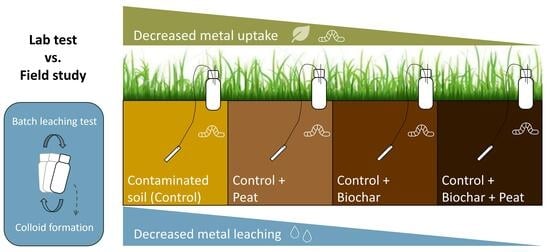
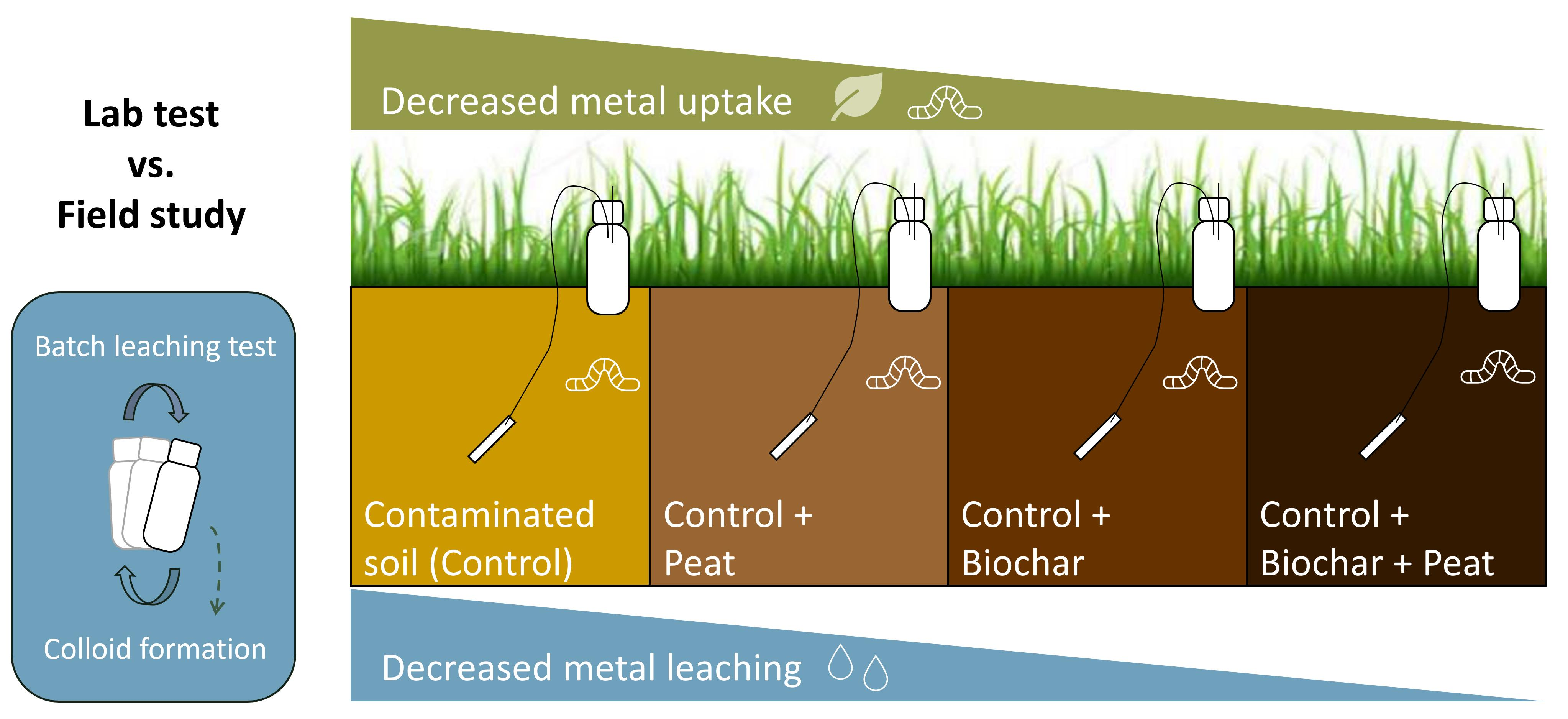
The effectiveness of biochar amendment for remediation purposes depends on many factors related to the biochar and the contaminated site. Therefore, each application must be evaluated site-specifically. To facilitate full-scale implementation, more information from field studies on biochar-amended contaminated sites, as well as cost-effective approaches to evaluate the remediation efficacy of specific biochar materials are needed. We studied the effects of biochar and peat on metal solubility and bioavailability in a contaminated soil in a fully factorial field trial. The biochar was produced from wood via gasification in a floating fixed-bed reactor at 750 °C. Soil solutions from field-installed lysimeters, grass (Lolium perenne L), and earthworms (Eisenia fetida) were analyzed. In addition, a standardized batch leaching test (ISO 21268-2:2019) was performed to evaluate its feasibility to mimic soil solution concentrations. The results showed that biochar generally reduced the solubility and uptake of cationic metals. In situ solubility of Cu and Hg was reduced more than 80%, and Zn up to 70%. Soil solution concentrations of Cr increased in biochar-amended soils, but this effect was reduced by peat. Peat had small effects on in situ solubility of other metals. For cations, the batch test showed the same trends as the soil solution, with biochar decreasing solubility. However, mobilization of colloids during shaking in the batch test induced artefacts, leading to an overestimation of the solubility of some metals, especially Pb and Hg, an effect that was enhanced by peat applications.

Graphical Abstract

1. Introduction

Development of urban areas and restoration of brownfields generate large waste-streams of lightly to moderately contaminated soil that are sent to landfills. If the contaminated soil can be remediated and reused on-site to a larger extent, this would save transports, reduce the amounts of soil deposited at landfills, and save virgin materials otherwise used to replace excavated masses.
A promising strategy for sustainable remediation of contaminated soil is application of biochar, a carbon-rich soil amendment known to bind and immobilize a range of contaminants [1,2,3]. Biochar is produced through thermochemical conversion of organic waste materials, such as garden waste, and crop and forest residues, via pyrolysis or gasification. Pyrolysis involves heating biomass in the absence of oxygen, while gasification uses limited oxygen or steam at higher temperatures; both processes yield biochar with distinct physicochemical properties [4,5]. As an upgraded waste material, biochar has also been proposed as one of the most promising materials for long-term carbon sequestration in soils [6]. If biochar can effectively immobilize soil contaminants, environmental and health risks may be mitigated, enabling soil reuse rather than disposal. This practice can further contribute to positive environmental outcomes, including potential negative CO2 emissions, as demonstrated in a recent life cycle assessment comparing on-site and off-site biochar treatment of contaminated soil with excavation and landfilling [7]. However, the efficacy of biochar application for remediation purposes is dependent on the type of contaminant as well as numerous factors related to, e.g., biochar feedstock and production, climate, and soil properties [8,9,10]. This highlights the need for site-specific evaluations prior to biochar amendment and more information on the long-term effectiveness in the field under different conditions [3,11].
Several reviews, e.g., refs. [1,2,3,12], have pointed out that addition of biochar can significantly reduce the mobility and bioavailability of metals like Cd, Cu, Pb, and Zn. Due to its porous structure, biochar has a large surface area with functional groups that can bind metals, although the metal binding capacity depends on the types and densities of the functional groups, as well as the size of the surface area. Furthermore, the ash content in biochar often induces an increase in pH, which increases the negative surface charge of the soil–biochar mixture and the attraction of cations [13]. In addition, a high pH promotes formation of metal precipitates like hydroxides and carbonates. However, for predominantly anionic metal(loid)s like As and Mo, increasing concentrations in soil leachates after biochar amendment have commonly been reported, e.g., by Hilber et al. [2]. This is because an increase in pH does not favor sorption of negatively charged ions.
As plants and soil organisms are primarily exposed to contaminants via the soil solution, it is reasonable to assume that decreased solubility of elements also results in decreased bioavailability and uptake. However, previous research has shown that it may be difficult to establish a clear relationship between metal concentrations in soil solution and plants as well as earthworms. Reviews compiling information on biochar effects on metal uptake by plants show that uptake of Cd, Pb, Cu, and Zn [14] and Cr [15] often decreases with biochar addition, although the uptake varies with biochar and soil properties. Studies conducted on biochar effects on the uptake of metals in earthworms have found contrasting results among the different metals and studies [16,17,18,19].
To facilitate full-scale applications of biochar, cost-effective and accessible methods to evaluate the feasibility of a specific biochar to immobilize contaminants in a specific soil are needed. Such cost-effective tests could potentially be standardized batch leaching tests, like ISO 21268-2 [20], which is routinely performed by commercial laboratories to evaluate metal solubility [21,22]. However, before being applicable as routine methods in site-specific assessments, they need to be evaluated against in situ methods. So far, we have only found one study investigating treatment effects of biochar amendment on metal solubility using both batch test and in situ pore water sampling [23] In this study, treatment effects were studied in a 60-days pot experiment and in situ pore water data obtained using tension lysimeters were compared with batch test data (3 h equilibration with water at a liquid-to-solid ratio of 10). The two methods showed similar treatments effects for As, Cd, and Cu, whereas for Zn, a significant reduced solubility was observed in the pore water but not in the batch test [23].
Despite the site-and-biochar-specific nature of biochar stabilization, the number of publications from field studies of contaminated soils stabilized with biochar is also limited, especially comprehensive studies of multi-contaminated soils in temperate and boreal climates. The latest found review of published field studies, [8], covers 29 studies of which 10 studies were focused on Cd (and sometimes an additional metal) and 15 of the trials were in China, often in rice fields. Two meta-studies of biochar effects on uptake in plants confirm that a majority of field studies focus on Cd [14,15] and that biochar amendment generally gives a larger reduction of Cu, Pb, and Zn concentrations in plants in pot experiments than in field studies.
With the overall goal to facilitate use of biochar for remediation of low-to-moderately multi-contaminated soils typical of urban areas, a field trial was established in southern Sweden (Helsingborg) in 2019. Biochar and peat were mixed in different proportions in the soil and their effects on soil properties, a test plant and earthworms, as well as the solubility and availability of contaminants were studied to develop recommendations for evaluation of biochar amendment of contaminated soil. The effects on general soil quality and soil health indicators after the first growing season, with focus on nitrogen cycling, have been reported by Rijk et al. [24]. They found that the addition of biochar and/or peat amendments increased the total organic carbon (TOC) content but did not have a large effect on pH or cation exchange capacity (CEC). With biochar, nitrogen was immobilized by a growing microbial biomass.
Here, we report effects of biochar and peat amendment on metal solubility and uptake by grass and earthworms after the first growing season. The specific objectives of this study are 1) to investigate treatment effects on in situ metal solubility, measured in soil solutions sampled with tension lysimeters, and metal uptake in grass and earthworms, and 2) to evaluate the feasibility of a standardized batch leaching test using 0.001 M CaCl2 as a leachant (ISO 21268-2:2019 [20]) to assess treatments effects on metal solubility.

2. Materials and Methods

2.1. Field Trial

A full factorial field trial was established in June 2019 at the waste management facility at Filborna in Helsingborg, southern Sweden. Its establishment has previously been described in detail by Rijk et al. [24]. In summary, contaminated soil from two sites in Helsingborg, Sweden, were combined and amended with biochar and peat. One soil, sampled at 1–2 m depth from a port area, was contaminated with metals (Pb ~1000 mg/kg dw, Cu ~400 mg/kg dw, Zn ~600 mg/kg dw) and consisted mainly of sand and silt with debris such as glass, ceramics, and metal. The second soil, collected at 0.4–1 m depth from a former gasworks site, was contaminated with PAHs (Σ16-EPA PAH ~400 mg/kg dw) and contained slag and charred material.
To ensure homogeneity, both soils were sieved using a rotating cylinder (40 mm) and mixed in an 80:20 ratio (metal-contaminated soil–PAH-contaminated soil, w/w) using an excavator. Garden compost (1% w/w, 15 mm sieve) was added as an organic fertilizer and inoculum. The mixture was then sieved again (40 mm), thoroughly homogenized, and divided into nine piles.
Biochar (BC 2.8 or 5.6% (w/w)) and/or peat (P 1.5 or 2.9% (w/w)) were then mixed into eight of the piles, resulting in one untreated control soil and eight different BC- and/or P-treated soils. Three 2 × 2 m cultivation beds (A, B, and C) with a depth of 0.4–0.5 m were established for each of the nine treatments. The 27 beds were randomly ordered in three rows as shown in the Supporting Material (Figure S1) and drained to prevent water saturation and flooding. A geotextile separated the soil from the drainage layer. All beds were watered and fertilized (19 g m−2 YaraMila (Yara, Oslo, Norway), with N:P:K in proportions 21:4:7) before sowing ryegrass (Lolium perenne L; Indicus 1) on 28 June 2019. Ryegrass is commonly used in, e.g., parks, representing a potential future use of the soil. During summer, the cultivation beds were watered (20 mm/week) in dry conditions and weeded. The different treatments will hereafter be named after the biochar and peat additions, BC0P0 denotes the unamended control soil, BC3P1.5 the soil with 2.9% biochar and 1.5% peat added, and so on. The organic matter content in BC0P0 was 3.7% (determined by loss of ignition corrected for clay content) and the grain size distribution, determined by sieve analysis, consisted of 4% clay (<0.002 mm), 6% silt (0.002–0.06 mm), 69% sand (0.06–2 mm) and 21% gravel (2–20 mm).
The biochar used was produced from forest residues by gasification in a floating fixed bed reactor at 750 °C for 20 min (IKB, Innsbruck, Austria). Such a biochar generally has a high aromaticity, large surface area, and high porosity [1,13]. It is known that low-temperature grass-derived biochars generally have a greater capacity than wood-derived biochars to sorb metals due to a higher number of functional groups and higher content of ash which can increase the soil pH [1]. However, a high temperature wood-derived biochar was chosen here to be able to also bind PAH [25,26,27]. Physical and chemical characteristics of the biochar used are summarized in Table 1. The low H/C and O/C ratios (compared to, e.g., the compilation by Bandara et al. [13]) indicate a high aromaticity and low number of functional groups. The CEC of the biochar was estimated to be 12–20 meq/100 g, a low number [28]. A full EBC analysis [29] is available in Table S1. The contents of metals were below limits in the EBC guidelines for biochar.
The peat (Hasselfors Garden, Örebro, Sweden) had a degree of decomposition of 4–5 according to the von Post humification scale [30] (Table 1), i.e., was slightly to moderately decomposed. The peat was sieved through a 1.5 cm sieve and the pH was increased from 4.4 to 5.9 by liming with 1.7% w/w Cresco Vital limestone from SMA Minerals, Filipstad, Sweden.
Table 2. Soil properties and metal concentrations (as means; n = 3) in soils amended with biochar (BC) and/or peat (P) and the control soil (BC0P0). Standard error in parenthesis (n = 3). Concentrations above Swedish generic guideline values are marked with bold. Results from two-way ANOVA are available in SI, Table S2.
Soil Without Peat AdditionSoil with 1.5% PeatSoil with 3% Peat
TreatmentBC0P0BC3P0BC6P0BC0P1.5BC3P1.5BC6P1.5BC0P3BC3P3BC6P3
TOC (%) *2.2 (0.10)4.7 (0.96)6.8 (0.83)3.4 (0.56)4.8 (0.12)6.7 (0.44)4.4 (0.48)5.6 (0.48)8.0 (0.09)
TC (%) *3.9 (0.11)6.1 (0.77)7.7 (0.44)4.3 (0.49)5.9 (0.69)7.7 (0.62)4.9 (0.35)6.5 (0.13)7.7 (0.09)
CEC (meq/100 g) *9.0 (0.20)9.6 (0.28)9.7 (0.33)10.4 (0.32)10.9 (0.32)10.6 (0.11)12.0 (0.32)11.8 (0.16)12.3 (0.07)
Soil pH in water *7.7 (0.14)7.7 (0.02)7.7 (0.04)7.7 (0.10)7.6 (0.12)8.5 (0.05)7.8 (0.21)8.3 (0.02)8.1 (0.08)
Ca (mg/kgdw)1630 (30.6)1690 (51.3)1663 (63.6)1883 (61.7)1890 (60.0)1810 (24.5)2160 (60.3)2050 (35.1)2063 (13.3)
K (mg/kgdw)84 (3.42)172 (7.02)205 (1.45)81 (3.27)162 (3.06)196 (2.52)86 (8.58)159 (3.28)203 (5.51)
Mg (mg/kgdw)53 (2.86)75 (1.70)91 (1.69)77 (1.24)106 (4.83)118 (1.15)103 (1.76)129 (3.53)159 (7.37)
Ba (mg/kgdw)297 (8.82)273 (3.33)287 (3.33)300 (20.82)270 (5.77)277 (12.02)293 (16.67)273 (3.33)273 (18.56)
Pb (mg/kgdw)473 (71.3)373 (13.3)513 (135.3)410 (32.2)433 (93.5)337 (29.6)503 (33.8)347 (38.4)327 (23.3)
Cu (mg/kgdw)237 (36.7)197 (16.7)167 (12.0)203 (12.0)180 (10.0)163 (3.33)207 (17.6)177 (14.5)197 (27.3)
Hg (mg/kgdw)1.7 (0.03)1.5 (0.06)1.6 (0.06)1.5 (0.06)1.5 (0.15)1.4 (0.03)1.5 (0.25)1.3 (0)1.3 (0)
Zn (mg/kgdw)417 (34.8)350 (15.3)340 (0)343 (13.3)403 (29.6)327 (8.82)337 (6.67)330 (10.0)340 (11.59)
Cd (mg/kgdw)0.42 (0.07)0.33 (0.02)0.37 (0.02)0.32 (0.02)0.42 (0.06)0.32 (0.02)0.32 (0.01)0.35 (0.01)0.35 (0.01)
Ni (mg/kgdw)13 (0.33)13 (0.67)13 (0.33)12 (0.33)12 (0)12 (0)13 (0.33)12 (0)12 (0.33)
As (mg/kgdw)8.3 (0.21)7.6 (0.06)7.5 (0.17)7.9 (0.20)7.6 (0.23)7.7 (0.46)7.6 (0.31)7.2 (0.23)7.1 (0.13)
Cr (mg/kgdw)16.3 (0.67)14.7 (0.33)15.0 (0.00)14.3 (0.33)14.3 (0.33)14.3 (0.33)15.3 (0.33)15.0 (0.00)15.3 (0.33)
Mo (mg/kgdw)<2.1<2.2<2.5<2.2<2.2<2.3<2.4<3.2<2.5
V (mg/kgdw)21 (0.33)20 (0.58)19 (0.33)20 (0.58)19 (0.33)19 (0.33)20 (0.33)19 (0.33)19 (0.58)
* From Rijk et al. [24].

2.2. Sampling and Analysis of Soil

Cylinder shaped soil cores (7 cm diameter and 20 cm long) were collected 25–27 September, 2019. For each cultivation bed, 10–16 soil cores were combined into a composite sample, homogenized, and sieved <2 mm in the field before being split into subsamples for different analyzes. Soil pH, exchangeable cations (CEC; Na, Ca, K, and Mg), TC, and TOC were analyzed as described in Rijk et al. [24] where further details about the sampling are given. Soil concentrations of As, Ba, Cd, Cr, Cu, Hg, Ni, Pb, V, and Zn were determined with ICP-AES (ISO 11885:2007 [31]) after digestion with 7M HNO3 and Mo was determined with ICP-MS (ISO 17294-2:2016 [32]) after digestion with Aqua regia.
Concentrations of Ba, Cu, and Pb in the unamended/control soil (Table 2) were higher than, or close to, Swedish generic guideline values for industrial/commercial areas (“less sensitive land use”, 300, 200, and 180 mg/kg dw, respectively [33]). In addition, Hg and Zn were above Swedish generic guidelines for soils in residential areas (“sensitive land use”, 0.25 and 250 mg/kg dw, respectively). Hence, the data evaluation will focus on these five elements. In addition, the two anions As and Cr will be discussed although their concentrations were below the guideline values. When available, data for Cd, Ni, Mo, and V will be presented, although more briefly.
Total metal concentrations in soil (Table 2) were not significantly affected by the addition of amendments (with a few exceptions at the p ≤ 0.05 level; Table S2). Biochar additions increased CEC with 0.6–0.7 meq/100 g, which gives a CEC of roughly 12–20 meq/100 g of the biochar (i.e., not much higher than the soil itself, Table 2). Peat addition increased CEC with 1.4 meg/100 g (1.5%peat) and 3.0 meq/100 g (3% peat) (Table 2). This means that the CEC of the peat was roughly 93.3–100 meq/100 g, which is in line with values recorded for different peats in [34,35]. The soil pH without peat addition was the same regardless of biochar addition (Table 2), while pH in soils with peat added varied between 7.6 and 8.5. As the peat was limed, a higher pH in some samples with peat addition was probably due to a heterogenous distribution of the lime and the small sample size of the sample on which pH was measured.

2.3. Sampling and Analysis of In Situ Soil Solution

Two lysimeters (Prenart Super Quartz, PTFE, DMR A/S, Silkesborg, Denmark) for sampling of soil solution were installed in each cultivation bed in late September, 2019 (Figure S1). They were 95 mm long, with a diameter of 21 mm and a pore size of 2 µm. Each lysimeter was attached to a clean, acid-washed, propylene sampling bottle by FEP/Teflon tube. Sampling bottles were enclosed in sealed black plastic bags and partially inserted into the soil to minimize light exposure and contamination. Soil solution was extracted from the lysimeters into the bottles by applying a constant negative pressure of −0.7 bar. One week prior to each sampling, negative pressure was applied and the solution obtained during this period was discarded.
Soil solutions were sampled once in October and once in December 2019. Soil solutions were analyzed for pH, dissolved organic carbon (DOC), NH4, NO3, and PO4 and a range of elements at a laboratory accredited in accordance with the international standard ISO/IEC 17025 [36]. Samples for elemental analysis were acidified with 10 µL/mL suprapur HNO3 and analyzed with ICP-SFMS (As, Cd, Cr, Mo, Ni, Pb; ISO 17294-2:2016 [32]), ICP-AES (Ca, Fe, K, Mg, Na, Si, Al, Ba, Cu, Mn, V, Zn; ISO 11885:2007 [31]) or AFS (Hg; ISO 17852:2008 [37]). In addition, Cl and SO4 were determined by liquid chromatography (ISO 10304-1:2009 [38]), PO4 with the ammonium molybdate spectrometric method (ISO 6878:2004 [39]), and DOC by combustion and infrared detection after acidification and removal of inorganic carbon.

2.4. Sampling and Analysis of Grass

Grass was sampled 25–27 September, 2019, about 3 months after the field trial was established. A subsample of 25 g grass leaves (fresh weight) was hand-picked from the beds and stored in paper bags at −20 °C until analysis. Leaves were washed with MilliQ water, freeze-dried, and homogenized before analysis. Trace elements (As, Cd, Cr, Cu, Hg, Mo, Ni, Pb, and Zn) were analyzed with ICP-SFMS (ISO 17294-2:2016 [32]) after HNO3/H2O2 digestion at a laboratory accredited in accordance with the international standard ISO/IEC 17025 [36].

2.5. Metal Uptake in Earth Worms

Metal uptake in earthworms was studied following exposure of 12 adult Eisenia fetida individuals to 600 g soil (d.w.) in glass containers under controlled laboratory conditions, in accordance with ISO 11268-2;2012 [40]. After 28 days of exposure, the worms were removed from the soil and their digestive tracts were emptied. They were rinsed with deionized water, weighed, and then frozen in glass jars at −20 °C. Thereafter, worms were cut into pieces and put in polypropylene tubes (approximately 2 g wet weight tissue in a 15 mL tube) and stored at −20 °C until analysis.
Metals were extracted from the worm tissue by submerging frozen samples in a water bath at 95 °C and adding 400 µL concentrated H2O2 over a period of 8 h. Samples were then left to cool to room temperature overnight after which 1.5 mL concentrated HNO3 was added. The procedure was repeated twice with 400 µL concentrated H2O2 + 1.5 mL concentrated HNO3 during the second cycle and 200 µL H2O2 + 1 mL concentrated HNO3 during the third cycle.
The volume of the digested samples was adjusted to 10 mL with deionized water (18.2 MΩ) and the remaining solids were allowed to settle. Then, the samples were filtered through 0.20 µm polypropylene filters into new test tubes and rhodium was added as an internal standard for the analysis. Elemental analysis (As, Ba, Cd, Cu, Cr, Ni, Mo, Pb, and Zn) was performed using ICP-MS (Agilent 7500 cx, Santa Clara, CA, USA).

2.6. Standardized Batch Test

Soil samples were leached with a weak CaCl2 solution according to ISO 21268-2:2019 [20]. Shortly, fresh soil samples, corresponding to 45 g dry soil, were equilibrated with 450 mL 0.001 M CaCl2 (i.e., liquid-to-solid ratio, L/S 10) for 24 ± 0.5 h in acid-washed polycarbonate vials at 10 rpm in an end-over-end shaker. Following equilibrium, the suspensions were centrifuged at 4000× g for 15 min. The pH was measured on a portion of the eluate, and the rest of the solution was passed through a 0.45 µm filter prior to analysis using the same methods as used for the in situ soil solutions (see above).

2.7. Data Analyses

Mean and standard error for each treatment were calculated on data from three cultivation beds (n = 3). For lysimeters, the values for individual beds were based on average values obtained from two lysimeters and two sampling occasions (October and December). When the concentration was below the quantification limit, half the quantification limit was used in the calculation of mean values.
Treatment effects of BC and P were evaluated using a two-way ANOVA using IBM SPSS Statistics (version 30). When significant differences were identified, post hoc pair-wise comparisons of treatment means were performed using Tukey’s honestly significant differences (HSD) test. Furthermore, Pearson correlations were calculated with IBM SPSS Statistics (version 30).
To investigate possible presence of solubility-controlling minerals and potential mineral precipitate formation at in situ conditions (lysimeter solutions) and in batch tests, saturation indices for a range of minerals were calculated using Visual MINTEQ 3.1 [41]. Elemental concentrations of Ca, K, Mg, Na, Cl, Fe, Al, Ba, Cd, Cu, Hg, Mn, Ni, Pb, and Zn as well as concentrations of SO4 and PO4, and DOC and pH measured in in situ soil solution and batch extracts were used as input in the calculations. Complexation with dissolved organic matter (DOM) was calculated using the Stockholm humic model, SHM [42]. The DOM concentration was estimated from DOC by multiplying with a factor of two, which is the default value in Visual MINTEQ. Equilibrium with CO2 in atmosphere was assumed in all calculations. The calculations were limited to minerals containing the elements present.
Saturation index near 0 indicates that the solution is in equilibrium with the mineral of interest. In the evaluation, a saturation index between −1 and 0 was regarded as an indication on possible equilibrium with respect to the mineral evaluated, whereas a saturation index below −1 indicated undersaturation and a saturation index above 0 supersaturation with respect to the mineral of interest [43].

3. Results and Discussion

3.1. Biochar and Peat Effects on Metal Concentrations in In Situ Soil Solutions

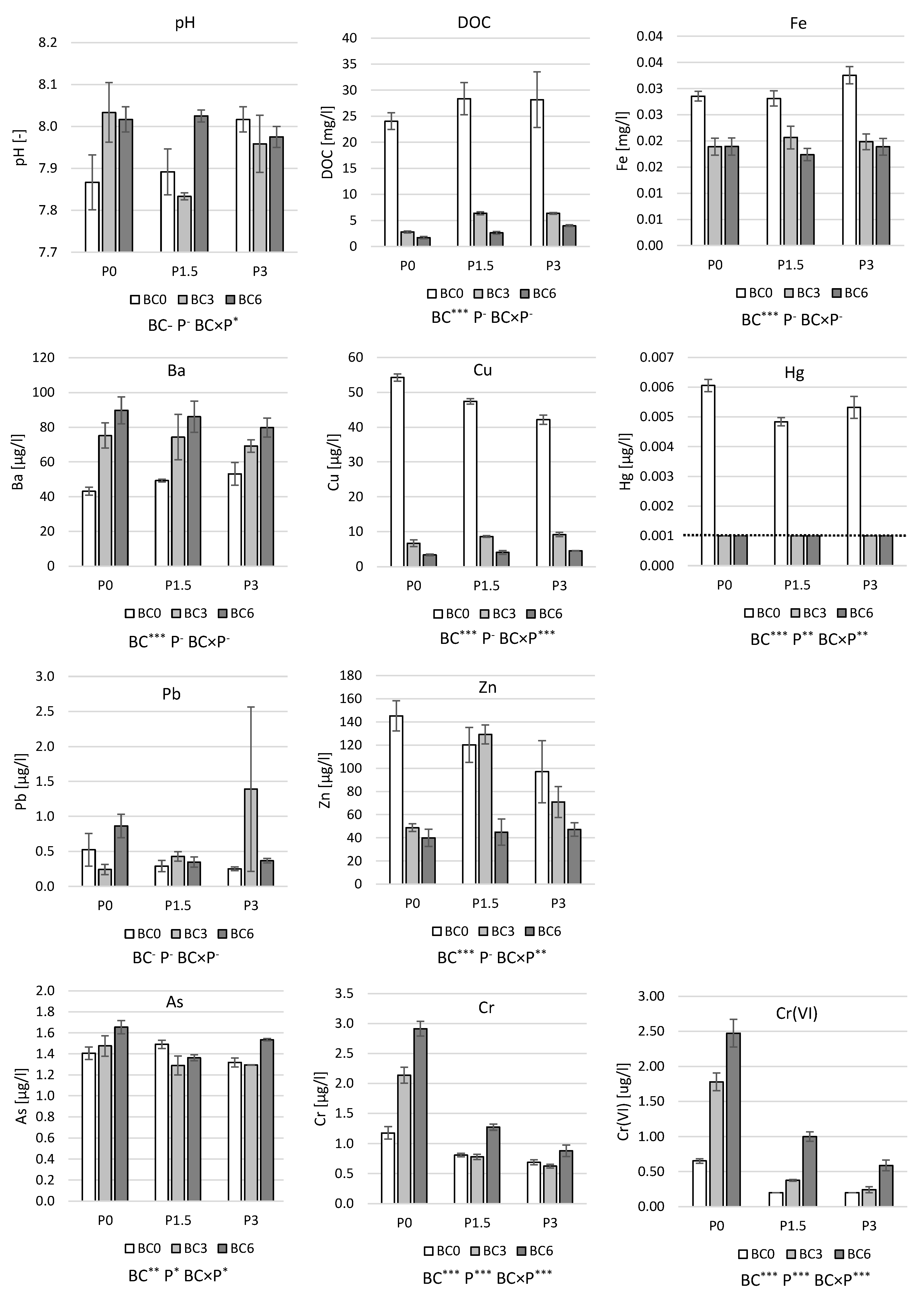
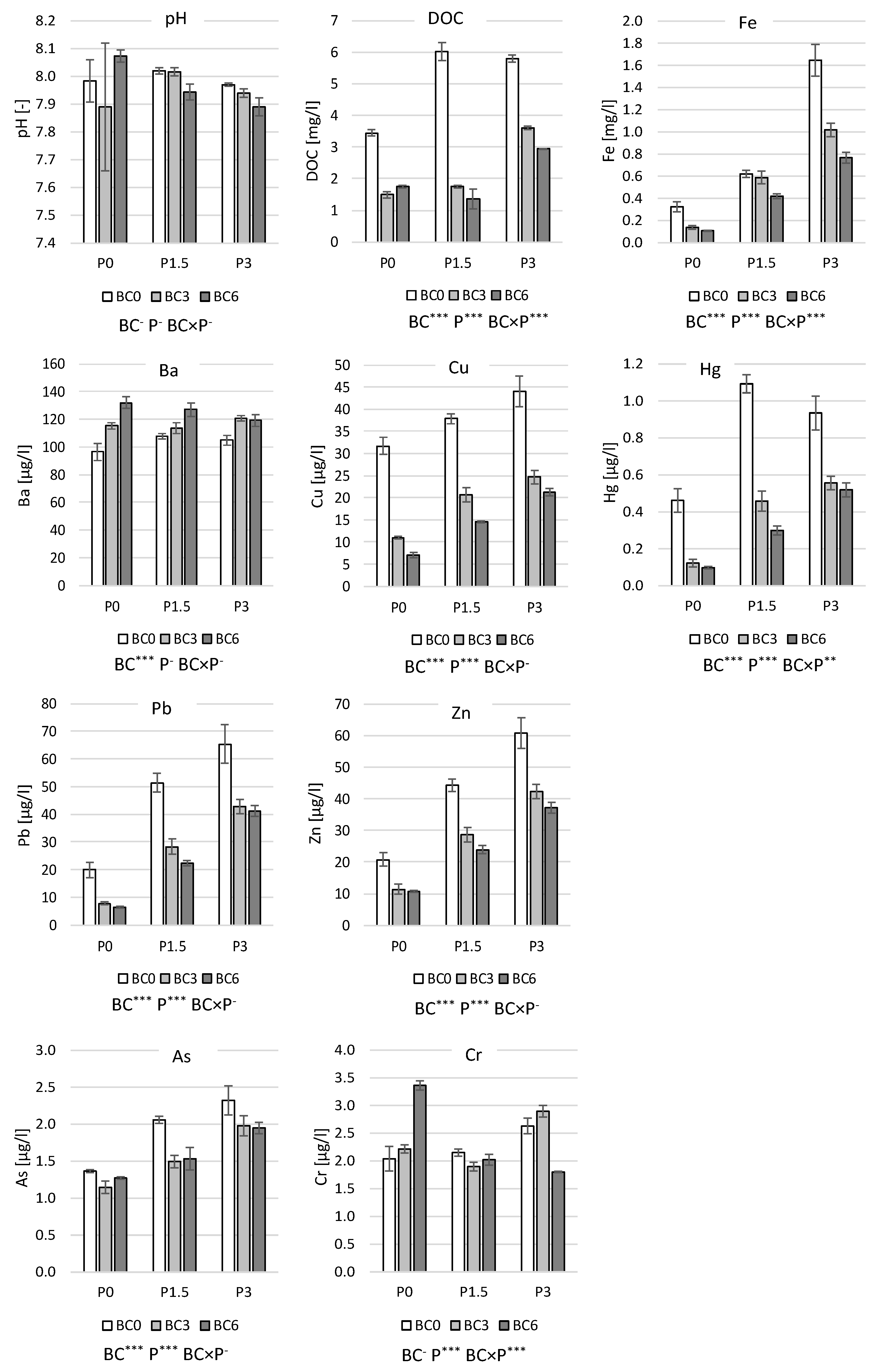
Treatment effects on in situ soil solution concentrations of all elements are summarized in Table 3. Biochar addition significantly decreased concentrations of Cu, Hg, and Zn in the in situ soil solutions (Figure 1; Table 3 and Table S2). Both Cu and Hg were decreased by more than 80% in comparison with the control (BC0P0) for both 3 and 6% biochar additions. Zn concentrations decreased up to 70% (with 3 and 6% biochar). There was no significant effect on Pb and the increasing effect on As was small, while Ba and Cr concentrations increased significantly with biochar addition. Peat amendments generally had no significant effects on cation metal solubility, whereas the anions significantly decreased (Figure 1, Table 3 and Table S2).
The average pH of in situ soil solutions (pH 7.8–8.0) was not significantly affected by the biochar or peat additions (Table S2). The biochar used had a low ash content (Table 1), i.e., it did not contain enough ash to increase the pH of the soil solution in the already alkaline soil, while the peat was limed and added in low concentrations. Hence, the decreasing concentrations of Cu, Hg, and Zn in soil solution with biochar addition were not due to an increase in pH and a subsequent increase in sorption and/or precipitation of metals, which has previously often been found to be important for decreased leaching of metals after biochar addition [1,3,12]. Instead, the results indicate that the large retention of Cu and Hg with biochar addition, for both metals and biochar additions, is linked to the retention of DOM. Biochar reduced the DOC concentrations from 25–30 mg/L without biochar to 2–5 mg/L in biochar-amended treatments (Figure 1), which is in line with a high aromaticity shown by the low H/C and O/C ratios (Table 1). Earlier studies show that wood-based biochar produced at high temperature contains little labile C [44] and biochar produced at high temperature [45] as well as black carbon retains DOM [46,47]. The correlation analysis (Table S7) shows that Cu correlated significantly with DOC, corroborating the previously found close link between Cu and DOC in soil solution [48]. A corresponding analysis could not be made for Hg as soil solution concentrations were below detection limit in all biochar-amended treatments, but it has also been proven that Hg is closely associated with soil organic matter and DOM [49,50]. Part of the metal retention can also be explained by binding to functional groups on the solid organic part of the biochar. However, this contribution to metal immobilization is probably minor as the used biochar was produced at a high pyrolysis temperature (750 °C) and therefore contains relatively few functional groups that bind metals [13,51] as indicated by a low O/C ratio (Table 1) and the low CEC value increase by biochar addition (0.6–0.7 meq/100g) (Table 2). The CEC value of the biochar was calculated to 12–20 meq/100 g, which is a low value for biochar compared to other studies [28,52]. Furthermore, the CEC of the biochar was on the same magnitude as the control soil (Table 2), so a large increase in metal cations binding to negative sites on the biochar was not expected.
The lack of effect of peat additions on soil solution concentrations of Cu and Hg supports the role of DOM in the treatment effect of biochar, because no significant effect on DOC concentration was observed in the peat treatments (Figure 1). Furthermore, the CEC increase (1.4–3.0 meq/100 g) noted by the peat additions in Table 2 indicates a peat with a number of functional groups in the lower end of a range of different peats, probably since it was slightly to moderately decomposed [35,53]. Although Zn has a lower expected affinity for DOM compared to Cu and Hg, the pronounced effect of biochar on DOC solubility probably also can explain the effect on Zn solubility, because high pH favors complex formation of cationic metals with DOM. Soil solutions from control as well as treated soils were all undersaturated with respect to the evaluated Cu-, Zn-, and Pb-bearing mineral phases (Table S8).
The absence of a significant effect on Pb in soil solution (Figure 1) can probably be explained by the low solubility of Pb also in the control soil. Lead generally has a low solubility in alkaline soils due to a high affinity for both SOM and Fe (hydr)oxides (e.g., ferrihydrite) [54,55,56]. Calculated saturation indices for soil solution indicated that ferrihydrite is present in the soil, because they were close to zero (Table S8).
Despite a lower Ba concentration in the biochar (123 mg/kg biochar) compared to the soil (273–300 mg/kg dw soil), the concentrations of Ba in soil solution increased with biochar addition (Figure 1). Barium is usually present in soil in minerals with low solubility such as barite and feldspars [57]. Calculated saturation indices for soil solution were between 0.7 and 1.1 (Table S8), indicating presence of barite in the control soil as well as in the treated soils. The results thus indicate that Ba in the biochar may have been present in more mobile forms, e.g., as weakly adsorbed by electrostatic interaction as previously found by [58] for a biochar produced from rice straw.
Biochar increased concentrations of As in soil solutions significantly, although the effect was small (Figure 1). As the cultivation beds were drained, conditions were prevailingly oxic and arsenate (H2AsO4) should be the dominant form of As. This negative arsenate ion is not retained effectively neither by organic matter nor biochar, which both contain negatively charged functional groups. Instead, arsenate is known to bind to Fe- and Al hydroxides in soils, weaker at high pH than at low pH [59]. Since the treatment effect on pH was insignificant, it is logical that changes in As concentrations in soil solution were small, although previous studies show that As solubility often increase after addition of biochar (e.g., summarized in review by Zama et al. [60]).
Concentrations of Cr increased significantly with biochar, whereas peat amendments had the opposite effect (Figure 1). Due to the oxic conditions and high pH, Cr should mainly exist in its oxidized and more toxic form Cr(VI), i.e., the negative chromate ion (CrO42−). Measurements of chromate in soil solutions in December 2019 showed that a major part of Crtot in soil solutions from treatments without peat additions was indeed Cr(VI) (Figure 1). However, the addition of peat substantially reduced the enhanced solubility of Crtot observed in the soils with only biochar added. Since peat has a net negative charge (also indicated by the increase in CEC obtained in the peat-treated soils, Table 2) the reduced Cr solubility obtained by the peat additions cannot be explained by ion exchange phenomena. Instead, the most likely explanation is that the co-application of peat promoted the reduction of Cr(VI) to cationic Cr(III), due to stabilization of Cr(III) by the peat. Previous research has shown that Cr(III) forms very strong complexes with natural organic matter [61]. Furthermore, a column experiment [62] illustrated that added natural organic matter to a mineral soil promoted the reduction of Cr(VI) to Cr(III), via complex formation of Cr(III), in oxic conditions.
As shown in Table 3, the two cationic metals Cd and Ni behaved similarly to Cu and Zn, with significantly reduced soil solution concentrations upon biochar additions and lack of treatment effect of the peat additions. In addition, Mo and V, which were expected to exist as the oxyanions molybdate (MoO42−) and vanadate (H2VO4), behaved like the anionic As and Cr, with increased solubility in biochar-treated soils and reduced solubility in peat-treated ones (Table 3).

3.2. Treatment Effects on Uptake of Metal(oid)s by Ryegrass and Earthworms

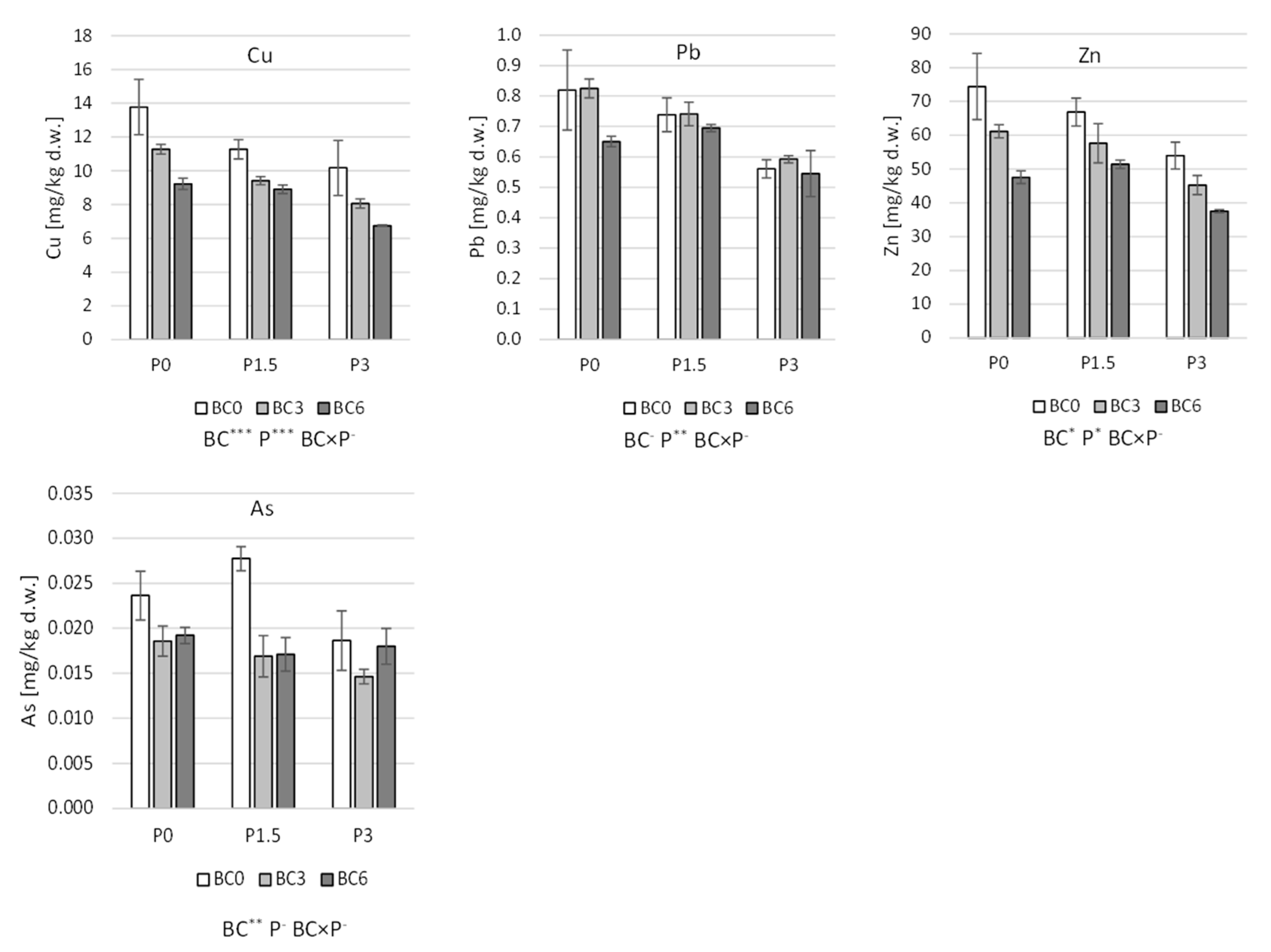
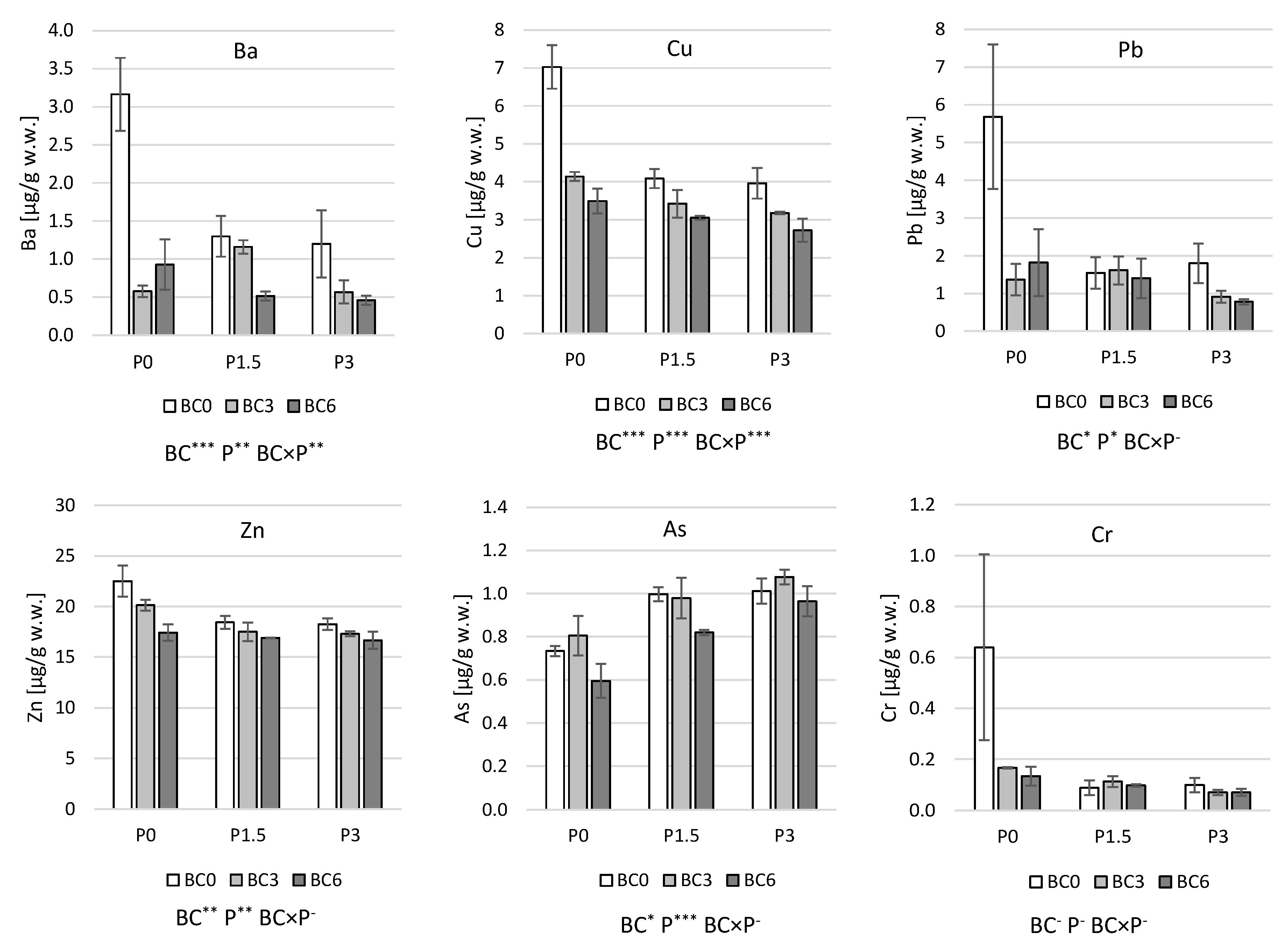
Addition of biochar decreased the concentrations of Cu and Zn in ryegrass (Lolium perenne) while there was no significant effect on Pb (Figure 2, Table 3). This is in line with the soil solution results showing a decreased solubility of Cu and Zn in biochar-treated soils, whereas Pb was strongly bound already in control soil. The grass biomass decreased 30–40% with biochar addition [24], which means that the difference in uptake would have been slightly larger if measured as mg metal uptake. Two meta-analyses (74 and 97 publications, respectively) studying effects of different biochar and soil parameters on metal uptake by plants [14,15] showed that biochar application generally (but not always) decreased plant concentrations of Cu, Pb, and Zn and that the uptake was greatly affected by soil and biochar parameters (e.g., pH and SOM, biochar pyrolysis temperature, and feedstock) as well as by plant species. In contrast to the results of our study, both studies found that Pb in plant tissue was overall more strongly reduced than Cu and Zn. The reduction was generally related to an increase in pH and/or formation of Pb-phosphate minerals upon biochar addition. As discussed above, no such effects were observed in our study, which, in combination with the low mobility of Pb in the control soil, might explain the absence of treatment effect on Pb in grass.
Uptake of As by the ryegrass was low and decreased to some extent with biochar addition (Figure 2, Table 3), which is opposite compared to the trend in soil solution. This is in line with the meta-analysis of Peng et al. [15] that did not identify any general effect of biochar application on uptake of As (only a negative correlation with soil phosphorus). Mercury was below quantification limit (<0.01 mg/kg dw) in all plant samples and Cr in 66% of them (<0.05 mg/kg dw) and therefore the effect on these elements could not be evaluated. Barium was not analyzed in the plant materials.
Concentrations of Cu, Pb, Zn, and Ba in earthworms decreased both with biochar and peat addition (Figure 3, Table 3). In general, earthworm weights were similar between treatments (Figure S2). The decreased earthworm concentrations of Cu and Zn are in line with decreased soil solution concentrations after biochar application, whereas the effect of peat amendment was inconsistent with reduced uptake by earthworms and no effect on soil solution concentrations. Gomez-Eyles et al. [19], studying biochar and earthworm effects on contaminant mobility, also found a decrease of Cu in Eisenia fetida with biochar addition, while the effect on Zn was inconclusive. Interestingly, the concentration of Ba in worms was significantly lower both in biochar- and peat-amended soils (Figure 3), despite increased soil solution concentrations with biochar and no observed effect with peat (Figure 1). Although it is known that Ba in soil may be toxic to earthworms [63,64], we found no data on Ba uptake in earthworms in the literature.
The As concentrations in earthworms decreased with added biochar and increased with added peat (Figure 3), which is opposed to the trend found in the soil solutions (Figure 1). No significant effects on Cr uptake by earthworms were observed for any of the amendments, possibly due to low tissue concentrations making analyses uncertain. A study by Choppala et al. [16] showed increased As and decreased Cr uptake in Eisenia fetida with biochar amendment which may be linked to the reduction of As(V) and Cr(VI) to more available As(III) and less available Cr(III) that they identified due to biochar addition. Wang et al. [17] saw no clear effect on As uptake in Eisenia andrei and Metaphire californica by biochar amendment.

3.3. Using Standardized Batch Leaching Test to Evaluate Solubility of Metal(oid)s in Biochar- and Peat-Amended Soil

In line with results for soil solutions, sampled using lysimeters, biochar-treated soils showed significantly lower concentrations of Cu, Hg, Zn, and DOC in batch test eluates than in untreated soils, while the concentration of Ba increased (Figure 4). Although biochar addition did not affect Pb in soil solutions, Pb concentrations in eluates decreased significantly. In contrast to the observations in soil solutions, the addition of peat increased eluate concentrations of Cu, Hg, Pb, Zn, and DOC. Arsenic concentrations in batch leaching eluates decreased with biochar while there was no significant effect on Cr, contrary to the effects observed for soil solutions.
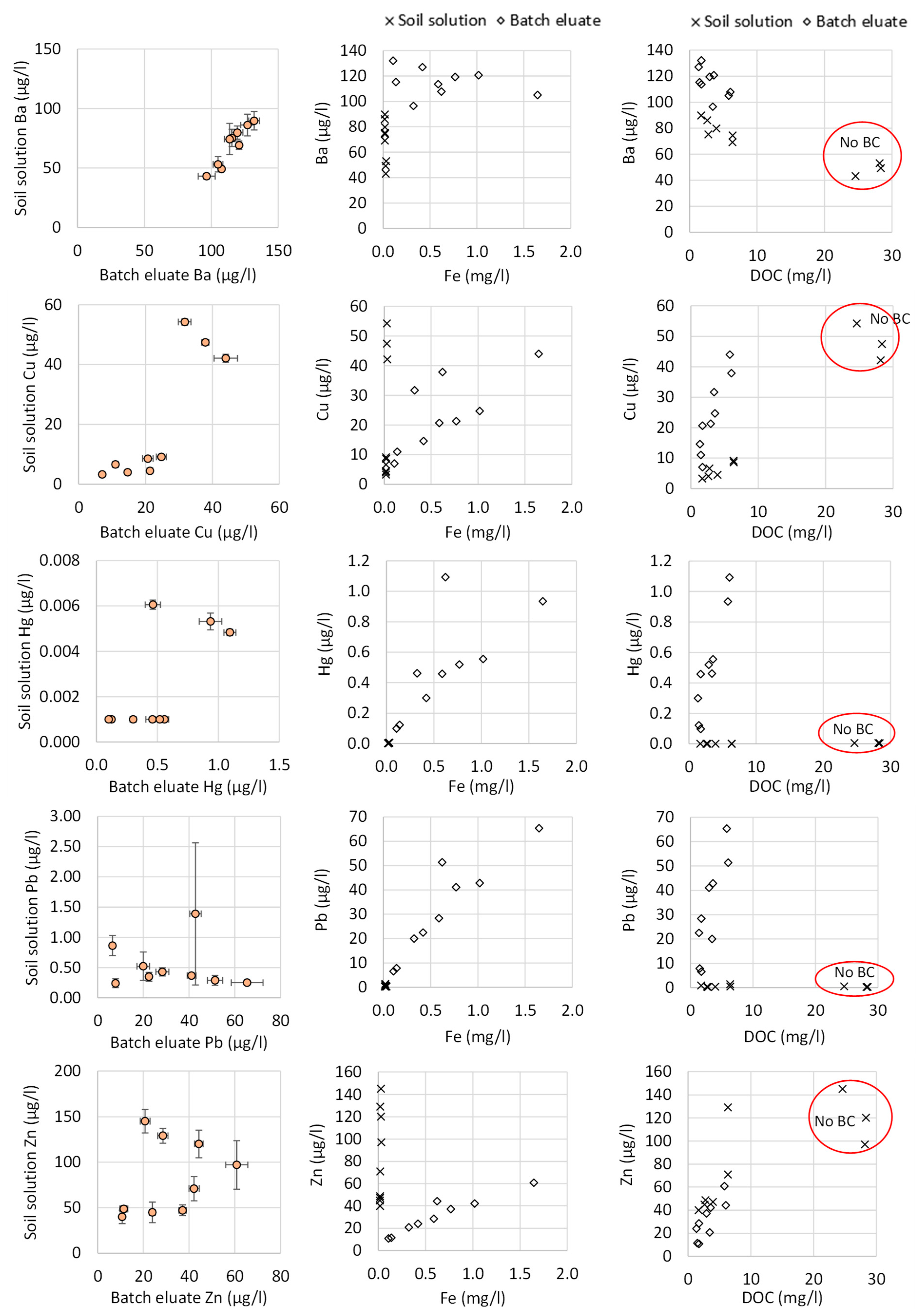
Although biochar treatment effects in general were similar in solutions collected in situ compared to those observed in batch leaching eluates (Table 3), the magnitudes of some element concentrations differed markedly (Figure 5). This was particularly true for Pb and Hg, where concentrations in batch leaching eluates were up to two orders of magnitude higher than observed for soil solutions. This is probably due to experimental artefacts induced in the batch tests, which need to be accounted for when evaluating batch test results. A direct effect due to differences in pH could be excluded as the pH in batch leaching eluates (pH 7.9–8.1) was close to that of the soil solutions (pH 7.8–8.0). Instead, the most likely explanation for the discrepancy is the formation of colloids in batch tests during shaking. The colloids are smaller than 0.45 µm and therefore pass the membrane filters used in standard batch leaching tests [65]. These colloids may consist of Fe/Al (hyd)roxides and organic matter [66] and metals can bind both to organic and metal (hydr)oxide components. In the present study, the concentrations of Fe and Al in eluates from batch tests were up to two orders of magnitude higher than in soil solutions (Tables S3 and S6). The eluates were greatly oversaturated with respect to ferrihydrite and Al(OH)3 (Table S8), indicating the existence of colloids containing ferrihydrite and Al(OH)3 passing the 0.45 µm filter. A higher Fe concentration in batch leaching eluates from peat-amended soils indicates that more colloids were formed with peat added. The mobility of colloids consisting of Fe/Al (hydr)oxides and organic matter tend to increase with pH, making this a general problem when assessing biochar effects on solubility, since biochar often induces a high soil pH. Previous research has shown that colloids can be effectively removed by an easy-to-use ultra filtration procedure using ultra-centrifuge filters (molecular weight cut-off 10 kD) [65,67].
The binding mechanism(s) for Pb and Hg to the colloidal fraction are probably different. For Pb, it is likely that the binding occurs mainly to functional groups on the Fe/Al (hydr)oxide surfaces directly, since previous research has shown that Pb binds strongly to ferrihydrite at high pH [68]. Furthermore, Löv et al. [66] found that Fe (hydr)oxide was the major colloidal phase sorbing Pb in leachates from four different contaminated soils. As shown in Figure 5, the concentration of Fe in soil solutions and batch leaching eluates was closely related to the Pb concentration, supporting the role of Fe/Al (hydr)oxides in mobilizing Pb in the batch tests. In contrast to Pb, Hg adsorbs weakly to Fe/Al hydroxides [69], but forms very strong complexes with natural organic matter, particularly with thiol groups [49]. Thus, for Hg, it is likely that the organic component of the colloids played the major role in the binding. As shown in a study on silver, organic colloids mobilized from the soil may have a higher density of thiol groups than the “truly dissolved” DOC of the soil solution, favoring the binding of soft metals like Ag and Hg [70].
For Cu, the concentration in eluates from batch tests was in a similar range as that found in soil solutions, probably because Cu solubility mainly was governed by complex formation with dissolved organic matter. Copper forms strong complexes with amino, carboxyl, and carbonyl functional groups on both solid and dissolved organic matter [48]. As indicated in Figure 5, Cu concentrations in batch eluates correlate well with DOC, but some enhanced solubility in peat-amended soils due to colloidal mobilization probably occurred as indicated by a steeper slope for batch eluates than for soil solutions.
Contrary to Pb and Hg, Zn concentrations were higher in soil solution than in the eluates, particularly in soils without biochar additions (Figure 1 and Figure 3). The Zn ion has an intermediate affinity for organic matter and iron (hydr)oxides. However, judging by the relationship between Zn and Fe on the one hand, and Zn and DOC on the other, DOC appears to be a better overall predictor of Zn concentration (Figure 5). Thus, the higher concentrations observed in the soil solutions were probably related to the higher DOC concentrations.
The concentration of Ba was about two times higher in eluates from batch tests than in soil solutions but showed the same trends regarding treatment effects (Figure 1 and Figure 4). One possible explanation is that Ba solubility was governed by barite (BaSO4). Almost perfect equilibrium with respect to this mineral was indicated in the batch eluates, i.e., saturation indices were close to zero (Table S8). Although Ba concentrations were lower in the in situ soil solutions, the saturation indices were between 0.72 and 1.1 (oversaturation due to higher SO4 concentration in soil solutions than batch eluates (Tables S3 and S6)) indicating that equilibrium was not reached with respect to barite.
Treatment effects on eluate concentrations of Cd and Ni were the same as those found for Cu, Hg, Pb, and Zn, with reduced solubility in biochar-treated soils and increased solubility due to peat amendments (Table 3).
Arsenic and Cr concentrations were similar, comparing batch leaching eluates with soil solutions (Figure S3), and treatment effects were small (Figure 1 and Figure 4). Notably, the increased Cr solubility in pure biochar-treated soils was observed for both soil solutions and batch leaching eluates, although the biochar effect was not significant for batch leaching eluates. Although arsenic is known to form strong complexes with Fe- and Al hydroxides in soils, the binding is weaker at high pH than at low pH [59], which explains why the colloids do not mobilize As.

4. Conclusions

This field study confirms that amending moderately contaminated soils with biochar can be an effective remediation strategy for reducing the solubility and bioavailability of several cationic metals under field conditions. Specifically, the addition of 3% (w/w) biochar reduced the concentrations of Cd, Cu, Hg, Ni, and Zn in in situ soil solutions by 60–80%, with no substantial additional benefit observed at 6% (w/w) biochar for most metals. The solubility of Ba increased with biochar addition, but this can likely be managed by selecting biochars with low Ba content. Notably, doubling the biochar dose from 3% to 6% (w/w) halved the solubility of Cu, but the largest reduction occurred between 0% and 3% addition, indicating that moderate biochar doses are sufficient for substantial remediation effects. The reason why biochar decreased concentrations of cationic metals was not an increase in pH and subsequent increased sorption and/or precipitation (the pH did not differ between soil solutions from control and treated soils). Regarding binding to negative functional groups on biochar, it was not a major stabilization mechanism in the present study, due to the low number of such groups on the biochar used. Instead, the results indicate that an important mechanism was immobilization together with DOM as supported by reduced DOC concentration in soil solutions of biochar-amended soil. In contrast, no effect on soil solution concentrations was observed for cationic metals or DOC due to peat amendment.
The reduced solubility of cationic metals translated into lower concentrations in both ryegrass and earthworms exposed to the contaminated soil, demonstrating decreased bioavailability. However, biochar amendment increased the in situ soil solution concentrations of certain anionic metal(loid)s, particularly Cr, by up to a factor of three. Increased Cr solubility was effectively counteracted by co-application of peat, which likely promoted reduction of Cr(VI) to less mobile Cr(III).
Importantly, the standardized batch leaching test (ISO 21268-2:2019 [20]) generally reflected the same treatment trends as in situ lysimeter measurements for cationic metals but substantially overestimated the solubility of Pb and Hg—by up to two orders of magnitude. This artefact was more pronounced in soils amended with peat. The discrepancy of results obtained with the batch test and the in situ soil solution measurements can be explained by a mobilization of colloids during shaking. Colloids that pass the 0.45 µm membrane filter normally used in standard batch leaching tests are included in analysis of the eluates. Colloid formation was indicated by the much higher Fe concentration in eluates from batch leaching tests than soil solutions. The mobility of Fe/Al (hydr)oxide colloids tends to increase with pH, due to surface charge properties, making this a common problem when assessing biochar effects on metal solubility, since biochar often increases soil pH. To improve the reliability of batch leaching tests for assessing metal mobility in biochar-amended soils, we recommend ultrafiltration (10 kD cut-off) of eluates rather than the standard 0.45 µm filtration.
Overall, our results support the use of biochar as a sustainable amendment for the remediation of low- to moderately contaminated soils, with 3% (w/w) addition being sufficient for significant reductions in cationic metal solubility and bioavailability. However, careful consideration must be given to the potential for increased mobility of anionic metal(loid)s and Ba, as well as to the limitations of standard batch leaching tests. The results are particularly relevant for field application of biochar to similar soils under similar climatic conditions. Further long-term field studies are needed to confirm the persistence of these remediation effects over time.

Supplementary Materials

The following supporting information can be downloaded at https://www.mdpi.com/article/10.3390/environments12110447/s1; Figure S1: Outline of the field trial, cross-section with position of a lysimeter and grass sampling; Figure S2: Mean individual earthworm weights after exposure to soil amended with biochar and peat; Figure S3: Batch eluates and soil lysimeter solutions of As and Cr; Table S1: EBC analysis of biochar; Table S2: Results from two-way ANOVA; Table S3: Concentrations in soil solution; Table S4: Metal concentrations in grass; Table S5: Metal concentrations in earthworms; Table S6: Concentrations in eluates from batch tests; Table S7: Correlations (Pearson) between metal concentrations, DOC, and Fe and Ca in soil solution sampled with lysimeters and batch eluates; Table S8: Saturation indexes for selected minerals.

Author Contributions

Conceptualization, D.B.K., A.E. (Anja Enell), A.S.D., M.L. and A.E. (Alf Ekblad); Formal analysis, C.T. and M.F.; Investigation, M.F., I.R., M.L. and V.S.; Writing—original draft, C.T.; Writing—review & editing, D.B.K., C.S., I.R., A.S.D., A.E. (Alf Ekblad) and A.E. (Anja Enell). All authors have read and agreed to the published version of the manuscript.

Funding

This research was funded by the Swedish strategic innovation program RE:Source (RE:Source SIP), funded by the Swedish energy agency [2018-002148], Sweden’s innovation agency (Vinnova) and Formas—a Swedish research council for sustainable development, grant number 46121-1, and Swedish Geotechnical Institute (project number 18118) and Nordvästra Skånes Renhållnings AB (NSR).

Data Availability Statement

The data presented in this study are openly available in the Swedish National Data Service’s (SND) research data catalogue (Researchdata.se) at https://doi.org/10.5878/94bt-hv84.

Acknowledgments

The authors want to thank Felix Ertl (Pamoja and Circular Carbon) and Ludvig Landen (NSR and NordicZero) for their valuable support and advice in the selection of biochar for this study. We also thank Anna Sorelius (NSR) and Mattias Axelsson (NSR) for support in designing and establishing the field trial.

Conflicts of Interest

The authors declare no conflict of interest.

References

  1. Beesley, L.; Moreno-Jiménez, E.; Gomez-Eyles, J.L.; Harris, E.; Robinson, B.; Sizmur, T. A Review of Biochars’ Potential Role in the Remediation, Revegetation and Restoration of Contaminated Soils. Environ. Pollut. 2011, 159, 3269–3282. [Google Scholar] [CrossRef]
  2. Hilber, I.; Bastos, A.C.; Loureiro, S.; Soja, G.; Marsz, A.; Cornelissen, G.; Bucheli, T.D. The Different Faces of Biochar: Contamination Risk versus Remediation Tool. J. Environ. Eng. Landsc. Manag. 2017, 25, 86–104. [Google Scholar] [CrossRef]
  3. Ahmad, M.; Rajapaksha, A.U.; Lim, J.E.; Zhang, M.; Bolan, N.; Mohan, D.; Vithanage, M.; Lee, S.S.; Ok, Y.S. Biochar as a Sorbent for Contaminant Management in Soil and Water: A Review. Chemosphere 2014, 99, 19–33. [Google Scholar] [CrossRef] [PubMed]
  4. Pecha, B.; Hills, K.M.; Garcia-Pérez, M.; Hunt, J.; Miles, T.R.; Wilson, K.; Amonette, J.E. Biochar Production. In Biomass to Biochar: Maximizing the Carbon Value; Center for Sustaining Agriculture and Natural Resources: Wenatchee, WA, USA, 2022; Chapter 11. [Google Scholar]
  5. Ungureanu, N.; Vlăduț, N.V.; Biriș, S.Ș.; Gheorghiță, N.E.; Ionescu, M. Bio-mass Pyrolysis Pathways for Renewable Energy and Sustainable Resource Recovery: A Critical Review of Processes, Parameters, and Product Valorization. Sustainability 2025, 17, 7806. [Google Scholar] [CrossRef]
  6. Luo, L.; Wang, J.; Lv, J.; Liu, Z.; Sun, T.; Yang, Y.; Zhu, Y.G. Carbon Sequestration Strategies in Soil Using Biochar: Advances, Challenges, and Opportunities. Environ. Sci. Technol. 2023, 57, 11357–11372. [Google Scholar] [CrossRef]
  7. Papageorgiou, A.; Azzi, E.S.; Enell, A.; Sundberg, C. Biochar Produced from Wood Waste for Soil Remediation in Sweden: Carbon Sequestration and Other Environmental Impacts. Sci. Total Environ. 2021, 776, 145953. [Google Scholar] [CrossRef]
  8. O’Connor, D.; Peng, T.; Zhang, J.; Tsang, D.C.W.; Alessi, D.S.; Shen, Z.; Bolan, N.S.; Hou, D. Biochar Application for the Remediation of Heavy Metal Polluted Land: A Review of in Situ Field Trials. Sci. Total Environ. 2018, 619–620, 815–826. [Google Scholar] [CrossRef] [PubMed]
  9. Guo, M.; Song, W.; Tian, J. Biochar-Facilitated Soil Remediation: Mechanisms and Efficacy Variations. Front. Environ. Sci. 2020, 8, 521512. [Google Scholar] [CrossRef]
  10. Qiu, M.; Liu, L.; Ling, Q.; Cai, Y.; Yu, S.; Wang, S.; Fu, D.; Hu, B.; Wang, X. Biochar for the Removal of Contaminants from Soil and Water: A Review. Biochar 2022, 4, 19. [Google Scholar] [CrossRef]
  11. Long, X.X.; Yu, Z.N.; Liu, S.W.; Gao, T.; Qiu, R.L. A Systematic Review of Biochar Aging and the Potential Eco-Environmental Risk in Heavy Metal Contaminated Soil. J. Hazard. Mater. 2024, 472, 134345. [Google Scholar] [CrossRef]
  12. Majewska, M.; Hanaka, A. Biochar in the Bioremediation of Metal-Contaminated Soils. Agronomy 2025, 15, 273. [Google Scholar] [CrossRef]
  13. Bandara, T.; Franks, A.; Xu, J.; Bolan, N.; Wang, H.; Tang, C. Chemical and Biological Immobilization Mechanisms of Potentially Toxic Elements in Biochar-Amended Soils. Crit. Rev. Environ. Sci. Technol. 2020, 50, 903–978. [Google Scholar] [CrossRef]
  14. Chen, D.; Liu, X.; Bian, R.; Cheng, K.; Zhang, X.; Zheng, J.; Joseph, S.; Crowley, D.; Pan, G.; Li, L. Effects of Biochar on Availability and Plant Uptake of Heavy Metals—A Meta-Analysis. J. Environ. Manag. 2018, 222, 76–85. [Google Scholar] [CrossRef]
  15. Peng, X.; Deng, Y.; Peng, Y.; Yue, K. Effects of Biochar Addition on Toxic Element Concentrations in Plants: A Meta-Analysis. Sci. Total Environ. 2018, 616–617, 970–977. [Google Scholar] [CrossRef] [PubMed]
  16. Choppala, G.; Bolan, N.; Kunhikrishnan, A.; Bush, R. Differential Effect of Biochar upon Reduction-Induced Mobility and Bioavailability of Arsenate and Chromate. Chemosphere 2016, 144, 374–381. [Google Scholar] [CrossRef]
  17. Wang, H.T.; Ding, J.; Chi, Q.Q.; Li, G.; Pu, Q.; Xiao, Z.F.; Xue, X.M. The Effect of Biochar on Soil-Plant-Earthworm-Bacteria System in Metal(Loid) Contaminated Soil. Environ. Pollut. 2020, 263, 114610. [Google Scholar] [CrossRef]
  18. Xiao, R.; Liu, X.; Ali, A.; Chen, A.; Zhang, M.; Li, R.; Chang, H.; Zhang, Z. Bioremediation of Cd-Spiked Soil Using Earthworms (Eisenia Fetida): Enhancement with Biochar and Bacillus Megatherium Application. Chemosphere 2021, 264, 128517. [Google Scholar] [CrossRef]
  19. Gomez-Eyles, J.L.; Sizmur, T.; Collins, C.D.; Hodson, M.E. Effects of Biochar and the Earthworm Eisenia Fetida on the Bioavailability of Polycyclic Aromatic Hydrocarbons and Potentially Toxic Elements. Environ. Pollut. 2011, 159, 616–622. [Google Scholar] [CrossRef]
  20. ISO 21268-2:2019; Soil Quality—Leaching Procedures for Subsequent Chemical and Ecotoxicological Testing of Soil and Soil-like Materials Part 2: Batch Test Using a Liquid to Solid Ratio of 10 l/Kg Dry Matter. International Organization for Standardization: Geneva, Switzerland, 2019.
  21. Tiberg, C.; Smolders, E.; Fröberg, M.; Gustafsson, J.P.; Kleja, D.B. Combining a Standardized Batch Test with the Biotic Ligand Model to Predict Copper and Zinc Ecotoxicity in Soils. Environ. Toxicol. Chem. 2022, 41, 1540–1554. [Google Scholar] [CrossRef]
  22. Degryse, F.; Broos, K.; Smolders, E.; Merckx, E. Soil Solution Concentration of Cd and Zn Can Be Predicted with a CaCl2 Soil Extract. Eur. J. Soil Sci. 2003, 54, 149–157. [Google Scholar] [CrossRef]
  23. Beesley, L.; Moreno-Jiménez, E.; Gomez-Eyles, J.L. Effects of Biochar and Greenwaste Compost Amendments on Mobility, Bioavailability and Toxicity of Inorganic and Organic Contaminants in a Multi-Element Polluted Soil. Environ. Pollut. 2010, 158, 2282–2287. [Google Scholar] [CrossRef]
  24. Rijk, I.; Ekblad, A.; Dahlin, A.S.; Enell, A.; Larsson, M.; Leroy, P.; Kleja, D.B.; Tiberg, C.; Hallin, S.; Jones, C. Biochar and Peat Amendments Affect Nitrogen Retention, Microbial Capacity and Nitrogen Cycling Microbial Communities in a Metal and Polycyclic Aromatic Hydrocarbon Contaminated Urban Soil. Sci. Total Environ. 2024, 936, 173454. [Google Scholar] [CrossRef]
  25. Lian, F.; Xing, B. Black Carbon (Biochar) in Water/Soil Environments: Molecular Structure, Sorption, Stability, and Potential Risk. Environ. Sci. Technol. 2017, 51, 13517–13532. [Google Scholar] [CrossRef]
  26. Oleszczuk, P.; Zielińska, A.; Cornelissen, G. Stabilization of Sewage Sludge by Different Biochars towards Reducing Freely Dissolved Polycyclic Aromatic Hydrocarbons (PAHs) Content. Bioresour. Technol. 2014, 156, 139–145. [Google Scholar] [CrossRef] [PubMed]
  27. Kupryianchyk, D.; Hale, S.; Zimmerman, A.R.; Harvey, O.; Rutherford, D.; Abiven, S.; Knicker, H.; Schmidt, H.P.; Rumpel, C.; Cornelissen, G. Sorption of Hydrophobic Organic Compounds to a Diverse Suite of Carbonaceous Materials with Emphasis on Biochar. Chemosphere 2016, 144, 879–887. [Google Scholar] [CrossRef]
  28. Antonangelo, J.A.; Culman, S.; Zhang, H. Comparative Analysis and Prediction of Cation Exchange Capacity via Summation: Influence of Biochar Type and Nutrient Ratios. Front. Soil Sci. 2024, 4, 1371777. [Google Scholar] [CrossRef]
  29. EBC European Biochar Certificate. Guidelines for a Sustainable Production of Biochar; EBC European Biochar Certificate: Frick, Switzerland, 2024. [Google Scholar]
  30. Andriesse, J.P. Nature and Management of Tropical Peat Soils. FAO Soils Bull. 1988, 59, 48. [Google Scholar]
  31. ISO 11885:2007; Water Quality—Determination of Selected Elements by Inductively CCoupled Plasma Optical Emission Spectrometry (ICP-OES). International Organization for Standardization: Geneva, Switzerland, 2019.
  32. ISO 17294-2:2016; Water Quality—Application of Inductively Coupled Plasma Mass Spectrometry (ICP-MS), Part 2: Determination of Selected Elements Including Uranium Isotopes. International Organization for Standardization: Geneva, Switzerland, 2019.
  33. Swedish EPA. Tabell över Generella Riktvärden för Förorenad Mark (Table of Generic Guideline Values for Contaminated Soils in Sweden), Version 2.3. Available online: https://www.naturvardsverket.se/4a3dbd/globalassets/vagledning/fororenade-omraden/riktvarden/generella-riktvarden-for-fororenad-mark-2025.pdf (accessed on 16 July 2024).
  34. Mccoy, E.L. Commercial Amendments for Sand-Based Root Zones: Review and Interpretation. Horttechnology 2013, 23, 803–813. [Google Scholar] [CrossRef]
  35. Siregar, M.A.; Ma’as, A.; Nurudin, M. Determination of Cation Exchange Capacity and Analysis of Cation Availability in Hemic and Sapric Peat with Different Preparation and Extraction Methods. Ilmu Pertan. (Agric. Sci.) 2021, 6, 47–53. [Google Scholar] [CrossRef]
  36. ISO/IEC 17025:2017; General Requirements for the Competence of Testing and Calibration Laboratories. International Organization for Standardization: Geneva, Switzerland, 2017.
  37. ISO 17852:2008; Water Quality—Determination of Mercury—Method Using Atomic Fluorescence Spectrometry. International Organization for Standardization: Geneva, Switzerland, 2019.
  38. ISO 10304-1:2009; Water Quality—Determination of Dissolved Anions by Liquid Chromatography of Ions—Part 1: Determination of Bromide, Chloride, Fluoride, Nitrate, Nitrite, Phosphate and Sulfate. International Organization for Standardization: Geneva, Switzerland, 2019.
  39. ISO 6878:2004; Water Quality—Determination of Phosphorus—Ammonium Molybdate Spectrometric Method. International Organization for Standardization: Geneva, Switzerland, 2019.
  40. ISO 11268-2:2012; Soil Quality—Effects of Pollutants on Earthworms, Part 2: Determination of Effects on Reproduction of Eisenia fetida/Eisenia andrei and Other Earthworm Species. International Organization for Standardization: Geneva, Switzerland, 2019.
  41. Gustafsson, J.P. Visual MINTEQ, Version 3.1. Stockholm, Sweden, 2013. Available online: https://vminteq.com/ (accessed on 13 November 2025).
  42. Gustafsson, J.P. Modeling the Acid-Base Properties and Metal Complexation of Humic Substances with the Stockholm Humic Model. J. Colloid Interface Sci. 2001, 244, 102–112. [Google Scholar] [CrossRef]
  43. Essington, M.E. Soil and Water Chemistry—An Integrative Approach; CRC Press: Boca Raton, FL, USA, 2004; ISBN 0-8493-1258-2. [Google Scholar]
  44. Singh, B.P.; Cowie, A.L.; Smernik, R.J. Biochar Carbon Stability in a Clayey Soil as a Function of Feedstock and Pyrolysis Temperature. Environ. Sci. Technol. 2012, 46, 11770–11778. [Google Scholar] [CrossRef]
  45. Feng, Z.; Fan, Z.; Song, H.; Li, K.; Lu, H.; Liu, Y.; Cheng, F. Biochar Induced Changes of Soil Dissolved Organic Matter: The Release and Adsorption of Dissolved Organic Matter by Biochar and Soil. Sci. Total Environ. 2021, 783, 147091. [Google Scholar] [CrossRef]
  46. Lehmann, J.; Liang, B.; Solomon, D.; Lerotic, M.; Luizão, F.; Kinyangi, J.; Schäfer, T.; Wirick, S.; Jacobsen, C. Near-Edge X-Ray Absorption Fine Structure (NEXAFS) Spectroscopy for Mapping Nano-Scale Distribution of Organic Carbon Forms in Soil: Application to Black Carbon Particles. Glob. Biogeochem. Cycles 2005, 19, GB1013. [Google Scholar] [CrossRef]
  47. Pietikäinen, J.; Kiikkilä, O.; Fritze, H. Charcoal as a Habitat for Microbes and Its Effect on the Microbial Community of the Underlying Humus. Oikos 2000, 89, 231–242. [Google Scholar] [CrossRef]
  48. Karlsson, T.; Persson, P.; Skyllberg, U. Complexation of Copper(II) in Organic Soils and in Dissolved Organic Matter—EXAFS Evidence for Chelate Ring Structures. Environ. Sci. Technol. 2006, 40, 2623–2628. [Google Scholar] [CrossRef]
  49. Skyllberg, U.; Bloom, P.R.; Qian, J.; Lin, C.M.; Bleam, W.F. Complexation of Mercury(II) in Soil Organic Matter: EXAFS Evidence for Linear Two-Coordination with Reduced Sulfur Groups. Environ. Sci. Technol. 2006, 40, 4174–4180. [Google Scholar] [CrossRef]
  50. Chaudhuri, S.; Sigmund, G.; Bone, S.E.; Kumar, N.; Hofmann, T. Mercury Removal from Contaminated Water by Wood-Based Biochar Depends on Natural Organic Matter and Ionic Composition. Environ. Sci. Technol. 2022, 56, 11354–11362. [Google Scholar] [CrossRef] [PubMed]
  51. Thomas, E.; Borchard, N.; Sarmiento, C.; Atkinson, R.; Ladd, B. Key Factors Determining Biochar Sorption Capacity for Metal Contaminants: A Literature Synthesis. Biochar 2020, 2, 151–163. [Google Scholar] [CrossRef]
  52. Das, S.K. Adsorption and Desorption Capacity of Different Metals Influenced by Biomass Derived Biochar. Environ. Syst. Res. 2024, 13, 5. [Google Scholar] [CrossRef]
  53. Zaccone, C.; Plaza, C.; Ciavatta, C.; Miano, T.M.; Shotyk, W. Advances in the Determination of Humification Degree in Peat Since Achard (1786): Applications in Geochemical and Paleoenvironmental Studies. Earth Sci. Rev. 2018, 185, 163–178. [Google Scholar] [CrossRef]
  54. Strawn, D.G.; Sparks, D.L. Effects of Soil Organic Matter on the Kinetics and Mechanisms of Pb(II) Sorption and Desorption in Soil. Soil Sci. Soc. Am. J. 2000, 64, 144–156. [Google Scholar] [CrossRef]
  55. Liu, Q.; Luo, J.; Tang, J.; Chen, Z.; Chen, Z.; Lin, Q. Remediation of Cadmium and Lead Contaminated Soils Using Fe-OM Based Materials. Chemosphere 2022, 307, 135853. [Google Scholar] [CrossRef] [PubMed]
  56. Du, H.; Huang, Q.; Lei, M.; Tie, B. Sorption of Pb(II) by Nanosized Ferrihydrite Organo-Mineral Composites Formed by Adsorption versus Coprecipitation. ACS Earth Space Chem. 2018, 2, 556–564. [Google Scholar] [CrossRef]
  57. Cappuyns, V. Barium (Ba) Leaching from Soils and Certified Reference Materials. Appl. Geochem. 2018, 88, 68–84. [Google Scholar] [CrossRef]
  58. Younis, S.A.; El-Salamony, R.A.; Tsang, Y.F.; Kim, K.H. Use of Rice Straw-Based Biochar for Batch Sorption of Barium/Strontium from Saline Water: Protection against Scale Formation in Petroleum/Desalination Industries. J. Clean. Prod. 2020, 250, 119442. [Google Scholar] [CrossRef]
  59. Anderson, M.A.; Malotky, D.T. The Adsorption of Protolyzable Anions on Hydrous Oxides at the Isoelectric PH. J. Colloid Interface Sci. 1979, 72, 413–427. [Google Scholar] [CrossRef]
  60. Zama, E.F.; Reid, B.J.; Arp, H.P.H.; Sun, G.X.; Yuan, H.Y.; Zhu, Y.G. Advances in Research on the Use of Biochar in Soil for Remediation: A Review. J. Soils Sediments 2018, 18, 2433–2450. [Google Scholar] [CrossRef]
  61. Gustafsson, J.P.; Persson, I.; Oromieh, A.G.; Van Schaik, J.W.J.; Sjöstedt, C.; Kleja, D.B. Chromium(III) Complexation to Natural Organic Matter: Mechanisms and Modeling. Environ. Sci. Technol. 2014, 48, 1753–1761. [Google Scholar] [CrossRef] [PubMed]
  62. Jardine, P.M.; Fendorf, S.E.; Mayes, M.A.; Larsen, I.L.; Brooks, S.C.; Bailey, W.B. Fate and Transport of Hexavalent Chromium in Undisturbed Heterogeneous Soil. Environ. Sci. Technol. 1999, 33, 2939–2944. [Google Scholar] [CrossRef]
  63. Kuperman, R.G.; Heckai, R.T.C.; Simini, M.; PHillips, C.T.; Speicher, J.A.; Barclift, D.J. Toxicity Benchmarks for Antimony, Barium, and Beryllium Determined Using Reproduction Endpoints for Folsomia candida, Eisenia fetida, and Enchytraeus cryptus. Environ. Toxicol. Chem. 2006, 25, 754–762. [Google Scholar] [CrossRef]
  64. Lamb, D.T.; Matanitobua, V.P.; Palanisami, T.; Megharaj, M.; Naidu, R. Bioavailability of Barium to Plants and Invertebrates in Soils Contaminated by Barite. Environ. Sci. Technol. 2013, 47, 4670–4676. [Google Scholar] [CrossRef]
  65. Löv, Å.; Larsbo, M.; Sjöstedt, C.; Cornelis, G.; Gustafsson, J.P.; Kleja, D.B. Evaluating the Ability of Standardised Leaching Tests to Predict Metal(Loid) Leaching from Intact Soil Columns Using Size-Based Elemental Fractionation. Chemosphere 2019, 222, 453–460. [Google Scholar] [CrossRef]
  66. Löv, Å.; Cornelis, G.; Larsbo, M.; Persson, I.; Sjöstedt, C.; Gustafsson, J.P.; Boye, K.; Kleja, D.B. Particle- and Colloid-Facilitated Pb Transport in Four Historically Contaminated Soils—Speciation and Effect of Irrigation Intensity. Appl. Geochem. 2018, 96, 327–338. [Google Scholar] [CrossRef]
  67. Sjöstedt, C.; Löv, A.; Olivecrona, Z.; Boye, K.; Kleja, D.B. Improved Geochemical Modeling of Lead Solubility in Contaminated Soils by Considering Colloidal Fractions and Solid Phase EXAFS Speciation. Appl. Geochem. 2018, 92, 110–120. [Google Scholar] [CrossRef]
  68. Benjamin, M.M.; Leckie, J.O. Multiple-Site Adsorption of Cd, Cu, Zn, and Pb on Amorphous Iron Oxyhydroxide. J. Colloid Interface Sci. 1981, 79, 209–221. [Google Scholar] [CrossRef]
  69. Triffeau, C.; Lützenkirchen, J.; Behra, P. Hg Adsorption to HFO and Quarts. J. Colloid Interface Sci. 1995, 172, 82–93. [Google Scholar]
  70. Kleja, D.B.; Nakata, S.; Persson, I.; Gustafsson, J.P. Silver(I) Binding Properties of Organic Soil Materials Are Different from Those of Isolated Humic Substances. Environ. Sci. Technol. 2016, 50, 7453–7460. [Google Scholar] [CrossRef] [PubMed]
Figure 1. pH, DOC, and Fe main contaminants (cations) and anions in soil solutions. Values are means and error bars show the standard error (n = 3). Results from two-way ANOVA are shown with *** = p ≤ 0.001; ** = p ≤ 0.01; * = p ≤ 0.05; - = not significant (p-values in Table S2). Dashed line denotes half detection limit. Results for individual cultivation beds in Table S3.
Environments 12 00447 g001
Figure 2. Concentrations of Cu, Pb, Zn, and As in grass (lolium perenne); mean of n = 3; error bars show the standard errors. Results from two-way ANOVA are shown with *** = p ≤ 0.001; ** = p ≤ 0.01; * = p ≤ 0.05; - = not significant (p-values in Table S2). Results for individual cultivation beds are shown in Table S4.
Environments 12 00447 g002
Figure 3. Concentrations of main contaminants (cations Ba, Cu, Pb, and Zn) and anions (As and Cr) in earthworms. Mean of n = 3; error bars are standard errors. Results from two-way ANOVA are shown with *** = p ≤ 0.001; ** = p ≤ 0.01; * = p ≤ 0.05; - = not significant (p-values in Table S2). Results from individual cultivation beds are shown in Table S5.
Environments 12 00447 g003
Figure 4. Concentrations in eluates from batch tests. Means of n = 3; error bars are standard errors. Results from two-way ANOVA are shown with *** = p ≤ 0.001; ** = p ≤ 0.01; * = p ≤ 0.05; - = not significant (p-values in Table S2). Results for individual cultivation beds are shown in Table S6.
Environments 12 00447 g004
Figure 5. Batch leaching eluates and soil solutions; concentrations of Cu, Hg, Pb, and Zn; comparison with Fe and comparison with DOC. Pearson correlations are shown in Table S7. Red circle “No BC” marks soil solution samples with high DOC from cultivations beds without biochar.
Environments 12 00447 g005
Table 1. Properties of biochar and peat amendments used in the field trial. A full EBC analysis of the biochar is available in Table S1. When available, standard error is given within parenthesis.
BiocharPeat
Moisture (%)23.7
TOC (%)86.1 49.6
pH8.65.9 *
BET m2/g **204.5
Ash content (550 °C) % (w/w)9.8
H/C ratio (molar)0.07
O/C ratio (molar)0.04
CEC (meq/100 g) ***15.8 (4.2)96.7 (3.3)
DOC (mg/L) ****<0.5 mg/L
Humification degree (von Post) 4–5
* pH after liming; pH was 4.4 before liming. ** The reported value for the BET surface is most likely largely underestimated. Negative C-values were reported for the analysis. *** Calculated from CEC measurements (Table 2). CEC biochar: [0.03 × (CECBC3P0 − CECBC0P0) + 0.06 × (CECBC6P0 − CECBC0P0]/2; CEC peat: [0.015 × (CECBC0P1.5 − CECBC0P0) + 0.03 × (CECBC0P3 − CECBC0P0)]/2. **** From experiment with 50 g L−1 biochar, 10 mmol L−1 NaNO3 and 0.02 mmol L−1 of each salt: Cu(II)(NO3)2, Pb(II)(NO3)2, and Zn(II)(NO3)2, equilibrated for 5 days. Resulting pH 9.9.
Table 3. Overview of effects of biochar (BC) and peat (P) on concentrations in in situ soil solutions, batch leaching eluates, grass, and earthworm evaluated by two-way ANOVA, p < 0.05. Minus sign (−) and green color denotes significantly decreasing concentration after biochar or peat and plus sign (+) and orange color significantly increasing concentrations, n.s. = not significant. Full ANOVA results including interactive effects are available in Table S2.
Soil SolutionBatch EluateGrassEarthworm
BCPBCPBCPBCP
pHn.s.n.s.n.s.n.s.
DOCn.s.+
Fen.s.+
Aln.s.n.s.+
Ba+n.s.n.s.
Cdn.s.+n.s.n.s.n.s.
Cun.s.+
Hg+
Nin.s+
Pbn.sn.s+n.s.
Znn.s+
As++n.s.+
Cr-tot+n.s.−/+n.s.n.s.n.s.n.s.
Cr(VI)+
Mo+n.s.++n.s.n.s.
V++
Disclaimer/Publisher’s Note: The statements, opinions and data contained in all publications are solely those of the individual author(s) and contributor(s) and not of MDPI and/or the editor(s). MDPI and/or the editor(s) disclaim responsibility for any injury to people or property resulting from any ideas, methods, instructions or products referred to in the content.