Article

The Mediating Role of Emotion Regulation Difficulties in the Relationship Between Experiential Avoidance and Somatic Symptoms: A Cross-Sectional Study


by
Erinç Erbildim
1,* and
Gabriel Elochukwu Nweke
2
1
Faculty of Humanities and Social Sciencs, Cyprus Aydın University, Girne 99320, Cyprus
2
Faculty of Humanities, Girne American University, Girne 99138, Cyprus
*
Author to whom correspondence should be addressed.
Behav. Sci. 2026, 16(5), 795; https://doi.org/10.3390/bs16050795
Submission received: 23 March 2026 / Revised: 8 May 2026 / Accepted: 14 May 2026 / Published: 16 May 2026
(This article belongs to the Section Health Psychology)

Abstract

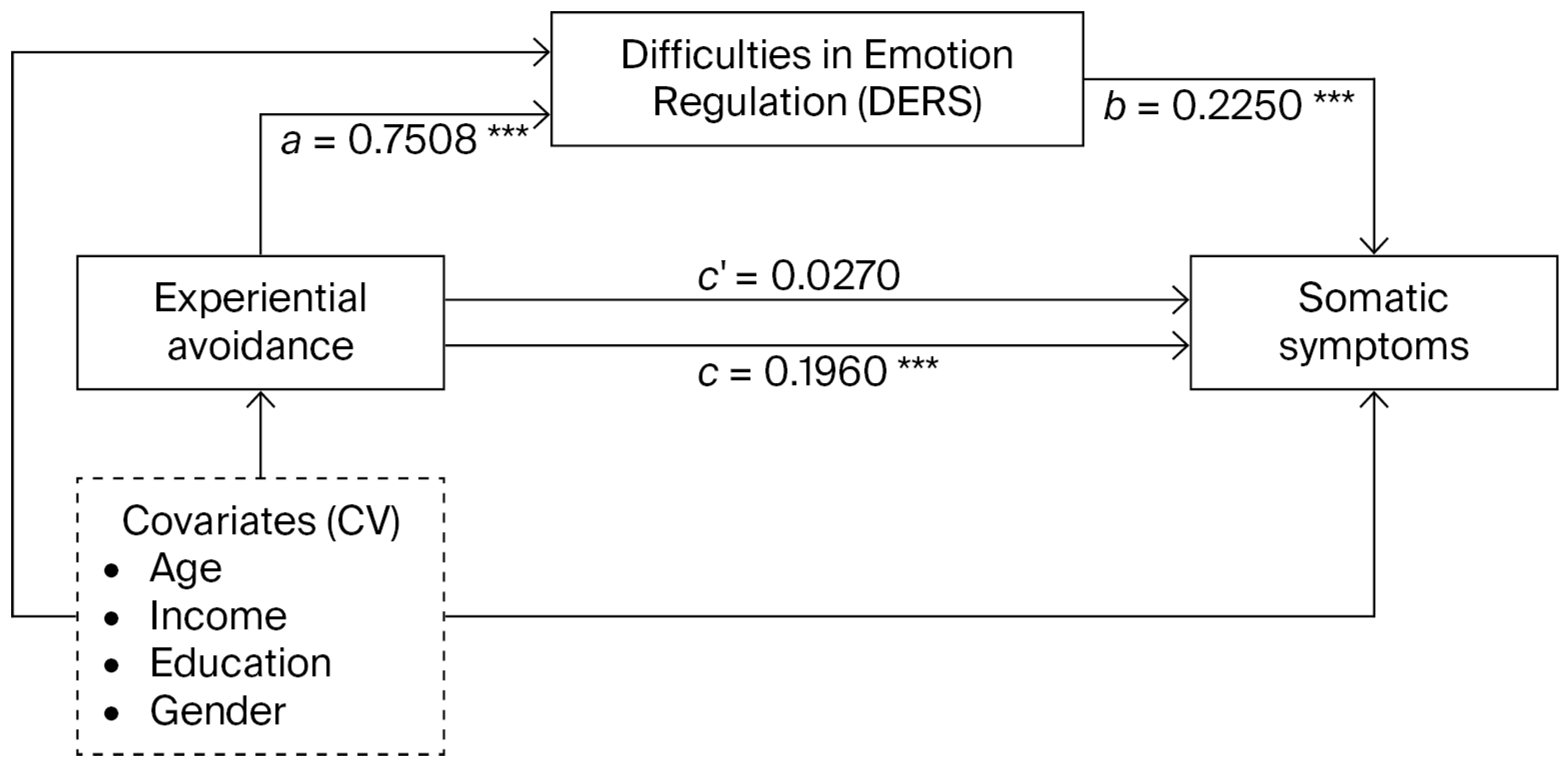
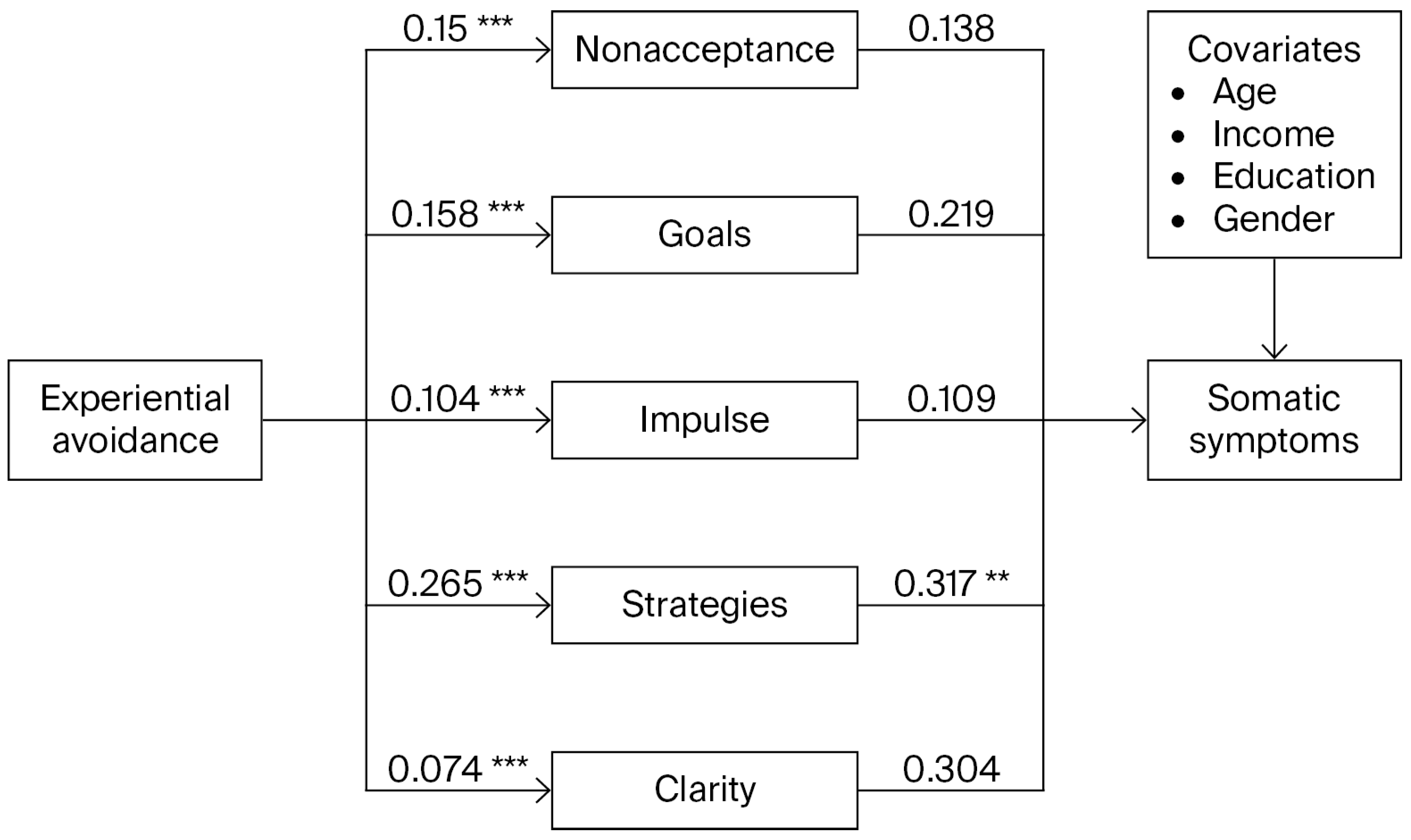
Experiential avoidance, defined as unwillingness to deal with personal experiences such as thoughts, emotions, and memories, is closely related to difficulties in emotion regulation. This is because emotional awareness and acceptance are crucial for regulating distressing feelings. Somatic symptoms, referring to bodily sensations such as headaches, nausea, and fatigue with or without any underlying medical condition, are frequently reported among individuals with avoided or dysregulated emotional burden. This cross-sectional correlational study aimed to examine the mediating role of emotion regulation difficulties in the relationship between experiential avoidance and somatic symptoms; we used a sample size of 397 individuals recruited from a non-clinical population with the convenience sampling technique. The measurement instruments were the Brief Experiential Avoidance Questionnaire (BEAQ), Somatic Symptom Scale (SSS-8), and Difficulties in Emotion Regulation Scale (DERS-16). Statistical analysis was conducted using the IBM SPSS 29 statistical program and the SPSS Process Macro 4.2 extension. The results indicate that difficulties in emotion regulation mediated the relationship between experiential avoidance and somatic symptoms controlling for age, education, gender and perceived income and all variables were significantly correlated with each other, including subscales of difficulties in emotion regulation. Limited access to emotion regulation strategies was subscale with an indirect effect on the association between experiential avoidance and somatic symptoms. These findings are expected to guide mental health professionals in consulting clients with somatic symptoms and emotion regulation difficulties.
Keywords: somatic symptoms; experiential avoidance; difficulties in emotion regulation somatic symptoms; experiential avoidance; difficulties in emotion regulation