Article

Investigating Oral Health Information Avoidance Among Chinese Young Adults: The Roles of Subjective Norms, Message Fatigue, and Loss Aversion—A Cross-Sectional Study


1
College of Media and Communication, Peking University, Beijing 100871, China
2
School of Journalism and Communication, Central China Normal University, Wuhan 430079, China
3
School of Journalism and Communication, Beijing Institute of Graphic Communication, Beijing 102699, China
4
School of Journalism and Communication, Xiamen University, Xiamen 361005, China
*
Author to whom correspondence should be addressed.
Behav. Sci. 2026, 16(5), 704; https://doi.org/10.3390/bs16050704
Submission received: 25 March 2026 / Revised: 28 April 2026 / Accepted: 29 April 2026 / Published: 4 May 2026
(This article belongs to the Section Health Psychology)

Abstract

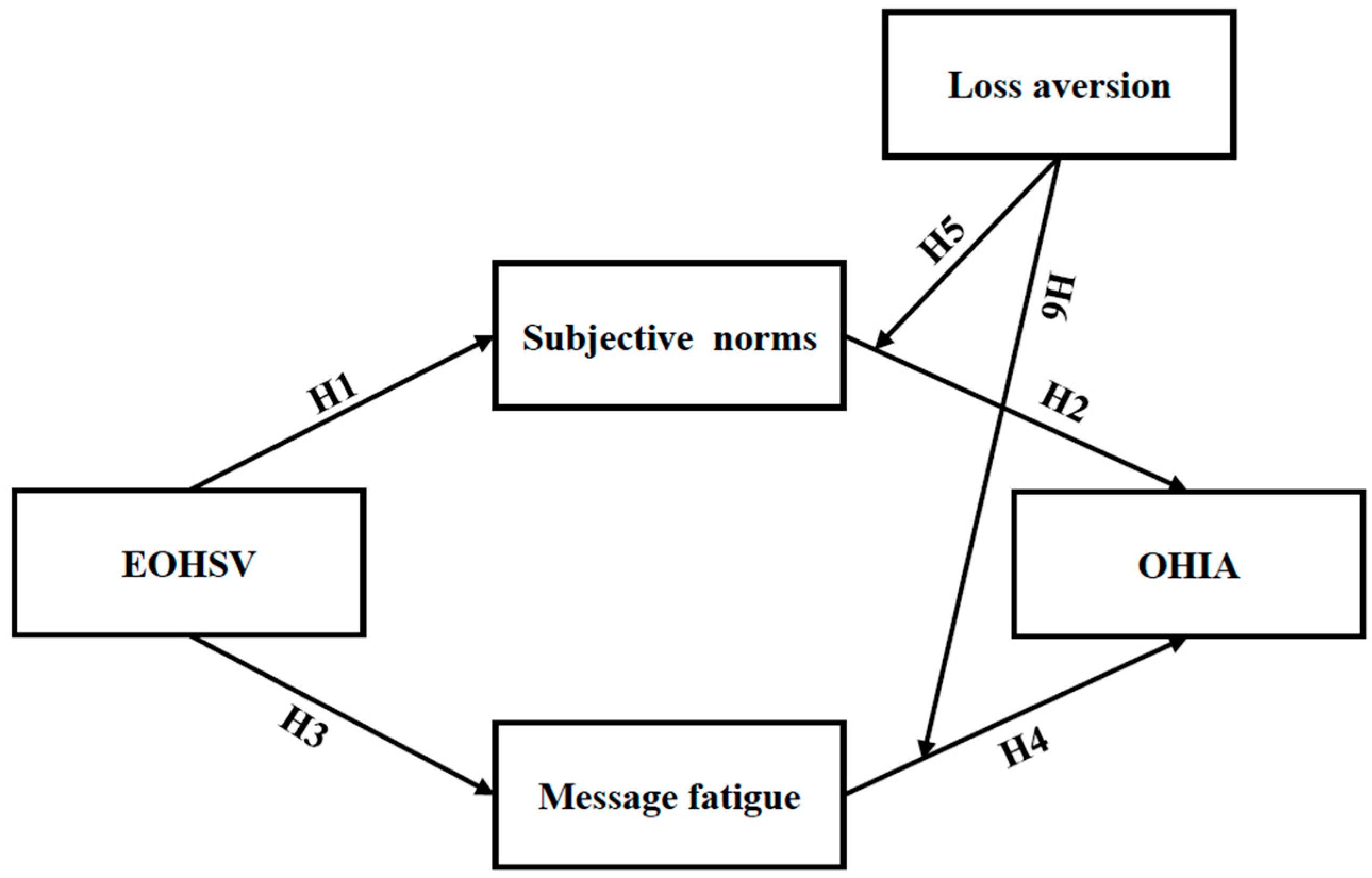
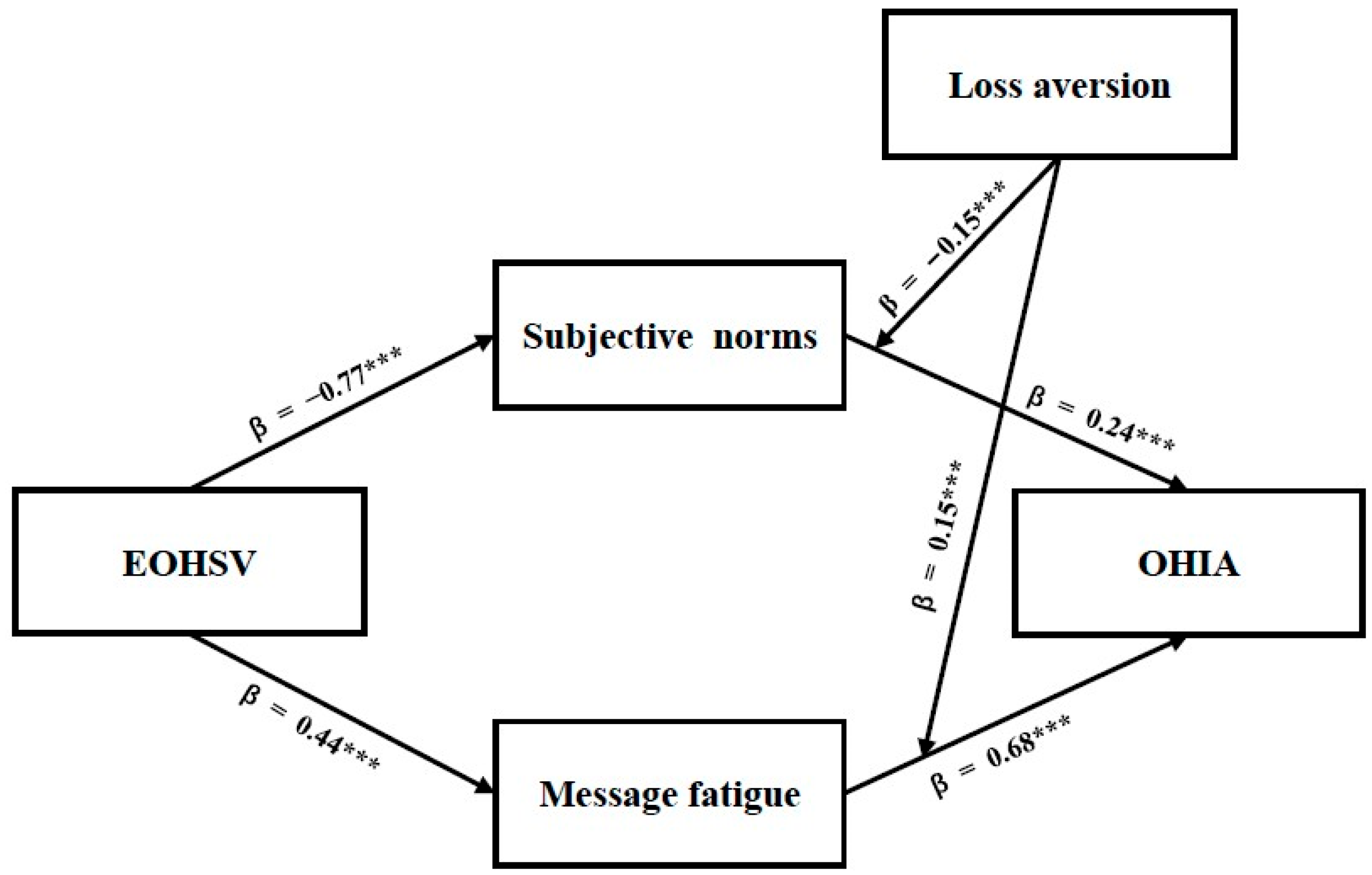
As media users increasingly engage in defensive avoidance or disengagement from health-related content, oral health information has attracted growing attention, particularly given the tendency of Chinese young adults to avoid such content. This avoidance may constrain oral health awareness and related practices. Guided by Prospect Theory, the current study examines the association between engagement with oral health short videos and oral health information avoidance among Chinese young adults, and further investigates the mediating roles of subjective norms and message fatigue, as well as the moderating role of loss aversion. Data were collected from 10 December 2025, to 10 February 2026, via an online questionnaire, yielding 306 valid responses from Chinese young adults aged 18–35. All variables were measured using five-point Likert scales. Analyses were conducted using Jamovi 2.6.44 and SPSS 29.0. Reliability and validity were assessed, and direct and indirect associations, as well as moderation effects, were examined using bootstrapping with 2000 resamples. Engagement with oral health short videos was positively associated with message fatigue. Message fatigue mediated the association between engagement and oral health information avoidance. In addition, loss aversion moderated the relationship between message fatigue and oral health information avoidance. Health promoters (i.e., content creators) and oral health professionals should adopt targeted strategies to enhance communication effectiveness. Excessive algorithm-driven exposure that is misaligned with users’ needs should be minimized. Incorporating gain-framed and supportive messaging may reduce perceived pressure and improve receptivity to oral health content.
Keywords: oral health; health information avoidance; prospect theory; short-form video; message fatigue; survey oral health; health information avoidance; prospect theory; short-form video; message fatigue; survey