Article

Experiencing, Regulating, and Expressing Emotions: Gendered and Agentic Pathways of Emotional Labor in Human Services

1
School of Government, Beijing Normal University, Beijing 100875, China
2
School of Sociology, Nankai University, 38 Tongyan Road, Tianjin 300350, China
*
Author to whom correspondence should be addressed.
Behav. Sci. 2025, 15(9), 1245; https://doi.org/10.3390/bs15091245
Submission received: 21 May 2025 / Revised: 19 August 2025 / Accepted: 10 September 2025 / Published: 12 September 2025
(This article belongs to the Section Organizational Behaviors)

Abstract

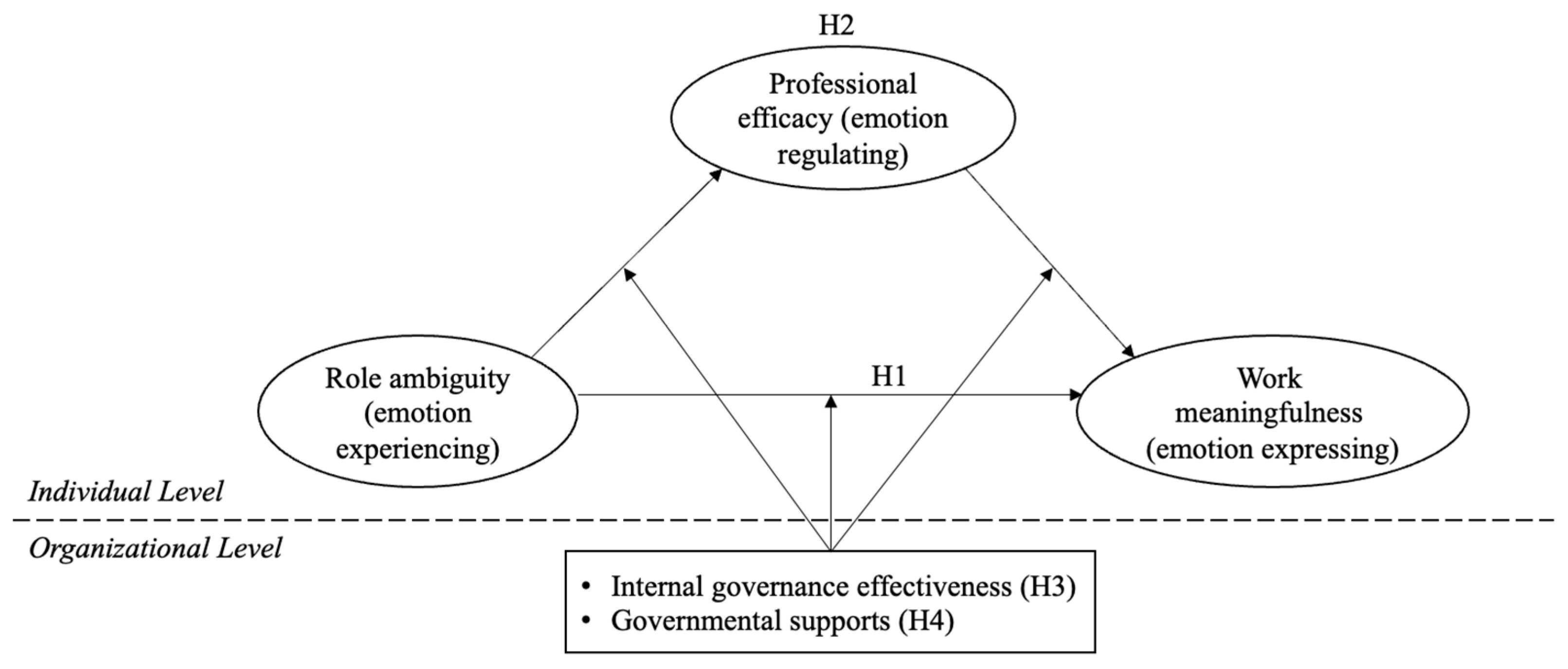
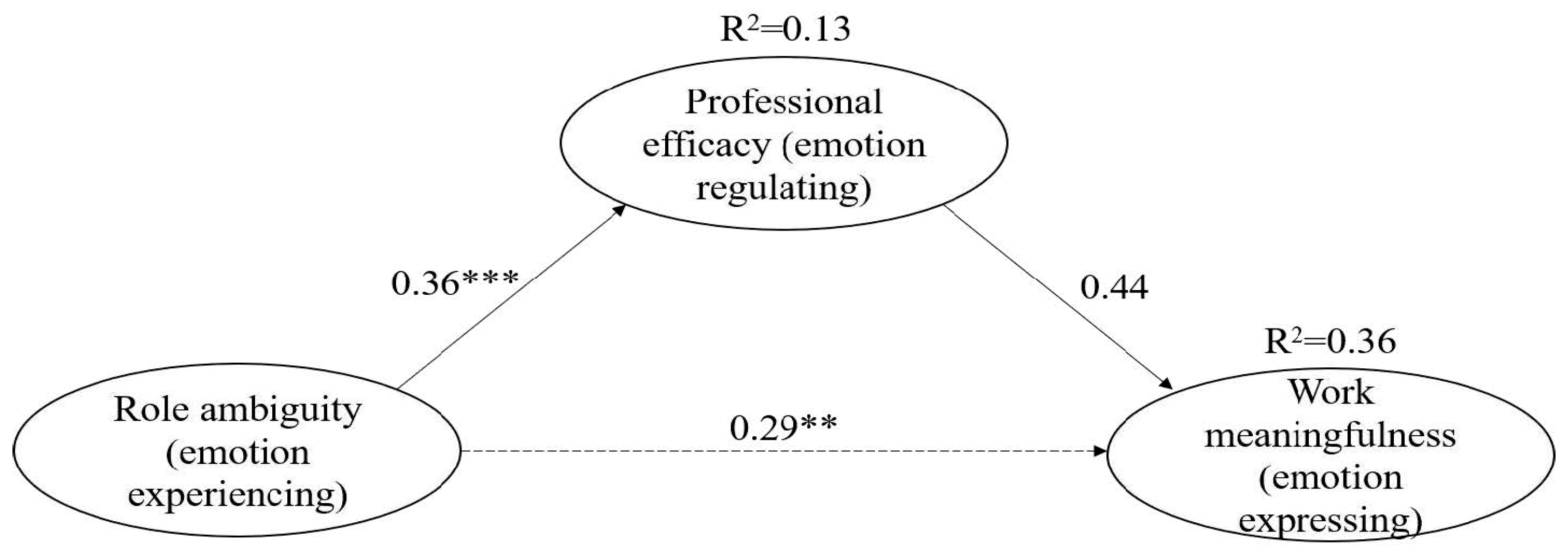
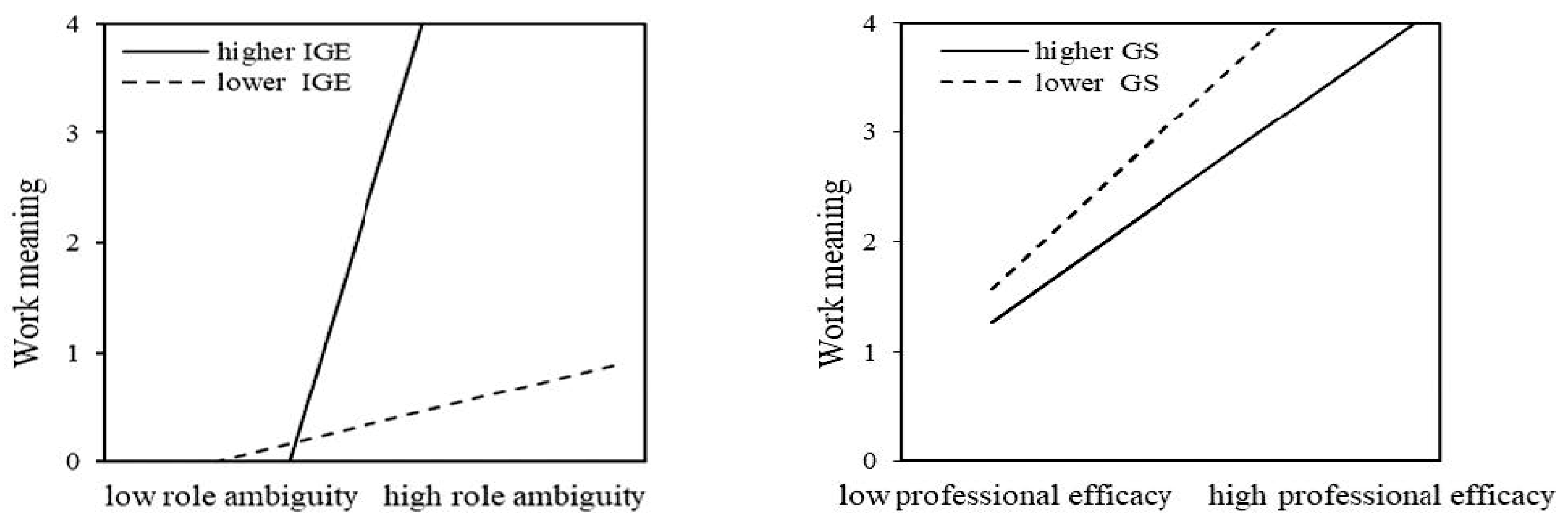
The expansion of emotional labor into the human services sector has raised concerns about emotional exhaustion and gender inequality, yet the potential for emotional work to serve as a source of motivation and meaning remains underexplored. This study reconceptualizes emotional labor as a dynamic, agentic process encompassing three stages: experiencing, regulating, and expressing emotion. Drawing on a nationally representative, multi-source dataset from the first round of the China Social Work Longitudinal Study (N = 5965), we examine how this emotional process unfolds differently by gender and how professional efficacy mediates the relationship between role ambiguity and work meaningfulness. We further explore how organizational governance—specifically internal governance and governmental support—moderates these relationships. Our findings reveal that women demonstrate stronger emotional regulation and derive greater work meaningfulness through professional efficacy, particularly under low governmental support, whereas men’s emotion processes are more direct and enhanced by organizational governance. These results underscore the importance of gender-sensitive and organizationally informed approaches to managing emotional labor. By integrating gendered agency and institutional context, this study offers a new framework for understanding emotional work and vocational development in the human services sector.
Keywords: emotional labor; gender; professional efficacy; work meaningfulness; humanistic management; human services emotional labor; gender; professional efficacy; work meaningfulness; humanistic management; human services