Advancing School Behavioral Health Implementation: A Critical Review Using ISF 2.0
 , , , ,
Abstract
1. Introduction
1.1. School Behavioral Health Implementation
1.2. Implementation Frameworks for SBH
1.3. Current Review
- (1)
- Provide a broad overview of the status of the field of school behavioral health, specifically identifying best practices and limitations of its implementation;
- (2)
- Critically evaluate this synthesized literature through the lens of the ISF 2.0 in order to determine what works best across the systems involved in SBH implementation;
- (3)
- Develop an initial set of guiding questions and demonstrate the potential of their application to evaluating three current SBH implementation support efforts.
2. Method
2.1. Selection Process
2.1.1. Literature Review
2.1.2. Case Examples
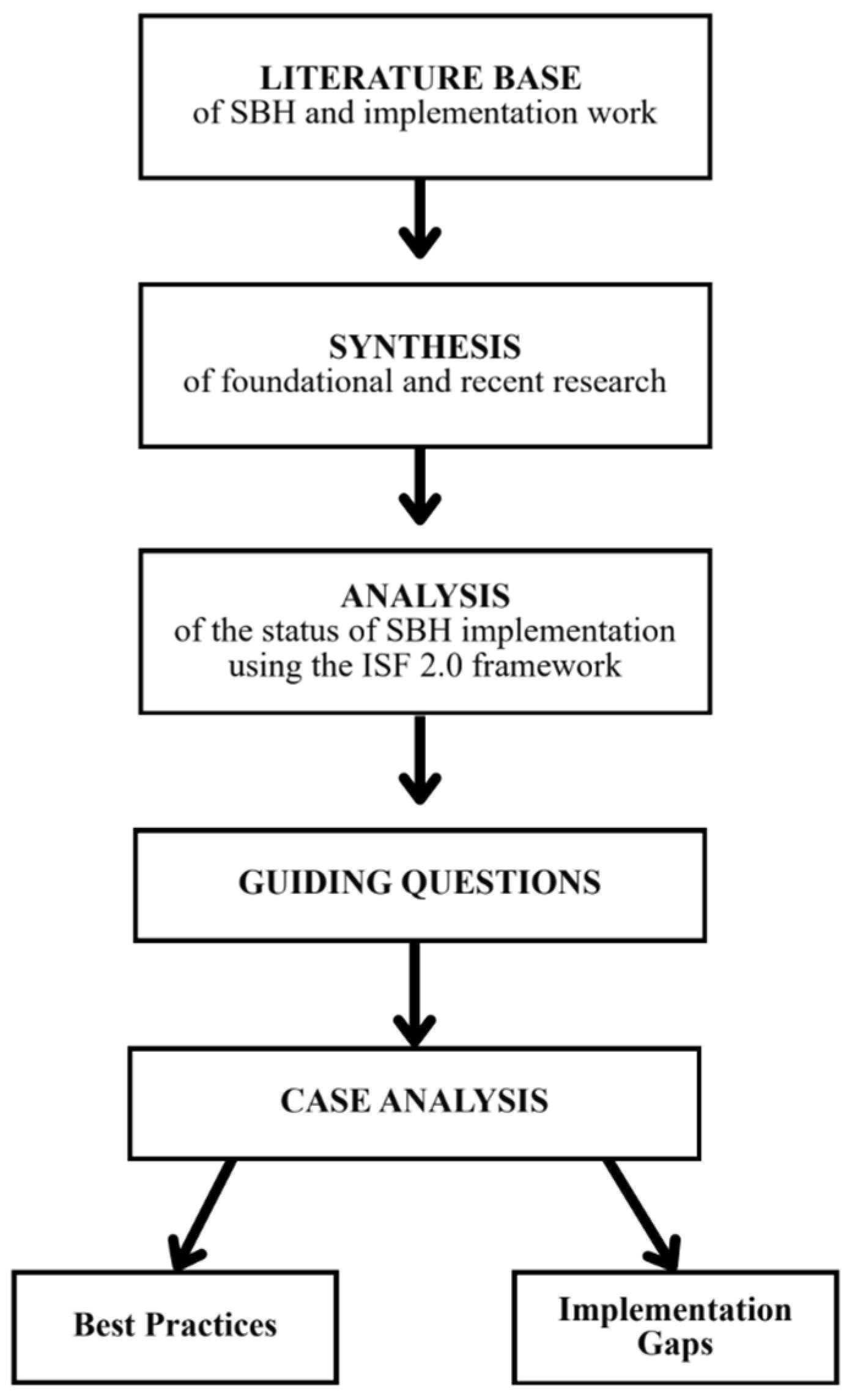
2.2. Procedure
3. Synthesis of Current SBH Implementation Efforts
3.1. Implementation Barriers
3.2. Best Practice Strategies
3.3. Limitations in Existing Literature
4. Analysis of SBH Implementation Efforts Through the ISF 2.0 Lens
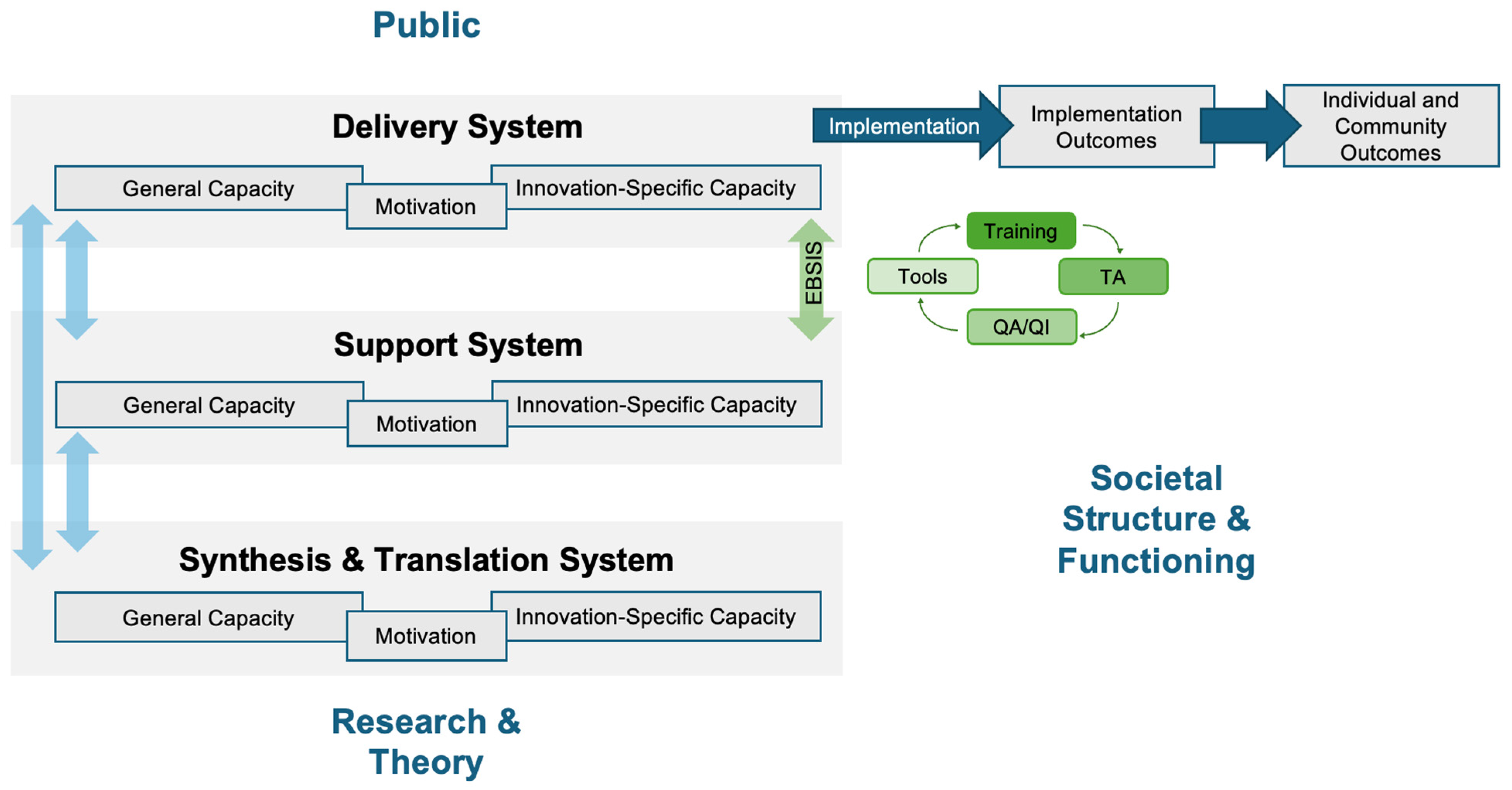
4.1. Interpretative Lens: ISF 2.0
4.2. Interpretation of SBH Implementation Through ISF 2.0
4.2.1. Delivery System
4.2.2. Support System
4.2.3. Synthesis and Translation System
4.2.4. System Interactions
5. Application of ISF 2.0: Three Illustrative Case Examples from SBH Training and Technical Assistance Centers
5.1. National Center for School Mental Health
5.1.1. Synthesis and Translation
5.1.2. Implementation Support
5.1.3. Cross-System Interaction
5.1.4. Opportunities for Enhanced Alignment
5.2. Center on Positive Behavioral Interventions and Supports
5.2.1. Synthesis and Translation
5.2.2. Implementation Support
5.2.3. Cross-System Interaction
5.2.4. Opportunities for Enhanced Alignment
5.3. South Carolina School Behavioral Health Academy
5.3.1. Synthesis and Translation
5.3.2. Implementation Support
5.3.3. Cross-System Interaction
5.3.4. Opportunities for Enhanced Alignment
6. Discussion
6.1. Limitations
6.2. Future Research Directions
6.3. Driving Solutions: A Call to Action
6.3.1. Delivery System
6.3.2. Support System
6.3.3. Synthesis and Translation System
6.3.4. Cross-System Collaboration
7. Conclusions
Supplementary Materials
Author Contributions
Funding
Institutional Review Board Statement
Informed Consent Statement
Data Availability Statement
Conflicts of Interest
Abbreviations
| SBH | School Behavioral Health |
| ISF | Interactive Systems Framework for Dissemination and Implementation |
| EBP | Evidence-Based Practice |
| TTA | Training and technical assistance |
| CBPR | Community-based participatory research |
| CFIR | Consolidated Framework for Implementation Research |
| GTO | Getting To Outcomes |
| IKT | Integrated knowledge translation |
| QI | Quality Improvement |
| NCSMH | National Center for School Mental Health |
| PBIS | Positive Behavioral Interventions and Supports |
| SBHA | School Behavioral Health Academy |
| LMS | Learning management system |
References
- Albers, B., Mildon, R., Lyon, A. R., & Shlonsky, A. (2017). Implementation frameworks in child, youth and family services—Results from a scoping review. Children and Youth Services Review, 81, 101–116. [Google Scholar] [CrossRef] [Scilit]
- Aldridge, W. A., Roppolo, R. H., Brown, J., Bumbarger, B. K., & Boothroyd, R. I. (2023). Mechanisms of change in external implementation support: A conceptual model and case examples to guide research and practice. Implementation Research and Practice, 4, 26334895231179761. [Google Scholar] [CrossRef] [Scilit] [PubMed]
- Baffsky, R., Ivers, R., Cullen, P., Wang, J., McGillivray, L., & Torok, M. (2023). Strategies for enhancing the implementation of universal mental health prevention programs in schools: A systematic review. Prevention Science, 24(2), 337–352. [Google Scholar] [CrossRef] [Scilit] [PubMed]
- Balis, L. E., Palmer, S., Isack, M., & Yaroch, A. L. (2025). Barriers and facilitators to program evaluation and dissemination: A qualitative study to inform implementation strategies. Health Promotion Practice, 27(5), 988–1000. [Google Scholar] [CrossRef] [Scilit] [PubMed]
- Barrett, S., Eber, L., & Weist, M. D. (2013). Advancing education effectiveness: An interconnected systems framework for positive behavioral interventions and supports (PBIS) and school mental health. Center for Positive Behavioral Interventions and Supports (funded by the Office of Special Education Programs, U.S. Department of Education). University of Oregon Press. [Google Scholar]
- Bartlett, R., Wright, T., Olarinde, T., Holmes, T., Beamon, E. R., & Wallace, D. (2017). Schools as sites for recruiting participants and implementing research. Journal of Community Health Nursing, 34(2), 80–88. [Google Scholar] [CrossRef] [Scilit] [PubMed]
- Beidas, R. S., Boyd, M., Casline, E., Scott, K., Patel-Syed, Z., Mills, C., Mustanski, B., Schriger, S., Williams, F. S., Waller, C., Helseth, S. A., & Becker, S. J. (2025). Harnessing implementation science in clinical psychology: Past, present, and future. Annual Review of Clinical Psychology, 21(1), 529–555. [Google Scholar] [CrossRef] [Scilit] [PubMed]
- Bennett, K., Manassis, K., Duda, S., Bagnell, A., Bernstein, G. A., Garland, E. J., Miller, L. D., Newton, A., Thabane, L., & Wilansky, P. (2015). Preventing child and adolescent anxiety disorders: Overview of systematic review. Depression and Anxiety, 32(12), 909–918. [Google Scholar] [CrossRef] [Scilit] [PubMed]
- Bohnenkamp, J., Robinson, P., Connors, E., Carter, T., Orenstein, S., Reaves, S., Hoover, S., & Lever, N. (2024). Improving school mental health via national learning collaboratives with state and local teams: Components, feasibility, and initial impacts. Evaluation & the Health Professions, 47(4), 402–419. [Google Scholar] [CrossRef] [Scilit] [PubMed]
- Boothroyd, R. I., Flint, A. Y., Lapiz, A. M., Lyons, S., Jarboe, K. L., & Aldridge, W. A. (2017). Active involved community partnerships: Co-creating implementation infrastructure for getting to and sustaining social impact. Translational Behavioral Medicine, 7(3), 467–477. [Google Scholar] [CrossRef] [Scilit] [PubMed]
- Brann, K. L., Naser, S. C., Splett, J. W., & DiOrio, C. A. (2021). A mixed-method analysis of the implementation process of universal screening in a tiered health system. Psychology in the Schools, 58, 2089–2113. [Google Scholar] [CrossRef] [Scilit]
- Bruhn, A. L., Lane, K. L., & Hirsch, S. E. (2014). A review of tier 2 interventions conducted within multitiered models of behavioral prevention. Journal of Emotional and Behavioral Disorders, 22(3), 171–189. [Google Scholar] [CrossRef] [Scilit]
- Bumbarger, B. K., Moore, J. E., & Crane, M. E. (2024). Evidence-based implementation support: Considering motivation and capacity within the ecosystem of training and technical assistance. Evaluation and the Health Professions, 47(4), 488–493. [Google Scholar] [CrossRef] [Scilit] [PubMed]
- Center on PBIS. (2026). Back to school 2026! Available online: https://www.pbis.org/ (accessed on 15 April 2026).
- Cho Blair, K. S., Park, E. Y., & Kim, W. H. (2021). A meta-analysis of Tier 2 interventions implemented within school-wide positive behavioral interventions and supports. Psychology in the Schools, 58(1), 141–161. [Google Scholar] [CrossRef] [Scilit]
- Coates, A. G., Knott, H., Collins, D., Parrish, L., McQuillin, S. D., & Weist, M. D. (2024). The South Carolina school behavioral health academy. Communique, 53(3), 31–33. [Google Scholar]
- Collier-Meek, M. A., Fallon, L. M., & DeFouw, E. R. (2017). Toward feasible implementation support: E-mailed prompts to promote teachers’ treatment integrity. School Psychology Review, 46(4), 379–394. [Google Scholar] [CrossRef] [Scilit]
- Collier-Meek, M. A., Sanetti, L. M. H., & Boyle, A. M. (2016). Providing feasible implementation support: Direct training and implementation planning in consultation. School Psychology Forum: Research in Practice, 10(1), 106–119. [Google Scholar]
- Collins, S. E., Clifasefi, S. L., Stanton, J., Straits, K. J., Gil-Kashiwabara, E., Rodriguez Espinosa, P., Nicasio, A. V., Andrasik, M. P., Hawes, S. M., Miller, K. A., Nelson, L. A., Orfaly, V. E., Duran, B. M., & Wallerstein, N. (2018). Community-based participatory research (CBPR): Towards equitable involvement of community in psychology research. American Psychologist, 73(7), 884. [Google Scholar] [CrossRef] [Scilit] [PubMed]
- Connors, E. H., Smith-Millman, M., Bohnenkamp, J. H., Carter, T., Lever, N., & Hoover, S. A. (2020). Can we move the needle on school mental health quality through systematic quality improvement collaboratives? School Mental Health, 12, 478–492. [Google Scholar] [CrossRef] [Scilit] [PubMed]
- Cook, C. R., Lyon, A. R., Locke, J., Waltz, T., & Powell, B. J. (2019). Adapting a compilation of implementation strategies to advance school-based implementation research and practice. Prevention Science, 20, 914–935. [Google Scholar] [CrossRef] [Scilit] [PubMed]
- Damschroder, L. J., Reardon, C. M., Opra Widerquist, M. A., & Lowery, J. (2022). Conceptualizing outcomes for use with the consolidated framework for implementation research (CFIR): The CFIR outcomes addendum. Implementation Science, 17(1), 7. [Google Scholar] [CrossRef] [Scilit] [PubMed]
- Duda, M. A., & Barrett, S. (2013). Coaching for competence and impact. Brief 1: Defining coaching. Center on PBIS. Available online: https://www.pbis.org/resource/coaching-for-competence-and-impact-brief-1-defining-coaching (accessed on 15 April 2026).
- Duda, M. A., & Barrett, S. (2014). Coaching for competence and impact: Coaching inventory discussion tool. Center on PBIS. Available online: https://www.pbis.org/resource/coaching-for-competence-and-impact-coaching-inventory-discussion-tool (accessed on 15 April 2026).
- Durlak, J. A., & DuPre, E. P. (2008). Implementation matters: A review of research on the influence of implementation on program outcomes and the factors affecting implementation. American Journal of Community Psychology, 41(3), 327–350. [Google Scholar] [CrossRef] [Scilit] [PubMed]
- Durlak, J. A., Mahoney, J. L., & Boyle, A. E. (2022). What we know, and what we need to find out about universal, school-based social and emotional learning programs for children and adolescents: A review of meta-analyses and directions for future research. Psychological Bulletin, 148(11–12), 765. [Google Scholar] [CrossRef] [Scilit]
- Durlak, J. A., Weissberg, R. P., Dymnicki, A. B., Taylor, R. D., & Schellinger, K. B. (2011). The impact of enhancing students’ social and emotional learning: A meta-analysis of school-based universal interventions. Child Development, 82(1), 405–432. [Google Scholar] [CrossRef] [Scilit] [PubMed]
- Eccles, M. P., & Mittman, B. S. (2006). Welcome to implementation science. Implementation Science, 1, 1. [Google Scholar] [CrossRef] [Scilit]
- Engell, T., Stadnick, N. A., Aarons, G. A., & Barnett, M. L. (2023). Common elements approaches to implementation research and practice: Methods and integration with intervention science. Global Implementation Research and Applications, 3(1), 1–15. [Google Scholar] [CrossRef] [Scilit] [PubMed]
- Ennis, R. P., Royer, D. J., Lane, K. L., & Dunlap, K. D. (2020). The impact of coaching on teacher-delivered behavior-specific praise in Pre-K-12 settings: A systematic review. Behavioral Disorders, 45(3), 148–166. [Google Scholar] [CrossRef] [Scilit]
- Evans, S. W., Randy Koch, J., Brady, C., Meszaros, P., & Sadler, J. (2013). Community and school mental health professionals’ knowledge and use of evidence based substance use prevention programs. Administration and Policy in Mental Health and Mental Health Services Research, 40(4), 319–330. [Google Scholar] [CrossRef] [Scilit] [PubMed]
- Evans, S. W., Simonsen, B., & Dolan, G. (2017). School level practices. In S. Barrett, L. Eber, & M. Weist (Eds.), Advancing education effectiveness: Interconnecting school mental health and school-wide positive behavior support (pp. 46–57). Center on Positive Behavioral Interventions and Supports. [Google Scholar]
- Fetterman, D., Rodríguez-Campos, L., Wandersman, A., & O’Sullivan, R. G. (2014). Collaborative, participatory, and empowerment evaluation: Building a strong conceptual foundation for stakeholder involvement approaches to evaluation (A response to Cousins, Whitmore, and Shulha, 2013). American Journal of Evaluation, 35(1), 144–148. [Google Scholar] [CrossRef] [Scilit]
- Fetterman, D. M., & Wandersman, A. (Eds.). (2005). Empowerment evaluation principles in practice. Guilford Press. [Google Scholar]
- Flaspohler, P., Duffy, J., Wandersman, A., Stillman, L., & Maras, M. A. (2008). Unpacking prevention capacity: An intersection of research-to-practice models and community-centered models. American Journal of Community Psychology, 41(3), 182–196. [Google Scholar] [CrossRef] [Scilit] [PubMed]
- Flaspohler, P. D., Meehan, C., Maras, M. A., & Keller, K. E. (2012). Ready, willing, and able: Developing a support system to promote implementation of school-based prevention programs. American Journal of Community Psychology, 50, 428–444. [Google Scholar] [CrossRef] [Scilit] [PubMed]
- Forman, S. G., Olin, S. S., Hoagwood, K. E., Crowe, M., & Saka, N. (2009). Evidence-based interventions in schools: Developers’ views of implementation barriers and facilitators. School Mental Health, 1(1), 26–36. [Google Scholar] [CrossRef] [Scilit]
- Goh, A. E., & Bambara, L. M. (2012). Individualized positive behavior support in school settings: A meta-analysis. Remedial and Special Education, 33(5), 271–286. [Google Scholar] [CrossRef] [Scilit]
- Graham, I. D., Logan, J., Harrison, M. B., Straus, S. E., Tetroe, J., Caswell, W., & Robinson, N. (2006). Lost in knowledge translation: Time for a map? Journal of Continuing Education in the Health Professions, 26(1), 13–24. [Google Scholar] [CrossRef] [Scilit] [PubMed]
- Grant, S., Schweer-Collins, M., Day, E., Trevino, S. D., Steinka-Fry, K., & Tanner-Smith, E. E. (2025). Effectiveness of school-based depression prevention interventions: An overview of systematic reviews with meta-analyses on depression outcomes. Journal of Consulting and Clinical Psychology, 93(4), 194–212. [Google Scholar] [CrossRef] [Scilit] [PubMed]
- Green, B. N., Johnson, C. D., & Adams, A. (2006). Writing narrative literature reviews for peer-reviewed journals: Secrets of the trade. Journal of Chiropractic Medicine, 5(3), 101–117. [Google Scholar] [CrossRef] [Scilit] [PubMed]
- Green, L. W. (2008). Making research relevant: If it is an evidence-based practice, where’s the practice-based evidence? Family Practice, 25(Suppl. S1), i20–i24. [Google Scholar] [CrossRef] [Scilit] [PubMed]
- Gregory, A. T., & Denniss, A. R. (2018). An introduction to writing narrative and systematic reviews—Tasks, tips and traps for aspiring authors. Heart, Lung & Circulation, 27(7), 893–898. [Google Scholar] [CrossRef] [Scilit] [PubMed]
- Hanson, R. F., Self-Brown, S., Rostad, W. L., & Jackson, M. C. (2016). The what, when, and why of implementation frameworks for evidence-based practices in child welfare and child mental health service systems. Child Abuse & Neglect, 53, 51–63. [Google Scholar] [CrossRef] [Scilit] [PubMed]
- Heatly, M. C., Nichols-Hadeed, C., Stiles, A. A., & Alpert-Gillis, L. (2023). Implementation of a school mental health learning collaborative model to support cross-sector collaboration. School Mental Health, 15, 384–401. [Google Scholar] [CrossRef] [Scilit]
- Herlitz, L., MacIntyre, H., Osborn, T., & Bonell, C. (2020). The sustainability of public health interventions in schools: A systematic review. Implementation Science, 15(1), 4. [Google Scholar] [CrossRef] [Scilit] [PubMed]
- Hoffmann, J. A., Alegría, M., Alvarez, K., Anosike, A., Shah, P. P., Simon, K. M., & Lee, L. K. (2022). Disparities in pediatric mental and behavioral health conditions. Pediatrics, 150(4), e2022058227. [Google Scholar] [CrossRef] [Scilit] [PubMed]
- Hoover, S., & Bostic, J. (2021). Schools as a vital component of the child and adolescent mental health system. Psychiatric Services, 72(1), 37–48. [Google Scholar] [CrossRef] [Scilit] [PubMed]
- Hoover, S., Scardamalia, K., Reaves, S., Charlot-Swilley, D., Trainor, K., Morgan, O., & Bostic, J. (2023). Organizational well-being inventory for schools (OWBI-S). Central East Mental Health Technology Transfer Center, in Partnership with the University of Maryland School of Medicine and Georgetown MedStar University Hospital. Available online: https://www.theshapesystem.com/ (accessed on 15 April 2026).
- Institute of Medicine. (1994). Reducing risks for mental disorders: Frontiers for preventive intervention research. National Academy Press. [Google Scholar]
- Khan, S., Mnalili, K., & Moore, J. E. (2024). White paper: Core competencies and functions of implementation support practitioners. The Center for Implementation. Available online: https://thecenterforimplementation.com/toolbox/white-paper-core-competencies-and-functions-of-implementation-support-practitioners (accessed on 15 April 2026).
- Konstantinidou, I., Dillenburger, K., & Ramey, D. (2023). Positive behaviour support: A systematic literature review of the effect of staff training and organisational behaviour management. International Journal of Developmental Disabilities, 69(1), 29–44. [Google Scholar] [CrossRef] [Scilit] [PubMed]
- Krach, S. K., McCreery, M. P., Monk, M. M., & Bagneris, J. R. (2025). Fidelity in school-based positive behavioral interventions and supports: Current status of compliance. Journal of School Health, 95(4–5), 295–306. [Google Scholar] [CrossRef] [Scilit] [PubMed]
- Langley, A. K., Nadeem, E., Kataoka, S. H., Stein, B. D., & Jaycox, L. H. (2010). Evidence-based mental health programs in schools: Barriers and facilitators of successful implementation. School Mental Health, 2(3), 105–113. [Google Scholar] [CrossRef] [Scilit] [PubMed]
- Lee, D. C., O’Brien, K. M., Presseau, J., Yoong, S., McCrabb, S., McDiarmid, K., Lecathelinais, C., Wolfenden, L., & Hodder, R. K. (2026). Identifying effective behavior change techniques in interventions for enhancing the implementation of school-based policies and/or practices to prevent chronic disease in students: A secondary analysis of a systematic review. Translational Behavioral Medicine, 16(1), ibaf087. [Google Scholar] [CrossRef] [Scilit] [PubMed]
- Leeb, R. T., Danielson, M. L., Claussen, A. H., Robinson, L. R., Lebrun-Harris, L. A., Ghandour, R., Bitsko, R. H., Katz, S. M., Kaminski, J. W., & Brown, J. (2024). Trends in mental, behavioral, and developmental disorders among children and adolescents in the US, 2016–2021. Preventing Chronic Disease, 21, E96. [Google Scholar] [CrossRef] [Scilit] [PubMed]
- Lewis-Palmer, T., Barrett, S., & Lewis. (2004). Coaches self-assessment. Center on PBIS. Available online: https://www.pbis.org/resource/coaches-self-assessment (accessed on 15 April 2026).
- Litvitskiy, N. S., Resnick, M., Hall, M., & Flaspohler, P. D. (2026, April 15–17). Core features of high school prevention programming: A systemized literature review. Oral presentation at the 13th Annual Southeastern School Behavioral Health Conference, Greenville, SC, USA. [Google Scholar]
- Lyon, A. R., & Bruns, E. J. (2019). From evidence to impact: Joining our best school mental health practices with our best implementation strategies. School Mental Health, 11(1), 106–114. [Google Scholar] [CrossRef] [Scilit] [PubMed]
- Manning, A. R. (2009). Bridging the gap from availability to accessibility: Providing health and mental health services in schools. Journal of Evidence-Based Social Work, 6(1), 40–57. [Google Scholar] [CrossRef] [Scilit] [PubMed]
- March, A., Stapley, E., Hayes, D., Town, R., & Deighton, J. (2022). Barriers and facilitators to sustaining school-based mental health and wellbeing interventions: A systematic review. International Journal of Environmental Research and Public Health, 19(6), 3587. [Google Scholar] [CrossRef] [Scilit] [PubMed]
- McCrone, P. (2025). Debate: Where to next for universal school-based mental health interventions? Universal versus targeted school-based mental health interventions: A health economic perspective. Child and Adolescent Mental Health, 30(1), 99–101. [Google Scholar] [CrossRef] [Scilit] [PubMed]
- McIntosh, K., Massar, M. M., Algozzine, R. F., George, H. P., Horner, R. H., Lewis, T. J., & Swain-Bradway, J. (2017). Technical adequacy of the SWPBIS tiered fidelity inventory. Journal of Positive Behavior Interventions, 19(1), 3–13. [Google Scholar] [CrossRef] [Scilit]
- McIsaac, J. L. D., Penney, T. L., Storey, K. E., Sigfridson, L., Cunningham, J., Kuhle, S., & Kirk, S. F. (2018). Integrated knowledge translation in population health intervention research: A case study of implementation and outcomes from a school-based project. Health Research Policy and Systems, 16(1), 72. [Google Scholar] [CrossRef] [Scilit] [PubMed]
- Melde, C., Esbensen, F. A., & Tusinski, K. (2006). Addressing program fidelity using onsite observations and program provider descriptions of program delivery. Evaluation Review, 30(6), 714–740. [Google Scholar] [CrossRef] [Scilit] [PubMed]
- Merle, J. L., Thayer, A. J., Larson, M. F., Pauling, S., Cook, C. R., Rios, J. A., McGinnis, J. L., & Sullivan, M. M. (2022). Investigating strategies to increase general education teachers’ adherence to evidence-based social-emotional behavior practices: A meta-analysis of the single-case literature. Journal of School Psychology, 91, 1–26. [Google Scholar] [CrossRef] [Scilit] [PubMed]
- Merrill, K. G., Dougherty, A., Battalio, S. L., Hartstein, M. L., Silva, A., Moskowitz, D. A., De Pablo, M. G., Margellos-Anast, H., Baumann, A. A., Navalpakkam, P., Sandoval, A., Bailey, L., Chapman, M., DiCesare, J., Ortiz, E., Habibi, B., Bautista, B. A., Martinez, I., Wilson, N., … Martin, M. A. (2025). Implementing capacity-building initiatives addressing health equity through community–academic partnerships: A qualitative study. Translational Behavioral Medicine, 15(1), ibaf017. [Google Scholar] [CrossRef] [Scilit] [PubMed]
- Midwest PBIS. (n.d.). Midwest PBIS network: Positive behavioral interventions and supports. Available online: https://www.midwestpbis2.org/home (accessed on 15 April 2026).
- Moir, T. (2018). Why is implementation science important for intervention design and evaluation within educational settings? Frontiers in Education, 3, 61. [Google Scholar] [CrossRef] [Scilit]
- Mychailyszyn, M. P., Brodman, D. M., Read, K. L., & Kendall, P. C. (2012). Cognitive-behavioral school-based interventions for anxious and depressed youth: A meta-analysis of outcomes. Clinical Psychology: Science and Practice, 19(2), 129. [Google Scholar] [CrossRef] [Scilit]
- Newton, J. S., Algozzine, B., Algozzine, K., Horner, R. H., & Todd, A. W. (2011). Building local capacity for training and coaching data-based problem solving with Positive Behavior Intervention and Support teams. Journal of Applied School Psychology, 27(3), 228–245. [Google Scholar] [CrossRef] [Scilit]
- Oakes, W. P., Lane, K. L., & Germer, K. A. (2014). Developing the capacity to implement tier 2 and tier 3 supports: How do we support our faculty and staff in preparing for sustainability? Preventing School Failure: Alternative Education for Children and Youth, 58(3), 183–190. [Google Scholar] [CrossRef] [Scilit]
- Oddo, L. E., McLeod, B. D., Sutherland, K. S., Chow, J. C., Ledford, J. R., & Li, G. W. (2025). A novel approach to research synthesis with the distillation and matching model: Application to the prevention of youth social, emotional, and behavioral problems. Prevention Science, 26(1), 69–79. [Google Scholar] [CrossRef] [Scilit] [PubMed]
- Osher, D., Kidron, Y., Brackett, M., Dymnicki, A., Jones, S., & Weissberg, R. P. (2016). Advancing the science and practice of social and emotional learning: Looking back and moving forward. Review of Research in Education, 40(1), 644–681. [Google Scholar] [CrossRef] [Scilit]
- Owens, J. S., Lyon, A. R., Brandt, N. E., Warner, C. M., Nadeem, E., Spiel, C., & Wagner, M. (2014). Implementation science in school mental health: Key constructs in a developing research agenda. School Mental Health, 6(2), 99–111. [Google Scholar] [CrossRef] [Scilit] [PubMed]
- Pearrow, M. M., Amador, A., & Dennery, K. M. (2021). Community partnership consultation model: A consultative approach for supporting school-based behavioral health. Journal of Educational and Psychological Consultation, 31(1), 82–98. [Google Scholar] [CrossRef] [Scilit]
- Perkins, K. A., Figas, K., Westbrook, A., Barrett, S., Yanek, K., & Weist, M. D. (2026). Development and evaluation of a university-based external coaching program for school behavioral health. Behavioral Sciences, 16, 1391. [Google Scholar] [CrossRef] [Scilit] [PubMed]
- Pierce, J. D. (2025). Translating systems coaching research to practice. Teaching Exceptional Children, 57(4), 276–285. [Google Scholar] [CrossRef] [Scilit]
- Price, O. A., Long, M., Sadlon, R., & Sheriff, L. (2024). Enhancing school capacity to adopt school behavioural health best practices: A multiple-case study evaluation. Journal of Community & Applied Social Psychology, 34(1), e2759. [Google Scholar] [CrossRef] [Scilit]
- Rapport, F., Clay-Williams, R., Churruca, K., Shih, P., Hogden, A., & Braithwaite, J. (2018). The struggle of translating science into action: Foundational concepts of implementation science. Journal of Evaluation in Clinical Practice, 24(1), 117–126. [Google Scholar] [CrossRef] [Scilit] [PubMed]
- Richter, A., Sjunnestrand, M., Romare Strandh, M., & Hasson, H. (2022). Implementing school-based mental health services: A scoping review of the literature summarizing the factors that affect implementation. International Journal of Environmental Research and Public Health, 19(6), 3489. [Google Scholar] [CrossRef] [Scilit] [PubMed]
- Salimi, Y., Shahandeh, K., Malekafzali, H., Loori, N., Kheiltash, A., Jamshidi, E., Frouzan, A. S., & Majdzadeh, R. (2012). Is community-based participatory research (CBPR) useful? A systematic review on papers in a decade. International Journal of Preventive Medicine, 3(6), 386. [Google Scholar] [PubMed]
- Saunders, M. N. K., & Rojon, C. (2011). On the attributes of a critical literature review. Coaching: An International Journal of Theory, Research and Practice, 4(2), 156–162. [Google Scholar] [CrossRef] [Scilit]
- Scaccia, J. P., Cook, B. S., Lamont, A., Wandersman, A., Castellow, J., Katz, J., & Beidas, R. S. (2015). A practical implementation science heuristic for organizational readiness: R = MC2. Journal of Community Psychology, 43(4), 484–501. [Google Scholar] [CrossRef] [Scilit] [PubMed]
- Schäfer, S. K., Streit, S., Schäfer, C. G., Roembell, L. B., Corneli, M., Schaubruch, L. M., Wessa, M., Lieb, K., Equit, M., Fuhr, D., & STRESS-Care Consortium. (2025). Barriers and facilitators for the implementation of preventative mental health interventions among secondary schools in high-income countries: A systematic review. European Child & Adolescent Psychiatry, 34(12), 3713–3731. [Google Scholar] [CrossRef] [Scilit] [PubMed]
- Schmittdiel, J. A., Grumbach, K., & Selby, J. V. (2010). System-based participatory research in health care: An approach for sustainable translational research and quality improvement. The Annals of Family Medicine, 8(3), 256–259. [Google Scholar] [CrossRef] [Scilit] [PubMed]
- Sklad, M., Diekstra, R., Ritter, M. D., Ben, J., & Gravesteijn, C. (2012). Effectiveness of school-based universal social, emotional, and behavioral programs: Do they enhance students’ development in the area of skill, behavior, and adjustment? Psychology in the Schools, 49(9), 892–909. [Google Scholar] [CrossRef] [Scilit]
- Solomon, B. G., Klein, S. A., & Politylo, B. C. (2012). The effect of performance feedback on teachers’ treatment integrity: A meta-analysis of the single-case literature. School Psychology Review, 41(2), 160–175. [Google Scholar] [CrossRef] [Scilit]
- South Carolina School Behavioral Health Academy. (2024). The South Carolina school behavioral health academy seeks to help districts respond to the youth mental health crisis by integrating behavioral health into the multi-tiered system of supports (MTSS). Available online: https://scsbha.org/ (accessed on 15 April 2026).
- Splett, J. W., Perales, K., Miller, E., Hartley, S. N., Wandersman, A., Halliday, C. A., & Weist, M. D. (2022). Using readiness to understand implementation challenges in school mental health research. Journal of Community Psychology, 50(7), 3101–3121. [Google Scholar] [CrossRef] [Scilit] [PubMed]
- Stanford Medicine. (n.d.). 508 compliant implementation guidance modules. Available online: https://stanfordmedicine.app.box.com/s/y2wsf7knalarx5dj8sb90ozivoj06pt4 (accessed on 15 April 2026).
- Stormont, M., Reinke, W. M., Newcomer, L., Marchese, D., & Lewis, C. (2015). Coaching teachers’ use of social behavior interventions to improve children’s outcomes: A review of the literature. Journal of Positive Behavior Interventions, 17(2), 69–82. [Google Scholar] [CrossRef] [Scilit]
- Sugai, G., & Horner, R. R. (2006). A promising approach for expanding and sustaining school-wide positive behavior support. School Psychology Review, 35(2), 245–259. [Google Scholar] [CrossRef] [Scilit]
- Sugai, G., & LaMaster, D. (2015). PBIS forum 15 practice brief: District level coaching. Center on PBIS. Available online: https://www.pbis.org/resource/district-level-coaching (accessed on 15 April 2026).
- Sukhera, J. (2022). Narrative reviews: Flexible, rigorous, and practical. Journal of Graduate Medical Education, 14(4), 414–417. [Google Scholar] [CrossRef] [Scilit] [PubMed]
- Taylor, R. D., Oberle, E., Durlak, J. A., & Weissberg, R. P. (2017). Promoting positive youth development through school-based social and emotional learning interventions: A meta-analysis of follow-up effects. Child Development, 88(4), 1156–1171. [Google Scholar] [CrossRef] [Scilit] [PubMed]
- University of Maryland. (2026). National center for school mental health (NCSMH). Available online: https://www.schoolmentalhealth.org/ (accessed on 15 April 2026).
- Wandersman, A., Cook, B. S., Clark, K., Flaspohler, P., Watson, A., & Lamont, A. E. (2024). Commentary: Bridging and reducing the gaps between research and practice: Pathways to outcomes and the interactive systems framework for dissemination and implementation 2.0. Evaluation & The Health Professions, 47(4), 494–506. [Google Scholar] [CrossRef] [Scilit] [PubMed]
- Wandersman, A., Duffy, J., Flaspohler, P., Noonan, R., Lubell, K., Stillman, L., Blachman, M., Dunville, R., & Saul, J. (2008). Bridging the gap between prevention research and practice: The interactive systems framework for dissemination and implementation. American Journal of Community Psychology, 41(3), 171–181. [Google Scholar] [CrossRef] [Scilit] [PubMed]
- Wandersman, A., Imm, P., Chinman, M., & Kaftarian, S. (2000). Getting to outcomes: A results-based approach to accountability. Evaluation and Program Planning, 23(3), 389–395. [Google Scholar] [CrossRef] [Scilit]
- Wandersman, A., & Scheier, L. M. (2024). Strengthening the science and practice of implementation support: Evaluating the effectiveness of training and technical assistance centers. Evaluation & The Health Professions, 47(2), 143–153. [Google Scholar] [CrossRef] [Scilit] [PubMed]
- Ward, C. S., Farmer, S., & Livet, M. (2024). Technical assistance for systemic change: Lessons learned from a national technical assistance center. Evaluation & The Health Professions, 47(2), 219–229. [Google Scholar] [CrossRef] [Scilit] [PubMed]
- Weist, M. D., Figas, K., Stern, K., Terry, J., Scherder, E., Collins, D., Davis, T., & Stevens, R. (2022a). Advancing school behavioral health at multiple levels of scale. Pediatric Clinics of North America, 69(4), 725–737. [Google Scholar] [CrossRef] [Scilit] [PubMed]
- Weist, M. D., Franke, K. B., & Stevens, R. N. (2020). School behavioral health: Interconnecting comprehensive school mental health and positive behavior support. Springer. [Google Scholar] [CrossRef] [Scilit]
- Weist, M. D., Splett, J. W., Halliday, C., Seaman, M. A., Gage, N., Perkins, K., Perales, K., Miller, E., McCollister, K., Collins, D., Rizzardi, V., & DiStefano, C. (2021). Interconnecting PBIS and school mental health to improve school safety: A randomized trial. U.S. Department of Justice. Available online: https://www.ojp.gov/pdffiles1/nij/grants/302114.pdf (accessed on 15 April 2026).
- Weist, M. D., Splett, J. W., Halliday, C. A., Gage, N. A., Seaman, M. A., Perkins, K. A., Perales, K., Miller, E., Collins, D., & DiStefano, C. (2022b). A randomized controlled trial on the interconnected systems framework for school mental health and PBIS: Focus on proximal variables and school discipline. Journal of School Psychology, 94, 49–65. [Google Scholar] [CrossRef] [Scilit] [PubMed]
- Westerlund, A., Nilsen, P., & Sundberg, L. (2019). Implementation of implementation science knowledge: The research-practice gap paradox. Worldviews on Evidence-Based Nursing, 16(5), 332. [Google Scholar] [CrossRef] [Scilit] [PubMed]
- Wolk, C. B., Stewart, R. E., Eiraldi, R., Cronholm, P., Salas, E., & Mandell, D. S. (2019). The implementation of a team training intervention for school mental health: Lessons learned. Psychotherapy, 56(1), 83. [Google Scholar] [CrossRef] [Scilit] [PubMed]
- Woolf, S. H. (2025). The youth mental health crisis in the United States: Epidemiology, contributors, and potential solutions. Pediatrics, 156(5), e2025070849. [Google Scholar] [CrossRef] [Scilit] [PubMed]



| System | Key Elements/Principles | Guiding Questions for Case Analysis |
|---|---|---|
| Delivery |
| (1a) How are schools engaged? (1b) How are partnerships built? (1c) How is readiness developed? (1d) How are implementation and outcomes evaluated and used for improvement? |
| Support |
| (2a) How is support accessed and delivered? (2b) What options for support are available? (2c) How is ongoing support sustained? (2d) How does support build delivery-system capacity? (2e) How is support evaluated? |
| Synthesis and Translation |
| (3a) How is evidence translated into usable products? (3b) Do products address all aspects of readiness in delivery and support systems? (3c) How is feedback used to inform future products? (3d) How are delivery/support system providers involved in product development and improvement? |
| Cross-system |
| (4a) How does the synthesis and translation system communicate with the delivery system? (4b) How does the synthesis and translation system communicate with the support system? (4c) How does the support system communicate with the delivery system? (4d) How do systems interact with research, societal structures, and the public? |
Disclaimer/Publisher’s Note: The statements, opinions and data contained in all publications are solely those of the individual author(s) and contributor(s) and not of MDPI and/or the editor(s). MDPI and/or the editor(s) disclaim responsibility for any injury to people or property resulting from any ideas, methods, instructions or products referred to in the content. |
© 2026 by the authors. Licensee MDPI, Basel, Switzerland. This article is an open access article distributed under the terms and conditions of the Creative Commons Attribution (CC BY) license.
Share and Cite
Litvitskiy, N.S.; Figas, K.; Hall, M.D.; Resnick, M.; Wandersman, A.; Flaspohler, P. Advancing School Behavioral Health Implementation: A Critical Review Using ISF 2.0. Behav. Sci. 2026, 16, 1663. https://doi.org/10.3390/bs16091663
Litvitskiy NS, Figas K, Hall MD, Resnick M, Wandersman A, Flaspohler P. Advancing School Behavioral Health Implementation: A Critical Review Using ISF 2.0. Behavioral Sciences. 2026; 16(9):1663. https://doi.org/10.3390/bs16091663
Chicago/Turabian StyleLitvitskiy, Nicole S., Kristen Figas, Margaret D. Hall, Maya Resnick, Abraham Wandersman, and Paul Flaspohler. 2026. "Advancing School Behavioral Health Implementation: A Critical Review Using ISF 2.0" Behavioral Sciences 16, no. 9: 1663. https://doi.org/10.3390/bs16091663
APA StyleLitvitskiy, N. S., Figas, K., Hall, M. D., Resnick, M., Wandersman, A., & Flaspohler, P. (2026). Advancing School Behavioral Health Implementation: A Critical Review Using ISF 2.0. Behavioral Sciences, 16(9), 1663. https://doi.org/10.3390/bs16091663