The Potential Pathway Among Self-Focused Attention, Rumination, Perceived Stress and Female Psychosomatic Symptoms


Abstract
1. Introduction
1.1. Potential Mediating Effect of Rumination Between SFA and Psychosomatic Symptoms
1.2. Potential Mediating Effect of Perceived Stress Between SFA and Psychosomatic Symptoms
1.3. Rumination and Perceived Stress
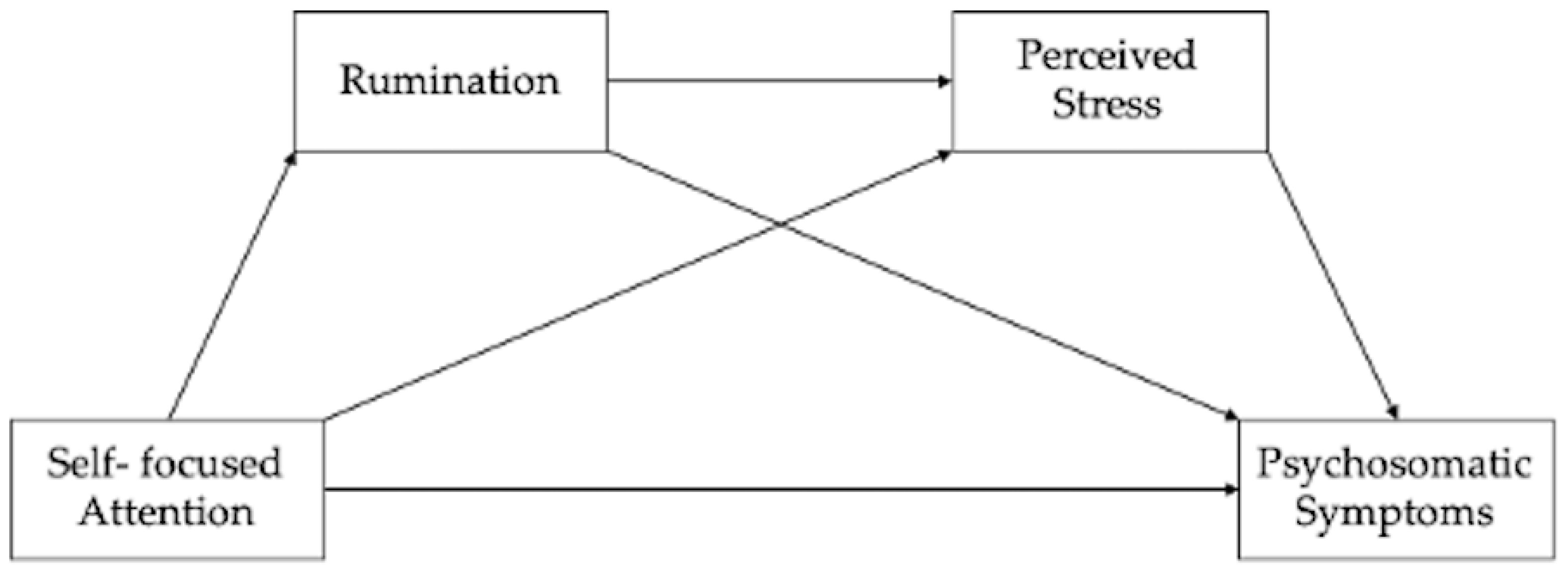
1.4. The Present Study
2. Materials and Methods
2.1. Participants
2.2. Materials
2.2.1. Self-Focused Attention
2.2.2. Rumination
2.2.3. Perceived Stress
2.2.4. Psychosomatic Symptoms
2.3. Procedure
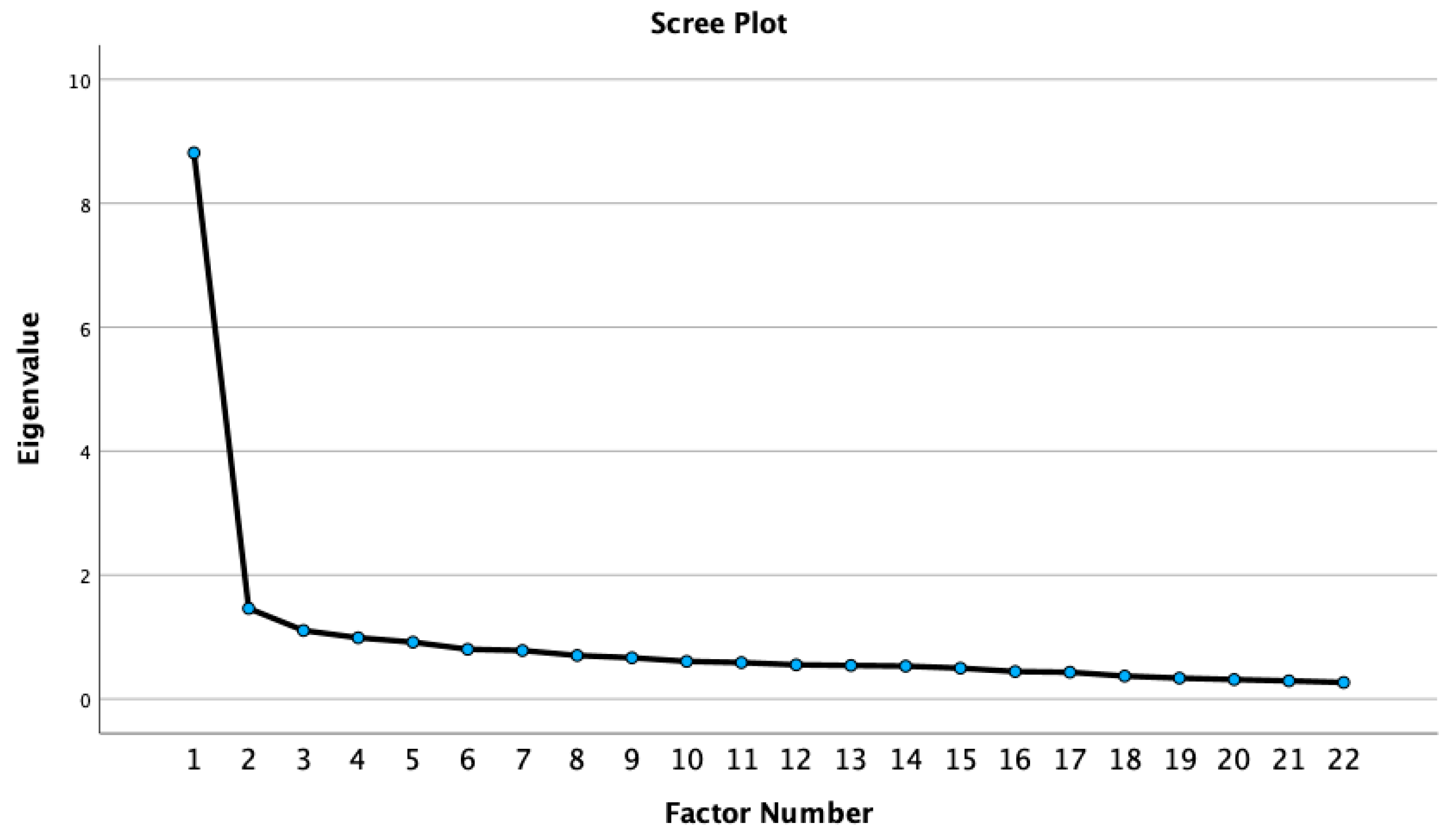
2.4. Data Analyses
3. Results
3.1. Participant Characteristics
3.2. Descriptive Statistics and Correlation Analysis

| Variables | Min-Max | Mean (SD) | SK | KU | r | ||
|---|---|---|---|---|---|---|---|
| 2 | 3 | 4 | |||||
| 1. Psychosomatic Symptoms | 0.00–2.50 | 0.86 (0.54) | 0.49 | −0.65 | 0.696 ** | 0.132 ** | 0.759 ** |
| 2. Perceived Stress | 0.00–4.00 | 1.73 (0.70) | −0.06 | −0.12 | 0.004 | 0.706 ** | |
| 3. Self-focused Attention | 1.24–5.00 | 3.73 (0.52) | −0.57 | 1.10 | 0.265 ** | ||
| 4. Rumination | 1.00–4.00 | 2.33 (0.67) | 0.04 | −0.71 |
3.3. Hierarchical Regression Analysis
| Step | Predictor | β (p) | R2 | ΔR2 | F (df) | p | VIF |
|---|---|---|---|---|---|---|---|
| 1 | SFA | 0.138 (<0.001) | 0.017 | 0.017 | 14.862 (1, 837) | <0.001 | 1.000 |
| 2 | SFA | −0.078 (0.001) | 1.076 | ||||
| Rumination | 0.632 (<0.001) | 0.582 | 0.564 | 581.157 (1, 836) | <0.001 | 1.076 | |
| 3 | SFA | −0.013 (0.591) | 1.160 | ||||
| Rumination | 0.438 (<0.001) | 2.312 | |||||
| Perceived Stress | 0.244 (<0.001) | 0.628 | 0.046 | 469.415 (1, 835) | <0.001 | 2.150 |
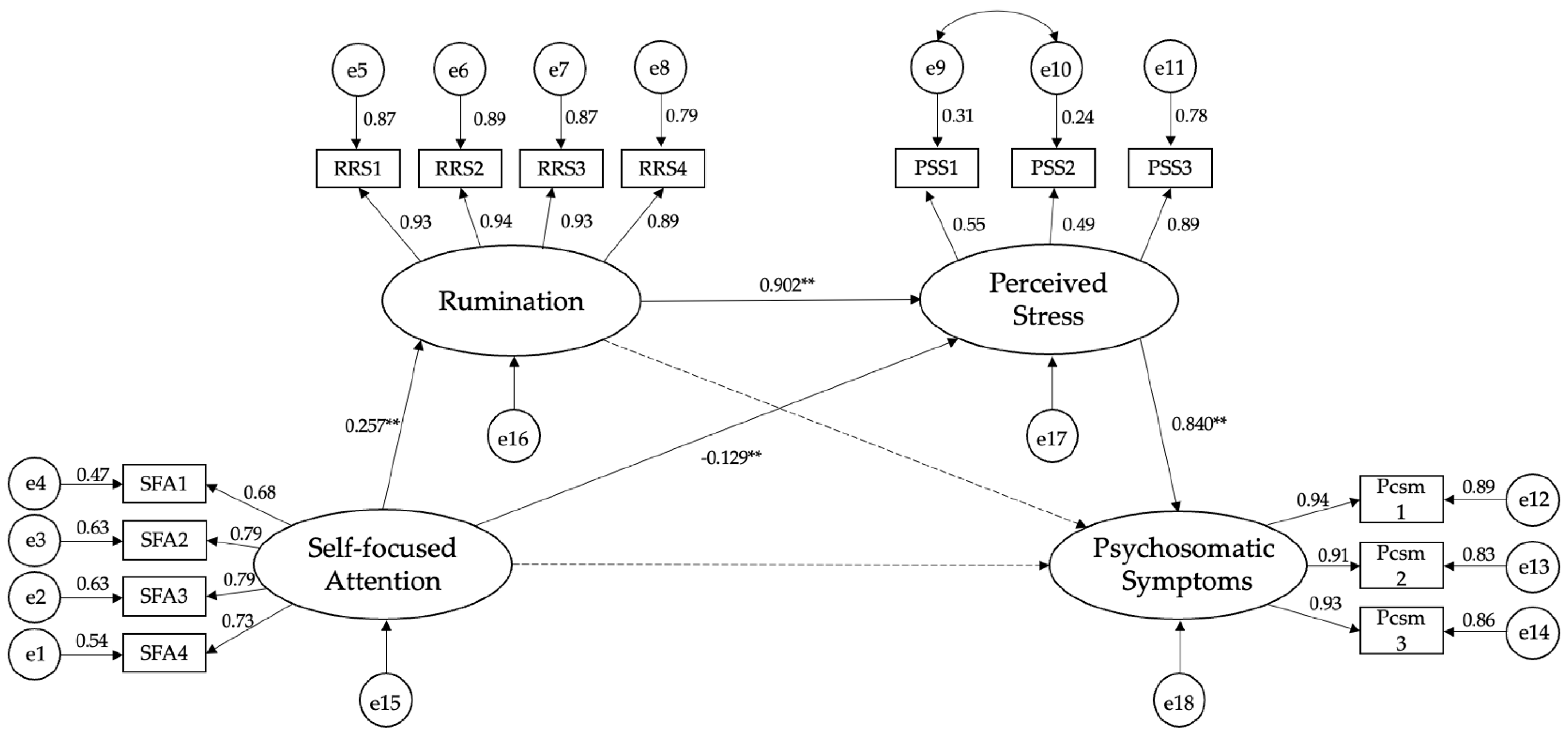
3.4. Structural Equation Modeling
| Pathways | Estimate | SE | Percentage | 95% CI | p |
|---|---|---|---|---|---|
| SFA-Rumination-Psychosomatic symptoms | 0.016 | 0.038 | 14.2% | [−0.066, 0.072] | 0.588 |
| SFA-Perceived stress-Psychosomatic symptoms | −0.108 | 0.038 | −95.8% | [−0.193, −0.048] | 0.001 |
| SFA-Rumination-Perceived stress-Psychosomatic symptoms | 0.194 | 0.051 | 171.9% | [0.116, 0.310] | 0.000 |
| Total indirect effect | 0.102 | 0.051 | 90.3% | [0.001, 0.195] | 0.049 |
| Direct effect | 0.011 | 0.035 | 9.7% | [−0.049, 0.086] | 0.781 |
| Total effect | 0.113 | 0.044 | 100% | [0.023, 0.197] | 0.016 |
4. Discussion
4.1. Limitations
4.2. Clinical and Practical Implications
5. Conclusions
Supplementary Materials
Author Contributions
Funding
Institutional Review Board Statement
Informed Consent Statement
Data Availability Statement
Acknowledgments
Conflicts of Interest
Abbreviations
| M | Mean |
| SD | Standard Deviation |
| SEM | Structural Equation Modeling |
| HPA axis | Hypothalamic–pituitary–adrenal axis |
| ACTH | Adrenocorticotropic hormone |
| SFA | Self-focused Attention |
| PMDD | Premenstrual Dysphoric Disorder |
| SFAS | Self-Focused Attention Scale |
| RRS-CV | Chinese version of the Ruminative Response Scale |
| PSS-10 | Perceived Stress Scale |
| GAD-7 | Generalized Anxiety Disorder-7 |
| PHQ-15 | Patient Health Questionnaire-15 |
| CMB CFA | Common Method Bias Confirmatory Factor Analysis |
| VIF | Variance Inflation Factor |
| CFT | Compassion-focused Therapy |
| PPI | Positive Psychology Interventions |
| PCH | Perseverative Cognition Hypothesis |
| S-REF | Self-Regulatory Executive Function |
References
- Alotiby, A. (2024). Immunology of stress: A review article. Journal of Clinical Medicine, 13(21), 6394. [Google Scholar] [CrossRef] [Scilit]
- Altemus, M., Sarvaiya, N., & Neill Epperson, C. (2014). Sex differences in anxiety and depression clinical perspectives. Frontiers in Neuroendocrinology, 35(3), 320–330. [Google Scholar] [CrossRef] [Scilit] [PubMed]
- Bann, C. M., Parker, C. B., Grobman, W. A., Willinger, M., Simhan, H. N., Wing, D. A., Haas, D. M., Silver, R. M., Parry, S., Saade, G. R., Wapner, R. J., Elovitz, M. A., Miller, E. S., Reddy, U. M., & for the NuMoM2b study. (2017). Psychometric properties of stress and anxiety measures among nulliparous women. Journal of Psychosomatic Obstetrics & Gynecology, 38(1), 53–62. [Google Scholar] [CrossRef] [Scilit] [PubMed]
- Barsky, A. J., Peekna, H. M., & Borus, J. F. (2001). Somatic symptom reporting in women and men. Journal of General Internal Medicine, 16(4), 266–275. [Google Scholar] [CrossRef] [Scilit]
- Bhattacharya, A., Chakraborty, M., Chanda, A., Alqahtani, T., Kumer, A., Dhara, B., & Chattopadhyay, M. (2024). Neuroendocrine and cellular mechanisms in stress resilience: From hormonal influence in the CNS to mitochondrial dysfunction and oxidative stress. Journal of Cellular and Molecular Medicine, 28(7), e18220. [Google Scholar] [CrossRef] [Scilit] [PubMed]
- Boggiss, A. L., Consedine, N. S., Brenton-Peters, J. M., Hofman, P. L., & Serlachius, A. S. (2020). A systematic review of gratitude interventions: Effects on physical health and health behaviors. Journal of Psychosomatic Research, 135, 110165. [Google Scholar] [CrossRef] [Scilit] [PubMed]
- Brosschot, J. F., Gerin, W., & Thayer, J. F. (2006). The perseverative cognition hypothesis: A review of worry, prolonged stress-related physiological activation, and health. Journal of Psychosomatic Research, 60(2), 113–124. [Google Scholar] [CrossRef] [Scilit] [PubMed]
- Brown, T. A. (2015). Confirmatory factor analysis for applied research (2nd ed.). Guilford Publications. [Google Scholar]
- Busch, L. Y., Pössel, P., & Valentine, J. C. (2017). Meta-analyses of cardiovascular reactivity to rumination: A possible mechanism linking depression and hostility to cardiovascular disease. Psychological Bulletin, 143(12), 1378–1394. [Google Scholar] [CrossRef] [Scilit] [PubMed]
- Carver, C. S., & Scheier, M. F. (1981). Attention and self-regulation: A control-theory approach to human behavior. Springer. [Google Scholar] [CrossRef] [Scilit]
- Chakhssi, F., Kraiss, J. T., Sommers-Spijkerman, M., & Bohlmeijer, E. T. (2018). The effect of positive psychology interventions on well-being and distress in clinical samples with psychiatric or somatic disorders: A systematic review and meta-analysis. BMC Psychiatry, 18(1), 211. [Google Scholar] [CrossRef] [Scilit] [PubMed]
- Chen, W., Tian, X., Zhang, G., Liu, J., & Zhao, S. (2021). Reliability and validity of the perceived stress scale short form (PSS-10) for Chinese college students. Psychological Exploration, 41(4), 343–348. [Google Scholar]
- Cherepanov, D., Palta, M., Fryback, D. G., & Robert, S. A. (2010). Gender differences in health-related quality-of-life are partly explained by sociodemographic and socioeconomic variation between adult men and women in the US: Evidence from four US nationally representative data sets. Quality of Life Research, 19(8), 1115–1124. [Google Scholar] [CrossRef] [Scilit] [PubMed]
- Cherian, K., Schatzberg, A. F., & Keller, J. (2019). HPA axis in psychotic major depression and schizophrenia spectrum disorders: Cortisol, clinical symptomatology, and cognition. Schizophrenia Research, 213, 72–79. [Google Scholar] [CrossRef] [Scilit] [PubMed]
- Cohen, S., Janicki-Deverts, D., & Miller, G. E. (2007). Psychological stress and disease. Jama, 298(14), 1685–1687. [Google Scholar] [CrossRef] [Scilit] [PubMed]
- Cohen, S., Kamarck, T., & Mermelstein, R. (1983). A global measure of perceived stress. Journal of Health and Social Behavior, 24(4), 385. [Google Scholar] [CrossRef] [Scilit]
- Creswell, J. D. (2017). Mindfulness interventions. Annual Review of Psychology, 68(1), 491–516. [Google Scholar] [CrossRef] [Scilit] [PubMed]
- Deding, U., Ejlskov, L., Grabas, M. P. K., Nielsen, B. J., Torp-Pedersen, C., & Bøggild, H. (2016). Perceived stress as a risk factor for peptic ulcers: A register-based cohort study. BMC Gastroenterology, 16(1), 140. [Google Scholar] [CrossRef] [Scilit] [PubMed]
- Denovan, A., Dagnall, N., & Lofthouse, G. (2019). Neuroticism and somatic complaints: Concomitant effects of rumination and worry. Behavioural and Cognitive Psychotherapy, 47(4), 431–445. [Google Scholar] [CrossRef] [Scilit] [PubMed]
- Divya, P., & Devi, R. S. (2024, August 8–9). Empowering women’s mental health: A critical examination of depression detection. 2024 7th International Conference on Circuit Power and Computing Technologies (ICCPCT) (pp. 158–164), Kollam, India. [Google Scholar] [CrossRef] [Scilit]
- Du, J., Huang, J., An, Y., & Xu, W. (2018). The relationship between stress and negative emotion: The mediating role of rumination. Clinical Research and Trials, 4(1), 1–5. [Google Scholar] [CrossRef] [Scilit]
- Farhane-Medina, N. Z., Luque, B., Tabernero, C., & Castillo-Mayén, R. (2022). Factors associated with gender and sex differences in anxiety prevalence and comorbidity: A systematic review. Science Progress, 105(4), 00368504221135469. [Google Scholar] [CrossRef] [Scilit] [PubMed]
- Feng, G., Xu, X., Wu, J., & Lei, J. (2024). The temporal dynamics of perceived stress and depression in college students: An ecological momentary assessment. PsyCh Journal, 14, 491–499. [Google Scholar] [CrossRef] [Scilit] [PubMed]
- Frone, M., & McFarlin, D. (1989). Chronic occupational stressors, self-focused attention, and well-being: Testing a cybernetic model of stress. Journal of Applied Psychology, 74, 876–883. [Google Scholar] [CrossRef] [PubMed]
- Gaydukevych, D., & Kocovski, N. L. (2012). Effect of self-focused attention on post-event processing in social anxiety. Behaviour Research and Therapy, 50(1), 47–55. [Google Scholar] [CrossRef] [Scilit] [PubMed]
- Gianferante, D., Thoma, M. V., Hanlin, L., Chen, X., Breines, J. G., Zoccola, P. M., & Rohleder, N. (2014). Post-stress rumination predicts HPA axis responses to repeated acute stress. Psychoneuroendocrinology, 49, 244–252. [Google Scholar] [CrossRef] [Scilit] [PubMed]
- Gilbert, P. (2009). Introducing compassion-focused therapy. Advances in Psychiatric Treatment, 15(3), 199–208. [Google Scholar] [CrossRef] [Scilit]
- Glaser, R., & Kiecolt-Glaser, J. K. (2005). Stress-induced immune dysfunction: Implications for health. Nature Reviews Immunology, 5(3), 243–251. [Google Scholar] [CrossRef] [Scilit] [PubMed]
- Glick, D. M., & Orsillo, S. M. (2011). Relationships among social anxiety, self-focused attention, and experiential distress and avoidance. Journal of Cognitive & Behavioral Psychotherapies, 11(1), 1–12. [Google Scholar]
- Gollenberg, A. L., Hediger, M. L., Mumford, S. L., Whitcomb, B. W., Hovey, K. M., Wactawski-Wende, J., & Schisterman, E. F. (2010). Perceived stress and severity of perimenstrual symptoms: The BioCycle study. Journal of Women’s Health, 19(5), 959–967. [Google Scholar] [CrossRef] [Scilit] [PubMed]
- Gupta, A., & Silman, A. J. (2004). Psychological stress and fibromyalgia: A review of the evidence suggesting a neuroendocrine link. Arthritis Research & Therapy, 6(3), 98–106. [Google Scholar] [CrossRef] [Scilit] [PubMed]
- Hair, J. F., Black, W. C., Babin, B. J., & Anderson, R. E. (2019). Multivariate data analysis (8th ed.). Cengage Learning. Available online: https://researchdiscovery.drexel.edu/esploro/outputs/book/Multivariate-data-analysis/991019295303204721?institution=01DRXU_INST (accessed on 7 June 2026).
- Han, X., & Yang, H. (2009). Chinese version of Nolen-Hoeksema ruminative responses scale (RRS) used in 912 college students: Reliability and validity. Chinese Journal of Clinical Psychology, 17(5), 550–551. [Google Scholar]
- Hange, D., Mehlig, K., Lissner, L., Guo, X., Bengtsson, C., Skoog, I., & Björkelund, C. (2013). Perceived mental stress in women associated with psychosomatic symptoms, but not mortality: Observations from the population study of women in Gothenburg, Sweden. International Journal of General Medicine, 6, 307–315. [Google Scholar] [CrossRef] [Scilit] [PubMed]
- Heinen, I., Bullinger, M., & Kocalevent, R.-D. (2017). Perceived stress in first year medical students—Associations with personal resources and emotional distress. BMC Medical Education, 17(1), 4. [Google Scholar] [CrossRef] [Scilit] [PubMed]
- Hilt, L. M., Aldao, A., & Fischer, K. (2015). Rumination and multi-modal emotional reactivity. Cognition and Emotion, 29(8), 1486–1495. [Google Scholar] [CrossRef] [Scilit] [PubMed]
- Hofmann, S. G. (2007). Cognitive factors that maintain social anxiety disorder: A comprehensive model and its treatment implications. Cognitive Behaviour Therapy, 36(4), 193–209. [Google Scholar] [CrossRef] [Scilit] [PubMed]
- Holzman, J. B., & Valentiner, D. P. (2016). Self-focused attention affects subsequent processing of positive (but not negative) performance appraisals. Journal of Behavior Therapy and Experimental Psychiatry, 50, 295–302. [Google Scholar] [CrossRef] [Scilit] [PubMed]
- Hu, L., & Bentler, P. M. (1999). Cutoff criteria for fit indexes in covariance structure analysis: Conventional criteria versus new alternatives. Structural Equation Modeling: A Multidisciplinary Journal, 6(1), 1–55. [Google Scholar] [CrossRef] [Scilit]
- Ingram, R. E. (1990). Self-focused attention in clinical disorders: Review and a conceptual model. Psychological Bulletin, 107(2), 156–176. [Google Scholar] [CrossRef] [PubMed]
- Jacobs, R. H., Watkins, E. R., Peters, A. T., Feldhaus, C. G., Barba, A., Carbray, J., & Langenecker, S. A. (2016). Targeting ruminative thinking in adolescents at risk for depressive relapse: Rumination-focused cognitive behavior therapy in a pilot randomized controlled trial with resting state fMRI. PLoS ONE, 11(11), e0163952. [Google Scholar] [CrossRef] [Scilit] [PubMed]
- Jaradat, Y., Nijem, K., Lien, L., Stigum, H., Bjertness, E., & Bast-Pettersen, R. (2016). Psychosomatic symptoms and stressful working conditions among Palestinian nurses: A cross-sectional study. Contemporary Nurse, 52(4), 381–397. [Google Scholar] [CrossRef] [Scilit] [PubMed]
- Johnson, D. P., & Whisman, M. A. (2013). Gender differences in rumination: A meta-analysis. Personality and Individual Differences, 55(4), 367–374. [Google Scholar] [CrossRef] [Scilit] [PubMed]
- Kadzikowska-Wrzosek, R. (2012). Perceived stress, emotional ill-being and psychosomatic symptoms in high school students: The moderating effect of self-regulation competences. Archives of Psychiatry and Psychotherapy, 3, 25–33. [Google Scholar]
- Kajantie, E., & Phillips, D. I. W. (2006). The effects of sex and hormonal status on the physiological response to acute psychosocial stress. Psychoneuroendocrinology, 31(2), 151–178. [Google Scholar] [CrossRef] [Scilit] [PubMed]
- Kaluve, A. M., & Graham, B. M. (2025). The role of emotion dysregulation and rumination in predicting premenstrual symptom severity in premenstrual disorders and elevated anxiety or depression. Journal of Affective Disorders, 389, 119705. [Google Scholar] [CrossRef] [Scilit] [PubMed]
- Kessler, R. C. (2006). The epidemiology of depression among women. In C. L. M. Keyes, & S. H. Goodman (Eds.), Women and depression: A handbook for the social, behavioral, and biomedical sciences (pp. 22–38). Cambridge University Press. [Google Scholar] [CrossRef] [Scilit]
- Kiropoulos, L. A., & Klimidis, S. (2006). A self-focused attention scale: Factor structure and psychometric properties. Cognitive Therapy and Research, 30(3), 297–306. [Google Scholar] [CrossRef] [Scilit]
- Klatzkin, R. R., Morrow, A. L., Light, K. C., Pedersen, C. A., & Girdler, S. S. (2006). Histories of depression, allopregnanolone responses to stress, and premenstrual symptoms in women. Biological Psychology, 71(1), 2–11. [Google Scholar] [CrossRef] [Scilit] [PubMed]
- Kline, P. (2015). A handbook of test construction (psychology revivals): Introduction to psychometric design. Routledge. [Google Scholar] [CrossRef] [Scilit]
- Kline, R. B. (2023). Principles and practice of structural equation modeling. Guilford Publications. [Google Scholar]
- Kroenke, K., Spitzer, R. L., & Williams, J. B. W. (2002). The PHQ-15: Validity of a new measure for evaluating the severity of somatic symptoms. Psychosomatic Medicine, 64(2), 258–266. [Google Scholar] [CrossRef] [Scilit] [PubMed]
- Kurlansik, S. L., & Maffei, M. S. (2016). Somatic symptom disorder. Am Fam Physician, 93(1), 49–54. [Google Scholar] [PubMed]
- Larionow, P., Ageenkova, E. K., & Dedenok, M. I. (2022). Towards psychosomatic medicine: The role of age and emotional characteristics in people with psychosomatic disorders. Annales Universitatis Mariae Curie-Skłodowska, Sectio J–Paedagogia-Psychologia, 35(3), 143–156. [Google Scholar] [CrossRef] [Scilit]
- Lazarus, R. S. (1984). Puzzles in the study of daily hassles. Journal of Behavioral Medicine, 7(4), 375–389. [Google Scholar] [CrossRef] [Scilit] [PubMed]
- Lazarus, R. S., & Folkman, S. (1984). Stress, appraisal, and coping. Springer Publishing Company. [Google Scholar]
- Lee, Y., & Im, E.-O. (2016). Stress and premenstrual symptoms in reproductive-aged women. Health Care for Women International, 37(6), 646–670. [Google Scholar] [CrossRef] [Scilit] [PubMed]
- Liao, C.-M., & Masters, R. S. W. (2002). Self-focused attention and performance failure under psychological stress. Journal of Sport and Exercise Psychology, 24(3), 289–305. [Google Scholar] [CrossRef] [Scilit] [PubMed]
- Lightman, S. L., Birnie, M. T., & Conway-Campbell, B. L. (2020). Dynamics of ACTH and cortisol secretion and implications for disease. Endocrine Reviews, 41(3), bnaa002. [Google Scholar] [CrossRef] [Scilit] [PubMed]
- Lipowski, Z. J. (1987). Somatization: The experience and communication of psychological distress as somatic symptoms. Psychotherapy and Psychosomatics, 47(3–4), 160–167. [Google Scholar] [CrossRef] [Scilit] [PubMed]
- Little, T. D., Cunningham, W. A., Shahar, G., & Widaman, K. F. (2002). To parcel or not to parcel: Exploring the question, weighing the merits. Structural Equation Modeling: A Multidisciplinary Journal, 9(2), 151–173. [Google Scholar] [CrossRef] [Scilit] [PubMed]
- Liu, Q., Lin, Y., & Zhang, W. (2024). Psychological stress dysfunction in women with premenstrual syndrome. Heliyon, 10(22), e40233. [Google Scholar] [CrossRef] [Scilit] [PubMed]
- Löwe, B., Levenson, J., Depping, M., Hüsing, P., Kohlmann, S., Lehmann, M., Shedden-Mora, M., Toussaint, A., Uhlenbusch, N., & Weigel, A. (2022). Somatic symptom disorder: A scoping review on the empirical evidence of a new diagnosis. Psychological Medicine, 52(4), 632–648. [Google Scholar] [CrossRef] [Scilit] [PubMed]
- MacKinnon, D. P., Krull, J. L., & Lockwood, C. M. (2000). Equivalence of the Mediation, Confounding and Suppression Effect. Prevention Science, 1(4), 173–181. [Google Scholar] [CrossRef] [Scilit] [PubMed]
- Malin, K., & Littlejohn, G. O. (2015). Rumination modulates stress and other psychological processes in fibromyalgia. European Journal of Rheumatology, 2(4), 143–148. [Google Scholar] [CrossRef] [Scilit] [PubMed]
- Mallorquí-Bagué, N., Bulbena, A., Pailhez, G., Garfinkel, S. N., & Critchley, H. D. (2016). Mind-body interactions in anxiety and somatic symptoms. Harvard Review of Psychiatry, 24(1), 53–60. [Google Scholar] [CrossRef] [Scilit] [PubMed]
- Marcus, D. K., Hughes, K. T., & Arnau, R. C. (2008). Health anxiety, rumination, and negative affect: A mediational analysis. Journal of Psychosomatic Research, 64(5), 495–501. [Google Scholar] [CrossRef] [Scilit] [PubMed]
- Matsunaga, M. (2008). Item parceling in structural equation modeling: A primer. Communication Methods and Measures, 2(4), 260–293. [Google Scholar] [CrossRef] [Scilit]
- Matthews, G., & Wells, A. (2003). Rumination, depression, and metacognition: The S-REF model. In Depressive rumination: Nature, theory and treatment (pp. 125–151). John Wiley & Sons Ltd. [Google Scholar]
- McLaughlin, K. A., & Nolen-Hoeksema, S. (2011). Rumination as a transdiagnostic factor in depression and anxiety. Behaviour Research and Therapy, 49(3), 186–193. [Google Scholar] [CrossRef] [Scilit] [PubMed]
- Mezo, P. G., & Baker, R. M. (2012). The moderating effects of stress and rumination on depressive symptoms in women and men. Stress and Health, 28(4), 333–339. [Google Scholar] [CrossRef] [Scilit] [PubMed]
- Miers, A. C., Rieffe, C., Meerum Terwogt, M., Cowan, R., & Linden, W. (2007). The relation between anger coping strategies, anger mood and somatic complaints in children and adolescents. Journal of Abnormal Child Psychology, 35(4), 653–664. [Google Scholar] [CrossRef] [Scilit] [PubMed]
- Moon, H.-J., Seo, J.-G., & Park, S.-P. (2017). Perceived stress in patients with migraine: A case-control study. The Journal of Headache and Pain, 18(1), 73. [Google Scholar] [CrossRef] [Scilit] [PubMed]
- Mor, N., & Winquist, J. (2002). Self-focused attention and negative affect: A meta-analysis. Psychological Bulletin, 128(4), 638–662. [Google Scholar] [CrossRef] [Scilit] [PubMed]
- Nabi, H., Hall, M., Koskenvuo, M., Singh-Manoux, A., Oksanen, T., Suominen, S., Kivimäki, M., & Vahtera, J. (2010). Psychological and somatic symptoms of anxiety and risk of coronary heart disease: The health and social support prospective cohort study. Biological Psychiatry, 67(4), 378–385. [Google Scholar] [CrossRef] [Scilit] [PubMed]
- Nayman, S., Konstantinow, D. T., Schricker, I. F., Reinhard, I., & Kuehner, C. (2023). Associations of premenstrual symptoms with daily rumination and perceived stress and the moderating effects of mindfulness facets on symptom cyclicity in premenstrual syndrome. Archives of Women’s Mental Health, 26(2), 167–176. [Google Scholar] [CrossRef] [Scilit] [PubMed]
- Nisar, H., & Srivastava, R. (2017). Fundamental concept of psychosomatic disorders: A review. International Journal of Contemporary Medicine Surgery and Radiology, 3(1), 12–18. [Google Scholar]
- Nolen-Hoeksema, S. (1991). Responses to depression and their effects on the duration of depressive episodes. Journal of Abnormal Psychology, 100(4), 569–582. [Google Scholar] [CrossRef] [PubMed]
- Nolen-Hoeksema, S. (2003). The response styles theory. In Depressive rumination: Nature, theory and treatment (pp. 105–123). John Wiley & Sons Ltd. [Google Scholar]
- Nolen-Hoeksema, S., & Jackson, B. (2001). Mediators of the gender difference in rumination. Psychology of Women Quarterly, 25(1), 37–47. [Google Scholar] [CrossRef] [Scilit]
- Nolen-Hoeksema, S., Wisco, B. E., & Lyubomirsky, S. (2008). Rethinking rumination. Perspectives on Psychological Science, 3(5), 400–424. [Google Scholar] [CrossRef] [Scilit] [PubMed]
- Nunez, S. G., Rabelo, S. P., Subotic, N., Caruso, J. W., & Knezevic, N. N. (2025). Chronic stress and autoimmunity: The role of HPA axis and cortisol dysregulation. International Journal of Molecular Sciences, 26(20), 9994. [Google Scholar] [CrossRef] [Scilit] [PubMed]
- Olatunji, B. O., Naragon-Gainey, K., & Wolitzky-Taylor, K. B. (2013). Specificity of rumination in anxiety and depression: A multimodal meta-analysis. Clinical Psychology: Science and Practice, 20(3), 225–257. [Google Scholar] [CrossRef] [Scilit]
- Oliver, J. M., Klocek, J., & Wells, A. (1995). Depressed and anxious moods mediate relations among perceived socialization, self-focused attention, and dysfunctional attitudes. Journal of Clinical Psychology, 51(6), 726–739. [Google Scholar] [CrossRef] [Scilit]
- Ongaro, G., & Kaptchuk, T. J. (2019). Symptom perception, placebo effects, and the Bayesian brain. Pain, 160(1), 1–4. [Google Scholar] [CrossRef] [Scilit] [PubMed]
- Ottaviani, C., Thayer, J. F., Verkuil, B., Lonigro, A., Medea, B., Couyoumdjian, A., & Brosschot, J. F. (2016). Physiological concomitants of perseverative cognition: A systematic review and meta-analysis. Psychological Bulletin, 142(3), 231–259. [Google Scholar] [CrossRef] [Scilit] [PubMed]
- Ottenbreit, N. D., & Dobson, K. S. (2004). Avoidance and depression: The construction of the cognitive–behavioral avoidance scale. Behaviour Research and Therapy, 42(3), 293–313. [Google Scholar] [CrossRef] [Scilit] [PubMed]
- Østerås, B., Sigmundsson, H., & Haga, M. (2015). Perceived stress and musculoskeletal pain are prevalent and significantly associated in adolescents: An epidemiological cross-sectional study. BMC Public Health, 15(1), 1081. [Google Scholar] [CrossRef] [Scilit] [PubMed]
- Papageorgion, C., & Siegle, G. J. (2003). Rumination and depression: Advances in theory and research. Cognitive Therapy & Research, 27(3), 243–245. [Google Scholar] [CrossRef] [Scilit]
- Penley, J. A., Tomaka, J., & Wiebe, J. S. (2002). The association of coping to physical and psychological health outcomes: A meta-analytic review. Journal of Behavioral Medicine, 25, 551–603. [Google Scholar] [CrossRef] [Scilit] [PubMed]
- Podsakoff, P. M., MacKenzie, S. B., & Podsakoff, N. P. (2012). Sources of method bias in social science research and recommendations on how to control it. Annual Review of Psychology, 63, 539–569. [Google Scholar] [CrossRef] [Scilit] [PubMed]
- Qing, H., Desrouleaux, R., Israni-Winger, K., Mineur, Y. S., Fogelman, N., Zhang, C., Rashed, S., Palm, N. W., Sinha, R., Picciotto, M. R., Perry, R. J., & Wang, A. (2020). Origin and function of stress-induced IL-6 in murine models. Cell, 182(2), 372–387.e14. [Google Scholar] [CrossRef] [Scilit] [PubMed]
- Ravi, M., Miller, A. H., & Michopoulos, V. (2021). The immunology of stress and the impact of inflammation on the brain and behavior. BJPsych Advances, 27(Suppl. 3), 158–165. [Google Scholar] [CrossRef] [Scilit] [PubMed]
- Razurel, C., Kaiser, B., Antonietti, J.-P., Epiney, M., & Sellenet, C. (2017). Relationship between perceived perinatal stress and depressive symptoms, anxiety, and parental self-efficacy in primiparous mothers and the role of social support. Women & Health, 57(2), 154–172. [Google Scholar] [CrossRef] [Scilit] [PubMed]
- Roomaney, R., & Lourens, A. (2020). Correlates of premenstrual dysphoric disorder among female university students. Cogent Psychology, 7(1), 1823608. [Google Scholar] [CrossRef] [Scilit]
- Sansone, R. A., & Sansone, L. A. (2012). Rumination: Relationships with physical health. Innovations in Clinical Neuroscience, 9(2), 29–34. [Google Scholar] [CrossRef] [Scilit] [PubMed]
- Sathyanarayana, S., & Mohanasundaram, T. (2024). Fit indices in structural equation modeling and confirmatory factor analysis: Reporting guidelines. Asian Journal of Economics, Business and Accounting, 24(7), 561–577. [Google Scholar] [CrossRef] [Scilit]
- Spitzer, R. L., Kroenke, K., Williams, J. B. W., & Löwe, B. (2006). A brief measure for assessing generalized anxiety disorder: The GAD-7. Archives of Internal Medicine, 166(10), 1092. [Google Scholar] [CrossRef] [Scilit] [PubMed]
- Staneva, A., Bogossian, F., Pritchard, M., & Wittkowski, A. (2015). The effects of maternal depression, anxiety, and perceived stress during pregnancy on preterm birth: A systematic review. Women and Birth, 28(3), 179–193. [Google Scholar] [CrossRef] [Scilit] [PubMed]
- Teixeira, R. J., Brandão, T., & Dores, A. R. (2022). Academic stress, coping, emotion regulation, affect and psychosomatic symptoms in higher education. Current Psychology, 41(11), 7618–7627. [Google Scholar] [CrossRef] [Scilit]
- Trapnell, P., & Campbell, J. (1999). Private self-consciousness and the five-factor model of personality: Distinguishing rumination from reflection. Journal of Personality and Social Psychology, 76, 284–304. [Google Scholar] [CrossRef] [Scilit] [PubMed]
- Ulyukin, I. M., Kiseleva, N. V., Rassokhin, V. V., Orlova, E. S., & Sechin, A. A. (2021). Psychosomatic disorders (distress, depression, anxiety, somatization) in young patients who have had COVID-19. Medical Academic Journal, 21(3), 63–72. [Google Scholar] [CrossRef] [Scilit]
- Ussher, J. M. (2010). Are we medicalizing women’s misery? A critical review of women’s higher rates of reported depression. Feminism & Psychology, 20(1), 9–35. [Google Scholar] [CrossRef] [Scilit]
- Van Wijk, C. M. T. G., & Kolk, A. M. (1997). Sex differences in physical symptoms: The contribution of symptom perception theory. Social Science & Medicine, 45(2), 231–246. [Google Scholar] [CrossRef] [Scilit] [PubMed]
- Watkins, E. (2004). Appraisals and strategies associated with rumination and worry. Personality and Individual Differences, 37(4), 679–694. [Google Scholar] [CrossRef] [Scilit]
- Williams, A. D., & Moulds, M. L. (2007). The impact of ruminative processing on the development of intrusive memories. Behaviour Change, 24(2), 55–69. [Google Scholar] [CrossRef] [Scilit]
- Willis, K. D., & Burnett, H. J. (2016). the power of stress: Perceived stress and its relationship with rumination, self-concept clarity, and resilience. North American Journal of Psychology, 18(3), 483–498. [Google Scholar]
- Woodruff-Borden, J., Brothers, A. J., & Lister, S. C. (2001). Self-focused attention: Commonalities across psychopathologies and predictors. Behavioural and Cognitive Psychotherapy, 29(2), 169–178. [Google Scholar] [CrossRef] [Scilit]
- Wyns, A., Hendrix, J., Lahousse, A., De Bruyne, E., Nijs, J., Godderis, L., & Polli, A. (2023). The biology of stress intolerance in patients with chronic pain—State of the art and future directions. Journal of Clinical Medicine, 12(6), 2245. [Google Scholar] [CrossRef] [Scilit] [PubMed]
- Xiao, S. L. (2010). A study of relationship on parenting rearing styles and self-focused attention to the self-consistency and congruence of college student [Master’s thesis, Lanzhou University]. [Google Scholar]
- Xu, W., Feng, C., Tang, W., & Yang, Y. (2022). Rumination, posttraumatic stress disorder symptoms, and posttraumatic growth among wenchuan earthquake adult survivors: A developmental perspective. Frontiers in Public Health, 9, 764127. [Google Scholar] [CrossRef] [Scilit] [PubMed]
- Zhang, M., & Ye, Z. (2022). The relationship between intrusive rumination and post-traumatic stress disorder: The mediating role of balanced time perspective. Advances in Educational Technology and Psychology, 6(11), 55–62. [Google Scholar] [CrossRef] [Scilit]
- Zhou, H., & Long, L. (2004). Statistical remedies for common method biases. Advances in Psychological Science, 12(06), 942. [Google Scholar]
- Zoccola, P. M., & Dickerson, S. S. (2012). Assessing the relationship between rumination and cortisol: A review. Journal of Psychosomatic Research, 73(1), 1–9. [Google Scholar] [CrossRef] [Scilit] [PubMed]
- Zoccola, P. M., Dickerson, S. S., & Zaldivar, F. P. (2008). Rumination and cortisol responses to laboratory stressors. Psychosomatic Medicine, 70(6), 661–667. [Google Scholar] [CrossRef] [Scilit] [PubMed]


| Variables | Category | n | Percentage (%) |
|---|---|---|---|
| Age | M (SD) | 26.50 (6.08) | |
| Range | 18–59 | ||
| Marital status | Single | 564 | 67.2 |
| Married | 270 | 32.2 | |
| Divorced | 5 | 0.6 | |
| Occupational status | Student | 218 | 26.0 |
| Freelance worker | 57 | 6.8 | |
| Administrative staff | 57 | 6.8 | |
| Product/Operations staff | 50 | 6.0 | |
| Teacher | 44 | 5.2 | |
| self-employed individual | 43 | 5.1 | |
| Other (each < 5%, including marketing/sales, finance, engineering, service workers, manual labor, agricultural workers, healthcare professionals, and others) | 370 | 44.1 |
Disclaimer/Publisher’s Note: The statements, opinions and data contained in all publications are solely those of the individual author(s) and contributor(s) and not of MDPI and/or the editor(s). MDPI and/or the editor(s) disclaim responsibility for any injury to people or property resulting from any ideas, methods, instructions or products referred to in the content. |
© 2026 by the authors. Licensee MDPI, Basel, Switzerland. This article is an open access article distributed under the terms and conditions of the Creative Commons Attribution (CC BY) license.
Share and Cite
Xu, M.; Chen, S. The Potential Pathway Among Self-Focused Attention, Rumination, Perceived Stress and Female Psychosomatic Symptoms. Behav. Sci. 2026, 16, 1266. https://doi.org/10.3390/bs16081266
Xu M, Chen S. The Potential Pathway Among Self-Focused Attention, Rumination, Perceived Stress and Female Psychosomatic Symptoms. Behavioral Sciences. 2026; 16(8):1266. https://doi.org/10.3390/bs16081266
Chicago/Turabian StyleXu, Moya, and Shulin Chen. 2026. "The Potential Pathway Among Self-Focused Attention, Rumination, Perceived Stress and Female Psychosomatic Symptoms" Behavioral Sciences 16, no. 8: 1266. https://doi.org/10.3390/bs16081266
APA StyleXu, M., & Chen, S. (2026). The Potential Pathway Among Self-Focused Attention, Rumination, Perceived Stress and Female Psychosomatic Symptoms. Behavioral Sciences, 16(8), 1266. https://doi.org/10.3390/bs16081266