A Blueprint for Connection: Mapping Interconnected Patterns of Relationship Change in Couples Using the Agapé App †

Abstract
1. Introduction
1.1. Approaches to Relationship Enhancement (RE)
1.2. The Agapé Smartphone App
1.3. The Relationship Processes Targeted by RE Programs
1.4. Toward a More Nuanced and Integrative Understanding of Relationship Processes
1.5. A Network Analysis Approach to Examining Processes of Change
1.6. Duocentric Network Analyses to Develop Couple-Level Insights
1.7. Related Work
1.8. The Current Study
2. Materials and Method
2.1. Transparency and Openness
2.2. Procedure
2.3. Participants
2.4. Measures
2.4.1. Relationship and Individual Outcomes
2.4.2. Relationship Maintenance Processes
2.4.3. Connective Relationship Processes
2.4.4. Detaching Relationship Processes
2.4.5. Sexual Functioning
2.5. Analytic Strategy
2.5.1. Network Analyses
2.5.2. Accuracy and Stability of Edge Estimates
3. Results
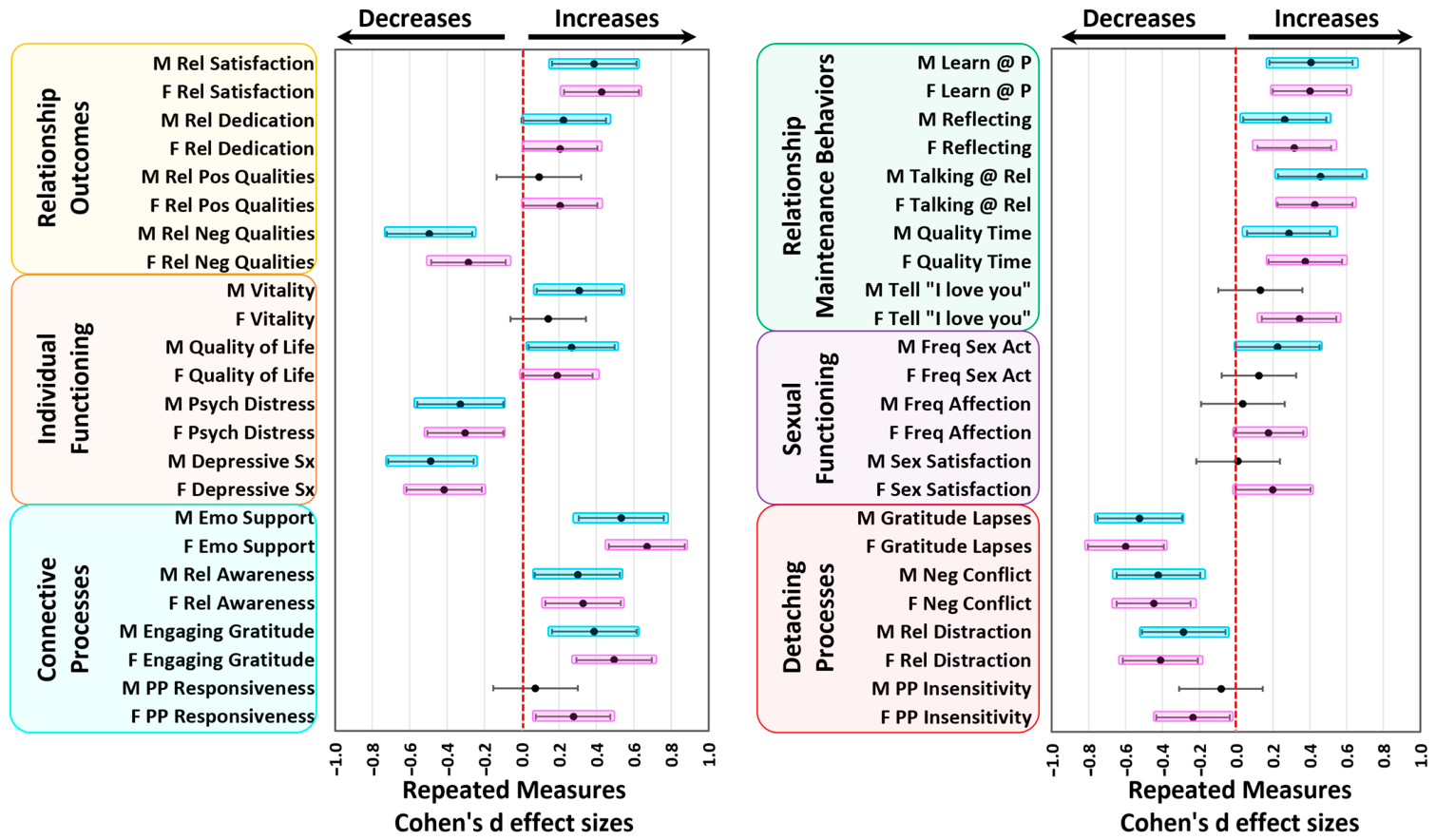
3.1. Pre–Post Change
3.2. Linking Pre–Post Change
3.2.1. Collinearity and Accuracy/Stability Checks
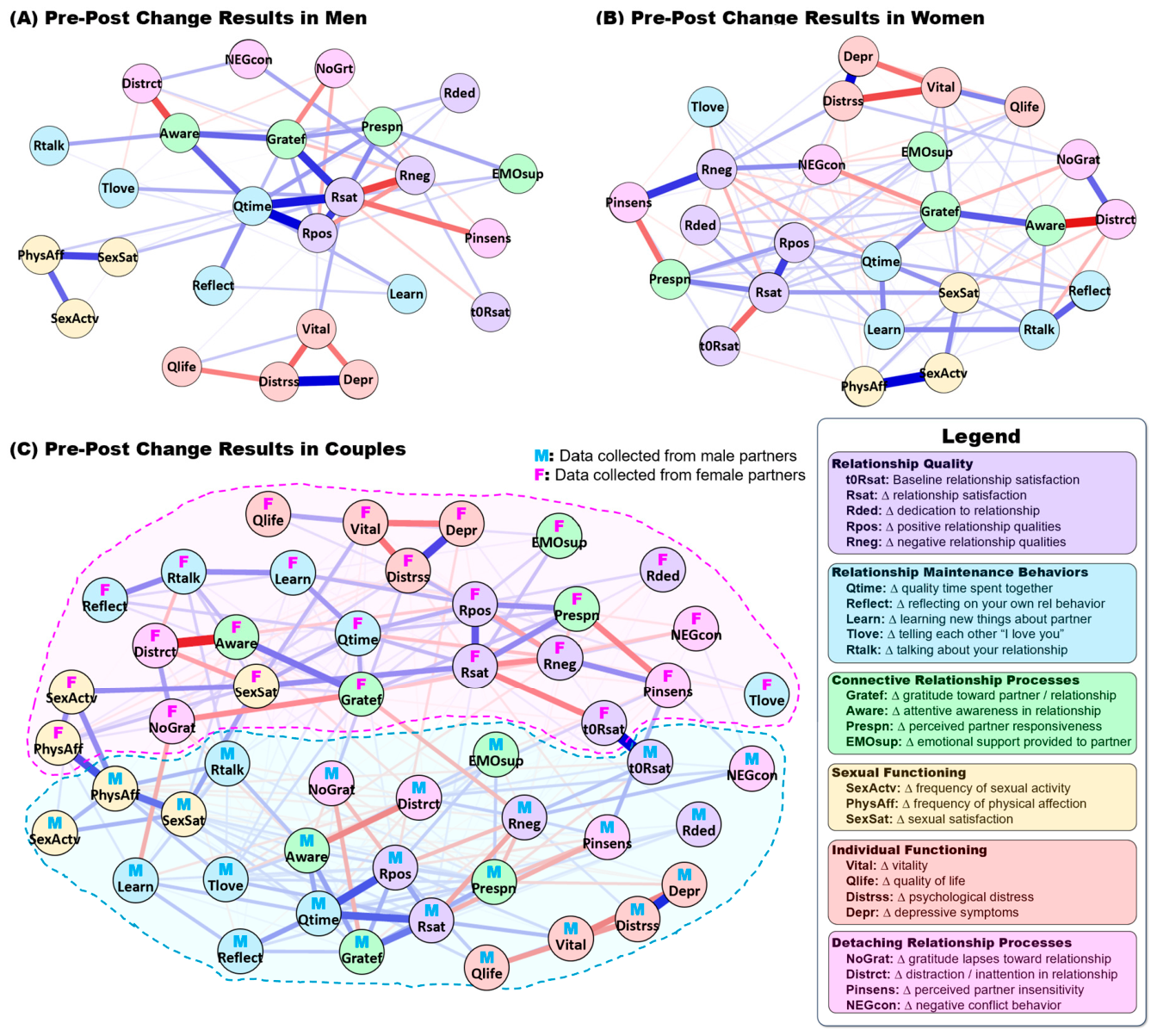
3.2.2. Network Visualization—Spring Plots
3.2.3. Results in Individual Spring Plots
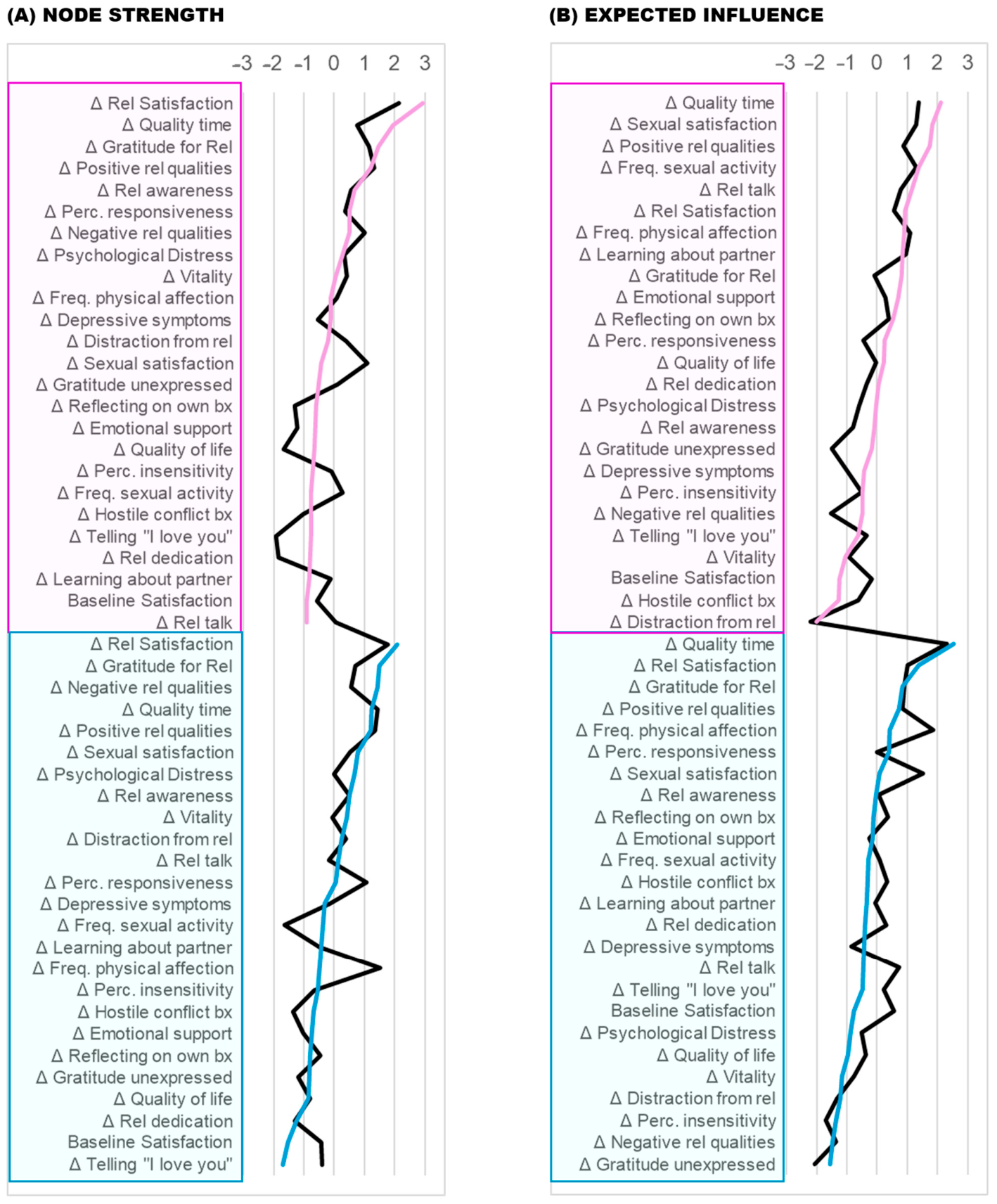
3.2.4. Dyadic Results
3.3. Linking Linear Trajectories of Change
3.3.1. HLM Multi-Wave Slope Strategy
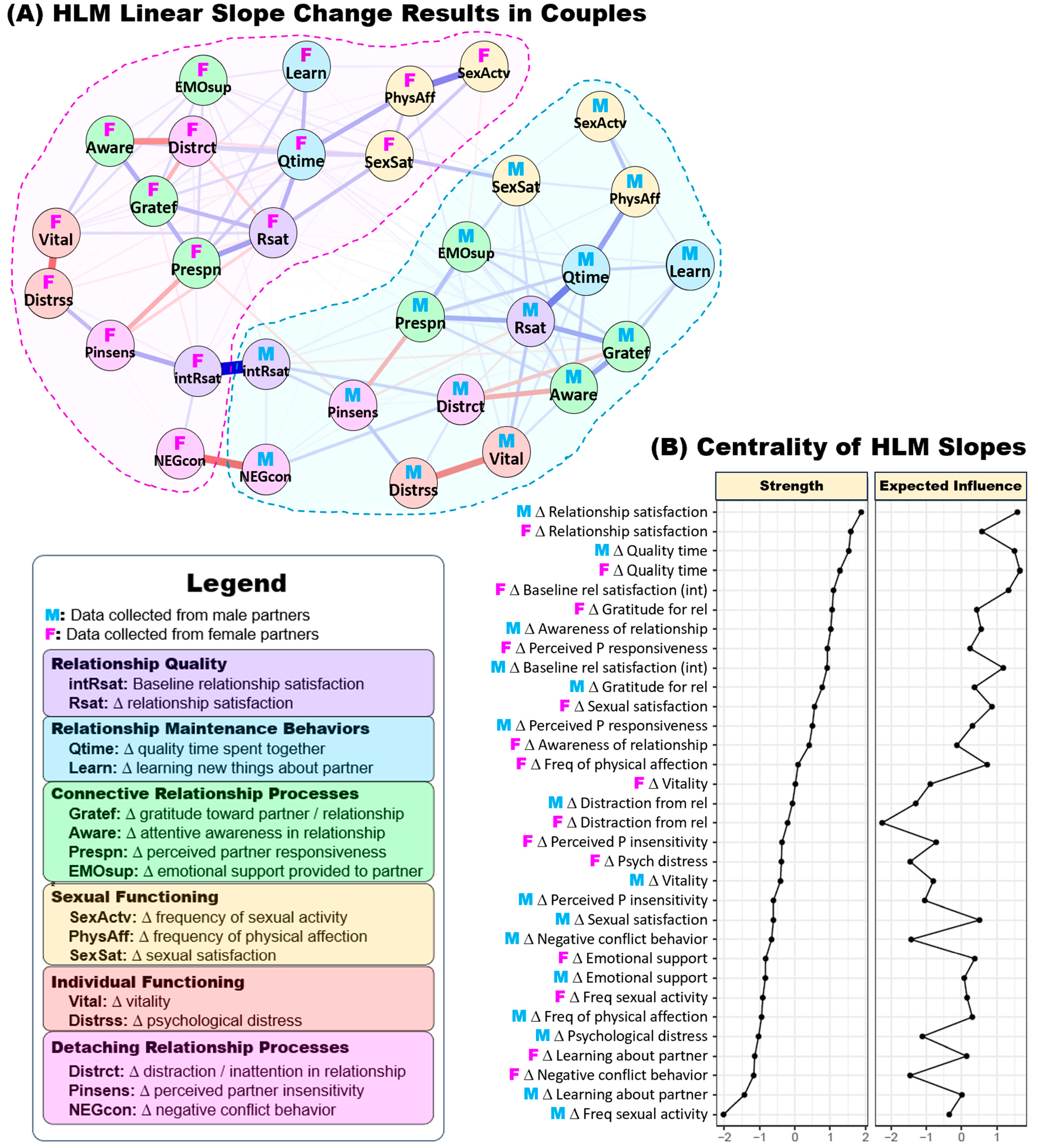
3.3.2. HLM Multi-Wave Slope Results
4. Discussion
4.1. Implications
4.1.1. The Central Linkages of Quality Time and Gratitude
4.1.2. Responsiveness as an Organizing Construct
4.1.3. Key Dynamics Linking Experiences
4.1.4. Patterns of Interconnected Change
4.2. Limitations and Future Directions
5. Conclusions
Supplementary Materials
Author Contributions
Funding
Institutional Review Board Statement
Informed Consent Statement
Data Availability Statement
Acknowledgments
Conflicts of Interest
References
- Acitelli, L. K. (2002). Relationship awareness: Crossing the bridge between cognition and communication. Communication Theory, 12(1), 92–112. [Google Scholar] [CrossRef]
- Algoe, S. B., Gable, S. L., & Maisel, N. C. (2010). It’s the little things: Everyday gratitude as a booster shot for romantic relationships. Personal Relationships, 17(2), 217–233. [Google Scholar] [CrossRef]
- Amato, P. R. (2000). The consequences of divorce for adults and children. Journal of Marriage and Family, 62(4), 1269–1287. [Google Scholar] [CrossRef]
- Babyak, M. A. (2004). What you see may not be what you get: A brief, nontechnical introduction to overfitting in regression-type models. Psychosomatic Medicine, 66(3), 411–421. [Google Scholar] [CrossRef]
- Barton, A. W., Gong, Q., Guttman, S., & Doss, B. D. (2024). Trajectories of perceived gratitude and change following relationship interventions: A randomized controlled trial with lower-income, help-seeking couples. Behavior Therapy, 55(2), 401–411. [Google Scholar] [CrossRef] [PubMed]
- Barton, A. W., Hatch, S. G., & Doss, B. D. (2020). If you host it online, who will (and will not) come? Individual and partner enrollment in a web-based intervention for distressed couples. Prevention Science, 21, 830–840. [Google Scholar] [CrossRef] [PubMed]
- Belli, S. R., Hoekstra, R. H., Pilling, S., Saunders, R., Stott, J., Suh, J. W., Ebrahimi, O. V., & O’Driscoll, C. (2026). Using network analysis to identify processes of change in low-intensity CBT interventions for depression and anxiety disorders. Journal of Affective Disorders, 398, 120937. [Google Scholar] [CrossRef] [PubMed]
- Braithwaite, S. R., & Fincham, F. D. (2009). A randomized clinical trial of a computer based preventive intervention: Replication and extension of ePREP. Journal of Family Psychology, 23(1), 32. [Google Scholar] [CrossRef] [PubMed]
- Braithwaite, S. R., & Fincham, F. D. (2011). Computer-based dissemination: A randomized clinical trial of ePREP using the actor partner interdependence model. Behaviour Research and Therapy, 49(2), 126–131. [Google Scholar] [CrossRef] [PubMed]
- Bringmann, L. F., Elmer, T., Epskamp, S., Krause, R. W., Schoch, D., Wichers, M., Wigman, J. T. W., & Snippe, E. (2019). What do centrality measures measure in psychological networks? Journal of Abnormal Psychology, 128(8), 892–903. [Google Scholar] [CrossRef] [PubMed]
- Brunner, J., & Austin, P. C. (2009). Inflation of Type I error rate in multiple regression when independent variables are measured with error. Canadian Journal of Statistics, 37(1), 33–46. [Google Scholar] [CrossRef]
- Canary, D. J., & Stafford, L. (1992). Relational maintenance strategies and equity in marriage. Communications Monographs, 59(3), 243–267. [Google Scholar] [CrossRef]
- Carlson, R. G., Barden, S. M., Locklear, L., Dillman Taylor, D., & Carroll, N. (2022). Examining quality time as a mediator of dyadic change in a randomized controlled trial of relationship education for low-income couples. Journal of Marital and Family Therapy, 48(2), 484–501. [Google Scholar] [CrossRef] [PubMed]
- Chen, J., & Chen, Z. (2008). Extended Bayesian information criteria for model selection with large model spaces. Biometrika, 95(3), 759–771. [Google Scholar] [CrossRef]
- Christensen, A., Atkins, D. C., Berns, S., Wheeler, J., Baucom, D. H., & Simpson, L. E. (2004). Traditional versus integrative behavioral couple therapy for significantly and chronically distressed married couples. Journal of Consulting and Clinical Psychology, 72, 176–191. [Google Scholar] [CrossRef] [PubMed]
- Coromina, L., Guia, J., Coenders, G., & Ferligoj, A. (2008). Duocentered networks. Social Networks, 30(1), 49–59. [Google Scholar] [CrossRef]
- Crasta, D., Rogge, R. D., Maniaci, M. R., & Reis, H. T. (2021). Toward an optimized measure of perceived partner responsiveness: Development and validation of the perceived responsiveness and insensitivity scale. Psychological Assessment, 33(4), 338–355. [Google Scholar] [CrossRef] [PubMed]
- Daks, J. S., Rogge, R. D., & Fincham, F. D. (2021). Distinguishing the correlates of being mindfully vs. mindlessly coupled: Development and validation of the Attentive Awareness in Relationships Scale (AAIRS). Mindfulness, 12(6), 1361–1376. [Google Scholar] [CrossRef]
- Dehle, C., Larsen, D., & Landers, J. E. (2001). Social support in marriage. The American Journal of Family Therapy, 29, 307–324. [Google Scholar] [CrossRef]
- Doss, B. D., Benson, L. A., Georgia, E. J., & Christensen, A. (2013). Translation of integrative behavioral couple therapy to a web-based intervention. Family Process, 52(1), 139–153. [Google Scholar] [CrossRef] [PubMed]
- Doss, B. D., Cicila, L. N., Georgia, E. J., Roddy, M. K., Nowlan, K. M., Benson, L. A., & Christensen, A. (2016). A randomized controlled trial of the web-based OurRelationship program: Effects on relationship and individual functioning. Journal of Consulting and Clinical Psychology, 84(4), 285. [Google Scholar] [CrossRef] [PubMed]
- Doss, B. D., Roddy, M. K., Nowlan, K. M., Rothman, K., & Christensen, A. (2019). Maintenance of gains in relationship and individual functioning following the online OurRelationship program. Behavior Therapy, 50(1), 73–86. [Google Scholar] [CrossRef] [PubMed]
- Doss, B. D., Thum, Y. M., Sevier, M., Atkins, D. C., & Christensen, A. (2005). Improving relationships: Mechanisms of change in couple therapy. Journal of Consulting and Clinical Psychology, 73(4), 624–633. [Google Scholar] [CrossRef] [PubMed]
- Epskamp, S., Costantini, G., Haslbeck, J., Isvoranu, A., Cramer, A. O. J., Waldorp, L. J., Schmittman, V. D., & Borsboom, D. (2021). Package ‘qgraph’ (R package Version 1.9, Producers: Sacha Epskamp and colleages). R Core Team. [Google Scholar]
- Epskamp, S., & Fried, E. I. (2018). A tutorial on regularized partial correlation networks. Psychological Methods, 23(4), 617–634. [Google Scholar] [CrossRef] [PubMed]
- Epskamp, S., & Fried, E. I. (2021). Package ‘bootnet’ (R package Version 1.5, Producers: Sacha Epskamp and Eiko I. Fried). R Core Team. [Google Scholar]
- Fentz, H. N., & Trillingsgaard, T. (2017). Checking up on couples: A meta-analysis of the effect of assessment and feedback on marital functioning and individual mental health in couples. Journal of Marital and Family Therapy, 43, 31–50. [Google Scholar] [CrossRef] [PubMed]
- Frisch, M. B., Cornell, J., Villanueva, M., & Retzlaff, P. J. (1992). Clinical validation of the quality of life inventory: A measure of life satisfaction for use in treatment planning and outcome assessment. Psychological Assessment, 4(1), 92–101. [Google Scholar] [CrossRef]
- Funk, J. L., & Rogge, R. D. (2007). Testing the ruler with item response theory: Increasing precision of measurement for relationship satisfaction with the couples satisfaction index. Journal of Family Psychology, 21(4), 572–583. [Google Scholar] [CrossRef] [PubMed]
- Halford, W. K., Moore, E., Wilson, K. L., Farrugia, C., & Dyer, C. (2004). Benefits of flexible delivery relationship education: An evaluation of the couple CARE program. Family Relations, 53, 469–476. [Google Scholar] [CrossRef]
- Hawrilenko, M., Gray, T. D., & Córdova, J. V. (2016). The heart of change: Acceptance and intimacy mediate treatment response in a brief couples intervention. Journal of Family Psychology, 30(1), 93–103. [Google Scholar] [CrossRef] [PubMed]
- Jin, L., Zhu, T., & Wang, Y. (2024). Relationship power attenuated the effects of gratitude on perceived partner responsiveness and satisfaction in romantic relationships. Scientific Reports, 14(1), 21090. [Google Scholar] [CrossRef] [PubMed]
- Karney, B. R., & Bradbury, T. N. (1995). The longitudinal course of marital quality and stability: A review of theory, methods, and research. Psychological Bulletin, 118(1), 3–34. [Google Scholar] [CrossRef] [PubMed]
- Kazdin, A. E. (2009). Understanding how and why psychotherapy leads to change. Psychotherapy Research, 19, 418–428. [Google Scholar] [CrossRef] [PubMed]
- Kennedy, D. P., Jackson, G. L., Green, H. D., Bradbury, T. N., & Karney, B. R. (2015). The analysis of duocentric social networks: A primer. Journal of Marriage and Family, 77(1), 295–311. [Google Scholar] [CrossRef] [PubMed]
- Kroenke, K., Spitzer, R. L., & Williams, J. B. (2001). The PHQ-9: Validity of a brief depression severity measure. Journal of General Internal Medicine, 16(9), 606–613. [Google Scholar] [CrossRef] [PubMed]
- Lambert, N. M., & Fincham, F. D. (2011). Expressing gratitude to a partner leads to more relationship maintenance behavior. Emotion, 11(1), 52–60. [Google Scholar] [CrossRef] [PubMed]
- Le, Y., Roddy, M. K., Hatch, S. G., & Doss, B. D. (2020). Mechanisms of improvements and maintenance in online relationship programs for distressed low-income couples. Journal of Consulting and Clinical Psychology, 88(12), 1091–1104. [Google Scholar] [CrossRef] [PubMed]
- Markman, H. J., Hawkins, A. J., Stanley, S. M., Halford, W. K., & Rhoades, G. (2022). Helping couples achieve relationship success: A decade of progress in couple relationship education research and practice, 2010–2019. Journal of Marital and Family Therapy, 48(1), 251–282. [Google Scholar] [CrossRef] [PubMed]
- Markman, H. J., Stanley, S., & Blumberg, S. L. (1994). Fighting for your marriage. Jossey-Bass. [Google Scholar]
- Owen, J., Rhoades, G. K., Stanley, S. M., & Markman, H. J. (2011). The revised commitment inventory: Psychometrics and use with unmarried couples. Journal of Family Issues, 32(6), 820–841. [Google Scholar] [CrossRef] [PubMed]
- Pollard, A. E., & Rogge, R. D. (2022). Love in the time of COVID-19: A multi-wave study examining the salience of sexual and relationship health during the COVID-19 pandemic. Archives of Sexual Behavior, 51(1), 247–271. [Google Scholar] [CrossRef] [PubMed]
- Rasmussen, B. D., Daks, J. S., & Rogge, R. D. (2026). Thanks, unspoken: The critical roles of feeling grateful and expressing gratitude in romantic relationships. Manuscript in preparation. University of Rochester Department of Psychology. [Google Scholar]
- Reis, H. T., Clark, M. S., & Holmes, J. G. (2004). Perceived partner responsiveness as an organizing construct in the study of intimacy and closeness. In Handbook of closeness and intimacy (pp. 211–236). Psychology Press. [Google Scholar]
- Roddy, M. K., Stamatis, C. A., Rothman, K., & Doss, B. D. (2020a). Mechanisms of change in a brief, online relationship intervention. Journal of Family Psychology, 34(1), 57–67. [Google Scholar] [CrossRef] [PubMed]
- Roddy, M. K., Walsh, L. M., Rothman, K., Hatch, S. G., & Doss, B. D. (2020b). Meta-analysis of couple therapy: Effects across outcomes, designs, timeframes, and other moderators. Journal of Consulting and Clinical Psychology, 88(7), 583–596. [Google Scholar] [CrossRef] [PubMed]
- Rodrigues, A. E. (2010). Examining moderating and mediating effects of aversive behavior in romantic relationships (Pub. No. 3430810) [Doctoral dissertation, University of Rochester]. ProQuest. [Google Scholar]
- Rogge, R. D., & Bradbury, T. N. (1999). Till violence does us part: The differing roles of communication and aggression in predicting adverse marital outcomes. Journal of Consulting and Clinical Psychology, 67(3), 340–351. [Google Scholar] [CrossRef] [PubMed]
- Rogge, R. D., Cobb, R. J., Lawrence, E., Johnson, M. D., & Bradbury, T. N. (2013). Is skills training necessary for the primary prevention of marital distress and dissolution? A 3-year experimental study of three interventions. Journal of Consulting and Clinical Psychology, 81(6), 949–961. [Google Scholar] [CrossRef] [PubMed]
- Rogge, R. D., Fincham, F. D., Crasta, D., & Maniaci, M. R. (2017). Positive and negative evaluation of relationships: Development and validation of the Positive–Negative Relationship Quality (PN-RQ) scale. Psychological Assessment, 29(8), 1028–1043. [Google Scholar] [CrossRef] [PubMed]
- Rogge, R. D., Macri, J. A., & Okwudili, K. (2024). Connection at your fingertips: A first look at the Agapé app’s contributions to healthy relationships. Journal of Family Psychology, 38(1), 1–16. [Google Scholar] [CrossRef] [PubMed]
- Rolffs, J. L., & Rogge, R. D. (2016). Brief interventions to strengthen relationships and prevent dissolution. In C. R. Knee, & H. T. Reis (Eds.), Positive Approaches to optimal relationship development. Cambridge University Press. [Google Scholar]
- Roth, M., Good, N., Ledermann, T., Landolt, S. A., Weitkamp, K., & Bodenmann, G. (2024). Building happier bonds: Gratitude as a mediator between dyadic coping and relationship satisfaction in romantic couples. Frontiers in Psychology, 15, 1452397. [Google Scholar] [CrossRef] [PubMed]
- Rothman, K., Roddy, M. K., & Doss, B. D. (2019). Completion of a stand-alone versus coach-supported trial of a web-based program for distressed relationships. Family Relations, 68(4), 375–389. [Google Scholar] [CrossRef]
- Schramm, D. G. (2006). Individual and social costs of divorce in Utah. Journal of Family and Economic Issues, 27(1), 133–151. [Google Scholar] [CrossRef]
- Shaw, A. M., & Rogge, R. D. (2016). Evaluating and refining the construct of sexual quality with item response theory: Development of the Quality of Sex Inventory. Archives of Sexual Behavior, 45, 249–270. [Google Scholar] [CrossRef] [PubMed]
- Stanton, S. C., Chan, A. P. S., & Gazder, T. (2021). Mindfulness, perceived partner responsiveness, and relationship quality: A dyadic longitudinal mediation model. Journal of Social and Personal Relationships, 38(11), 3310–3332. [Google Scholar] [CrossRef]
- Sullivan, K. T., Pasch, L. A., Eldridge, K. A., & Bradbury, T. N. (1998). Social support in marriage: Translating research into practical applications for clinicians. The Family Journal, 6(4), 263–271. [Google Scholar] [CrossRef]
- Tibshirani, R. (1996). Regression shrinkage and selection via the LASSO. Journal of the Royal Statistical Society. Series B (Methodological), 58(1), 267–288. [Google Scholar] [CrossRef]
- van Gemert-Pijnen, J. E., Nijland, N., van Limburg, M., Ossebaard, H. C., Kelders, S. M., Eysenbach, G., & Seydel, E. R. (2011). A holistic framework to improve the uptake and impact of eHealth technologies. Journal of Medical Internet Research, 13(4), e1672. [Google Scholar] [CrossRef] [PubMed]
- Watson, D., Clark, L. A., Weber, K., Assenheimer, J. S., Strauss, M. E., & McCormick, R. A. (1995). Testing a tripartite model: II. Exploring the symptom structure of anxiety and depression in student, adult, and patient samples. Journal of Abnormal Psychology, 104(1), 15–25. [Google Scholar] [CrossRef] [PubMed]

Disclaimer/Publisher’s Note: The statements, opinions and data contained in all publications are solely those of the individual author(s) and contributor(s) and not of MDPI and/or the editor(s). MDPI and/or the editor(s) disclaim responsibility for any injury to people or property resulting from any ideas, methods, instructions or products referred to in the content. |
© 2026 by the authors. Licensee MDPI, Basel, Switzerland. This article is an open access article distributed under the terms and conditions of the Creative Commons Attribution (CC BY) license.
Share and Cite
Rogge, R.D.; Macri, J.A.; Okwudili, K.; Crasta, D. A Blueprint for Connection: Mapping Interconnected Patterns of Relationship Change in Couples Using the Agapé App. Behav. Sci. 2026, 16, 1182. https://doi.org/10.3390/bs16071182
Rogge RD, Macri JA, Okwudili K, Crasta D. A Blueprint for Connection: Mapping Interconnected Patterns of Relationship Change in Couples Using the Agapé App. Behavioral Sciences. 2026; 16(7):1182. https://doi.org/10.3390/bs16071182
Chicago/Turabian StyleRogge, Ronald D., Jenna A. Macri, Khadesha Okwudili, and Dev Crasta. 2026. "A Blueprint for Connection: Mapping Interconnected Patterns of Relationship Change in Couples Using the Agapé App" Behavioral Sciences 16, no. 7: 1182. https://doi.org/10.3390/bs16071182
APA StyleRogge, R. D., Macri, J. A., Okwudili, K., & Crasta, D. (2026). A Blueprint for Connection: Mapping Interconnected Patterns of Relationship Change in Couples Using the Agapé App. Behavioral Sciences, 16(7), 1182. https://doi.org/10.3390/bs16071182