Development and Preliminary Findings of a Modified WHO Caregiver Skills Training Program for Children with Autism in Mainland China


Abstract
1. Introduction
2. Phase 1: Cultural Adaptation and Modification of WHO CST in Mainland China
2.1. Method
2.1.1. Study Design and Cultural Adaptation and Contextual Modification Framework
2.1.2. Participants
2.1.3. WHO CST Procedures and Materials
2.1.4. Interview Procedure and Data Collection
2.1.5. Data Analysis
2.2. Results
2.2.1. Cultural Adaptation and Intervention Modification
2.2.2. Linguistic Refinement and Symbolic Adaptation (Language, Metaphor)
2.2.3. Localization of Narrative and Situational Context (Content)
2.2.4. Pedagogical Optimization and Goal Realignment (Method, Goal)
2.2.5. Structural Reorganization and Training Framework (Method, Context)
Targeted Recruitment and Stratification
The Hybrid Intensive Model
Hybrid Support and Supervision
Long-Term Reinforcement Mechanisms
2.2.6. Family Engagement and Caregiver Participation (Person)
3. Phase 2: Pilot Study
3.1. Method
3.1.1. Study Design and Settings
3.1.2. Participants
3.1.3. Feasibility and Sample Size Justification
3.1.4. Baseline Characteristics
3.1.5. Data Collection Procedure
3.1.6. Intervention Group
Facilitators and Fidelity Monitoring
3.1.7. Control Group
3.1.8. Measurements
Autism Treatment Evaluation Checklist (ATEC)
Mental Health
Caregiver Knowledge and Skills
Caregiver Self-Efficacy
Parental Stress
3.1.9. Statistical Analysis
3.2. Results
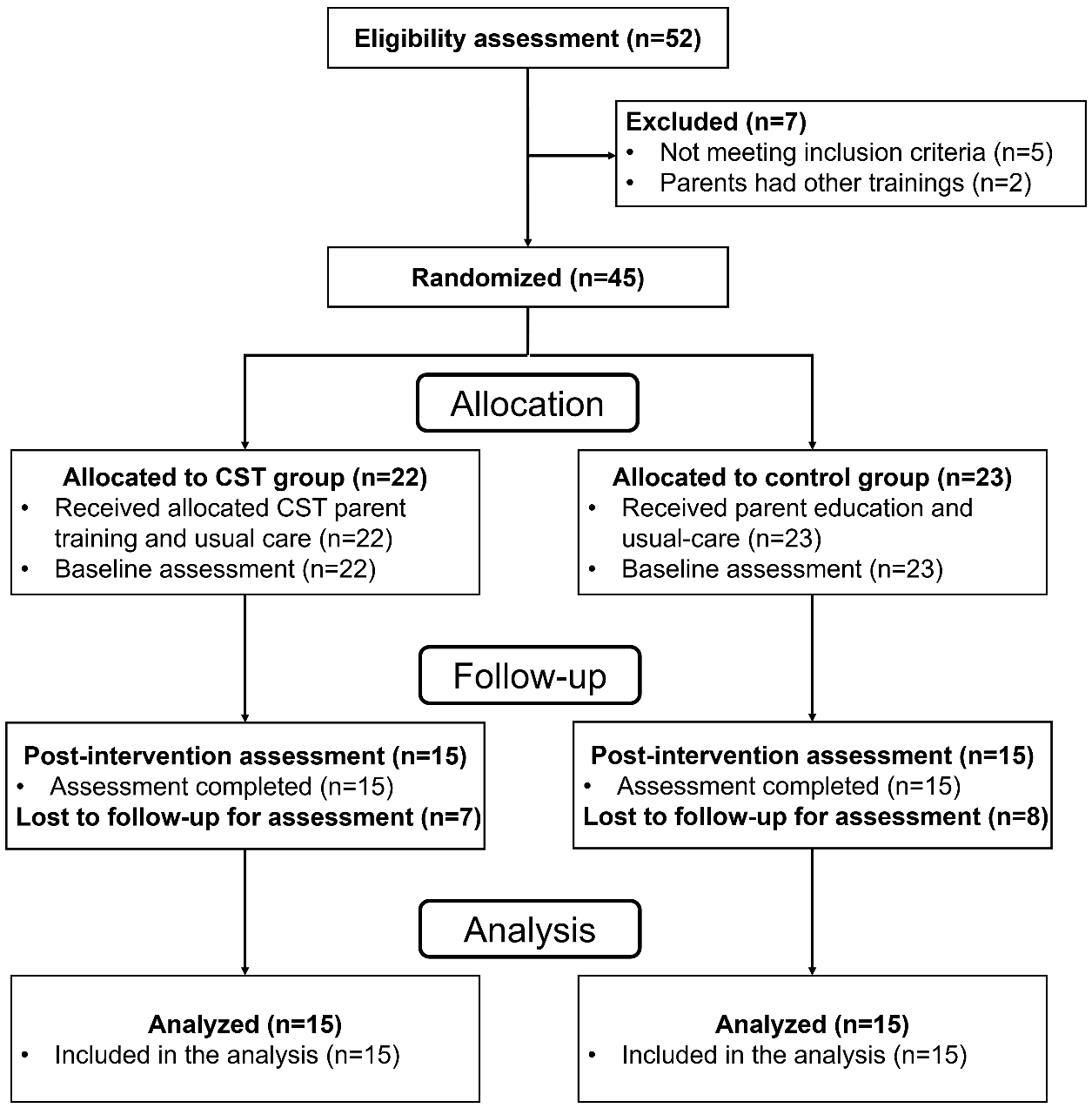
3.2.1. Feasibility of the Pilot Study
3.2.2. Differences Among Groups of Children
3.2.3. Differences Among Groups of Caregivers
4. Discussion
4.1. Cultural Adaptation and Modification of CST in Enhancing Clarity, Comprehension, and Caregiver Acceptance
4.2. Feasibility of Modified CST
4.3. Child Outcome Patterns
4.4. Caregiver-Related Outcome Patterns
4.5. Limitations and Future Recommendations
5. Conclusions
Author Contributions
Funding
Institutional Review Board Statement
Informed Consent Statement
Data Availability Statement
Acknowledgments
Conflicts of Interest
References
- Abidin, R. R. (1990). Parenting stress index short form: Test manual. Pediatric Psychological Press. [Google Scholar]
- Albin, M., Micsinszki, S., & Phoenix, M. (2022). Cultural adaptation of parent-implemented early communication interventions: A scoping review. American Journal of Speech-Language Pathology, 31(5), 2229–2247. [Google Scholar] [CrossRef] [Scilit]
- Al Maskari, T. S., Melville, C. A., & Willis, D. S. (2018). Systematic review: Cultural adaptation and feasibility of screening for autism in non-English speaking countries. International Journal of Mental Health Systems, 12, 22. [Google Scholar] [CrossRef] [Scilit]
- Arakelyan, S., Maciver, D., Rush, R., O’hare, A., & Forsyth, K. (2019). Family factors associated with participation of children with disabilities: A systematic review. Developmental Medicine and Child Neurology, 61, 514–522. [Google Scholar] [CrossRef] [Scilit] [PubMed]
- Bernal, G., Bonilla, J., & Bellido, C. (1995). Ecological validity and cultural sensitivity for outcome research: Issues for cultural adaptation and development of psychosocial treatments with Hispanics. Journal of Abnormal Child Psychology, 23, 67–82. [Google Scholar] [CrossRef] [Scilit]
- Braun, V., & Clarke, V. (2006). Using thematic analysis in psychology. Qualitative Research in Psychology, 3(2), 77–101. [Google Scholar] [CrossRef] [Scilit]
- Buzhardt, J., Rusinko, L., Heitzman-Powell, L., Trevino-Maack, S., & McGrath, A. (2016). Exploratory evaluation and initial adaptation of a parent training program for Hispanic families of children with autism. Family Process, 55(1), 107–122. [Google Scholar] [CrossRef] [Scilit] [PubMed]
- Castro, F. G., Barrera, M., Jr., & Holleran Steiker, L. K. (2010). Issues and challenges in the design of culturally adapted evidence-based interventions. Annual Review of Clinical Psychology, 6(1), 213–239. [Google Scholar] [CrossRef] [Scilit] [PubMed]
- Chen, B. Y., Zou, X. B., Ke, X. Y., Liang, F. J., Xiao, X., You, C., Chen, K. Y., & Deng, H. Z. (2023). WHO CST intervention for children with autism spectrum disorders aged 2 to 9 years in China. Chinese Journal of Child Health Care, 31(8), 913–919. [Google Scholar]
- Day, S., Laver, K., Jeon, Y. H., Radford, K., & Low, L. F. (2023). Frameworks for cultural adaptation of psychosocial interventions: A systematic review with narrative synthesis. Dementia, 22(8), 1921–1949. [Google Scholar] [CrossRef] [Scilit] [PubMed]
- de Leeuw, A., Happé, F., & Hoekstra, R. A. (2020). A conceptual framework for understanding the cultural and contextual factors on autism across the globe. Autism Research, 13(7), 1029–1050. [Google Scholar] [CrossRef] [Scilit] [PubMed]
- Dunst, C. J., Bruder, M. B., & Espe-Sherwindt, M. (2014). Family capacity-building in early childhood intervention: Do context and setting matter? School Community Journal, 24(1), 37–48. [Google Scholar]
- Durkin, M. S., Elsabbagh, M., Barbaro, J., Gladstone, M., Happe, F., Hoekstra, R. A., Lee, L.-C., Rattazzi, A., Stapel-Wax, J., Stone, W. L., Tager-Flusberg, H., Thurm, A., Tomlinson, M., & Shih, A. (2015). Autism screening and diagnosis in low resource settings: Challenges and opportunities to enhance research and services worldwide. Autism Research, 8(5), 473–476. [Google Scholar] [CrossRef] [Scilit] [PubMed]
- Fang, H., Ren, Y. L., Li, C. Y., & Ke, X. Y. (2019). Reliability and validity of the Chinese version of autism treatment evaluation checklist. Sichuan Mental Health, 32(6), 518–522. [Google Scholar] [CrossRef] [Scilit]
- Global Research on Developmental Disabilities Collaborators. (2018). Developmental disabilities among children younger than 5 years in 195 countries and territories, 1990–2016: A systematic analysis for the Global Burden of Disease Study 2016. The Lancet Global Health, 6(10), e1100–e1121. [Google Scholar] [CrossRef] [Scilit] [PubMed]
- Hackworth, N., Matthews, J., Westrupp, E., Nguyen, C., Phan, T., Scicluna, A., Cann, W., Bethelsen, D., Bennetts, S., & Nicholson, J. (2018). What influences parental engagement in early intervention? Parent, program and community predictors of enrolment, retention and involvement. Prevention Science, 19, 880–893. [Google Scholar] [CrossRef] [Scilit] [PubMed]
- Hoekstra, R. A., Girma, F., Tekola, B., & Yenus, Z. (2018). Nothing about us without us: The importance of local collaboration and engagement in the global study of autism. BJPsych International, 15(2), 40–43. [Google Scholar] [CrossRef] [Scilit] [PubMed]
- Hou, Y., Yan, T., & Zhang, J. (2023). The relationship between parental involvement and psychological adjustment among Chinese children with autism spectrum disorder in the transition from kindergarten to primary school: A chain-mediating model. Frontiers in Psychology, 14, 1087729. [Google Scholar] [CrossRef] [Scilit] [PubMed]
- Huang, A. X., Jia, M., & Wheeler, J. J. (2013). Children with autism in the People’s Republic of China: Diagnosis, legal issues, and educational services. Journal of Autism and Developmental Disorders, 43(9), 1991–2001. [Google Scholar] [CrossRef] [Scilit] [PubMed]
- Jeste, S. S. (2015). Neurodevelopmental behavioral and cognitive disorders. Continuum, 21(3), 690–714. [Google Scholar] [CrossRef] [Scilit] [PubMed]
- Julious, S. A. (2005). Sample size of 12 per group rule of thumb for a pilot study. Pharmaceutical Statistics, 4(4), 287–291. [Google Scholar] [CrossRef] [Scilit]
- Lancaster, G. A., Dodd, S., & Williamson, P. R. (2004). Design and analysis of pilot studies: Recommendations for good practice. Journal of Evaluation in Clinical Practice, 10, 307–312. [Google Scholar] [CrossRef] [Scilit]
- Lau, J. S.-P., Lai, S. M.-K., Ip, F. T.-S., Wong, P. W.-C., Team, W. C., Servili, C., Salomone, E., Pacione, L., Shire, S., & Brown, F. L. (2022). Acceptability and feasibility of the World Health Organization’s Caregiver Skills Training programme (WHO CST) delivered via elearning, videoconferencing, and in-person hybrid modalities in Hong Kong. Frontiers in Psychiatry, 13, 915263. [Google Scholar] [CrossRef] [Scilit] [PubMed]
- Li, X., Keown-Stoneman, C., Borkhoff, C., Wong, P., Arafeh, D., Tavares, E., Thadani, S., Maguire, J., & Birken, C. (2023). Factors associated with research participation in a large primary care practice-based pediatric cohort: Results from the TARGet Kids! longitudinal cohort study. PLoS ONE, 18, e0284192. [Google Scholar] [CrossRef] [Scilit] [PubMed]
- Liao, Y., Dillenburger, K., & Hu, X. (2022). Behavior analytic interventions for children with autism: Policy and practice in the United Kingdom and China. Autism, 26(1), 101–120. [Google Scholar] [CrossRef] [Scilit] [PubMed]
- Lord, C., Elsabbagh, M., Baird, G., & Veenstra-Vanderweele, J. (2018). Autism spectrum disorder. The Lancet, 392(10146), 508–520. [Google Scholar] [CrossRef] [Scilit] [PubMed]
- Lorig, K. R., Sobel, D. S., Ritter, P. L., Laurent, D., & Hobbs, M. (2001). Effect of a self-management program on patients with chronic disease. Effective Clinical Practice: ECP, 4(6), 256–262. [Google Scholar] [PubMed]
- McCabe, H. (2013). Bamboo shoots after the rain: Development and challenges of autism intervention in China. Autism: The International Journal of Research and Practice, 17(5), 510–526. [Google Scholar] [CrossRef] [Scilit] [PubMed]
- Patel, V., Saxena, S., Lund, C., Thornicroft, G., Baingana, F., Bolton, P., Chisholm, D., Collins, P. Y., Cooper, J. L., Eaton, J., Herrman, H., Herzallah, M. M., Huang, Y., Jordans, M. J. D., Kleinman, A., Medina-Mora, M. E., Morgan, E., Niaz, U., Omigbodun, O., … UnÜtzer, J. (2018). The lancet commission on global mental health and sustainable development. The Lancet, 392(10157), 1553–1598. [Google Scholar] [CrossRef] [Scilit] [PubMed]
- Qin, X. Q., Su, X. Y., & Gao, L. L. (2008). Investigation on parenting stress of parents of children with autism. Chinese Journal of Nursing, 43(10), 931–933. [Google Scholar]
- Rogge, N., & Janssen, J. (2019). The economic costs of autism spectrum disorder: A literature review. Journal of Autism and Developmental Disorders, 49(7), 2873–2900. [Google Scholar] [CrossRef] [Scilit] [PubMed]
- Salomone, E., Ferrante, C., Salandin, A., Ferrara, F., Torchio, E., Foletti, G., Ghersi, S., CST Italy Team, WHO CST Team, Pacione, L., & Servili, C. (2022a). Acceptability and feasibility of the World Health Organization’s Caregiver Skills Training implemented in the Italian National Health System. Autism, 26(4), 859–874. [Google Scholar] [CrossRef] [Scilit] [PubMed]
- Salomone, E., Pacione, L., Shire, S., Brown, F. L., Reichow, B., & Servili, C. (2019). Development of the WHO caregiver skills training program for developmental disorders or delays. Frontiers in Psychiatry, 10, 769. [Google Scholar] [CrossRef] [Scilit] [PubMed]
- Salomone, E., Reichow, B., Pacione, L., Shire, S., Shih, A., & Servili, C. (2018). Training caregivers to transform children’s lives. Early Childhood Matters, 127, 74–77. [Google Scholar]
- Salomone, E., Settanni, M., McConachie, H., Suma, K., Ferrara, F., Foletti, G., Salandin, A., WHO CST Team, Servili, C., & Adamson, L. B. (2022b). Pilot randomized controlled trial of the WHO Caregiver Skills Training in public health services in Italy. Journal of Autism and Developmental Disorders, 52(10), 4286–4300. [Google Scholar]
- Schlebusch, L., Chambers, N., Rosenstein, D., Erasmus, P., de Vries, P., & WHO CST Team. (2024). Supporting caregivers of children with developmental disabilities: Findings from a brief caregiver well-being programme in South Africa. Autism, 28(1), 199–214. [Google Scholar] [CrossRef] [Scilit] [PubMed]
- Seida, J. K., Ospina, M. B., Karkhaneh, M., Hartling, L., Smith, V., & Clark, B. (2009). Systematic reviews of psychosocial interventions for autism: An umbrella review. Developmental Medicine and Child Neurology, 51(2), 95–104. [Google Scholar] [CrossRef] [Scilit] [PubMed]
- Seng, G. J., Chiu, Y. N., Tsai, W. C., Lin, H. Y., Li, S. C., Hsiao, M. N., Liu, T. J., Chen, H. M., Shih, A., Chang, Y. C., Who Cst Team & Soong, W. T. (2022). Promotion and implementation effectiveness of World Health Organization’s Caregiver Skills Training program in Taiwan. Frontiers in Psychiatry, 13, 904380. [Google Scholar] [CrossRef] [Scilit] [PubMed]
- Sengupta, K., Shah, H., Ghosh, S., Sanghvi, D., Mahadik, S., Dani, A., Deshmukh, O., Pacione, L., Dixon, P., Salomone, E., Servili, C., & WHO CST Team. (2023). World Health Organization-Caregiver Skills Training (WHO CST) program: Feasibility of delivery by non-specialist providers in real-world urban settings in India. Journal of Autism and Developmental Disorders, 53(4), 1444–1461. [Google Scholar] [CrossRef] [Scilit] [PubMed]
- Settanni, M., Suma, K., Adamson, L. B., McConachie, H., Servili, C., & Salomone, E. (2024). Treatment mechanism of the WHO Caregiver Skills Training intervention for autism delivered in community settings. Autism Research, 17(1), 182–194. [Google Scholar] [CrossRef] [Scilit] [PubMed]
- Su, X., Long, T., Chen, L., & Fang, J. (2013). Early intervention for children with Autism spectrum disorders in China: A family perspective. Infants & Young Children, 26(2), 111–125. [Google Scholar] [CrossRef] [Scilit]
- Sun, X., Allison, C., Wei, L., Matthews, F. E., Auyeung, B., Wu, Y. Y., Griffiths, S., Zhang, J., Baron-Cohen, S., & Brayne, C. (2019). Autism prevalence in China is comparable to Western prevalence. Molecular Autism, 10, 7. [Google Scholar] [CrossRef] [Scilit] [PubMed]
- Szlamka, Z., Hanlon, C., Tekola, B., Pacione, L., Salomone, E., Servili, C., Hoekstra, R. A., & WHO CST Team. (2022). Exploring contextual adaptations in caregiver interventions for families raising children with developmental disa-bilities. PLoS ONE, 17(9), e0272077. [Google Scholar] [CrossRef] [Scilit] [PubMed]
- Tekola, B., Girma, F., Kinfe, M., Abdurahman, R., Tesfaye, M., Yenus, Z., Salomone, E., Pacione, L., Fekadu, A., Servili, C., Hanlon, C., Hoekstra, R., Brown, F., Shire, S., Speaks, A., Jones, L., & WHO CST Team. (2020). Adapting and pre-testing the World Health Organization’s Caregiver Skills Training programme for autism and other developmental disorders in a very low-resource setting: Findings from Ethiopia. Autism, 24(1), 51–63. [Google Scholar] [CrossRef] [Scilit] [PubMed]
- Washington-Nortey, M., Angwenyi, V., Demissie, M., Mwangome, E., Eshetu, T., Negussie, H., Goldsmith, K., Healey, A., Feyasa, M., Medhin, G., Belay, A., Azmeraw, T., Getachew, M., Birhane, R., Nasambu, C., Kifle, T., Kairu, A., Mkubwa, B., Girma, F., … Hoekstra, R. (2024). Supporting African communities to increase resilience and mental health of kids with developmental disabilities and their caregivers using the World Health Organization’s Caregiver Skills Training Programme (SPARK trial): Study protocol for a cluster randomized clinical controlled trial. Trials, 25(1), 713. [Google Scholar] [CrossRef] [Scilit] [PubMed]
- Wiltsey Stirman, S., Baumann, A. A., & Miller, C. J. (2019). The FRAME: An expanded framework for reporting adaptations and modifications to evidence-based interventions. Implementation Science, 14, 58. [Google Scholar] [CrossRef] [Scilit] [PubMed]
- Wong, P., Lam, Y., Lau, J., Fok, H., & WHO CST Team. (2022). Adapting and pretesting the World Health Organization’s Caregiver Skills Training Program for children with autism and developmental disorders or delays in Hong Kong. Scientific Reports, 12(1), 16932. [Google Scholar] [CrossRef] [Scilit] [PubMed]
- World Health Organization. (2022a). Caregiver skills training for families of children with developmental delays or disabilities: Adaptation and implementation guide. World Health Organization. [Google Scholar]
- World Health Organization. (2022b). Caregiver skills training for families of children with developmental delays or disabilities: Facilitators’ guide, group sessions 1–9. World Health Organization. [Google Scholar]
- World Health Organization. (2022c). Caregiver skills training for families of children with developmental delays or disabilities: Home visit guide for facilitators. World Health Organization. [Google Scholar]
- World Health Organization. (2022d). Caregiver skills training for families of children with developmental delays or disabilities: Introduction. World Health Organization. [Google Scholar]
- World Health Organization. (2022e). Caregiver skills training for families of children with developmental delays or disabilities: Participants’ guide, group sessions 1–9. World Health Organization. [Google Scholar]
- World Health Organization. (2026). Caregiver skills training for families of children with developmental delays or disabilities: Caregiver well-being—facilitators’ and participants’ guides. World Health Organization. [Google Scholar]
- Xu, Y., Kapetanakos, X., Meehan, M., Tam, J., & Vanegas, S. B. (2025). Patterns of caregiver communicative behaviors among low-income chinese immigrant mothers of children with autism—An exploratory study. Behavioral Sciences, 15(12), 1693. [Google Scholar] [CrossRef] [Scilit] [PubMed]
- Ye, K. W. (2022, May 27–29). A comparative study of children with Autism Spectrum Disorders (ASD) in China and the United States: Diagnosis, treatment and educational services. 2022 3rd International Conference on Mental Health, Education and Human Development (MHEHD 2022), Dalian, China. [Google Scholar] [CrossRef] [Scilit]
- Zhang, Y., Cui, L. J., Li, K. Q., Jiang, Q. P., Sun, X. L., Gao, L. H., Han, Y. C., Li, J. F., Liu, Y. Q., Yan, B. P., Lyu, H., & Yang, B. L. (2008). Supplemented edition of the General Health Questionnaire (GHQ-12) in epidemiological survey of mental illness. Chinese Mental Health Journal, 22(3), 189–192. [Google Scholar]
- Zhou, B., & Xu, X. (2019). Progress and challenges in early intervention of autism spectrum disorder in China. Pediatric Medicine, 2, 26. [Google Scholar] [CrossRef] [Scilit]


| No | Gender | Age | Experience with ASD (Year) | Occupation/Identity | Interview Format | Interview Location |
|---|---|---|---|---|---|---|
| G1-P1 a | Female | 38 | 1 | postgraduate student majoring in psychology | Focus group | Online meeting |
| G1-P2 | Female | 35 | 10 | Therapist | Focus group | Online meeting |
| G1-P3 | Female | 34 | 6 | Mother of children with autism | Focus group | Online meeting |
| G1-P4 | Female | 27 | 3 | Therapist | Focus group | Online meeting |
| G1-P5 | Female | 37 | 1 | Postgraduate student majoring in psychology | Focus group | Online meeting |
| G1-P6 | Female | 34 | 7 | Mother of children with autism | Focus group | Online meeting |
| G1-P7 | Female | 35 | 3 | Therapist | Focus group | Online meeting |
| G2-D1 b | Female | 50 | >20 | Child psychiatrist | Stakeholder consultation meeting | Rehabilitation institution |
| G2-T1 | Male | 55 | >20 | Directors of the rehabilitation institution | Stakeholder consultation meeting | Rehabilitation institution |
| G2-T2 | Female | 44 | 11 | Therapist | Stakeholder consultation meeting | Rehabilitation institution |
| G2-T3 | Female | 37 | 5 | Therapist | Stakeholder consultation meeting | Rehabilitation institution |
| G3-T1 c | Male | 52 | 6 | Directors of the rehabilitation institution | Stakeholder consultation meeting | Rehabilitation institution |
| G3-T2 | Female | 36 | 3 | Interventionists | Stakeholder consultation meeting | Rehabilitation institution |
| P1 d | Female | 35 | 7 | Mother of children with autism | One-to-one interview | Rehabilitation institution |
| P2 | Female | 39 | 5 | Mother of children with autism | One-to-one interview | Online Video call |
| P3 | Male | 43 | 9 | Father of children with autism | One-to-one interview | Rehabilitation institution |
| P4 | Male | 32 | 4 | Father of children with autism | One-to-one interview | Rehabilitation institution |
| P5 | Female | 34 | 6 | Mother of children with autism | One-to-one interview | Rehabilitation institution |
| P6 | Female | 57 | 5 | Grandma of children with autism | One-to-one interview | Rehabilitation institution |
| P7 | Female | 42 | 5 | Mother of children with autism | One-to-one interview | Video call |
| Dimensions | Themes and Sub-Themes | Primary Modification Focus Informed by FRAME |
|---|---|---|
| Persons | 1. The diversification of caregiver roles | Caregiver participants and engagement support |
| ||
| Content | 2. Regional resource integration
| Contextual content modification; linkage to local services |
3. Knowledge of developmental psychology
| Content clarification or addition | |
4. Content operation difficulties
| Delivery process modification; practice and implementation support | |
5. Family privacy protection
| Privacy safeguards in delivery; content clarification; caregiver expectation and engagement support | |
6. Caregiver consciousness motivation
| Content clarification and caregiver engagement support related to beliefs, expectations, family goal alignment, and sustained participation | |
7. Localization of examples
| Intervention material modification through substitution or revision of stories, characters, scenes, and examples to improve local relevance | |
8. Specification of Goals
| Goal-setting and progress-monitoring support to facilitate caregiver practice and application in daily routines | |
9. The effectiveness of strategies
| Strategy tailoring and practice support to address caregiver-reported implementation barriers while preserving core CST strategies | |
10. Module arrangement
| Structural and delivery-related modification involving content condensation, module integration, and localized simplification; requires attention to fidelity | |
| Methods | 11. Recruitment methods | Recruitment and reach strategies; modification to participant identification, recruitment channels, and eligibility-related implementation procedures |
| ||
12. Course structure design
| Delivery process and session structure modification; adjustment of theory-practice balance, session organization, feedback mechanisms, and problem-solving supports | |
13. Continuous support
| Implementation support and caregiver engagement strategies; ongoing reinforcement, feedback, and community-building supports to sustain caregiver participation and practice | |
14. Training scale
| Delivery-level modification related to group size, group composition, and training scalability | |
15. Training material
| Training material and support-tool modification; addition or revision of manuals and checklists to support caregiver comprehension and independent practice | |
16. Time allocation
| Structural and delivery-process modification involving training duration, frequency, individualized feedback, group discussion, and demonstration opportunities; requires attention to fidelity and practice dosage | |
17. Training formats
| Proposed caregiver engagement and delivery support involving peer exchange, mutual aid, continuous communication, and structured participation mechanisms | |
18. Training location
| Delivery setting modification; adjustment of online, offline, or hybrid delivery settings to improve feasibility and accessibility | |
| 19. Follow-up course | Proposed post-intervention support to maintain caregiver practice and engagement | |
| Concepts | 20. Cultural Taboos—Stigma of Illness
| Stigma-sensitive terminology and concept modification to improve cultural acceptability and reduce barriers to caregiver engagement |
21. Concept and Terminology Adjustment
| Terminology and concept clarification to improve semantic accuracy, caregiver comprehension, and local acceptability | |
| Language | 22. Localization of names | Linguistic and cultural tailoring of intervention materials through adaptation of character names to improve familiarity and local relevance |
| 23. Localization of intergenerational terms of address | Linguistic and cultural tailoring of kinship and intergenerational terms to improve semantic accuracy, cultural appropriateness, and caregiver comprehension | |
| 24. Make the language used to teach concepts more colloquial | Plain-language and colloquial adaptation of concept explanations to improve caregiver comprehension and acceptability | |
| Metaphors | 25. Cultural symbol adaptability
| Intervention material modification through substitution or removal of culturally incongruent religious symbols, illustrations, and culturally sensitive examples to improve local acceptability |
| Context | 26. Childcare
| Barrier-reduction and caregiver engagement support through childcare arrangements to improve attendance, accessibility, and participation feasibility |
27. Social, economic, educational and environmental conditions
| Contextual implementation support addressing family roles, educational beliefs, socioeconomic constraints, environmental barriers, caregiver motivation, and time burden to improve feasibility and sustained engagement | |
| Goals | 28. Personalized assessment and goal setting
| Individualized assessment, goal-setting, and feedback support to improve alignment between caregiver training goals, child baseline abilities, and family needs |
29. Psychological needs of caregivers
| Caregiver well-being and supplementary psychosocial support needs; potential addition of caregiver emotional support requiring consideration of intervention scope and fidelity | |
30. Caregiver behavioral goals
| Caregiver behavior-change goal setting, monitoring, and reinforcement to support acquisition and sustained use of CST strategies in daily routines |
| CST Sessions | Topic | Integrated Sessions | Topics |
|---|---|---|---|
| Session 1 | Introduction to the program and | Session 1 | Basic introduction to the course and how to arrange the environment to encourage children’s participation in activities. |
| Getting Children Engaged | |||
| Session 2 | Keeping Children Engaged | Session 2 | Help children to continuously participate in games and family activities. |
| Session 3 | Helping Children to Share Engagement in Play and Home Routines | ||
| Session 4 | Understanding Communication | Session 3 | Strategies for understanding and facilitating communication and teaching new skills step by step. |
| Session 5 | Promoting Communication | ||
| Session 6 | Teaching New Skills in Small Steps and Levels of Help | ||
| Session 7 | Preventing Challenging Behavior–Helping Children Stay Engaged and Regulated | Session 4 | Prevention, Management and Response to Challenging Behaviors. |
| Session 8 | Teaching Alternatives to Challenging Behavior | ||
| Session 9 | Problem Solving and Self-Care | Session 5 | Set the next goals, problem-solving strategies, and self-care for caregivers. |
| Variables | CST Group (n = 15) | Control Group (n = 15) | Group Comparison d |
|---|---|---|---|
| Children | |||
| Age a | 6.15 ± 1.59 | 6.08 ± 1.29 | t (28) = 0.128, p = 0.899 |
| Sex (male:female) | 10:5 | 10:5 | χ2 (1) = 0.00, p = 1.00 |
| Intervention duration a (hour/week) | 14.53 ± 6.99 | 16.47 ± 8.17 | |
| Types of education receiving b | |||
| Kindergarten | 5 (33.3%) | 4 (26.7%) | |
| Primary school | 1 (6.7%) | 1 (6.7%) | |
| Special education institutions | 9 (60.0%) | 10 (66.7%) | |
| Caregivers | |||
| Age c | 35 (31, 41) | 36 (32, 42) | t (28) = 0.021, p = 0.984 |
| Sex (male:female) | 1:14 | 2:13 | p = 1.00 |
| Roles of caregivers b | |||
| Father | 1 (6.7%) | 2 (13.3%) | |
| Mother | 12 (80.0%) | 10 (66.7%) | |
| Grandparents | 2 (13.3%) | 2 (13.3%) | |
| Others | 0 | 1 (6.7%) | |
| Education level b | |||
| High school and below | 7 (46.7%) | 3 (20%) | |
| Diploma | 3 (20%) | 7 (46.7%) | |
| Bachelor | 3 (20%) | 4 (26.7%) | |
| Master and above | 1 (6.7%) | 1 (6.7%) | |
| Monthly household income b (Yuan) | |||
| 5000 and below | 3 (20%) | 4 (26.7%) | |
| 5000 to 9999 | 4 (26.7%) | 6 (40.0%) | |
| 10,000 to 15,000 | 8 (53.3%) | 4 (26.7%) | |
| 15,000 and above | 0 | 1 (6.7%) |
| Variables | CST Pre | CST Post | Control Pre | Control Post | Baseline | Estimated Marginal Mean Difference | ANCOVA | Effect Size |
|---|---|---|---|---|---|---|---|---|
| (M ± SD) | (M ± SD) | (M ± SD) | (M ± SD) | t (p) | (95% CI) | F (p) | η2p | |
| Autism symptom a | 53.67 ± 14.54 | 48.2 ± 17.09 | 57.6 ± 13.65 | 57.2 ± 14.94 | −0.764 (0.451) | −4.841 * [−9.327, −0.355] | 1.882 (0.182) | 0.067 |
| Speech/Language/Communication b | 9.87 ± 6.23 | 8.47 ± 5.38 | 10 ± 3.74 | 10.6 ± 4.58 | −0.071 (0.994) | - | - | - |
| Sociability | 17.73 ± 6.35 | 16.33 ± 6.09 | 16.87 ± 4.45 | 16.87 ± 4.45 | 0.433 (0.669) | −0.981 [−3.333, 1.370] | 0.008 (0.931) | 0.000 |
| Sensory/Cognitive awareness | 11 ± 5.26 | 8.73 ± 4.68 | 12.5 ± 4.24 | 12 ± 4.94 | −0.917 (0.367) | −1.798 * [−3.522, −0.074] | 0.511 (0.481) | 0.019 |
| Health/Physiology/Behavior | 15.07 ± 5.35 | 14.67 ± 5.78 | 14.67 ± 5.78 | 18.07 ± 7.16 | −1.214 (0.235) | −0.835 [−3.393, 1.723] | 0.471 (0.499) | 0.018 |
| Variables | CST Pre | CST Post | Control Pre | Control Post | Baseline | Estimated Marginal Mean Difference a | ANCOVA | Effect Size |
|---|---|---|---|---|---|---|---|---|
| (M ± SD) | (M ± SD) | (M ± SD) | (M ± SD) | t (p) | (95% CI) | F (p) | η2p | |
| GHQ | 8.73 ± 4.83 | 7.60 ± 5.57 | 7.8 ± 5.38 | 7.2 ± 4.89 | 0.500 (0.621) | −0.356 * [−2.862, 2.150] | 1.864 (0.184) | 0.067 |
| WHO-CKST | 91.33 ± 6.82 | 100.60 ± 7.58 | 86 ± 5.96 | 81.47 ± 8.63 | 2.280 * (0.031) | 15.252 *** [9.595, 20.909] | 0.315 (0.580) | 0.012 |
| CSQ | 50.73 ± 6.63 | 52.53 ± 7.59 | 46.6 ± 7.32 | 45.73 ± 6.91 | 1.622 (0.116) | 3.259 [−0.125, 6.643] | 0.310 (0.582) | 0.012 |
| PSI-SF | 93.27 ± 18.51 | 87.53 ± 14.82 | 95.67 ± 17.67 | 97.73 ± 15.87 | −0.363 (0.719) | −8.392 ** [−13.914, 2.896] | 0.057 (0.813) | 0.002 |
Disclaimer/Publisher’s Note: The statements, opinions and data contained in all publications are solely those of the individual author(s) and contributor(s) and not of MDPI and/or the editor(s). MDPI and/or the editor(s) disclaim responsibility for any injury to people or property resulting from any ideas, methods, instructions or products referred to in the content. |
© 2026 by the authors. Licensee MDPI, Basel, Switzerland. This article is an open access article distributed under the terms and conditions of the Creative Commons Attribution (CC BY) license.
Share and Cite
Meng, R.; Kong, L.; WHO CST Team; Wang, C. Development and Preliminary Findings of a Modified WHO Caregiver Skills Training Program for Children with Autism in Mainland China. Behav. Sci. 2026, 16, 1159. https://doi.org/10.3390/bs16071159
Meng R, Kong L, WHO CST Team, Wang C. Development and Preliminary Findings of a Modified WHO Caregiver Skills Training Program for Children with Autism in Mainland China. Behavioral Sciences. 2026; 16(7):1159. https://doi.org/10.3390/bs16071159
Chicago/Turabian StyleMeng, Rui, Lingyue Kong, WHO CST Team, and Chongying Wang. 2026. "Development and Preliminary Findings of a Modified WHO Caregiver Skills Training Program for Children with Autism in Mainland China" Behavioral Sciences 16, no. 7: 1159. https://doi.org/10.3390/bs16071159
APA StyleMeng, R., Kong, L., WHO CST Team, & Wang, C. (2026). Development and Preliminary Findings of a Modified WHO Caregiver Skills Training Program for Children with Autism in Mainland China. Behavioral Sciences, 16(7), 1159. https://doi.org/10.3390/bs16071159