The Influence of Different Cognitive Skills on Learning Agility Among Gen Z in Established and Start-Up Companies


Abstract
1. Introduction
2. Theoretical Background
2.1. Cognitive Abilities
2.2. Learning Agility
2.3. Agility and Learning Agility in the Digital Transformation Era
2.4. Learning Agility as an Individual Capability
2.5. Cognitive on Learning Agility
2.6. Technology-Driven Work Environment as a Boundary Condition: Digital Transformation Characteristics in Established and Start-Up Companies
2.7. Existing Studies and Research Gap
3. Methods
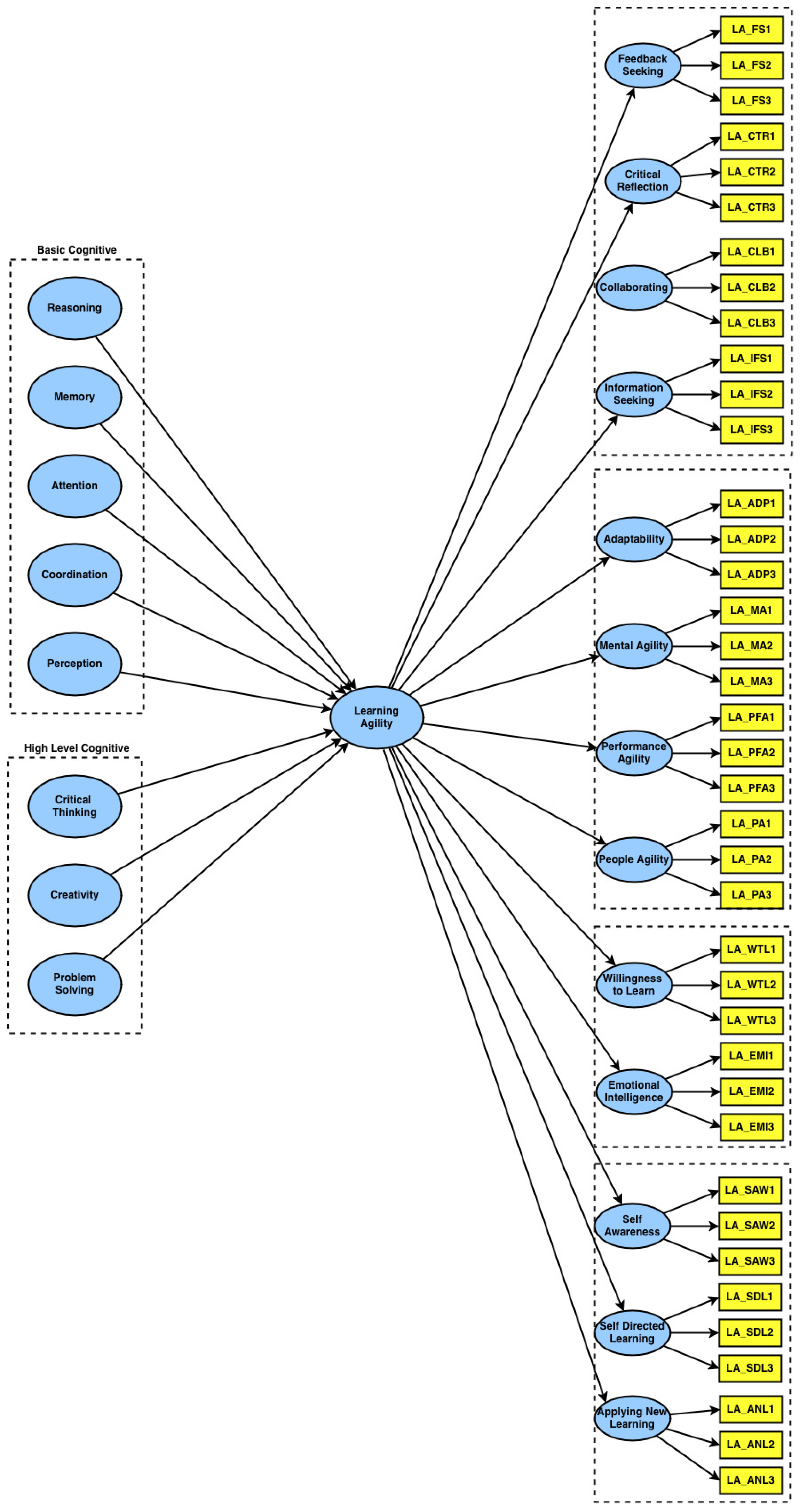
3.1. Conceptual Model
3.2. Subjects
3.3. Sampling Procedure and Data Collection
3.4. Instruments
3.4.1. Measurement of Basic Cognitive Abilities
3.4.2. Measurement of High-Level Cognitive Abilities
3.4.3. Measurement of Learning Agility
3.4.4. Data Analysis
4. Results
4.1. Subjects
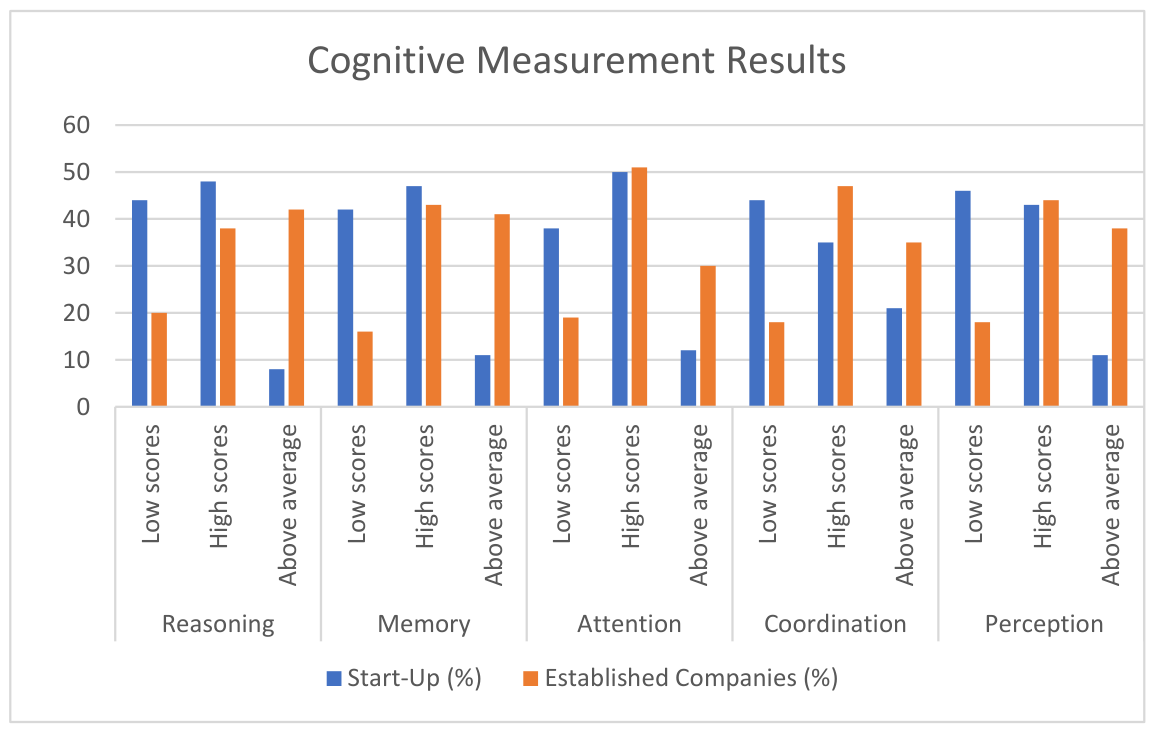
4.2. Measurement of Basic Cognitive Abilities
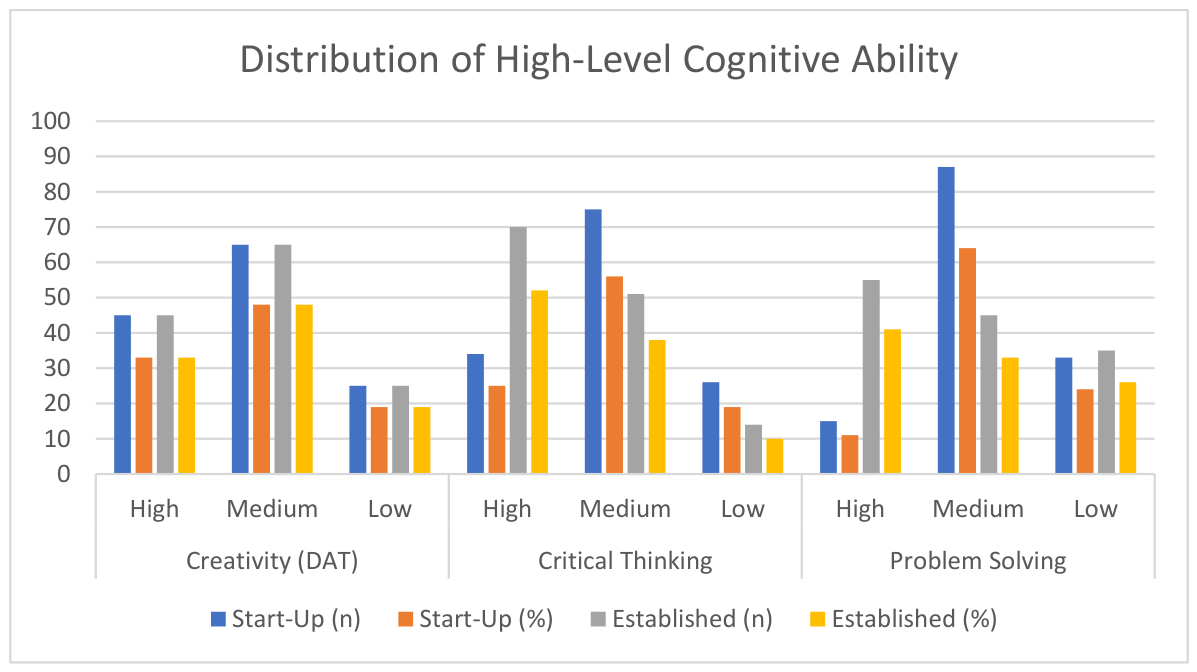
4.3. Measurement of High-Level Cognitive Abilities
4.4. Measurement of Learning Agility
4.4.1. Measurement Model Evaluation
4.4.2. Second-Order Measurement Model
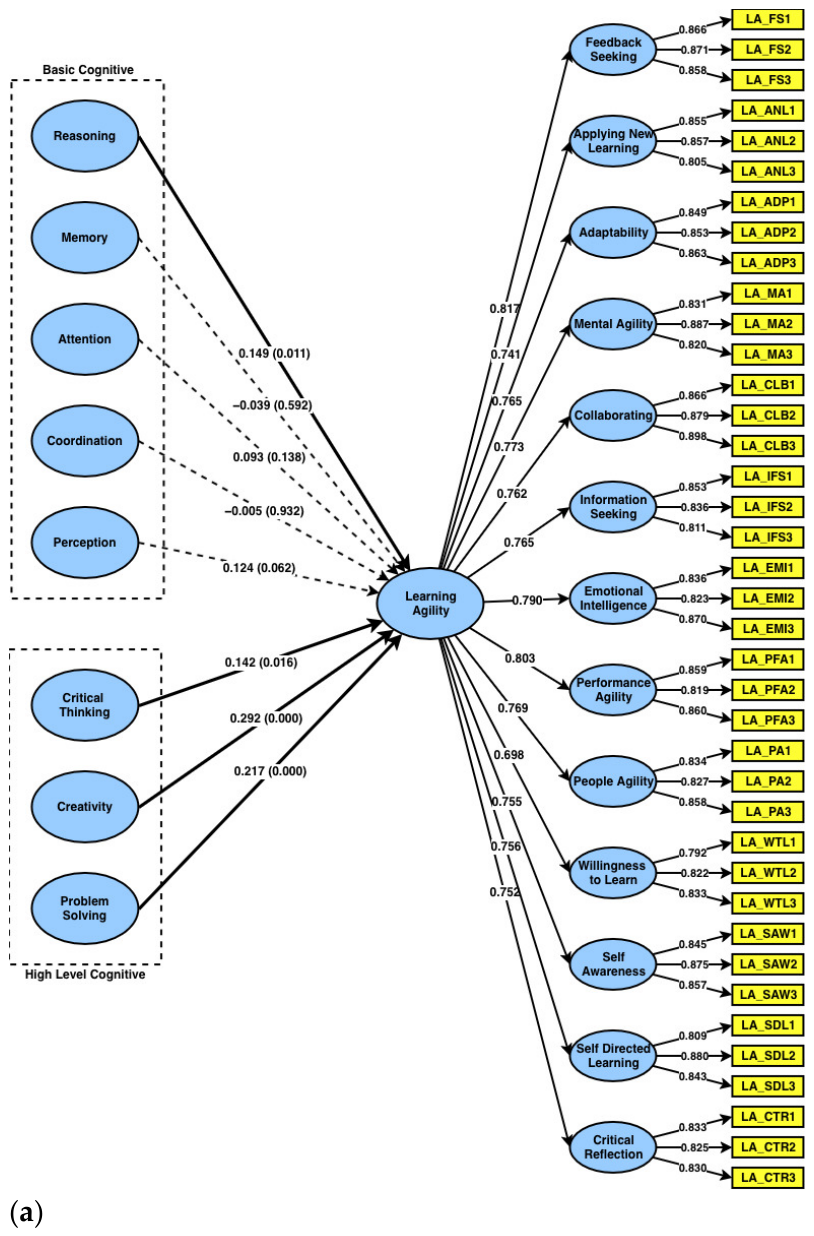
4.5. Cognitive Determinants of Learning Agility
5. Discussion
5.1. Cognitive Determinants of Learning Agility in the Combined Sample
5.2. Cognitive Determinants of Learning Agility in Established Companies
5.3. Cognitive Determinants of Learning Agility in Start-Up Companies
5.4. Contextual Differences in Learning Agility Drivers
5.5. Creativity as a Key Cognitive Factor Associated with Learning Agility
5.6. Theoretical Implications
5.7. Managerial and Practical Implications
5.8. Limitations and Future Research
6. Conclusions
Supplementary Materials
Author Contributions
Funding
Institutional Review Board Statement
Informed Consent Statement
Data Availability Statement
Conflicts of Interest
Appendix A

| Variable Category | Variable | Conceptual Definition | Reference |
|---|---|---|---|
| Basic Cognitive Abilities | Reasoning | The logical thinking process which is inductive or deductive is used to draw conclusions from a fact. | Goel and Waechter (2017) |
| Memory | The ability to store information or representations of past experiences, based on the mental processes of learning, maintenance over a period of time, and retrieval or reactivation of that memory. | Terry (2017) | |
| Attention | The ability to focus on relevant information while ignoring distractions | Lepsien and Nobre (2006) | |
| Coordination | Integration of cognitive processing with motor responses | R. C. Schmidt et al. (2011) | |
| Perception | The process of attaining awareness or understanding of sensory information | Qiong (2017) | |
| High-Level Cognitive Abilities | Creativity | The mindful ability to generate a variety of novel ideas following an open-ended prompt | Olson et al. (2023) |
| Critical Thinking | Ability to evaluate arguments, detect assumptions, and make evidence-based judgments | Dwyer (2017) | |
| Problem Solving | The ability to identify problems, search for and select various alternative solutions and determine decisions in resolving all problems faced | Bratsberg (2012) | |
| Learning Agility | Adaptability | The ability of individuals to adapt effectively to changes in the environment and new work situations | Lombardo and Eichinger (2000) |
| Applying New Learning | Ability to apply learned lessons to new situations | De Meuse et al. (2012) | |
| Collaborating | The ability to actively collaborate with others to create unique learning opportunities. | Hoff and Smith (2020) | |
| Emotional Intelligence | The ability to adapt interpersonally by demonstrating empathy, emotional control, and effective social interaction in leadership and learning contexts. | Dries and Pepermans (2012) | |
| Feedback Seeking | The habit of actively seeking constructive feedback on personal ideas and performance as a means of self-development. | Smith (2015) | |
| Mental Agility | Ability to operate effectively in complex situations, to view problems from different perspectives, and to respond appropriately in novel and uncertain environments. | Lombardo and Eichinger (2000) | |
| Information Seeking | The habit of continuously seeking and updating information and knowledge to remain relevant and competent. | Lombardo and Eichinger (2000) | |
| People Agility | Ability to work effectively with diverse individuals, supported by strong self-awareness and the capacity to interact with others in a constructive manner. | Lombardo and Eichinger (2000) | |
| Performance Agility | Ability to achieve expected outcomes in uncertain or first-time situations, even when confronted with new and challenging conditions. | Lombardo and Eichinger (2000) | |
| Critical Reflection | The habit of actively evaluating one’s own behavior and performance critically to encourage continuous improvement and learning. | Mitchinson et al. (2012) | |
| Self-Awareness | The ability to recognize personal strengths and weaknesses as a basis for self-growth and development. | De Meuse et al. (2012) | |
| Self-Directed Learning | Proactively seeking out learning experiences | J. Lee and Song (2022) | |
| Willingness to Learn | Motivation and openness to learn new skills | Im et al. (2017) |
| Dimension | Code | Item | Reference |
|---|---|---|---|
| Adaptability | LA ADP1 | I can quickly adapt when there are changes in the workplace. | Pulakos et al. (2000) |
| LA ADP2 | I feel comfortable working in situations I have never experienced before. | LePine et al. (2000) | |
| LA ADP3 | I can quickly adjust my work priorities when sudden changes occur. | Griffin and Hesketh (2003) | |
| Applying New Learning | LA ANL1 | I often apply previous experiences to complete new tasks. | DeRue et al. (2012) |
| LA ANL2 | I set my learning goals independently. | García et al. (2024) | |
| LA ANL3 | I am pleased to practice the knowledge. | S. Wang et al. (2021) | |
| Collaborating | LA CLB1 | I enjoy collaborating in a team to complete tasks. | Pulakos et al. (2002) |
| LA CLB2 | I am open to ideas from colleagues to achieve the best results. | Bouland-van Dam et al. (2022) | |
| LA CLB3 | I can resolve differences of opinion within a team constructively to achieve shared goals. | De Dreu and Weingart (2003) | |
| Emotional Intelligence | LA EMI1 | I am able to control my emotions in stressful work situations. | Ployhart and Bliese (2006) |
| LA EMI2 | I can understand other people’s feelings while working in a team. | Salovey et al. (2003) | |
| LA EMI3 | I can use positive emotions to enhance my motivation and job performance | Mayer et al. (2008) | |
| Feedback Seeking | LA FS1 | I actively seek feedback from my supervisor regarding my performance. | Nae et al. (2015) |
| LA FS2 | I ask for feedback from colleagues to improve work results. | London (2014) | |
| LA FS3 | I independently monitor my work performance to evaluate whether it meets expected standards | Anseel et al. (2015) | |
| Mental Agility | LA MA1 | I can think flexibly when facing sudden changes. | Karman (2020) |
| LA MA2 | I can solve problems from different perspectives. | Van Merrienboer (2013) | |
| LA MA3 | I can quickly change my approach when the initial solution does not work. | Pulakos et al. (2002) | |
| Information Seeking | LA IFS1 | I actively seek new information to support my work. | Shah (2014) |
| LA IFS2 | I use various sources to deepen my understanding of tasks. | Cerasoli et al. (2014) | |
| LA IFS3 | I am confident of getting useful information even if there is no one around to show me how to do it. | F. L. Cook et al. (2010) | |
| People Agility | LA PA1 | I can adjust my communication style with different types of colleagues. | Luo et al. (2016) |
| LA PA2 | I am able to build positive work relationships with different types of people. | Kahn (2017) | |
| LA PA3 | I easily adapt when working with people from diverse backgrounds. | Sam and Berry (2010) | |
| Performance Agility | LA PFA1 | I remain productive even when working under time pressure. | Gusy et al. (2021) |
| LA PFA2 | I am task-oriented, completing assignments on time and efficiently. | Kao (2017) | |
| LA PFA3 | I stay focused on achieving results even when facing uncertainty. | Tseng and Kang (2008) | |
| Critical Reflection | LA CTR1 | I evaluate my work methods after completing tasks. | Claessens et al. (2010) |
| LA CTR2 | I learn from the mistakes I have made. | Kwok and Kwong (2023) | |
| LA CTR3 | I identify aspects of my work process that most hinder my performance. | Salanova et al. (2010) | |
| Self-awareness | LA SAW1 | I am aware of my strengths and weaknesses at work. | Sutton et al. (2015) |
| LA SAW2 | I reflect on how my behavior affects others in the workplace. | Eurich (2018) | |
| LA SAW3 | I recognize my emotions and how they influence my work performance. | Moon and Hur (2011) | |
| Self-directed Learning | LA SDL1 | I take the initiative to identify my learning needs. | Hetzner et al. (2012) |
| LA SDL2 | I set personal goals for my learning and development. | Travers et al. (2015) | |
| LA SDL3 | I actively search for resources to improve my skills. | Van den Heuvel et al. (2015) | |
| Willingness to Learn | LA WTL1 | I view challenges as opportunities to grow and learn. | Blackwell et al. (2007) |
| LA WTL2 | I am motivated to continuously improve my knowledge and abilities. | D. A. Cook and Artino (2016) | |
| LA WTL3 | I persist in learning new things even when the process is challenging and uncertain. | Overoye and Storm (2015) |
References
- Ackerman, P. L., Beier, M. E., & Boyle, M. D. (2002). Individual differences in working memory within a nomological network of cognitive and perceptual speed abilities. Journal of Experimental Psychology: General, 131(4), 567. [Google Scholar] [CrossRef]
- Al-Ghadouni, A. B. M. (2021). Critical thinking: Components, skills, and strategies. Revista Argentina de Clínica Psicológica, 30(2), 1. [Google Scholar] [CrossRef]
- Alkhatib, O. J. (2019, March 26–April 10). A framework for implementing higher-order thinking skills (problem-solving, critical thinking, creative thinking, and decision-making) in engineering & humanities. The 2019 Advances in Science and Engineering Technology International Conferences (ASET), Dubai, United Arab Emirates. [Google Scholar]
- Amirkhizi, P. J., Zeyghami, F., & Pourmohamadi, M. (2026). Investigating the use of design thinking in identifying wicked problems of startups. Journal of Innovation and Entrepreneurship, 15(1), 16. [Google Scholar] [CrossRef]
- Amouzgar, B. (2022). Critical thinking to creative problem-solving in engineering and management. Walden University. [Google Scholar]
- Andersen, T. C. K., Aagaard, A., & Magnusson, M. (2022). Exploring business model innovation in SMEs in a digital context: Organizing search behaviours, experimentation and decision-making. Creativity and Innovation Management, 31(1), 19–34. [Google Scholar]
- Anseel, F., Beatty, A. S., Shen, W., Lievens, F., & Sackett, P. R. (2015). How are we doing after 30 years? A meta-analytic review of the antecedents and outcomes of feedback-seeking behavior. Journal of Management, 41(1), 318–348. [Google Scholar]
- Antonacopoulou, E. P., Moldjord, C., Steiro, T. J., & Stokkeland, C. (2019). The new learning organisation: PART I–institutional reflexivity, high agility organising and learning leadership. The Learning Organization, 26(3), 304–318. [Google Scholar]
- Azli Syam, N. A., Isa, N. K. M., Yunos, M. Y. M., Isa, N. J. M., & Sormin, D. (2026). Content validity of a sustainable food management assessment instrument for island hotels using I-CVI and mean analysis. Discover Applied Sciences. [Google Scholar]
- Baran, B. E., & Woznyj, H. M. (2020). Managing VUCA: The human dynamics of agility (p. 100787). Organizational Dynamics. [Google Scholar]
- Bedford, C. L. (2011). The role of learning agility in workplace performance and career advancement. University of Minnesota. [Google Scholar]
- Bennett, N., & Lemoine, G. J. (2014). What a difference a word makes: Understanding threats to performance in a VUCA world. Business Horizons, 57(3), 311–317. [Google Scholar] [CrossRef]
- Blackwell, L. S., Trzesniewski, K. H., & Dweck, C. S. (2007). Implicit theories of intelligence predict achievement across an adolescent transition: A longitudinal study and an intervention. Child Development, 78(1), 246–263. [Google Scholar] [CrossRef] [PubMed]
- Blank, S., & Eckhardt, J. T. (2024). The lean startup as an actionable theory of entrepreneurship. Journal of Management, 50(8), 3012–3034. [Google Scholar] [CrossRef]
- Bouland-van Dam, S. I., Oostrom, J. K., & Jansen, P. G. (2022). Development and validation of the leadership learning agility scale. Frontiers in Psychology, 13, 991299. [Google Scholar] [CrossRef] [PubMed]
- Bratsberg, H. M. (2012). Empathy maps of the FourSight preferences. International Center for Studies in Creativity. [Google Scholar]
- Bronkhorst, H., Roorda, G., Suhre, C., & Goedhart, M. (2020). Logical reasoning in formal and everyday reasoning tasks. International Journal of Science and Mathematics Education, 18(8), 1673–1694. [Google Scholar]
- Carayannis, E. G., Papamichail, G., Zotas, N., & Askounis, D. (2025). Corporate foresight: Navigating uncertainty in a VUCA world. Journal of the Knowledge Economy, 16(6), 17494–17515. [Google Scholar] [CrossRef]
- Carmeli, A., & Hartmann, S. (2024). Learning agility orientation, ambidextrous learning, and resilience. IEEE Transactions on Engineering Management, 71, 12946–12959. [Google Scholar] [CrossRef]
- Cerasoli, C. P., Nicklin, J. M., & Ford, M. T. (2014). Intrinsic motivation and extrinsic incentives jointly predict performance: A 40-year meta-analysis. Psychological Bulletin, 140(4), 980. [Google Scholar] [CrossRef] [PubMed]
- Claessens, B. J., Van Eerde, W., Rutte, C. G., & Roe, R. A. (2010). Things to do today: A daily diary study on task completion at work. Applied Psychology, 59(2), 273–295. [Google Scholar] [CrossRef]
- Cook, D. A., & Artino, A. R., Jr. (2016). Motivation to learn: An overview of contemporary theories. Medical Education, 50(10), 997–1014. [Google Scholar] [CrossRef] [PubMed]
- Cook, F. L., Jacobs, L. R., & Kim, D. (2010). Trusting what you know: Information, knowledge, and confidence in social security. The Journal of Politics, 72(2), 397–412. [Google Scholar] [CrossRef]
- Cowan, N. (2014). Working memory underpins cognitive development, learning, and education. Educational Psychology Review, 26(2), 197–223. [Google Scholar] [CrossRef] [PubMed]
- De Dreu, C. K., & Weingart, L. R. (2003). Task versus relationship conflict, team performance, and team member satisfaction: A meta-analysis. Journal of Applied Psychology, 88(4), 741. [Google Scholar] [CrossRef] [PubMed]
- De Meuse, K. P. (2017). Learning agility: Its evolution as a psychological construct and its empirical relationship to leader success. Consulting Psychology Journal: Practice and Research, 69(4), 267. [Google Scholar] [CrossRef]
- De Meuse, K. P., Dai, G., & Hallenbeck, G. S. (2010). Learning agility: A construct whose time has come. Consulting Psychology Journal: Practice and Research, 62(2), 119. [Google Scholar] [CrossRef]
- De Meuse, K. P., Dai, G., Swisher, V. V., Eichinger, R. W., & Lombardo, M. M. (2012). Leadership development: Exploring, clarifying, and expanding our understanding of learning agility. Industrial and Organizational Psychology, 5(3), 280–286. [Google Scholar] [CrossRef]
- DeRue, D. S., Ashford, S. J., & Myers, C. G. (2012). Learning agility: Many questions, a few answers, and a path forward. Industrial and Organizational Psychology, 5(3), 316–322. [Google Scholar] [CrossRef][Green Version]
- Dondi, M., Klier, J., Panier, F., & Schubert, J. (2021). Defining the skills citizens will need in the future world of work (p. 25). McKinsey & Company. [Google Scholar]
- Dries, N., & Pepermans, R. (2012). How to identify leadership potential: Development and testing of a consensus model. Human Resource Management, 51(3), 361–385. [Google Scholar] [CrossRef]
- Du, J., & Chen, Z. (2018). Applying Organizational Ambidexterity in strategic management under a “VUCA” environment: Evidence from high tech companies in China. International Journal of Innovation Studies, 2(1), 42–52. [Google Scholar] [CrossRef]
- Dumitru, D., & Halpern, D. F. (2023). Critical thinking: Creating job-proof skills for the future of work. Journal of Intelligence, 11(10), 194. [Google Scholar] [CrossRef] [PubMed]
- Dwyer, C. P. (2017). Critical thinking: Conceptual perspectives and practical guidelines. Cambridge University Press. [Google Scholar]
- Dwyer, C. P., Campbell, D., & Seery, N. (2025). An evaluation of the relationship between critical thinking and creative thinking: Complementary metacognitive processes or strange bedfellows? Journal of Intelligence, 13(2), 23. [Google Scholar] [CrossRef] [PubMed]
- Embon-Magal, S., Krasovsky, T., Doron, I., Asraf, K., Haimov, I., Gil, E., & Agmon, M. (2022). The effect of co-dependent (thinking in motion [TIM]) versus single-modality (CogniFit) interventions on cognition and gait among community-dwelling older adults with cognitive impairment: A randomized controlled study. BMC Geriatrics, 22(1), 720. [Google Scholar] [CrossRef] [PubMed]
- Eurich, T. (2018). The right way to respond to negative feedback. Harvard Business Review. [Google Scholar]
- Eysenck, M. W., & Brysbaert, M. (2018). Fundamentals of cognition. Routledge. [Google Scholar]
- Fletcher, G., & Griffiths, M. (2020). Digital transformation during a lockdown. International Journal of Information Management, 55, 102185. [Google Scholar] [CrossRef] [PubMed]
- Frare, A. B., & Beuren, I. M. (2025). The effects of organic and mechanistic forms of control on the innovative behavior ofstartup managers. Journal of Accounting & Organizational Change, 1–32. [Google Scholar] [CrossRef]
- Frazier, S., Pitts, B. J., & McComb, S. (2022). Measuring cognitive workload in automated knowledge work environments: A systematic literature review. Cognition, Technology & Work, 24(4), 557–587. [Google Scholar] [CrossRef]
- Frolova, Y. (2025). Career future time perspective: Influences of proactive decision-making and learning agility. British Journal of Guidance & Counselling, 53(4), 629–645. [Google Scholar] [CrossRef]
- Fuchs, H., Benkova, E., Fishbein, A., & Fuchs, A. (2023, November 15–17). The importance of psychological and cognitive flexibility in educational processes to prepare and acquire the skills required in the twenty-first century. The Global Conference on Entrepreneurship and the Economy in an Era of Uncertainty, Pattaya, Thailand. [Google Scholar]
- García, J. A. M., Gómez, C. G., López, A. T., & Schlosser, M. J. (2024). Applying the technology acceptance model to online self-learning: A multigroup analysis. Journal of Innovation & Knowledge, 9(4), 100571. [Google Scholar] [CrossRef]
- Garwood, T. (2020). Influence of a leader’s creative problem solving preference on perceived efficacy of team collaboration. Creighton University. [Google Scholar]
- Giannakopoulos, A. (2012). How critical thinking, problem-solving and mathematics content knowledge contribute to vocational students’ performance at tertiary level: Identifying their journeys. University of Johannesburg (South Africa). [Google Scholar]
- Goel, V., & Waechter, R. (2017). Inductive and deductive reasoning: Integrating insights from philosophy, psychology, and neuroscience. In International handbook of thinking and reasoning (pp. 218–247). Routledge. [Google Scholar]
- Griffin, B., & Hesketh, B. (2003). Adaptable behaviours for successful work and career adjustment. Australian Journal of psychology, 55(2), 65–73. [Google Scholar] [CrossRef]
- Gusy, B., Lesener, T., & Wolter, C. (2021). Time pressure and health-related loss of productivity in university students: The mediating role of exhaustion. Frontiers in Public Health, 9, 653440. [Google Scholar] [CrossRef] [PubMed]
- Hair, J., & Alamer, A. (2022). Partial least squares structural equation modeling (PLS-SEM) in second language and education research: Guidelines using an applied example. Research Methods in Applied Linguistics, 1(3), 100027. [Google Scholar] [CrossRef]
- Hair, J. F., Risher, J. J., Sarstedt, M., & Ringle, C. M. (2019). When to use and how to report the results of PLS-SEM. European Business Review, 31(1), 2–24. [Google Scholar] [CrossRef]
- Han, S., Zhang, D., Zhang, H., & Lin, S. (2025). Artificial intelligence technology, organizational learning capability, and corporate innovation performance: Evidence from Chinese specialized, refined, unique, and innovative enterprises. Sustainability, 17(6), 2510. [Google Scholar] [CrossRef]
- Hashai, N. (2018). Focusing the high-technology firm: How outsourcing affects technological knowledge exploration. Journal of Management, 44(5), 1736–1765. [Google Scholar]
- Hetzner, S., Heid, H., & Gruber, H. (2012). Change at work and professional learning: How readiness to change, self-determination and personal initiative affect individual learning through reflection. European Journal of Psychology of Education, 27(4), 539–555. [Google Scholar] [CrossRef]
- Hezlett, S. A., & Kuncel, N. R. (2012). Prioritizing the learning agility research agenda. Industrial and Organizational Psychology, 5(3), 296–301. [Google Scholar] [CrossRef]
- Hoff, D. F., & Burke, W. W. (2017). Learning agility: The key to leader potential. Hogan Assessments. [Google Scholar]
- Hoff, D. F., & Smith, D. E. (2020). Leadership and learning agility: A lifelong journey for W. Warner Burke. The Journal of Applied Behavioral Science, 56(4), 492–502. [Google Scholar] [CrossRef]
- Hunt, E., & Madhyastha, T. M. (2012). Cognitive demands of the workplace. Journal of Neuroscience, Psychology, and Economics, 5(1), 18. [Google Scholar] [CrossRef]
- Im, C., Wee, Y., & Lee, H. (2017). A study on the development of the learning agility scale. The Korean Journal of Human Resource Development Quarterly, 19(2), 81–108. [Google Scholar] [CrossRef]
- Jaafar, M., Khan, K. N., & Salman, A. (2026). A systematic review and framework for organizational agility antecedents towards industry 4.0. Management Review Quarterly, 76(1), 487–512. [Google Scholar]
- Jose, B., Joseph, D., Mohan, V., Alexander, E., Varghese, S. K., & Roy, A. (2025). Outsourcing cognition: The psychological costs of AI-era convenience. Frontiers in Psychology, 16, 1645237. [Google Scholar] [CrossRef] [PubMed]
- Kahn, W. A. (2017). Meaningful connections: Positive relationships and attachments at work. In Exploring positive relationships at work (pp. 189–206). Psychology Press. [Google Scholar]
- Kahveci, E., Avunduk, Z. B., Daim, T., & Zaim, S. (2025). The role of flexibility, digitalization, and crisis response strategy for SMEs: Case of COVID-19. Journal of Small Business Management, 63(3), 1198–1235. [Google Scholar]
- Kao, R.-H. (2017). Task-oriented work characteristics, self-efficacy, and service-oriented organizational citizenship behavior: A cross-level analysis of the moderating effect of social work characteristics and collective efficacy. Personnel Review, 46(4), 718–739. [Google Scholar] [CrossRef]
- Karman, A. (2020). Flexibility, coping capacity and resilience of organizations: Between synergy and support. Journal of Organizational Change Management, 33(5), 883–907. [Google Scholar] [CrossRef]
- Klahr, D., & Wallace, J. G. (2022). Cognitive development: An information-processing view. Taylor & Francis. [Google Scholar]
- Kumkale, İ. (2022). Organizational agility. In Organizational mastery: The impact of strategic leadership and organizational ambidexterity on organizational agility (pp. 37–52). Springer. [Google Scholar]
- Kwok, M. L. J., & Kwong, R. (2023). “I will learn from my mistakes if we are close and supportive”: A moderated-mediating model of learning from mistakes. Education+ Training, 65(1), 58–73. [Google Scholar]
- Lee, J., & Song, J. H. (2022). Developing a conceptual integrated model for the employee’s learning agility. Performance Improvement Quarterly, 34(4), 367–394. [Google Scholar] [CrossRef]
- Lee, S. (2022). The myth of the flat start-up: Reconsidering the organizational structure of start-ups. Strategic Management Journal, 43(1), 58–92. [Google Scholar] [CrossRef]
- LePine, J. A., Colquitt, J. A., & Erez, A. (2000). Adaptability to changing task contexts: Effects of general cognitive ability, conscientiousness, and openness to experience. Personnel Psychology, 53(3), 563–593. [Google Scholar] [CrossRef]
- Lepsien, J., & Nobre, A. C. (2006). Cognitive control of attention in the human brain: Insights from orienting attention to mental representations. Brain Research, 1105(1), 20–31. [Google Scholar] [CrossRef] [PubMed]
- Li, S., Wang, G., Pang, Y., Bai, P., Hu, S., Liu, Z., Wang, L., & Li, J. (2024). Learning agility and adaptive legged locomotion via curricular hindsight reinforcement learning. Scientific Reports, 14(1), 28089. [Google Scholar] [CrossRef] [PubMed]
- Lombardo, M. M., & Eichinger, R. W. (2000). High potentials as high learners. Human Resource Management, 39(4), 321–329. [Google Scholar] [CrossRef]
- London, M. (2014). The power of feedback: Giving, seeking, and using feedback for performance improvement. Routledge. [Google Scholar]
- Loureiro, J., & Pereira, L. F. (2024). The adoption of complex problem-solving practices and its impact in companies’ ability to address strategic challenges. IEEE Engineering Management Review, 52(3), 54–71. [Google Scholar] [CrossRef]
- Luo, W., Song, L. J., Gebert, D. R., Zhang, K., & Feng, Y. (2016). How does leader communication style promote employees’ commitment at times of change? Journal of Organizational Change Management, 29(2), 242–262. [Google Scholar] [CrossRef]
- Lyman, G. H., & Kuderer, N. M. (2023). Perception, cognition and thought: Part III: Reasoning, judgement and decision-making (Vol. 41, pp. 699–703). Taylor & Francis. [Google Scholar]
- Mayer, J. D., Salovey, P., & Caruso, D. R. (2008). Emotional intelligence: New ability or eclectic traits? American Psychologist, 63(6), 503. [Google Scholar] [CrossRef] [PubMed]
- Milani, R., Sommovigo, V., Ghirotto, L., & Setti, I. (2024). Individual differences in learning agility at work: A mixed methods study to develop and validate a new scale. Human Resource Development Quarterly, 35(4), 455–475. [Google Scholar] [CrossRef]
- Mitchinson, A., Gerard, N. M., Roloff, K. S., & Burke, W. W. (2012). Learning agility: Spanning the rigor–relevance divide. Industrial and Organizational Psychology, 5(3), 287–290. [Google Scholar] [CrossRef]
- Moon, T. W., & Hur, W.-M. (2011). Emotional intelligence, emotional exhaustion, and job performance. Social Behavior and Personality: An International Journal, 39(8), 1087–1096. [Google Scholar] [CrossRef]
- Nae, E. Y., Moon, H. K., & Choi, B. K. (2015). Seeking feedback but unable to improve work performance? Qualified feedback from trusted supervisors matters. Career Development International, 20(1), 81–100. [Google Scholar] [CrossRef]
- Nandini, W., Gustomo, A., & Sushandoyo, D. (2022). The mechanism of an individual’s internal process of work engagement, active learning and adaptive performance. Economies, 10(7), 165. [Google Scholar] [CrossRef]
- Nayak, L., & Malik, P. (2024). Two decades of learning agility and an integrated framework: A review of literature and bibliometric analysis. International Journal of Organizational Analysis, 32(10), 2549–2571. [Google Scholar] [CrossRef]
- Nilimaa, J. (2023). New examination approach for real-world creativity and problem-solving skills in mathematics. Trends in Higher Education, 2(3), 477–495. [Google Scholar] [CrossRef]
- Olson, J. A., Nahas, J., Chmoulevitch, D., Cropper, S. J., & Webb, M. E. (2021). Naming unrelated words predicts creativity. Proceedings of the National Academy of Sciences of the United States of America, 118(25), e2022340118. [Google Scholar] [CrossRef]
- Olson, J. A., Sandra, D. A., Langer, E. J., Raz, A., & Veissière, S. P. (2023). Creativity and smartphone use: Three correlational studies. International Journal of Human–Computer Interaction, 39(14), 2920–2925. [Google Scholar]
- Overoye, A. L., & Storm, B. C. (2015). Harnessing the power of uncertainty to enhance learning. Translational Issues in Psychological Science, 1(2), 140. [Google Scholar] [CrossRef]
- Parker, S. K., & Grote, G. (2022). Automation, algorithms, and beyond: Why work design matters more than ever in a digital world. Applied Psychology, 71(4), 1171–1204. [Google Scholar] [CrossRef]
- Paz-Baruch, N., & Maor, R. (2023). Cognitive abilities and creativity: The role of working memory and visual processing. Thinking Skills and Creativity, 48, 101294. [Google Scholar] [CrossRef]
- Ployhart, R. E., & Bliese, P. D. (2006). Individual adaptability (I-ADAPT) theory: Conceptualizing the antecedents, consequences, and measurement of individual differences in adaptability. Emerald Group Publishing Limited. [Google Scholar]
- Podsakoff, P. M., MacKenzie, S. B., Lee, J.-Y., & Podsakoff, N. P. (2003). Common method biases in behavioral research: A critical review of the literature and recommended remedies. Journal of Applied Psychology, 88(5), 879. [Google Scholar] [CrossRef] [PubMed]
- Pratama, M., Zhang, G., Er, M. J., & Anavatti, S. (2017). An incremental type-2 meta-cognitive extreme learning machine. IEEE Transactions on Cybernetics, 47(2), 339–353. [Google Scholar] [CrossRef] [PubMed]
- Promma, W., Imjai, N., Usman, B., & Aujirapongpan, S. (2025). The influence of AI literacy on complex problem-solving skills through systematic thinking skills and intuition thinking skills: An empirical study in Thai gen Z accounting students. Computers and Education: Artificial Intelligence, 8, 100382. [Google Scholar] [CrossRef]
- Puccio, G. J., & Acar, S. (2015). Creativity will stop you from being promoted, right? Wrong! A comparison of creative thinking preferences across organizational levels. Business Creativity and The Creative Economy, 1(1), 4–12. [Google Scholar] [CrossRef]
- Puccio, G. J., Klarman, B., & Szalay, P. A. (2023). Creative problem-solving. In The Palgrave encyclopedia of the possible (pp. 298–313). Springer. [Google Scholar]
- Pulakos, E. D., Arad, S., Donovan, M. A., & Plamondon, K. E. (2000). Adaptability in the workplace: Development of a taxonomy of adaptive performance. Journal of Applied Psychology, 85(4), 612. [Google Scholar] [CrossRef] [PubMed]
- Pulakos, E. D., Schmitt, N., Dorsey, D. W., Arad, S., Borman, W. C., & Hedge, J. W. (2002). Predicting adaptive performance: Further tests of a model of adaptability. Human Performance, 15(4), 299–323. [Google Scholar] [CrossRef]
- Qiong, O. (2017). A brief introduction to perception. Studies in Literature and Language, 15(4), 18–28. [Google Scholar]
- Raemdonck, I., Beausaert, S., Fröhlich, D., Kochoian, N., & Meurant, C. (2014). Aging workers’ learning and employability. In Aging workers and the employee-employer relationship (pp. 163–184). Springer. [Google Scholar]
- Ruyle, K. E., De Meuse, K. P., & Hughley, C. W. (2021). Becoming a learning agile organization. In The age of agility: Building learning agile leaders and organizations (pp. 345–364). Oxford University Press. [Google Scholar]
- Salanova, M., Schaufeli, W., Martínez, I., & Bresó, E. (2010). How obstacles and facilitators predict academic performance: The mediating role of study burnout and engagement. Anxiety, Stress & Coping, 23(1), 53–70. [Google Scholar] [CrossRef]
- Salovey, P., Mayer, J. D., Caruso, D., & Lopes, P. N. (2003). Measuring emotional intelligence as a set of abilities with the Mayer-Salovey-Caruso emotional intelligence test. American Psychological Association. [Google Scholar]
- Sam, D. L., & Berry, J. W. (2010). Acculturation: When individuals and groups of different cultural backgrounds meet. Perspectives on Psychological Science, 5(4), 472–481. [Google Scholar] [CrossRef] [PubMed]
- Schmidt, F. L., & Hunter, J. E. (1998). The validity and utility of selection methods in personnel psychology: Practical and theoretical implications of 85 years of research findings. Psychological Bulletin, 124(2), 262. [Google Scholar] [CrossRef]
- Schmidt, R. C., Fitzpatrick, P., Caron, R., & Mergeche, J. (2011). Understanding social motor coordination. Human Movement Science, 30(5), 834–845. [Google Scholar] [CrossRef] [PubMed]
- Shah, C. (2014). Collaborative information seeking. Journal of the Association for Information Science and Technology, 65(2), 215–236. [Google Scholar]
- Shynu, R., Suseelan, A., & Sambath, R. (2026). Environmental perception. In The Encyclopedia of Human Geography (pp. 364–373). Springer. [Google Scholar]
- Smith, B. C. (2015). How does learning agile business leadership differ? Exploring a revised model of the construct of learning agility in relation to executive performance. Columbia University. [Google Scholar]
- Sortwell, A., Gkintoni, E., Díaz-García, J., Ellerton, P., Ferraz, R., & Hine, G. (2026). Beyond cognitive load theory: Why learning needs more than memory management. Brain Sciences, 16(1), 109. [Google Scholar] [CrossRef] [PubMed]
- Sudha, B., & Premkumar, K. (2025). Influence of cognitive, affective-conative resources toward creativity in the realm of architecture ‘a latent variable model for indicators of creativity’. International Journal of Design Creativity and Innovation, 13, 194–220. [Google Scholar] [CrossRef]
- Sung, C.-M., Lee, T.-Y., Chu, H., Liu, D., Lin, H.-C., Pien, L.-C., Jen, H. J., Lai, Y. J., Kang, X. L., & Chou, K. R. (2023). Efficacy of multi-domain cognitive function training on cognitive function, working memory, attention, and coordination in older adults with mild cognitive impairment and mild dementia: A one-year prospective randomised controlled trial. Journal of Global Health, 13, 04069. [Google Scholar] [CrossRef] [PubMed]
- Sutton, A., Williams, H. M., & Allinson, C. W. (2015). A longitudinal, mixed method evaluation of self-awareness training in the workplace. European Journal of Training and Development, 39(7), 610–627. [Google Scholar] [CrossRef]
- Syamsir, S., Saputra, N., & Mulia, R. A. (2025). Leadership agility in a VUCA world: A systematic review, conceptual insights, and research directions. Cogent Business & Management, 12(1), 2482022. [Google Scholar] [CrossRef]
- Tan, S. I. W., & Ho, M.-H. R. (2023). Learning agility and learning organizations in disruptive times. In International handbook on education development in Asia-Pacific (pp. 1–24). Springer. [Google Scholar]
- Terry, W. S. (2017). Learning and memory: Basic principles, processes, and procedures. Routledge. [Google Scholar]
- Thornhill-Miller, B., Camarda, A., Mercier, M., Burkhardt, J.-M., Morisseau, T., Bourgeois-Bougrine, S., Vinchon, F., El Hayek, S., Augereau-Landais, M., Mourey, F., & Feybesse, C. (2023). Creativity, critical thinking, communication, and collaboration: Assessment, certification, and promotion of 21st century skills for the future of work and education. Journal of Intelligence, 11(3), 54. [Google Scholar] [CrossRef] [PubMed]
- Travers, C. J., Morisano, D., & Locke, E. A. (2015). Self-reflection, growth goals, and academic outcomes: A qualitative study. British Journal of Educational Psychology, 85(2), 224–241. [Google Scholar] [PubMed]
- Tseng, H. C., & Kang, L. M. (2008). How does regulatory focus affect uncertainty towards organizational change? Leadership & Organization Development Journal, 29(8), 713–731. [Google Scholar] [CrossRef]
- Tushar, H., & Sooraksa, N. (2023). Global employability skills in the 21st century workplace: A semi-systematic literature review. Heliyon, 9(11), e21023. [Google Scholar] [CrossRef] [PubMed]
- Van den Heuvel, M., Demerouti, E., & Peeters, M. C. (2015). The job crafting intervention: Effects on job resources, self-efficacy, and affective well-being. Journal of Occupational and Organizational Psychology, 88(3), 511–532. [Google Scholar] [CrossRef]
- Van Merrienboer, J. J. (2013). Perspectives on problem solving and instruction. Computers & Education, 64, 153–160. [Google Scholar] [CrossRef]
- Wang, G., Niu, Y., Mansor, Z. D., Leong, Y. C., & Yan, Z. (2024). Unlocking digital potential: Exploring the drivers of employee dynamic capability on employee digital performance in Chinese SMEs-moderation effect of competitive climate. Heliyon, 10(4), e25583. [Google Scholar] [CrossRef] [PubMed]
- Wang, S., Shi, G., Lu, M., Lin, R., & Yang, J. (2021). Determinants of active online learning in the smart learning environment: An empirical study with PLS-SEM. Sustainability, 13(17), 9923. [Google Scholar] [CrossRef]
- Yusuf, A., Bello, S., Pervin, N., & Tukur, A. K. (2024). Implementing a proposed framework for enhancing critical thinking skills in synthesizing AI-generated texts. Thinking Skills and Creativity, 53, 101619. [Google Scholar] [CrossRef]
- Zhang, K., Liu, H., Li, Y., & Wu, X. (2024). Effects of social media usage on exploratory innovation, exploitative innovation and organizational agility: The moderating role of learning goal orientation. Internet Research, 34(2), 398–425. [Google Scholar]


| Authors | Research Focus | Context | Method | Key Limitation/Gap |
|---|---|---|---|---|
| Ackerman et al. (2002) | Cognitive abilities and information processing | General workforce | Empirical study | Does not examine learning agility |
| F. L. Schmidt and Hunter (1998) | Cognitive ability and job performance | Employee performance | Meta-analysis | Focuses on performance outcomes rather than learning agility |
| Raemdonck et al. (2014) | Learning from experience and cognitive traits | Adult learners | Survey-based analysis | Limited discussion of digital workplace adaptability |
| Lombardo and Eichinger (2000) | Learning agility and leadership potential | Leadership development | Conceptual framework | Focused mainly on leaders and executives |
| De Meuse et al. (2010) | Learning agility measurement | Organizational leadership | Scale development | Treats learning agility as a general construct |
| Baran and Woznyj (2020) | Agility in dynamic environments | Knowledge workers | Conceptual framework | Lacks empirical testing of cognitive antecedents |
| Bedford (2011) | Learning agility measurement | Employees | Instrument development | Focused more on behavioral characteristics |
| J. Lee and Song (2022) | Integrated model and measurement of employee learning agility | General employees | Integrated literature review and scale development | Limited examination of specific cognitive determinants of learning agility |
| Variable | Combined Sample | Established Companies | Start-Up Companies | ||||||
|---|---|---|---|---|---|---|---|---|---|
| Coef. | p | f2 | Coef. | p | f2 | Coef. | p | f2 | |
| Basic Cognitive | |||||||||
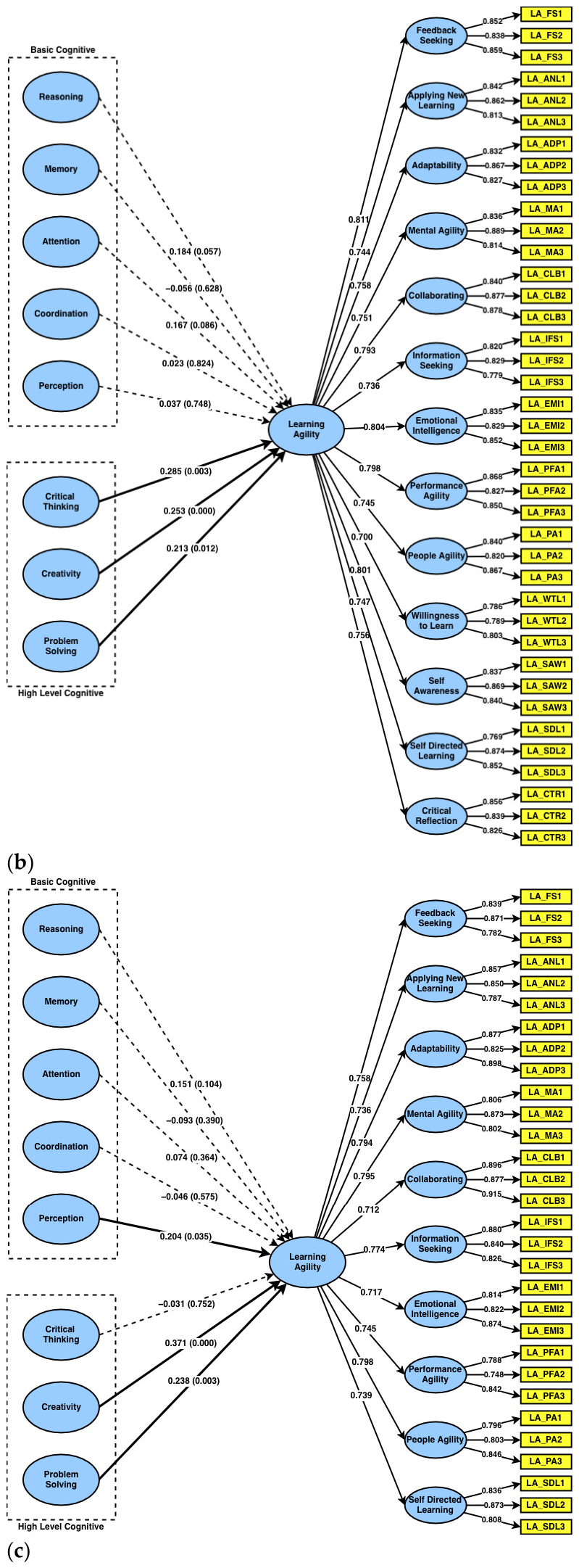
| Reasoning | 0.149 | 0.011 * | 0.022 | 0.184 | 0.057 | 0.044 | 0.151 | 0.104 | 0.022 |
| Memory | −0.039 | 0.592 | 0.001 | −0.056 | 0.628 | 0.004 | −0.093 | 0.390 | 0.006 |
| Attention | 0.093 | 0.138 | 0.009 | 0.167 | 0.086 | 0.027 | 0.074 | 0.364 | 0.006 |
| Coordination | −0.005 | 0.932 | 0.000 | 0.023 | 0.824 | 0.001 | −0.046 | 0.575 | 0.002 |
| Perception | 0.124 | 0.062 | 0.012 | 0.037 | 0.748 | 0.001 | 0.204 | 0.035 * | 0.033 |
| High-Level Cognitive | |||||||||
| Critical Thinking | 0.142 | 0.016 * | 0.028 | 0.285 | 0.003 ** | 0.132 | −0.031 | 0.752 | 0.001 |
| Creativity | 0.292 | 0.001 *** | 0.122 | 0.253 | 0.000 *** | 0.127 | 0.371 | 0.001 *** | 0.159 |
| Problem Solving | 0.217 | 0.001 *** | 0.057 | 0.213 | 0.012 * | 0.068 | 0.238 | 0.003 ** | 0.068 |
| Combined Sample | Established Companies | Start-Up Companies | |
|---|---|---|---|
| R2 | 0.465 | 0.605 | 0.444 |
| Adjusted R2 | 0.448 | 0.580 | 0.409 |
Disclaimer/Publisher’s Note: The statements, opinions and data contained in all publications are solely those of the individual author(s) and contributor(s) and not of MDPI and/or the editor(s). MDPI and/or the editor(s) disclaim responsibility for any injury to people or property resulting from any ideas, methods, instructions or products referred to in the content. |
© 2026 by the authors. Licensee MDPI, Basel, Switzerland. This article is an open access article distributed under the terms and conditions of the Creative Commons Attribution (CC BY) license.
Share and Cite
Restuputri, D.P.; Yassierli; Widyanti, A. The Influence of Different Cognitive Skills on Learning Agility Among Gen Z in Established and Start-Up Companies. Behav. Sci. 2026, 16, 1053. https://doi.org/10.3390/bs16071053
Restuputri DP, Yassierli, Widyanti A. The Influence of Different Cognitive Skills on Learning Agility Among Gen Z in Established and Start-Up Companies. Behavioral Sciences. 2026; 16(7):1053. https://doi.org/10.3390/bs16071053
Chicago/Turabian StyleRestuputri, Dian Palupi, Yassierli, and Ari Widyanti. 2026. "The Influence of Different Cognitive Skills on Learning Agility Among Gen Z in Established and Start-Up Companies" Behavioral Sciences 16, no. 7: 1053. https://doi.org/10.3390/bs16071053
APA StyleRestuputri, D. P., Yassierli, & Widyanti, A. (2026). The Influence of Different Cognitive Skills on Learning Agility Among Gen Z in Established and Start-Up Companies. Behavioral Sciences, 16(7), 1053. https://doi.org/10.3390/bs16071053