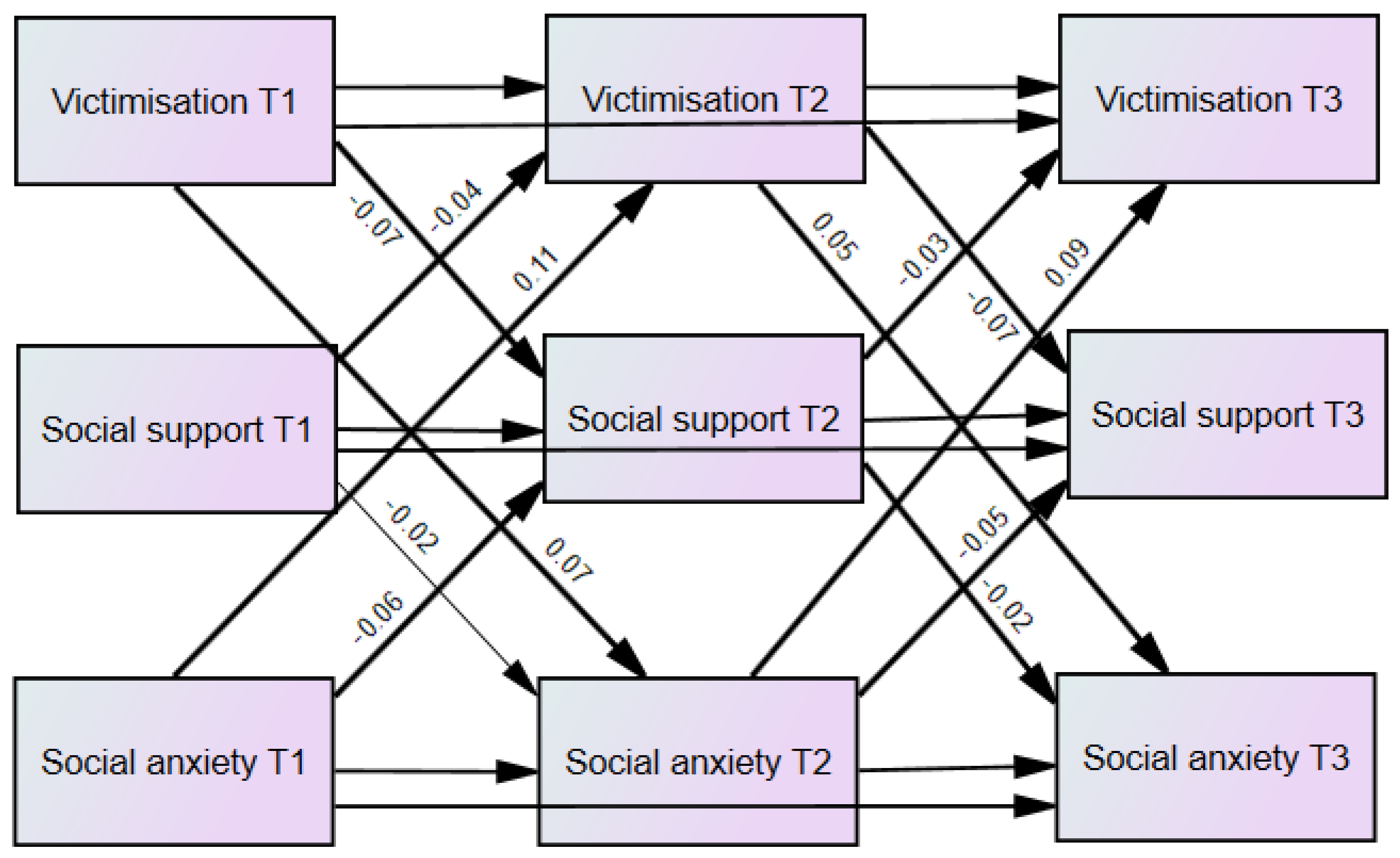
Longitudinal Relationships Between Social Anxiety, Peer Victimisation, and Perceived Support Among Children


Abstract
1. Introduction
2. Method
2.1. Design
2.2. Participants
2.3. Measures
2.4. Procedure
2.5. Data Analysis
3. Results
3.1. Missing Data
3.2. Bivariate Relationships
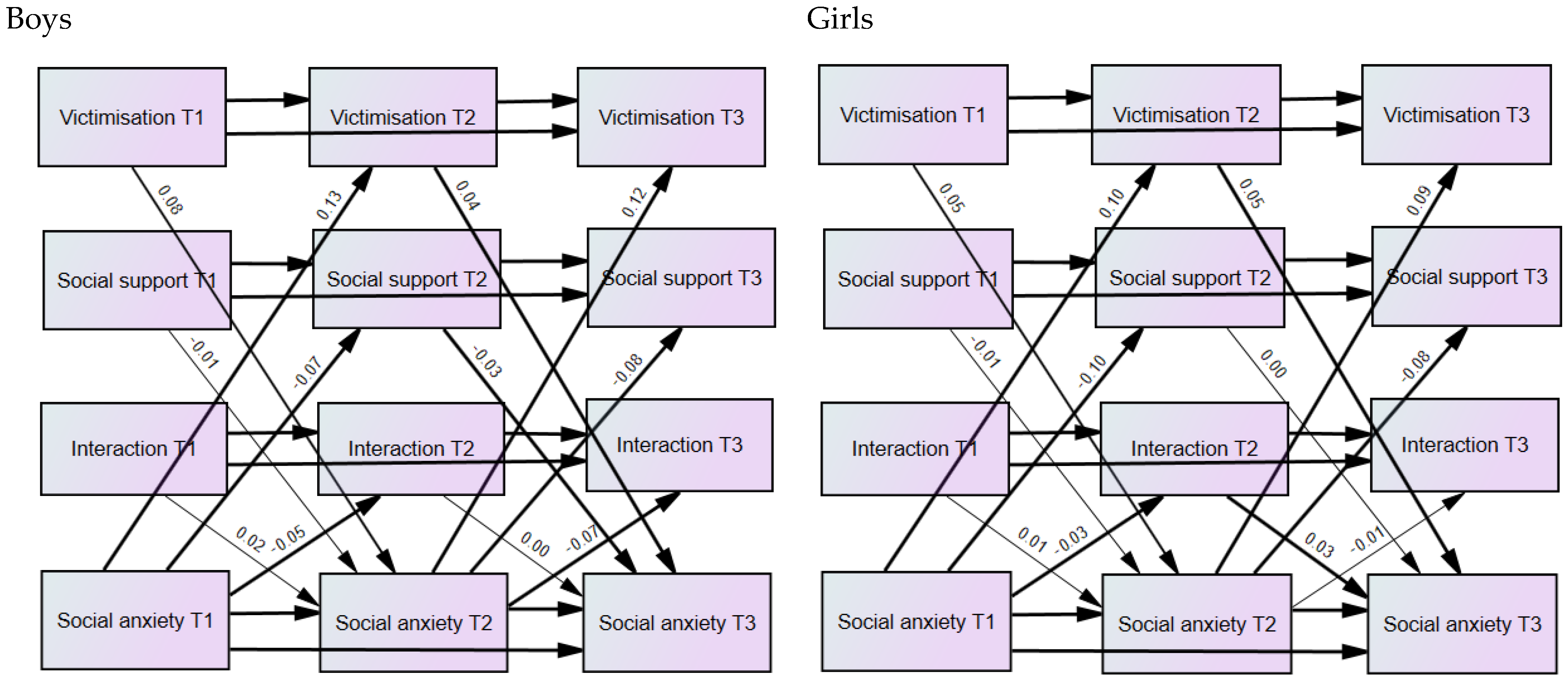
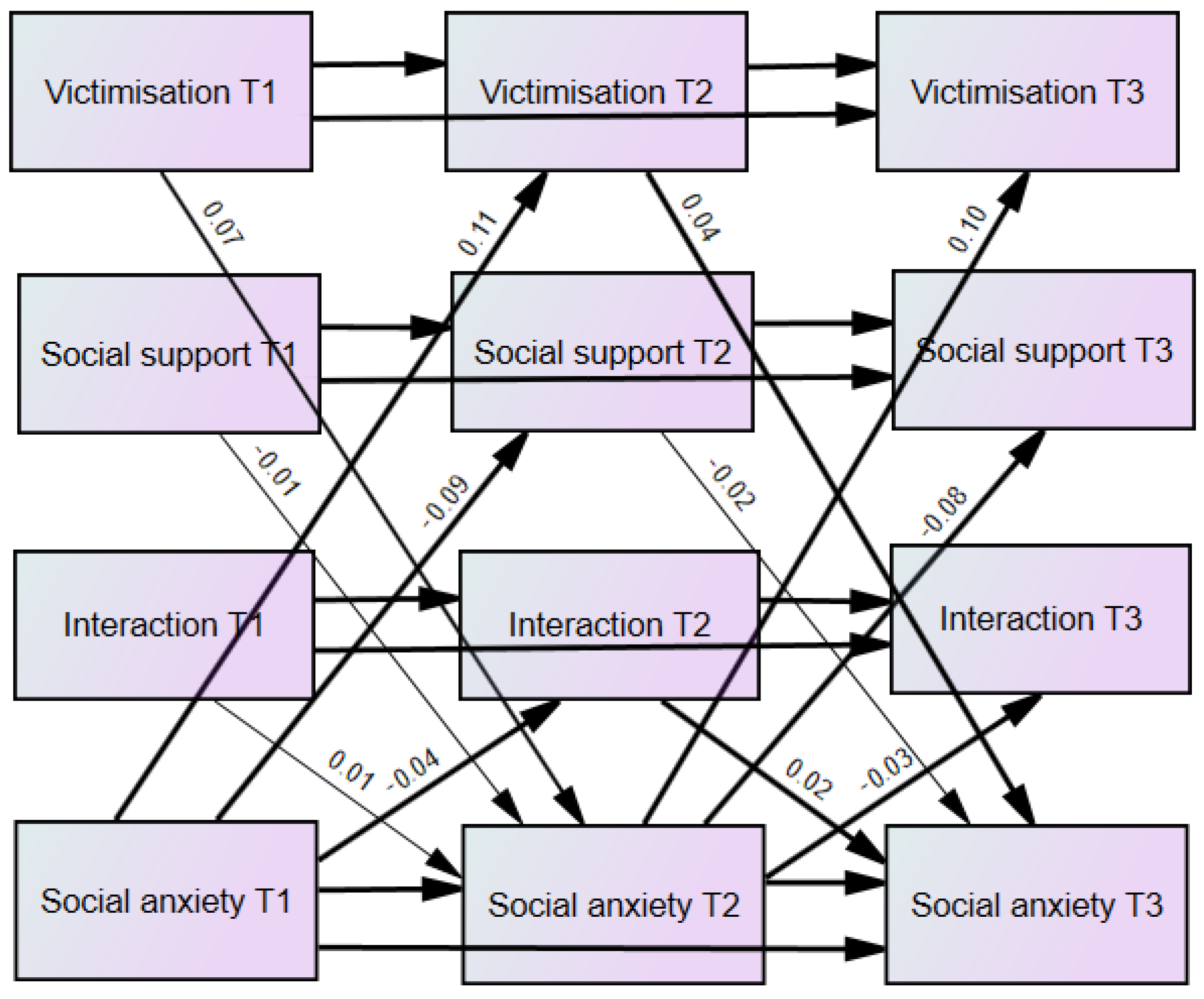
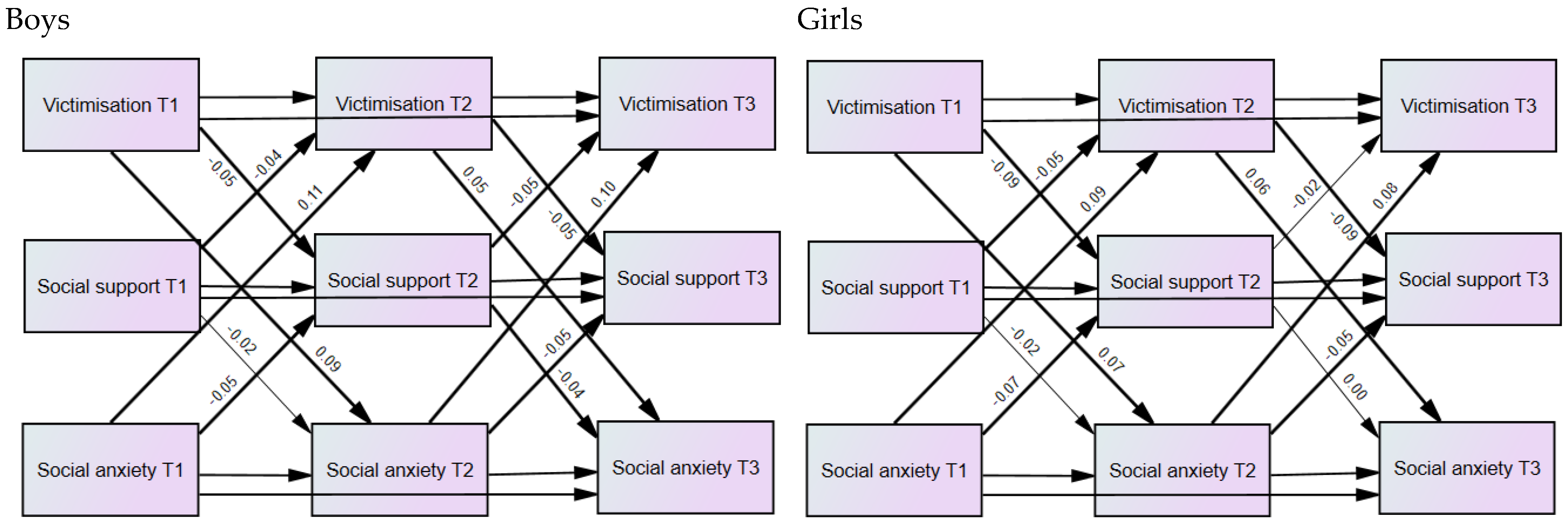
3.3. Path Analyses—Moderation of Victimisation and Social Support
3.4. Path Analyses—Mediated Relationships
4. Discussion
Author Contributions
Funding
Institutional Review Board Statement
Informed Consent Statement
Data Availability Statement
Conflicts of Interest
References
- Aune, T., Juul, E. M. L., Beidel, D. C., Nordahl, H. M., & Dvorak, R. D. (2021). Mitigating adolescent social anxiety symptoms: The effects of social support and social self-efficacy in findings from the Young-HUNT 3 study. European Child & Adolescent Psychiatry, 30(3), 441–449. [Google Scholar] [CrossRef]
- Bi, S., Stevens, G. W. J. M., Maes, M., Boer, M., Delaruelle, K., Eriksson, C., Brooks, F. M., Tesler, R., van der Schuur, W. A., & Finkenauer, C. (2021). Perceived social support from different sources and adolescent life satisfaction across 42 countries/regions: The moderating role of national-level generalized trust. Journal of Youth and Adolescence, 50(7), 1384–1409. [Google Scholar] [CrossRef]
- Blöte, A. W., Miers, A. C., & Westenberg, P. (2015). The role of social performance and physical attractiveness in peer rejection of socially anxious adolescents. Journal of Research on Adolescence, 25(1), 189–200. [Google Scholar] [CrossRef]
- Bohlin, G., Hagekull, B., & Andersson, K. (2005). Behavioral inhibition as a precursor of peer social competence in early school age: The interplay with attachment and nonparental care. Merrill-Palmer Quarterly, 51(1), 1–19. [Google Scholar] [CrossRef]
- Calleja, R. L., & Rapee, R. M. (2020). Social threat sensitivity and its relationships with peer victimisation and internalising symptoms among adolescent girls. Behaviour Research and Therapy, 133, 103710. [Google Scholar] [CrossRef] [PubMed]
- Chen, X., DeSouza, A. T., Chen, H., & Wang, L. (2006). Reticent behavior and experiences in peer interactions in Chinese and Canadian children. Developmental Psychology, 42(4), 656–665. [Google Scholar] [CrossRef]
- Chiu, K., Clark, D. M., & Leigh, E. (2021). Prospective associations between peer functioning and social anxiety in adolescents: A systematic review and meta-analysis. Journal of Affective Disorders, 279, 650–661. [Google Scholar] [CrossRef]
- Christina, S., Kakar, V., Magson, N. R., & Rapee, R. M. (2021). The bidirectional relationships between peer victimization and internalizing problems in school-aged children: An updated systematic review and meta-analysis. Clinical Psychology Review, 85, 101979. [Google Scholar] [CrossRef] [PubMed]
- Cornell, D., & Cole, J. C. M. (2012). Assessment of bullying. In S. Jimerson, A. Nickerson, M. J. Mayer, & M. J. Furlong (Eds.), Handbook of school violence and school safety: International research and practice (2nd ed., pp. 289–304). Routledge. [Google Scholar] [CrossRef]
- Coyle, S., & Malecki, C. K. (2018). The association between social anxiety and perceived frequency and value of classmate and close friend social support. School Psychology Review, 47(3), 209–225. [Google Scholar] [CrossRef]
- Coyle, S., Malecki, C. K., & Emmons, J. (2021). Keep your friends close: Exploring the associations of bullying, peer social support, and social anxiety. Contemporary School Psychology, 25(2), 230–242. [Google Scholar] [CrossRef]
- Crone, E. A., & Dahl, R. E. (2012). Understanding adolescence as a period of social–affective engagement and goal flexibility. Nature Reviews Neuroscience, 13, 636–650. [Google Scholar] [CrossRef] [PubMed]
- Cross, D., Gonsalkorale, K., & Sae-Koew, J. (2025). Evidence report for the NSW anti-bullying framework. NSW Department of Education. Available online: https://www.nsw.gov.au/sites/default/files/noindex/2025-12/evidence-report-for-the-nsw-anti-bullying-framework.pdf (accessed on 30 March 2026).
- de Lijster, J. M., Dieleman, G. C., Utens, E. M., Dierckx, B., Wierenga, M., Verhulst, F. C., & Legerstee, J. S. (2018). Social and academic functioning in adolescents with anxiety disorders: A systematic review. Journal of Affective Disorders, 230, 108–117. [Google Scholar] [CrossRef]
- de Lijster, J. M., Dierckx, B., Utens, E. M., Verhulst, F. C., Zieldorff, C., Dieleman, G. C., & Legerstee, J. S. (2017). The age of onset of anxiety disorders: A meta-analysis. The Canadian Journal of Psychiatry/La Revue canadienne de Psychiatrie, 62(4), 237–246. [Google Scholar] [CrossRef]
- Demaray, M. K., & Malecki, C. K. (2002). Critical levels of perceived social support associated with student adjustment. School Psychology Quarterly, 17(3), 213–241. [Google Scholar] [CrossRef]
- Desjardins, T., & Leadbeater, B. J. (2011). Relational victimization and depressive symptoms in adolescence: Moderating effects of mother, father, and peer emotional support. Journal of Youth and Adolescence, 40, 531–544. [Google Scholar] [CrossRef]
- Dickson, S. J., Oar, E. L., Kangas, M., Johnco, C. J., Lavell, C. H., Seaton, A. H., McLellan, L. F., Wuthrich, V. M., & Rapee, R. M. (2024). A systematic review and meta-analysis of impairment and quality of life in children and adolescents with anxiety disorders. Clinical Child and Family Psychology Review, 27, 342–356. [Google Scholar] [CrossRef]
- Doey, L., Coplan, R. J., & Kingsbury, M. (2014). Bashful boys and coy girls: A review of gender differences in childhood shyness. Sex Roles: A Journal of Research, 70(7–8), 255–266. [Google Scholar] [CrossRef]
- Ginat-Frolich, R., Gilboa-Shechtman, E., Huppert, J. D., Aderka, I. M., Alden, L. E., Bar-Haim, Y., Becker, E. S., Bernstein, A., Geva, R., Heimberg, R. G., Hofmann, S. G., Kashdan, T. B., Koster, E. H. W., Lipsitz, J., Maner, J. K., Moscovitch, D. A., Philippot, P., Rapee, R. M., Roelofs, K., … Wieser, M. J. (2024). Vulnerabilities in social anxiety: Integrating intra- and interpersonal perspectives. Clinical Psychology Review, 109, 102415. [Google Scholar] [CrossRef] [PubMed]
- Guy, A., Lee, K., & Wolke, D. (2019). Comparisons between adolescent bullies, victims, and bully-victims on perceived popularity, social impact, and social preference. Frontiers in Psychiatry, 10, 868. [Google Scholar] [CrossRef] [PubMed]
- Halldorsson, B., & Creswell, C. (2017). Social anxiety in pre-adolescent children: What do we know about maintenance? Behaviour Research and Therapy, 99, 19–36. [Google Scholar] [CrossRef]
- Hodges, E. V., Boivin, M., Vitaro, F., & Bukowski, A. L. (1999). The power of friendship: Protection against an escalating cycle of peer victimization. Developmental Psychology, 35, 94–101. [Google Scholar] [CrossRef]
- Iffland, B., Sansen, L. M., Catani, C., & Neuner, F. (2014). The trauma of peer abuse: Effects of relational peer victimization and social anxiety disorder on physiological and affective reactions to social exclusion [original research]. Frontiers in Psychiatry, 5, 26. [Google Scholar] [CrossRef]
- Jadambaa, A., Thomas, H. J., Scott, J. G., Graves, N., Brain, D., & Pacella, R. (2019). Prevalence of traditional bullying and cyberbullying among children and adolescents in Australia: A systematic review and meta-analysis. Australian & New Zealand Journal of Psychiatry, 53(9), 878–888. [Google Scholar] [CrossRef] [PubMed]
- Juvonen, J., & Graham, S. (2014). Bullying in schools: The power of bullies and the plight of victims. Annual Review of Psychology, 65, 159–185. [Google Scholar] [CrossRef]
- Kessler, R. C., Berglund, P., Demler, O., Jin, R., & Walters, E. E. (2005). Lifetime prevalence and age-of-onset distributions of DSM-IV disorders in the national comorbidity survey replication. Archives of General Psychiatry, 62, 593–602. [Google Scholar] [CrossRef] [PubMed]
- La Greca, A. M., & Lopez, N. (1998). Social anxiety among adolescents: Linkages with peer relations and friendships. Journal of Abnormal Child Psychology, 26(2), 83–94. [Google Scholar] [CrossRef]
- La Greca, A. M., & Moore, H. H. (2005). Adolescent peer relations, friendships, and romantic relationships: Do they predict social anxiety and depression? Journal of Clinical Child & Adolescent Psychology, 34(1), 49–61. [Google Scholar] [CrossRef] [PubMed]
- Laninga-Wijnen, L., Garandeau, C., & Salmivalli, C. (2025). Which victims of bullying are being defended and how? The role of victimization intensity and victims’ adjustment. OSF. [Google Scholar] [CrossRef]
- Leeves, S., & Banerjee, R. (2014). Childhood social anxiety and social support-seeking: Distinctive links with perceived support from teachers. European Journal of Psychology of Education, 29(1), 43–62. [Google Scholar] [CrossRef]
- Leigh, E., Percy, R., Clark, D. M., Creswell, C., & Waite, P. (2023). Cognitive and behavioural processes in adolescents with social anxiety disorder. Behaviour Research and Therapy, 170, 104416. [Google Scholar] [CrossRef]
- Lu, H., Song, Y., Wang, X., & Liu, J. (2024). The neural correlates of perceived social support and its relationship to psychological well-being [original research]. Frontiers in Behavioral Neuroscience, 17, 1295668. [Google Scholar] [CrossRef]
- Luchetti, S., & Rapee, R. M. (2014). Liking and perceived probability of victimization of peers displaying behaviors characteristic of anxiety and depression. Journal of Experimental Psychopathology, 5(2), 212–223. [Google Scholar] [CrossRef]
- Malecki, C. K., & Demaray, M. K. (2002). Measuring perceived social support: Development of the child and adolescent social support scale (CASSS). Psychology in the Schools, 39, 1–18. [Google Scholar] [CrossRef]
- Maunder, R., & Monks, C. P. (2019). Friendships in middle childhood: Links to peer and school identification, and general self-worth. British Journal of Developmental Psychology, 37(2), 211–229. [Google Scholar] [CrossRef]
- Nicola, E., Mastroyannopoulou, K., Reeves, H., & Pass, L. (2024). Longitudinal associations between peer victimisation subtypes and children and adolescents’ anxiety: A meta-analysis. Aggression and Violent Behavior, 79, 102013. [Google Scholar] [CrossRef]
- Olweus, D. (1996). The revised Olweus bully/victim questionnaire. Research Centre for Health Promotion (HEMIL Centre), University of Bergen. [Google Scholar]
- Olweus, D. (2013). School bullying: Development and some important challenges. Annual Review of Clinical Psychology, 9, 751–780. [Google Scholar] [CrossRef]
- Orth, U., Meier, L. L., Bühler, J. L., Dapp, L. C., Krauss, S., Messerli, D., & Robins, R. W. (2024). Effect size guidelines for cross-lagged effects. Psychological Methods, 29(2), 421–433. [Google Scholar] [CrossRef]
- Pan, W., Li, B., Long, Y., & Cao, C. (2024). The relationship between perceived social support and social anxiety in Chongqing rural secondary school students: The chain mediating effect of core self-evaluation and shyness. BMC Psychology, 12(1), 708. [Google Scholar] [CrossRef]
- Pontillo, M., Tata, M. C., Averna, R., Demaria, F., Gargiullo, P., Guerrera, S., Pucciarini, M. L., Santonastaso, O., & Vicari, S. (2019). Peer victimization and onset of social anxiety disorder in children and adolescents. Brain Sciences, 9(6), 132. [Google Scholar] [CrossRef] [PubMed]
- Rapee, R. M., McLellan, L. F., Carl, T., Hudson, J. L., Parker, E., Trompeter, N., & Wuthrich, V. M. (2024). Testing theoretical processes that maintain paediatric social anxiety: A comparison between children and adolescents with social anxiety disorder, other mental disorders, and non-clinical controls. Behaviour Research and Therapy, 183, 104638. [Google Scholar] [CrossRef] [PubMed]
- Rapee, R. M., Oar, E. L., Johnco, C., Forbes, M. K., Fardouly, J., Magson, N. R., & Richardson, C. (2019). Adolescent development and risk for the onset of social-emotional disorders: A review and conceptual model. Behaviour Research & Therapy, 123, 103501. [Google Scholar] [CrossRef]
- Rapee, R. M., Shaw, T., Hunt, C., Bussey, K., Hudson, J. L., Mihalopoulos, C., Roberts, C., Fitzpatrick, S., Radom, N., Cordin, T., Epstein, M., & Cross, D. (2020). Combining whole-school and targeted programs for the reduction of bullying victimization: A randomized, effectiveness trial. Aggressive Behavior, 46, 193–209. [Google Scholar] [CrossRef]
- Ren, Y., & Li, M. (2020). Influence of physical exercise on social anxiety of left-behind children in rural areas in China: The mediator and moderator role of perceived social support. Journal of Affective Disorders, 266, 223–229. [Google Scholar] [CrossRef]
- Rose, A. J., & Rudolph, K. D. (2006). A review of sex differences in peer relationship processes: Potential tradeoffs for the emotional and behavioral development of girls and boys. Psychological Bulletin, 132, 98–131. [Google Scholar] [CrossRef]
- Rubin, K. H., Wojslawowicz, J. C., Rose-Krasnor, L., Booth-LaForce, C., & Burgess, K. B. (2006). The best friendships of shy/withdrawn children: Prevalence, stability, and relationship quality. Journal of Abnormal Child Psychology, 34(2), 143–158. [Google Scholar] [CrossRef]
- Salmivalli, C., & Peets, K. (2018). Bullying and victimization. In W. M. Bukowski, B. Laursen, & K. H. Rubin (Eds.), Handbook of peer interactions, relationships, and groups (2nd ed., pp. 302–321). The Guilford Press. [Google Scholar]
- Schacter, H. L., & Juvonen, J. (2020). When do friendships help versus hurt? Perceived best friend victimization and support as moderators of peer victimization-related distress. The Journal of Early Adolescence, 40(6), 804–827. [Google Scholar] [CrossRef]
- Schneider, B. H. (1999). A multimethod exploration of the friendships of children considered socially withdrawn by their school peers. Journal of Abnormal Child Psychology, 27(2), 115–123. [Google Scholar] [CrossRef] [PubMed]
- Spence, S. H. (1998). A measure of anxiety symptoms among children. Behaviour Research and Therapy, 36(5), 545–566. [Google Scholar] [CrossRef]
- Spence, S. H., Donovan, C., & Brechman-Toussaint, M. (1999). Social skills, social outcomes, and cognitive features of childhood social phobia. Journal of Abnormal Psychology, 108(2), 211–221. [Google Scholar] [CrossRef] [PubMed]
- Tomini, E., Qirjako, G., Çumashi, R., Hala, R., & Burazeri, G. (2026). Family support and peer support as strong independent correlates of mental health indices among Albanian adolescents aged 11–15 years. European Journal of Public Health, 36(2), ckag021. [Google Scholar] [CrossRef]
- Verduin, T. L., & Kendall, P. C. (2008). Peer perceptions and liking of children with anxiety disorders. Journal of Abnormal Child Psychology, 36, 459–469. [Google Scholar] [CrossRef]
- Webb, H. J., & Zimmer-Gembeck, M. J. (2014). The role of friends and peers in adolescent body dissatisfaction: A review and critique of 15 years of research. Journal of Research on Adolescence, 24(4), 564–590. [Google Scholar] [CrossRef]
- Xu, J., Eggum-Wilkens, N. D., & Bradley, R. H. (2020). Children’s friendship quality trajectories from middle childhood to early adolescence and prediction from sex. Journal of Social and Personal Relationships, 37(6), 1843–1851. [Google Scholar] [CrossRef]
- Yang, Y., & Lu, X. (2022). Social anxiety and subjective quality of life among chinese left-behind children: The mediating role of social support [original research]. Frontiers in Psychology, 13, 836461. [Google Scholar] [CrossRef]
- Yeo, G. H., Lansford, J. E., & Rudolph, K. D. (2025). How does perceived social support relate to human thriving? A systematic review with meta-analyses. Psychological Bulletin, 151(9), 1089–1124. [Google Scholar] [CrossRef]
- Zhou, Z., & Cheng, Q. (2022). Relationship between online social support and adolescents’ mental health: A systematic review and meta-analysis. Journal of Adolescence, 94(3), 281–292. [Google Scholar] [CrossRef]


| BVQ1 | BVQ2 | BVQ3 | SCAS-Soc1 | SCAS-Soc2 | SCAS-Soc3 | CASSS1 | CASSS2 | CASSS3 | |
|---|---|---|---|---|---|---|---|---|---|
| BVQ1 | 0.45 | 0.37 | 0.34 | 0.23 | 0.22 | −0.13 | −0.12 | −0.11 | |
| BVQ2 | 0.48 | 0.52 | 0.25 | 0.38 | 0.27 | −0.11 | −0.21 | −0.16 | |
| BVQ3 | 0.37 | 0.49 | 0.21 | 0.30 | 0.37 | −0.10 | −0.17 | −0.24 | |
| SCAS-Soc1 | 0.41 | 0.28 | 0.22 | 0.46 | 0.38 | −0.12 | −0.11 | −0.09 | |
| SCAS-Soc2 | 0.26 | 0.40 | 0.27 | 0.47 | 0.56 | −0.08 | −0.16 | −0.14 | |
| SCAS-Soc3 | 0.21 | 0.28 | 0.41 | 0.40 | 0.55 | −0.10 | −0.15 | −0.20 | |
| CASSS1 | −0.16 | −0.13 | −0.11 | −0.13 | −0.09 | −0.08 | 0.41 | 0.32 | |
| CASSS2 | −0.17 | −0.28 | −0.17 | −0.15 | −0.25 | −0.15 | 0.35 | 0.44 | |
| CASSS3 | −0.15 | −0.21 | −0.30 | −0.12 | −0.17 | −0.25 | 0.28 | 0.38 |
Disclaimer/Publisher’s Note: The statements, opinions and data contained in all publications are solely those of the individual author(s) and contributor(s) and not of MDPI and/or the editor(s). MDPI and/or the editor(s) disclaim responsibility for any injury to people or property resulting from any ideas, methods, instructions or products referred to in the content. |
© 2026 by the authors. Licensee MDPI, Basel, Switzerland. This article is an open access article distributed under the terms and conditions of the Creative Commons Attribution (CC BY) license.
Share and Cite
Rapee, R.M.; Bussey, K.; Cross, D.; Fitzpatrick, S. Longitudinal Relationships Between Social Anxiety, Peer Victimisation, and Perceived Support Among Children. Behav. Sci. 2026, 16, 958. https://doi.org/10.3390/bs16060958
Rapee RM, Bussey K, Cross D, Fitzpatrick S. Longitudinal Relationships Between Social Anxiety, Peer Victimisation, and Perceived Support Among Children. Behavioral Sciences. 2026; 16(6):958. https://doi.org/10.3390/bs16060958
Chicago/Turabian StyleRapee, Ronald M., Kay Bussey, Donna Cross, and Sally Fitzpatrick. 2026. "Longitudinal Relationships Between Social Anxiety, Peer Victimisation, and Perceived Support Among Children" Behavioral Sciences 16, no. 6: 958. https://doi.org/10.3390/bs16060958
APA StyleRapee, R. M., Bussey, K., Cross, D., & Fitzpatrick, S. (2026). Longitudinal Relationships Between Social Anxiety, Peer Victimisation, and Perceived Support Among Children. Behavioral Sciences, 16(6), 958. https://doi.org/10.3390/bs16060958