The Effects of Video Visual Scene Displays on the Symbolic Communication of Preschool Children with Neurodevelopmental Disabilities and Their Peers in a Shared Video Activity


Abstract
1. Introduction
1.1. Peer Interaction
1.2. Communication Supports
1.3. High-Interest Activities
1.4. Supports for Social Interaction
1.5. Visual Scene Displays
1.6. Current Study
- What are the effects of video VSDs (and brief instruction in their use) on the number of symbolic communicative acts of preschool children with NDD during a shared video-watching activity with peers without NDD?
- What are the perceptions of consumers (i.e., teachers, participants) regarding the intervention?
2. Materials and Methods
2.1. Participants and Setting
2.2. Language Measures
2.3. Participants
2.3.1. Beau
2.3.2. Maggie
2.3.3. Carly
2.3.4. Dominic
2.4. Neurotypical Peers
2.5. Materials
2.5.1. Identification of Preferences
2.5.2. Compilation of Videos
2.5.3. Video VSDs
2.6. Experimental Design
2.6.1. Independent Variable
2.6.2. Dependent Variable
2.7. Procedures
2.7.1. Setting
2.7.2. Baseline
2.7.3. Intervention Procedures
2.8. Data Analysis
2.9. Coding
2.10. Interobserver Agreement and Procedural Integrity
2.11. Social Validity
3. Results
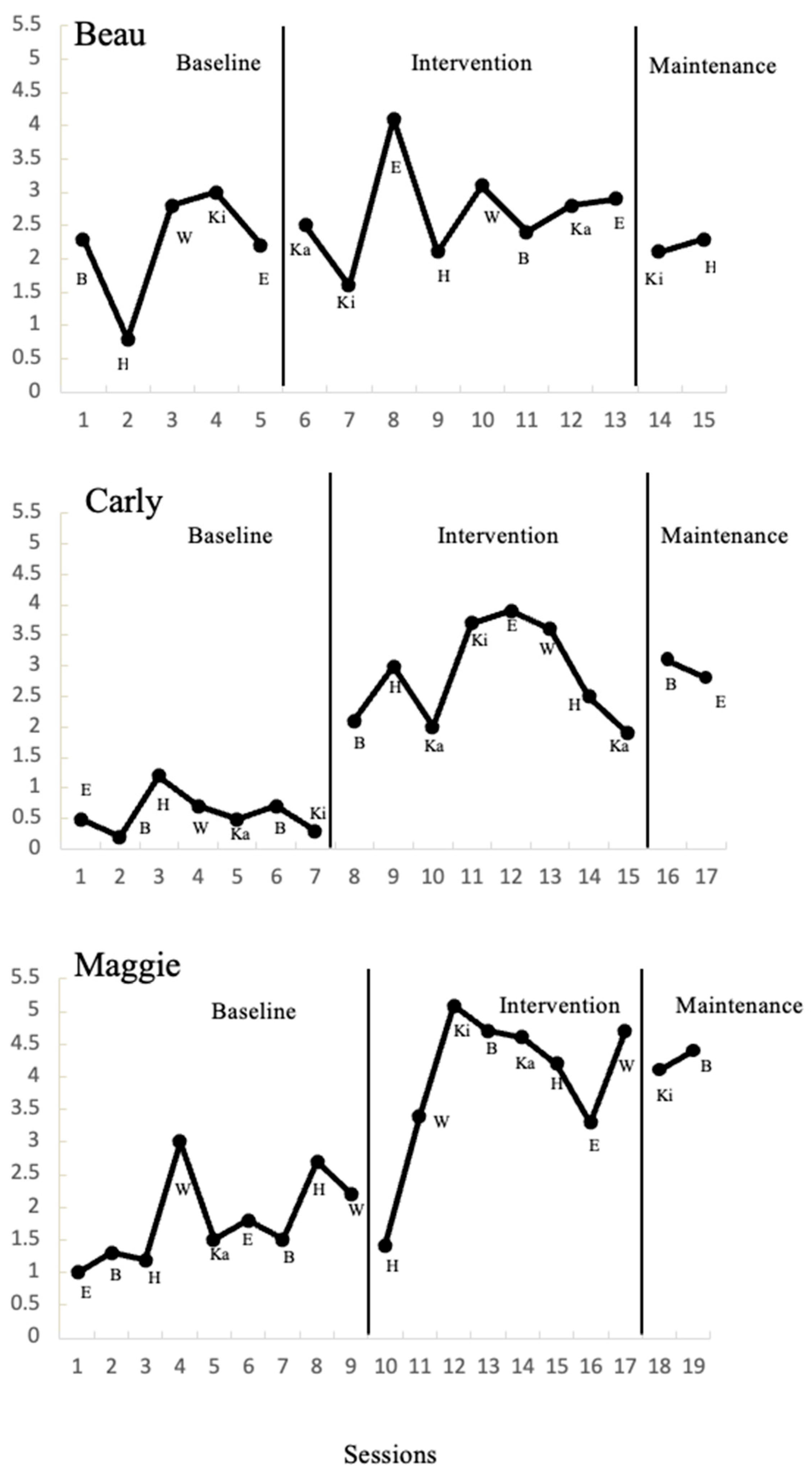
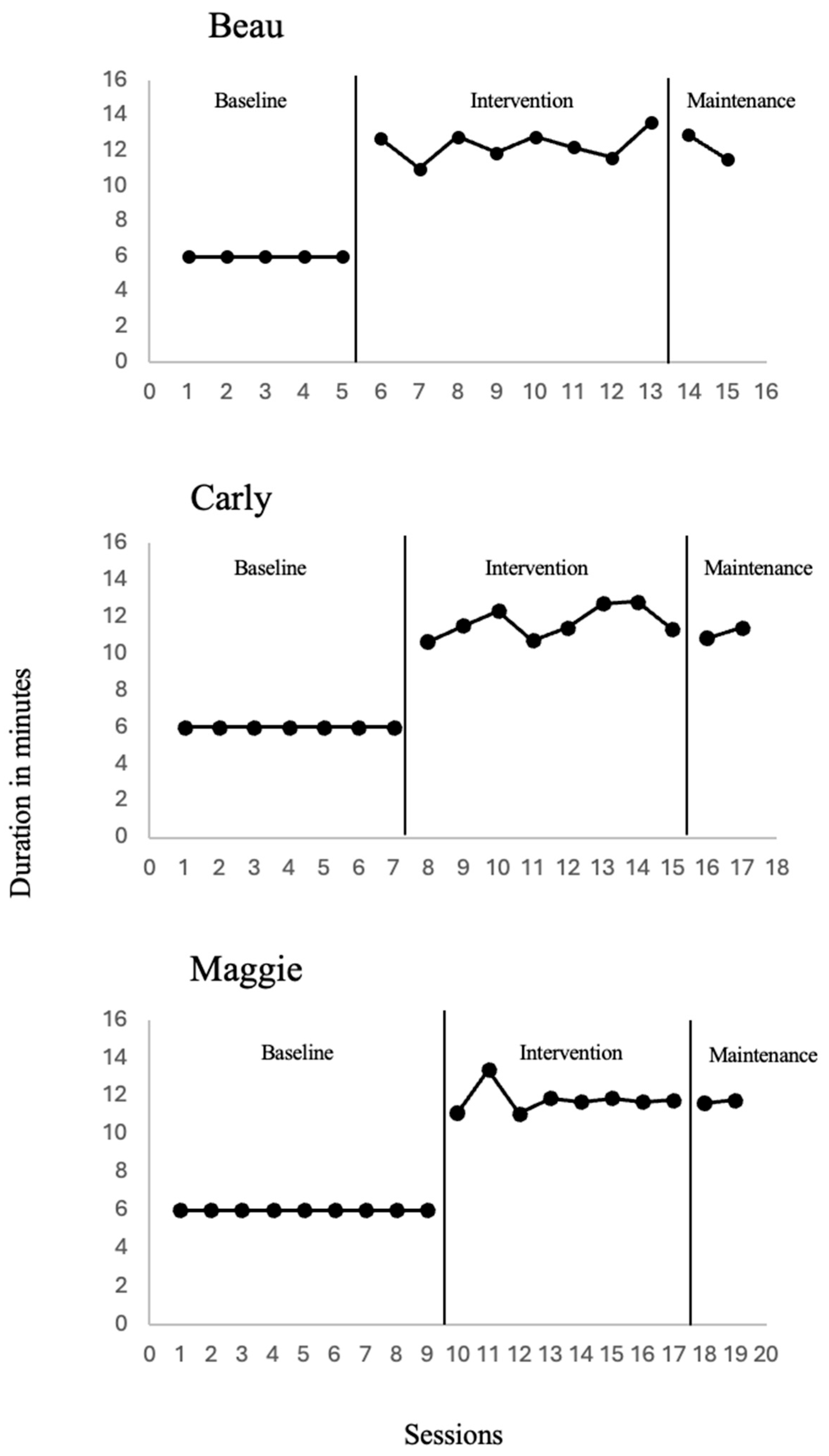
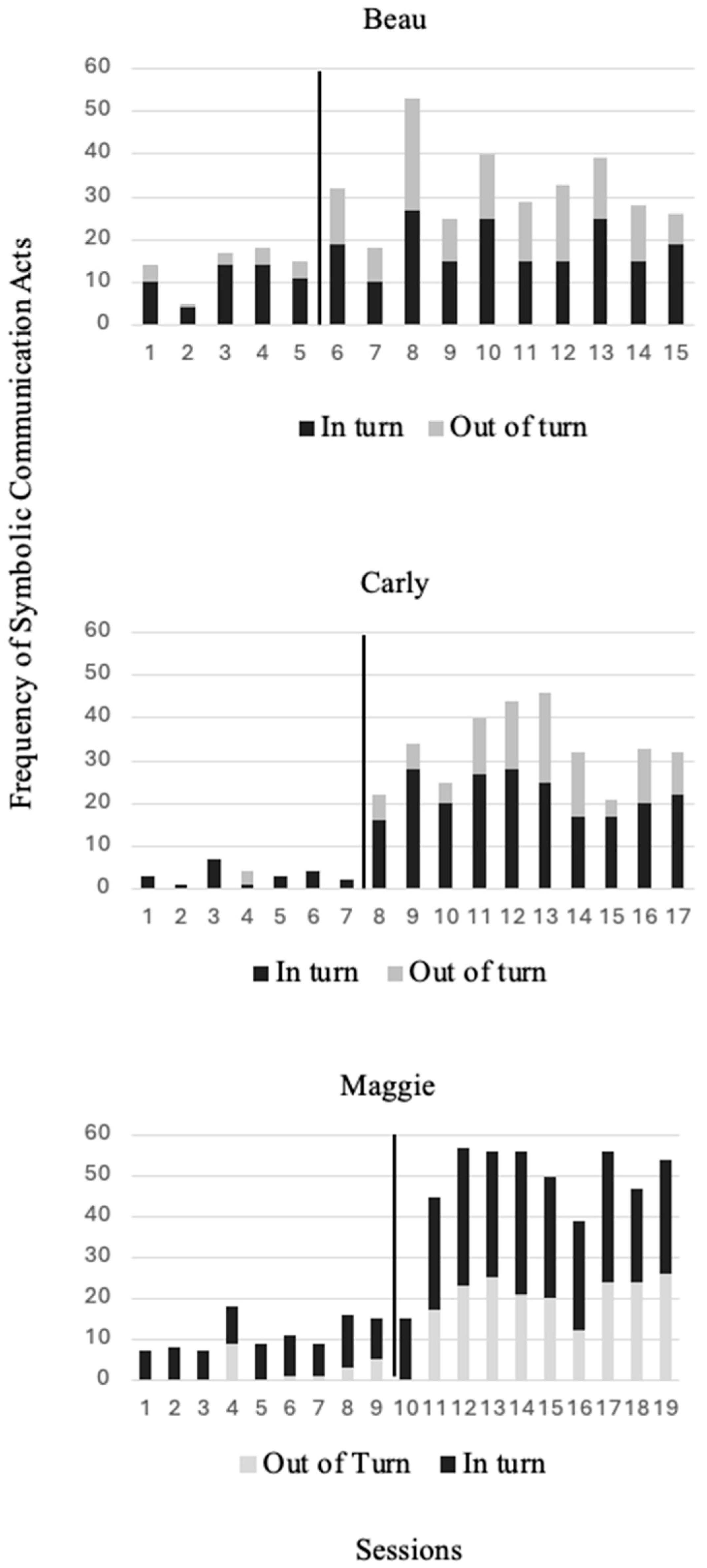
3.1. Beau
3.2. Maggie
3.3. Carly
3.4. Communication Modalities
3.5. Social Validity
3.5.1. Teachers
3.5.2. Child Participants
4. Discussion
4.1. Communication Support
4.2. Child Interests
4.3. Interaction Support
4.4. Clinical Implications
4.5. Limitations and Future Research
5. Conclusions
Author Contributions
Funding
Institutional Review Board Statement
Informed Consent Statement
Data Availability Statement
Conflicts of Interest
Abbreviations
| AAC | Augmentative and Alternative Communication |
| VSD | Visual Scene Display |
| SLP | Speech and Language Pathologist |
| NDD | Neurodevelopmental Disability |
| CDI | Communicative Development Inventories |
| PLS-5 | Preschool Language Scale-5th Edition |
| IOA | Inter-observer Agreement |
| 1 | Though Dominic met inclusion criteria, after baseline sessions, it was determined that this intervention was not appropriate for meeting his speech and language goals (i.e., increase social pragmatics, decrease pacing of speech). However, because he enjoyed the activity and the peer interaction, sessions continued with him intermittently, but no additional data was collected, and his data is not reported here. |
| 2 | This tablet is a product of Samsung Electronics Inc., 85 Challenger Rd, Ridgefield Park, NJ 07310, USA https://www.samsung.com/us/ (accessed on 1 February 2025). |
| 3 | Cocomelon is a YouTube channel of nursey rhymes (https://www.youtube.com/channel/UCbCmjCuTUZos6Inko4u57UQ (accessed on 1 February 2025). |
| 4 | Baby Shark is a children’s YouTube video (https://www.youtube.com/watch?v=XqZsoesa55w (accessed on 1 February 2025)). |
| 5 | Canva (www.canva.com) was used to create visual materials for this project, 3212 E. Cesar Chavez Street, Building 1, Suite 1300, Austin, TX 78702, USA. |
| 6 | Adobe (www.adobe.com) was used to create visual materials for this project, 345 Park Avenue, San Jose, California 95110, USA. |
| 7 | YouTube (www.youtube.com) was used to create visual materials for this project, 901 Cherry Ave. San Bruno, CA 94066, USA. |
| 8 | Scene and Heard ProTM is available from PRC-Saltillo, 1022 Heyl Rd, Wooster, OH 44691. |
References
- Archer, A. L., & Hughes, C. A. (2010). Explicit instruction: Effective and efficient teaching. Guilford Publications. [Google Scholar]
- Babb, S., McNaughton, D., Light, J., & Caron, J. (2021). “Two friends spending time together”: The impact of video visual scene displays on peer social interaction for adolescents with autism spectrum disorder. Language, Speech, and Hearing Services in Schools, 52(4), 1095–1108. [Google Scholar] [CrossRef] [PubMed]
- Beukelman, D., & Light, J. (2020). Augmentative and alternative communication for children and adults. Paul H. Brookes Publishing Co. [Google Scholar]
- Bhana, N., McNaughton, D., Raulston, T., & Ousley, C. (2020). Supporting communication and participation in shared storybook reading using visual scene displays. Teaching Exceptional Children, 52(6), 382–391. [Google Scholar] [CrossRef] [PubMed]
- Biggs, E. E., Carter, E. W., & Gilson, C. B. (2018). Systematic review of interventions involving aided AAC modeling for children with complex communication needs. American Journal on Intellectual and Developmental Disabilities, 123(5), 443–473. [Google Scholar] [CrossRef]
- Biggs, E. E., Turner, E. C., Elchos, E., Spann, E., & Scotti, K. E. (2025). Teaching elementary-aged peers responsive interaction and augmentative and alternative communication strategies within a peer network intervention. Language, Speech, and Hearing Services in Schools, 56(2), 380–396. [Google Scholar] [CrossRef] [PubMed]
- Blasko, G. (2025). Unveiling underlying systemic isolation challenges for AAC users. Augmentative and Alternative Communication, 41(3), 215–222. [Google Scholar] [CrossRef] [PubMed]
- Bowman-Perrott, L., Gilson, C., Boon, R. T., & Ingles, K. E. (2023). Peer-mediated interventions for students with intellectual and developmental disabilities: A systematic review of reviews of social and behavioral outcomes. Developmental Neurorehabilitation, 26(2), 134–154. [Google Scholar] [CrossRef]
- Boyle, S., McCoy, A., McNaughton, D., & Light, J. (2017). Using digital texts in interactive reading activities for children with language delays and disorders: A review of the research literature and pilot study. Seminars in Speech and Language, 38(4), 263–275. [Google Scholar] [CrossRef]
- Boyle, S., McNaughton, D., Light, J., Babb, S., & Chapin, S. E. (2021). The effects of shared e-Book reading with dynamic text and speech output on the single-word reading skills of young children with developmental disabilities. Language, Speech & Hearing Services in Schools, 52(1), 426–435. [Google Scholar] [CrossRef]
- Caron, J., Holyfield, C., Light, J., & McNaughton, D. (2018). “What have you been doing?”: Supporting displaced talk through augmentative and alternative communication video visual scene display technology. Perspectives of the ASHA Special Interest Groups, 3(12), 123–135. [Google Scholar] [CrossRef]
- Carter, E. W., Moss, C. K., Asmus, J., Fesperman, E., Cooney, M., Brock, M. E., Lyons, G., Huber, H. B., & Vincent, L. B. (2015). Promoting inclusion, social connections, and learning through peer support arrangements. Teaching Exceptional Children, 48(1), 9–18. [Google Scholar] [CrossRef]
- Carter, E. W., Sisco, L. G., Chung, Y.-C., & Stanton-Chapman, T. L. (2010). Peer interactions of students with intellectual disabilities and/or autism: A map of the intervention literature. Research and Practice for Persons with Severe Disabilities, 35(3–4), 63–79. [Google Scholar] [CrossRef]
- Chan, J. M., Lang, R., Rispoli, M., O’Reilly, M., Sigafoos, J., & Cole, H. (2009). Use of peer-mediated interventions in the treatment of autism spectrum disorders: A systematic review. Research in Autism Spectrum Disorders, 3(4), 876–889. [Google Scholar] [CrossRef]
- Chang, Y.-C., & Locke, J. (2016). A systematic review of peer-mediated interventions for children with autism spectrum disorder. Research in Autism Spectrum Disorders, 27, 1–10. [Google Scholar] [CrossRef]
- Chapin, S., McNaughton, D., Boyle, S., & Babb, S. (2018). Effects of peer support interventions on the communication of preschoolers with autism spectrum disorder: A systematic review. Seminars in Speech and Language, 39(5), 443–457. [Google Scholar] [CrossRef]
- Chapin, S. E., McNaughton, D., Light, J., McCoy, A., Caron, J., & Lee, D. L. (2022). The effects of AAC video visual scene display technology on the communicative turns of preschoolers with autism spectrum disorder. Assistive Technology, 34(5), 577–587. [Google Scholar] [CrossRef]
- Chen, J., Justice, L. M., Tambyraja, S. R., & Sawyer, B. (2020). Exploring the mechanism through which peer effects operate in preschool classrooms to influence language growth. Early Childhood Research Quarterly, 53, 1–10. [Google Scholar] [CrossRef]
- Chen, J., Lin, T.-J., Justice, L., & Sawyer, B. (2019). The social networks of children with and without disabilities in early childhood special education classrooms. Journal of Autism and Developmental Disorders, 49(7), 2779–2794. [Google Scholar] [CrossRef] [PubMed]
- Cleave, P. L., Becker, S. D., Curran, M. K., Van Horne, A. J. O., & Fey, M. E. (2015). The efficacy of recasts in language intervention: A systematic review and meta-analysis. American Journal of Speech-Language Pathology, 24(2), 237–255. [Google Scholar] [CrossRef] [PubMed]
- Corbin, E. (2025). Speech is exhausting. Augmentative and Alternative Communication, 41(3), 245–247. [Google Scholar] [CrossRef]
- Darvell, C., & Bradshaw, J. (2023). Exploring the social care-related quality of life outcomes of adults with intellectual disabilities through the use of Talking Mats®. Journal of Applied Research in Intellectual Disabilities, 36(1), 39–49. [Google Scholar] [CrossRef]
- Fedewa, M., Watkins, L., Barnard-Brak, L., & Akemoglu, Y. (2024). A systematic review and meta-analysis of single case experimental design play interventions for children with autism and their peers. Review Journal of Autism and Developmental Disorders, 11(2), 361–383. [Google Scholar] [CrossRef]
- Fenson, L., Marchman, V., Thal, D. J., Dale, P. S., Reznick, J. S., & Bates, E. (2007). MacArthur-bates communicative development inventories. In Users guide and technical manual (2nd ed.). Paul H. Brookes Publishing Co. [Google Scholar]
- Fridberg, E., Khokhlovich, E., & Vyshedskiy, A. (2021). Watching videos and television is related to a lower development of complex language comprehension in young children with autism. Healthcare, 9(4), 423. [Google Scholar] [CrossRef] [PubMed]
- Ganz, J. B. (2015). AAC interventions for individuals with autism spectrum disorders: State of the science and future research directions. Augmentative and Alternative Communication, 31(3), 203–214. [Google Scholar] [CrossRef] [PubMed]
- Ganz, J. B., & Flores, M. M. (2008). Effects of the use of visual strategies in play groups for children with autism spectrum disorders and their peers. Journal of Autism and Developmental Disorders, 38(5), 926–940. [Google Scholar] [CrossRef]
- Harrop, C., Amsbary, J., Towner-Wright, S., Reichow, B., & Boyd, B. A. (2019). That’s what I like: The use of circumscribed interests within interventions for individuals with autism spectrum disorder. A systematic review. Research in Autism Spectrum Disorders, 57, 63–86. [Google Scholar] [CrossRef]
- Holyfield, C., Caron, J. G., Drager, K., & Light, J. (2019). Effect of mobile technology featuring visual scene displays and just-in-time programming on communication turns by preadolescent and adolescent beginning communicators. International Journal of Speech-Language Pathology, 21(2), 201–211. [Google Scholar] [CrossRef]
- Holyfield, C., Light, J., Nieder, D., & Preece, J. (2025). External challenges for individuals who need or use AAC who are learning language: Lived experiences, key research findings, and future directions. Augmentative and Alternative Communication, 41(3), 267–279. [Google Scholar] [CrossRef]
- Iacono, T., Trembath, D., & Erickson, S. (2016). The role of augmentative and alternative communication for children with autism: Current status and future trends. Neuropsychiatric Disease and Treatment, 12, 2349–2361. [Google Scholar] [CrossRef]
- Jamieson, M. K., Govaart, G. H., & Pownall, M. (2023). Reflexivity in quantitative research: A rationale and beginner’s guide. Social and Personality Psychology Compass, 17(4), e12735. [Google Scholar] [CrossRef]
- Kasari, C., Locke, J., Gulsrud, A., & Rotheram-Fuller, E. (2011). Social networks and friendships at school: Comparing children with and without ASD. Journal of Autism and Developmental Disorders, 41(5), 533–544. [Google Scholar] [CrossRef]
- Kazdin, A. E. (2011). Single-case research designs: Methods for clinical and applied settings (2nd ed.). Oxford University Press. [Google Scholar]
- Koegel, L. K., Vernon, T. W., Koegel, R. L., Koegel, B. L., & Paullin, A. W. (2012). Improving social engagement and initiations between children with autism spectrum disorder and their peers in inclusive settings. Journal of Positive Behavior Interventions, 14(4), 220–227. [Google Scholar] [CrossRef]
- Kratochwill, T. R., Hitchcock, J. H., Horner, R. H., Levin, J. R., Odom, S. L., Rindskopf, D. M., & Shadish, W. R. (2013). Single-Case Intervention Research Design Standards. Remedial and Special Education, 34(1), 26–38. [Google Scholar] [CrossRef]
- Kucker, S. C., Perry, L. K., & Barr, R. (2024). Variability and patterns in children’s media use and links with language development. Acta Paediatrica, 113(5), 1032–1039. [Google Scholar] [CrossRef]
- Ladd, G. W., & Coleman, C. C. (1997). Children’s classroom peer relationships and early school attitudes: Concurrent and longitudinal associations. Early Education and Development, 8(1), 51–66. [Google Scholar] [CrossRef] [PubMed]
- Laubscher, E., Barwise, A., & Light, J. (2022a). Effect of video augmentative and alternative communication technology on communication during play with peers for children with autism spectrum disorder. Language, Speech, and Hearing Services in Schools, 53(4), 1101–1116. [Google Scholar] [CrossRef]
- Laubscher, E., Light, J., & McNaughton, D. (2019). Effect of an application with video visual scene displays on communication during play: Pilot study of a child with autism spectrum disorder and a peer. Augmentative and Alternative Communication, 35(4), 299–308. [Google Scholar] [CrossRef] [PubMed]
- Laubscher, E., Raulston, T. J., & Ousley, C. (2022b). Supporting peer interactions in the inclusive preschool classroom using visual scene displays. Journal of Special Education Technology, 37(2), 318–326. [Google Scholar] [CrossRef]
- Levin, J. R., & Kratochwill, T. R. (2021). Randomized single-case intervention designs and analyses for health sciences researchers: A versatile clinical trials companion. Therapeutic Innovation & Regulatory Science, 55(4), 755–764. [Google Scholar] [CrossRef] [PubMed]
- Light, J., Fager, S. K., Gormley, J., Hyatt, G. W., & Jakobs, E. (2025). Dismantling societal barriers that limit people who need or use AAC: Lived experiences, key research findings, and future directions. Augmentative and Alternative Communication, 41(3), 230–244. [Google Scholar] [CrossRef]
- Light, J., & McNaughton, D. (2015). Designing AAC research and intervention to improve outcomes for individuals with complex communication needs. Augmentative and Alternative Communication, 31(2), 85–96. [Google Scholar] [CrossRef]
- Light, J., McNaughton, D., & Caron, J. (2019). New and emerging AAC technology supports for children with complex communication needs and their communication partners: State of the science and future research directions. Augmentative and Alternative Communication, 35(1), 26–41. [Google Scholar] [CrossRef]
- Lin, T.-J., Chen, J., Justice, L. M., & Sawyer, B. (2019). Peer interactions in preschool inclusive classrooms: The roles of pragmatic language and self-regulation. Exceptional Children, 85(4), 432–452. [Google Scholar] [CrossRef]
- Lorah, E. R., Gilroy, S. P., & Hineline, P. N. (2014). Acquisition of peer manding and listener responding in young children with autism. Research in Autism Spectrum Disorders, 8(2), 61–67. [Google Scholar] [CrossRef]
- McCarthy, J., & Boster, J. (2019). Growing up with technology: Does the device go in the middle? Topics in Language Disorders, 39(4), E1. [Google Scholar] [CrossRef]
- McCarthy, J. W., Benigno, J. P., Broach, J., Boster, J. B., & Wright, B. M. (2018). Identification and drawing of early concepts in children with autism spectrum disorder and children without disability. Augmentative and Alternative Communication, 34(2), 155–165. [Google Scholar] [CrossRef] [PubMed]
- Morin, K. L., Ganz, J. B., Gregori, E. V., Foster, M. J., Gerow, S. L., Genç-Tosun, D., & Hong, E. R. (2018). A systematic quality review of high-tech AAC interventions as an evidence-based practice. Augmentative and Alternative Communication, 34(2), 104–117. [Google Scholar] [CrossRef]
- Morin, K. L., Lindström, E. R., Kratochwill, T. R., Levin, J. R., Blasko, A., Weir, A., Nielsen-Pheiffer, C. M., Kelly, S., Janunts, D., & Hong, E. R. (2024). Nonconcurrent multiple-baseline and Multiple-Probe Designs in Special Education: A Systematic Review of Current Practice and Future Directions. Exceptional Children, 90(2), 126–147. [Google Scholar] [CrossRef]
- Murphy, J., & Oliver, T. (2013). The use of Talking Mats to support people with dementia and their carers to make decisions together. Health & Social Care in the Community, 21(2), 171–180. [Google Scholar] [CrossRef]
- Odom, S. L., McConnell, S. R., McEvoy, M. A., Peterson, C., Ostrosky, M., Chandler, L. K., Spicuzza, R. J., Skellenger, A., Creighton, M., & Favazza, P. C. (1999). Relative effects of interventions supporting the social competence of young children with disabilities. Topics in Early Childhood Special Education, 19(2), 75–91. [Google Scholar] [CrossRef]
- Patenaude, D. (2025). The effects of video visual scene displays on the symbolic communication of preschool children with neurodevelopmental disabilities and their peers in a shared video activity (Publication No. 32289612) [Doctoral dissertation, Penn State University]. ProQuest Dissertations & Theses Global. Available online: https://www.proquest.com/dissertations-theses/effects-video-visual-scene-displays-on-symbolic/docview/3266812488/se-2 (accessed on 15 July 2025).
- Patenaude, D., McNaughton, D., & Liang, Z. (2024). Using visual scene displays with young children: An evidence-based practice synthesis. Journal of Special Education Technology, 40(1), 91–103. [Google Scholar] [CrossRef]
- Severini, K. E., Ledford, J. R., Barton, E. E., & Osborne, K. C. (2019). Implementing Stay-Play-Talk with children who use AAC. Topics in Early Childhood Special Education, 38(4), 220–233. [Google Scholar] [CrossRef]
- Stans, S. E. A., Dalemans, R. J. P., De Witte, L. P., & Beurskens, A. J. H. M. (2019). Using Talking Mats to support conversations with communication vulnerable people: A scoping review. Technology and Disability, 30(4), 153–176. [Google Scholar] [CrossRef]
- Stanton-Chapman, T. L., & Snell, M. E. (2011). Promoting turn-taking skills in preschool children with disabilities: The effects of a peer-based social communication intervention. Early Childhood Research Quarterly, 26(3), 303–319. [Google Scholar] [CrossRef]
- Sun, Y., Wang, T., Zhang, N., Zhang, P., & Li, Y. (2023). Clinical features and genetic analysis of Dandy-Walker syndrome. BMC Pregnancy and Childbirth, 23(1), 40. [Google Scholar] [CrossRef]
- Tager-Flusberg, H., & Kasari, C. (2013). Minimally verbal school-aged children with autism spectrum disorder: The neglected end of the spectrum. Autism Research: Official Journal of the International Society for Autism Research, 6(6), 468–478. [Google Scholar] [CrossRef]
- Therrien, M. C. S., & Light, J. (2016). Using the iPad to facilitate interaction between preschool children who use AAC and their peers. Augmentative and Alternative Communication, 32(3), 163–174. [Google Scholar] [CrossRef]
- Therrien, M. C. S., Light, J., & Pope, L. (2016). Systematic review of the effects of interventions to promote peer interactions for children who use aided AAC. Augmentative and Alternative Communication, 32(2), 81–93. [Google Scholar] [CrossRef]
- Therrien, M. C. S., & Light, J. C. (2018). Promoting peer interaction for preschool children with complex communication needs and autism spectrum disorder. American Journal of Speech-Language Pathology, 27(1), 207–221. [Google Scholar] [CrossRef]
- Thiemann-Bourque, K. (2012). Peer-mediated AAC instruction for young children with autism and other developmental disabilities. Perspectives on Augmentative and Alternative Communication, 21(4), 159–166. [Google Scholar] [CrossRef][Green Version]
- Trembath, D., Balandin, S., Togher, L., & Stancliffe, R. J. (2009). Peer-mediated teaching and augmentative and alternative communication for preschool-aged children with autism. Journal of Intellectual & Developmental Disability, 34(2), 173–186. [Google Scholar] [CrossRef]
- Vannest, K. J., & Ninci, J. (2015). Evaluating intervention effects in single-case research designs. Journal of Counseling & Development, 93(4), 403–411. [Google Scholar] [CrossRef]
- Watkins, L., O’Reilly, M., Kuhn, M., & Ledbetter-Cho, K. (2019). An interest-based intervention package to increase peer social interaction in young children with autism spectrum disorder. Journal of Applied Behavior Analysis, 52(1), 132–149. [Google Scholar] [CrossRef]
- Watson, P. J., & Workman, E. A. (1981). The non-concurrent multiple baseline across-individuals design: An extension of the traditional multiple baseline design. Journal of Behavior Therapy and Experimental Psychiatry, 12(3), 257–259. [Google Scholar] [CrossRef]
- Wolery, M., & Schuster, J. W. (1997). Instructional methods with students who have significant disabilities. The Journal of Special Education, 31(1), 61–79. [Google Scholar] [CrossRef]
- Worah, S., McNaughton, D., Light, J., & Benedek-Wood, E. (2015). A comparison of two approaches for representing AAC vocabulary for young children. International Journal of Speech-Language Pathology, 17(5), 460–469. [Google Scholar] [CrossRef]
- Zimmerman, J. (2025). Beyond access: The intersecting role of AAC, literacy, and technology. Augmentative and Alternative Communication, 41(3), 264–266. [Google Scholar] [CrossRef]



| Name | Age (Gender) | Race/Ethnicity a | Disability | MBCDI b | PLS-5 (Not Passed) |
|---|---|---|---|---|---|
| Maggie | 4;8 (F) | White | NDD | 369/363 | L; A; C; F |
| Beau | 4;3 (M) | Multi-racial | NDD | 331/206 | L; C; S; F |
| Carly | 5;2 (F) | White | ASD | 386/207 | L; A; C; S; F |
| Dominic c | 4;9 (M) | White | NDD | 396/396 | - |
| Bethany | 3;1 (F) | White | - | - | - |
| Ellie | 3;2 (F) | White | - | - | - |
| Harry | 4;0 (M) | White | - | - | - |
| William | 4;8 (M) | White | - | - | - |
| Kate | 4;2 (F) | White | - | - | - |
| Kim | 4;2 (F) | White | - | - | - |
| Time | Programmed Hotspots |
|---|---|
| 0:30 | Peppa Pig, “splash” |
| 1:00 | eating, baby doll |
| 1:30 | beachballs, “laugh” |
| 2:00 | butterfly, kinetic sand |
| 2:30 | Bingo, Bluey, “beep” |
| 3:00 | “slurp”, anteater |
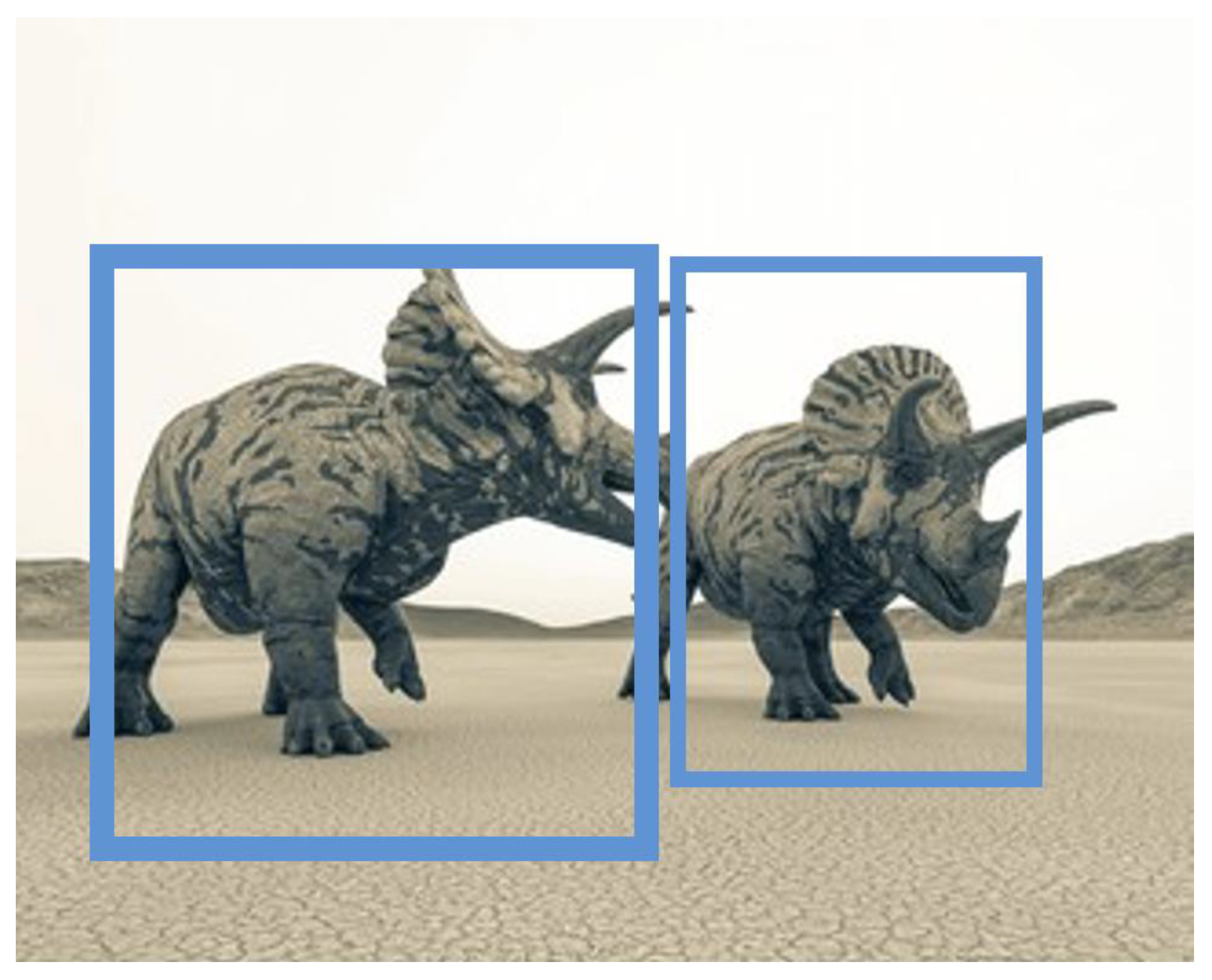
| 3:30 | triceratops, “roar” |
| 4:00 | “neigh”, unicorn |
| 4:30 | book, reading |
| 5:00 | boy, clean up |
| 5:30 | Wild Krats, “animal grunt” |
| 6:00 | typing, “clicking” |
| Mode of Communication | Beau | Carly | Maggie | |||
|---|---|---|---|---|---|---|
| Baseline | Intervention | Baseline | Intervention | Baseline | Intervention | |
| Speech (single-word) | 3.8 | 4.3 | 2.7 | 2.6 | 1.0 | 11.1 |
| Speech (multi-word) | 0.2 | 0.4 | 0.0 | 0.3 | 6.2 | 4.3 |
| Sign/Gesture | 1.0 | 1.4 | 0.3 | 0.4 | 1.8 | 0.5 |
| Touch (no HS) | 3.4 | 1.1 | 0.0 | 0.1 | 0.0 | 0.3 |
| Touch label HS | 0.0 | 10.0 | 0.0 | 13.8 | 0.0 | 9.0 |
| Touch sound HS | 0.0 | 2.3 | 0.0 | 5.0 | 0.0 | 4.3 |
| Total | 8.4 | 19.5 | 3 | 22.2 | 9 | 29.5 |
| Total per min | 2.2 | 2.6 | 0.6 | 2.8 | 1.8 | 3.9 |
Disclaimer/Publisher’s Note: The statements, opinions and data contained in all publications are solely those of the individual author(s) and contributor(s) and not of MDPI and/or the editor(s). MDPI and/or the editor(s) disclaim responsibility for any injury to people or property resulting from any ideas, methods, instructions or products referred to in the content. |
© 2026 by the authors. Licensee MDPI, Basel, Switzerland. This article is an open access article distributed under the terms and conditions of the Creative Commons Attribution (CC BY) license.
Share and Cite
Patenaude, D.; McNaughton, D.; DeLaMare, R. The Effects of Video Visual Scene Displays on the Symbolic Communication of Preschool Children with Neurodevelopmental Disabilities and Their Peers in a Shared Video Activity. Behav. Sci. 2026, 16, 935. https://doi.org/10.3390/bs16060935
Patenaude D, McNaughton D, DeLaMare R. The Effects of Video Visual Scene Displays on the Symbolic Communication of Preschool Children with Neurodevelopmental Disabilities and Their Peers in a Shared Video Activity. Behavioral Sciences. 2026; 16(6):935. https://doi.org/10.3390/bs16060935
Chicago/Turabian StylePatenaude, Dana, David McNaughton, and Rebecca DeLaMare. 2026. "The Effects of Video Visual Scene Displays on the Symbolic Communication of Preschool Children with Neurodevelopmental Disabilities and Their Peers in a Shared Video Activity" Behavioral Sciences 16, no. 6: 935. https://doi.org/10.3390/bs16060935
APA StylePatenaude, D., McNaughton, D., & DeLaMare, R. (2026). The Effects of Video Visual Scene Displays on the Symbolic Communication of Preschool Children with Neurodevelopmental Disabilities and Their Peers in a Shared Video Activity. Behavioral Sciences, 16(6), 935. https://doi.org/10.3390/bs16060935