Article

When Effort Meets Belief: A Moderated Mediation Model of Conscientiousness, Self-Efficacy, and Academic Engagement

1
College of Kyedang General Education, Sangmyung University, Seoul 03016, Republic of Korea
2
Department of Psychology, Keimyung University, Daegu 42601, Republic of Korea
*
Author to whom correspondence should be addressed.
Behav. Sci. 2026, 16(6), 850; https://doi.org/10.3390/bs16060850
Submission received: 23 February 2026 / Revised: 16 May 2026 / Accepted: 25 May 2026 / Published: 26 May 2026

Abstract

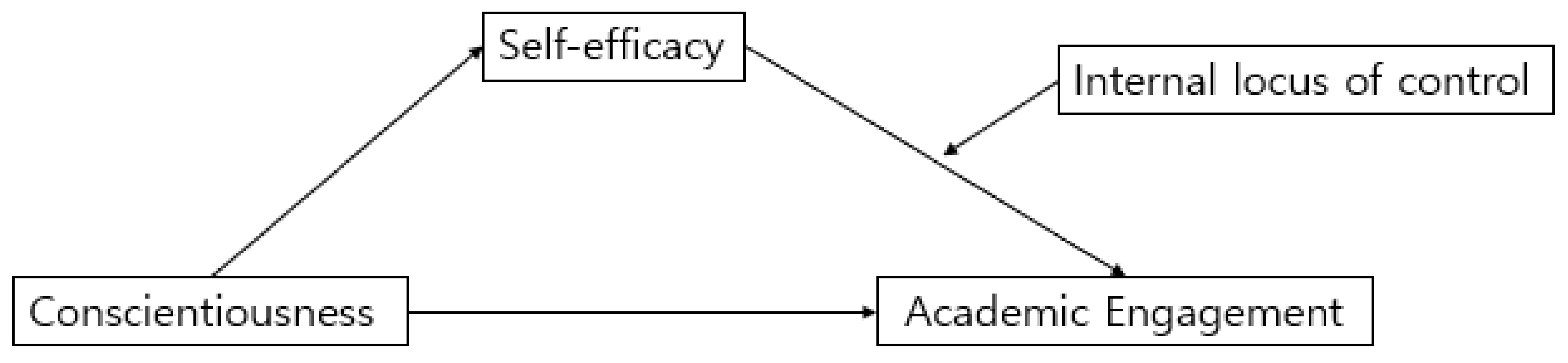
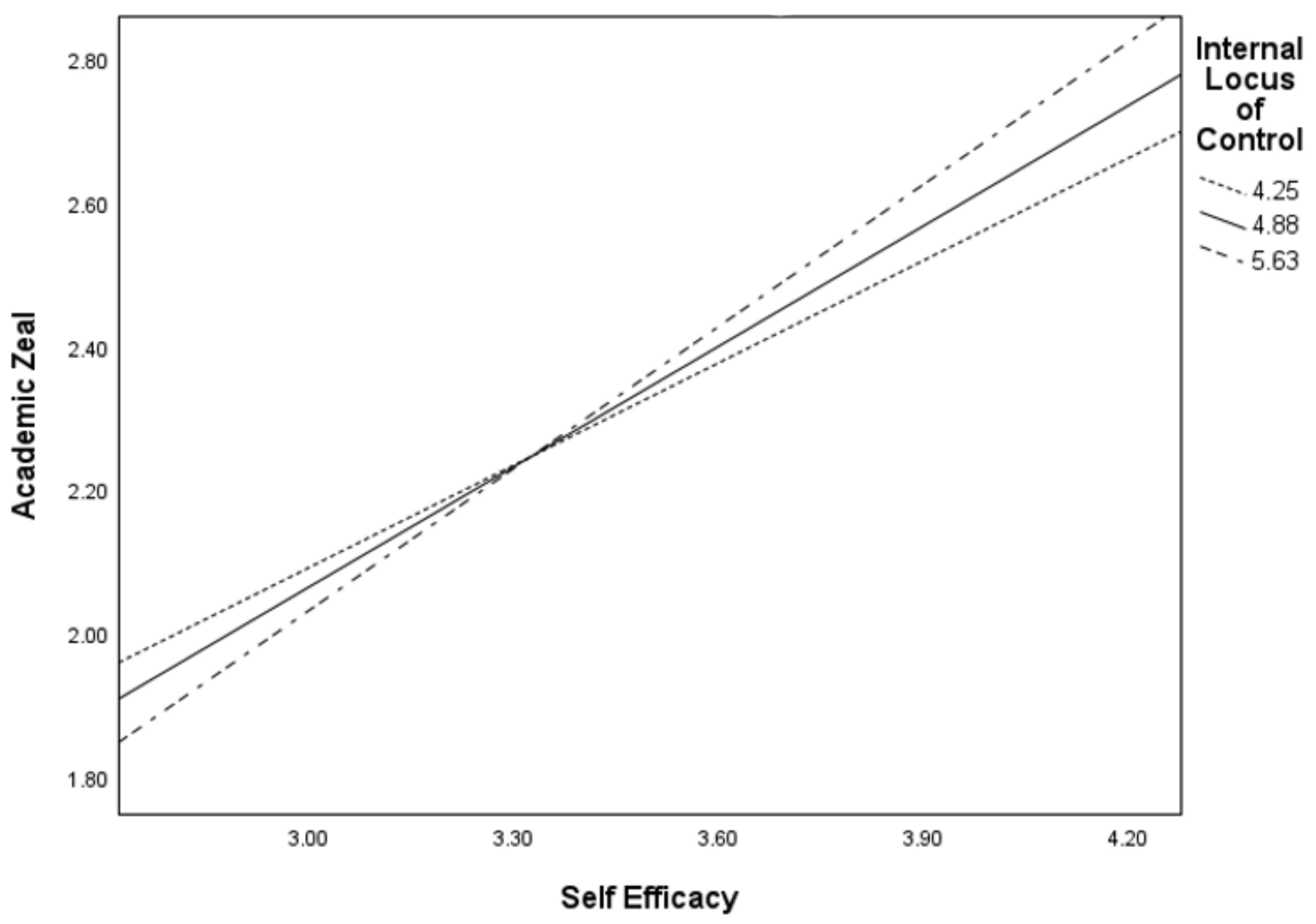
Although conscientiousness is consistently associated with academic achievement, the psychological mechanisms underlying this relationship remain underexplored. We examine whether self-efficacy mediates the relationship between conscientiousness and academic engagement, and whether internal locus of control moderates this pathway. Our cross-sectional study included 1059 undergraduate students from a South Korean university, who completed validated measures of conscientiousness, self-efficacy, internal locus of control, and academic engagement. Using Hayes’ PROCESS macro, we conducted mediation and moderated mediation analyses. The findings support an indirect association between conscientiousness and academic engagement through self-efficacy. Bootstrapping analysis indicated a significant indirect effect, whereas the direct effect of conscientiousness on engagement became non-significant when self-efficacy was included in the model. Internal locus of control significantly moderated the self-efficacy–engagement pathway, and the indirect pathway was strongest among students with high internal locus of control beliefs. Conscientiousness influenced academic engagement indirectly through students’ confidence in their capabilities. This association was strongest among students who believed their academic outcomes were determined by their own efforts. Interventions should strengthen self-efficacy and internal control beliefs to promote sustained academic engagement among conscientious students.
Keywords: conscientiousness; self-efficacy; academic engagement; internal locus of control; moderated mediation conscientiousness; self-efficacy; academic engagement; internal locus of control; moderated mediation