Marijuana Consumption and Reactivity Are Positively Associated with the Fading Affect Bias for Marijuana Events in Person and Online

 ,
, 
Abstract
1. Introduction
1.1. The Fading Affect Bias
1.2. Marijuana Literature Shows Bifurcated Findings
1.3. The Current Study
2. Experiment 1
2.1. Method
2.1.1. Participants
2.1.2. Materials and Measures
2.1.3. Procedure
2.2. Analytic Strategy
2.3. Results
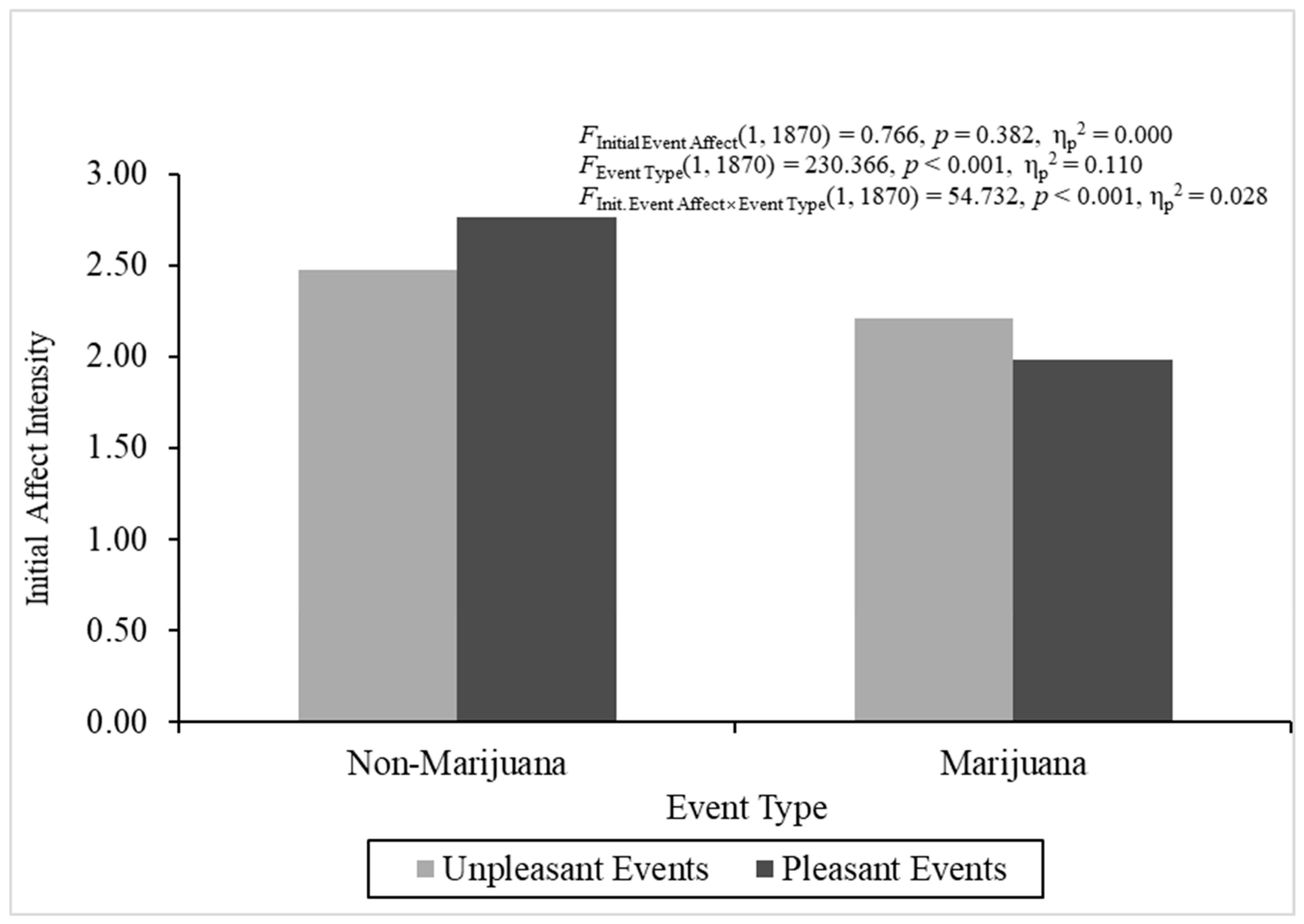
2.3.1. Main Effects and Two-Way Interactions
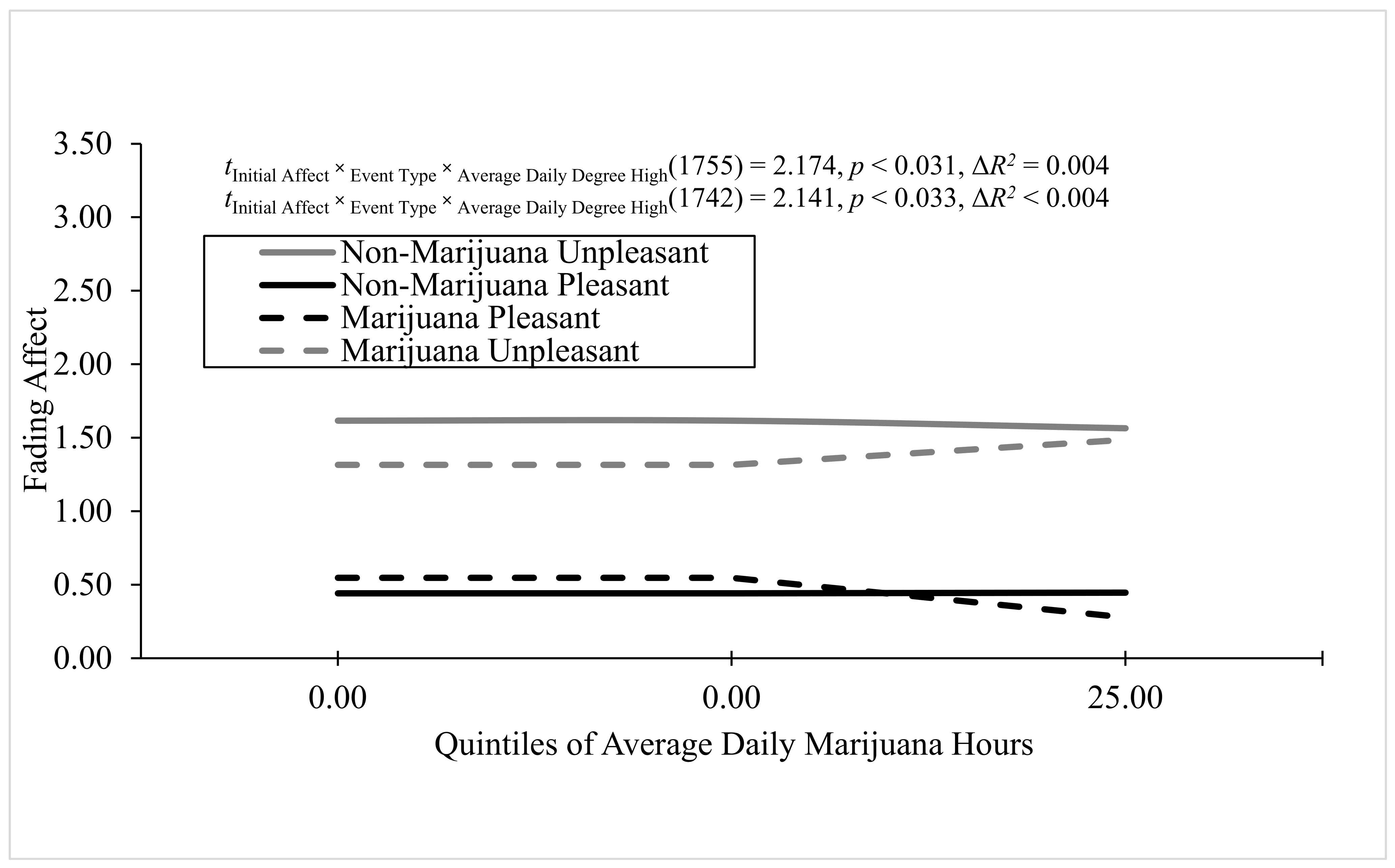
2.3.2. Process Model 3 for Three-Way Interactions with Continuous Predictors
2.4. Discussion
3. Experiment 2
3.1. Methods
3.1.1. Participants
3.1.2. Materials, Measures, Procedure, and Analytic Strategy
3.2. Results
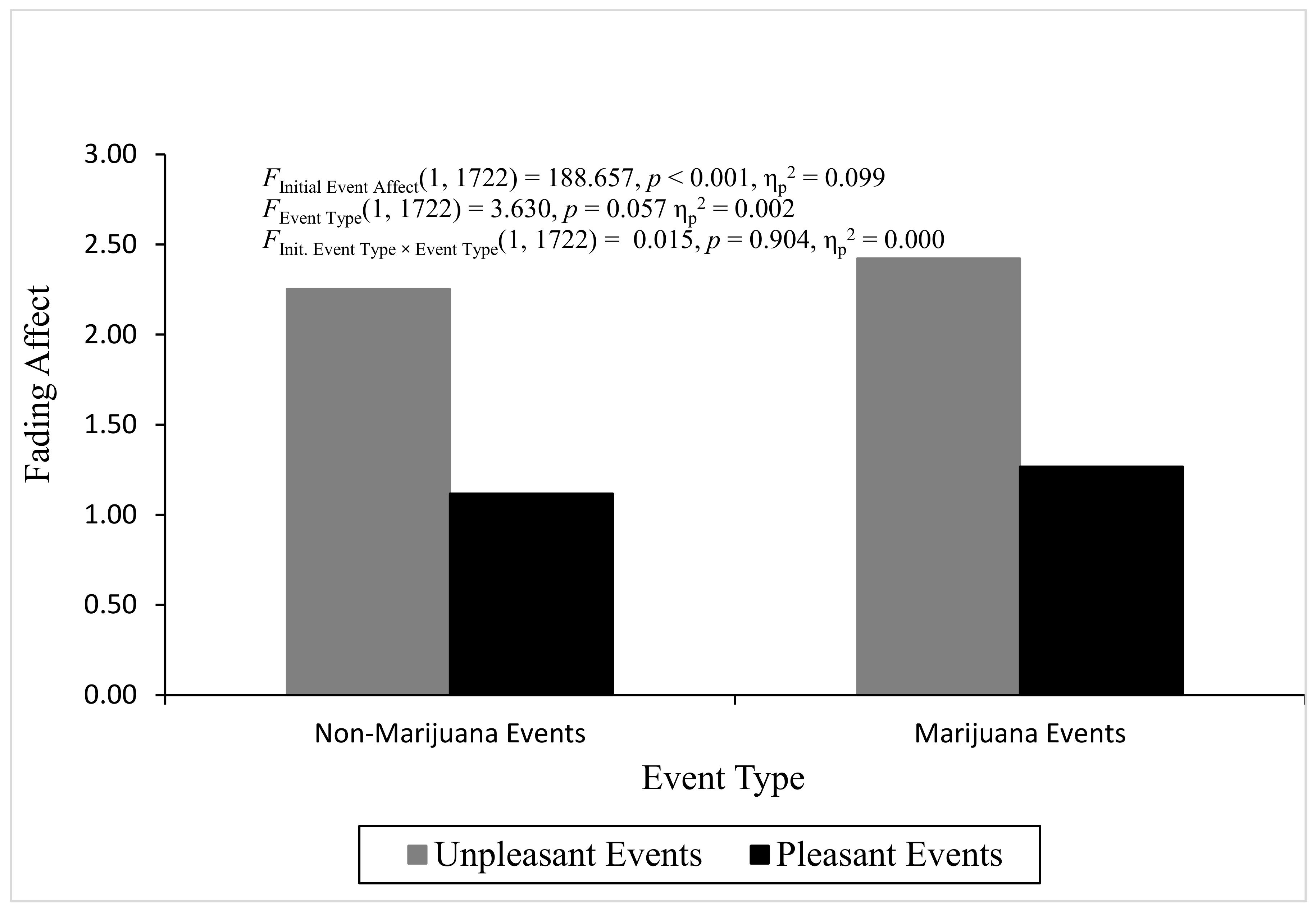
3.2.1. Main Effect and Two-Way Interactions: Evidence of General Healthy Coping for FAB
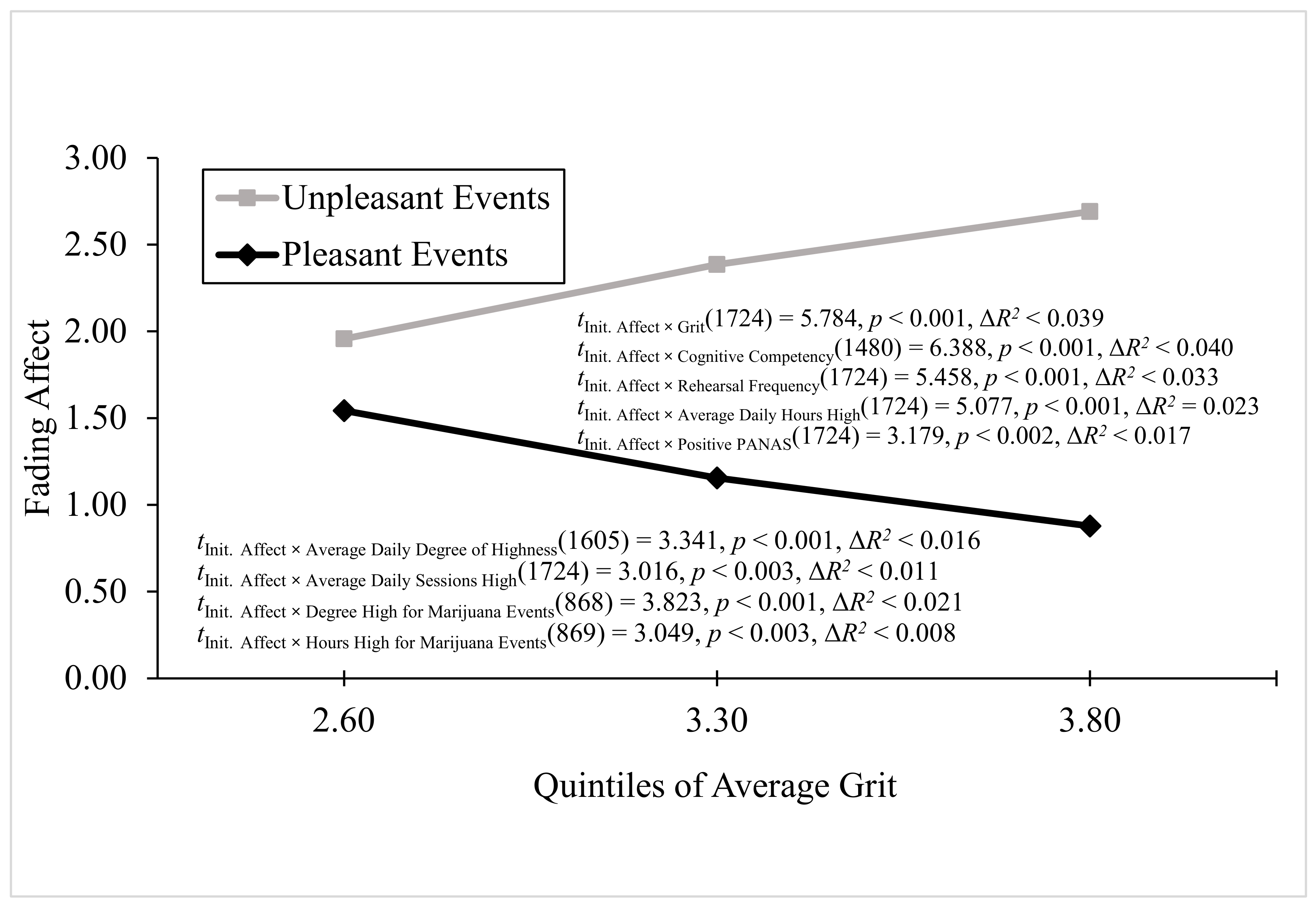
3.2.2. Continuous Three-Way Interaction
3.3. Discussion
4. General Discussion
Author Contributions
Funding
Institutional Review Board Statement
Informed Consent Statement
Data Availability Statement
Acknowledgments
Conflicts of Interest
References
- American Psychological Association. (2017). Ethical principles of psychologists and code of conduct (2002, amended effective June 1, 2010, and January 1, 2017). Available online: https://www.apa.org/ethics/code/ (accessed on 1 January 2017).
- Braidwood, R., Mansell, S., Waldron, J., Rendell, P. G., Kamboj, S. K., & Curran, H. V. (2018). Non-dependent and dependent daily cannabis users differ in mental health but not prospective memory ability. Frontiers in Psychiatry, 9, 97. [Google Scholar] [CrossRef] [Scilit] [PubMed]
- Cason, H. (1932). The learning and retention of pleasant and unpleasant activities. Archives of Psychology, 134, 96. [Google Scholar] [CrossRef] [Scilit]
- Castle, R. D., Marzolf, J., Morris, M., & Bushell, W. C. (2025). Meta-analysis of medical cannabis outcomes and associations with cancer. Frontiers in Oncology, 15, 1490621. [Google Scholar] [CrossRef] [Scilit]
- Degenhardt, L., Hall, W., & Lynskey, M. (2003). Exploring the association between cannabis use and depres-sion. Addiction, 98(11), 1493–1504. [Google Scholar] [CrossRef] [Scilit]
- Degenhardt, L., Lynskey, M., Coffey, C., & Patton, G. (2002). ‘Diagnostic orphans’ among young adult cannabis users: Persons who report dependence symptoms but do not meet diagnostic criteria. Drug and Alcohol Dependence, 67(2), 205–212. [Google Scholar] [CrossRef] [Scilit]
- Dorard, G., Berthoz, S., Phan, O., Corcos, M., & Bungener, C. (2008). Affect dysregulation in cannabis abusers: A study in adolescents and young adults. European Child & Adolescent Psychiatry, 17(5), 274–282. [Google Scholar] [CrossRef] [Scilit]
- Drazdowski, T. K., Lee, C. M., & Neighbors, C. (2019). College students’ using marijuana to sleep relates to frequency, problematic use, and sleep problems. Journal of American College Health, 67(7), 647–656. [Google Scholar] [CrossRef] [Scilit]
- Duckworth, A. L., & Quinn, P. D. (2009). Development and validation of the Short Grit Scale (GRIT–S). Journal of Personality Assessment, 91, 166–174. [Google Scholar] [CrossRef] [Scilit] [PubMed]
- Gibbons, J. A., & Lee, S. A. (2019). Rehearsal partially mediates the negative relations of the fading affect bias with depression, anxiety, and stress. Applied Cognitive Psychology, 33, 693–701. [Google Scholar] [CrossRef] [Scilit]
- Gibbons, J. A., Lee, S. A., & Walker, W. R. (2011). The fading affect bias begins within 12 hours and persists for 3 months. Applied Cognitive Psychology, 25, 663–672. [Google Scholar] [CrossRef] [Scilit]
- Gibbons, J. A., Toscano, A., Kofron, S., Rothwell, C., Lee, S. A., Ritchie, T. D., & Walker, W. R. (2013). The fading affect bias across alcohol consumption frequency for alcohol-related and non-alcohol-related events. Consciousness and Cognition, 22, 1340–1351. [Google Scholar] [CrossRef] [Scilit]
- Gibbons, J. A., Vandevender, S., Langhorne, K., Peterson, E., & Buchanan, A. (2024). In-person and online studies examining the influence of problem solving on the fading affect bias. Behavioral Sciences, 14(9), 806. [Google Scholar] [CrossRef] [Scilit]
- Gruber, S. A., Sagar, K. A., Dahlgren, M. K., Olson, D. P., Centorrino, F., & Lukas, S. E. (2012). Marijuana impacts mood in bipolar disorder: A pilot study. Mental Health and Substance Use, 5(3), 228–239. [Google Scholar] [CrossRef] [Scilit]
- Guy, S. C., Isquith, P. K., & Gioia, G. A. (2004). Behavior rating inventory of executive function-self-report version. Psychological Assessment Resources, Inc. [Google Scholar]
- Hayes, A. F. (2013). The PROCESS macro for SPSS and SAS (Version 2.13) [Software]. IBM (International Business Machines Corporation). Available online: http://www.processmacro.org/download.html (accessed on 1 July 2013).
- Hayes, A. F. (2022). Introduction to mediation, moderation, and conditional process analysis: A regression-based approach. Guilford Press. [Google Scholar]
- Hines, L. A., Freeman, T. P., Gage, S. H., Hickman, M., & MacLeod, J. (2020). Association of high-potency cannabis use with mental health and substance use in adolescence. JAMA Psychiatry, 77(10), 1044–1051. [Google Scholar] [CrossRef] [Scilit]
- Holmes, D. S. (1970). Differential change in affective intensity and the forgetting of unpleasant personal experiences. Journal of Personality and Social Psychology, 15, 234–239. [Google Scholar] [CrossRef] [Scilit] [PubMed]
- Inoue-Choi, M., Hartge, P., Liao, L. M., Caporaso, N., & Freedman, N. D. (2018). Association between long-term low-intensity cigarette smoking and incidence of smoking-related cancer in the National Institutes of Health-AARP cohort. International Journal of Cancer, 142(2), 271–280. [Google Scholar] [CrossRef] [Scilit] [PubMed]
- Jersild, A. (1931). Memory for the pleasant as compared with the unpleasant. Journal of Experimental Psychology, 14, 284–288. [Google Scholar] [CrossRef] [Scilit]
- King, A., Vena, A., Hasin, D. S., deWit, H., O’Connor, S. J., & Cao, D. (2021). Subjective responses to alcohol in the development and maintenance of alcohol use disorder. American Journal of Psychiatry, 178(6), 560–571. [Google Scholar] [CrossRef] [Scilit]
- Lac, A., & Luk, J. W. (2017). Testing the amotivational syndrome: Marijuana use longitudinally predicts lower self-efficacy even after controlling for demographics, personality, and alcohol and cigarette use. Prevention Science, 19(2), 117–126. [Google Scholar] [CrossRef] [Scilit] [PubMed]
- Lake, I. R., Matheson, K., & Popovich, G. (2019). Does cannabis use modify the effect of post-traumatic stress disorder on severe depression and suicidal ideation? Evidence from a population-based cross-sectional study of Canadians. Journal of Psychopharmacology, 33(9), 1219–1226. [Google Scholar] [CrossRef] [Scilit]
- Lex, B. W., Griffin, M. L., Mello, N. K., & Mendelson, J. H. (1989). Alcohol, marijuana, and mood states in young women. Substance Use & Misuse, 24(6), 639–652. [Google Scholar] [CrossRef] [Scilit]
- Li, X., Diviant, J. P., Stith, S. S., Brockelman, F., Keeling, K., Hall, B., & Vigil, J. M. (2020). The effectiveness of cannabis flower for immediate relief from symptoms of depression. Yale Journal of Biology and Medicine, 93(2), 251–264. [Google Scholar] [CrossRef] [Scilit]
- Looby, A., & Earleywine, M. (2007). Negative consequences associated with dependence in daily cannabis users. Substance Abuse Treatment, Prevention, and Policy, 2(3), 3. [Google Scholar] [CrossRef] [Scilit]
- Lovibond, S. H., & Lovibond, P. F. (1995). Manual for the depression, anxiety & stress scales. Psychology Foundation. [Google Scholar] [CrossRef] [Scilit]
- Meltzer, H. (1930). The present status of experimental studies on the relationship of feeling to memory. Psychological Review, 37, 124–139. [Google Scholar] [CrossRef] [Scilit]
- Meltzer, H. (1931). Sex differences in forgetting pleasant and unpleasant experiences. Journal of Abnormal and Social Psychology, 25, 450–464. [Google Scholar] [CrossRef] [Scilit]
- Muir, K., & Brown, C. (2024). The COVID-19 pandemic disrupted the healthy fading of emotions in autobiographical memory mediated via in-person social disclosures. Applied Cognitive Psychology, 38(1), e4149. [Google Scholar] [CrossRef] [Scilit]
- Petrucci, A. S. (2020). A comprehensive examination of the links between cannabis use and motivation. Substance Use & Misuse, 55(3), 444–457. [Google Scholar] [CrossRef] [Scilit] [PubMed]
- Pillersdorf, D., & Scoboria, A. (2019). Cannabis-associated impairments in the fading affect bias and autobiographical memory specificity. Consciousness and Cognition, 74, 102792. [Google Scholar] [CrossRef] [Scilit] [PubMed]
- Preacher, K. J., Curran, P. J., & Bauer, D. J. (2006). Computational tools for probing interactions in multiple linear regression, multilevel modeling, and latent curve analysis. Journal of Educational and Behavioral Statistics, 31, 437–448. [Google Scholar] [CrossRef] [Scilit]
- Ritchie, T. D., Batteson, T. J., Bohn, A., Crawford, M. T., Ferguson, G. V., Schrauf, R. W., Vogl, R. J., & Walker, W. R. (2015). A pancultural perspective on the fading affect bias in autobiographical memory. Memory, 23(2), 278–290. [Google Scholar] [CrossRef] [Scilit]
- Ritchie, T. D., Kitsch, K. S., Dromey, M., & Skowronski, J. J. (2019). Individuals who report eating disorder symptoms also exhibit a disrupted fading affect bias in autobiographical memory. Memory, 27, 239–249. [Google Scholar] [CrossRef] [Scilit]
- Ritchie, T. D., Skowronski, J. J., Harnett, J., Wells, B., & Walker, W. R. (2009). The fading affect bias in the context of emotion activation level, mood, and personal theories of emotion change. Memory, 17, 428–444. [Google Scholar] [CrossRef] [Scilit]
- Ritchie, T. D., Skowronski, J. J., Wood, S., Walker, W. R., Vogl, R. J., & Gibbons, J. A. (2006). Event self-importance, event rehearsal, and the fading affect bias in autobiographical memory. Self and Identity, 5, 172–195. [Google Scholar] [CrossRef] [Scilit]
- Roitman, P., Mechoulam, R., Cooper-Kazaz, R., & Shalev, A. (2014). Preliminary, open-label, pilot study of add-on oral Δ9-tetrahydrocannabinol in chronic post-traumatic stress disorder. Clinical Drug Investigation, 34(8), 587–591. [Google Scholar] [CrossRef] [Scilit]
- Saucier, G. (1994). Mini-markers: A brief version of Goldberg’s unipolar big-five markers. Journal of Personality Assessment, 63, 506–516. [Google Scholar] [CrossRef] [Scilit]
- Schuster, R. M., Hareli, M., Moser, A. D., Lowman, K., Gilman, J., Ulysse, C., Schoenfeld, D., & Evins, A. E. (2019). Cross-domain correlates of cannabis use disorder severity among young adults. Addictive Behaviors, 93, 212–218. [Google Scholar] [CrossRef] [Scilit] [PubMed]
- Sedikides, C., & Alicke, M. D. (2018). The five pillars of self-enhancement and self-protection. In R. M. Ryan (Ed.), Oxford handbook of motivation. Oxford University Press. [Google Scholar]
- Skowronski, J. J., Crouch, J. L., Coley, S. L., Sasson, S., Wagner, M. F., Rutledge, E., Cote, K., Miksys, C., & Milner, J. S. (2016). Fading of affect associated with negative child-related memories varies by parental child abuse potential. Applied Cognitive Psychology, 30(6), 972–982. [Google Scholar] [CrossRef] [Scilit]
- Skowronski, J. J., Crouch, J. L., & Milner, J. S. (2023). Does the fading affect bias vary by memory type and a parent’s risk of physically abusing a child? A replication and extension. Psychological Reports, 126(5), 2418–2432. [Google Scholar] [CrossRef] [Scilit] [PubMed]
- Skowronski, J. J., Gibbons, J., Vogl, R., & Walker, W. (2004). The effect of social disclosure on the intensity of affect provoked by autobiographical memories. Self & Identity, 3, 285–309. [Google Scholar] [CrossRef] [Scilit]
- Statistics Solutions. (2023). The assumption of homogeneity of variance. Available online: https://www.statisticssolutions.com/wp-content/uploads/kalins-pdf/singles/the-assumption-of-homogeneity-of-variance.pdf (accessed on 10 July 2023).
- Sznitman, S. R., van Rijswijk, L., & Cousijn, J. (2022). Cannabis use as a predictor and outcome of positive and negative affect in college students: An ecological momentary assessment study. Addictive Behaviors, 128, 107221. [Google Scholar] [CrossRef] [Scilit]
- Taylor, S. E. (1991). Asymmetrical effects of positive and negative affect: The mobilization-minimization hypothesis. Psychological Bulletin, 110, 67–85. [Google Scholar] [CrossRef]
- van der Pol, P., Liebregts, N., de Graaf, R., ten Have, M., Korf, D. J., van den Brink, W., & van Laar, M. (2013). Mental health differences between frequent cannabis users with and without dependence and the general population. Addiction, 108(8), 1459–1469. [Google Scholar] [CrossRef] [Scilit]
- Walker, W. R., & Skowronski, J. J. (2009). The fading affect bias: But what the hell is it for? Journal of Applied Cognitive Psychology, 23, 1122–1136. [Google Scholar] [CrossRef] [Scilit]
- Walker, W. R., Skowronski, J. J., Gibbons, J. A., Vogl, R. J., & Thompson, C. P. (2003). On the emotions that accompany autobiographical memories: Dysphoria disrupts the fading affect bias. Cognition & Emotion, 17, 703–723. [Google Scholar] [CrossRef] [Scilit]
- Walker, W. R., Vogl, R., & Thompson, C. (1997). Autobiographical memory: Unpleasantness fades faster than pleasantness over time. Applied Cognitive Psychology, 11, 399–413. [Google Scholar] [CrossRef]
- Walker, W. R., Yancu, C. N., & Skowronski, J. J. (2014). Trait anxiety reduces affective fading for both positive and negative autobiographical memories. Advances in Cognitive Psychology, 10, 81–89. [Google Scholar] [CrossRef] [Scilit]
- Watson, D., Clark, L., & Tellegen, A. (1988). Development and validation of brief measures of positive and negative affect: The PANAS scales. Journal of Personality and Social Psychology, 54, 1063–1070. [Google Scholar] [CrossRef] [PubMed]
- Watters, R., & Leeper, R. (1936). The relation of affective tone to the retention of experiences in everyday life. Journal of Experimental Psychology, 19, 203–215. [Google Scholar] [CrossRef] [Scilit]




Disclaimer/Publisher’s Note: The statements, opinions and data contained in all publications are solely those of the individual author(s) and contributor(s) and not of MDPI and/or the editor(s). MDPI and/or the editor(s) disclaim responsibility for any injury to people or property resulting from any ideas, methods, instructions or products referred to in the content. |
© 2026 by the authors. Licensee MDPI, Basel, Switzerland. This article is an open access article distributed under the terms and conditions of the Creative Commons Attribution (CC BY) license.
Share and Cite
Gibbons, J.A.; Cotton, C.A.; Traversa, M.; Friedmann, E.; Harris, K. Marijuana Consumption and Reactivity Are Positively Associated with the Fading Affect Bias for Marijuana Events in Person and Online. Behav. Sci. 2026, 16, 611. https://doi.org/10.3390/bs16040611
Gibbons JA, Cotton CA, Traversa M, Friedmann E, Harris K. Marijuana Consumption and Reactivity Are Positively Associated with the Fading Affect Bias for Marijuana Events in Person and Online. Behavioral Sciences. 2026; 16(4):611. https://doi.org/10.3390/bs16040611
Chicago/Turabian StyleGibbons, Jeffrey Alan, Chayse Angela Cotton, Matthew Traversa, Emma Friedmann, and Kaylee Harris. 2026. "Marijuana Consumption and Reactivity Are Positively Associated with the Fading Affect Bias for Marijuana Events in Person and Online" Behavioral Sciences 16, no. 4: 611. https://doi.org/10.3390/bs16040611
APA StyleGibbons, J. A., Cotton, C. A., Traversa, M., Friedmann, E., & Harris, K. (2026). Marijuana Consumption and Reactivity Are Positively Associated with the Fading Affect Bias for Marijuana Events in Person and Online. Behavioral Sciences, 16(4), 611. https://doi.org/10.3390/bs16040611