1. Introduction
In recent years, the mental health issues of adolescents have drawn widespread concern from families and society. Studies indicate that the detection rate of depressive symptoms among Chinese adolescents range from 24% to 28%, showing a rising trend year by year (
G. L. Yu, 2022). Depression during adolescence can significantly impair academic performance and school adjustment. According to the “2024 Adolescent Mental Health and Academic Status Survey” released by the Chinese Academy of Sciences, students with higher mental health risks are more likely to report not wanting to attend school, exhibit poorer academic resilience, and have weaker academic self-efficacy (
Sun et al., 2025). Moreover, such adverse effects may extend into adulthood, leading to psychosocial problems such as anxiety and poor social adaptation. Depression during adolescence not only significantly impairs academic performance and social adaptability but also predicts a series of future psychological issues, including anxiety and suicide, causing damage to individual physical and mental health (
X. C. Zhang et al., 2025;
McLeod et al., 2016;
Weersing et al., 2017;
Becker & Correll, 2020). Therefore, exploring the risk factors and mechanisms of adolescent depression is of great significance for promoting individual physical and mental health.
The family is a crucial environment for the growth and development of adolescents; parenting styles are one of the direct factors that influence adolescent mental health (
Y. Q. Ma et al., 2022). As a key family environmental factor, parenting styles have received increasing attention regarding their impact on adolescent depression. The degree to which fathers and mothers are able to support each other in child-rearing practices is crucial for the healthy development of adolescents (
Xie et al., 2021). These collaborative parenting activities between adults who share the responsibility of raising a child are referred to as “co-parenting” (
C. Liu et al., 2014;
C. Liu & Wu, 2015).
However, existing studies have focused on individual dimensions while overlooking the potentially heterogeneous configurations of co-parenting. As
Mandara (
2003) noted, co-parenting constitutes a multidimensional and integrated whole, wherein the same parent may simultaneously exhibit multiple parenting styles in varying combinations. In recent years, a great deal of empirical studies have adopted person-centered approaches to identify the substantive typologies of parenting styles, rather than focusing on specific dimensions. Latent profile analysis (LPA), a commonly used person-centered method, aims to better capture inter-individual heterogeneity (
Laursen & Hoff, 2006;
S. H. Liu et al., 2023;
Zhan et al., 2023). Consequently, a growing consensus suggests that psychological research should first identify the underlying patterns of parenting styles before examining their correlations and outcomes (
Berge et al., 2010;
Hoeve et al., 2009).
Indeed, the family functions as a complex ecosystem within which the parenting behaviors of mothers and fathers are interactive rather than independent (
Cox & Paley, 1997). On one hand, individuals tend to select partners whose behavioral patterns resemble their own (
Lyons et al., 2020); this assortative mating contributes to congruence in parenting practices. On the other hand, to maintain functional balance and integrity within the family, parents often adopt complementary parenting roles—such as the traditional pattern of a “strict father and nurturing mother” or “nurturing father and strict mother”—thereby exhibiting incongruent parenting styles (
Dwairy, 2010). These highlight the necessity of examining both consistency and incongruence in parental co-parenting within family systems research. Generally speaking, mothers play the central role of carer in child-rearing (
Zou et al., 2019). whereas fathers tend to serve a more instrumental role (
Y. Xu et al., 2006). However, with the development of society, contemporary parenting beliefs and involvement have changed (
J. J. Xu et al., 2023). Fathers are now devoting more time and effort to raising children (
X. Li, 2020), with the importance of the fathers’ role in the family becoming increasingly apparent (
Hou et al., 2022). As fathers become more involved in child-rearing, congruent co-parenting between both parents can reduce the risk of adolescent depression. According to the “Consistency-Adaptation Hypothesis” proposed by the Diverging Operations Triad Model (
Delos Reyes & Ohannessian, 2016), the higher levels of co-parenting in child-rearing, the fewer adolescents’ problem behaviors have, such as good academic performance and lower levels of depression (
Lu et al., 2019;
Wen et al., 2023). Co-parenting in child-rearing activities can reduce the risk of depression in adolescents. Studies show that spousal support boosts both the parental responsibility and sensitivity of mothers and fathers, which contributes to a warmer family environment (
Y. H. Li et al., 2024). When fathers cooperate with mothers in parenting activities, they can effectively share the burden of mothers’ child-rearing responsibilities (
Gao et al., 2020) and foster a stable family environment for adolescents to grow up (
T. T. Liu et al., 2021). A positive family environment provides adolescents with secure emotional support, reducing their emotional stress and risk of depression (
J. J. Li et al., 2018;
W. J. Liu et al., 2012;
C. F. Chen et al., 2021).
Conversely, if one of the parents fails to cooperate with the other parent’s parenting activities, in other words, parental incongruence in co-parenting leads to an imbalance in parental involvement, creating a conflicted family atmosphere. This results in adolescents lacking stable emotional responses, which is harmful to their physical and mental health development. According to the “Consistency-Adaptation Hypothesis” of the Diverging Operations Triad Model, when parents have incongruent parenting styles, adolescents have more problem behaviors and poorer emotional skills, such as aggressive behaviors and a risk of depression (
Yin et al., 2022). Recent studies highlight that when parental co-parenting is incongruent, adolescents cannot feel supportive co-parenting, leading to an increased risk of depression. Among adolescents experiencing negative family support, 29.2% exhibit a risk of depression (
Fu et al., 2024).
Yang et al. (
2021) and
G. Z. Zhang et al. (
2021) found that incongruence in co-parenting impairs adolescents’ self-regulation, creates a negative family environment, and increases adolescents’ depression (
Yang et al., 2021;
G. Z. Zhang et al., 2021). Therefore, incongruent parenting activities create a conflict family atmosphere, depriving adolescents of stable emotional responses and clear rule-based guidance, which in turn leads to adolescents experiencing a sense of being abandoned and causing negative emotions such as depression and anxiety (
Schoppe et al., 2001).
However, the impact of incongruence in parental co-parenting on adolescent depression may vary. Higher levels of congruence in fathers and mothers may have different effects on depression, particularly among adolescents of different genders. Studies have found by
Sher-Censor et al. (
2011) that compared to fathers, mothers’ positive parenting behaviors are more strongly associated with adolescents’ emotional well-being. Research by
Tang et al. (
2024) also found that mothers’ positive parenting activities had a greater influence on adolescents’ internalizing problem behaviors than fathers’, but fathers’ positive parenting activities had a greater impact on adolescent externalizing problem behaviors than mothers’ (
Tang et al., 2024). Additionally, the impact of incongruence in parental co-parenting between fathers and mothers may differ between boys and girls. According to the theory of gendered family and cognitive development, parenting styles also have different influences on the development of boys and girls (
Endendijk et al., 2018). Adolescents are more influenced by parents of the same gender. Fathers’ involvement in co-parenting provides boys with emotional security and reduces depression in boys (
Zheng et al., 2025). Fathers’ involvement in the family can significantly influence boys’ emotions and control abilities (
Nie & Lu, 2014).
Huston (
1983) noted that parents bear greater responsibility for the socialization of same-gender offspring.
L. Xu et al. (
2018) also found that children are more susceptible to the influence of same-gender parents. The father–son relationship significantly predicts internalizing and externalizing problem behaviors among boys, while mother–daughter relationships significantly predict such problems in girls. However, some research also indicates that fathers have a greater influence on daughters. For instance, when fathers are more involved in parenting activities, daughters tend to achieve higher academic standards, while this effect is not observed in sons (
Paul & Usha, 2021). It may be inferred that higher levels of congruence in parental co-parenting on adolescents’ depression have different effects on depression in boys and girls.
Based on this, the present study aims to first identify the patent profiles of parental co-parenting using Latent Profile Analysis (LPA) and then employ Response Surface Analysis (RSA) to examine the effects of parental co-parenting congruence and incongruence on adolescent depression. The objective is to reveal how the mechanism of co-parenting affects adolescent depression, providing empirical evidence for family interventions and mental health promotion.
Self-esteem refers to individuals’ overall positive evaluation of themselves, reflecting their perception and attitude towards their own abilities and value (
Leary & Baumeister, 2000). It has a significant impact on individual emotions and problem behaviors (
Hao & Cui, 2007;
Jia et al., 2016). Parenting styles play a primary role and have a significant impact on children’s self-esteem. Recent studies show that congruence in parental co-parenting fosters a harmonious family atmosphere, promoting children’s positive self-perception as well as enhanced self-esteem (
J. J. Chen et al., 2014;
G. Q. Liu et al., 2020). Conversely, incongruence in parental co-parenting can damage adolescents’ self-esteem (
C. Liu et al., 2017). According to the vulnerability model of depression, low self-esteem plays a risk role for depression (
D. L. Li et al., 2019). Adolescents’ self-esteem levels are negatively correlated with depression (
Zhou et al., 2021;
S. Yu & Liu, 2020). According to the theory of intrinsic relations in the host, individuals form internal psychological structures through interactions with significant others, which subsequently shape their emotions and behaviors in adulthood. Adolescents who feel high levels of co-parenting and experience a secure emotional environment may internalize a sense of “valuable self”, thereby contributing to the development of adolescent self-awareness. This process reduces the risk of psychological problems such as depression (
Wang et al., 2025).
Consequently, adolescents living in environments with low levels of co-parenting may experience negative self-concepts and self-esteem due to experiencing more emotional neglect, ultimately increasing the risk of depression.
Based on the above, this study proposes the following hypothesis:
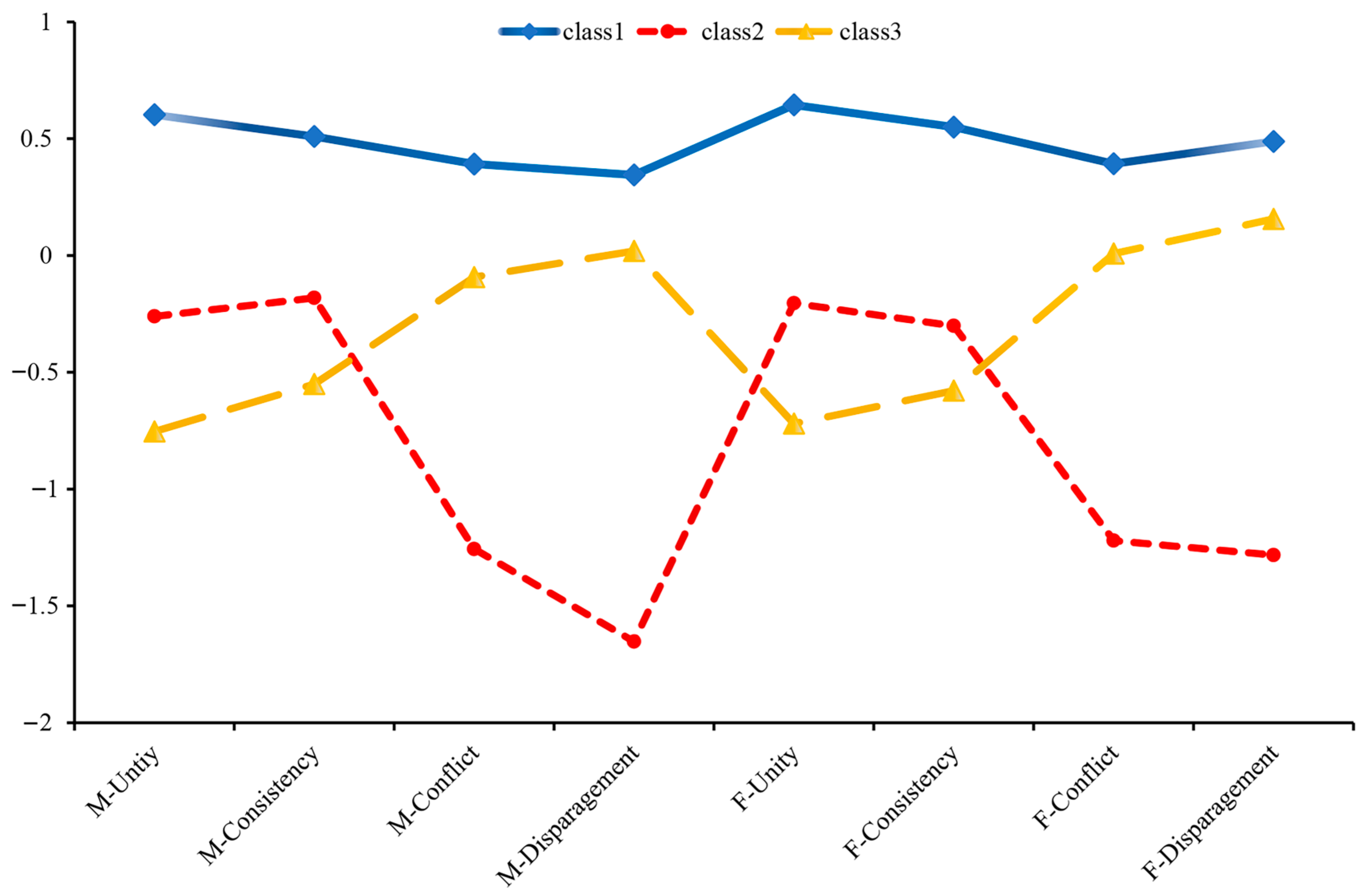
H1. There exist multiple latent profiles of parental co-parenting styles.
H2. When parental co-parenting is congruent, different patterns of congruent co-parenting exert different effects on adolescent depression, and the difference manifests in different forms among boys and girls.
H3. When parental co-parenting is incongruent, different patterns of incongruent co-parenting exert different effects on adolescent depression, and the difference manifests in different forms among boys and girls.
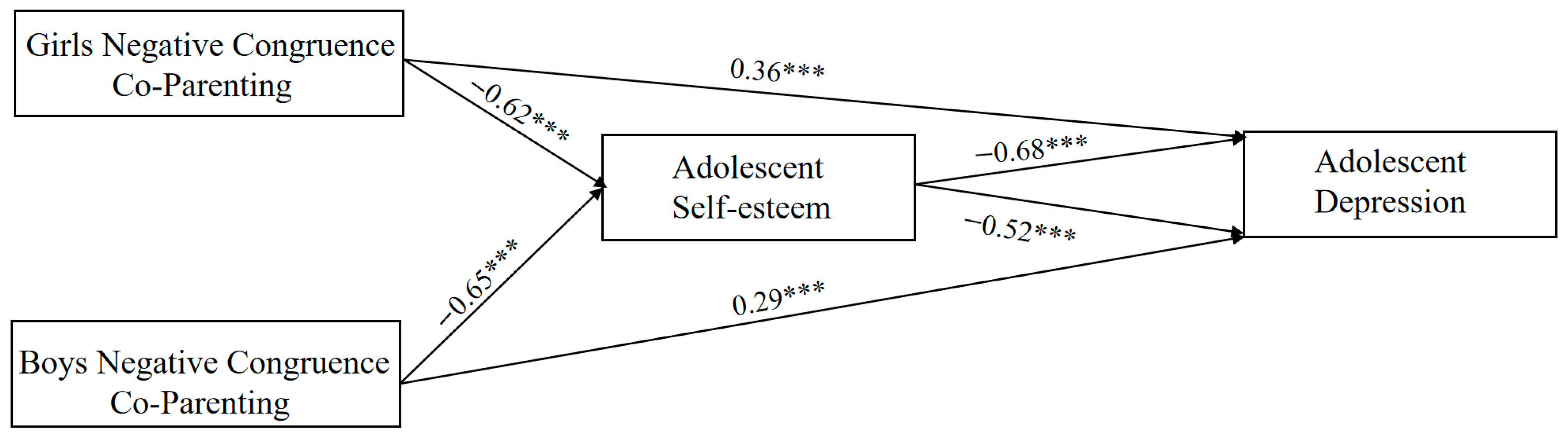
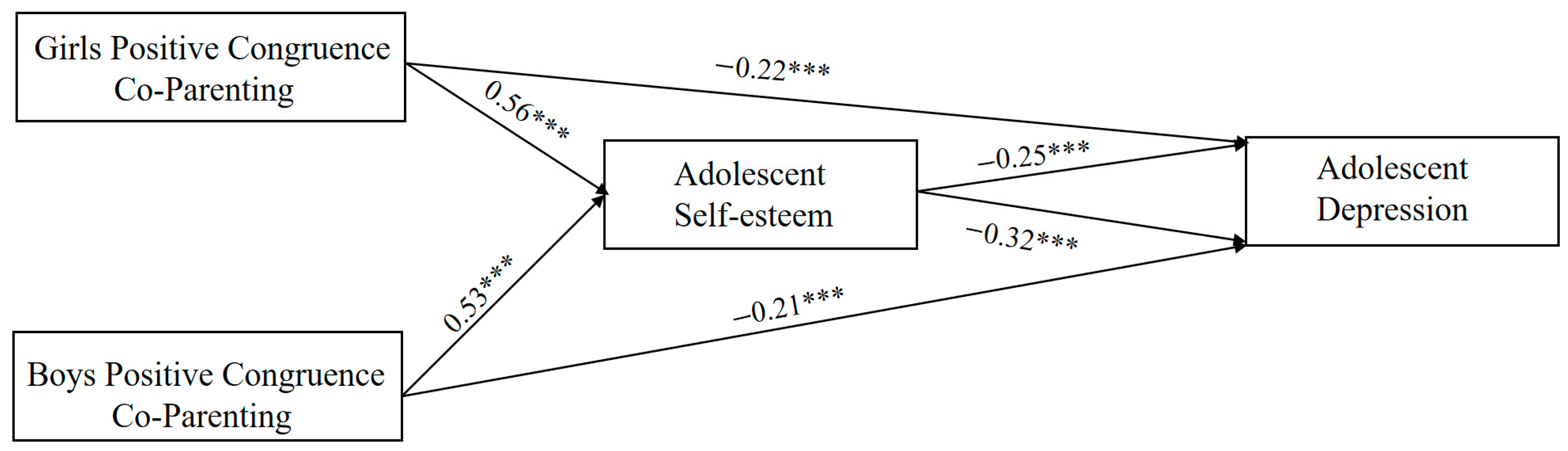
H4. Self-esteem mediates the relationship between parental (in)congruence in co-parenting and adolescent depression.
5. Conclusions
First, three latent classes of parental co-parenting were identified: Mixed Parental Co-Parenting, Positive Parental Co-Parenting, and Negative Parental Co-Parenting. The mixed type accounted for the largest proportion (42.3%), while negative co-parenting accounted for the least (26.1%).
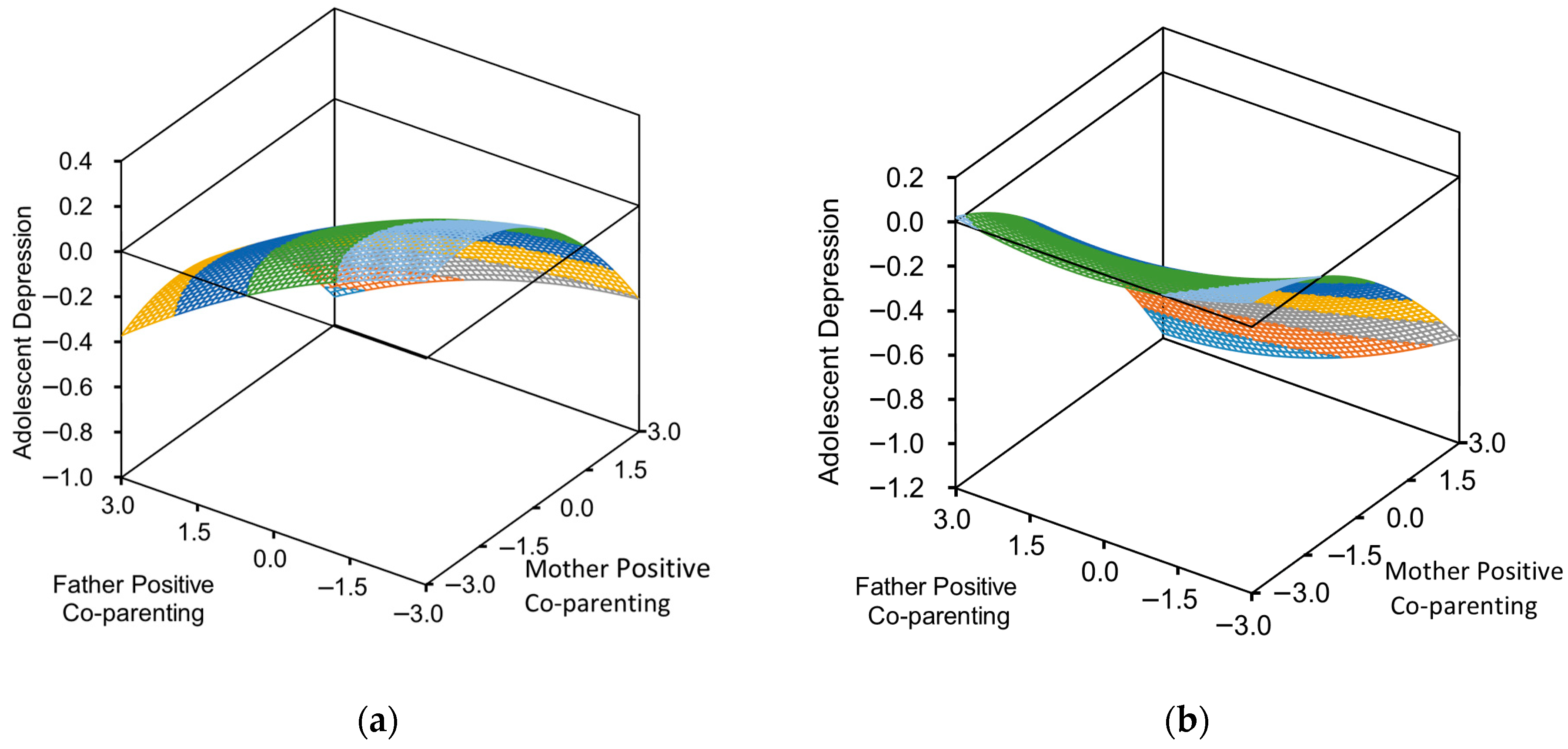
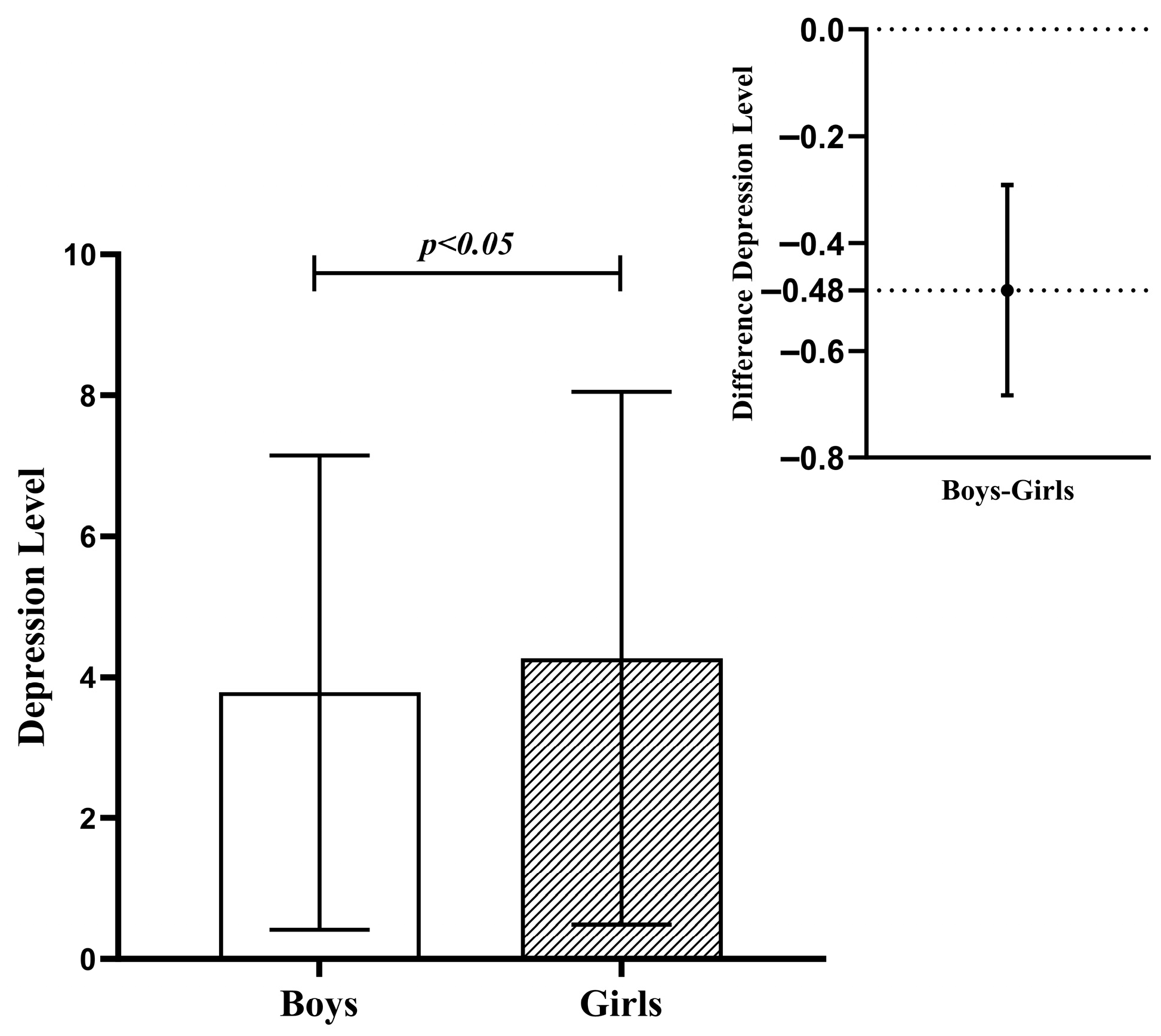
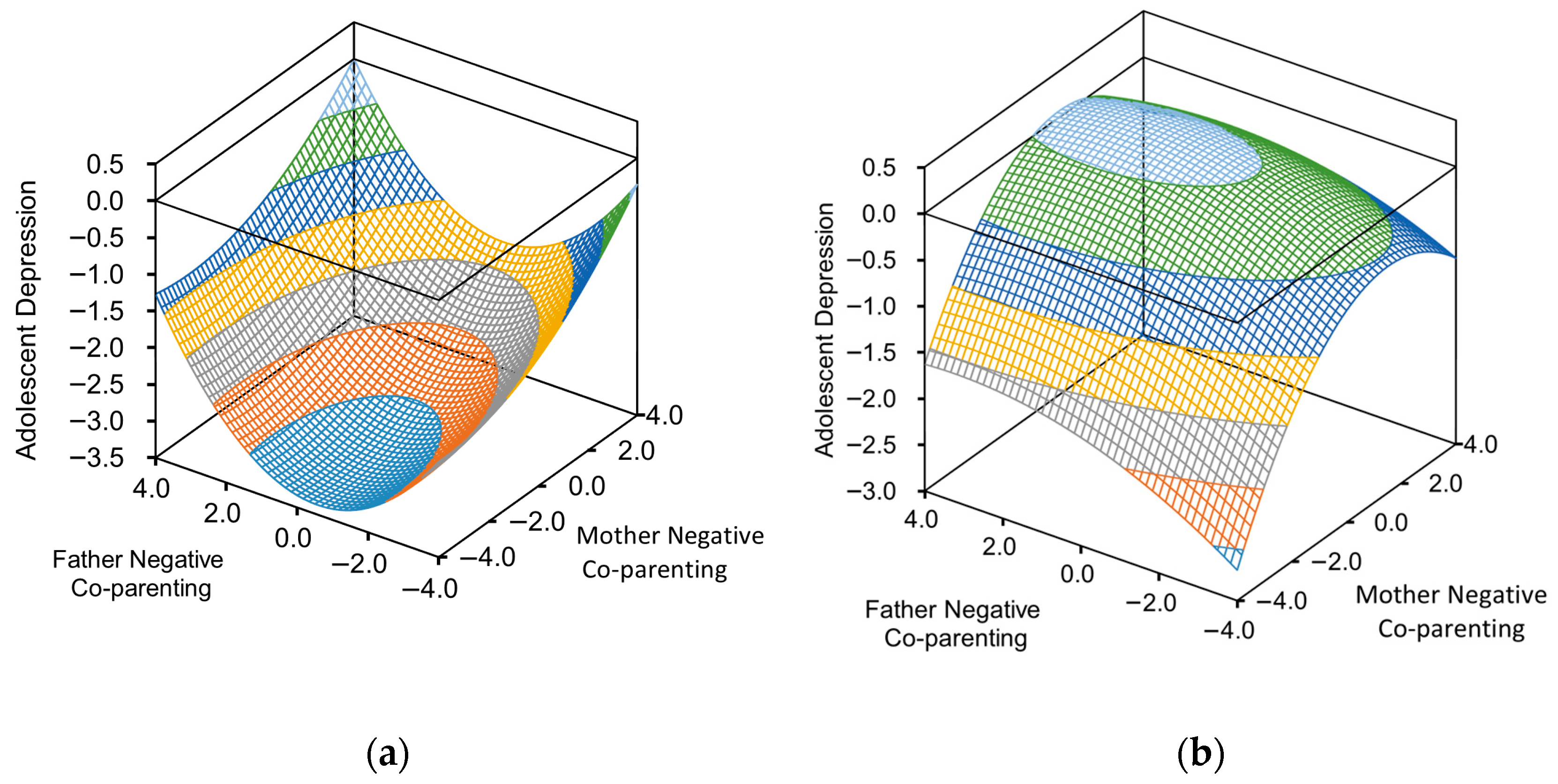
Second, parental co-parenting congruence affects adolescent depression, with gender differences and dimensional differences. For positive co-parenting, high congruent positive co-parenting significantly reduced adolescent depression, whereas low congruent positive co-parenting increased depression. For girls, depression showed a marginally increasing nonlinear trend as positive co-parenting congruence decreased; for boys, depression increased linearly. For negative co-parenting, high congruent negative co-parenting significantly elevated depression. For girls, depression showed a marginally increasing nonlinear trend as negative co-parenting congruence increased; for boys, depression again increased linearly.
Third, the impact of co-parenting incongruence on adolescent depression differed significantly by gender, with similar gender patterns across positive and negative dimensions. For girls, incongruence in both positive and negative co-parenting showed no significant effect on depression, suggesting that positive parenting from one parent can buffer the risks of negative parenting from the other, supporting the balance theory. For boys, the “high mothers’ co-parenting- low fathers’ co-parenting” pattern in positive co-parenting significantly reduced depression, whereas the same pattern in negative co-parenting significantly increased depression. This supports the central role of mothers in boys’ upbringing, indicating that maternal parenting has an irreplaceable influence on boys’ depression.
Fourth, self-esteem mediated the relationship between parental co-parenting congruence and adolescent depression. Congruent positive co-parenting positively predicted self-esteem, which in turn negatively predicted depression. Congruent negative co-parenting negatively predicted self-esteem, which also negatively predicted depression.
This study advances our understanding of the complex dynamics of mothers’ and fathers’ co-parenting families and the necessity of simultaneously examining both mothers’ and fathers’ parenting behaviors. Practically, interventions aimed at reducing adolescent depression risk should prioritize enhancing positive co-parenting congruence and improving adolescent self-esteem. These findings provide precise directions for depression prevention and intervention efforts targeting adolescents.