The Relationship Between Work–Family Conflict and Health Behaviors: A Systematic Review and Meta-Analysis


Abstract
1. Introduction
2. Methods
2.1. Literature Search
2.2. Eligible Criteria and Study Selection
2.3. Data Extraction and Risk of Bias Assessment
2.4. Synthesis of the Results
3. Results
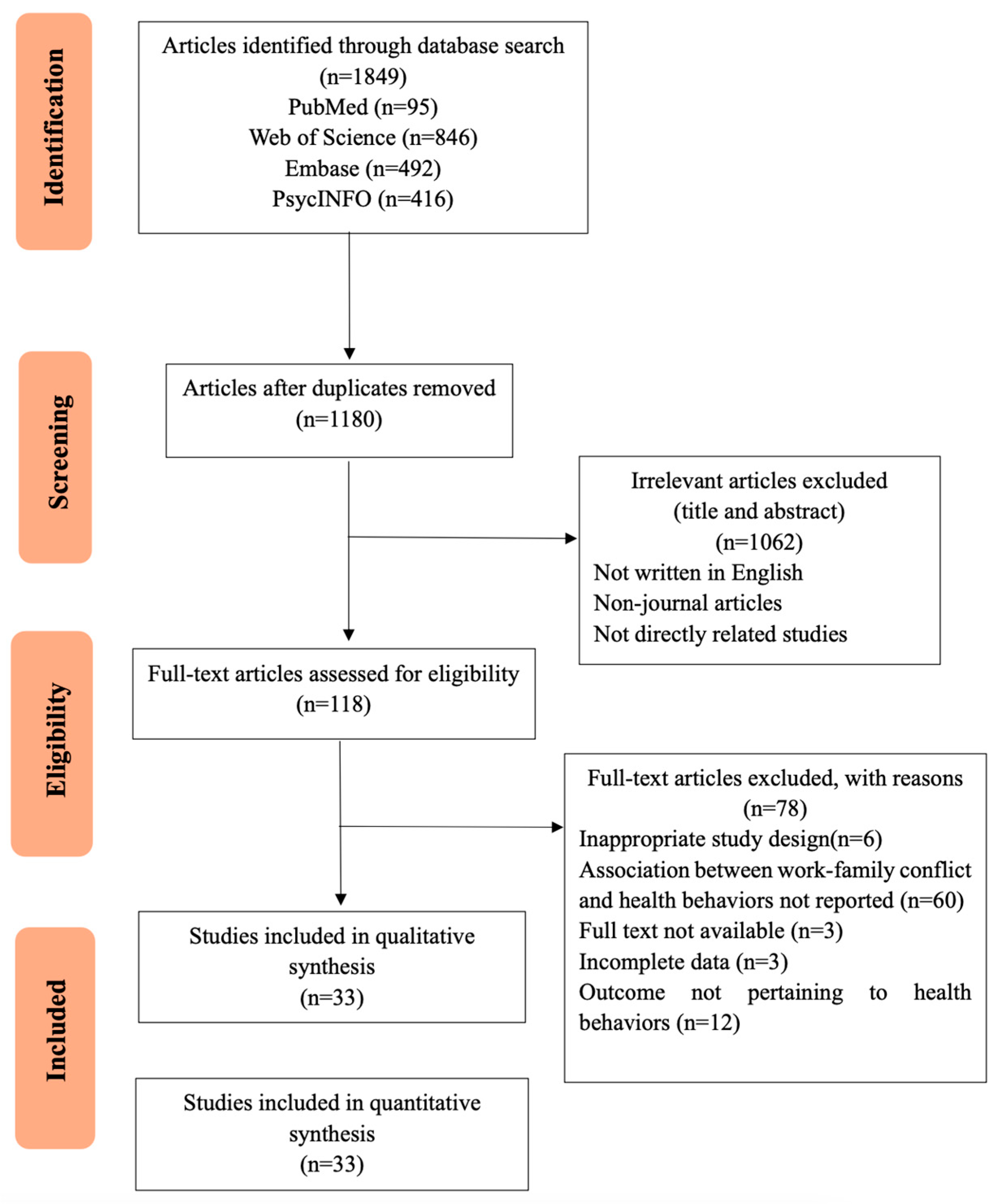
3.1. Study Selection
3.2. Characteristics of the Reviewed Studies
3.3. Risk of Bias Assessment
3.4. Measurement of Work–Family Conflict and Health Behaviors
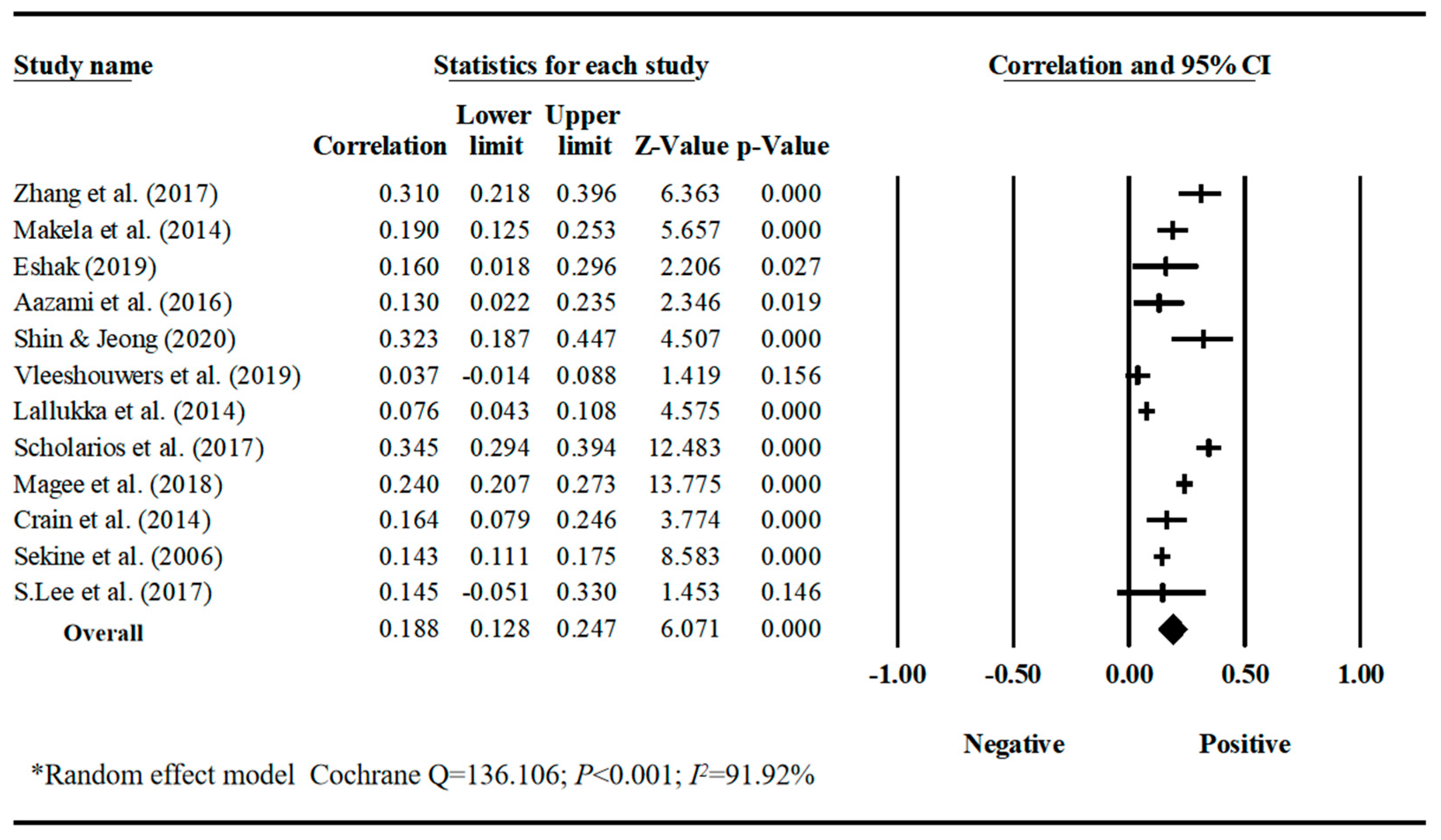
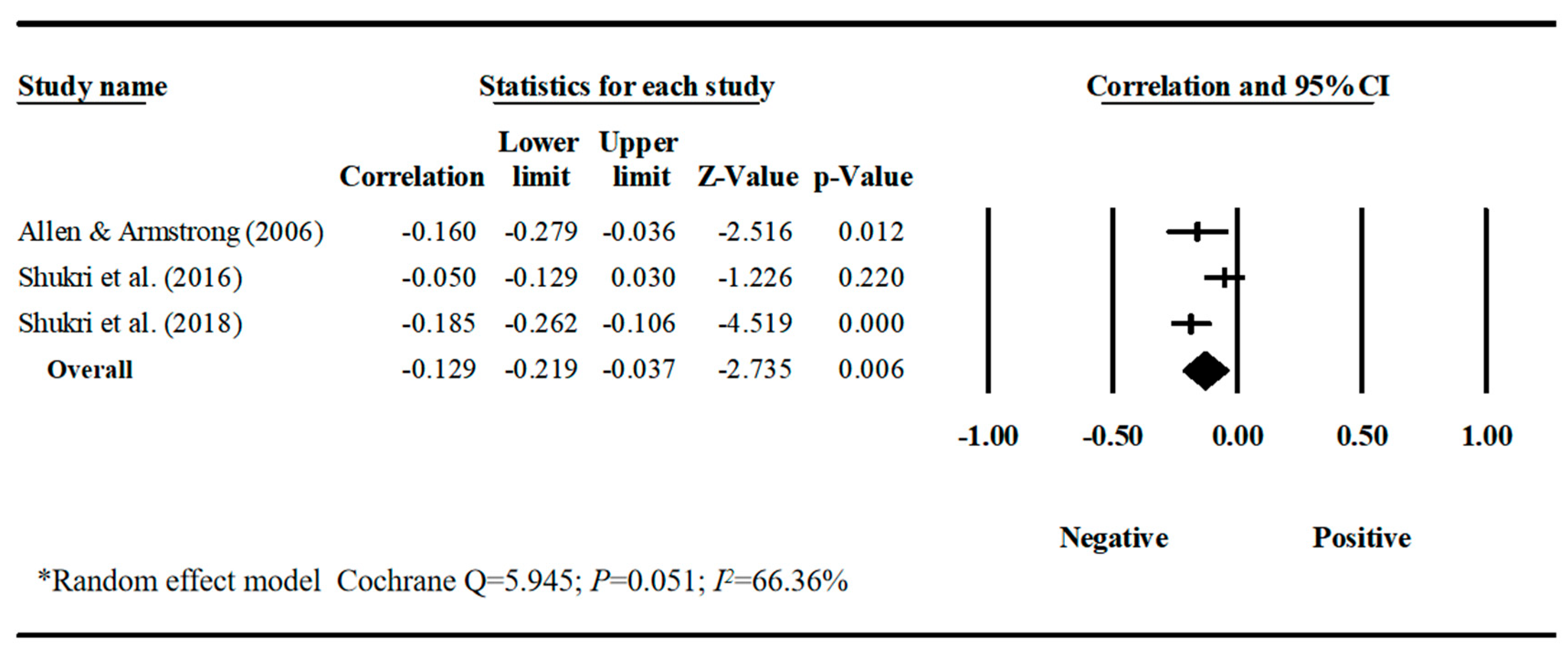
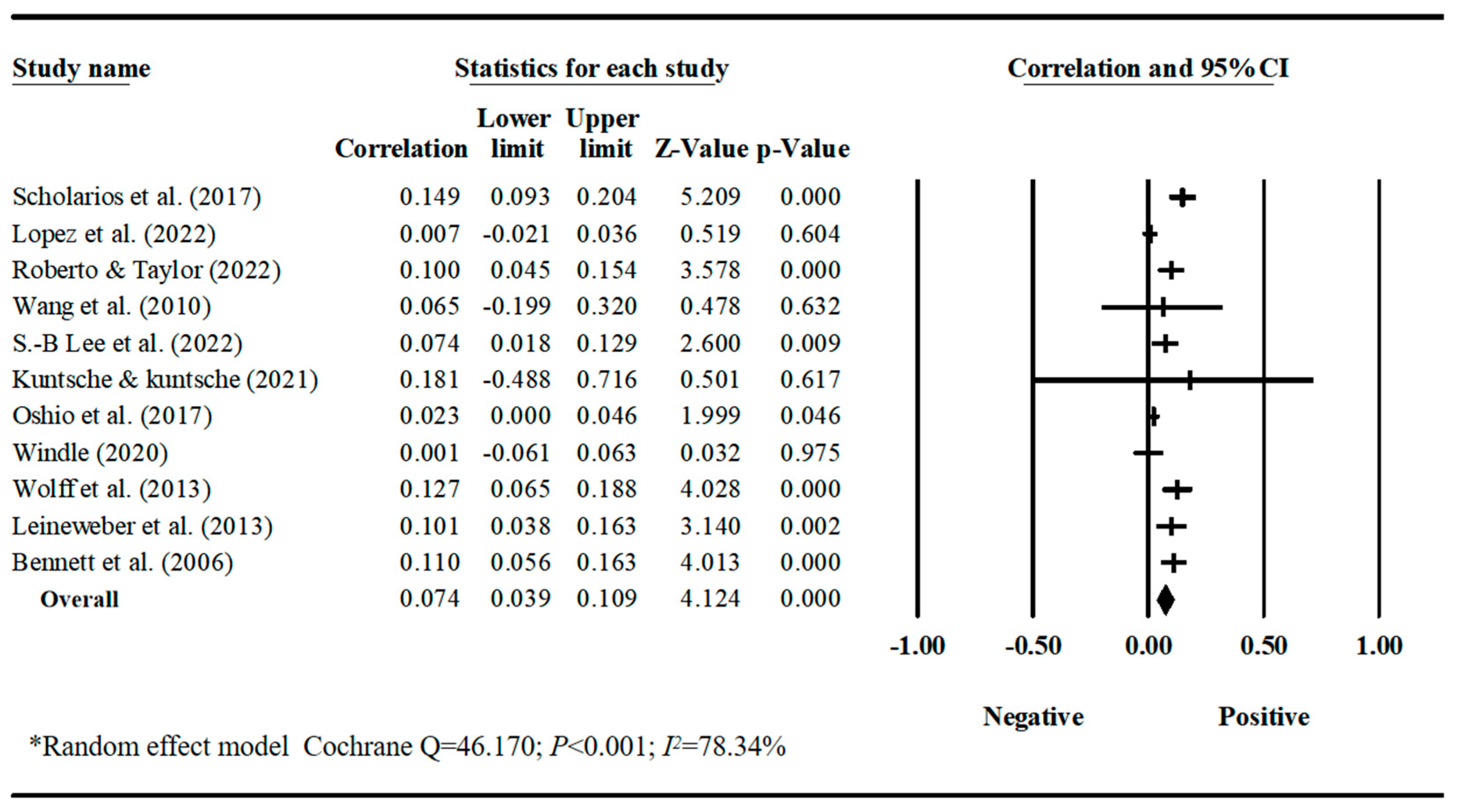
3.5. The Relationship Between Work–Life Conflict and Health Behaviors
4. Discussion
5. Limitations
6. Conclusions
Supplementary Materials
Author Contributions
Funding
Institutional Review Board Statement
Informed Consent Statement
Data Availability Statement
Conflicts of Interest
References
- Aazami, S., Mozafari, M., Shamsuddin, K., & Akmal, S. (2016). Work-family conflict and sleep disturbance: The Malaysian working women study. Industrial Health, 54(1), 50–57. [Google Scholar] [CrossRef]
- Allen, T. D., & Armstrong, J. (2006). Further examination of the link between work-family conflict and physical health—The role of health-related behaviors. American Behavioral Scientist, 49(9), 1204–1221. [Google Scholar] [CrossRef]
- Allen, T. D., Merlo, K., Lawrence, R. C., Slutsky, J., & Gray, C. E. (2021). Boundary management and work-nonwork balance while working from home. Applied Psychology, 70(1), 60–84. [Google Scholar] [CrossRef]
- Amstad, F. T., Meier, L. L., Fasel, U., Elfering, A., & Semmer, N. K. (2011). A meta-analysis of work-family conflict and various outcomes with a special emphasis on cross-domain versus matching-domain relations. Journal of Occupational Health Psychology, 16(2), 151–169. [Google Scholar] [CrossRef] [PubMed]
- Barnes, C. M., Wagner, D. T., & Ghumman, S. (2012). Borrowing from sleep to pay work and family: Expanding time-based conflict to the broader nonwork domain. Personnel Psychology, 65(4), 789–819. [Google Scholar] [CrossRef]
- Basten, M., Pan, K.-Y., van Tuijl, L. A., de Graeff, A., Dekker, J., Hoogendoorn, A. W., Lamers, F., Ranchor, A. V., Vermeulen, R., Portengen, L., Voogd, A. C., Abell, J., Awadalla, P., Beekman, A. T. F., Bjerkeset, O., Boyd, A., Cui, Y., Frank, P., Galenkamp, H., … Geerlings, M. I. (2024). Psychosocial factors, health behaviors and risk of cancer incidence: Testing interaction and effect modification in an individual participant data meta-analysis. International Journal of Cancer, 154(10), 1745–1759. [Google Scholar] [CrossRef]
- Bennett, J. B., Patterson, C. R., Wiitala, W. L., & Woo, A. (2006). Social risks for at-risk drinking in young workers: Application of work-life border theory. Journal of Drug Issues, 36(3), 485–513. [Google Scholar] [CrossRef]
- Buysse, D. J., Reynolds, C. F., Monk, T. H., Berman, S. R., & Kupfer, D. J. (1989). The Pittsburgh Sleep Quality Index: A new instrument for psychiatric practice and research. Psychiatry Research, 28(2), 193–213. [Google Scholar] [CrossRef] [PubMed]
- Carlson, D. S., & Frone, M. R. (2003). Relation of behavioral and psychological involvement to a new four-factor conceptualization of work-family interference. Journal of Business and Psychology, 17(4), 515–535. [Google Scholar] [CrossRef]
- Carlson, D. S., Kacmar, K. M., & Williams, L. J. (2000). Construction and initial validation of a multidimensional measure of work–family conflict. Journal of Vocational Behavior, 56(2), 249–276. [Google Scholar] [CrossRef]
- Cartwright, M., Wardle, J., Steggles, N., Simon, A. E., Croker, H., & Jarvis, M. J. (2003). Stress and dietary practices in adolescents. Health Psychology, 22(4), 362–369. [Google Scholar] [CrossRef]
- Chandola, T., Martikainen, P., Bartley, M., Lahelma, E., Marmot, M., Michikazu, S., Nasermoaddeli, A., & Kagamimori, S. (2004). Does conflict between home and work explain the effect of multiple roles on mental health? A comparative study of Finland, Japan, and the UK. International Journal of Epidemiology, 33(4), 884–893. [Google Scholar] [CrossRef]
- Clayton, R. W., Thomas, C. H., Singh, B., & Winkel, D. E. (2015). Exercise as a means of reducing perceptions of work-family conflict: A test of the roles of self-efficacy and psychological strain. Human Resource Management, 54(6), 1013–1035. [Google Scholar] [CrossRef]
- Crain, T. L., Hammer, L. B., Bodner, T., Kossek, E. E., Moen, P., Lilienthal, R., & Buxton, O. M. (2014). Work-family conflict, Family-Supportive Supervisor Behaviors (FSSB), and sleep outcomes. Journal of Occupational Health Psychology, 19(2), 155–167. [Google Scholar] [CrossRef]
- Dias, D. F., Loch, M. R., Gonzalez, A. D., de Andrade, S. M., & Mesas, A. E. (2017). Insufficient free-time physical activity and occupational factors in Brazilian public school teachers. Revista de Saude Publica, 51, 68. [Google Scholar] [CrossRef]
- Elo, A. L., Dallner, M., Gamberale, F., Hottinen, V., Knardahl, S., Lindström, K., Skogstad, A., & Orhede, E. (2000). Validation of the Nordic questionnaire for psychological and social factors at work—QPSNordic. In M. Vartiainen, F. Avallone, & N. Anderson (Eds.), Innovative theories, tools and practices in work and organizational psychology (pp. 47–57). Hogrefe & Huber Publishers. Available online: https://webofscience.clarivate.cn/wos/alldb/full-record/WOS:000174050100004 (accessed on 12 March 2025).
- Eshak, E. S. (2019). Work-to-family conflict rather than family-to-work conflict is more strongly associated with sleep disorders in Upper Egypt. Industrial Health, 57(3), 351–358. [Google Scholar] [CrossRef]
- Ford, M. T., Heinen, B. A., & Langkamer, K. L. (2007). Work and family satisfaction and conflict: A meta-analysis of cross-domain relations. The Journal of Applied Psychology, 92(1), 57–80. [Google Scholar] [CrossRef]
- Frone, M. R. (2000). Interpersonal conflict at work and psychological outcomes: Testing a model among young workers. Journal of Occupational Health Psychology, 5(2), 246–255. [Google Scholar] [CrossRef]
- Gardner, B. (2015). A review and analysis of the use of ‘habit’ in understanding, predicting and influencing health-related behaviour. Health Psychology Review, 9(3), 277–295. [Google Scholar] [CrossRef] [PubMed]
- Gignac, G. E., & Szodorai, E. T. (2016). Effect size guidelines for individual differences researchers. Personality and Individual Differences, 102, 74–78. [Google Scholar] [CrossRef]
- Godin, G. (2011). The Godin-Shephard leisure-time physical activity questionnaire. The Health & Fitness Journal of Canada, 4(1), 18–22. [Google Scholar] [CrossRef]
- Gooding, H. C., Gidding, S. S., Moran, A. E., Redmond, N., Allen, N. B., Bacha, F., Burns, T. L., Catov, J. M., Grandner, M. A., Harris, K. M., Johnson, H. M., Kiernan, M., Lewis, T. T., Matthews, K. A., Monaghan, M., Robinson, J. G., Tate, D., Bibbins-Domingo, K., & Spring, B. (2020). Challenges and opportunities for the prevention and treatment of cardiovascular disease among young adults: Report from a national heart, lung, and blood institute working group. Journal of the American Heart Association, 9(19), e016115. [Google Scholar] [CrossRef] [PubMed]
- Greenhaus, J. H., & Beutell, N. J. (1985). Sources of conflict between work and family roles. The Academy of Management Review, 10(1), 76–88. [Google Scholar] [CrossRef]
- Groesz, L. M., McCoy, S., Carl, J., Saslow, L., Stewart, J., Adler, N., Laraia, B., & Epel, E. (2012). What is eating you? Stress and the drive to eat. Appetite, 58(2), 717–721. [Google Scholar] [CrossRef]
- Grzywacz, J. G. (2000). Work-family spillover and health during midlife: Is managing conflict everything? American Journal of Health Promotion: AJHP, 14(4), 236–243. [Google Scholar] [CrossRef] [PubMed]
- Grzywacz, J. G., & Marks, N. F. (2000). Reconceptualizing the work-family interface: An ecological perspective on the correlates of positive and negative spillover between work and family. Journal of Occupational Health Psychology, 5(1), 111–126. [Google Scholar] [CrossRef] [PubMed]
- Guérin, E., & Gottschall, S. (2024). Feeling the strain: Understanding the relationship between stress and physical activity in members of the Royal canadian navy. Military Medicine, 189(9–10), 1857–1863. [Google Scholar] [CrossRef]
- Gutek, B., Searle, S., & Klepa, L. (1991). Rational versus gender-role explanations for work family conflict. Journal of Applied Psychology, 76(4), 560–568. [Google Scholar] [CrossRef]
- Harvey, A. G., Stinson, K., Whitaker, K. L., Moskovitz, D., & Virk, H. (2008). The subjective meaning of sleep quality: A comparison of individuals with and without insomnia. Sleep, 31(3), 383–393. [Google Scholar] [CrossRef]
- Higgins, J., Thomas, J., Chandler, J., Cumpston, M., Li, T., Page, M., & Welch, V. (2024). Cochrane handbook for systematic reviews of interventions version 6.5 (updated August 2024). Cochrane. Available online: www.training.cochrane.org/handbook (accessed on 12 March 2025).
- Higgins, J. P. T. (2008). Commentary: Heterogeneity in meta-analysis should be expected and appropriately quantified. International Journal of Epidemiology, 37(5), 1158–1160. [Google Scholar] [CrossRef]
- Hobfoll, S. E. (2002). Social and psychological resources and adaptation. Review of General Psychology, 6(4), 307–324. [Google Scholar] [CrossRef]
- Hutchesson, M., Whatnall, M., Fenton, S., Ashton, L., Patterson, A., Smith, J., Duncan, M. J., Kay-Lambkin, F., & Burrows, T. (2025). Are health behaviors associated with mental health among tertiary education students? A systematic review of cohort studies. Journal of American College Health, 73(1), 111–123. [Google Scholar] [CrossRef] [PubMed]
- Jenkins, C. D., Stanton, B. A., Niemcryk, S. J., & Rose, R. M. (1988). A scale for the estimation of sleep problems in clinical research. Journal of Clinical Epidemiology, 41(4), 313–321. [Google Scholar] [CrossRef]
- Kaminsky, L. A., German, C., Imboden, M., Ozemek, C., Peterman, J. E., & Brubaker, P. H. (2022). The importance of healthy lifestyle behaviors in the prevention of cardiovascular disease. Progress in Cardiovascular Diseases, 70, 8–15. [Google Scholar] [CrossRef]
- Kelloway, E. K., Gottlieb, B. H., & Barham, L. (1999). The source, nature, and direction of work and family conflict: A longitudinal investigation. Journal of Occupational Health Psychology, 4(4), 337–346. [Google Scholar] [CrossRef] [PubMed]
- Kim, S.-S., Okechukwu, C., Buxton, O. M., Dennerlein, J. T., Boden, L. I., Hashimoto, D. M., & Sorensen, G. (2013). Association between work-family conflict and musculoskeletal pain among hospital patient care workers. American Journal of Industrial Medicine, 56(4), 488–495. [Google Scholar] [CrossRef] [PubMed]
- Kmet, L. M., Cook, L. S., & Lee, R. C. (2004, February 1). Standard quality assessment criteria for evaluating primary research papers from a variety of fields. ERA. [Google Scholar] [CrossRef]
- Kopelman, R. E., Greenhaus, J. H., & Connolly, T. F. (1983). A model of work, family, and interrole conflict: A construct validation study. Organizational Behavior and Human Performance, 32(2), 198–215. [Google Scholar] [CrossRef]
- Kuntsche, S., & Kuntsche, E. (2021). When the burden gets overwhelming: Testing an inverse u-shaped relation between work-family conflicts and alcohol use. European Addiction Research, 27(1), 42–48. [Google Scholar] [CrossRef]
- Lallukka, T., Ferrie, J. E., Kivimaki, M., Shipley, M. J., Sekine, M., Tatsuse, T., Pietilainen, O., Rahkonen, O., Marmot, M. G., & Lahelma, E. (2014). Conflicts between work and family life and subsequent sleep problems among employees from Finland, Britain, and Japan. International Journal of Behavioral Medicine, 21(2), 310–318. [Google Scholar] [CrossRef]
- Lee, S., Crain, T. L., McHale, S. M., Almeida, D. M., & Buxton, O. M. (2017). Daily antecedents and consequences of nightly sleep. Journal of Sleep Research, 26(4), 498–509. [Google Scholar] [CrossRef]
- Lee, S.-B., Park, H.-J., & Yoon, M.-S. (2022). A longitudinal analysis on determinants of problem drinking among Korean women: Focusing on a gender perspective. Substance Abuse Treatment Prevention and Policy, 17(1), 52. [Google Scholar] [CrossRef]
- Leineweber, C., Baltzer, M., Magnusson Hanson, L. L., & Westerlund, H. (2013). Work-family conflict and health in Swedish working women and men: A 2-year prospective analysis (the SLOSH study). European Journal of Public Health, 23(4), 710–716. [Google Scholar] [CrossRef]
- Liu, K., Daviglus, M. L., Loria, C. M., Colangelo, L. A., Spring, B., Moller, A. C., & Lloyd-Jones, D. M. (2012). Healthy lifestyle through young adulthood and the presence of low cardiovascular disease risk profile in middle age: The Coronary Artery Risk Development in (Young) Adults (CARDIA) study. Circulation, 125(8), 996–1004. [Google Scholar] [CrossRef] [PubMed]
- Lopez, C., Sanchez, M. D., Ponte, L., & Ojeda, L. (2022). Work-family interface on hazardous alcohol use and increased risk for prescription drug misuse among diverse working parents in STEM. American Journal of Drug and Alcohol Abuse, 48(1), 78–87. [Google Scholar] [CrossRef]
- Macht, M., & Simons, G. (2000). Emotions and eating in everyday life. Appetite, 35(1), 65–71. [Google Scholar] [CrossRef]
- Macy, J. T., Chassin, L., & Presson, C. C. (2013). Association between work-family conflict and smoking quantity among daily smokers. Nicotine & Tobacco Research, 15(11), 1867–1872. [Google Scholar] [CrossRef]
- Magee, C. A., Robinson, L. D., & McGregor, A. (2018). The work-family interface and sleep quality. Behavioral Sleep Medicine, 16(6), 601–610. [Google Scholar] [CrossRef]
- Makela, L., Bergbom, B., Tanskanen, J., & Kinnunen, U. (2014). The relationship between international business travel and sleep problems via work-family conflict. Career Development International, 19(7), 794–812. [Google Scholar] [CrossRef]
- Marshall, N. L., & Barnett, R. C. (1993). Work-family strains and gains among two-earner couples. Journal of Community Psychology, 21(1), 64–78. [Google Scholar] [CrossRef]
- Mayfield, D., McLeod, G., & Hall, P. (1974). The CAGE questionnaire: Validation of a new alcoholism screening instrument. The American Journal of Psychiatry, 131(10), 1121–1123. [Google Scholar] [CrossRef] [PubMed]
- Miller, B. K., Wan, M., Carlson, D., Kacmar, K. M., & Thompson, M. (2022). Antecedents and outcomes of work-family conflict: A mega-meta path analysis. PLoS ONE, 17(2), e0263631. [Google Scholar] [CrossRef]
- Mohr, C. D., Armeli, S., Tennen, H., Temple, M., Todd, M., Clark, J., & Carney, M. A. (2005). Moving beyond the keg party: A daily process study of college student drinking motivations. Psychology of Addictive Behaviors: Journal of the Society of Psychologists in Addictive Behaviors, 19(4), 392–403. [Google Scholar] [CrossRef]
- Mojza, E. J., Lorenz, C., Sonnentag, S., & Binnewies, C. (2010). Daily recovery experiences: The role of volunteer work during leisure time. Journal of Occupational Health Psychology, 15(1), 60–74. [Google Scholar] [CrossRef]
- Moore, L. V., Dodd, K. W., Thompson, F. E., Grimm, K. A., Kim, S. A., & Scanlon, K. S. (2015). Using Behavioral Risk Factor Surveillance System data to estimate the percent of the population meeting USDA Food Patterns fruit and vegetable intake recommendations. American Journal of Epidemiology, 181(12), 979–988. [Google Scholar] [CrossRef]
- Nelson, C. C., Li, Y., Sorensen, G., & Berkman, L. F. (2012). Assessing the relationship between work-family conflict and smoking. American Journal of Public Health, 102(9), 1767–1772. [Google Scholar] [CrossRef] [PubMed]
- Netemeyer, R. G., Boles, J. S., & McMurrian, R. (1996). Development and validation of work–family conflict and family–work conflict scales. Journal of Applied Psychology, 81(4), 400–410. [Google Scholar] [CrossRef]
- Ng, D. M., & Jeffery, R. W. (2003). Relationships between perceived stress and health behaviors in a sample of working adults. Health Psychology: Official Journal of the Division of Health Psychology, American Psychological Association, 22(6), 638–642. [Google Scholar] [CrossRef]
- Nilsen, W., Skipstein, A., Østby, K. A., & Mykletun, A. (2017). Examination of the double burden hypothesis-a systematic review of work-family conflict and sickness absence. European Journal of Public Health, 27(3), 465–471. [Google Scholar] [CrossRef]
- Norte Navarro, A. I., & Ortiz Moncada, R. (2011). [Spanish diet quality according to the healthy eating index]. Nutricion Hospitalaria, 26(2), 330–336. [Google Scholar] [CrossRef]
- Osaki, Y., Ino, A., Matsushita, S., Higuchi, S., Kondo, Y., & Kinjo, A. (2014). Reliability and validity of the alcohol use disorders identification test—Consumption in screening for adults with alcohol use disorders and risky drinking in Japan. Asian Pacific Journal of Cancer Prevention: APJCP, 15(16), 6571–6574. [Google Scholar] [CrossRef]
- Oshio, T., Inoue, A., & Tsutsumi, A. (2017). Does work-to-family conflict really matter for health? Cross-sectional, prospective cohort and fixed-effects analyses. Social Science & Medicine (1982), 175, 36–42. [Google Scholar] [CrossRef]
- Page, M. J., McKenzie, J. E., Bossuyt, P. M., Boutron, I., Hoffmann, T. C., Mulrow, C. D., Shamseer, L., Tetzlaff, J. M., Akl, E. A., Brennan, S. E., Chou, R., Glanville, J., Grimshaw, J. M., Hróbjartsson, A., Lalu, M. M., Li, T., Loder, E. W., Mayo-Wilson, E., McDonald, S., … Moher, D. (2021). The PRISMA 2020 statement: An updated guideline for reporting systematic reviews. BMJ (Clinical Research Edition), 372, n71. [Google Scholar] [CrossRef]
- Pagnan, C. E., Seidel, A., & Wadsworth, S. M. (2017). I just can’t fit it in! Implications of the fit between work and family on health-promoting behaviors. Journal of Family Issues, 38(11), 1577–1603. [Google Scholar] [CrossRef]
- Park, H. I., Jang, J., & Nam, J. S. (2023). Physical activity buffers the effects of work-family conflict on work engagement through mastery recovery experience. Current Psychology, 42(1), 348–358. [Google Scholar] [CrossRef]
- Partinen, M., & Gislason, T. (1995). Basic Nordic Sleep Questionnaire (BNSQ): A quantitated measure of subjective sleep complaints. Journal of Sleep Research, 4(S1), 150–155. [Google Scholar] [CrossRef]
- Pasman, L., & Thompson, J. K. (1988). Body image and eating disturbance in obligatory runners, obligatory weightlifters, and sedentary individuals. International Journal of Eating Disorders, 7(6), 759–769. [Google Scholar] [CrossRef]
- Patterson, C. R., Bennett, J. B., & Wiitala, W. L. (2005). Healthy and unhealthy stress unwinding: Promoting health in small businesses. Journal of Business and Psychology, 20(2), 221–247. [Google Scholar] [CrossRef]
- Pitsopoulos, C. N., & Greenwood, K. M. (2002). Problems with the measures of gastrointestinal and cardiovascular symptom frequency in The Standard Shiftwork Index. Work & Stress, 16(1), 70–78. [Google Scholar] [CrossRef]
- Roberto, K. J., & Taylor, J. F. (2022). Alcohol and cigarette use affecting the relationship between work-life conflict and physical health. Community Work & Family, 25(2), 232–239. [Google Scholar] [CrossRef]
- Saiki, M., Robbins, W., Tolentino, D. A., Macey, P. M., Nakata, A., & Li, J. (2024). Associations of work-family conflict with changes in metabolic risk factors: A four-year longitudinal study. Industrial Health, 62(6), 367–376. [Google Scholar] [CrossRef]
- Sallis, J. F., Cerin, E., Conway, T. L., Adams, M. A., Frank, L. D., Pratt, M., Salvo, D., Schipperijn, J., Smith, G., Cain, K. L., Davey, R., Kerr, J., Lai, P.-C., Mitáš, J., Reis, R., Sarmiento, O. L., Schofield, G., Troelsen, J., Van Dyck, D., … Owen, N. (2016). Physical activity in relation to urban environments in 14 cities worldwide: A cross-sectional study. Lancet (London, England), 387(10034), 2207–2217. [Google Scholar] [CrossRef]
- Schat, A. C. H., Kelloway, E. K., & Desmarais, S. (2005). The Physical Health Questionnaire (PHQ): Construct validation of a self-report scale of somatic symptoms. Journal of Occupational Health Psychology, 10(4), 363–381. [Google Scholar] [CrossRef]
- Scholarios, D., Hesselgreaves, H., & Pratt, R. (2017). Unpredictable working time, well-being and health in the police service. International Journal of Human Resource Management, 28(16), 2275–2298. [Google Scholar] [CrossRef]
- Sekine, M., Chandola, T., Martikainen, P., Marmot, M., & Kagamimori, S. (2006). Work and family characteristics as determinants of socioeconomic and sex inequalities in sleep: The Japanese civil servants study. Sleep, 29(2), 206–216. [Google Scholar] [CrossRef] [PubMed]
- Shin, D. S., & Jeong, B. Y. (2020). Relationship between negative work situation, work-family conflict, sleep-related problems, and job dissatisfaction in the truck drivers. Sustainability, 12(19), 8114. [Google Scholar] [CrossRef]
- Shukri, M., Jones, F., & Conner, M. (2016). Work factors, work-family conflict, the theory of planned behaviour and healthy intentions: A cross-cultural study. Stress and Health: Journal of the International Society for the Investigation of Stress, 32(5), 559–568. [Google Scholar] [CrossRef] [PubMed]
- Shukri, M., Jones, F., & Conner, M. (2018). Relationship between work-family conflict and unhealthy eating: Does eating style matter? Appetite, 123, 225–232. [Google Scholar] [CrossRef]
- Silva, C. C., Presseau, J., van Allen, Z., Schenk, P. M., Moreto, M., Dinsmore, J., & Marques, M. M. (2024). Effectiveness of interventions for changing more than one behavior at a time to manage chronic conditions: A systematic review and meta-analysis. Annals of Behavioral Medicine: A Publication of the Society of Behavioral Medicine, 58(6), 432–444. [Google Scholar] [CrossRef]
- Slopen, N., Kontos, E. Z., Ryff, C. D., Ayanian, J. Z., Albert, M. A., & Williams, D. R. (2013). Psychosocial stress and cigarette smoking persistence, cessation, and relapse over 9–10 years: A prospective study of middle-aged adults in the United States. Cancer Causes & Control, 24(10), 1849–1863. [Google Scholar] [CrossRef]
- Taouk, Y., King, T., Leineweber, C., Churchill, B., Ruppanner, L., & Hanson, L. M. (2025). Gender differences in work–family conflict and mental health of Swedish workers by childcare responsibilities: Findings from the SLOSH cohort study. Scandinavian Journal of Work, Environment & Health, 51(5), 413–422. [Google Scholar] [CrossRef]
- Vleeshouwers, J., Knardahl, S., & Christensen, J. O. (2019). A prospective study of work-private life conflict and number of pain sites: Moderated mediation by sleep problems and support. Journal of Behavioral Medicine, 42(2), 234–245. [Google Scholar] [CrossRef]
- Wang, M., Liu, S., Zhan, Y., & Shi, J. (2010). Daily work-family conflict and alcohol use: Testing the cross-level moderation effects of peer drinking norms and social support. Journal of Applied Psychology, 95(2), 377–386. [Google Scholar] [CrossRef]
- Weale, V., Oakman, J., & Clays, E. (2021). Does work-family conflict play a role in the relationship between work-related hazards and musculoskeletal pain? American Journal of Industrial Medicine, 64(9), 781–791. [Google Scholar] [CrossRef]
- Wei, H., Wu, B., Park, H., & Deng, C. (2023). Is exercise good for all? Time- and strain-based work-family conflict and its impacts. The Journal of Social Psychology, 163(2), 230–247. [Google Scholar] [CrossRef]
- Wilsnack, S. C., Klassen, A. D., Schur, B. E., & Wilsnack, R. W. (1991). Predicting onset and chronicity of women’s problem drinking: A five-year longitudinal analysis. American Journal of Public Health, 81(3), 305–318. [Google Scholar] [CrossRef]
- Windle, M. (2020). Maturing out of alcohol use in young adulthood: Latent class growth trajectories and concurrent young adult correlates. Alcoholism, Clinical and Experimental Research, 44(2), 532–540. [Google Scholar] [CrossRef] [PubMed]
- Wolff, J. M., Rospenda, K. M., Richman, J. A., Liu, L., & Milner, L. A. (2013). Work-family conflict and alcohol use: Examination of a moderated mediation model. Journal of Addictive Diseases, 32(1), 85–98. [Google Scholar] [CrossRef] [PubMed]
- Yang, B., Wang, Y., Cui, F., Huang, T., Sheng, P., Shi, T., Huang, C., Lan, Y., & Huang, Y.-N. (2018). Association between insomnia and job stress: A meta-analysis. Sleep & Breathing = Schlaf & Atmung, 22(4), 1221–1231. [Google Scholar] [CrossRef]
- Yildiz, B., Yildiz, H., & Ayaz Arda, O. (2021). Relationship between work-family conflict and turnover intention in nurses: A meta-analytic review. Journal of Advanced Nursing, 77(8), 3317–3330. [Google Scholar] [CrossRef] [PubMed]
- Yu, L., Buysse, D. J., Germain, A., Moul, D. E., Stover, A., Dodds, N. E., Johnston, K. L., & Pilkonis, P. A. (2011). Development of short forms from the PROMISTM sleep disturbance and Sleep-Related Impairment item banks. Behavioral Sleep Medicine, 10(1), 6–24. [Google Scholar] [CrossRef]
- Zhang, Y., Duffy, J. F., & De Castillero, E. R. (2017). Do sleep disturbances mediate the association between work-family conflict and depressive symptoms among nurses? A cross-sectional study. Journal of Psychiatric and Mental Health Nursing, 24(8), 620–628. [Google Scholar] [CrossRef] [PubMed]
- Zhou, L., Lv, H., Yu, Y., Shao, J., Wu, Y., Li, X., Gao, M., Yin, W., Yu, Q., & Chen, Z. (2024). An inverted U-shaped relationship between work-family conflict and job burnout among village clinic doctors: The moderating effect of information and communication technology use. BMC Psychiatry, 24(1), 761. [Google Scholar] [CrossRef] [PubMed]



| Types of Health Behaviors | Studies, k | Pooled Correlation Coefficient, Value (95% CI) |
|---|---|---|
| Sleep disturbances | 12 | 0.188 (0.128, 0.247) |
| Alcohol consumption | 11 | 0.074 (0.039, 0.109) |
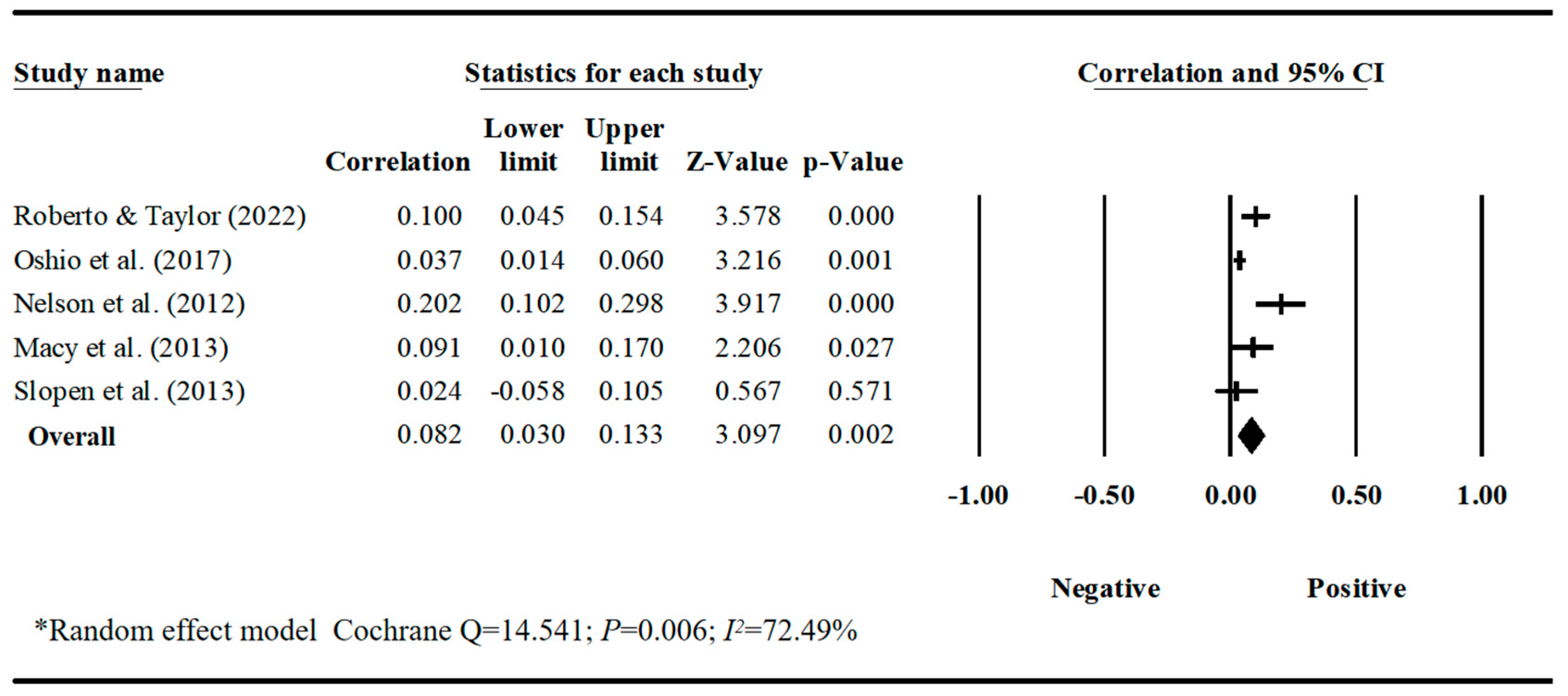
| Smoking behaviors | 5 | 0.082 (0.03, 0.133) |
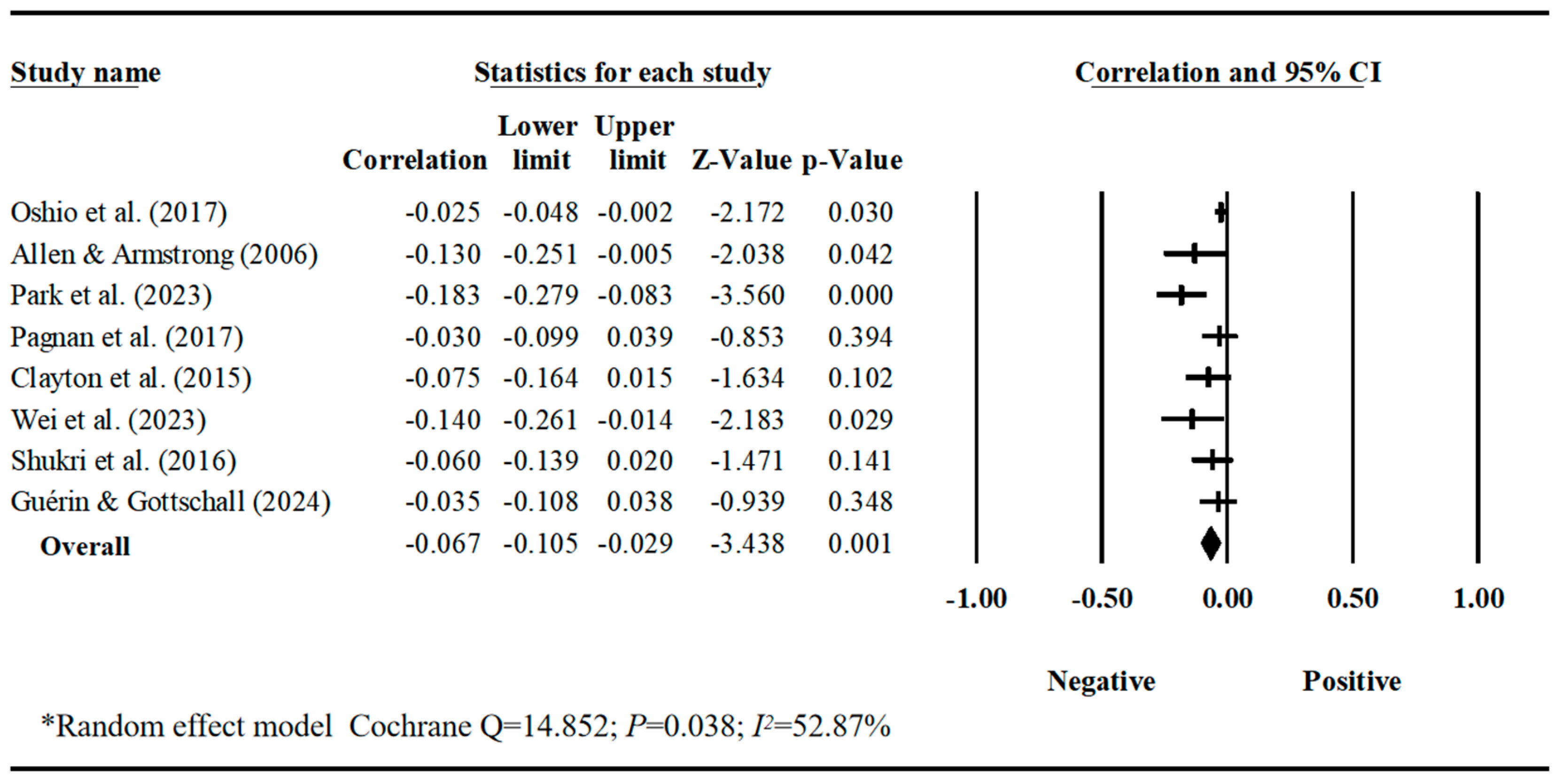
| Physical activity levels | 8 | −0.067 (−0.105, −0.029) |
| Healthy diet | 3 | −0.129 (−0.219, −0.037) |
Disclaimer/Publisher’s Note: The statements, opinions and data contained in all publications are solely those of the individual author(s) and contributor(s) and not of MDPI and/or the editor(s). MDPI and/or the editor(s) disclaim responsibility for any injury to people or property resulting from any ideas, methods, instructions or products referred to in the content. |
© 2026 by the authors. Licensee MDPI, Basel, Switzerland. This article is an open access article distributed under the terms and conditions of the Creative Commons Attribution (CC BY) license.
Share and Cite
Peng, X.; Chen, Z.; Li, Y.; Yuan, S.; Chen, J. The Relationship Between Work–Family Conflict and Health Behaviors: A Systematic Review and Meta-Analysis. Behav. Sci. 2026, 16, 386. https://doi.org/10.3390/bs16030386
Peng X, Chen Z, Li Y, Yuan S, Chen J. The Relationship Between Work–Family Conflict and Health Behaviors: A Systematic Review and Meta-Analysis. Behavioral Sciences. 2026; 16(3):386. https://doi.org/10.3390/bs16030386
Chicago/Turabian StylePeng, Xiyu, Ze Chen, Yu Li, Shuai Yuan, and Jieling Chen. 2026. "The Relationship Between Work–Family Conflict and Health Behaviors: A Systematic Review and Meta-Analysis" Behavioral Sciences 16, no. 3: 386. https://doi.org/10.3390/bs16030386
APA StylePeng, X., Chen, Z., Li, Y., Yuan, S., & Chen, J. (2026). The Relationship Between Work–Family Conflict and Health Behaviors: A Systematic Review and Meta-Analysis. Behavioral Sciences, 16(3), 386. https://doi.org/10.3390/bs16030386