
The Burden of the Perfect Frame: A Scoping Review on Personality and Muscle Dysmorphia

 , ,
, ,  and
and
Abstract
1. Introduction
Review Questions
- (a)
- Which personality traits and/or personality disorders are most commonly associated with MD?
- (b)
- Are there psychosocial or cultural factors that moderate or mediate the relationship between personality and MD?
- (c)
- What clinical implications and research challenges have been identified by the authors of relevant studies?
- (d)
- Which aspects of the relationship between personality and MD remain underexplored and warrant further investigation?
2. Materials and Methods
2.1. Study Selection Criteria
- (a)
- Published in English in peer-reviewed journals;
- (b)
- Involving participants exhibiting either subclinical or clinical symptoms of MD (also referred to as reverse anorexia or bigorexia), assessed using validated measures; and
- (c)
- Providing a formal assessment of personality traits, styles, or disorders using validated measures.
2.2. Search Strategy
(“body dysmorphia” OR “body dysmorphic disorder” OR “muscle dysmorphic” OR “muscle dysmorphia” OR “bigorexia” OR “reverse anorexia” OR “Muscle Appearance Satisfaction Scale” OR “Muscle Dysmorphic Disorder Inventory” OR “Muscle Dysmorphia Inventory” OR “Muscle Dysmorphia Questionnaire” OR “muscularity”) AND (“personality” OR “personality disorder” OR “narcissistic” OR “temperament”).
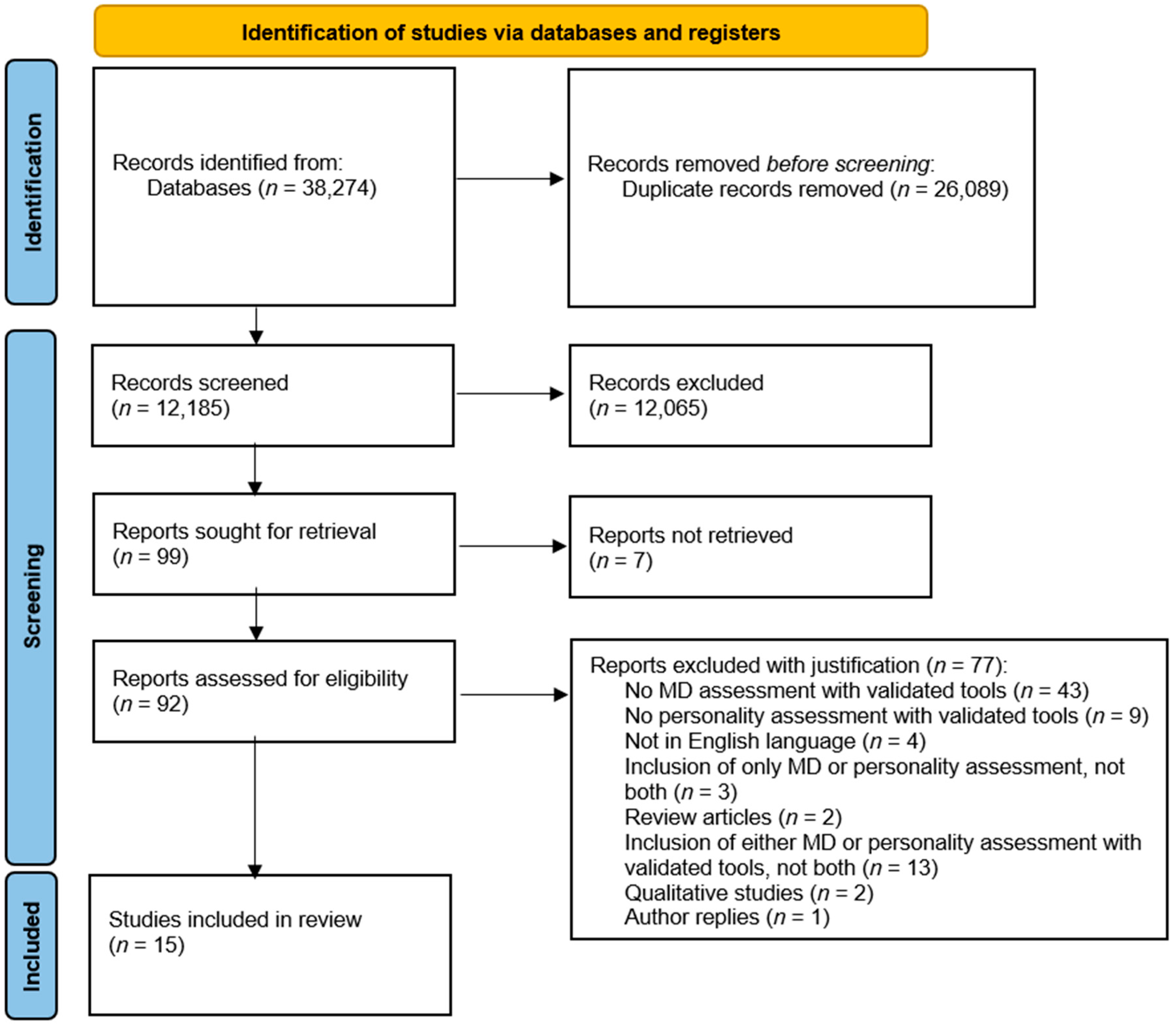
2.3. Study Selection
3. Results
3.1. Characteristics of the Included Studies
3.2. Which Personality Traits and/or Personality Disorders Are Most Commonly Associated with Muscle Dysmorphia?
3.3. Are There Psychosocial or Cultural Factors That Moderate or Mediate the Relationship Between Personality and Muscle Dysmorphia?
3.4. What Clinical Implications and Research Challenges Have Been Identified by the Authors of Relevant Studies?
3.5. Which Aspects of the Relationship Between Personality and Muscle Dysmorphia Remain Underexplored and Warrant Further Investigation?
4. Discussion
5. Conclusions
Supplementary Materials
Author Contributions
Funding
Institutional Review Board Statement
Informed Consent Statement
Data Availability Statement
Acknowledgments
Conflicts of Interest
Abbreviations
| MD | Muscle dysmorphia |
| BDD | Body dysmorphic disorder |
| ON | Orthorexia nervosa |
| EDs | Eating disorders |
| PRISMA-ScR | Preferred Reporting Items for Systematic Reviews and Meta-Analyses Scoping Review |
| MDDI | Muscle Dysmorphic Disorder Inventory |
| MDD | Muscle dysmorphic disorder |
| NPD | Narcissistic personality disorder |
| BPD | Borderline personality disorder |
References
- American Psychiatric Association. (2022). Diagnostic and statistical manual of mental disorders (5th ed., text rev.). American Psychiatric Association Publishing. [Google Scholar] [CrossRef]
- Ames, D. R., Rose, P., & Anderson, C. P. (2006). The NPI-16 as a short measure of narcissism. Journal of Research in Personality, 40(4), 440–450. [Google Scholar] [CrossRef]
- Back, M. D., Küfner, A. C., Dufner, M., Gerlach, T. M., Rauthmann, J. F., & Denissen, J. J. (2013). Narcissistic admiration and rivalry: Disentangling the bright and dark sides of narcissism. Journal of Personality and Social Psychology, 105(6), 1013. [Google Scholar] [CrossRef]
- Badenes-Ribera, L., Rubio-Aparicio, M., Sánchez-Meca, J., Fabris, M. A., & Longobardi, C. (2019). The association between muscle dysmorphia and eating disorder symptomatology: A systematic review and meta-analysis. Journal of Behavioral Addictions, 8(3), 351–371. [Google Scholar] [CrossRef]
- Bellino, S., Zizza, M., Paradiso, E., Rivarossa, A., Fulcheri, M., & Bogetto, F. (2006). Dysmorphic concern symptoms and personality disorders: A clinical investigation in patients seeking cosmetic surgery. Psychiatry Research, 144(1), 73–78. [Google Scholar] [CrossRef]
- Benford, K., & Swami, V. (2014). Body image and personality among British men: Associations between the Big Five personality domains, drive for muscularity, and body appreciation. Body Image, 11(4), 454–457. [Google Scholar] [CrossRef] [PubMed]
- Bégin, C., Turcotte, O., & Rodrigue, C. (2019). Psychosocial factors underlying symptoms of muscle dysmorphia in a non-clinical sample of men. Psychiatry Research, 272, 319–325. [Google Scholar] [CrossRef] [PubMed]
- Boulter, M. W., & Sandgren, S. S. (2022). Me, myself, and my muscles: Associations between narcissism and muscle dysmorphia. Eating Disorders: The Journal of Treatment & Prevention, 30(1), 110–116. [Google Scholar] [CrossRef]
- Boulter, M. W., Wooldridge, T., Bjelland, V. E., & Sandgren, S. S. (2023). My father, myself, and my muscles: Associations between muscle dysmorphia, narcissism and relationship with father among exercising males. Personality and Individual Differences, 207, 112173. [Google Scholar] [CrossRef]
- Bruno, A., Quattrone, D., Scimeca, G., Cicciarelli, C., Romeo, V. M., Pandolfo, G., Zoccali, R. A., & Muscatello, M. R. (2014). Unraveling exercise addiction: The role of narcissism and self-esteem. Journal of Addiction, 2014, 987841. [Google Scholar] [CrossRef]
- Carrotte, E., & Anderson, J. R. (2018). A systematic review of the relationship between trait self-objectification and personality traits. Personality and Individual Differences, 132, 20–31. [Google Scholar] [CrossRef]
- Carrotte, E., & Anderson, J. R. (2019). Risk factor or protective feature? The roles of grandiose and hypersensitive narcissism in explaining the relationship between self-objectification and body image concerns. Sex Roles, 80(7), 458–468. [Google Scholar] [CrossRef]
- Cohen, L. J., Kingston, P., Bell, A., Kwon, J., Aronowitz, B., & Hollander, E. (2000). Comorbid personality impairment in body dysmorphic disorder. Comprehensive Psychiatry, 41(1), 4–12. [Google Scholar] [CrossRef] [PubMed]
- Collis, N., Lewis, V., & Crisp, D. (2016). When is buff enough? The effect of body attitudes and narcissistic traits on muscle dysmorphia. The Journal of Men’s Studies, 24(2), 213–225. [Google Scholar] [CrossRef]
- Costa, P. T., & McCrae, R. R. (1992). The five-factor model of personality and its relevance to personality disorders. Journal of Personality Disorders, 6(4), 343–359. [Google Scholar] [CrossRef]
- Davis, C., Karvinen, K., & McCreary, D. R. (2005). Personality correlates of a drive for muscularity in young men. Personality and Individual Differences, 39(2), 349–359. [Google Scholar] [CrossRef]
- Dèttore, D., Fabris, M. A., & Santarnecchi, E. (2020). Differential prevalence of depressive and narcissistic traits in competing and non-competing bodybuilders in relation to muscle dysmorphia levels. Journal of Psychiatry and Clinical Psychology, 20(2), 102. [Google Scholar] [CrossRef]
- Di Giuseppe, M., & Lingiardi, V. (2023). From theory to practice: The need of restyling definitions and assessment methodologies of coping and defense mechanisms. Clinical Psychology: Science and Practice, 30(4), 393–395. [Google Scholar] [CrossRef]
- Dionne, M. M., & Davis, C. (2004). Body image variability: The influence of body-composition information and neuroticism on young women’s body dissatisfaction. Body Image, 1(4), 335–349. [Google Scholar] [CrossRef]
- Edwards, C., Molnar, G., & Tod, D. (2017). Searching for masculine capital: Experiences leading to high drive for muscularity in men. Psychology of Men & Masculinity, 18(4), 361–371. [Google Scholar] [CrossRef]
- Eysenck, H. J., & Eysenck, S. B. G. (1993). Eysenck personality questionnaire-revised (EPQ-R). APA PsycTests. [Google Scholar] [CrossRef]
- Ganson, K. T., Hallward, L., Cunningham, M. L., Rodgers, R. F., Murray, S. B., & Nagata, J. M. (2023). Muscle dysmorphia symptomatology among a national sample of Canadian adolescents and young adults. Body Image, 44, 178–186. [Google Scholar] [CrossRef]
- Giancola, M., Ferrandes, A., & D’Amico, S. (2024). Mirror, mirror on the wall: The role of narcissism, muscle dysmorphia, and self-esteem in bodybuilders’ muscularity-oriented disordered eating. Current Psychology, 43(42), 32697–32706. [Google Scholar] [CrossRef]
- Giordano, F., Calaresi, D., Castellani, L., Verrastro, V., Feraco, T., & Saladino, V. (2025). Interaction between social support and muscle dysmorphia: The role of self-efficacy and social media use. Behavioral Sciences, 15(2), 122. [Google Scholar] [CrossRef] [PubMed]
- Gordon, K. H., & Dombeck, J. J. (2010). The associations between two facets of narcissism and eating disorder symptoms. Eating Behaviors, 11(4), 288–292. [Google Scholar] [CrossRef]
- Grenon, R., Tasca, G. A., Maxwell, H., Balfour, L., Proulx, G., & Bissada, H. (2016). Parental bonds and body dissatisfaction in a clinical sample: The mediating roles of attachment anxiety and media internalization. Body Image, 19, 49–56. [Google Scholar] [CrossRef] [PubMed]
- Grieve, F. G. (2007). A conceptual model of factors contributing to the development of muscle dysmorphia. Eating Disorders, 15(1), 63–80. [Google Scholar] [CrossRef]
- Grieve, F. G., Short, J., Cubberley, R., Derryberry, W. P., Jones, E., Wilson, S., Hanahan, M., Menser, S., Cyr, C., & White, M. (2014, May). Psychometric properties of the muscle dysmorphia questionnaire [Poster presentation]. Annual Meeting of the Association for Psychological Science, Washington, DC, USA. [Google Scholar]
- Harmancı, B. S., & Okray, Z. (2021). Body image, muscle dysmorphia and narcissistic characteristics of bodybuilder males in TRNC. Cyprus Turkish Journal of Psychiatry and Psychology, 3(2), 82–90. [Google Scholar] [CrossRef]
- Hater, L., Schulte, J., Geukes, K., Buhlmann, U., & Back, M. D. (2021). Disentangling the contributions of agentic, antagonistic, and neurotic narcissism to drive for thinness and drive for muscularity. PLoS ONE, 16(6), e0253187. [Google Scholar] [CrossRef]
- Hendin, H. M., & Cheek, J. M. (1997). Assessing hypersensitive narcissism: A reexamination of Murray’s narcissism scale. Journal of Research in Personality, 31(4), 588–599. [Google Scholar] [CrossRef]
- Hewitt, P. L., Flett, G. L., Turnbull-Donovan, W., & Mikail, S. F. (1991). The multidimensional perfectionism scale: Reliability, validity, and psychometric properties in psychiatric samples. Psychological Assessment: A Journal of Consulting and Clinical Psychology, 3(3), 464–468. [Google Scholar] [CrossRef]
- Hildebrandt, T., Langenbucher, J., & Schlundt, D. G. (2004). Muscularity concerns among men: Development of attitudinal and perceptual measures. Body Image, 1(2), 169–181. [Google Scholar] [CrossRef]
- Hill, E. M. (2016). The role of narcissism in health-risk and health-protective behaviors. Journal of Health Psychology, 21(9), 2021–2032. [Google Scholar] [CrossRef]
- Jürgensen, V., Halbeisen, G., Lehe, M. S., & Paslakis, G. (2025). Muscularity concerns and disordered eating symptoms in adult women: A network analysis. European Eating Disorders Review, 33(5), 864–878. [Google Scholar] [CrossRef]
- Kandemir, H. E., Cipriano, A., Rosato, M. S., Ünsalver, B. Ö., Stabile, M., & Cella, S. (2024). Muscle dysmorphia in gym-going men: The role of narcissism vulnerability and perfectionism. Clinical Neuropsychiatry, 21(3), 182–188. [Google Scholar] [CrossRef]
- Kuennen, M. R., & Waldron, J. J. (2007). Relationships between specific personality traits, fat free mass indices, and the muscle dysmorphia inventory. Journal of Sport Behavior, 30(4), 453–470. [Google Scholar]
- Lechner, T. E., Gill, E. M., Drees, M. J., Hamady, C. M., & Ludy, M. J. (2019). Prevalence of disordered eating and muscle dysmorphia in college students by predominant exercise type. International Journal of Exercise Science, 12(4), 989–1000. [Google Scholar] [CrossRef]
- Lewis-Smith, H., Diedrichs, P. C., Rumsey, N., & Harcourt, D. (2016). A systematic review of interventions on body image and disordered eating outcomes among women in midlife. The International Journal of Eating Disorders, 49(1), 5–18. [Google Scholar] [CrossRef]
- Littrell, C. K., Grieve, F. G., Derryberry, W. P., Brausch, A., Parker, O. J., & Scott, J. N. (2021). Relationships among facets of narcissism, symptoms of eating disorders, and symptoms of muscle dysmorphia. The Journal of Men’s Studies, 29(1), 118–128. [Google Scholar] [CrossRef]
- Martenstyn, J. A., Aouad, P., Touyz, S., & Maguire, S. (2022). Treatment of compulsive exercise in eating disorders and muscle dysmorphia: A systematic review and meta-analysis. Clinical Psychology: Science and Practice, 29(2), 143. [Google Scholar] [CrossRef]
- Martin, S. J., & Racine, S. E. (2017). Personality traits and appearance-ideal internalization: Differential associations with body dissatisfaction and compulsive exercise. Eating Behaviors, 27, 39–44. [Google Scholar] [CrossRef] [PubMed]
- Maurin, J., Labossière, S., Pomerleau-Fontaine, L., Boudreault, V., Brassard, S., Dion, J., Durand-Bush, B., Parent, S., & Soulard, A. (2024). Personal risk factors and types of sport associated with drive for thinness and drive for muscularity in NextGen athletes. Frontiers in Nutrition, 11, 1392064. [Google Scholar] [CrossRef]
- McCreary, D. R., & Sasse, D. K. (2000). An exploration of the drive for muscularity in adolescent boys and girls. Journal of American College Health, 48(6), 297–304. [Google Scholar] [CrossRef]
- Merhy, G., Moubarak, V., Hallit, R., Obeid, S., & Hallit, S. (2023). The indirect role of orthorexia nervosa and eating attitudes in the association between perfectionism and muscle dysmorphic disorder in Lebanese male University students–results of a pilot study. BMC Psychiatry, 23(1), 55. [Google Scholar] [CrossRef]
- Mirabella, M., Muzi, L., Franco, A., Urgese, A., Rugo, M. A., Mazzeschi, C., Speranza, A. M., McWilliams, N., & Lingiardi, V. (2023). From symptoms to subjective and bodily experiences: The contribution of the Psychodynamic Diagnostic Manual (PDM-2) to diagnosis and treatment monitoring in eating disorders. Eating and Weight Disorders-Studies on Anorexia, Bulimia and Obesity, 28(1), 35. [Google Scholar] [CrossRef]
- Morrison, T. G., Morrison, M. A., Hopkins, C., & Rowan, E. T. (2004). Muscle mania: Development of a new scale examining the drive for muscularity in Canadian males. Psychology of Men and Masculinity, 5(1), 30. [Google Scholar] [CrossRef]
- Murray, S. B., & Baghurst, T. (2013). Revisiting the diagnostic criteria for muscle dysmorphia. Strength & Conditioning Journal, 35(1), 69–74. [Google Scholar] [CrossRef]
- Murray, S. B., Maguire, S., Rusell, J., & Touyz, S. W. (2012). The emotional regulatory features of bulimic episodes and compulsive exercise in muscle dysmorphia: A case report. European Eating Disorders Review, 20(1), 68–73. [Google Scholar] [CrossRef] [PubMed]
- Muzi, L., Tieghi, L., Franco, A., Rugo, M., & Lingiardi, V. (2021). The mediator effect of personality on the relationship between symptomatic impairment and treatment outcome in eating disorders. Frontiers in Psychology, 12, 688924. [Google Scholar] [CrossRef] [PubMed]
- Neziroglu, F., McKay, D., Todaro, J., & Yaryura-Tobias, J. A. (1996). Effect of cognitive behavior therapy on persons with body dysmorphic disorder and comorbid axis II diagnoses. Behavior Therapy, 27(1), 67–77. [Google Scholar] [CrossRef]
- Pavan, C., Simonato, P., Marini, M., Mazzoleni, F., Pavan, L., & Vindigni, V. (2008). Psychopathologic aspects of body dysmorphic disorder: A literature review. Aesthetic Plastic Surgery, 32, 473–484. [Google Scholar] [CrossRef]
- Phillips, K. A., & McElroy, S. L. (2000). Personality disorders and traits in patients with body dysmorphic disorder. Comprehensive Psychiatry, 41(4), 229–236. [Google Scholar] [CrossRef]
- Pincus, A. L., Ansell, E. B., Pimentel, C. A., Cain, N. M., Wright, A. G., & Levy, K. N. (2009). Initial construction and validation of the Pathological Narcissism Inventory. Psychological Assessment, 21(3), 365. [Google Scholar] [CrossRef]
- Pope, H. G., Gruber, A. J., Choi, P., Olivardia, R., & Phillips, K. A. (1997). Muscle dysmorphia. An underrecognized form of body dysmorphic disorder. Psychosomatics, 38(6), 548–557. [Google Scholar] [CrossRef]
- Pope, H. G., Katz, D. L., & Hudson, J. I. (1993). Anorexia nervosa and “reverse anorexia” among 108 male bodybuilders. Comprehensive Psychiatry, 34(6), 406–409. [Google Scholar] [CrossRef] [PubMed]
- Pope, H. G., Khalsa, J. H., & Bhasin, S. (2017). Body image disorders and abuse of anabolic-androgenic steroids among men. JAMA, 317(1), 23–24. [Google Scholar] [CrossRef] [PubMed]
- Prnjak, K., Jukic, I., Mitchison, D., Griffiths, S., & Hay, P. (2022). Body image as a multidimensional concept: A systematic review of body image facets in eating disorders and muscle dysmorphia. Body Image, 42, 347–360. [Google Scholar] [CrossRef]
- Purton, T., Officer, C., Bullivant, B., Mitchison, D., Griffiths, S., Murray, S. B., & Mond, J. (2018). Body dissatisfaction, narcissism and self-esteem in young men and women: A moderated mediation analysis. Personality and Individual Differences, 131, 99–104. [Google Scholar] [CrossRef]
- Raskin, R., & Hall, C. S. (1979). A narcissistic personality inventory. Psychological Reports, 45(2), 590. [Google Scholar] [CrossRef] [PubMed]
- Raskin, R., & Terry, H. (1988). A principal-components analysis of the Narcissistic Personality Inventory and further evidence of its construct validity. Journal of Personality and Social Psychology, 54(5), 890. [Google Scholar] [CrossRef]
- Rodrigue, C., Labrecque, I., Turcotte, O., & Bégin, C. (2018). Muscle dysmorphia and eating disorders: Comparison on self-esteem and personality traits. International Journal of Psychology and Psychoanalysis, 4(2), 1–8. [Google Scholar] [CrossRef]
- Rosenfeld, H. (1987). Impasse and interpretation: Therapeutic and anti-therapeutic factors in the psychoanalytic treatment of psychotic, borderline, and neurotic patients. Tavistock Publications. [Google Scholar]
- Schieber, K., Kollei, I., de Zwaan, M., Müller, A., & Martin, A. (2013). Personality traits as vulnerability factors in body dysmorphic disorder. Psychiatry Research, 210(1), 242–246. [Google Scholar] [CrossRef]
- Sherman, E. D., Miller, J. D., Few, L. R., Campbell, W. K., Widiger, T. A., Crego, C., & Lynam, D. R. (2015). Development of a short form of the five-factor narcissism inventory: The FFNI-SF. Psychological Assessment, 27(3), 1110. [Google Scholar] [CrossRef]
- Short, J. (2006). Creating an assessment tool for muscle dysmorphia [Unpublished master’s thesis, Western Kentucky University]. [Google Scholar]
- Slaney, R. B., Rice, K. G., Mobley, M., Trippi, J., & Ashby, J. S. (2001). The revised almost perfect scale. Measurement and Evaluation in Counseling and Development, 34(3), 130–145. [Google Scholar] [CrossRef]
- Smith, M. M., Saklofske, D. H., Stoeber, J., & Sherry, S. B. (2016). The big three perfectionism scale: A new measure of perfectionism. Journal of Psychoeducational Assessment, 34(7), 670–687. [Google Scholar] [CrossRef]
- Stoeber, J., Otto, K., & Stoll, O. (2006). Multidimensional Inventory of Perfectionism in Sport (MIPS): English version. School of Psychology, University of Kent (Unpublished manuscript). Available online: https://kar.kent.ac.uk/41560/ (accessed on 22 March 2025).
- Swami, V., Cass, L., Waseem, M., & Furham, A. (2015). What is the relationship between facets of narcissism and women’s body image? Personality and Individual Differences, 87, 185–189. [Google Scholar] [CrossRef]
- Szymczak, P., Talbot, D., Gritti, E. S., & Jonason, P. K. (2023). Narcissus’ belief about his body: Aspects of narcissism, body image, and eating disorder symptoms. PLoS ONE, 18(11), e0293578. [Google Scholar] [CrossRef] [PubMed]
- Tavoloni, V., Garofani, J., Di Giuseppe, M., Juli, G., Muzi, L., Innamorati, M., & Nappa, M. R. (2024). Research in defense mechanisms: What do we stand? Psychiatria Danubina, 36(Suppl. S2), 20–26. [Google Scholar]
- Tingaz, E. O. (2020). Association between muscle dysmorphia and childhood abuse and neglect in male recreational bodybuilders. Journal on Educational Psychology, 13(4), 19–24. [Google Scholar] [CrossRef]
- Tod, D., Edwards, C., & Cranswick, I. (2016). Muscle dysmorphia: Current insights. Psychology Research and Behavior Management, 9, 179–188. [Google Scholar] [CrossRef]
- Tricco, A. C., Lillie, E., Zarin, W., O’Brien, K. K., Colquhoun, H., Levac, D., Moher, D., Peters, M. D. J., Horsley, T., Weeks, L., Hempel, S., Akl, E. A., Chang, C., McGowan, J., Stewart, L., Hartling, L., Aldcroft, A., Wilson, M. G., Garritty, C., … Straus, S. E. (2018). PRISMA extension for scoping reviews (PRISMA-ScR): Checklist and explanation. Annals of Internal Medicine, 169(7), 467–473. [Google Scholar] [CrossRef]
- Veale, D. (2004). Advances in a cognitive behavioural model of body dysmorphic disorder. Body Image, 1(1), 113–125. [Google Scholar] [CrossRef]
- Westen, D., Shedler, J., & Bradley, R. (2006). A prototype approach to personality disorder diagnosis. American Journal of Psychiatry, 163(5), 846–856. [Google Scholar] [CrossRef] [PubMed]
- Wilhelm, S. (2006). Feeling good about the way you look: A program for over-coming body image problems. Guildford Press. [Google Scholar]
- World Health Organization. (2022). ICD-11: International classification of diseases (11th revision). Available online: https://icd.who.int/ (accessed on 15 March 2025).
- Zarei, S. (2020). Drive for muscularity in male adolescents: The role of psychological factors (self-esteem, maladaptive perfectionism, and interpersonal sensitivity). Iranian Journal of Psychiatry and Behavioral Sciences, 14(2), e98393. [Google Scholar] [CrossRef]


| Authors, Year | Country | Study Design | Sample Size | Participants | Muscle Dysmorphia Measures | Personality Variables and Measures | Key Findings | Limitations |
|---|---|---|---|---|---|---|---|---|
| Bégin et al. (2019) | Canada | Cross-sectional | N = 386 | Mean age = 22.24, SD = 4.39 Gender = assigned male Non-clinical population (college students, employees) | Drive for Muscularity Scale (DMS); Muscle Dysmorphic Disorder Inventory (MDDI) | Narcissism, PNI | Narcissistic vulnerability was positively associated with MD symptoms (MDDI-Total: r = 0.46, p < 0.001; subscales r = 0.25–0.35, all p < 0.001) and moderated the negative affect pathway linking drive for muscularity to MD symptoms (significant conditional indirect effect only at higher narcissistic vulnerability: IE = 0.037, 95% CI [0.006, 0.082]). | Exclusive reliance on self-report measures; specific sources of social influence were not taken into account; sample consisted almost exclusively of White men recruited from a university setting. |
| Benford and Swami (2014) | UK | Cross-sectional | N = 509 | Mean age = 25.18, SD = 8.28 Gender = assigned male Non-clinical population | Drive for Muscularity Scale (DMS) | Neuroticism, NEO-FFI | In a sample of men, neuroticism was moderately associated with drive for muscularity (r = 0.29, p < 0.001) and uniquely predicted drive for muscularity beyond body mass index and subjective social status (β = 0.29, p < 0.001). | Exclusive reliance on self-report measures; wide age range of participants (i.e., 18–59 years); use of the NEO-FFI limited the analysis to domain-level scores; indirect effects of other relevant variables were not taken into account. |
| Boulter and Sandgren (2022) | UK | Cross-sectional | N = 336 | Mean age = 26.35, SD = 8.20 Gender = 52% assigned female, 48% assigned male Non-clinical population (college students, employees) | Muscle Dysmorphic Disorder Inventory (MDDI) | Grandiose narcissism, NPI-16; vulnerable narcissism, HSNS | Vulnerable narcissism showed a positive association with overall MD symptoms (r = 0.19, p < 0.01) and remained a significant predictor even when controlling for demographics and training-related covariates (β = 0.19, p < 0.01), whereas grandiose narcissism showed a small positive bivariate association with MD symptoms (r = 0.14, p < 0.05) but was not a significant predictor in the adjusted model. | Risk of shared method variance due to the exclusive reliance on cross-sectional self-report measures; indirect effects of other relevant variables not taken into account. |
| Boulter et al. (2023) | UK, US | Cross-sectional | N = 503 | Mean age = 28.5, SD = 9.6 Gender = assigned male Non-clinical population | Muscle Dysmorphic Disorder Inventory (MDDI) | Narcissism, FFNI-SF | MD symptoms were positively associated with vulnerable narcissism (r = 0.47, p < 0.01), whereas the association with grandiose narcissism was non-significant; vulnerable narcissism also mediated the association between a poorer relationship with one’s father and MD symptoms (negative indirect effect via vulnerable narcissism: β = −0.11, 95% CI [−0.16, −0.05]), consistent with path estimates showing a negative association between relationship-with-father scores and vulnerable narcissism (β = −0.26, 95% CI [−0.30, −0.11]) and a positive association between vulnerable narcissism and MD symptoms (β = 0.51, 95% CI [0.36, 0.67]). | Exclusive reliance on self-report measures; assessment of the paternal relationship was conducted retrospectively, focusing exclusively on the father, thereby excluding mothers and/or substitutive figures for the paternal role. |
| Collis et al. (2016) | Australia | Cross-sectional | N = 117 | Mean age = 26.02, SD = 8.16 Gender = assigned male Non-clinical population (currently training, no longer weight training, former weight trainers, never engaged in weight training) | Muscle Dysmorphia Inventory (MDI) | Narcissism, NPI-40 | Narcissistic traits were not significantly associated with MD symptomatology (Spearman’s ρ = 0.14, p = 0.146); additionally, narcissism did not differ between current and former weight trainers (t(104) = 1.68, p = 0.096), and MD scores did not differ by training status (t(104) = 0.131, p = 0.896). | Exclusive reliance on self-report measures; only two of the nine components of Grieve’s (2007) model of MD considered; participant groups based on self-reported frequency of weight training; small sample size in some of the frequency categories. |
| Davis et al. (2005) | Canada | Cross-sectional | N = 100 | Mean age = 22.8, SD = 3.3 Gender = assigned male Non-clinical population (college students) | Drive for Muscularity Scale (DMS) | Narcissism, NPI-40; Neuroticism scale of EPQ-R; Perfectionism, scale of MPS | Drive for muscularity was positively associated with neuroticism (r = 0.27, p < 0.01) and self-oriented perfectionism (r = 0.31, p < 0.01); neuroticism (b = 0.25, p = 0.003) and self-oriented perfectionism (b = 0.19, p = 0.022) remained significant predictors (adjusted R2 = 0.40), whereas narcissism was not significantly associated with drive for muscularity. | Exclusive reliance on self-report measures; moderate sample size composed exclusively of men recruited in a university setting. |
| Dèttore et al. (2020) | Italy | Cross-sectional | N = 178 | Mean age = 30, SD = 4 Gender = assigned male Non-clinical population (competitive and non-competitive body builders, non-training men) | Muscle Dysmorphic Disorder Inventory (MDDI) | Narcissism, NPI-40 | Competitive bodybuilders showed higher narcissistic traits than other groups (F = 37.27, p < 0.001, partial η2 = 0.30) and higher MD symptoms than controls (F = 38.24, p < 0.001, partial η2 = 0.30); narcissism was positively associated with MD symptoms only among competitive bodybuilders (narcissism × group interaction: F = 4.09, p = 0.018; within competitive bodybuilders: β = 0.53, p = 0.006). | Exclusive reliance on self-report measures; restricted number of participants within each group. |
| Harmancı and Okray (2021) | Turkey | Cross-sectional | N = 128 | Mean age = 26.60, 22.71, SD = 4.40, 2.08 Gender = assigned male Non-clinical population (bodybuilders, sedentary individuals) | Muscle Dysmorphic Disorder Inventory (MDDI) | Narcissism, NPI-40 | In male bodybuilders versus sedentary men, bodybuilders reported higher MD symptoms overall (Z = −5.081, p < 0.001) and higher narcissistic traits (Z = −2.435, p = 0.015); however, within bodybuilders, narcissistic traits did not significantly predict MD symptom dimensions. | Exclusive reliance on self-report measures; sample included only bodybuilders and sedentary individuals. |
| Hater et al. (2021) | Spain, Germany | Cross-sectional | N = 566 | Mean age = 32.26, 28.18, SD = 10.18, 10.92 Gender = assigned female Non-clinical population | Drive for Muscularity Scale (DMS) | Grandiose narcissism, NPI-40, NARQ; vulnerable narcissism, HSNS, FFNI-SF | Within the trifaceted model of narcissism, encompassing agentic, antagonistic, and neurotic dimensions, drive for muscularity was positively associated with neurotic narcissism (r = 0.26, p < 0.01) and antagonistic narcissism (r = 0.28, p < 0.01), whereas its association with agentic narcissism was non-significant; only neurotic narcissism uniquely predicted drive for muscularity (β = 0.42, p = 0.025), while antagonistic and agentic narcissism showed no incremental effects. | Exclusive reliance on self-report measures; effect of narcissism on drive for muscularity was examined in only one of the two analyzed samples. |
| Kandemir et al. (2024) | Turkey | Cross-sectional | N = 135 | Mean age = 24.99 SD = 5.38 Gender = assigned male Non-clinical population (gym members) | Muscle Dysmorphic Disorder Inventory (MDDI) | Narcissism, PNI-40; perfectionism, MPS | Vulnerable narcissism predicted MD risk status (B = −0.016, p = 0.011), but this direct effect became non-significant after accounting for perfectionism (B = −0.010, p = 0.110), with a significant indirect effect via perfectionism (indirect effect = −0.005, 95% CI [−0.013, −0.002]; mediation path B = −0.020, p = 0.004). | Exclusive reliance on self-report measures; sample included only gym-going men, who may be considered a high-risk population for MD. |
| Littrell et al. (2021) | US | Cross-sectional | N = 173 | Mean age = 20.67, SD = 6.4 Gender = assigned male Non-clinical population (college students) | Muscle Dysmorphia Questionnaire (MDQ); Drive for Muscularity Scale (DMS) | Grandiose narcissism, NPI-40; vulnerable narcissism, HSNS | Overall MD symptomatology was not associated with grandiose narcissism, but was positively associated with vulnerable (hypersensitive) narcissism (r = 0.20, p = 0.015). At the grandiose-narcissism facet level, the most consistent associations involved Authority and Entitlement: Authority was negatively related to Muscularity Drive (r = −0.22, p < 0.01) and Body Anxiety (r = −0.17, p < 0.05), but positively related to Increased Muscularity (r = 0.15, p < 0.01), Compulsion (r = 0.21, p < 0.01), and Persistence (r = 0.22, p < 0.01); Entitlement was negatively related to Muscularity Drive (r = −0.21, p < 0.01) and positively related to Preoccupation (r = 0.21, p < 0.01), Compulsion (r = 0.22, p < 0.01), Social Sacrifice (r = 0.23, p < 0.01), Body Anxiety (r = 0.16, p < 0.05), and Persistence (r = 0.27, p < 0.01). | Exclusive reliance on self-report measures; included male students recruited from undergraduate psychology courses; 62 participants (35.8%) did not report their age. |
| Maurin et al. (2024) | Canada | Cross-sectional | N = 254 | Mean age = 18.08, SD = 2.34 Gender = assigned female 64.5%, assigned male 35.5% Non-clinical population (athletes) | Drive for Muscularity Scale (DMS) | Perfectionism, MIPS | Male sex at birth (vs. female) was a significant predictor of higher drive for muscularity in the adjusted regression model (β = −0.24, p ≤ 0.001); additionally, perfectionistic aspirations during training were significant positive predictors of both drive for thinness (β = 0.30, p ≤ 0.001) and drive for muscularity (β = 0.23, p ≤ 0.001) in the final models. | Exclusive reliance on self-report measures; highly specific sample characteristic (i.e., Francophone Canadian NextGen athletes); low response rate (i.e., 33%). |
| Merhy et al. (2023) | Lebanon | Cross-sectional | N = 396 | Mean age = 25.39, SD = 4.96 Gender = assigned male Non-clinical population (college students) | Muscle Dysmorphic Disorder Inventory (MDDI) | Perfectionism, BTPS | MD symptom severity showed positive correlations with rigid (r = 0.31), self-critical (r = 0.37), and narcissistic (r = 0.25) perfectionism. Indirect effects of perfectionism on MD symptom severity via orthorexia nervosa were supported for rigid (0.22, 95% BCa CI [0.13, 0.33]), self-critical (0.14, [0.07, 0.21]), and narcissistic perfectionism (0.24, [0.15, 0.33]); via eating attitudes, indirect effects were supported for rigid (−0.18, [−0.30, −0.07]) and self-critical (−0.10, [−0.17, −0.03]) but not narcissistic perfectionism (−0.05, [−0.11, 0.001]). | Exclusive reliance on self-report measures; sample consisted exclusively of men recruited from a university setting; response rate not reported; inclusion of non-validated scales in the Lebanese context (e.g., MDDI). |
| Szymczak et al. (2023) | US | Cross-sectional | N = 430 | Mean age = 36.76, SD = 10.08 Gender = assigned male 64%, assigned female 36% Non-clinical population | Drive for Muscularity Scale (DMS) | Agentic extraversion and antagonism, NARQ; narcissistic neuroticism, HSNS; agentic extraversion and antagonism, NPI-40 | Drive for muscularity showed positive associations with multiple narcissism dimensions, including antagonism (r = 0.73, p < 0.01), agentic extraversion (r = 0.59, p < 0.01), narcissistic neuroticism (r = 0.69, p < 0.01), exhibitionism/entitlement (r = 0.49, p < 0.01), and leadership/authority (r = 0.22, p < 0.01); drive for muscularity correlations were comparable across men and women (e.g., antagonism: 0.77 vs. 0.68, z = 1.89; agentic extraversion: 0.62 vs. 0.54, z = 1.04; narcissistic neuroticism: 0.68 vs. 0.70, z = −0.38; all n.s.). | Exclusive reliance on self-report measures; broad age range of participants (18–72 years); data collected during the COVID-19 pandemic; risk of false positives or the amplification of significant findings due to numerous pairwise comparisons. |
| Zarei (2020) | Iran | Cross-sectional | N = 150 | Mean age = 16.31, SD = 5.37 Gender = assigned male Non-clinical population (high school students) | Drive for Muscularity Scale (DMS) | perfectionism, APS-R | Drive for muscularity was negatively correlated with self-esteem (r = −0.38, p < 0.01) and positively correlated with maladaptive perfectionism (r = 0.32, p < 0.01) and interpersonal sensitivity (r = 0.25, p < 0.01); in multiple regression, self-esteem (β = −0.26, p < 0.001), maladaptive perfectionism (β = 0.18, p = 0.02), and interpersonal sensitivity (β = 0.16, p = 0.04) were significant predictors of drive for muscularity, explaining 52% of the variance (adjusted R2 = 0.52). | Exclusive reliance on self-report measures; included only male adolescents with at least 1 year of bodybuilding experience. |
Disclaimer/Publisher’s Note: The statements, opinions and data contained in all publications are solely those of the individual author(s) and contributor(s) and not of MDPI and/or the editor(s). MDPI and/or the editor(s) disclaim responsibility for any injury to people or property resulting from any ideas, methods, instructions or products referred to in the content. |
© 2026 by the authors. Licensee MDPI, Basel, Switzerland. This article is an open access article distributed under the terms and conditions of the Creative Commons Attribution (CC BY) license.
Share and Cite
Tavoloni, V.; Di Giuseppe, M.; Innamorati, M.; Mirabella, M.; Lingiardi, V.; Muzi, L. The Burden of the Perfect Frame: A Scoping Review on Personality and Muscle Dysmorphia. Behav. Sci. 2026, 16, 173. https://doi.org/10.3390/bs16020173
Tavoloni V, Di Giuseppe M, Innamorati M, Mirabella M, Lingiardi V, Muzi L. The Burden of the Perfect Frame: A Scoping Review on Personality and Muscle Dysmorphia. Behavioral Sciences. 2026; 16(2):173. https://doi.org/10.3390/bs16020173
Chicago/Turabian StyleTavoloni, Valentina, Mariagrazia Di Giuseppe, Marco Innamorati, Marta Mirabella, Vittorio Lingiardi, and Laura Muzi. 2026. "The Burden of the Perfect Frame: A Scoping Review on Personality and Muscle Dysmorphia" Behavioral Sciences 16, no. 2: 173. https://doi.org/10.3390/bs16020173
APA StyleTavoloni, V., Di Giuseppe, M., Innamorati, M., Mirabella, M., Lingiardi, V., & Muzi, L. (2026). The Burden of the Perfect Frame: A Scoping Review on Personality and Muscle Dysmorphia. Behavioral Sciences, 16(2), 173. https://doi.org/10.3390/bs16020173