Effects of a Dance-Based Intervention on Affective States and Self-Esteem in Adolescents Receiving Psychiatric Care: Differences Between Youth with and Without Problematic Internet Use—A Pilot Study

 ,
,
Abstract
1. Introduction
2. Materials and Methods
2.1. Participants
2.2. Dance Intervention
2.3. Measures
2.3.1. Problematic Internet Use (PIU)
2.3.2. Screening of Mental Health Symptoms
2.3.3. Self-Esteem
2.3.4. Affective States
2.3.5. Narrative Feedback
2.4. Procedure
2.5. Statistical Analysis
2.6. Study Ethics
3. Results
3.1. Descriptive Measures/Demographics
Descriptives in Relation with PIU
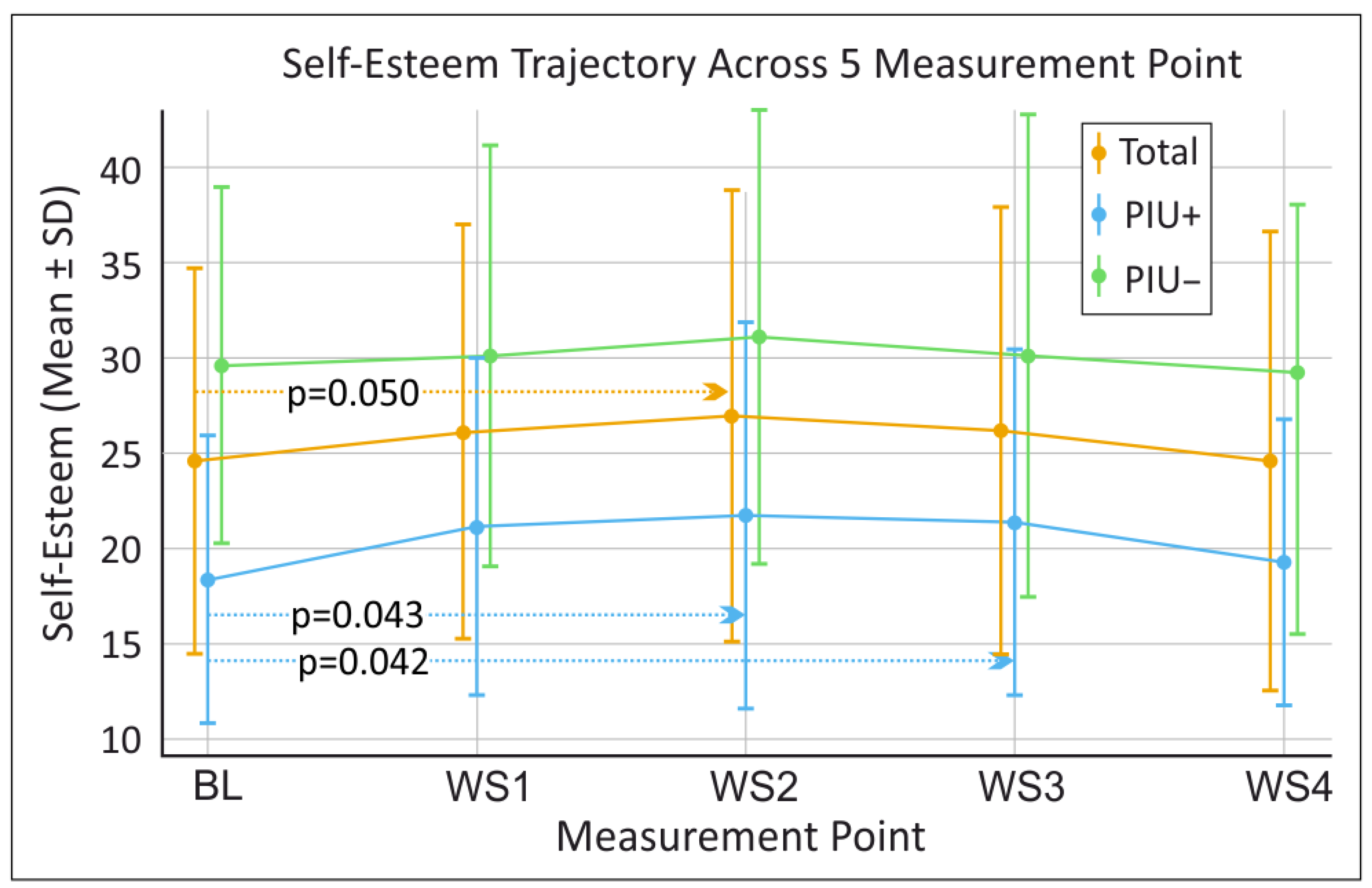
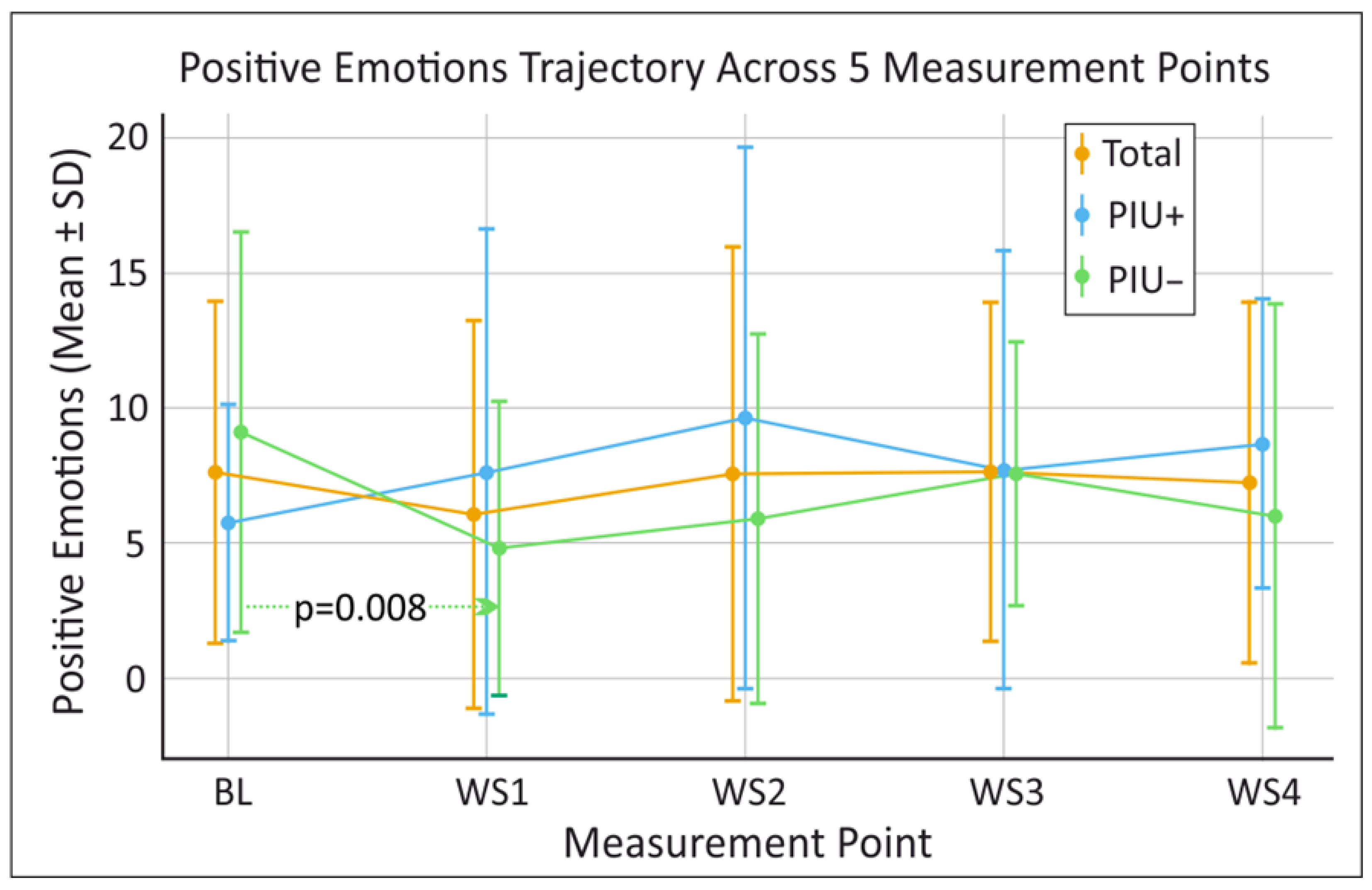
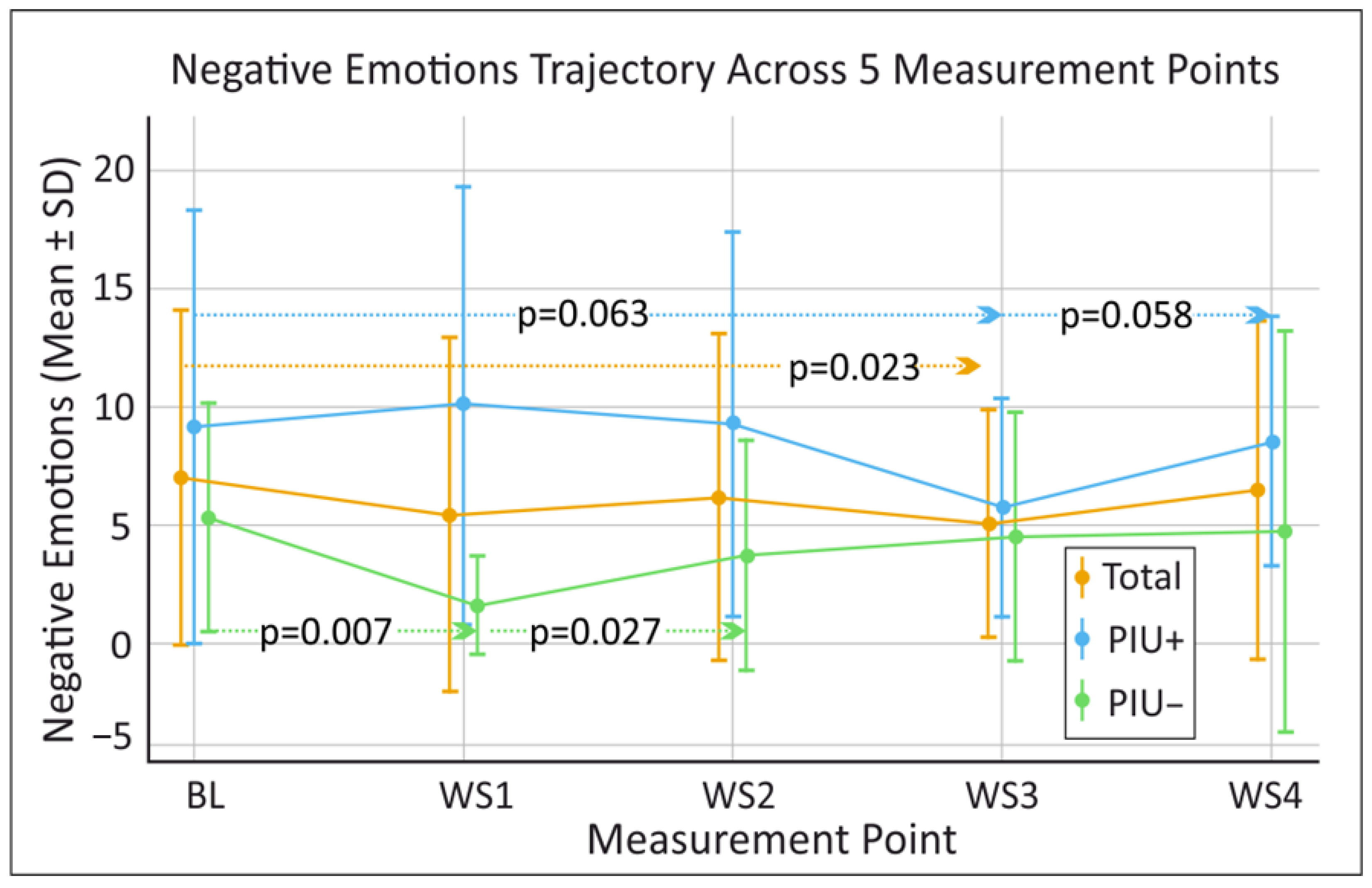
3.2. The Course of Positive Emotions, Negative Emotions, and Self-Esteem in the Course of the Intervention
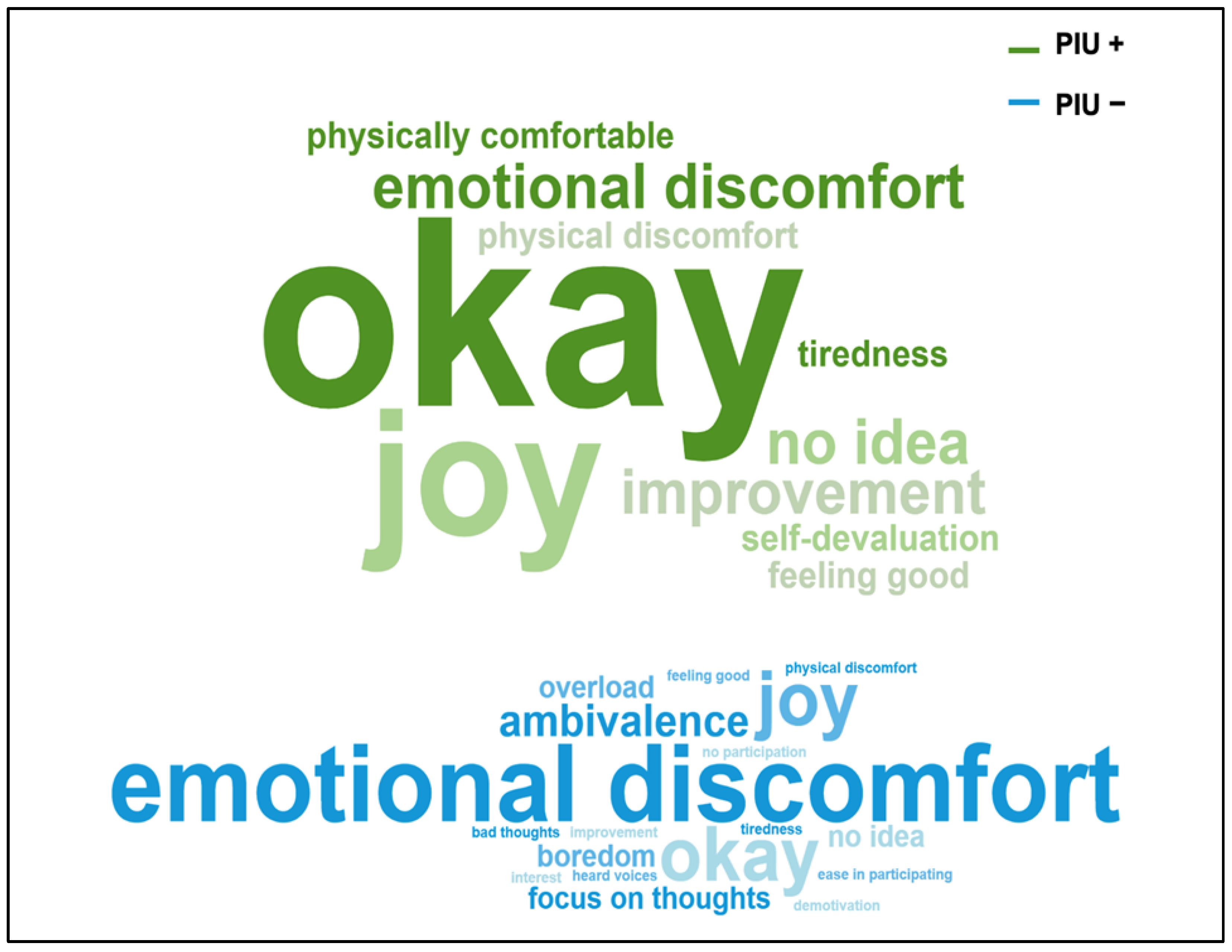
3.3. Narrative Feedback Evaluation Across All Workshops for Subgroups PIU+ vs. PIU−
4. Discussion
4.1. The Impact of PIU on Clinical Presentation and Outcome Variables
4.2. Self-Esteem in the Context of the Dance Intervention
4.3. Positive Emotions in the Context of the Dance Intervention
4.4. Negative Emotions in the Context of the Dance Intervention
4.5. Limitations and Strength of the Study
5. Conclusions
Author Contributions
Funding
Institutional Review Board Statement
Informed Consent Statement
Data Availability Statement
Acknowledgments
Conflicts of Interest
Abbreviations
| BL | baseline |
| CIUS | compulsive internet use scale |
| DISYPS-III SBB-Screen | self-rating scale of the German Diagnostic System for Mental Disorders, according to the ICD-10 and DSM-5 criteria for children and adolescents (in German: Diagnosesystem für psychische Störungen nach ICD-10 und DSM-5 für Kinder und Jugendliche) |
| PANAS | positive and negative affect schedule |
| PIU | problematic internet use |
| PIU+ | participants with problematic internet use |
| PIU− | participants without problematic internet use |
| Scheme | Self-esteem inventory for children and adolescents (German: Selbstwertinventar für Kin-der und Jugendliche) |
| WS | workshop |
Appendix A

| Variables | PIU− | PIU+ |
|---|---|---|
| PE_WS1 | 0 | 0 |
| NE-_WS1 | 0 | 0 |
| PE_WS2 | 0 | 0 |
| NE-_WS2 | 0 | 0 |
| PE_WS3 | 1 | 1 |
| NE_WS3 | 2 | 1 |
| PE_WS4 | 3 | 2 |
| NE_WS4 | 3 | 2 |
| SE_WS1 | 0 | 0 |
| SE_WS2 | 0 | 0 |
| SE_WS3 | 0 | 0 |
| SE_WS4 | 2 | 1 |
| Categories | WS 1_PUI− | WS 1_PUI+ | WS 2_PUI− | WS 2_PUI+ | WS 3_PUI− | WS 3_PUI+ | WS 4_PUI− | WS4_PUI+ | Total_PUI− | Total_PUI+ |
|---|---|---|---|---|---|---|---|---|---|---|
| overload | 2 | 0 | 0 | 0 | 1 | 0 | 0 | 0 | 3 | 0 |
| emotional discomfort | 2 | 1 | 3 | 1 | 0 | 1 | 1 | 0 | 6 | 3 |
| demotivation | 1 | 0 | 0 | 0 | 0 | 0 | 0 | 0 | 1 | 0 |
| physical discomfort | 0 | 1 | 0 | 0 | 1 | 0 | 0 | 0 | 1 | 1 |
| self-devaluation | 0 | 1 | 0 | 0 | 0 | 0 | 0 | 0 | 0 | 1 |
| heard voices | 0 | 0 | 1 | 0 | 0 | 0 | 0 | 0 | 1 | 0 |
| bad thoughts | 0 | 0 | 0 | 0 | 0 | 0 | 1 | 0 | 1 | 0 |
| focus on thoughts | 0 | 0 | 0 | 0 | 0 | 0 | 2 | 0 | 2 | 0 |
| ambivalence | 1 | 0 | 1 | 0 | 1 | 0 | 0 | 0 | 3 | 0 |
| tiredness | 0 | 0 | 1 | 1 | 0 | 0 | 0 | 0 | 1 | 1 |
| boredom | 1 | 0 | 1 | 0 | 0 | 0 | 0 | 0 | 2 | 0 |
| no participation | 0 | 0 | 0 | 0 | 1 | 0 | 0 | 0 | 1 | 0 |
| okay | 0 | 2 | 2 | 2 | 1 | 3 | 2 | 3 | 5 | 10 |
| no idea | 1 | 1 | 1 | 0 | 0 | 0 | 0 | 0 | 2 | 1 |
| interest | 1 | 0 | 0 | 0 | 0 | 0 | 0 | 0 | 1 | 0 |
| improvement | 0 | 0 | 1 | 2 | 0 | 0 | 0 | 0 | 1 | 2 |
| physically comfortable | 0 | 0 | 0 | 1 | 0 | 0 | 0 | 0 | 0 | 1 |
| feeling good | 0 | 0 | 0 | 0 | 1 | 0 | 0 | 1 | 1 | 1 |
| ease in participation | 0 | 0 | 0 | 0 | 0 | 0 | 1 | 0 | 1 | 0 |
| joy | 1 | 1 | 0 | 3 | 4 | 1 | 0 | 3 | 5 | 8 |
| MISSINGS | 2 | 1 | 2 | 1 | 3 | 3 | 3 | 2 |
References
- Aldao, A., Gee, D. G., De Los Reyes, A., & Seager, I. (2016). Emotion regulation as a transdiagnostic factor in the development of internalizing and externalizing psychopathology: Current and future directions. Development and Psychopathology, 28(4), 927–946. [Google Scholar] [CrossRef] [PubMed]
- Anderson, A. N., Kennedy, H., DeWitt, P., Anderson, E., & Wamboldt, M. Z. (2014). Dance/movement therapy impacts mood states of adolescents in a psychiatric hospital. The Arts in Psychotherapy, 41(3), 257–262. [Google Scholar] [CrossRef]
- Bhide, A., & Chakraborty, K. (2020). General principles for psychotherapeutic interventions in children and adolescents. Indian Journal of Psychiatry, 62(8), S299–S318. [Google Scholar] [CrossRef] [PubMed]
- Birnkammer, S., & Calvano, C. (2023). A creative and movement-based blended intervention for children in outpatient residential care: A mixed-method, multi-center, single-arm feasibility trial. Children, 10(2), 207. [Google Scholar] [CrossRef]
- Bos, A. E. R., Muris, P., Mulkens, S., & Schaalma, H. P. (2006). Changing self-esteem in children and adolescents: A roadmap for future interventions. Netherlands Journal of Psychology, 62(1), 26–33. [Google Scholar] [CrossRef]
- Bradley, B., DeFife, J. A., Guarnaccia, C., Phifer, J., Fani, N., Ressler, K. J., & Westen, D. (2011). Emotion dysregulation and negative affect: Association with psychiatric symptoms. Journal of Clinical Psychiatry, 72(5), 685–691. [Google Scholar] [CrossRef]
- Brand, M., Wegmann, E., Stark, R., Müller, A., Wölfling, K., Robbins, T. W., & Potenza, M. N. (2019). The Interaction of person-affect-cognition-execution (I-PACE) model for addictive behaviors: Update, generalization to addictive behaviors beyond internet-use disorders, and specification of the process character of addictive behaviors. Neuroscience and Biobehavioral Reviews, 104, 1–10. [Google Scholar] [CrossRef]
- Brand, M., Young, K. S., Laier, C., Wölfling, K., & Potenza, M. N. (2016). Integrating psychological and neurobiological considerations regarding the development and maintenance of specific internet-use disorders: An Interaction of Person-Affect-Cognition-Execution (I-PACE) model. Neuroscience and Biobehavioral Reviews, 71, 252–266. [Google Scholar] [CrossRef]
- Breyer, B., & Bluemke, M. (2016). Deutsche version der positive and negative affect schedule PANAS (GESIS panel). In Zusammenstellung sozialwissenschaftlicher items und skalen (ZIS). GESIS. [Google Scholar]
- Brown, J. D., & Marshall, M. (2006). The three faces of self-esteem. Self-esteem issues and answers: A sourcebook of current perspectives. Self-Esteem: Issues and Answers, 206, 4–9. [Google Scholar]
- Burke, T. A., Domoff, S. E., Croarkin, P. E., Romanowicz, M., Borgen, A., Wolff, J., & Nesi, J. (2022). Reactions to naturalistic smartphone deprivation among psychiatrically hospitalized adolescents. Journal of Psychiatric Research, 155, 17–23. [Google Scholar] [CrossRef]
- Butler, A. C., Chapman, J. E., Forman, E. M., & Beck, A. T. (2006). The empirical status of cognitive-behavioral therapy: A review of meta-analyses. Clinical Psychology Review, 26(1), 17–31. [Google Scholar] [CrossRef] [PubMed]
- Cai, Z., Mao, P., Wang, Z., Wang, D., He, J., & Fan, X. (2023). Associations between problematic internet use and mental health outcomes of students: A meta-analytic review. Adolescent Research Review, 8(1), 45–62. [Google Scholar] [CrossRef] [PubMed]
- Cast, A. D., & Burke, P. J. (2002). A theory of self-esteem. Social Forces, 80(3), 1041–1068. [Google Scholar] [CrossRef]
- Cohen, J. (1988). Statistical power analysis for the behavioral sciences. Taylor and Francis. [Google Scholar]
- Compas, B. E., Jaser, S. S., Bettis, A. H., Watson, K. H., Gruhn, M. A., Dunbar, J. P., Williams, E., & Thigpen, J. C. (2017). Coping, emotion regulation, and psychopathology in childhood and adolescence: A meta-analysis and narrative review. Psychological Bulletin, 143(9), 939–991. [Google Scholar] [CrossRef]
- Darnai, G., Perlaki, G., Zsidó, A. N., Inhóf, O., Orsi, G., Horváth, R., Nagy, S. A., Lábadi, B., Tényi, D., Kovács, N., Dóczi, T., Demetrovics, Z., & Janszky, J. (2019). Internet addiction and functional brain networks: Task-related fMRI study. Scientific Reports, 9(1), 15777. [Google Scholar] [CrossRef]
- Döpfner, M., & Görtz-Dorten, A. (2017). Diagnostik-system für psychische Störungen nach ICD-10 und DSM-5 für kinder und jugendliche-III. Hogrefe. [Google Scholar]
- Du, H., King, R. B., & Chi, P. (2017). Self-esteem and subjective well-being revisited: The roles of personal, relational, and collective self-esteem. PLoS ONE, 12(8), e0183958. [Google Scholar] [CrossRef]
- Duberg, A., Möller, M., & Sunvisson, H. (2016). “I feel free”: Experiences of a dance intervention for adolescent girls with internalizing problems. International Journal of Qualitative Studies on Health and Well-Being, 11, 31946. [Google Scholar] [CrossRef]
- Dumont, M., & Provost, M. A. (1999). Resilience in adolescents: Protective role of social support, coping strategies, self-esteem, and social activities on experience of stress and depression. Journal of Youth and Adolescence, 28(3), 343–363. [Google Scholar] [CrossRef]
- Durkee, T., Kaess, M., Carli, V., Parzer, P., Wasserman, C., Floderus, B., Apter, A., Balazs, J., Barzilay, S., Bobes, J., Brunner, R., Corcoran, P., Cosman, D., Cotter, P., Despalins, R., Graber, N., Guillemin, F., Haring, C., Kahn, J. P., … Wasserman, D. (2012). Prevalence of pathological internet use among adolescents in Europe: Demographic and social factors. Addiction, 107(12), 2210–2222. [Google Scholar] [CrossRef]
- Eisenberg, D., & Schneider, H. (2007). Perceptions of academic skills of children diagnosed with ADHD. Journal of Attention Disorders, 10(4), 390–397. [Google Scholar] [CrossRef]
- Ek, U., Westerlund, J., Holmberg, K., & Fernell, E. (2008). Self-esteem in children with attention and/or learning deficits: The importance of gender. Acta Paediatrica, International Journal of Paediatrics, 97(8), 1125–1130. [Google Scholar] [CrossRef]
- Fombouchet, Y., Pineau, S., Perchec, C., Lucenet, J., & Lannegrand, L. (2023). The development of emotion regulation in adolescence: What do we know and where to go next? Social Development, 32(4), 1227–1242. [Google Scholar] [CrossRef]
- Fredrickson, B. L. (2001). The role of positive emotions in positive psychology: The broaden-and-build theory of positive emotions. American Psychologist, 56(3), 216–226. [Google Scholar] [CrossRef]
- Fuchs, M., Riedl, D., Bock, A., Rumpold, G., & Sevecke, K. (2018). Pathological internet use—An important comorbidity in child and adolescent psychiatry: Prevalence and correlation patterns in a naturalistic sample of adolescent inpatients. BioMed Research International, 2018, 1–10. [Google Scholar] [CrossRef]
- Gao, W., Luo, Y., Cao, X., & Liu, X. (2022). Gender differences in the relationship between self-esteem and depression among college students: A cross-lagged study from China. Journal of Research in Personality, 97, 104202. [Google Scholar] [CrossRef]
- Gilchrist, J. D., Gohari, M. R., Benson, L., Patte, K. A., & Leatherdale, S. T. (2023). Reciprocal associations between positive emotions and resilience predict flourishing among adolescents. Health Promotion and Chronic Disease Prevention in Canada, 43(7), 313–320. [Google Scholar] [CrossRef]
- Gioia, F., Rega, V., & Boursier, V. (2021). Problematic internet use and emotional dysregulation among young people: A literature review. Clinical Neuropsychiatry, 18(1), 41–54. [Google Scholar] [CrossRef]
- Gloria, C. T., & Steinhardt, M. A. (2016). Relationships among positive emotions, coping, resilience and mental health. Stress and Health, 32(2), 145–156. [Google Scholar] [CrossRef]
- Golden, T. L., Ordway, R. W., Magsamen, S., Mohanty, A., Chen, Y., & Ng, T. W. C. (2024). Supporting youth mental health with arts-based strategies: A global perspective. BMC Medicine, 22(1), 7. [Google Scholar] [CrossRef]
- Gómez-López, M., Viejo, C., Romera, E. M., & Ortega-Ruiz, R. (2022). Psychological well-being and social competence during adolescence: Longitudinal association between the two phenomena. Child Indicators Research, 15(3), 1043–1061. [Google Scholar] [CrossRef]
- Grebosz-Haring, K., & Thun-Hohenstein, L. (2024). Psychobiological responses to choir singing and creative arts activities in children and adolescents with mental disorders: Results of a pilot study. Neuropsychiatrie, 38(3), 145–155. [Google Scholar] [CrossRef]
- Grebosz-Haring, K., Thun-Hohenstein, L., Schuchter-Wiegand, A. K., Bathke, A. C., & Clift, S. (2023). The need for robust critique of arts and health research: Dance-movement therapy, girls, and depression. Annals of the New York Academy of Sciences, 1525(1), 128–139. [Google Scholar] [CrossRef]
- Guertler, D., Rumpf, H. J., Bischof, A., Kastirke, N., Petersen, K. U., John, U., & Meyer, C. (2014). Assessment of problematic internet use by the compulsive internet use scale and the internet addiction test: A sample of problematic and pathological gamblers. European Addiction Research, 20(2), 75–81. [Google Scholar] [CrossRef] [PubMed]
- Harter, S. (2012). The self-perception profile for children: Manual and questionnaires (revision of the self-perception profile for children, 1985). University of Denver. [Google Scholar]
- Henriksen, I. O., Ranøyen, I., Indredavik, M. S., & Stenseng, F. (2017). The role of self-esteem in the development of psychiatric problems: A three-year prospective study in a clinical sample of adolescents. Child and Adolescent Psychiatry and Mental Health, 11(1), 68. [Google Scholar] [CrossRef] [PubMed]
- IBM Corp. (2023). IBM SPSS statistics for windows (Version 29.0). IBM Corp. [Google Scholar]
- Jia, S., Du, Z., Chu, D., Yao, J., Wang, H., Chen, W., Zhang, D., & Zang, X. (2025). A network meta-analysis of mind–body exercise interventions for internet addiction symptoms in young adults. Frontiers in Public Health, 13, 1565372. [Google Scholar] [CrossRef] [PubMed]
- Johnson, M. D., Galambos, N. L., & Krahn, H. J. (2016). Vulnerability, scar, or reciprocal risk? Temporal ordering of self-esteem and depressive symptoms over 25 years. Longitudinal and Life Course Studies, 7(4), 304–319. [Google Scholar] [CrossRef]
- Jung, T., & Park, H. (2025). Comparative effectiveness of exercise and art therapy programs in treating internet gaming disorder among adolescents: An 8-day intensive intervention study. Experimental Brain Research, 243(5), 112. [Google Scholar] [CrossRef]
- Koch, S. C., Riege, R. F. F., Tisborn, K., Biondo, J., Martin, L., & Beelmann, A. (2019). Effects of dance movement therapy and dance on health-related psychological outcomes. A meta-analysis update. Frontiers in Psychology, 10(AUG), 1806. [Google Scholar] [CrossRef]
- Krohne, H. W., Egloff, B., Kohlmann, C.-W., & Tausch, A. (1996). Untersuchungen mit einer deutschen version der “positive and negative affect schedule” (PANAS). [Investigations with a german version of the positive and negative affect schedule (PANAS)]. Diagnostica, 42(2), 139–156. [Google Scholar]
- Kuss, D. J., & Lopez-Fernandez, O. (2016). Internet addiction and problematic Internet use: A systematic review of clinical research. World Journal of Psychiatry, 6(1), 143–176. [Google Scholar] [CrossRef]
- Lai, W., Wang, W., Li, X., Wang, H., Lu, C., & Guo, L. (2023). Longitudinal associations between problematic Internet use, self-esteem, and depressive symptoms among Chinese adolescents. European Child and Adolescent Psychiatry, 32(7), 1273–1283. [Google Scholar] [CrossRef] [PubMed]
- Layous, K., Chancellor, J., Lyubomirsky, S., Wang, L., & Doraiswamy, P. M. (2011). Delivering happiness: Translating positive psychology intervention research for treating major and minor depressive disorders. Journal of Alternative and Complementary Medicine, 17(8), 675–683. [Google Scholar] [CrossRef] [PubMed]
- Li, J., Zhou, X., Huang, Z., & Shao, T. (2023). Effect of exercise intervention on depression in children and adolescents: A systematic review and network meta-analysis. BMC Public Health, 23(1), 1918. [Google Scholar] [CrossRef] [PubMed]
- Lin, T. W., & Kuo, Y. M. (2013). Exercise benefits brain function: The monoamine connection. Brain Sciences, 3(1), 39–53. [Google Scholar] [CrossRef]
- Lopez-Fernandez, O., Griffiths, M. D., Kuss, D. J., Dawes, C., Pontes, H. M., Justice, L., Rumpf, H. J., Bischof, A., Gässler, A. K., Suryani, E., Männikkö, N., Kääriänen, M., Romo, L., Morvan, Y., Kern, L., Graziani, P., Rousseau, A., Hormes, J. M., Schimmenti, A., … Billieux, J. (2019). Cross-Cultural validation of the compulsive internet use scale in four forms and eight languages. Cyberpsychology, Behavior, and Social Networking, 22(7), 451–464. [Google Scholar] [CrossRef]
- Lysaker, P. H., Roe, D., & Yanos, P. T. (2007). Toward understanding the insight paradox: Internalized stigma moderates the association between insight and social functioning, hope, and self-esteem among people with schizophrenia spectrum disorders. Schizophrenia Bulletin, 33(1), 192–199. [Google Scholar] [CrossRef]
- Maslow, A. H. (1954). The instinctoid nature of basic needs. Journal of Personality, 22(3), 326–347. [Google Scholar] [CrossRef]
- Mathew, P., Krishnan, R., & Bhaskar, A. (2020). Effectiveness of a nurse-led intervention for adolescents with problematic internet use. Journal of Psychosocial Nursing and Mental Health Services, 58(7), 16–26. [Google Scholar] [CrossRef]
- Mayring, P. (2023). Einführung in die qualitative Sozialforschung. Beltz Verlagsgruppe. Available online: http://www.content-select.com/index.php?id=bib_view& (accessed on 3 January 2025).
- Meerkerk, G.-J., Van Den Eijnden, R. J. J. M., Vermulst, A. A., & Garretsen, H. F. L. (2009). The compulsive internet use scale (CIUS): Some psychometric properties. CyberPsychology & Behavior, 12(1), 1–6. [Google Scholar] [CrossRef]
- Mesurado, B., Vidal, E. M., & Mestre, A. L. (2018). Negative emotions and behaviour: The role of regulatory emotional self-efficacy. Journal of Adolescence, 64, 62–71. [Google Scholar] [CrossRef]
- Moksnes, U. K., & Reidunsdatter, R. J. (2019). Self-esteem and mental health in adolescents-level and stability during a school year. Norsk Epidemiologi, 28(1–2), 59–67. [Google Scholar] [CrossRef]
- Montag, C., Yang, H., & Elhai, J. D. (2021). On the psychology of TikTok use: A first glimpse from empirical findings. Frontiers in Public Health, 9, 641673. [Google Scholar] [CrossRef] [PubMed]
- Moula, Z., Powell, J., Brocklehurst, S., & Karkou, V. (2022). Feasibility, acceptability, and effectiveness of school-based dance movement psychotherapy for children with emotional and behavioral difficulties. Frontiers in Psychology, 13, 883334. [Google Scholar] [CrossRef] [PubMed]
- Muris, P., & Otgaar, H. (2023). Self-esteem and self-compassion: A narrative review and meta-analysis on their links to psychological problems and well-being. Psychology Research and Behavior Management, 16, 2961–2975. [Google Scholar] [CrossRef]
- Orth, U., Clark, D. A., Donnellan, M. B., & Robins, R. W. (2021). Testing prospective effects in longitudinal research: Comparing seven competing cross-lagged models. Journal of Personality and Social Psychology, 120(4), 1013–1034. [Google Scholar] [CrossRef]
- Orth, U., & Robins, R. W. (2014). The development of self-esteem. Current Directions in Psychological Science, 23(5), 381–387. [Google Scholar] [CrossRef]
- Pan, Y. C., Chiu, Y. C., & Lin, Y. H. (2020). Systematic review and meta-analysis of epidemiology of internet addiction. Neuroscience and Biobehavioral Reviews, 118, 612–622. [Google Scholar] [CrossRef]
- Park, N., Peterson, C., Szvarca, D., Vander Molen, R. J., Kim, E. S., & Collon, K. (2016). Positive psychology and physical health: Research and applications. American Journal of Lifestyle Medicine, 10(3), 200–206. [Google Scholar] [CrossRef]
- Paxton, S. J., Neumark-Sztainer, D., Hannan, P. J., & Eisenberg, M. E. (2006). Body dissatisfaction prospectively predicts depressive mood and low self-esteem in adolescent girls and boys. Journal of Clinical Child and Adolescent Psychology, 35(4), 539–549. [Google Scholar] [CrossRef]
- Pei-Chen Chang, J., & Hung, C.-C. (2012). Mental health. International Association for Child and Adolescent Psychiatry and Allied Professions. [Google Scholar]
- Rabinowitz, Y. L., Yim, B., & Muran, J. C. (2025). Termination of psychotherapy: A systematic review. Cogent Mental Health, 4(1), 2535626. [Google Scholar] [CrossRef]
- Rehbein, F., Stark, R., Wartberg, L., Wölfling, K., Müller, A., Rumpf, H. J., Bischof, A., & Paschke, K. (2025). Screening and diagnostic guideline for internet use disorders. Sucht, 71(2), 79–85. [Google Scholar] [CrossRef]
- Restrepo, A., Scheininger, T., Clucas, J., Alexander, L., Salum, G. A., Georgiades, K., Paksarian, D., Merikangas, K. R., & Milham, M. P. (2020). Problematic internet use in children and adolescents: Associations with psychiatric disorders and impairment. BMC Psychiatry, 20(1), 252. [Google Scholar] [CrossRef] [PubMed]
- Rodriguez-Ayllon, M., Cadenas-Sánchez, C., Estévez-López, F., Muñoz, N. E., Mora-Gonzalez, J., Migueles, J. H., Molina-García, P., Henriksson, H., Mena-Molina, A., Martínez-Vizcaíno, V., Catena, A., Löf, M., Erickson, K. I., Lubans, D. R., Ortega, F. B., & Esteban-Cornejo, I. (2019). Role of physical activity and sedentary behavior in the mental health of preschoolers, children and adolescents: A systematic review and meta-analysis. Sports Medicine, 49(9), 1383–1410. [Google Scholar] [CrossRef] [PubMed]
- Rosenberg, M. (2006). Rosenberg self-esteem scale (RSE). American Psychological Association. [Google Scholar]
- Rosenberg, M., Schooler, C., & Schoenbach, C. (1989). Self-esteem and adolescent problems: Modeling reciprocal effects. American Sociological Review, 54(6), 1004–1018. [Google Scholar] [CrossRef]
- Rosenberg, M., Schooler, C., Schoenbach, C., & Rosenberg, F. (1995). Global self-esteem and specific self-esteem: Different concepts, different outcomes. American Sociological Review, 60(1), 141. [Google Scholar] [CrossRef]
- Roth, R., Ajithkumar, P., Natarajan, G., Achuthan, K., Moon, P., Zinzow, H., & Madathil, K. C. (2021). A study of adolescents’ and young adults’ TikTok challenge participation in South India. Human Factors in Healthcare, 1, 100005. [Google Scholar] [CrossRef]
- Rumpf, H. J., Vermulst, A. A., Bischof, A., Kastirke, N., Gürtler, D., Bischof, G., Meerkerk, G. J., John, U., & Meyer, C. (2014). Occurence of internet addiction in a general population sample: A latent class analysis. European Addiction Research, 20(4), 159–166. [Google Scholar] [CrossRef]
- Sanders, T., Noetel, M., Parker, P., Del Pozo Cruz, B., Biddle, S., Ronto, R., Hulteen, R., Parker, R., Thomas, G., De Cocker, K., Salmon, J., Hesketh, K., Weeks, N., Arnott, H., Devine, E., Vasconcellos, R., Pagano, R., Sherson, J., Conigrave, J., & Lonsdale, C. (2024). An umbrella review of the benefits and risks associated with youths’ interactions with electronic screens. Nature Human Behaviour, 8(1), 82–99. [Google Scholar] [CrossRef]
- Schöne, C., & Stiensmeier, J. (2016). SEKJ-selbstwertinventar für kinder und jugendliche (testmanual). Hogrefe. [Google Scholar]
- Schwender, T. M., Spengler, S., Oedl, C., & Mess, F. (2018). Effects of dance interventions on aspects of the participants’ self: A systematic review. Frontiers in Psychology, 9(JUL), 1130. [Google Scholar] [CrossRef]
- Shristi, K. C., Kaphle, H. P., Neupane, N., & Baral, S. (2024). Internet use and its association with physical activity among adolescents in Beni Municipality, Myagdi, Nepal. PLoS ONE, 19, e0302456. [Google Scholar] [CrossRef]
- Soriano-Molina, E., Limiñana-Gras, R. M., Patró-Hernández, R. M., & Rubio-Aparicio, M. (2025). The association between internet addiction and adolescents’ mental health: A meta-analytic review. Behavioral Sciences, 15(2), 116. [Google Scholar] [CrossRef]
- Sowislo, J. F., & Orth, U. (2013). Does low self-esteem predict depression and anxiety? A meta-analysis of longitudinal studies. Psychological Bulletin, 139(1), 213–240. [Google Scholar] [CrossRef]
- Svamo, N. T. Ø., Haug, S. H. K., DeMarinis, V., & Hertzberg, U. (2024). Adolescents’ voices on self-engagement in mental health treatment: A scoping review. European Child and Adolescent Psychiatry, 33(12), 4083–4095. [Google Scholar] [CrossRef]
- Tafarodi, R. W., & Swann, W. B., Jr. (1995). Self-linking and self-competence as dimensions of global self-esteem: Initial validation of a measure. Journal of Personality Assessment, 65(2), 322–342. [Google Scholar] [CrossRef] [PubMed]
- Tafarodi, R. W., & Swann, W. B., Jr. (2001). Two-dimensional self-esteem: Theory and measurement. Personality and Individual Differences, 31(5), 653–673. [Google Scholar] [CrossRef]
- Tao, D., Gao, Y., Cole, A., Baker, J. S., Gu, Y., Supriya, R., Tong, T. K., Hu, Q., & Awan-Scully, R. (2022). The physiological and psychological benefits of dance and its effects on children and adolescents: A systematic review. Frontiers in Physiology, 13, 925958. [Google Scholar] [CrossRef]
- Tolstrup, J. S., Larsen, S. R., Kelleher, I., Cannon, M., Lytken Larsen, C. V., & Nordentoft, M. (2025). Mental well-being in adolescence and eight years of follow-up for mental illness, risky behaviours, and mortality in 67,945 15–19-year-olds: A prospective cohort study. The Lancet Regional Health-Europe, 58, 101435. [Google Scholar] [CrossRef] [PubMed]
- Villanueva-Blasco, V. J., García-Guerra, M., & Rial-Boubeta, A. (2026). Relationship between problematic internet use and emotional variables in childhood and adolescence: Systematic review of longitudinal evidence. Addictive Behaviors, 173, 108561. [Google Scholar] [CrossRef]
- Wang, L., Chen, Y., Cho, J. H., Yang, H., & Seo, J. C. (2025). Effectiveness of exercise as an intervention for internet addiction in adolescents: A meta-analysis. PeerJ, 13, e19999. [Google Scholar] [CrossRef]
- Wartberg, L., Petersen, K. U., Kammerl, R., Rosenkranz, M., & Thomasius, R. (2014). Psychometric validation of a german version of the compulsive internet use scale. Cyberpsychology, Behavior, and Social Networking, 17(2), 99–103. [Google Scholar] [CrossRef]
- Watson, D., Clark, L. A., & Tellegen, A. (1988). Development and validation of brief measures of positive and negative affect: The PANAS scales. Journal of Personality and Social Psychology, 54(6), 1063–1070. [Google Scholar] [CrossRef]
- Winds, K., Aebi, M., & Plattner, B. (2022). Problematic internet use among adolescent male and female psychiatric inpatients: A gender perspective. Child Psychiatry and Human Development, 55, 497–509. [Google Scholar] [CrossRef] [PubMed]
- World Cloud Generator. (n.d.). Available online: https://wordclouds.ethz.ch/ (accessed on 3 January 2026).
- Young, K. (2009). Internet addiction: Diagnosis and treatment considerations. Journal of Contemporary Psychotherapy, 39(4), 241–246. [Google Scholar] [CrossRef]
- Zeigler-Hill, V. (2011). The connections between self-esteem and psychopathology. Journal of Contemporary Psychotherapy, 41(3), 157–164. [Google Scholar] [CrossRef]
- Zhang, X., & Wei, Y. (2024). The role of dance movement therapy in enhancing emotional regulation: A literature review. Heliyon, 10(15), e35733. [Google Scholar] [CrossRef]
- Zhou, G., & Wang, E. (2021). Effects of self-concealment and self-esteem on Internet addiction in college students. Social Behavior and Personality, 49(7), 1–9. [Google Scholar] [CrossRef]
- Zhu, J., Zhai, Y., Meng, X., Zhang, Z., & Yuan, X. (2025). The relationship between physical activity and Internet addiction among Chinese adolescents: Exploring latent profile analysis and multi-level mediating mechanisms. Frontiers in Psychology, 16, 1628586. [Google Scholar] [CrossRef]
- Žmavc, M., Horvat, J., Židan, M., & Selak, Š. (2025). The effectiveness of school-based interventions to reduce problematic digital technology use and screen time: A systematic review and meta-analysis. Journal of Behavioral Addictions, 14(2), 571–589. [Google Scholar] [CrossRef]


| Total Sample (n = 18) | PIU+ (n = 8) | PIU− (n = 10) | Test 1,2 | Effect Size 3,4 | |
|---|---|---|---|---|---|
| Demographics | |||||
| Age (m, SD) | 15.39 (1.50) | 15.88 (0.99) | 15.00 (1.76) | p = 0.140 1 | 0.348 4 |
| Weekday internet use (m, SD) | 6.23 (3.79) | 6.50 (3.12) | 6.10 (4.41) | p = 0.501 1 | 0.159 4 |
| Weekend internet use (m, SD) | 8.11 (5.46) | 8.75 (3.69) | 7.60 (6.70) | p = 0.105 1 | 0.382 4 |
| Internalizing Symptoms (m, SD) | 1.34 (0.79) | 1.80 (0.52) | 0.97 (0.79) | p = 0.041 1 | 0.482 4 |
| Pathological (n, %) | 12 (66.7) | 8 (100.0) | 4 (40.0) | p = 0.013 2 | 0.632 3 |
| Externalizing Symptoms (m, SD) | 0.81 (0.70) | 0.57 (0.27) | 1.00 (0.88) | p = 0.656 1 | 0.662 4 |
| Pathological (n, %) | 4 (22.2) | 1 (12.5) | 3 (30.0) | p = 0.588 2 | 0.209 3 |
| PANAS PE (BL) (m, SD) | 7.61 (6.34) | 5.75 (4.46) | 9.10 (7.41) | p = 0.449 1 | 0.178 4 |
| PANAS NE (BL) (m, SD) | 7.00 (7.16) | 9.13 (9.17) | 5.30 (4.92) | p = 0.284 1 | 0.253 4 |
| SEKJ (BL) (m, SD) | 24.61 (10.15) | 18.37 (7.54) | 29.60 (9.38) | p = 0.018 1 | 0.556 4 |
| SEKJ below norm (n, %) | 10 (55.6) | 7 (87.5) | 3 (30.0) | p = 0.025 2 | 0.575 3 |
Disclaimer/Publisher’s Note: The statements, opinions and data contained in all publications are solely those of the individual author(s) and contributor(s) and not of MDPI and/or the editor(s). MDPI and/or the editor(s) disclaim responsibility for any injury to people or property resulting from any ideas, methods, instructions or products referred to in the content. |
© 2026 by the authors. Licensee MDPI, Basel, Switzerland. This article is an open access article distributed under the terms and conditions of the Creative Commons Attribution (CC BY) license.
Share and Cite
Al Schameri, S.; Plattner, B.; Rainer, L.; Gampe, H.; Salcher, B.; Grebosz-Haring, K.; Klettner, M.-C.; Winds, K. Effects of a Dance-Based Intervention on Affective States and Self-Esteem in Adolescents Receiving Psychiatric Care: Differences Between Youth with and Without Problematic Internet Use—A Pilot Study. Behav. Sci. 2026, 16, 170. https://doi.org/10.3390/bs16020170
Al Schameri S, Plattner B, Rainer L, Gampe H, Salcher B, Grebosz-Haring K, Klettner M-C, Winds K. Effects of a Dance-Based Intervention on Affective States and Self-Esteem in Adolescents Receiving Psychiatric Care: Differences Between Youth with and Without Problematic Internet Use—A Pilot Study. Behavioral Sciences. 2026; 16(2):170. https://doi.org/10.3390/bs16020170
Chicago/Turabian StyleAl Schameri, Sarah, Belinda Plattner, Lucas Rainer, Helena Gampe, Bernhard Salcher, Katarzyna Grebosz-Haring, Marie-Christine Klettner, and Kornelius Winds. 2026. "Effects of a Dance-Based Intervention on Affective States and Self-Esteem in Adolescents Receiving Psychiatric Care: Differences Between Youth with and Without Problematic Internet Use—A Pilot Study" Behavioral Sciences 16, no. 2: 170. https://doi.org/10.3390/bs16020170
APA StyleAl Schameri, S., Plattner, B., Rainer, L., Gampe, H., Salcher, B., Grebosz-Haring, K., Klettner, M.-C., & Winds, K. (2026). Effects of a Dance-Based Intervention on Affective States and Self-Esteem in Adolescents Receiving Psychiatric Care: Differences Between Youth with and Without Problematic Internet Use—A Pilot Study. Behavioral Sciences, 16(2), 170. https://doi.org/10.3390/bs16020170