Article

Investigating the Impact of AI-Supported Self-Coaching as a Professional Development Model for Embedded Instruction in Inclusive Early Childhood Settings

1
Early Childhood Education/Teacher Preparation Program, Piedmont Community College, Roxboro, NC 27574, USA
2
Carsamba District Directorate of National Education, 55500 Samsun, Türkiye
Behav. Sci. 2026, 16(1), 140; https://doi.org/10.3390/bs16010140
Submission received: 28 November 2025 / Revised: 1 January 2026 / Accepted: 13 January 2026 / Published: 19 January 2026
(This article belongs to the Special Issue Neurocognitive and Behavioral Innovations for Inclusive Learning)

Abstract

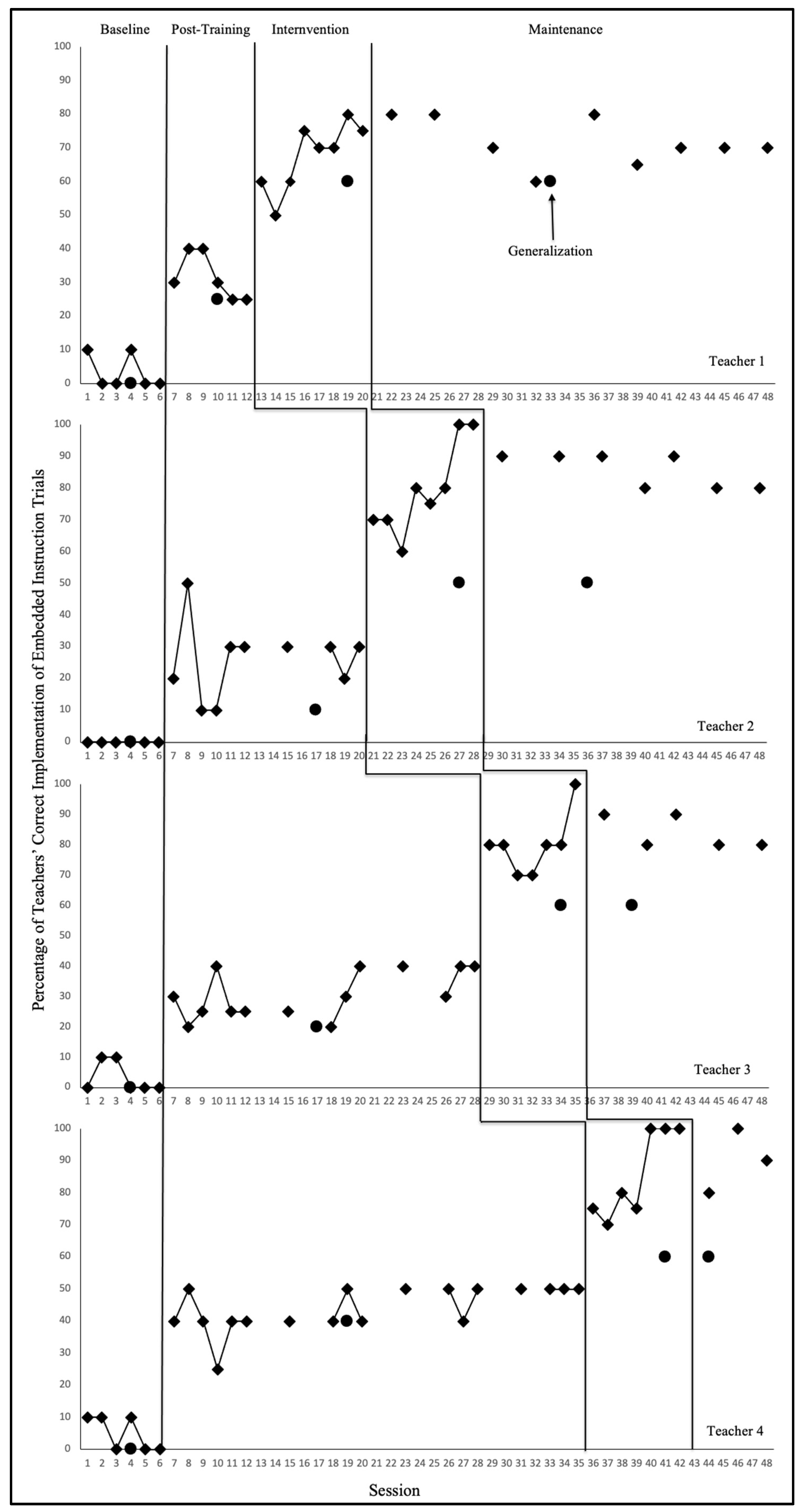
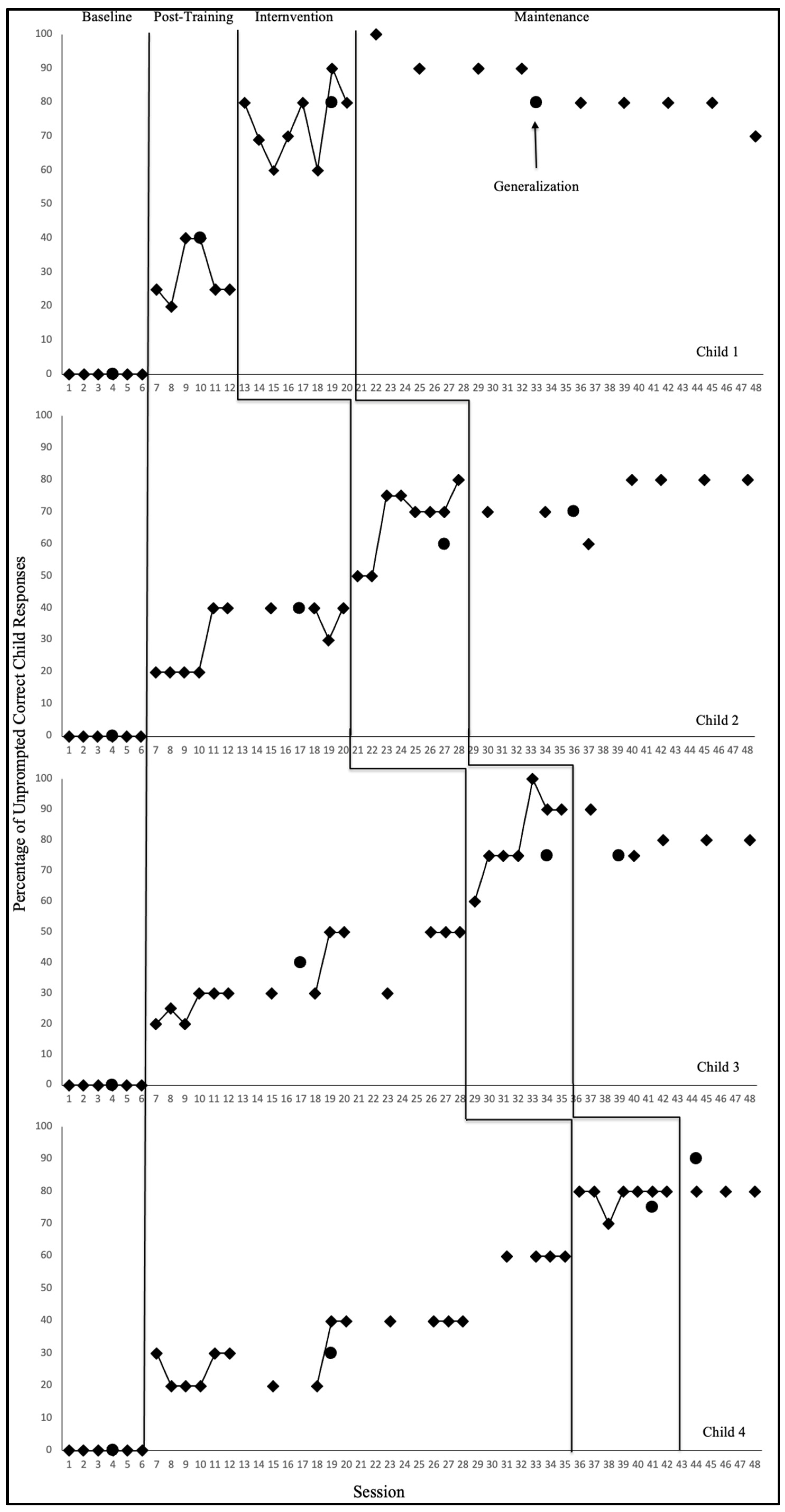
This study examined the effectiveness of an Artificial Intelligence (AI)-supported self-coaching system designed to improve preschool teachers’ implementation of embedded instruction (EI) for young children with autism in inclusive early childhood classrooms. Using a multiple-probe across participants single-case design with four teacher–child dyads, the study evaluated changes in teacher fidelity, child learning outcomes, maintenance, generalization, and teacher perceptions. Following baseline and an initial EI training, teachers engaged in weekly AI-supported self-coaching cycles that included planning, data entry, reflection, and AI-generated individualized feedback. Results demonstrated clear functional relations between the introduction of the AI-supported system and increases in teachers’ EI fidelity. All teachers reached high levels of accurate implementation, maintained their performance after AI supports were withdrawn, and generalized EI procedures to non-targeted routines. Correspondingly, children showed substantial improvements in unprompted correct responding on individualized goals, with gains sustained across maintenance and generalization probes. Social validity data indicated that teachers found both EI and AI-supported self-coaching highly acceptable, feasible, and helpful for guiding instructional decision-making. Findings provide promising initial evidence that AI-supported self-coaching can serve as a scalable, cost-effective professional development approach that strengthens teacher practice and enhances learning outcomes for young children with autism in inclusive preschool settings.
Keywords: artificial intelligence (AI); self-coaching; embedded instruction (EI); inclusive early childhood education; autism spectrum disorder; preschool teachers artificial intelligence (AI); self-coaching; embedded instruction (EI); inclusive early childhood education; autism spectrum disorder; preschool teachers