Writing the Past, Present, and Future: The Impact of Positive Psychology Expressive Writing on Adolescents’ Time Attitudes

Abstract
1. Introduction
1.1. Time Attitude
1.2. Positive Psychology Interventions and Expressive Writing
1.3. The Present Study
2. Methods
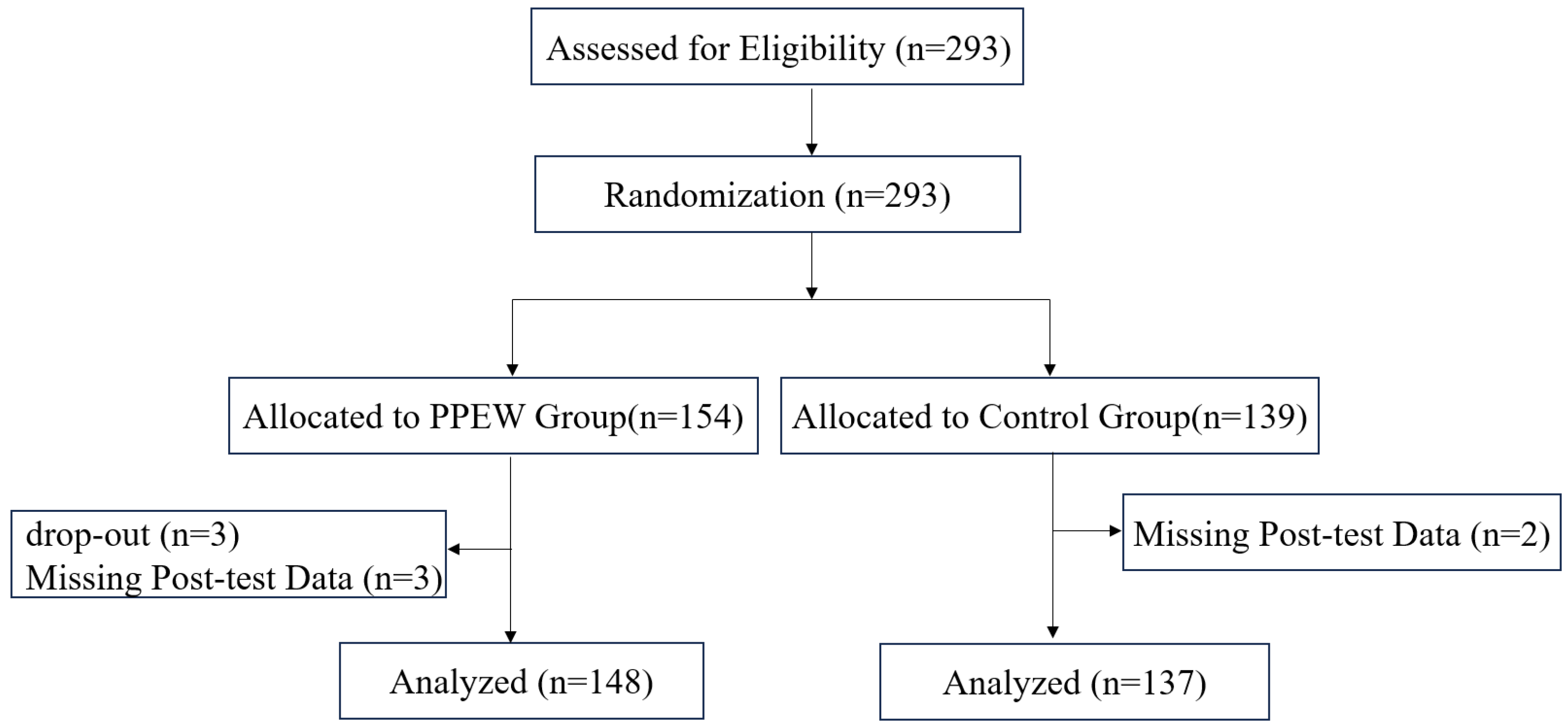
2.1. Participants
2.2. Research Instruments
2.2.1. Adolescent Time Attitude Scale (ATAS)
2.2.2. Positive and Negative Affect Scale for Children (PANAS-C)
2.2.3. Depression-Anxiety-Stress Scales-21 (DASS-21)
2.3. Procedure
2.4. Writing Tasks
2.5. Data Analysis
3. Results
4. Discussion
5. Conclusions
Author Contributions
Funding
Institutional Review Board Statement
Informed Consent Statement
Data Availability Statement
Acknowledgments
Conflicts of Interest
References
- Alkal, A., & Çam, S. (2024). The effect of online multi-component positive psychology intervention on adolescents’ risky behaviors and psychological flexibility: A mixed method study. Journal of Happiness Studies, 25(1), 118. [Google Scholar] [CrossRef] [Scilit]
- Andretta, J. R., & Worrell, F. C. (2022). Attitudes toward the past, present, and future: Associations with self-reported academic outcomes in academically talented adolescents. Gifted Child Quarterly, 66(1), 62–76. [Google Scholar] [CrossRef] [Scilit]
- Archer Lee, Y., Guo, Y., Li, G., & Chen, F. S. (2024). Prosocial behavior as an antidote to social disconnection: The effects of an acts of kindness intervention on daily social contact and loneliness. Journal of Happiness Studies, 25(4), 39. [Google Scholar] [CrossRef] [Scilit]
- Armitage, J. M., Kwong, A. S. F., Tseliou, F., Sellers, R., Blakey, R., Anthony, R., Rice, F., Thapar, A., & Collishaw, S. (2023). Cross-cohort change in parent-reported emotional problem trajectories across childhood and adolescence in the UK. The Lancet. Psychiatry, 10(7), 509–517. [Google Scholar] [CrossRef] [Scilit]
- Bartha, S., Schmidt, S., & Tomczyk, S. (2025). Impact of the best possible self intervention on affective well-being in early adolescence: A randomized controlled online trial. Internet Interventions, 40, 100827. [Google Scholar] [CrossRef] [Scilit]
- Bechard, E., Evans, J., Cho, E., Lin, Y., Kozhumam, A., Jones, J., Grob, S., & Glass, O. (2021). Feasibility, acceptability, and potential effectiveness of an online expressive writing intervention for COVID-19 resilience. Complementary Therapies in Clinical Practice, 45, 101460. [Google Scholar] [CrossRef] [Scilit]
- Bommersbach, T. J., McKean, A. J., Olfson, M., & Rhee, T. G. (2023). National trends in mental health–related emergency department visits among youth, 2011–2020. JAMA: Journal of the American Medical Association, 329(17), 1469–1477. [Google Scholar] [CrossRef] [Scilit]
- Chilver, M. R., & Gatt, J. M. (2022). Six-week online multi-component positive psychology intervention improves subjective wellbeing in young adults. Journal of Happiness Studies, 23(3), 1267–1288. [Google Scholar] [CrossRef] [Scilit]
- Choi, H., Cha, Y., McCullough, M. E., Coles, N. A., & Oishi, S. (2025). A meta-analysis of the effectiveness of gratitude interventions on well-being across cultures. Proceedings of the National Academy of Sciences of the United States of America, 122(28), e2425193122. [Google Scholar] [CrossRef] [Scilit]
- Duffy, J., Cole, S. N., Charura, D., & Shevchenko, J. (2025). Efficacy of the best possible self intervention for generalised anxiety: Exploration of mediators and moderators. The Journal of Positive Psychology. Advance online publication. [Google Scholar] [CrossRef] [Scilit]
- Feraco, T., & Casali, N. (2025). 20 years of character strengths: A bibliometric review. Journal of Happiness Studies, 26(3), 1389–4978. [Google Scholar] [CrossRef] [Scilit]
- Finan, L. J., Linden-Carmichael, A. N., Adams, A. R., Youngquist, A., Lipperman-Kreda, S., & Mello, Z. R. (2022). Time perspective and substance use: An examination across three adolescent samples. Addiction Research & Theory, 30(2), 112–118. [Google Scholar] [CrossRef] [Scilit]
- Froiland, J. M., Worrell, F. C., Olenchak, F. R., & Kowalski, M. J. (2021). Positive and negative time attitudes, intrinsic motivation, behavioral engagement and substance use among urban adolescents. Addiction Research & Theory, 29(4), 347–357. [Google Scholar] [CrossRef] [Scilit]
- Gerger, H., Werner, C. P., Gaab, J., & Cuijpers, P. (2022). Comparative efficacy and acceptability of expressive writing treatments compared with psychotherapy, other writing treatments, and waiting list control for adult trauma survivors: A systematic review and network meta-analysis. Psychological Medicine, 52(15), 3484–3496. [Google Scholar] [CrossRef] [Scilit]
- Golden, T. L., Ordway, R. W., Magsamen, S., Mohanty, A., Chen, Y., & Ng, T. W. C. (2024). Supporting youth mental health with arts-based strategies: A global perspective. BMC Medicine, 22, 7. [Google Scholar] [CrossRef] [Scilit]
- Guo, L. (2023). The delayed, durable effect of expressive writing on depression, anxiety and stress: A meta-analytic review of studies with long-term follow-ups. British Journal of Clinical Psychology, 62(1), 272–297. [Google Scholar] [CrossRef] [Scilit]
- Inuwa, A., & Esmaeilzadeh, S. (2025). Self-compassion interventions for nursing students: A scoping review. Nurse Education in Practice, 88, 104556. [Google Scholar] [CrossRef] [Scilit] [PubMed]
- Jefferies, P., Fritz, J., Deighton, J., & Ungar, M. (2023). Analysis of protective factors in schoolchildren in England using the dual-factor model of mental health. Research on Child & Adolescent Psychopathology, 51(7), 907–920. [Google Scholar] [CrossRef] [Scilit]
- Jones, B. K., & Destin, M. (2021). Effects of positive versus negative expressive writing exercises on adolescent academic achievement. Journal of Applied Social Psychology, 51(6), 549–559. [Google Scholar] [CrossRef] [Scilit]
- Kwok, S. Y. C. L., Gu, M., & Tam, N. W. Y. (2022). A multiple component positive psychology intervention to reduce anxiety and increase happiness in adolescents: The mediating roles of gratitude and emotional intelligence. Journal of Happiness Studies, 23(5), 2039–2058. [Google Scholar] [CrossRef] [Scilit]
- Li, X., Mao, Y., Lu, H., & Wang, Y. (2021). Reliability test of the Chinese version of the time attitude scale. Chinese Journal of Clinical Psychology, 29(2), 375–379. [Google Scholar] [CrossRef]
- Linford, L. B., & Warren, J. S. (2025). Online self-compassion training vs. expressive writing: A randomized controlled trial. The Journal of Positive Psychology, 20(2), 328–343. [Google Scholar] [CrossRef] [Scilit]
- Magalhães, E. (2024). Dual-factor models of mental health: A Systematic review of empirical evidence. Psychosocial Intervention, 33(2), 89–102. [Google Scholar] [CrossRef] [Scilit] [PubMed]
- McGorry, P. D., Mei, C., Dalal, N., Alvarez-Jimenez, M., Blakemore, S.-J., Browne, V., Dooley, B., Hickie, I. B., Jones, P. B., McDaid, D., Mihalopoulos, C., Wood, S. J., El Azzouzi, F. A., Fazio, J., Gow, E., Hanjabam, S., Hayes, A., Morris, A., Pang, E., … Killackey, E. (2024). The lancet psychiatry commission on youth mental health. The Lancet Psychiatry, 11(9), 731–774. [Google Scholar] [CrossRef] [Scilit] [PubMed]
- Moon, J., Lieber, R. J., Bayazitli, I., & Mello, Z. R. (2023). An examination of multidimensional time perspective and mental health outcomes. International Journal of Environmental Research and Public Health, 20(6), 4688. [Google Scholar] [CrossRef] [Scilit] [PubMed]
- Newton, N. J., Huo, H., Hytman, L., & Ryan, C. (2023). COVID-related perceptions of the future and purpose in life among older Canadian women. Research on Aging, 45(5–6), 410–422. [Google Scholar] [CrossRef] [Scilit]
- Nie, S., Ju, Q., Benesch, B., & Gan, Y. (2023). The effect of expressive writing intervention and neutral task writing intervention on positive affect and meaning in life among late middle-aged and older adults. Educational Gerontology, 49(6), 491–506. [Google Scholar] [CrossRef] [Scilit]
- Pan, L., Wu, Y., Song, Y., Lin, C., Cen, Y., Shao, J., Xie, C., Dai, M., Fan, Q., Tang, L., & Luo, J. (2025). Relationship between psychological abuse and neglect and suicidal ideation in left-behind adolescents: The mediating role of negative affect and the moderating role of different stages of adolescence. Sichuan Mental Health, 38(4), 374–380. [Google Scholar] [CrossRef]
- Przepiórka, A., Błachnio, A., Jankowski, T., Mello, Z. R., & Worrell, F. C. (2022). The assessment of time attitudes among adolescents and young adults with the Polish adolescent and adult time inventory—Time attitude scale (AATI-TA-Polish). European Journal of Psychological Assessment, 38(5), 370–384. [Google Scholar] [CrossRef] [Scilit]
- Qiu, X., Ge, Y., & Hu, C. (2022). A theoretical exploration of the application of expressive writing in psychological relief during social disasters. Advances in Psychological Science, 30(12), 2799–2808. [Google Scholar] [CrossRef] [Scilit]
- Regnoli, G. M., Tiano, G., & De Rosa, B. (2024). Serial mediation models of future anxiety and Italian young adults psychological distress: The role of intolerance of uncertainty and non-pathological worry. European Journal of Investigation in Health, Psychology & Education (EJIHPE), 14(6), 1834–1852. [Google Scholar] [CrossRef] [Scilit]
- Remondi, C., Gerbino, M., Cirimele, F., Thartori, E., Beolchini, E., Laghi, F., & Pastorelli, C. (2026). Thinking about time: The mediating role of time perspective in the relation between self-efficacy beliefs and (mal)adjustment. Personality and Individual Differences, 250, 113527. [Google Scholar] [CrossRef] [Scilit]
- Saldanha, M. F., & Barclay, L. J. (2021). Finding meaning in unfair experiences: Using expressive writing to foster resilience and positive outcomes. Applied Psychology: Health and Well-Being, 13(4), 887–905. [Google Scholar] [CrossRef] [Scilit] [PubMed]
- Sari, R., & Saleh, M. N. I. (2021, October 13–14). Improving mental well-being of undergraduate students during COVID-19 pandemic. 4th International Conference on Sustainable Innovation 2020–Social, Humanity, and Education (ICoSIHESS 2020), Yogyakarta, Indonesia. [Google Scholar] [CrossRef] [Scilit]
- Sciabica, G. M., Chirumbolo, A., Morelli, M., Mello, Z. R., Worrell, F. C., Baiocco, R., Franchini, C., Speranza, A. M., Fortunato, A., & Andreassi, S. (2025). The effect of a psychodynamic counseling intervention on university students’ time attitudes. Current Psychology, 44(7), 5672–5684. [Google Scholar] [CrossRef] [Scilit]
- Shang, X., Gu, F., Bian, Q., Wang, M., & Lin, Z. (2021). Effects of a written expression-based positive psychological intervention on the psychological status of patients with inflammatory bowel disease: A randomized controlled trial. Gastroenterology Nursing: The Official Journal of the Society of Gastroenterology Nurses and Associates, 44(6), 437–448. [Google Scholar] [CrossRef] [Scilit] [PubMed]
- Sicouri, G., Daniel, E. K., Spoelma, M. J., Salemink, E., McDermott, E. A., & Hudson, J. L. (2024). Cognitive bias modification of interpretations for anxiety and depression in children and adolescents: A meta-analysis. JCPP Advances, 4(1), e12207. [Google Scholar] [CrossRef] [Scilit]
- Sommerfeld, E., Mello, Z. R., & Worrell, F. C. (2023). The Hebrew version of the adolescent and adult time inventory–time attitudes scales (AATI–TA): A validation study. Scientific Reports, 13(1), 12238. [Google Scholar] [CrossRef] [Scilit]
- Tejada-Gallardo, C., Blasco-Belled, A., & Alsinet, C. (2021). Feeling positive towards time: How time attitude profiles are related to mental health in adolescents. Journal of Adolescence, 89, 84–94. [Google Scholar] [CrossRef] [Scilit]
- Tejada-Gallardo, C., Blasco-Belled, A., & Alsinet, C. (2022). Impact of a school-based multicomponent positive psychology intervention on adolescents’ time attitudes: A latent transition analysis. Journal of Youth and Adolescence, 51(5), 1002–1016. [Google Scholar] [CrossRef] [Scilit]
- Tornquist, M., Herrmann, E., & Chiappe, D. (2023). Expressing gratitude and visualising one’s best possible self: Assessing the effectiveness of a four-week intervention on affect and health behaviours during the COVID-19 lockdown. Current Psychology, 43, 17900–17913. [Google Scholar] [CrossRef] [Scilit]
- van Agteren, J., Iasiello, M., Lo, L., Bartholomaeus, J., Kopsaftis, Z., Carey, M., & Kyrios, M. (2021). A systematic review and meta-analysis of psychological interventions to improve mental wellbeing. Nature Human Behaviour, 5(5), 631–652. [Google Scholar] [CrossRef] [Scilit]
- Wang, J., & Sun, Y. (2023). Time flies, but you’re in control: The mediating effect of self-control between time attitude and academic procrastination. BMC Psychology, 11(1), 393. [Google Scholar] [CrossRef] [Scilit]
- Wang, M. (2021). The influence of adolescents’ sports behavior on depression tendency: The mediating effect of motivation and subjective experience. Sports & Science, 42(6), 78–85, 110. [Google Scholar]
- Worrell, F. C., Perry, J. L., Wells, K. E., & Mckay, M. T. (2021). Time to change your attitude? Socio-economic status, academic attainment, and time attitudes in glasgow school children. International Journal of School & Educational Psychology, 9(4), 280–289. [Google Scholar] [CrossRef] [Scilit]
- Xie, J., Shang, X., Furlong, M. J., Zhu, L., & He, J. (2022). Chinese re-revision of the social and emotional health survey-secondary. Chinese Journal of Clinical Psychology, 30(4), 893–898, 995. [Google Scholar] [CrossRef]
- Zhang, L., Zhai, R., He, J., Ma, X., & Yang, S. (2025). Profile and transition in time perspective among Chinese adolescents: Examining the prediction of subjective socioeconomic status and its effect on academic achievement. Personality and Individual Differences, 245, 113275. [Google Scholar] [CrossRef] [Scilit]
- Zong, M., Dong, D., Yang, Z., Feng, Y., & Qiao, Z. (2022). Role of time perspectives and self-control on well-being and ill-being during the COVID-19 pandemic: A multiple mediation model. BMC Psychology, 10(1), 238. [Google Scholar] [CrossRef] [Scilit] [PubMed]


| Variable | Time | Control Group | PPEW Group | p | MD [CI 95%] | Cohen’s d |
|---|---|---|---|---|---|---|
| Past Positive | Pretest | 3.672 ± 0.781 | 3.601 ± 0.725 | 0.432 | −0.070 [−0.246, 0.105] | −0.094 |
| Post-test | 3.515 ± 0.773 | 3.800 ± 0.706 | 0.001 | 0.285 [0.112, 0.457] | 0.385 | |
| Past Negative | Pretest | 2.349 ± 0.831 | 2.405 ± 0.839 | 0.569 | 0.057 [−0.138, 0.251] | 0.067 |
| Post-test | 2.397 ± 0.855 | 2.215 ± 0.809 | 0.066 | −0.182 [−0.376, 0.012] | −0.219 | |
| Present Positive | Pretest | 3.448 ± 0.791 | 3.366 ± 0.785 | 0.381 | −0.082 [−0.266, 0.102] | −0.104 |
| Post-test | 3.270 ± 0.713 | 3.472 ± 0.778 | 0.024 | 0.202 [0.027, 0.376] | 0.271 | |
| Present Negative | Pretest | 2.501 ± 0.757 | 2.546 ± 0.811 | 0.628 | 0.045 [−0.138, 0.229] | 0.057 |
| Post-test | 2.638 ± 0.800 | 2.412 ± 0.746 | 0.014 | −0.226 [−0.406, −0.045] | −0.292 | |
| Future Positive | Pretest | 3.689 ± 0.791 | 3.703 ± 0.755 | 0.882 | 0.014 [−0.167, 0.194] | 0.018 |
| Post-test | 3.451 ± 0.821 | 3.853 ± 0.726 | <0.001 | 0.402 [0.221, 0.582] | 0.519 | |
| Depressive Symptom | Pretest | 0.604 ± 0.541 | 0.616 ± 0.578 | 0.856 | 0.012 [−0.119, 0.143] | 0.021 |
| Post-test | 0.722 ± 0.661 | 0.530 ± 0.522 | 0.007 | −0.192 [−0.330, −0.053] | −0.322 |
| Variable | Group | Pretest | Post-Test | p | MD [CI 95%] | Cohen’s d |
|---|---|---|---|---|---|---|
| Past Positive | Control Group | 3.672 ± 0.781 | 3.515 ± 0.773 | 0.001 | −0.156 [−0.249, −0.063] | −0.202 |
| PPEW Group | 3.601 ± 0.725 | 3.800 ± 0.706 | <0.001 | 0.199 [0.109, 0.288] | 0.278 | |
| Past Negative | Control Group | 2.349 ± 0.831 | 2.397 ± 0.855 | 0.367 | 0.048 [−0.057, 0.153] | 0.057 |
| PPEW Group | 2.405 ± 0.839 | 2.215 ± 0.809 | <0.001 | −0.191 [−0.292, −0.090] | −0.231 | |
| Present Positive | Control Group | 3.448 ± 0.791 | 3.270 ± 0.713 | 0.001 | −0.178 [−0.280, −0.077] | −0.236 |
| PPEW Group | 3.366 ± 0.785 | 3.472 ± 0.778 | 0.034 | 0.105 [0.008, 0.203] | 0.136 | |
| Present Negative | Control Group | 2.501 ± 0.757 | 2.638 ± 0.800 | 0.005 | 0.137 [0.041, 0.233] | 0.176 |
| PPEW Group | 2.546 ± 0.811 | 2.412 ± 0.746 | 0.005 | −0.134 [−0.226, −0.042] | −0.172 | |
| Future Positive | Control Group | 3.689 ± 0.791 | 3.451 ± 0.821 | <0.001 | −0.238 [−0.341, −0.135] | −0.295 |
| PPEW Group | 3.703 ± 0.755 | 3.853 ± 0.726 | 0.003 | 0.150 [0.051, 0.249] | 0.202 | |
| Depressive Symptom | Control Group | 0.604 ± 0.541 | 0.722 ± 0.661 | 0.002 | 0.118 [0.042, 0.194] | 0.195 |
| PPEW Group | 0.616 ± 0.578 | 0.530 ± 0.522 | 0.021 | −0.086 [−0.159, −0.013] | −0.156 |
Disclaimer/Publisher’s Note: The statements, opinions and data contained in all publications are solely those of the individual author(s) and contributor(s) and not of MDPI and/or the editor(s). MDPI and/or the editor(s) disclaim responsibility for any injury to people or property resulting from any ideas, methods, instructions or products referred to in the content. |
© 2026 by the authors. Licensee MDPI, Basel, Switzerland. This article is an open access article distributed under the terms and conditions of the Creative Commons Attribution (CC BY) license.
Share and Cite
Tu, X.; Wu, B.; Ding, X.; Huo, Q.; Chen, M. Writing the Past, Present, and Future: The Impact of Positive Psychology Expressive Writing on Adolescents’ Time Attitudes. Behav. Sci. 2026, 16, 119. https://doi.org/10.3390/bs16010119
Tu X, Wu B, Ding X, Huo Q, Chen M. Writing the Past, Present, and Future: The Impact of Positive Psychology Expressive Writing on Adolescents’ Time Attitudes. Behavioral Sciences. 2026; 16(1):119. https://doi.org/10.3390/bs16010119
Chicago/Turabian StyleTu, Xiangling, Bo Wu, Xiaobin Ding, Qixuan Huo, and Min Chen. 2026. "Writing the Past, Present, and Future: The Impact of Positive Psychology Expressive Writing on Adolescents’ Time Attitudes" Behavioral Sciences 16, no. 1: 119. https://doi.org/10.3390/bs16010119
APA StyleTu, X., Wu, B., Ding, X., Huo, Q., & Chen, M. (2026). Writing the Past, Present, and Future: The Impact of Positive Psychology Expressive Writing on Adolescents’ Time Attitudes. Behavioral Sciences, 16(1), 119. https://doi.org/10.3390/bs16010119