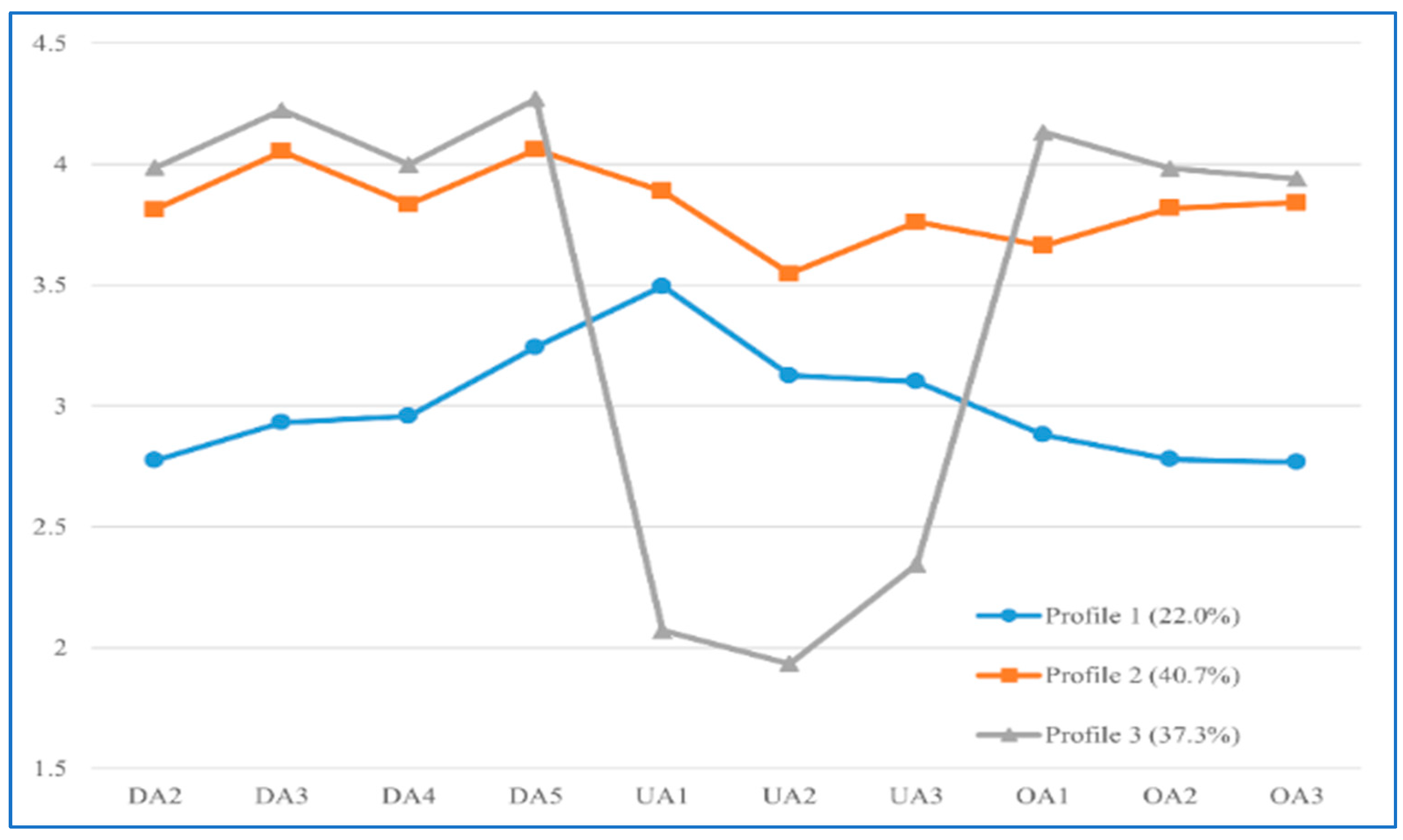
Profiles of Approaches to Writing and Their Links to Self-Efficacy and LLM Acceptance in L2 Academic Writing


Abstract
Share and Cite
Sun, F.; Mendoza, L.; Wang, J.; Li, H. Profiles of Approaches to Writing and Their Links to Self-Efficacy and LLM Acceptance in L2 Academic Writing. Behav. Sci. 2025, 15, 983. https://doi.org/10.3390/bs15070983
Sun F, Mendoza L, Wang J, Li H. Profiles of Approaches to Writing and Their Links to Self-Efficacy and LLM Acceptance in L2 Academic Writing. Behavioral Sciences. 2025; 15(7):983. https://doi.org/10.3390/bs15070983
Chicago/Turabian StyleSun, Fei, Laura Mendoza, Junju Wang, and Hongbin Li. 2025. "Profiles of Approaches to Writing and Their Links to Self-Efficacy and LLM Acceptance in L2 Academic Writing" Behavioral Sciences 15, no. 7: 983. https://doi.org/10.3390/bs15070983
APA StyleSun, F., Mendoza, L., Wang, J., & Li, H. (2025). Profiles of Approaches to Writing and Their Links to Self-Efficacy and LLM Acceptance in L2 Academic Writing. Behavioral Sciences, 15(7), 983. https://doi.org/10.3390/bs15070983