Article

The Effect of Corporate Social Responsibility on Workplace Safety: The Significance of Employees’ Moral Identity


1
College of Business Administration, University of Ulsan, Ulsan 44610, Republic of Korea
2
School of International Studies, Hanyang University, Seoul 04763, Republic of Korea
*
Author to whom correspondence should be addressed.
Behav. Sci. 2024, 14(6), 429; https://doi.org/10.3390/bs14060429
Submission received: 12 March 2024 / Revised: 15 May 2024 / Accepted: 16 May 2024 / Published: 22 May 2024

Abstract

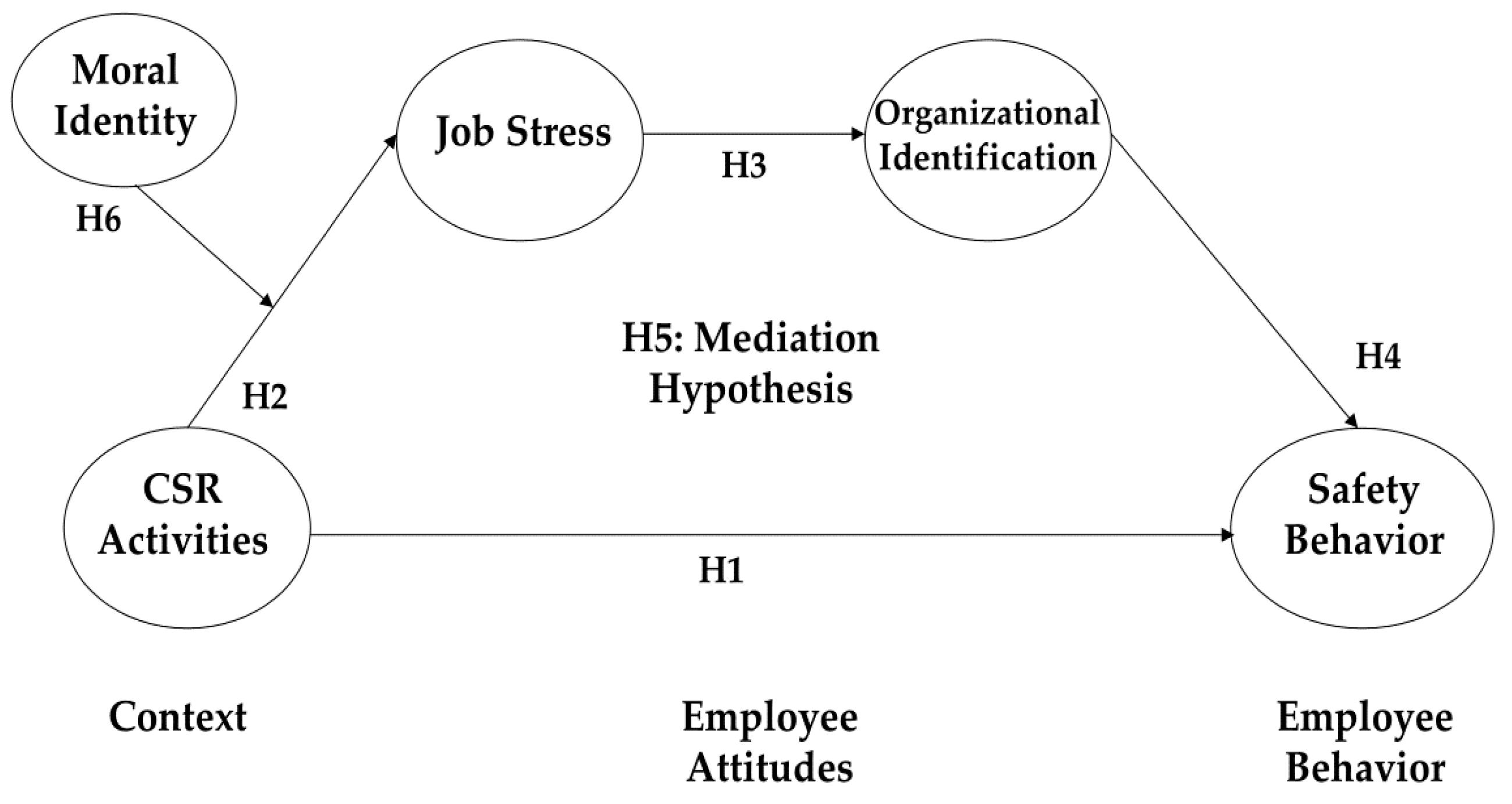
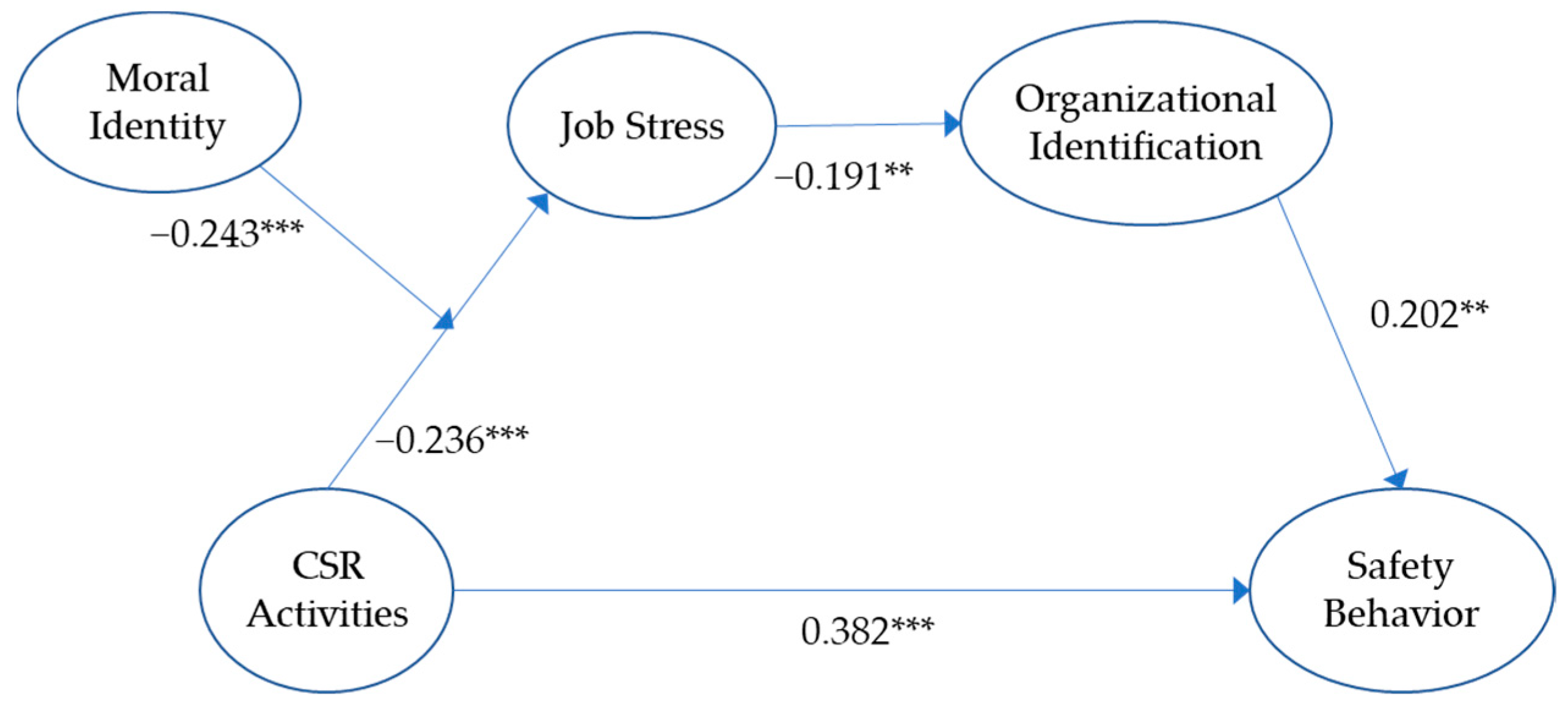
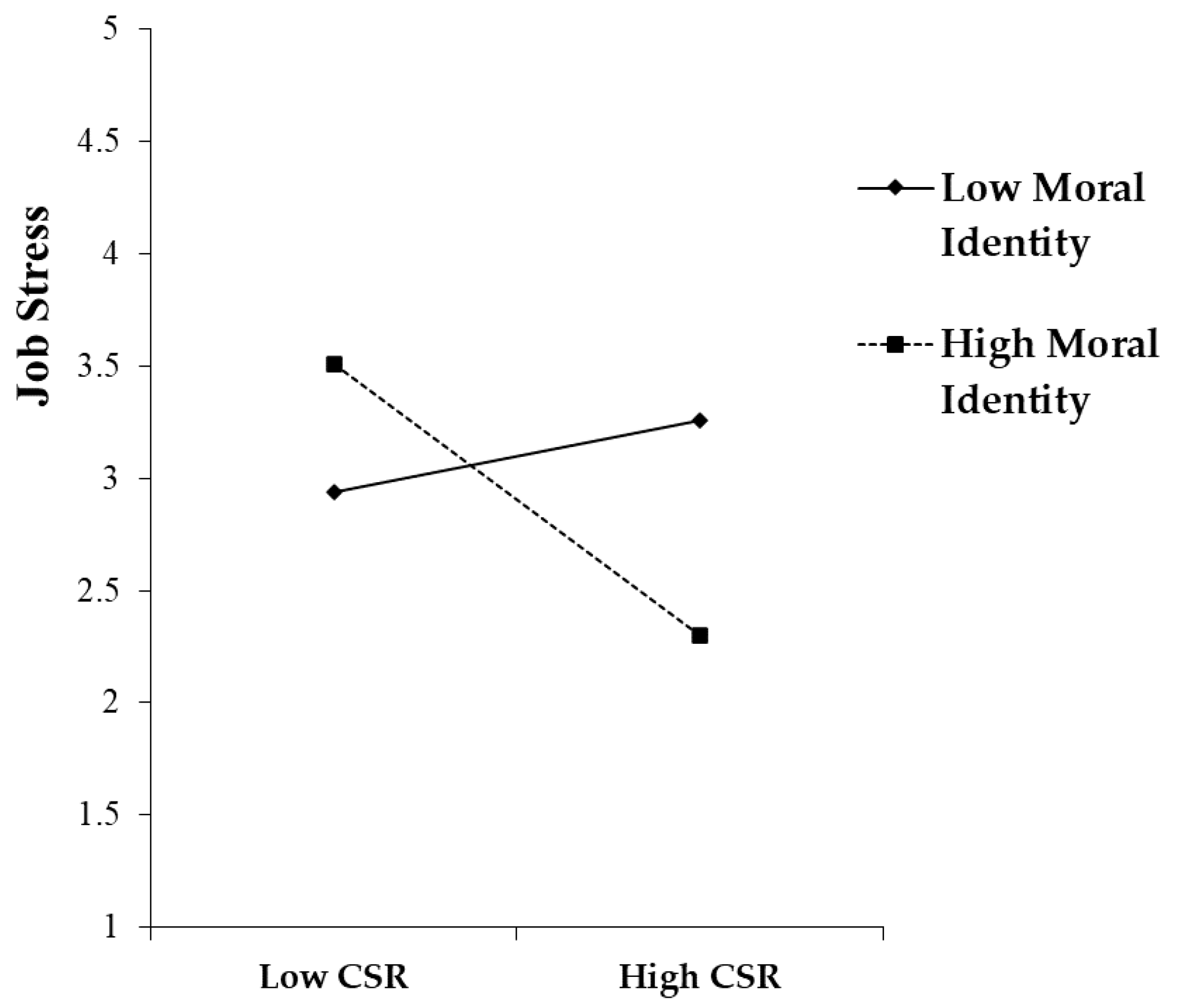
Corporate social responsibility (CSR) has gained significant attention from researchers and practitioners due to its potential impact on employee attitudes and behaviors. This study investigates the influence of CSR on employee safety behavior, examining the mediating effects of job stress and organizational identification, as well as the moderating role of moral identity. We conducted a three-wave time-lagged survey among 236 South Korean employees. Participants were recruited through a research company using stratified random sampling. Data were collected at three time points, each separated by a 4–5-week interval. Structural equation modeling (SEM) was used to test the hypothesized relationships. The findings support all of the hypothesized relationships. CSR was positively related to safety behavior and negatively related to job stress. Job stress was negatively related to organizational identification, which in turn was positively related to safety behavior. The sequential mediation of job stress and organizational identification was significant. Moral identity moderated the relationship between CSR and job stress, such that the negative effect of CSR on job stress was stronger for employees with a high moral identity. This study contributes to the CSR literature by examining the impact of CSR on safety behavior and the underlying mechanisms and boundary conditions of this relationship. The findings suggest that organizations can promote employee safety behavior by implementing CSR initiatives, which can reduce job stress and enhance organizational identification. Organizations should also consider the role of employees’ moral identity when designing and communicating CSR initiatives.
Keywords: corporate social responsibility; moral identity; job stress; organizational identification; workplace safety; moderated mediation model corporate social responsibility; moral identity; job stress; organizational identification; workplace safety; moderated mediation model