Article

Evaluating Human Movement Coordination During Immersive Walking in a Virtual Crowd

by
Alexandros Koilias
1,†,
Michael Nelson
2,†,
Sahana Gubbi
2,†,
Christos Mousas
2,* and
Christos-Nikolaos Anagnostopoulos
1
1
Department of Cultural Technology and Communication, University of the Aegean, 81100 Mytilene, Greece
2
Department of Computer Graphics Technology, Purdue University, West Lafayette, IN 47907, USA
*
Author to whom correspondence should be addressed.
These authors contributed equally to this work.
Behav. Sci. 2020, 10(9), 130; https://doi.org/10.3390/bs10090130
Submission received: 19 July 2020 / Revised: 17 August 2020 / Accepted: 24 August 2020 / Published: 27 August 2020

Abstract

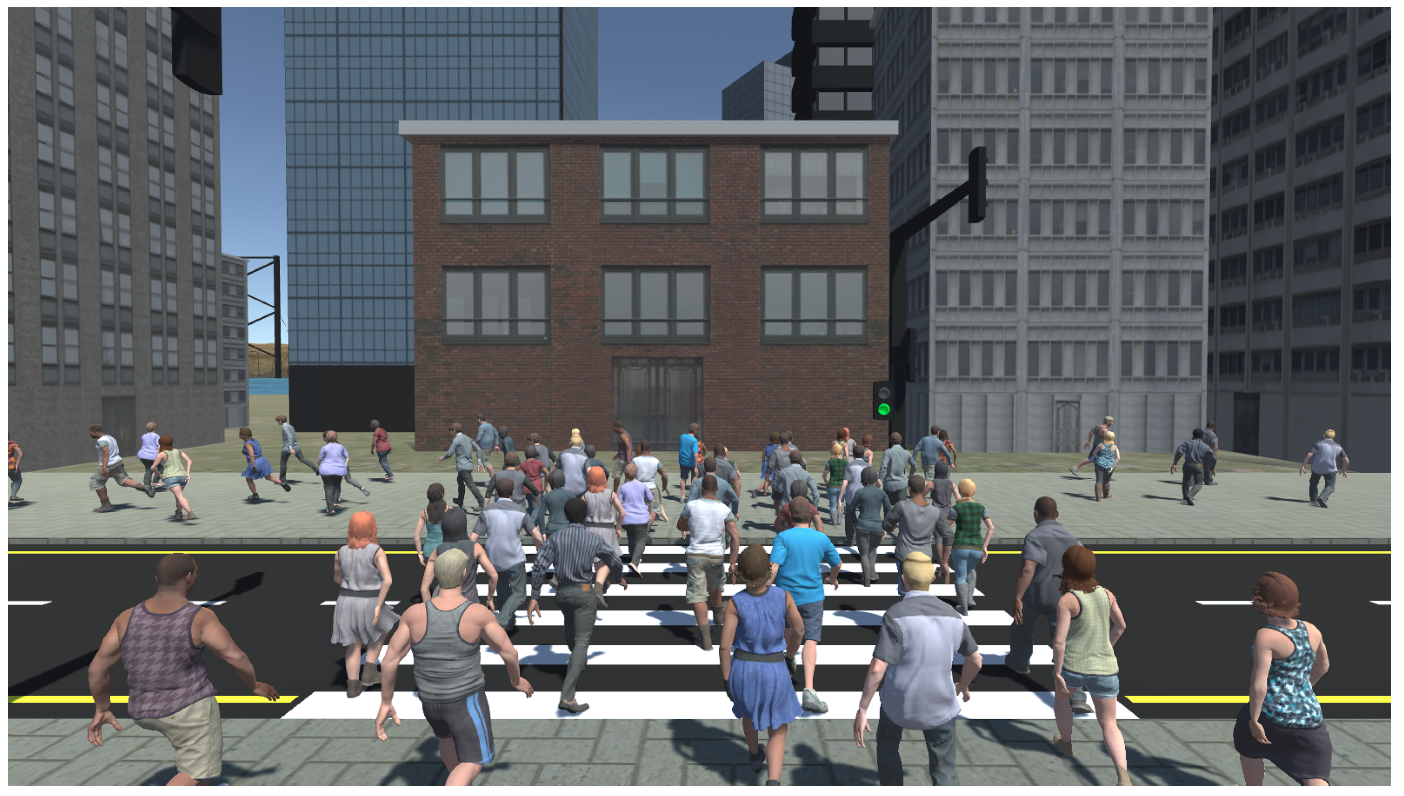
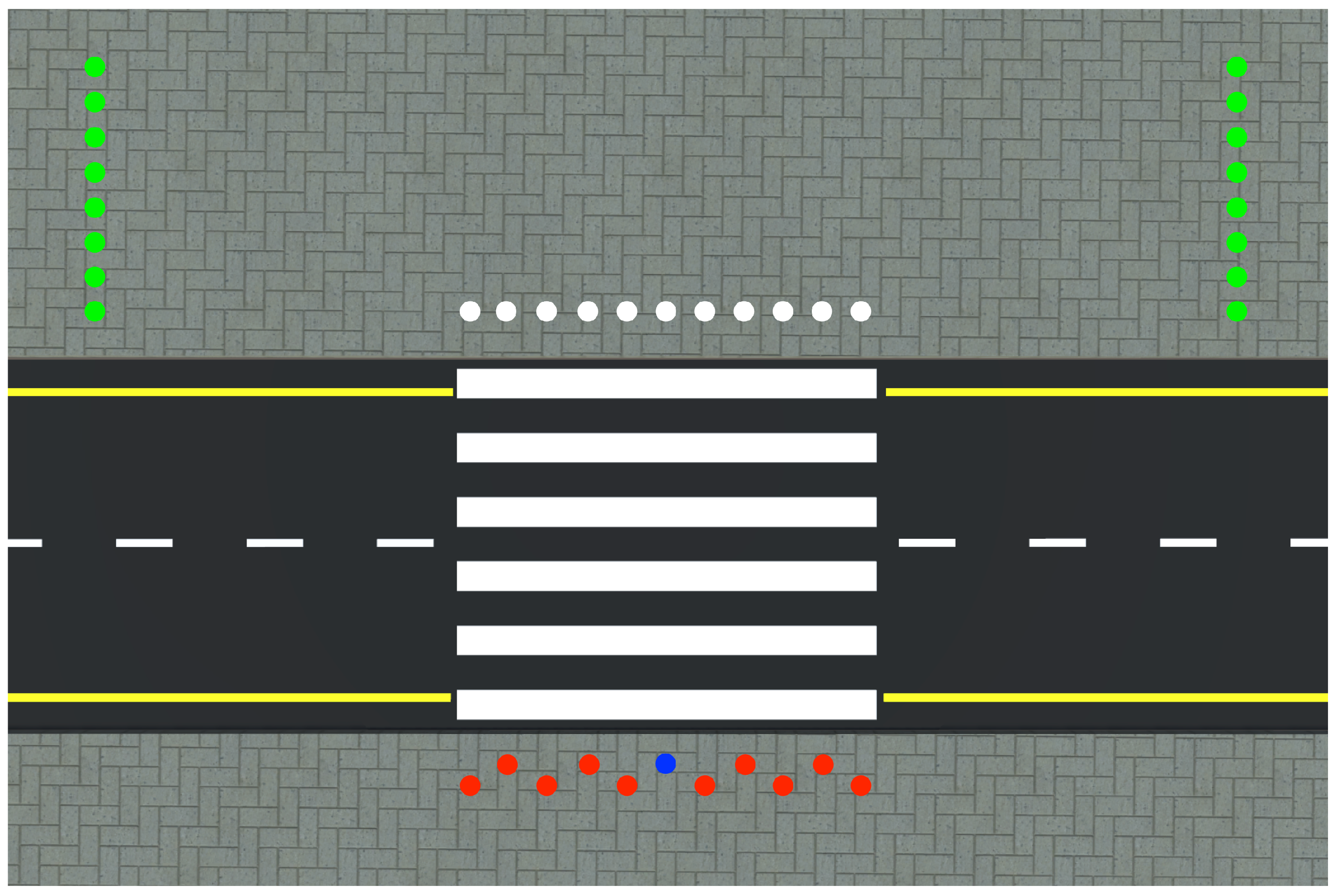
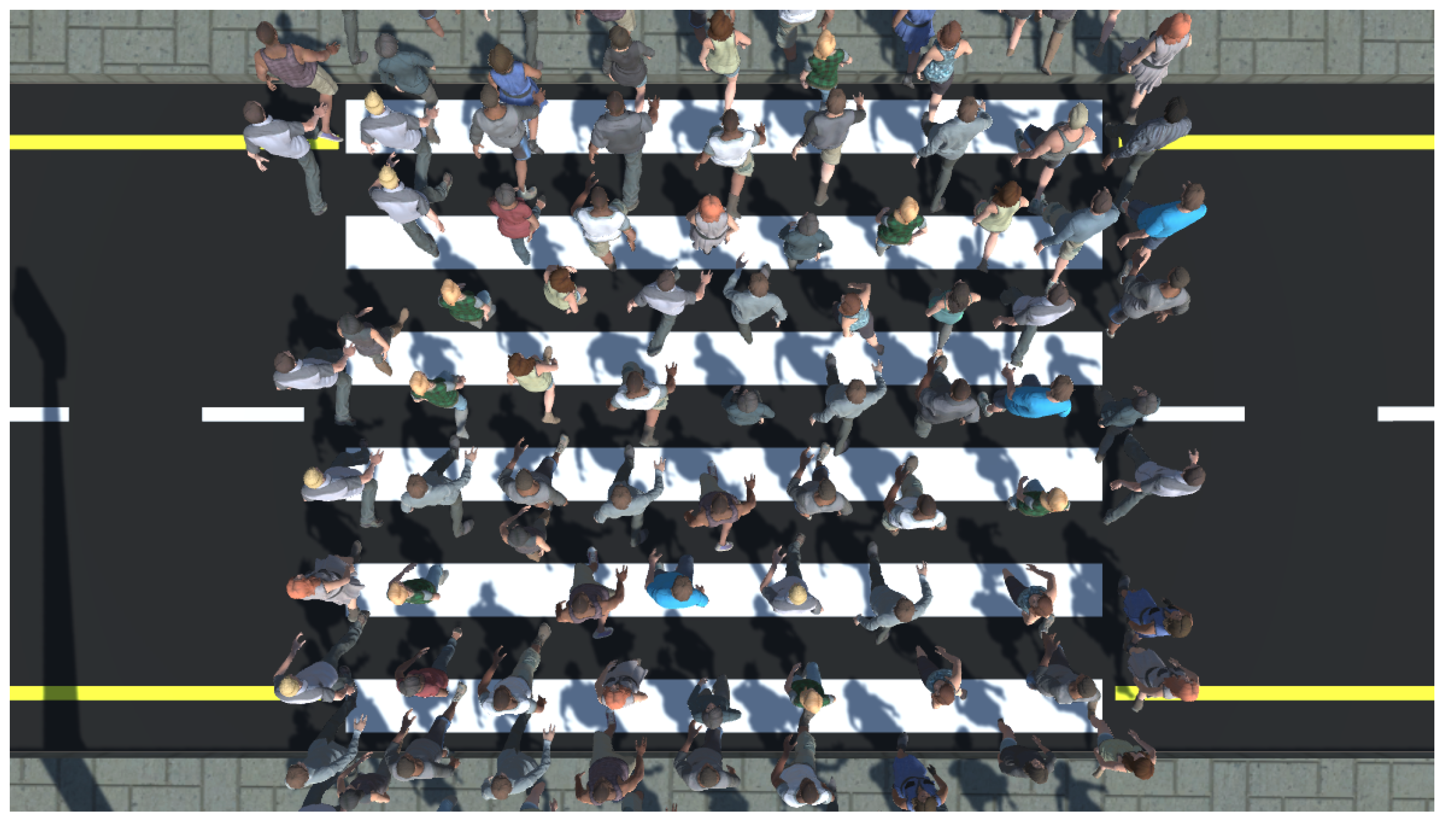
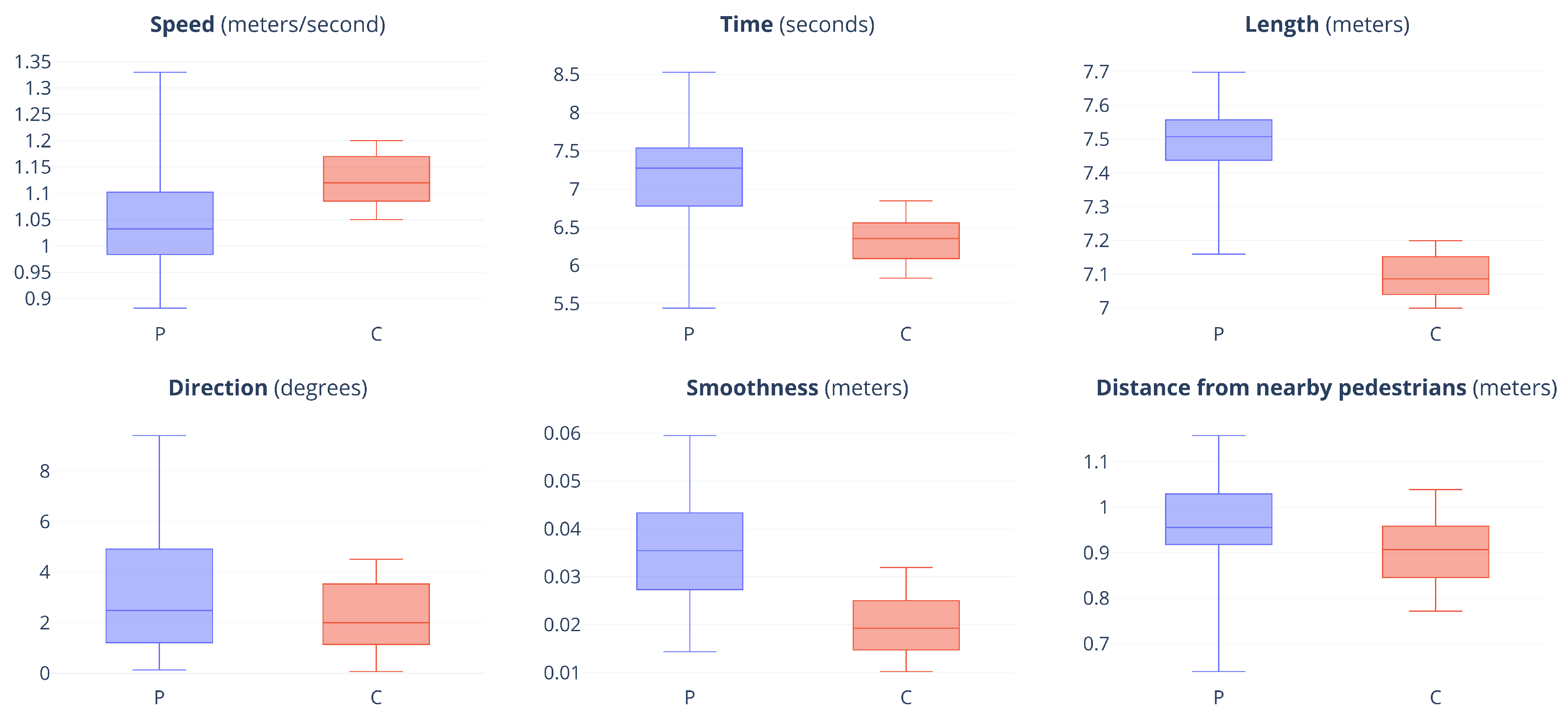
This paper describes our investigation on how participants coordinate movement behavior in relation to a virtual crowd that surrounds them while immersed in a virtual environment. The participants were immersed in a virtual metropolitan city and were instructed to cross the road and reach the opposite sidewalk. The participants performed the task ten times. The virtual crowd that surrounded them was scripted to move in the same direction. During the experiment, several measurements were obtained to evaluate human movement coordination. Moreover, the time and direction in which the participants started moving toward the opposite sidewalk were also captured. These data were later used to initialize the parameters of simulated characters that were scripted to become part of the virtual crowd. Measurements were extracted from the simulated characters and used as a baseline to evaluate the movement coordination of the participants. By analyzing the data, significant differences between the movement behaviors of the participants and the simulated characters were found. However, simple linear regression analyses indicated that the movement behavior of participants was moderately associated with the simulated characters’ movements when performing a locomotive task within a virtual crowd population. This study can be considered as a baseline for further research that evaluates the movement coordination of participants during human–virtual-crowd interactions using measurements obtained by the simulated characters.
Keywords: virtual reality; movement coordination; virtual crowd; human–crowd interaction; immersive interaction; road crossing virtual reality; movement coordination; virtual crowd; human–crowd interaction; immersive interaction; road crossing