
Forest Bathing (Shinrin-yoku) and Preventive Medicine: Immune Modulation, Stress Regulation, Neurocognitive Resilience, and Neurological Health


Abstract
1. Introduction
Methodology
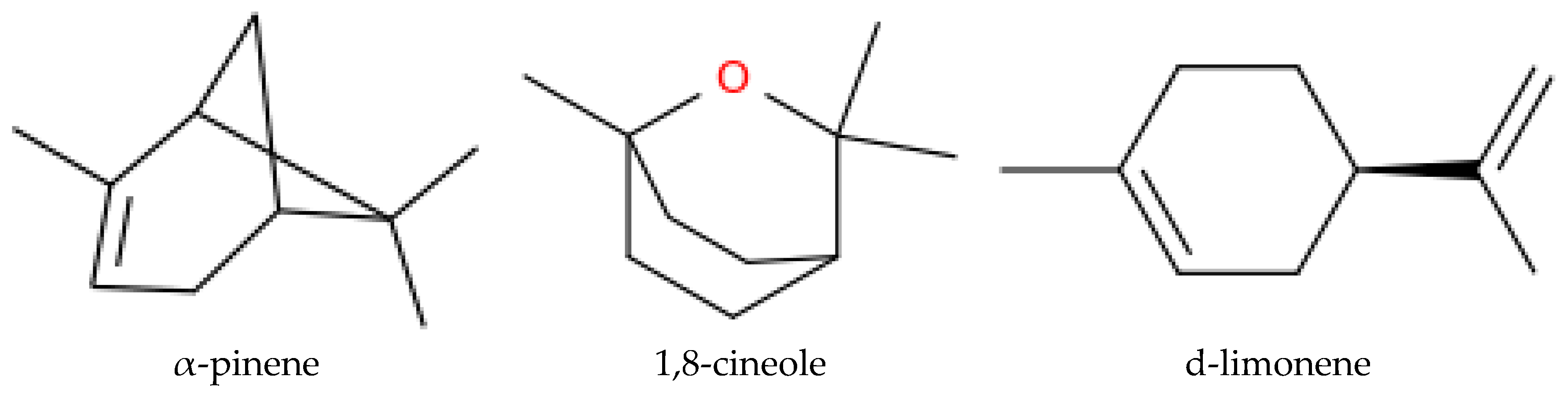
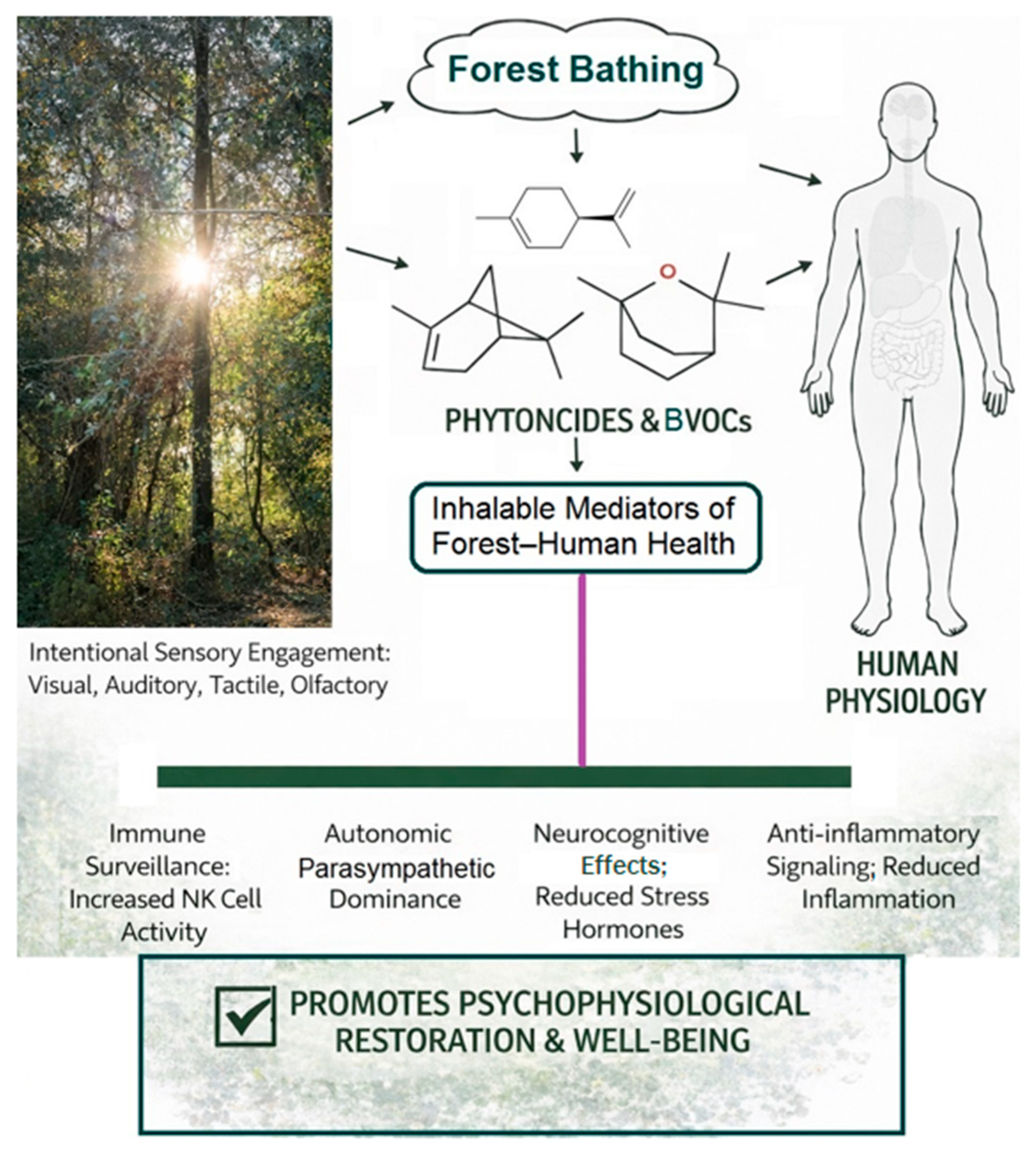
2. Biologic Responses and Physiological Outcomes of Forest Bathing
3. Integrated Systemic Regulation Underlying Forest-Based Health Effects
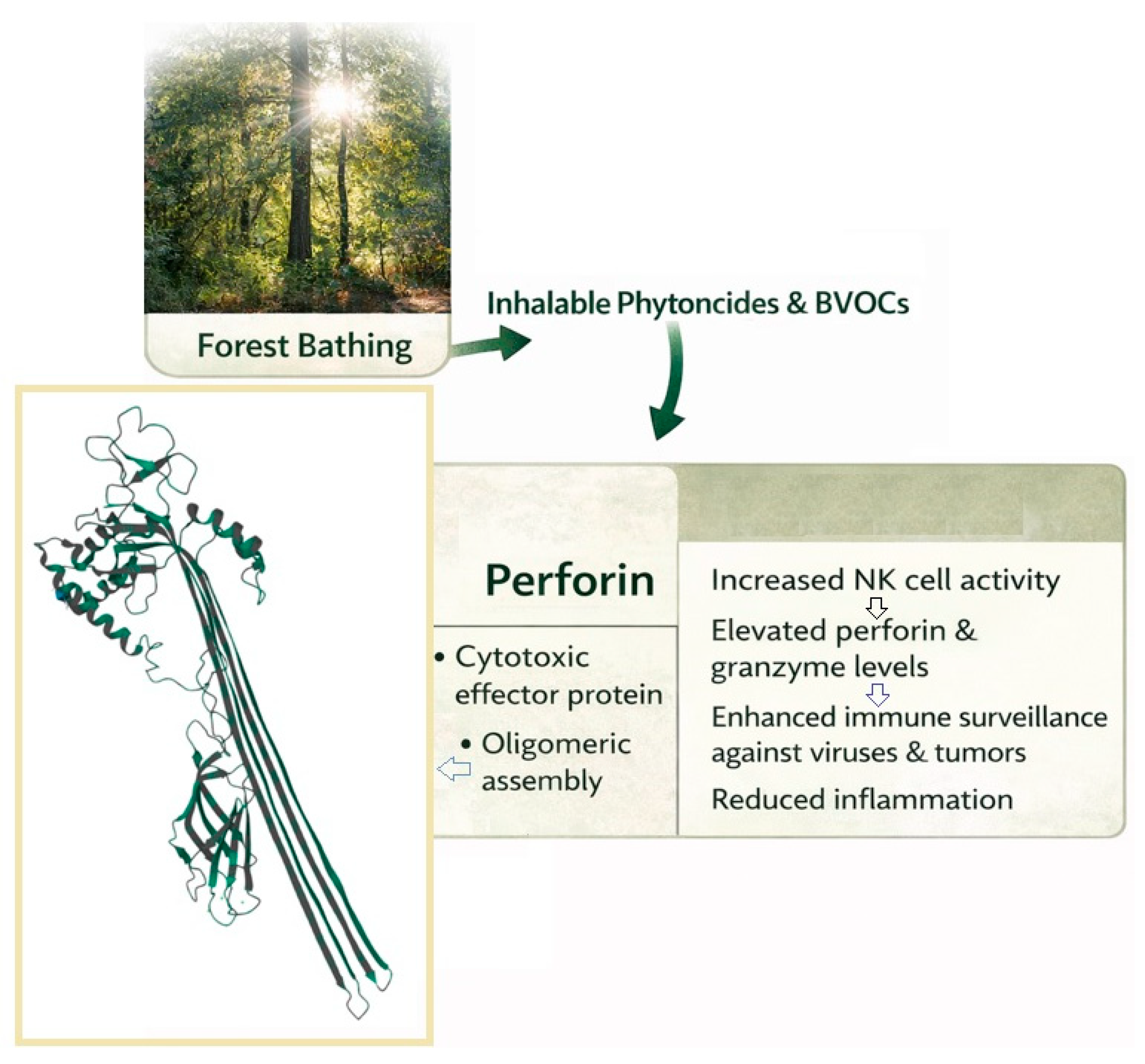
3.1. Immunological Resilience and Inflammatory Regulation
3.2. Systemic Bioregulation: Autonomic Balance, Neuroendocrine Shifts, and Environmental Specificity
4. Neurocognitive and Potential Neuroprotective Effects of Forest and Tree-Based Nature Exposure, with Associated Psychophysiological Responses
Cognitive and Neural Effects of Forest Environments

| Study/Focus | Intervention/Exposure | Key Cognitive/Neural Outcomes | Ref. |
|---|---|---|---|
| Environmental and Neurophysiological Studies | Urban vs. rural/green environments | Modulation of amygdala activity, hippocampal subfields, and physiological stress-recovery markers | [93,94] |
| Self-Guided and Structured Forest Bathing Programs | Multiple short forest visits or multi-session forest-healing programs over several weeks | Improvements in attention, working memory, creativity, and global cognitive function; enhanced memory, orientation, and emotional stability; frequency-dependent gains in attentional control | [26,108] |
| Forest Exposure and Alzheimer’s Disease and Related Dementias (ADRD) Risk | Green space exposure defined by duration, proximity, and frequency | Potential deceleration of cognitive decline. Preserved regional brain volumes and cortical thickness; modulation of neuroplasticity and inflammatory markers. | [96,99,105] |
| Theoretical and Mechanistic Studies | Forest bathing and green space exposure | Enhanced affective recovery, attentional restoration, and domain-specific cognitive resilience, supported by multisensory, stress-reduction, and neuroplasticity-related mechanisms | [82,83,84,106] |
| Forest walking or structured forest-therapy programs in middle-aged and older adults with elevated blood pressure | Forest walking or structured forest-therapy programs in middle-aged and older adults with elevated blood pressure | Improved mood, reduced anxiety, enhanced autonomic regulation, and significant blood-pressure reduction; psychophysiological pathways associated with lower neurocognitive decline and neurodegenerative risks | [13,29,53,56] |
| Chronic Neurological and Neurodegenerative Conditions (e.g., Stroke, Parkinson’s Disease, Dementia, Multiple Sclerosis, and age-related cognitive decline) | Forest therapy and nature-based rehabilitation programs; observational and interventional studies across neurological populations | Limited but suggestive benefits, including improvements in depressive and anxiety symptoms, functional recovery, autonomic regulation, quality of life, and domain-specific cognitive outcomes relevant to neurorehabilitation | [92,95,107] |
5. Conclusions
Author Contributions
Funding
Institutional Review Board Statement
Informed Consent Statement
Data Availability Statement
Conflicts of Interest
Abbreviations
| ADRD | Alzheimer’s Disease and Related Dementias |
| ANS | Autonomic Nervous System |
| BVOCs | Biogenic Volatile Organic Compounds |
| CD8+ T | Cytotoxic T cells |
| DMN | Default Mode Network |
| FDST | Forward Digit Span Task |
| HPA | Hypothalamic–Pituitary–Adrenal |
| HRV | Heart Rate Variability |
| IGF-1 | Insulin-like Growth Factor-1 |
| NK | Natural Killer |
| NKT | Natural Killer T |
| RAT | Remote Associates Test |
| sgPFC | Subgenual Prefrontal Cortex |
| sIgA | Salivary Immunoglobulin A |
| SRT | Stress Recovery Theory |
| VOCs | Volatile Organic Compounds |
References
- Werner, F.; Schumacher, F.; Mühle, C.; Adler, W.; Schug, C.; Schäflein, E.; Morawa, E.; Kleuser, B.; Kornhuber, J.; Erim, Y. Psychosomatic-psychotherapeutic treatment of stress-related disorders impacts the sphingolipid metabolism towards increased sphingosine and sphingosine-1-phosphate levels. Eur. Arch. Psychiatry Clin. Neurosci. 2025, 275, 2049–2058. [Google Scholar] [CrossRef] [Scilit]
- Henderson, L.A.; Abraham, R.S.; Ahmed, A.; Blount, L.; Canna, S.W.; Chaimowitz, N.S.; Chandrakasan, S.; Coates, B.; Connelly, J.A.; Cooper, M.A. Multidisciplinary approach to treating complex immune dysregulation disorders: An adaptive model for institutional implementation. Front. Immunol. 2025, 16, 1519955. [Google Scholar] [CrossRef] [Scilit]
- Xia, M.; Ntim, M.; Wang, B. Neurovascular Health Insights: A Powerful Tool to Understand and Prognose Neurocognitive Decline; Frontiers Media SA: Lausanne, Switzerland, 2025; Volume 17, p. 1584895. [Google Scholar]
- Kotera, Y.; Richardson, M.; Sheffield, D. Effects of shinrin-yoku (forest bathing) and nature therapy on mental health: A systematic review and meta-analysis. Int. J. Ment. Health Addict. 2022, 20, 337–361. [Google Scholar] [CrossRef] [Scilit]
- Brams, J. The Nature Embedded Mind: How the Way We Think Can Heal Our Planet and Ourselves; John Hunt Publishing: Hampshire, UK, 2025. [Google Scholar]
- Vårhammar, A. Coming Back to Our Senses: Exploring the Potential of Guided Forest Bathing as an Intervention for Human-Nature Connection. Master’s Thesis, Stockholm University, Stockholm, Sweden, 2021. [Google Scholar]
- Keller, J. Forest Bathing Increases Adolescent Mental Well-Being and Connection to Nature: A Transformative Mixed Methods Study. Ph.D. Thesis, Antioch University New England, Keene, NH, USA, 2023. [Google Scholar]
- Hansen, M.M.; Jones, R.; Tocchini, K. Shinrin-yoku (forest bathing) and nature therapy: A state-of-the-art review. Int. J. Environ. Res. Public Health 2017, 14, 851. [Google Scholar] [CrossRef] [Scilit] [PubMed]
- Lopes, M.K.; Falk, T.H. Audio-visual-olfactory immersive digital nature exposure for stress and anxiety reduction: A systematic review on systems, outcomes, and challenges. Front. Virtual Real. 2024, 5, 1252539. [Google Scholar] [CrossRef] [Scilit]
- Zhang, X.; Zhang, Q. Investigating the Impact of Garden Plant Smellscapes on Human Well-Being: A Case Study of Pine Forests. Forests 2024, 15, 1794. [Google Scholar] [CrossRef] [Scilit]
- Besedovsky, H.O.; Del Rey, A. Immune-neuro-endocrine interactions: Facts and hypotheses. Endocr. Rev. 1996, 17, 64–102. [Google Scholar] [CrossRef]
- Procaccini, C.; Pucino, V.; De Rosa, V.; Marone, G.; Matarese, G. Neuro-endocrine networks controlling immune system in health and disease. Front. Immunol. 2014, 5, 143. [Google Scholar] [CrossRef] [Scilit] [PubMed]
- Yu, C.-P.; Lin, C.-M.; Tsai, M.-J.; Tsai, Y.-C.; Chen, C.-Y. Effects of short forest bathing program on autonomic nervous system activity and mood states in middle-aged and elderly individuals. Int. J. Environ. Res. Public Health 2017, 14, 897. [Google Scholar] [CrossRef] [Scilit]
- Li, Q.; Ochiai, H.; Ochiai, T.; Takayama, N.; Kumeda, S.; Miura, T.; Aoyagi, Y.; Imai, M. Effects of forest bathing (shinrin-yoku) on serotonin in serum, depressive symptoms and subjective sleep quality in middle-aged males. Environ. Health Prev. Med. 2022, 27, 44. [Google Scholar] [CrossRef] [Scilit]
- Li, Q.; Takayama, N.; Kimura, Y.; Takayama, H.; Kumeda, S.; Miura, T.; Kitagawa, T.; Aoyagi, Y.; Imai, M. Forest bathing improves inflammatory markers, SpO2, and subjective symptoms related to chronic obstructive pulmonary disease (COPD) in male subjects at risk of developing COPD. J. Occup. Health 2025, 67, uiaf041. [Google Scholar] [CrossRef] [Scilit] [PubMed]
- Roviello, V.; Gilhen-Baker, M.; Vicidomini, C.; Roviello, G.N. Forest-bathing and physical activity as weapons against COVID-19: A review. Environ. Chem. Lett. 2022, 20, 131–140. [Google Scholar] [CrossRef] [Scilit]
- Roviello, V.; Roviello, G.N. Less COVID-19 deaths in southern and insular Italy explained by forest bathing, Mediterranean environment, and antiviral plant volatile organic compounds. Environ. Chem. Lett. 2022, 20, 7–17. [Google Scholar] [CrossRef] [Scilit]
- Baker, S.; Gilhen-Baker, M.; Roviello, G.N. The role of nutrition and forest-bathing in the physical rehabilitation of physically inactive patients: From the molecular aspects to new nature-inspired techniques. Int. J. Environ. Res. Public Health 2022, 20, 793. [Google Scholar] [CrossRef] [Scilit]
- Roviello, V.; Gilhen-Baker, M.; Roviello, G.N.; Lichtfouse, E. River therapy. Environ. Chem. Lett. 2022, 20, 2729–2734. [Google Scholar] [CrossRef] [Scilit]
- Roviello, G.N. The Multifunctional Role of Salix spp.: Linking Phytoremediation, Forest Therapy, and Phytomedicine for Environmental and Human Benefits. Forests 2025, 16, 1808. [Google Scholar] [CrossRef] [Scilit]
- Costanzo, M.; De Giglio, M.A.R.; Gilhen-Baker, M.; Roviello, G.N. The chemical basis of seawater therapies: A review. Environ. Chem. Lett. 2024, 22, 2133–2149. [Google Scholar] [CrossRef] [Scilit]
- Rodtook, P.; Simpattanawong, D.; Ruenbanthoeng, T.; Nongkhai, K.N. Forest bathing activity as a tool to promote wellness tourism in Thailand. Humanit. Arts Soc. Sci. Stud. 2024, 24, 428–440. [Google Scholar] [CrossRef] [Scilit]
- Lazo Álvarez, A.C.; Ednie, A.; Gale-Detrich, T. Contributions of Nature Bathing to Resilience and Sustainability. In Tourism and Conservation-Based Development in the Periphery: Lessons from Patagonia for a Rapidly Changing World; Red Wheel/Weiser: Newburyport, MA, USA, 2023; pp. 389–408. [Google Scholar]
- Antonelli, M.; Barbieri, G.; Donelli, D. Effects of forest bathing (shinrin-yoku) on levels of cortisol as a stress biomarker: A systematic review and meta-analysis. Int. J. Biometeorol. 2019, 63, 1117–1134. [Google Scholar] [CrossRef] [Scilit]
- Mao, G.-X.; Cao, Y.-B.; Lan, X.-G.; He, Z.-H.; Chen, Z.-M.; Wang, Y.-Z.; Hu, X.-L.; Lv, Y.-D.; Wang, G.-F.; Yan, J. Therapeutic effect of forest bathing on human hypertension in the elderly. J. Cardiol. 2012, 60, 495–502. [Google Scholar] [CrossRef] [Scilit]
- Ramanpong, J.; Tsao, C.; Yin, J.; Wu, C.-D.; Huang, Y.-C.; Yu, C.-P. Effects of forest bathing and the influence of exposure levels on cognitive health in the elderly: Evidence from a suburban forest recreation area. Urban For. Urban Green. 2025, 104, 128667. [Google Scholar] [CrossRef] [Scilit]
- Dai, X.; Liao, D.; Ouyang, J.; Xiao, H.; Tian, Z.; Qiu, L.; Yang, J.; Wang, H.; Gong, D.; Li, Z.; et al. Forest bathing enhances sleep, mood, and immunity: Insights from low-latitude evergreen broad-leaved forests. Front. For. Glob. Change 2025, 8, 1619569. [Google Scholar] [CrossRef] [Scilit]
- Doimo, I.; Masiero, M.; Gatto, P. Forest and wellbeing: Bridging medical and forest research for effective forest-based initiatives. Forests 2020, 11, 791. [Google Scholar] [CrossRef] [Scilit]
- Wen, Y.; Yan, Q.; Pan, Y.; Gu, X.; Liu, Y. Medical empirical research on forest bathing (Shinrin-yoku): A systematic review. Environ. Health Prev. Med. 2019, 24, 70. [Google Scholar] [CrossRef] [Scilit] [PubMed]
- Racz, A.; Marinović Glavić, M.; Juraga, D.; Immich, G.; Armano, L.; Vasiljev, V. The potential to integrate Forest therapy and Forest bathing (Shinrin-Yoku) with Nature-based mindfulness into public health programs. Rad Hrvat. Akad. Znan. I Umjetnosti. Med. Znan. 2024, 563, 26–37. [Google Scholar] [CrossRef] [Scilit]
- Li, Q. Effects of forest environment (Shinrin-yoku/Forest bathing) on health promotion and disease prevention—The Establishment of “Forest Medicine”. Environ. Health Prev. Med. 2022, 27, 43. [Google Scholar] [CrossRef] [Scilit]
- Liu, Q. Effect of forest bathing trips on human immune function. Environ. Health Prev. Med. 2010, 15, 9–17. [Google Scholar] [CrossRef] [Scilit]
- Li, Q.; Kobayashi, M.; Wakayama, Y.; Inagaki, H.; Katsumata, M.; Hirata, Y.; Hirata, K.; Shimizu, T.; Kawada, T.; Park, B.; et al. Effect of phytoncide from trees on human natural killer cell function. Int. J. Immunopathol. Pharmacol. 2009, 22, 951–959. [Google Scholar] [CrossRef] [Scilit]
- Lew, T.; Fleming, K.J. Phytoncides and immunity from forest to facility: A systematic review and meta-analysis. Pharmacol. Res.-Nat. Prod. 2024, 4, 100061. [Google Scholar] [CrossRef] [Scilit]
- Ivanova, M.E.; Lukoyanova, N.; Malhotra, S.; Topf, M.; Trapani, J.A.; Voskoboinik, I.; Saibil, H.R. The pore conformation of lymphocyte perforin. Sci. Adv. 2022, 8, eabk3147. [Google Scholar] [CrossRef] [Scilit]
- Chae, Y.; Lee, S.; Jo, Y.; Kang, S.; Park, S.; Kang, H. The effects of forest therapy on immune function. Int. J. Environ. Res. Public Health 2021, 18, 8440. [Google Scholar] [CrossRef] [Scilit]
- Li, Q. Preventive Effects of Forest Bathing/Shinrin-Yoku on Cardiovascular Diseases: A Review of Mechanistic Evidence. Forests 2025, 16, 310. [Google Scholar] [CrossRef] [Scilit]
- Denche-Zamorano, A.; Rodríguez-Redondo, Y.; Rojo-Ramos, J.; Miguel-Barrado, V.; Sánchez-Leal, A.; Pérez-Calderon, E. Global Review of Literature on Forest Bathing. Austrian J. For. Sci. Cent. Für Das Gesamte Forstwes. 2024, 141, 145–170. [Google Scholar]
- Shang, X.; Lu, J.; Tao, M.; Fei, C.; Fei, J. Benefits of forest therapy for adult mental health: A systematic review and meta-analysis based on the Profile of Mood States (POMS). Front. Psychol. 2025, 16, 1670804. [Google Scholar] [CrossRef] [Scilit]
- Szitás, D.; Halamová, J.; Ottingerová, L.; Schroevers, M. The effects of forest bathing on self-criticism, self-compassion, and self-protection: A systematic review. J. Environ. Psychol. 2024, 97, 102372. [Google Scholar] [CrossRef] [Scilit]
- Li, Q.; Nakadai, A.; Matsushima, H.; Miyazaki, Y.; Krensky, A.M.; Kawada, T.; Morimoto, K. Phytoncides (wood essential oils) induce human natural killer cell activity. Immunopharmacol. Immunotoxicol. 2006, 28, 319–333. [Google Scholar] [CrossRef] [Scilit]
- Putra, R.R.; Veridianti, D.D.; Nathalia, E.; Brilliant, D.; Rosellinny, G.; Suarez, C.G.; Sumarpo, A. Immunostimulant effect from phytoncide of forest bathing to prevent the development of cancer. Adv. Sci. Lett. 2018, 24, 6653–6659. [Google Scholar] [CrossRef] [Scilit]
- Chen, H.; Meng, Z.; Luo, J. Is forest bathing a panacea for mental health problems? A narrative review. Front. Public Health 2025, 13, 1454992. [Google Scholar] [CrossRef] [Scilit]
- Ochiai, H.; Inoue, S.; Masuda, G.; Amagasa, S.; Sugishita, T.; Ochiai, T.; Yanagisawa, N.; Nakata, Y.; Imai, M. Randomized controlled trial on the efficacy of forest walking compared to urban walking in enhancing mucosal immunity. Sci. Rep. 2025, 15, 3272. [Google Scholar] [CrossRef] [Scilit] [PubMed]
- Longman, D.P.; Van Hedger, S.C.; McEwan, K.; Griffin, E.; Hannon, C.; Harvey, I.; Kikuta, T.; Nickels, M.; O’Donnell, E.; Pham, V.A.-V.; et al. Forest soundscapes improve mood, restoration and cognition, but not physiological stress or immunity, relative to industrial soundscapes. Sci. Rep. 2025, 15, 33967. [Google Scholar] [CrossRef] [Scilit] [PubMed]
- Meinköhn, M.; Kessler, C.S.; Kandil, F.I.; Kuballa, L.; Schweininger, S.; von Scheidt, C.; Paul, A.; Haller, H.; Cramer, H.; Joachim, S.; et al. Effects of Forest Therapy on Participant-Reported Outcomes: A Randomized Controlled Dose-Comparison Trial Among the General Population in Germany. J. Integr. Complement. Med. 2025, 31, 826–843. [Google Scholar] [CrossRef] [Scilit]
- Longman, D.P.; Todorova, Y.; Bishop, N.C.; Coates, J.K.; James, L.J.; Lintuluoto, A.; Shaw, C.N. Forest breaks improve employees’ health and attitudes towards work. Urban For. Urban Green. 2025, 114, 129142. [Google Scholar] [CrossRef] [Scilit]
- Gobster, P.H.; Schultz, C.L.; Kruger, L.E.; Henderson, J.R. Forest therapy trails: A conceptual framework and scoping review of research. Forests 2022, 13, 1613. [Google Scholar] [CrossRef] [Scilit]
- Yi, Y.; Seo, E.; An, J. Does forest therapy have physio-psychological benefits? A systematic review and meta-analysis of randomized controlled trials. Int. J. Environ. Res. Public Health 2022, 19, 10512. [Google Scholar] [CrossRef] [Scilit]
- Cheng, X.; Liu, J.; Liu, H.; Lu, S. A systematic review of evidence of additional health benefits from forest exposure. Landsc. Urban Plan. 2021, 212, 104123. [Google Scholar] [CrossRef] [Scilit]
- Kang, M.-J.; Kim, H.-S.; Kim, J.-Y. Effects of forest-based interventions on mental health: A meta-analysis of randomized controlled trials. Int. J. Environ. Res. Public Health 2022, 19, 4884. [Google Scholar] [CrossRef] [Scilit]
- Qiu, Q.; Yang, L.; He, M.; Gao, W.; Mar, H.; Li, J.; Wang, G. The effects of forest therapy on the blood pressure and salivary cortisol levels of urban residents: A meta-analysis. Int. J. Environ. Res. Public Health 2022, 20, 458. [Google Scholar] [CrossRef] [Scilit] [PubMed]
- Yau, K.K.-Y.; Loke, A.Y. Effects of forest bathing on pre-hypertensive and hypertensive adults: A review of the literature. Environ. Health Prev. Med. 2020, 25, 23. [Google Scholar] [CrossRef] [Scilit]
- Li, Q.; Takayama, N.; Katsumata, M.; Takayama, H.; Kimura, Y.; Kumeda, S.; Miura, T.; Ichimiya, T.; Tan, R.; Shimomura, H.; et al. Effects of Forest Bathing (Shinrin-Yoku) in Female Subjects with Depression/Depressive Tendencies. Preprints 2024. [Google Scholar] [CrossRef] [Scilit]
- Farrow, M.R.; Washburn, K. A review of field experiments on the effect of forest bathing on anxiety and heart rate variability. Glob. Adv. Health Med. 2019, 8, 2164956119848654. [Google Scholar] [CrossRef] [Scilit]
- Huang, R.; Li, A.; Li, Z.; Chen, Z.; Zhou, B.; Wang, G. Adjunctive therapeutic effects of forest bathing trips on geriatric hypertension: Results from an on-site experiment in the Cinnamomum camphora forest environment in four seasons. Forests 2022, 14, 75. [Google Scholar] [CrossRef] [Scilit]
- Bettmann, J.E.; Speelman, E.; Jolley, A.; Casucci, T. A Systematic Review and Meta-Analysis on the Effect of Nature Exposure Dose on Adults with Mental Illness. Behav. Sci. 2025, 15, 153. [Google Scholar] [CrossRef] [Scilit]
- Lee, M.; Lee, J. Analysis of Forest Utilization Patterns to Improve Life Satisfaction and Policy Directions. Sustainability 2025, 17, 3689. [Google Scholar] [CrossRef] [Scilit]
- Peterfalvi, A.; Meggyes, M.; Makszin, L.; Farkas, N.; Miko, E.; Miseta, A.; Szereday, L. Forest Bathing Always Makes Sense: Blood Pressure-Lowering and Immune System-Balancing Effects in Late Spring and Winter in Central Europe. Int. J. Environ. Res. Public Health 2021, 18, 2067. [Google Scholar] [CrossRef] [Scilit] [PubMed]
- Andersen, L.; Corazon, S.S.; Stigsdotter, U.K. Nature exposure and its effects on immune system functioning: A systematic review. Int. J. Environ. Res. Public Health 2021, 18, 1416. [Google Scholar] [CrossRef] [Scilit]
- Chen, Z.; Bozec, A.; Ramming, A.; Schett, G. Anti-inflammatory and immune-regulatory cytokines in rheumatoid arthritis. Nat. Rev. Rheumatol. 2019, 15, 9–17. [Google Scholar] [CrossRef] [Scilit]
- Opal, S.M.; DePalo, V.A. Anti-inflammatory cytokines. Chest 2000, 117, 1162–1172. [Google Scholar] [CrossRef] [Scilit]
- Cicchese, J.M.; Evans, S.; Hult, C.; Joslyn, L.R.; Wessler, T.; Millar, J.A.; Marino, S.; Cilfone, N.A.; Mattila, J.T.; Linderman, J.J.; et al. Dynamic balance of pro-and anti-inflammatory signals controls disease and limits pathology. Immunol. Rev. 2018, 285, 147–167. [Google Scholar] [CrossRef] [Scilit] [PubMed]
- Mao, G.; Cao, Y.; Wang, B.; Wang, S.; Chen, Z.; Wang, J.; Xing, W.; Ren, X.; Lv, X.; Dong, J.; et al. The Salutary Influence of Forest Bathing on Elderly Patients with Chronic Heart Failure. Int. J. Environ. Res. Public Health 2017, 14, 368. [Google Scholar] [CrossRef] [Scilit]
- Li, Q. New concept of forest medicine. Forests 2023, 14, 1024. [Google Scholar] [CrossRef] [Scilit]
- Fontanella, F.; D’Alessandro, T.; Nardone, E.; De Stefano, C.; Vicidomini, C.; Roviello, G.N. Artificial Intelligence for Natural Products Drug Discovery in Neurodegeneration Therapies: A Review. Biomolecules 2026, 16, 129. [Google Scholar] [CrossRef] [Scilit]
- Stepanyan, L.; Israyelyan, M.; Gori, A.; Tsaturyan, A.; Saribekyan, Z.; Hovsepyan, K.; Sargsyan, T.; Pastore, R.; De Luca, A.; Roviello, G.N. Natural and Synthetic Peptides as Alternatives to Antibiotics in Intestinal Infections—A Review. Antibiotics 2026, 15, 68. [Google Scholar] [CrossRef] [Scilit] [PubMed]
- Najafi, S.; Jojani, M.; Najafi, K.; Costanzo, V.; Vicidomini, C.; Roviello, G.N. West Nile Virus: Epidemiology, Surveillance, and Prophylaxis with a Comparative Insight from Italy and Iran. Vaccines 2026, 14, 57. [Google Scholar] [CrossRef] [Scilit] [PubMed]
- Roviello, G.N. Nature-Inspired Pathogen and Cancer Protein Covalent Inhibitors: From Plants and Other Natural Sources to Drug Development. Pathogens 2025, 14, 1153. [Google Scholar] [CrossRef] [Scilit] [PubMed]
- Sargsyan, T.; Hakobyan, H.; Simonyan, H.; Soghomonyan, T.; Tsaturyan, A.; Hovhannisyan, A.; Sardaryan, S.; Saghyan, A.; Roviello, G.N. Biomacromolecular interactions and antioxidant properties of novel synthetic amino acids targeting DNA and serum albumin. J. Mol. Liq. 2025, 440, 128700. [Google Scholar] [CrossRef] [Scilit]
- Sargsyan, T.; Stepanyan, L.; Tsaturyan, A.; Palumbo, R.; Vicidomini, C.; Roviello, G.N. Intracellular Parasitic Infections Caused by Plasmodium falciparum, Leishmania spp., Toxoplasma gondii, Echinococcus multilocularis, Among Key Pathogens: Global Burden, Transmission Dynamics, and Vaccine Advances—A Narrative Review with Contextual Insights from Armenia. Vaccines 2025, 13, 1082. [Google Scholar] [CrossRef] [Scilit]
- Costanzo, M.; Roviello, G.N. Precision Therapeutics Through Bioactive Compounds: Metabolic Reprogramming, Omics Integration, and Drug Repurposing Strategies. Int. J. Mol. Sci. 2025, 26, 10047. [Google Scholar] [CrossRef] [Scilit]
- Vicidomini, C.; Roviello, G.N. Therapeutic Convergence in Neurodegeneration: Natural Products, Drug Repurposing, and Biomolecular Targets. Biomolecules 2025, 15, 1333. [Google Scholar] [CrossRef] [Scilit]
- Park, B.J.; Tsunetsugu, Y.; Kasetani, T.; Kagawa, T.; Miyazaki, Y. The physiological effects of Shinrin-yoku (taking in the forest atmosphere or forest bathing): Evidence from field experiments in 24 forests across Japan. Environ. Health Prev. Med. 2010, 15, 18–26. [Google Scholar] [CrossRef] [Scilit]
- Queirolo, L.; Fazia, T.; Roccon, A.; Pistollato, E.; Gatti, L.; Bernardinelli, L.; Zanette, G.; Berrino, F. Effects of forest bathing (Shinrin-yoku) in stressed people. Front. Psychol. 2024, 15, 1458418. [Google Scholar] [CrossRef] [Scilit]
- Bottaccioli, A.G.; Bottaccioli, F.; Minelli, A. Stress and the psyche–brain–immune network in psychiatric diseases based on psychoneuroendocrineimmunology: A concise review. Ann. N. Y. Acad. Sci. 2019, 1437, 31–42. [Google Scholar] [CrossRef] [Scilit]
- Esch, T.; Stefano, G.B.; Fricchione, G.L.; Benson, H. Stress in cardiovascular diseases. Signature 2002, 8, 101. [Google Scholar]
- Haluza, D.; Schönbauer, R.; Cervinka, R. Green perspectives for public health: A narrative review on the physiological effects of experiencing outdoor nature. Int. J. Environ. Res. Public Health 2014, 11, 5445–5461. [Google Scholar] [CrossRef] [Scilit]
- Kobayashi, H.; Song, C.; Ikei, H.; Park, B.-J.; Lee, J.; Kagawa, T.; Miyazaki, Y. Forest walking affects autonomic nervous activity: A population-based study. Front. Public Health 2018, 6, 278. [Google Scholar] [CrossRef] [Scilit]
- Oliveros, E.; Patel, H.; Kyung, S.; Fugar, S.; Goldberg, A.; Madan, N.; Williams, K.A. Hypertension in older adults: Assessment, management, and challenges. Clin. Cardiol. 2020, 43, 99–107. [Google Scholar] [CrossRef] [Scilit] [PubMed]
- Baban, K.A.; Morton, D.P. Lifestyle medicine and stress management. J. Fam. Pract. 2022, 71, S24–S29. [Google Scholar] [CrossRef] [Scilit] [PubMed]
- Berto, R. The role of nature in coping with psycho-physiological stress: A literature review on restorativeness. Behav. Sci. 2014, 4, 394–409. [Google Scholar] [CrossRef] [Scilit]
- Yao, W.; Zhang, X.; Gong, Q. The effect of exposure to the natural environment on stress reduction: A meta-analysis. Urban For. Urban Green. 2021, 57, 126932. [Google Scholar] [CrossRef] [Scilit]
- Li, H.; Zhang, G. How can plant-enriched natural environments benefit human health: A narrative review of relevant theories. Int. J. Environ. Health Res. 2024, 34, 1241–1254. [Google Scholar] [CrossRef] [Scilit]
- Clifford, M.A. Your Guide to Forest Bathing (Expanded Edition): Experience the Healing Power of Nature; Red Wheel/Weiser: Newburyport, MA, USA, 2021. [Google Scholar]
- Willis, K. Good Nature: Why Seeing, Smelling, Hearing and Touching Plants is Good for Our Health; Simon and Schuster: New York, NY, USA, 2024. [Google Scholar]
- Janeczko, E.; Bielinis, E.; Wójcik, R.; Woźnicka, M.; Kędziora, W.; Łukowski, A.; Elsadek, M.; Szyc, K.; Janeczko, K. When urban environment is restorative: The effect of walking in suburbs and forests on psychological and physiological relaxation of young Polish adults. Forests 2020, 11, 591. [Google Scholar] [CrossRef] [Scilit]
- Meyer, K.; Botsch, K. Do forest and health professionals presume that forests offer health benefits, and is cross-sectional cooperation conceivable? Urban For. Urban Green. 2017, 27, 127–137. [Google Scholar] [CrossRef] [Scilit]
- Meyer, K.; Buerger-Arndt, R. How forests foster human health–Present state of research-based knowledge (in the field of Forests and Human Health). Int. For. Rev. 2014, 16, 421–446. [Google Scholar] [CrossRef] [Scilit]
- Yao, W.; Luo, Q.; Zhang, X.; Zhuo, C.; Mi, L. Exploring the effect of different typical plant community on human stress reduction: A field experiment. Sci. Rep. 2024, 14, 5600. [Google Scholar] [CrossRef] [Scilit] [PubMed]
- Wu, Q.; Huang, Q.; Chen, Z.; Cao, Y.; Mao, G.; Dong, J.; Wang, S.; Lv, X.; Wang, G. Effects of Cinnamomum camphora Forest Environment on Elderly Patients with Hypertension: Implications for Adjunctive Therapy; Atlantis Press: Dordrecht, The Netherlands, 2019; pp. 203–209. [Google Scholar]
- McEwan, K.; Giles, D.; Clarke, F.J.; Kotera, Y.; Evans, G.; Terebenina, O.; Minou, L.; Teeling, C.; Basran, J.; Wood, W.; et al. A pragmatic controlled trial of forest bathing compared with compassionate mind training in the UK: Impacts on self-reported wellbeing and heart rate variability. Sustainability 2021, 13, 1380. [Google Scholar] [CrossRef] [Scilit]
- Sudimac, S.; Kühn, S. Can a nature walk change your brain? Investigating hippocampal brain plasticity after one hour in a forest. Environ. Res. 2024, 262, 119813. [Google Scholar] [CrossRef] [Scilit]
- Sudimac, S. Exposure to Natural Versus Urban Environments: Short-Term Effects on Stress, Stress-Related Brain Function, and Hippocampal Structure; Freie Universitaet Berlin: Berlin, Germany, 2024. [Google Scholar]
- Jimenez, M.P.; DeVille, N.V.; Elliott, E.G.; Schiff, J.E.; Wilt, G.E.; Hart, J.E.; James, P. Associations between nature exposure and health: A review of the evidence. Int. J. Environ. Res. Public Health 2021, 18, 4790. [Google Scholar] [CrossRef] [Scilit]
- Khalil, M.H. Green Environments for Sustainable Brains: Parameters Shaping Adaptive Neuroplasticity and Lifespan Neurosustainability—A Systematic Review and Future Directions. Int. J. Environ. Res. Public Health 2025, 22, 690. [Google Scholar] [CrossRef] [Scilit] [PubMed]
- Kerimova, N.; Akimov, P.; Ntoumanis, I.; Blank, I.B.; Moiseeva, V.; Klucharev, V. Green urban environments enhance brain-to-brain synchrony. Sci. Rep. 2025, 15, 43524. [Google Scholar] [CrossRef] [Scilit]
- Rhee, J.H.; Schermer, B.; Han, G.; Park, S.Y.; Lee, K.H. Effects of nature on restorative and cognitive benefits in indoor environment. Sci. Rep. 2023, 13, 13199. [Google Scholar] [CrossRef] [Scilit]
- Oh, B.; Lee, K.J.; Zaslawski, C.; Yeung, A.; Rosenthal, D.; Larkey, L.; Back, M. Health and well-being benefits of spending time in forests: Systematic review. Environ. Health Prev. Med. 2017, 22, 71. [Google Scholar] [CrossRef] [Scilit]
- McEwen, B.S.; Nasca, C.; Gray, J.D. Stress effects on neuronal structure: Hippocampus, amygdala, and prefrontal cortex. Neuropsychopharmacology 2016, 41, 3–23. [Google Scholar] [CrossRef] [Scilit]
- Albadawi, E.A. Structural and functional changes in the hippocampus induced by environmental exposures. Neurosci. J. 2025, 30, 5–19. [Google Scholar] [CrossRef] [Scilit] [PubMed]
- Edl, S.; Benedek, M.; Papousek, I.; Weiss, E.M.; Fink, A. Creativity and the Stroop interference effect. Personal. Individ. Differ. 2014, 69, 38–42. [Google Scholar] [CrossRef] [Scilit]
- T.S, S.; Bhanavi, K. Travelling to the Woods to Enhance Creativity: Effectiveness of Connecting with Nature for Enhancing Divergent Thinking in Employees. 24 June 2025. Available online: https://ssrn.com/abstract=5318718 (accessed on 12 February 2026).
- Jennings, V.; Browning, M.H.; Rigolon, A. Urban Green Spaces: Public Health and Sustainability in the United States; Springer: Berlin/Heidelberg, Germany, 2019; Volume 8. [Google Scholar]
- Besser, L. Outdoor green space exposure and brain health measures related to Alzheimer’s disease: A rapid review. BMJ Open 2021, 11, e043456. [Google Scholar] [CrossRef] [Scilit]
- Ascone, L.; Mostajeran, F.; Mascherek, A.; Tawil, N.; Knaust, T.; Samaan, L.; Kühn, S. Multi-vs. Unimodal Forest-Bathing in VR to Enhance Affective and Cognitive Recovery after Acute Stress. J. Environ. Psychol. 2025, 105, 102637. [Google Scholar] [CrossRef] [Scilit]
- Heckmann, J.G.; Kiem, M.; Immich, G. Forest Therapy as a Nature-Based Intervention: An Option for Neurological Rehabilitation? Complement. Med. Res. 2024, 31, 56–63. [Google Scholar] [CrossRef] [Scilit]
- Park, J.; Wang, S.-M.; Kang, D.W.; Lee, B.; Choi, H. Effect of Anti-Aging Standard Forest Healing Program With Multiple Visits to a Forest Facility on Cognition in Older Age Patients. Dement. Neurocognitive Disord. 2024, 23, 44–53. [Google Scholar] [CrossRef] [Scilit]
- Krala-Szkaradowska, M.; Stencel, N.J.; Skrzypczak, K.O.; Stuczyński, S.K.; Konczewska, L. Effect of forest bathing (‘shinrin-yoku’) on human health–a literature review. Med. Sr. Environ. Med. 2024, 27, 12–17. [Google Scholar] [CrossRef] [Scilit]
- Mazzoleni, E.; Donelli, D.; Zabini, F.; Meneguzzo, F.; Antonelli, M. Forest therapy research in Europe: A scoping review of the scientific literature. Forests 2024, 15, 848. [Google Scholar] [CrossRef] [Scilit]
- Li, Q.; Morimoto, K.; Nakadai, A.; Inagaki, H.; Katsumata, M.; Shimizu, T.; Hirata, Y.; Hirata, K.; Suzuki, H.; Miyazaki, Y.; et al. Forest bathing enhances human natural killer activity and expression of anti-cancer proteins. Int. J. Immunopathol. Pharmacol. 2007, 20, 3–8. [Google Scholar] [CrossRef] [Scilit]
- Craig, J.M.; Logan, A.C.; Prescott, S.L. Natural environments, nature relatedness and the ecological theater: Connecting satellites and sequencing to shinrin-yoku. J. Physiol. Anthropol. 2016, 35, 1. [Google Scholar] [CrossRef] [Scilit] [PubMed]
- Turrin, N.P.; Rivest, S. Molecular and cellular immune mediators of neuroprotection. Mol. Neurobiol. 2006, 34, 221–242. [Google Scholar] [CrossRef] [Scilit] [PubMed]
- Jain, K.K. The Handbook of Neuroprotection; Humana: Totowa, NJ, USA, 2011. [Google Scholar]
- Pichler, C.; Freidl, J.; Bischof, M.; Kiem, M.; Weisböck-Erdheim, R.; Huber, D.; Squarra, G.; Murschetz, P.C.; Hartl, A. Mountain hiking vs. Forest therapy: A study protocol of novel types of nature-based intervention. Int. J. Environ. Res. Public Health 2022, 19, 3888. [Google Scholar] [CrossRef] [Scilit]
- Tomova, T.; Popova-Dobreva, D. Shinrin-yoku/Forest bathing: A natural way to promote health, prevention and cure diseases. The heritage of Master Peter Dunov in Forest Medicine. Acad. Rep.-Bull. Nasled. BG 2024, 32–41. [Google Scholar] [CrossRef] [Scilit]


| Health Domain | Intervention Characteristics | Main Outcomes | Ref. |
|---|---|---|---|
| Immune modulation (innate immunity) and neuropsychological modulation | mindful forest walking vs. urban walking; forest acoustic exposure; two- vs. three-session forest therapy programs | Improvements in neuropsychological state (enhanced mood and vigor, reduced stress and negative affect); ↑ Salivary sIgA; ↓ cortisol; ↑ dopamine; improved mood/vigor and reduced stress/negative mood | [44,45,46] |
| Neuroendocrine stress regulation | Forest walking and viewing vs. urban exposure; forest-related neuroendocrine assessments | ↓ Salivary cortisol; ↓ blood pressure; ↑ Serotonin, Oxytocin, and IGF-1; | [52,53,54] |
| Cardiovascular regulation | Forest bathing vs. urban exposure | ↓ Blood pressure and heart rate; ↑ HRV; ↑ SpO2 (oxygen saturation) | [29,55,56] |
| Phytoncide-mediated immune effects | Indoor exposure to tree-derived essential oils | ↑ NK cell activity; ↑ cytotoxic effector molecules; ↓ stress hormones | [37,41,42] |
| Dose–response and frequency effects of forest bathing | Comparison of session frequency (e.g., 2 vs. 3 sessions) and total duration | Comparable improvements in mental well-being across different session numbers; benefits evident even with low-dose or repeated short exposures | [26,47,57,58] |
| Immune surveillance (NK-cell activation) | Multi-day forest stays; periodic immersive engagement. | ↑ NK cell activity and cytotoxic proteins (perforin, granulysin, granzymes); effects lasting up to 30 days | [34,36,37] |
Disclaimer/Publisher’s Note: The statements, opinions and data contained in all publications are solely those of the individual author(s) and contributor(s) and not of MDPI and/or the editor(s). MDPI and/or the editor(s) disclaim responsibility for any injury to people or property resulting from any ideas, methods, instructions or products referred to in the content. |
© 2026 by the authors. Licensee MDPI, Basel, Switzerland. This article is an open access article distributed under the terms and conditions of the Creative Commons Attribution (CC BY) license.
Share and Cite
Bandyopadhyay, A.; Shah, S.; Roviello, G.N. Forest Bathing (Shinrin-yoku) and Preventive Medicine: Immune Modulation, Stress Regulation, Neurocognitive Resilience, and Neurological Health. Med. Sci. 2026, 14, 95. https://doi.org/10.3390/medsci14010095
Bandyopadhyay A, Shah S, Roviello GN. Forest Bathing (Shinrin-yoku) and Preventive Medicine: Immune Modulation, Stress Regulation, Neurocognitive Resilience, and Neurological Health. Medical Sciences. 2026; 14(1):95. https://doi.org/10.3390/medsci14010095
Chicago/Turabian StyleBandyopadhyay, Arnab, Soumya Shah, and Giovanni N. Roviello. 2026. "Forest Bathing (Shinrin-yoku) and Preventive Medicine: Immune Modulation, Stress Regulation, Neurocognitive Resilience, and Neurological Health" Medical Sciences 14, no. 1: 95. https://doi.org/10.3390/medsci14010095
APA StyleBandyopadhyay, A., Shah, S., & Roviello, G. N. (2026). Forest Bathing (Shinrin-yoku) and Preventive Medicine: Immune Modulation, Stress Regulation, Neurocognitive Resilience, and Neurological Health. Medical Sciences, 14(1), 95. https://doi.org/10.3390/medsci14010095